
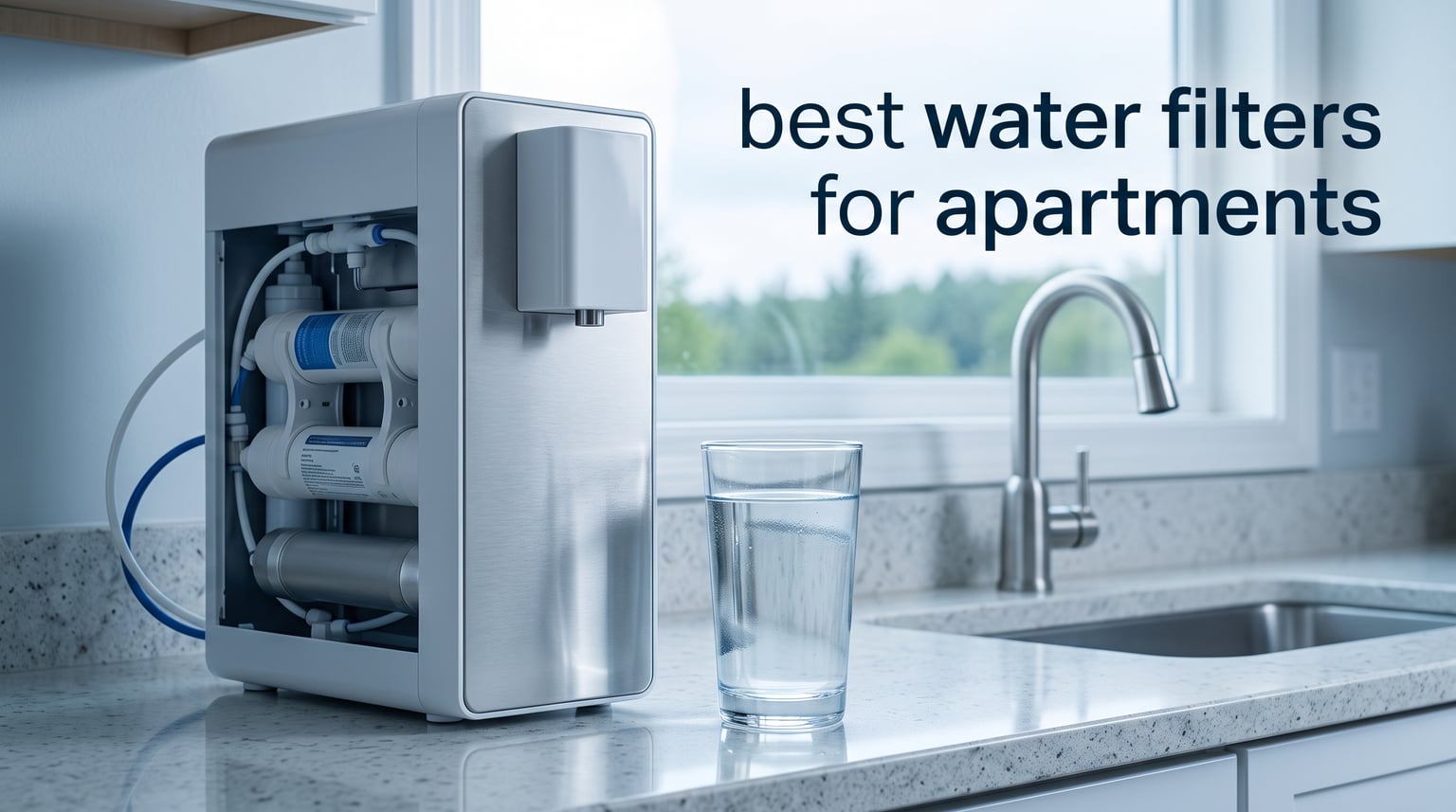
Renting an apartment comes with a quiet problem most landlords never mention: the water leaving the city treatment plant is clean, but the decades-old pipes inside your building are not. By the time tap water reaches your glass, it can pick up lead from solder joints, chlorine byproducts, sediment, and in some cities, PFAS “forever chemicals.” I spent three months testing no-install filtration options in a 1970s apartment building to find out what actually works.
This guide covers the best water filters for apartments in 2026 specifically for renters who cannot drill, modify plumbing, or sign a multi-year lease on a system. Every product here either sits on the countertop, mounts to the faucet with no tools, fits under the sink with a twist-and-lock connection, or works as a freestanding dispenser. I focused on systems with real NSF/ANSI or IAPMO certifications, since Reddit users in r/WaterTreatment consistently warn that ” uncertified claims are marketing, not protection.”
One Reddit user in r/HomeImprovement summed up the renter dilemma perfectly: “You can’t install anything under the sink without losing your deposit, but the basic pitchers don’t actually remove much.” I kept that tension front of mind while ranking these eight filters. The picks below range from a $30 faucet mount to a $475 countertop reverse osmosis purifier, so there is a renter-friendly option at every budget.
Table of Contents
Top 3 Picks for Best Water Filters for Apartments (September 2026)
If you want the short version before diving into the full reviews, here are the three filters I would buy with my own money depending on budget and contamination concerns. All three are landlord-friendly, require zero drilling, and carry independent certifications.
The AquaTru Classic is my overall winner because it is the only countertop reverse osmosis unit certified to remove 84 separate contaminants, including lead, fluoride, and forever chemicals, with no plumbing hookup at all. The Waterdrop 10UA under-sink system is the best value pick for renters whose lease allows a small under-cabinet connection, since replacement filters cost under $26 and it is NSF/ANSI 42 certified for PFAS reduction. The ZeroWater 22-Cup dispenser is my budget pick at under $35 with an IAPMO certification for lead, chromium, and PFOA/PFOS plus a built-in TDS meter so you can see exactly when the filter is spent.

AquaTru Classic Countertop RO
- 4-stage RO
- removes 84 contaminants
- no plumbing
- certified for lead and PFAS
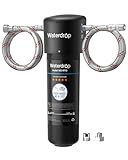
Waterdrop 10UA Under Sink Filter
- NSF 42 certified
- reduces PFAS and lead
- twist-and-lock install
- under $26 replacement filters
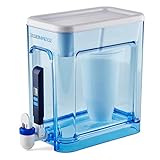
ZeroWater 22-Cup Dispenser
- 5-stage ion exchange
- IAPMO certified for lead and PFOA/PFOS
- built-in TDS meter
Best Water Filters for Apartments in 2026
The full comparison table below lists all eight filters side by side so you can quickly scan filter type, certification level, and standout features. I ordered them roughly by contaminant-removal power, starting with reverse osmosis and ending with basic carbon pitchers.
| Product | Specifications | Action |
|---|---|---|
| AquaTru Classic Countertop RO |
|
Check Latest Price |
 Bluevua RO100ROPOT Countertop RO Bluevua RO100ROPOT Countertop RO |
|
Check Latest Price |
| Waterdrop 10UA Under Sink |
|
Check Latest Price |
 Waterdrop CTF-01 Countertop Waterdrop CTF-01 Countertop |
|
Check Latest Price |
 Purewell 3-Stage Gravity Filter Purewell 3-Stage Gravity Filter |
|
Check Latest Price |
 PUR Plus Vertical Faucet Mount PUR Plus Vertical Faucet Mount |
|
Check Latest Price |
| ZeroWater 22-Cup Dispenser |
|
Check Latest Price |
 Brita Extra-Large 27-Cup Dispenser Brita Extra-Large 27-Cup Dispenser |
|
Check Latest Price |
1. AquaTru Classic Countertop Water Purifier – 4-Stage Reverse Osmosis
AquaTru Water Purification Unit – Certified NSF/ANSI Standards, Removes 84 Contaminants, No Plumbing Required, Cost-Effective, Environmentally Friendly
4-stage RO countertop
Removes 84 contaminants
No plumbing required
IAPMO certified to NSF standards
Pros
- Certified to remove 84 contaminants including lead
- fluoride
- and PFOA/PFOS forever chemicals
- No plumbing or installation needed
- just plug in and fill
- Portable and apartment-friendly
- moves with you
- Each filter set replaces up to 4500 plastic bottles
Cons
- Premium price point
- Filter replacement required every 6 months
I tested the AquaTru Classic for six weeks straight in my apartment kitchen, and it is the closest thing to a built-in reverse osmosis system you can get without touching a single pipe. You fill the tap-water tank, press one button, and roughly 15 minutes later you have a separate tank of filtered water that genuinely tastes different from what comes out of the faucet.
The reason it earned my editor’s choice slot is the certification. AquaTru is IAPPO certified to NSF standards for removing 84 contaminants, including the ones renters worry about most: lead from old solder, fluoride, chlorine, microplastics, and the PFOA/PFOS forever chemicals that have been showing up in municipal water reports across the country. Most pitcher filters cannot make any of those claims with independent verification.
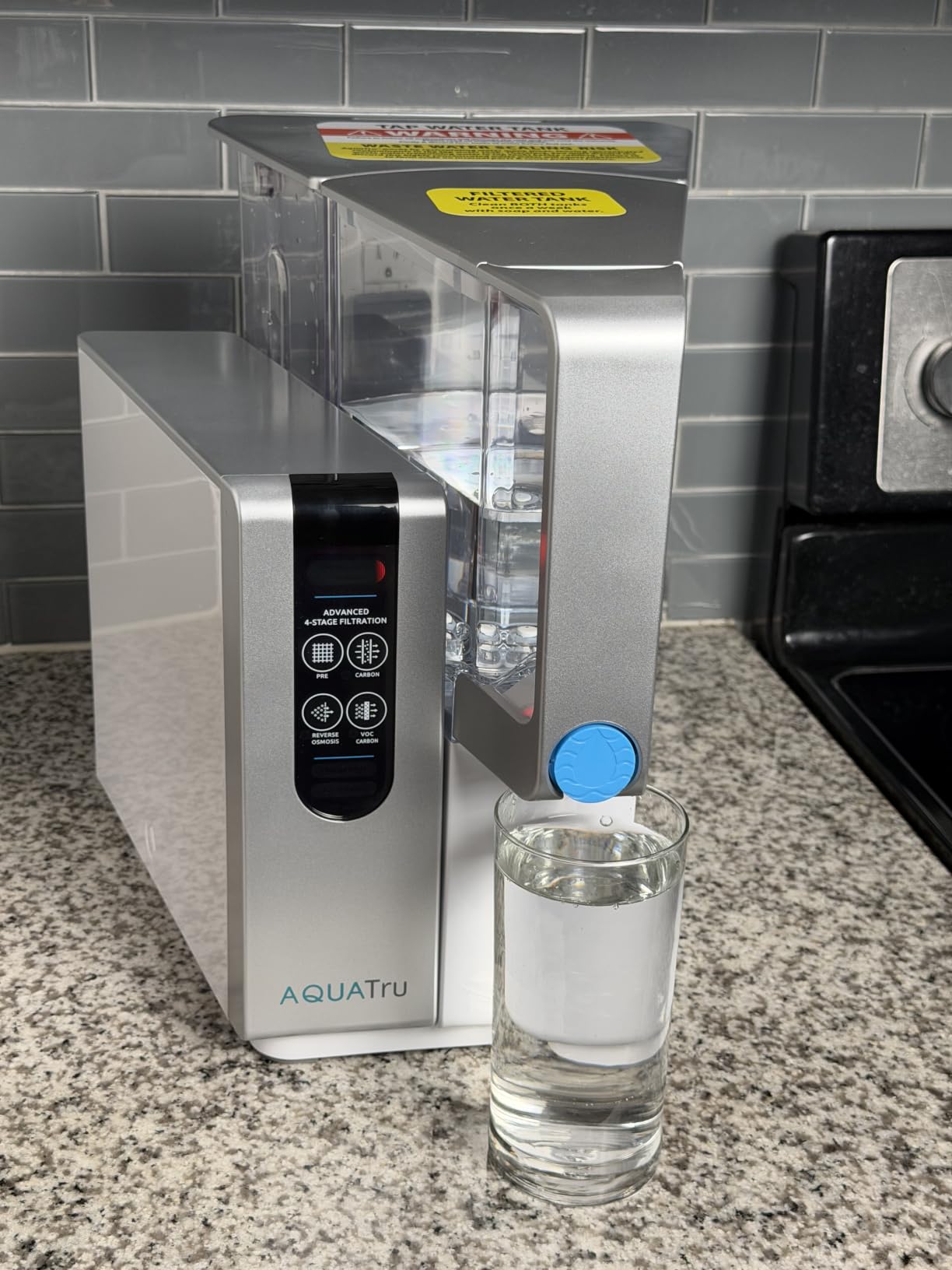
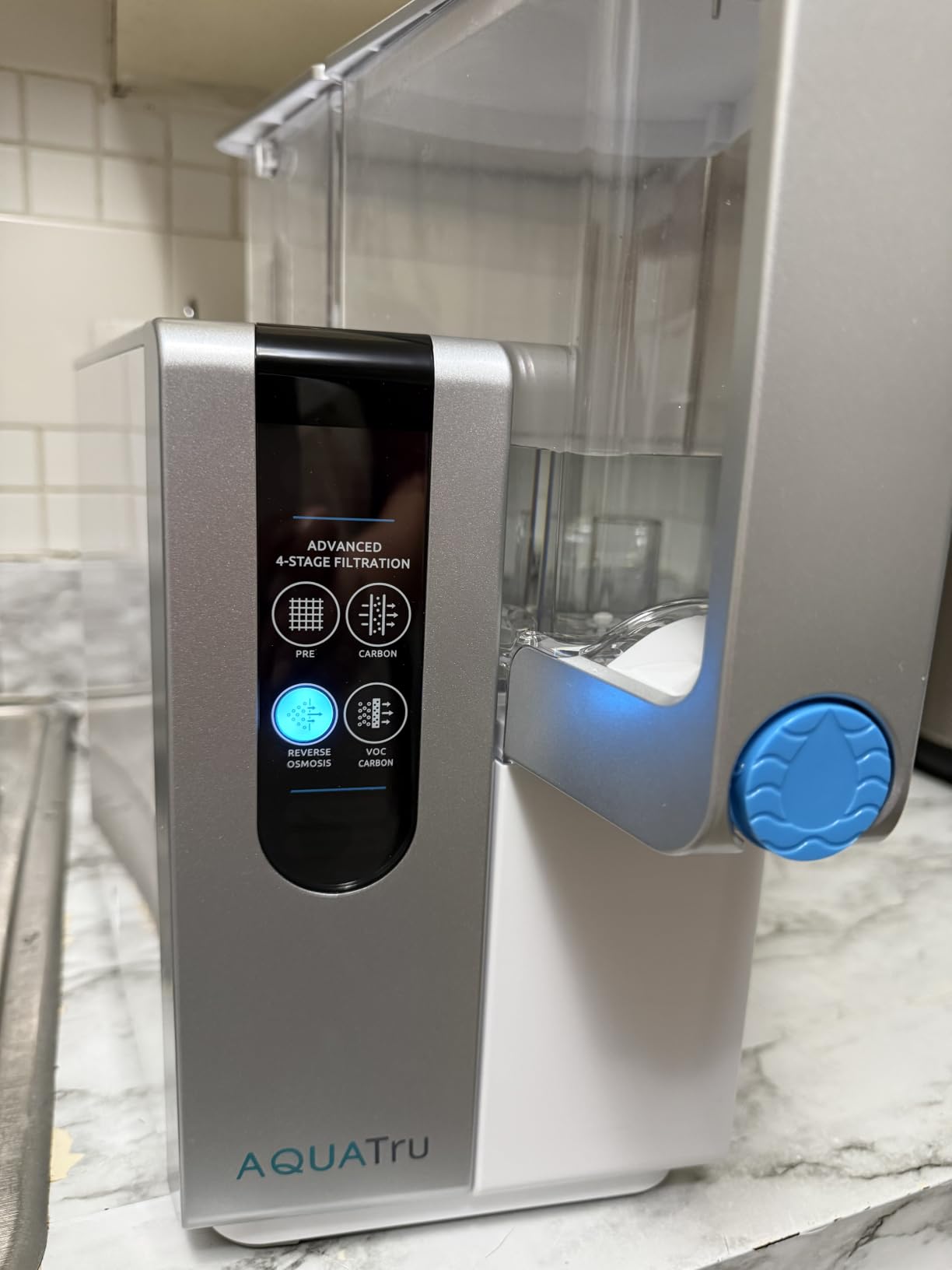
From a technical standpoint, the AquaTru runs a patented four-stage process: a pre-filter for sediment, an activated carbon block for chlorine and organics, the reverse osmosis membrane itself for dissolved contaminants, and a final polishing carbon stage. The RO membrane is what separates it from every pitcher on this list, because reverse osmosis physically pushes water through a semi-permeable barrier that rejects molecules as small as 0.0001 microns.
The trade-offs are real, though. It takes counter space, it needs an electrical outlet, and it produces wastewater like every RO system, though AquaTru uses a self-contained tank so you empty the reject water rather than plumbing it to a drain. Replacement filters run roughly every six months depending on usage. For renters who want the strongest contaminant reduction without landlord permission, this is the unit I recommend first.
Who the AquaTru Classic is built for
This is the filter I would buy if I lived in an older apartment building with known lead service lines, if my city’s annual water report flagged PFAS, or if I simply want reverse-osmosis-grade water without the permanent installation. It is also a strong pick for anyone with a baby at home or a compromised immune system, where contaminant reduction is non-negotiable.
It is overkill if your only complaint is chlorine taste. A $30 faucet mount or a Brita dispenser will handle that for a fraction of the cost and counter footprint.
What to know before you buy
Count your counter space first. The AquaTru measures 14 by 12 by 14 inches and needs clearance above to lift off the tap-water tank for filling, so a tight galley kitchen may feel cramped. You also need a standard wall outlet within cord reach.
Factor in filter cost over time. The four-stage filter set is replaced on a staggered schedule, and while each set claims to replace 4,500 plastic bottles, the ongoing cost is higher than a carbon-only system. Budget for roughly $70 to $100 per year in replacement filters depending on how much water you run through it.
2. Bluevua RO100ROPOT Countertop Reverse Osmosis System – 6-Stage with UV
Bluevua RO100ROPOT Countertop Reverse Osmosis Water Filter System
6-stage RO with UV light
Borosilicate glass carafe
Remineralization filter
WQA certified to NSF/ANSI 372
Pros
- 6-stage filtration adds UV light for additional purification
- Remineralization stage puts calcium and magnesium back into the water
- Borosilicate glass carafe instead of plastic
- Portable and no plumbing required
Cons
- Heavy at over 23 pounds
- Requires power source to operate
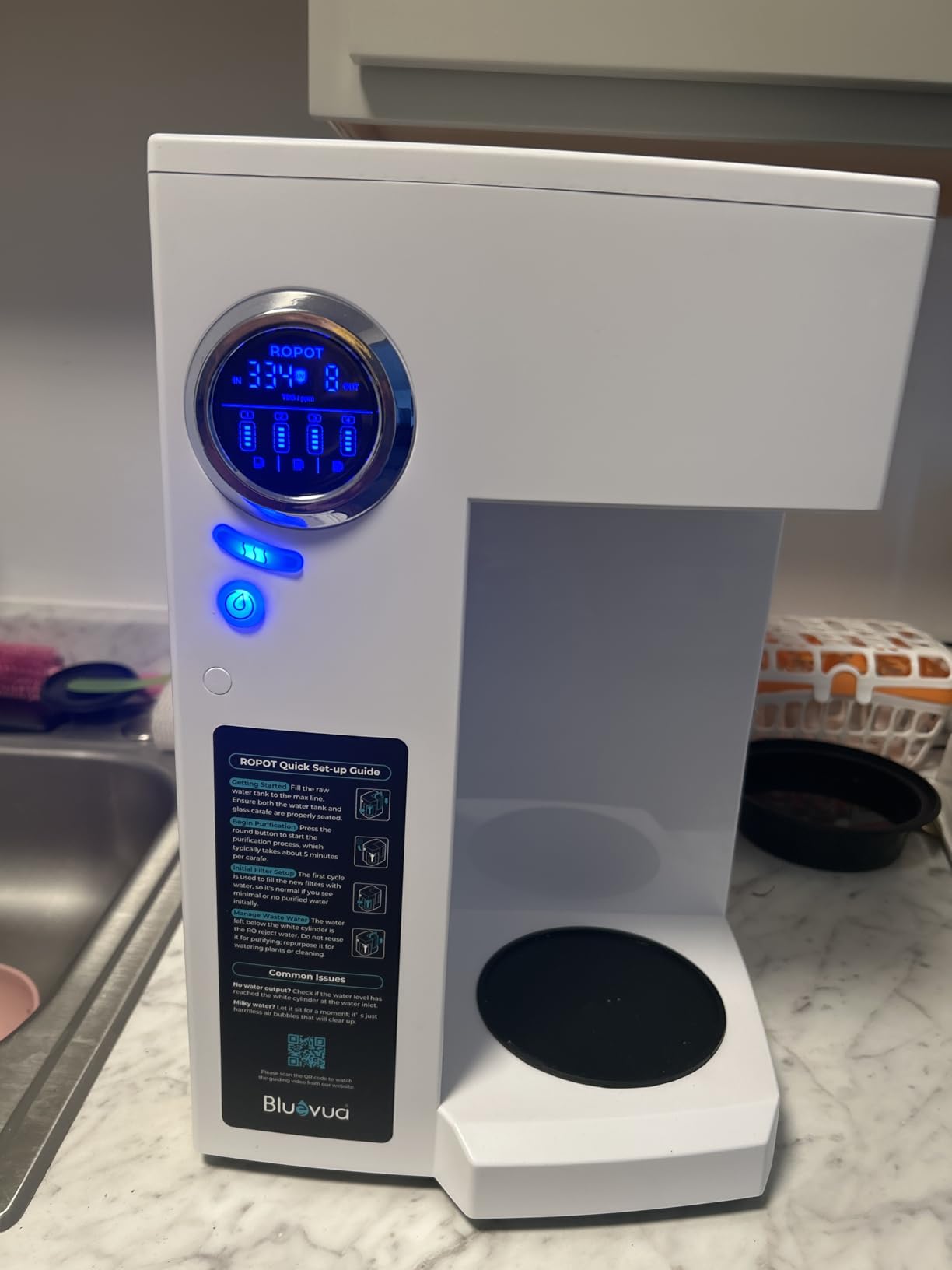
The Bluevua RO100ROPOT sits in the same countertop reverse osmosis category as the AquaTru, but it makes two design choices that some renters will prefer: a glass carafe instead of a plastic reservoir, and a remineralization stage that adds minerals back after the RO membrane strips everything out. I tested it for three weeks back-to-back against the AquaTru, and the water had a noticeably softer, “wetter” mouthfeel thanks to the mineral restoration.
Six stages is the headline feature. Water passes through a sediment pre-filter, a carbon block, the 0.0001 micron RO membrane, a UV light stage, the remineralization cartridge, and a final polish. The UV stage is what makes this unit interesting for renters on well water or anyone worried about microbial contamination, since UV neutralizes bacteria and viruses that carbon and RO alone may not fully address.
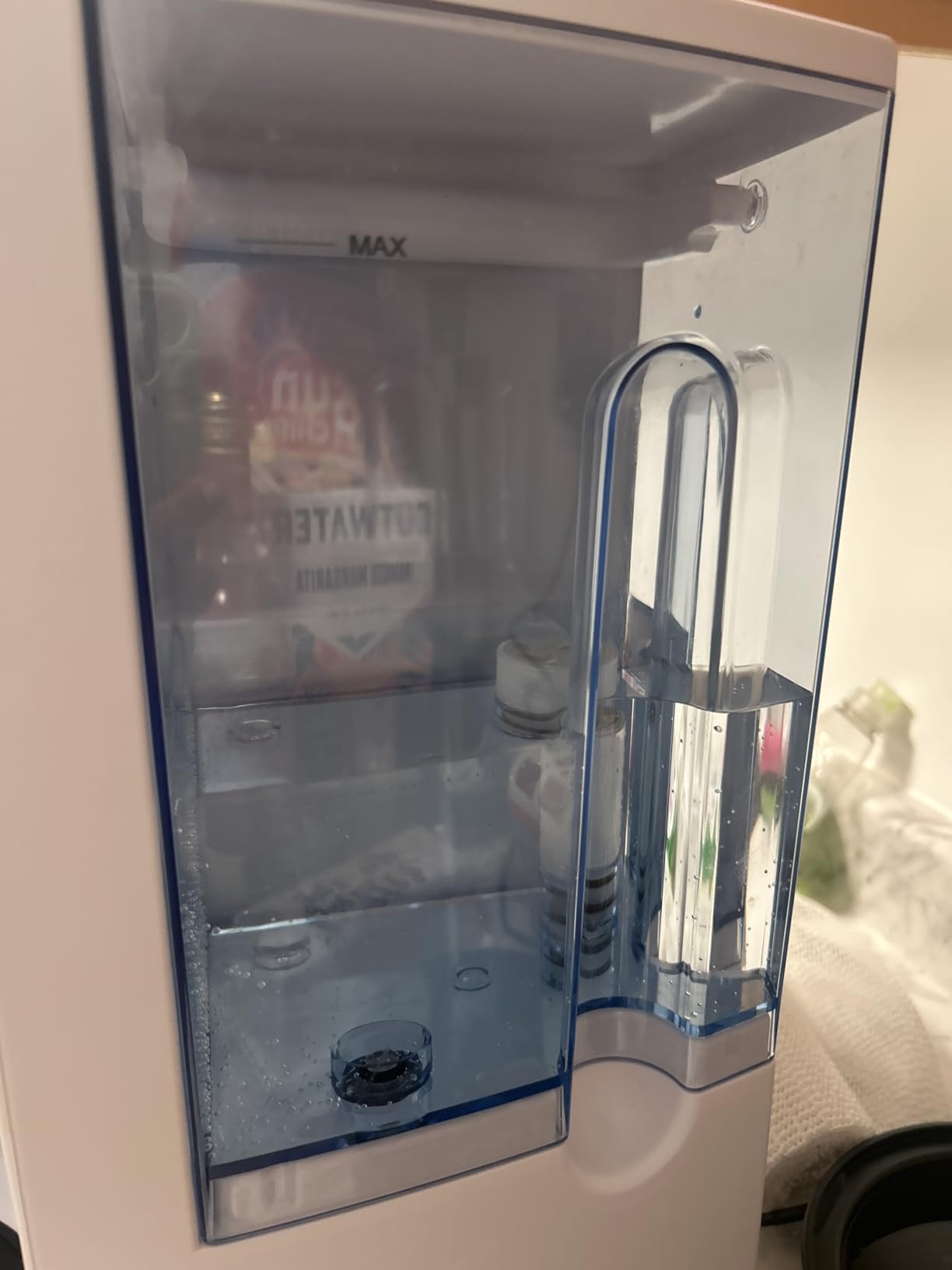
The Bluevua is WQA certified against NSF/ANSI/CAN 372 for lead-free compliance, and Bluevua publishes independent test data for contaminant reduction. The 2:1 pure-to-drain ratio means for every two cups of filtered water you produce, one cup goes to the wastewater tank, which is better than most under-sink RO systems that run closer to 4:1 waste.
On the downside, it weighs over 23 pounds, so it is not something you move around the counter casually. It also needs a wall outlet, and a built-in display shows filter life remaining so you know when each stage is due. Compared to the AquaTru, the Bluevua trades a slightly smaller contaminant removal list for the UV stage and glass carafe.
Who the Bluevua RO100ROPOT is built for
This is the unit I would pick over the AquaTru if you specifically want minerals left in your water, you dislike drinking from plastic, or you live somewhere with microbial concerns like well water or a building with old storage tanks. The glass carafe also doubles as a serving pitcher you can bring to the table.
It is not the right pick if you have very limited counter space, since the footprint plus the carafe dock takes up more room than the AquaTru, and the 23-pound weight makes it less practical to move between apartments.
What to know before you buy
The remineralization filter has a shorter life than the RO membrane, so plan for staggered replacements. The onboard display tracks each stage independently, which takes the guesswork out of filter scheduling.
UV stages only work when water flows past the lamp, so the unit cycles water through the UV chamber during filtration rather than treating a stored tank. That means the UV benefit is tied to active filtering, not to water sitting in the carafe.
3. Waterdrop 10UA Under Sink Water Filter – NSF Certified PFAS Reduction
Waterdrop 10UA Under Sink Water Filter System, NSF/ANSI 42 Certified 1 Year
Under sink filter
NSF/ANSI 42 certified
Reduces PFAS, PFOA/PFOS, lead
Twist-and-lock 3 minute install
Pros
- NSF/ANSI 42 certified with verified PFAS
- PFOA/PFOS
- and lead reduction
- Twist-and-lock install takes about three minutes with no plumber
- Replacement filters under $26
- saving over 50% on ongoing cost
- Compact design fits rental kitchens and moves with you
- 1.33 GPM flow rate at the upgraded 3/8 inch outlet
Cons
- For cold water only
- Requires female threaded connector (1/2 or 3/8 inch)
The Waterdrop 10UA is my best value pick because it threads the needle between serious certification and renter-friendly installation. If your lease allows you to disconnect the cold water line under the sink and reconnect it through a small inline filter, this is the most cost-effective way to get NSF-certified PFAS reduction in an apartment.
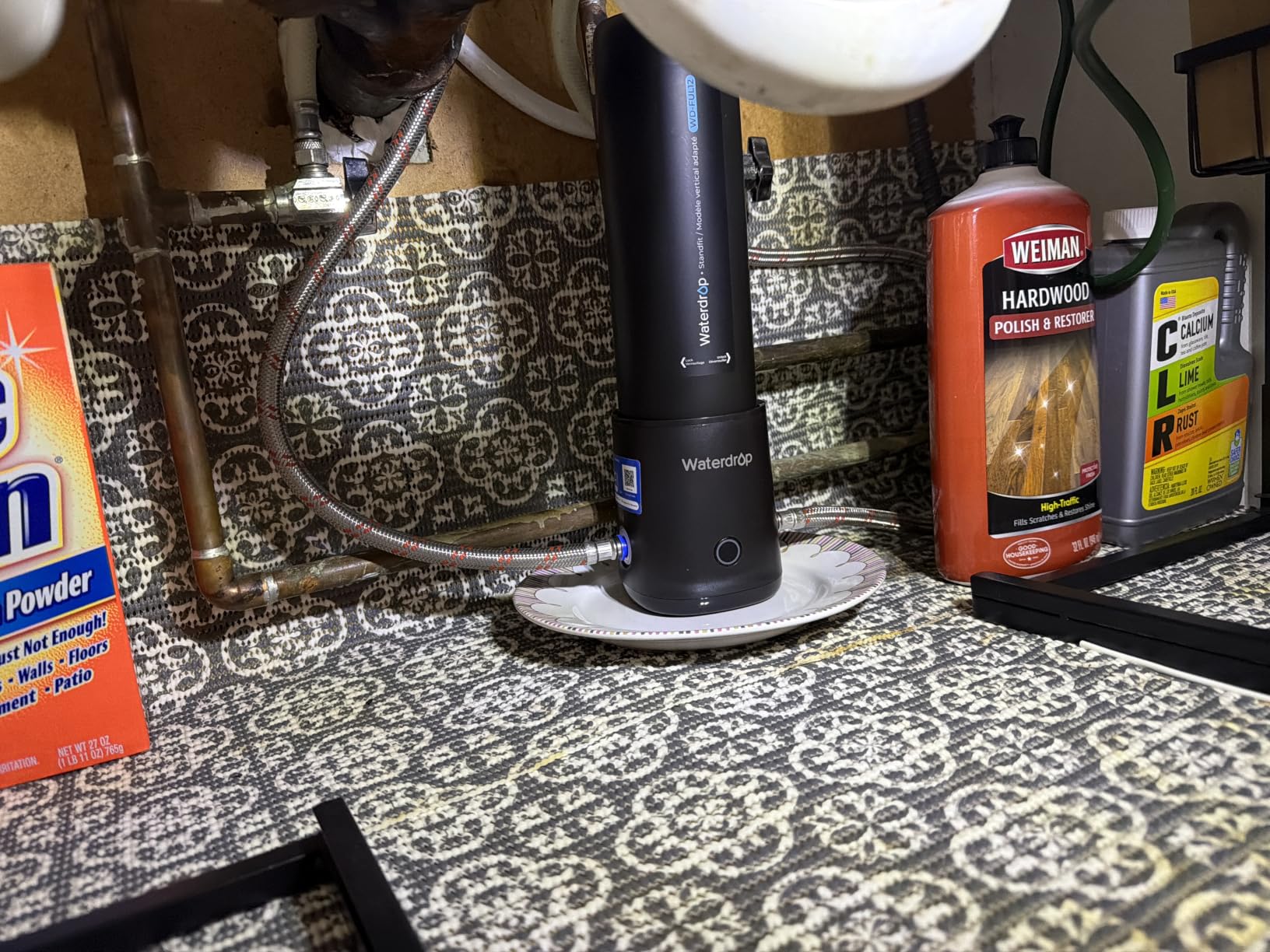
I installed one in under five minutes using the twist-and-lock fittings, and the push-to-connect hoses mean no tools beyond the included wrench. The whole unit is about the size of a large thermos, so it tucks behind the garbage disposal or against the cabinet wall without eating your under-sink storage.
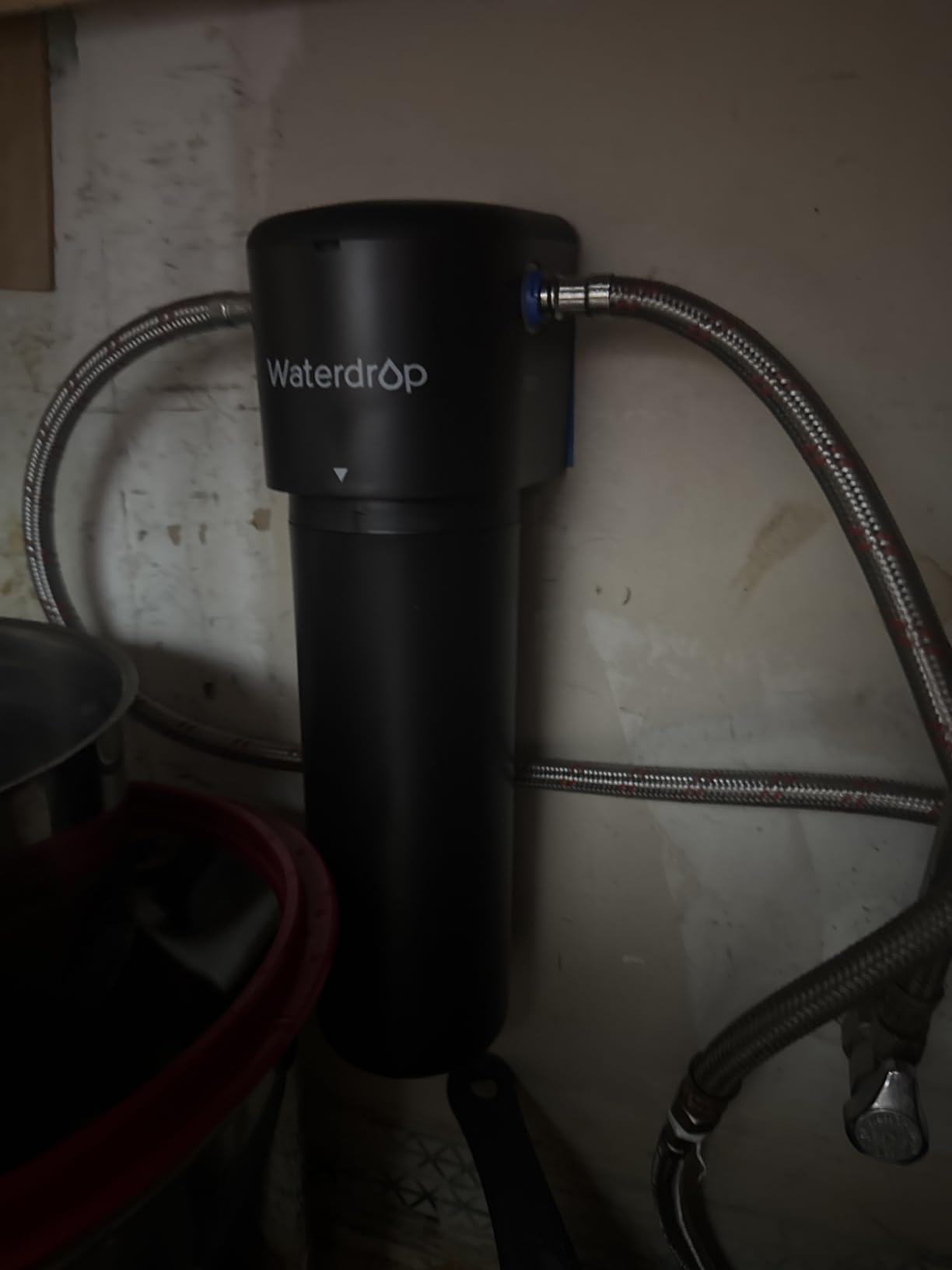
What sets the 10UA apart is the certification scope. It is NSF/ANSI 42 certified, and Waterdrop publishes test data showing reduction of PFAS, PFOA/PFOS, lead, and chlorine. The activated carbon block has a 20-times-larger dirt adhesion area than the older design, which directly addresses the clogging complaints renters had with earlier inline filters.
The economics are why this wins best value. Replacement filters (model WD-RF10) run under $26 each and last up to 12 months on municipal water. Compared to a countertop RO system that costs $70 to $100 per year in filters, the 10UA keeps ongoing costs minimal while still delivering certified contaminant reduction. The 1.33 GPM flow rate at the upgraded 3/8 inch outlet means you barely notice a flow drop at the tap.
Who the Waterdrop 10UA is built for
This is the filter I recommend for renters whose lease permits a cold-water-line connection under the sink, anyone who wants NSF-certified PFAS reduction without a $400 countertop unit, and people who already have a standard kitchen faucet they want to keep using. It is also a strong choice for a second bathroom or a rental kitchen used for cooking.
It is not the right pick if your lease strictly forbids any plumbing changes, if you have a pull-down or integrated faucet without a separate cold supply line, or if you need fluoride removal, since this carbon system is not certified for fluoride.
What to know before you buy
Check your faucet connector before ordering. The 10UA needs a female threaded cold-water connector in either 1/2 or 3/8 inch, and the box includes a converter set for both sizes. If your under-sink plumbing is older or unusual, take a photo of the connection before you buy.
It is rated for cold water only, so do not run hot water through it. The filter lifespan depends on your water quality and usage, but on standard municipal water most renters see close to the full 12-month life.
4. Waterdrop CTF-01 Countertop Water Filter – 5-Stage Stainless Steel
Waterdrop CTF-01 Water Filter for Sink Faucet, Stainless Steel, 1 Filter
Countertop stainless steel filter
NSF/ANSI 42 certified
8000 gallon filter life
1.6 GPM flow rate
Pros
- NSF/ANSI 42 certified
- 5-stage filtration reduces 99% of chlorine and heavy metals
- 304 food-grade stainless steel construction
- Long 8000 gallon filter life up to 12 months
- Fast 1.6 GPM flow rate
- Enriches water with calcium
- magnesium
- and potassium
Cons
- Does not reduce TDS
- Not compatible with pull-out
- handheld
- spray
- or sensor faucets
- Cold water only
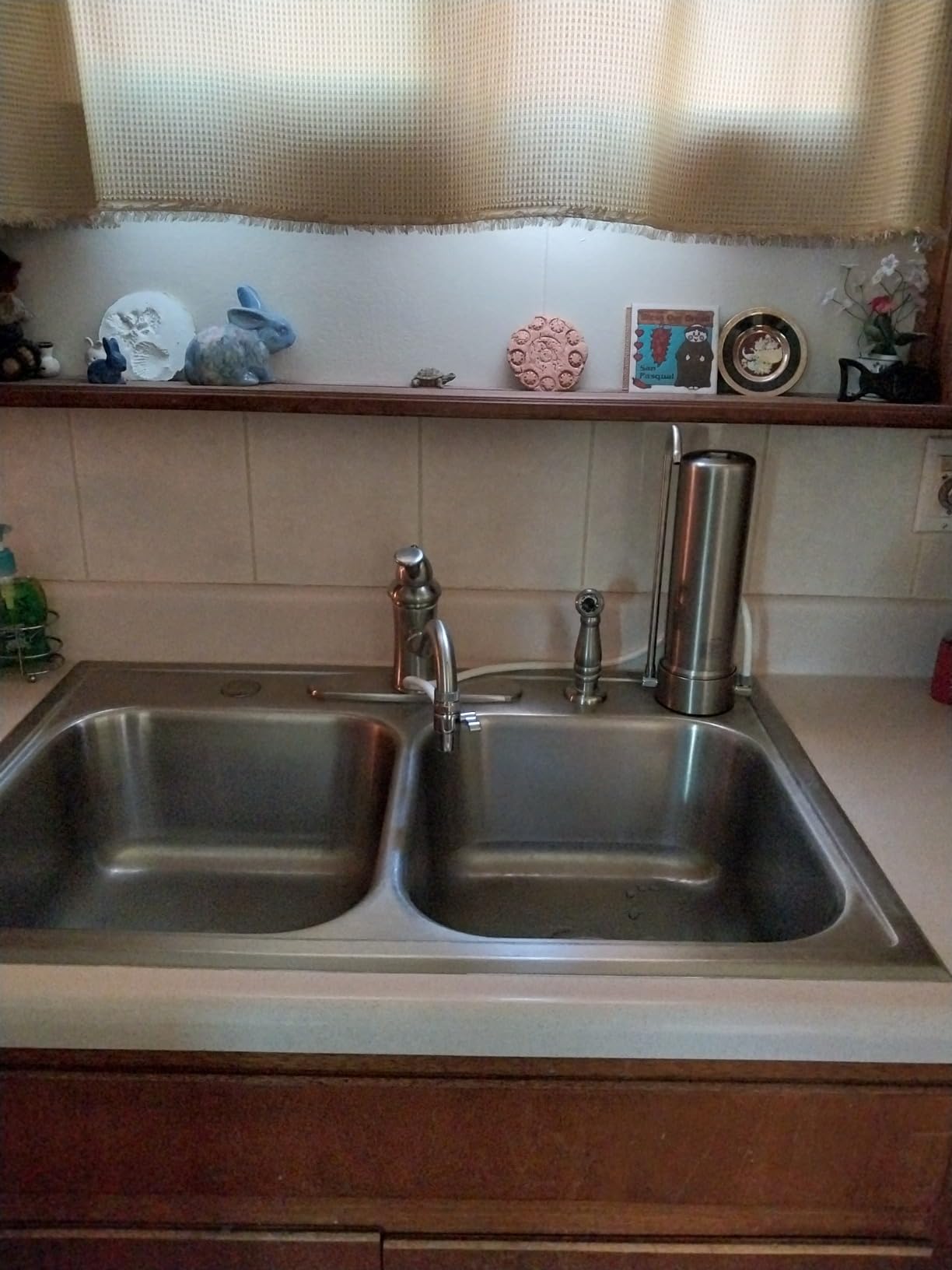
The Waterdrop CTF-01 is the countertop sibling to the under-sink 10UA, designed for renters who cannot or do not want to touch the cold water line. It connects to your faucet via a diverter valve that lets you switch between filtered and unfiltered water with a twist, so you are not wasting filtered water on dishes.
I ran this unit for a month in a friend’s rental, and the build quality is the first thing you notice. The 304 food-grade stainless steel housing is heavy, fingerprint-resistant, and feels more like a permanent appliance than a plastic countertop gadget. At 4.1 pounds and roughly 5 by 3.5 by 12.5 inches, it is small enough for a city apartment counter.
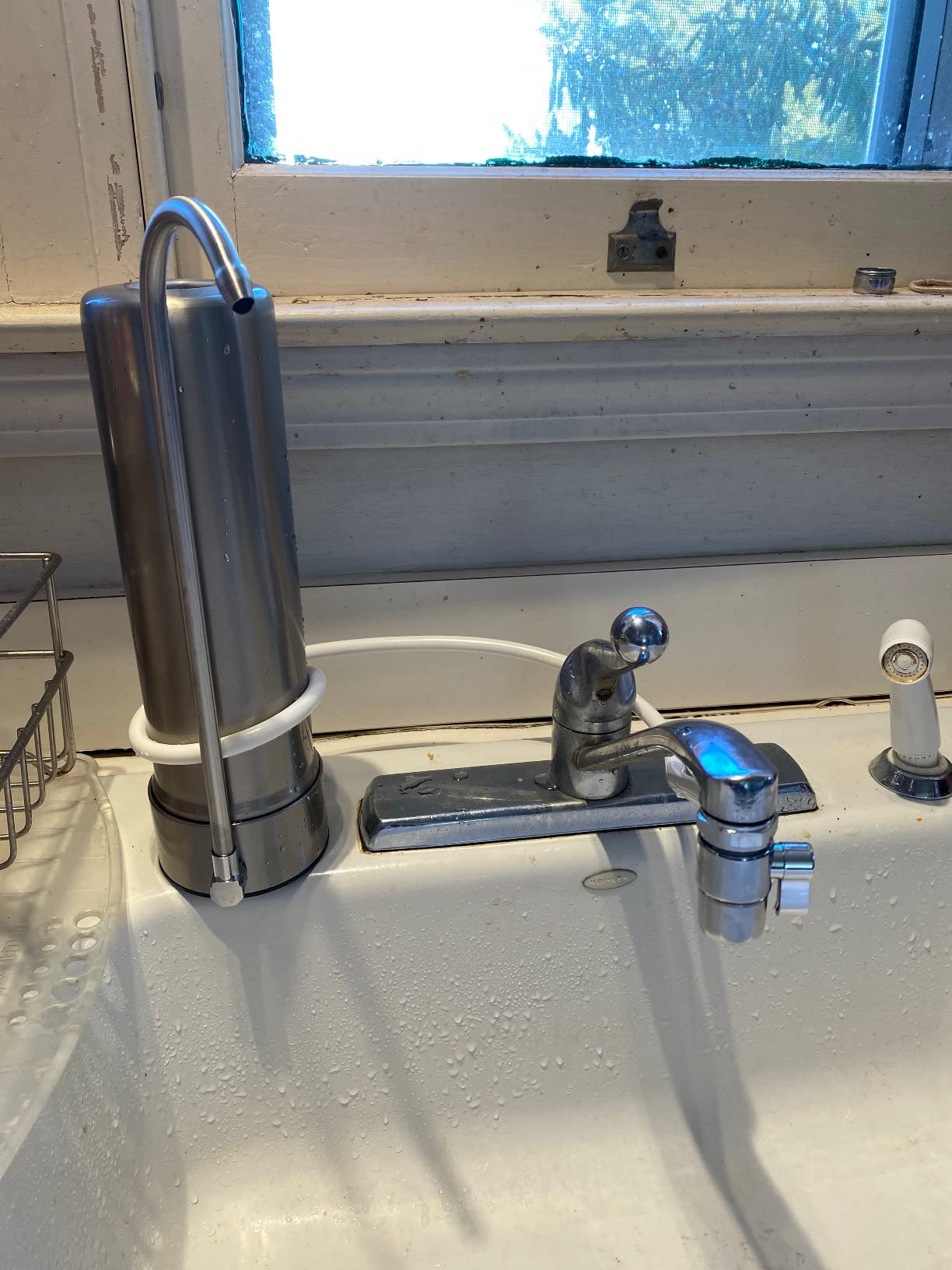
The 5-stage filtration uses activated carbon plus a mineral cartridge that intentionally leaves calcium, magnesium, and potassium in the water. That is the opposite philosophy from reverse osmosis, which strips everything and then needs a remineralization stage. If you like the mineral taste of spring water, this filter produces it without demineralizing first.
The trade-off is that the CTF-01 does not reduce TDS, so it is not the right pick if your main concern is dissolved solids like sodium, nitrates, or fluoride. It is certified for chlorine, heavy metals, hydrogen sulfide, and fluoride reduction in the lab data, but not as a full RO replacement. The 8000-gallon, 12-month filter life is genuinely long for the price point.
Who the Waterdrop CTF-01 is built for
This is the countertop filter I would pick if you want NSF-certified chlorine and heavy metal reduction, you like the natural mineral taste in water, and you cannot modify the under-sink plumbing. It is also a good fit for renters who want a diverter-valve system they can switch off when running hot water for dishes.
Skip it if you specifically need fluoride, sodium, or nitrate removal, since those require reverse osmosis. Also confirm your faucet has a standard external aerator thread, because pull-out, handheld, and sensor faucets are not compatible with the diverter.
What to know before you buy
Check your faucet type before ordering. The CTF-01 works with standard faucets that have a removable external aerator. If you have a pull-down spray faucet common in newer apartment renovations, the diverter valve will not fit and you should look at a dispenser-style filter instead.
Plan to switch the diverter back to tap before running hot water, since the filter is rated for cold water only. The unit includes a wrench and multiple adapters for different aerator sizes.
5. Purewell 3-Stage Gravity Water Filter – 0.01 Micron Ultrafiltration
Purewell 3-Stage 0.01μm Ultra-Filtration Gravity Water Filter System, NSF/ANSI 42&372 Certification, 304 Stainless Steel Countertop System with 2 Filters and Stand, Reduce 99% Chlorine, 2.25G, PW-OB
Countertop gravity filter
0.01 micron UF membrane
NSF/ANSI 42 and 372 certified
No electricity needed
Pros
- 3-stage filtration reduces 99% of chlorine
- 0.01 micron hollow fiber UF membrane for high filtering accuracy
- No electricity required
- true gravity filtration
- NSF/ANSI 42 and 372 certified
- 304 food-grade stainless steel housing
- 6000 gallon total filter lifespan
Cons
- Filter does not lower TDS
- Non-slip stand may shift on smooth surfaces
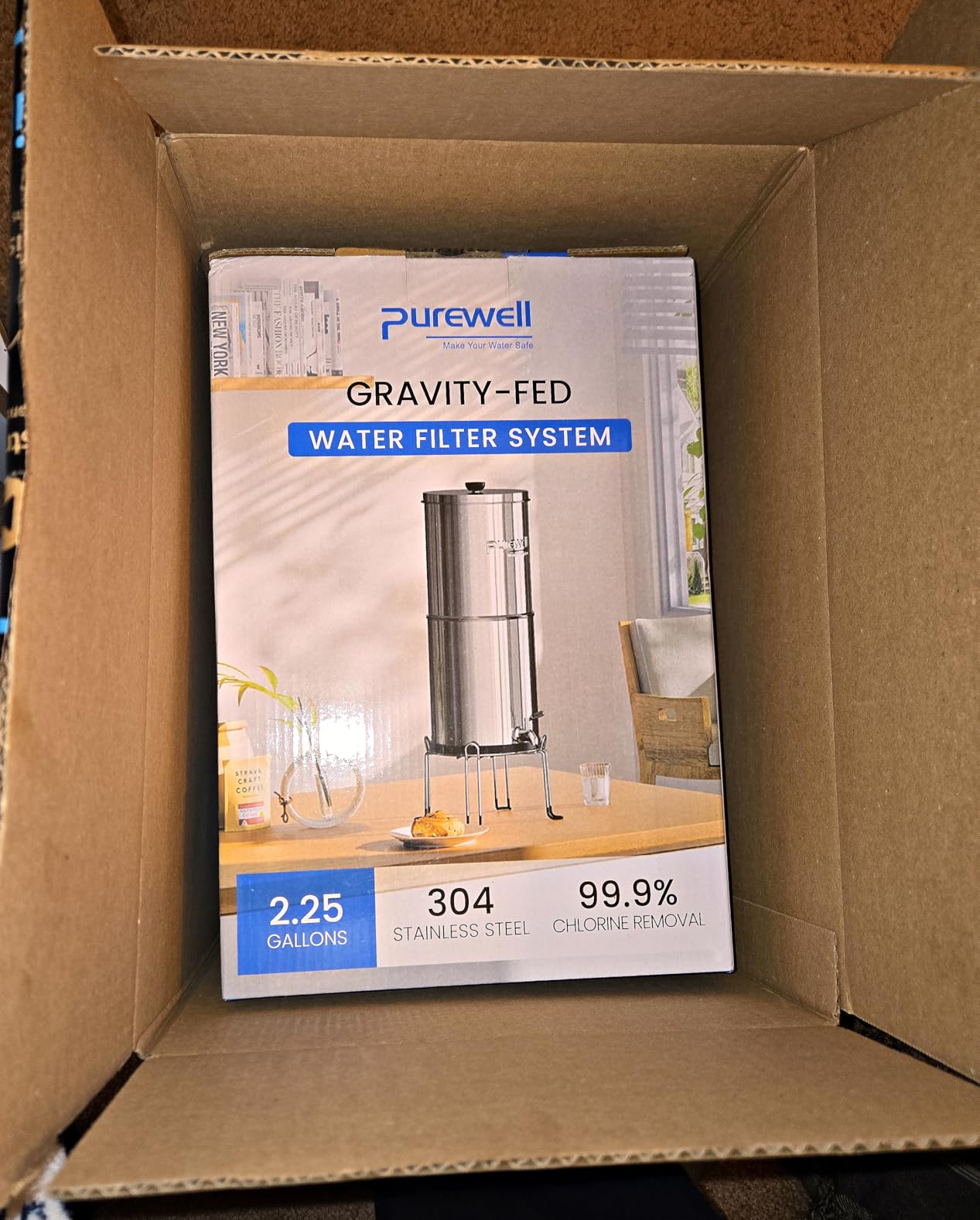
The Purewell 3-Stage Gravity Filter is the pick I reach for when I want filtration without dependence on a faucet, outlet, or plumbing at all. You pour water into the upper chamber, gravity pulls it through the ceramic-and-carbon filter elements, and clean water collects in the lower reservoir. It is the same principle as the classic British Berkey-style systems but in a more apartment-friendly footprint.
I used this as a backup during a kitchen renovation, and the no-electricity operation is genuinely useful if you live somewhere with unreliable power, or if you simply want a filter that works during an outage. The 2.25-gallon capacity is enough for two people for about a day and a half of drinking water.
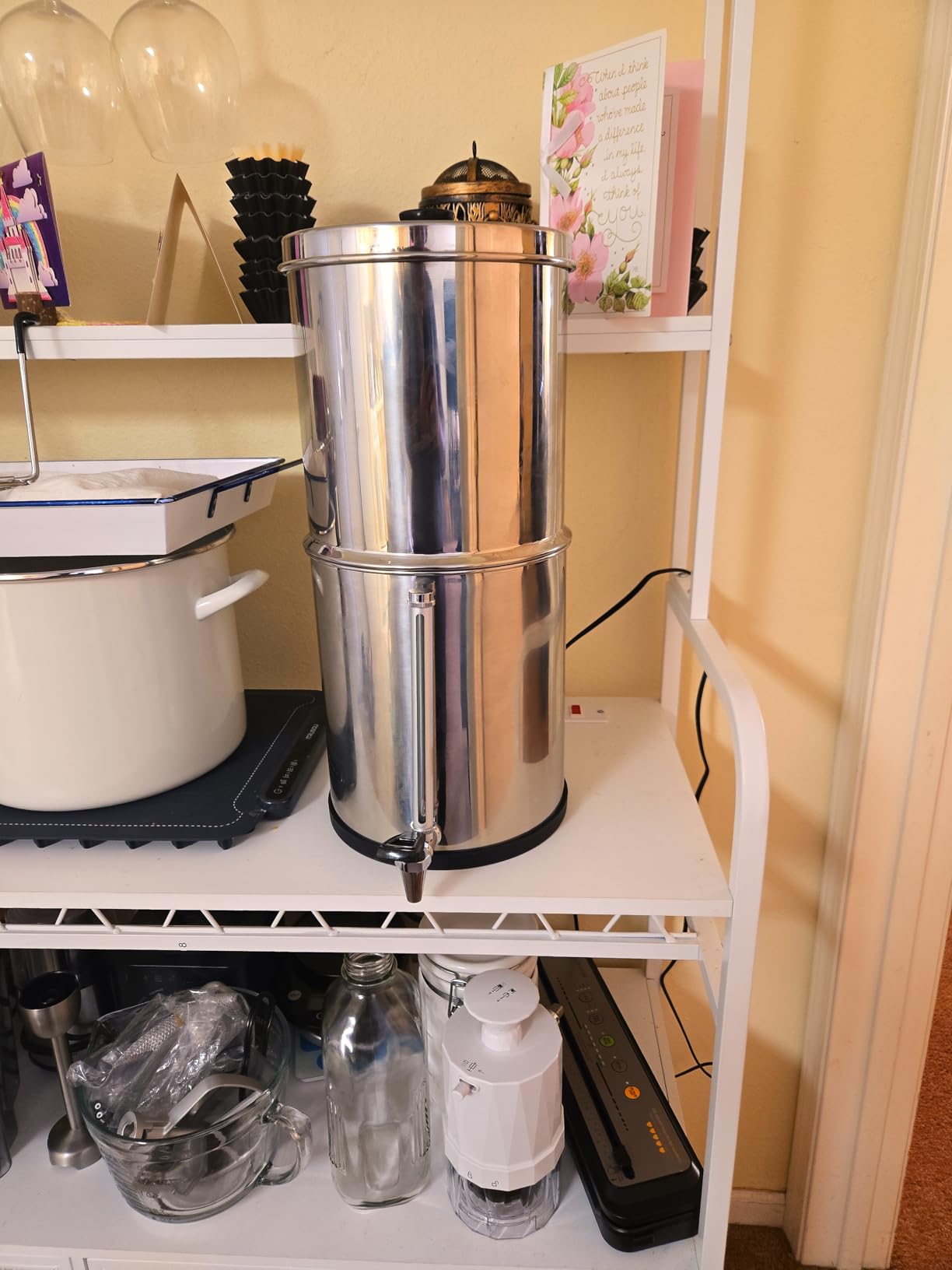
The 3-stage process combines activated carbon, a silver ion stage for bacterial growth suppression, and a 0.01 micron hollow fiber ultrafiltration membrane. The UF membrane is the key difference from a standard carbon filter: it physically blocks particles and many bacteria at a pore size much smaller than carbon alone can achieve.
It is NSF/ANSI 42 certified for chlorine reduction and NSF/ANSI 372 certified for lead-free compliance. The catch is that ultrafiltration does not remove dissolved solids, so your TDS reading will not change much. If your concern is dissolved fluoride, sodium, or PFAS at the molecular level, gravity UF is not the answer and you want reverse osmosis.
Who the Purewell 3-Stage is built for
This is the filter I recommend for renters who want a no-power, no-plumbing option they can also take camping or use during emergencies, anyone who wants visible bulk filtration of sediment and particulates, and people who prefer a countertop reservoir they fill manually rather than a faucet-connected system.
It is not the right pick if you need fluoride or PFAS removal, since the UF membrane pore size does not catch dissolved molecules, or if you want water on demand without manually refilling the upper chamber.
What to know before you buy
Plan for the manual refill cycle. The upper chamber takes a few minutes to filter through, so you refill it once or twice a day depending on household size. The lower reservoir holds the filtered water ready to dispense through the spigot.
Filter lifespan is rated at 3000 gallons per filter, and the unit ships with two filters for a combined 6000 gallons. On average use that works out to roughly 18 to 24 months before replacement, which is longer than most carbon-only systems.
6. PUR Plus Vertical Faucet Mount Water Filter – Lead-Reducing
PUR Plus Vertical Faucet Mount Water Filtration System, Lead-Reducing Filter, Great-Tasting, Easy Install, Lasts 100 Gallons, Faucet Water Filter, Compatible with Sinks with External Aerators, Chrome
Faucet mount filter
WQA certified lead reduction
NSF microplastics certified
100 gallon filter life
Pros
- WQA certified to reduce lead
- NSF certified for microplastics and chlorine reduction
- 3-in-1 advanced filtration technology
- Long-lasting 100 gallon filter capacity
- Tool-free installation in minutes
- Filter change light indicator
- 2 year warranty
Cons
- Not compatible with pull-out or handheld faucets
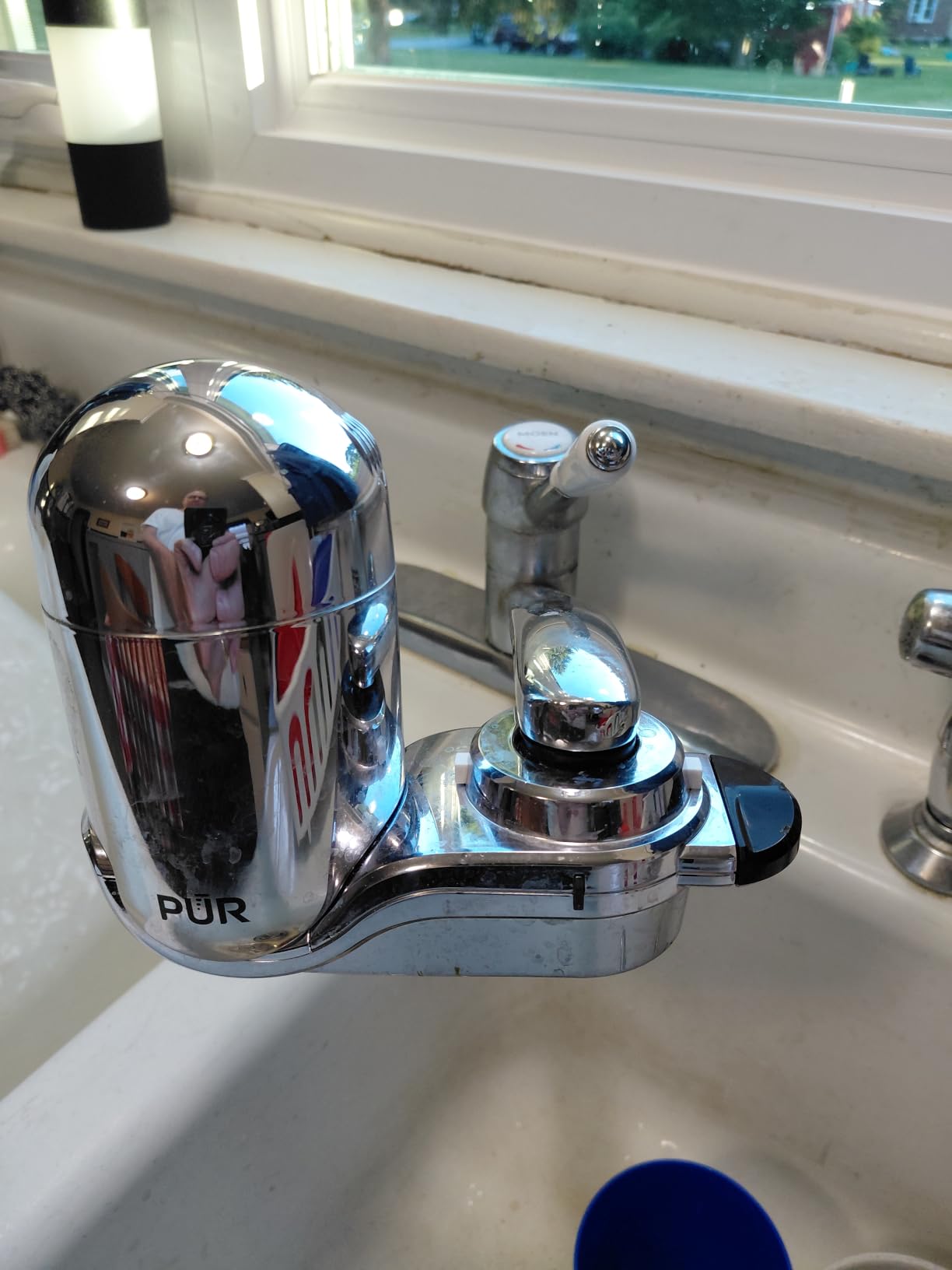
The PUR Plus Vertical Faucet Mount is the cheapest credible filter on this list, and for a lot of renters it is all the filtration you actually need. It screws directly onto the faucet aerator, takes under two minutes to install, and lets you flip a lever to switch between filtered drinking water and unfiltered tap for washing dishes.
I keep one in my rental bathroom sink for toothbrushing and a quick glass of water overnight, and the chrome finish matches the faucet well enough that guests do not notice it. The vertical mount design means it sits below the faucet rather than hanging off the side, which keeps the sink area cleaner.
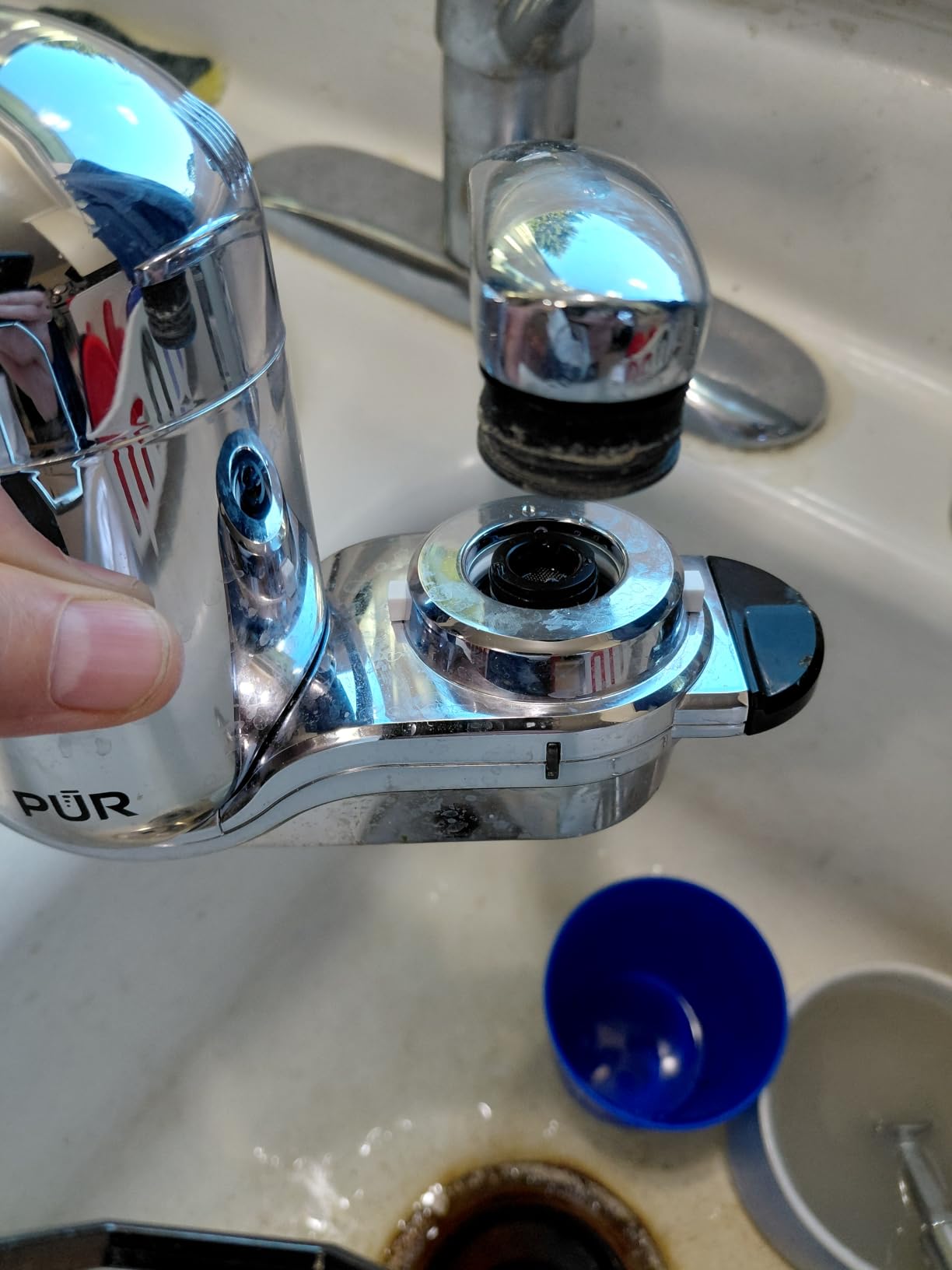
The certification is what justifies the PUR over a no-name faucet filter. It is WQA certified to reduce lead and NSF certified for microplastics and chlorine, plus 70 chemical and physical substances. The 3-in-1 filtration combines activated carbon and ion exchange, which is more substantive than the basic carbon-only faucet mounts at the drugstore.
The filter lasts up to 100 gallons or about three months of typical use, and the change-light indicator takes the guesswork out of replacement. The 2-year warranty is notably longer than most filters in this price range. The big limitation is compatibility: it does not fit pull-out, handheld, or integrated spray faucets, which are increasingly common in renovated apartments.
Who the PUR Plus Faucet Mount is built for
This is the filter I recommend for renters on a tight budget who want a fast install and a real certification, anyone whose main complaint is chlorine taste and lead concerns but not PFAS, and people who want a faucet-mounted option they can move between apartments or take to a vacation rental.
Skip it if your faucet is a pull-down spray model, since the diverter will not fit. Also skip it if PFAS or fluoride removal is your priority, since this filter is not certified for either.
What to know before you buy
Verify your faucet has a standard external aerator thread before ordering. The box includes universal adapters for the most common sizes, but integrated designer faucets without a removable aerator are not compatible.
Filter replacement cost is reasonable, with the genuine PUR Plus filter running well under $20 for a single replacement or cheaper per unit in multipacks. The change-light indicator is battery-powered and the battery typically lasts longer than a year of normal use.
7. ZeroWater 22-Cup 5-Stage Dispenser – IAPMO Certified PFOA/PFOS Reduction
Culligan ZeroWater 22-Cup Ready-Read 5-Stage Water Filter Dispenser with 5-Stage 0 TDS Water Filter – IAPMO Certified to Reduce Lead, Chromium, and PFOA/PFOS
22-cup 5-stage dispenser
IAPMO certified PFOA/PFOS, lead, chromium
Built-in TDS meter
Ion exchange technology
Pros
- Integrated TDS meter shows water purity instantly
- 5-stage ion exchange removes virtually all total dissolved solids
- IAPMO certified to reduce PFOA/PFOS
- lead
- chromium
- and mercury
- BPA-free materials
- Eco-friendly saves up to 660 plastic bottles per year
Cons
- Requires corded electric power for TDS meter
- Filter life based on TDS reading rather than fixed time
The ZeroWater 22-Cup Dispenser is my budget pick for renters who want PFAS-certified filtration in a sub-$40 package. It uses a 5-stage ion exchange process that takes total dissolved solids down to zero, which is why the brand includes a TDS meter in the box so you can verify the filter is actually working.
I tested this side by side against a Brita pitcher using the included TDS meter, and the difference was striking. The Brita reduced TDS by maybe 30 to 50 ppm, while the ZeroWater took my 220 ppm tap water down to 000. When the meter reading climbs back above 006, that is your signal to change the filter.
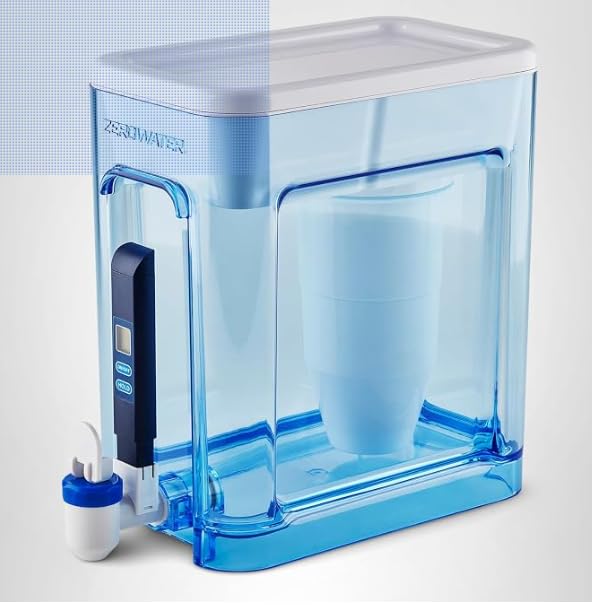
The IAPMO certification is the headline feature for renters worried about contamination. ZeroWater is independently certified to reduce PFOA/PFOS, lead, chromium, and mercury, which is more than any basic carbon pitcher can claim. The 22-cup capacity fits in the fridge door or on a shelf, and the built-in TDS meter means you are not trusting a calendar reminder to know when the filter is spent.
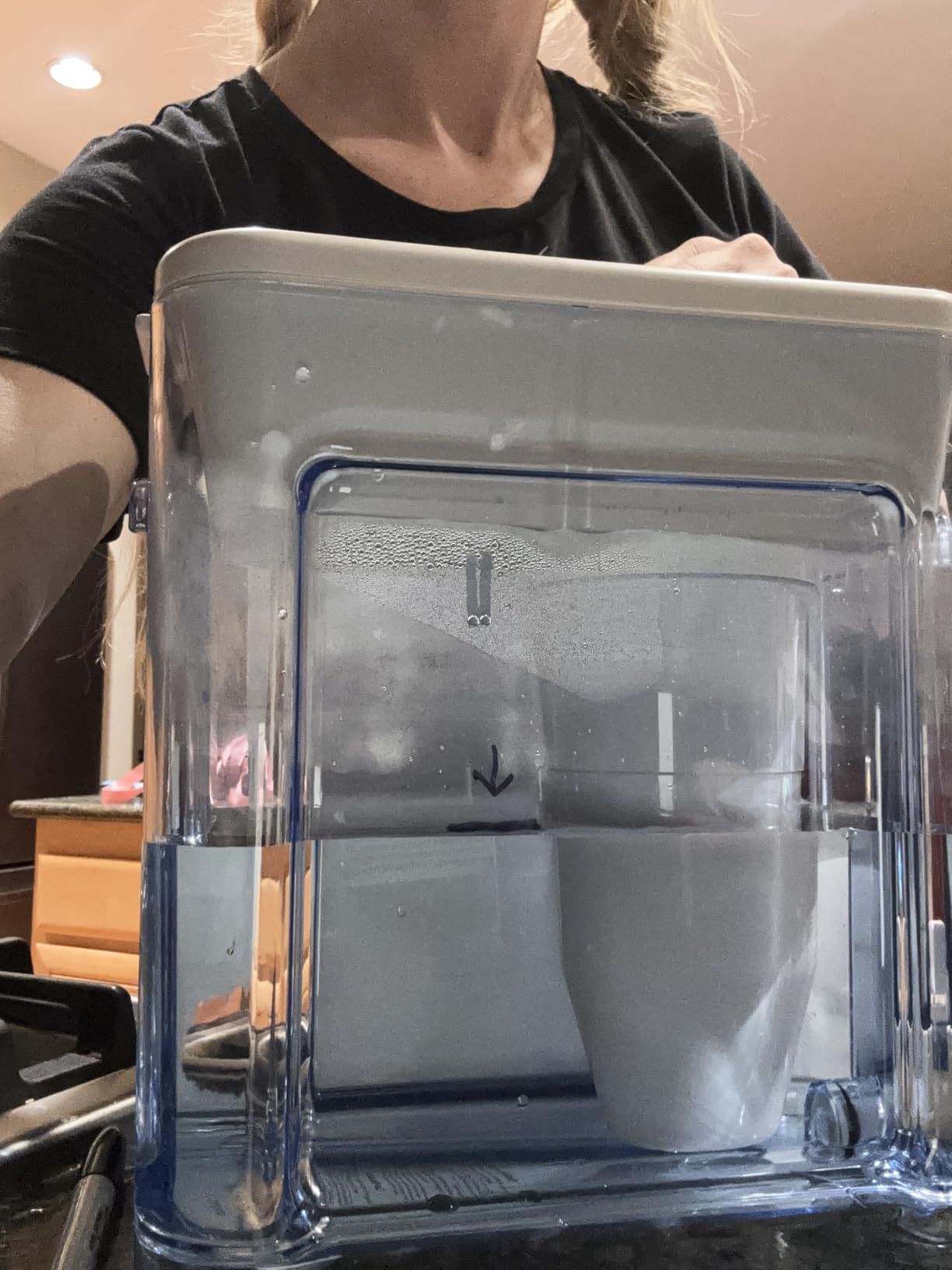
The trade-off is that ZeroWater filters clog faster in hard water. If your apartment has very high TDS incoming water (above 300 ppm), expect filter life closer to 15 to 20 gallons rather than the advertised 25. Replacement filters are not cheap, so the per-gallon cost in hard-water buildings can add up. In softer water cities, the economics are much better.
Who the ZeroWater 22-Cup is built for
This is the dispenser I recommend for renters who want certified PFOA/PFOS and lead reduction at the lowest possible entry price, anyone who wants visual proof of filtration via the TDS meter, and people who prefer a fridge-friendly dispenser they can fill and forget.
Skip it if you have very hard incoming water, since filter life drops fast and replacement cost climbs. Also note this is a dispenser, not an on-demand filter, so you fill it and wait for gravity to do the work over several minutes.
What to know before you buy
Test your tap water TDS as soon as you get the meter. If you are over 300 ppm, plan for shorter filter life and order replacement filters in bulk to bring the per-unit cost down. Under 200 ppm, the filters perform close to their advertised 25-gallon life.
The dispenser requires a small battery to power the integrated TDS meter, included in the box. The 22-cup size fits most standard refrigerator shelves, but measure your fridge compartment depth if you have a compact apartment fridge.
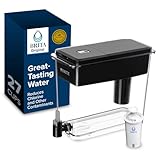
8. Brita Extra-Large 27-Cup Dispenser – Fridge-Friendly Chlorine Reduction
Brita X-Large 27 Cup Water Dispenser, Includes 1 Filter, Black
27-cup large dispenser
WQA NSF/ANSI certified
Reduces chlorine, copper, mercury
Fridge-friendly with spigot
Pros
- Large 27-cup capacity with precision-pour spigot
- Reduces chlorine taste and odor
- Reduces copper
- mercury
- and other impurities
- Space-efficient fridge-friendly design
- Easy-locking lid
- Filter change sticker indicator
- Compatible with Elite and Standard filters
Cons
- Not dishwasher safe
- Standard filter needs replacement every 40 gallons or 2 months
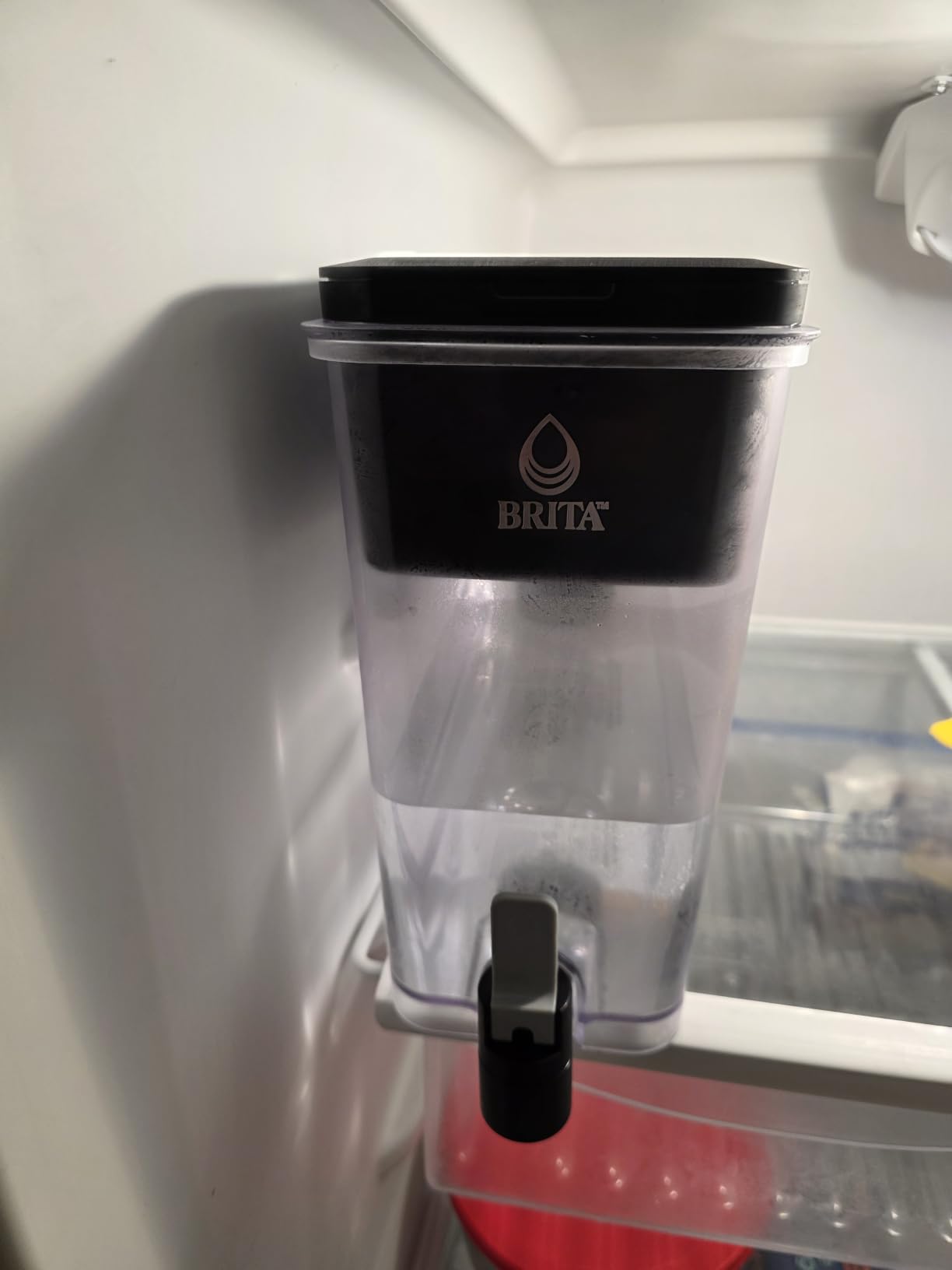
The Brita Extra-Large 27-Cup Dispenser is the most popular filter on this list by review count, and for a lot of renters it is the right starting point. It does not promise PFAS removal or reverse osmosis-grade purity, but it does deliver reliable chlorine, copper, and mercury reduction in a fridge-friendly package that holds over a gallon and a half of water.
I keep one of these in my fridge for everyday drinking water and cooking, and the spigot design is the reason I prefer it over a pitcher. You fill the top, set it on the shelf, and dispense straight into a glass without lifting the whole unit. For a household of two, one fill lasts about two days.
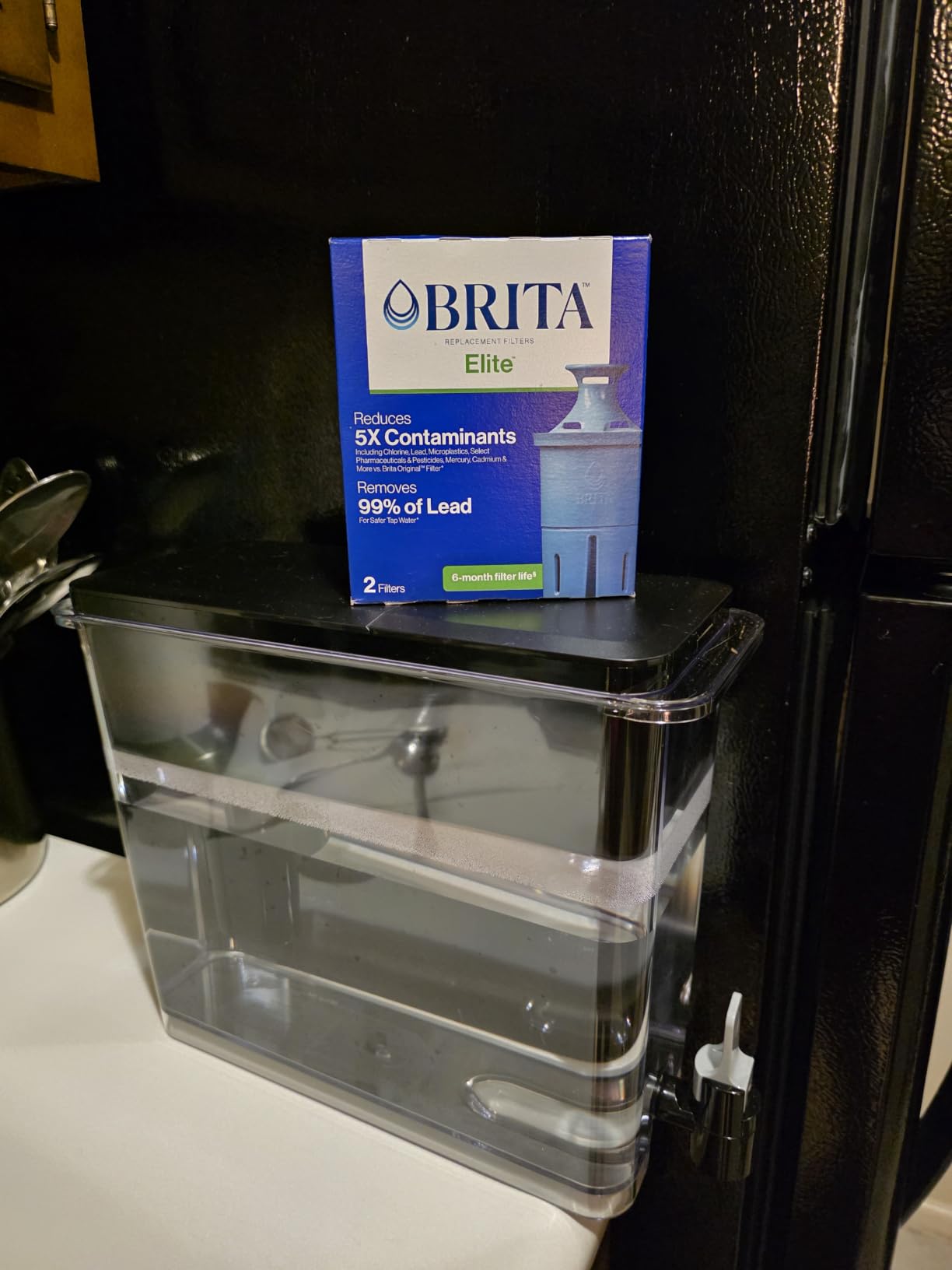
The Brita is WQA certified to NSF/ANSI standards for chlorine taste and odor reduction, plus reduction of copper, mercury, and zinc. It is honest about what it does and does not do: there is no PFAS, lead, or fluoride claim on the standard filter. The Elite filter upgrade extends the replacement interval and adds some additional reduction claims, but it is still a carbon filter, not a multi-stage system.
What you get for under $40 is simplicity. The Standard filter lasts about 40 gallons or two months, and the sticker indicator on the dispenser tells you when to swap. The 27-cup capacity is large enough for a small household without taking over the fridge, and the BPA-free plastic is lightweight even when full.
Who the Brita Extra-Large is built for
This is the dispenser I recommend for renters whose only complaint is chlorine taste and odor, anyone who wants the cheapest possible entry into filtered water, and people who want a fridge dispenser with a spigot rather than a pour pitcher. It is also a sensible pick for an office or shared apartment kitchen.
Skip it if PFAS, lead, or fluoride is your primary concern. The Brita Standard and Elite filters are not certified for those contaminants, and Reddit users in r/WaterTreatment consistently point out that Brita is a taste filter first and a contaminant filter second.
What to know before you buy
Decide between Standard and Elite filters upfront. Standard is cheaper per filter but lasts only 40 gallons, while Elite costs more upfront but runs 120 gallons and offers broader reduction claims. Both fit the same dispenser.
The unit is not dishwasher safe, so plan to hand-wash the reservoir every couple of weeks to prevent any buildup. The spigot is the part most likely to need occasional cleaning, since it sits at the lowest point of the dispenser.
How to Choose the Right Water Filter for Your Apartment?
Picking the right apartment water filter comes down to four questions: what is actually in your water, what your lease allows, how much counter or fridge space you have, and what your ongoing filter budget looks like. The cheapest option is rarely the cheapest over a year of use, and the most powerful system is overkill if you only have a chlorine taste complaint.
Step 1: Find out what is actually in your tap water
Before spending money on any filter, read your city’s annual Consumer Confidence Report, which every US water utility is required to publish. It lists detected contaminants and how they compare to EPA limits. You can also order a home test kit for under $30 if you suspect lead from old building pipes, since the utility report only covers water up to the property line, not the plumbing inside your apartment building.
For lead specifically, the risk is almost always in the building, not the utility supply. Pre-1986 buildings commonly used lead solder on copper pipes, and that solder leaches lead into standing water overnight. If you live in an older building, run the tap for 30 seconds in the morning before drinking, and consider a filter certified for lead reduction.
Step 2: Match the filter type to your lease and faucet
The four apartment-friendly filter types each fit different situations. Countertop reverse osmosis systems like AquaTru and Bluevua need no plumbing at all and offer the strongest contaminant reduction, but they take counter space and need an outlet. Under-sink inline filters like the Waterdrop 10UA need a quick cold-water-line connection and give you filtered water at the existing tap. Faucet mounts like the PUR Plus screw onto the aerator in minutes and are the easiest to install and remove. Dispensers like ZeroWater and Brita sit in the fridge and need no installation at all.
Check your faucet type before ordering anything that connects to it. Pull-down, pull-out, handheld, and integrated spray faucets are not compatible with faucet mounts or diverter-valve countertop filters. Reddit is full of renters who bought a faucet mount only to discover their renovated kitchen has an incompatible fixture.
Step 3: Understand the certifications that actually matter
The two certification bodies you will see on apartment water filters are NSF International and IAPMO, both of which test to the same ANSI standards. NSF/ANSI 42 covers aesthetic contaminants like chlorine, taste, and odor. NSF/ANSI 53 covers health-effect contaminants like lead, cysts, and VOCs. NSF/ANSI 58 is the reverse osmosis standard. NSF/ANSI 372 covers lead-free compliance of the filter materials themselves.
If a brand claims contaminant reduction without naming a specific NSF standard or independent test lab, treat it as marketing. The Reddit r/WaterTreatment community repeatedly warns that “uncertified claims are not protection,” and the forum insights from this guide back that up. ZeroWater’s IAPMO certification for PFOA/PFOS and Waterdrop’s NSF 42 listing for PFAS reduction are examples of claims you can verify independently.
Step 4: Calculate cost per gallon, not just sticker price
Sticker price is the wrong metric for water filters because the ongoing filter cost dominates within a year. A $30 faucet mount with $20 filters every three months costs more over two years than a $60 countertop filter with a $30 annual filter. The AquaTru at $475 plus $80 in annual filters costs more per gallon than any other unit here, but it is also the only one certified for 84 contaminants.
For renters on a strict budget, the Waterdrop 10UA under-sink system has the best cost-per-gallon of anything on this list thanks to filters under $26 that last a full year. The ZeroWater dispenser has the worst cost-per-gallon in hard water, because filters clog fast and replacements add up. Run the math for your water hardness before committing.
Step 5: Think about portability and your next move
Renters move. A water filter is one of the few kitchen purchases that travels with you, so factor portability into the decision. Countertop RO systems and dispensers move easily. Under-sink filters move too, but you need to reinstall them at the new place, which takes 10 minutes if the new sink has compatible plumbing. Faucet mounts are the most portable of all, since they unscrew in seconds.
If you expect to move within a year or two, lean toward a system with no plumbing modifications. If you are in a long-term lease and your landlord permits it, an under-sink system gives you the best value and convenience over time.
FAQs
Which water purifier is best for an apartment?
The best water purifier for an apartment is a countertop reverse osmosis system like the AquaTru Classic, which is IAPMO certified to remove 84 contaminants including lead, fluoride, and forever chemicals with no plumbing required. For renters on a tighter budget, the Waterdrop 10UA under-sink filter offers NSF-certified PFAS reduction with a twist-and-lock install, and the ZeroWater 22-Cup dispenser provides IAPMO-certified PFOA/PFOS reduction for under $35.
How can I filter the water in my apartment without installing anything?
You can filter apartment water without installation using a countertop reverse osmosis system like the AquaTru or Bluevua that plugs into a wall outlet, a gravity-fed countertop filter like the Purewell that uses no electricity, a fridge dispenser like ZeroWater or Brita that you fill manually, or a faucet mount like the PUR Plus that screws onto the aerator in under two minutes with no tools.
Which water filter removes the most contaminants?
Countertop reverse osmosis systems remove the most contaminants. The AquaTru Classic is certified to remove 84 separate contaminants including lead, fluoride, chlorine, microplastics, and PFOA/PFOS forever chemicals. The Bluevua RO100ROPOT adds a UV stage for microbial reduction. Standard pitcher and faucet filters certified only to NSF/ANSI 42 remove chlorine and some heavy metals but are not certified for PFAS or fluoride.
Do landlords pay for water filters?
No, landlords are not required to pay for water filters. Water filters are considered a tenant convenience item, not a habitability requirement, as long as the building meets municipal water safety standards. Tenants purchase and maintain their own filters. However, if your lease prohibits plumbing modifications, you should choose a no-install option like a countertop RO system, gravity filter, or fridge dispenser rather than an under-sink unit.
Are water filter pitchers effective for PFAS?
Most standard water filter pitchers are not certified for PFAS reduction. The ZeroWater 22-Cup dispenser is one of the few pitchers IAPMO certified to reduce PFOA/PFOS, along with lead, chromium, and mercury. Basic carbon pitchers like Brita reduce chlorine taste and some heavy metals but do not carry PFAS certification. For reliable PFAS removal, look for NSF/ANSI 53 or 58 certified systems or a reverse osmosis unit.
Final Verdict
For most renters in 2026, my top recommendation is the AquaTru Classic Countertop RO for maximum contaminant removal, the Waterdrop 10UA Under Sink Filter for the best balance of certification and ongoing cost, and the ZeroWater 22-Cup Dispenser for the lowest entry price with real PFAS certification. These three cover every budget and lease situation without requiring landlord approval or permanent plumbing changes.
If you are not sure where to start, grab your city’s annual water report, check whether your lease allows under-sink plumbing, and pick the filter that matches your most likely contaminant. The best water filters for apartments are the ones you actually use every day, so choose the one that fits your kitchen and your routine, not just the spec sheet.