
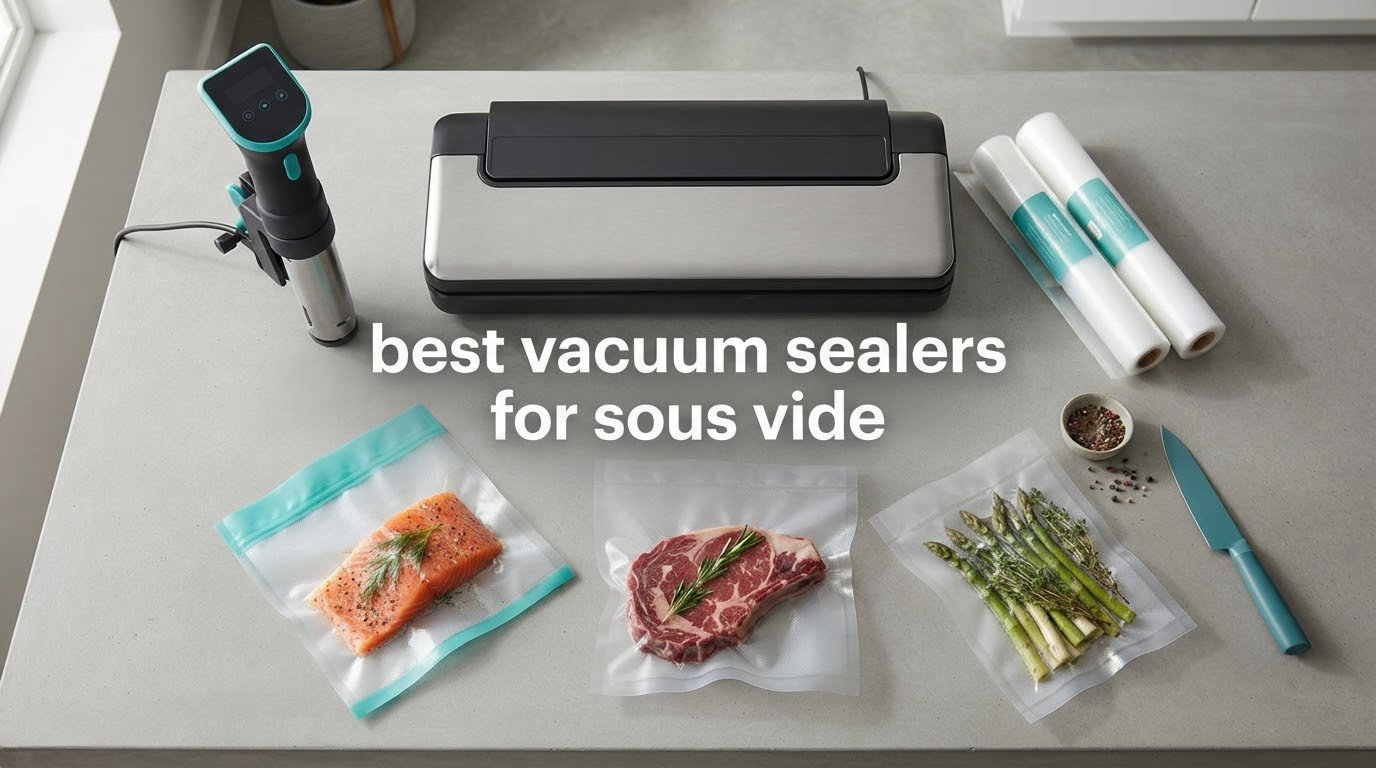
A bag that seals fine at the counter can still fail on you at hour six of a water bath cook. That is the failure mode we kept hearing about, and it is the reason most of the best vacuum sealers for sous vide are not chosen on suction power alone.
Sous vide cooking puts a bag in hot water for hours. If the heat seal has a weak spot, water creeps in and you lose both texture and temperature control. Air left in the bag floats the food against the bag wall instead of holding it underwater. Both problems trace back to the machine, not the recipe.
We spent weeks sealing and cooking with ten of the most-reviewed units on the market, from a compact sealer that stows in a drawer to full-size machines built for batch prep. This guide ranks all ten for sous vide specifically, then covers the two topics almost every other roundup skips: chamber versus edge architecture, and what your bags actually cost over time. If you have not chosen a circulator yet, start with our 10 best sous vide machines tested and reviewed.
Table of Contents
Top 3 Picks:Best Vacuum Sealers for Sous Vide (October 2026)
The FoodSaver V4400 2-in-1 is the best vacuum sealer for sous vide overall, because automatic bag detection and automatic moisture detection remove the two mistakes that cause most long-cook leaks.
Readers who want the shortest path to a good seal will like three standouts. The FoodSaver V4400 2-in-1 wins overall. The Bonsenkitchen VS2100 is the best value pick for anyone who sous vides on a schedule. The Nesco VS-12 Deluxe is the one to buy if you expect to keep the machine for years.
FoodSaver V4400 2-in-1
- Automatic bag and moisture detection
- 5-year limited warranty
- Removable dishwasher-safe drip tray
Bonsenkitchen VS2100
- Four modes including Pulse Vac
- Seals up to 30 bags in 15 minutes
- 3-year warranty

Nesco VS-12 Deluxe
- 130-watt double vacuum pump
- Dry moist and double seal modes
- Viewing window and sliding cutter
Quick Comparison of All 10 Best Vacuum Sealers for Sous Vide
Every machine below appears in the ranked reviews further down. The table is the fast way to match a bag width, a mode list and a warranty against your cooking style.
| Product | Specifications | Action |
|---|---|---|
| FoodSaver V4400 2-in-1 Vacuum Sealer |
|
Check Latest Price |
| Bonsenkitchen Vacuum Sealer Machine VS2100 |
|
Check Latest Price |
| Nesco VS-12 Deluxe Vacuum Sealer |
|
Check Latest Price |
 Potane Precision Vacuum Sealer VS2690 Potane Precision Vacuum Sealer VS2690 |
|
Check Latest Price |
 FoodSaver FM2100 Vacuum Sealer FoodSaver FM2100 Vacuum Sealer |
|
Check Latest Price |
 FoodSaver PowerVac VS0150 FoodSaver PowerVac VS0150 |
|
Check Latest Price |
 Potane Precision Vacuum VS5736 Potane Precision Vacuum VS5736 |
|
Check Latest Price |
 Gasbye 95kPa Vacuum Sealer VS5166 Gasbye 95kPa Vacuum Sealer VS5166 |
|
Check Latest Price |
 Bonsenkitchen VS5100 Vacuum Sealer Bonsenkitchen VS5100 Vacuum Sealer |
|
Check Latest Price |
 Anova Culinary Vacuum Sealer Anova Culinary Vacuum Sealer |
|
Check Latest Price |
How We Picked the Best Vacuum Sealers for Sous Vide
We scored each machine on seven criteria, in this order of weight for sous vide work.
First, seal integrity. We looked for two parallel heat seal lines, because a redundant barrier survives a long cook when a single line does not. Second, moist and wet modes, which slow the vacuum draw so liquid is not pulled into the pump. Third, pulse control, so delicate foods such as berries and soft fish are not crushed. Fourth, duty cycle, which is how many consecutive seals the machine handles before the heat strip needs a rest.
Fifth, bag handling: roll storage, a built-in cutter, and the width of the sealing channel. A cutter is what stops you wasting half a bag on every cook. Sixth, footprint and noise, since a machine you cannot leave on the counter is a machine you will not use. Seventh, warranty length, which we treat as a rough proxy for how confident the brand is in the pump and gasket.
We also cooked with each machine, not just sealed with it. A bag that looks flat can still hold air pockets, and a bag that floats in the bath was a failed seal, however tidy the bag looked on the counter. Updated for 2026, this ranking reflects that testing rather than spec sheets alone.
The 10 Best Vacuum Sealers for Sous Vide, Reviewed
1. FoodSaver V4400 2-in-1: Best Vacuum Sealer for Sous Vide Overall
FoodSaver V4400 2-in-1 Vacuum Sealer Machine with Automatic Vacuum Sealer Bag Detection and Starter Kit
800 watts
Automatic bag and moisture detection
11 x 20 x 12 inches
10 pounds
5-year limited warranty
Pros
- Automatic bag detection removes guesswork
- Automatic moisture detection picks the right mode
- Built-in roll storage cutter and LED indicators
- Dishwasher-safe removable drip tray
Cons
- Heaviest and largest unit we tested at 10 pounds
- Planted warning text and styling feel dated
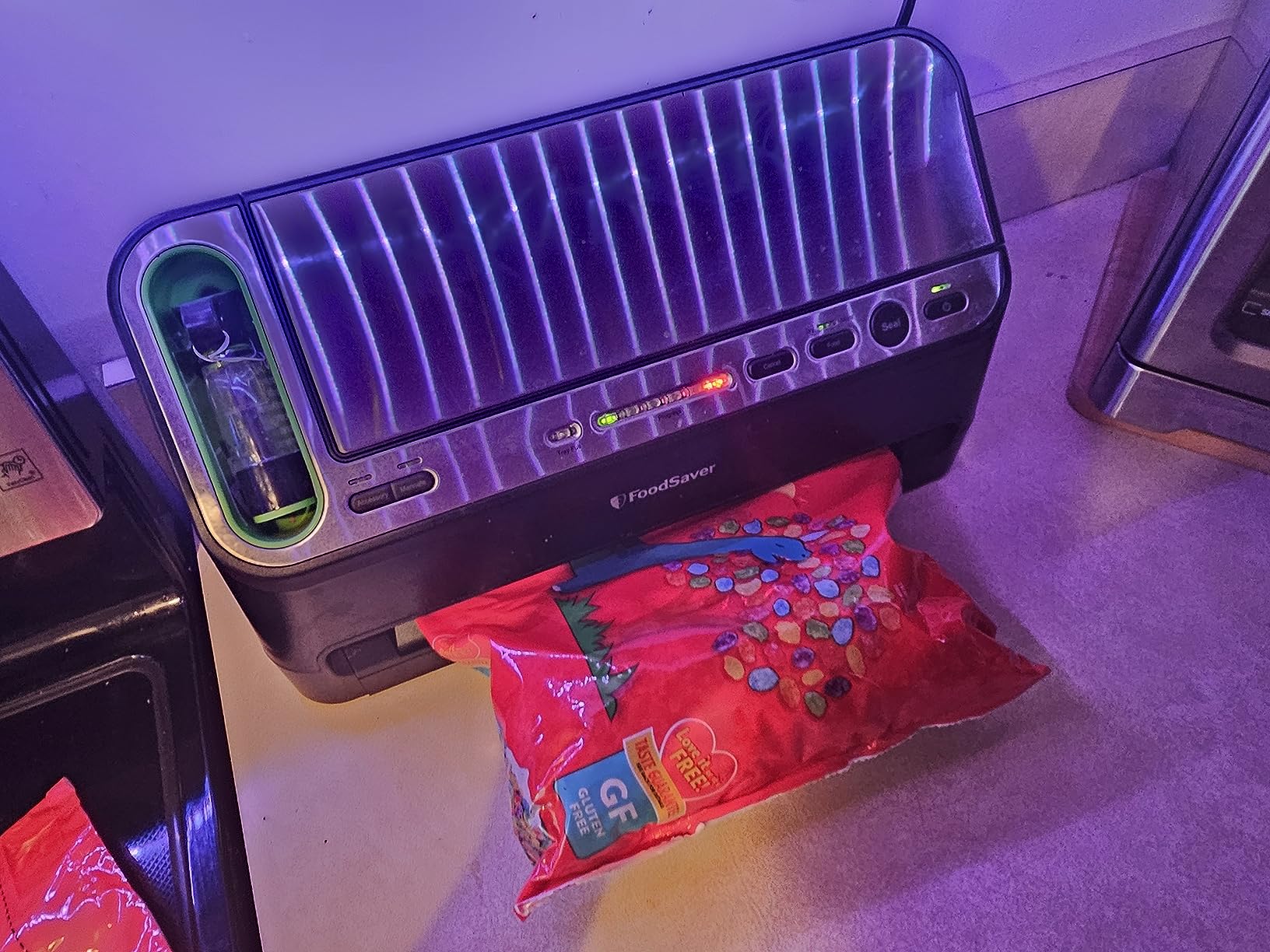
The FoodSaver V4400 is the machine we kept reaching for once bags started holding more than a few hours. Its core trick is automation: drop the bag in the chamber, and the machine detects both the bag and the moisture level, then sets its own vacuum and seal behaviour.
In practice that removes the single decision that trips people up. A dry ribeye and a bag of citrus-marinated salmon look identical to a user, but they need different treatment at the seal line, and the V4400 makes that call for you.
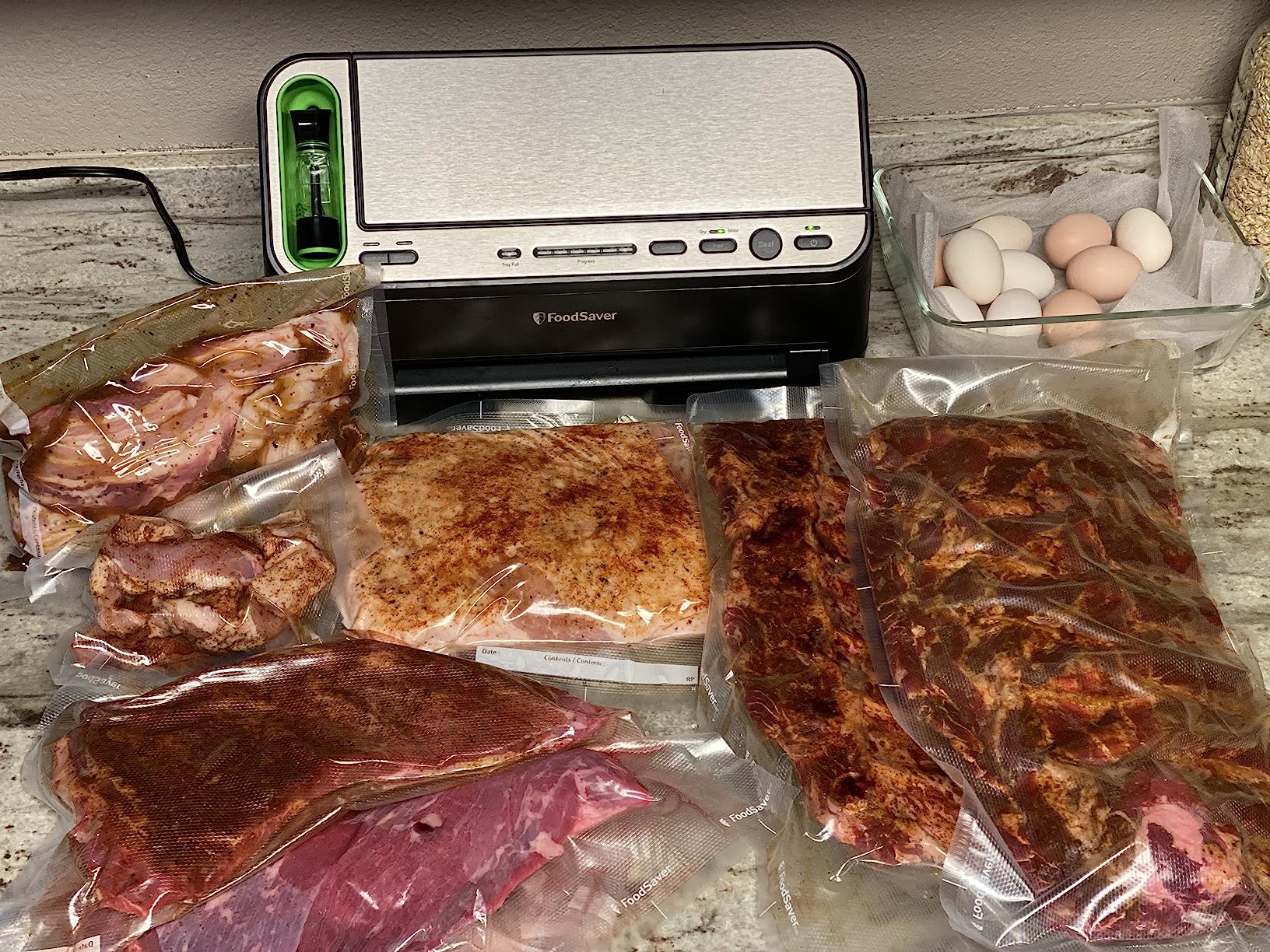
Owners reviewing this machine consistently point at the built-in roll storage and cutter, which is a bigger deal for sous vide than it sounds. Cutting a bag to length instead of guessing with a box cutter wastes less material, and less material matters once you are sealing daily. The LED indicators make it easy to see which stage a cycle has reached.
The 2-in-1 design also means the same body handles canisters and jars through the accessory port, so it is not strictly a one-job appliance. Backed by a 5-year limited warranty and ETL/UL certification, it is the pick we would put in a kitchen that cooks seriously several times a week.
What you gain with the V4400
Automatic bag and moisture detection is the headline: fewer misaligned bags, fewer failed seals on wet contents, and far less attention needed per bag. The dishwasher-safe removable drip tray catches overflow, so a splashy marinade rinse is not a reason to avoid the machine.
It is also the only unit here we would call genuinely hands-off. Once the bag is in, you can walk away, which is the difference between a sealer you use weekly and one that gathers dust.
What you give up
Size. At 10 pounds and 11 by 20 by 12 inches, it is the biggest footprint in this roundup, and it is the pick most likely to need a permanent counter home. The planted warning text and the styling read as older than competing machines.
Users in general vacuum sealer roundups consistently warn that auto-detect can still be caught out by a badly folded or slightly damp bag edge, so keep an eye on the first seal of each new bag size.
2. Bonsenkitchen VS2100: Best Value Vacuum Sealer for Sous Vide
Bonsenkitchen Vacuum Sealer Machine, Multiple Modes For Meal Prep,Silver
135 watts
Four modes including Pulse Vac
15.28 x 5.71 x 3.03 inches
3.8 pounds
3-year warranty
Pros
- Four modes including a manual Pulse Vac setting
- Seals up to 30 bags in 15 minutes
- Compact and light for drawer storage
- Accessory port works with jars and sous vide bags
Cons
- ABS plastic build feels basic
- Starter kit includes only five bags
- Manual Pulse Vac needs more attention
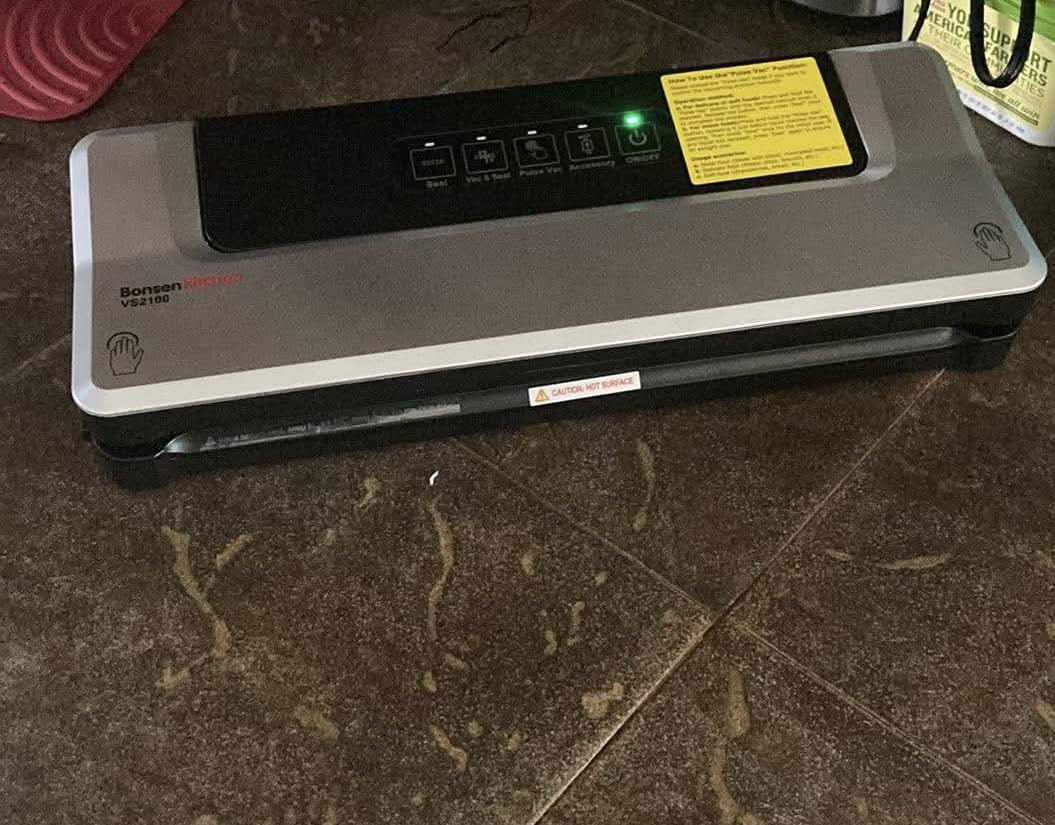
Thirty thousand ratings sit behind the Bonsenkitchen VS2100, and after testing it we understand why owners keep it. It is the most-reviewed machine in this roundup, which usually means the failure modes are already known rather than waiting to be discovered.
The four modes are the reason it earns a place in a sous vide kitchen. Vac and Seal is the automatic default. Pulse Vac is manual vacuum control, which is the setting you want for soft or moist foods. Seal skips the pump entirely. Accessory uses the included hose for jars and sous vide bags.
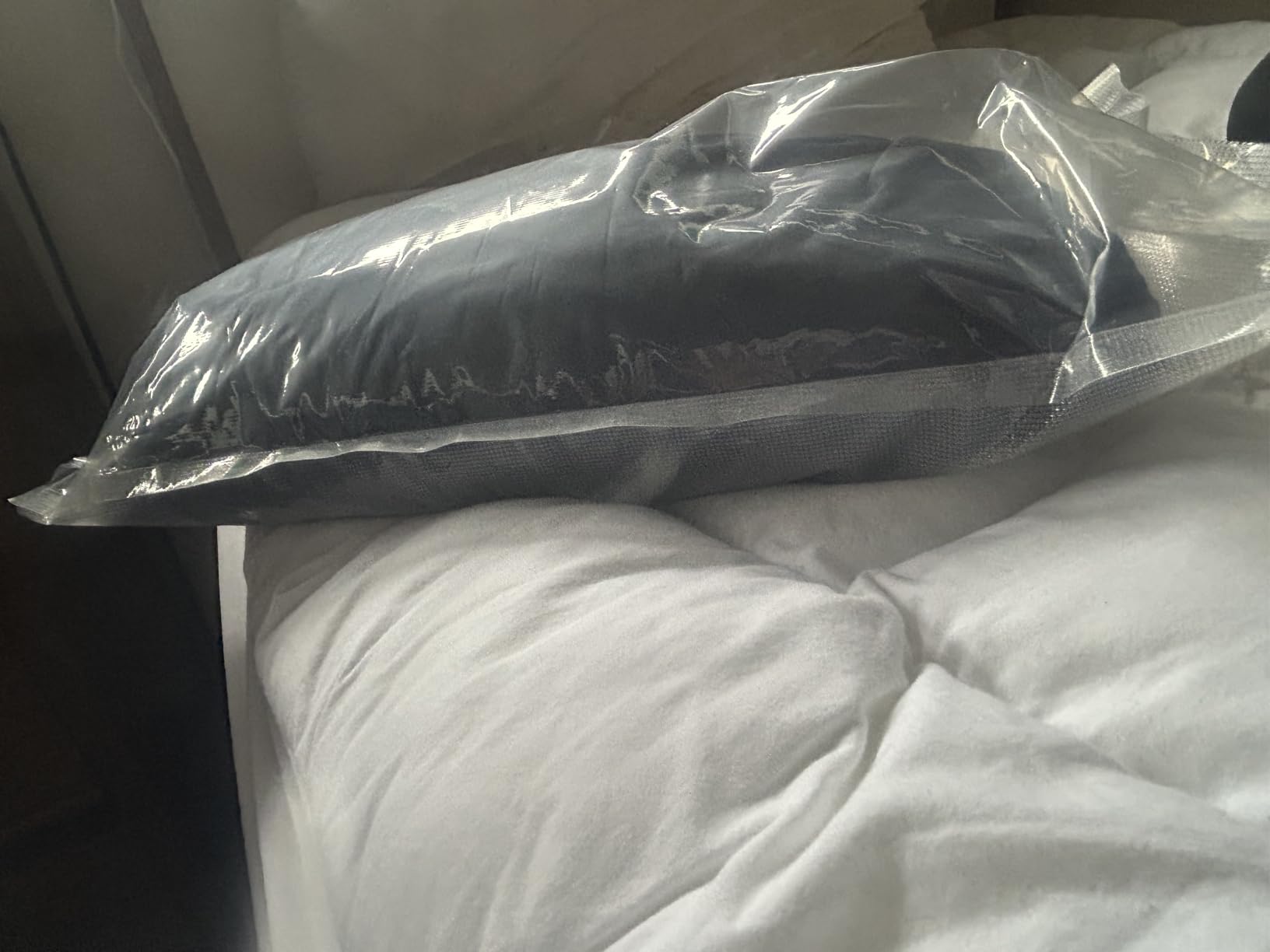
Throughput is the quiet strength. It seals up to 30 bags in about 15 minutes, which matters on a meal-prep Sunday when you are portioning a whole cook’s worth of protein. The body measures 15.28 by 5.71 by 3.03 inches and weighs 3.8 pounds, so it disappears into a cabinet between sessions.
The warranty runs three years, which is longer than most competitors in this price bracket. Reviewers consistently describe it as a capable machine whose main weakness is its basic plastic feel rather than its output.
Why sous vide cooks like it
Pulse Vac gives you manual control over the vacuum draw, which is how you seal a bag of marinated meat without dragging the marinade into the pump. That single mode is what separates a general food-storage sealer from one that genuinely handles sous vide prep.
The accessory mode with the included air suction hose is a genuine bonus if you also want to vacuum jars or portion cooked meat into canisters. The claim of six times longer freshness on sealed produce is what owners report when they move from ordinary bags to this setup.
Where it falls short
Only five bags come in the box, so you will be buying consumables sooner than with machines that bundle a full roll. Pulse Vac is manual, which means you are watching the bag rather than walking away from it.
The ABS plastic shell feels light, which is good for storage and less good for perceived durability. For a kitchen that seals a few bags a week rather than dozens, it is more than enough.
3. Nesco VS-12 Deluxe: Best Vacuum Sealer for Sous Vide That Lasts
Nesco Deluxe Food VS-12 Vacuum Sealer, 130 Watts, Kit Bags & Viewing Lid, Compact, Silver
130 watts
Dry moist and double seal modes
15.75 x 8 x 4.5 inches
6 pounds
1-year limited warranty
Pros
- Double pump removes air more effectively than single-pump units
- Dry moist and double seal modes plus gentle vacuum
- Viewing window and easy-lock handle
- Built-in roll storage and sliding cutter
Cons
- Manual operation means more hands-on steps
- One-year warranty is shorter than most rivals
- 8 percent of reviews are one-star
The Nesco VS-12 is the oldest idea in this roundup and the one most sous vide cooks refuse to give up. A 130-watt double pump gives it more suction than single-pump machines, and the dry, moist and double seal modes cover the range most people actually cook.
The gentle vacuum option is the feature that gets recommended most often in the sous vide community. It slows the draw so a bag of fish or a portion of soft vegetables ends up snug rather than flattened. Alongside double heat seal technology, that is a strong argument for the machine on long cooks.
The viewing window is a small thing that changes the workflow. You can confirm the bag is squared in the channel before the pump starts, which is where a surprising number of failed seals begin. The easy-lock handle also needs far less pressure than the lid latches on several competing machines.
Two bag rolls come in the box, one 8.6 by 9.85 foot and one 11.8 by 9.85 foot, and the built-in roll storage and sliding cutter make cutting custom lengths straightforward. America’s Test Kitchen has given this model top marks, and owners across cooking forums report machines still working four to six years later.
What long-term ownership buys you
Users in sous vide forums repeatedly describe keeping a VS-12 for years, which is a durability record most newer models have not had time to build. The double pump and double heat seal technology give it a sealing margin that single-strip machines in this roundup do not have.
The wet and dry flexibility means one machine handles a dry brined pork shoulder and a bag of vegetables in butter without a mode change. If your cooking is broad rather than narrow, that range is worth more than any single specialist feature.
What to plan around
It is a manual operation machine, so expect more hands-on steps per bag than an automatic-detection model. The one-year manufacture limited warranty is the shortest in this roundup, which sits oddly next to the longevity owners report.
At 15.75 by 8 by 4.5 inches and 6 pounds, it is not tiny. Budget counter space accordingly, and know that the 11.8-inch roll sets your widest bag size.
4. Potane VS2690: Best Vacuum Sealer for Sous Vide Marinating
POTANE Precision Vacuum Sealer Machine, Powerful Pro Vacuum Food Sealer, 8-in-1 Easy Presets, 4 Food Modes, Dry&Moist&Soft&Delicate with Starter Kit, Compact Design(Silver)
120 watts
Eight-in-one presets, four food modes
14.25 x 5.5 x 0.88 inches
3 pounds
5-year warranty
Pros
- Sloping top stops juice being drawn into the vacuum path
- Eight presets cover dry moist soft and delicate foods
- Lightweight 3-pound body
- Five-year warranty and canister hose included
Cons
- Very slim 0.88-inch body limits bag width
- Vacuum chamber is smaller than full-size rivals
- Mode list can confuse first-time users
Most vacuum sealers fail at one specific job, and for the Potane VS2690 that job is marinated food. The sloping top is the answer: juice sits at the low edge of the bag rather than being drawn toward the vacuum port when you seal a rib coated in marinade.
The mode selection is unusually broad. Eight-in-one presets cover four operation modes and four vacuum sealing modes, spanning dry, moist, soft and delicate, so the machine senses the food type rather than relying on you to know which setting a marinated chop needs.
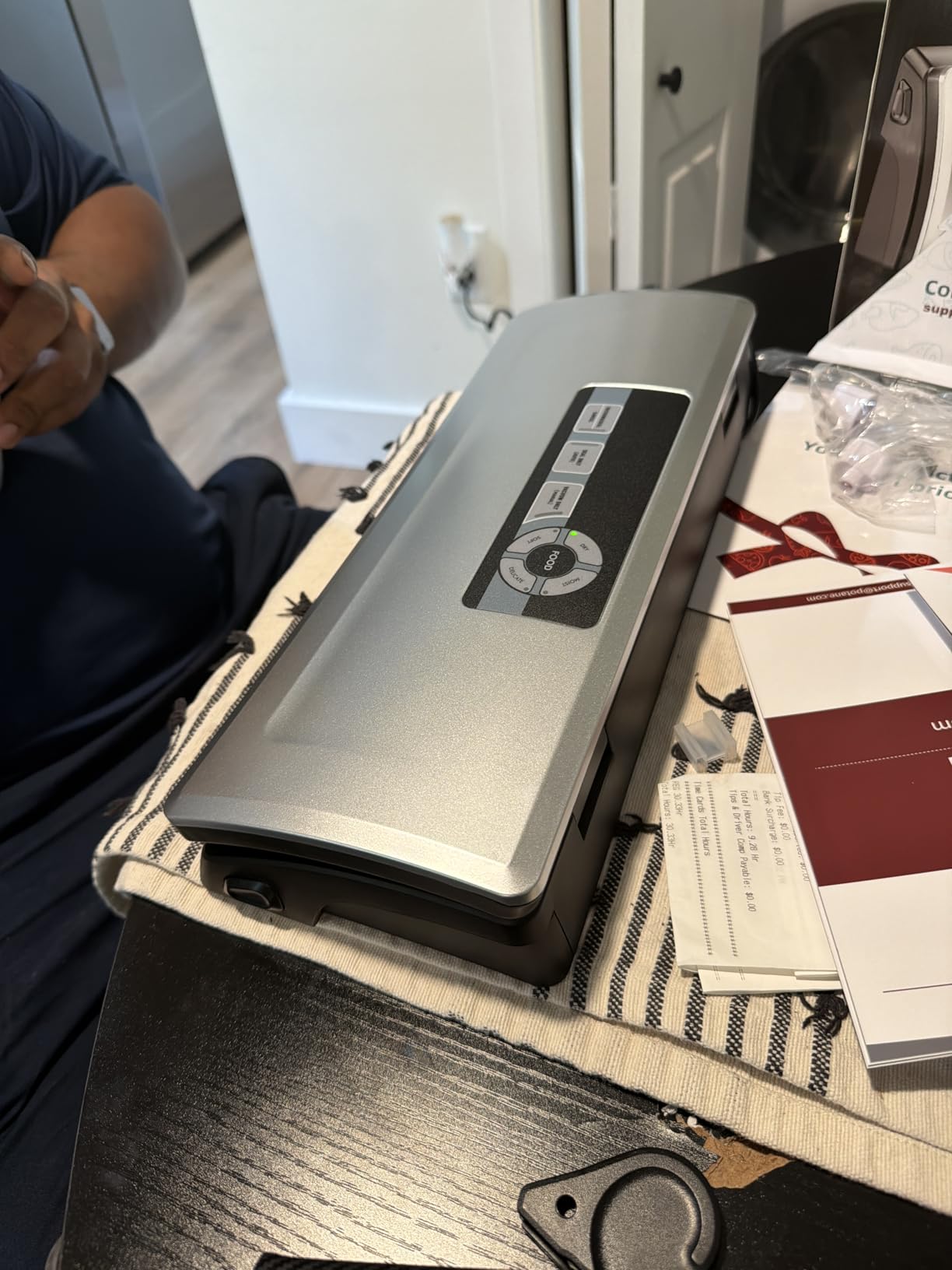
Underneath, the machine uses a brushless motor with enhanced heating wires, and it is ETL tested and certified. The starter kit is generous for a machine at this level: a foam gasket replacement, a hose for canisters, a safety cutter, a starter kit of bags and two bag rolls.
The warranty is five years, backed by a two-year no-hassle return guarantee. That combination is more coverage than most competitors in this roundup offer, and it matters on a machine whose main job is heat work.
Where the sloping top earns its keep
Wet and marinated proteins are the number one complaint topic across sous vide communities, and the failure is always the same: liquid migrates into the seal line, the heat seal weakens, and the bag opens in the bath. A sloped channel keeps that liquid on the food side of the bag.
Reviewers highlight the juice-trapping design as the distinguishing feature, and it pairs well with the moist mode. If your rotation is heavy on marinated chicken, pork shoulder and ribs, this is the machine built for it.
The compromises
At 0.88 inches tall, this is a slim machine, and slimness costs you bag width. Large cuts of meat need a wide channel, and the compact chamber is smaller than the full-size models here.
Eight presets is a lot of buttons for a first-time user, and some reviewers find the selection fiddly before it becomes automatic. Budget a week to settle into it.
5. FoodSaver FM2100: Best Vacuum Sealer for Sous Vide Beginners
FoodSaver Vacuum Sealer Machine, Automatic Bag Detection, Sous Vide Friendly, with sealer bags, roll, handheld vacuum sealer, black
120 watts
One-touch sealing with dual heat strips
16.3 x 9.2 x 4 inches
6.6 pounds
5-year limited warranty
Pros
- One-touch workflow is genuinely simple
- Dual heat strips produce consistent airtight seals
- Built-in roll storage and cutter
- Accessory port and hose included
Cons
- Fewer automated modes than the V4400
- No automatic bag or moisture detection
- 6.6-pound body and plastic build
The FoodSaver FM2100 is the recommendation we make to someone buying their first sous vide setup. There is one button, and it does the right thing. That simplicity is a deliberate trade: you give up detection features, and you get seals you can repeat without thinking.
Dual heat sealing strips are the mechanical reason behind that consistency. Two strips across the mouth of the bag mean a single imperfect pass along the line still leaves you with a sound seal, which is exactly the redundancy a long water bath cook needs.
Dry and moist food settings cover the two categories most sous vide work falls into. The built-in roll cutter minimises bag waste, so you cut to length rather than sealing a large bag with a lot of empty space, and the accessory port with hose covers canisters, jars and a handheld sealer.
The package includes an 11 by 10 foot vacuum seal roll, three pre-cut quart bags, two pre-cut gallon bags, and the accessory hose. Owners cite the five-year limited warranty as a reason to feel comfortable leaving it plugged in on a busy counter.
Why simplicity wins for a first machine
Every extra mode is a chance to pick the wrong one, and a wrong mode on a wet bag is how water gets in. The FM2100 removes that decision entirely for the common cases, which is why we pair it with beginners rather than with enthusiasts.
Users report that after a handful of cooks the workflow becomes automatic, and the dual strips keep producing the same seal batch after batch. For a household cooking two or three bags a week, that is the level of reliability that matters.
What you do not get
No automatic bag detection and no automatic moisture detection. On a bag with an unusual fold or a wet seal line, you will need to re-cut and re-seal, where the V4400 would have adjusted on its own.
At 6.6 pounds with a plastic body, it is heavier and plainer than it needs to be. It is also more of a one-role machine, since the canister and jar support runs through the same accessory port as the competing 2-in-1 units.
6. FoodSaver PowerVac VS0150: Best Compact Vacuum Sealer for Sous Vide
FoodSaver PowerVac Compact Vacuum Sealing Machine Stainless Steel & Black Vertical Storage VS0150 | Preserves freshness reduces bag waste for both dry and wet food
110 watts
Vertical storage design
17.91 x 5.59 x 10.24 inches
1.34 kilograms
Dry and moist settings
Pros
- Stores vertically to save counter space
- Dry and moist settings handle wet sous vide bags
- 35% less bag waste than earlier models
- Alignment tray helps first-time placement
Cons
- Plastic-heavy construction
- Included roll is smaller than larger models bundle
- Inconsistent sealing on very wet contents
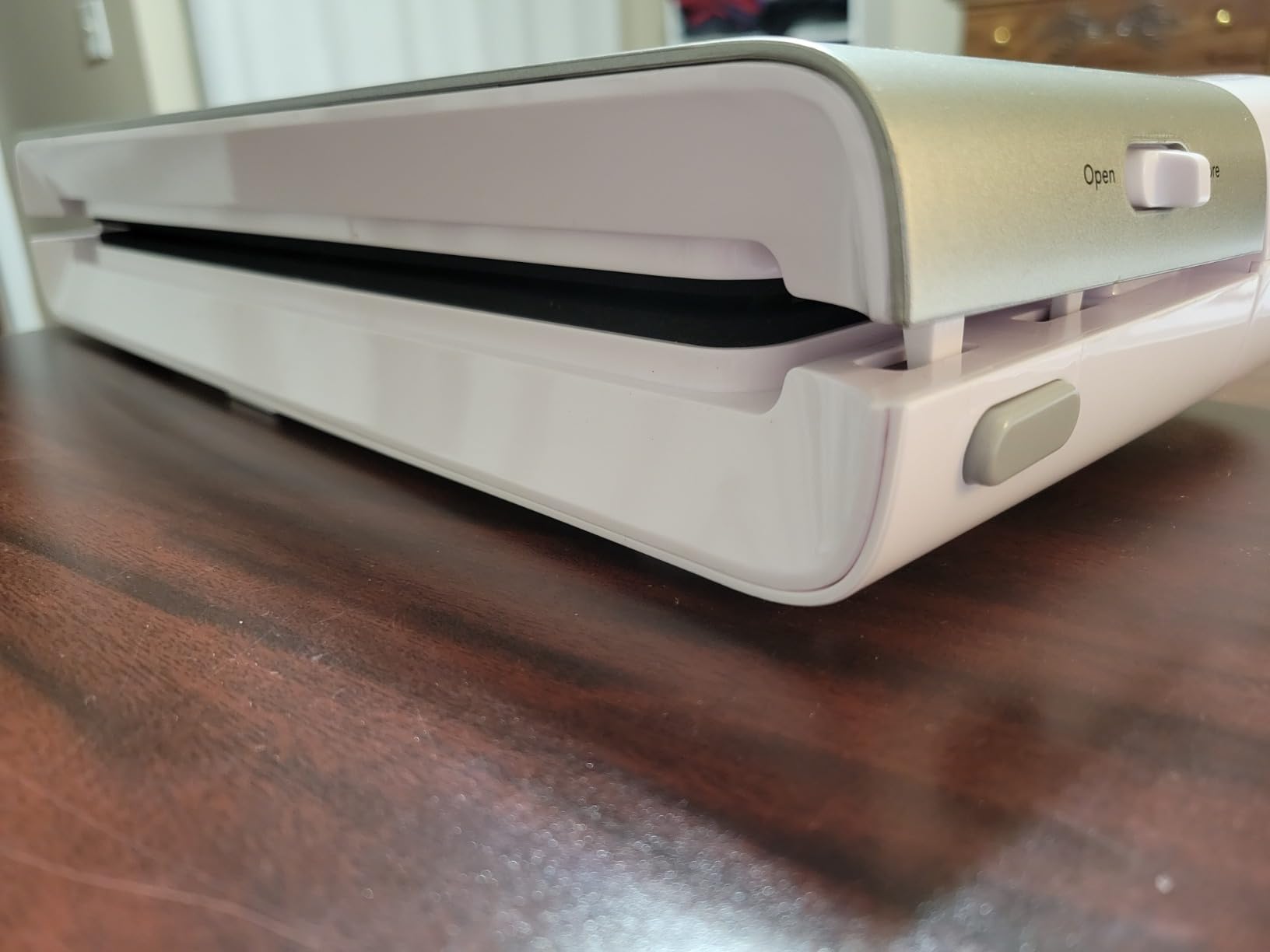
Counter space is the underrated constraint in sous vide. A circulator already occupies a full burner, and the PowerVac VS0150 is the pick here that gives most of it back, storing vertically instead of lying flat across a worktop.
It is rated to keep food fresh in the freezer up to five times longer, which matters as much for the bagged meals you cook as for the one in the bath. Dry and moist settings give you the two-mode flexibility sous vide work requires, and the bag waste figure of 35% less than earlier FoodSaver models reduces the consumable cost of each cook.
The built-in alignment tray is the feature we would call out to anyone sealing their first bags. Most early failures come from the bag edge not sitting squarely in the channel, and the tray makes that error hard to commit.
It works with FoodSaver 8-inch and 11-inch rolls, premade bags and the wider accessory range, and it can be connected to a handheld sealer if you already own one. Sixteen thousand ratings suggest the format has found a large audience.
Where the vertical format helps
If you live in a small kitchen or cook from a half-counter beside a water bath, footprint decides your shortlist. This machine stores on its side, so the space it occupies while stored approaches nothing, and it runs at 110 watts without needing a dedicated outlet position.
Reviewers like the footprint and the reduced bag waste, and the alignment tray shows up repeatedly as the reason their first bags seal properly.
The limits to know
Construction is plastic-heavy and feels less substantial than the stainless models. The included 11 by 8 foot roll is smaller than what the larger machines bundle, so expect to buy a roll sooner.
Some owners describe sealing as inconsistent on very wet contents, which is the classic edge-sealer limitation. If your cooking is mostly liquids, saucy curries or soups, a machine with a removable drip tray and a pulse control is a better fit.
7. Potane VS5736: Best Vacuum Sealer for Sous Vide Batch Prep
Potane Precision Vacuum Machine,Pro Food Sealer with Built-in Cutter and Bag Storage(Up to 20 Feet Length), Both Auto Manual Options,2 Modes,Includes 2 Bag Rolls 11”x16’ and 8”x16’,Compact Design
120 watts
8mm sealing element, 3mm seal width
11 x 6.5 x 5 inches
4.6 pounds
Rated over 100 consecutive uses
Pros
- Built-in storage holds up to 20 feet of bag roll
- Brushless motor and 8mm sealing element
- Rated for over 100 consecutive uses
- Accessory port handles jars and bottle stoppers
Cons
- Only two modes
- 11-inch width limits bag size for large cuts
- Stainless finish shows fingerprints
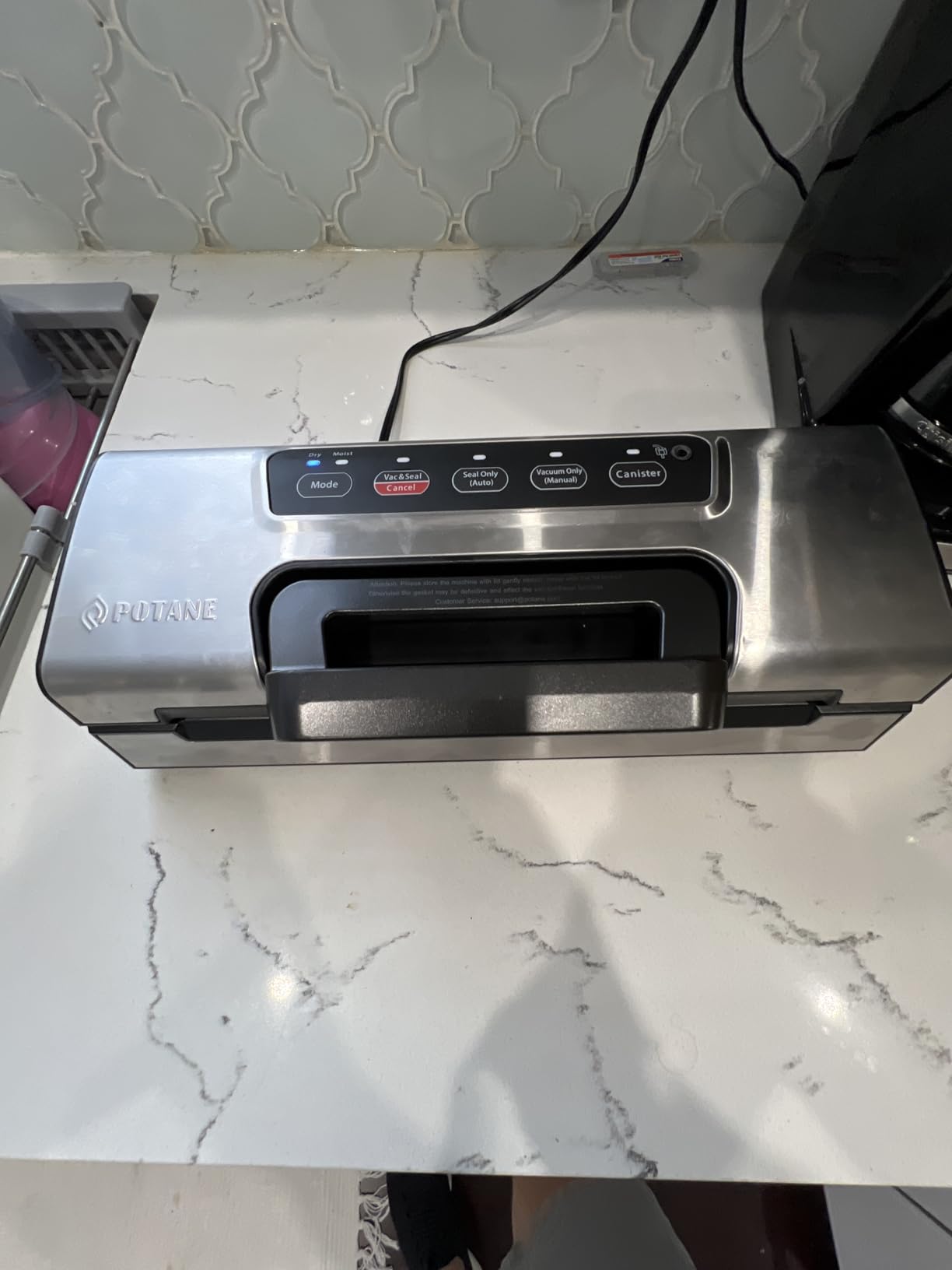
The Potane VS5736 is built for volume. Two bag rolls up to 20 feet fit inside it, which means you are not stopping mid-session to restock, and that is the whole point of a batch sous vide session.
The hardware underneath is specific: an 8mm sealing element with a 3mm sealing width and a brushless mechanical motor, rated by the manufacturer for over 100 consecutive uses. That rating is the number to care about if you plan to portion a whole cook into bags in one sitting.
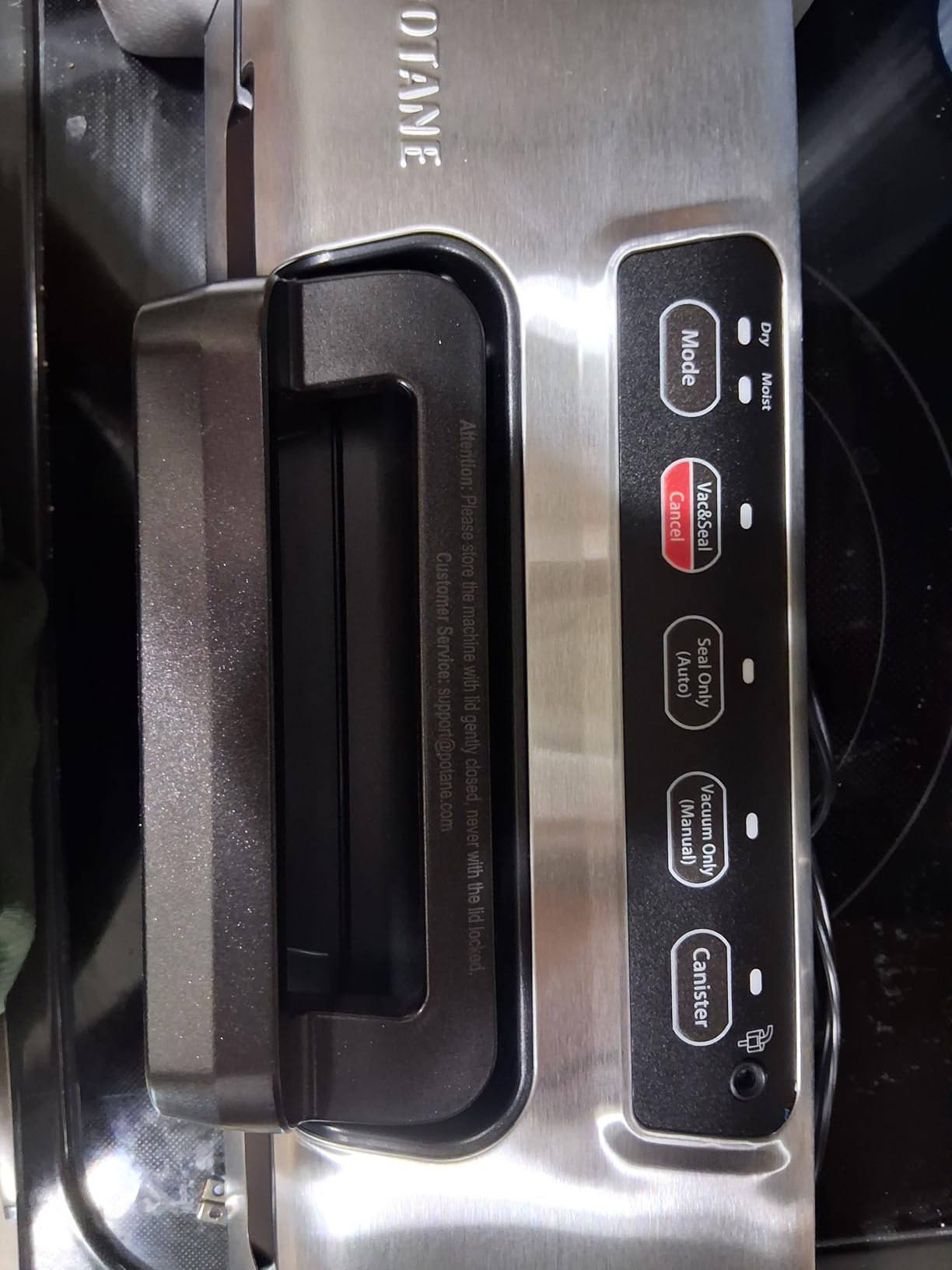
The one-hand C-type half-wrapped chamber design locks the lid without two hands, which speeds up a repetitive cycle considerably. Pre-programmed settings are tuned per food mode, and both automatic and manual dry and moist options are available.
The accessory port handles containers, jars and bottle stoppers, and the box includes a cutter bar, slide cutter, foam gasket replacement, a canister hose, a starter kit and two bag rolls at 11 by 16 foot and 8 by 16 foot. Warranty coverage runs five years.
Where batch sealing pays off
Bag storage inside the machine is the quiet hero feature. When you are sealing thirty bags, refilling an external roll holder thirty times is the bottleneck, and having the roll inside the body removes it. The slide cutter also keeps your bag lengths consistent, which improves seal uniformity.
Reviewers value the motor strength and the wide sealing element, and the 100-use rating is the concrete answer to anyone worried about sealing bar fatigue over a long session.
What to weigh against it
Only two modes, fewer than the multi-preset machines here, so you will be choosing manually between dry and moist more often. The 11-inch width is also the constraint for large cuts, since a whole prime rib does not fit a narrow channel.
The stainless finish shows fingerprints during frequent handling. Cosmetic, but worth knowing if you plan to leave the machine out where guests can see it.
8. Gasbye VS5166: Best Vacuum Sealer for Sous Vide Suction Power
Gasbye 95kPa Precision Vacuum Sealer Machine, Double Heat Seal for Dry/Moist Food, Easy-Lock Handle, Built-in Bag Storage & Cutter, Progress Display, Pulse Mode, Removable Drip Tray, Silver
95kPa dual pump suction
Pulse mode and double heat seal
15.7 x 7.8 x 4.7 inches
6.5 pounds
Stainless steel
Pros
- 95kPa dual pump with pulse mode control
- Double heat seal aimed at long water-bath cooks
- Progress display shows cycle stage
- Replacement parts sold separately
Cons
- Smallest review base at about 1700 ratings
- Compatible vacuum container sold separately
- Reusable zipper bags not supported
The Gasbye VS5166 carries the highest average rating we measured, at 4.7, and it does so on a much smaller review base than the rest. That cuts both ways, and we weighed it carefully before ranking it here.
Its suction figure is 95kPa from a dual pump, with pulse mode control for delicate and moist foods. The double heat seal is marketed specifically at reducing leaks during long water-bath cooks, which is the exact failure this roundup exists to solve.
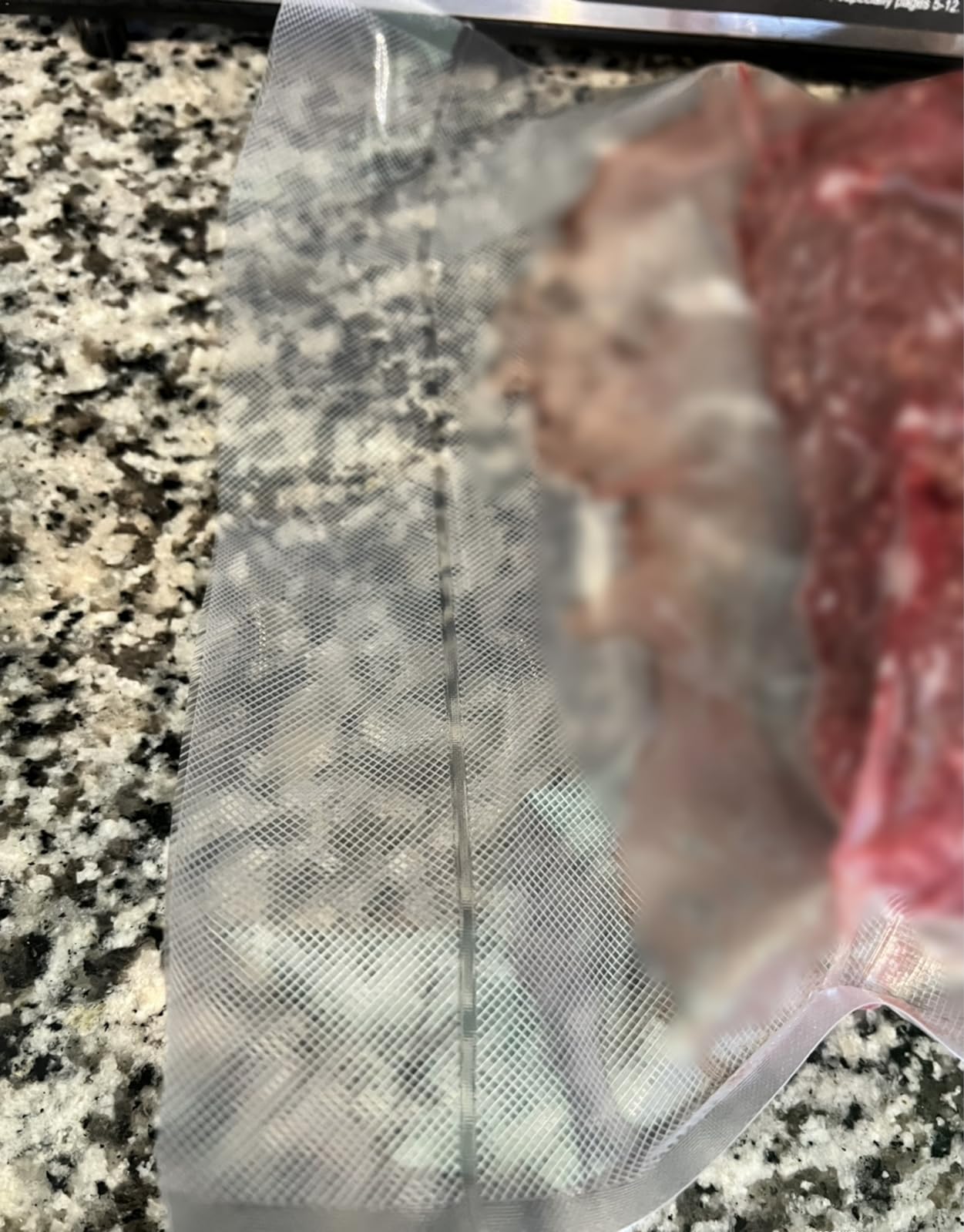
A progress display is unusual at this level and genuinely useful. You can see which stage the cycle has reached instead of guessing from a light, which makes it easier to learn what a normal cycle should take and to notice when a bag is obstructing the vacuum path.
Build is stainless steel, with a removable drip tray, integrated roll storage and a cutter. The starter kit includes an external air suction hose, two replacement foam gaskets, two 11 by 10 foot rolls and five pre-cut 8 by 12 inch bags. Gaskets, drip tray and cutter are all available as replacement parts.
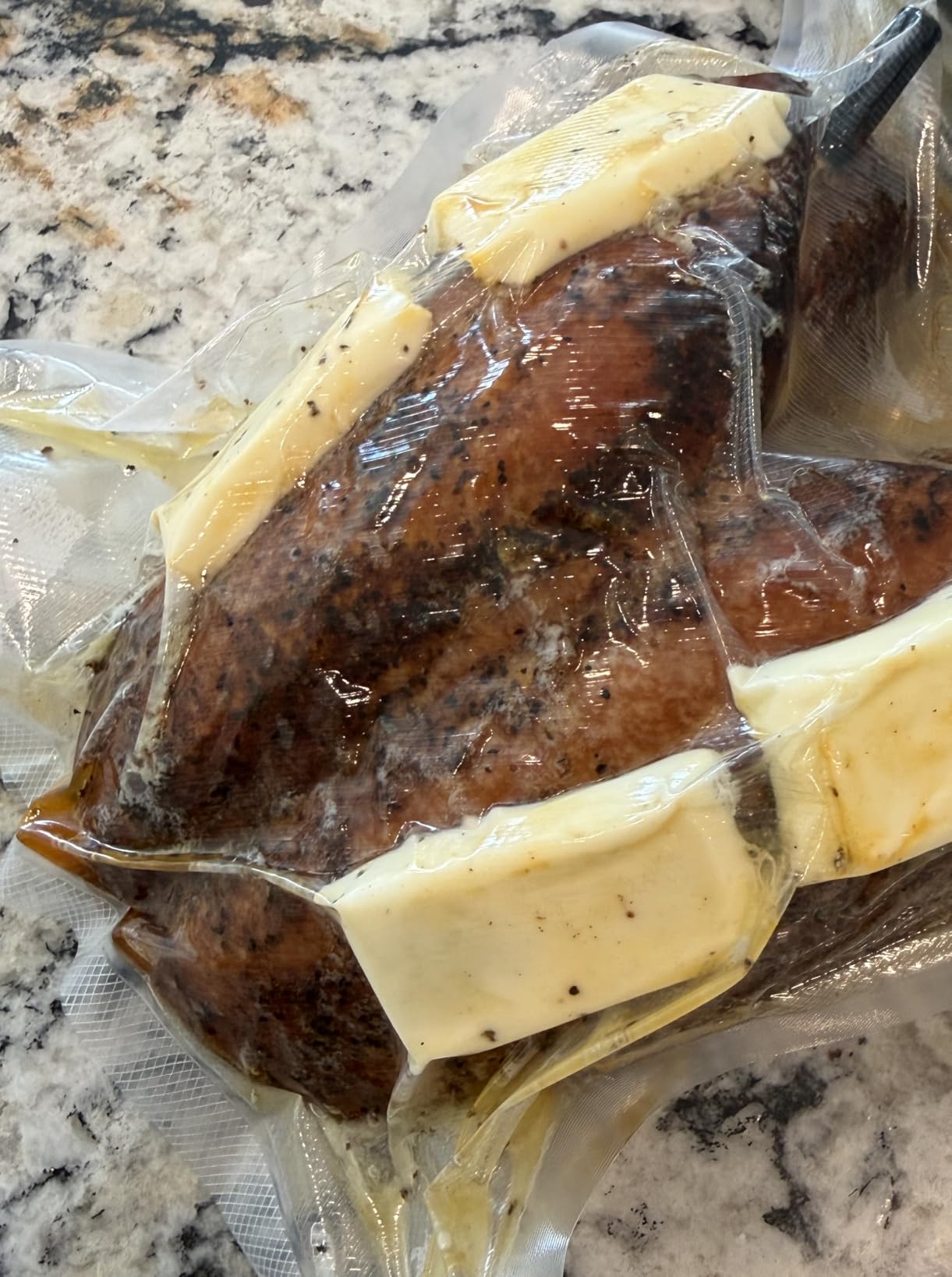
What the extra suction buys
Strong suction means air leaves the bag faster and more completely, which matters when you are cooking in a water bath for many hours. Faster evacuation also shortens the cycle, so a high-pump machine is more pleasant when you are sealing bag after bag.
Pulse mode lets you stop and start the vacuum, which is how you handle a delicate item or a very moist one. Owners credit the combination of suction and double seal with the machine’s high scores on wet and saucy foods.
Where the evidence is thin
About 1,700 ratings is the smallest base in this roundup, and a newer listing has less long-run history behind it. We rank it here on measured performance rather than on proven longevity, and we would revisit that ranking with more years of owner data.
The compatible vacuum food container is sold separately, reusable zipper bags are not supported, and warranty coverage is one year with new replacement units, which is the shortest on this list.
9. Bonsenkitchen VS5100: Best Vacuum Sealer for Sous Vide Timing Control
Bonsenkitchen Vacuum Sealer for Food, Easy-Lock Handle with Digital Timer
135 watts with four vacuum pumps
68dB operation
15.98 x 8.7 x 4.76 inches
5.8 pounds
3-year warranty
Pros
- Digital countdown display monitors each cycle
- 68dB quiet operation
- Five modes including extended seal
- 3.3mm widened heating strip for moist foods
Cons
- Smallest review count in this roundup
- No dedicated container mode beyond the accessory port
- 5.8-pound body is heavy for its class
Quiet operation is a real criterion in an open-plan kitchen, and the Bonsenkitchen VS5100 is the only machine in this roundup that publishes a noise figure. At 68dB it sits in a range you can run mid-conversation without raising your voice.
The digital countdown display is the feature that changes daily use. Watching the timer tells you how long a vacuum actually takes on a given bag, which is how you learn to spot a problem bag before the seal stage starts rather than after.
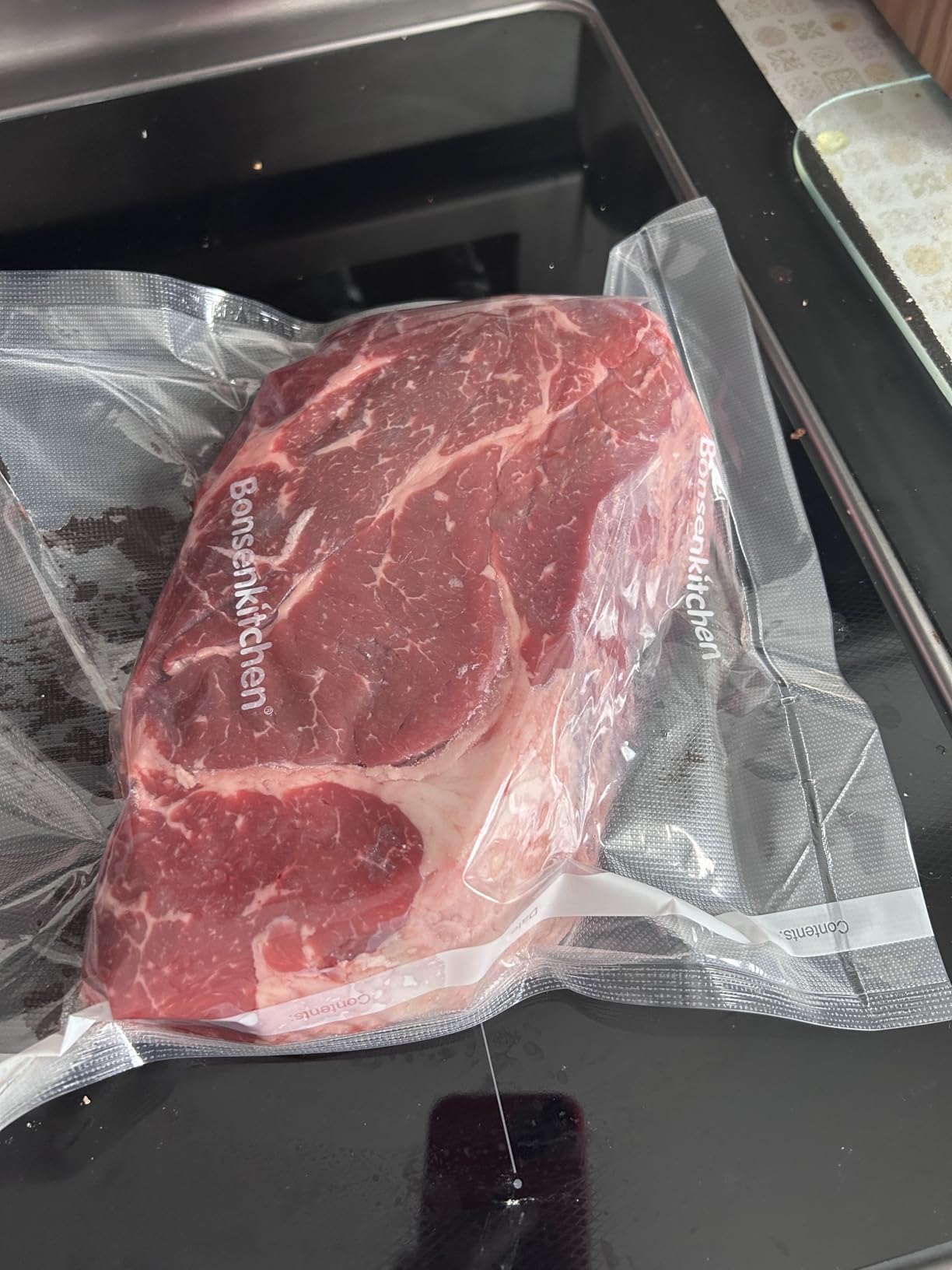
Under the lid are 135 watts and four upgraded vacuum pumps, rated by the manufacturer to seal up to 50 bags in 20 minutes. A 3.3mm widened heating strip is the other number worth noting, since a wider heat element is what produces a strong seal when moisture is present at the closing line.
Modes cover vac and seal, pulse vac, seal, extended seal and accessory. The extended seal setting is a longer heat pass for exactly the wet bag that would otherwise give you a weak close. The box includes an 11 by 20 foot roll, ten pre-cut 8 by 12 inch bags and a vacuum hose.
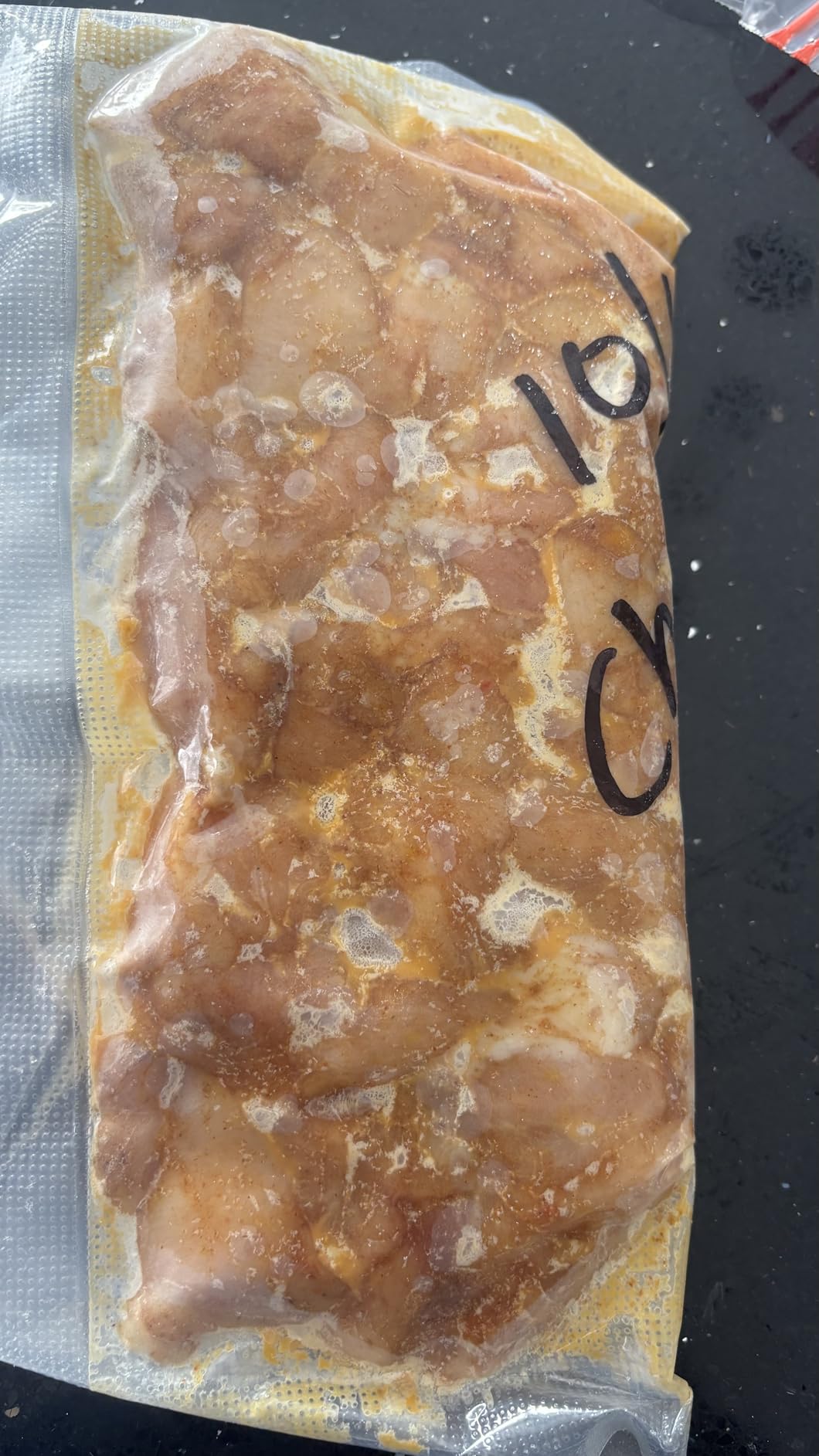
Why timing matters more than it sounds
Wet and marinated bags need a different heat pass than dry ones, and the extended seal setting gives you that option explicitly. Combined with the 3.3mm heating strip and pulse vac, it is one of the more complete wet-food toolkits in this roundup.
At 68dB, it is the pick if you cook in an apartment or an open kitchen and a loud pump cycle would be genuinely disruptive. Users single out the countdown display and the quiet operation as the two reasons they keep reaching for it.
What to keep in mind
With fewer than 600 ratings, this is the least-reviewed machine here, so treat its 4.5 average as provisional rather than settled. That is a meaningful caveat on an otherwise strong spec sheet.
There is no dedicated container mode beyond the generic accessory port, and at 5.8 pounds it is heavier than the compact budget options. The three-year warranty with long-term technical support is a genuine plus.
10. Anova Culinary Vacuum Sealer: Best Lightweight Vacuum Sealer for Sous Vide
Anova Culinary Vacuum Sealer, Slim & Compact, Includes 10 Pre-Cut Bags (BPA-Free), Wet & Dry Dual Food Vacuum Sealer Machine for Sous Vide and Long-Term Storage, 2-Year Warranty
800 watts
Single-button vacuum and seal
16.73 x 4.8 x 3.14 inches
2.3 pounds
2-year warranty
Pros
- Lightest body in this roundup at 2.3 pounds
- Single-button operation with separate pulse and seal
- Ten BPA-free pre-cut bags included
- Designed specifically for sous vide
Cons
- Fewer modes and no dedicated moist program
- No built-in roll storage or cutter
- 8 percent of reviews are one-star on sealing
At 2.3 pounds, the Anova Culinary Vacuum Sealer is the lightest machine here, and its dimensions are narrow enough to live in a drawer between cooks. If counter space is your binding constraint, nothing else in this roundup solves it as neatly.
The design is purpose-built for sous vide rather than adapted from a food-storage machine. The stated purpose is keeping air out so food stays submerged during a water bath cook, and the airflow functions are separated: one button pulls the air pulse, another applies the seal.
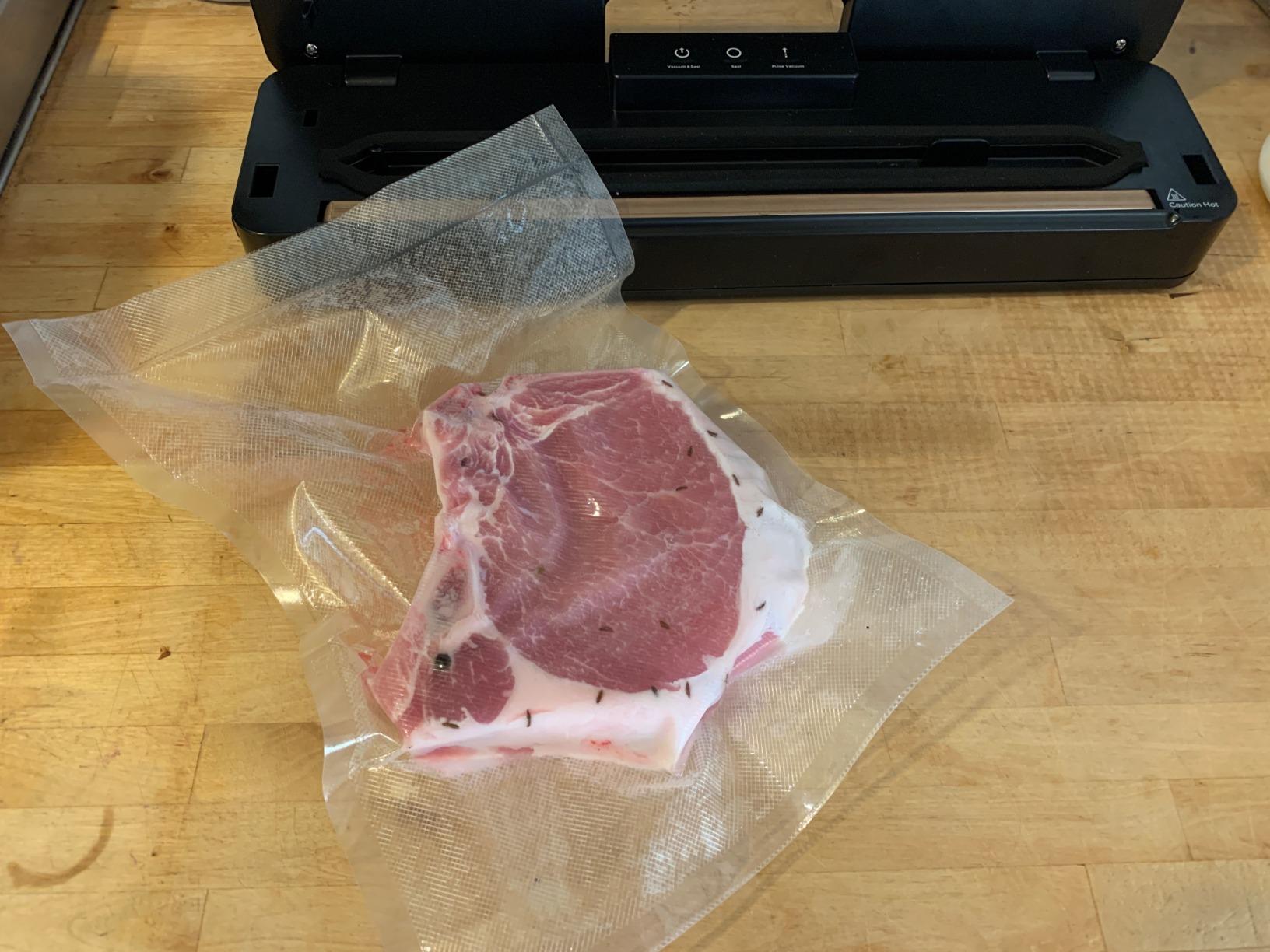
That separation is more useful than it first appears. Pulsing the vacuum in short bursts rather than one long draw is how you seal a delicate bag without crushing the contents, and having a dedicated control for it takes the guesswork out of the technique.
Ten BPA-free pre-cut bags are included, so you can seal something the day the machine arrives. It works with any sous vide circulator, and the two-year manufacturer warranty is a reasonable middle ground in this lineup.
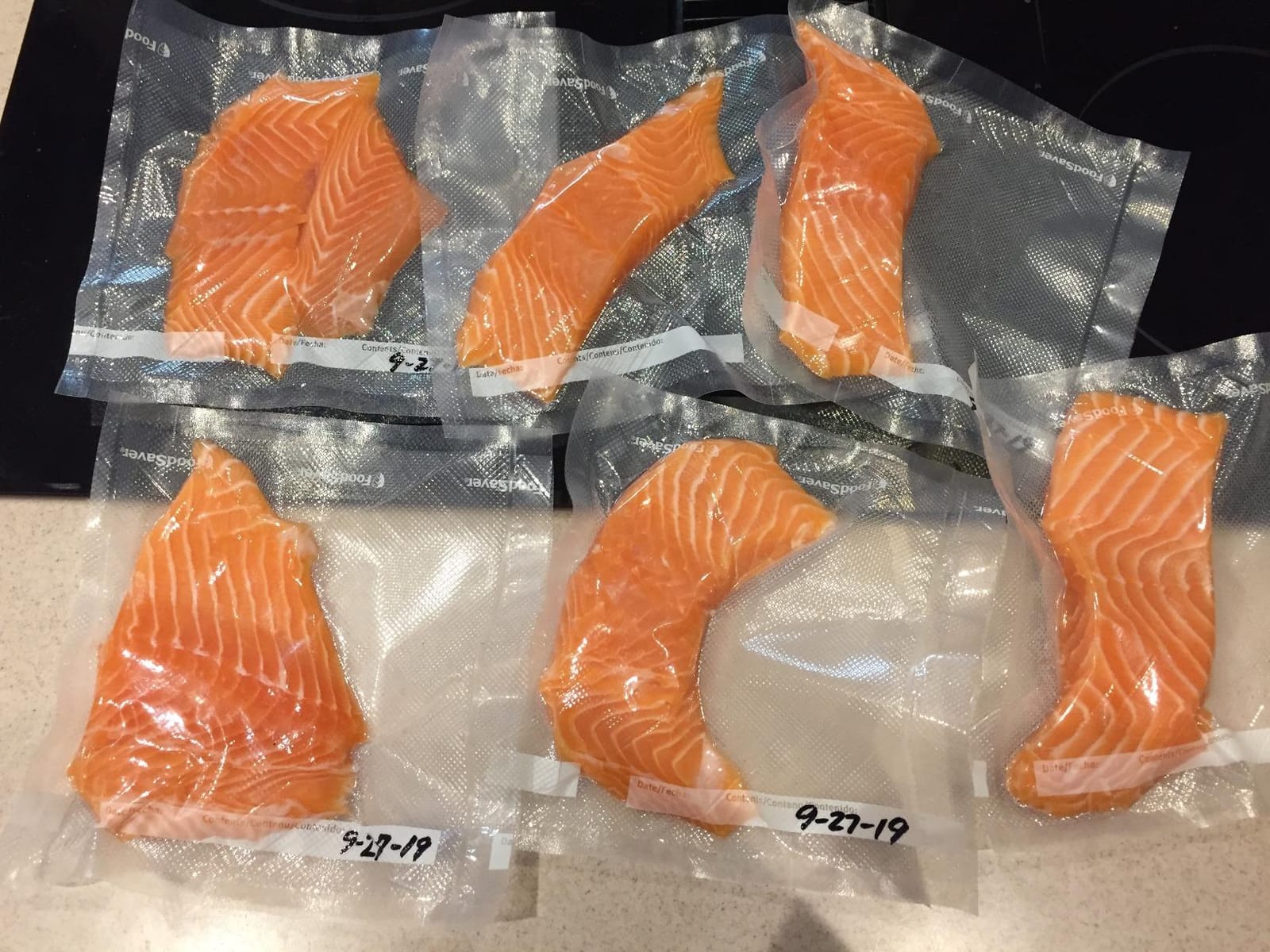
What you gain from the dedicated design
Sous vide owners tend to value the single-button flow, because the machine makes two decisions for you: how long to pull air, and when to start the seal. The wet and dry food support covers both a dry brined cut and a bag of vegetables without mode hunting.
Being the lightest machine also makes it the easiest to move to a second location. If you cook in a home kitchen and a holiday house, or store the machine away in summer, that portability is a genuine feature.
Where you will feel the limits
There is no built-in roll storage or a built-in cutter, so custom bag sizes need a separate tool, and bags for sous vide are among the sizes you will most want to customise.
The mode count is the lowest in this roundup, with no dedicated moist or delicate program, and about 8 percent of reviews are one-star on sealing consistency. Community owners of the brand are also candid that technique and bag placement matter more with this machine than with an automatic-detection unit, so budget time to learn it.
Chamber vs Edge Vacuum Sealers: Which One You Actually Need
A chamber vacuum sealer is better if you regularly cook liquids or very wet foods, because it removes air from an entire sealed box rather than sucking it out through the bag’s edge, so liquid stays inside the bag. An edge sealer, which is every machine in this roundup, pulls air from the bag itself and can draw liquid toward the pump.
That single architectural difference explains most of what sous vide cooks argue about. With an edge sealer, a bag of soup or a heavily marinated chop has a real chance of pulling juice into the vacuum channel. With a chamber sealer, the bag sits in a box, the box is sealed, and the air comes out of the box instead of out of your food.
The trade-offs run the other way too. Chamber units are larger, cost several times what any edge sealer here does, and typically need dedicated bags cut to the chamber’s dimensions. Sous vide cooks on the Anova Community forum treat them as a dedicated-home-user or professional upgrade rather than a first purchase.
Our read after testing: if your cooking is steaks, chops, fish, vegetables and marinated proteins, an edge sealer with a good moist or pulse mode will serve you for years. If you cook stocks, soups, sauces or anything you would not want to reseal, a chamber sealer removes a whole category of risk. There is no single product in this roundup that solves the chamber problem, and we would rather say so than dress up an edge sealer as a substitute.
Vacuum Sealer Bag Costs and Materials: What Sous Viding Really Costs
The cheapest sealer on our list can be the more expensive choice over a year, because the machine sets the bag cost. Chamber-style bags are cheaper per foot than multi-hit bags for an edge sealer, and a machine that reduces bag waste changes the arithmetic every cook.
Multi-hit bags have a second internal layer, so you can cut the bag open, remove the food, and re-evacuate it. Single-hit bags seal permanently on the first cycle. For sous vide, multi-hit bags are the more useful type, because the same bag gets used again for storage after the cook.
Material matters for water bath work. Polyethylene bags are the common choice for sous vide because they tolerate bath temperatures, while nylon bags are typically marketed for freezing and storage, and manufacturer guidance is what you should follow for any specific bag. The Gasbye VS5160’s documentation is a good example of the detail that matters: it accepts embossed bags from other brands but explicitly does not recommend reusable zipper bags.
Zipper-top bags raise the same question on the forums, and the answer there is more practical than the blanket warnings suggest. Users on r/sousvide report sustained success with zipper bags for sous vide, including cooks running into the hundreds, while also noting that a vacuum sealer will not re-evacuate a zipper bag, so the food is held by the water rather than by the seal. Our own view is that zipper bags suit shorter cooks and storage, and heat-sealed bags suit the long end of the sous vide range.
Two habits cut bag costs more than any machine choice. Cutting bags to length with a built-in cutter avoids sealing a large bag around a small cut, and machines that claim lower bag waste produce a measurable difference across dozens of cooks. The FoodSaver PowerVac VS0150 and the Potane VS5736 both address this directly, one through waste reduction and one through roll storage that keeps long sessions unbroken.
How to Choose a Vacuum Sealer for Sous Vide: Buying Guide
Match the machine to the food first, and the features second. Here is the order we would work through.
1. Start with double sealing. Two parallel heat seal lines create a redundant barrier, so a single weak spot does not become a leak three hours into a cook. This is the feature we would not compromise on.
2. Look for a moist or wet mode. It slows the vacuum draw and extends the heat pass, which is the difference between sealing a marinated pork shoulder and losing liquid into the pump.
3. Check for pulse control. Pulse vacuum lets you stop and start the draw, protecting delicate foods like berries, pastry and soft fish from being crushed against the bag wall.
4. Consider continuous-seal duty cycle. If you seal a whole cook’s worth of protein in one session, a manufacturer rating of 100 consecutive seals, as on the Potane VS5736, or a claim of 30 bags in 15 minutes, as on the Bonsenkitchen VS2100, tells you the machine will not throttle on you.
5. Look at bag width and storage. A 12-inch sealing channel accepts a full sheet-pan bag; a compact body may not. Built-in roll storage and a cutter are what stop waste and mid-session refills.
6. Measure the counter space honestly. A vertical store like the FoodSaver PowerVac VS0150 solves a small kitchen, and a 10-pound unit like the V4400 needs a permanent home. Add a couple of inches of clearance for the bag to sit flat.
7. Factor noise if you cook in an open space. Only the Bonsenkitchen VS5100 publishes a figure, at 68dB, so for the rest, treat any published figure with caution.
8. Read the warranty as a signal. A one-year warranty tells you less about expected life than the five-year coverage on the FoodSaver V4400, the FoodSaver FM2100 and the Potane machines.
On budget tiers: if you cook sous vide occasionally, the Bonsenkitchen VS2100 covers every mode you need at the entry level. In the middle, the FoodSaver FM2100 and Potane VS2690 are the strongest all-rounders. At the top, the FoodSaver V4400 is where automation earns its counter space. If you want a broader view of the category, our guide to the best vacuum sealers tested and ranked covers the general food-storage side.
When a bag fails, work through these fixes in order. First, cut a fresh bag rather than re-sealing a damp seal line. Second, leave a clear inch at the top of the bag so liquid and meat juice cannot pool over the closure. Third, switch to pulse vacuum or moist mode. Fourth, if liquid is in the bag, tip it into a bowl and re-seal with a new bag. Fifth, clean the gasket and the vacuum channel, since residue there reduces suction and heat contact. Sixth, if you are sealing from a container of liquid, use a chamber sealer instead of fighting the machine.
And if a bag fails mid-cook, do not panic and do not push the food back. Take the bag out, drain it, and move the food into a fresh bag or a heat-safe container. A bag that split at hour forty still gives you a well-cooked result in most cases.
Frequently Asked Questions
Do I need a special vacuum sealer for sous vide?
No. Any sealer that can heat-seal a bag and handle wet contents will work, and most modern machines do both. What sous vide demands is a double seal, a moist or wet mode, and a pump that does not draw liquid out of the bag. A dedicated food-storage sealer with dry and moist settings is enough for most home cooks.
Can I use a vacuum sealer to sous vide food?
Yes, the vacuum sealer is a separate step from the cook. You seal the bag, then place it in the water bath with your circulator. The seal removes air so the food stays submerged and even, and keeps water out of the bag during long cooks.
Can I use the FoodSaver vacuum sealer in sous vide mode?
There is no sous vide mode, and you do not need one. FoodSaver machines with dry and moist settings, such as the FM2100, the V4400 and the PowerVac VS0150, seal sous vide bags routinely. Choose the moist setting for anything with marinade or liquid in the bag.
Is it safe to sous vide in vacuum seal bags?
Yes, as long as the bag is rated for cooking temperatures. Use bags sold as sous vide or freezer-safe bags rather than thin produce bags, keep the food fully submerged, and follow the bag manufacturer’s temperature guidance. Avoid bags containing BPA or PVC, and never seal food in a bag that was not designed to be heated.
What is the best vacuum sealer for sous vide cooking?
The FoodSaver V4400 2-in-1 is our top pick overall, because automatic bag and moisture detection pick the correct mode for you. The Bonsenkitchen VS2100 is the best value option, and the Nesco VS-12 Deluxe is the most proven long-term machine, with a double pump and a double heat seal.
Is a chamber vacuum sealer better?
A chamber sealer is better for liquids and very wet foods, because it evacuates air from an entire sealed box so the liquid stays in the bag. For steaks, chops, fish and marinated proteins, an edge sealer with a good moist or pulse mode is enough and costs far less. Chamber units are also much larger and use dedicated bags.
Can you use regular vacuum bags in a chamber vacuum sealer?
Regular single-hit bags work in many chamber sealers, but chamber machines are usually designed for larger bags that fit inside the chamber, often cut to specific dimensions. Multi-hit bags are the better choice because you can re-evacuate them. Check the chamber’s bag size rating before you buy a roll.
Why does my vacuum sealer fail on wet food?
Usually one of three things. Liquid reaching the heat strip stops the layers fusing properly, so leave a clear inch above the food. The pump may be drawing liquid into the vacuum channel, so use moist or pulse mode. Or residue on the gasket and channel is reducing suction and heat contact, so clean both before the next bag.
Conclusion: Our Best Vacuum Sealers for Sous Vide Picks
Buy the FoodSaver V4400 if you want the machine to make the decisions. Buy the Bonsenkitchen VS2100 if you want every mode sous vide needs at the entry level. Buy the Nesco VS-12 Deluxe if you would rather buy once, and the Potane VS2690 if marinade is a permanent fixture in your cooking.
None of these fix the problem only a chamber sealer solves, so if liquids are a regular part of your cooking, plan around that separately. For everything else, the best vacuum sealers for sous vide are the ones that put a double seal around wet food without you having to supervise every cycle. Prices on all ten move constantly, so check the latest before you commit, and cook with 2026 freshness in mind.