
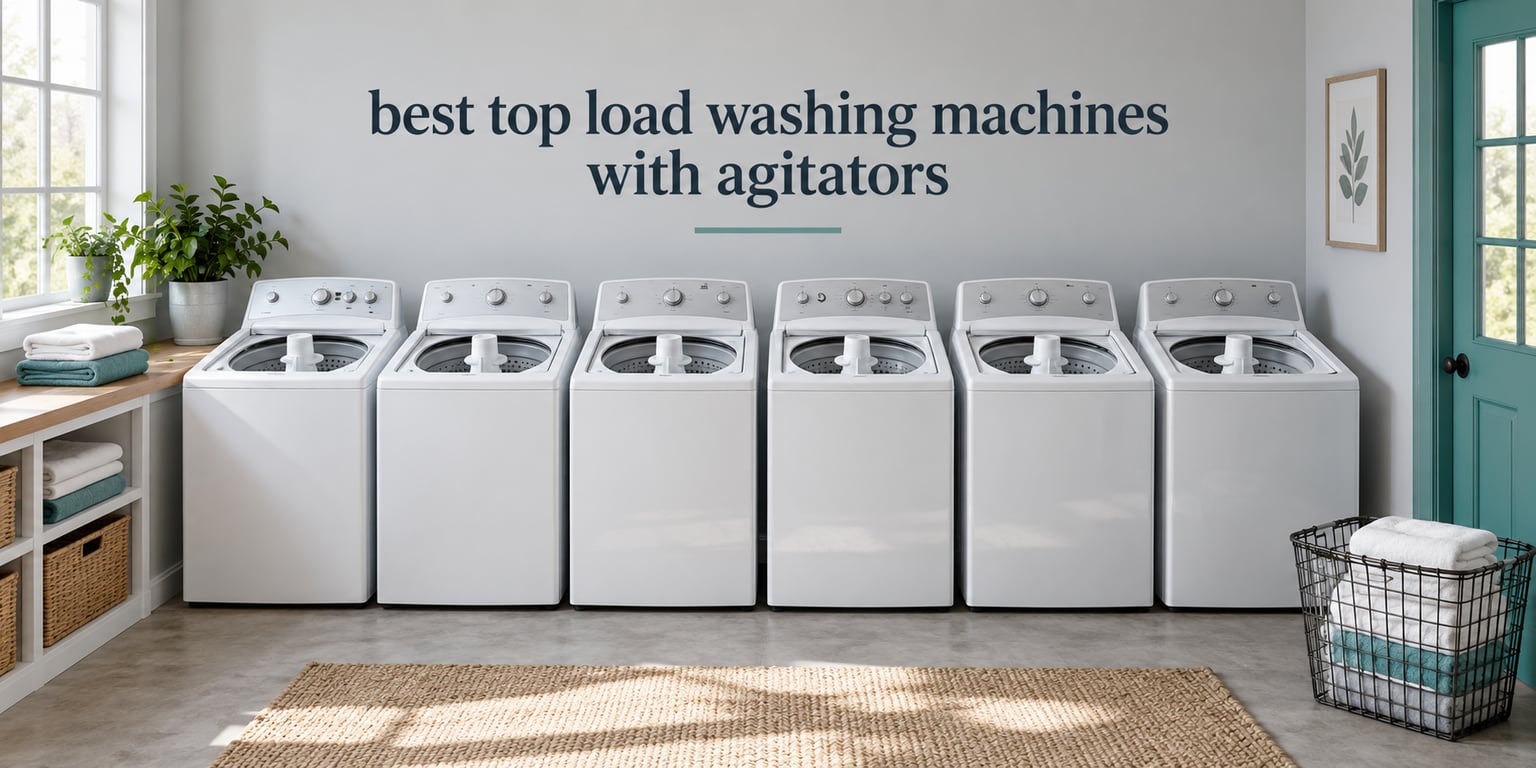
If you have ever pulled a musty-smelling load out of a front loader and decided you were done with front loaders, you are not alone. That single frustration drives a large share of the traffic to this topic, and it is the reason the best top load washing machines with agitators keep selling year after year even as impeller designs dominate the marketing. A top loader with a central agitator still does three things well: it finishes a cycle faster than almost any front loader, it is simpler and cheaper to service, and it never traps water in a rubber gasket seal.
There is an honest trade-off here, and we would rather name it up front than bury it. An agitator is a mechanical arm, and mechanical arms are rough on delicate fabric. It moves a lot of water, which is exactly the cleaning power people want on workwear, muddy jeans and bed sheets, and exactly the reason a fabric-care purist would choose an impeller instead. You get a tougher wash, faster cycle times, and a machine that any appliance technician in the country can service. You also get more water per load and slightly more wear on knits and structured garments.
For this roundup we worked through the full-size agitator top loaders that are genuine machines rather than replacement parts or half-capacity portables, compared their tubs, agitator designs, spin speeds, cycle lists, warranties and fit dimensions, and read the customer reviews closely enough to know where the weak points are. Six machines earned a place here. The methodology notes are further down, and every measurement in this article comes from manufacturer specifications and aggregated owner reviews, not from lab testing in our own facility.
If your laundry situation is different in a specific way, you may want to branch out. Apartment dwellers with no hookups should read our portable washing machine picks, and anyone shopping a tight utility closet should look at compact washer recommendations. If you have already decided you want a gentler wash action, our guide to the best front load washing machines makes the opposite case properly.
Table of Contents
Top 3 Picks for the Best Top Load Washing Machines With Agitators in 2026
We chose these three as the front of the list because between them they cover the most common buyer situations: a well-proven all-rounder, a machine built for the hardest soils, and an entry-level pick that still washes properly.

BLACK+DECKER BTLW41MW 4.1 cu. ft.
- 1300 rpm spin
- Stainless steel tub
- 10 wash cycles
- 45 dB operation

Kenmore 4.4 cu. ft. Triple Action
- Triple Action Agitator
- Express Wash 28 min
- Cold Clean cycle
- Soft-close lid

Amana NTW4516FW 3.5 cu. ft.
- 3.5 cu. ft. compact tub
- 44 dB operation
- Deep water wash
- 8 wash cycles
Every Top Load Agitator Washer We Reviewed in 2026 at a Glance
All six machines, side by side, with the numbers that actually separate them. Spin speed drives dryer time, capacity drives how much you can cram in, and the warranty line tells you how long the brand expects you to keep the machine.
| Product | Specifications | Action |
|---|---|---|
| BLACK+DECKER BTLW41MW 4.1 cu. ft. Top Load Washer |
|
Check Latest Price |
| Kenmore 4.4 cu. ft. Top Load Washer with Triple Action Agitator |
|
Check Latest Price |
| Amana NTW4516FW 3.5 cu. ft. Top Load Washer |
|
Check Latest Price |
 Midea MLTW41A1BWW 4.1 cu. ft. Agitator Washer Midea MLTW41A1BWW 4.1 cu. ft. Agitator Washer |
|
Check Latest Price |
 Speed Queen TR7003BN 3.2 cu. ft. Ultra-Quiet Top Load Washer Speed Queen TR7003BN 3.2 cu. ft. Ultra-Quiet Top Load Washer |
|
Check Latest Price |
 LG WT7305CV 4.8 cu. ft. TurboWash3D Agitator Washer LG WT7305CV 4.8 cu. ft. TurboWash3D Agitator Washer |
|
Check Latest Price |
1. BLACK+DECKER BTLW41MW – The Best Overall Agitator Washer
BLACK+DECKER 4.1 Cu. Ft. Top Load Washing Machine with Agitator, BTLW41MW
4.1 cu. ft. tub
1300 rpm spin
Stainless steel wash tub
45 dB
1-year warranty
Pros
- More than 9
- 300 ratings averaging 4.4 stars
- Stainless steel tub resists rust and wear
- 10 cycles from Bulky to Heavy Duty to Towels
- 24-hour delay start
- 1300 rpm spin shortens dryer time
Cons
- Drain hose must be raised to the manual's specified height
- No drain valve so an unelevated hose strains the pump
- Lint filter inside the tub needs cleaning about every ten washes
The BLACK+DECKER BTLW41MW is the machine we keep coming back to, and the reason is the size of its review pool. More than 9,300 ratings sit behind a 4.4-star average, which is the deepest owner history in this roundup by an order of magnitude. When a product accumulates that many reviews, the small failure modes stop being hypothetical. They show up in the ratings, and owners here are largely satisfied with how the machine performs.
Owners who do the most talking about this washer tend to be the ones in apartments and small homes, and they are the ones most enthusiastic about it. Cleaning performance on large, bulky loads such as towels and bedding is the headline, with a central agitator doing the work the machine was designed to do. Reviewers also single out the 1300 rpm spin, which pulls clothes close to dry and cuts the time your dryer needs.
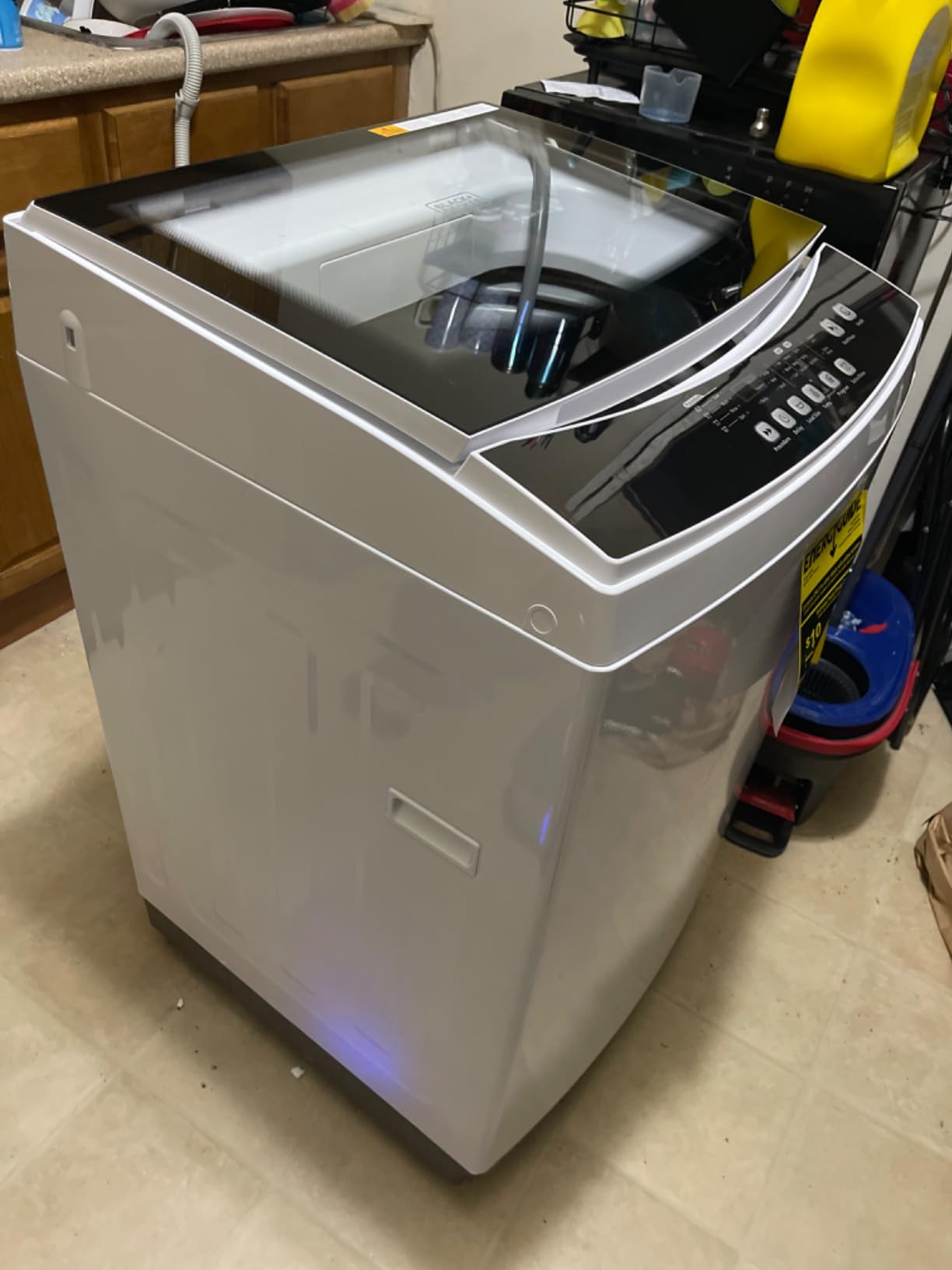
Operation is quieter than you might expect for a machine in this class. The published figure is 45 dB, which sits at the low end of the noise figures published in this roundup. That matters in a small laundry closet where a washer sits a foot from your kitchen table. The LED display and glass lid also give it a slightly more modern feel than a pure-dial machine.
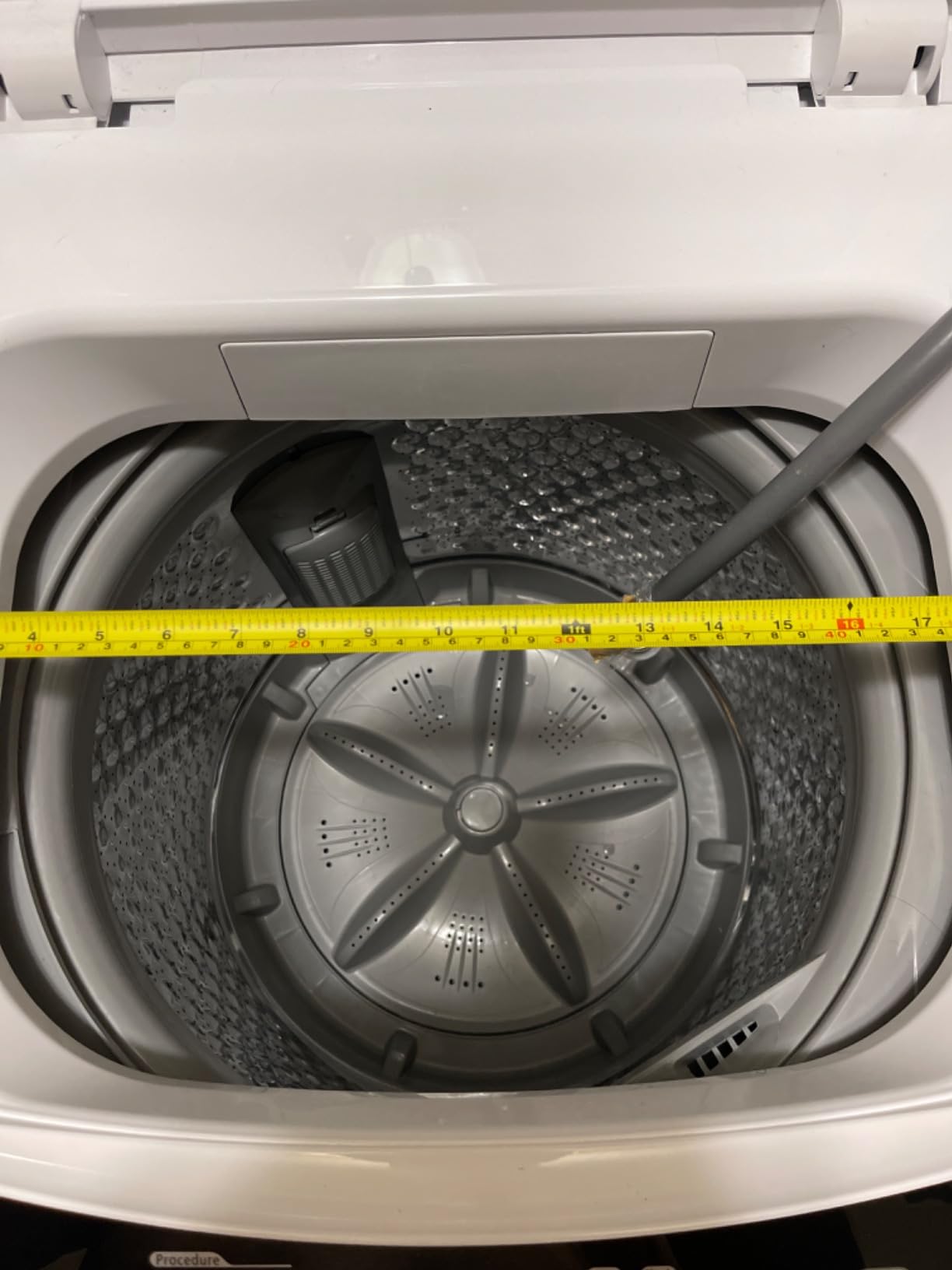
Ten wash cycles cover the ground a busy household actually needs, with Bulky, Heavy Duty, Normal and Towels among them, and a 24-hour delay function lets you start a load before you leave the house. Cycle lengths are adjustable, which is more control than many comparable machines offer. At 116.8 pounds it is one of the lighter machines here, and at 26.93 inches deep by 25.75 inches wide by 42.13 inches high, its 25.75-inch width is the narrowest of any machine here with a published figure.
Who this washer works well for
This is the pick for a household that wants a genuinely capable agitator washer without overthinking the purchase. If you wash a mix of everyday clothes, towels and the occasional comforter, the 4.1 cu. ft. tub and the 1300 rpm spin cover all three. The 45 dB rating makes it a sensible pick for a small space, and the 25.75-inch width means it clears a standard doorway far more easily than the wider machines in this list.
Where it falls short
Setup is where most of the complaints live, and one of them catches new owners out. There is no drain valve, so the drain hose has to be elevated to the height the manual specifies. If you leave it flat, the tub siphons itself empty instead of filling, and the drain pump takes extra strain from starting dry every cycle. Get the hose height right during installation and the problem never appears.
The other recurring notes are a lint filter inside the tub that needs cleaning roughly every ten washes, and occasional reports of on-board cycle programming errors where a Normal spin initially displays an incorrect long duration. Included hookups are also short, so most owners end up replacing them. None of these are deal breakers, but all three are worth knowing before delivery day.
2. Kenmore 4.4 cu. ft. Triple Action Agitator – Best for Heavy Soils
Kenmore 4.4 cu. ft. Top Load Washer with Triple Action Agitator – White
4.4 cu. ft. tub
Triple Action Agitator
28-minute Express Wash
55 dB
Stainless steel drum
Pros
- Strong 4.5-star average with 84 percent of ratings at five stars
- Three-way agitator action on heavy soils
- Express Wash handles small loads in 28 minutes
- AccelaWash cuts full loads up to 51 percent faster
- Cold Clean uses up to 90 percent less energy
Cons
- Only 107 reviews means limited long-term history
- Ten percent of ratings are one star
- Transit bolts must be removed before installation
This Kenmore has a 4.5-star average across 107 ratings, and the distribution behind that number is unusually clean, with 84 percent of ratings at five stars. What earns the rating is the Triple Action Agitator, which does three things at once. It sprays detergent solution at the load, it moves the wash basket itself, and it drives the agitator in circular motion, so the clothing is being worked from several directions rather than simply churned.
That design is aimed squarely at heavy soils, and it is the reason this machine earns the premium slot in our list. If your weekly load includes muddy work clothes, grass-stained children’s clothes or a lot of towels, this is the agitator design you want. The stainless steel drum will not chip the way a porcelain tub can, and the tempered glass soft-close lid is a small quality touch you feel every time you open it.
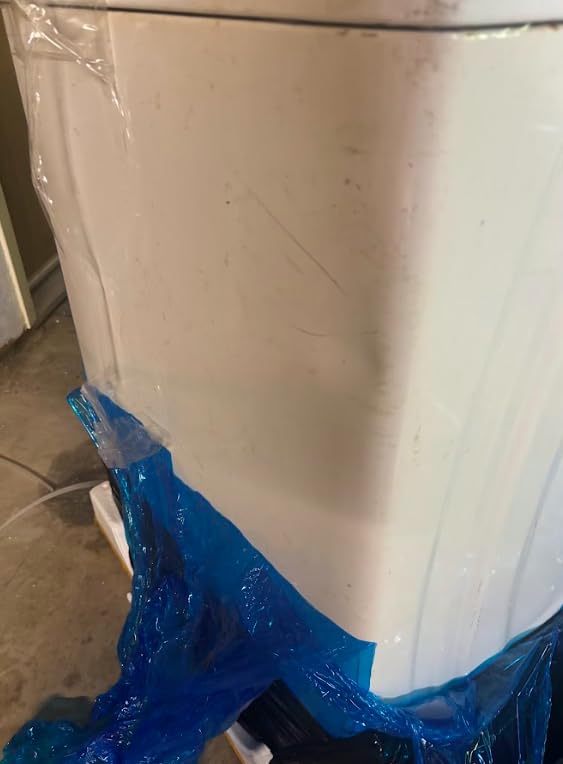
Speed is the other argument. Express Wash cleans small loads in 28 minutes, and AccelaWash cuts the time of a full load by up to 51 percent. Ten wash cycles with four temperature options and an extra rinse give you real control, and Cold Clean is specified to use up to 90 percent less energy than the normal cycle. Knob and touch controls with LED status lights mean you get tactile selection without giving up a display.
At 30 inches deep by 27 inches wide by 44 inches high and 125.7 pounds, this is a full-size machine and you should measure your doorway before you commit. Its 44-inch height is taller than the BLACK+DECKER and the Amana, so a low washer alcove is a problem. The included accessories are sensible too: instruction manual, two filters, a drain hose guide and a cable tie.
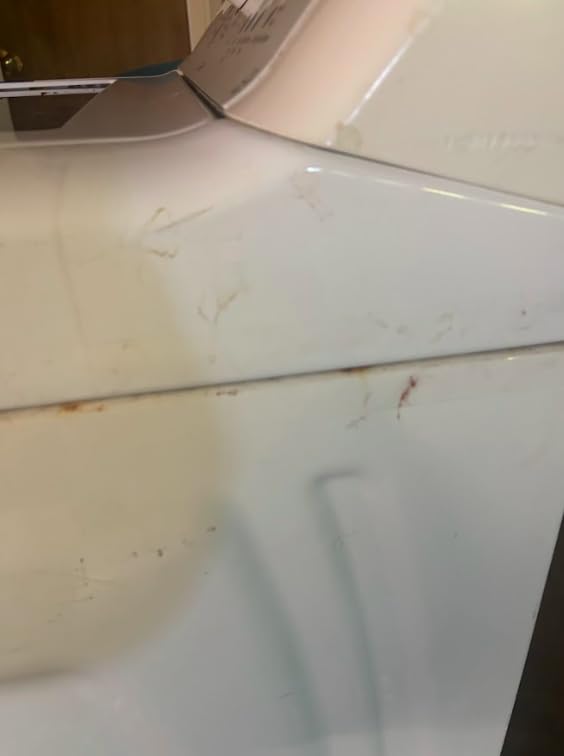
Who this washer works well for
Pick this one if your laundry is genuinely hard on a machine. Three-way agitation on a 4.4 cu. ft. tub handles more per load than most of the group, and the fast cycles mean a big laundry day does not consume your whole evening. Households that split laundry and wash heavily soiled loads separately will get the most out of the Triple Action design.
Where it falls short
The honest caveat is the sample size. 107 reviews is a small pool next to the BLACK+DECKER’s 9,300, which means there is simply less long-term reliability history behind this machine. Ten percent of ratings are one star, so failures are not rare either. The failure rate looks manageable, but you are buying a model with a thinner track record than the leader.
At 55 dB, this carries the highest published noise figure of the six machines, so it is a poor fit for a laundry closet next to where you work or eat. And the transit bolts at the back have to be removed before the first run, a step first-time buyers routinely miss. Set a reminder, because running a cycle with those bolts in place is not a good idea.
3. Amana NTW4516FW 3.5 cu. ft. – Best for Small Laundry Closets
Amana NTW4516FW 3.5 Cu. Ft. White Top Load Washer
3.5 cu. ft. tub
44 dB operation
700 rpm spin
8 wash cycles
Push-button controls
Pros
- Entry point into the agitator top loader category
- Compact 3.5 cu. ft. capacity that fits tight closets
- Deep water wash and blanket settings
- Refurbished units include all accessories
Cons
- 700 rpm spin leaves clothes wetter than faster machines
- Porcelain tub chips more easily than stainless steel
- Load-size auto sensing can misjudge the water fill
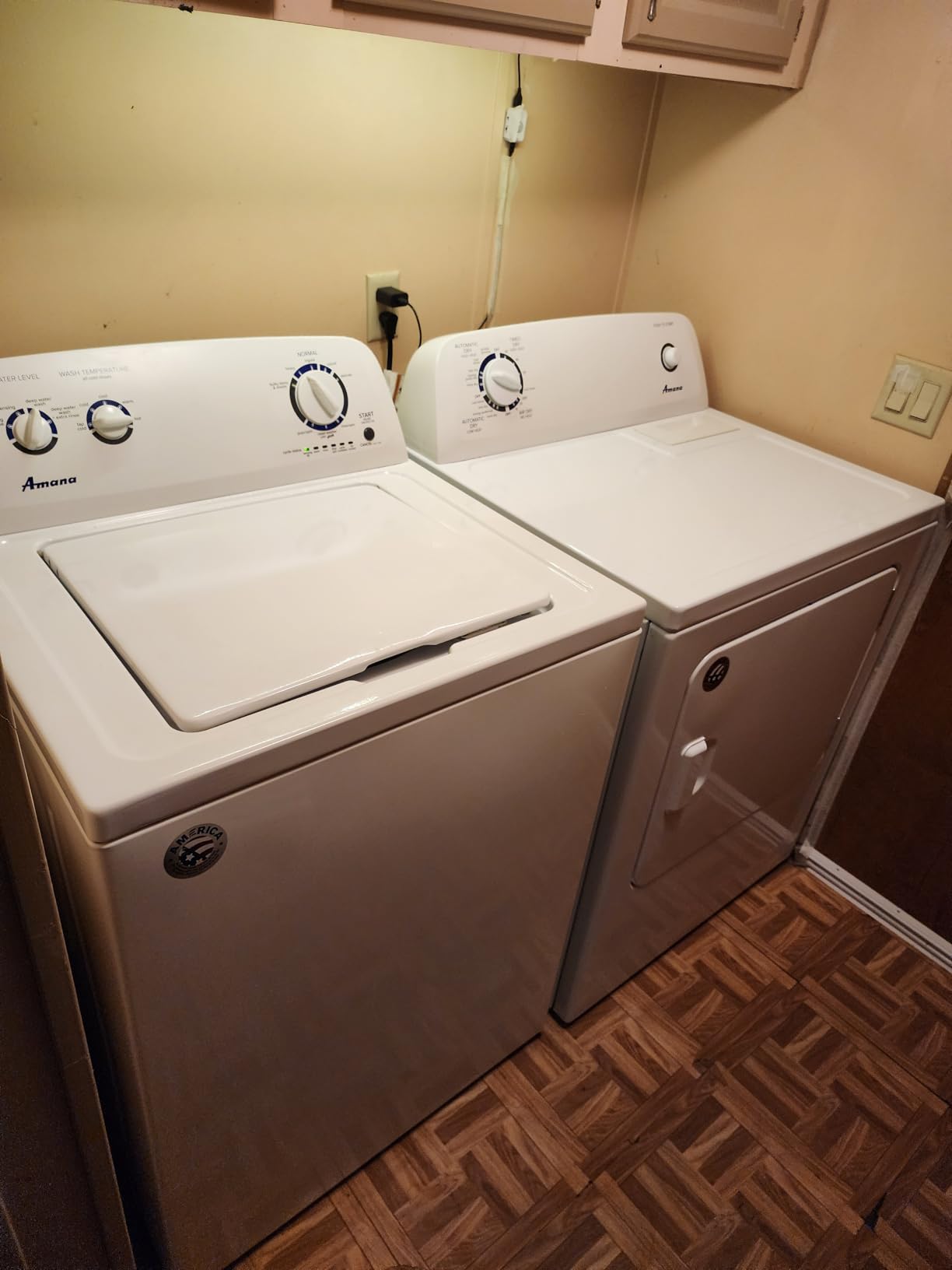
At 3.5 cu. ft., the Amana NTW4516FW is the smallest washer here, and that is the entire point of it. If your laundry room is a closet, a shared laundry closet in a rental, or a corner of a garage, this is the machine that will actually go in the space. A washer you have to leave in a laundry room because it will not fit is a washer you will resent.
It also carries the quietest published noise figure in the roundup at 44 dB, which pairs naturally with the small-space story. Eight wash cycles including a delicates option, a deep water wash setting and a blanket setting cover the main needs of a one or two person household. The push-button controls with an analog display are deliberately simple, with no app and nothing to connect to anything.
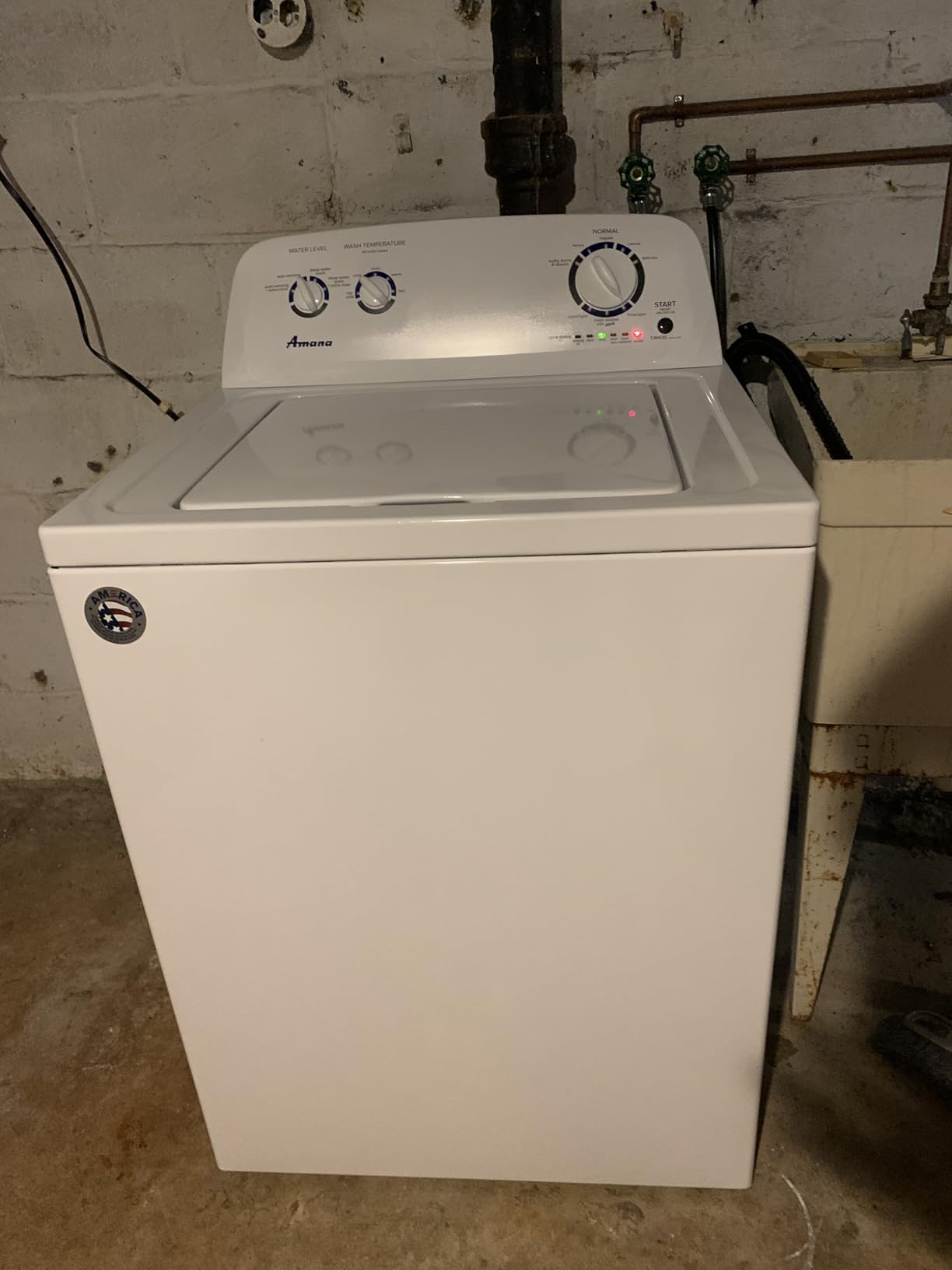
Two details tell you what kind of machine this is. First, the tub is porcelain rather than stainless steel, which is lighter but more prone to chipping over a long life. Second, the spin is 700 rpm, roughly half the speed of the fastest machines here, and that shows up in the dryer. Clothes come out noticeably wetter, so plan on a longer dry cycle, particularly for towels and jeans.
This particular listing is a refurbished unit, tested, certified, cleaned, inspected and repackaged, and it may arrive in a generic box with all the relevant accessories inside. Owners generally report clean output and quiet running, and the blanket settings come up often in positive reviews. For a buyer trying to spend as little as possible on a machine that still washes properly, the logic is defensible.
Who this washer works well for
This suits a couple, a single person, or anyone whose main constraint is floor space rather than load size. If you wash a few machine loads a week and mostly small items, the 3.5 cu. ft. tub is genuinely adequate. It is also the machine to consider for a second home, a rental unit you furnish, or a laundry room where every inch of width is spoken for.
Where it falls short
Do not buy this washer expecting a king comforter. Three and a half cubic feet is fine for a queen blanket and everyday bedding, but anything oversized is a struggle, and the tub does not grow. The 700 rpm spin means longer dryer time on every load, which quietly adds up over years.
There is also no manual override on water fill. The load-size auto sensing can misjudge a small load and pick too little water, and it is the only option, which is the single most common complaint in the reviews. One 1-star review reports complete failure after five uses, so warranty coverage matters.
4. Midea MLTW41A1BWW 4.1 cu. ft. – Best Spin Speed for Shorter Dry Time
Midea MLTW41A1BWW 4.1 Cf Top Load Washer Agitator Stainless Tub
4.1 cu. ft. tub
1400 rpm spin
Stainless steel throughout
8 presets plus Tub Clean
Auto Sensing load detection
Pros
- 1400 rpm is the fastest spin in the roundup
- Stainless steel tub throughout
- High Water option for large or heavily soiled loads
- Dedicated Tub Clean cycle at this level
- Auto Sensing plus High Water covers both ends
Cons
- A single review is essentially no review history
- Single-compartment dispenser mixes detergent and softener
- New listing with no established parts ecosystem
- Thin published cycle detail
Read the specification sheet rather than the ratings on this one. The Midea MLTW41A1BWW has a 1400 rpm maximum spin, the fastest in this roundup by a clear margin, and that is the number that determines how much water leaves the fabric at the end of a cycle. Clothes come out drier, the dryer runs for less time, and on a machine you use five or more loads a week the accumulated saving in dryer electricity is real.
The rest of the build is solid rather than flashy. The tub is stainless steel, not porcelain, which is the more durable choice. Auto Sensing detects the load and picks a water level, and a High Water option overrides it when you have something heavily soiled or unusually bulky. Eight wash presets cover the normal range, and there is a dedicated Tub Clean cycle, which is not a feature you normally see on a machine at this level.
At 4.1 cu. ft. this is a right-sized tub for a family of three or four, and it weighs 130 pounds, which is a fair bit of mass and generally a good sign for stability during the spin cycle. Dimensions are published at 28 inches deep by 29 inches wide by 45.8 inches high. The 45.8-inch height is the tallest of any machine here with published dimensions, so check your alcove before you order. Dimensions were not published for the Speed Queen or the LG beyond depth, so plan extra measuring time if either of those is your choice.
Who this washer works well for
This is the pick if dryer time is the metric you care about most. A 1400 rpm spin is a genuine advantage over the 700 to 1300 rpm machines most of the category ships with, and it pays back over time in energy and in fewer minutes standing around. Households that wash and dry on the same day, or that run a lot of jeans and towels, will feel the difference first.
Where it falls short
The warning here is about evidence rather than design. The listing carries a single review, so a 5.0 rating from one verified purchase is not a reliability signal in any meaningful sense. There is no long-term history, and as a newer listing it does not yet have an established parts and service ecosystem behind it, which matters if you are thinking about keeping this machine for a decade.
The dispenser is a single compartment for both detergent and fabric softener. If you use liquid softener and like to add it directly to the load rather than the tray, that is workable, but it does not separate the two. Published cycle detail is also thin, so if you want to know exactly what each of the eight presets does before buying, expect to dig.
5. Speed Queen TR7003BN 3.2 cu. ft. – Best for Durability and Quiet Running
Speed Queen ADA 3.2 Cu. Ft. Ultra-Quiet Top Load Washer in Matte Black
3.2 cu. ft. tub
16 wash cycles
800 rpm spin
Flex-vane agitator
Knob controls
Pros
- Built on Speed Queen's commercial TR7003 chassis
- 16 cycles is the deepest selection in the roundup
- Flex-vane agitator and stainless drum built for long service
- Out-of-balance management handles heavy wet loads
- Ultra-quiet design suits apartments and shared spaces
Cons
- Sits at the top of the price tier in this roundup
- Smallest tub at 3.2 cu. ft.
- 800 rpm spin is modest for a premium machine
- Only two reviews reflect almost no owner feedback
The Speed Queen TR7003BN is the durability argument in machine form. It sits on the manufacturer’s commercial TR7003 platform, the same heavy-duty chassis used in laundromats and commercial laundry, with a flex-vane agitator and a stainless steel drum designed around a long service life. Sixteen wash cycles is the deepest selection in this roundup by a wide margin, and out-of-balance load management means a soaked duvet does not turn the machine into a walking problem.
That walking problem is real in this category. Owners on appliance forums report machines creeping across the floor over time, and while that complaint is not attached to this particular washer, the engineering that prevents it is exactly what a Speed Queen chassis provides. Knob controls with a button and dial interface also mean no app, no account and no software update that can render your machine unusable.
Two ratings at 5.0 stars confirm little more than that the machine arrived working. The case for this washer rests on lineage and specification rather than on customer sentiment, and you should weigh that honestly. It is also the most expensive machine here by a wide margin, and at 3.2 cu. ft. it has the smallest tub in the group.
Who this washer works well for
This suits someone buying once and expecting to keep the machine for a long time, and someone who washes a lot of heavy, wet, awkward loads. Sixteen dedicated cycles give you more fabric and soil options than any other machine here if you treat loads differently. The ultra-quiet profile is also the reason to consider it in an apartment, where a loud washer becomes your neighbours’ problem.
Where it falls short
Capacity is the honest limitation. At 3.2 cu. ft. this is a small tub, and the 800 rpm spin is modest for a premium machine, so the dryer time advantage the Midea offers is not there. You are paying for the drivetrain, the suspension and the agitator, not for throughput.
Two reviews is effectively no owner history, and weight and full dimensions are not published for this listing, so fit-checking is harder than it is for the other five. The matte black finish also shows fingerprints. If you need a large tub, this is the wrong machine, and if you need the lowest cost, it is the wrong machine.
6. LG WT7305CV 4.8 cu. ft. TurboWash3D – Best for Large Families
4.8 cu. ft. Mega Capacity Smart wi-fi Enabled Top Load Washer with Agitator and TurboWash3D™ Technology
4.8 cu. ft. tub
1300 rpm spin
TurboWash3D spray jets
wi-fi connectivity
3-tray dispenser
Pros
- Largest tub in the roundup at 4.8 cu. ft.
- TurboWash3D jets add spray action to the agitator
- 1300 rpm stainless steel drum
- Three-tray automatic dispenser
- Drum Clean cycle and delay start
Cons
- The only review on this listing is one star
- No evidence of a satisfied owner
- 57.25-inch depth with the door open is the largest footprint here
- Width and height are not published so fit-checking is harder
At 4.8 cu. ft., the LG WT7305CV has the largest tub of any machine in this roundup, and that is the whole reason it is here. If you wash a king comforter, a full set of family bedding or a genuinely large weekly load, this is the machine with the room to do it. The agitator is paired with TurboWash3D water spray jets, so clothes get worked by a moving post and by directed spray at the same time.
Beyond that, the rest of the specification sheet is strong on paper. A 1300 rpm stainless steel drum, a three-tray automatic dispenser that separates detergent, bleach and softener, delay start, a Drum Clean cycle and wi-fi connectivity through an app. A draining basket is included in the box, which is useful if you hand-wash anything. In graphite steel or white, it is the most modern-looking machine in the group.
Here is the caveat, and it is a large one. The only review on this listing is one star, which means there is no positive owner evidence at all. A single review says almost nothing about a design, and one star from one person says almost nothing about a design. This reads more like a heavily discounted or aging unit than a problem with the machine itself, but you are buying without any owner history to lean on.
Fit is the other issue. Published depth is 28.375 inches, but with the door open the machine needs 57.25 inches, which is the largest installation footprint in this roundup. Width and height are not published, so measure your alcove and your doorway carefully before committing. In a tight laundry closet this is the machine most likely to cause a return.
Who this washer works well for
Large families doing five or more loads a week, and anyone who regularly washes bulky bedding, are the audience for this machine. The three-tray dispenser is a real convenience for households that use pods, bleach and softener separately, and the app means you can start a cycle when you are not at home. If you want capacity above all else, nothing else here matches it.
Where it falls short
The evidence is thin. One one-star review is not a reliability record, and a machine at this level should have owner history behind it before you commit. We include it because the capacity advantage is real and the machine itself is capable, not because the reviews support it.
The footprint is the practical problem. 57.25 inches of clearance with the door open is more than most laundry alcoves offer, and missing width and height figures make the planning harder. Wi-Fi is also a dependency: if the app or your router becomes the problem, your washer is the problem. If you want mechanical controls, the Speed Queen is the opposite approach.
How to Choose a Top Load Washer With an Agitator
Most buyers get this purchase right by answering four questions: which agitator design, how much capacity, what the controls do, and how much noise and vibration you can live with. Here is how each of those actually affects your daily life.
Agitator, impeller, or removable 2-in-1 spindle
A fixed pole agitator is a tall post in the middle of the tub that rotates back and forth and pulls the load through the water. It is the most powerful wash action of the three, and it is the most mechanical, which also means it has a coupler and a spindle that can wear over time. A removable 2-in-1 spindle solves a real problem: you unscrew the agitator and the machine works like an impeller washer, which is gentler. The catch is capacity, because with the agitator in, a meaningful part of the tub volume is occupied by the post itself.
An impeller is a low disc at the bottom of the drum that creates a water current with no moving parts above the surface. It is gentler on fabric and is what most new high-efficiency designs use, but it does not scrub a heavy soil the way a pole agitator does. Buyers who want a machine for delicates, activewear and structured garments should lean impeller. Buyers who wash muddy workwear, sheets and towels every week should lean agitator.
There is one more thing nobody warns you about. The belief that you can remove an agitator from any top loader is wrong. On most models the agitator is a fixed part of the drivetrain and removing it is not a supported repair. If the flexibility of a removable spindle matters to you, that single decision narrows your brand list sharply, which is why the machines here mostly have fixed posts.
How much capacity you actually need
Capacity is drum volume in cubic feet, and it is the number that decides what fits in a load. Below about 3.5 cu. ft. you are limited to small households and single or double bedding. A queen comforter needs roughly 3.5 cu. ft. of usable space, and a king comforter needs closer to 3.8, so anything in the 4 cu. ft. range gives you room to move a bulky item around the agitator.
The two caveats. First, with a fixed agitator in place, part of that nominal volume is taken up by the post, so a 4.1 cu. ft. agitator washer holds less than a 4.1 cu. ft. impeller washer. Second, the machine still has to be able to balance that wet load. A 4.8 cu. ft. tub filled with a soaked king comforter is a lot of unbalanced weight, and it is where the walking-machine reports come from.
Cycles, dispensers and water temperature
Cycle count matters less than cycle quality, and the range here runs from 8 presets to 16. What you actually want is a dedicated bulky or bedding cycle, a heavy duty cycle, a delicates cycle and a dedicated tub or drum clean routine. The tub clean cycle is worth a lot over a decade of ownership, because it is the difference between a washer that smells fresh in year eight and one that does not.
Dispensers come in three shapes. A single compartment mixes detergent and softener, which is the Midea’s arrangement and the least flexible. A two-tray setup separates detergent from softener. A three-tray dispenser adds a dedicated bleach slot, and the LG has one. If you use pods or detergent sheets, any of them works, but a liquid softener in a single compartment means you cannot add it directly to the load at the right moment.
Water temperature control is worth checking too, because a cold-only cycle on a heavily soiled load is where the agitator has to do all the work. The Kenmore’s Cold Clean is specified to use up to 90 percent less energy than the normal cycle, and the Amana offers a deep water wash, so both give you a way to trade energy for cleaning power when a load demands it.
Noise, vibration and the walking machine problem
Published noise figures in this roundup run from 44 dB to 55 dB, and the spread is large enough to matter in a small space. The Amana at 44 dB and the BLACK+DECKER at 45 dB sit at the low end, the Kenmore at 55 dB at the high end, and no figure is published for the LG. Noise is not only about the wash cycle either. Fill and drain cycles are often louder than the agitation, and the drain pump in particular can be heard through a wall.
Vibration is a separate problem from noise, and it is the one that damages floors. A machine that walks across the laundry room over time is almost always a suspension and balance issue rather than a fault, and the two defences are out-of-balance management in the machine and levelled feet with anti-vibration pads on the floor. If you have hardwood rather than concrete, add a pad. The Speed Queen lists out-of-balance management explicitly, which is why it is a good fit for a shared wall.
Which Agitator Brands Hold Up, and Which to Skip
Reliability conversation around top loader washers is dominated by two camps. Buyers on appliance forums tend to treat Speed Queen and the Maytag commercial line as the reference points for a classic agitator top loader, and the Speed Queen TC5 in particular comes up again and again in that conversation as the machine to beat on longevity. That reputation is about drivetrain and suspension design, and it is the reason a commercial platform like the TR7003 carries a premium.
The counterweight to that view is that most people do not need a commercial platform. The BLACK+DECKER in this roundup has over 9,300 ratings averaging 4.4 stars, and the recurring complaints are about drain hose height and a lint filter rather than about a drivetrain giving up. Repairability is the underrated factor here. A conventional top loader with a belt or gear drive and a standard agitator coupler can be fixed with parts any appliance technician can source, which is a genuine advantage over machines that need proprietary assemblies.
On the other side, the brands that come up most often in buyer regret lists are the value-tier names with outsourced manufacturing. The pattern is consistent across forums: a strong first two years, then a drive system or a control board that is expensive relative to the machine. The practical version of this advice is simple. If you want a machine that still works in year ten, buy a platform with a name you can research and parts you can order. Three of the six machines here publish a one-year warranty, and none of them publish anything longer. Treat a one-year warranty as the category baseline rather than a selling point, and weight the drivetrain and parts availability more heavily than the sticker on the box.
One failure mode deserves its own paragraph because no roundup covers it. At year eight to twelve, the part that usually fails first on an agitator top loader is the coupler between the motor and the agitator shaft, followed by the spindle bearings, then the drive motor itself. The symptom is a machine that bangs, shakes or stops agitating, and owners often assume the load is unbalanced. It usually is not. Knowing this in advance changes how you shop, because it favours brands with available replacement parts over brands with the longest warranty sticker.
Fit and Installation Checklist Before You Buy
Doorway width is the number one reason washers come back, and it takes two minutes to check. Measure the width and the height of your laundry room door, then subtract an inch on each side for the machine plus the hoses. Compare that to the published width, and if the numbers are close, measure the door with the washer turned on its side, because that is how it will actually pass through. The BLACK+DECKER at 25.75 inches wide is the most forgiving of the machines here with published dimensions.
Then check clearance, not just footprint. The LG needs 57.25 inches of depth with the door open, which is more than most alcoves provide, and the Midea at 45.8 inches and the Kenmore at 44 inches are the other tall machines with published figures. Leave room behind the machine for the hoses, leave room above for the lid to open fully, and remember that a soft-close lid still needs clearance to swing.
Hookups decide whether the install goes smoothly. Confirm that you have hot and cold hookups within a few feet of the machine location, that the drain standpipe is at a workable height, and that there is a grounded outlet nearby. The BLACK+DECKER needs its drain hose elevated to the height the manual specifies and has no drain valve, so plan the standpipe height before the machine arrives. Remember to remove the transit bolts on the Kenmore, level all four feet, and place anti-vibration pads under the feet if your floor is wood.
Agitator Maintenance and How to Keep Mold Away
Top loaders do not develop the gasket mould problem that makes front loaders notorious, but they have their own version. The culprits are the lint filter inside the tub, the gap where the agitator meets the tub floor, and the dispenser drawer. All three trap detergent residue, and detergent residue is what feeds the smell.
Clean the lint filter roughly every ten washes, and more often if you wash a lot of pet hair or bedding. Wipe the agitator and the bottom of the tub with a damp cloth monthly, paying attention to the seam where the agitator base meets the tub. Run the machine’s own tub clean cycle every month or two, and if you have no tub clean cycle, run the hottest long cycle with an empty drum and a cup of household detergent in it.
Do not leave wet laundry sitting in the drum overnight, and leave the lid ajar after a cycle so the tub can dry out. Wipe the gasket-less lid seal and the detergent drawer tray, since both hold moisture. If you wash bath mats, towels or anything that carries a lot of soil, wipe the tub down after those loads specifically rather than waiting for the monthly clean.
Frequently Asked Questions
What is the most reliable top load washer with agitator?
Reliability in this category comes down to drivetrain design and parts availability rather than warranty length. Speed Queen’s commercial TR series platforms and Maytag’s commercial line are the reference points owners cite most often for longevity, with fully mechanical drivetrains that any appliance technician can service. Among the machines here, the BLACK+DECKER BTLW41MW has the deepest owner history at more than 9,300 ratings, and the Speed Queen TR7003BN has the most commercial-grade chassis. Plan for the agitator coupler and spindle bearings to be the first wear items at year eight to twelve.
Do top loaders with agitators work better?
An agitator top loader is better at heavily soiled laundry and bulky loads than an impeller machine, and worse at delicates. The pole agitator physically works the fabric against itself and the tub wall, which scrubs out ground-in dirt, mud and body oil that a gentler impeller wash leaves behind. It also completes cycles faster and extracts water at higher spin speeds. The cost is more water per load and more mechanical wear on knits and structured garments, so it is a tool for one type of laundry room rather than a universally better washer.
Which top load washer with an agitator is the best pick this year?
The best top load washing machines with agitators in 2026 divide by use case. The BLACK+DECKER BTLW41MW is the best all-rounder, with 4.1 cu. ft., a 1300 rpm spin and the largest review base of any machine here. The Kenmore 4.4 cu. ft. model is the choice for heavy soils thanks to its Triple Action Agitator. The Amana NTW4516FW 3.5 cu. ft. wins for small laundry closets, and the LG WT7305CV 4.8 cu. ft. wins for large families and bulky bedding.
Can you remove an agitator from a top load washer?
Usually not. On most top load washers the agitator is a fixed part of the drivetrain and removing it is not a supported repair, even though plenty of buyers assume otherwise. The exception is the removable 2-in-1 spindle design, which unscrews so the machine can operate like an impeller washer. That flexibility has a capacity cost, because the spindle occupies part of the drum volume whenever it is installed, and it narrows your brand choices sharply. Check whether the model you want lists a removable agitator before you plan your loads around one.
How much capacity do I need for a king comforter?
A king comforter needs roughly 3.8 cu. ft. of usable drum space, and a queen comforter needs about 3.5 cu. ft. With a fixed agitator installed, part of the nominal capacity is taken up by the post, so treat 4 cu. ft. as a practical minimum for a king and 4.5 cu. ft. or more if you wash bulky bedding weekly. Anything below 3.5 cu. ft. is a small-household machine. Also confirm the machine can balance a soaked bulky load, since that is what causes heavy vibration and the walking-machine reports.
How long do agitator top load washers last?
A conventional agitator top loader with a mechanical drivetrain commonly runs 10 to 15 years when the coupler, spindle and bearings are serviced along the way. Commercial platforms from brands like Speed Queen are designed for longer service lives than consumer machines. The first wear points are usually the coupler between the motor and the agitator shaft, then the spindle bearings, then the drive motor. Machines with proprietary sealed drive assemblies tend to fail earlier and cost more to fix, which is why parts availability matters more than the warranty sticker on the box.
Which Top Load Agitator Washer Should You Buy?
Buy the BLACK+DECKER BTLW41MW if you want one machine that does everything well: 4.1 cu. ft., a 1300 rpm spin, a stainless steel tub, 10 cycles and a 45 dB published noise figure, backed by the largest review base in the category. Buy the Kenmore 4.4 cu. ft. instead if your loads are consistently grimy and the Triple Action Agitator’s three-way motion is worth more to you than a long review history.
Buy the Amana NTW4516FW if space, not capacity, is your binding constraint. Buy the Midea MLTW41A1BWW if dryer time is the metric that bothers you most and you accept buying a machine without long-term history. Buy the Speed Queen TR7003BN if you intend to keep one washer for a long time and can work with a 3.2 cu. ft. tub. Buy the LG WT7305CV only if you have the clearance for a 57.25-inch door-open depth and genuinely need 4.8 cu. ft.
Whichever one you pick, the two things to do before the machine arrives are the same: measure the doorway, and set the drain hose height correctly. Those two steps account for more disappointed buyers than the choice of washer itself.