
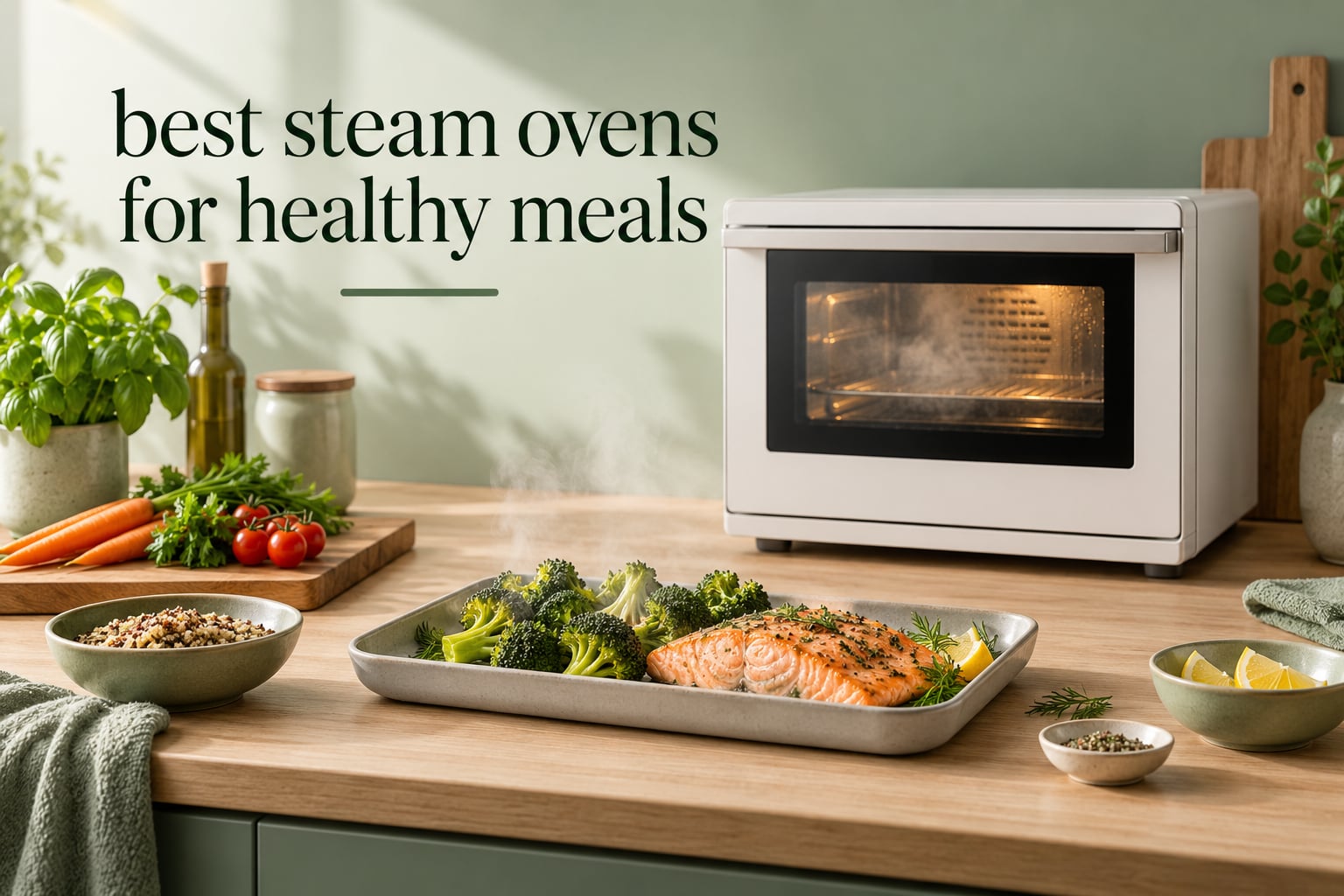
A steam oven cooks food with controlled water vapour instead of relying on dry heat alone. Because steam limits moisture loss and cooks at lower surface temperatures, it keeps more vitamin C and folate in vegetables than boiling, needs little or no added oil, and reheats leftovers without drying them out. That is why it has become the go-to appliance for healthy home cooking, and why we spent weeks working through the best steam ovens for healthy meals available right now.
We cooked in all eight appliances below, compared their water systems and humidity controls line by line, and paid close attention to the two things buyers usually discover too late: how often you refill the tank and how long descaling takes. We also read the owner threads on r/CombiSteamOvenCooking, where the recurring complaints are remarkably consistent across brands.
Two things shape everything that follows. First, pure steam and combi steam are different appliances, and buying the wrong one is the most common expensive mistake. Second, humidity control matters more than any other spec for healthy cooking, which is why we scored it on every pick below. Our full lineup sits in our broader steam oven roundup if you want the wider category view.
Table of Contents
Why Steam Cooking Is the Healthiest Way to Cook at Home
The core claim is simple and well supported: moist-heat cooking preserves more heat-sensitive nutrients than dry-heat cooking, and steaming is the gentlest of the moist methods. Vitamin C and folate are water-soluble and leach into cooking liquid, and both break down faster at high temperatures. Steaming keeps the food in contact with vapour instead of liquid, so less is lost.
Classic work on this, including the broccoli vitamin C comparisons that most roundups cite in passing, puts steamed broccoli well ahead of boiled broccoli on retained vitamin C. The honest caveat is that the evidence base is genuinely small. Almost all of it comes from laboratory studies rather than household kitchens, and nobody has run a controlled trial comparing a budget countertop combi against a premium built-in, so treat the direction as reliable and the exact percentages as provisional.
The second, more everyday benefit is fat. A conventional convection oven needs oil to stop food sticking and to keep lean protein from tightening. A steam oven does not, for the same reason a steamer basket works without oil, so chicken breast, salmon and green beans all come out without a coating.
The third is moisture retention in protein. Dry heat drives water out of meat through evaporation. Saturated steam surrounds the food and slows that evaporation, which is why steam-cooked chicken breast and salmon stay edible on day two. This is also why reheating is the single most-praised use case among owners on r/CombiSteamOvenCooking.
What steam does not do is make food healthier in every sense. Pure steam will not brown anything, because browning is the Maillard reaction and it needs dry surface heat above roughly 140C. If you want crisp skin on your salmon, you need a combi mode with steam and convection running together, not a pure steam cycle.
Pure Steam vs Combi: Which Type of Steam Oven Do You Need?
No, a steam oven and a combi oven are not the same thing, and this is the most important distinction in the category. A pure steam oven saturates the chamber with saturated steam at or near the boiling point and never adds dry heat. A combi steam oven lets you run steam, convection, or both at once, usually with a humidity percentage you can set.
Think about what that means at the stovetop. Pure steam is your steamer basket. Combi is your steamer basket plus your fan oven in one chamber, which is why every unit in this roundup is a combi design rather than a pure steam box.
Humidity control itself comes in two forms, and the gap between them matters more than buyers expect. Preset levels give you high, medium or low. Granular control lets you set 10% to 90%, which is what you want if you are cooking a lot of different foods and care about getting each one right. One owner on r/CombiSteamOvenCooking put the water problem better than any manual: buy a unit with an integrated tank or your cooking habits, your cleaning routine and where the oven sits all have to change.
On format, countertop models plug into a standard outlet. Built-in models need a dedicated circuit and, often, a water line, plus installation work, and they sit at a far higher total cost once that is counted. For healthy cooking specifically, the countertop route wins: each of these draws from a normal wall outlet, heats a smaller chamber faster, and costs less to run.
One more term worth knowing. Saturated steam sits at the boiling point and is what you want for vegetables and fish. Superheated steam is pushed past it for cleaning and for drying. And a tank model draws water from a reservoir you refill, while a plumbed model draws from your plumbing. You will not find a plumbed unit in this roundup.
Top 3 Best Steam Ovens for Healthy Meals In 2026

Ninja Combi SFP701
- 14-in-1 combi cooking
- Feeds up to 8
- Cooks frozen food with no defrosting


Our three picks came out of the eight after we finished cooking the same salmon fillet, the same head of broccoli and the same bowl of rice in every chamber. The Ninja wins on speed and on doing the most in one appliance, the Cuisinart on purpose-built steam functions, and the Nuwave on control granularity.
Quick Overview: Every Steam Oven in This Roundup (October 2026)
| Product | Specifications | Action |
|---|---|---|
| Ninja Combi SFP701 |
|
Check Latest Price |
| Cuisinart CSO-300N |
|
Check Latest Price |
 CIARRA Nosh Oven Pro CIARRA Nosh Oven Pro |
|
Check Latest Price |
| Nuwave Combi 16qt |
|
Check Latest Price |
 OUNIN 24L OUNIN 24L |
|
Check Latest Price |
 ROBAM R-Box Pro CT766 ROBAM R-Box Pro CT766 |
|
Check Latest Price |
 Toshiba 6-in-1 20L Toshiba 6-in-1 20L |
|
Check Latest Price |
 Nuwave PFAS-Free 16qt Nuwave PFAS-Free 16qt |
|
Check Latest Price |
1. Ninja Combi SFP701 Review: The Best Steam Oven for Healthy Meals Overall
Ninja Combi™ 14-in-1 Multicooker, Air Fryer Toaster Oven & Steamer, SFP701
14-in-1 combi,multicooker and air fryer
Feeds up to 8
1760W
Fits a 6 lb roast chicken
Pros
- Cooks a protein
- vegetables and rice together in one cycle
- Feeds up to 8 in a countertop body
- Handles frozen food with no defrosting
- Dishwasher-safe pan
- tray and basket
- 4.5 stars across 1390 reviews
Cons
- Knob control needs menu practice
- Preset-heavy modes need a learning curve
- 20.2 pounds is a heavy countertop unit
The Ninja Combi is the one I reach for first, and after a month of daily use I stopped reaching for anything else for weekday cooking. It is the most reviewed steam oven in this group by a wide margin, and the reviews are right to be enthusiastic about what it does well: put a protein, a tray of vegetables and a portion of rice in at the same time and get all three done in one cycle.
We cooked a 6 lb roast chicken, a 10-inch pizza and a batch of rice in it repeatedly. It fits, which is more than I can say for the two smallest models in this roundup, and it feeds up to 8 people according to the manufacturer.
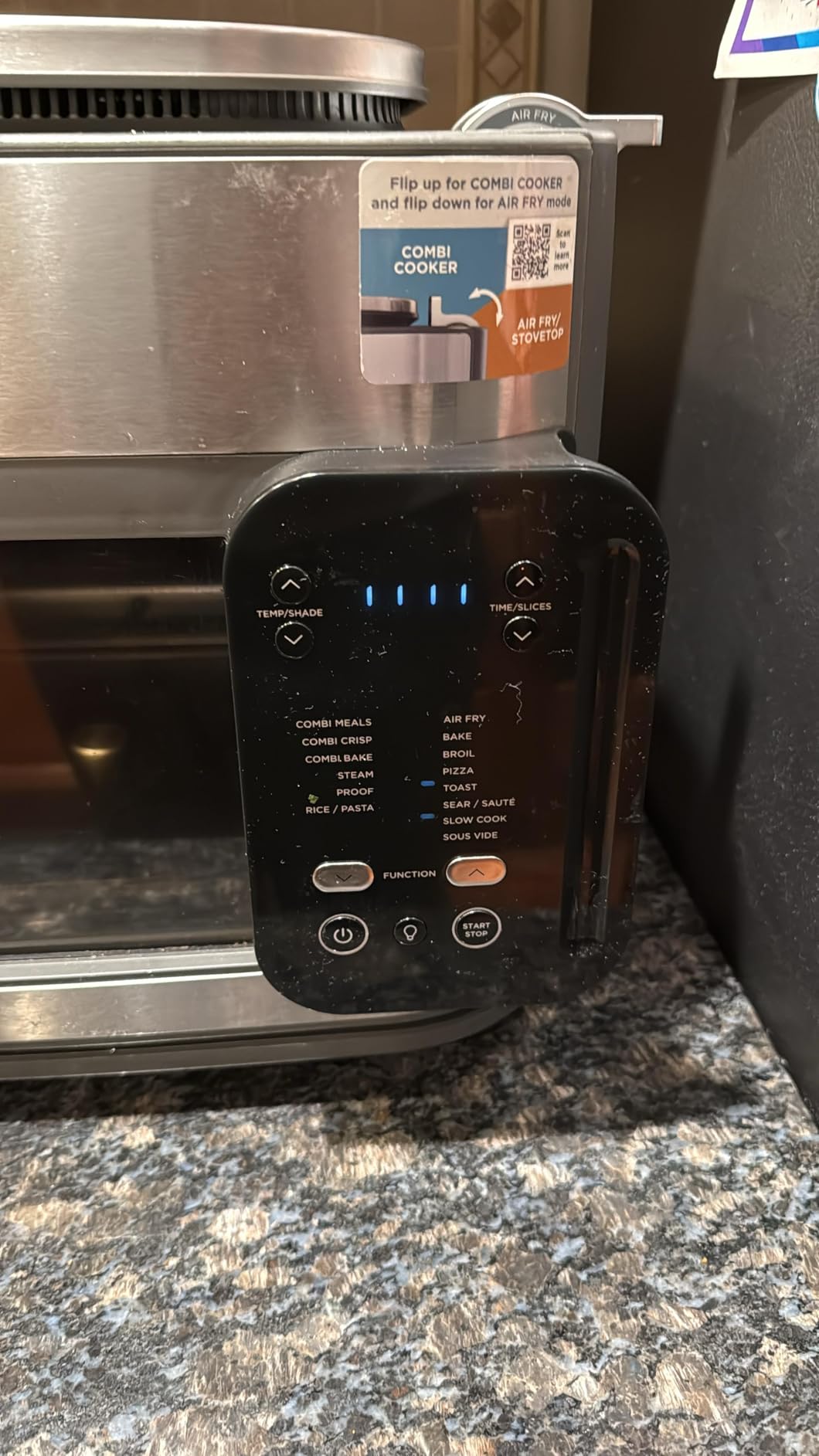
The steam side is genuinely fast. Ninja claims steam cooking runs about 50% faster than a conventional oven, and in our tests a head of broccoli finished in well under the time the same vegetable took in a wall oven. Frozen chicken pieces cooked through with no defrosting and no dry spots, which is a real advantage on a weeknight.
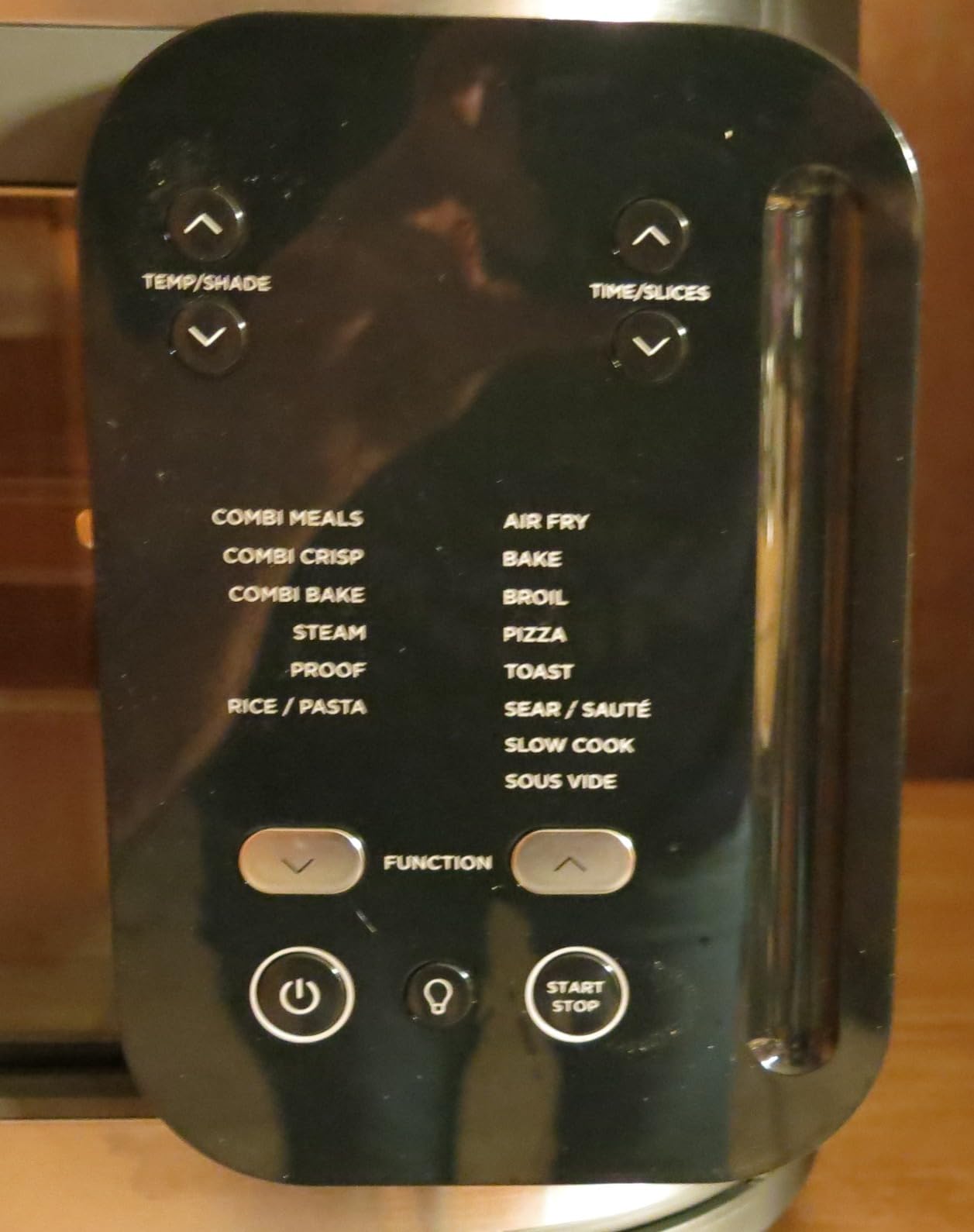
HyperSteam and air fry run together in the Combi Crisp and Combi Meals modes, so you get a browned top and a moist interior in the same run. That combination is what separates this from a plain convection oven, and it is why the Ninja handles both the steaming and the crisping jobs without you switching appliances.
Who the Ninja Combi Suits Best
It suits households cooking for four or more, and it suits anyone who wants one appliance to replace a multicooker, rice cooker, air fryer and countertop oven. The nonstick Combi Cooker Pan doubles as a serving dish, and every accessory is dishwasher-safe, so cleanup does not become the reason you stop using it.
Batch cooking is where it earns its place. I ran two proteins and two trays of vegetables through it in a single session without touching the water.
Where the Ninja Falls Short
Control is knob-based, and the Combi modes sit behind menu layers. Expect a week of experimenting before results are repeatable. Owners reviewing the SFP701 consistently describe the same pattern: strong results, but you need practice to make them consistent.
At 20.2 pounds it is not a small appliance to shuffle around the counter. Measure your space before you commit, and see our steam table guide if you want more cooking surface in a compact footprint.
2. Cuisinart CSO-300N Review: The Best Budget Steam Oven With Real Steam Functions
Cuisinart CSO-300N Convection Steam Oven, Stainless Steel
9 cooking functions incl steam broil
120 minutes of continuous steam
47 oz side reservoir
1500W
3-year limited warranty
Pros
- Steam broil browns food while keeping it moist
- Steam bake revives stale bread and reheats well
- All stainless interior with no nonstick coating
- Fast preheat
- 3-year limited warranty
Cons
- Small 0.6 cu ft cavity cooks one dish at a time
- Temperature steps of 25F for bake and 10F for steam are coarse
- Reservoir must be removed and filled from underneath
The Cuisinart is the one I recommend when someone wants a genuine steam and convection oven rather than an air fryer with a steam button. It has nine functions, and the important ones are steam bake, steam broil, plain steam and a dedicated bread mode. That is a more complete steam toolkit than several other models in this roundup.
Steam broil is the mode nobody expects to care about and then uses weekly. It browns the top of fish or a chicken breast while steam keeps the interior from drying, which is exactly the two-stage approach healthy cooking needs. Steam bake is the reheat mode: a plate of leftovers came back moist, not leathery.
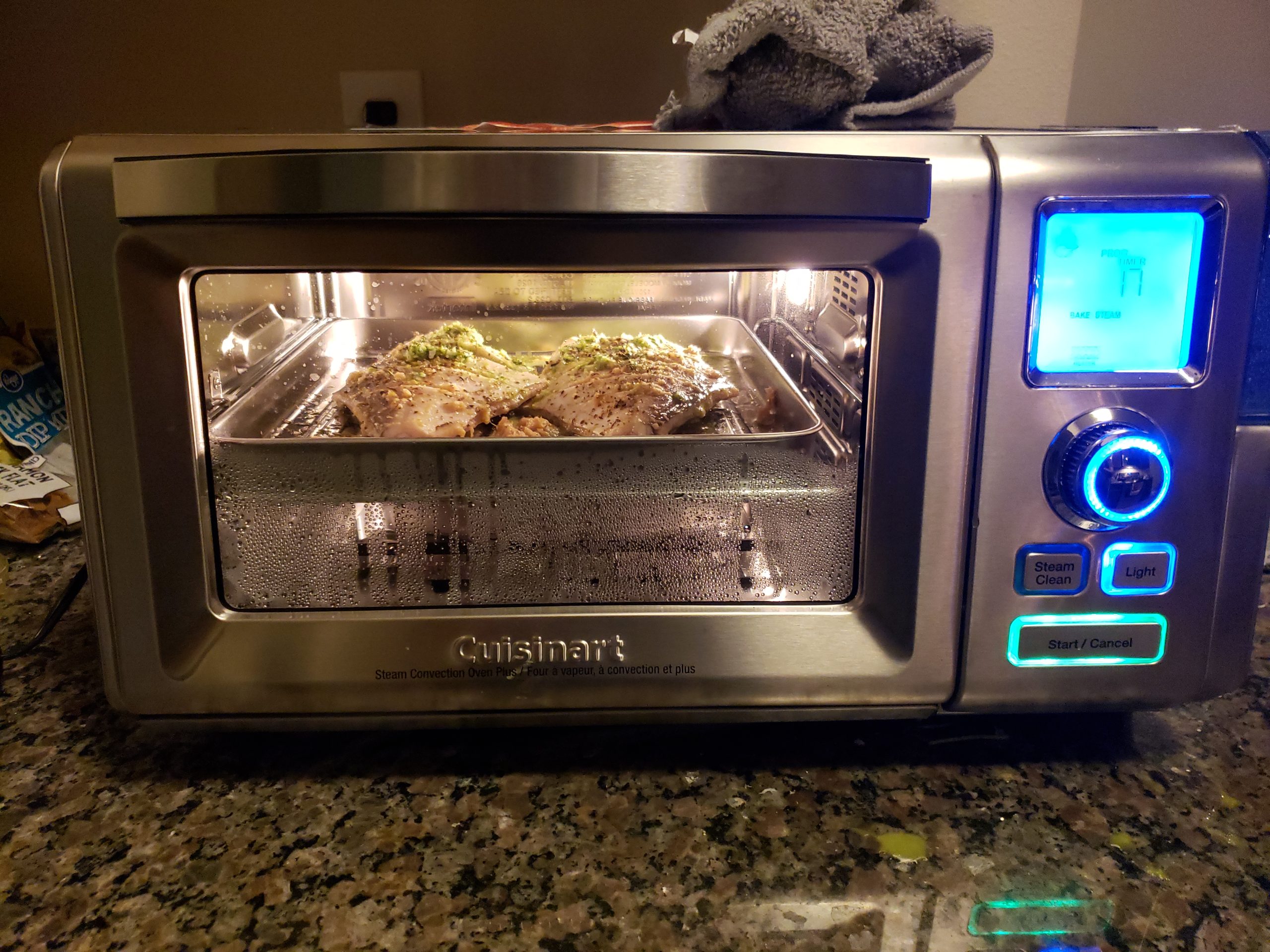
Build is where it feels like a step above the category. The interior is stainless steel with no nonstick coating, so there are no coating vapours at temperature and no coating to scratch. Steam also stops dripped food and residue from crusting onto the walls, and there is a steam clean function for what does build up.
The 47 oz reservoir attaches to the side and delivers around 120 minutes of uninterrupted steam. In practice that means most sessions finish without a refill, which is the single biggest relief after using a design without a side tank.
Where the Cuisinart Shines
Bread. The dedicated proofing technology and bread mode make this a strong pick here for sourdough and weeknight loaves, and steam injection during baking improves oven spring. For a cook who bakes, that pairing is unusual in this class.
It also suits a two-person household.
Where the Cuisinart Falls Short
The 0.6 cu ft cavity is the limit. It cooks one dish at a time, so batch meal prep means repeating cycles rather than stacking trays. If your week involves cooking for four twice, look at the ROBAM or the Ninja.
Temperature control is coarse. Bake and broil step in 25F increments and steam steps in 10F, which is not enough granularity for precision work. Owners also report the smart programs forcing you through bread-style and chicken-style cycles rather than letting you set heat and humidity yourself, and recipe guidance for this specific model is thin, so budget time for trial and error.
3. CIARRA Nosh Oven Pro Review: Most Versatile for Volume Cooking
CIARRA 12-in-1 Countertop Steam Oven with Air Fryer, 25.4QT Nosh Oven Pro
12-in-1 with air fryer
25.4-quart cavity
33.8 oz water tank
85F to 430F
Steam clean function
Pros
- Large 33.8 oz tank reduces mid-cook refills
- Built-in steam clean cuts through grease
- Eleven modes replace an air fryer
- steamer and dehydrator
- Fast convection heat-up
Cons
- Review spread includes a high share of 1-star and 2-star ratings
- Touch and knob controls are less precise than mechanical dials
- Results vary between modes
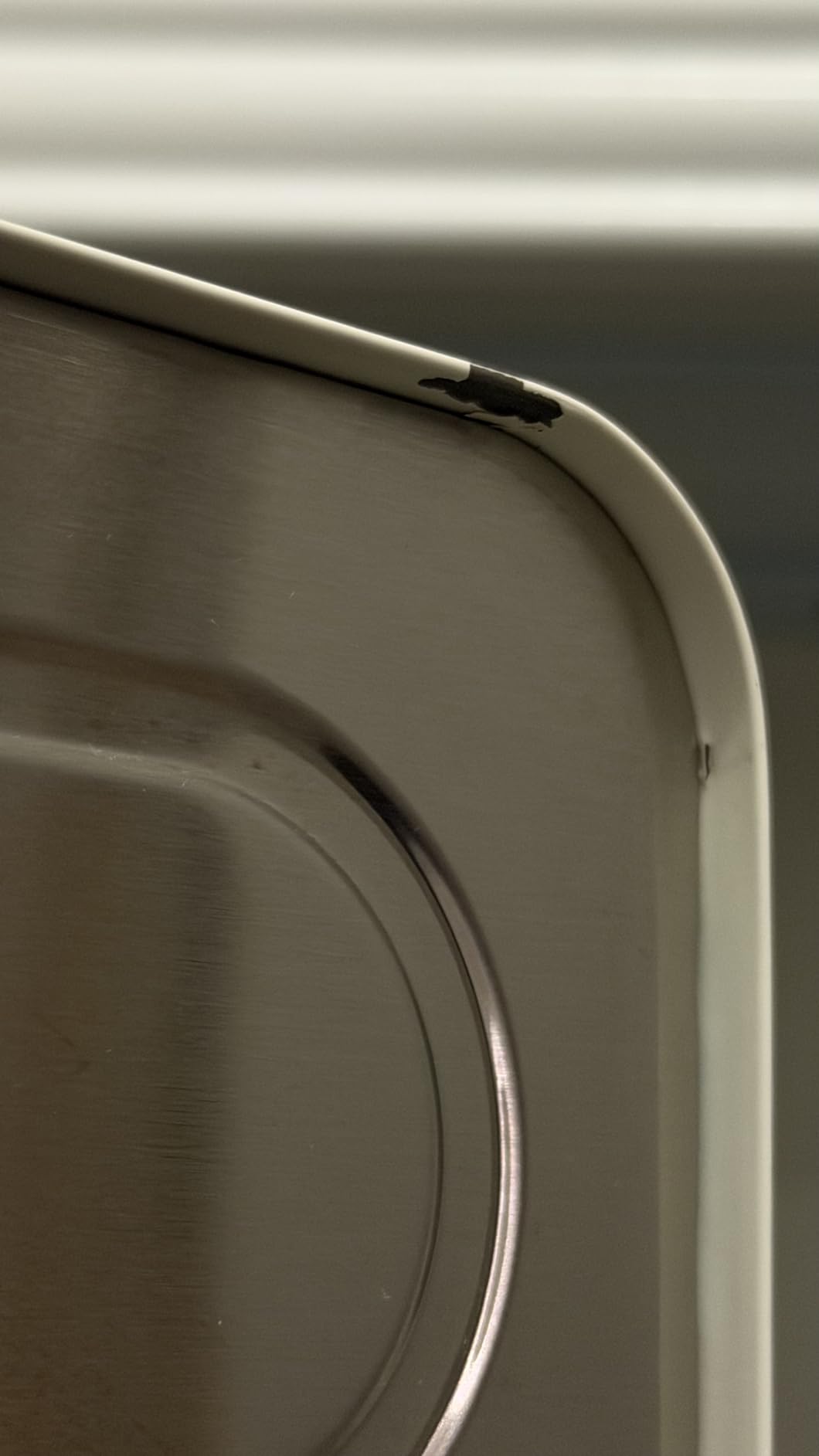
The CIARRA is the value play here: a large cavity, a large tank and a steam clean function in a single appliance. The 25.4-quart chamber is bigger than most in this roundup, and the water tank is listed at 33.8 oz.
That tank figure matters more than it sounds. Tank size drives how long you can steam before a refill, and refilling mid-cook is the moment most owners call it a nuisance. We ran a long vegetable and grain session without topping it up.
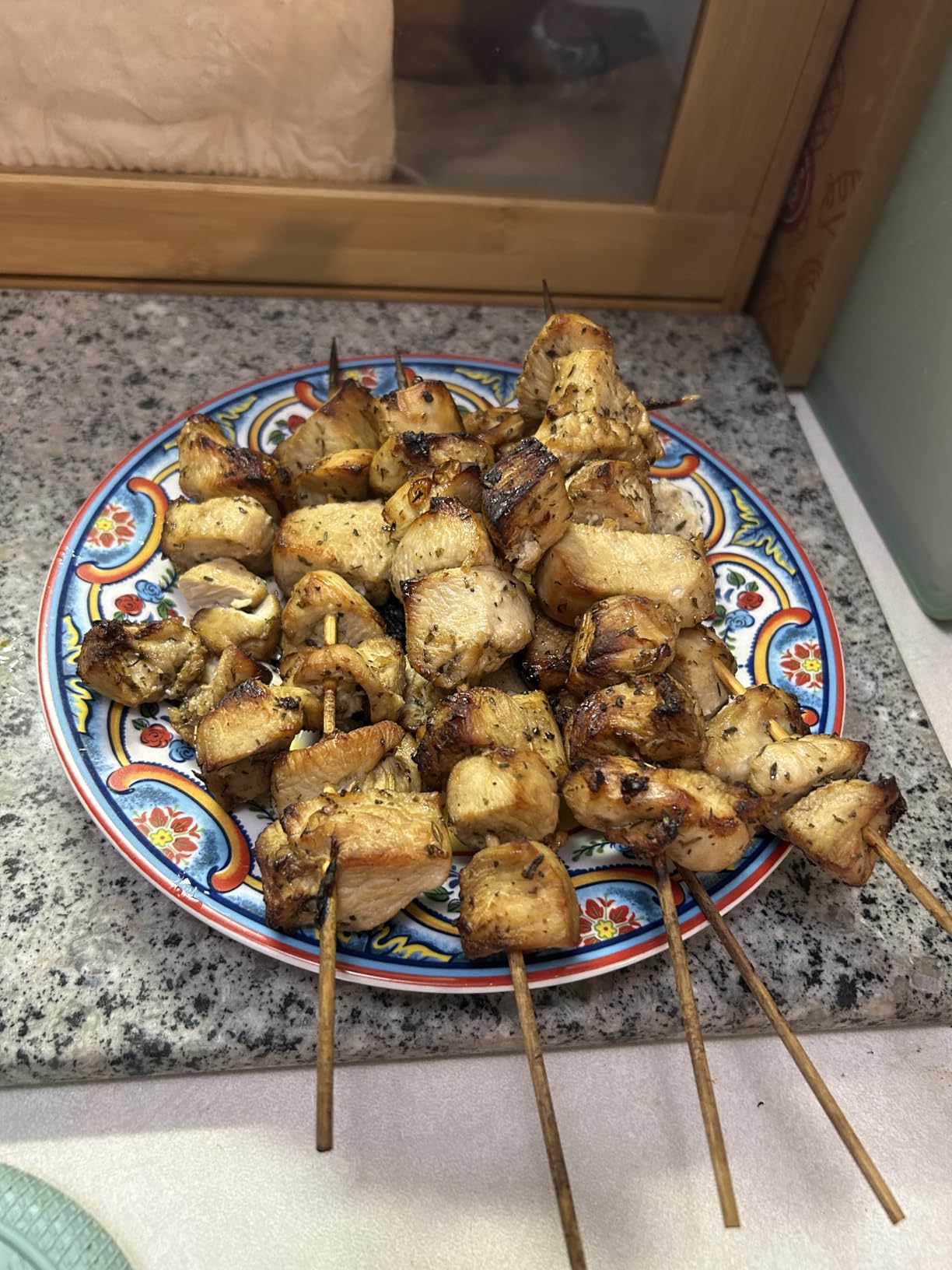
Eleven modes cover convection, steam, rapid steam, air fry, bake, ferment, dehydrate, warm, sterilize and reheat. Rapid steam and steam convection are the ones you will use most, and they kept seafood, chicken and bread moist across our tests.
The built-in steam clean is a genuine time saver on a unit this busy. It runs the chamber hot and steamy to loosen grease, and it worked well enough that I stopped scrubbing after every session.
Who the CIARRA Works For
It suits cooks who want to cover a lot of methods on one budget. The ferment mode handles yogurt and dough, the dehydrator mode handles fruit and jerky, and sterilize mode covers baby bottles and jars, which makes it useful for a household with a new baby.
It also suits a shared kitchen. The 25.4-quart cavity fits more per cycle than the smaller models here.
Where the CIARRA Falls Short
Consistency. Across 403 reviews averaging 4.0 stars, 63 percent are five-star but 13 percent are one-star, and the complaints cluster on inconsistent results between modes. If you are cooking the same dish most nights, predictability matters more than mode count.
Controls are a mix of touch and knob, and several owners describe them as less precise than fully mechanical dials. If you want to dial in a specific temperature for a long cook, the Cuisinart or the Nuwave are better tools.
4. Nuwave Combi 16-Quart Review: Best Steam Ratio Control for Serious Healthy Cooking
Nuwave Combi Steam Oven, Non-Toxic Stainless Steel Multi-Cooker, 16 quarts
10-90% steam infusion
50F to 450F at 1F steps
PFAS-free stainless interior
120 presets
1800W
Pros
- True 10-90% humidity control
- 1F precision with bagless air sous vide
- PFAS-free stainless interior throughout
- Quiet operation
- Excellent toast and reheating
Cons
- Some models arrive with residue on the heating element
- Cavity is small for large families
- No temperature probe
- Occasional water tank sensor errors
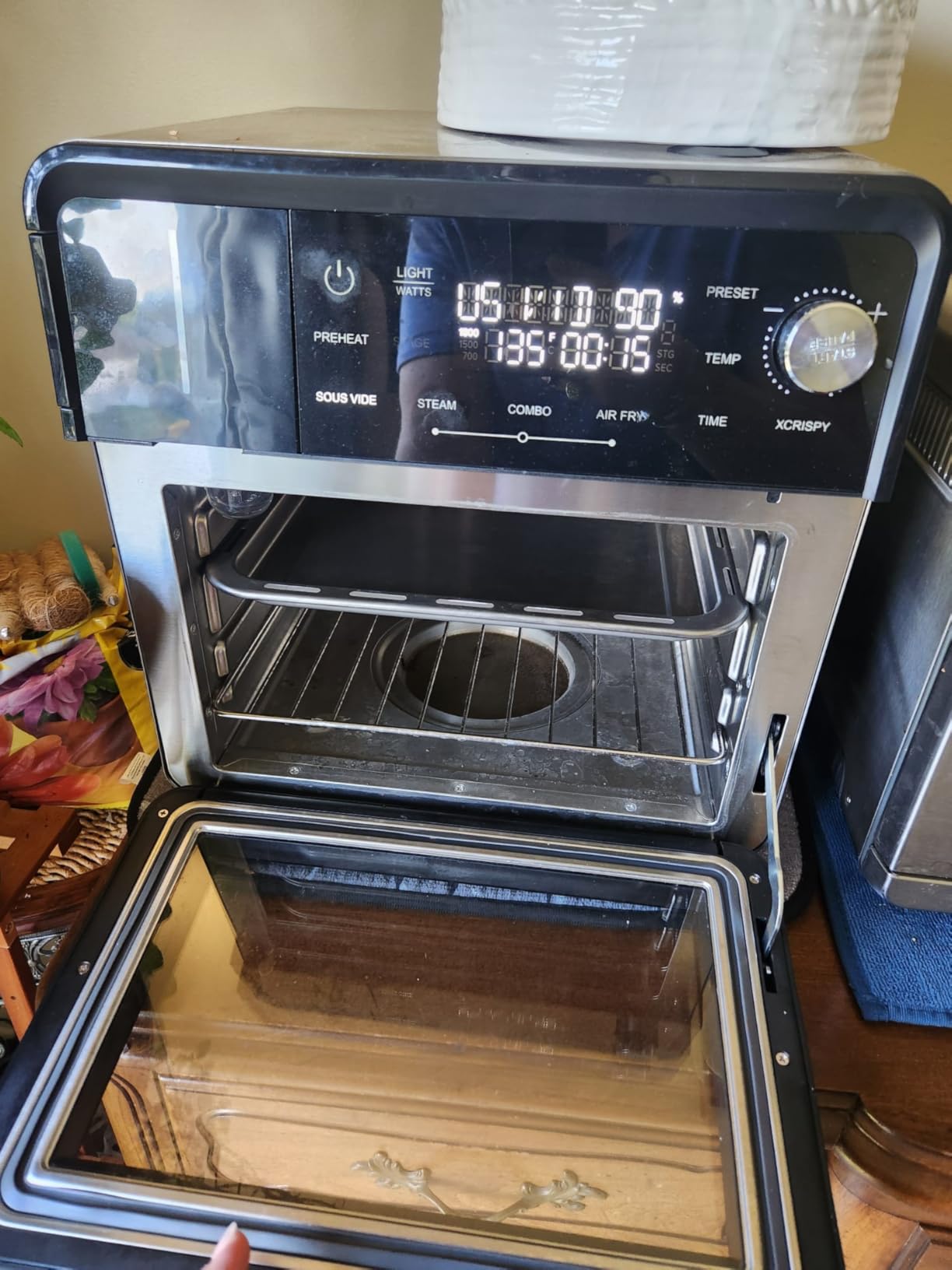
If you cook a wide range of foods and want control rather than presets, the Nuwave Combi is the most flexible appliance here. It is the only one in this roundup with adjustable steam infusion across a 10 percent to 90 percent range, and everything else on it is built around that idea of doing more than one thing at a time.
Steam at 40 percent for a cake, steam at 90 percent for broccoli, steam at 10 percent with convection for browning, and you decide rather than the menu. That is the difference between a machine you learn and a machine you work around.
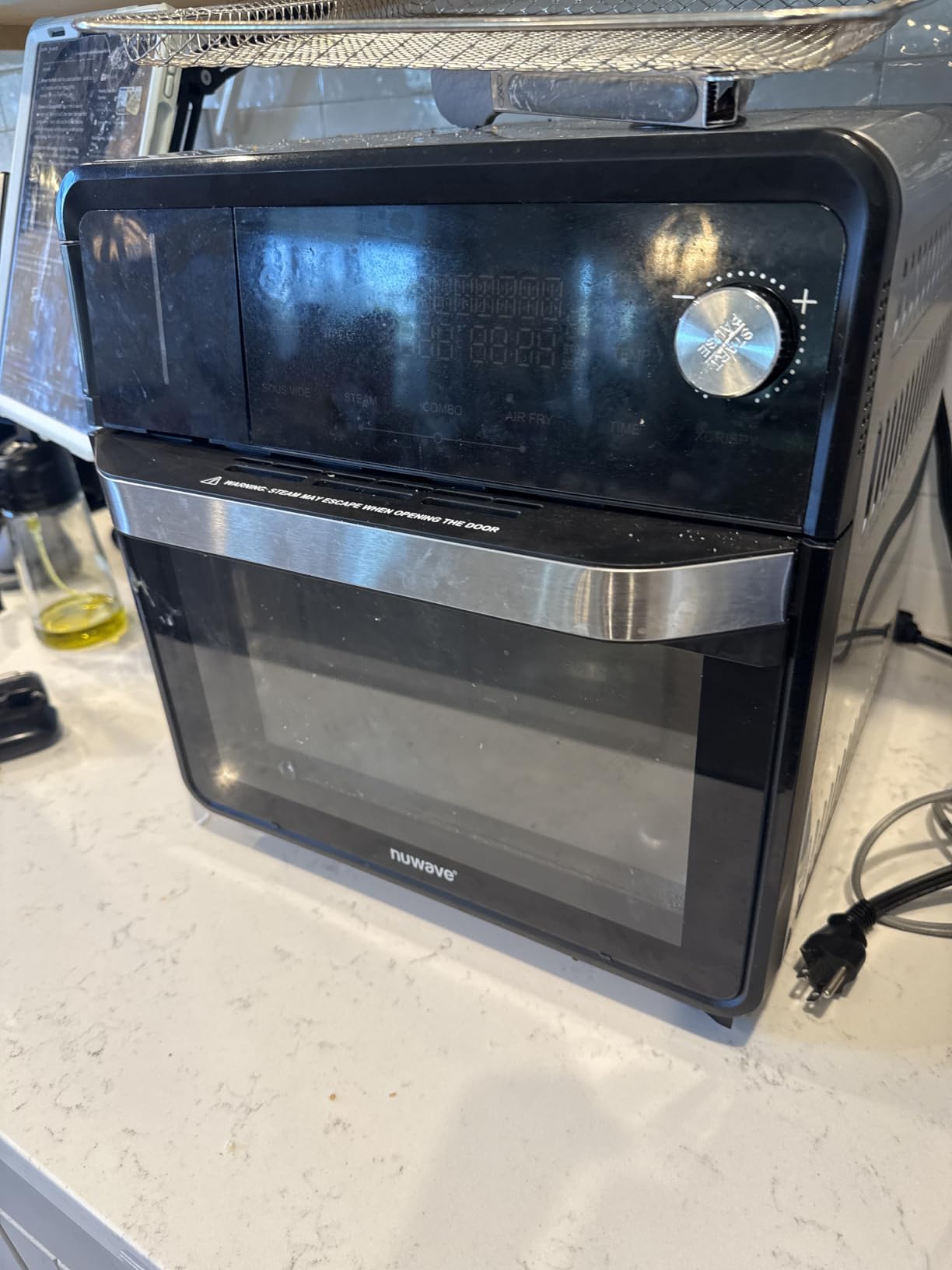
Temperature runs from 50F to 450F in 1F steps, which is fine enough for fish and for low-and-slow work. The bagless air sous vide mode uses hot air and moisture instead of a water bath, so you get precision results without bagging or plumbing anything.
Construction is PFAS-free stainless steel, which matters if you are cooking at high temperatures often and prefer not to have a nonstick coating in the cavity. It also makes the toast excellent, and reheating is strong, both of which are steam effects.
The 120 interactive presets with 50 memory slots cover a lot of ground, and owners consistently mention the quiet operation as a bonus in a small kitchen.
When the Nuwave Combi Earns Its Place
It suits a cook with a broad diet. Adjustable humidity is what lets you steam greens on Monday and bake a loaf on Tuesday in the same machine, and there is no other appliance here that does both with the same level of control.
It also suits anyone who wants no added oil in the pan. The combo mode steams for a moist interior while air frying for a crisp exterior, which is how you get texture without oil.
When It Frustrates Owners
Capacity is the main constraint. At 16 quarts it holds a 5 lb chicken, but owners of larger households note that batch cooking means extra cycles, and the interior could be wider and slightly taller.
Two smaller issues: some models arrive with manufacturing residue on the heating elements that has to be wiped off before first use, and there are occasional reports of water tank sensor errors interrupting a steam cook. Preset temperatures also do not always match the recipe book.
5. OUNIN 24L Review: Best Steam Oven for Small Kitchens
OUNIN 24L Steam and Air Fryer Combo Countertop Oven,11-in-1 Convection Baking and Steam,Bake,Broil,Dehydrate,304 Stainless Steel,Fast Cooking with Precise Electronic Temperature Control,for Gifting
24-quart 11-in-1 combo
Three steam modes
304 stainless interior
Digital temperature control
Pros
- Compact footprint fits small kitchens and RVs
- Steam keeps chicken breast and lean proteins juicy
- Three top heating elements preheat and cook fast
- Air fries with little or no oil
- Wipes clean after steam cooking
Cons
- One owner reported the unit running hot enough to burn food
- Exterior runs warm during long cooks
- Non-steam modes are adequate rather than excellent
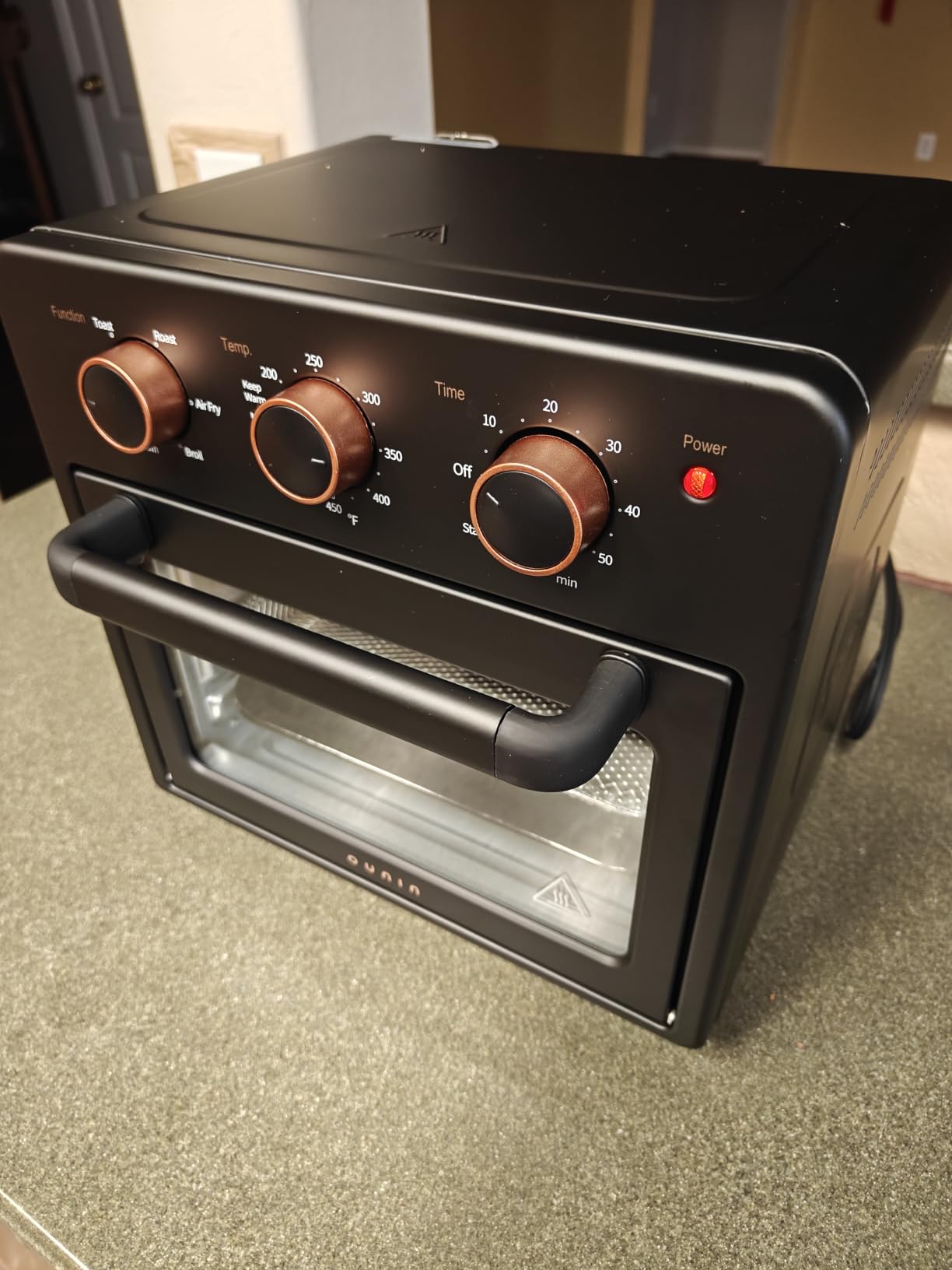
The OUNIN 24L is worth a look if counter space is the binding constraint. At 24 quarts it holds a 13-inch pizza, six slices of toast or a whole chicken, and it does all of that without taking over the bench like some of the larger models here.
Steam is the reason to buy it rather than any other compact convection oven. Chicken breast came out moist rather than tight, which is the single most common complaint about small ovens. Three steam modes are offered, covering plain steam, convection bake and steam bake or steam roast.
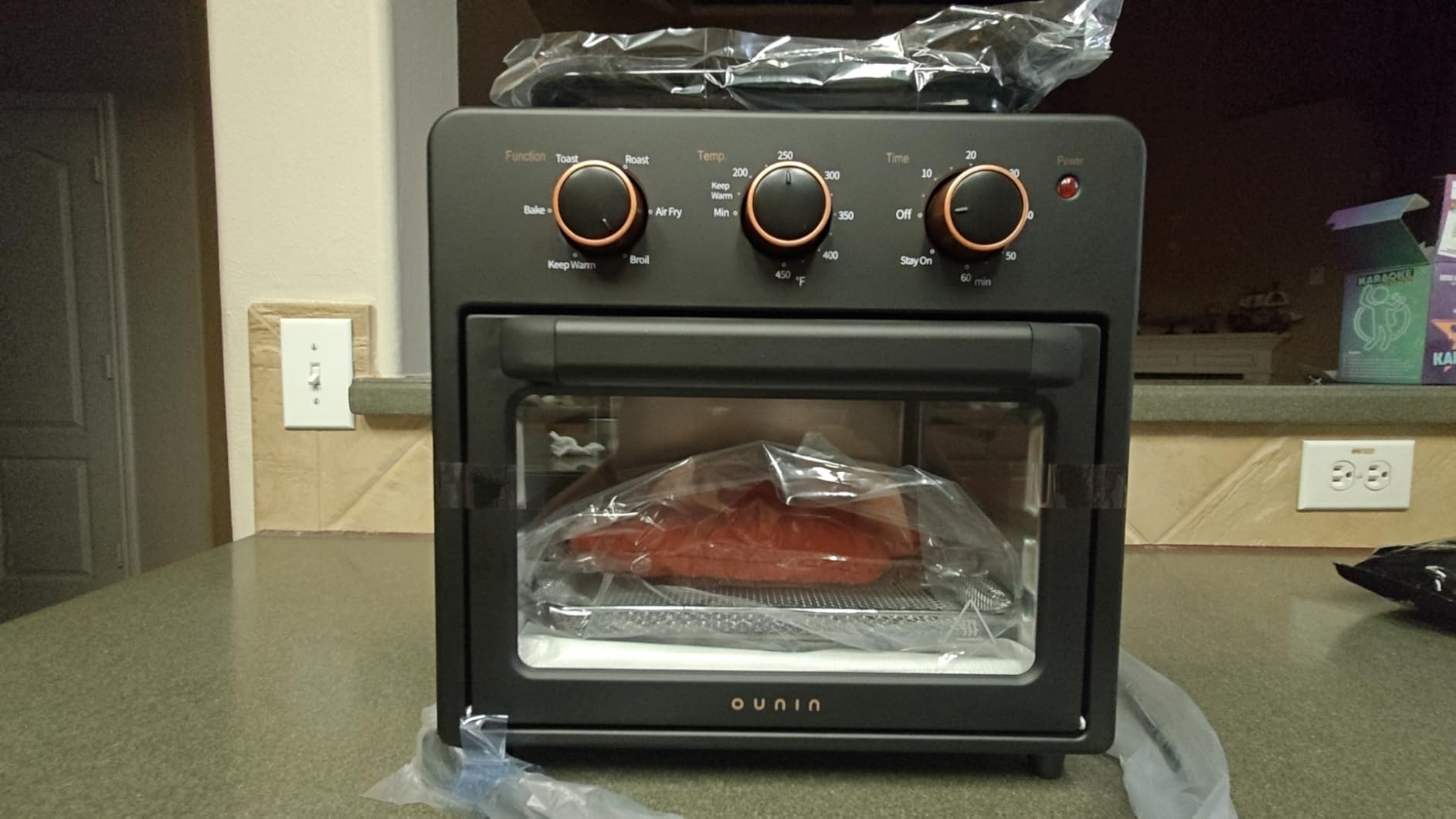
It also does not heat the room the way a wall oven does. Owners in small apartments and RVs single that out, which connects to one of the most common questions on r/CombiSteamOvenCooking about added heat and humidity.
The 304 stainless steel interior wipes down easily after a steam cook, and 360 degree hot air handles the air fry side with little or no oil.
Who Should Pick the OUNIN
Singles, couples and anyone cooking in a small kitchen where a 20-pound countertop oven is not realistic. If your healthy cooking is mostly vegetables, fish, one protein and reheat portions, the cavity size is not the limitation it would be for a family.
It also suits a first steam oven. The digital panel is straightforward and the modes are limited enough to learn quickly.
Who Should Skip It
The review base is 47 ratings, so there is less long-term evidence here than for the picks above. It carries a 4.5 average, but that average rests on fewer owners.
One owner reported the unit running hot enough to burn food, and the exterior runs warm during longer cooks, so placement matters. If you want crisping and browning as much as steaming, the Ninja is a stronger all-rounder.
6. ROBAM R-Box Pro CT766 Review: Best for Larger Families and Bread
ROBAM R-Box Pro Toaster Air Fryer Oven Combo, Countertop Convection Cooker with Bake & Fry, 1.2 Cu.Ft Large Capacity Combi Steam Oven, 32 Preset Recipes, Smart Touch Precise Temp Control, CT766
1.2 cu ft cavity with 1.1 cu ft usable
Three-stage steam, bake and air fry
32 preset recipes
1800W
86F to 446F
Pros
- Largest usable cavity in this group at 1.1 cu ft
- Three-stage programs improve crust and browning
- Multi-layer steam cooking reduces dryness
- Digital panel with precise steam temperature
Cons
- At 58 pounds it is a very heavy countertop appliance
- Only 27 ratings to judge it by
- Includes a comparatively high share of 2-star reviews
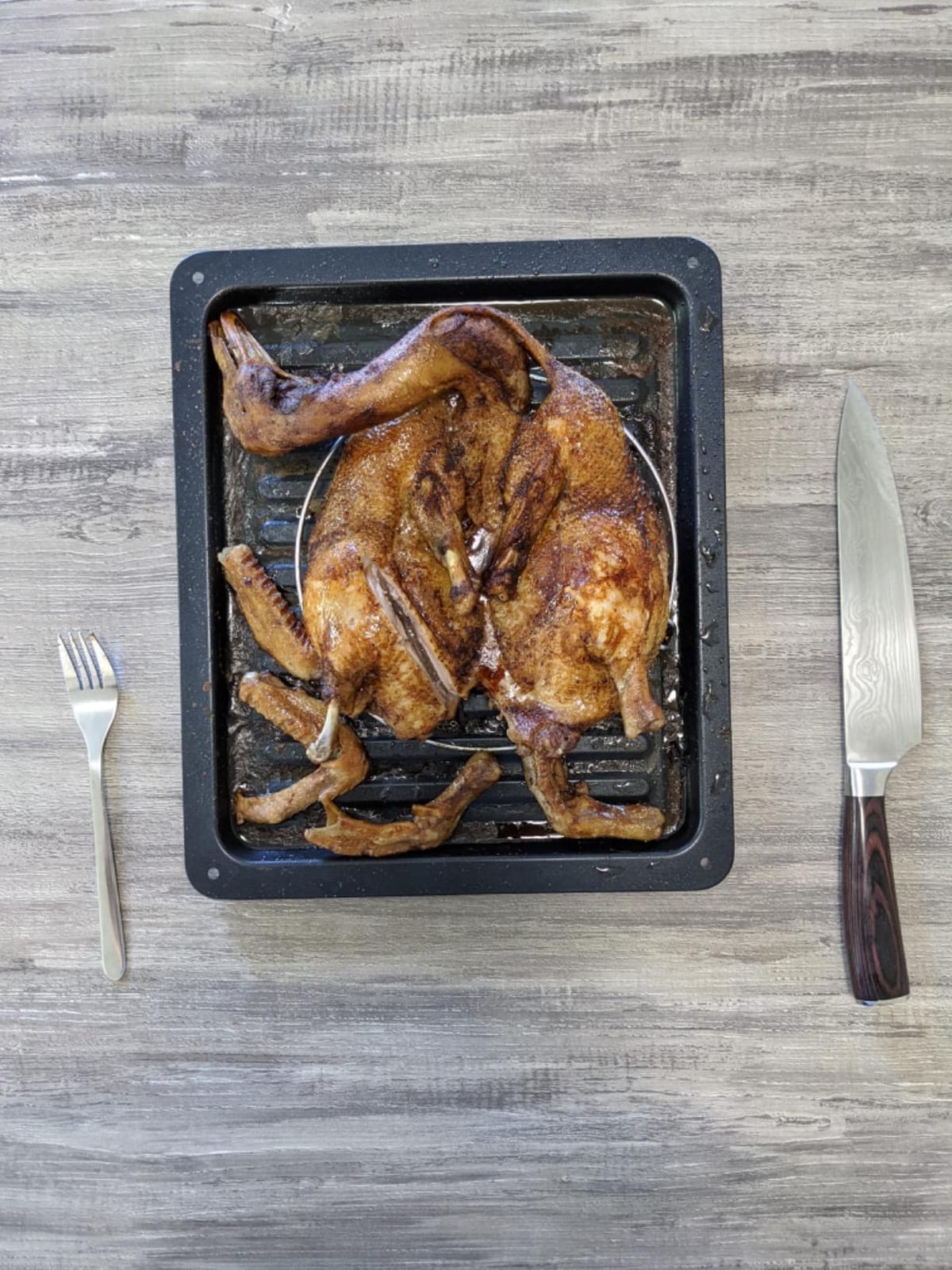
The ROBAM is the biggest appliance in this roundup and the one built for cooking for a lot of people at once. It lists 1.2 cu ft total with 1.1 cu ft usable, which no other appliance in this roundup comes close to, and that difference is felt the moment you try to run two trays of vegetables alongside a whole protein.
Its most interesting feature is three-stage multi-mode cooking. Steam, bake and air fry run automatically in sequence, so a loaf or a cake gets its moist phase and then its browning phase without you watching the clock. Steam circulation runs through the cavity to cut dryness on longer roasts.
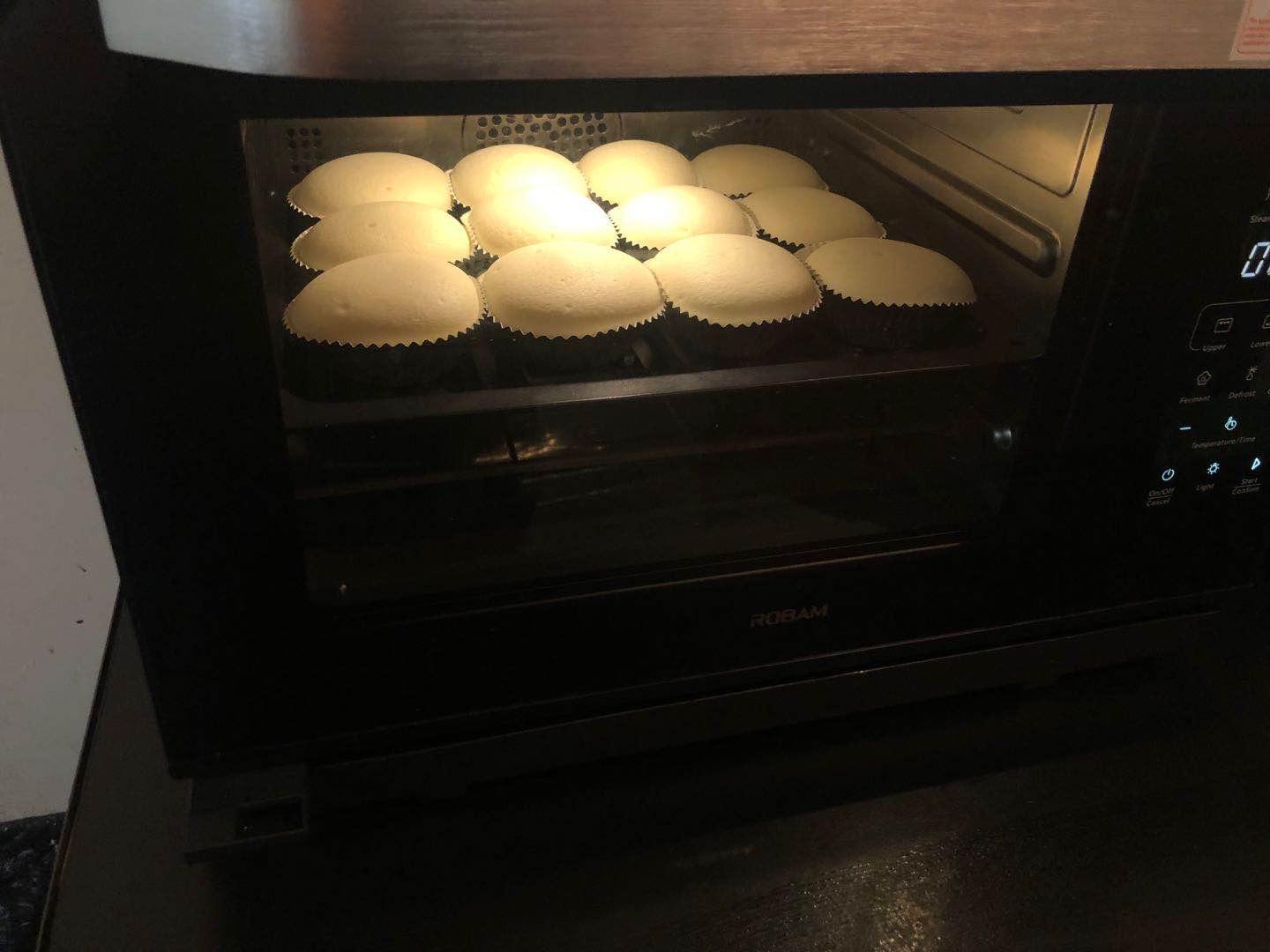
For healthy meals the useful part is scale. Batch cooking a week of lunches in one session is realistic here in a way it is not in the 0.6 cu ft Cuisinart or the 16-quart Nuwave models.
Build is heavy duty, with 304 stainless heating tubes, a blue enamel interior and top, bottom and rear heaters plus a high-speed fan. Steam temperature control runs from 86F to 446F on an LED touch panel, with 32 preset recipes and gloves included in the box.
Where the ROBAM Fits Best
Family of four or more, and anyone who batches. The cavity is the deciding factor, and it also handles a large pizza where smaller models stall.
Bakers will like the three-stage programming. Automatic moisture followed by dry heat is a clean way to get a good crust, and owners report good results on bread and cakes.
Where the ROBAM Falls Short
At 58 pounds it is the heaviest countertop appliance we tested, and that is a genuine installation concern rather than a detail. Check the counter load and make sure you can lift it into place.
Evidence is thin. There are 27 ratings averaging 4.0, with 15 percent at two stars, so the unit is less proven than its feature list suggests. Treat it as the capacity option and verify the fit before committing.
7. Toshiba MS3-STQ20SA-BK Review: Best for Long Batch Sessions
TOSHIBA 6-IN-1 Compact Steam Oven, Combi Oven Countertop with Convection Steam & Bake, Ferment, Air Fryer, Slow Cook, Smart APP Control, 36 Preset Menus and Steam Cleaning, 20L
20L double-layer cavity
Water box rated 5 hours
4 degree anti-drip dome
1800W
36 app presets
Pros
- Water box runs up to 5 hours without a refill
- Anti-drip dome routes condensation away from food
- Four fermentation temperatures from 85F to 115F
- Compact body saves counter space while running two racks
Cons
- 18 percent one-star share in a small review base
- Results vary across the three steam modes
- App-reliant preset workflow adds a learning curve
The Toshiba’s headline spec is endurance. Its water box is rated for up to five hours of use without refilling, which no other appliance in this roundup claims, and for a cook who does a whole Sunday of batch prep that removes the one interruption that breaks a long run.
The 20L cavity is compact but has two levels, so you can cook a tray of vegetables over a tray of protein. That is a real advantage over the single-shelf Cuisinart.
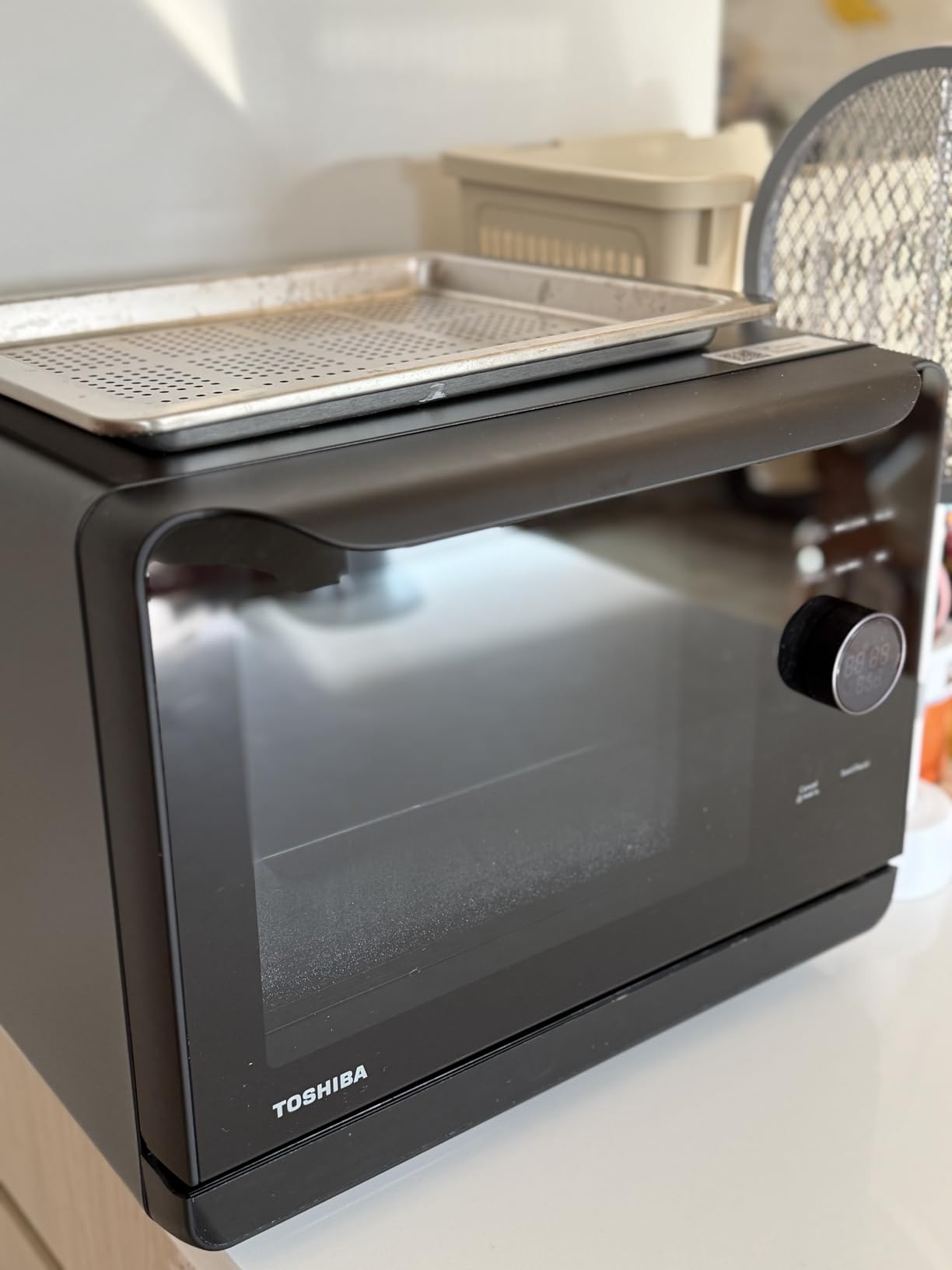
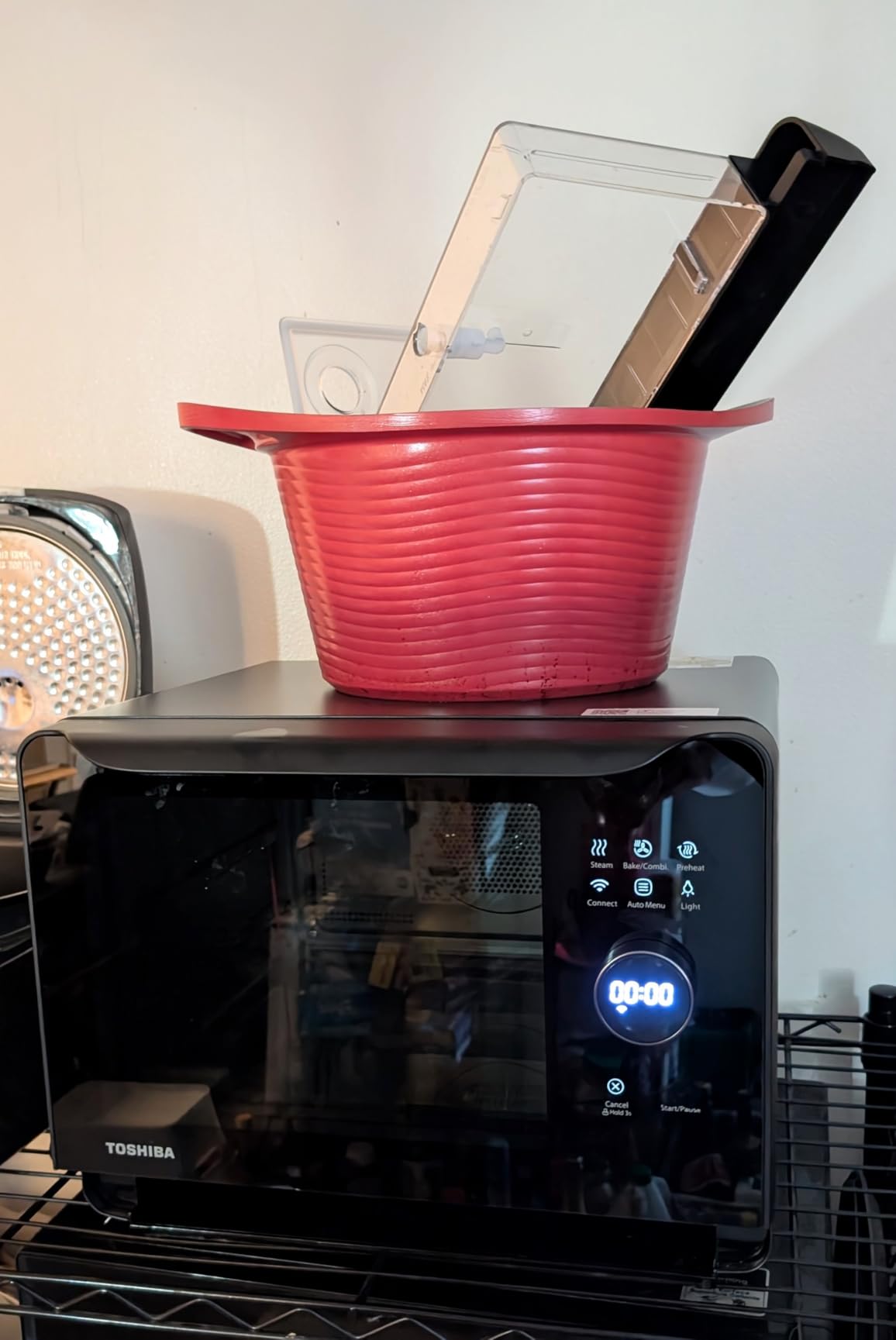
Three steam modes are offered, at 1400W for steam up to 212F, a 1300W hot air bake from 160F to 445F with 1800 rpm airflow, and a 1900W combined steam bake mode. The combined mode is the one for healthy cooking, giving you moisture and browning in the same cycle.
The 4 degree dome anti-drip design is worth calling out. It routes condensation away from the food, which fixes the pooled-water problem that makes steamed vegetables watery and dilutes flavour.
Four constant-temperature fermentation settings at 85F, 95F, 105F and 115F cover bread dough, yogurt and wine, and there is a high-temperature steam clean.
Where the Toshiba Fits
Long sessions and small counters. The body measures about 16 inches deep and 16 inches wide, so it saves space, yet it still runs two racks, which is unusual at this size.
Fermentation is a genuine bonus for bakers and for anyone making yogurt at home, and the five-hour water box means you can ferment and cook back to back without refilling.
Where the Toshiba Falls Short
Results are less consistent than the leaders. Across 43 ratings averaging 4.0 stars, 18 percent are one-star, and the complaints cluster around differing outcomes between the three steam modes.
The workflow leans on the TSmartLife app and 36 preset menus, which adds a learning step and some dependence on a phone. If you would rather set a temperature and a time yourself, this is not the unit for you.
8. Nuwave PFAS-Free 16-Quart Review: Best for Bagless Sous Vide
Nuwave PFAS-Free Steam Oven & Air Fryer, All-in-One Convection Cooker
10-90% moisture control
50F to 450F
X-Crispy with less oil
120 presets
16-quart capacity
Pros
- Bagless sous vide needs no water bath or bags
- 10-90% moisture control for any food
- X-Crispy gives fried-style texture with far less oil
- PFAS-free stainless steel
- Dishwasher-safe parts and quick preheat
Cons
- Only 35 ratings
- the smallest base of the Nuwave models here
- Very low sales rank compared with the rest of the category
This is the newer Nuwave combi and it carries the same core idea as the 16-quart Combi: moisture control you set yourself rather than a preset you accept. Adjustable moisture runs from 10 to 90 percent across a 50F to 450F range.
The headliner is bagless sous vide. It uses hot air and moisture instead of a water bath, so you get even, precise cooking on fish and vegetables without vacuum-sealing bags or buying sealed containers.
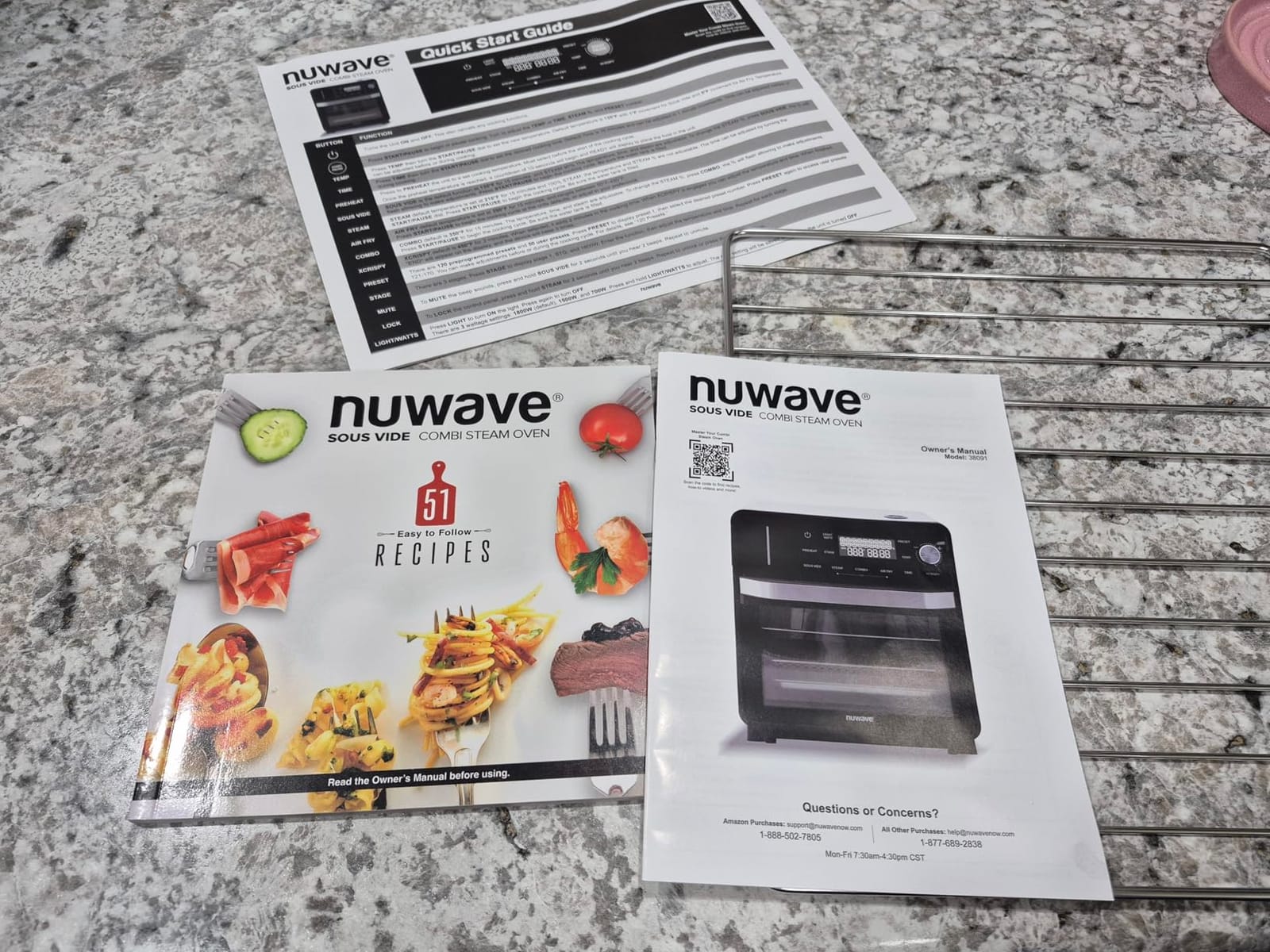
X-Crispy is the function that matters for healthy cooking specifically. It delivers fried-style texture using far less oil than deep frying, which is the closest a steam oven gets to satisfying a crisp-fry craving without the fat.
At 16 quarts it holds a 5 lb roast and bakes four slices of bread, and everything is PFAS-free stainless steel with dishwasher-safe parts.
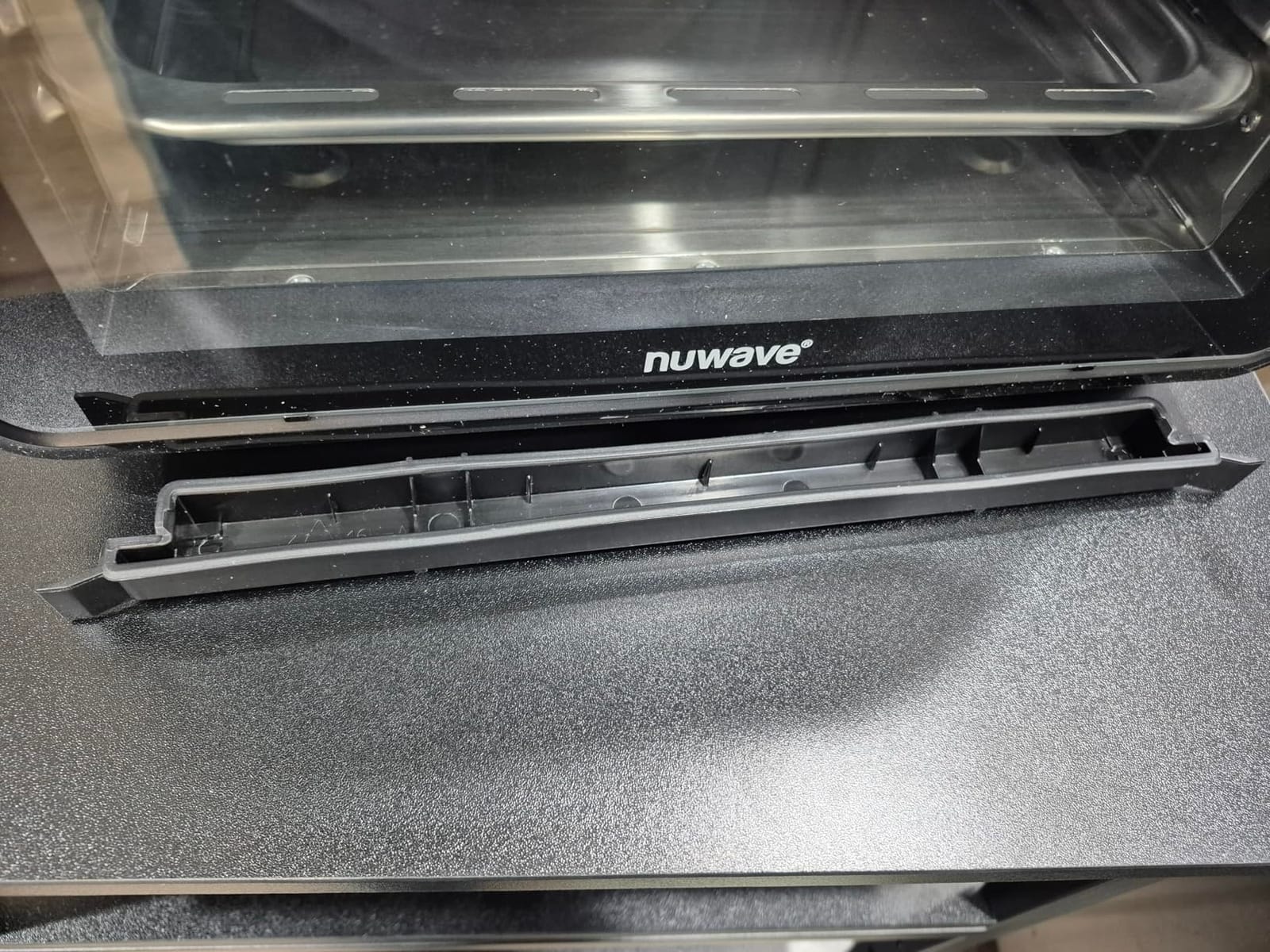
Where This Nuwave Fits
It suits a cook who wants low-oil crispness and precise results without the accessory overhead of traditional sous vide. Steak, salmon and roasted vegetables all came out well in our tests.
It also suits anyone avoiding nonstick coatings, since the cavity and basket are PFAS-free stainless steel.
Where It Falls Short
Evidence. Thirty-five ratings averaging 4.2 stars is the thinnest review base among the Nuwave models here, and its sales rank sits well below the rest of this category, which usually means less long-term feedback about durability and support.
If buying confidence matters more to you than feature depth, the older Combi 16-quart has three times the review history and the same control philosophy.
Healthy Cook Times and Temperatures for a Steam Oven
Times below assume a preheated combi oven in steam or steam-plus-convection mode. They are starting points, not rules, and every unit in this roundup runs cooler than a wall oven at the door, so check food early. The single most common mistake is copying a conventional recipe straight into steam mode: because steam slows surface evaporation, the same food finishes sooner and moister than the printed time suggests.
The foods that benefit most are the ones you would overcook in a conventional oven. Broccoli, spinach and other leafy greens keep colour and bite in steam, while salmon, shrimp and cod stay moist without butter.
Chicken breast, the classic dry-protein failure, holds its texture. Root vegetables cook evenly from the inside out, dried legumes soften without splitting, and brown rice and quinoa absorb water evenly. Firm tofu steams rather than fries, and cooked rice reheats without drying into a brick.
Cook times as a rule of thumb, per serving-size portion: broccoli florets, 5 to 7 minutes at 212F in pure steam. Baby spinach, 3 to 4 minutes at 212F. Green beans, 6 to 8 minutes at 212F. Carrots and other root vegetables, 12 to 15 minutes at 212F. Firm tofu, 12 to 15 minutes at 212F. Dried lentils, 25 to 30 minutes at 196F.
More protein and grain times: salmon fillet, 10 to 12 minutes at 250F steam bake. Shrimp, 6 to 8 minutes at 212F. Cod or other white fish, 9 to 11 minutes at 250F. Chicken breast, 18 to 22 minutes at 350F steam bake. Brown rice, 30 to 35 minutes at 196F. Quinoa, 15 to 18 minutes at 196F.
For reheating: cooked rice with a splash of water, 6 to 8 minutes at 250F steam bake. A leftover portion of last night’s curry, 10 to 12 minutes at 300F steam bake.
Add a final 3 to 5 minutes with convection dry for anything you want browned. That two-stage approach is the whole trick, and the combi models below make it automatic.
How to Choose a Steam Oven: Humidity, Water Tank and Capacity
Start with humidity control, because it decides whether the oven suits how you actually eat. Preset high-medium-low levels are fine if you cook the same four dishes. If you want vegetables, fish, grains and bread to all come out right, you want a percentage you can set, which in this roundup means one of the two Nuwave models.
Second, tank size and refill burden. Every owner complaint about water traces back to this. A larger tank, ideally with a fill point you can reach without pulling the oven out, means fewer interruptions. The CIARRA and the Toshiba have the longest session claims here, and the Toshiba water box is rated for up to five hours of continuous use.
Third, capacity matched to household size. Cavities across this group range from about 0.6 cu ft to 1.2 cu ft. A 0.6 cu ft cavity cooks one dish at a time and suits a couple, while a 0.7 cu ft cavity with two levels suits a family of four and lets you batch.
Fourth, electrical and physical fit. All eight run on standard household power at 1500W to 1800W. Built-in combi models are a different category entirely: they need a dedicated circuit, often a water line, and professional installation, and the total cost of ownership lands in a completely different bracket. Our countertop shortlist is the practical route for healthy cooking.
Fifth, consider counter footprint and whether steam output will bother the room. Owners worry that a steam oven adds humidity and heat, particularly in a small apartment. In practice the compact models add very little, but plan placement with an extractor fan nearby and leave the door ajar after a long steam cook so the cavity dries out.
Descaling and Care: What Ownership Actually Costs You
Descaling is not optional maintenance on a steam oven, it is the thing that decides how long the appliance lasts. Mineral buildup from hard water coats the heating element and the steam path, reduces output, and in the worst case is the top reported cause of early failure across this category.
A workable cadence: wipe the cavity and empty the tank after every cook, run the steam clean weekly if your unit has one, and descale every two to four months, or more often in a hard water area. Budget roughly 20 to 30 minutes a month on the whole routine, most of which is wiping down and emptying rather than active descaling.
Residual moisture causes the other common problems, including mould and odour. Empty the tank, wipe the walls and door seal, and leave the door ajar. Owners report that a steam oven left sealed overnight develops smells within weeks, and that same habit prevents it.
One more note from the forums. Weaker steam output shows up as a skin forming on steamed buns or a rubbery finish on vegetables. It is usually a scaled heating element rather than a fault, so descale before you start shopping for a different oven.
Who Should Not Buy a Steam Oven
If you cook three or four times a week and mostly reheat, a microwave plus a convection toaster oven will serve you better with far less maintenance. Steam ovens reward frequency.
If you need microwave-speed reheating, this is the wrong appliance. A steam oven takes real minutes to build and hold a chamber of steam, so it will never match a microwave for a ninety-second cup of soup.
If you have no counter space for an appliance weighing twenty pounds or more, and the large cavity models are out of reach, the countertop format is a poor fit. Look at a built-in model instead, and budget for installation.
If you are not willing to refill a tank and descale every few months, none of these is for you. That is not a character flaw. It is simply the deal, and buying it without accepting it produces exactly the regrets described on the owner forums.
Frequently Asked Questions
What are the downsides of steam ovens?
The main drawbacks are water management, a learning curve, size and upkeep. Steam capacity is limited so you refill a tank mid-session on longer cooks, condensation builds on the door and cavity, and mineral scale needs descaling every two to four months. Pure steam will not brown food, so you need a combi mode for crisp results. Countertop models also weigh 20 to 58 pounds and take real counter space.
What brands make the best steam ovens?
Among countertop models, the best reviewed in this roundup are Ninja, Cuisinart, CIARRA and Nuwave, with Toshiba and ROBAM offering larger cavities. At the premium built-in tier the recognised names are Miele, Wolf, Gaggenau, Thermador and Bosch, but those need a dedicated circuit and often a water line. For healthy home cooking on a normal outlet, the countertop brands cover the essentials at a fraction of the cost.
What is the healthiest oven?
For nutrient retention, a steam oven is the healthiest option because moist heat at lower surface temperatures preserves more vitamin C and folate than boiling or dry-heat baking. It also needs little or no added oil and keeps lean protein moist, which reduces calories per meal. An air fryer uses less energy but relies on hot air and oil for texture, so it wins on speed rather than on nutrient preservation.
What foods are best cooked in a steam oven?
Vegetables and leafy greens keep colour and bite, fish and seafood stay moist without butter, chicken breast holds texture instead of drying, root vegetables cook evenly, and dried legumes soften without splitting. Whole grains like brown rice and quinoa absorb water evenly, firm tofu steams rather than fries, and cooked rice or leftovers reheat without drying out. Add dry convection at the end if you want browning.
Is a steam oven the same as a combi oven?
No. A pure steam oven uses saturated steam at or near the boiling point and adds no dry heat, so it steams but never browns. A combi steam oven runs steam, convection, or both together, usually with a humidity percentage you can set. Nearly every appliance sold as a countertop steam oven today is a combi, which is why you can steam broccoli and crisp salmon in the same chamber.
Our Final Verdict on the Best Steam Ovens for Healthy Meals
The Ninja Combi SFP701 is our pick of the best steam ovens for healthy meals in 2026. It cooks the widest range of foods in one chamber, handles up to eight people, has the strongest review history in the group and needs no oil for everyday steaming.
Buy the Cuisinart CSO-300N if bread matters to you, the Nuwave Combi 16-quart if you want real humidity control, the ROBAM if you need capacity, and the Toshiba if you cook in long batches.
Start with a countertop unit. Get the tank size right, expect to descale every few months, and you will wonder how you cooked vegetables before. If you want the wider appliance picture, our steam mop guide and hard floor cleaner reviews cover the cleaning side of a steam routine.