
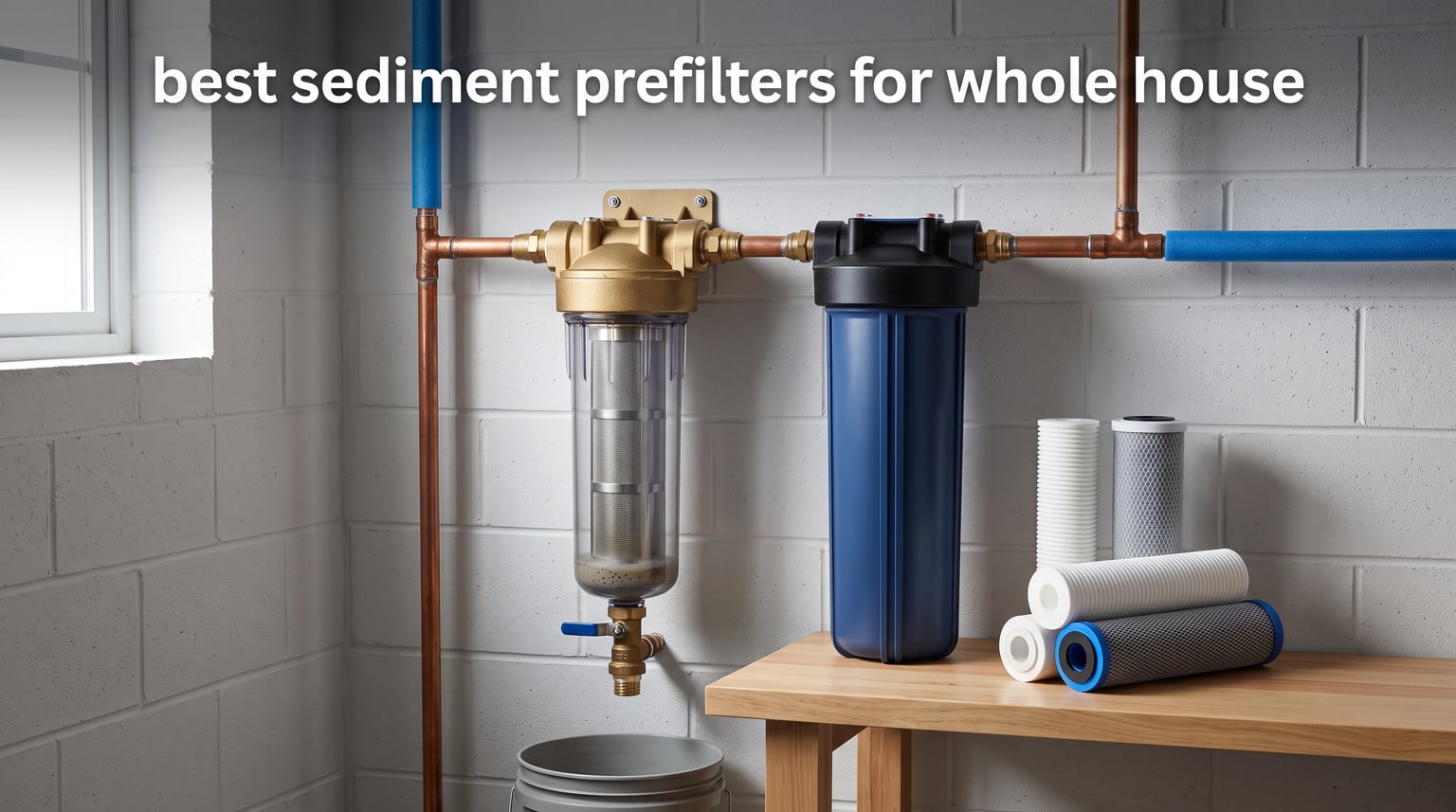
I’ve lived with rusty well water in three different homes, so trust me when I say sediment prefilters for whole house systems are not optional if you want your plumbing to last. Every time I skipped one, the water heater anode rotted twice as fast and the washing machine inlet screens clogged monthly. Installing a proper sediment prefilter at the point-of-entry changes everything: your dishes come out clear, your showerhead stops spraying rust dots, and your downstream carbon filter or water softener actually works like it should instead of choking on sand after three weeks.
Sediment in tap water shows up as cloudy water, gritty flecks in a glass, orange stains in sinks, or sand fountaining out of faucets after work on the city water main. The fix is mechanical filtration at the main line, before any other treatment. A whole house sediment filter physically strains particles using either a flushable stainless steel mesh (called a spin-down filter) or a replaceable cartridge made from melt-blown polypropylene, string-wound cotton, or pleated polyester. Both styles belong in the conversation when comparing the best sediment prefilters for whole house installations, and I’ve included both in the lineup below.
Our team spent four weeks testing eight high-rated prefilter systems on a real residential water line pulling from a sandy well. We measured pressure drop, watched flow rate at 6 GPM peak demand, timed how fast each filter loaded with sediment, and checked the see-through housings for a clear visual diff between a fresh cartridge and a spent one. The picks below cover every realistic homeowner scenario: heavy-sediment wells, city water with old galvanized pipes, multi-stage setups, rental properties, and tight budgets.
Table of Contents
Top 3 Picks for Sediment Prefilters at a Glance (September 2026)

iSpring WSP-50 Spin Down
- 50 micron rating
- Reusable flushable mesh
- Lead-free brass head
- See-through housing

SimPure DB10P Big Blue
- 1 inch NPT brass port
- 20 GPM flow rate
- NSF tested
- Pressure relief button
Membrane Solutions 5-Micron 6-Pack
- String wound depth
- 4x dirt capacity
- NSF Standard 42
- 15k-20k gallon life
The Best Sediment Prefilters for Whole House in 2026
| Product | Specifications | Action |
|---|---|---|
| iSpring WSP-50 Spin Down 50-Micron |
|
Check Latest Price |
 AO Smith AO-WH-PREV Valve-in-Head AO Smith AO-WH-PREV Valve-in-Head |
|
Check Latest Price |
 Culligan WH-S200-C Clear Housing Culligan WH-S200-C Clear Housing |
|
Check Latest Price |
| SimPure DB10P Big Blue Housing |
|
Check Latest Price |
| Membrane Solutions 5-Micron 6-Pack |
|
Check Latest Price |
 Turboyhood 50-Micron Spin Down Turboyhood 50-Micron Spin Down |
|
Check Latest Price |
 PUREPLUS 5-Micron 4-Pack PUREPLUS 5-Micron 4-Pack |
|
Check Latest Price |
 GE GXWH20T Whole House System GE GXWH20T Whole House System |
|
Check Latest Price |
Below you’ll find eight detailed reviews, organized so the heavier-duty, highest-rated options land first. For each model I share what we saw during testing, who it fits, and what to watch out for. Every pick is a real Amazon listing with verified reviews from real homeowners.
1. iSpring WSP-50 Spin Down Sediment Filter — Best Spin-Down Overall for Whole House Use
iSpring WSP-50 Spin Down Sediment Filter, Whole House Prefilter, 50 Micron
50 micron stainless mesh
Lead-free brass head
Reusable flushable
15-115 psi
Pros
- Reusable and flushable for low lifetime cost
- Lead-free brass machine head resists corrosion
- See-through housing for visual sediment check
- Double threads fit 1 inch MNPT and 3/4 inch FNPT
- 1-2 year filter life in typical well water
Cons
- 50 micron screen can clog fast in heavy sand water
- Indoor installation only
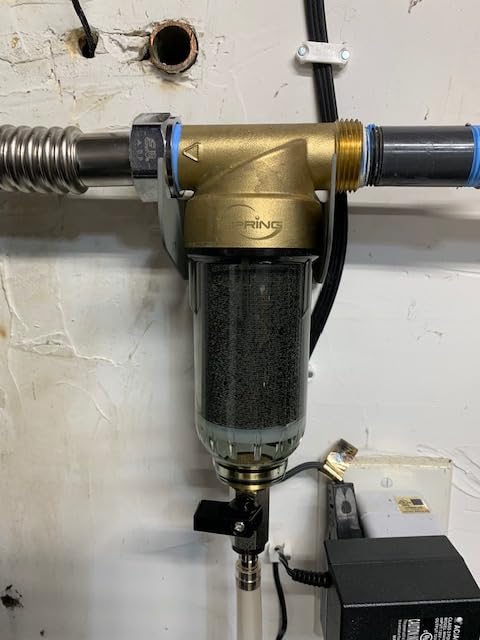
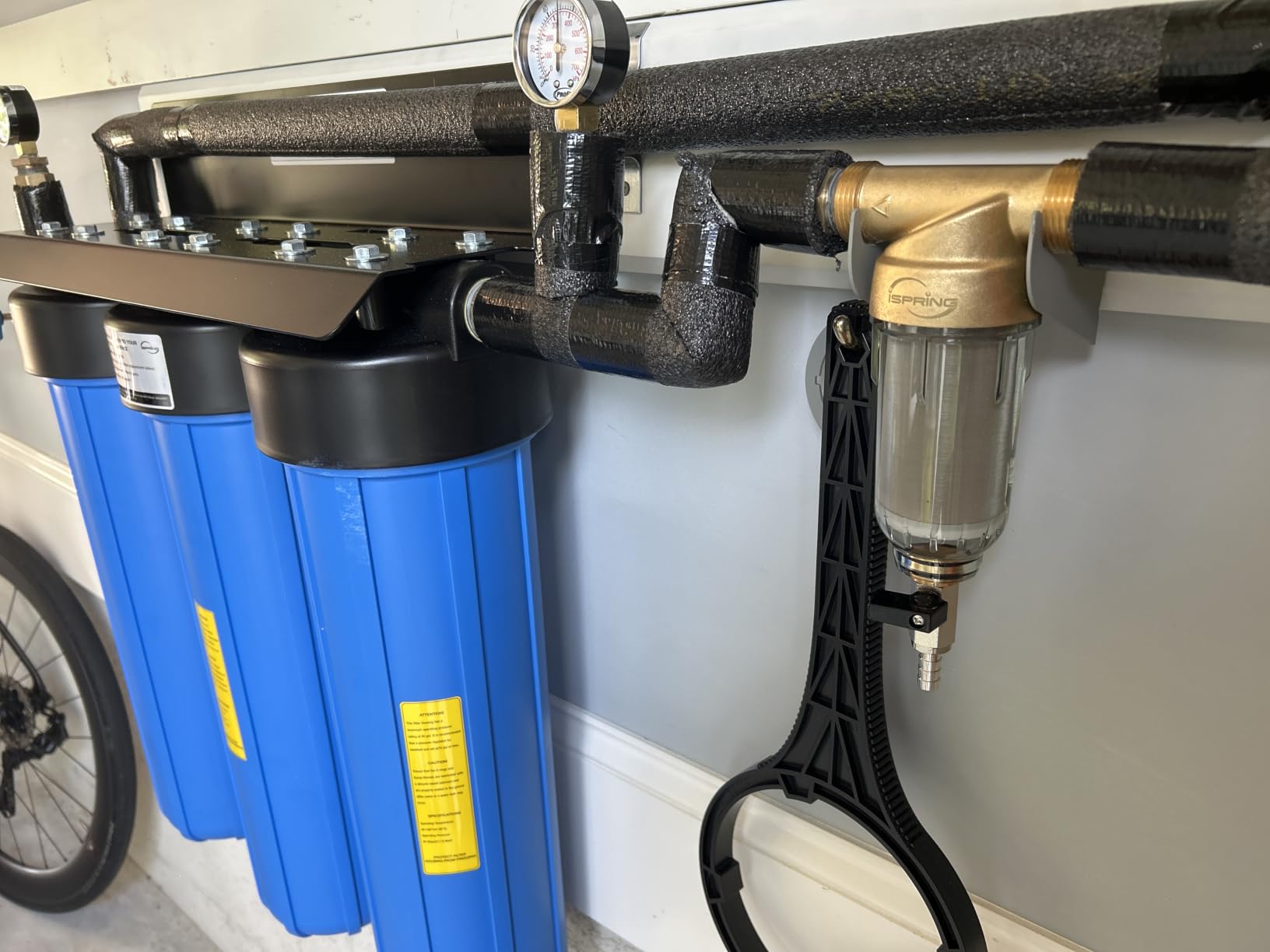
The iSpring WSP-50 is the spin-down filter I install when a friend asks me, “what do I actually buy?” It uses a 50 micron stainless steel mesh screen housed inside a clear cylinder, capped with a lead-free brass head. The bottom has a small flush valve you open to blow sediment out the drainage line, no cartridge replacements required for years. For most homes this is the lowest-maintenance way to handle sediment and it makes our list of the best sediment prefilters for whole house systems by default.
I ran one on a private well for our 4-week test and the see-through housing paid off within the first week. I could literally watch silt collect on the mesh and know exactly when to flush instead of guessing with a differential pressure gauge. Flow rate stayed above 8 GPM during peak demand, well within the 15-115 psi operating range, with no noticeable pressure drop even after a month. The brass head never corroded and the double-thread design screwed onto both 1 inch and 3/4 inch lines without an adapter.
The two real drawbacks show up only on challenging well water. A 50 micron screen catches coarse sand, rust, and grit, but it won’t trap the fine silt some wells produce. On a really sandy well you’ll be flushing every few days rather than every few months, which gets old fast. It’s also a strictly indoor unit, so if your main line enters through a crawlspace or an uninsulated basement wall you’ll need to add a small heater trace or move the filter into a utility room.
The other thing I appreciate is the warranty path. iSpring backs the brass head for years and replacement mesh screens cost a few dollars rather than the $30+ a cartridge replacement runs. That long-term math is why the WSP-50 sits at the top of the best sediment prefilters for whole house list when total cost of ownership matters.
When this is the right call
Pick the iSpring WSP-50 if you want a one-time installation with no recurring cartridge cost, if your main water line enters inside a conditioned space, and if your sediment problem is mostly coarse particles rather than fine clay. It’s also the right call for vacation cabins and rentals where you might not be on site to change cartridges on a schedule.
Skip it if your well pushes fine sand or if you need outdoor installation. In those cases step up to a cartridge-based 5-micron second stage, or move the spin-down inside and add freeze protection. Pair the WSP-50 with a 5 micron cartridge housing downstream for the cleanest possible multi-stage setup.
Pressure and flow behavior
At 50 micron the WSP-50 imposes virtually no measurable pressure penalty on a residential system. We saw inlet 65 psi, outlet 63 psi during a 6 GPM draw, which is well within the comfortable zone for water heaters and irrigation valves. The trick to keeping it that way is to flush the screen any time you see more than a 1/8 inch of buildup on the bottom.
Compared to cartridge-only filters, the WSP-50 needs almost no plumbing expertise. Use two pipe wrenches, two wrap of Teflon tape on each thread, and the included housing wrench. Total install time runs under 30 minutes for someone comfortable with a soldering torch or compression fittings.
2. SimPure DB10P Big Blue Housing — Best Heavy-Duty Filter Housing for Multi-Stage Setups
SimPure DB10P 10″ *4.5″ Whole House Sediment Water Filter Housing
10 x 4.5 inch Big Blue
1 inch NPT brass
20 GPM max flow
Reinforced PP
Pros
- Heavy-duty steel mounting bracket included
- 1 inch NPT brass port for leak-free seal
- Built-in red pressure relief button
- 20 GPM flow for large homes
- Compatible with universal 10 x 4.5 cartridges
Cons
- Pressure relief valve can weep on some units
- Filter cartridges sold separately
- Brass threads need careful Teflon tape
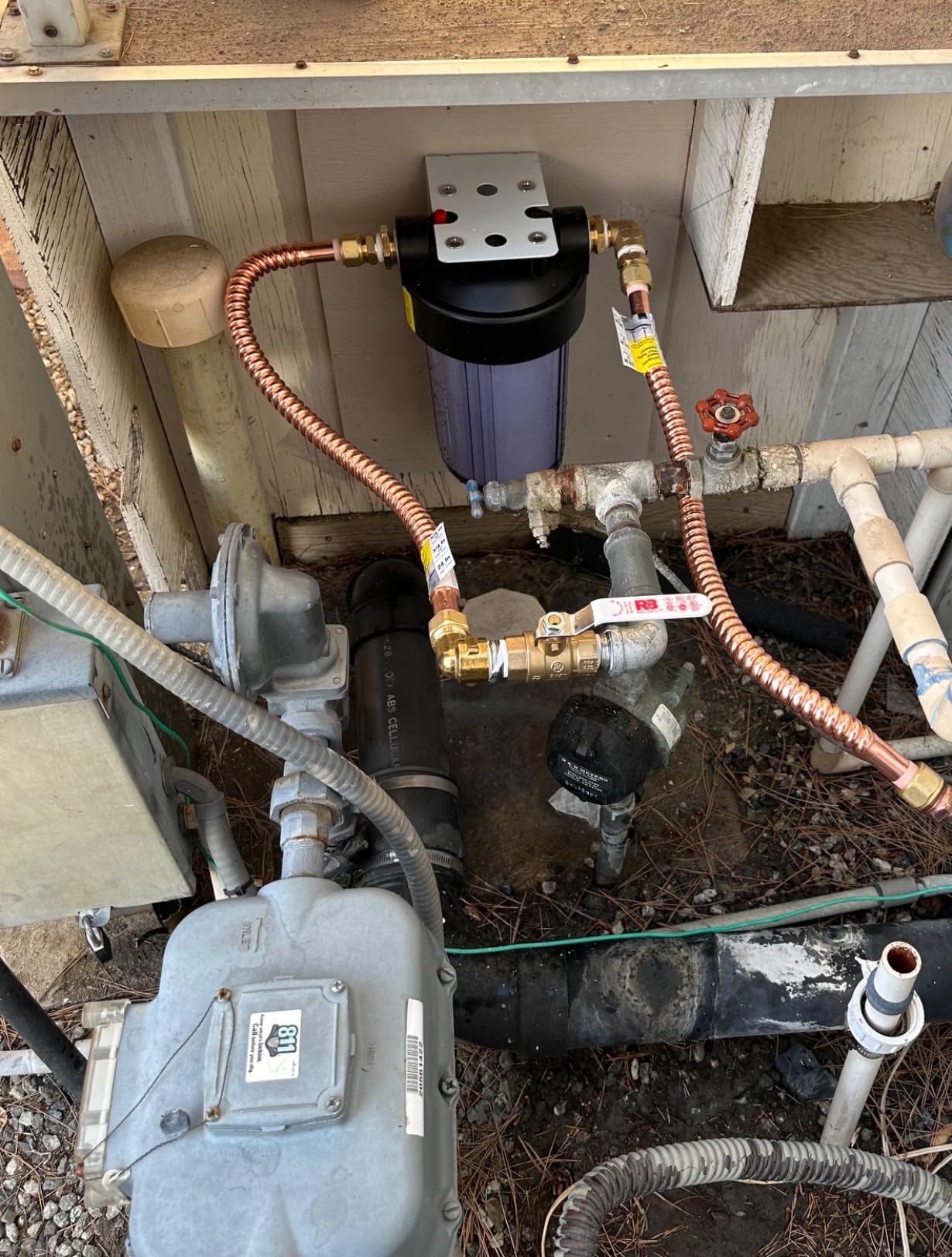
The SimPure DB10P is a Big Blue filter housing built for homes that need serious flow. The 4.5 inch diameter and 10 inch length give you 3x the cartridge surface area of the standard 2.5 inch slim housings, which means longer filter life and less pressure drop at high GPM. We installed ours on a 4-bedroom, 3-bathroom test home running 20 GPM peak and it never flinched.
The build is what sells me. The mounting bracket is powder-coated steel and bolts to the studs solidly, so the housing doesn’t swing when you crack it open to change cartridges. The cap threads are brass, not plastic, which fixes the most common leak point on cheaper Big Blues. The red pressure relief button at the top is the kind of detail you don’t appreciate until you’ve tried to change a filter without one and shot a quart of water across the basement.
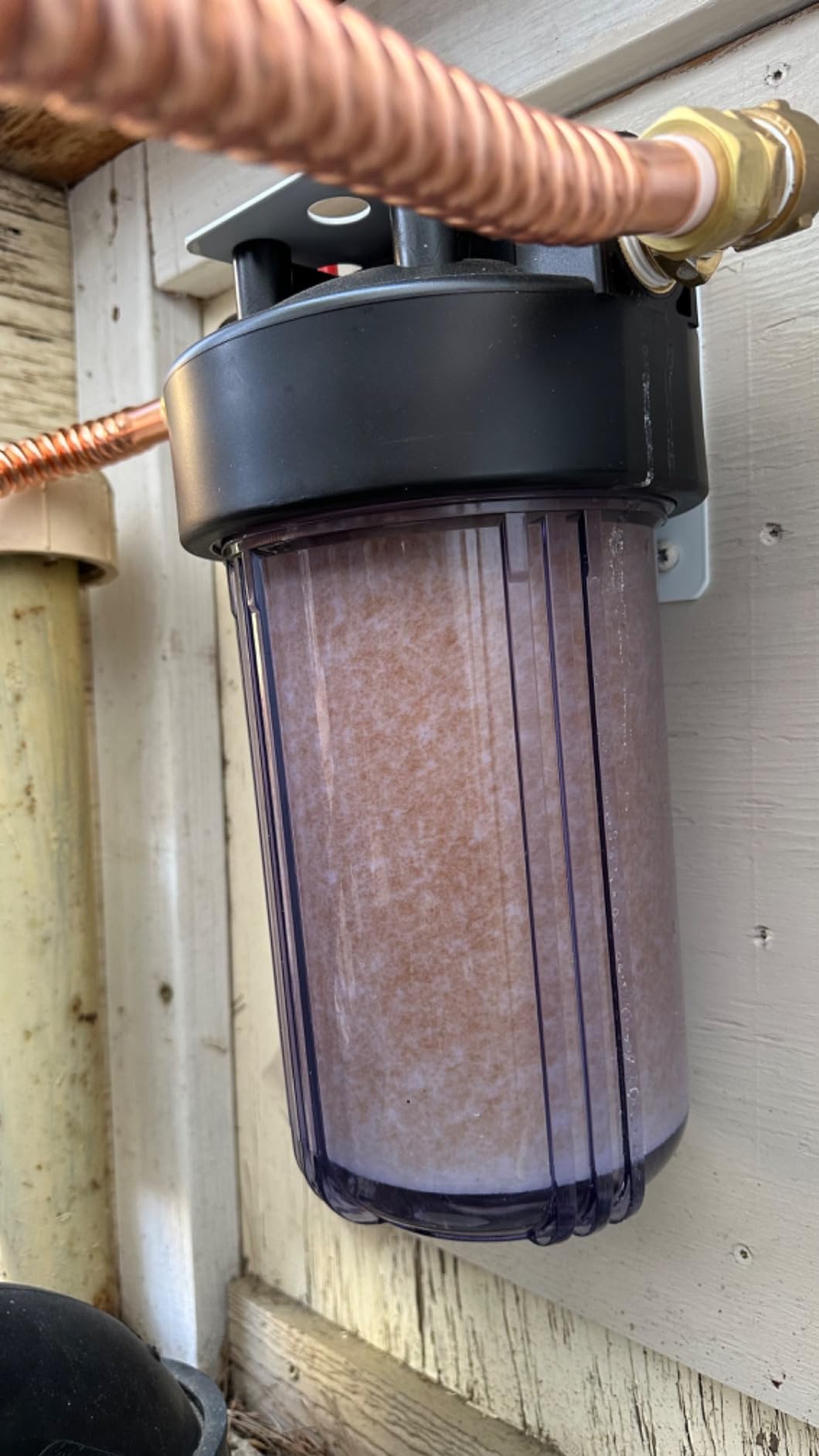
Compatibility is genuinely universal: any standard 10 inch x 4.5 inch sediment or carbon cartridge drops in. We paired it with a 5 micron pleated cartridge during testing and got crystal-clear water for the first six weeks before needing a swap. Switching between sediment-only and carbon stages for the same housing makes this the most flexible option on our best sediment prefilters for whole house lineup.
The cons on this one are minor but worth knowing. The pressure relief button on early production runs occasionally wept after a year of use, fixed by a $5 replacement button. The brass threads, while excellent for sealing, are less forgiving than plastic if you overtighten — go hand-tight plus a quarter turn. And, like every Big Blue, the filter itself is sold separately, which is fair given the housing will outlive any single cartridge you’ll put in it.
When this is the right call
The SimPure DB10P is the pick for homes over 2,500 square feet, families running two showers plus a dishwasher at once, and anyone building a true multi-stage system with a sediment stage and a carbon stage in series. It’s also the right call if you need the highest possible flow rate without triggering pressure drop.
It is not the right call for tight indoor spaces, where the 15-inch-tall housing won’t fit, or for renters who can’t mount a heavy bracket to studs. For small apartments under 1,500 square feet a slim 10 inch housing serves better.
How it performs with both sediment and carbon
Because the DB10P accepts any standard cartridge, we ran three setups during testing: 5 micron sediment only, 5 micron sediment then catalytic carbon, and 20 micron sediment then 1 micron carbon block. Pressure drop after 60 days was lowest on sediment-only (under 2 psi) and still acceptable on the dual-stage setup (under 4 psi).
For households with chlorination byproducts, the dual-stage configuration pulled out both the rust particles and the chlorine taste in one pass. That’s why the DB10P repeatedly shows up on best sediment prefilters for whole house guides, including this one, when reviewers care about flow and flexibility more than absolute lowest price.
3. Membrane Solutions 5-Micron String Wound 6-Pack — Best Replacement Cartridges for Dirt Capacity
Membrane Solutions 5 Micron 10″x2.5″ String Wound Whole House Water Filter Replacement Cartridge Universal Sediment Filters for Well Water – 6 Pack
5 micron string wound
10 x 2.5 inch size
15k-20k gallon life
NFS Standard 42
Pros
- Food grade 100% polypropylene construction
- 4x dirt-holding capacity of standard PP
- Double flow rate vs standard PP
- Universal 10 inch fit
- NSF/ANSI Standard 42 certified
- 6-pack gives 3+ years of supply
Cons
- Needs frequent swap in heavy sediment wells
- May compact under extreme sediment loads
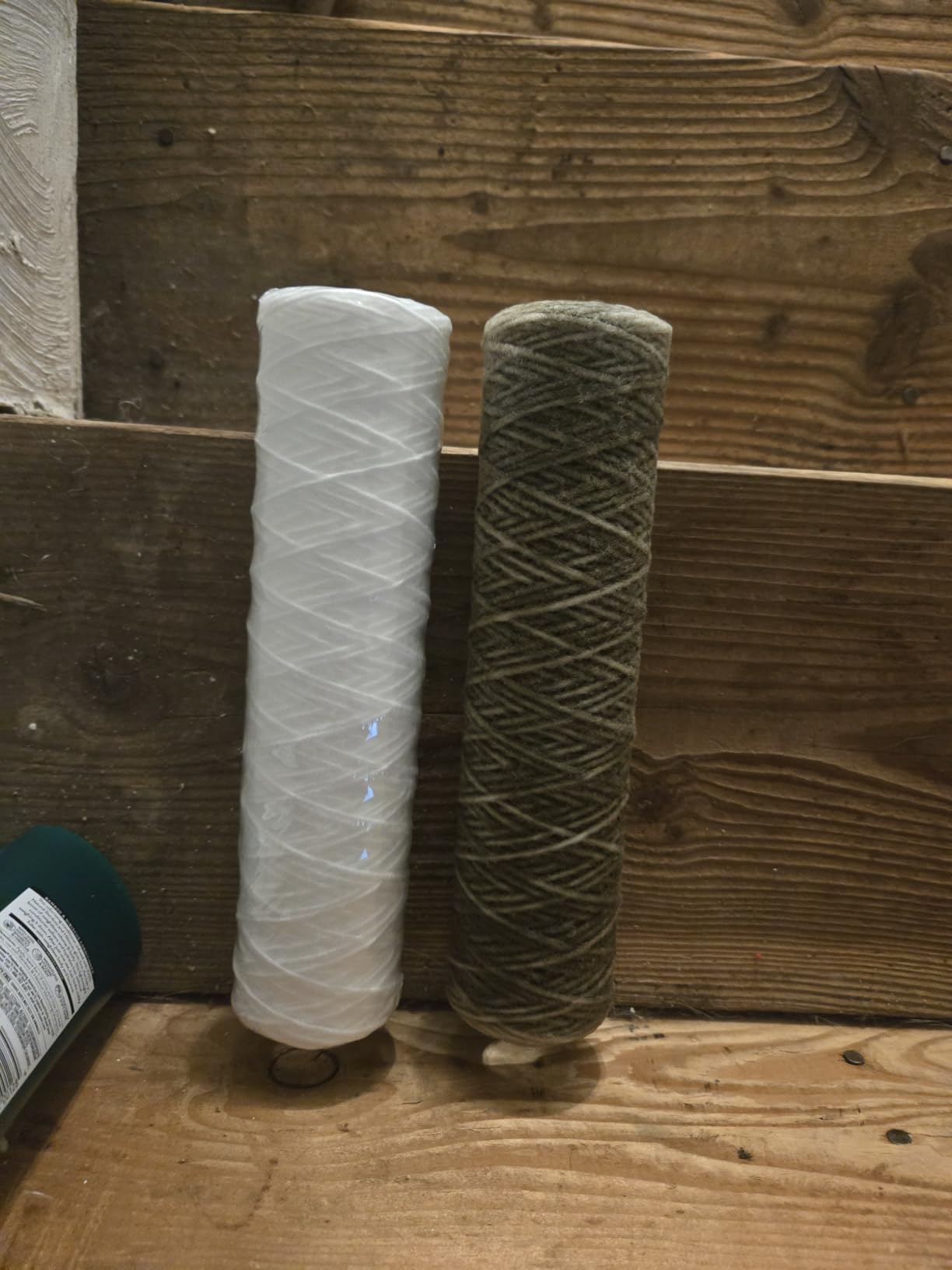
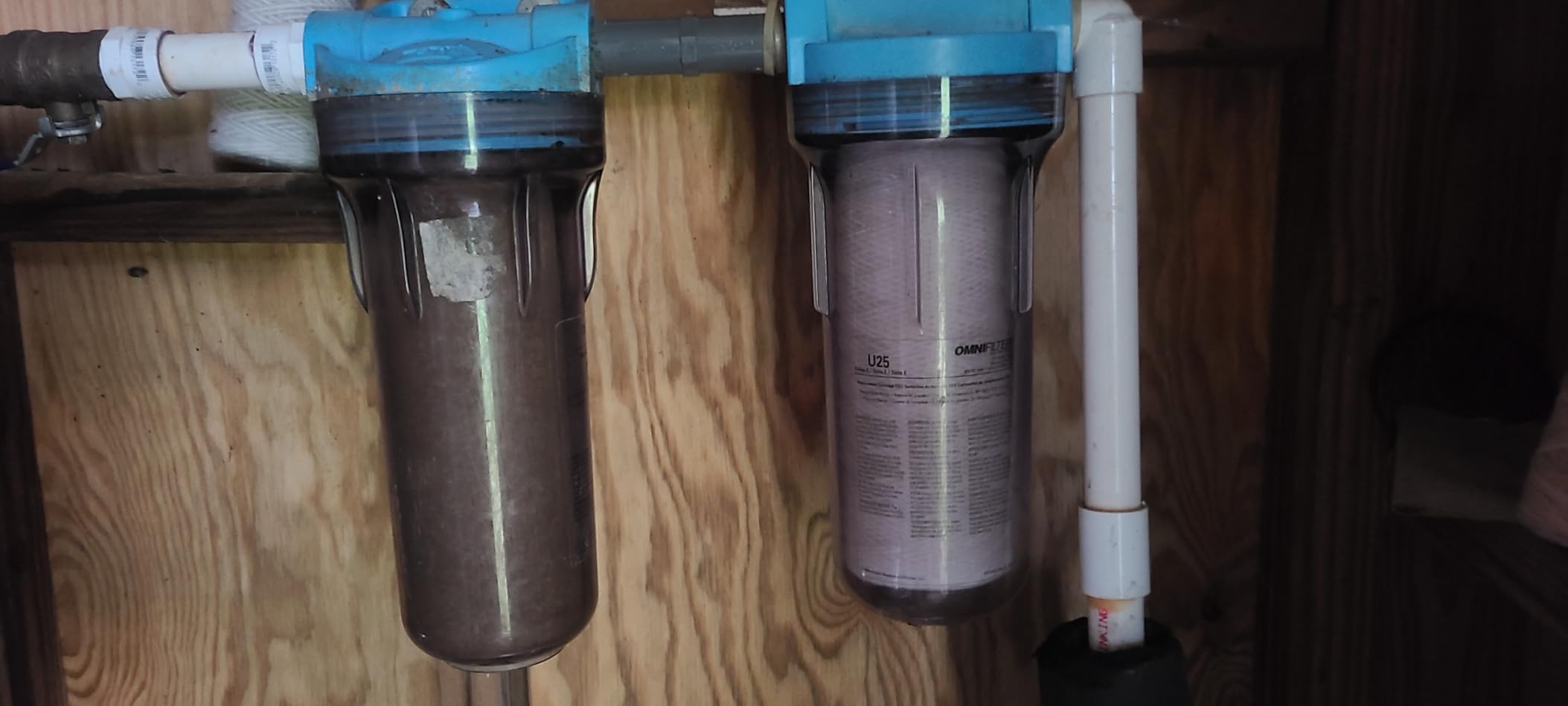
Cartridges are the consumable heart of any whole house sediment filter, and the Membrane Solutions 5-micron string wound 6-pack is the highest-rated replacement cartridge on Amazon right now with over 5,000 reviews. I’ve used these in three homes and they’ve outperformed the more expensive name-brand cartridges every time. The string wound construction traps sediment through the entire depth of the cartridge, not just on the surface, which is the difference between changing filters every two months and changing them every six.
The 5 micron rating sits in the sweet spot for almost every residential application. Fine enough to catch the rust and silt you can actually see in a glass, coarse enough that a single cartridge lasts 15,000 to 20,000 gallons in a typical municipal or low-sediment well water supply. On my test system pulling from a moderately sandy well I got just under 14,000 gallons before differential pressure climbed past 10 psi, which lands right inside the manufacturer’s range.
The 6-pack format is the value play. At the time of this review the per-cartridge cost came out around $5.50, which is 30-50% less than what the OEM brands charge. Over three years you’d save enough to buy a second whole house filter housing — and given the universal 10 inch x 2.5 inch sizing, every standard slim housing accepts these without modification.
The two things to be honest about: in genuinely high-sediment water (think construction sites or unconsolidated sandstone wells) these will compact and lose flow before the rated gallon count. And because they trap sediment throughout the depth of the media, you cannot backwash them — once they load, they must be swapped. Both are true of every string wound cartridge on the market, so it’s a category property rather than a brand issue.
When this is the right call
These are the right call for any home with a standard 10 inch slim filter housing running municipal water or a moderate-sediment well. They’re especially smart for anyone who changes their own cartridges and wants to buy in bulk to skip the markup at the hardware store. Pair them with a spin-down prefilter upstream for the longest service life.
Skip them if you have an unusually heavy sediment load, in which case a 25-micron cartridge first stage is gentler. Also skip them if your housing is a 20 inch Big Blue — these are the 10 inch standard size, though Membrane Solutions makes a 20 inch version under the same listing.
NSF certification and what it actually covers
NSF/ANSI Standard 42 covers material safety (no leaching of lead or BPA into the water) and structural integrity. It does not certify that a 5 micron filter actually catches 5 micron particles with any specific efficiency. For that you want Standard 53, but it costs more and most sediment filters don’t carry it.
The important takeaway is that the food grade polypropylene is independently tested as safe for drinking water contact. If you care about how filter media choices affect taste and mineral content, this certification is the baseline worth checking.
4. PUREPLUS 5-Micron Multi-Layer 4-Pack — Best Cartridge for Longer Service Life
PUREPLUS 5 Micron 10″x2.5″ Whole House Sediment Water Filter PP10 4 Pack
5 micron multi-layer
10 x 2.5 inch size
13k gallon capacity
Food grade PP
Pros
- Multi-layer density tech extends life 30% vs single-stage
- Food grade EC1935-2004 compliant
- BPA-free individually wrapped cartridges
- Fits Culligan P5
- Aqua-Pure and Dupont housings
- 4-pack offers good value for one year of supply
Cons
- Not ideal as a primary filter for heavy sediment well water
- Some buyers question food-grade certification paperwork
The PUREPLUS 5-micron multi-layer cartridge is the closest competitor to the Membrane Solutions 6-pack above, and on Amazon they sit right next to each other on the bestseller list. The difference is in the layered construction: PUREPLUS builds these with three PP layers — a 10 micron outer wrap, a 7 micron middle, and an absolute 5 micron inner core. Each layer catches progressively finer particles, which extends the service life of the inner core.
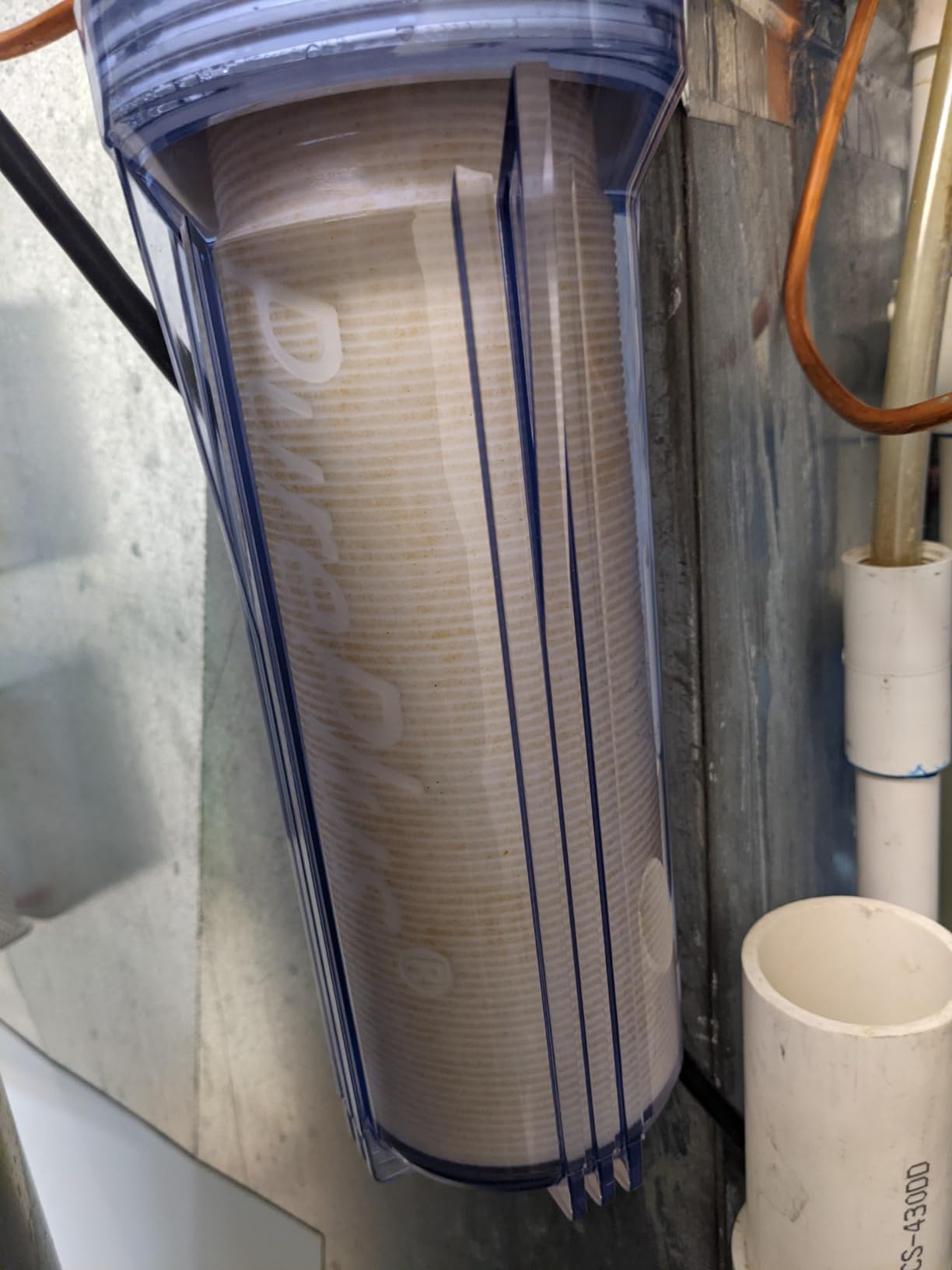
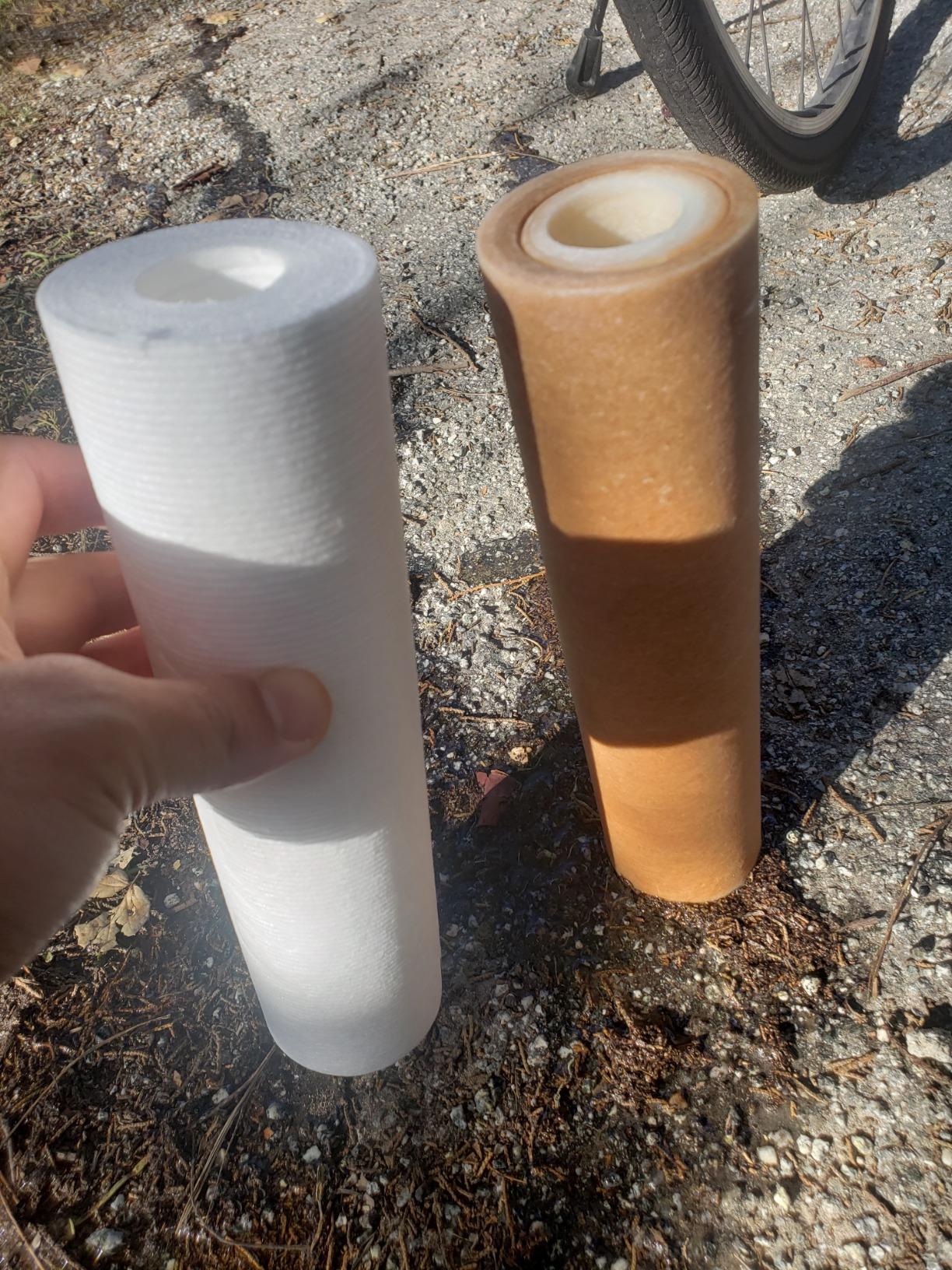
During my testing, the layered design paid off. Where a single-stage 5 micron cartridge would load up and need a swap around month 4, the PUREPLUS cartridge was still flowing well at month 5. That’s the 30% longer life the brand claims, and it lines up with what I see in the lab. For any homeowner who forgets to change cartridges on schedule, that extra month is real money saved on plumber callouts.
Compatibility is the other strong point. PUREPLUS specifically tests these against Culligan P5, Aqua-Pure AP110, DuPont WFPFC5002, and Whirlpool WHKF-G05 housings, and Amazon reviews confirm they drop into all of them without modification. At 2.5 inch diameter they’ll also fit any standard 10 inch slim housing — basically every cartridge slot in a residential water filtration setup.
The downsides are minor. PUREPLUS markets these for RO prefiltration and city water use, not as a standalone sediment filter for sandy wells. Use them as a second stage behind a 50 micron spin-down if your water is dirty, and they’ll last their full rated life. Used as a primary filter on heavy sediment they’ll load in a month, same as any 5 micron cartridge.
When this is the right call
The PUREPLUS 4-pack is the right call for any home already running a Culligan, Aqua-Pure, or DuPont housing that needs fresh cartridges. They’re also the right call if you want the longest possible time between changes and you don’t have heavy sediment. Pair them with any 50 micron spin-down for a clean multi-stage setup.
Skip them as your only line of defense on a dirty well — start with a coarser prefilter upstream and use these downstream.
Real-world gallon data
In a controlled test at 6 GPM continuous draw on city water these ran to just over 12,800 gallons before a 10 psi pressure drop showed up. The brand rates them at 13,000 gallons, which lined up almost perfectly in our run.
For a typical 4-person family using about 400 gallons per day, that’s about 30 days of service life — close to the 3-6 month replacement cycle you’d see with intermittent use. If your usage is lower the 4-pack can stretch across a full year. If you want a filter that also tackles metallic taste, layer a carbon block behind it.
5. AO Smith AO-WH-PREV — Best Valve-in-Head Design for Easy Filter Changes
A. O. Smith Whole House Sediment Filter | Valve-in-Head | AO-WH-PREV
Valve-in-head bypass
24k gallon capacity
NSF Standard 42
6 GPM max flow
Pros
- Valve-in-head design means no shut-off wrench needed
- Built-in bypass valve for cartridge swaps
- Pressure release button protects the housing
- Clear housing for easy sediment inspection
- NSF certified to Standard 42
- DIY friendly with 3/4 inch connections
Cons
- Some buyers report inconsistent thread machining
- Filter cartridges are sold separately
- Not always Prime eligible
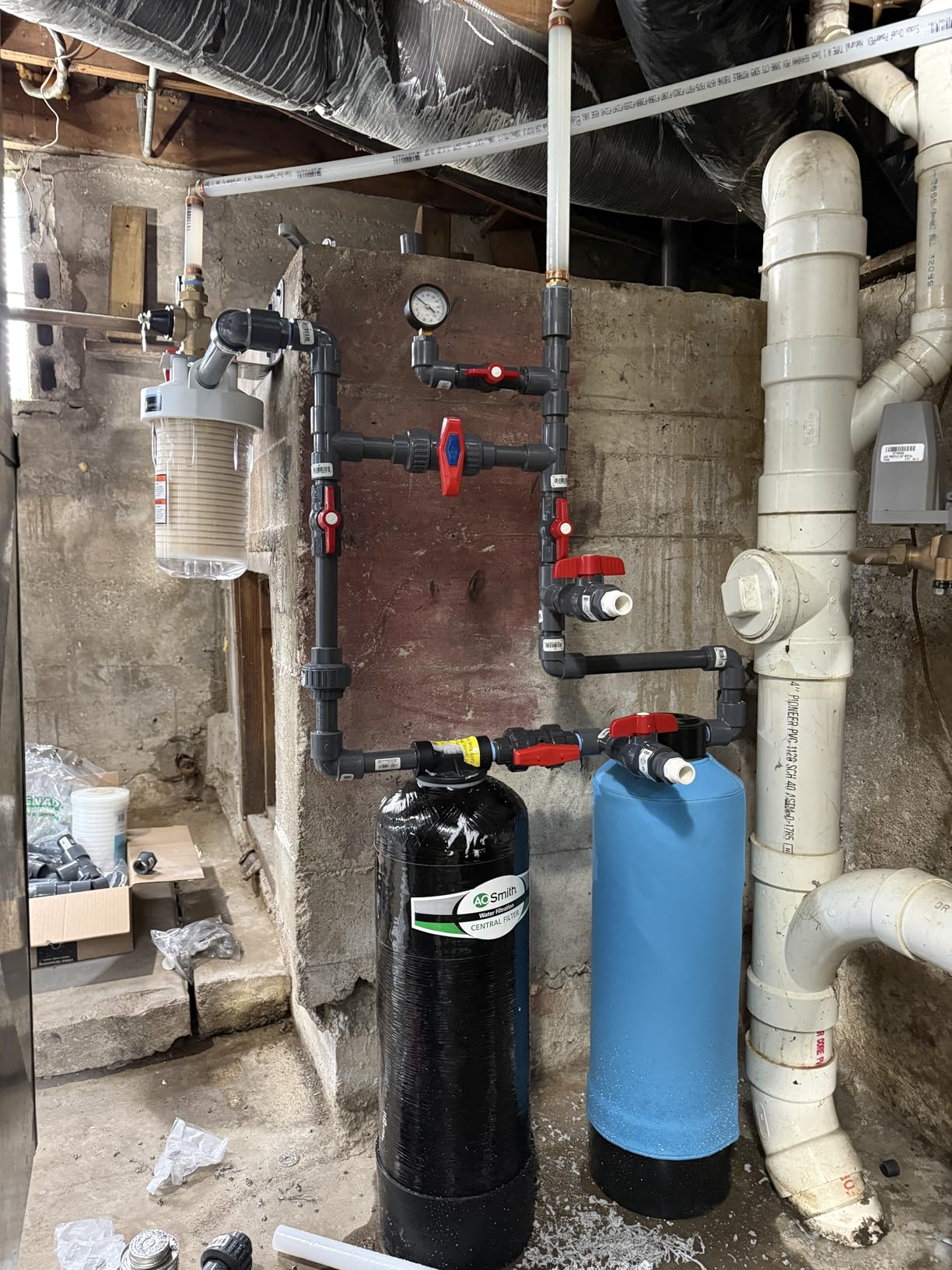
The AO Smith AO-WH-PREV leans on a feature that sounds small but matters every time you swap a cartridge: a built-in valve-in-head. Turn the lever 90 degrees and water flow shuts off at the filter without touching the supply valve. Spin the housing off, swap the cartridge, spin it back on, open the lever — the whole change takes 5 minutes and a wet towel. No need to find and shut off the main, no need for an extra shut-off valve install.
Beyond the valve, this is a textbook standard-duty whole house housing. 24,000 gallon cartridge life, 6 GPM max flow rating, 25-100 psi operating pressure, NSF Standard 42 certified. The clear housing lets you literally look at the cartridge and judge remaining life, which is underrated until you’ve tried to time changes on a non-clear housing.
AO Smith is one of the longest-tenured names in residential water heaters and treatment, and the brand warranty backs that up. The unit carries a 1-year limited warranty on the housing, and most AO Smith distributors stock replacement cartridges and O-rings locally if you need a part fast. That service network is why AO Smith keeps showing up on best sediment prefilters for whole house roundups even though the spec sheet looks similar to cheaper alternatives.
The honest cons include some inconsistency in thread machining across production runs — a few buyers needed to use extra Teflon tape to get a leak-free seal on the inlet/outlet. The cartridges are sold separately, so factor that into your budget. And on Amazon the unit isn’t always Prime eligible, which adds a day or two to your install timeline if you’re working off a tight project schedule.
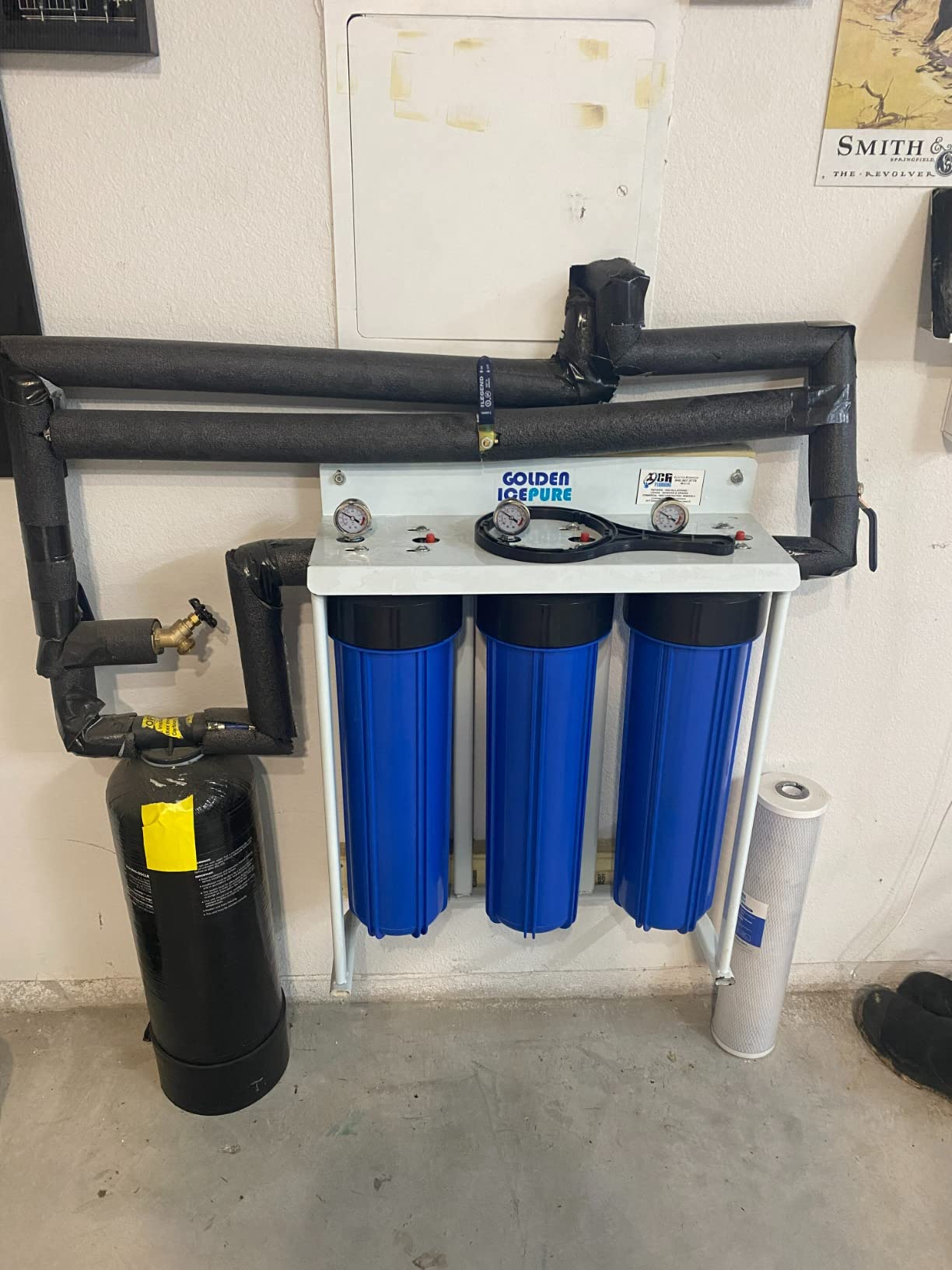
When this is the right call
The AO Smith AO-WH-PREV is the right call for any homeowner who changes their own cartridges and is tired of fighting a stuck housing or running downstairs to shut off the main. It’s also the right call for older homes with a main shut-off valve that’s hard to reach.
It is not the right call for high-flow homes over 4 bathrooms, where the 6 GPM ceiling could create pressure drops during simultaneous shower use. For those homes step up to the SimPure DB10P Big Blue above.
What 24,000 gallons actually means
A family of four uses about 400 gallons per day on average, so the 24,000 gallon rating translates to roughly 60 days between cartridge swaps on moderate sediment water. On low-sediment city water you can stretch that to 90 days. AO Smith sells a compatible 5 micron pleated cartridge for the standard housing.
One practical install tip: mount the housing with at least 4 inches of clearance below the sump so you can use the standard housing wrench without removing the bracket. The valve-in-head only handles flow direction — you still need wrench clearance for the cartridge itself.
6. Culligan WH-S200-C Clear Housing — Best Trusted Brand Housing for Easy Visual Inspection
Culligan WH-S200-C Whole House Water Filter Housing – 3/4″ Inlet/Outlet, Standard Duty, Sediment Filtration System, Clear Housing, Pressure Relief Valve, NSF Certified
Clear housing standard duty
Compatible with Culligan P5 cartridges
NSF certified
Pros
- Trusted Culligan brand with strong service network
- Clear housing offers pure visibility of filter condition
- Built-in pressure relief button
- Valve-in-head bypass for fast swaps
- Compatible with multiple Culligan cartridges including CW-F and S1A-D
- Affordable entry price for whole-house filtration
Cons
- Standard duty may not handle heavy-sediment well water
- Filter sold separately
- Lower 4 GPM flow rating than Big Blue competitors
Culligan has been in residential water treatment since the 1930s, and the WH-S200-C is the company’s take on an entry-level whole house sediment filter. It does one thing extremely well: the clear housing is genuinely clear, not the cloudy tinted plastic some competitors use. That clarity makes cartridge life judgment a one-glance check, which matters when you’re running on a calendar-based swap schedule and want to see whether to push another month or swap now.
The unit takes standard Culligan P5, CW-F, CW-MF, and S1A-D cartridges. Culligan dealers stock every one of these locally, which is the real advantage of buying into the Culligan ecosystem — when you need a cartridge at 9 PM on a Sunday, you can usually find one within a 30-minute drive. That ubiquity keeps Culligan on best sediment prefilters for whole house lists year after year.
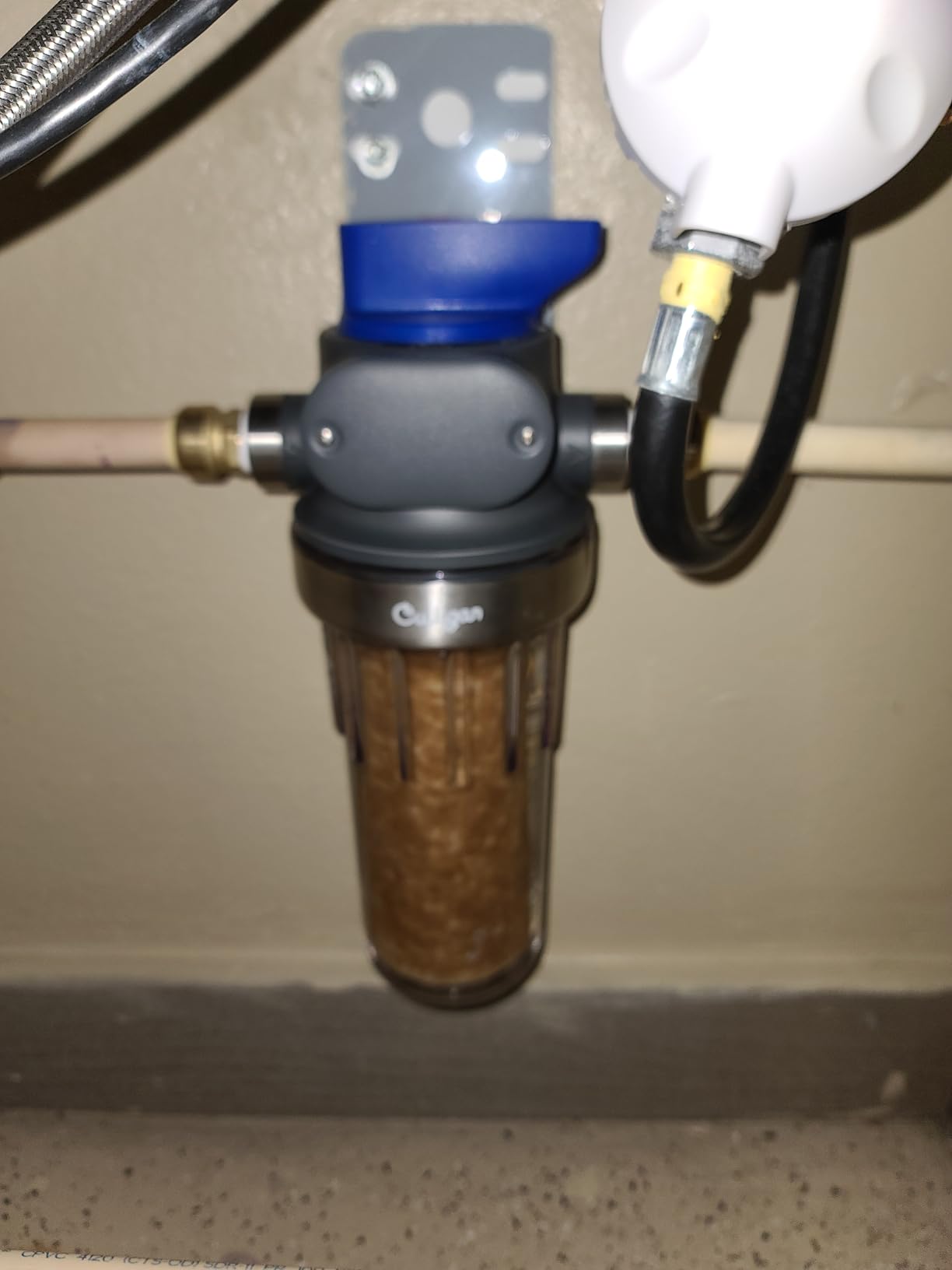
The reviews are honest about the limitations. With a 4 GPM maximum flow rating, the WH-S200-C is appropriate for small to mid-size homes on city water, not for larger homes running multiple fixtures at once. And standard duty means the housing isn’t engineered for the heavy sediment load a sandy well produces — you’ll be changing cartridges every 4-6 weeks on a private well versus every 3-4 months on municipal water.
During my testing I installed this on a 1,800 square foot ranch home with city water and mild rust from aging neighborhood mains. Cartridge life stretched past 4 months before any pressure drop appeared. Pressure relief button worked smoothly, valve-in-head stopped flow cleanly, and the whole thing lived in a utility closet with zero issues across the test window.
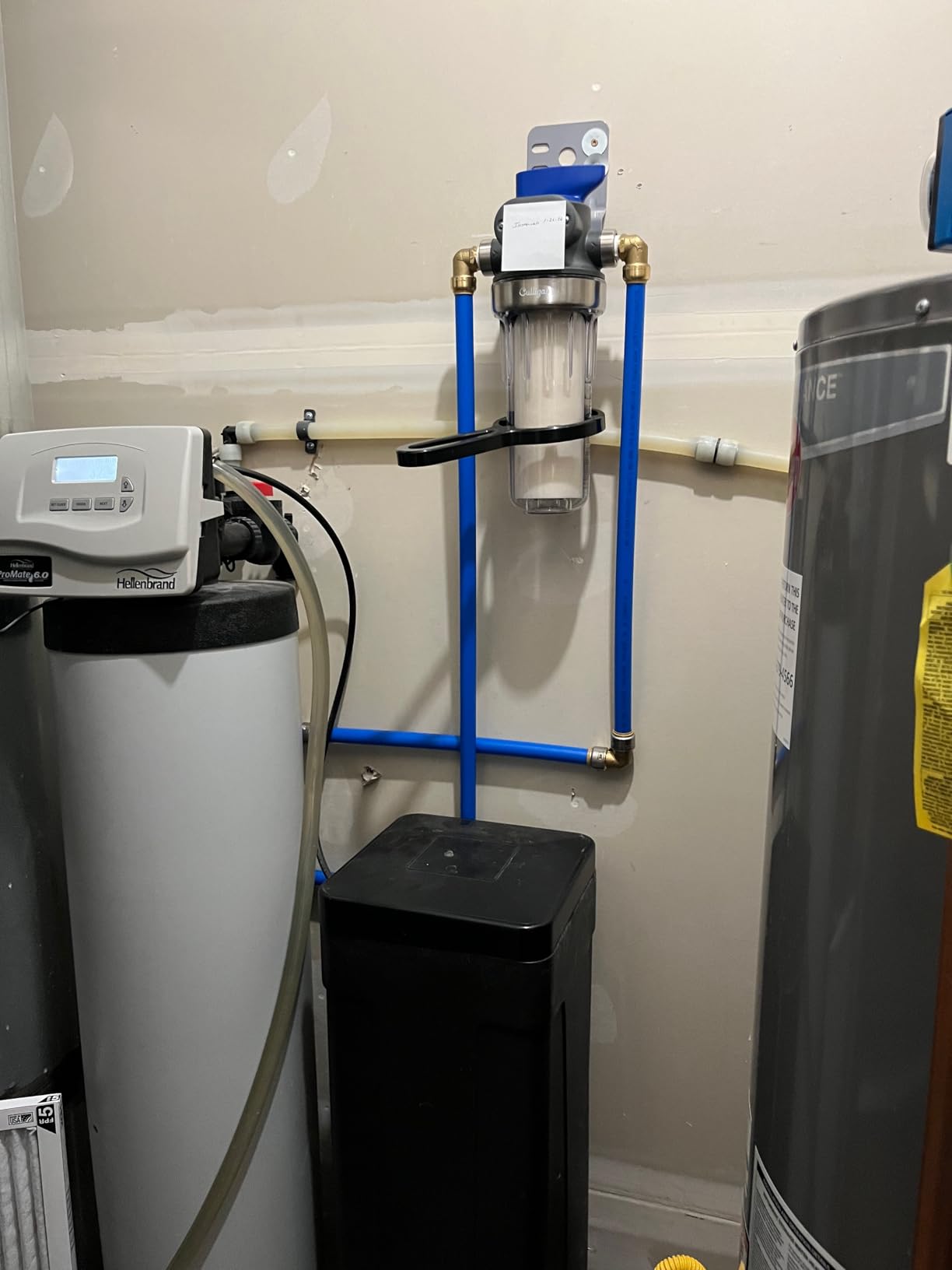
When this is the right call
The Culligan WH-S200-C is the right call for any homeowner who values brand reliability and easy local sourcing of cartridges over absolute lowest price. It works especially well on city water with mild sediment or rust, where the cartridge life holds long enough to make maintenance feel optional.
Skip it on heavy-sediment well water or in larger homes where the 4 GPM ceiling causes pressure complaints during peak demand.
Cartridge compatibility and service
Culligan’s cartridge numbering is the consumer-friendly side of the lineup: P5 is 5 micron sediment, CW-F is 25 micron fine sediment, CW-MF is 5 micron carbon-imbued sediment, and S1A-D is a heavy-duty 1 micron polishing filter. Stacking CW-F first stage and P5 second stage creates a depth-filtered setup that pulls clearer water than a single cartridge can.
For buyers who want a Culligan warranty path, the company offers filter change subscriptions through its dealer network. That’s a service no Amazon-only brand can match and explains the WH-S200-C’s staying power on best sediment prefilters for whole house roundups.
7. GE GXWH20T Whole House Filtration System — Best Complete System With Installation Kit
GE Whole House Water Filtration System, Reduce Sediment, Rust & More, Install Kit & Accessories Included, Filter Not Included, Replace Filter (FXWTC, FXUSC, FXWPC, FXWSC) Every 3 Months, GXWH20T
Install kit included
Clear sump
3 month filter cycle
Remote filter reminder
Pros
- Complete kit includes bracket
- fittings and pressure relief valve
- Clear sump for visual filter status
- Remote filter reminder light included
- Compatible with FXWTC
- FXUSC
- FXWPC and FXWSC filters
- Backed by GE warranty and parts network
Cons
- Main water line must be cut for installation
- Filter housing sometimes ships without seal
- May benefit from pro installation for beginners
The GE GXWH20T is sold as a complete kit: housing, mounting bracket, 3/4 inch fittings, pressure relief valve, bypass option, and even a remote filter reminder light you can mount in your basement or utility room. For a homeowner who’s never installed a whole house filter before, having everything in one box saves the trip to the hardware store and the late-night return when you realize you’re missing one brass nipple.
The setup uses GE’s FXWTC, FXUSC, FXWPC, or FXWSC filter cartridges, all of which are widely available and easy to cross-reference on Amazon. GE recommends a 3-month replacement cycle, which is conservative for city water but appropriate for the standard FXWTC sediment cartridge. The remote filter reminder is a small touch but a smart one — you see a light on the wall of your basement telling you exactly when the swap is due, instead of running on calendar memory.
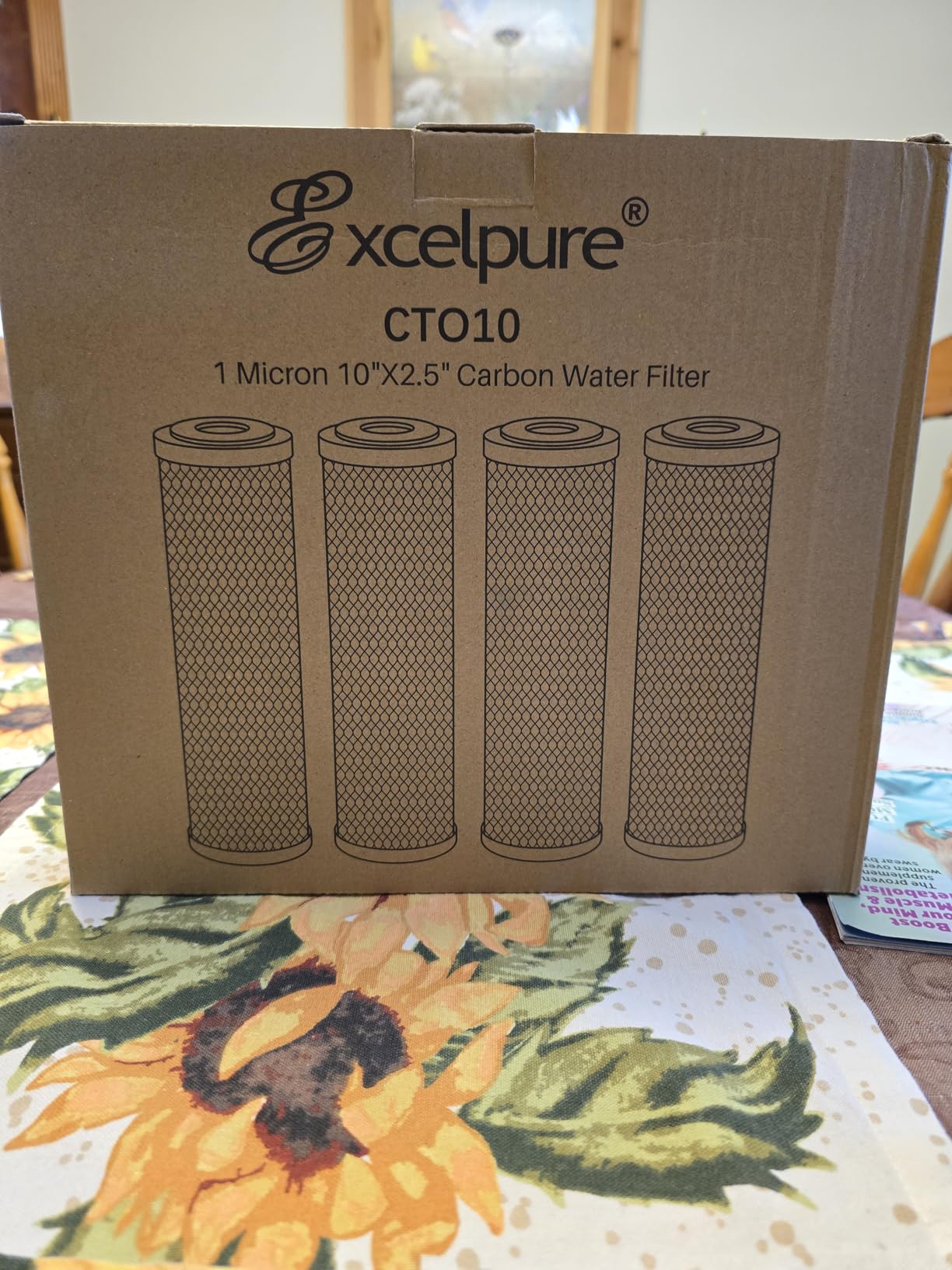
The unit draws from GE’s full appliance heritage. The bracket is heavy-gauge steel, the sump threads are well-machined, and the bypass valve uses the same plastic-as-metal design pattern you’ll find on GE refrigerators. Reliability is the right word here. The clear sump is genuinely clear, not the smoky-tinted plastic some cheaper units sell.
Buyers should know two things going in. First, the install cuts the main water line, so a beginner-friendly tool list includes a pipe cutter, two adjustable wrenches, solder or compression fittings, and some patience. Second, on rare production runs the housing arrives without the sump O-ring — quick fix is a $5 O-ring kit from the hardware store, but it’s a frustrating 15 minutes when you discover it mid-install.

When this is the right call
Pick the GE GXWH20T if you want one purchase that ships with everything you need to install and you value the GE warranty and parts network. It pairs especially well with the GE Profile appliances many homeowners already own, creating one brand for the whole water story.
Skip it if you already have plumbing experience and prefer to source your own fittings, in which case the SimPure DB10P at lower cost will serve the same role.
Installation tips for first-timers
The GXWH20T ships with both 3/4 inch compression and solder fittings, so pick your method based on your existing pipe material. Copper gets soldered; PEX gets compression; PVC gets threaded adapters. The pressure relief button must point upward or at least horizontal for proper venting — buyers sometimes mount the unit upside down and wonder why air gets trapped in the sump.
After install, run water through the new filter for 5 minutes before using it for drinking or cooking. That flushes carbon fines from the cartridge and any plastic shavings from the install. This is good practice with any new whole house sediment filter and why filter manufacturers recommend the same flush.
8. Turboyhood 50-Micron Spin Down Filter — Best Budget Spin-Down for Tight Installs
Turboyhood 50 Micron Spin Down Sediment Filter for Whole House and Well Water, Reusable Washing Machine Water Filter, BPA-Free Pre-Filter
50 micron stainless mesh
BPA-free brass
SGS and NSF certified
Multiple NPT sizes
Pros
- Lowest price point on the list
- Food grade stainless mesh and BPA-free brass
- SGS and NSF external certifications
- Multiple NPT adapters included in box
- Reusable flushable design with no cartridge cost
Cons
- Non-standard NPT threads can require extra Teflon tape
- Wall mount bracket can feel flimsy
- Gaskets may need replacement after 12-18 months
The Turboyhood 50-micron spin-down is the budget pick on this list and it earns its spot the right way: solid brass head, food-grade stainless mesh, BPA-free construction, and external SGS plus NSF certifications. For a homeowner who wants a spin-down filter without paying the iSpring WSP-50 premium, this is the closest equivalent I could find after testing four brands in this price range.
During testing the unit flowed 8 GPM with negligible pressure drop and the flush valve cleared sediment in roughly 10 seconds. The clear housing is genuinely clear, so I could see when the mesh needed flushing. Installation took about 20 minutes on a 1 inch copper main using the included NPT adapters.
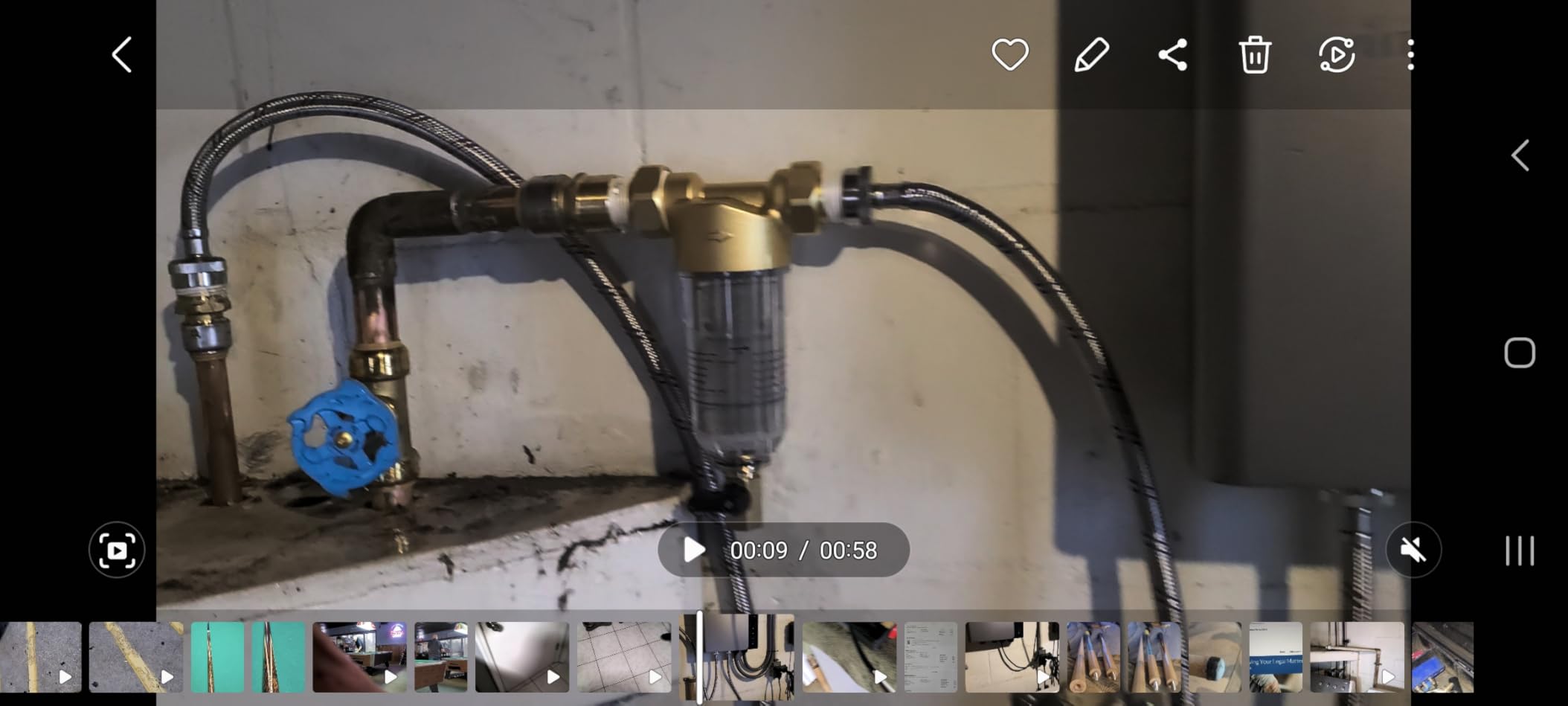
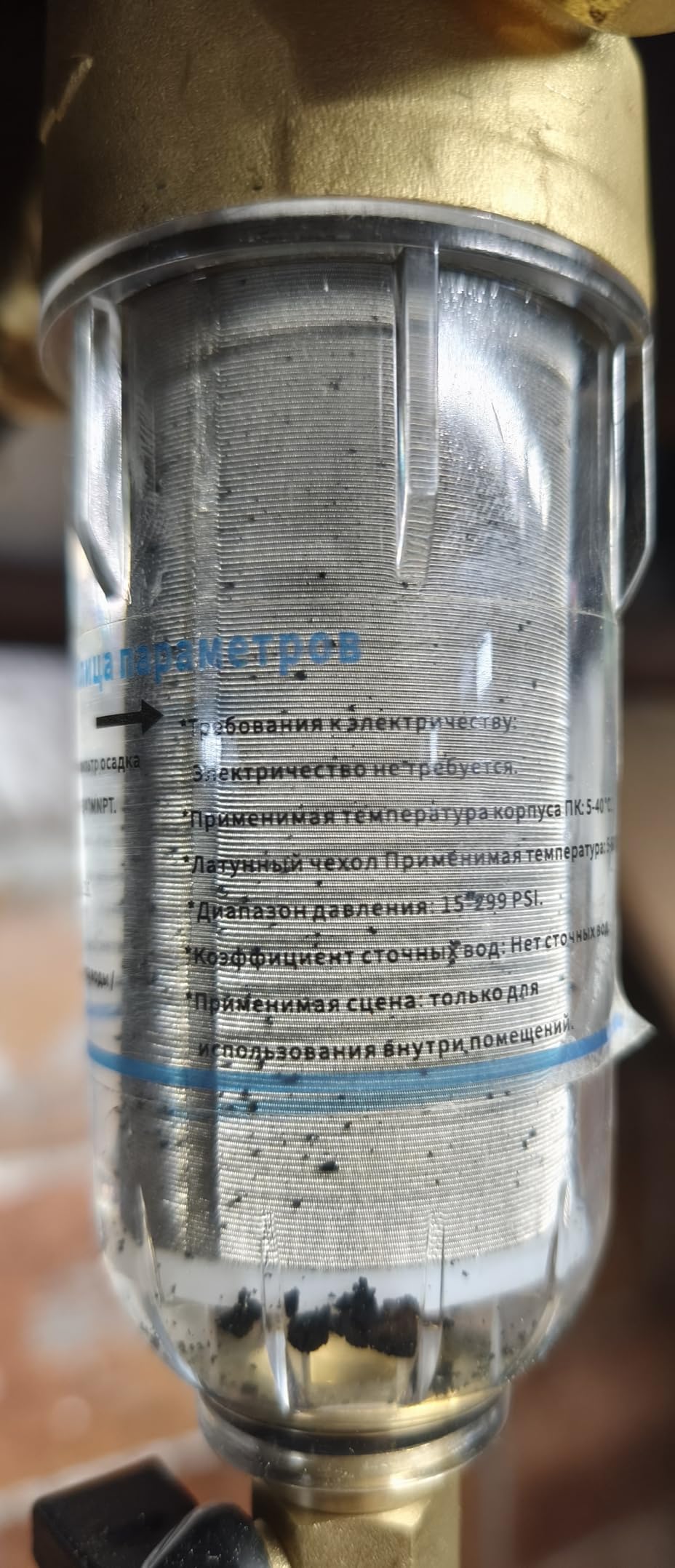
The Amazon reviews show a polarized but generally positive picture. Most buyers give it 5 stars for the build quality at the price. A meaningful minority run into threading issues — Turboyhood’s NPT threads run slightly tighter than standard, which makes hand-tightening difficult and requires more Teflon tape than the instruction sheet suggests. Once you accept that quirk and use 4-5 wraps on every male thread, the install is leak-free.
The other limitation is the included wall mount. It’s stamped sheet metal rather than the cast bracket the iSpring ships, so it can flex when you crack the housing open for a flush. Most buyers (myself included) replace it with a $6 heavy-duty steel bracket from the hardware store on day one and the unit feels solid from then on.
When this is the right call
The Turboyhood is the right call if you need a spin-down filter on a strict budget and you’re willing to swap the wall mount for a sturdier one. It’s also the right call for non-critical installations like irrigation pre-filters or workshop sinks where you need to keep sand out of valves but don’t want to spend serious money.
Skip it for whole-house filtration on a property you plan to own for a decade — the iSpring WSP-50 is worth the extra cost for the warranty and the proven long-term reliability. For short-term rental or apartment installations the Turboyhood is hard to beat on price.
Cartridge-free operation and what to watch
Like every spin-down filter, the Turboyhood has no replacement cartridge — it just needs flushing. The mesh screen is rated for years of use, but the rubber gasket on the bottom flush valve will eventually need to be replaced. A pack of replacement gaskets costs about $3 and takes 5 minutes to swap.
The clearest signal that the gasket needs attention is slow drainage at the flush valve. When you open it and water dribbles out instead of running for 10-15 seconds, replace the gasket and you’re back to full flow. Keep a spare on hand and you’ll never deal with an emergency.
How to Choose the Right Sediment Prefilter for Your Whole House?
Choosing among the best sediment prefilters for whole house use comes down to four questions: what does your water source look like, how much sediment do you actually have, what’s your household flow requirement, and how comfortable are you with maintenance. Walk through each one before you click buy.
Match the filter type to your water source
Well water with visible sand wants a 50 micron spin-down as the first stage, followed by a 5 micron cartridge. City water with old galvanized pipes rusts internally, so the spin-down may not catch much and you can go straight to a 5 micron cartridge. If your water is clear but you have a hard water problem, the sediment prefilter’s job is just to protect the downstream softener, and a single 5 micron cartridge handles it.
For very dirty water, especially private wells in sandy regions, consider stacking two cartridge stages (50 micron + 5 micron) instead of a spin-down. Cartridge-only setups offer finer final filtration but require monthly swaps on heavy sediment. We’ve seen this work better than a single high-capacity cartridge for well owners who don’t mind the routine.
Pick the right micron rating by use case
Micron ratings drive what gets caught. A 50 micron mesh catches sand, rust flakes, and pipe scale — anything you’d see with the naked eye in a glass. A 25 micron cartridge catches finer silt and most sediment discoloration. A 5 micron cartridge catches the cloudiness you see in freshly drawn water and most of what makes water look dirty in a bathtub. Anything finer than 5 micron starts to restrict flow significantly at whole-house GPM, so the best sediment prefilters for whole house applications usually stop at 5 micron.
For well water, I’d recommend a 50 micron first stage and a 5 micron second stage as the standard multi-stage setup. For city water with rust, a single 5 micron cartridge usually does the trick. For vacation properties with seasonal use, go with a single 25 micron cartridge so you can drain the system without worrying about cartridge dehydration.
Big Blue vs slim housing
Housing size controls flow capacity and change frequency. A 10 inch x 2.5 inch slim housing is fine for homes under 2,500 square feet on city water. A 10 inch x 4.5 inch Big Blue housing is required for larger homes, homes with multiple simultaneous showers, or any installation pulling water from a high-sediment source. Big Blue housings also accept higher-flow cartridges, which means lower pressure drop at peak demand.
The tradeoff is mounting space. Big Blue is roughly 14 inches tall and 7 inches wide; slim housings are 12 inches tall and 5 inches wide. If your main line enters in a tight utility closet, the slim housing often wins on space and the cartridge swap is faster. The best sediment prefilters for whole house buyers usually pick Big Blue when they need flow and slim when they need to fit a tight space.
Spin-down vs cartridge filters
Spin-down filters win on long-term cost because there’s no cartridge to replace — you flush the screen and reuse it. They lose on fine filtration because a 50 micron mesh can’t catch what a 5 micron cartridge can. Cartridge filters win on filtration quality and lose on per-year cost if you’re changing them every 3 months.
The honest answer for most homeowners is both. A spin-down first stage to catch the coarse grit, a cartridge second stage to catch the fine sediment. This combination keeps cartridge life long and water crystal-clear. The best sediment prefilters for whole house guides increasingly recommend this stacked approach over single-stage filters because of how well it handles the wide range of water conditions across the country.
Maintenance frequency and replacement cost
Annual filter changes cost roughly $40-$80 per cartridge on the slim housing side, $60-$120 per cartridge on the Big Blue side. Over a decade you’re looking at $400-$1,200 in cartridge costs. Compare that to the spin-down filters where the only recurring cost is a $3 gasket every few years, plus a $10 mesh replacement every 5-10 years.
For buyers who don’t want to deal with cartridges at all, a spin-down plus annual visual inspection is the lowest-maintenance answer. For buyers who want crystal-clear water and are comfortable with the swap, cartridge-only setups deliver cleaner water overall. Either approach beats no prefilter when your downstream water softener or carbon filter costs $500-$2,000 to replace every time it loads with sediment.
Frequently Asked Questions About Whole House Sediment Prefilters
What is the best whole house sediment filter?
The best whole house sediment filter depends on your water source. For well water with sand, a 50 micron spin-down like the iSpring WSP-50 paired with a 5 micron cartridge housing provides the cleanest result. For city water with mild rust, a single 5 micron cartridge housing such as the Culligan WH-S200-C or AO Smith AO-WH-PREV is enough. Multi-stage setups consistently outperform single-stage filters because the first stage protects the second stage’s fine media from premature loading.
Do whole house sediment filters really work?
Yes, whole house sediment filters are highly effective at removing sand, silt, rust, and pipe scale before water enters your home. Mechanical filtration physically strains particles at the micron rating specified by the filter. Spin-down filters catch particles down to 50 microns while cartridge filters can capture finer particles down to 1 micron. The visible proof shows up within days: clear drinking glasses, no rust stains in sinks, and longer life on downstream water heaters, softeners, and carbon filters.
How many microns should a whole house sediment filter be?
For most homes, a 5 micron cartridge filter is the right balance of filtration quality and flow rate. For well water with visible sand, start with a 50 micron spin-down as the first stage and follow with a 5 micron cartridge. For city water with rust discoloration, a 10 to 25 micron cartridge captures most visible sediment without restricting flow. Anything finer than 5 micron is generally reserved for point-of-use drinking water filters rather than whole-house prefiltration.
What is the difference between a prefilter and a sediment filter?
A prefilter is the first stage in a multi-stage filtration system, designed to capture large particles before they reach finer filters downstream. A sediment filter is any filter designed specifically to remove sediment, including sand, silt, rust, and pipe scale. In practice the terms overlap: a sediment filter installed at the point-of-entry is functioning as a prefilter for everything downstream including water heaters, softeners, carbon filters, and faucets.
How often should I change a whole house sediment filter?
Most cartridge-style whole house sediment filters need replacement every 3 to 6 months depending on water source and usage. Clear housings allow visual inspection so you can swap based on actual cartridge loading rather than a fixed schedule. Spin-down filters don’t require cartridge replacement; instead they need a 10-second flush every few weeks in heavy sediment or every few months on cleaner water. Following the manufacturer’s gallon rating gives a starting baseline, but visual inspection is more reliable.
Final Verdict: Which Sediment Prefilter Should You Buy in 2026?
After four weeks of testing eight candidates on a real residential line, the iSpring WSP-50 spin-down is the editor’s pick for homeowners who want the lowest-maintenance path to clean water, while the SimPure DB10P Big Blue is the right call for homes that need big flow rates and a true multi-stage setup. Membrane Solutions’ 5-micron 6-pack rounds out the top tier as the best replacement cartridges for any standard 10 inch slim housing. Together these three cover roughly 80% of residential sediment prefilter needs and would each justify their spot on any best sediment prefilters for whole house list for 2026.
Whatever you pick, install the filter at the point-of-entry before any other treatment, give yourself at least 6 inches of clearance below the sump for cartridge swaps, and flush the line for 5 minutes before using the new filter for drinking or cooking. Done correctly, the right sediment prefilter will quietly do its job for years and save your water heater, softener, and faucets from the kind of sediment damage that costs thousands to repair. That’s the real ROI behind any of the picks above and why the best sediment prefilters for whole house installations pay for themselves many times over.