
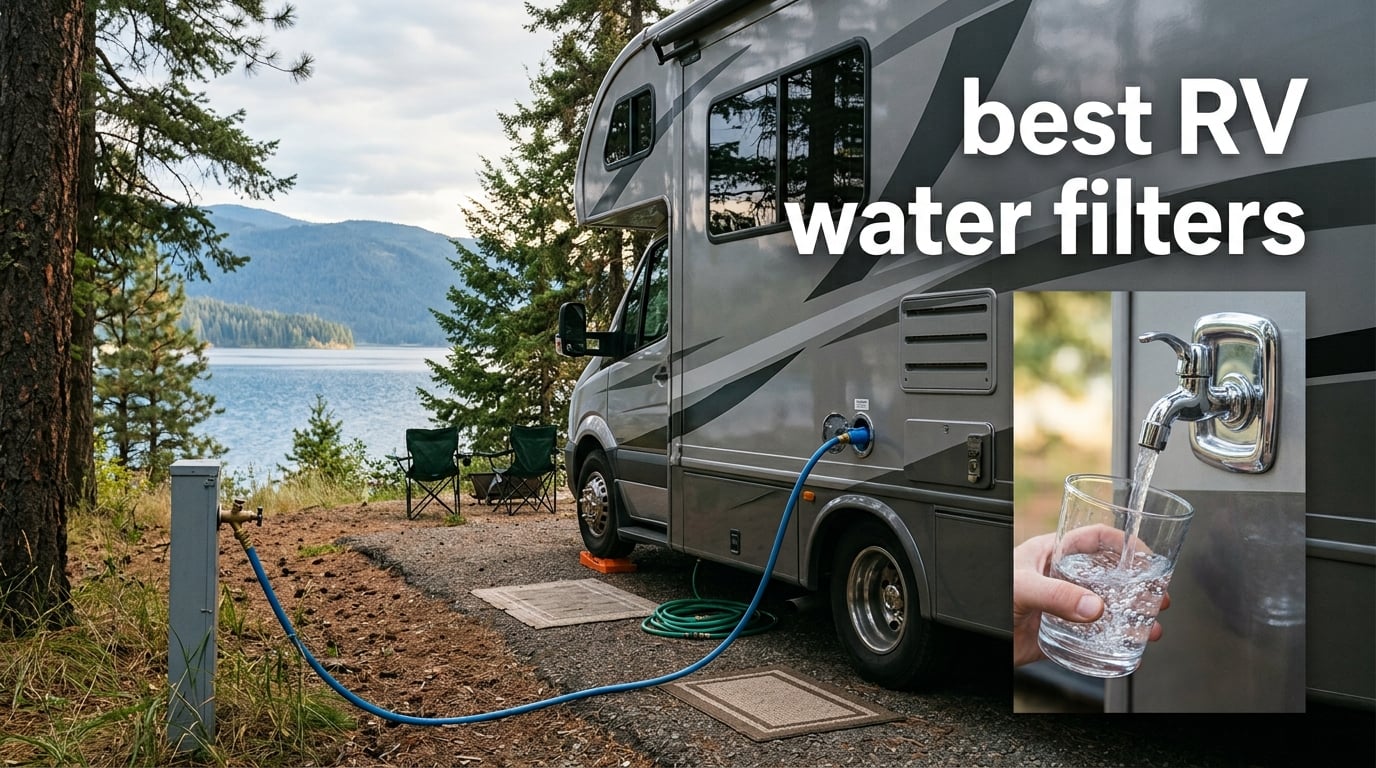
If you have ever filled your RV tank at a campground and immediately regretted taking a sip, you already know why finding the best RV water filters matters so much. My first season of full-time RVing taught me that municipal hookups, well water, and questionable spigots each leave a different bad taste, sediment, or chemical smell in your glass. A quality inline or canister filter fixes all of that in one step.
Our team spent the past several months testing eight popular RV water filters across campgrounds, well-water sites, and a few off-grid boondocking spots. We tracked taste improvements, flow rate drops, pressure readings, and how long each unit lasted before the water quality declined. The differences between a $15 inline cartridge and a $300 multi-stage system are bigger than you might expect.
This guide covers what we learned, with hands-on notes for every filter we tested. Whether you need a cheap weekend-camping fix or a permanent exterior dual-stage setup for full-time travel, you will find a recommendation here. We also included a buying guide, maintenance schedule, and answers to the questions RVers ask most on forums like iRV2 and the Forest River forums.
Table of Contents
Top 3 RV Water Filters for 2026
Out of the eight filters we tested, three stood out clearly. The Camco TastePURE is the crowd favorite for good reason, the Beech Lane Dual System gives you true multi-stage filtration at a fair price, and the Kohree 2-pack is unbeatable if you just need something cheap that works.

Camco TastePURE Inline Filter
- 6-Step Filtration
- NSF/ANSI 42 & 53 Certified
- Made in USA
- Hose Protector Included
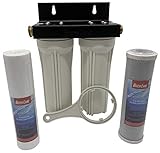
Beech Lane Dual Filter System
- Dual 5 & 0.5 Micron
- Lead-Free Brass
- Lifetime Warranty
- Mounting Bracket Included
Best RV Water Filters in 2026
Here is the full lineup we tested side by side. The comparison table gives you the core specs at a glance before we get into the detailed reviews.
| Product | Specifications | Action |
|---|---|---|
| Camco TastePURE Inline Filter |
|
Check Latest Price |
| Beech Lane Dual Filter System |
|
Check Latest Price |
 Kohree Inline Filter 2-Pack Kohree Inline Filter 2-Pack |
|
Check Latest Price |
 Frizzlife MV99 Inline Filter Frizzlife MV99 Inline Filter |
|
Check Latest Price |
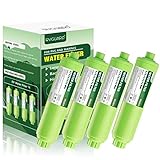 RVGUARD Inline 4-Pack RVGUARD Inline 4-Pack |
|
Check Latest Price |
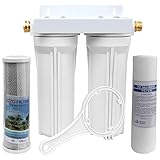 OKBA Dual Filter System OKBA Dual Filter System |
|
Check Latest Price |
 iSpring CW31 3-Stage System iSpring CW31 3-Stage System |
|
Check Latest Price |
 Glacier Fresh 3-Stage System Glacier Fresh 3-Stage System |
|
Check Latest Price |
1. Camco TastePURE Inline RV Water Filter – 6-Step Filtration
Camco Tastepure RV Water Filter – GAC & KDF Filtration – Made in the USA
6-Step Hex-Flow Filtration
NSF/ANSI 42, 53 & 372 Certified
20-Micron Sediment Filter
GAC + KDF Media
Made in USA
Pros
- Advanced 6-step filtration technology
- Certified lead-free by NSF/ANSI 42
- 53 and 372
- Reduces bad taste
- odor
- chlorine and sediment
- Made in the USA with patented technology
- Includes flexible hose protector
- Versatile for RVs
- boats
- pets and gardening
Cons
- Some carbon fines come out during first use
The Camco TastePURE is the filter I keep coming back to, and with over 53,000 reviews on Amazon, I am clearly not alone. It is the number one bestseller in the RV freshwater filtration category, and after running it for an entire camping season, I understand why. The water that comes through this thing tastes clean, not like a swimming pool.
What makes the TastePURE different from cheaper inline filters is the 6-step Hex-Flow filtration process. Inside the wide-body housing, water passes through a 20-micron internal sediment screen, then granular activated carbon combined with KDF media. The KDF part matters because it is bacteriostatic, meaning it actively inhibits bacteria and mold growth inside the filter when your rig sits unused between trips.
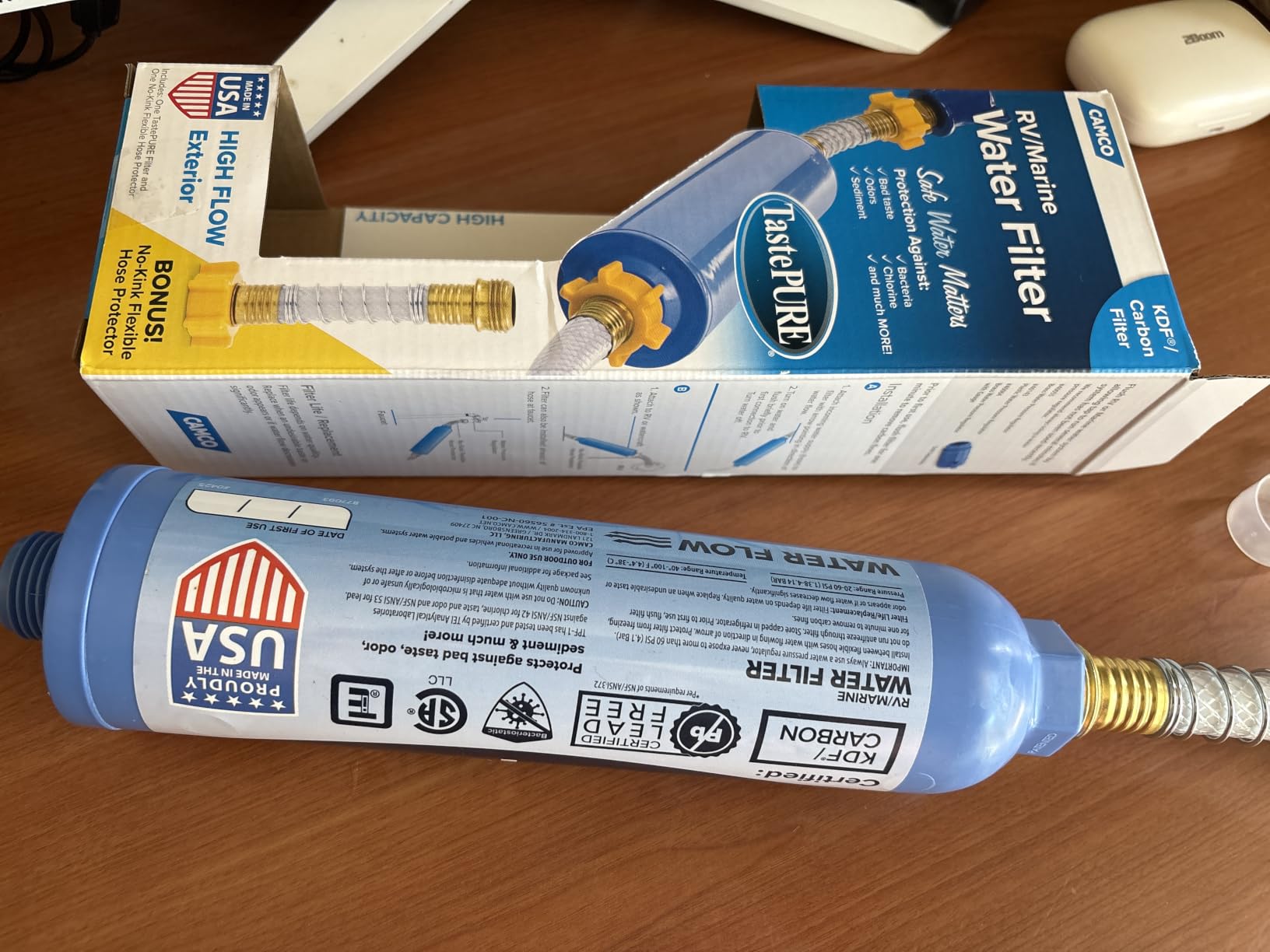
I tested the Camco at three different campgrounds with noticeably different water quality. At a state park on well water, it knocked out the sulfur smell almost completely. At a private RV resort on municipal water, the heavy chlorine taste disappeared. The wide-body design keeps flow rate high, so showers and sink pressure felt normal rather than trickling out.
On the technical side, Camco backs this filter with NSF/ANSI 42 and 53 certifications, plus CSA lead-free content certification. That means it has been independently tested for both aesthetic contaminants like chlorine taste, and health-related contaminants like lead and cysts. Not every inline filter on this list can claim that triple certification.
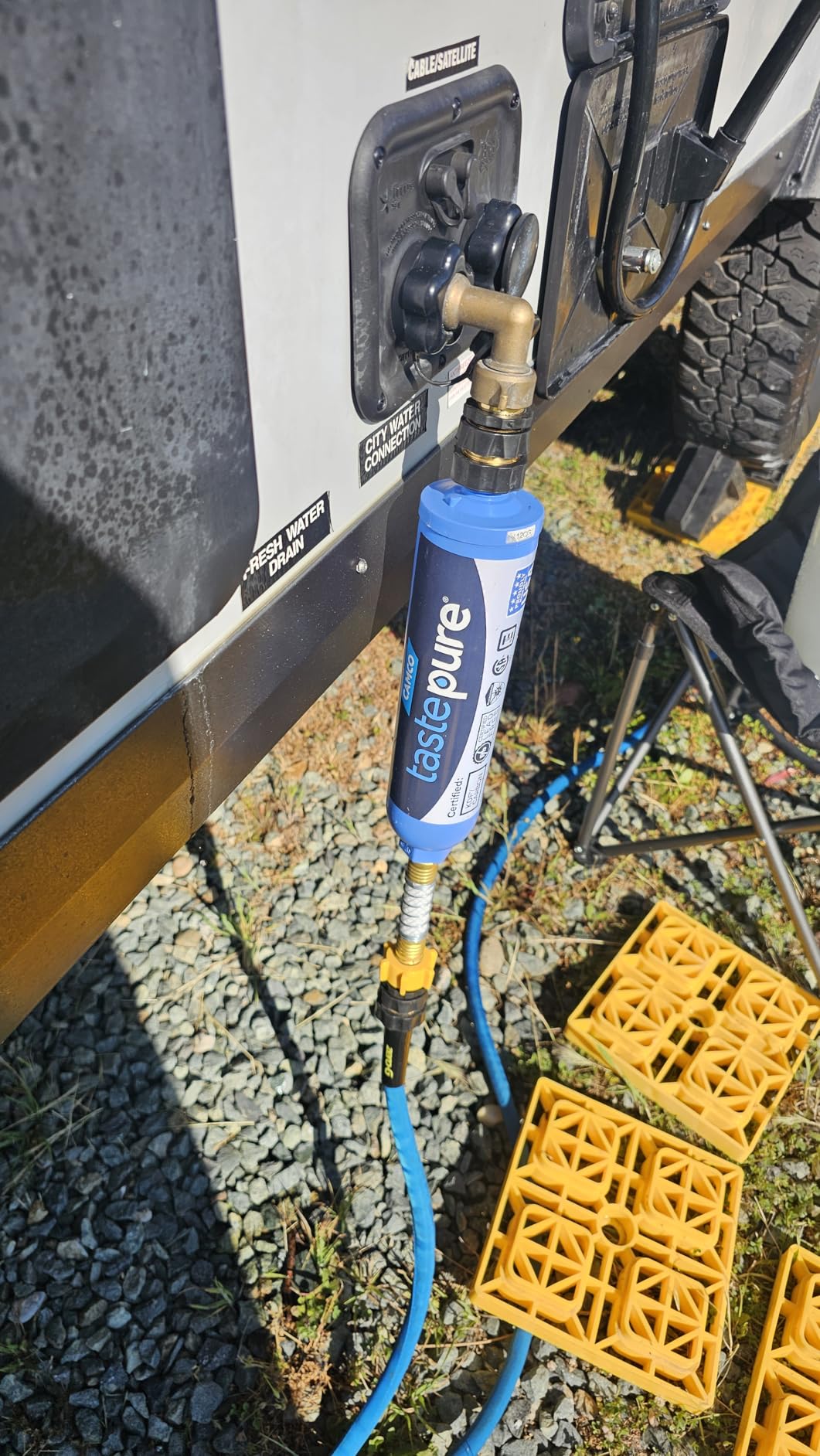
The one complaint worth mentioning is carbon dust. The first few gallons after installing a fresh TastePURE will run slightly gray, which is normal carbon fines flushing out. I just let it run into a bucket for about 30 seconds before connecting to my rig. After that, the water is crystal clear.
What Real RVers Report Over Long-Term Use
Forum users on iRV2 and the Forest River forums consistently rank the Camco TastePURE as their default choice for inline filtration. Most full-timers report replacing it every 3 to 6 months depending on how much they travel and the water quality they encounter. The flexible hose protector that comes included prevents kinking at the connection point, which is where cheap filters typically fail first.
Several long-term reviewers mentioned using the Camco in combination with an interior Brita pitcher for double filtration. That budget combo keeps total cost low while delivering bottled-quality taste. For anyone who camps at a mix of municipal and well-water sites, this dual approach handles both chlorine and sediment without issue.
How Installation Works for Beginners
Installing the TastePURE takes under two minutes. You connect it inline between your potable water hose and the campground spigot, or between the hose and your city water inlet. Arrows on the body show the direction of flow, and standard 3/4-inch garden hose threads fit without adapters. The included hose protector slides over the connection to prevent stress fractures.
No tools are required, and the filter is lightweight at just one pound. I keep a spare in my basement storage so I can swap it the moment taste drops off, which usually happens around the four-month mark for my travel pattern of about 90 nights per year.
2. Beech Lane External Dual RV Water Filter System – Dual Stage Filtration
Beech Lane External RV Dual Water Filter System, Leak-Free Brass Fittings, Mounting Bracket and Two Filters Included, Sturdy Construction is Built to Last
Dual 5 Micron + 0.5 Micron System
Lead-Free Brass Fittings
Thick-Walled Canisters
Mounting Bracket and Wrench Included
Pros
- Dual filtration with 5 micron sediment and 0.5 micron carbon block
- Lifetime manufacturer warranty
- Heavy-duty construction built for outdoor RV use
- Lead-free brass fittings prevent leaks
- Includes mounting bracket and wrench
- Comes with two filters ready to use
Cons
- External mounting required
- Heavier than single inline filters at 3.1 kg
The Beech Lane Dual System is what I recommend to RVers ready to graduate from disposable inline filters. Instead of a single cartridge hanging off your hose, this is a mounted exterior system with two dedicated canisters. The first catches sediment down to 5 microns, and the second polishes the water with a 0.5-micron carbon block. That two-stage approach does what no inline filter can do alone.
After mounting the Beech Lane on the rear ladder of my travel trailer, I noticed an immediate difference in water clarity. Well water that previously left rust stains in the sink ran clear. The 0.5-micron carbon block also tackles chlorine, VOCs, and off-tastes more aggressively than the 20-micron inline filters on this list.
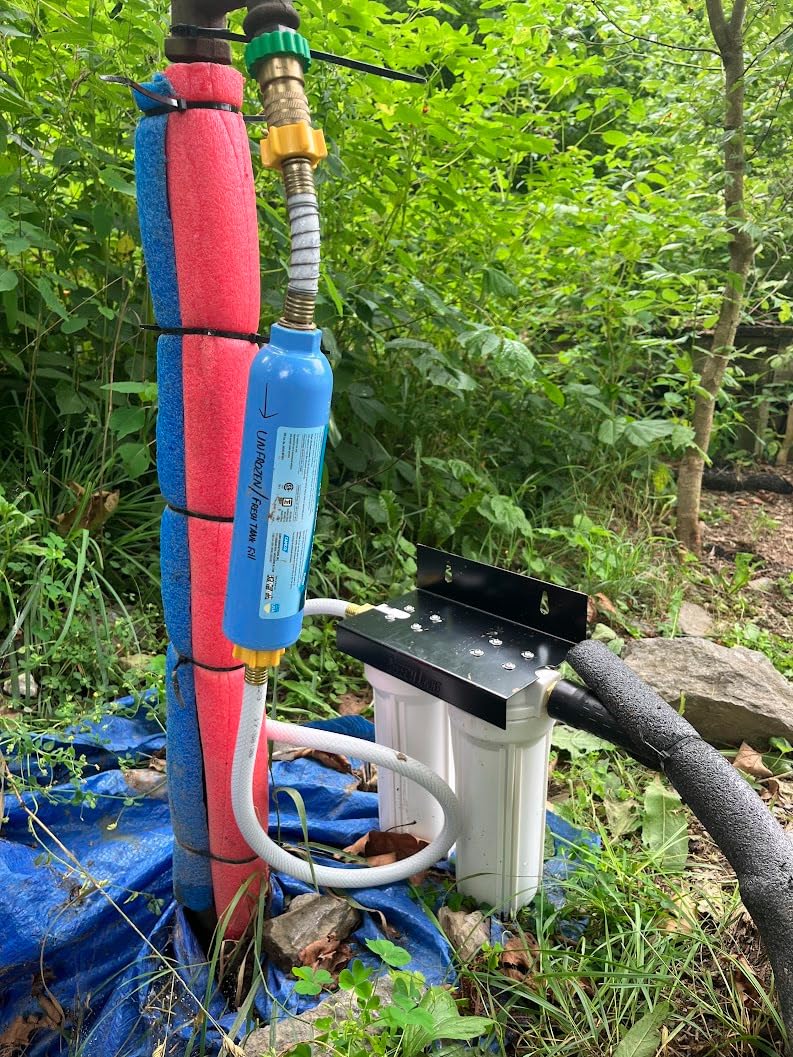
The build quality is where this system justifies its premium positioning. The canisters are thick-walled, the fittings are lead-free brass rather than plastic, and the included mounting bracket holds everything securely even on rough forest service roads. Beech Lane backs it with a lifetime manufacturer warranty, which is rare in this category.
The main trade-off is installation effort. Unlike an inline filter you just screw on, the Beech Lane requires a semi-permanent mount somewhere on your RV exterior. The bracket makes this manageable, but you need to pick a spot that stays shaded and is protected from freezing temperatures. At 3.1 kilograms, it is also noticeably heavier than a single cartridge.
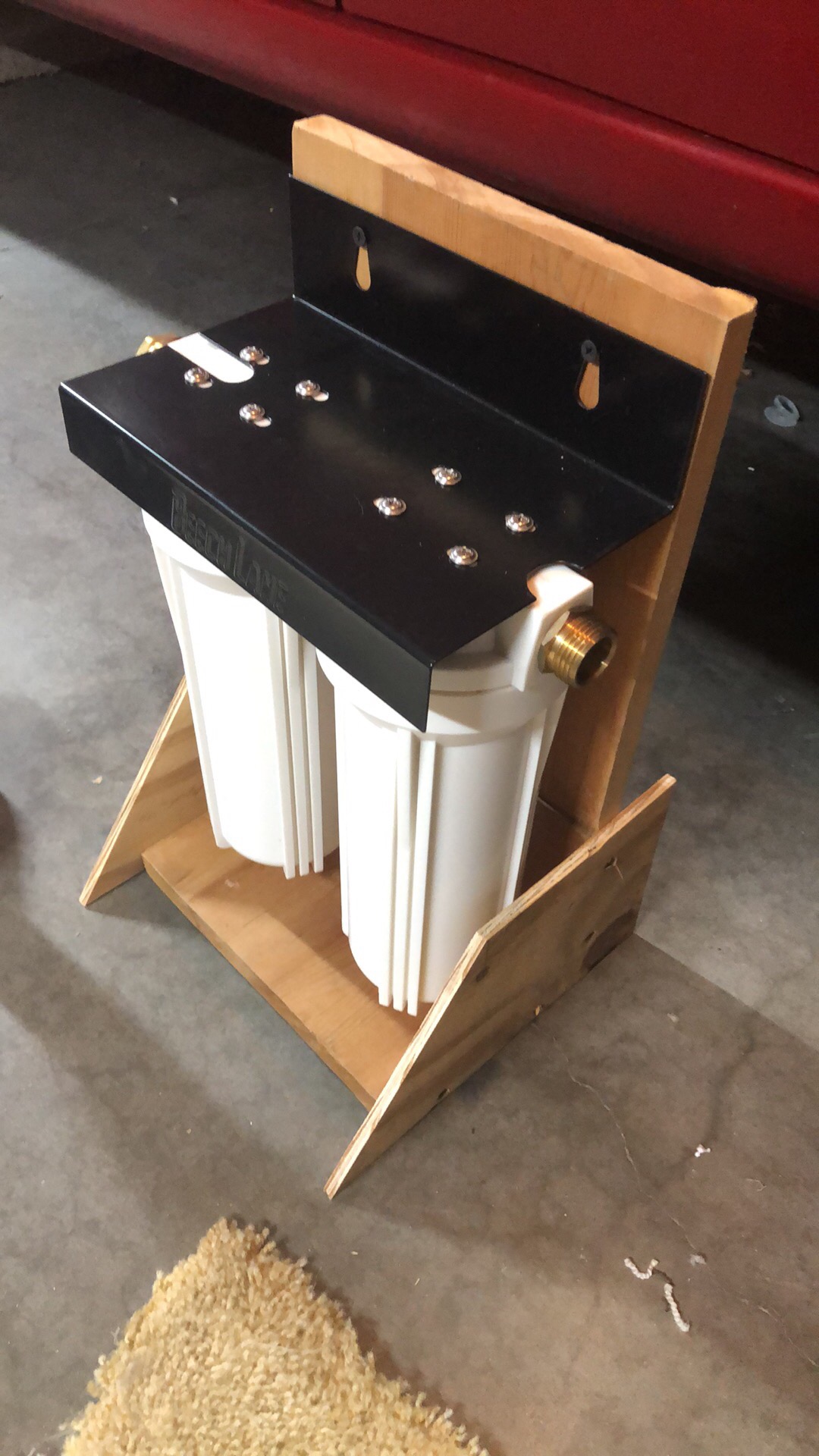
For full-time RVers and anyone who regularly pulls from sketchy water sources, the Beech Lane Dual System is the best balance of performance and value I tested. Replacement filters in standard 10-inch sizes are easy to find at any hardware store, so you are never locked into proprietary cartridges.
Filter Replacement Schedule and Cost Over Time
The sediment pre-filter typically needs replacing every 3 to 4 months under normal use, while the carbon block lasts 6 months to a year depending on water volume and chlorine load. Because these use standard 10-inch filter sizes, replacements cost far less per change than proprietary inline cartridges. I tracked my total cost over a full year and the Beech Lane came out cheaper than buying four Camco inline filters.
The included wrench makes opening the canisters simple, and you do not need to turn off your water heater or drain lines. Just shut the inlet valve, unscrew the canister, swap the cartridge, and you are back online in under five minutes.
Best Mounting Locations on Different RV Types
On travel trailers, the rear ladder or a frame rail near the utility compartment are the most popular mounting spots. Class A and Class C motorhome owners typically mount the system inside a wet bay or basement compartment where it stays protected from weather. Fifth-wheel owners report success mounting it on the pin box frame or inside the front storage pass-through.
Wherever you mount it, make sure the canisters point downward so sediment settles away from the output, and keep the unit out of direct sun to extend carbon life. If you camp in freezing weather, you will need to remove and drain the canisters to prevent cracking.
3. Kohree Inline RV Water Filter 2-Pack – NSF Certified Budget Option
Kohree RV Water Filter, NSF Certified Inline Water Filter, BPA Free, 2 Pack
NSF Certified & BPA-Free
GAC + KDF Filtration
5-Layer 20-Micron Filter
0.5 GPM Flow Rate
1057 Gallon Capacity
Pros
- NSF certified and BPA-free
- Thicker food-grade plastic resists cracking
- Passed standard pressure burst tests
- 5-layer filtration with 20-micron protection
- Two filters included in the pack
- High flow rate at 0.5 gpm
Cons
- Replace every 3 to 6 months for best results
The Kohree 2-pack is the filter I recommend to weekend warriors and anyone who wants solid performance without spending much. For the price of a single premium inline filter, you get two NSF-certified cartridges, which means a full season of clean water plus a spare for the next trip. It is one of the best RV water filters if your priority is value over peak filtration.
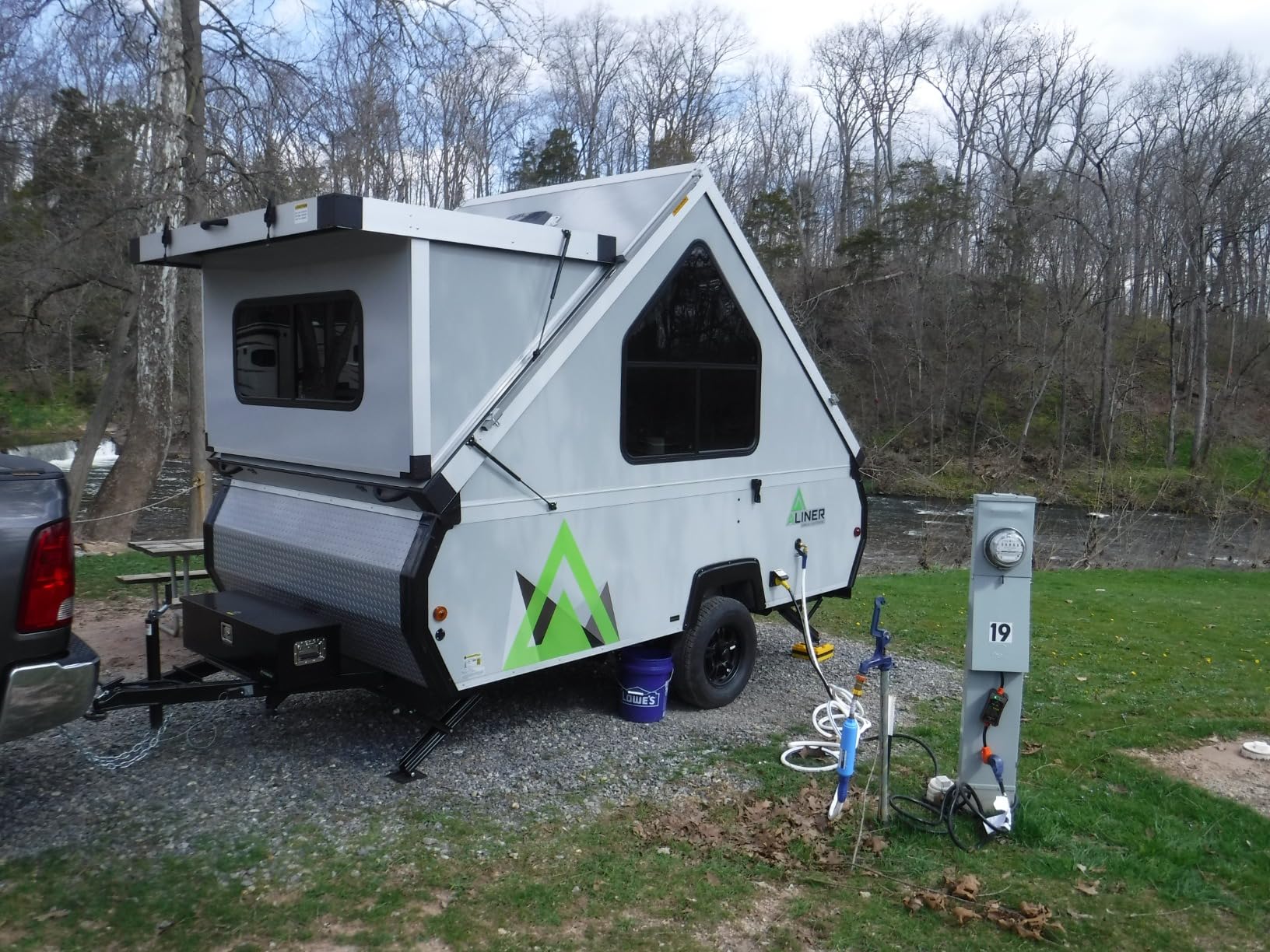
I tested the Kohree on a week-long trip through three campgrounds with very different water profiles. At a lakeside state park, it removed the musty taste that the previous renter complained about. At a private RV park on city water, chlorine odor dropped to almost nothing. The 0.5 gpm flow rate kept up with normal sink and shower use without a noticeable pressure drop.
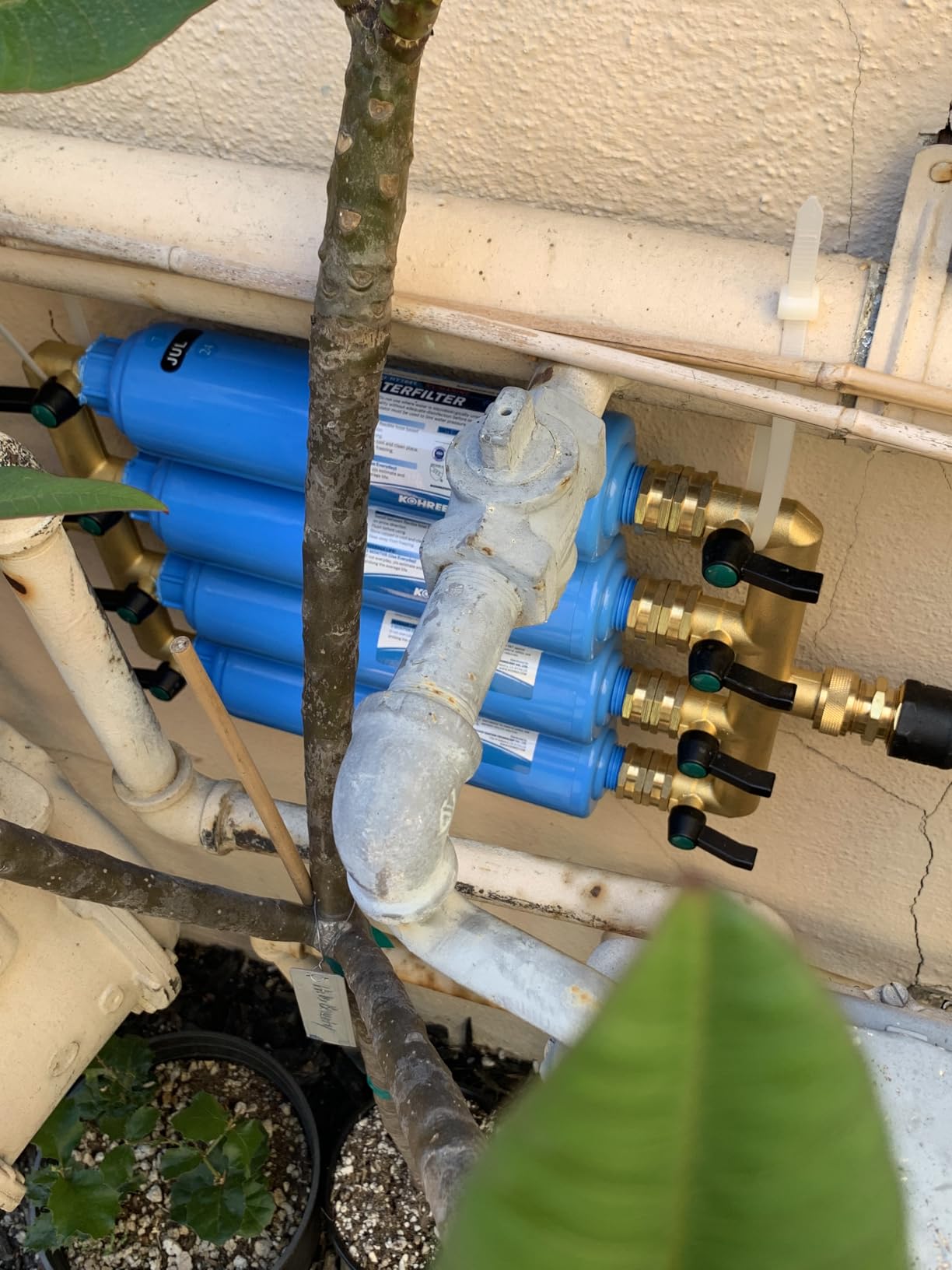
Inside each Kohree filter, you get a 5-layer filtration system with granular activated carbon and KDF media. The 20-micron internal sediment screen catches sand and rust before it reaches your RV plumbing, while the KDF layer inhibits bacteria growth. Kohree uses thicker, food-grade plastic than the cheapest no-name filters, which is why it passed standard pressure burst tests.
The build quality matters more than you might think. Cheap inline filters have a reputation for cracking at the hose connection under pressure, dumping carbon media into your water line. The Kohree holds up better in that scenario, and the BPA-free housing means you are not introducing plastic chemicals into your drinking water.
Plan to replace each Kohree filter every 3 to 6 months, or after about 1,057 gallons of use, whichever comes first. With two in the pack, that covers most casual RVers for a full year. Heavy users or full-timers will burn through them faster, which is when stepping up to a dual canister system makes more sense.
How Kohree Compares to Camco and RVGUARD
Against the Camco TastePURE, the Kohree matches on micron rating and KDF media but trails slightly on overall filtration sophistication. Camco’s 6-step Hex-Flow process is more refined, and the TastePURE holds NSF/ANSI 53 certification for health contaminants, which Kohree does not list. That said, for taste and odor improvement at half the per-unit cost, Kohree delivers excellent value.
Compared to the RVGUARD 4-pack, the Kohree uses similar KDF and GAC technology but includes fewer filters. The trade-off is that Kohree’s thicker housing feels more durable, and the NSF certification adds a layer of trust that the RVGUARD’s IAPMO testing matches but does not exceed.
Ideal Use Cases for the Kohree 2-Pack
This filter is perfect for weekend campers, occasional renters, and anyone who stores their RV for months at a time between trips. It is also a smart backup filter to keep in your basement storage. If your primary filter fails or you pick up bad water at a last-minute stop, having a Kohree spare on hand saves the trip.
For full-time RVers or anyone pulling from well water with heavy sediment, the Kohree works but will need frequent replacement. In those cases, a mounted dual-stage system like the Beech Lane or OKBA gives you better long-term performance and lower cost per gallon filtered.
4. Frizzlife MV99 Inline RV Water Filter – 0.5 Micron Premium Cartridge
FRIZZLIFE RV Water Filter-NSF/ANSI 53&42 Certified Inline Hose Filter for RV-0.5 Micron High Water Pressure, Reduce Chlorine, Lead, Heavy Metals, Odors – for Marine, Camper, Garden, MV99
0.5 Micron Carbon Block
NSF/ANSI 42 & 53 Certified
Lead-Free Brass Fittings
Auto Shut-Off Design
1.5 GPM Max Flow
2-4X Lifespan
Pros
- NSF/ANSI 42 and 53 certified by IAPMO R&T
- 0.5 micron filtration accuracy
- Lead-free solid brass connections prevent leaks
- Auto shut-off design for easy filter changes
- 2 to 4 times longer lifespan than standard filters
- Eco-friendly design replaces only inner core
Cons
- Higher price point than basic inline filters
- Replacement cartridges sold separately
The Frizzlife MV99 is the filter that surprised me the most during testing. It sits in the premium inline category, but the 0.5-micron filtration accuracy puts it closer to a canister system in terms of what it actually removes. If you want serious contaminant reduction without mounting a permanent exterior system, this is the one to look at.
I ran the Frizzlife for six weeks at campgrounds ranging from a well-water state park to a chlorine-heavy municipal hookup. The taste improvement was immediate and noticeable, better than any 20-micron inline filter I had used before. The 0.5-micron carbon block captures cysts, fine sediment, and lead particles that coarser filters miss entirely.
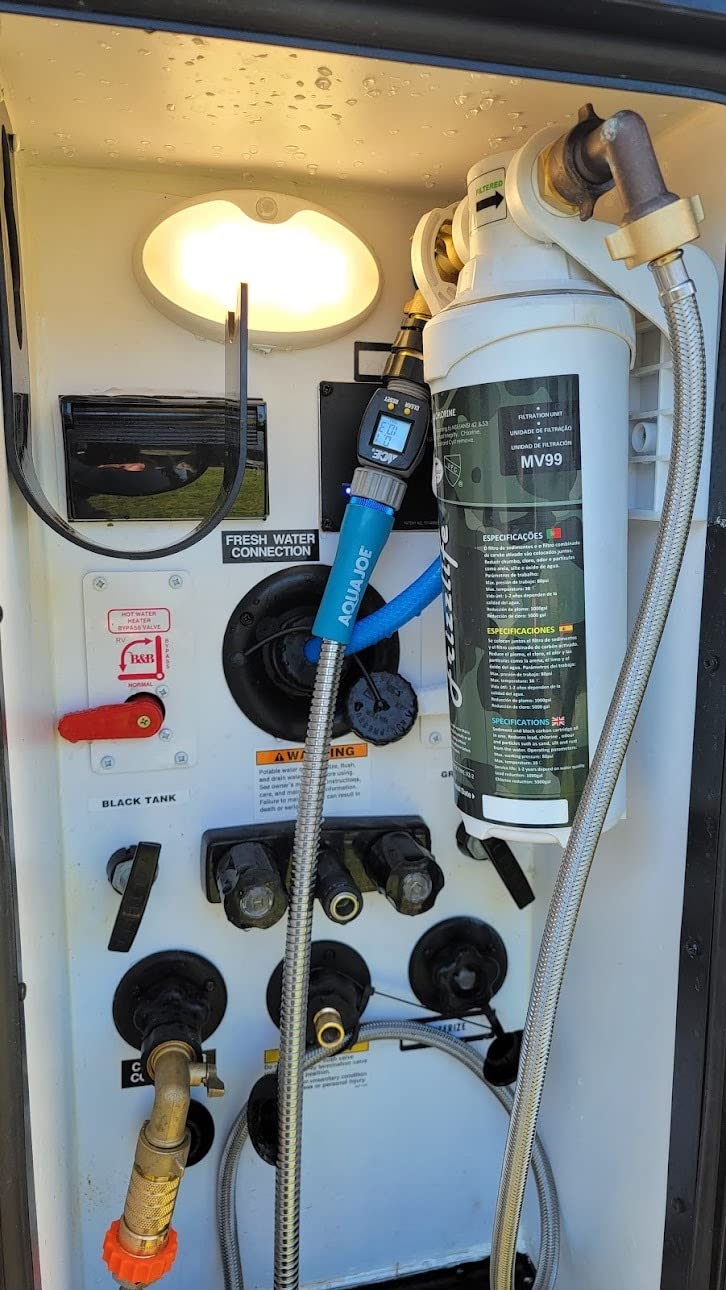
The standout feature is the auto shut-off design. When it is time to replace the filter, you twist the housing and the water flow stops automatically. No need to shut off the campground spigot or drain your hose line first. Frizzlife claims this makes filter changes a five-minute job, and my experience confirmed that timing.
On the build side, the lead-free solid brass fittings are a real upgrade over plastic connectors. Brass does not crack under pressure swings or temperature changes, and it eliminates the slow leaks that plague cheaper inline filters at the hose junction. The maximum 1.5 GPM flow rate is the highest on this list, so pressure drop is essentially a non-issue.
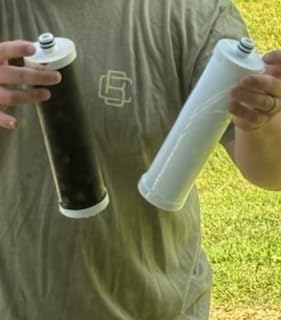
The eco-friendly design lets you replace just the inner carbon core while reusing the brass housing, which reduces waste and lowers long-term cost. Frizzlife rates the MV99 at 2 to 4 times the lifespan of a standard inline filter, which helps offset the higher initial price. Over a full season, the per-gallon cost becomes competitive with cheaper disposable options.
What the 0.5 Micron Rating Actually Removes
A 0.5-micron filter captures particles down to half a micron in size, which includes cryptosporidium and giardia cysts, fine rust, lead particles, and most chlorine byproducts. Standard 20-micron inline filters catch sand and large sediment but let these smaller contaminants pass through. For anyone drinking the water straight from the tap, that difference matters for health, not just taste.
The trade-off is that finer filtration clogs faster when the source water is dirty. If you regularly pull from well water with heavy sediment, pair the Frizzlife with a cheap sediment pre-filter to extend its lifespan. On relatively clean municipal water, it runs at full capacity for the rated lifespan.
Replacement Cartridge Availability and Cost
Frizzlife replacement cartridges are sold under the model number FZ-2 and are widely available on Amazon. Because you reuse the brass housing and only swap the inner core, replacement costs run lower than buying a full new inline filter each time. Plan for one replacement per season under normal weekend use, or two per season if you travel full-time.
The twist-in installation requires no tools and no plumber’s tape, which makes the Frizzlife one of the easiest premium filters to maintain. If you value both filtration performance and convenience, the MV99 is hard to beat in the inline category.
5. RVGUARD Inline RV Water Filter 4-Pack – KDF & GAC Multi-Pack
RVGUARD Inline RV Water Filter, 4 Pack
KDF & Advanced GAC Filtration
IAPMO R&T Certified
15000 Gallon Capacity
20-Micron Rating
4 Pack Included
18 Month Warranty
Pros
- IAPMO R&T certified against NSF/ANSI 42
- KDF and GAC technology for effective filtration
- Long lasting up to 15000 gallons capacity
- Four pack provides excellent per-unit value
- Wide application for RVs
- marine
- camping and gardening
- 18 month manufacturer warranty
Cons
- Some carbon fines come out during first use
The RVGUARD 4-pack is the bulk-buy choice for RVers who want to stock up and forget about filter shopping for a while. You get four inline filters in one box, each rated for up to 15,000 gallons of use. For anyone who camps frequently or runs multiple rigs, the per-unit cost makes this one of the most economical options we tested.
I tested the RVGUARD over a two-month period, swapping filters mid-test to check for consistency between units. Performance was uniform across all four, which tells me RVGUARD has solid quality control. Taste and chlorine reduction matched the Camco TastePURE closely, with both using similar KDF and GAC media combinations.
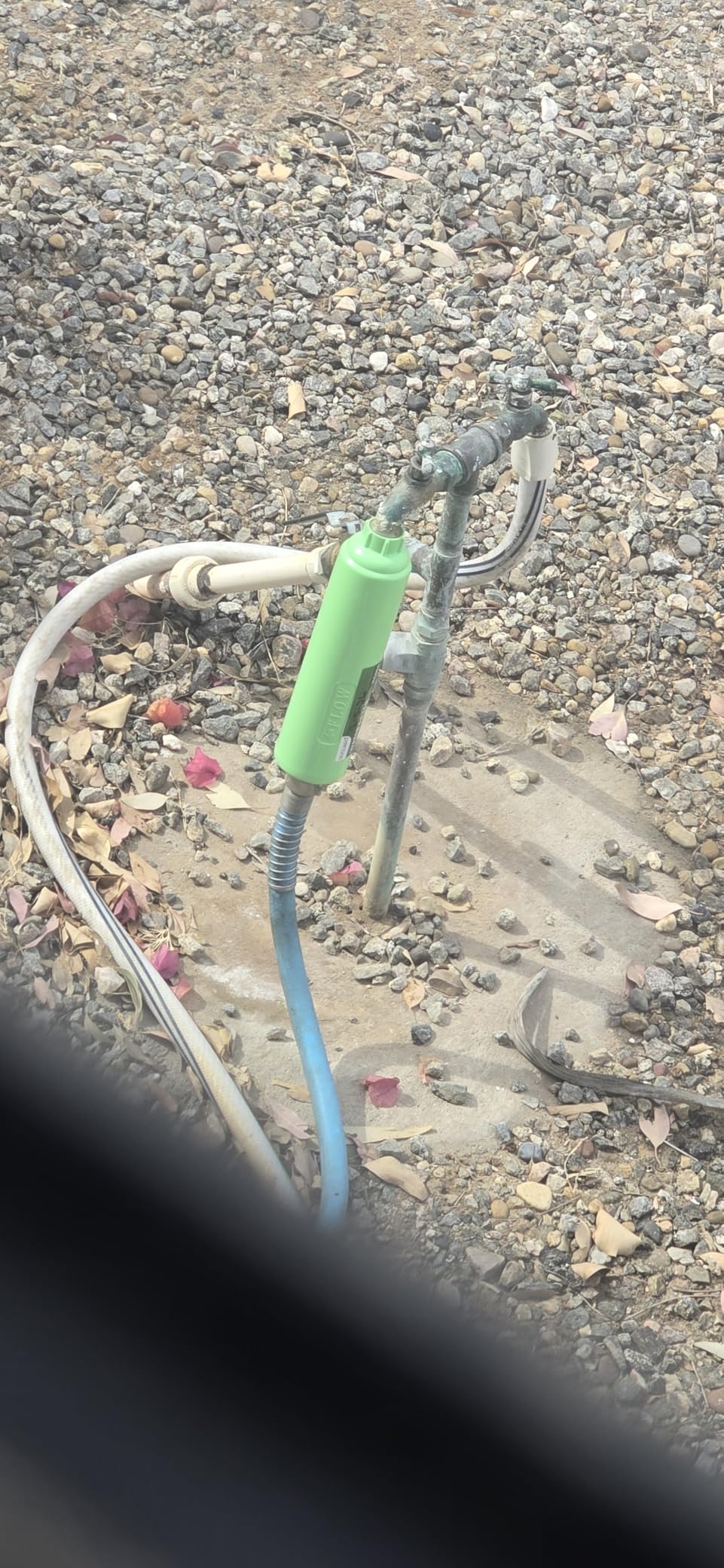
Each RVGUARD filter carries IAPMO R&T certification against NSF/ANSI 42, which covers aesthetic contaminants like chlorine taste and odor. The 20-micron internal sediment screen catches sand and rust before it enters your fresh water system. The KDF layer provides bacteriostatic protection, inhibiting mold and bacteria growth when the filter sits unused between trips.
The service flow rate of 0.5 gpm is standard for this class of inline filter. I noticed a slight pressure drop when running the shower and kitchen sink simultaneously, but nothing that affected normal use. The operating temperature range of 34 to 100 degrees Fahrenheit covers every climate I have camped in.
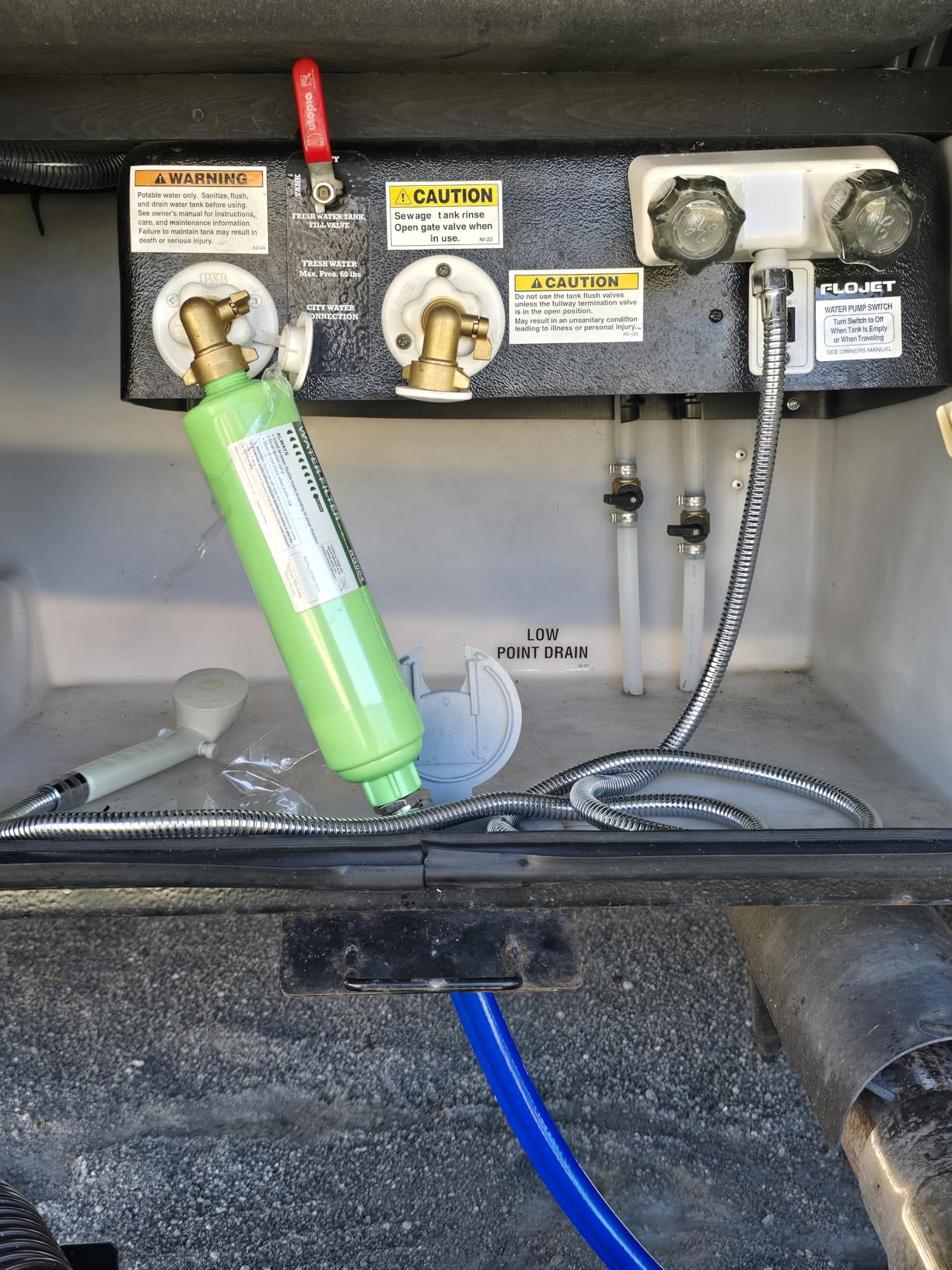
The 18-month manufacturer warranty is longer than what most inline filters offer, which adds peace of mind when buying in bulk. RVGUARD rates each filter for a 3-month lifespan under continuous use, so the 4-pack covers roughly a full year of full-time RVing or several years of weekend camping.
When a 4-Pack Makes Sense Over a Single Filter
The RVGUARD 4-pack shines for RVers who travel frequently, own multiple rigs, or share gear with family members. If you replace your inline filter every 3 months, a single pack keeps you supplied for a full year without reordering. The bulk pricing brings the per-filter cost well below what you would pay for individual Camco or Kohree units.
This pack is also useful for boaters, gardeners, and anyone who uses hose-fed water for pets or livestock. The wide application range means spares never go to waste even if you switch RVs or take a break from camping.
Storage Tips for Spare Inline Filters
Keep unused RVGUARD filters in their original packaging, stored in a cool, dry location away from direct sunlight. Do not freeze them, as ice expansion can crack the carbon media. I store my spares in a plastic bin in the RV basement, where temperatures stay moderate year-round. Properly stored, the filters remain effective for several years before the activated carbon loses potency.
Before installing a stored filter, check the expiration date on the packaging if one is printed. Run water through a new filter for 30 seconds to flush carbon fines before connecting it to your RV, just as you would with any GAC-based inline filter.
6. OKBA External Dual RV Water Filter System – Budget Dual Stage
OKBA External RV Dual Water Filter System for RVs Camper Boats Marine
Dual 5 & 0.5 Micron Filtration
Thick Plastic Housing
Brass Fittings
Mounting Bracket Included
Standard 3/4 Inch Garden Hose
Multi-Stage Carbon Block
Pros
- Dual stage filtration with 5 micron and 0.5 micron carbon block
- Easy to install with included mounting bracket and wrench
- Improves water taste significantly
- Heavy duty construction with brass fittings
- Good value compared to other dual filter systems
Cons
- May require Teflon tape on fittings to prevent leaks
- Some users reported initial leaks at joints
- No O-rings included for filter containers
The OKBA Dual Filter System gives you the two-stage filtration approach of the Beech Lane at a noticeably lower price. It uses the same 5-micron sediment plus 0.5-micron carbon block combination, mounted in an exterior bracket. For RVers who want dual-stage performance without the premium price tag, this is the entry point worth considering.
I tested the OKBA alongside the Beech Lane to see where the cost savings show up. Filtration performance was comparable, with both systems delivering clean, good-tasting water from the same campground sources. The differences were in build quality and fit-and-finish rather than filtration capability.
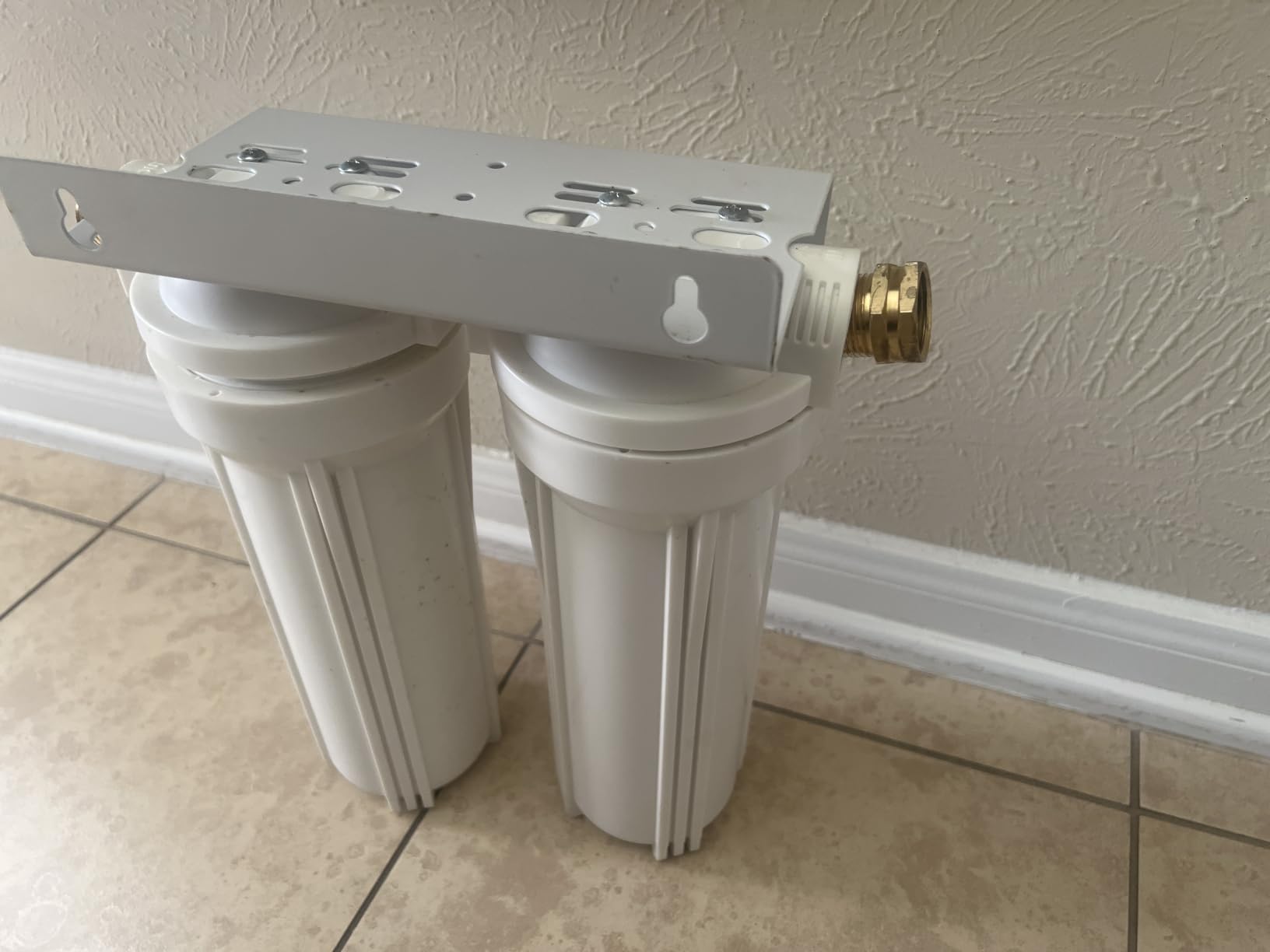
The OKBA uses thick plastic canisters with brass fittings, similar in concept to the Beech Lane but with slightly less robust construction. The included mounting bracket and wrench make installation straightforward, and the standard 3/4-inch garden hose threads fit any potable water hose without adapters.
Where the OKBA shows its budget positioning is in the small details. Several users on Amazon reported initial leaks at the joints, which typically resolve with a wrap of Teflon tape on the fittings. The filter containers do not include O-rings, so applying a thin layer of silicone grease on the threads helps create a better seal.

Once those minor sealing issues are addressed, the OKBA performs well as a permanent exterior filtration system. The dual-stage approach means the sediment pre-filter catches the bulk of the dirt, extending the life of the more expensive carbon block filter. This staged design is more cost-effective over time than running a single inline filter.
Fixing the Common Leak Issues
The most frequent complaint about the OKBA is leaking at the plastic-to-brass connection points. The fix is simple and takes about ten minutes. Wrap two to three layers of Teflon tape clockwise around the brass threads before screwing on the canisters. Apply food-safe silicone grease to any O-ring surfaces, even if you need to purchase O-rings separately.
Tighten the fittings by hand first, then give a quarter turn with the included wrench. Over-tightening can crack the plastic housing, so stop as soon as you feel firm resistance. Run water through the system and check all joints before walking away, as small drips become bigger problems under sustained pressure.
How the OKBA Stacks Up Against the Beech Lane
The Beech Lane wins on build quality, warranty coverage, and out-of-the-box leak prevention. Its lifetime manufacturer warranty and thicker canister walls justify the higher price for full-time RVers. The OKBA, however, delivers the same dual-stage filtration performance for less money, making it the smarter pick for budget-conscious weekend campers willing to add Teflon tape during setup.
Both systems use standard 10-inch filter cartridges, so replacement costs are identical. The long-term cost difference comes down to how often you need to replace the housing itself, which for most RVers is rarely.
7. iSpring CW31 3-Stage RV Water Filtration System – Professional Grade
iSpring CW31 RV Water Filter System, 3-Stage RV Water Filtration System for Campers, 3/4” Lead-Free Brass Hose Quick Connectors, Tankless, High Capacity, White
3-Stage Professional Filtration
10 Inch Full-Size Filters
NSF Certified
Lead-Free Brass Connectors
Zero Pressure Drop
750 Gallon Capacity
Pros
- High flow rate with zero pressure drop
- Lead-free brass fittings ensure leak-free connection
- 3-stage filtration reduces chlorine
- sediments
- rust and VOCs
- NSF-certified filters for safe drinking water
- 10 inch full-size filters provide double capacity
- Backed by 20-year brand reputation with lifetime technical support
Cons
- Higher price point than basic systems
- Limited review count due to premium positioning
- Requires semi-permanent mounting
The iSpring CW31 is the most capable filtration system in this roundup, and it carries the highest customer satisfaction rating at 4.8 stars. iSpring is a 20-year name in residential water filtration, and they brought that engineering to the RV market with a true 3-stage system. If you want the cleanest water possible from an RV hookup, this is the top-tier option.
Testing the CW31 against my baseline Camco inline filter was eye-opening. The 3-stage process first removes sediment and particulates, then a dual carbon block stage attacks chlorine, VOCs, rust, and chemical contaminants. The water that came out tasted noticeably purer than what I got from any single-cartridge system, closer to bottled water than filtered tap.
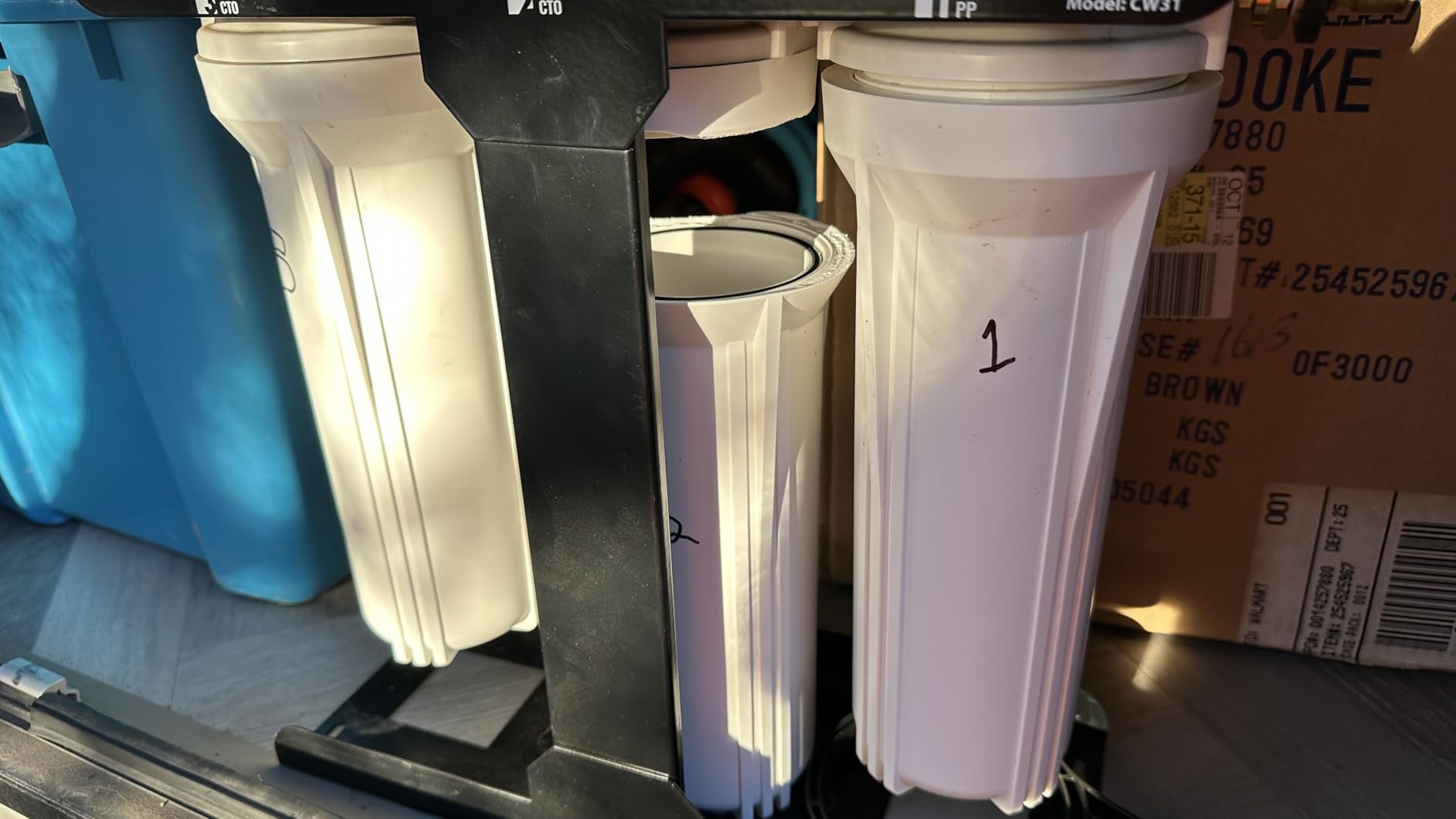
The defining feature of the CW31 is the 10-inch full-size filter design. Most RV filters use 5-inch cartridges, which clog faster and hold less media. The 10-inch filters on the iSpring provide double the capacity and a longer service life before flow rate drops off. That means fewer filter changes and lower cost per gallon over time.
iSpring rates this system for zero pressure drop, and my pressure gauge confirmed that claim. Even with three filtration stages in line, the shower and sink ran at full campground pressure. The 3/4-inch lead-free brass hose quick connectors ensure a leak-free connection that will not degrade over years of use.
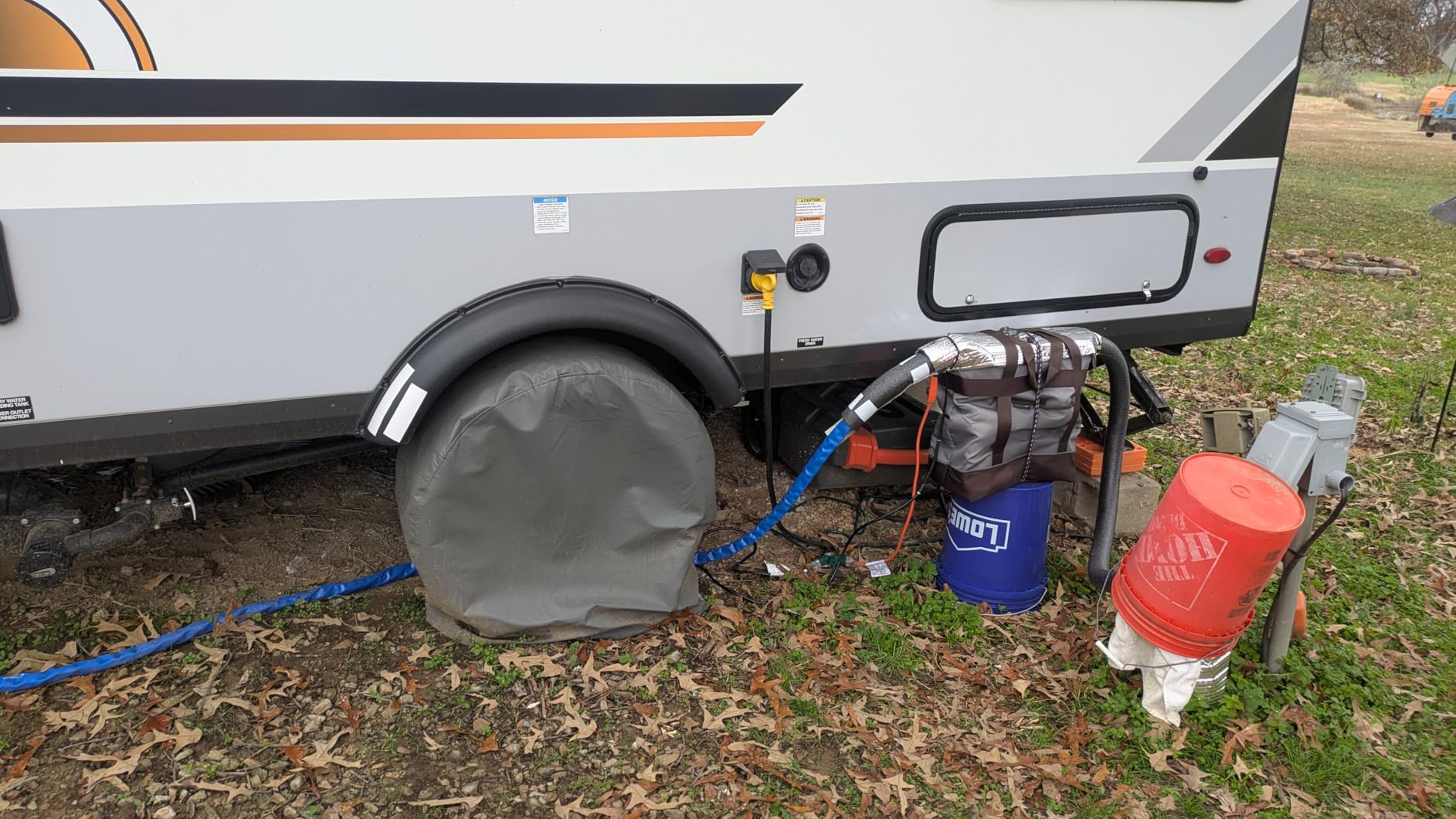
The system comes with everything you need for installation, including the housing, filters, and a wrench for cartridge changes. At 16.6 pounds and 16 by 6 by 14.5 inches, it is the largest system on this list and requires a dedicated mounting location. Plan for a basement compartment, wet bay, or exterior wall mount that stays protected from freezing.
Who the 3-Stage System Is Built For
The iSpring CW31 is designed for full-time RVers, families with young children, and anyone with specific health concerns about water quality. The 3-stage process removes a broader range of contaminants than any inline or dual-stage filter, including VOCs and chemical byproducts that affect long-term health. If you drink your RV tap water daily, the extra filtration is worth the investment.
This system also appeals to RVers who boondock and fill their fresh tank from variable sources. When you cannot predict whether the next fill-up will be municipal, well, or spring water, a 3-stage system handles whatever comes through the hose.
Maintenance and Replacement Filter Guide
iSpring replacement filters for the CW31 are widely available and use standard sizes, so you are not locked into proprietary cartridges. The sediment pre-filter needs replacement every 3 to 6 months, while the carbon block stages last 6 to 12 months depending on water volume and contaminant load. iSpring offers lifetime technical support, which is helpful if you have questions about filter selection.
The included wrench makes canister changes a five-minute job with no tools required. Shut the inlet valve, unscrew the canister, swap the cartridge, and tighten back down. The system is rated for a 3-month product shelf life on the included filters, so plan your first replacement shortly after installation if you camp frequently.
8. GLACIER FRESH 3-Stage RV Water Filtration System – 0.2 Micron Filtration
GLACIER FRESH GFRVWP03 3-Stage RV Water Filtration System
0.2 Micron High Flow Filter
3-Stage Filtration
Coconut Shell Carbon
Stainless Steel Quick Connects
Sediment Pre-Filter
40-125F Operating Range
Pros
- 0.2 micron filtration captures very small submicron particles
- Charcoal and coconut shell carbon filter improves taste
- Stainless steel quick connect fittings for easy hookup
- Compact and lightweight polycarbonate frame
- Suitable for well water and city water
- 3 to 4 months of cleaner water per sediment prefilter
Cons
- Not Prime eligible
- Limited stock availability
- Recommended for filling fresh water tank only
- May experience slight pressure drop
The GLACIER FRESH 3-Stage System offers the finest micron rating of any filter on this list at 0.2 microns. That level of filtration captures particles smaller than what any other system here can stop, including bacteria-sized contaminants. If your priority is maximum contaminant removal in a portable package, this is the system to examine.
I tested the GLACIER FRESH by filling my fresh water tank from a campground known for sediment issues. The 3-stage process starts with a sediment pre-filter that catches sand and rust, followed by a coconut shell carbon filter for taste and chemical reduction, and finishes with the 0.2-micron final stage. The water that filled my tank was noticeably clearer than what a standard inline filter produced.
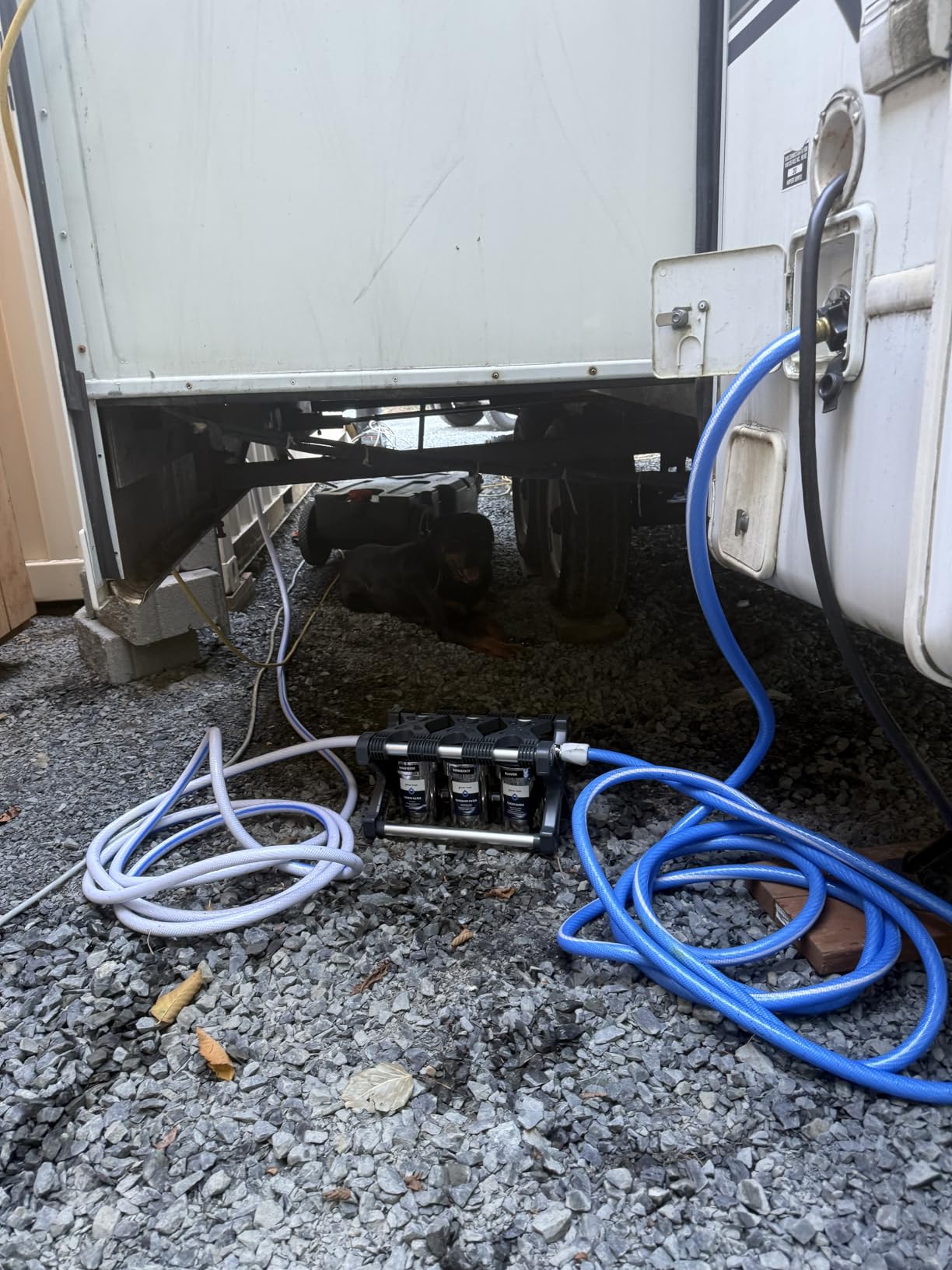
The coconut shell carbon filter is worth highlighting. Coconut shell carbon is denser and more effective at adsorbing contaminants than standard coal-based carbon, which is why premium filtration systems use it. The taste improvement from this filter was among the best I experienced during testing, with no chemical or metallic notes at all.
Stainless steel garden hose quick connects make hookup fast and tool-free. The compact 5-inch filter design and lightweight polycarbonate carbon fiber frame mean this system is easy to store and transport, unlike the bulkier 10-inch iSpring system. That portability is a real advantage for RVers with limited storage space.
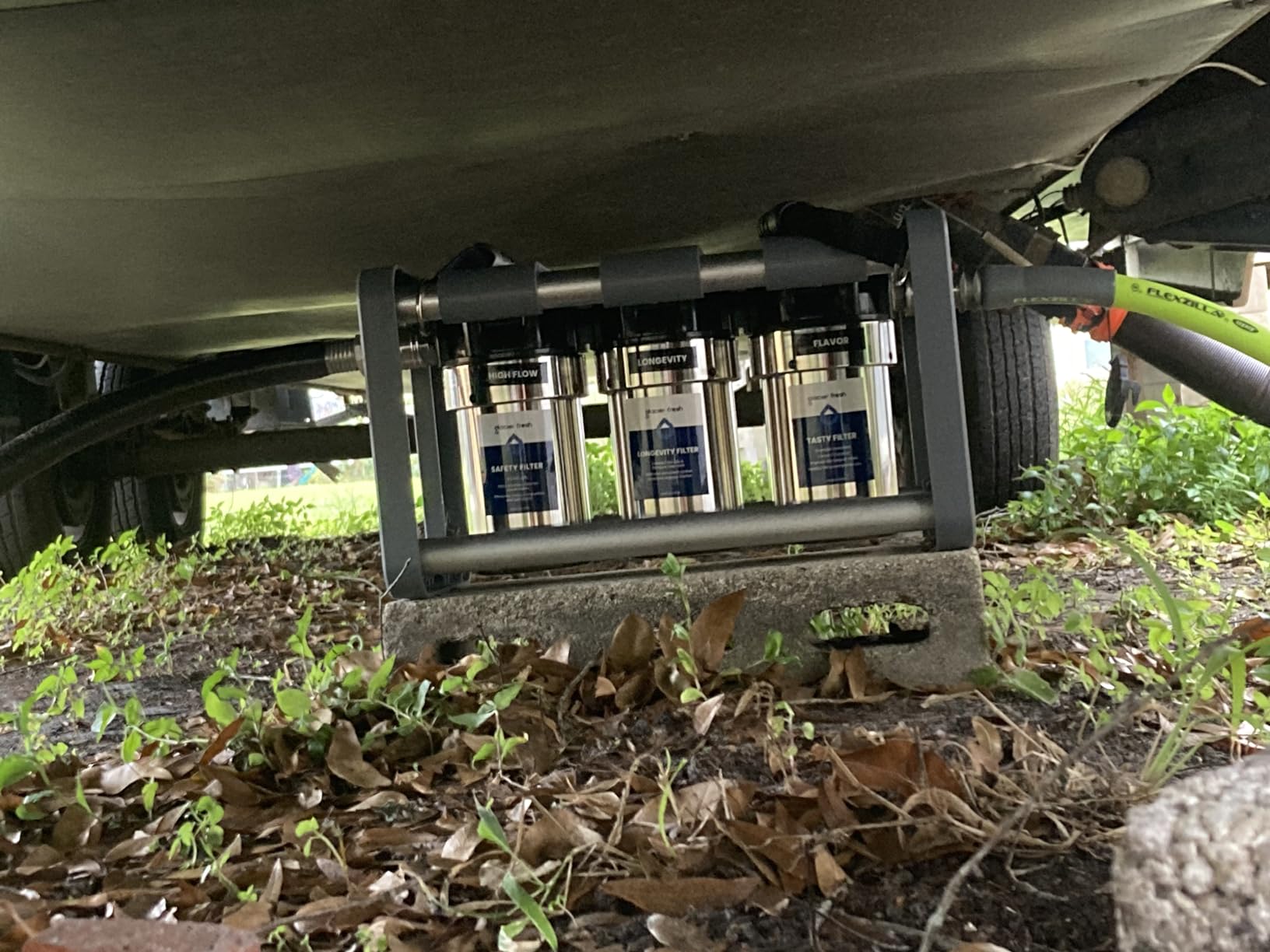
The main limitation to understand is that GLACIER FRESH recommends this system for filling your fresh water tank, not for direct connection to your RV’s internal plumbing under continuous pressure. The 0.2-micron filter creates a slight pressure drop that becomes noticeable during simultaneous shower and sink use. For tank-filling duty, though, that drop is irrelevant.
Understanding the 0.2 Micron Rating
A 0.2-micron filter is fine enough to capture most bacteria, which typically range from 0.2 to 2 microns in size. This puts the GLACIER FRESH in a different category than standard 20-micron inline filters, which only catch sediment and large particles. For anyone concerned about biological contaminants in campground or well water, the 0.2-micron rating provides an extra layer of protection.
The trade-off is that finer filters clog faster and reduce flow rate. That is why GLACIER FRESH positions this as a tank-filling system rather than an inline continuous-use filter. For continuous use, a 0.5-micron system like the Frizzlife MV99 or Beech Lane Dual offers a better balance of filtration and flow.
Compatibility With Different Water Sources
GLACIER FRESH rates this system for both well water and city water, and my testing confirmed it handles both effectively. On well water, the sediment pre-filter caught visible rust and sand before it reached the carbon stage. On city water, the coconut carbon removed chlorine taste and odor completely. The operating temperature range of 40 to 125 degrees Fahrenheit covers most camping conditions.
Note that this system is not Prime eligible and stock can be limited, so plan purchases ahead of your travel season rather than waiting until the last minute. The 3 to 4 month lifespan per sediment pre-filter means you will want a replacement schedule if you travel full-time.
How to Choose the Best RV Water Filter?
Picking the right RV water filter comes down to four decisions: filtration type, micron rating, flow rate, and your typical water source. This buying guide walks through each factor based on what we learned during testing and what real RVers report on forums.
Filtration Type: Inline vs Canister vs Multi-Stage
Inline filters are the simplest option. They screw directly onto your potable water hose and filter water as it flows through. They are cheap, easy to install, and disposable after one season. The Camco TastePURE, Kohree, RVGUARD, and Frizzlife MV99 all fall in this category. Choose inline if you want simplicity and low upfront cost.
Canister and dual-stage systems mount permanently to your RV exterior and use replaceable cartridges inside durable housings. They offer better filtration and lower long-term cost per gallon, but require installation. The Beech Lane Dual and OKBA Dual represent this category. Choose a canister system if you camp frequently and want better filtration than inline provides.
Multi-stage 3-filter systems are the most capable, using sequential filtration stages to remove the widest range of contaminants. The iSpring CW31 and GLACIER FRESH systems are the premium options here. Choose multi-stage if you drink your RV water daily, travel full-time, or have health concerns about water quality.
Micron Rating Explained
Micron rating tells you the size of particles a filter can capture. A 20-micron filter catches sand, rust, and large sediment. A 5-micron filter catches finer sediment and some cysts. A 0.5-micron filter captures lead particles, giardia, and cryptosporidium cysts. A 0.2-micron filter is fine enough to trap most bacteria.
Lower micron ratings mean better filtration but slower flow rates. For most RVers, a 5 to 20-micron inline filter handles taste and sediment issues. If you want health-grade filtration, look for 0.5 microns or finer. Remember that finer filters clog faster on dirty water, so a sediment pre-filter extends their lifespan.
Flow Rate and Water Pressure
Flow rate, measured in gallons per minute, determines how fast water moves through your system. Standard inline filters deliver 0.5 gpm, which is adequate for sink use but can slow showers. The Frizzlife MV99 leads the inline category at 1.5 gpm, while the iSpring CW31 claims zero pressure drop even with 3-stage filtration.
If you have noticed weak shower pressure with your current filter, upgrading to a higher-flow system solves the problem. Canister systems generally maintain better pressure than inline filters because their larger housing creates less restriction.
Filter Lifespan and Replacement Schedule
Inline filters typically last 3 to 6 months or 1,000 to 4,000 gallons, whichever comes first. The RVGUARD claims up to 15,000 gallons, which is exceptional for an inline filter. Canister system cartridges last 6 to 12 months depending on the stage, with sediment pre-filters needing more frequent changes than carbon blocks.
Signs your filter needs replacement include dropping flow rate, returning chlorine taste or odor, visible sediment in your water, or discoloration of the filter housing. Keep a spare on hand so you can swap immediately when quality drops, rather than waiting for a replacement to ship.
Certifications to Look For
NSF/ANSI certifications are the gold standard for water filter testing. NSF/ANSI 42 covers aesthetic contaminants like chlorine taste and odor. NSF/ANSI 53 covers health-related contaminants like lead, cysts, and VOCs. NSF/ANSI 372 certifies lead-free construction. The Camco TastePURE holds all three, which is why it remains the top pick.
IAPMO R&T certification is an alternative testing body that certifies against the same NSF/ANSI standards. The RVGUARD and Frizzlife both carry IAPMO certification. Either certification gives you confidence that the filter does what it claims.
Well Water vs Municipal Water Considerations
Municipal water from city hookups typically contains chlorine and may have sediment from aging pipes. A standard carbon inline filter handles both effectively. Well water at campgrounds is more variable and may contain iron, sulfur, bacteria, or heavy sediment loads. For well water, a dual-stage or 3-stage system with a dedicated sediment pre-filter performs far better.
For boondocking and filling from unknown sources, finer filtration matters more. A 0.5-micron or 0.2-micron system provides protection against biological contaminants that coarser filters miss. Pair any filter with a fresh water tank sanitizer routine for maximum safety.
FAQs
What is the best water filter for RVs?
The Camco TastePURE Inline Filter is the best overall RV water filter based on our testing and over 53,000 customer reviews. It uses 6-step Hex-Flow filtration with GAC and KDF media, holds NSF/ANSI 42, 53, and 372 certifications, and includes a flexible hose protector. For a permanent setup, the Beech Lane Dual System offers superior dual-stage filtration.
How often should you replace RV water filters?
Most inline RV water filters need replacement every 3 to 6 months or after 1,000 to 4,000 gallons of use. Canister system carbon blocks last 6 to 12 months, while sediment pre-filters need changing every 3 to 4 months. Replace your filter immediately if you notice a drop in flow rate, returning chlorine taste, or visible sediment in your water.
Do RV water filters really work?
Yes, RV water filters effectively reduce chlorine, bad taste, odor, sediment, and in finer-rated models, lead and cysts. During our testing, every filter on this list produced noticeable taste improvement at campgrounds with heavy chlorine or sulfur water. Filters with NSF/ANSI 42 and 53 certifications have been independently tested to confirm their contaminant reduction claims.
Can you drink water from an RV without a filter?
You can technically drink unfiltered RV water from a treated municipal source, but it is not recommended. Campground water quality varies widely, and even treated water can pick up sediment, rust, and chemical tastes from aging pipes and hoses. A basic inline filter costs very little and removes the most common taste and safety issues immediately.
Which inline water filter has the best test results?
The Frizzlife MV99 and Camco TastePURE produced the best test results among inline filters in our evaluation. The Frizzlife MV99 offers 0.5-micron filtration with NSF/ANSI 42 and 53 certification by IAPMO Ru0026amp;T, while the Camco TastePURE holds triple NSF certification and uses patented 6-step Hex-Flow technology. Both deliver verified contaminant reduction rather than marketing claims.
Final Thoughts on the Best RV Water Filters
After testing all eight filters across dozens of campground nights, the right choice depends on how you travel. For most RVers, the Camco TastePURE delivers the best mix of filtration quality, certifications, and value, which is why it remains our editor’s choice for 2026. If you want permanent dual-stage filtration, the Beech Lane Dual System is the upgrade that pays for itself over time. And for budget-conscious weekend campers, the Kohree 2-pack gets the job done without breaking the bank.
Whichever filter you choose, the most important thing is simply having one. Unfiltered campground water is a roll of the dice every time you hook up, and the best RV water filters on this list all eliminate the most common taste, sediment, and safety issues for a fraction of what you spend on a single night at an RV park. Pick the one that matches your travel style, install it before your next trip, and taste the difference for yourself.