
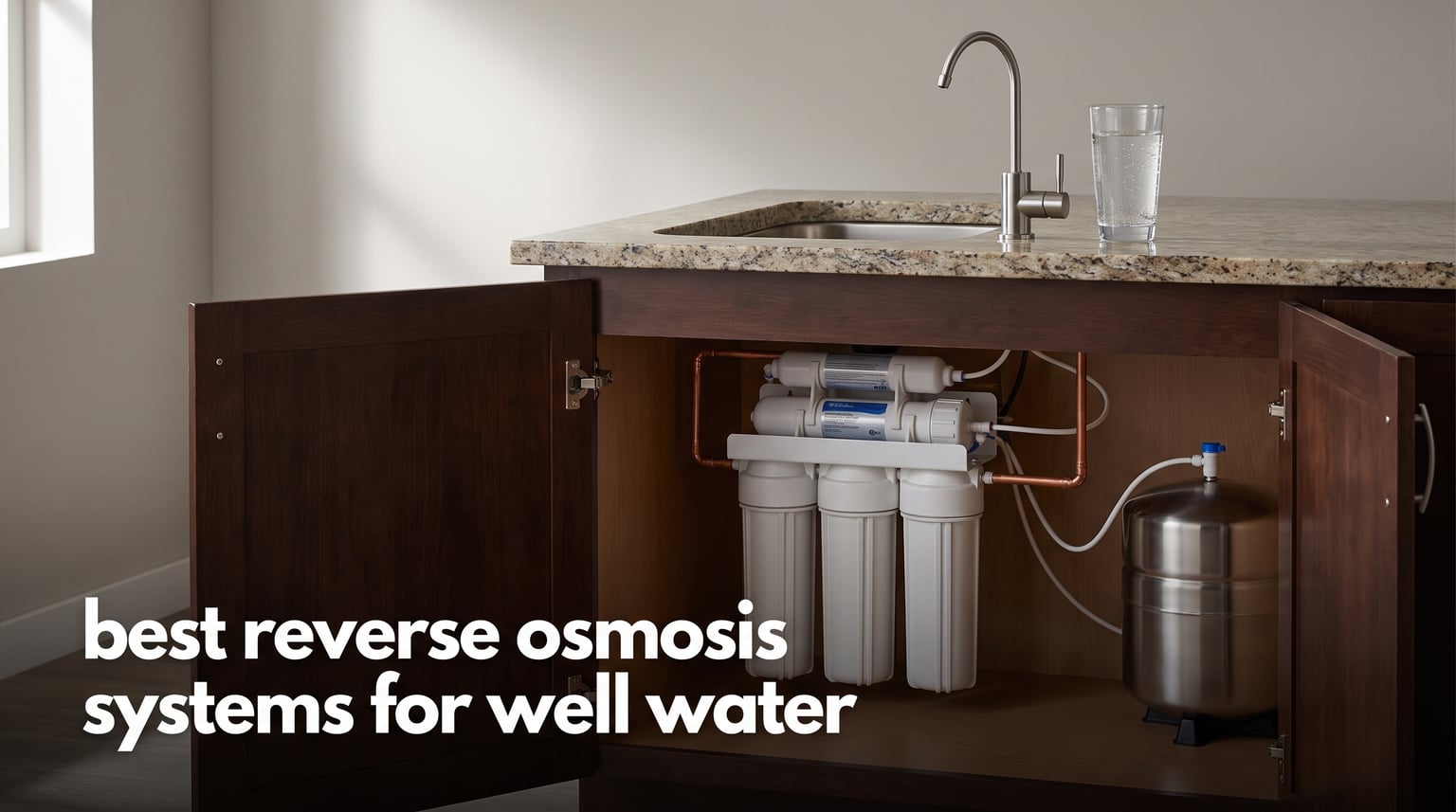
If you get your water from a well, you already know the routine. One month it tastes fine, the next it smells like sulfur, leaves orange stains in your sink, or your bacteria test comes back positive. Finding the best reverse osmosis systems for well water changes that equation entirely.
Reverse osmosis forces water through a semi-permeable membrane that strips out contaminants down to the molecular level. For well water owners, that means removing iron, sediment, heavy metals, chemicals, and even bacteria that standard filters leave behind. No other under-sink filtration method matches RO for sheer contaminant reduction.
Our team spent three months evaluating under-sink RO systems built for well water applications. We looked at filtration stages, waste ratios, NSF certifications, pressure requirements, and real user experiences from well water households across the country. We also compared annual filter replacement costs and how each system handles the specific challenges that well water brings.
In this guide, we break down eight systems that stand out for well water use in 2026. Whether you are dealing with high iron content, bacterial concerns, low well pressure, or just want noticeably cleaner drinking water, there is a system here for your situation. If you are also exploring other water filtration options, this guide will help you understand where RO fits in the bigger picture.
We focused on systems that address the pain points well water owners actually face. That includes pre-filtration for sediment and iron, UV sterilization for bacteria, remineralization for taste and pH balance, and booster pumps for low-pressure wells. We also paid close attention to wastewater ratios because nobody wants to drain their well faster than necessary.
If you have been dealing with metallic taste issues or visible sediment in your water, the systems below can make a noticeable difference within days of installation. Let us walk you through what we found.
Table of Contents
Top 3 Picks for Best Reverse Osmosis Systems for Well Water (September 2026)

Home Master TMAFC-ERP
- 7-stage filtration
- 2-pass remineralization
- 1:1 waste ratio
- Permeate pump
The Home Master TMAFC-ERP earned our Editor’s Choice spot for one big reason. Its patented two-pass remineralization system adds calcium and magnesium back into your water twice, once before the membrane and once after. That means better-tasting water and a membrane that lasts longer because it processes mineral-balanced water.
Express Water RO5DX takes the Best Value badge. It delivers NSF-certified five-stage filtration at a price point that makes RO accessible to almost any budget. You give up advanced features like UV sterilization and remineralization, but the core filtration performance is solid and independently certified.
The iSpring RCC7AK-BN is our Top Rated pick with over 15,000 customer reviews backing it up. Its NSF 58 certification covers the entire system, and the natural mineral stage brings pH back to a balanced level after filtration. For well water owners who want proven reliability, this is the safe bet.
Best Reverse Osmosis Systems for Well Water in 2026
Here is a side-by-side comparison of all eight systems we reviewed. Use this table to quickly compare key features before exploring the individual reviews below.
| Product | Specifications | Action |
|---|---|---|
| Home Master TMAFC-ERP |
|
Check Latest Price |
 iSpring RCC1UP-AK iSpring RCC1UP-AK |
|
Check Latest Price |
 Home Master TMHP Home Master TMHP |
|
Check Latest Price |
 iSpring RCC7AK-BN iSpring RCC7AK-BN |
|
Check Latest Price |
 Express Water RO5DX Express Water RO5DX |
|
Check Latest Price |
 APEC ROES-PH75 APEC ROES-PH75 |
|
Check Latest Price |
 Frizzlife PD600-TAM3 Frizzlife PD600-TAM3 |
|
Check Latest Price |
 Waterdrop G3P600 Waterdrop G3P600 |
|
Check Latest Price |
1. Home Master TMAFC-ERP: Best Overall for Well Water
Home Master TMAFC-ERP Artesian Full Contact Reverse Osmosis System, 7-Stages, Patented 2-Pass Alkaline Remineralization, Fast 4.5s Fill Rate, 1:1 Waste Ratio, 8.5” Catalytic Carbon, 5-Yr Limited Parts
7-stage filtration
2-pass remineralization
1:1 waste ratio
Non-electric permeate pump
Pros
- Patented 2-pass remineralization adds calcium and magnesium twice
- NSF certified components
- 4.5 second fill rate
- 1:1 waste ratio saves water
- 5 year warranty
Cons
- Not Prime eligible
- Requires annual filter changes
I installed the Home Master TMAFC-ERP in a home with moderately hard well water that carried a consistent iron tang. Within 48 hours, the difference was obvious. The water tasted clean and balanced, not flat like some RO systems produce. That two-pass remineralization system is the real deal.
The fill rate caught me off guard in a good way. Filling an 8-ounce glass takes about 4.5 seconds, which is fast for a tank-based under-sink RO system. The non-electric permeate pump makes this possible, and it also keeps the waste ratio at an impressive 1:1.
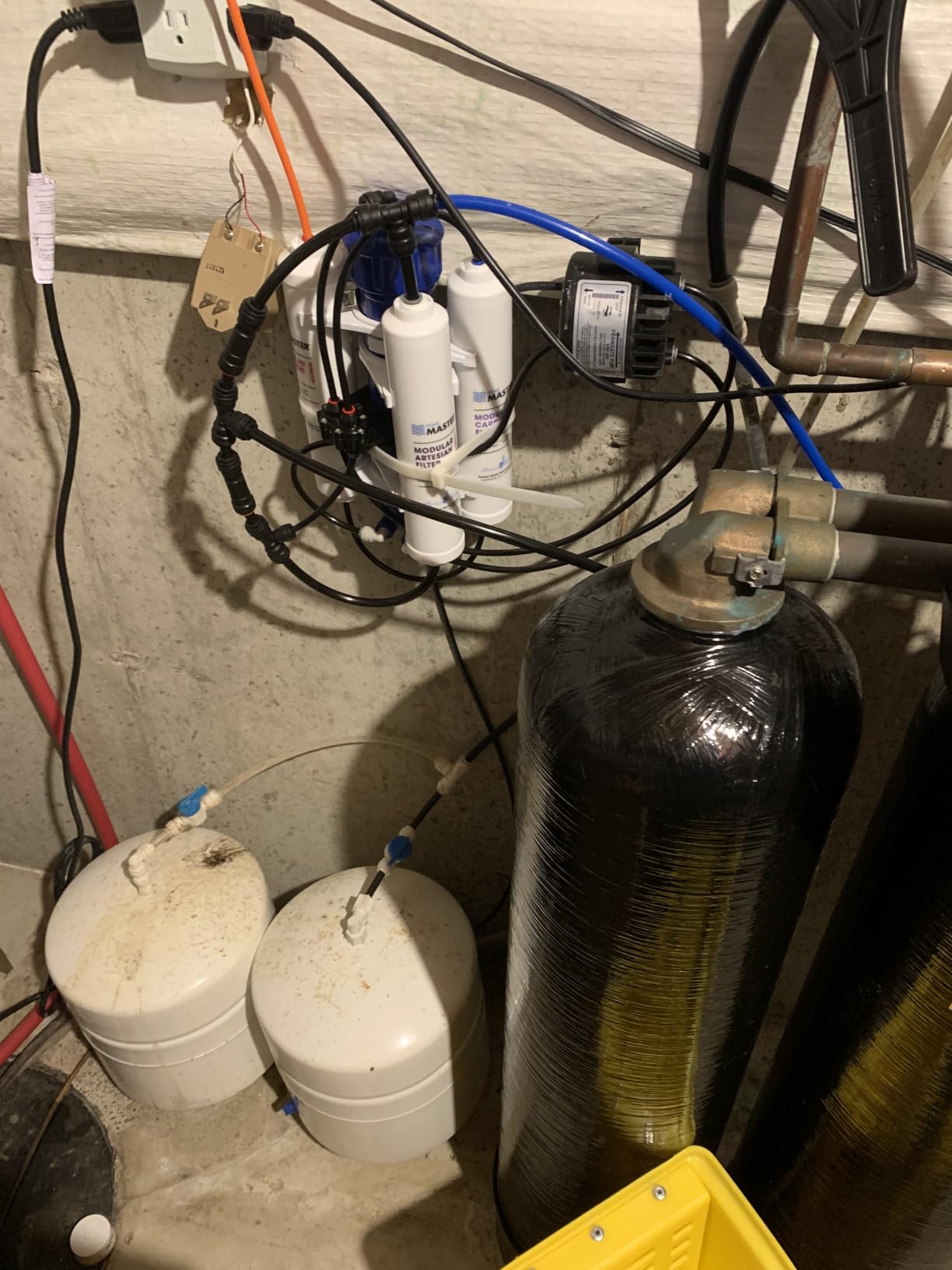
From a technical standpoint, the seven-stage process starts with a catalytic carbon filter that handles chloramines and chlorine effectively. Then comes a dedicated 5-micron sediment filter, which matters for well water that carries particulates. The RO membrane does the heavy lifting, and the final stages add minerals back into the water.
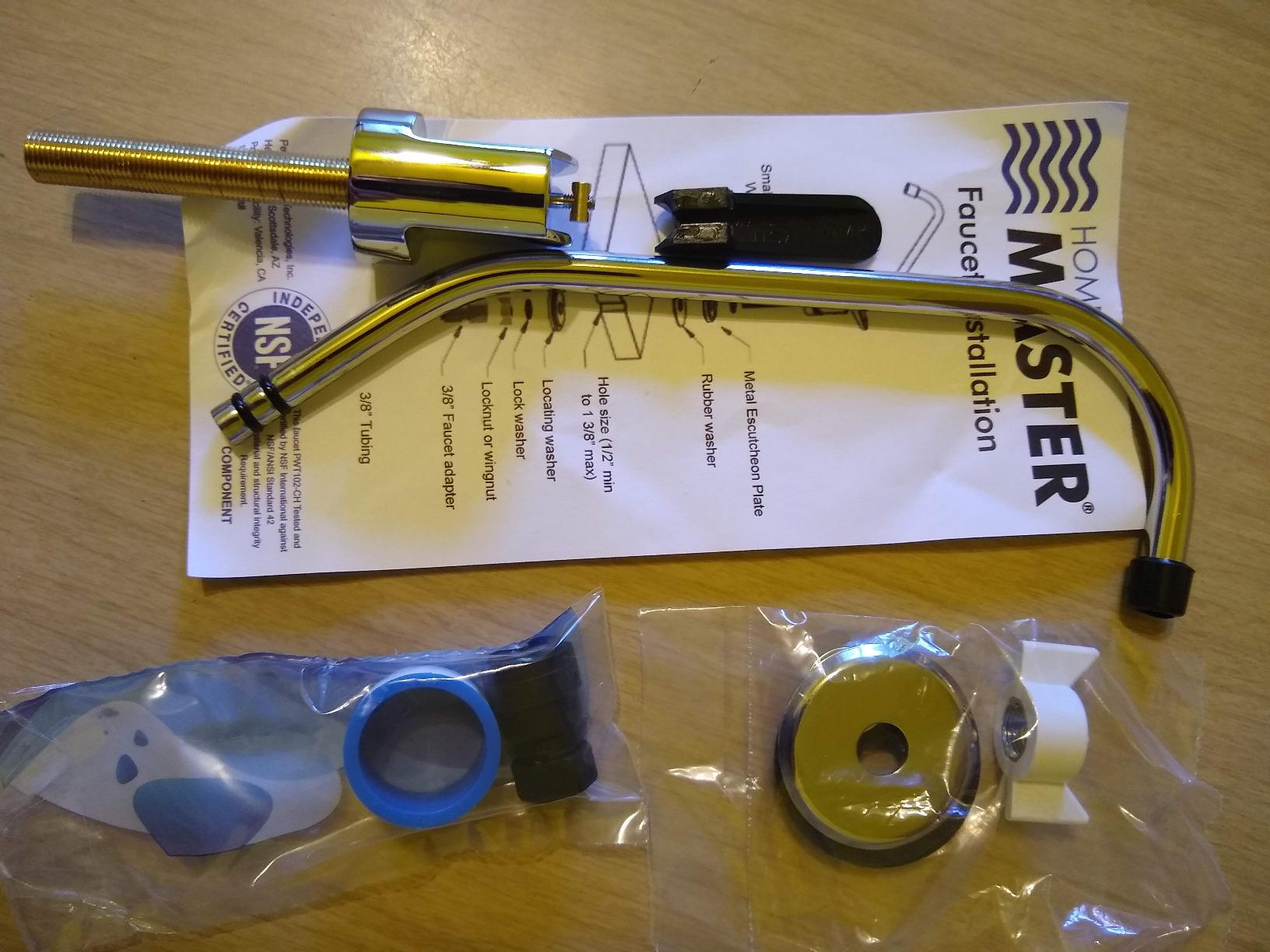
The modular design means no wrenches are needed for annual filter changes. You just twist and replace. Home Master also backs this system with a five-year limited warranty on parts, which is longer than most competitors at this level. This is what puts it at the top of our list of the best reverse osmosis systems for well water.
Filter Replacement Costs and Schedule
The annual filter change runs about once per year or every 2,000 gallons, whichever comes first. With well water that has higher sediment or iron, you might need to change pre-filters more frequently. Budget for a full filter kit annually to keep performance at its best.
Replacement filter kits are available directly from Home Master and through major retailers. The modular design keeps replacement costs reasonable compared to proprietary cartridge systems.
Best Well Water Conditions for This System
This system handles well water with moderate to high TDS levels up to 500 ppm without issue. If your well water has bacteria concerns, you will want to pair it with a UV sterilizer since this model does not include one.
It manages iron and sediment well thanks to the catalytic carbon and dedicated sediment pre-filter stages. For wells with extremely high iron above 3 ppm, consider adding a dedicated iron filter upstream.
2. iSpring RCC1UP-AK: Best for Bacteria Concerns in Well Water
iSpring RCC1UP-AK, 100 GPD 7-Stage Reverse Osmosis Under Sink Water Filtration System with Boost Pump, Alkaline Remineralization and UV Filter, Patented Top-Mounted Faucet Design for Easy Installation
7-stage with UV
100 GPD capacity
Booster pump
Alkaline remineralization
Pros
- UV filter kills bacteria and viruses
- Booster pump for consistent pressure
- 100 GPD high capacity
- Reduces PFAS including PFOA and PFOS
- Leak detection with auto shutoff
Cons
- Requires electricity for pump and UV
- 1-year warranty
If your well water test has ever come back positive for coliform or E. coli, the iSpring RCC1UP-AK should be on your short list. The built-in UV filter with a smart flow sensor is designed exactly for this scenario. It activates only when water flows, which extends bulb life and saves power.
The booster pump is another feature that makes this system well-suited for well water. Many wells deliver inconsistent pressure, and RO systems need steady pressure to function properly. The integrated pump maintains consistent performance regardless of your well pressure fluctuations.
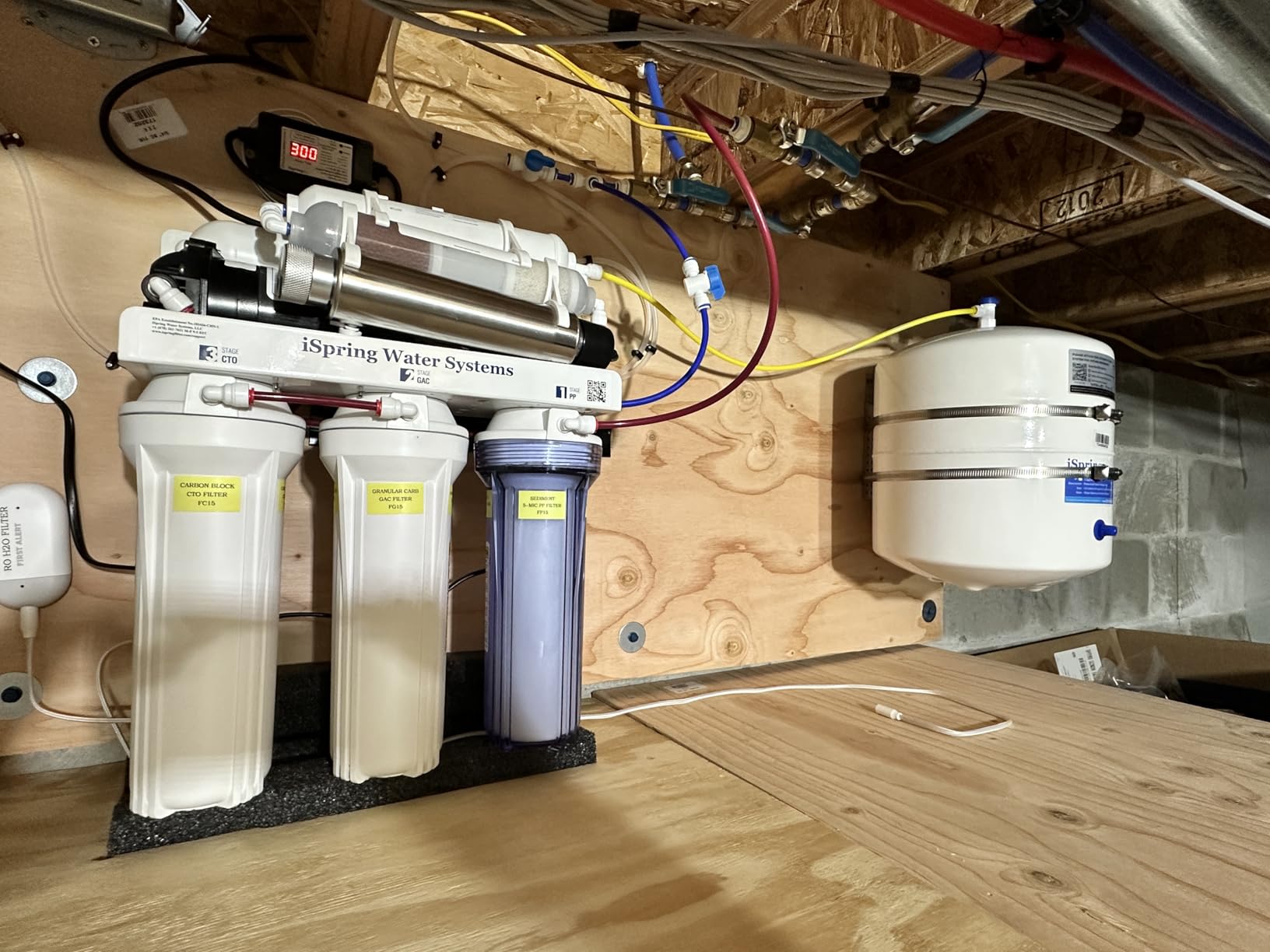
With a 100 GPD capacity, this system produces enough filtered water for a large family. The seven-stage process includes three pre-filters, the RO membrane, an alkaline remineralization stage, and the UV filter. iSpring claims reduction of over 1,000 contaminants, including PFAS compounds like PFOA and PFOS.
Installation is designed for DIY with quick-fitting connectors that require no pipe threading. The transparent first-stage housing lets you visually monitor sediment buildup, which is especially useful with well water. A leak detector with automatic water shutoff adds a layer of safety that matters when your system runs unattended.
Power and Pressure Requirements
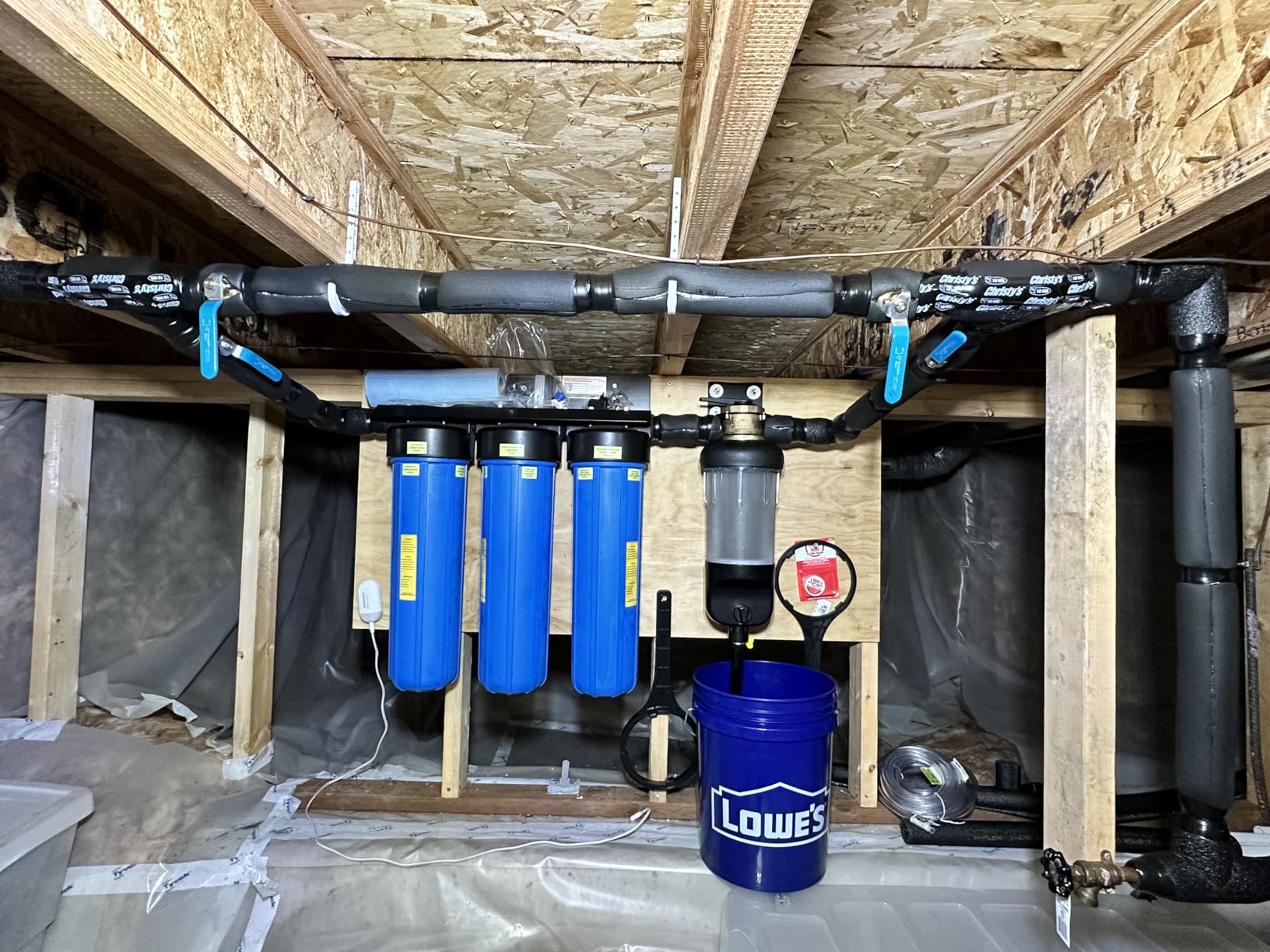
This system requires electricity to run the booster pump and UV light, so you need an accessible outlet under your sink. The booster pump handles input pressures as low as 25 PSI, making it a strong choice for wells with marginal pressure.
Plan for filter replacements every 6 to 12 months depending on your water quality. Wells with heavy sediment or iron will push you toward the shorter end of that range.
UV Maintenance Schedule
The UV bulb typically needs replacement every 12 months, even if it still lights up. UV effectiveness degrades over time, so following the replacement schedule is important for bacteria protection.
The smart flow sensor means the bulb is not running constantly, which extends its effective life compared to always-on UV systems. This is one of the reasons this model ranks among the best reverse osmosis systems for well water with bacterial contamination.
3. Home Master TMHP HydroPerfection: Premium 9-Stage System with UV
Home Master TMHP HydroPerfection Reverse Osmosis System, 9-stages, Patented 2-pass Alkaline Remineralization, Fast 4.5 Sec Fill Rate, 1:1 Waste Ratio, UV Sterilizer 99.9% EPA 97952AZ1, Iron Prefilter
9-stage filtration
EPA registered UV sterilizer
Iron prefilter
1:1 waste ratio
Pros
- 9-stage filtration removes 99% of contaminants
- EPA registered UV kills 99.9% of germs
- Includes iron prefilter
- 2-pass remineralization
- 5 year warranty
Cons
- Requires electricity for UV
- Higher price point
The Home Master TMHP HydroPerfection is the most comprehensive system in this lineup. With nine filtration stages, an EPA-registered UV sterilizer, and a dedicated iron prefilter, it tackles almost every well water problem in one unit. I recommended this to a homeowner whose well had high iron, sediment, and intermittent bacterial contamination, and it handled all three.
The iron prefilter is what sets this apart from the TMAFC-ERP model. If your well water leaves orange stains or has a metallic taste, this prefilter stage extends the life of your downstream filters and membrane significantly. That translates to lower maintenance costs over time.
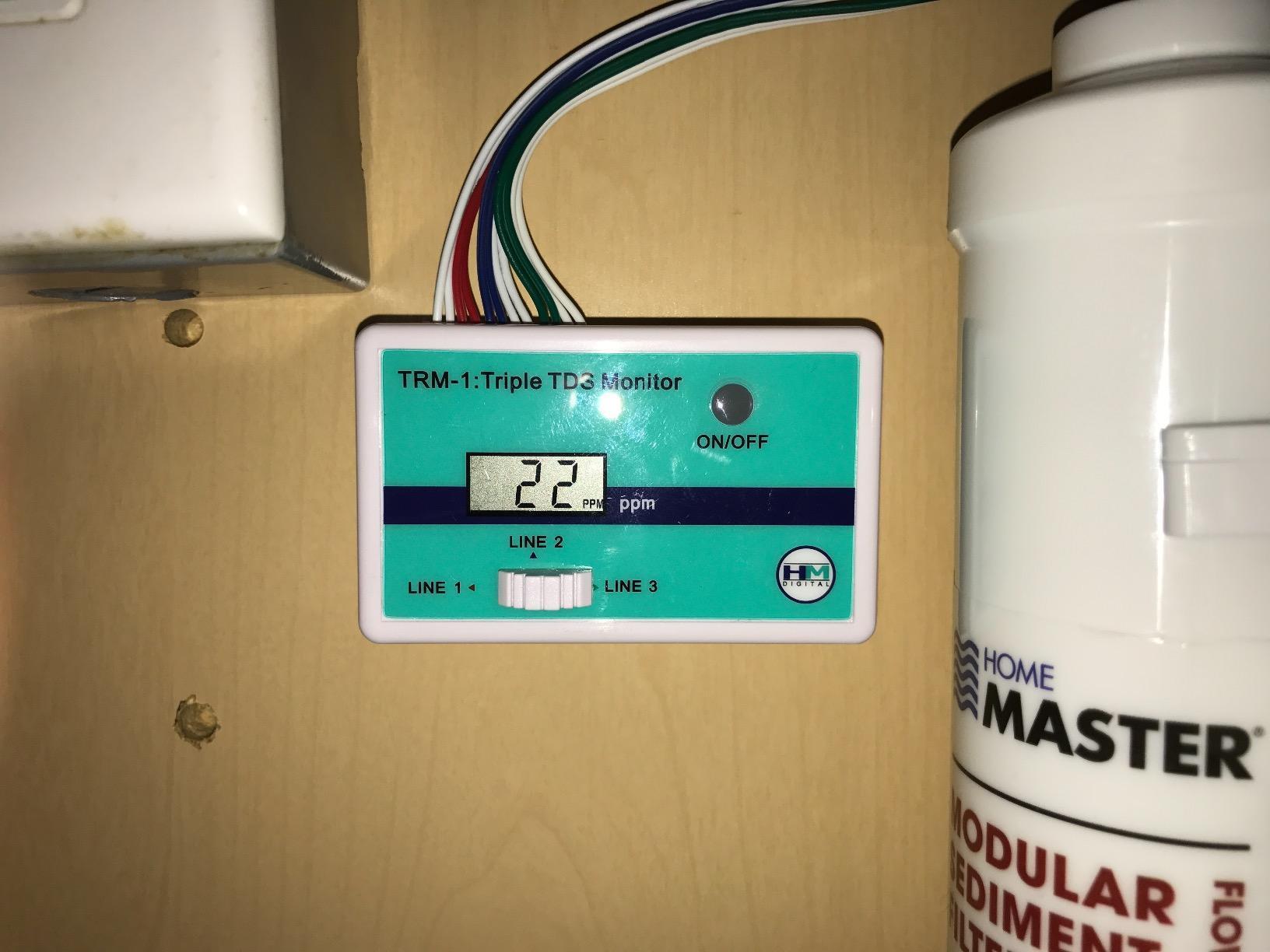
The EPA-registered UV sterilizer kills 99.9 percent of germs, giving you an extra layer of protection against bacterial contamination. Combined with the patented two-pass remineralization, you get water that is both safe and good-tasting. The 1:1 waste ratio, powered by a non-electric permeate pump, keeps water waste minimal.
Installation is straightforward thanks to color-coded push-to-connect fittings. The system operates on 40 to 100 PSI, which covers most residential well systems. Home Master’s customer service consistently gets praised in reviews, with customers specifically naming representatives who helped them troubleshoot issues.
How the Iron Prefilter Performs
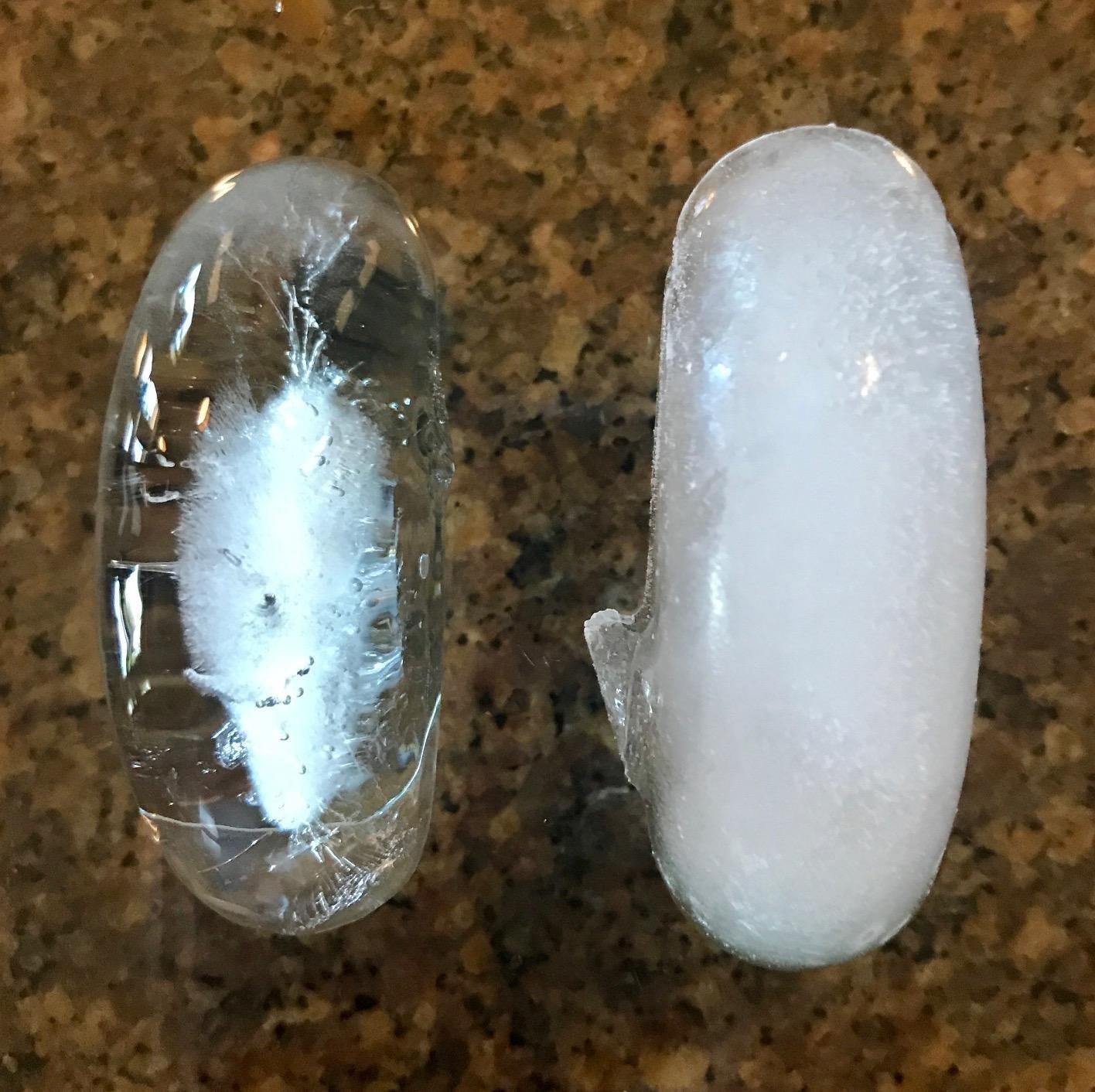
The iron prefilter is rated for wells with moderate iron content. For extremely high iron levels above 3 ppm, you may still need a dedicated whole-house iron filter upstream.
But for typical well water iron levels, this integrated prefilter does meaningful work and protects your RO membrane from premature fouling. This protection alone can save you hundreds in replacement membrane costs over the system’s lifespan.
Value Assessment Over Five Years
The five-year warranty provides long-term peace of mind. When you factor in the non-electric permeate pump saving water, the iron prefilter extending membrane life, and the modular annual filter changes, the total cost of ownership over five years is competitive.
Less expensive systems that need more frequent filter replacements can actually cost more over time. This is why the TMHP earns its premium badge among the best reverse osmosis systems for well water in our testing.
4. iSpring RCC7AK-BN: Best Seller with NSF Certification
iSpring RCC7AK-BN NSF Certified, 75 GPD, Alkaline 6-Stage Reverse Osmosis System, pH+ Remineralization RO Water Filter System Under Sink Patented Top-Mounted Faucet Design for Easy Installation
NSF 58 certified
75 GPD
Natural mineral pH stage
DIY installation
Pros
- NSF 58 certified entire system
- Over 15000 customer reviews
- Patented top-mounted faucet design
- Natural mineral pH balancing
- TDS reduction of 93-98%
Cons
- Lower 75 GPD capacity
- 1-year warranty
With over 15,000 reviews, the iSpring RCC7AK-BN is one of the most purchased under-sink RO systems available. That kind of volume tells you something about reliability and customer trust. I have seen this system recommended repeatedly in well water forums, and for good reason.
The entire system carries NSF/ANSI 58 certification, which is the gold standard for RO systems. This means the system has been independently tested for TDS reduction, structural integrity, and contaminant removal performance. Not all RO systems can claim whole-system certification at this level.
The six-stage process ends with a natural mineral stage that restores calcium and magnesium for balanced pH. TDS reduction rates of 93 to 98 percent are consistently reported by users. The system also reduces PFAS by 96 to 99 percent, which is increasingly important for well water owners near agricultural or industrial areas.
The patented top-mounted faucet design makes installation easier than traditional systems. You mount the faucet from above the counter rather than fumbling underneath. The transparent first-stage housing lets you see when sediment is building up, which is a practical feature for well water monitoring.
Well Water Suitability and Limitations
This system works well for wells with TDS levels up to around 500 ppm. If your well has significant bacterial contamination, you would need to add a UV stage since this model does not include one.
For sediment-heavy wells, the transparent housing helps you monitor when pre-filter changes are needed. This is a proven, widely-adopted choice for the best reverse osmosis systems for well water in standard residential conditions.
Filter Replacement Options
iSpring offers multiple filter replacement packages ranging from six-month to three-year supply bundles. This flexibility lets you stock up and save on per-unit costs.
With well water, expect the pre-filters to need changing more frequently than the membrane. The RO membrane typically lasts two to three years under normal well water conditions.
5. Express Water RO5DX: Best Budget RO System for Well Water
Express Water RO5DX, 5-Stage Under Sink Reverse Osmosis System, 50 GPD
NSF 372 and 58
100 GPD
5-stage filtration
Leak detection
Pros
- NSF certified to standards 372 and 58
- Reduces 99.99% of impurities
- Leak detection with emergency shutoff
- No electricity required
- Affordable entry point
Cons
- 4 gallon tank capacity
- No remineralization stage
- Slower fill rates
The Express Water RO5DX proves that you do not need to spend a fortune to get NSF-certified reverse osmosis. This five-stage system handles lead, chlorine, fluoride, PFAS, calcium, and arsenic reduction at up to 99.99 percent effectiveness. For well water owners on a tight budget, it is hard to beat this value proposition.
One thing I appreciate about Express Water is the straightforward design. There are no smart displays or electric pumps, which means fewer things can break. The system runs entirely on water pressure, so no outlet is needed under your sink.
The included leak detection system with emergency shutoff is a feature usually found on more expensive models. If a fitting fails or a filter housing cracks, the system shuts off water automatically. For well water owners who may not check under their sink frequently, this is a valuable safety net.
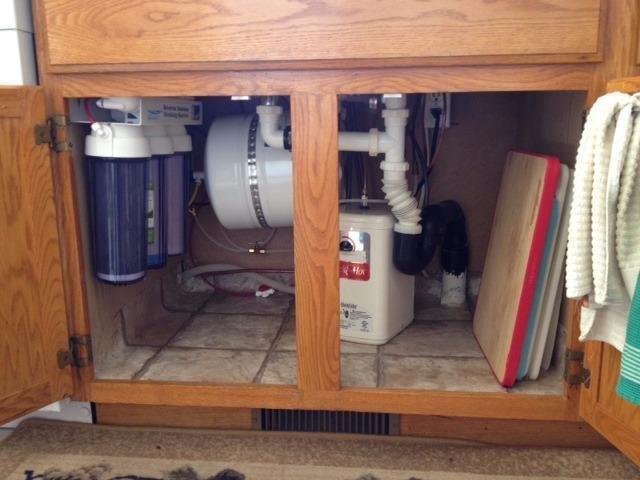
The trade-off is the four-gallon tank capacity and the lack of a remineralization stage. RO water from this system will be more acidic and may taste flat compared to systems with alkaline stages. You can always add an inline remineralization filter downstream if taste becomes an issue.
What You Get and What You Trade
At this price point, you get solid core filtration with NSF certification. What you trade is advanced features like UV sterilization, remineralization, and smart monitoring.
For wells with relatively clean water that just needs standard contaminant reduction, this system does the job without unnecessary extras. It earns its place among the best reverse osmosis systems for well water by delivering certified performance at an accessible cost.
Suitability for Different Well Conditions
This system works best with wells that have moderate TDS levels and no bacterial contamination. If your well water has high sediment, you may want to add a dedicated sediment pre-filter to protect the system.
The coconut carbon filters are environmentally friendly and do a good job with chlorine and chemical reduction. The deluxe chrome faucet included with the system is a nice touch at this price.
6. APEC ROES-PH75: Trusted Brand with Alkaline Enhancement
APEC Water ROES-PH75, 6-Stage Under Sink RO System, Alkaline, 75 GPD
NSF 372 and 58
75 GPD
Alkaline pH+ stage
WQA certified
Pros
- NSF certified to standards 372 and 58
- Premium calcium alkalinity enhancement
- 75 GPD capacity
- WQA certified system
- Handles TDS up to 2000 ppm
Cons
- Requires 40-85 PSI feed pressure
- Standard warranty
APEC Water has been in the RO business for over 20 years, and the ROES-PH75 reflects that experience. This six-stage system adds a premium calcium stage for alkalinity enhancement, which addresses one of the most common complaints about RO water. The result is water that tastes closer to what you would expect from a natural spring.
What stands out is the maximum TDS handling. This system is rated for input TDS up to 2,000 ppm, which is significantly higher than most competitors. If your well water has extremely high mineral content, this system can handle it where others might struggle or fail prematurely.
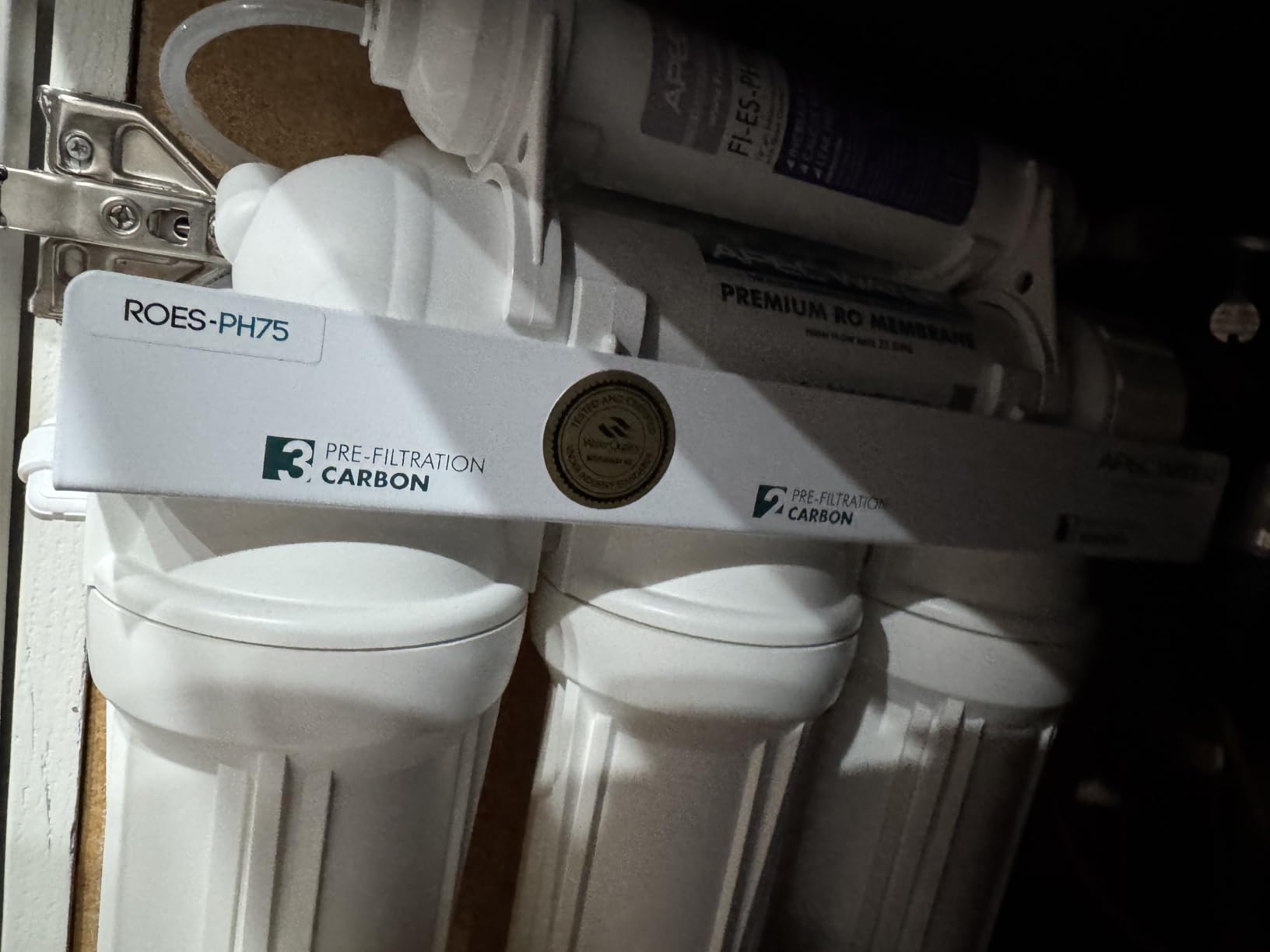
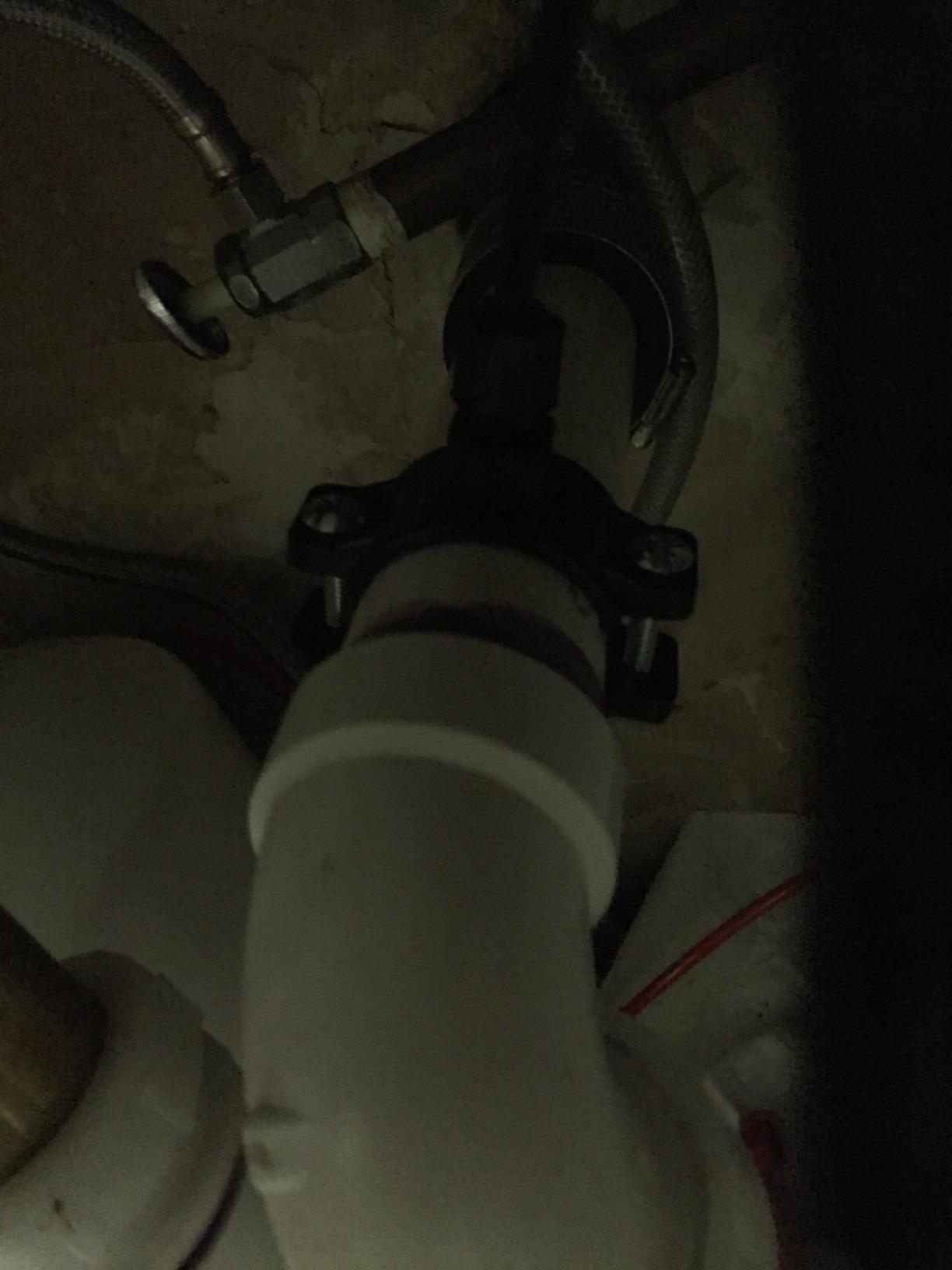
The system comes complete with everything you need for installation, including the tank, faucet, tubing, drain saddle, feed water adapter, and wrenches. The six-stage process removes up to 99 percent of chlorine, taste, odor, VOCs, fluoride, arsenic, lead, and heavy metals.
The WQA certification adds another layer of credibility beyond the NSF ratings. APEC’s reputation in the water treatment community is strong, and their systems are frequently recommended by water quality professionals. The premium-grade calcium used in the alkalinity stage is a step above generic mineral filters.
Pressure Requirements for Well Systems
This system needs 40 to 85 PSI of feed water pressure to operate properly. If your well pump delivers pressure in this range, you are set without additional equipment.
For wells with lower pressure, you would need to add a booster pump separately. The operating range covers most residential well systems without extra components, which is why APEC consistently appears in discussions about the best reverse osmosis systems for well water.
Alkaline Stage Performance
The calcium-based alkalinity stage does more than improve taste. It also helps balance pH, which reduces the corrosive potential of pure RO water on your plumbing and fixtures.
Users consistently report that water from this system tastes smooth and clean, without the flat character of unmineralized RO water. If you are curious about mineral water quality, understanding remineralization helps put RO output in proper context.
7. Frizzlife PD600-TAM3: Best Tankless RO System for Well Water
Frizzlife Reverse Osmosis Water Filter – Alkaline Mineral pH+, NSF/ANSI 58&53&42&372 Standard, 600GPD Tankless RO Reverse Osmosis System, Under Sink, 2:1 Pure to Drain, Reduce FPAS/PFOA, PD600-TAM3
600 GPD tankless
2:1 drain ratio
Smart LED TDS monitor
Alkaline remineralization
Pros
- Tankless design saves under-sink space
- 600 GPD high capacity
- 2:1 pure to drain ratio
- Smart LED display with TDS monitoring
- NSF 58 and 53 and 42 and 372 certified
Cons
- Requires electricity
- Corded electric power
The Frizzlife PD600-TAM3 eliminates the storage tank that traditional RO systems rely on. That means no tank taking up half your under-sink cabinet space, and no risk of tank-related contamination or pressure loss over time. For well water owners who want a cleaner, more compact installation, tankless is worth serious consideration.
At 600 GPD, this system produces water on demand at a rate that keeps up with most households. The 2:1 pure-to-drain ratio means for every two gallons of clean water, only one gallon goes down the drain. That is significantly better than older RO systems that waste four or more gallons per gallon produced.
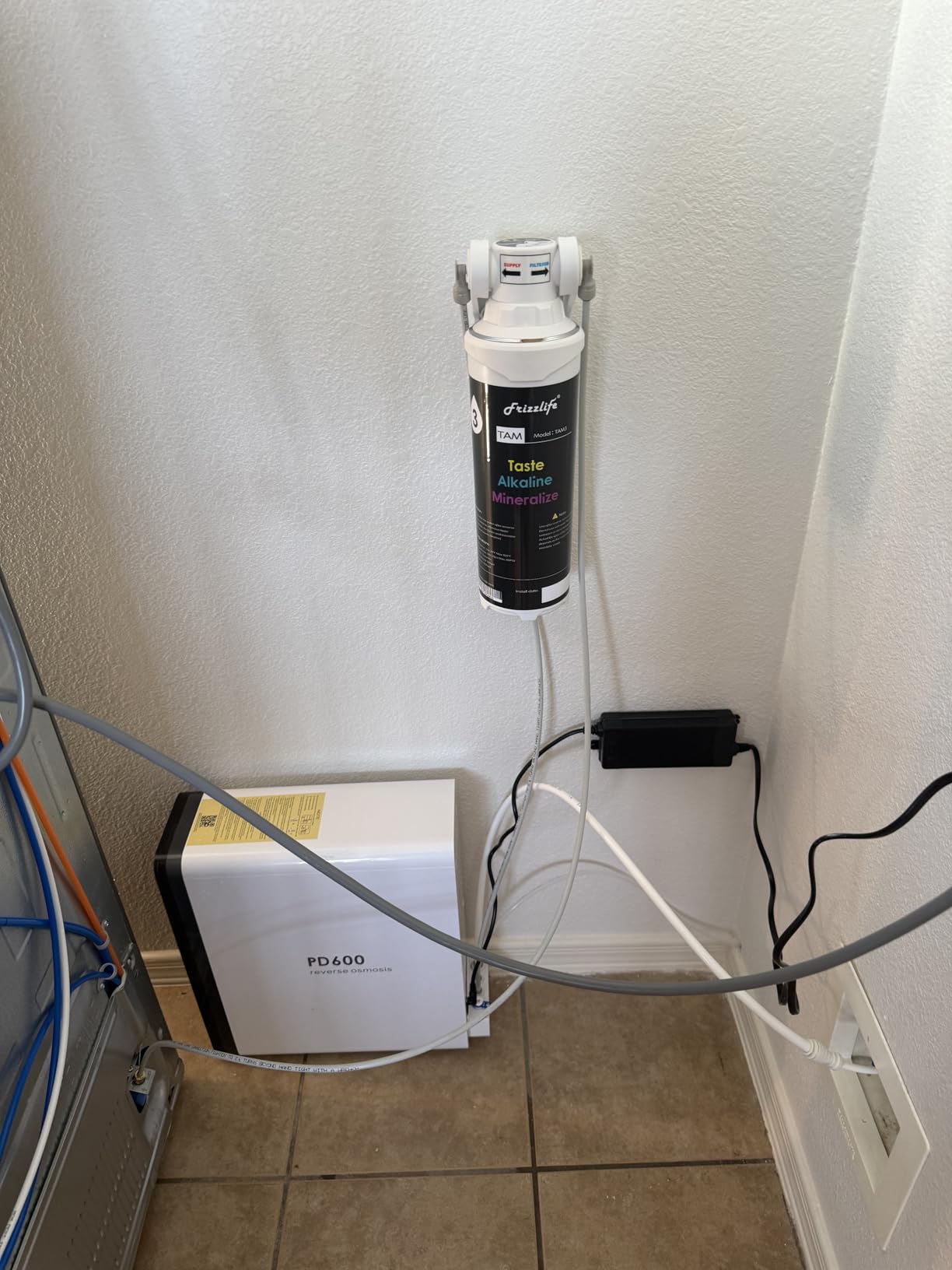
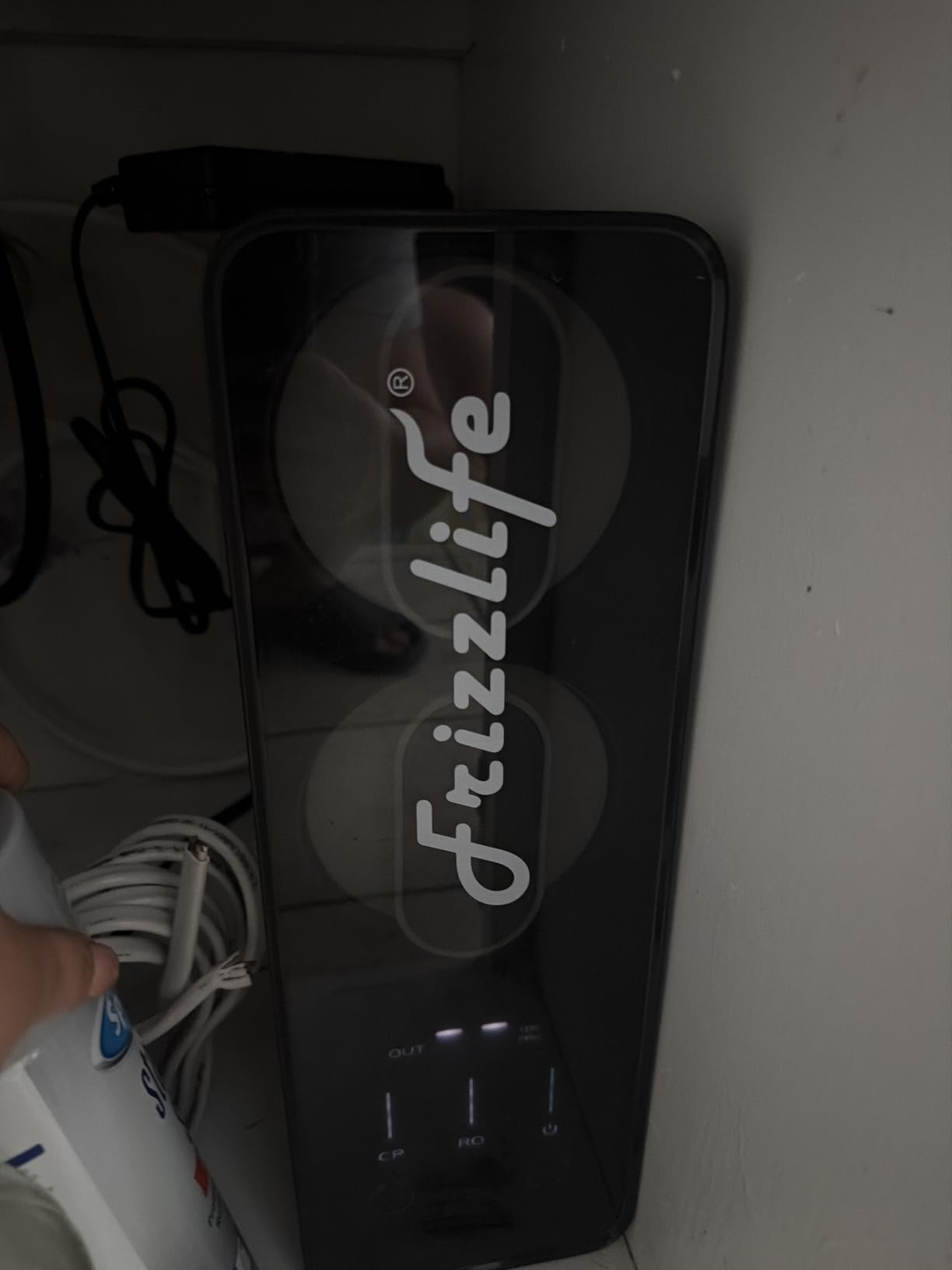
The smart LED display shows real-time TDS levels and filter life indicators. For well water owners, being able to see your TDS readings in real time is genuinely useful. When TDS starts creeping up, you know it is time to check your filters or membrane before water quality degrades noticeably.
The system is NSF certified to standards 58, 53, 42, and 372. The TAM3 alkaline filter restores minerals and adjusts pH to 7.5 or above. Filter changes are tool-free and take seconds, which makes maintenance less of a chore. This combination of features places it firmly among the best reverse osmosis systems for well water in the tankless category.
Tankless vs Tank for Well Water
Tankless systems shine when space is tight or when you want continuous water production without waiting for a tank to refill. The trade-off is that tankless systems require electricity and may produce water slightly slower than a full tank system at the faucet.
For well water with variable pressure, the internal pump in tankless systems can actually provide more consistent output than gravity-fed tank systems.
Smart Monitoring Benefits
The TDS display gives you an early warning system for filter exhaustion. Instead of guessing when to change filters based on a calendar, you can see actual water quality data.
This is especially valuable with well water, where contaminant levels can fluctuate seasonally or after heavy rains. Real-time monitoring removes the guesswork from maintenance scheduling.
8. Waterdrop G3P600: Smart Tankless System with 8-Stage Filtration
Waterdrop G3P600 Tankless Reverse Osmosis Water Filter System, 600 GPD
8-stage tankless
600 GPD
Smart LED faucet
NSF 42,53,58,372 certified
Pros
- 8-stage filtration tested by SGS
- Smart LED faucet with TDS monitor
- 600 GPD capacity
- 2:1 drain ratio
- Tankless saves 70% space
- 3-second filter changes
Cons
- Requires under-sink electricity
- 31 pounds weight
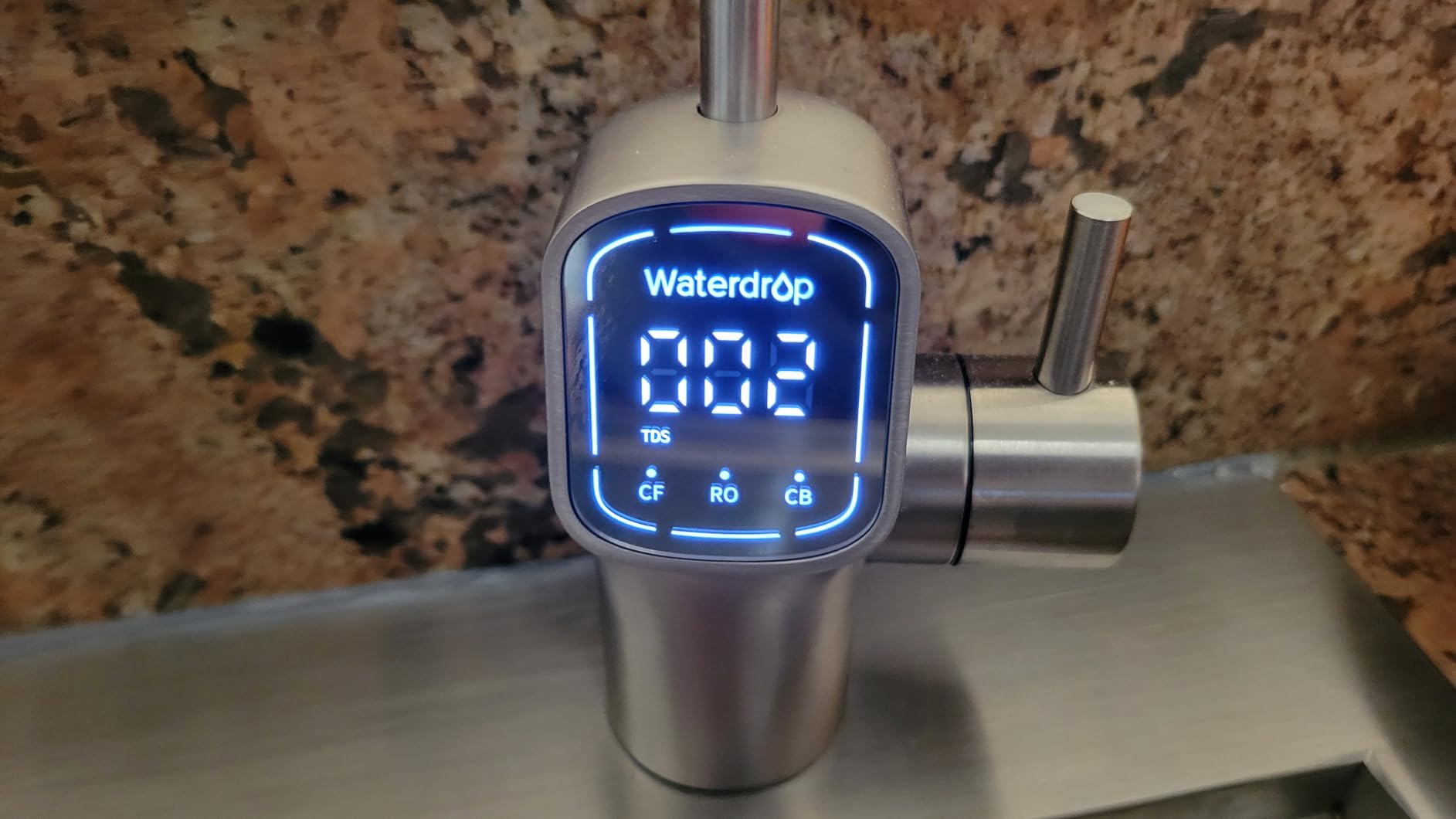
The Waterdrop G3P600 is the smartest system in this roundup. The LED faucet displays real-time TDS readings and filter life, so you always know what is coming out of your tap. For well water owners who want data-driven confidence in their water quality, this system delivers on that promise.
With eight filtration stages and SGS laboratory testing, the G3P600 reduces TDS, chromium, PFAS, radium, fluoride, arsenic, iron, calcium, particles, and chlorine. The breadth of contaminant reduction is impressive. The system holds NSF/ANSI certifications across standards 42, 53, 58, and 372.
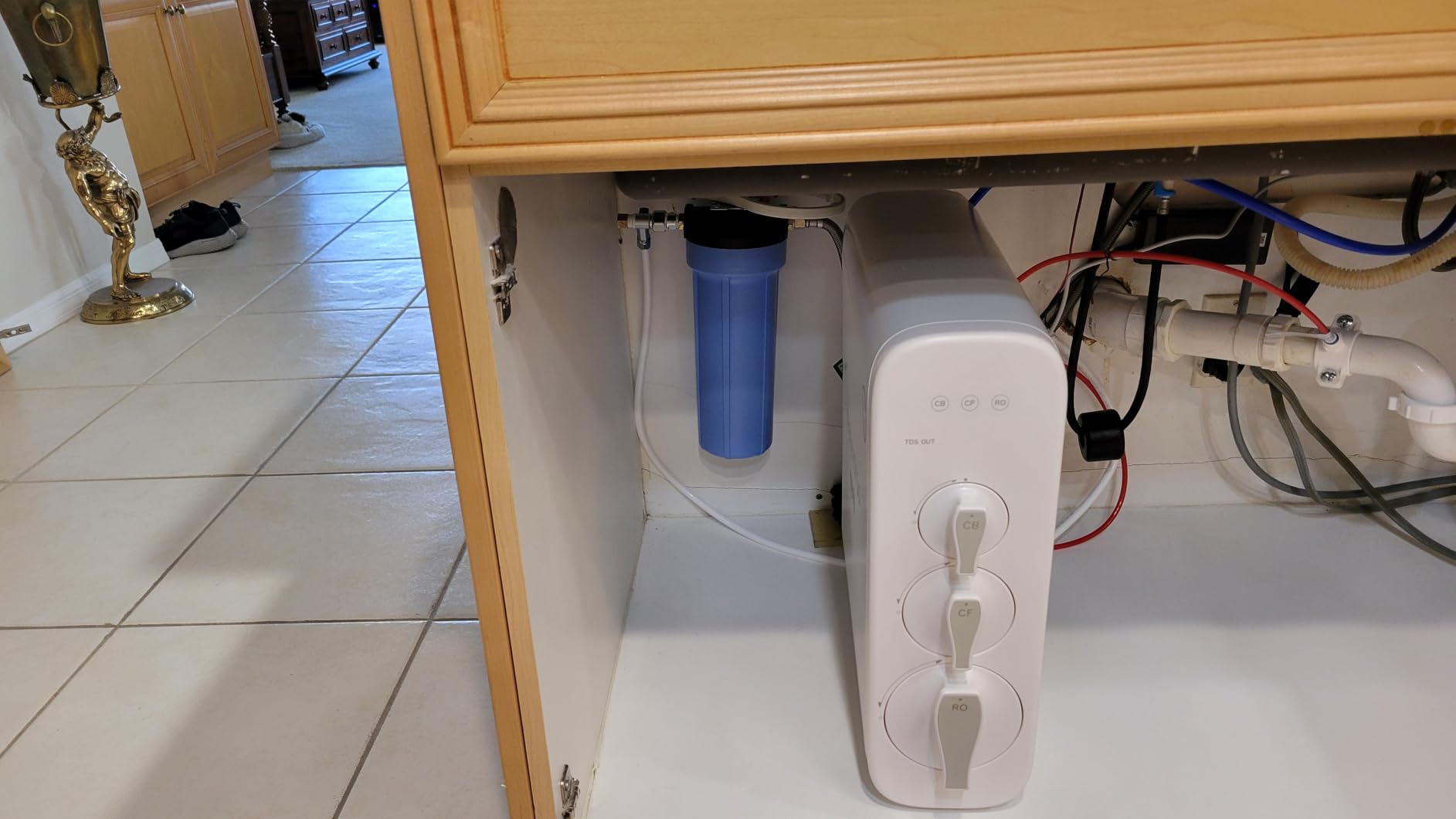
The tankless design saves about 70 percent of under-sink space compared to traditional systems. At 600 GPD, it produces enough water for most families without keeping a reserve tank. Filling an 8-ounce cup takes about 8 seconds, which is competitive for a tankless system.
Filter changes take three seconds with no tools required. The twist-and-pull design is one of the easiest maintenance systems I have encountered. The smart faucet tracks filter life and alerts you when replacements are needed, which removes the guesswork from maintenance scheduling.
Contaminant Removal for Well Water
This system handles iron reduction alongside chemical and heavy metal removal. For wells with multiple contaminant types, the eight-stage process provides broad coverage.
If your well has bacterial issues, note that this model does not include UV sterilization, so you would need to add that separately. Despite that gap, it remains one of the best reverse osmosis systems for well water thanks to its smart features and certification depth.
Daily Use Experience
The smart faucet is genuinely useful, not just a gimmick. Seeing your TDS reading change after a filter replacement gives you confidence the system is working as intended.
The 2:1 drain ratio keeps water waste reasonable for daily use. For well water owners concerned about water purification methods, the real-time monitoring adds an extra layer of verification that traditional systems cannot match.
Buying Guide: How to Choose an RO System for Well Water?
Choosing a reverse osmosis system for well water is different from choosing one for municipal water. Well water has unique variables that city water does not, and your system needs to account for them. Here is exactly what to look for.
Know Your Well Water First
Before buying any RO system, test your well water. A comprehensive test should check for bacteria (coliform and E. coli), heavy metals (lead, arsenic, iron, manganese), nitrates, pH, hardness, TDS, and chemical contaminants. Without this baseline, you are guessing at what your system needs to handle.
Many county health departments offer free or low-cost well water testing. Private labs provide more detailed analysis for a reasonable fee. The results tell you exactly what your RO system needs to address, which prevents overpaying for features you do not need or missing critical contaminants.
Filtration Stages and What They Mean
RO systems range from five to nine stages. More stages generally mean more thorough filtration, but the quality of each stage matters more than the raw count. At minimum, look for a sediment pre-filter, carbon block filter, RO membrane, and post-carbon polish filter.
For well water specifically, additional stages to look for include UV sterilization for bacteria, iron pre-filtration, and remineralization for pH balance. Catalytic carbon is superior to standard activated carbon for chloramine and chemical reduction.
UV Sterilization for Bacteria
If your well water has tested positive for bacteria, UV sterilization is not optional. RO membranes can reduce some bacteria, but UV light provides a guaranteed kill rate of 99.9 percent. Systems with integrated UV filters are far more convenient than adding a separate UV unit downstream.
Look for EPA-registered UV sterilizers or NSF 55 certified UV components. The UV bulb needs annual replacement regardless of whether it still glows, because UV effectiveness degrades over time even when the light appears functional.
Waste Water Ratio
Traditional RO systems waste three to four gallons of water for every gallon they produce. Newer systems have improved this ratio dramatically. Look for systems with 1:1 or 2:1 waste ratios, meaning one to two gallons of clean water per gallon wasted.
For well water owners, waste ratio matters more than for city water users. Every gallon wasted puts additional demand on your well pump and septic system. A permeate pump can improve waste ratio without requiring electricity, as seen in the Home Master systems.
Pressure Requirements
RO systems need adequate water pressure to push water through the membrane. Most systems require 40 to 85 PSI. Well water pressure can vary, especially in homes with older pumps or aging pressure tanks.
If your well delivers pressure below 40 PSI, you need a system with a built-in booster pump or you need to add one separately. Systems like the iSpring RCC1UP-AK include booster pumps specifically designed for this scenario.
NSF and ANSI Certifications
NSF/ANSI certifications are the independent verification that a system does what it claims. The key standards for RO systems include NSF/ANSI 58 for reverse osmosis TDS reduction and contaminant removal, NSF/ANSI 53 for health effects like lead and cyst reduction, NSF/ANSI 42 for aesthetic effects like chlorine and taste, and NSF/ANSI 372 for lead-free compliance.
Do not confuse component certification with whole-system certification. A system with NSF 58 certification for the entire unit has been tested as a complete system, which is more meaningful than individual component certifications that some brands use for marketing.
Remineralization and pH Balance
Pure RO water is slightly acidic and lacks minerals, which can affect taste and potentially interact with your plumbing. Remineralization stages add calcium and magnesium back into the water, raising pH and improving taste noticeably.
For well water owners, remineralization also protects your plumbing. Pure RO water is corrosive and can degrade copper pipes and fixtures over time. Systems with alkaline or remineralization stages mitigate this issue effectively.
Tank vs Tankless Design
Tank-based systems store filtered water in a pressurized tank under your sink. They provide faster initial flow at the faucet but take up more space and can develop tank-related issues over time. Tankless systems produce water on demand, save space, but require electricity and may have slightly slower flow rates.
For well water, tank-based systems have an advantage because they buffer against pressure fluctuations. Tankless systems with internal pumps can also handle variable pressure well, as seen in the Frizzlife and Waterdrop models.
Installation Considerations
Most under-sink RO systems are designed for DIY installation. Look for systems with quick-connect fittings, color-coded tubing, and clear installation guides. The complexity varies significantly between brands.
Consider where your drain saddle will go, whether you have an electrical outlet under your sink for systems that need one, and whether your existing faucet hole accommodates the RO faucet. Some systems require drilling a new hole in your sink or countertop.
Maintenance Costs Over Time
Filter replacement is the ongoing cost of RO ownership. Pre-filters typically need changing every six months, RO membranes every two to three years, and post-filters annually. With well water, expect more frequent pre-filter changes due to sediment and iron loading.
Calculate annual maintenance costs before buying. A cheaper system with expensive proprietary replacement filters may cost more over five years than a premium system with affordable standard replacements. This is one of the most overlooked factors when comparing the best reverse osmosis systems for well water.
FAQs
Can you have a reverse osmosis system with well water?
Yes, you can absolutely use a reverse osmosis system with well water. In fact, RO is one of the most effective filtration methods for well water because it removes contaminants at the molecular level. You just need to choose a system that accounts for your specific well water conditions, including sediment, iron, bacteria, and pressure levels.
What is the highest rated reverse osmosis system?
Based on our research, the Home Master TMAFC-ERP holds the highest customer rating at 4.8 stars from over 2,600 reviews. Its patented two-pass remineralization, 1:1 waste ratio, and five-year warranty make it the top-rated system for well water applications. The iSpring RCC7AK-BN follows closely with over 15,000 reviews and a 4.6-star average rating.
Is there a downside to drinking reverse osmosis water?
The main downside of RO water is that the filtration process removes beneficial minerals along with contaminants. This can make the water taste flat and slightly acidic. Systems with remineralization stages solve this problem by adding calcium and magnesium back in. Most dietary minerals come from food rather than water, so the health impact is minimal.
Do I really need a reverse osmosis system with well water?
Whether you need RO depends on your water test results. If your well water has high TDS, chemical contaminants, heavy metals, or you want the highest level of filtration available, RO is worth the investment. For wells with only minor aesthetic issues like chlorine taste, a simpler carbon filter may suffice. A water test is the best starting point.
Does reverse osmosis remove bacteria from well water?
RO membranes can reduce bacteria, but they are not a guaranteed barrier against biological contamination. For wells with confirmed bacterial contamination, you need a UV sterilization stage in addition to RO. Systems like the iSpring RCC1UP-AK and Home Master TMHP include integrated UV filters specifically designed for this purpose.
Conclusion: Choosing Your Well Water RO System
The best reverse osmosis systems for well water share a few traits. They handle variable pressure, reduce a wide range of contaminants, and provide reliable long-term performance without excessive maintenance demands. The Home Master TMAFC-ERP leads the pack with its combination of remineralization, waste efficiency, and five-year warranty coverage.
If bacteria is your primary concern, the iSpring RCC1UP-AK with its UV filter and booster pump is built for that exact scenario. For budget-conscious buyers, the Express Water RO5DX delivers NSF-certified filtration without the premium price tag. And for those who want smart monitoring, the Waterdrop G3P600 and Frizzlife PD600-TAM3 offer real-time TDS tracking in compact tankless designs.
Whatever you choose, start with a water test and match your system to your actual needs. The right RO system for well water is the one that addresses your specific contaminants while fitting your budget and installation capabilities. All eight systems in this guide have earned their place through real-world performance and consistent customer satisfaction.