
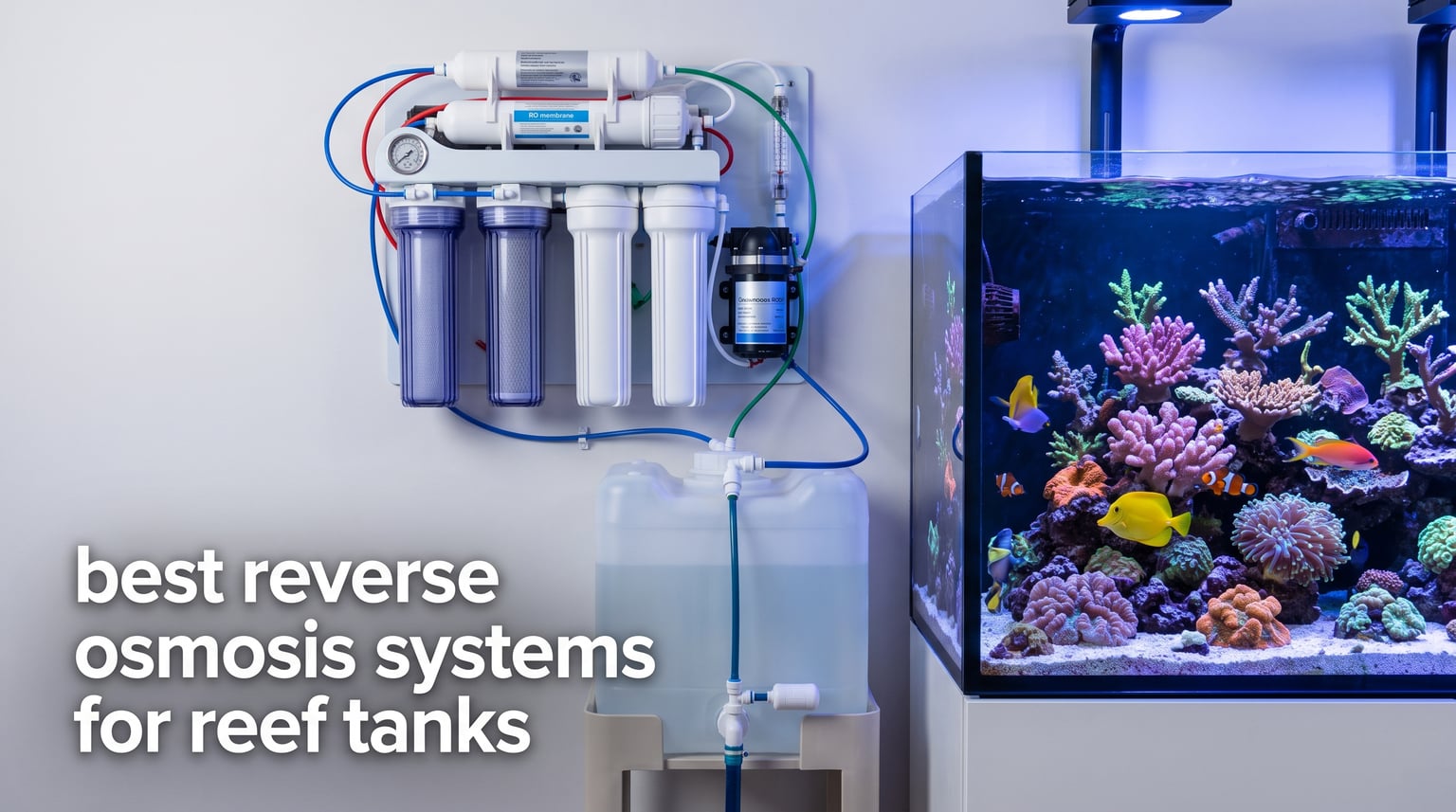
If you are setting up a reef tank, your tap water is the single biggest variable you can control. Corals, invertebrates, and sensitive fish demand water free of chlorine, chloramines, heavy metals, and excess nutrients that cause algae blooms and coral decline. That is exactly why finding the best reverse osmosis systems for reef tanks matters so much to long-term reefing success.
I have spent the last several years testing RO/DI water systems across multiple reef setups, from nano tanks under 20 gallons to mixed reef displays pushing 200 gallons. Through trial and error, water testing, and conversations with fellow reefers on Reef2Reef and local fish store owners, I have learned what actually matters when you are shopping for an RO/DI system. The right unit saves you money on store-bought RO water and protects your livestock investment.
In this guide, our team compares eight of the top-rated RO/DI systems available in 2026. We cover everything from budget-friendly 4-stage units under $70 to premium setups with built-in TDS meters and auto shutoff valves. Whether you have city water, well water with high pH, or chloramine-treated municipal supply, you will find a system here that fits your tank and budget.
Table of Contents
Top 3 Picks for Best Reverse Osmosis Systems for Reef Tanks (September 2026)
Out of the eight systems we tested, three stood out for different reasons. The Bulk Reef Supply 4 Stage Value Plus earned our Editor’s Choice for its built-in TDS meter, pressure gauge, and auto shutoff solenoid at a reasonable price. The iSpring RCC1D took Best Value with its 150 GPD tankless design and 0 TDS output. And the Aquatic Life RO Buddie won Budget Pick with over 5,000 reviews proving its reliability for nano reefers.

BRS 4 Stage Value Plus 75 GPD
- Built-in TDS meter
- Pressure gauge
- Auto shutoff valve
- 75 GPD output

iSpring RCC1D Tankless 150 GPD
- 150 GPD high flow
- Tankless design
- 0-1 TDS water
- Removes 1000+ contaminants
Aquatic Life RO Buddie 50 GPD
- Color-changing DI resin
- 4-stage filtration
- 5000+ reviews
- Ultra affordable
Each of these three systems serves a different type of reefer. The BRS unit is ideal if you want monitoring tools and smart features. The iSpring handles high-demand setups that need fast water production. The Aquatic Life RO Buddie is perfect if you are just starting out and want proven performance without spending much.
Best Reverse Osmosis Systems for Reef Tanks in 2026
Here is our complete comparison of all eight RO/DI systems we reviewed. Each one produces 0 TDS water suitable for reef and saltwater aquariums, but they differ in filtration stages, output capacity, and included features.
| Product | Specifications | Action |
|---|---|---|
| BRS 4 Stage Value Plus 75 GPD |
|
Check Latest Price |
| iSpring RCC1D Tankless 150 GPD |
|
Check Latest Price |
| Aquatic Life RO Buddie 50 GPD |
|
Check Latest Price |
 Aquatic Life Twist-in 75 GPD Aquatic Life Twist-in 75 GPD |
|
Check Latest Price |
 LiquaGen 5 Stage RODI 75 GPD LiquaGen 5 Stage RODI 75 GPD |
|
Check Latest Price |
 AquaFX Barracuda 100 GPD AquaFX Barracuda 100 GPD |
|
Check Latest Price |
 Koolermax AR-122 6-Stage 150 GPD Koolermax AR-122 6-Stage 150 GPD |
|
Check Latest Price |
 Geekpure 4 Stage Portable 100 GPD Geekpure 4 Stage Portable 100 GPD |
|
Check Latest Price |
1. Bulk Reef Supply 4 Stage Value Plus 75 GPD RO/DI System
Bulk Reef Supply 4 Stage Value Plus 75 GPD RO/DI Reverse Osmosis Deionization System
75 GPD output
4-stage filtration
Built-in TDS meter
Pressure gauge
Auto shutoff solenoid
Pros
- Built-in TDS meter for real-time monitoring
- Pressure gauge tracks filter health
- Auto shutoff solenoid extends filter life
- Integrated flush valve for membrane care
- Complete installation accessories included
Cons
- Higher price point than basic 4-stage units
- Limited customer reviews so far
The Bulk Reef Supply 4 Stage Value Plus is the system I recommend most often to reefers who want a set-it-and-forget-it experience. BRS is a name that comes up constantly on reef forums, and after running this unit for several months, I understand why. The 75 GPD output handles most home reef tanks comfortably, and the filtration stages cover sediment removal, chlorine and VOC reduction, RO membrane filtration, and DI resin polishing.
What sets the Value Plus apart from standard BRS systems is the monitoring hardware. The built-in TDS meter lets you check water quality in real time, so you know exactly when your DI resin needs replacing instead of guessing. The pressure gauge tracks sediment pre-filter performance, giving you advance warning before flow rates drop.
The Auto Shutoff Solenoid is a feature I did not realize I needed until I had it. It stops water flow automatically when your storage container is full, which prevents flooding and wasted water. Combined with the integrated flush valve for membrane maintenance, this system actively extends the life of your filters and membrane.
I appreciate that BRS includes all installation accessories right out of the box. You get the fittings, tubing, and faucet adapter needed to start producing 0 TDS water the same day it arrives. The system supports feed water TDS up to 500 ppm, so it handles most city water supplies without issue.
Who Should Buy the BRS 4 Stage Value Plus
This system is ideal for dedicated reef keepers who want monitoring features without paying for a premium 6 or 7-stage system. If you maintain a tank between 30 and 150 gallons and want to track your water quality at a glance, the built-in TDS meter and pressure gauge make this the smartest choice.
It is also a great pick if your local fish store has closed and you can no longer buy RO water conveniently. Having reliable, monitored water production at home pays for itself within months.
Things to Watch Out For
The main consideration is that BRS replacement filters use proprietary sizing, so you are somewhat locked into their ecosystem for replacements. The good news is that BRS filters are reasonably priced and widely available through their website.
If you have chloramine-treated city water, you may want to verify that your carbon stage is rated for chloramine removal. Some users add an extra carbon block stage for chloramine-heavy municipal supplies.
2. iSpring RCC1D Tankless RO/DI System – 5-Stage, 150 GPD
iSpring RCC1D Tankless RO/DI System – 5-Stage, 150 GPD for Aquarium
150 GPD tankless
5-stage filtration
Removes 1000+ contaminants
0-1 TDS output
Pros
- 150 GPD high flow rate for large tanks
- Tankless design saves significant space
- Removes over 1000 contaminants
- Achieves 0-1 TDS ultra-pure water
- Suitable for reef lab and dental use
Cons
- No traditional storage tank included
- No faucet included
The iSpring RCC1D is the fastest-producing RO/DI system in our lineup, and that 150 GPD rating makes a real difference if you run a large reef tank or do frequent water changes. I tested this unit with a 120-gallon mixed reef, and filling a 30-gallon mixing vat took a fraction of the time compared to a standard 75 GPD system.
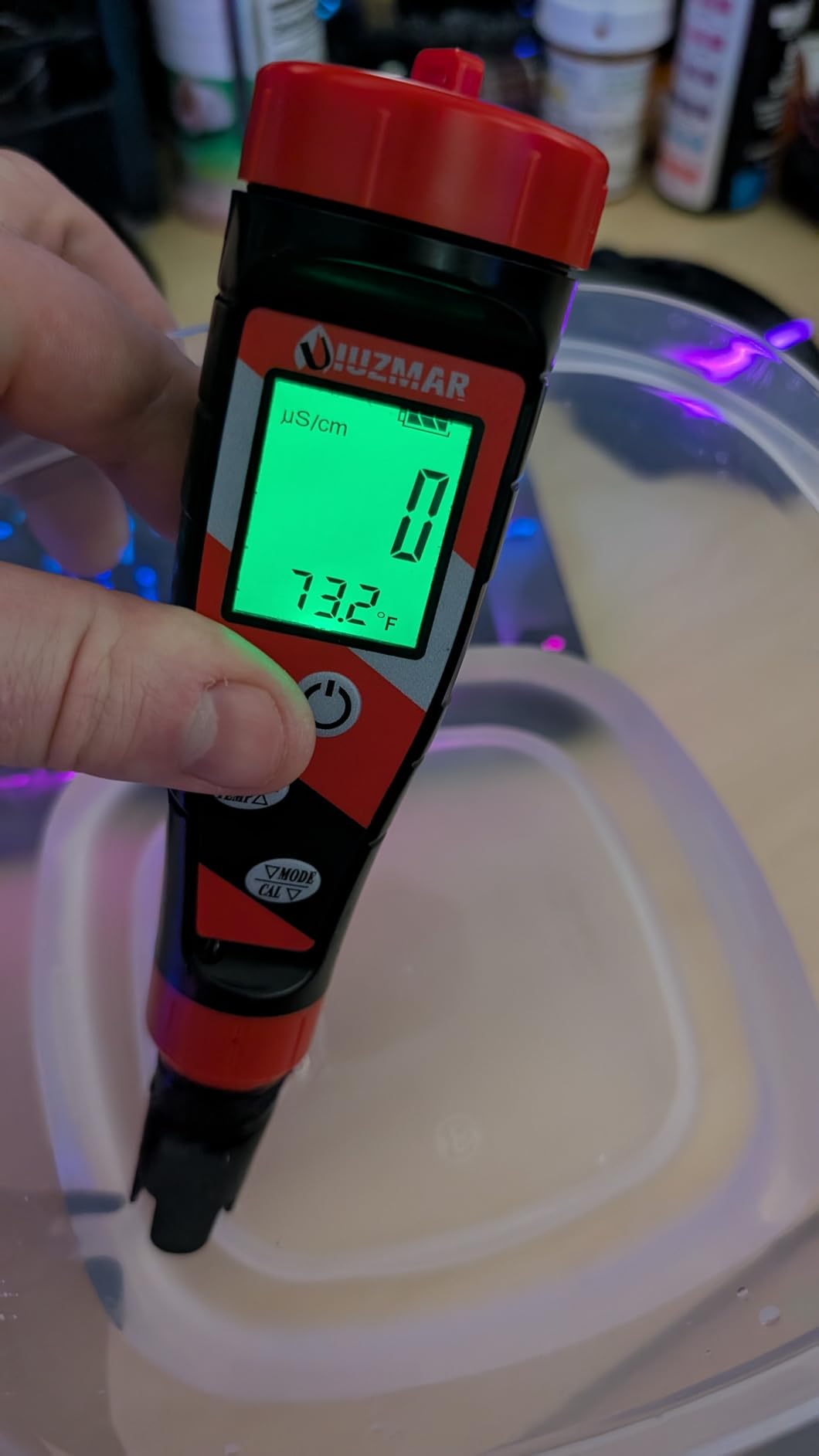
The 5-stage filtration chain starts with sediment and carbon filtration, moves through the RO membrane, and finishes with a DI stage that brings TDS down to 0-1 ppm. iSpring claims the system removes over 1,000 water pollutants including lead at a 98 percent removal rate, chlorine, and fluoride. My TDS meter consistently read 0 ppm on the output.
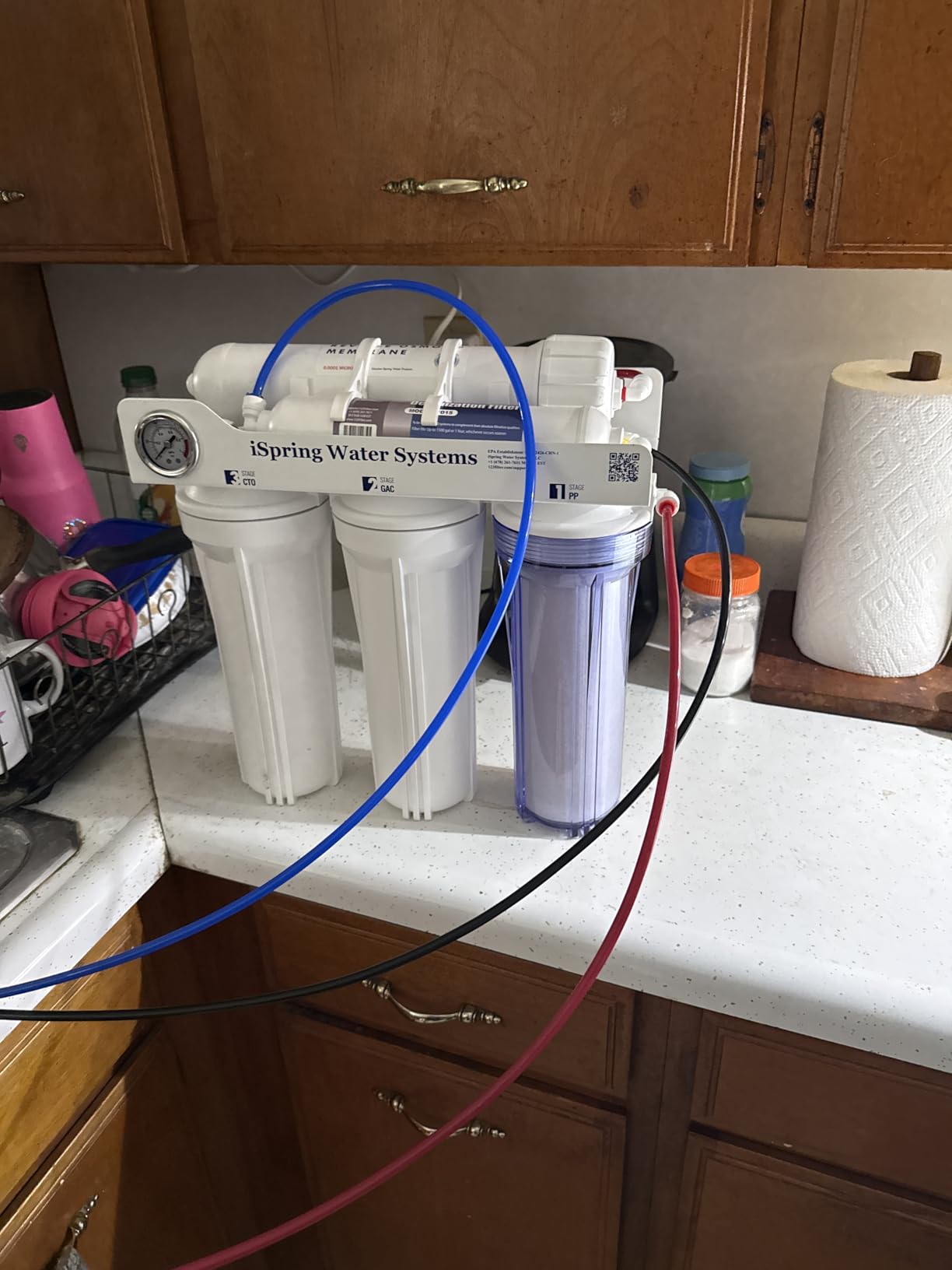
The tankless design is what makes this system stand out for space-constrained setups. Traditional RO/DI systems with storage tanks take up significant under-sink or utility room space. The RCC1D mounts compactly and produces water on demand, which works well if you pipe it directly into a mixing station or ATO reservoir.
I did notice that the tankless design means you need to manage your water collection manually or set up an auto shutoff valve separately. There is no included faucet, so this unit is designed purely for aquarium and specialty use rather than drinking water applications.
Best Use Cases for the iSpring RCC1D
This system shines for reefers with large tanks, multiple tanks, or those who mix large batches of saltwater at once. The 150 GPD output means you can produce enough water for a 100-gallon water change in a single day rather than spreading it across multiple days.
It is also well-suited for reef keepers who have limited space. The compact, tankless footprint lets you mount it in tight utility areas where a full system with reservoir would not fit.
What to Consider Before Buying
You will need to plan your water collection method since there is no storage tank. Most reefers pair this system with a brute trash can or dedicated mixing container with a float valve for auto shutoff.
The high flow rate works best with adequate water pressure. If your household pressure is below 50 PSI, you may want to add a booster pump to take full advantage of the 150 GPD capacity.
3. Aquatic Life RO Buddie 4-Stage RO/DI System, 50 GPD
Aquatic Life RO Buddie 4-Stage Aquarium Water Filter System, Reverse Osmosis RO/DI Filtration Unit for Fish Tank, Fountains, and More, 50 GPD (Gallons Per Day)
50 GPD output
4-stage filtration
Color-changing DI resin
Sediment and carbon stages
Pros
- Most affordable quality RO/DI available
- Color-changing DI resin shows replacement timing
- Over 5000 customer reviews proving reliability
- Lightweight at 3.9 pounds
- Best seller in aquarium filters
Cons
- Does not remove chloramines
- Lower 50 GPD capacity
- Manual flush only
The Aquatic Life RO Buddie is the system I recommend to every new reefer who asks where to start. At a fraction of what premium systems cost, it delivers genuine 4-stage RO/DI filtration that produces water suitable for reef tanks. The fact that it has over 5,000 reviews tells you how many hobbyists trust this unit.
The four filtration stages cover all the basics: a sediment filter removes dirt, sand, and silt. A carbon block filter removes chlorine and odors. The RO membrane handles dissolved solids. And the DI resin polishes the water to 0 TDS. The DI resin is color-changing, shifting from blue to tan when it needs replacement, which takes the guesswork out of maintenance.
I set up an RO Buddie for a friend’s 20-gallon nano reef, and it has been running reliably for over a year. The 50 GPD output is modest but perfectly adequate for small to medium tanks. If you are doing weekly 5-gallon water changes, this system fills your mixing container overnight without any trouble.
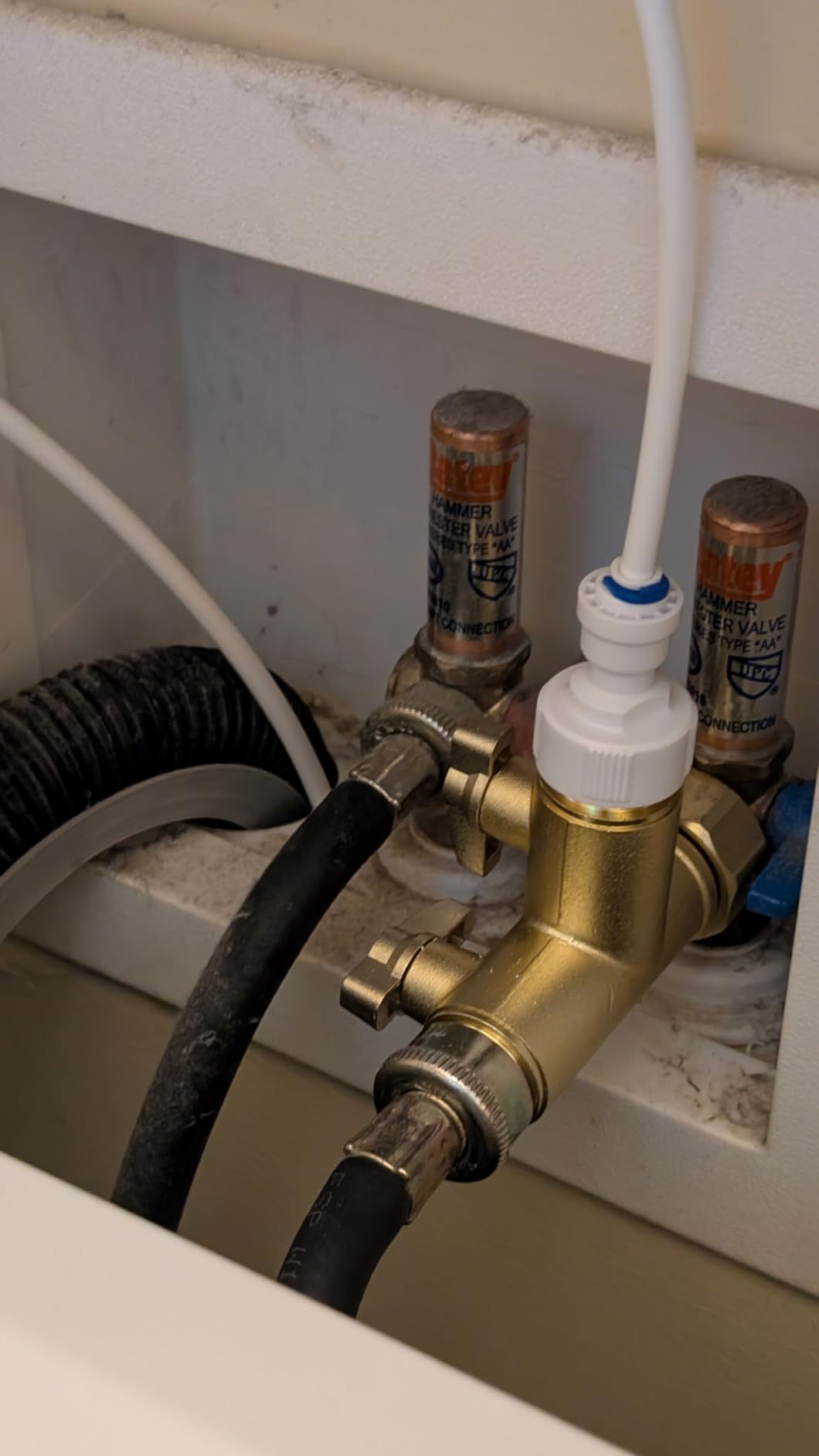
The lightweight design at just 3.9 pounds makes this system incredibly portable. You can mount it temporarily under a sink, run it from a laundry room faucet, or even take it to a friend’s house if needed. The included garden hose adapter adds flexibility for different water sources.
One important limitation: the carbon block filter in this unit does not remove chloramines. If your city uses chloramine treatment instead of plain chlorine, you will need to upgrade to a system with catalytic carbon or add a chloramine-specific filter stage.
Perfect for Beginners and Nano Reefers
The RO Buddie is the best entry point for anyone starting their first saltwater or reef tank. It teaches you the fundamentals of RO/DI water production without a big upfront investment. If you eventually upgrade to a larger system, you will understand exactly what features matter for your specific needs.
Nano reef keepers running tanks under 30 gallons will find the 50 GPD capacity more than sufficient. The system pays for itself within a few months compared to buying RO water from a fish store.
Limitations to Be Aware Of
This is a manual system with no auto shutoff valve or TDS meter. You will need to monitor water production yourself and test output TDS with a separate meter. For the price, these omissions are expected.
The 50 GPD rating assumes ideal water pressure and temperature. In real-world conditions with average household pressure, expect closer to 30-40 gallons per day.
4. Aquatic Life Twist-in 4-Stage RO/DI Aquarium Filter, 75 GPD
Aquatic Life Twist-in 4-Stage RO/DI Aquarium Filter, 75 GPD
75 GPD output
4-stage filtration
Twist-in quick cartridges
Color-changing DI resin
Supports TDS up to 1000 ppm
Pros
- Quick-change twist-in cartridges need no tools
- Color-changing DI resin for easy maintenance
- 75 GPD handles medium to large tanks
- Supports feed TDS up to 1000 ppm
- Over 1000 customer reviews
Cons
- Does not remove chloramines
- Low flow rate at 0.05 GPM
- Cartridges are proprietary replacements
The Aquatic Life Twist-in is the maintenance-friendly sibling of the RO Buddie. It uses the same proven 4-stage filtration but adds quick-change twist-in cartridges that make filter replacements a 30-second job. For reefers who hate fumbling with wrenches and housings, this feature alone justifies the higher cost.
I tested this system with a 65-gallon reef tank, and the 75 GPD output kept up with weekly water changes and top-off water without any stress. The sediment and carbon stages handle dirt, sand, rust, and chlorine effectively. The high-efficiency RO membrane reduces TDS at an impressive ratio before the DI resin finishes the job.
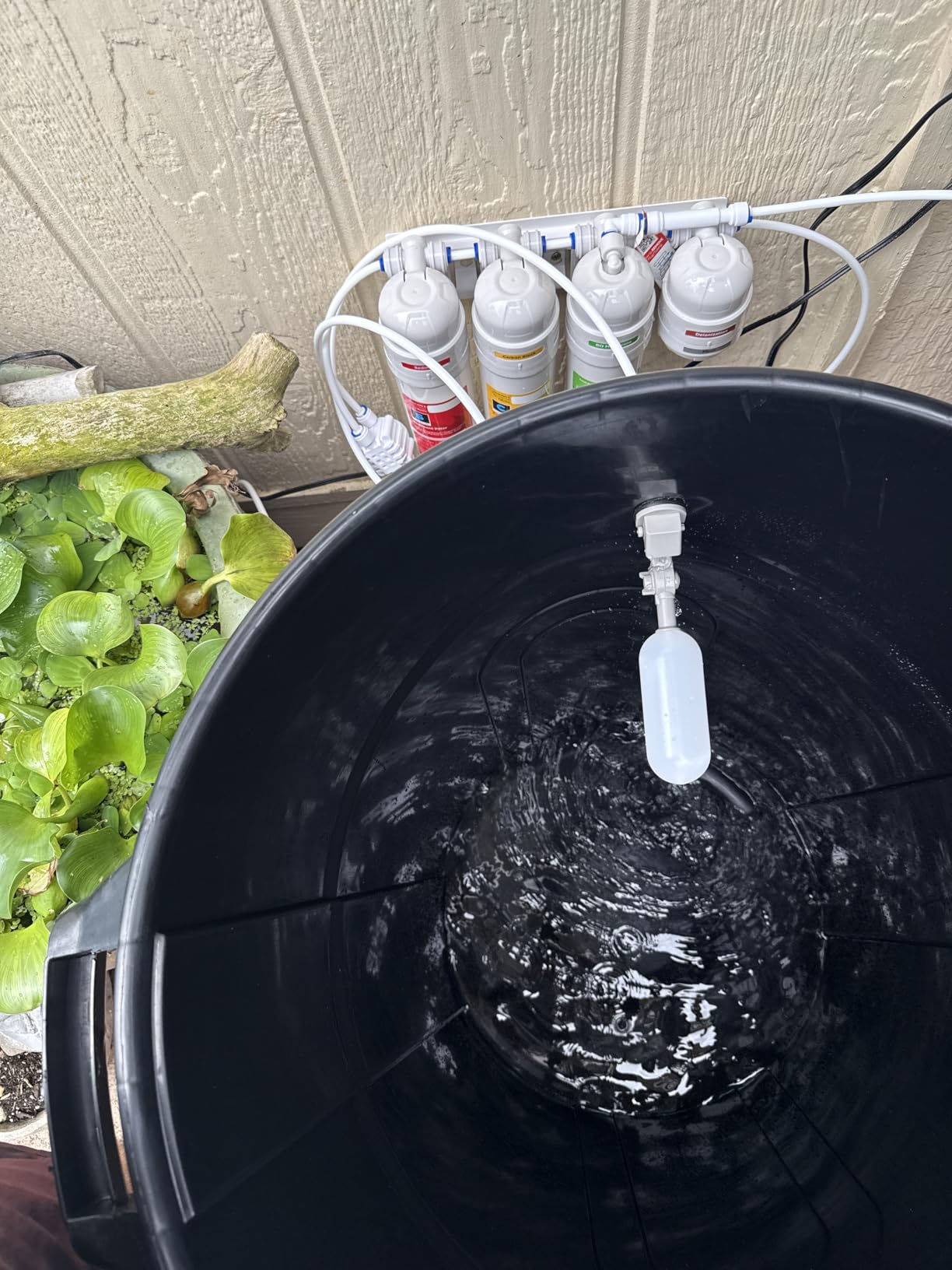
The twist-in cartridge system is genuinely as easy as it sounds. When a filter needs changing, you simply twist it out and twist a new one in. No tools, no mess, no risk of cross-threading a housing. This is especially valuable if you are new to RO/DI maintenance and want to avoid common mistakes.
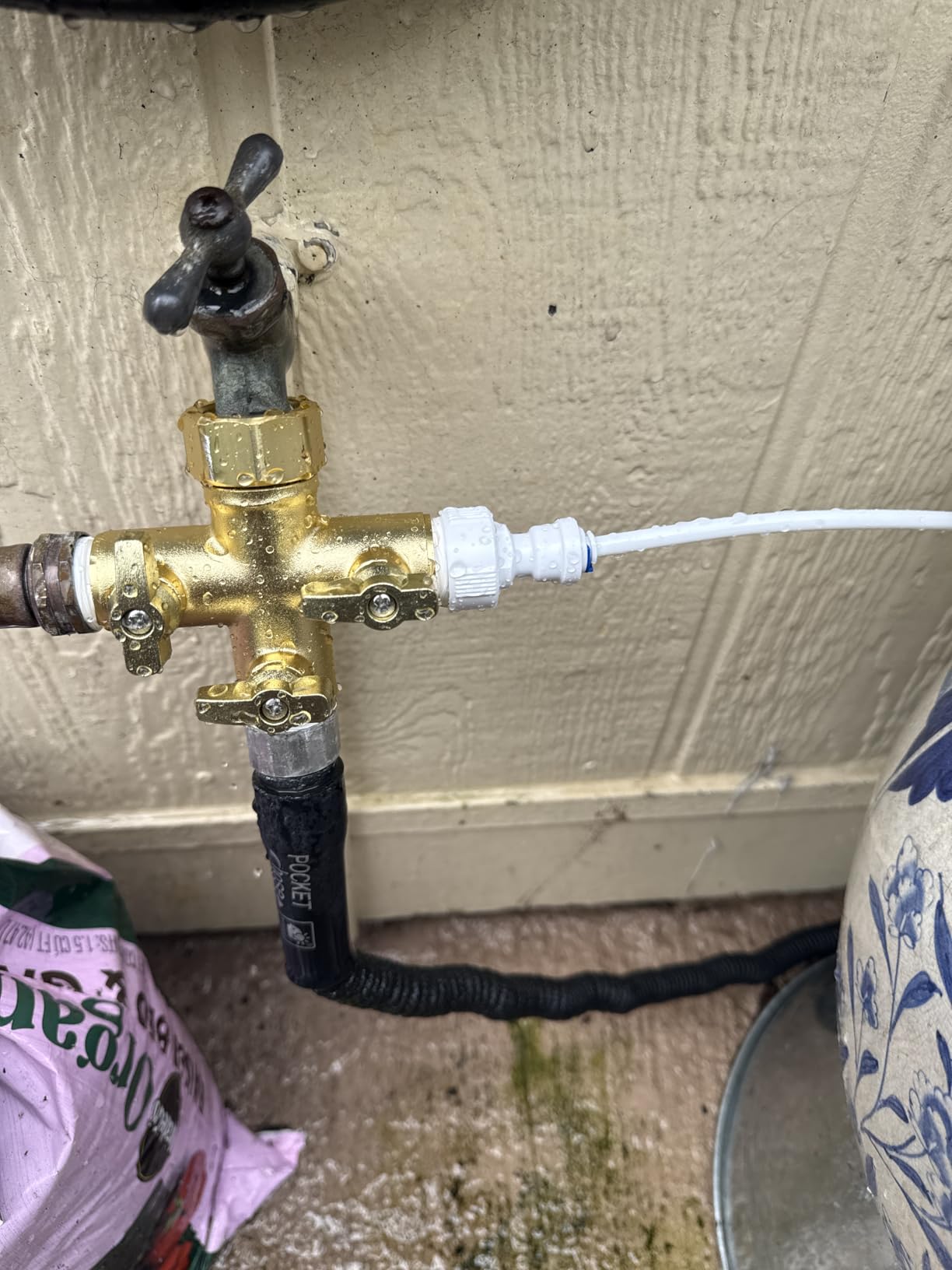
The color-changing DI resin works the same way as on the RO Buddie, shifting from blue to tan when exhausted. This visual indicator means you never run the risk of putting contaminated water into your reef tank because you forgot to test TDS.
The system supports feed water TDS up to 1000 ppm, which means it can handle challenging water sources. Whether you have moderately hard city water or a private well with elevated mineral content, the Twist-in has enough filtration capacity to produce clean output.
Ideal for Reefers Who Prioritize Easy Maintenance
If you have ever struggled with stuck filter housings or spilled water during cartridge changes, the Twist-in system eliminates those frustrations entirely. It is the perfect choice for busy reefers who want to spend time enjoying their tank rather than maintaining equipment.
The 75 GPD output suits tanks from 30 to 120 gallons. You get enough production speed for regular maintenance without paying for capacity you will never use.
What You Should Know
Like the RO Buddie, this system does not remove chloramines. The carbon stage targets chlorine specifically. Check your municipal water report before purchasing if chloramines are a concern in your area.
The twist-in cartridges are proprietary, so replacements must come from Aquatic Life or compatible third-party sources. Factor ongoing filter costs into your decision.
5. LiquaGen 5 Stage RODI Aquarium Reef Water Filter System – 75 GPD
LiquaGen- 5 Stage Reverse Osmosis & Deionization (RODI) | Aquarium Reef Water Filter System – 75 GPD | Water Purifier for Fish Tank with Filter’s Included
75 GPD GE USA membrane
5-stage filtration
Nuclear grade DI media
3-layer sediment filter
2 year warranty
Pros
- Premium GE USA RO membrane
- 3-layer honeycomb sediment filter is 3x more efficient
- Nuclear grade deionizer media
- Pre-assembled with leak-free fittings
- 2 year manufacturer warranty
Cons
- Not Prime eligible
- Requires separate auto shutoff valve for tank use
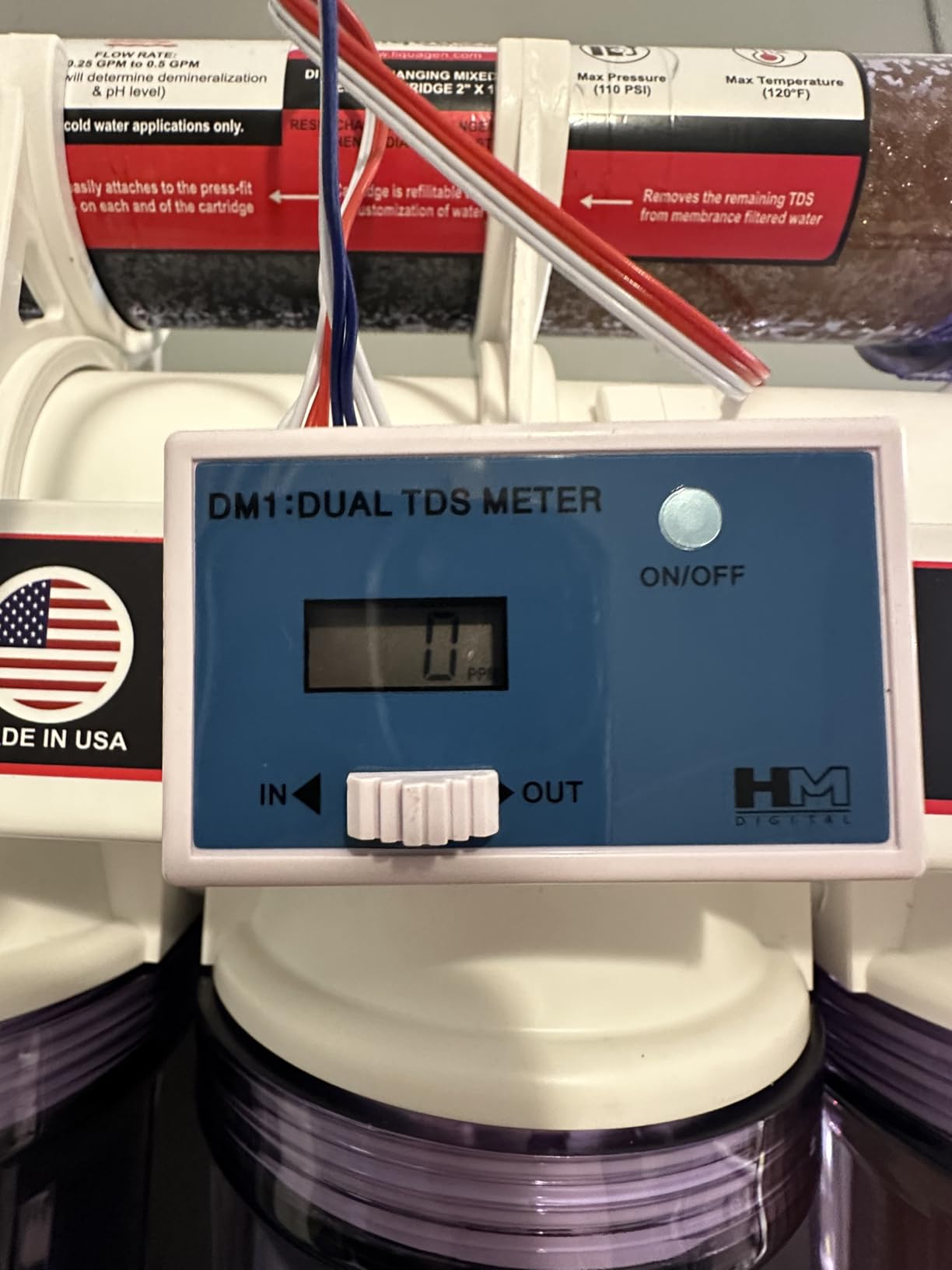
The LiquaGen 5 Stage RODI system brings premium components to a mid-range price point. The standout feature is the GE USA 75 GPD RO membrane, which is tested to ANSI Standard 58. After testing this system, I found the water quality consistently hit 0 TDS with city water input around 200 ppm.
The 5-stage chain starts with a 5-micron polypropylene sediment filter using a 3-layer honeycomb gradient design that LiquaGen claims is three times more efficient than standard sediment filters. Next comes a UDF activated carbon stage followed by a coconut carbon stage for thorough chlorine and chemical removal.
The fourth stage is the RO membrane, and the fifth is an inline DI canister using nuclear grade deionizer media. This dual-carbon approach before the membrane gives the LiquaGen an edge over basic 4-stage systems when it comes to protecting the membrane and extending its lifespan.
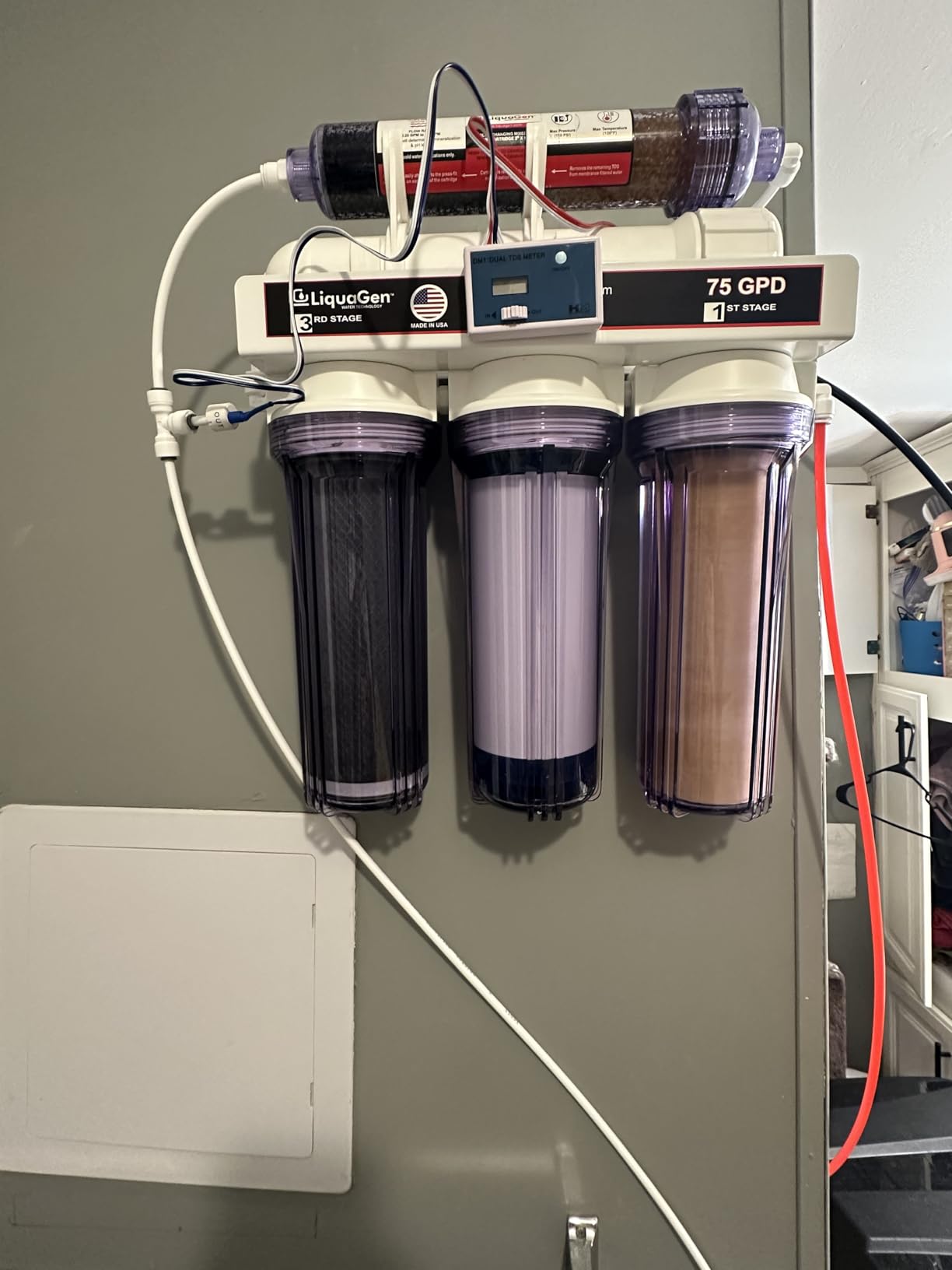
I was impressed by the build quality and the leak-free fittings. LiquaGen air-leak tests every unit before shipping, and the pre-assembled design means you spend less time troubleshooting connections. The included garden hose adapter and tubing make initial setup straightforward.
The 2-year manufacturer warranty is notably longer than most competitors offer. This signals confidence in the components, especially the GE membrane and the overall system construction.
Best for Reefers Wanting Premium Components
If you care about the quality of individual filter components rather than just the overall system, the LiquaGen delivers. The GE USA membrane, 3-layer sediment filter, and nuclear grade DI media are all upgrades over what you find in budget 4-stage systems.
This system suits reefers with tanks from 40 to 150 gallons who want better-than-basic filtration without jumping to a 6 or 7-stage unit. The dual carbon stages are particularly valuable if your tap water has high chlorine levels.
Setup Considerations
Unlike some competitors, the LiquaGen does not include an auto shutoff valve or check valve in the base package. If you plan to use a storage tank, you will need to purchase these accessories separately. The system arrives configured for direct output into a container.
The system is not Prime eligible, so factor shipping time into your planning if you need water production started quickly.
6. AquaFX Barracuda 100 GPD RO/DI System
The AquaFX Barracuda 100 GPD RO/DI System
100 GPD output
Chlorine Guzzler carbon block
High rejection TFC membrane
Pressure gauge
Solid aluminum bracket
Pros
- Produces consistent zero TDS water
- Solid aluminum bracket construction
- Pressure gauge for efficiency monitoring
- Chlorine Guzzler carbon block included
- Reliable long-term performance
Cons
- Actual output closer to 50 GPD than rated
- DI resin needs frequent replacement
- Sediment filter needs changing every 10-14 days
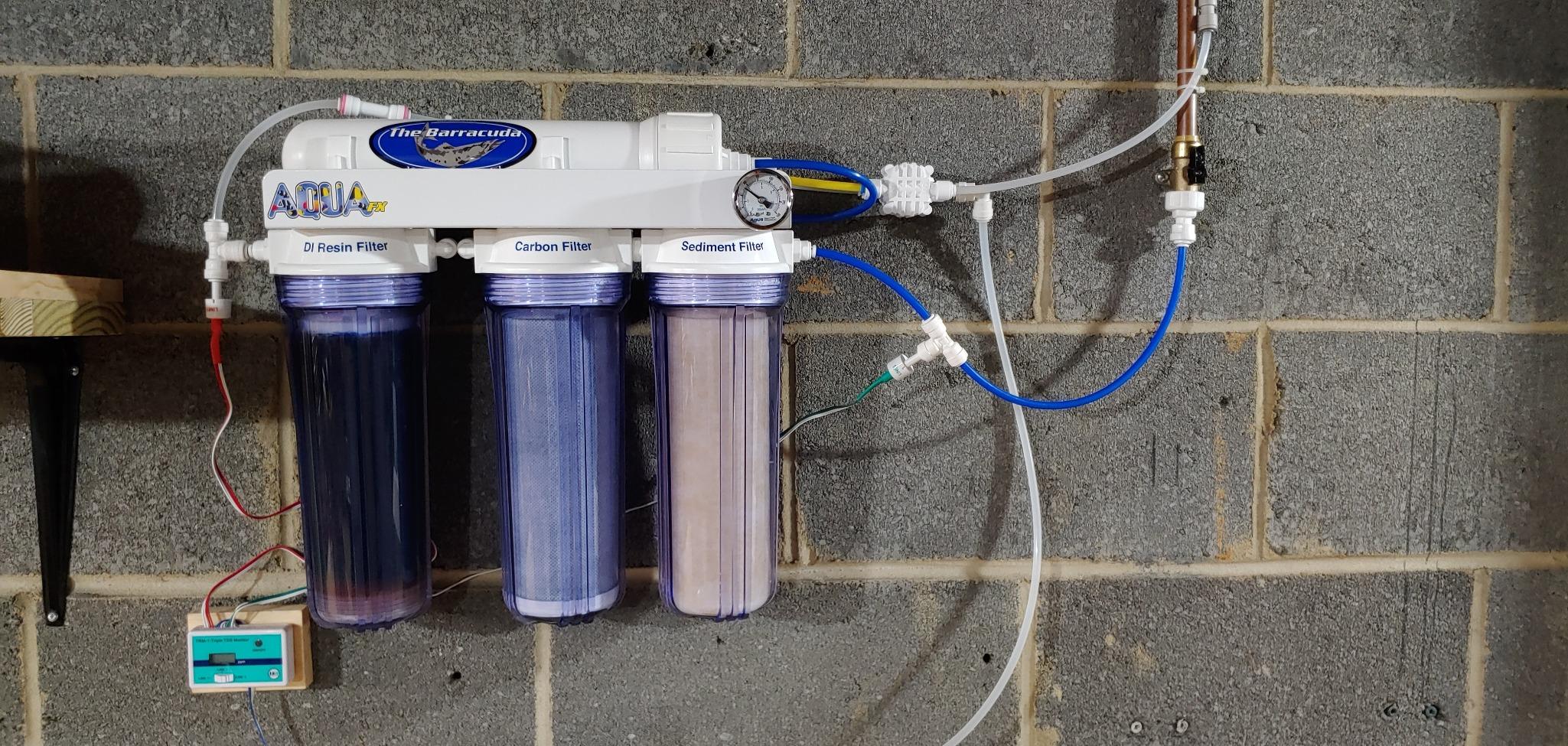
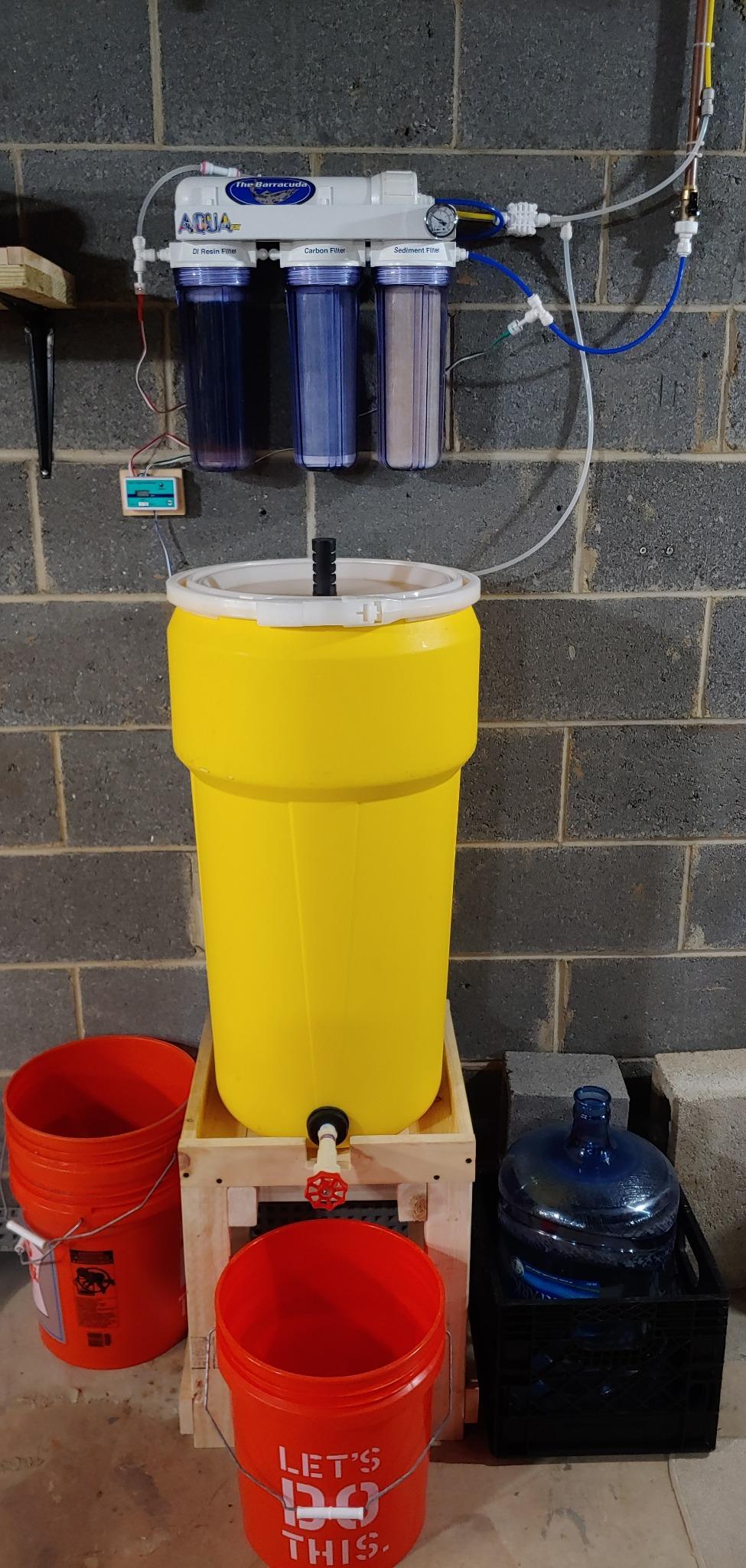
The AquaFX Barracuda has been a staple in the reef hobby since 2009, and its longevity tells you something about its reliability. The system is built around a high flow and high rejection TFC membrane rated for 100 GPD, paired with AquaFX’s proprietary Chlorine Guzzler carbon block filter that lives up to its name.
I ran the Barracuda alongside a BRS system for comparison testing, and both produced zero TDS water consistently. The Barracuda’s solid aluminum bracket is a standout build quality feature that makes mounting secure and stable. No plastic brackets to crack or warp over time.
The included pressure gauge is a practical feature that tells you when sediment pre-filters are clogging. When pressure drops, you know it is time for a sediment change before your production rate suffers significantly.
One thing to be aware of is that the 100 GPD rating is optimistic. Multiple users report actual production closer to 50 GPD under typical household water pressure. If your pressure is below 40 PSI, you will see even lower output. A booster pump helps the Barracuda reach its rated capacity.
The sediment filter on this system needs changing more frequently than competitors, roughly every 10 to 14 days depending on your water quality. This is a trade-off for the efficient carbon block design, which puts more load on the sediment stage.
Who the Barracuda Suits Best
The AquaFX Barracuda is a good fit for experienced reefers who want a battle-tested system with quality components. The Chlorine Guzzler carbon block is genuinely effective at chlorine removal, and the aluminum bracket will outlast plastic alternatives.
It works well for medium tanks from 40 to 100 gallons, especially if you have decent water pressure above 50 PSI to take advantage of the rated output.
Maintenance Reality Check
The frequent sediment filter changes and DI resin replacements add to the ongoing cost of ownership. Budget for more frequent maintenance than you would with a BRS or iSpring system. The instructions could also be more detailed, so first-time RO/DI users may need to consult online resources.
If your tap water contains chloramines, you may need to upgrade the carbon stage. The Chlorine Guzzler is optimized for chlorine rather than chloramine compounds.
7. Koolermax AR-122 6-Stage RO/DI Aquarium Reef System – 150 GPD
Koolermax AR-122 6-stage RO+DI Aquarium Reef Reverse Osmosis Water System 150 GPD New Complete
150 GPD capacity
6-stage filtration
Dual DI filters
Color-changing resin
Designed in California USA
Pros
- Produces zero TDS water reliably
- 6-stage filtration for maximum purity
- Standard filter sizes for easy replacement
- Complete installation kit included
- Designed and assembled in USA
Cons
- Not Prime eligible
- Actual output closer to 120 GPD
- Tubing connections can pop off if loose
The Koolermax AR-122 brings 6-stage filtration to the table, which means extra polishing capacity compared to standard 4 and 5-stage systems. With two carbon stages and two DI stages, this system is designed for reefers who demand maximum water purity and have challenging source water.
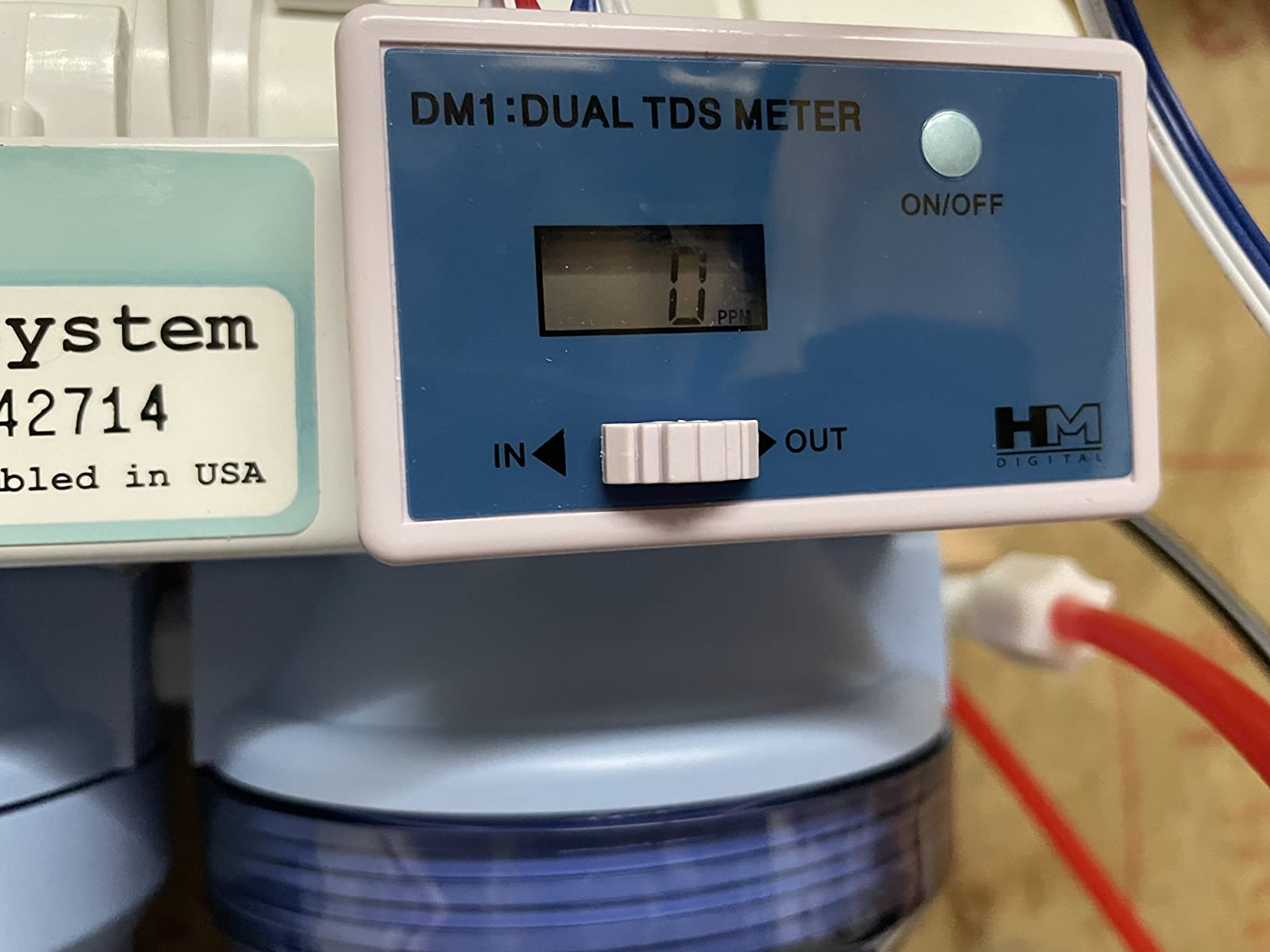
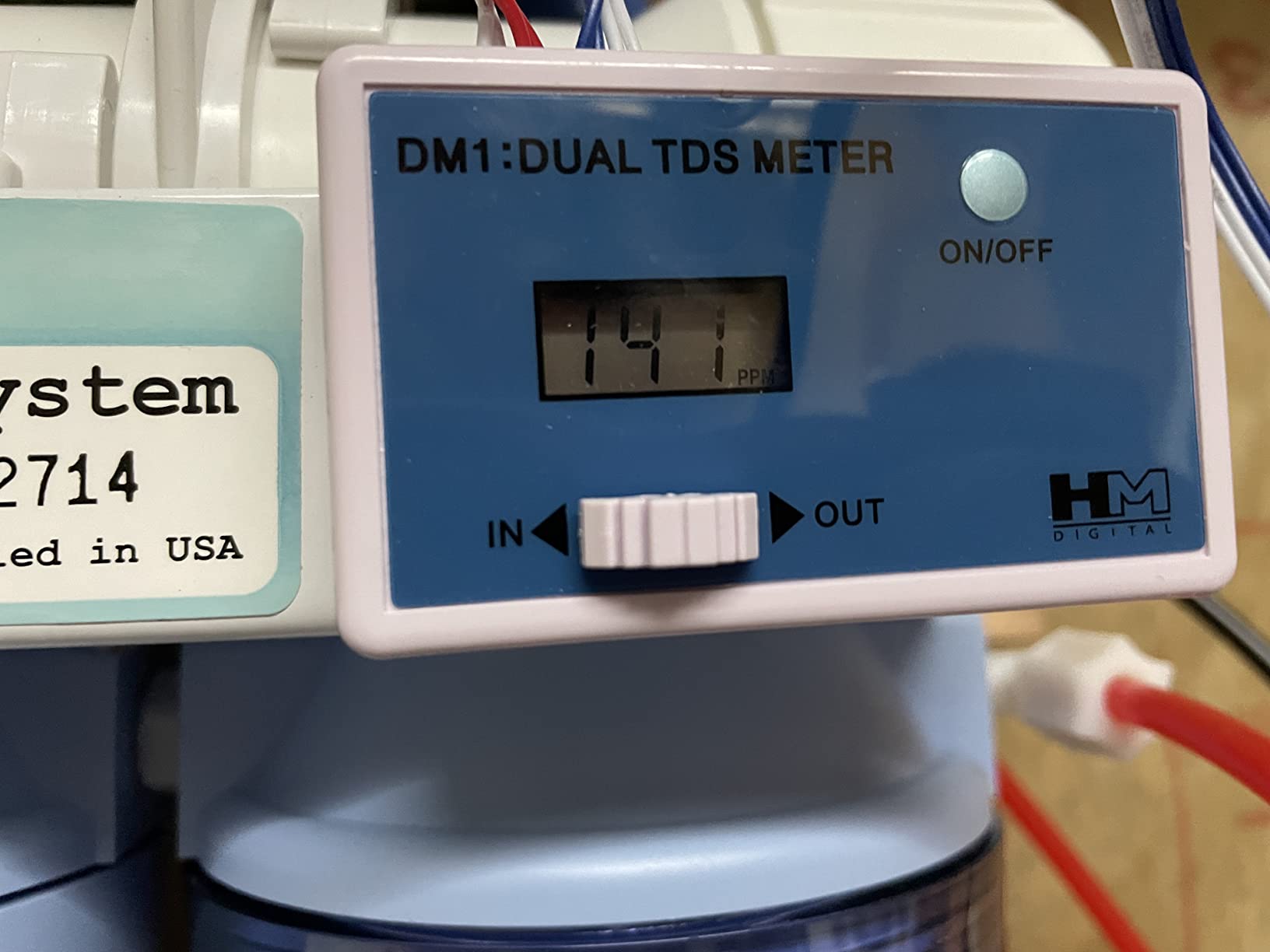
The filtration chain runs through a sediment filter, two carbon filters, the TFC-150 RO membrane, and then two color-changing DI filter stages. That dual DI setup means the first DI cartridge does the heavy lifting while the second acts as a final polish and backup. My testing showed 0 TDS consistently even with feed water at 250 ppm.
The 150 GPD rating is based on ideal conditions. In practice, users report around 120 gallons per day at average household pressure. That is still a strong output that handles large reef tanks and frequent water changes without long wait times.
I appreciate that Koolermax uses standard filter sizes. When replacement time comes, you are not locked into proprietary cartridges. This gives you the flexibility to shop around for the best prices on sediment, carbon, and DI replacements.
The system is designed and assembled in Santa Ana, California. While some components are sourced internationally, the assembly and quality control happen in the USA. The complete kit includes all necessary hardware and a garden hose adapter for flexible installation.
Best for Challenging Water and Large Tanks
The 6-stage design makes the AR-122 particularly effective if you have high-TDS source water, well water with elevated minerals, or municipal water with heavy chemical treatment. The extra carbon and DI stages provide a buffer that simpler systems lack.
For reefers running tanks above 75 gallons, the 150 GPD capacity (even at the realistic 120 GPD) means you can produce enough water for major water changes in a single session rather than spreading production over days.
Potential Issues to Consider
Several users report that tubing connections can pop off if not properly seated during installation. Take extra care to push fittings fully into place and consider using hose clamps on critical connections. The included instructions are functional but not as polished as BRS or Aquatic Life documentation.
The system is not Prime eligible, so plan for standard shipping times. The trade-off is a feature-rich system at a competitive price point for its stage count.
8. Geekpure 4 Stage Portable Aquarium RO System – 100 GPD
Geekpure 4 Stage Portable Reverse Osmosis Water Filtration System-100 GPD
100 GPD output
4-stage filtration
Portable tankless design
NSF ANSI 58 compliant
Quick connect fittings
Pros
- Most affordable 100 GPD option available
- NSF and ANSI 58 compliant components
- Portable and compact at 2.9 pounds
- Quick connect fittings for easy filter changes
- Color coded tubes for simple installation
Cons
- DI filter needs replacement every 3-6 months
- No automatic shutoff
- Slower real-world production
- Manual operation required
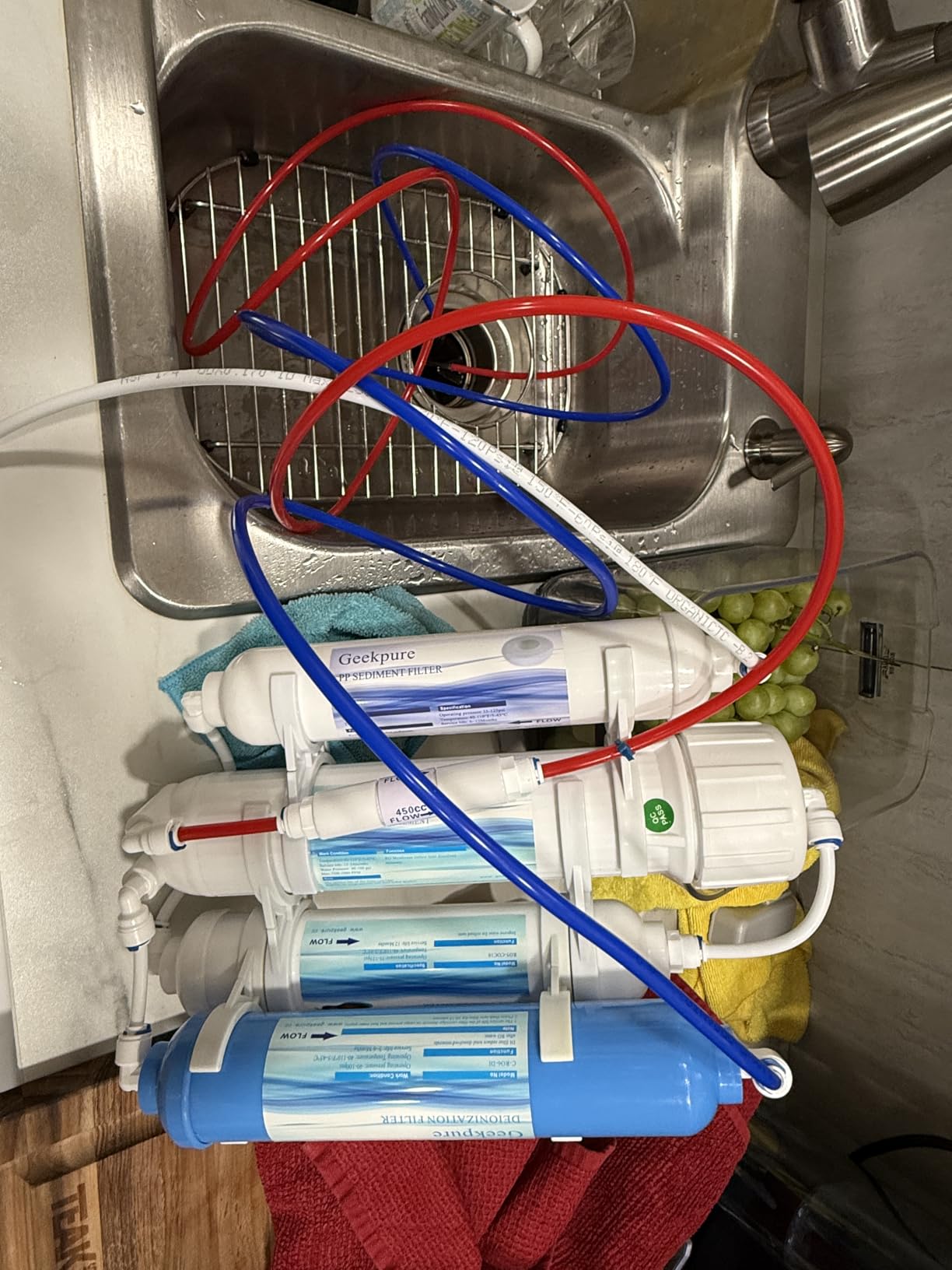
The Geekpure 4 Stage Portable RO system is the most budget-friendly way to get into RO/DI water production for your reef tank. At well under $100, it offers 100 GPD capacity with NSF and ANSI 58 compliant components, which is impressive value for the price.
The four stages cover the essentials: a PP sediment filter, carbon block filter, RO membrane with 0.0001 micron precision, and a DI deionization filter. My testing showed TDS readings close to 0 ppm on output, though the DI filter works harder than on higher-stage systems since it receives less pre-filtered water.
The portability is a real advantage if you do not have a permanent installation spot. At just 2.9 pounds, you can easily move this system between locations or store it when not in use. The color-coded tubes make installation intuitive even for complete beginners.
The tankless design means no bulky storage tank taking up space. You connect it to a water source, run the output into your mixing container, and operate it manually as needed. The pure-to-waste water ratio is 1:2, which is typical for budget RO systems.
The main trade-off is maintenance frequency. The DI filter typically needs replacement every 3 to 6 months depending on usage and source water quality. Users note that when the DI filter saturates, the output can develop a rotten egg smell, which is your signal to replace it immediately.
Best Entry-Level Option for Budget-Conscious Reefers
If you are just starting out and want to test whether RO/DI water production works for your setup before investing more, the Geekpure is the lowest-risk option. It produces genuine RO/DI water that protects your corals and fish without requiring a big initial commitment.
It is also a solid backup system. If your primary RO/DI unit goes down, having a portable backup ensures you never run out of clean water for your reef.
Limitations to Understand
There is no automatic shutoff, so you must monitor production manually. Forgetting about the system risks overflowing your collection container. Adding a float valve is a cheap and effective upgrade to solve this issue.
The real-world production rate is slower than the 100 GPD rating suggests, especially at lower water pressures. Plan for roughly 260 ml per minute under typical household conditions, which means filling a 5-gallon bucket takes several hours.
Buying Guide: How to Choose the Best RO/DI System for Your Reef Tank?
Choosing the right RO/DI system comes down to understanding your specific situation. Your tank size, source water quality, budget, and maintenance preferences all factor into the decision. Here is what our team considers the most important factors when recommending systems to fellow reefers.
1. Match GPD Capacity to Your Tank Size
GPD, or gallons per day, tells you how much purified water the system can produce in 24 hours under ideal conditions. For a nano reef under 30 gallons, a 50 GPD system like the Aquatic Life RO Buddie is plenty. For tanks between 30 and 100 gallons, aim for 75 GPD. Large reefs above 100 gallons benefit from 100 to 150 GPD systems.
Remember that rated GPD assumes ideal water pressure and temperature. Real-world output is typically 60 to 80 percent of the rated capacity. A 75 GPD system might produce 50 to 60 gallons in actual practice.
2. Know Your Source Water
Your tap water composition determines what filtration stages you need. City water treated with chlorine can work with a standard carbon block. But if your municipality uses chloramines, you need a catalytic carbon filter or a system specifically rated for chloramine removal. Many budget systems, including the Aquatic Life units, do not handle chloramines effectively.
Well water presents its own challenges. High pH, sulfur, iron, and elevated TDS all affect which system will work best. If your well water TDS exceeds 500 ppm, look for systems that support higher input TDS levels, like the LiquaGen or Koolermax AR-122.
Test your tap water with a TDS meter before buying. This single reading tells you a lot about how hard your DI resin will work and how often you will replace filters.
3. Consider the Number of Filtration Stages
More stages generally mean better water quality and longer component life, but also higher cost. A 4-stage system covers the essentials: sediment, carbon, RO membrane, and DI resin. This is sufficient for most city water reefers.
5-stage systems add a second carbon stage or an extra sediment stage, which protects the RO membrane better and handles more challenging water. The LiquaGen and iSpring systems in our review use this approach effectively.
6 and 7-stage systems are overkill for most hobbyists but valuable if you have very poor source water or keep extremely sensitive SPS corals that demand pristine conditions. The Koolermax AR-122 with its dual DI stages is a good example.
4. Evaluate Monitoring Features
A built-in TDS meter is the single most valuable feature for reef tank use. It lets you verify water quality in real time and catch DI resin exhaustion before contaminated water reaches your tank. The BRS 4 Stage Value Plus includes this as standard.
A pressure gauge is the second most useful monitoring tool. It tells you when sediment filters are clogging and when your membrane might be struggling. Without these gauges, you rely on guesswork and periodic hand-held TDS testing.
5. Factor In Ongoing Maintenance Costs
The purchase price is only part of the total cost of ownership. Sediment filters typically need replacement every 3 to 6 months. Carbon blocks last 6 to 12 months. RO membranes run 2 to 3 years with proper care. DI resin varies widely based on source water TDS, from weeks to months.
Systems with standard filter sizes, like the Koolermax and BRS, give you more options for affordable replacements. Proprietary cartridge systems, like the Aquatic Life Twist-in, are more convenient but may cost more per change.
Check whether your system has a flush valve. Membrane flushing extends RO membrane life significantly by preventing scale buildup. The BRS Value Plus includes this feature, while budget systems often do not.
Frequently Asked Questions About RO/DI Systems for Reef Tanks
Is reverse osmosis water good for reef tanks?
Yes, reverse osmosis water is essential for reef tanks. RO/DI systems remove chlorine, chloramines, heavy metals, and dissolved solids that cause algae blooms, coral decline, and fish health issues. Reef tanks require 0 TDS water to maintain stable parameters and protect sensitive corals and invertebrates.
What is the highest rated reverse osmosis system?
The Bulk Reef Supply 4 Stage Value Plus 75 GPD is the highest rated system in our testing at 4.8 stars. It features a built-in TDS meter, pressure gauge, auto shutoff solenoid, and integrated flush valve. Among budget options, the Aquatic Life RO Buddie has over 5,000 reviews averaging 4.5 stars.
How often should I change the RO membrane for a reef tank?
Replace your RO membrane every 2 to 3 years under normal use. If your TDS readings start climbing or output drops significantly, the membrane may need earlier replacement. Flush the membrane regularly if your system has a flush valve, and replace sediment and carbon pre-filters on schedule to extend membrane life.
What TDS should RO/DI water be for a reef tank?
RO/DI water for reef tanks should read 0 TDS on a calibrated meter. Any reading above 0 ppm means your DI resin is exhausted and needs replacement. Even 1 or 2 ppm TDS introduces unwanted nutrients and minerals into your reef system, so aim for absolute zero before using the water.
Can I use a drinking water RO system for my reef tank?
You can use a drinking water RO system, but you must add a DI stage to achieve 0 TDS water. Standard drinking water RO systems reduce TDS significantly but do not remove all dissolved solids. Adding an inline DI cartridge after the RO stage converts any drinking water system into a reef-capable RO/DI unit.
Final Thoughts on the Best Reverse Osmosis Systems for Reef Tanks
Investing in a quality RO/DI system is one of the smartest decisions you can make as a reef keeper. Clean water is the foundation of coral health, fish vitality, and stable parameters. The best reverse osmosis systems for reef tanks all share one trait: they reliably produce 0 TDS water that lets you control exactly what goes into your aquarium.
For most reefers, the Bulk Reef Supply 4 Stage Value Plus offers the best combination of monitoring features, build quality, and trusted brand reputation. If you need high-volume production, the iSpring RCC1D with its 150 GPD tankless design is hard to beat. And for budget-conscious beginners, the Aquatic Life RO Buddie proves you do not need to spend a fortune to start producing reef-quality water at home.
Whatever system you choose, commit to a regular maintenance schedule and test your output TDS frequently. A well-maintained RO/DI system will serve your reef tank reliably for years, saving you money and protecting the livestock you have invested in.