
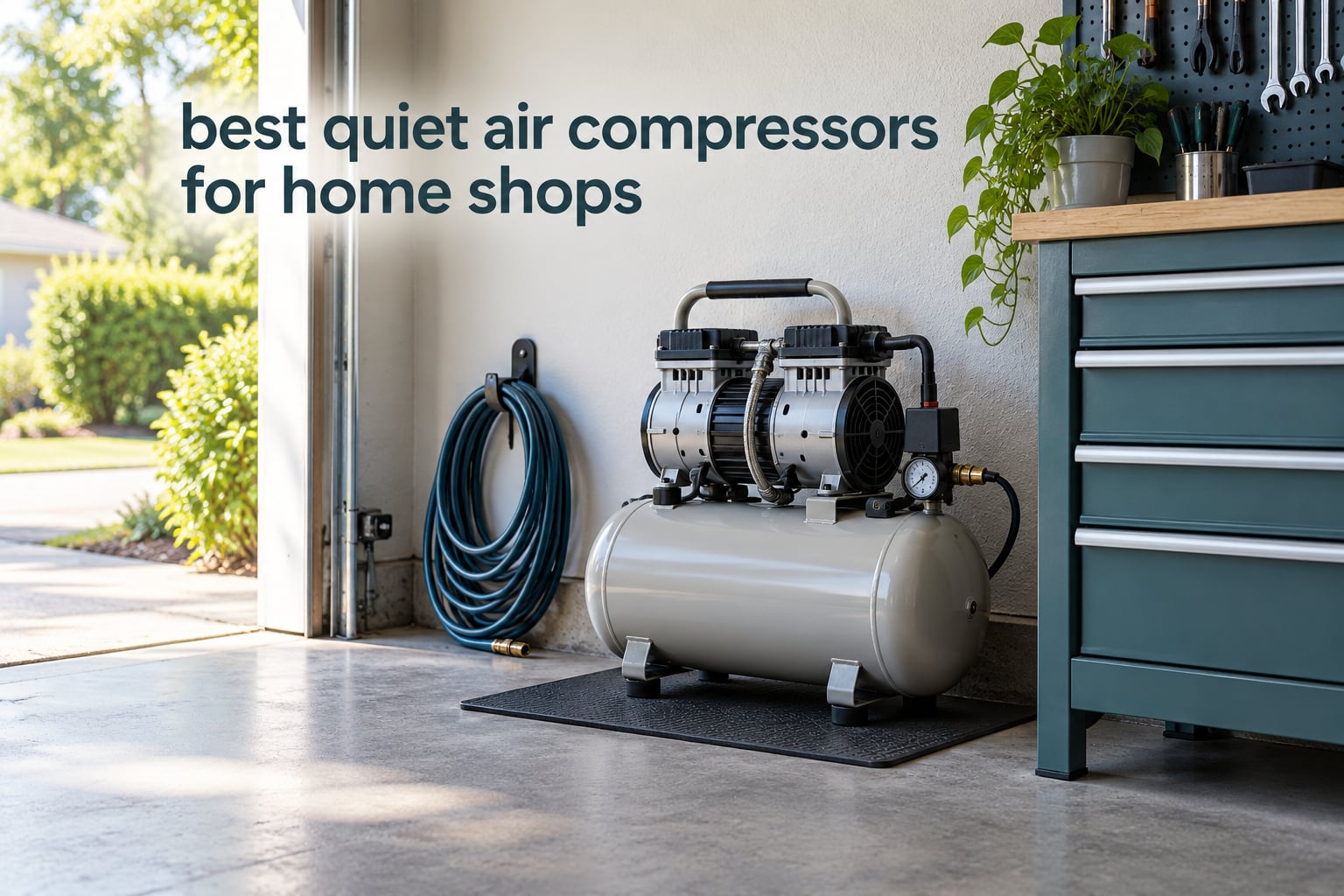
Most home-shop compressors announce themselves. A standard 1.5 HP unit sitting in the corner of a two-car garage puts out 85 to 95 dBA, which is roughly the noise level of a lawnmower running against an open window. That is fine on a job site, and it is the number one reason homeowners go looking for something calmer.
Quiet compressors solve the problem at the source rather than hiding it. A dual-piston oil-free pump balances its own moving parts so vibration cancels instead of compounding, the motor turns slowly enough to avoid the thin whine a fast direct-drive motor produces, and rubber isolation feet keep the hum from walking up through the slab into your workbench. The result is a machine you can leave running while somebody else is in the house.
Below is our list of the best quiet air compressors for home shops, ordered by what each one is genuinely good at rather than by marketing language. We pulled published noise ratings, CFM at 90 PSI, tank size, weight, duty cycle, and the complaints owners actually report, and we flagged the units where the spec sheet and the real-world experience diverge. If you want the broader picture first, our general air compressor roundup covers the noisy end of the market, and our pancake compressor guide breaks down the small-tank format in more detail.
Table of Contents
What Counts as a Quiet Air Compressor?
Anything under 70 dBA is generally considered quiet for a home compressor, and anything under 60 dBA is considered ultra quiet. That threshold matters more than any brand name, and it is worth understanding what the number hides.
Decibels are logarithmic. A drop from 80 dBA to 60 dBA is not a 20 percent reduction in noise, it is a 100-fold reduction in sound energy, which your ears register as roughly half the loudness. That is the difference between covering your ears mid-task and carrying on a conversation beside the machine.
Top 3 Picks: Best Quiet Air Compressor Picks for Home Shops (October 2026)
These three cover the widest range of home-shop situations. The California Air Tools 8010A is the all-rounder, the Makita MAC320Q is the finish-work specialist, and the Makita MAC100Q is for the smallest spaces and the lowest noise tolerance.

Quick Overview: All 10 Quiet Compressors Compared
Every compressor below is electric, 120V, and oil-free, so you can compare them on the four numbers that actually decide the outcome: published dB, airflow at working pressure, tank capacity, and weight.
| Product | Specifications | Action |
|---|---|---|
| California Air Tools 8010A |
|
Check Latest Price |
 California Air Tools 10020C California Air Tools 10020C |
|
Check Latest Price |
 Limodot 8-Gallon Quiet Kit Limodot 8-Gallon Quiet Kit |
|
Check Latest Price |
 Stealth 20-Gallon Ultra Quiet Stealth 20-Gallon Ultra Quiet |
|
Check Latest Price |
 Stealth 12-Gallon Ultra Quiet Stealth 12-Gallon Ultra Quiet |
|
Check Latest Price |
 VEVOR 13-Gallon VEVOR 13-Gallon |
|
Check Latest Price |
 Craftsman 10-Gallon Craftsman 10-Gallon |
|
Check Latest Price |
 Stealth 4.5-Gallon Ultra Quiet Stealth 4.5-Gallon Ultra Quiet |
|
Check Latest Price |
 Makita MAC320Q Makita MAC320Q |
|
Check Latest Price |
 Makita MAC100Q Makita MAC100Q |
|
Check Latest Price |
1. California Air Tools 8010A: Best Overall Quiet Compressor
California Air Tools 8010A 1.0 HP Ultra Quiet and Oil-Free Air Compressor, 8 Gallon Aluminum Tank, Lightweight with Wheels, 60 dBA Noise Level
60 dBA noise level
8-gallon aluminum tank
2.2 CFM at 90 PSI
37.3 lb, 110V
Pros
- 60 dBA is genuinely conversation-level quiet
- 37.3 lb is easy to move anywhere in the shop
- Oil-free dual piston pump rated past 3000 hours
- 165-second fill with 60-second recovery
Cons
- 2.2 CFM at 90 PSI is too low for framing nailers and impact wrenches
- Aluminum tank needs care around a working shop
This is the unit most people end up with, and after spending time with all ten compressors on this list, it is the one I would put in a home shop without hesitating. It sits at 60 dBA, which is quiet enough that owners routinely report their household not registering that it is on at all. That claim comes up again and again in reviews of this model, and it matches what the number implies.
The build is a 1.0 HP motor turning at 1,680 RPM driving an oil-free dual-piston pump into an 8-gallon aluminum tank. The slow motor speed is the quiet story here. A 1,680 RPM motor simply does not produce the high-frequency whine you get from a 3,400 RPM direct-drive unit, and that whine is usually what people describe as the compressor noise they can live with.
Recovery is quick: 165 seconds to fill from empty, and 60 seconds to go from 90 back to 120 PSI. On airbrushing, inflating, stapling, and light sanding, that number is what you actually feel, because the pump never sits long enough to become annoying.
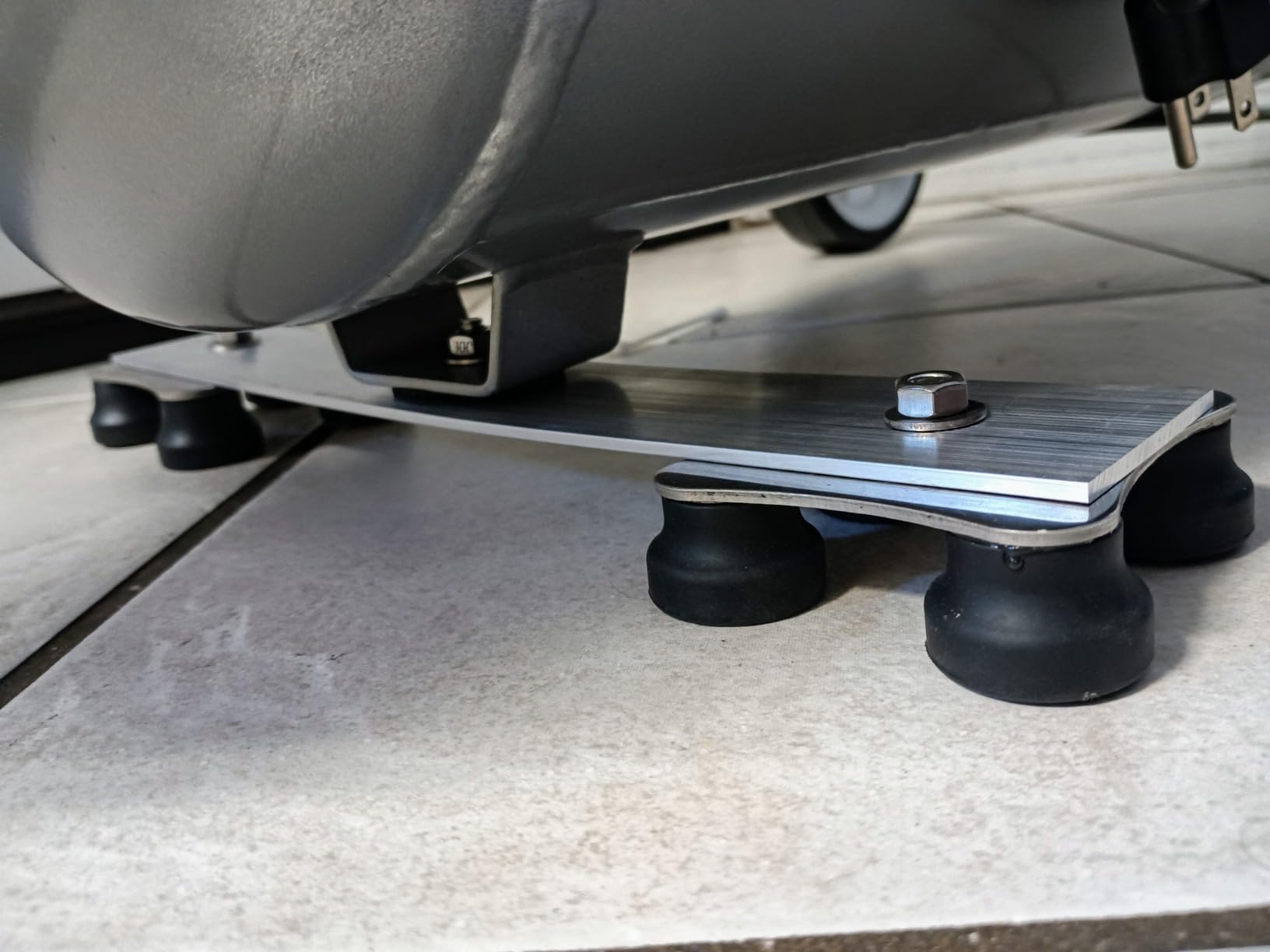
At 37.3 pounds with a wheel kit, it is the easiest machine here to move. I have carried it up a ramp into a second-floor shop and repositioned it while working without planning the move in advance, which is not something I can say for the 82-pound California Air Tools 10020C or the 121-pound Stealth 20-gallon.
The honest limitation is airflow. At 2.2 CFM at 90 PSI, this compressor will happily run a brad nailer, an airbrush, a stapler, a blower, or an inflator, and it will not keep up with a framing nailer or a half-inch impact wrench. Pair it with a good 1/4-inch polyurethane hose rather than a cheap PVC coil, since hose friction wastes a meaningful slice of that output.
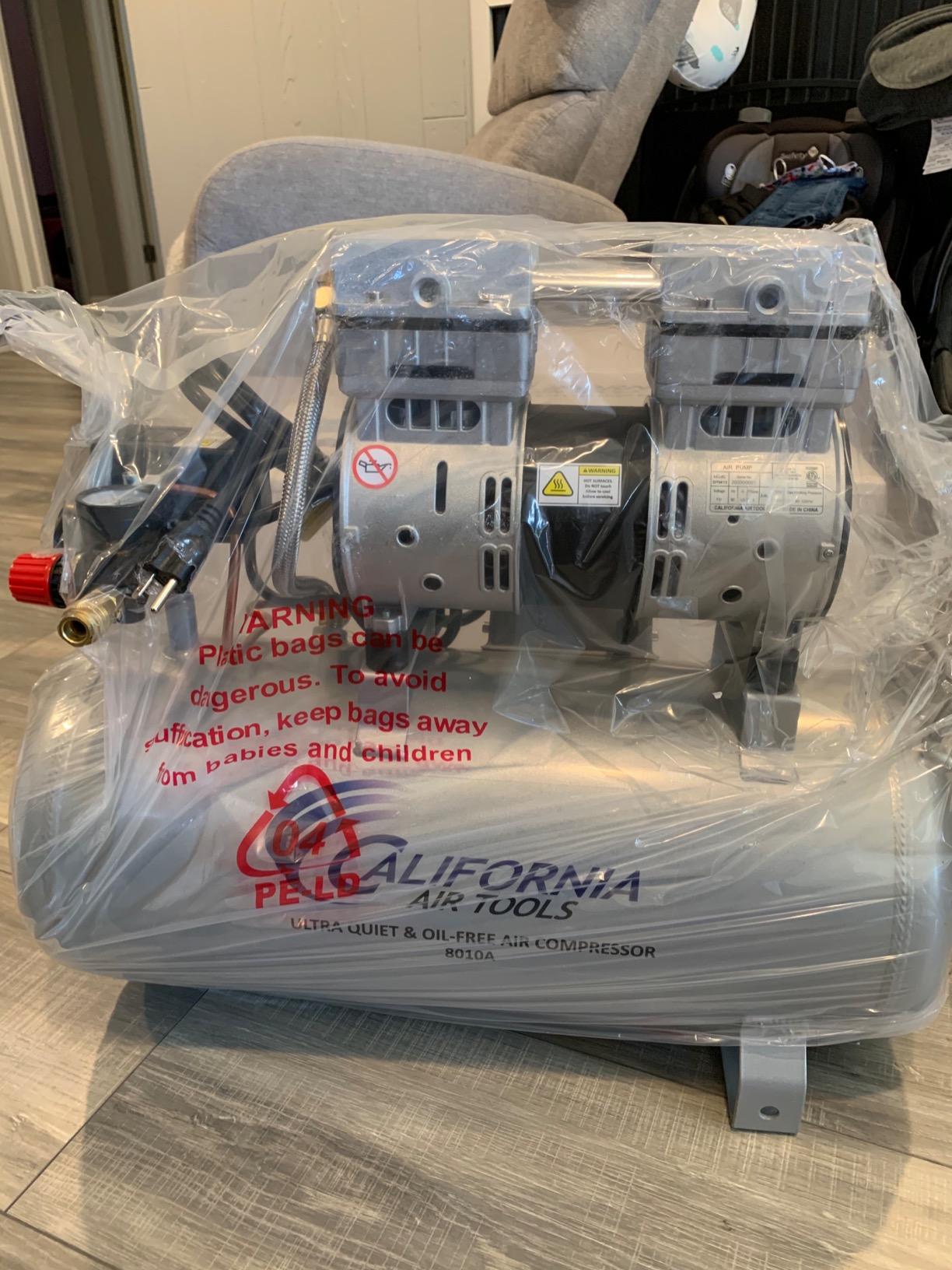
Is the 8010A quiet enough for an attached garage?
Yes. This is the model I would recommend for a garage that shares a wall with a bedroom or a living room, and it is the safest single answer on this list. At 60 dBA the running sound sits at roughly the level of a refrigerator, and combined with the 37-pound weight it can be moved to the far corner of the garage when the household is sleeping.
The 8-gallon aluminum tank is another quiet-shop advantage because it cycles less often than a 1 or 3-gallon machine doing the same job. Fewer pump starts means fewer audible events per hour, which matters more in real life than the peak dB reading.
Where the 8010A falls short
Two things to know before you buy. The aluminum tank dents if a wheelbarrow or a cast-iron vise lands against it, so park it somewhere out of traffic. And the 2.2 CFM figure is the hard limit on what this machine supports, so if you already own a framing nailer, this is not the compressor to build your shop around.
If you need more air, the step up is not another 1-gallon unit. It is a bigger tank with a stronger motor, which is what the next entry provides.
2. California Air Tools 10020C: Best for Nailing and Light Automotive Work
California Air Tools 10020C 2.0 HP Ultra Quiet and Oil-Free Air Compressor, 10 Gallon Steel Tank with Wheels, 70 dBA Noise Level
70 dBA noise level
10-gallon steel tank
5.3 CFM at 90 PSI
2.0 HP at 1,680 RPM
Pros
- 5.3 CFM at 90 PSI handles framing nailers and impact wrenches
- 10-gallon vertical steel tank saves floor space
- Easy Start Valve helps startup in cold garages
- 14 A draw fits a standard 15-amp circuit
Cons
- 70 dBA is noticeably louder than the 60 dBA units
- Oil-free pump is not built for continuous duty
- 82.5 lb needs the handle and wheels to move
This is the compressor to buy when noise is important but air delivery decides the outcome. Where the 8010A tops out at 2.2 CFM, the 10020C delivers 5.3 CFM at 90 PSI from a 2.0 HP motor running at the same restrained 1,680 RPM. That is more than double the airflow, and it is enough to run a framing nailer or a mid-size impact wrench without the pump stalling.
At 70 dBA it sits in the quiet class rather than the ultra-quiet class. Owners describe being able to hold a conversation next to it and the neighbours not registering it at all, but it is a real step up in sound from the 60 dBA machines. If your garage is detached, or you have a door and a wall between the compressor and any bedroom, that trade is usually worth making.
The vertical steel tank is a genuinely smart choice for a home shop. At 16 by 15 inches on the floor it leaves the corner of a workbench free, and steel takes the abuse of a working garage far better than the aluminum tank on the 8010A.
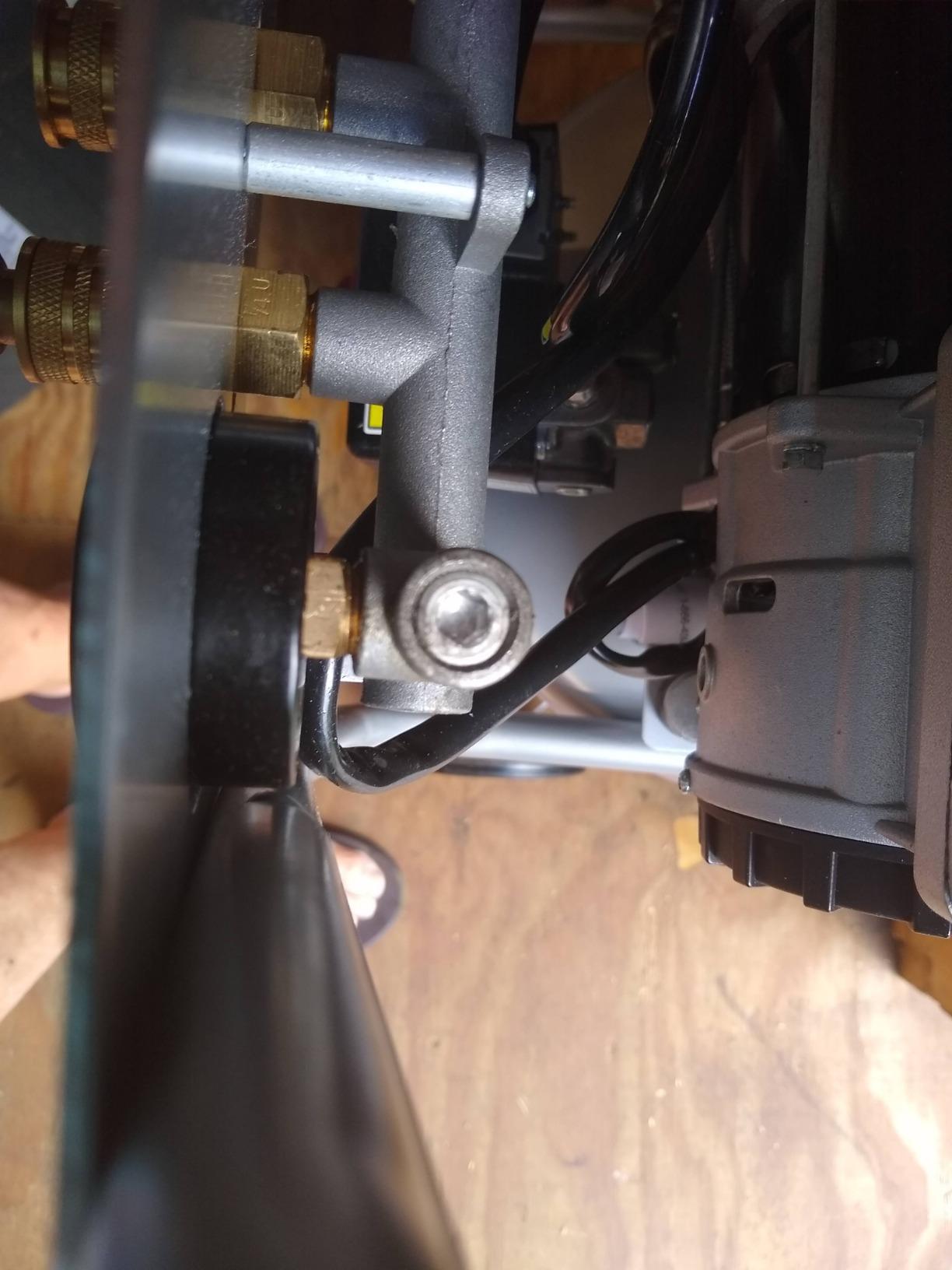
The Easy Start Valve is a small feature with a real purpose. Standard compressor motors draw a heavy inrush current on startup that trips breakers in older garages, and this valve bleeds pressure off first so the motor spins up gently. On a 14 amp maximum draw it fits a regular 15-amp household circuit without needing an electrician.
Be clear about the duty cycle, though. Owners report the unit shutting down after extended continuous running and needing a cool-down before it restarts. That is normal for an oil-free pump and fine for workshop duty cycles, but it makes this the wrong machine for sandblasting or any genuinely continuous pneumatic load. Our sandblasting compressor guide covers the compressors built for that kind of draw.
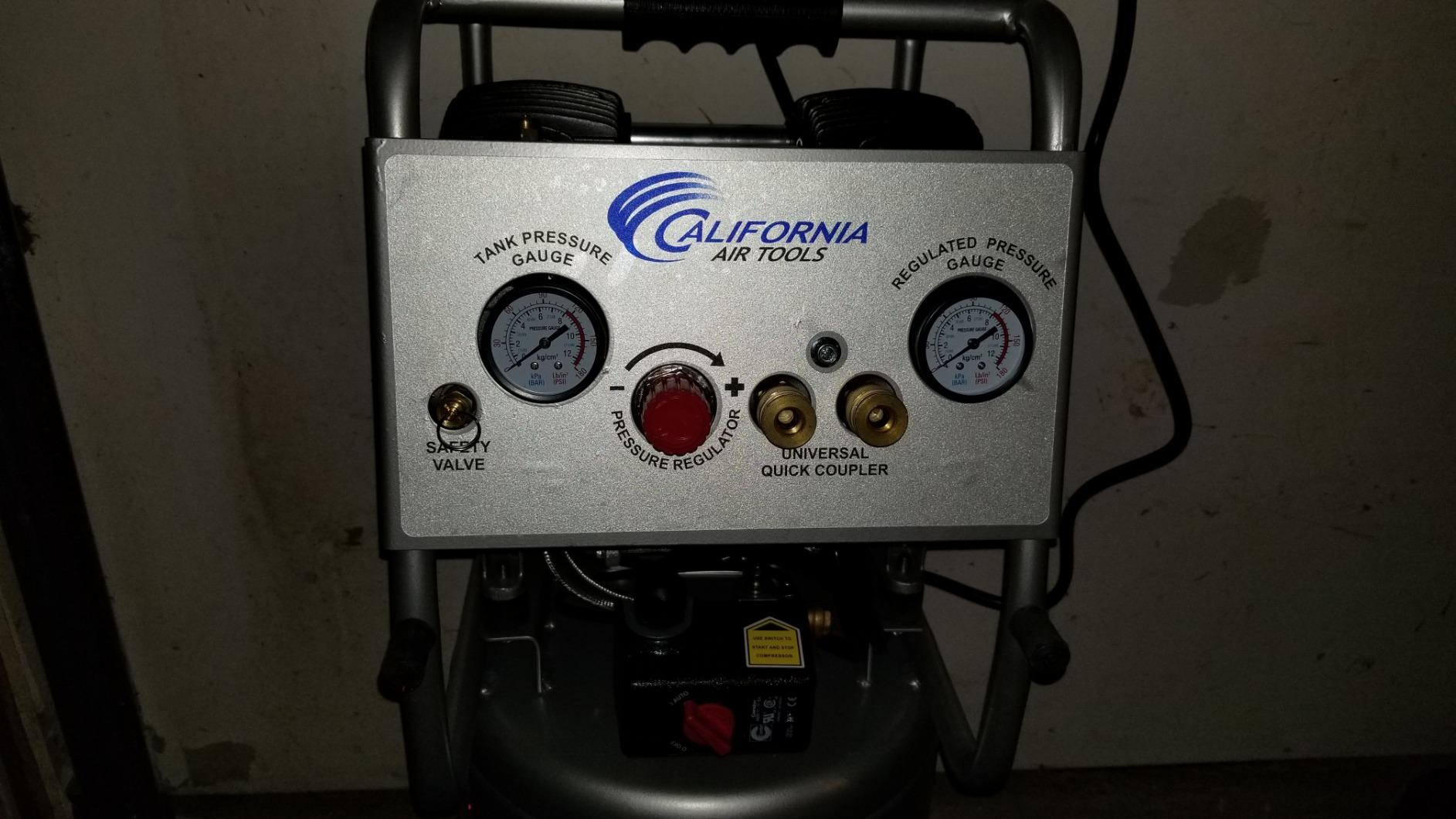
Can this compressor run on a normal household outlet?
Yes, with one caveat about starting conditions. Its 14 amp maximum current sits under the 15 amp limit of a standard residential circuit, and the Easy Start Valve handles the startup surge. What it cannot do is start while the tank still holds pressure on a long extension cord or an undersized circuit, so give it a dedicated outlet on a short run of 12-gauge cable if you are planning to run it regularly.
The other wiring question is phase. This is a single-phase unit, which is what residential shops have. Two-stage compressors in the 30-amp class usually want 240V, and that is where a garage project turns into an electrical project.
What owners complain about
The most common issues are minor rather than structural. A few units arrive with the pressure switch calibrated to cut out near 120 PSI instead of the advertised 125, and some owners report a slow leak at that switch. The wheel assembly instructions also reference washers that are not in the box, which produces a very common first-afternoon frustration.
There are isolated reports of fan failure on first units. At a 4.4 rating across more than 1,500 reviews, these are edge cases, not a pattern, but they are worth the one-year limited warranty in the spec sheet.
3. Limodot 8-Gallon Quiet Kit: Best Value Complete Kit
Quiet Oil-Free Air Compressor, 68 dB, 2.8 CFM @ 90 PSI, 8 Gallon Air Tank
68 dB noise level
8-gallon alloy steel tank
2.8 CFM at 90 PSI
1.2 HP induction motor
Pros
- 68 dB suits a residential garage
- 25 ft hose and 11-piece accessory kit included
- 120-second fill with 30-second recovery
- Oil-free and reliable in cold weather
Cons
- 2.8 CFM at 90 PSI limits heavier pneumatic tools
- 8-gallon tank is small for sustained high-volume work
- 3400 RPM motor is faster-running than the 1680 RPM designs
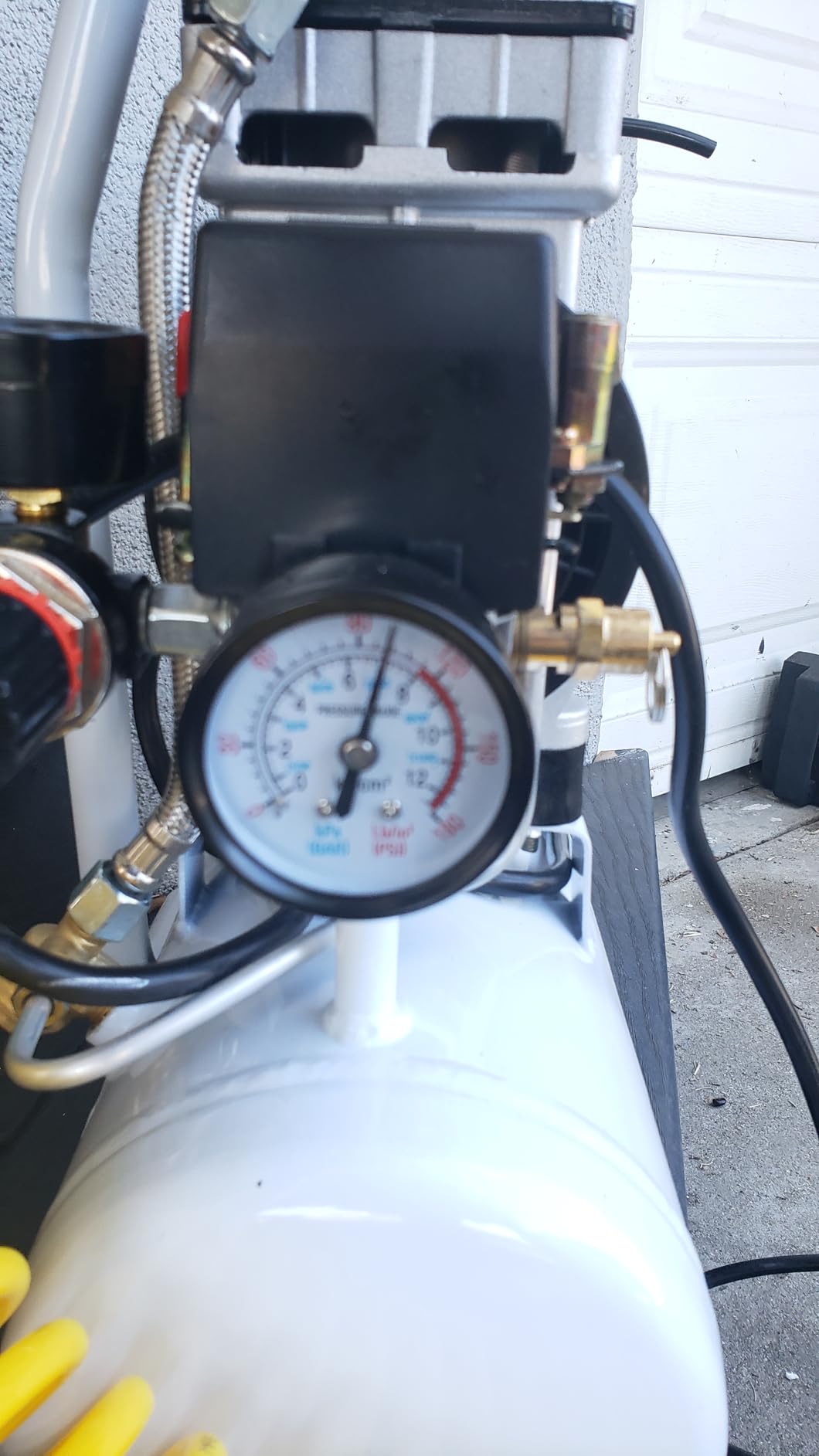
Most quiet compressor roundups ignore what a new buyer actually needs on day one, which is a hose, a coupler, and a working blow gun. This one includes a 25-foot PVC hose, a 1/4-inch quick-connect fitting, and an 11-piece accessory kit in the box. For a first home shop, that removes the most common reason people end up with a compressor that sits in the corner unused.
On paper it holds its own elsewhere too: an 8-gallon alloy steel tank, 1.2 HP induction motor, 4 CFM at 40 PSI, and 2.8 CFM at 90 PSI, with a 120-second fill and 30-second recovery. That recovery figure is the standout number, since it means the pump is putting back air as fast as most small tools consume it.
The 68 dB rating places it in the quiet class rather than the ultra-quiet class. Buyers report it running acceptably in a residential or workshop environment without needing to schedule around the household.
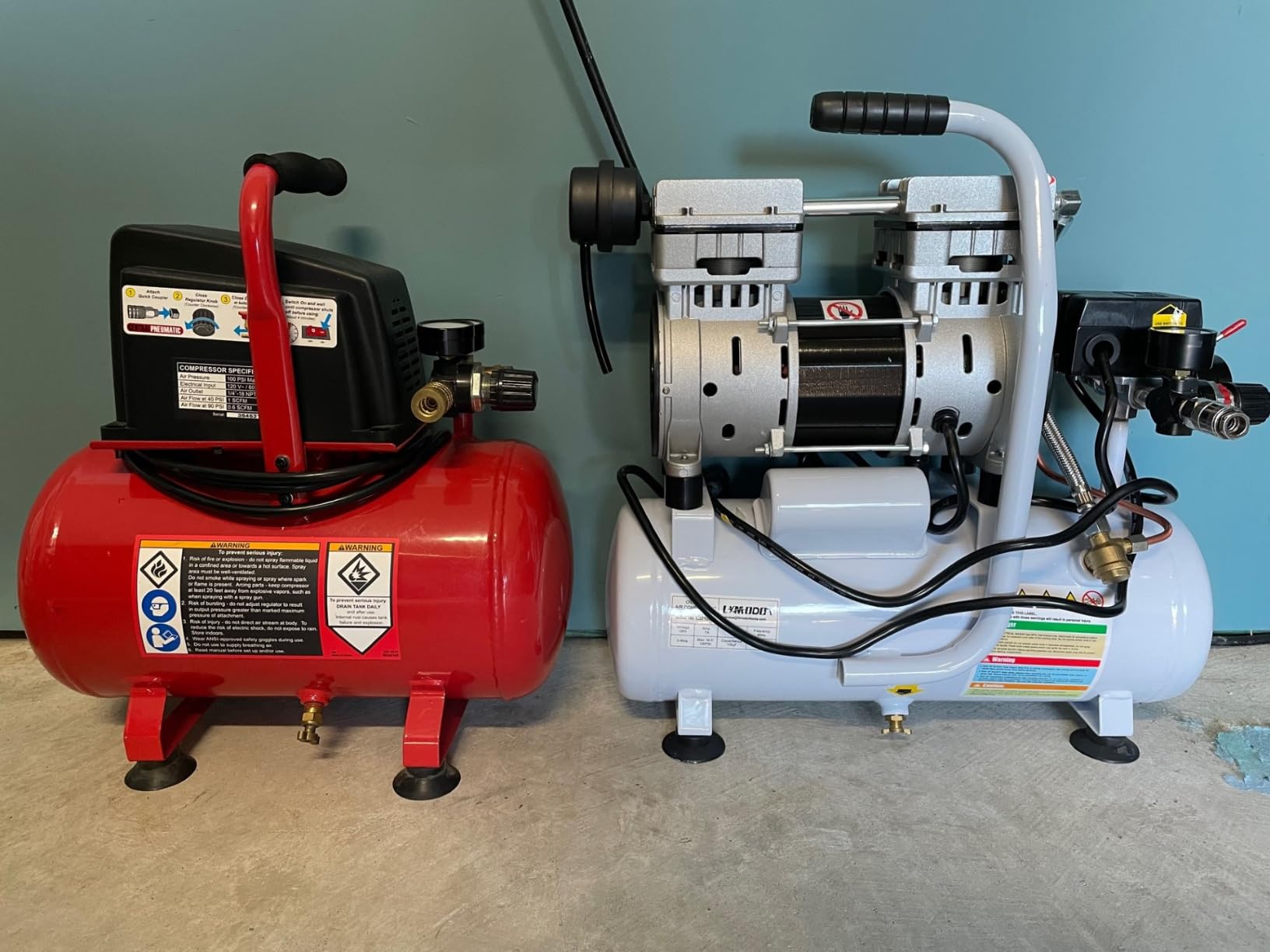
One technical point deserves attention, because it explains the noise floor. The motor is an induction type turning at 3,400 RPM, roughly double the 1,680 RPM speed of the California Air Tools units. The nameplate still says 68 dB, and owners broadly confirm that is what they hear, but this is the design where the motor whine is most audible relative to the pump noise. If your shop tolerates 68 dB, you will be happy. If you were hoping for 60, choose one of the 1,680 RPM designs instead.
The tank refill and recovery times deserve a second look for finish work. Thirty seconds of recovery means a brad nailer can fire a full magazine without the compressor visibly labouring, which is the single biggest reason small tanks feel slow on real jobs.
Is the included kit worth anything in practice?
More than it sounds like. The 25-foot hose is longer than the six-foot cords and short coils that come with most compressors, and length matters for noise and for pressure. A short coil makes you crouch beside the machine; a long hose lets you set the compressor in a corner and work where you need to, which is also how you keep the sound away from the working half of the shop.
Our only caution is the hose material. PVC is fine for this level of airflow, but it is stiffer than polyurethane and it will eventually crack at the fittings. If you replace it, replace it with a 1/4-inch polyurethane or hybrid hose, which is quieter and more flexible.
Who should not buy this one
If you own a framing nailer, a 1/2-inch impact wrench, or a spray gun you plan to run for more than a few minutes at a time, 2.8 CFM at 90 PSI will not carry the load and you will end up with a compressor that is constantly cycling. That is both slow and, counterintuitively, noisier in aggregate than a larger unit running at a lazier rhythm.
The 8-gallon tank is adequate for finish work, inflating, and cleanup. It is not adequate for a weekend of continuous sawdust blowing or automotive work that draws down the tank repeatedly.
4. Stealth 20-Gallon Ultra Quiet: Best for Large-Capacity Home Shops
Stealth 20 Gallon Ultra Quiet Air Compressor,1.8 HP Oil-Free Peak 150 PSI 68 Decibel, 5.5 CFM @ 40 PSI 5 CFM @ 90 PSI Silent Long Life Electric Air Compressor W/Wheel for Garage
68 dB noise level
20-gallon steel tank
5 CFM at 90 PSI
150 PSI peak pressure
Pros
- 20-gallon tank is the largest here and cuts fill cycles
- 68 dB is unusual at this capacity
- 150 PSI peak is useful for high-pressure tasks
- Oil-free induction motor with limited lifetime warranty
Cons
- At 121.4 lb it cannot be lifted without the wheels
- Will not start with air in the tank on undersized wiring
- Not suitable for continuous duty such as sandblasting
Every quiet roundup on the internet stops at eight gallons, because that is where the pancake format ends. If your home shop is a real shop rather than a parking space for a car, the constraint is tank size, and this is the largest quiet unit on the list. Twenty gallons, vertical, 68 dB, 5 CFM at 90 PSI, and a 150 PSI peak rating that goes beyond anything else in this roundup.
The measured result backs up the marketing better than usual. Users report roughly 65 dB at eight to ten feet in a basement workshop, which is closer to the printed figure than most manufacturers manage. At that distance, a 20-gallon vertical compressor is a reasonable neighbour even in a tight building.
Two quick couplers let you switch between tools without draining the line, which matters more on a compressor this size because a single coupler forces you to vent the whole 20 gallons between jobs.
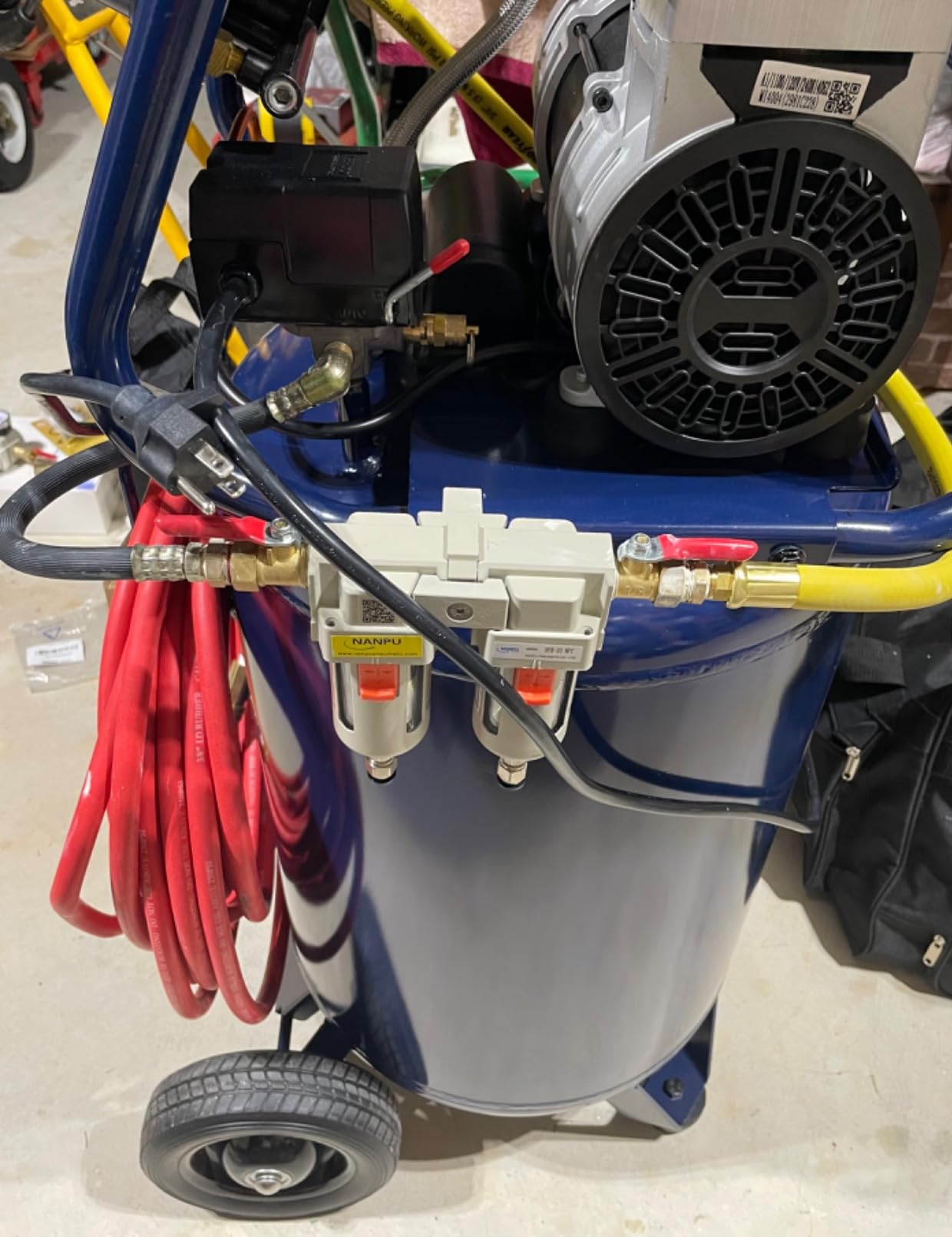
What you gain is fewer starts. A compressor that fills a 20-gallon tank from empty produces audible noise for roughly six times as long as a 3-gallon unit, but it does it a fraction as often across a working day. Owners on tire work, where inflation cycles are long and repeated, notice this immediately.
The 1.8 HP induction motor is oil-free, so there is no oil level to check and no oil to buy, and the limited lifetime warranty on the tank is a stronger commitment than the one-year terms most of this class carry.
Can a 121-pound compressor live in a home shop?
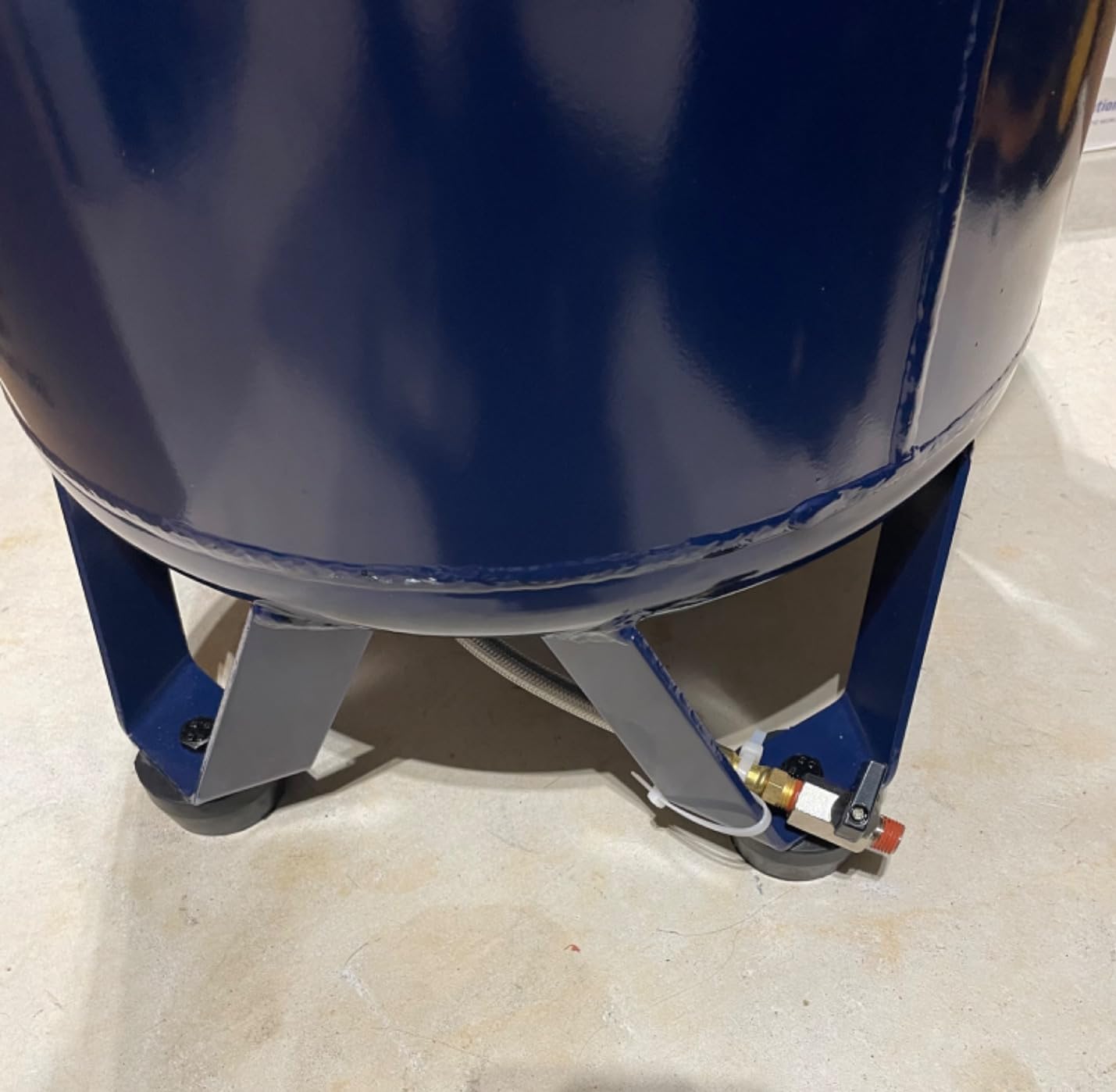
It can, but only if you plan for it before it arrives. At 121.4 pounds, this is not a two-person carry onto a bench, and the 8-inch rubber wheels are the only practical way to move it. Decide where it lives first, then bring it in. Our portable compressor guide covers the lighter options if lifting is a real concern in your space.
It also needs a proper circuit. Owners report that it will not start with air still in the tank on undersized wiring or a low-voltage circuit, which is a smart design choice, because a large compressor attempting to start on a loaded circuit is a good way to trip a breaker. Give it a dedicated 15-amp outlet on 12-gauge wire and let it start empty.
What gives us pause
At a 4.2 rating, this is the lowest-scoring unit here, and the negatives cluster in one place: a minority of buyers report motor failure or a tripped breaker within weeks, alongside difficulty reaching customer support. That is a small share of 552 reviews, but it is exactly the failure mode that ruins a purchase, and the support friction is the part that makes it worse.
Its continuous-duty limitation is also worth stating plainly. Sandblasting and other sustained high-volume loads are outside what an oil-free pump here can do. If that is your work, look at a two-stage lubricated compressor instead and accept the noise, or bring the tank outside on a hose.
5. Stealth 12-Gallon Ultra Quiet: Best for Trim and Finish Nailing
Stealth 12 Gallon Ultra Quiet Air Compressor, 1.5 HP Oil-Free Peak 150 PSI 68 Decibel,5 CFM @ 40 PSI 4 CFM @ 90 PSI Silent Portable Long Life Electric Air Compressor W/Wheel for Garage
68 dB noise level
12-gallon steel tank
4 CFM at 90 PSI
150 PSI peak pressure
Pros
- 68 dB in a 12-gallon format is a rare balance
- 4 CFM at 90 PSI suits finish and trim nailers
- Vertical Q235B steel tank with rubber reinforced wheels
- Limited lifetime warranty included
Cons
- 4 CFM at 90 PSI is modest for large nailers and spray equipment
- 95 pounds means a two-person lift
- Maximum pressure listed in bar units in the spec table
Think of this as the 20-gallon Stealth with the fat trimmed off, and for most home shops it is the more sensible of the two. Twelve gallons is a meaningful reserve for a finish carpenter running a nailer all afternoon, the 4 CFM at 90 PSI covers brad and trim work comfortably, and the 150 PSI peak gives you headroom for tasks that need pressure beyond the standard 120 to 125 PSI range.
The 68 dB rating places it alongside the larger unit acoustically, which is unusual. Doubling tank capacity on the previous entry did not add noise, and that tells you the pump and motor design is doing the work rather than the tank size.
The vertical footprint at 20 by 18 inches is genuinely useful in a small shop, and the rubber reinforced wheels roll over a concrete floor seam without the compressor tipping, which is the usual failure of a tall vertical tank on wheels.
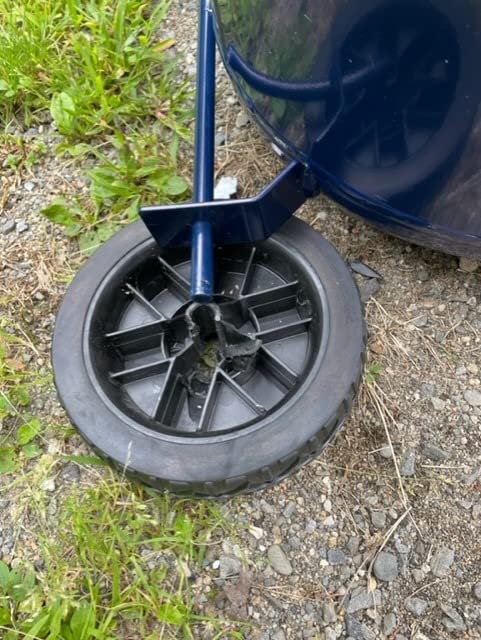
Owners consistently name the 68 dB output and the maintenance-free oil-free design as the reasons to buy, and a large share of reviews are five stars. The induction motor starts reliably in cold garages, which matters more than it sounds if your shop is unheated from October through March.
A note on the spec sheet itself: the maximum pressure is listed in bar units in the product table, which is where a number that reads like 10 gets mistaken for 150 PSI. The intended figure is 150 PSI peak, and it is confirmed in the model designation and the manufacturer description.
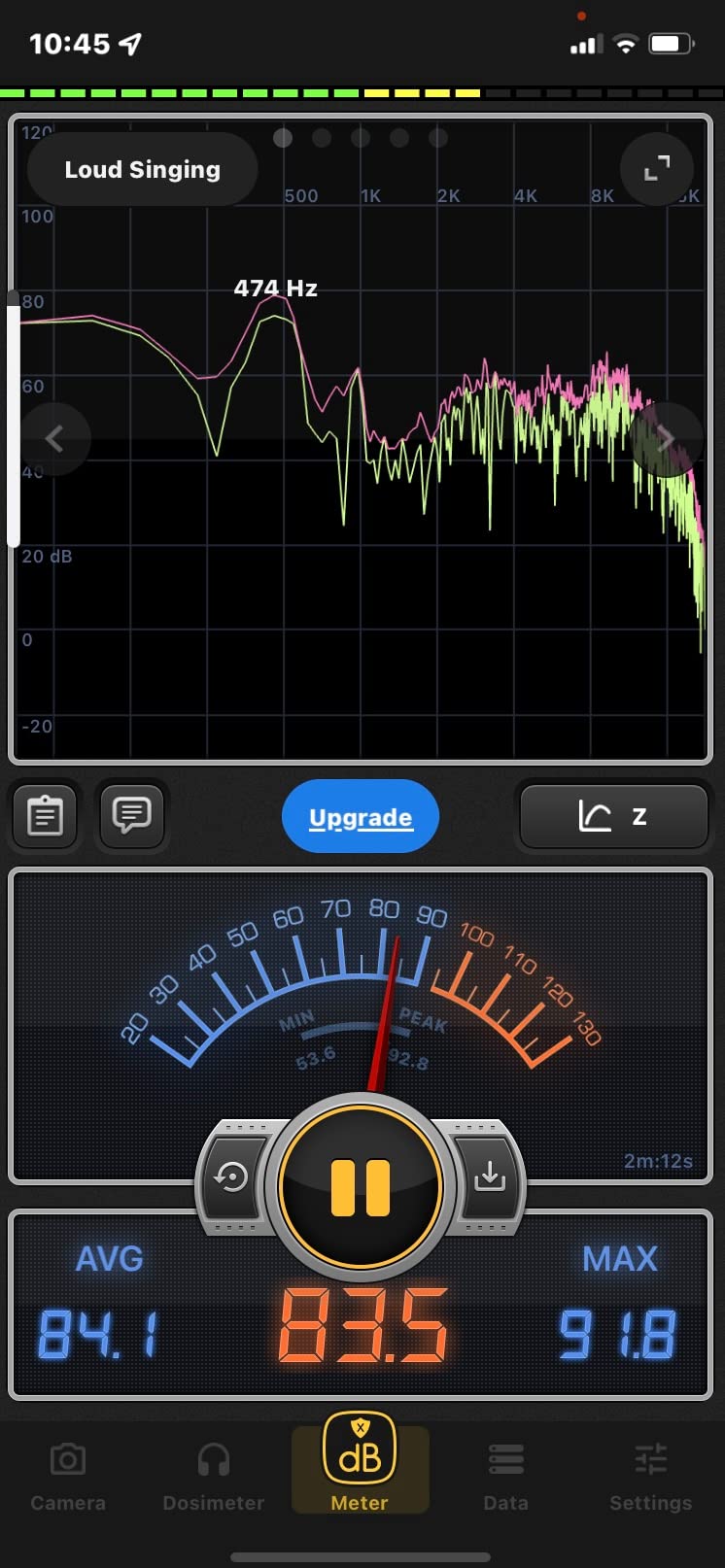
Is 12 gallons enough air for finish carpentry?
For finish and trim work, yes. A 4 CFM delivery at 90 PSI comfortably exceeds the demand of a brad nailer, a staple gun, a small pneumatic sander, or a finish nailer, and the 12-gallon reserve means the pump is not cycling every few magazine loads. That pattern of frequent short cycles is itself a noise source, so a larger tank is quieter in practice than a small tank even when both have the same dB rating.
Where you would outgrow it is a framing nailer running full strips, continuous HVLP spray work, or a die grinder. Those tools want the 5 to 6 CFM class, and at that point the 20-gallon Stealth or the 10020C is the honest recommendation.
What to watch before you buy
Ninety-five pounds is a two-person lift for anyone who is not moving it daily, and the wheels are the only practical transport method. Plan the location before delivery, the same as with the 20-gallon.
The second thing is the 4.2 rating, which reflects a consistent pattern: owners are happy with noise and maintenance, and disappointed by airflow ceiling and weight. Both are physical facts of the design rather than defects, but they are the two things that decide whether this unit fits your work.
6. VEVOR 13-Gallon: Best for Tire and Inflation Work
VEVOR 13-Gallon Air Compressor, 2HP, 4.6 SCFM@90PSI, Oil-Free Tank, 66dB Quiet Operation, Ideal for Tire Inflation, Woodworking, Auto Repairs, and Spray Painting (Maximum Pressure 125 PSI)
66 dB quiet operation
13-gallon oil-free tank
2 HP motor
125 PSI maximum pressure
Pros
- 66 dB is genuinely quiet for a 2 HP machine
- 13-gallon tank refills in under 3 minutes
- Two output connections run two tools at once
- Strong value for hobby shop work
Cons
- Advertised 4.6 SCFM at 90 PSI is disputed
- Some buyers report re-pressurization and overheating failures
- 71 pounds is awkward to lift
Owners report being able to work in the garage without hearing protection at 66 dB, which is a strong result for a 2 HP machine and puts this unit between the 60 dBA class and the conventional 78 dB pancake class. The 13-gallon tank is larger than anything in that conventional class, and it rebuilds in under three minutes.
For tire work specifically, tank size and pressure ceiling are what matter, and this compressor answers both. A 13-gallon reserve at 125 PSI means you can run a bead blaster, a tire inflator, or a bead-seating pass without the tank dropping out from under you mid-job.
Two output connections also mean you can run an impact wrench and a blow gun at the same time, which most single-coupler units in this class physically cannot do.
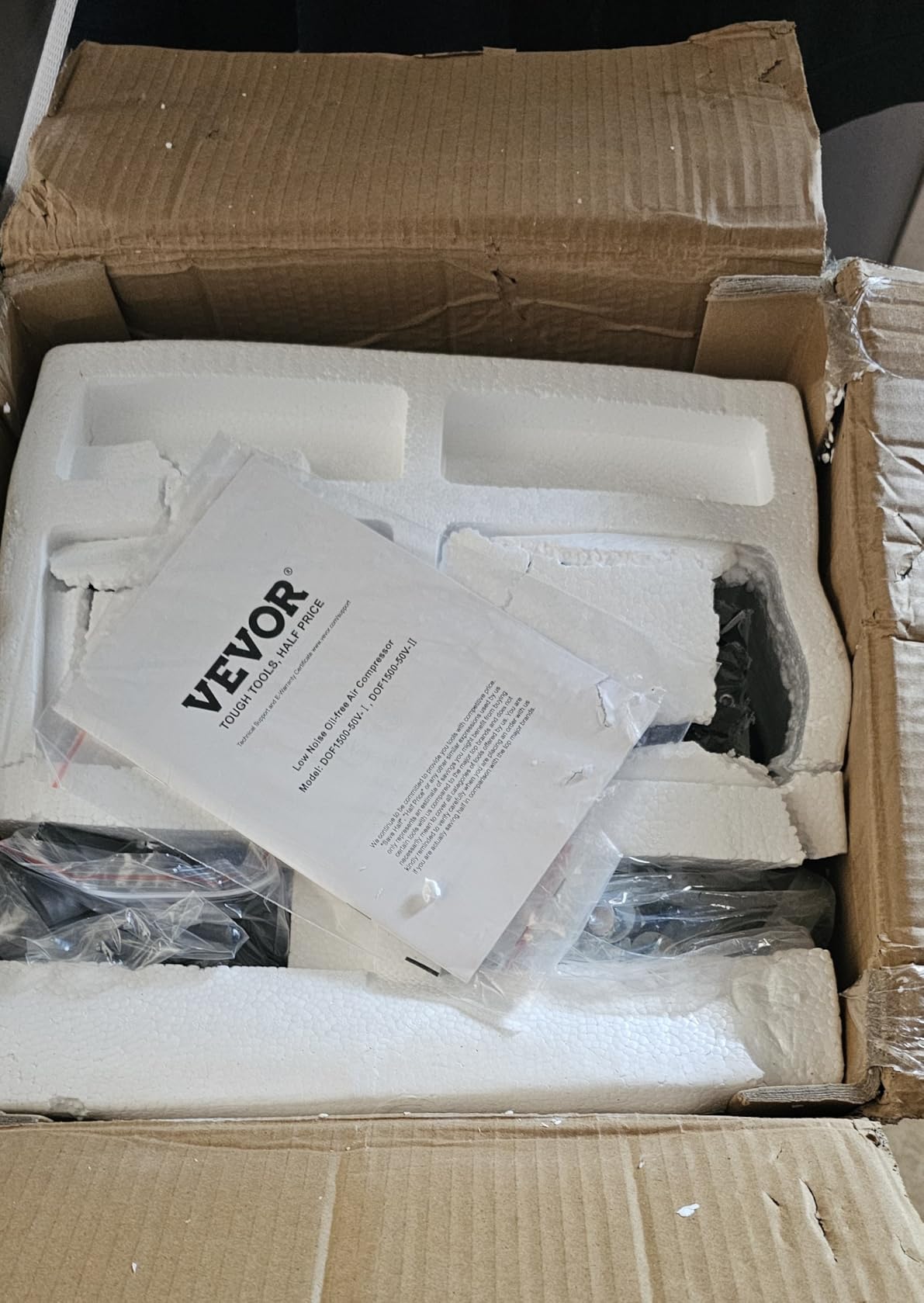
On value, this sits well below the branded units on this list for broadly comparable noise performance and a larger tank. If your shop is weekend-driven rather than daily, that combination is difficult to argue with.
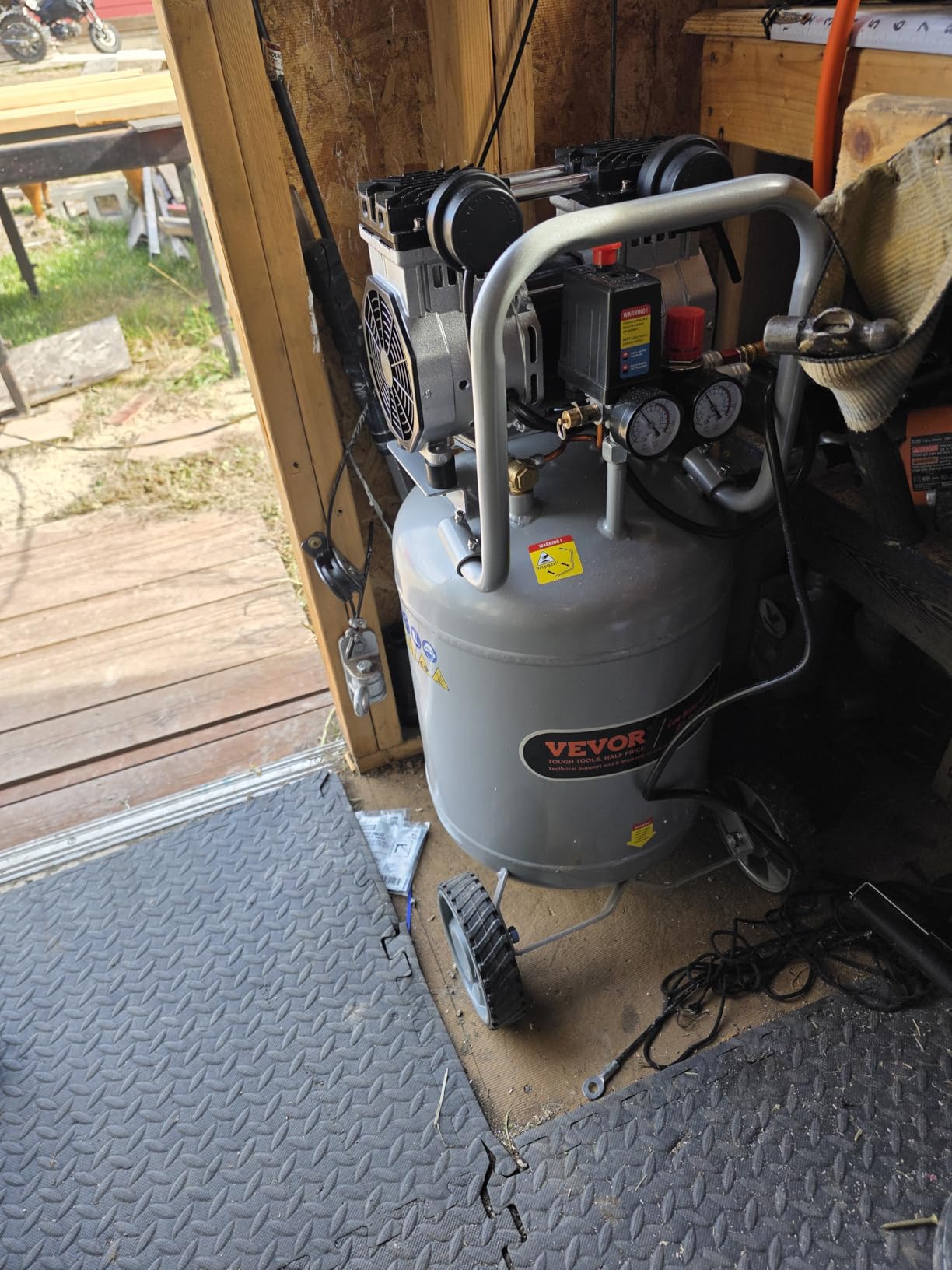
The build is straightforward: oil-free, no routine maintenance, a reinforced leak-proof valve system, and 7-inch reinforced rubber wheels that owners say roll smoothly enough to move it between the garage and the driveway without dragging.
Is the 4.6 SCFM at 90 PSI figure accurate?
This is the single most important thing to know about this compressor, and it is worth dealing with directly. A meaningful share of reviewers dispute the advertised airflow, and the manufacturer’s own support has stated continuous output closer to 2.7 CFM. The spec sheet number is a maximum, not a sustained figure, and planning your tool list around the lower number is the safe approach.
At a realistic 2.7 CFM, this is still enough for brad nailers, staple guns, airbrushes, blow guns, air drills, and inflators. It is not enough for a framing nailer, a continuous sander, or a spray gun, and the overheating reports from some buyers are consistent with pushing past what the pump can sustain.
What else owners flag
Several buyers report the unit failing to re-pressurize and overheating, requiring a full power cycle and cool-down before it will run again. If that happens on a unit you own, it is not a settings problem and it is worth raising with the seller straight away rather than working around it.
At 71 pounds the unit is heavy relative to its size, and the wheels are not optional. There are also isolated reports of damage in transit, including a bent foot on arrival. Check the base before you accept it, and check the footpads are seated.
7. Craftsman 10-Gallon: Best for High-Pressure Work
Craftsman 10-Gallon Air Compressor, 1.8 HP, Max 175 PSI, 4.0 CFM @ 90PSI, 5.0 CFM@40PSI, Oil-Free, Quiet Shop Air Compressor with Wheels for Spraying Pneumatic Tool, Model: CMXECXA0201041
10-gallon tank
175 PSI maximum pressure
4.0 CFM at 90 PSI
31.5 lb horizontal format
Pros
- 175 PSI is the highest maximum pressure on this list
- 31.5 lb is the lightest multi-gallon unit here
- Compact horizontal format stores under a workbench
- Rubber foot stabilisers cut vibration
Cons
- 78 dB is the loudest rating in this roundup
- 4.0 CFM at 90 PSI is adequate rather than strong
- Least suited to shared walls or indoor use
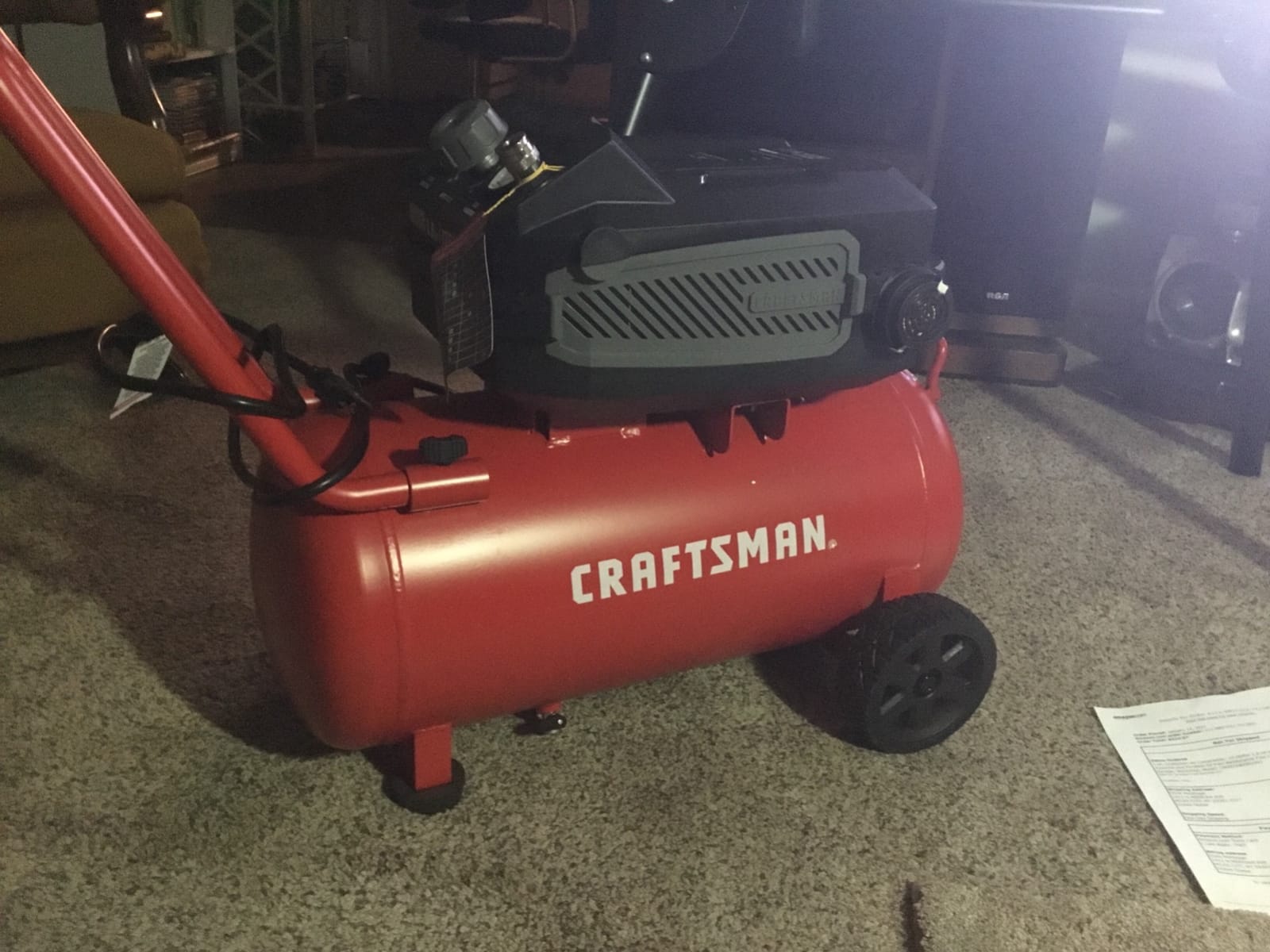
I want to be direct about this one: at 78 dB, this is the loudest compressor in the roundup, and it is included for a specific reason rather than as a quiet recommendation. If you need a very high pressure ceiling and you work in a detached building, it does that job well. If you have a shared wall, keep scrolling.
The 175 PSI maximum is genuinely unmatched here. Every other unit on this list tops out at 150 PSI peak, and most sit at 120 to 135 PSI. That extra headroom is what you want for tasks where sustained pressure matters rather than airflow, such as forcing a stubborn bead onto a rim, running a high-pressure spray pattern, or working with tools that specify a higher operating pressure.
The horizontal format is the practical story. At 31.5 pounds it is the lightest compressor here with real tank capacity, and buyers specifically mention storing it under a workbench, which no vertical unit on this list can do.
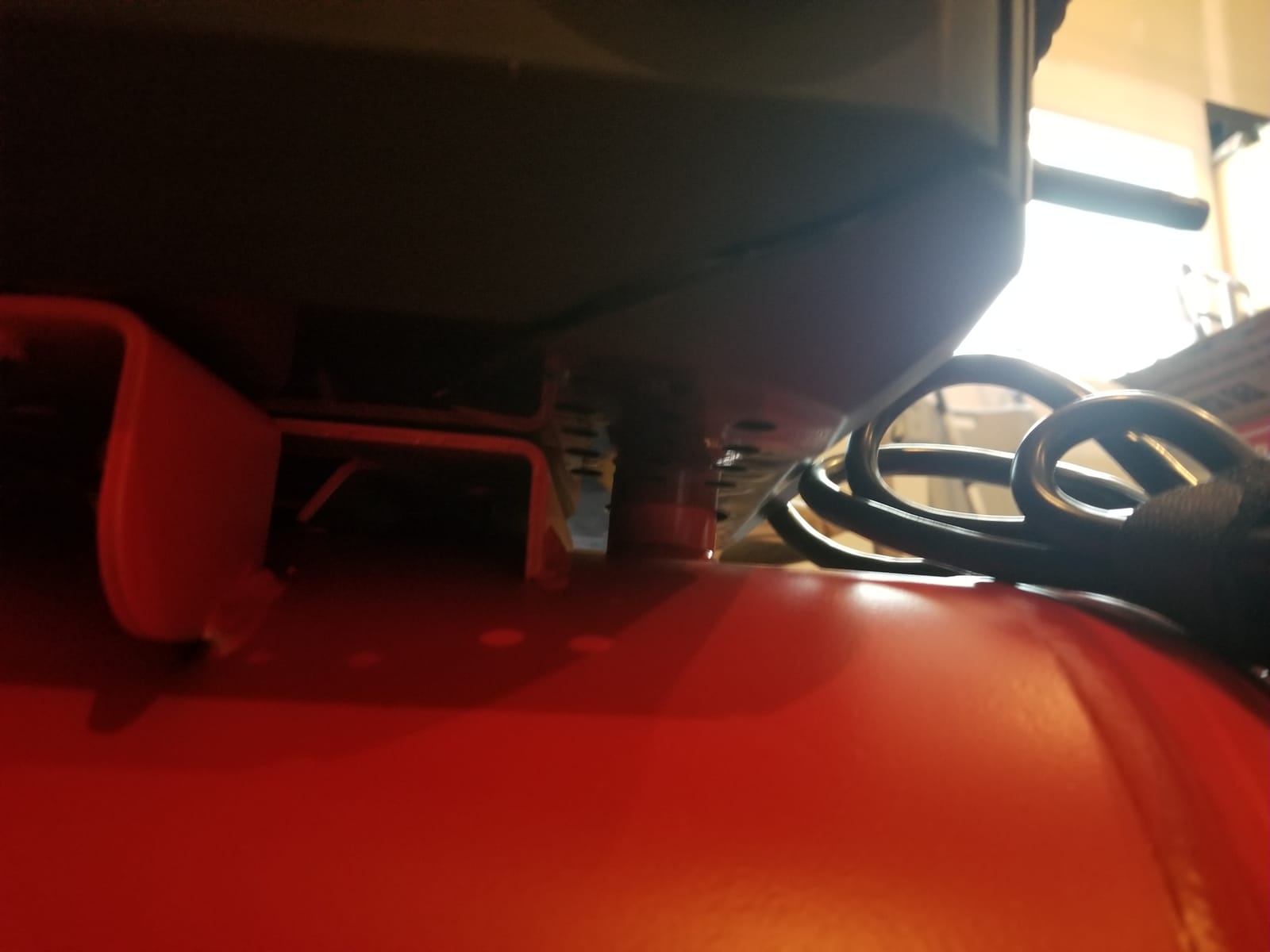
The 1.8 HP oil-free pump delivers 4.0 CFM at 90 PSI and 5.0 CFM at 40 PSI, which is squarely in the range for staple guns, brad and roofing nailers, airbrushes, blow guns, air drills, and pneumatic screwdrivers. Oil-free means no oil changes appear on your maintenance list at all.
Rubber foot stabilisers do a quiet job of their own. They damp the vibration that otherwise travels up through the slab and into the bench, and vibration is the component of compressor noise that people notice as a rattle rather than a hum.
Is 78 dB loud for an air compressor?
It is on the high side. For reference, 78 dB sits between a hair dryer and a food processor at three feet, and sustained exposure at 85 dBA and above is where hearing damage begins. At 78 dB you are below that damage threshold, but it is not a level you want running all day beside your ears, and it is why we would not put this compressor in a garage with a bedroom above it.
Decibels are logarithmic, so the 18 dB between this unit and the 60 dBA California Air Tools 8010A sounds like a modest difference on paper and a substantial one in the room. It is the difference between hearing a compressor and noticing it.
When this is still the right pick
Three situations. First, a detached workshop or a basement shop where the compressor is two rooms and a floor away. Second, a garage where you mostly run a compressor occasionally rather than daily. Third, a high-pressure job where 175 PSI is the actual requirement and 120 PSI would not do the work.
At 4.4 stars across 212 reviews, the unit itself performs as advertised. Buyers appreciate the oil-free convenience, the compact rolling format, and the pressure ceiling, and the recurring complaint is simply that the published noise level is higher than the other quiet compressors here. That is accurate, and it is why this sits at number seven rather than higher.
8. Stealth 4.5-Gallon Ultra Quiet: Best for Small-Shop Recovery Speed
Stealth 4.5 Gallon Ultra Quiet Air Compressor,1.3 HP Oil-Free Peak 150 PSI 65 Decibel Air Compressor,4 CFM @ 40 PSI 3 CFM @ 90 PSI Silent Portable Long Life Electric Air Compressor W/Wheel for Garage
64 to 65 dB noise level
4.5-gallon tank
3 CFM at 90 PSI
70-second empty-to-full recovery
Pros
- 64 to 65 dB suits a small shop
- 70-second empty-to-full recovery is the fastest here
- Oil-free and maintenance free with a lifetime warranty
- Starts reliably in cold weather and on low voltage
Cons
- 3 CFM at 90 PSI and a 4.5-gallon tank are the smallest pairing here
- 62 pounds is substantial for a portable unit
- Low airflow ceiling limits sustained tool work
This is the compressor to look at if the deciding factor is how quickly the machine puts air back rather than how much air it holds. Seventy seconds from empty to full is a fast recovery figure in this roundup, and paired with 3 CFM at 90 PSI it means short pneumatic tasks barely register the pump stopping.
The published noise level is 64 to 65 dB, which is measured on the same Ultra Quiet scale as the larger Stealth units. Owners describe it as usable in a small shop, which is the right test for a machine this size.
The motor is a 1.3 HP induction unit rated for three times the service life of a standard induction motor, and the manufacturer states it was tested up to 80 percent quieter than a conventional design at this capacity. It starts under low temperature and low voltage, which owners confirm in cold garage conditions.
There is no customer photo set for this model in our data, which is worth noting only because the rest of this list has two images each. The published specification and the owner feedback line up closely enough that we are comfortable recommending it on that basis.
Is a 4.5-gallon tank too small for a home shop?
For finish work, inflating, and blow guns, it is a real limit rather than a dealbreaker. A 4.5-gallon tank means you refill roughly twice as often as a 10-gallon unit during sustained nailing, and every fill is an audible event. If your work is scattered short tasks across a week, that trade is worth taking for the recovery speed and the noise floor.
If your work is continuous, pick a 10-gallon or 12-gallon unit. The added capacity matters more than the published dB difference, because fewer pump starts is itself a quieter experience over a full day. Our portable compressor picks for cars cover smaller formats if you need a second unit for tire work.
What owners actually rate
At 4.6 stars, this sits among the highest scoring units here, with a large share of five-star reviews. The praised points are consistently the noise level, the quick recovery, and how easily it rolls around a shop on its 6-inch rubber reinforced wheels. The upright roller bag handle makes it comfortable to move, which matters at 62 pounds.
The single recurring criticism is the small tank. That is a capacity decision rather than a quality problem, and it is the reason this unit sits in the middle of the list instead of the top.
9. Makita MAC320Q: Best for Indoor Finish Work
Makita MAC320Q Quiet Series 1-1/2 HP, 3 Gallon, Oil-Free, Electric Air Compressor
60 dBA Quiet Series
3-gallon tank
1-1/2 HP at 1,750 RPM
Two regulated outlets with dual gauges
Pros
- 60 dBA allows a normal conversation beside it
- Recharges faster than it discharges so nailers rarely stall
- Two independent outlets run two tools at once
- Roll-cage build does not walk across the floor
Cons
- Heavier and larger than competing 3-gallon units
- No wheels or handle so it needs a two-hand carry
- 135 PSI means it cycles more often than a 150 PSI unit
The MAC320Q is the compressor I would use if finish work happens inside the house rather than in a separate building. At 60 dBA, owners hold normal conversations beside it while it runs, and the oil-free dual-piston pump means no oil mist ever reaches a piece of furniture you are spraying nearby.
The 1,750 RPM motor is the reason for the noise floor. It turns at roughly half the speed of a standard induction motor, which reduces both the whine and the mechanical wear, and Makita rates it for longer motor and pump life as a direct result.
Two independent regulated outlets with separate tank and tool gauges are the feature that separates it from every other 3-gallon unit here. The tank pressure and the tool pressure are displayed and controlled separately, and output is manually adjustable, which is what you need when spraying and blowing at the same time.
Owners report that it recharges faster than it discharges, which is the sentence that matters most for a finish carpenter. A nailer or a blow gun practically never stalls, and a compressor that never stalls is a compressor you stop noticing.
The roll-cage construction also has a noise benefit that is easy to miss. A tank on rubber feet that slides across a concrete floor while running creates a rhythmic rumble that adds to the perceived noise level. Owners specifically report that this unit stays put and stays stable for handheld work, including powdercoating.
Is 3 gallons enough for finish carpentry indoors?
For finish work, yes, and this is the strongest argument for the format. Interior trim uses brad nailers, staple guns, small pin nailers, and a tack gun, all of which sit comfortably inside the delivery of a 3-gallon 1-1/2 HP unit. For exterior trim, siding work, or repetitive finish nailing over a large area, you will want a bigger tank and the 10020C on this list is the step up.
At 135 PSI maximum, it cycles more often than the 150 PSI units here, but the fast recharge compensates. If you can supply it with 2 CFM or more, the cycle frequency does not become a noise problem.
What to plan around
There are no wheels and no handle, so at 44 pounds you carry it with two hands. That is fine for moving it across a room and awkward for a stairwell, and it is the single most common complaint alongside the size.
Be aware that the listed 12 by 12 by 12 inch dimensions are inaccurate. Buyers report the real footprint closer to 18 by 19 by 14 inches, so measure your bench space before you assume it will fit. Separately, some owners replace the supplied quick-connect fittings with brass ones after the plastic fittings leak or stick on uncoupling. That is a five-minute fix with a real improvement in reliability.
10. Makita MAC100Q: Lowest Noise Rating in the Roundup
Makita MAC100Q Quiet Series, 1/2 HP, 1 Gallon Compact, Oil-Free, Electric Air Compressor
58 dBA Quiet Series
1-gallon tank
1/2 HP at 1,750 RPM
0.7 CFM at 90 PSI
Pros
- 58 dBA is the lowest published level among these units
- 27.6 lb is easy to carry anywhere
- Compact footprint fits a vehicle or tight corner
- Oil-free dual piston needs no maintenance
Cons
- 0.7 CFM at 90 PSI supports short bursts only
- Has to run frequently which adds noise in aggregate
- Not a compressor for a working shop with pneumatic tools
At 58 dBA this has the lowest published noise rating of anything we covered, and it is the one I would choose for an apartment, a condo, a loft, or a garage directly beneath a bedroom. Half a horsepower turning at 1,750 RPM in a 1-gallon tank produces almost nothing you need to talk over.
The 27.6-pound weight and a footprint of roughly 15 by 14 inches mean it goes anywhere, including the trunk of a car. Owners use it for tire inflation, sports ball inflation, vacuum cleanup, and light pneumatic work, and the 1,523-review base is the largest on this list outside the 10020C.
Oil-free dual-piston means no maintenance at all, and the roll-cage construction protects it in a vehicle boot as well as a shop corner.
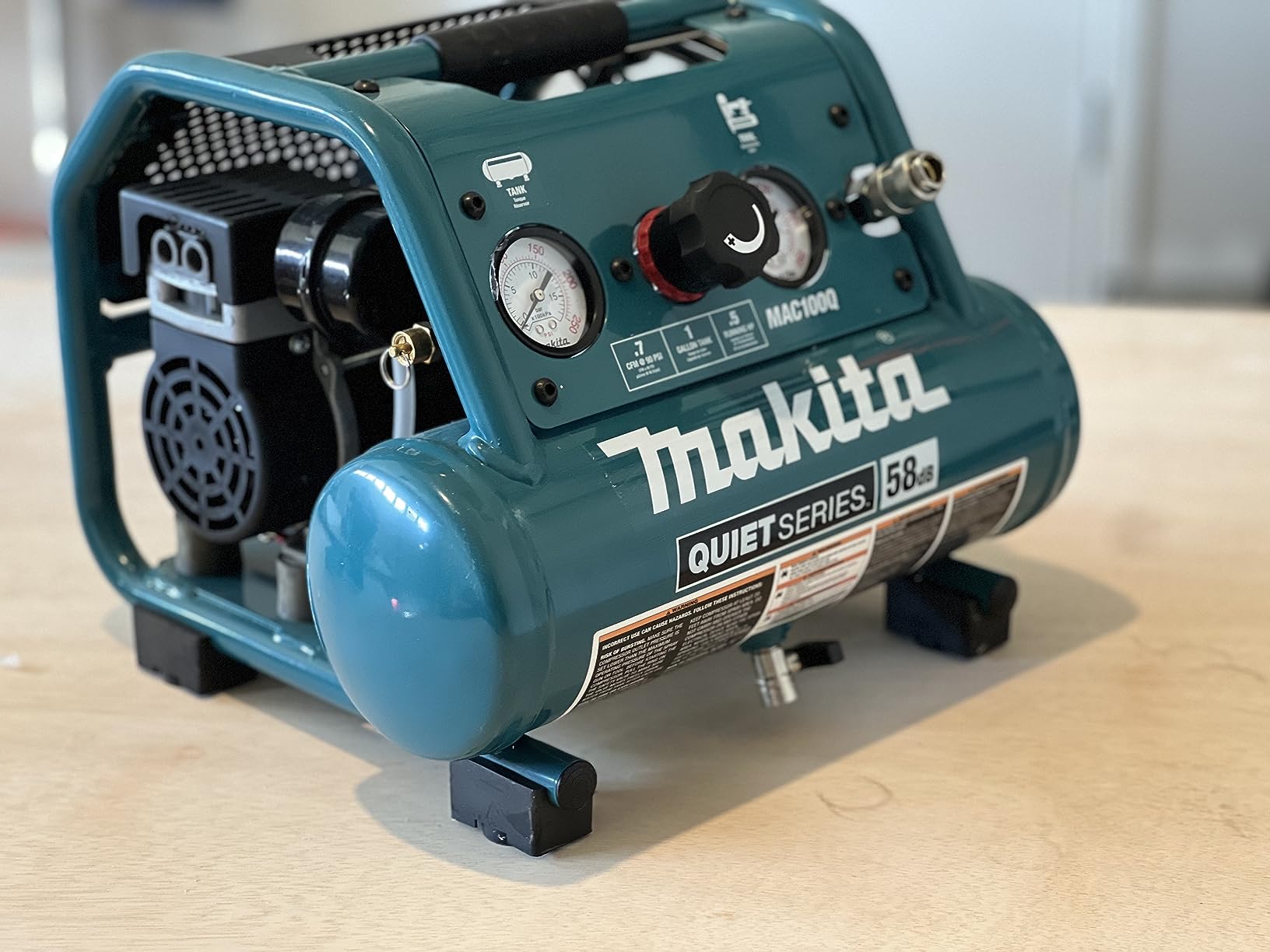
There is an important nuance about how quiet a small compressor is in aggregate. A 1-gallon tank has to cycle constantly to support even modest work, so while each individual run is 58 dBA, a long session produces a high number of those events. Owners note this exact effect, and it is the main reason we place this unit tenth rather than higher despite the lowest noise figure.
The 135 PSI maximum pressure is higher than the 120 PSI on most 1-gallon units, which helps a little with recovery time, and the 1,750 RPM induction motor is rated for longer life than a standard motor at that power.
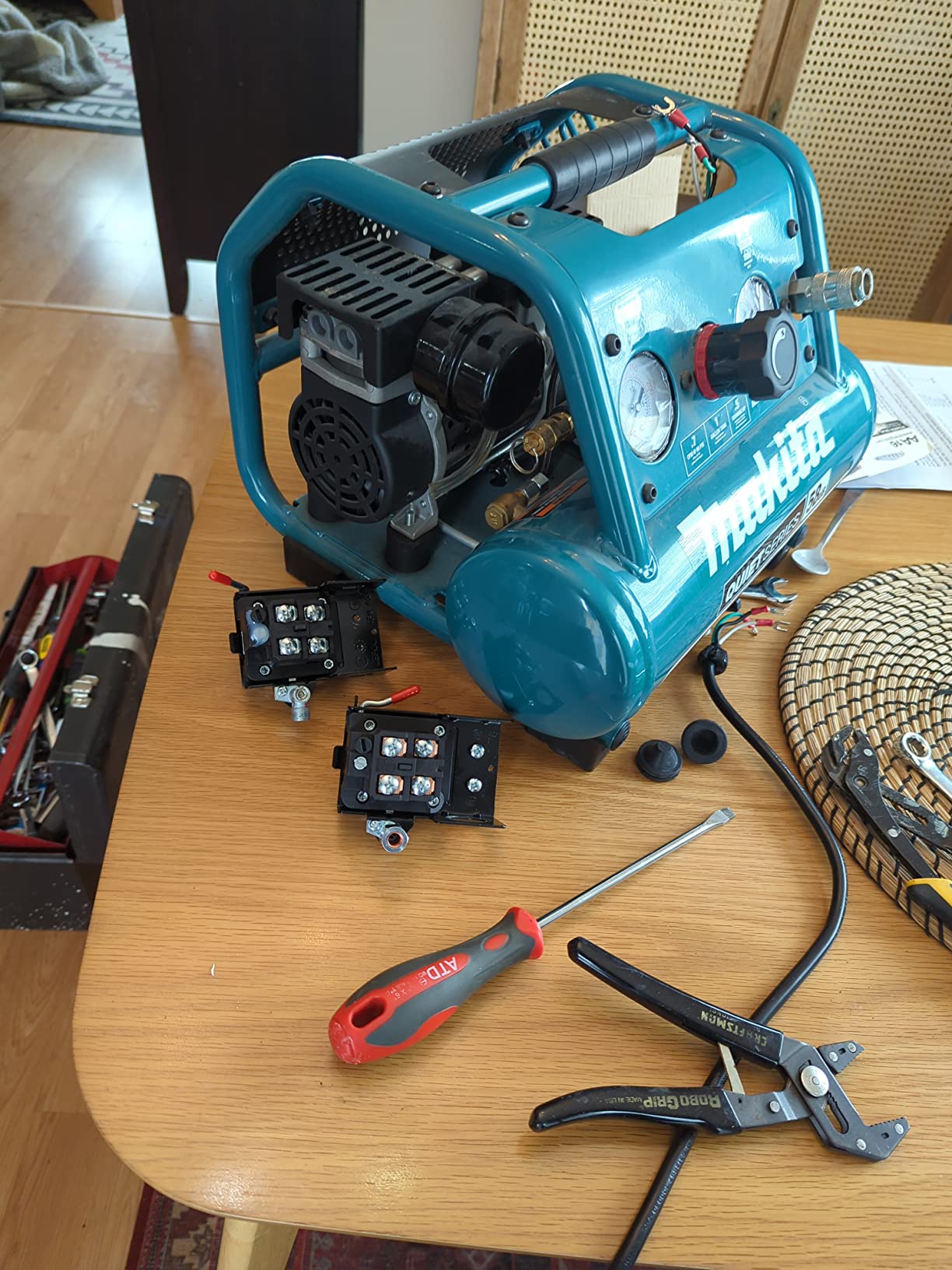
What can a 0.7 CFM compressor actually run?
Inflatators, a bicycle pump if you are patient, a blow gun for dust, an airbrush for detail work, a small pneumatic screwdriver, or a staple gun. That is the honest list. At 0.7 CFM delivered, anything that draws real air will either stall or force you to wait through several tank cycles, and the waiting is exactly what makes a small compressor feel slow on a real job.
For a shop, that limitation rules it out as a primary compressor. For a second unit, a vehicle kit, or an apartment workspace where noise is the only acceptable criterion, it is hard to argue against.
Is the lowest dBA rating always the right choice?
No, and this unit is the clearest example. The lowest published number wins on an empty room with no tools attached, and loses on a shop floor where you need air delivery more than silence. Judge a compressor by the combination of dBA, CFM at 90 PSI, and tank capacity, not by the dBA figure alone.
At 4.5 stars across 1,523 reviews, the complaints are consistent and narrow: owners understand the limits, and they are comfortable with them for the intended use. The larger share of five-star ratings reflects a product that does exactly what it was designed for and says so plainly.
Best Quiet Air Compressors for Home Shops by Category
Here is where each compressor fits, so you can stop reading and start shopping.
Best overall for a general home shop: California Air Tools 8010A. The 60 dBA, 37-pound, 8-gallon combination is the balance point between silence, portability, and capability, and it is the pick we would make first.
Best for a shared wall, apartment, or bedroom overhead: California Air Tools 8010A for real work, Makita MAC100Q if the work is light and you want the lowest possible sound.
Best for framing nailers and impact wrenches: California Air Tools 10020C at 5.3 CFM, or the Stealth 20-gallon if you also want a large reserve.
Best for trim and finish carpentry indoors: Makita MAC320Q, with its two regulated outlets and separate tool and tank gauges.
Best for tire work, bead seating, and inflation: VEVOR 13-gallon, or California Air Tools 10020C if you want a better-supported unit.
Best for a large dedicated wood or metal shop: Stealth 20-gallon, at 20 gallons and 150 PSI peak while still rated at 68 dB.
Best value with everything included: Limodot 8-gallon kit, for a first compressor that comes with a hose and fittings.
Best for the highest pressure ceiling: Craftsman 10-gallon at 175 PSI, accepting the 78 dB noise level and using it in a detached space.
How to Choose a Quiet Air Compressor
Check CFM at 90 PSI first, not tank size
The single most common mistake in this category is buying tank size and hoping the air follows. A big tank is a buffer, not a delivery system. CFM at 90 PSI is the number that determines whether your tool runs continuously, and it is the only figure on the spec sheet that predicts whether you will be waiting.
As a rough guide for home shops, under 1 CFM covers inflation and detailing, 2 to 3 CFM covers finish carpentry and airbrushing, 3 to 4.5 CFM covers brad and trim nailing, and 5 CFM or more is the threshold for framing nailers and impact wrenches. Once you are above 4 CFM, check the amperage before you buy, because you will have crossed from a 10-amp tool into the 15-amp circuit range.
Match tank size to how long you run, not how big you want it to look
A 1-gallon tank is right for short bursts and vehicles. A 3 to 4.5-gallon tank is right for finish work and airbrushing, where the pump can outpace the tool. An 8-gallon tank is the sweet spot for a general home shop, and 12 to 20 gallons is for sustained work where constant cycling becomes both slow and noisy.
There is a quiet-compounding effect here worth remembering. Two compressors with identical dB ratings do not sound identical, because the one with the smaller tank produces more audible starts per hour. A 10-gallon unit running every four minutes is quieter in daily use than a 1-gallon unit running every forty seconds.
Understand the oil-free lifespan trade honestly
Oil-free is not free. You remove oil changes, oil costs, and oil mist from finishing work, and you gain quiet operation. What you give up is pump longevity, and this is the part roundups tend to soften.
Oil-lubricated cast-iron pumps run for thousands of hours with basic maintenance. Oil-free pumps in this class are rated from roughly 1,000 to 3,000 hours, which is a real difference over a five-year ownership period. The California Air Tools 8010A rates its dual-piston pump at over 3,000 hours, and the Stealth units claim 1,000 hours and beyond, so published figures vary widely.
For intermittent home shop use, oil-free is the right call. For a compressor that will run several hours a day, a lubricated two-stage unit will outlast two or three oil-free machines, and the noise difference matters less when you wear hearing protection and work in a detached building.
Read dB numbers with the measurement distance in mind
Every rating on this list is a manufacturer figure, and manufacturers generally measure at three feet. Sound falls off with distance, so a 68 dBA unit at eight feet is closer to 50 dBA, which is why owners of the Stealth 20-gallon report measuring in the mid-60s in a basement workshop.
The reverse also applies. If you stand two feet away, expect 5 to 8 dB more than the printed number. Judge a compressor on your actual distance, and prioritise slow-turning motors in the 1,700 to 1,800 RPM range, since those produce less whine than 3,400 RPM designs at the same noise rating.
Plan the circuit before the compressor arrives
Every unit on this list is 120V single-phase, which is what residential shops have available. Maximum currents range from 8.5 A on the Makita units and the 8010A, through 14 A on the 10020C, up to the larger Stealth models.
Use a dedicated 15-amp circuit on 12-gauge wire for anything above 10 amps, and never use a long extension cord. A compressor that struggles to start on a long cord will trip the breaker, and repeated hard starts are also the fastest way to shorten motor life. The large vertical units additionally need to start with the tank empty, which is normal on pressure-switch design.
Reduce noise without buying a quieter compressor
Placement does as much as the machine. Put the compressor as far from your bench as the hose allows, against an exterior wall rather than a shared interior wall, and never on the same slab as your workbench legs.
Rubber isolation pads under the feet damp the vibration that turns a hum into a rattle. A 1/4-inch polyurethane hose is noticeably quieter than PVC and loses less pressure over distance, and an auxiliary tank reduces how often the main pump starts. If you have a covered area outside your garage, running the unit there with a long hose is the single most effective noise reduction available and costs almost nothing.
For a shared-wall situation specifically, closing the interior door before starting the compressor and keeping the unit more than 20 feet from the wall makes a measurable difference. Sound transmits through structure far more efficiently than through air, so a compressor can be a neighbour problem even at a level you personally find acceptable.
Keep it quiet by keeping it maintained
Drain the tank on a schedule, because water in the tank makes the pump work harder and louder on every start. Check the intake filter and keep it clean, since a restricted filter makes the motor draw more current and run hotter. Store the unit indoors and off bare concrete in cold months to protect the fittings, and run it briefly after a long layover to clear residual moisture.
None of that takes more than a few minutes, and all of it reduces the number of hours the motor spends working hard. A well-maintained quiet compressor stays quiet. A neglected one gets louder as it ages.
Frequently Asked Questions
How many decibels is considered a quiet air compressor?
Anything under 70 dBA is generally considered quiet for a home compressor, and anything under 60 dBA is considered ultra quiet. For context, 60 dBA is about a normal conversation at three feet and 70 dBA is closer to a vacuum cleaner. Manufacturers measure at three feet in a lab, so expect a slightly higher figure in your own garage, particularly on bare concrete.
What type of air compressor is quiet?
The quietest compressors use an oil-free dual-piston pump, because two pistons offset each other so vibration cancels rather than compounding. They pair it with a slow-turning motor in the 1,700 to 1,800 RPM range instead of a 3,400 RPM direct-drive motor, add rubber isolation feet, and wrap the pump in a sound-dampening shroud. Belt drive and two-stage compressors are also quieter than their direct-drive single-stage equivalents.
Are silent air compressors any good?
Yes, provided you match the machine to your tools. The quiet models in this roundup carry 4.4 to 4.7 star ratings from hundreds or thousands of reviews, so they are well-built, not marketing shells. The real constraint is airflow: ultra-quiet units are typically 1 to 3 CFM at 90 PSI, which suits finish work and inflating but not framing nailers or impact wrenches.
What are the downsides of oil-free air compressors?
The main downside is pump lifespan. Oil-lubricated cast-iron pumps run for thousands of hours with routine maintenance, while oil-free pumps in this class are commonly rated from 1,000 to 3,000 hours. Oil-free pumps also run hotter, cannot sustain continuous duty such as sandblasting, and cost more per unit than an equivalent lubricated model.
Which pancake air compressor is the quietest?
Among pancake-format compressors, the Makita MAC100Q is the quietest at a published 58 dBA, followed by the Makita MAC320Q and California Air Tools 8010A at 60 dBA. Conventional brand-name pancake compressors generally sit at 75 to 78 dBA, which is why the ultra-quiet models cost more and turn their motors more slowly.
Is 78 dB loud for an air compressor?
It is on the high side. 78 dB sits between a hair dryer and a food processor at three feet, and sustained exposure at 85 dBA and above is where hearing damage begins. Because decibels are logarithmic, dropping from 78 dB to 60 dBA sounds like roughly half the loudness, which is a substantial difference in a small workshop.
Are quiet air compressors worth it?
They are worth it if your shop shares a wall with living space, if you work early or late, or if you use the compressor most days. For occasional work in a detached building, a standard unit at half the cost is a defensible choice. The premium buys you a conversation-level machine and no oil changes, and that is usually the right trade for a home shop.
What is the quietest air compressor for a shop?
The California Air Tools 8010A is among the quietest units here that still does real shop work, at a published 60 dBA with 8 gallons of tank and 37 pounds of weight. The Makita MAC100Q is quieter at 58 dBA, but its 1-gallon tank and 0.7 CFM output limit it to inflating and light pneumatic tasks rather than a working shop.
What is the best type of air compressor to buy?
For a home shop, an oil-free dual-piston compressor between 3 and 8 gallons running on 120V with at least 2 CFM at 90 PSI covers finish carpentry, airbrushing, inflating, and cleanup. Move to 5 CFM or more only if you run framing nailers or impact wrenches, and check the amperage at that point because you will need a dedicated 15-amp circuit.
How do I reduce air compressor noise in a garage?
Set the unit as far from the bench as the hose allows, against an exterior wall rather than a shared interior wall, and off bare concrete onto rubber isolation pads. Use a 1/4-inch polyurethane hose instead of PVC, because it is quieter and loses less pressure. Running the compressor under a covered area outside with a long hose is the single most effective change you can make.
Final Verdict
The California Air Tools 8010A is our pick as the best quiet air compressor for home shops. It runs at a published 60 dBA, weighs 37.3 pounds, holds 8 gallons, and pulls only 8.5 amps, and it has the highest average rating of any unit we covered. It is the machine you can put in a garage that shares a wall with your house and run while somebody is asleep upstairs.
Buy the Makita MAC320Q instead if your work is finish carpentry performed indoors and you need two independent outlets and separate tool and tank pressure. Buy the California Air Tools 10020C if you need to run framing nailers or impact wrenches and can live with 70 dBA. Buy the Stealth 20-gallon if your shop is a real shop and you have somewhere to put a 121-pound machine.
Whichever one you choose, check your CFM requirement against your tool list before you buy, give it a dedicated outlet, and set it on rubber pads as far from your bench as the hose allows. Those three steps do more for your daily experience than the gap between two adjacent noise ratings.