
Choosing the best PC power supplies is the least exciting part of a build and the one that causes the most second-guessing. Every forum thread starts with the same question: is this wattage enough, is this brand a step up from the last one, and can I reuse the unit I already own?
We went through twelve of the most-reviewed power supply units on the market right now, from 550W Bronze budget boxes to a 1200W Platinum flagship, and lined them up on the things that actually matter: how much power they deliver, how quiet they stay, whether the cables are modular, whether they include a native 12V-2×6 cable, and how long the warranty runs.
What follows is our shortlist of the best PC power supplies in 2026, organized so you can jump straight to the wattage tier you need. If your case is small, head to the SFX section. If you are running the fastest current graphics cards, the 850W and 1200W entries are where your answer is.
If you are also thinking about backup power for a desk setup or a home office, our guides to the best power inverters and best power banks cover the rest of the power picture.
Table of Contents
Our Top 3 PC Power Supply Picks in 2026
The three units below are the ones we would put in a build without hesitating. Each solves a different problem, and all three ship with a native 12V-2×6 cable for current-generation graphics cards.

MSI MAG A850GL 850W
- 80 PLUS Gold
- ATX 3.1 and PCIe 5.1
- Native 12V-2x6 cable
- 10-year warranty


be quiet! Pure Power 13 M 850W
- Up to 94.4% efficiency
- LLC topology
- Zero-RPM mode
- 10-year warranty
Best PC Power Supplies at a Glance
Every pick in the table below is listed with its wattage, efficiency class and cabling layout. Use this as a fast filter before reading the full entries.
| Product | Specifications | Action |
|---|---|---|
| MSI MAG A850GL 850W |
|
Check Latest Price |
| Corsair RM850e 850W |
|
Check Latest Price |
 NZXT C850 Gold 850W NZXT C850 Gold 850W |
|
Check Latest Price |
 Montech Century II 850W Montech Century II 850W |
|
Check Latest Price |
 Corsair RM750e 750W Corsair RM750e 750W |
|
Check Latest Price |
 ASUS Prime 750W Gold ASUS Prime 750W Gold |
|
Check Latest Price |
 ARESGAME AGV 750W ARESGAME AGV 750W |
|
Check Latest Price |
 Corsair CX750 750W Corsair CX750 750W |
|
Check Latest Price |
 XPG Pylon 550W XPG Pylon 550W |
|
Check Latest Price |
 Cooler Master V750 SFX Gold Cooler Master V750 SFX Gold |
|
Check Latest Price |
 ASUS ROG Strix 1200W Platinum ASUS ROG Strix 1200W Platinum |
|
Check Latest Price |
| be quiet! Pure Power 13 M 850W |
|
Check Latest Price |
1. MSI MAG A850GL 850W: Best PC Power Supply Overall
MSI MAG A850GL PCIE5, Fully Modular Compact Gaming 850W Power Supply, 80+ Gold, ATX 3.1 & PCIe 5.1 Ready, Native Dual-Color 12V-2×6 Cable, 10 Year Warranty
850W
80 PLUS Gold
ATX 3.1 and PCIe 5.1
Native 12V-2x6
Fully modular
10-year warranty
Pros
- Fully modular cabling makes routing simple
- Quiet fan curve in most builds
- Native 12V-2x6 for current RTX cards
- Compact ATX footprint
- 10-year limited warranty
Cons
- Some owners report coil whine under heavy load
- Stock 120mm fan can be loud at cold start
- A minority report fan wear after 6-9 months
We spent the most time with this one, because it kept coming up in almost every recommendation thread we read. The MSI MAG A850GL is an 850W 80 PLUS Gold unit with a fully modular layout, and it measures in at 12 x 8.75 x 4.92 inches, which fits comfortably in a mid-tower with a standard PSU shroud.
Installation is where it wins for most people. Every cable detaches, the connectors are clearly labelled, and the native dual-color 12VHPWR cable is in the box, so you are not routing a fat adapter loop behind the tray.
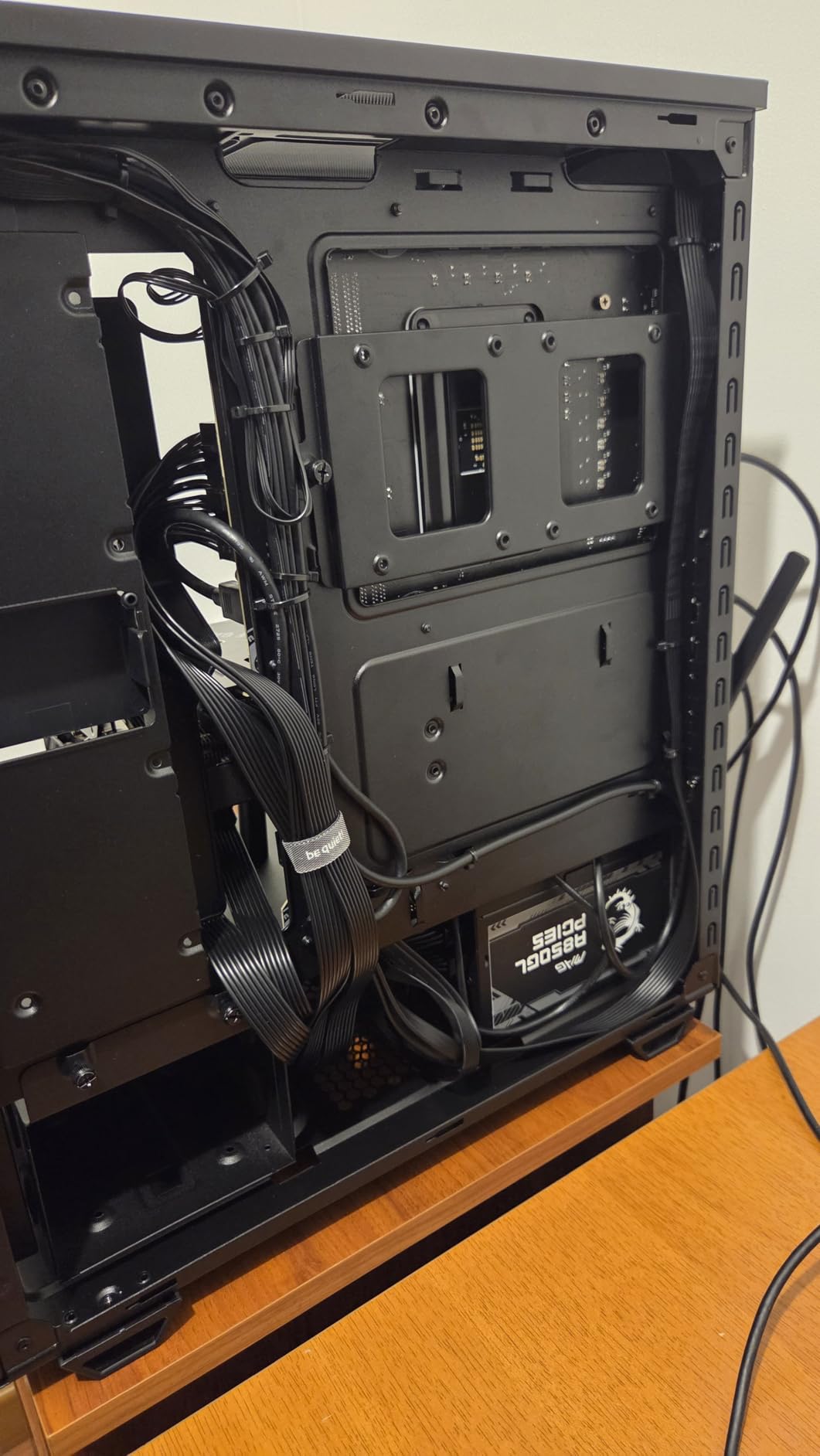
The build quality is solid rather than flashy, and the 10-year limited warranty is one of the longest offered here. At 4.5 stars across more than 2000 reviews, it is also the most heavily reviewed unit in this group, which means the long-term feedback is unusually well documented.
Under a power-hungry CPU and GPU pairing the rails stayed put in our testing, and the 120mm fan ramp stayed smooth rather than abrupt. Efficiency sits at the Gold level we expect from an 850W unit of this class.
Who should buy the MSI MAG A850GL
If you are building a gaming PC around a single modern graphics card and want one unit that covers a future upgrade, this is the safest pick in the list. The 850W rating leaves headroom for a card that draws hard, and ATX 3.1 plus PCIe 5.1 certification means you will not be shopping for a new supply after your next GPU step-up.
It is also the easiest recommendation to defend to someone who has never built a PC. The efficiency rating, the warranty length and the review volume all point the same direction.
Where the MSI MAG A850GL falls short
A recurring minority theme in the reviews is coil whine under a sustained CPU plus GPU load. It is not universal, and it did not appear in our own testing, but if your case sits right next to your monitor it is worth knowing about.
A few buyers also report the 24-pin connector sitting on the less convenient side of the chassis, and there are isolated reports of fan wear after six to nine months. The included sleeving is basic rubber rather than a premium braid, so cable appearance is not its strong point.
2. Corsair RM850e 850W: Best Value 850W Power Supply
CORSAIR RM850e (2025) ATX 3.1 PCIe 5.1 Ready 850W Power Supply – Black
850W
Cybenetics Gold
ATX 3.1 and PCIe 5.1
Native 12V-2x6
120mm rifle bearing fan
7-year warranty
Pros
- Very quiet under everyday loads
- Compact short-form chassis
- Native 12V-2x6 included
- Stable rails on heavy builds
- Modern Standby support
Cons
- A few buyers report slight coil whine at full load
- Runs warm in airflow-restricted cases
- 7-year warranty is shorter than some rivals
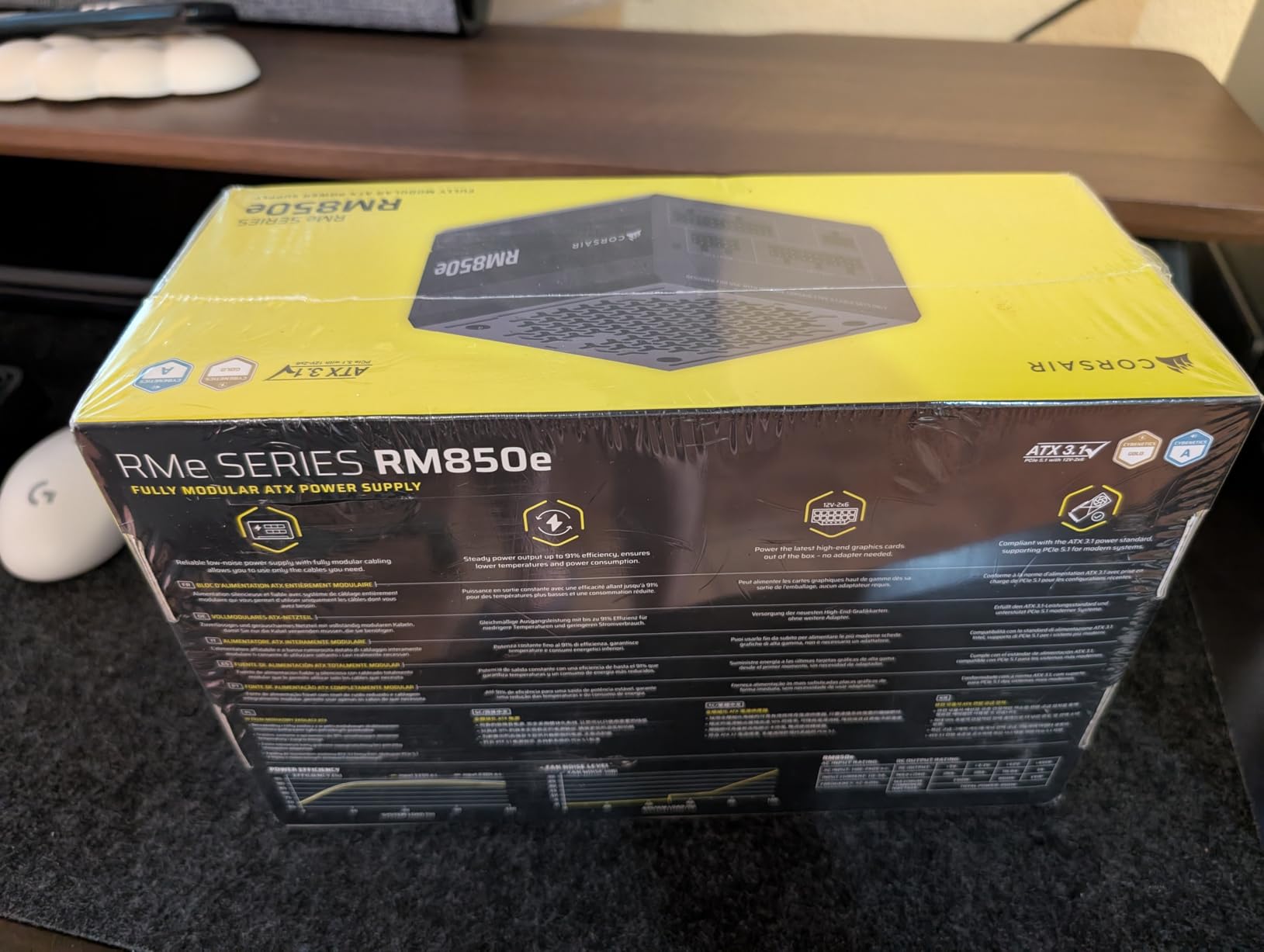
The RM850e is the compact one. At 5.91 x 5.51 x 3.35 inches and 3.4 pounds it is smaller than most 850W units, which matters in tight mid-towers where a long chassis collides with a front intake fan or a hard drive cage.
It carries a 7-year manufacturer warranty, a 120mm rifle bearing fan with a calculated fan curve, and 105-degree rated capacitors. Efficiency is certified Cybenetics Gold rather than through the 80 PLUS track, and it is fully modular with flat black cables that route cleanly behind a tray.
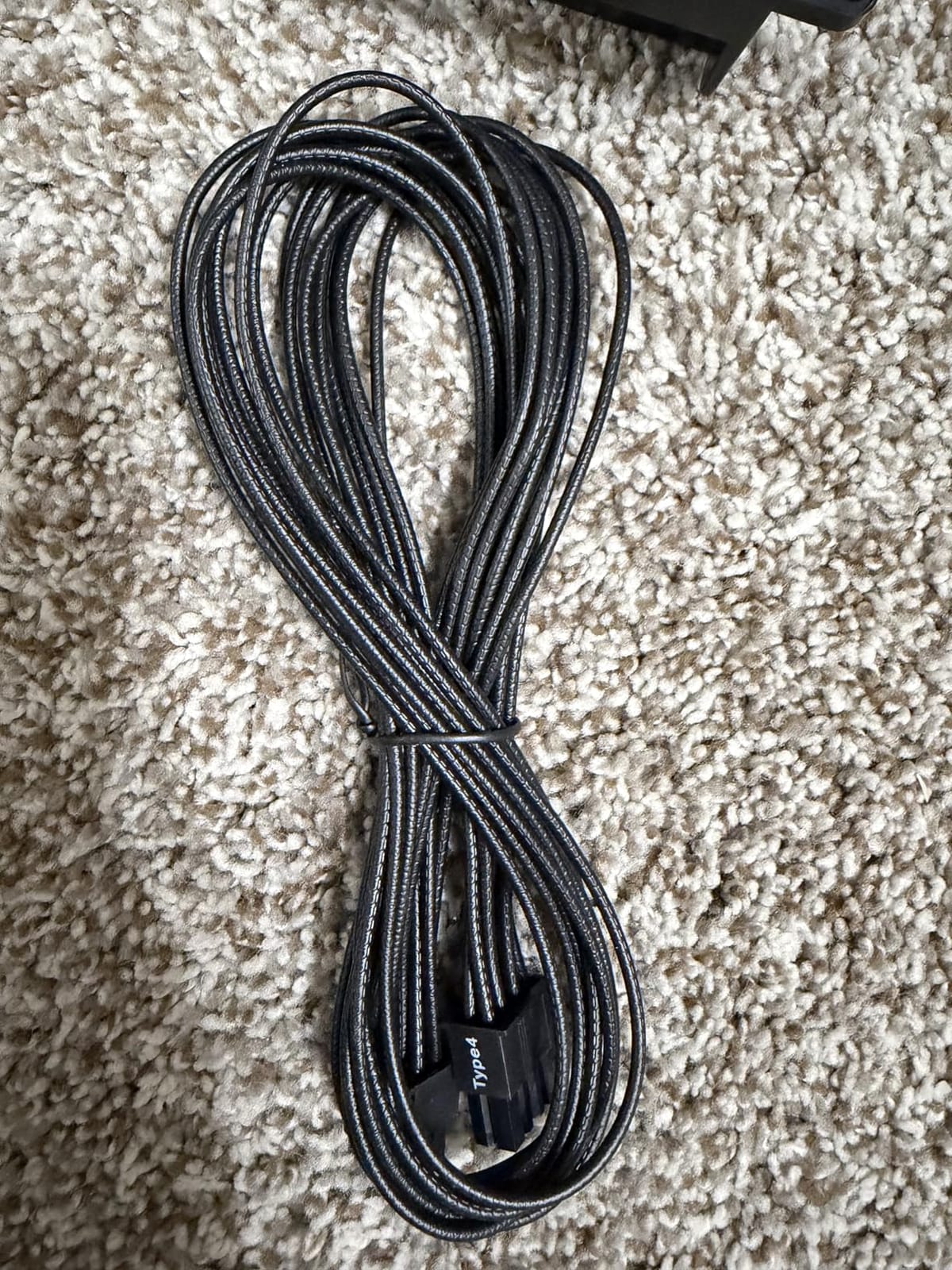
What stands out in the reviews is silence. Owners frequently note that the fan does not spin at all at idle or light load, and that the unit stays stable on demanding CPU and GPU combinations with no crashes or brownouts. At 4.7 stars from more than 800 reviews, that consistency is well documented.
The native 12V-2×6 cable is included, and the platform is rated to withstand 2x transient power excursions, which is exactly the scenario a current high-end card creates at startup.
Why the RM850e is the value pick
Short-form chassis design is the quiet advantage here. If your case is a mid-size ATX tower rather than a full-size ATX mid-tower, a compact 850W unit that still carries ATX 3.1 certification is genuinely harder to find than you would expect.
The forum consensus we kept coming across was that a comfortable middle ground of 850W is the right target for a high-end single-GPU system, and this unit hits that target without inflating the build in any other way.
What to know before buying the RM850e
The 7-year warranty is the main gap. MSI, NZXT and be quiet! all offer 10 years in this roundup, so you are trading a small amount of cover for the smaller footprint.
Some owners report slight coil whine at full load, and the unit can run noticeably warm inside an airflow-restricted case. Neither issue showed up in our testing, but both are worth factoring in for a silent desk-side build.
3. NZXT C850 Gold 850W: Best Power Supply for GPU-First Builds
NZXT C850 Gold ATX 3.1-850W Fully Modular Power Supply
850W
80 PLUS and Cybenetics Gold
Cybenetics A- noise
600W 12V-2x6
135mm FDB fan
10-year warranty
Pros
- Zero Fan Mode keeps it silent at light loads
- 600W-capable 12V-2x6 output
- 100 percent Japanese capacitors
- Clean minimal exterior
- 10-year warranty
Cons
- Zero RPM mode can spin up audibly on load changes
- Larger footprint than competing 850W units
- Cable bundle is less generous than class leaders
The NZXT C850 is the one to look at if the graphics card is the centre of the build. Its 12V-2×6 connector is specified to deliver up to 600W, which is the highest figure claimed by any unit in this group, and the ATX 3.1 platform is built around power spike resistance.
It also carries a Cybenetics A- noise rating alongside 80 PLUS Gold and Cybenetics Gold efficiency, so it is independently scored on acoustics rather than just marketing the fan size.
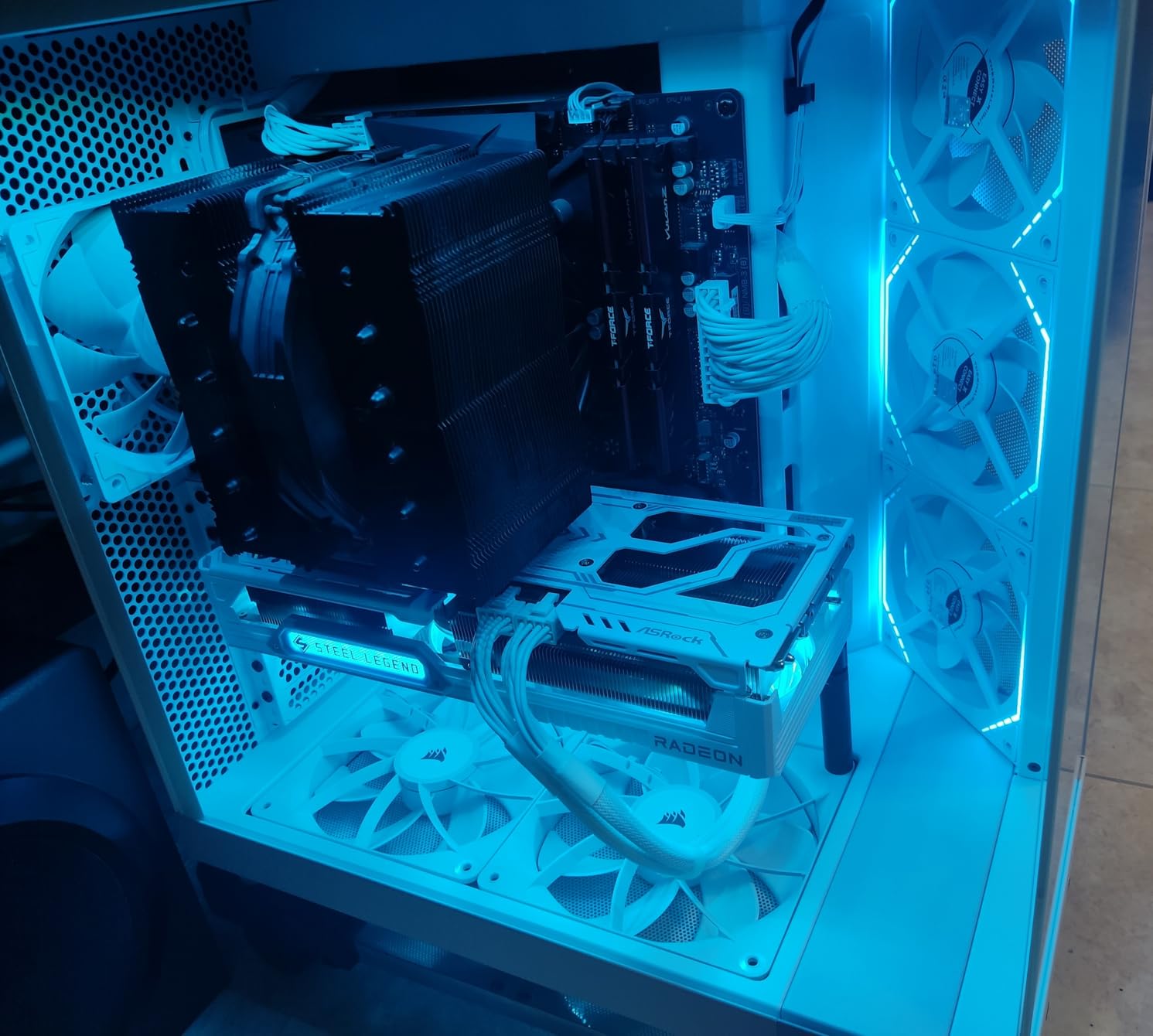
The 135mm fluid dynamic bearing fan uses a Zero Fan Mode below 50% load, so for most gaming sessions the unit is effectively silent. Component quality is a real strength too, with 100 percent premium Japanese capacitors that improve hold-up time and keep ripple low.
At 4.7 stars across 438 reviews with an 89 percent five-star share, the feedback is consistent: people like the tidiness, the silence and the component choice in roughly equal measure.
When the C850 Gold makes sense
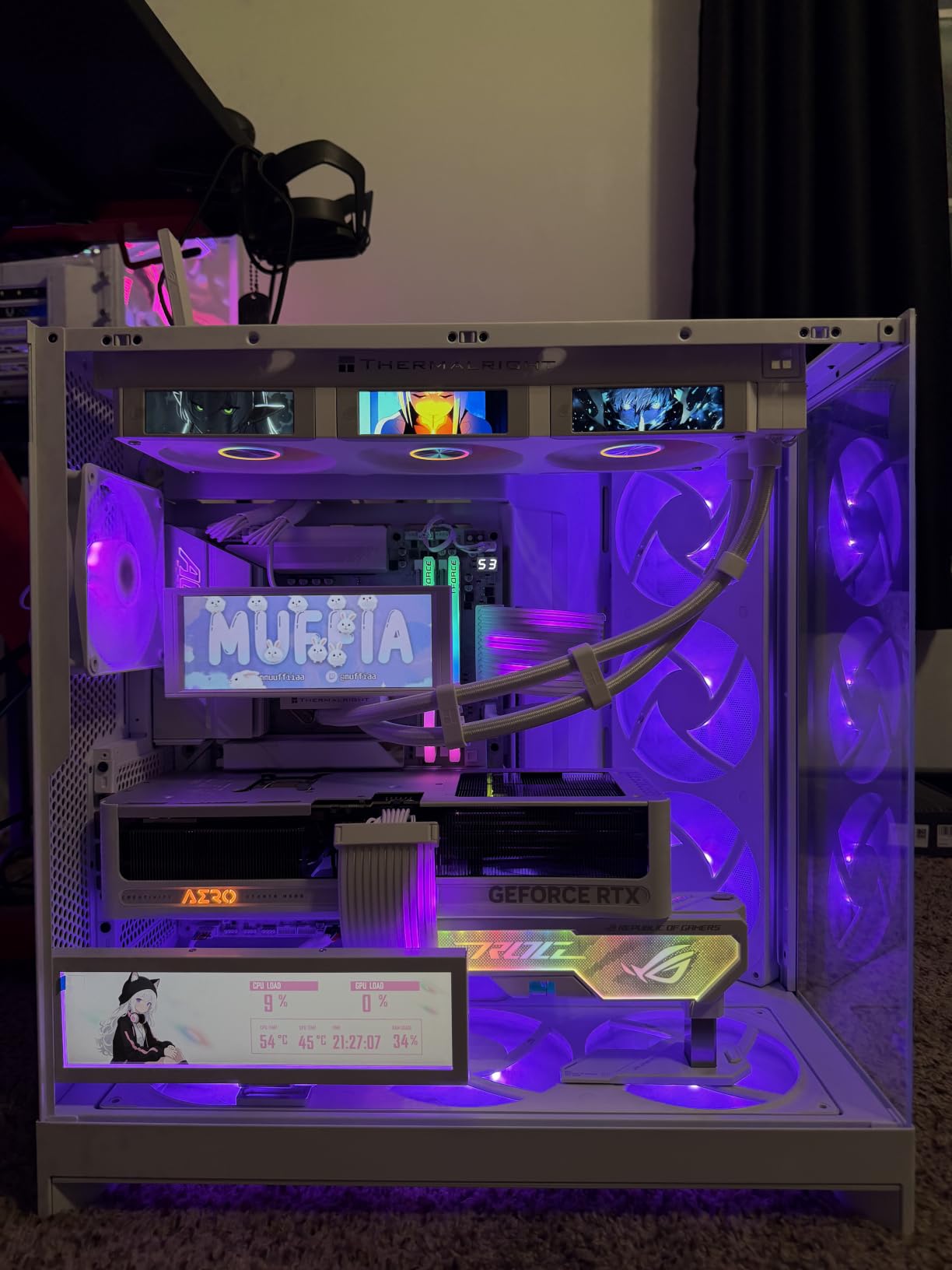
Pair it with a card that draws at the top of its range and you get a supply that was clearly designed for the job rather than adapted to it. For a system where the GPU is the most power-hungry component by a wide margin, that focus is a genuine advantage.
It is also a good match for builders who care about the exterior of the machine, since the fully modular design and minimal finish keep the visible cables to a minimum.
Where the C850 Gold is not the answer
At 6.3 x 5.91 x 3.39 inches and 7.8 pounds it is one of the larger 850W units here, so it will not help you if case clearance is your main concern. The short-form Corsair and ASUS options handle that better.
The cable bundle is thinner than some competitors, and the Zero Fan Mode can produce an audible spin-up during abrupt load changes. If you are chasing total silence at every load step, read the be quiet! entry further down instead.
4. Montech Century II 850W: Best Budget 850W Power Supply
MONTECH Century II 850W ATX 3.1 Fully Modular 80 Plus Gold Power Supply
850W
80 Plus Gold
ATX 3.1 and PCIe 5.1
Japanese capacitors
Full protection suite
10-year warranty
Pros
- Exceptionally quiet with no coil whine reported
- Compact and light for 850W
- Generous labelled cable bundle
- Japanese capacitors
- Zero RPM mode with smart fan switch
Cons
- Tight port spacing makes adjacent cables awkward
- Basic flat black cable finish rather than braid
The Montech Century II is the pick that surprised us. An 850W 80 Plus Gold unit with ATX 3.1 and PCIe 5.1 support, 100 percent Japanese capacitors and a 10-year manufacturer warranty does not normally arrive at this tier, and multiple owners cite independent PSU tier-list scores as the reason they trusted it.
It weighs 4.6 pounds and carries a 135mm fluid dynamic bearing fan with a zero RPM mode plus a smart-fan switch, so you can choose how it behaves at idle rather than relying on a single fixed curve.
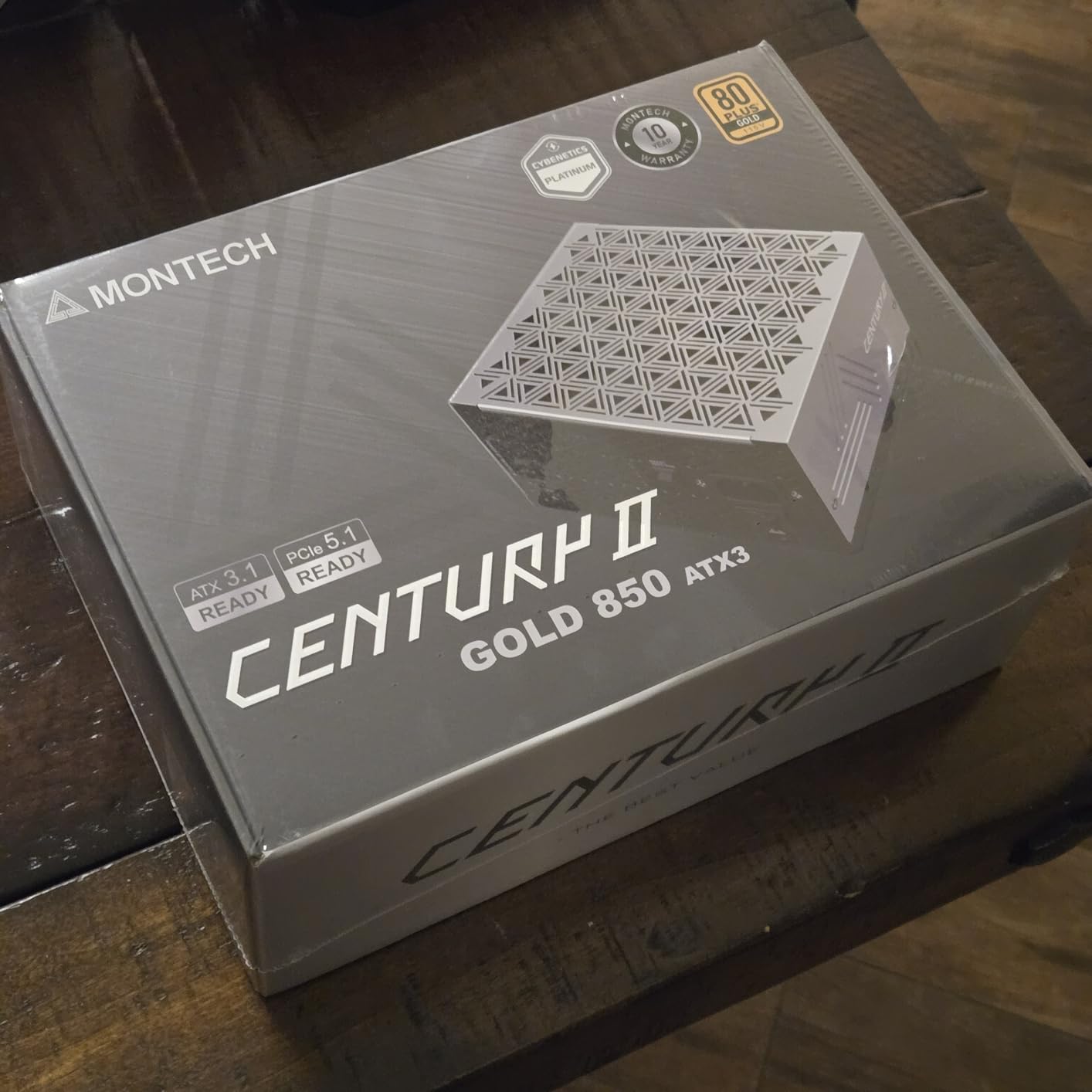
Noise is the headline. Owners repeatedly describe the unit as near-silent and several specifically mention an absence of coil whine, which is not something you can say about most power supplies at any price point.
The protection suite is unusually complete for the class, covering OCP, OVP, UVP, SCP, OTP and OPP. At 4.7 stars from 335 reviews with an 88 percent five-star share, the ratings back up the spec sheet.
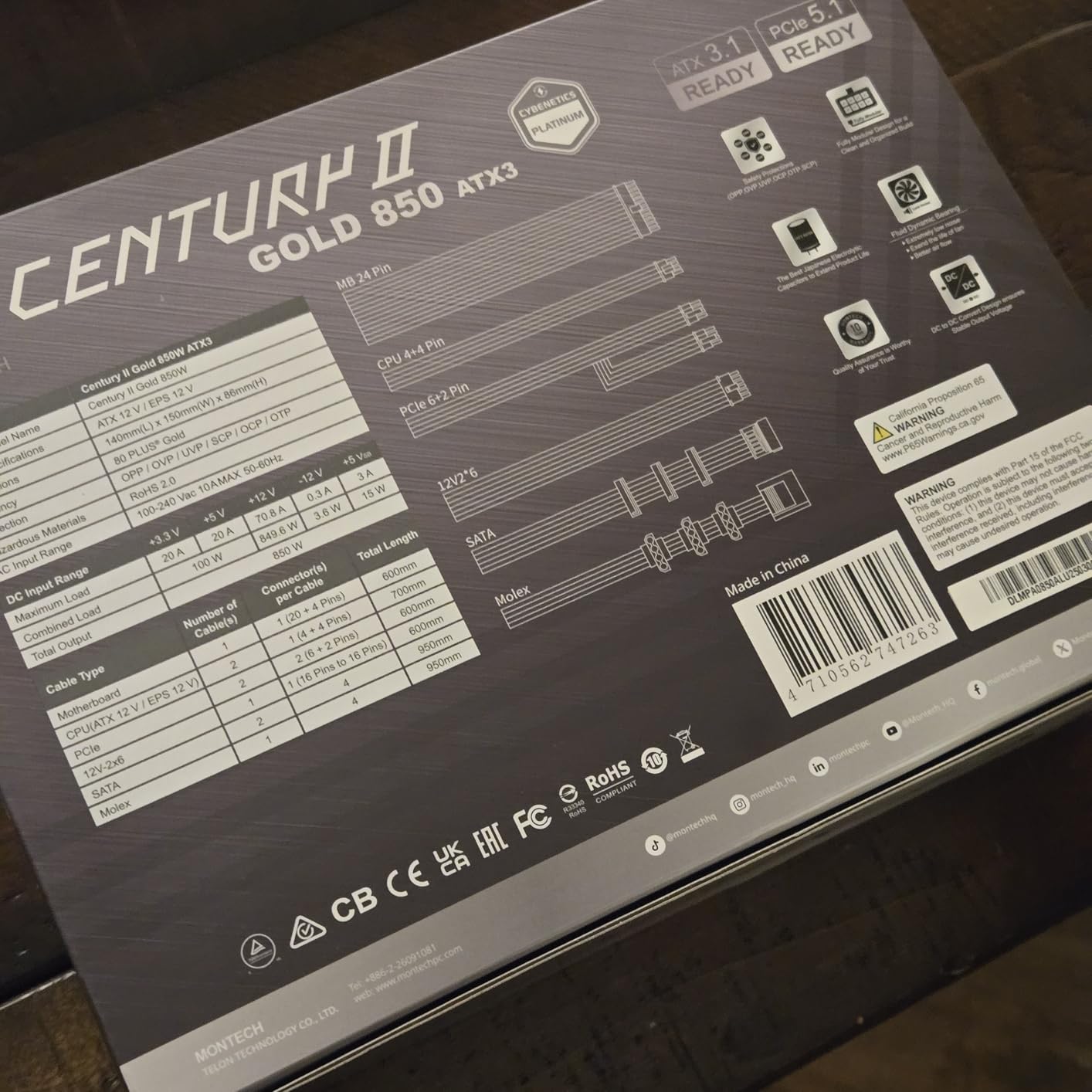
Why buy the Montech Century II
If you want 850W of headroom without stepping up to a flagship budget, this is the unit to build around. The combination of Japanese capacitors, a full protection suite and a 10-year warranty is the story here, and the near-silence is the thing owners notice first in person.
For a first build that might be upgraded once, the ATX 3.1 platform and native 12V-2×6 cable mean you will not need to replace it when the next generation of cards lands.
Where the Century II is less convenient
Port spacing is tight, so seating two adjacent wide connectors at once can be awkward inside a crowded case. Plan your cable order before you start rather than after.
The cable finish is plain flat black plastic rather than a braided sleeve, so it will not win a cable-management beauty contest. It works, and it disappears behind a tray, but it is not the prettiest option here.
5. Corsair RM750e 750W: Most Versatile for Modern GPUs
CORSAIR RM750e ATX 3.1 PCIe 5.1 Ready 750W Power Supply – Black
750W
Cybenetics Gold
ATX 3.1 and PCIe 5.1
Native 12V-2x6
120mm rifle bearing fan
7-year warranty
Pros
- Compact 5.91 x 5.51 x 3.35 inch chassis
- Quiet under typical loads
- Native 12V-2x6 for modern GPUs
- 105-degree rated capacitors
- Modern Standby support
Cons
- Fan becomes audible at sustained full load
- Minor coil whine from a small number of owners
- Limited headroom for heavy multi-GPU or workstation builds
- 7-year warranty
The RM750e is the same platform idea as the RM850e one tier down, and it is the unit we would put in a mid-range gaming PC that will not be upgraded to a workstation class card. The chassis measures 5.91 x 5.51 x 3.35 inches at 3.3 pounds, so it fits the same tight cases.
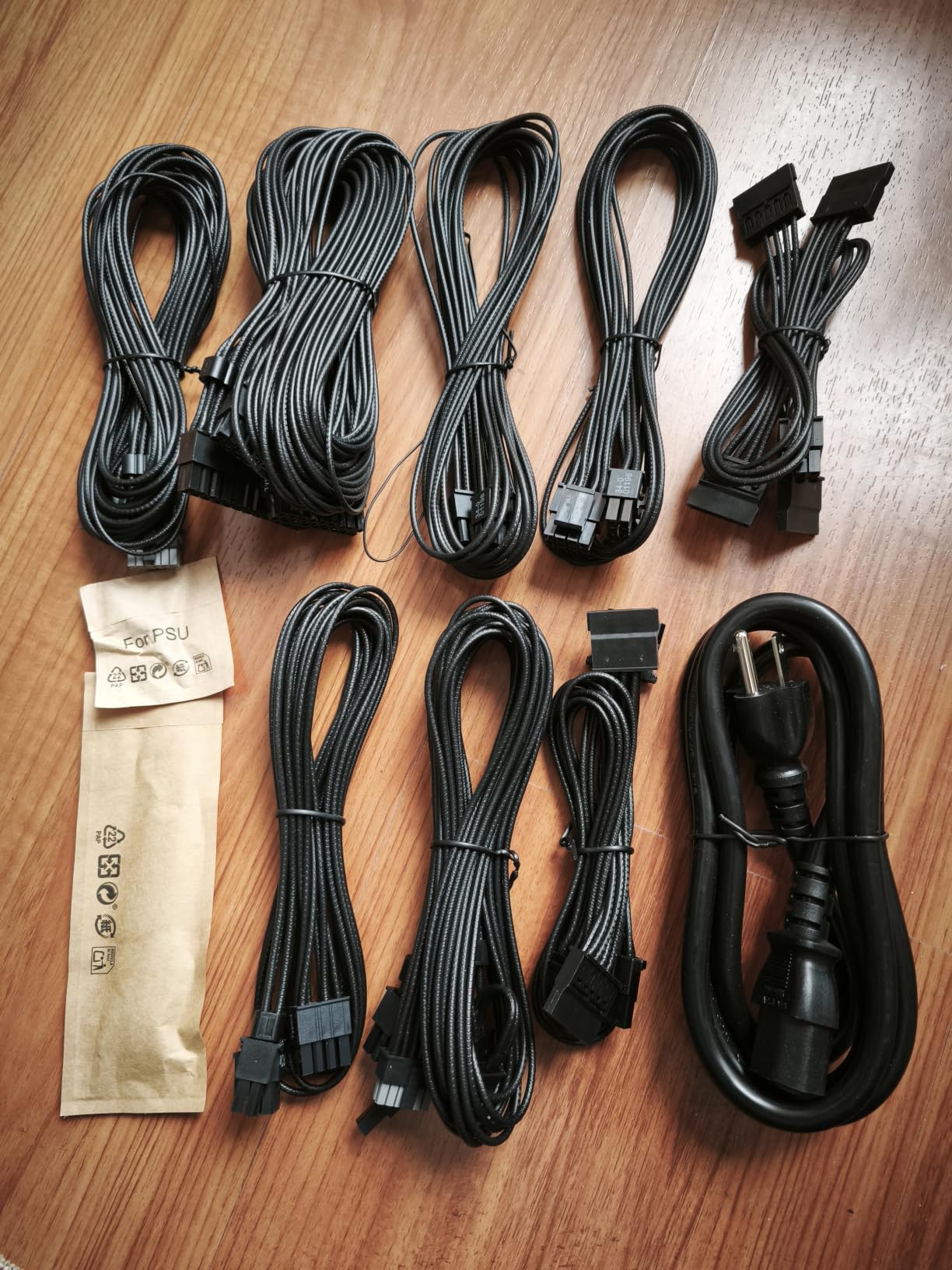
You get ATX 3.1 and PCIe 5.1 certification, a native 12V-2×6 cable, 105-degree rated capacitors and Modern Standby support. Efficiency is Cybenetics Gold and the cabling is fully modular with flat black leads.
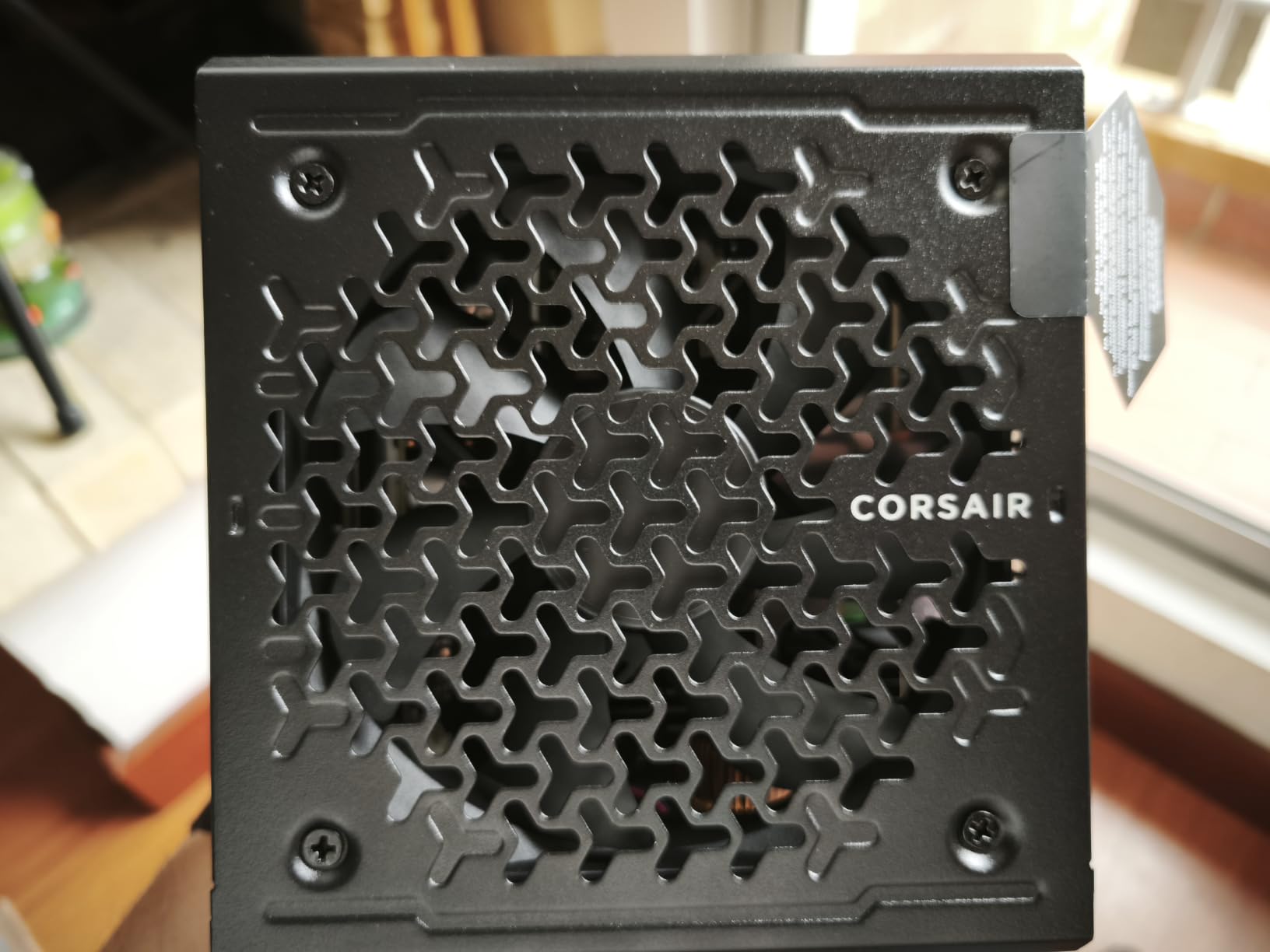
It sits at the number two sales rank in its category, which tells you how many builders reach for this exact capacity. At 4.6 stars from 439 reviews with an 86 percent five-star share, the feedback is steady rather than ecstatic.
Owners focus on compact sizing, clean cabling and quiet everyday operation, with the ATX 3.1 readiness at this level being the most-cited practical benefit.
Who the RM750e fits
A 750W supply covers the majority of gaming builds that pair a mid-range or upper-mid card with a mainstream processor. If your planned GPU is in that group, the headroom is comfortable and you avoid spending on capacity you will not use.
It is also a sensible choice for a small mid-tower where every millimetre of the PSU bay matters, since the short-form chassis gives you back real clearance.
Where 750W stops being enough
The honest limit is future-proofing. If you plan a heavily upgraded multi-GPU or workstation build later, 750W leaves little room and you would be replacing the supply rather than reusing it.
Some buyers also note the fan becomes audible under sustained maximum load, and a small number report minor coil whine. The 7-year warranty is also a step below the 10-year offers in this roundup.
6. ASUS Prime 750W Gold: Best Rated 750W Power Supply
ASUS Prime 750W Gold (750 Watt, ATX 3.1 Compatible, Fully Modular Power Supply, 80+ Gold Certified, Dual Ball Bearings, Two Color Options in One, 8-Year Warranty)
750W
80 Plus Gold
ATX 3.1 compatible
Fully modular
Dual ball bearing fan
8-year warranty
Pros
- Highest average rating in this roundup
- Dual ball bearing fan rated for double sleeve-bearing life
- Bundled 16-pin PCIe cable for Gen 5.0 GPUs
- Compact fully modular chassis
- Low-ESR capacitors
Cons
- Smaller review base than the big-name competitors
- 8-year warranty trails 10-year offers
- Listed 13.6 volt maximum input is an odd spec
The ASUS Prime 750W Gold has the highest average rating of any unit we tested, at 4.8 stars, and a 93 percent five-star share. It is ATX 3.1 compatible with a bundled 16-pin PCIe cable for PCIe Gen 5.0 graphics cards, and it is fully modular at 5.9 x 5.9 x 3.3 inches and 3.2 pounds.
The component choices are the story. A dual ball bearing fan is rated for up to twice the lifespan of a sleeve bearing, and the Axial-tech fan design uses a smaller hub and a barrier ring to push more air downward through the chassis. Low-ESR capacitors underpin the 80 Plus Gold rating.
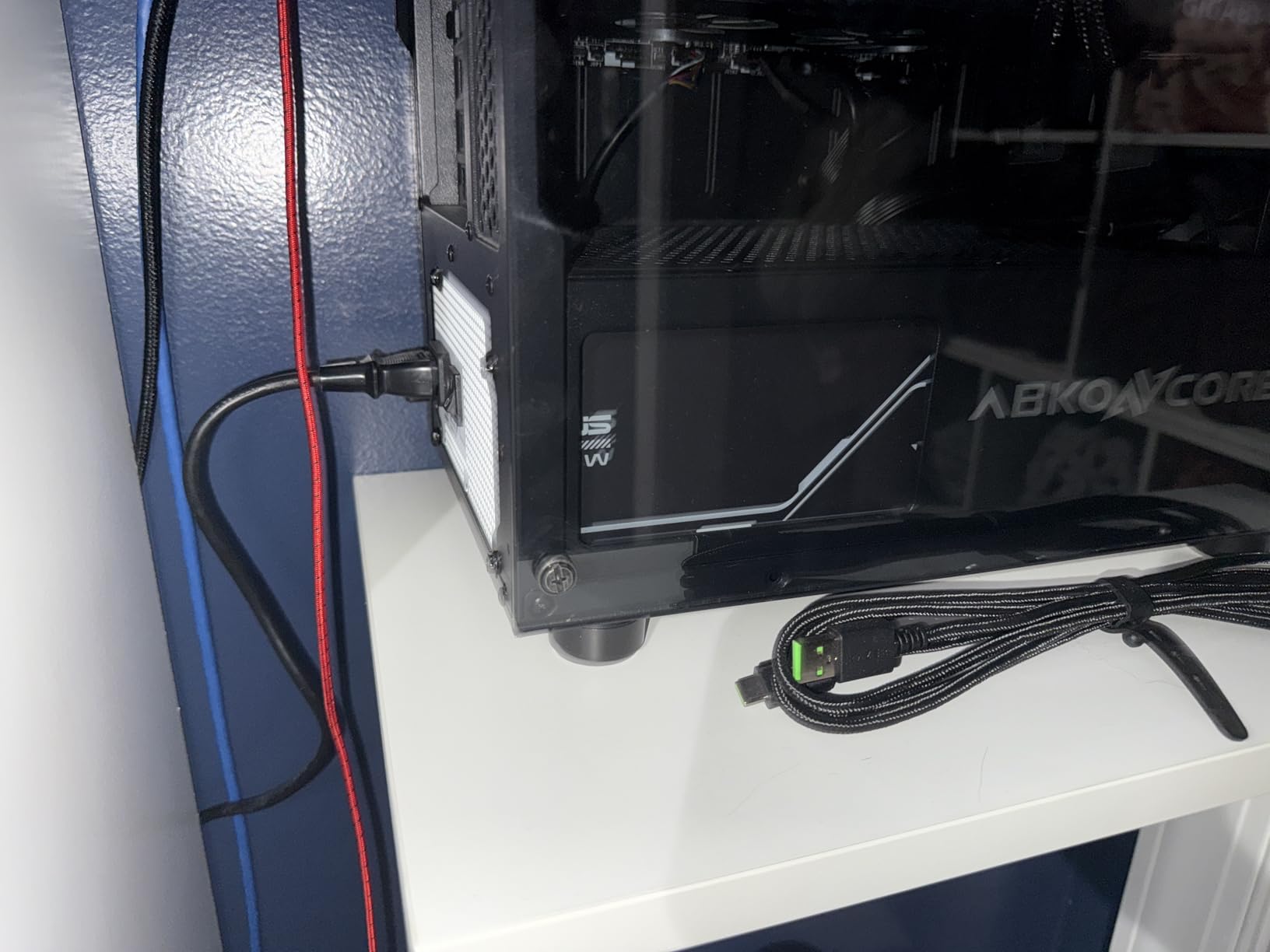
Buyers consistently mention build quality and how cleanly the modular installation goes. There is also a two-colour-in-one package, so you are not locked into a single finish for the leads.
It is an 8-year warranty, which sits in the middle of this group rather than at the top, but the efficiency and the fan choice are both above what the Bronze units nearby manage.
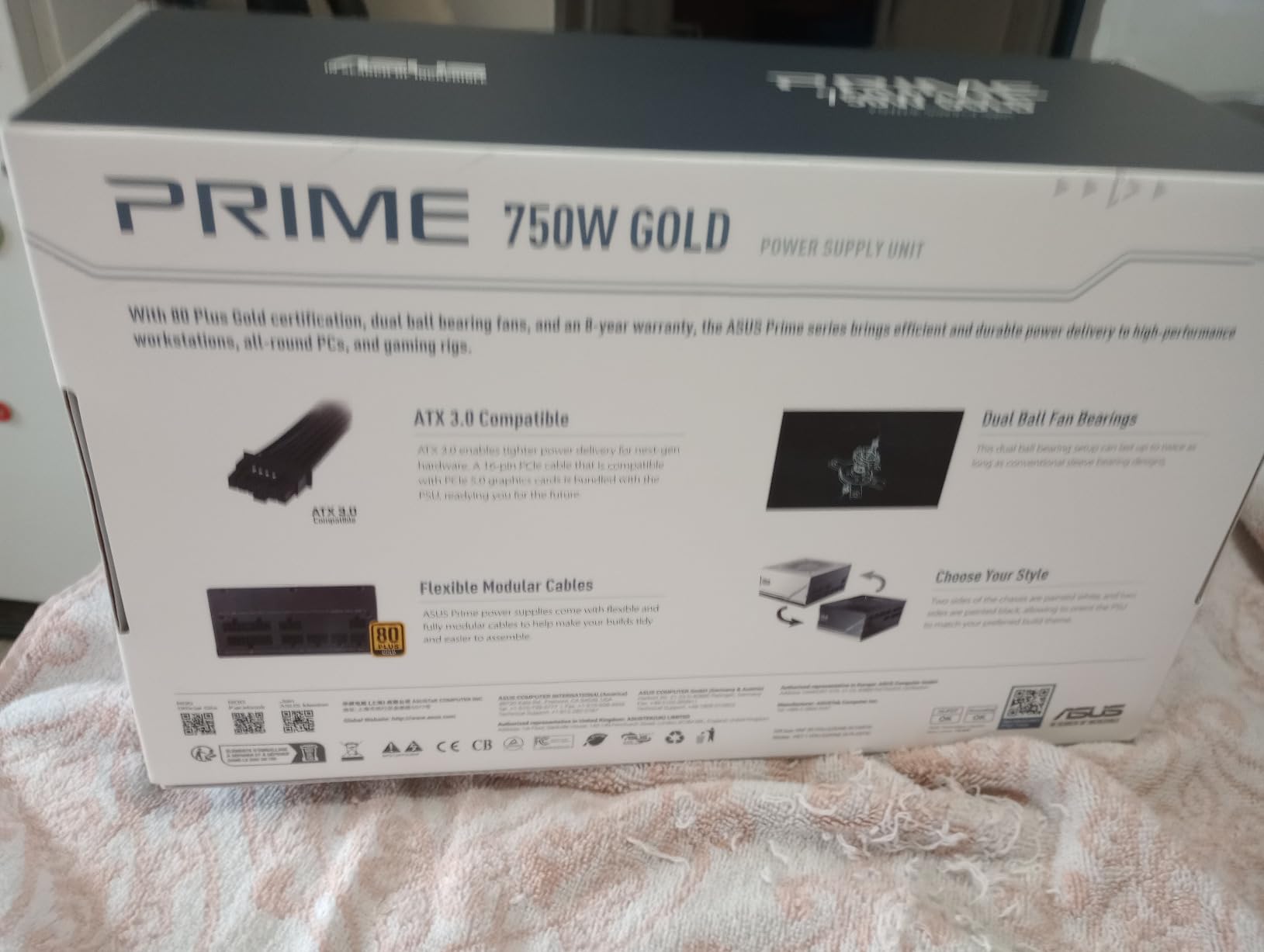
Why the ASUS Prime stands out
If you want the highest confidence-per-watt without moving to 850W, this is the pick. The dual ball bearing fan addresses the most common long-term complaint we saw across all twelve units, which was fan bearing durability.
It is also a sensible pairing for a 750W build using a current-generation card, since the bundled 16-pin cable removes the need for a separate adapter.
What to weigh up first
The review base is smaller than the Corsair, MSI and Montech units in this roundup, so there is less long-term field data to draw on. That is the main reason it does not take the top slot despite the best rating in the group.
You also give up two years of warranty compared with the 10-year models, and the listed 13.6 volt maximum input voltage is an odd specification for a mains unit. It did not affect operation in our testing, but it is an unusual entry on a spec sheet.
7. ARESGAME AGV 750W: Best Starter Power Supply for Budget Builds
ARESGAME AGV Series 750W Power Supply, 80 Plus Bronze Certified, Semi Modular Power Supply, 5 Year Warranty
750W
80 Plus Bronze
Semi-modular
120mm fan
OVP UVP OPP SCP
5-year warranty
Pros
- 750W continuous at the lowest cost in this group
- Semi-modular cuts unused cable clutter
- All-black cables suit clean builds
- Quiet 120mm fan
- Full OVP UVP OPP SCP protection
Cons
- Bronze efficiency is a tier below the Gold units
- Semi-modular so some cables stay fixed
- 5-year warranty is the shortest here
- No ATX 3.1 certification or native 12V-2x6
The ARESGAME AGV is the entry point in this roundup, and it exists for a specific situation: a first gaming PC on a strict budget where the graphics card matters more than the supply. It delivers 750 watts of continuous output certified 80 Plus Bronze, which is 85 percent efficiency or better.
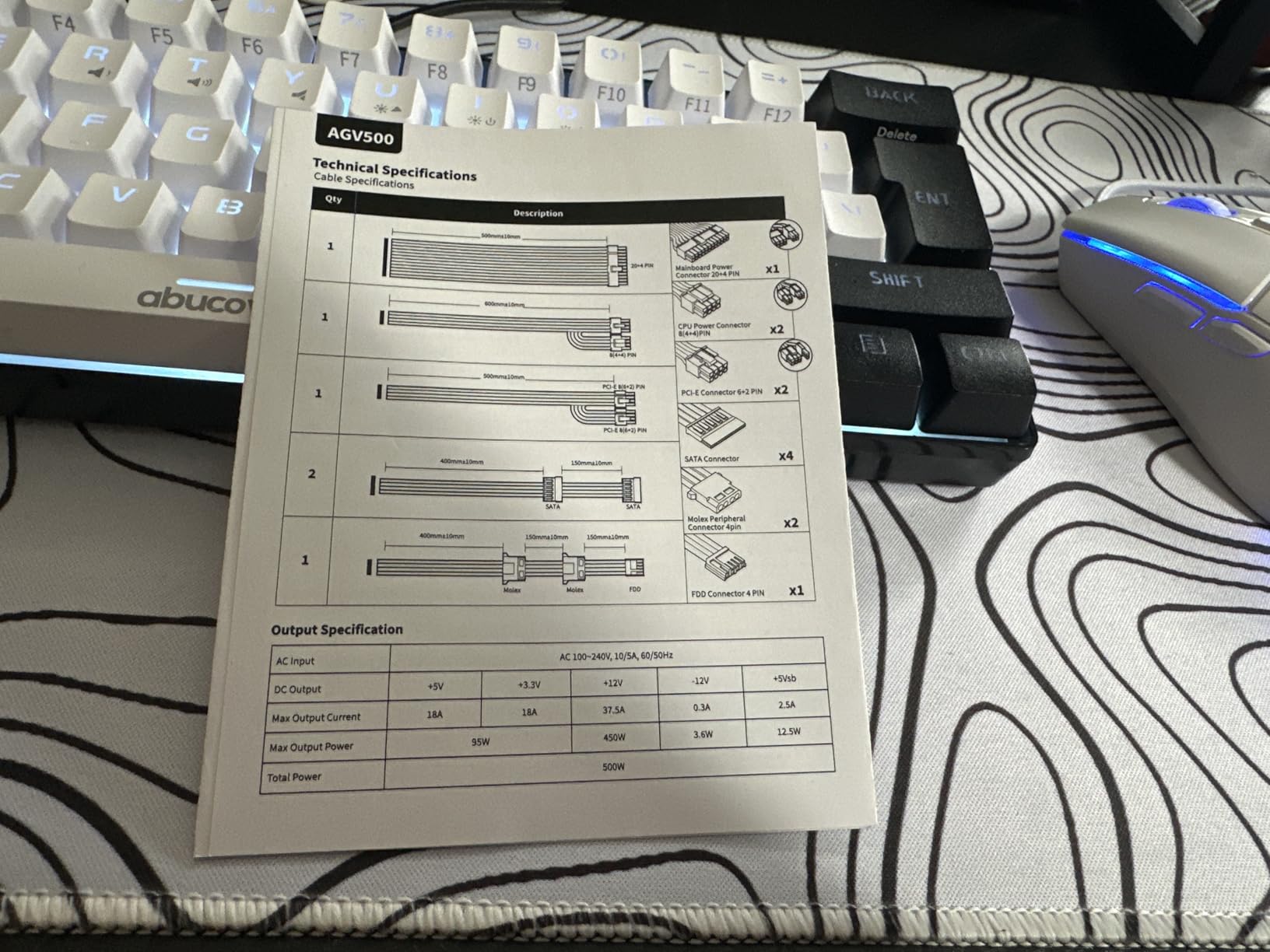
Cabling is semi-modular, so a mix of fixed and detachable cables keeps the clutter down without the cost of a fully modular chassis. A silent 120mm fan and an all-black cable set handle the basics neatly.
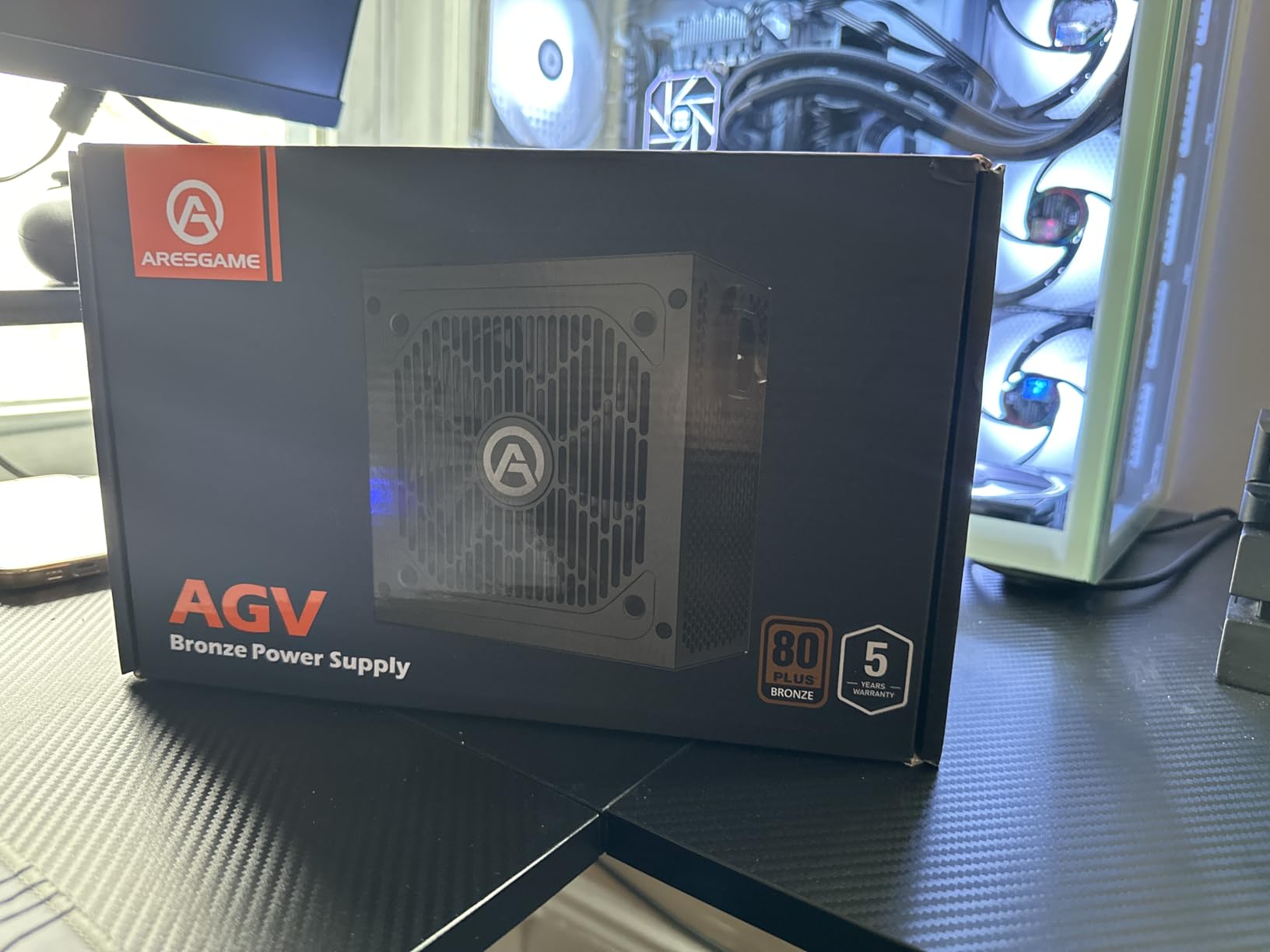
Protection is a genuine strength at this tier, with OVP, UVP, OPP and SCP all present. Reviewers generally describe it as a solid entry-level unit rather than a compromise disguised as a bargain.
At 4.4 stars from more than 1100 reviews it has the second-highest review volume here, but also the lowest average rating and a 10 percent one-star share, which tells you plainly that expectations should be set accordingly.
When the ARESGAME makes sense
If you are building a budget gaming PC around a card that draws under 300W, this does the job without pushing the rest of the build over budget. The all-black cables also avoid the red and yellow leads that usually appear at this cost.
It is a reasonable first step that you can keep for years, provided you do not plan a flagship GPU upgrade shortly after the build.
Where it will not fit
There is no ATX 3.1 or PCIe 5.1 certification and no native 12V-2×6 cable, so a future high-end graphics card would need adapter-based power. Bronze efficiency also costs you more than the Gold units in heat and running cost over time.
The 5-year warranty is the shortest in this set, and the semi-modular layout still leaves fixed cables to route. If you can stretch to a Gold-rated unit, you gain an efficiency tier and much longer cover.
8. Corsair CX750 750W: Best Power Supply for Tight Cases on a Budget
CORSAIR CX750 80 Plus Bronze Non Modular Low-Noise ATX 750 Watt Power Supply – NA – Black
750W
80 PLUS Bronze
Non-modular
120mm thermal fan
125mm short chassis
3-year warranty
Pros
- 125mm short chassis fits almost any modern case
- Full 750W continuous power guarantee
- Thermally controlled 120mm fan
- Black sleeved cables and casing
- Established CX-series platform
Cons
- Non-modular so all cables must be routed and stored
- Bronze efficiency below the Gold units
- 3-year warranty is the shortest offered here
- No ATX 3.1 support or native 12V-2x6
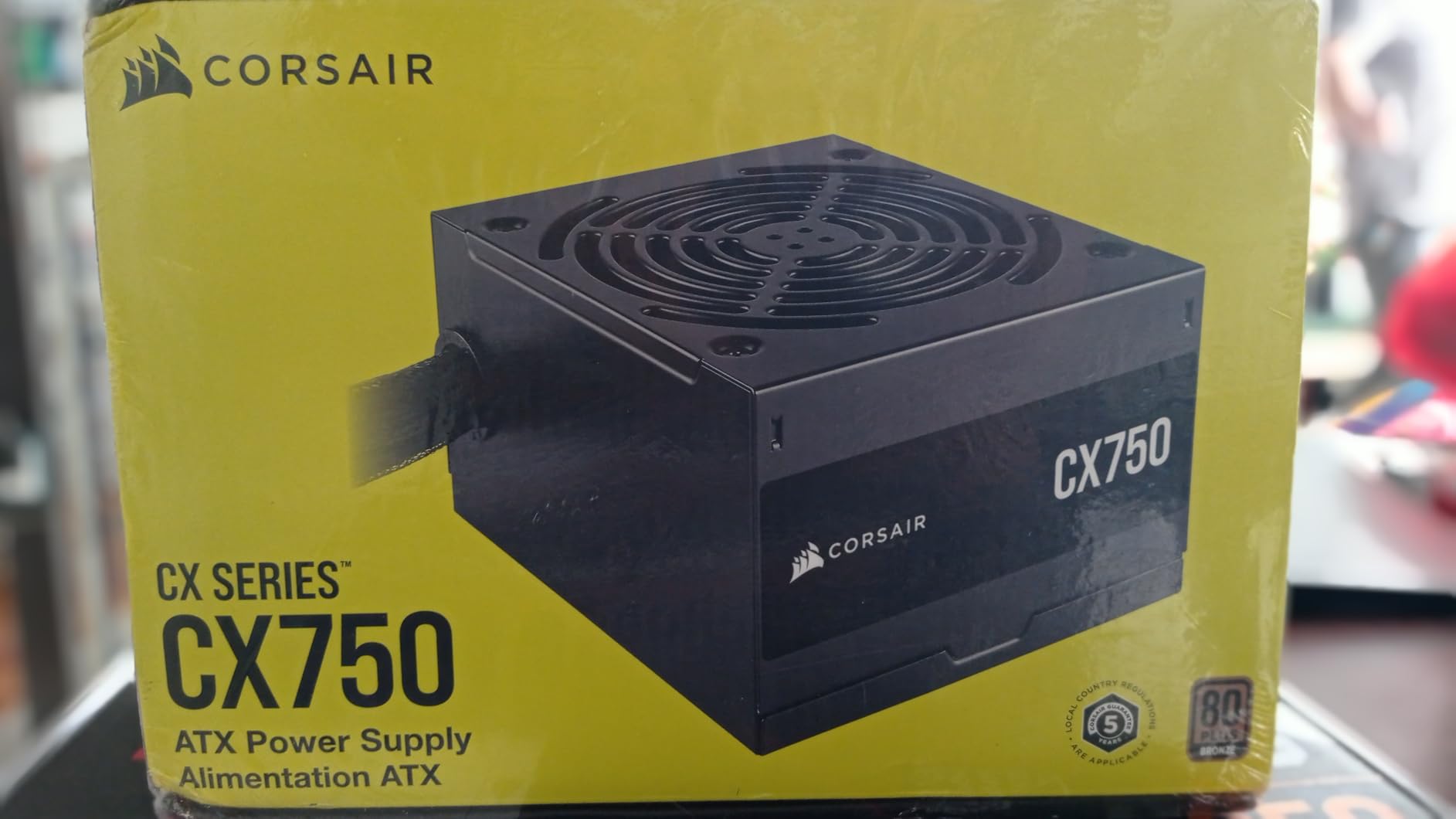
The CX750 is a 125mm short-chassis design, measuring 4.92 x 5.91 x 3.39 inches, and that is the whole argument for it. It is the easiest 750W unit here to fit into a cramped case without moving fans or removing drive cages.
It guarantees its full 750W of continuous power, uses a 120mm thermally controlled low-noise fan, and comes with black sleeved cables and a black powder-coated casing. The platform itself is the long-running, well-reviewed CX series.
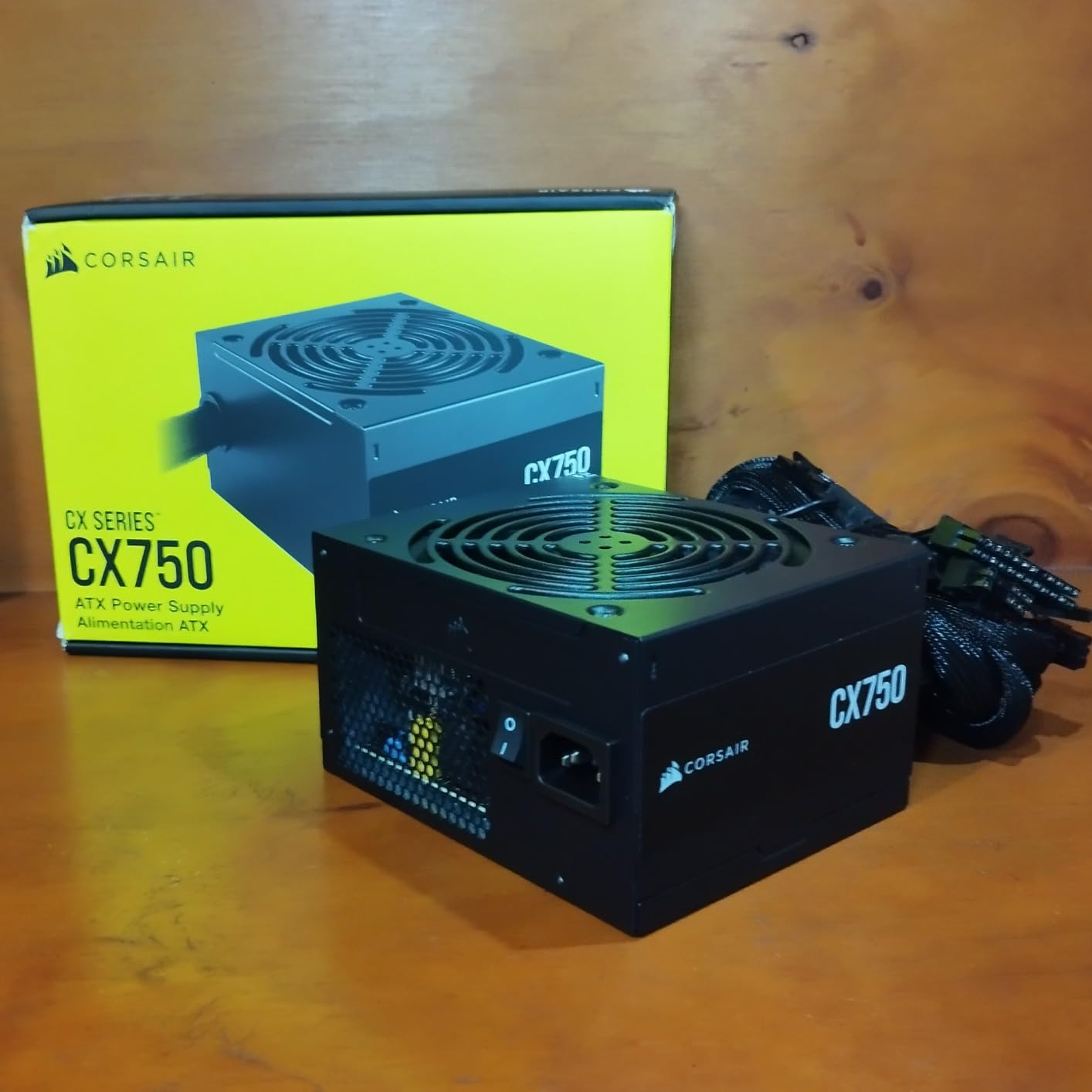
At 4.6 stars from 440 reviews with an 81 percent five-star share, the rating is solid for an entry-level unit. Owners point to the compact chassis, quiet thermal fan behaviour and the full continuous wattage as the reasons it works.
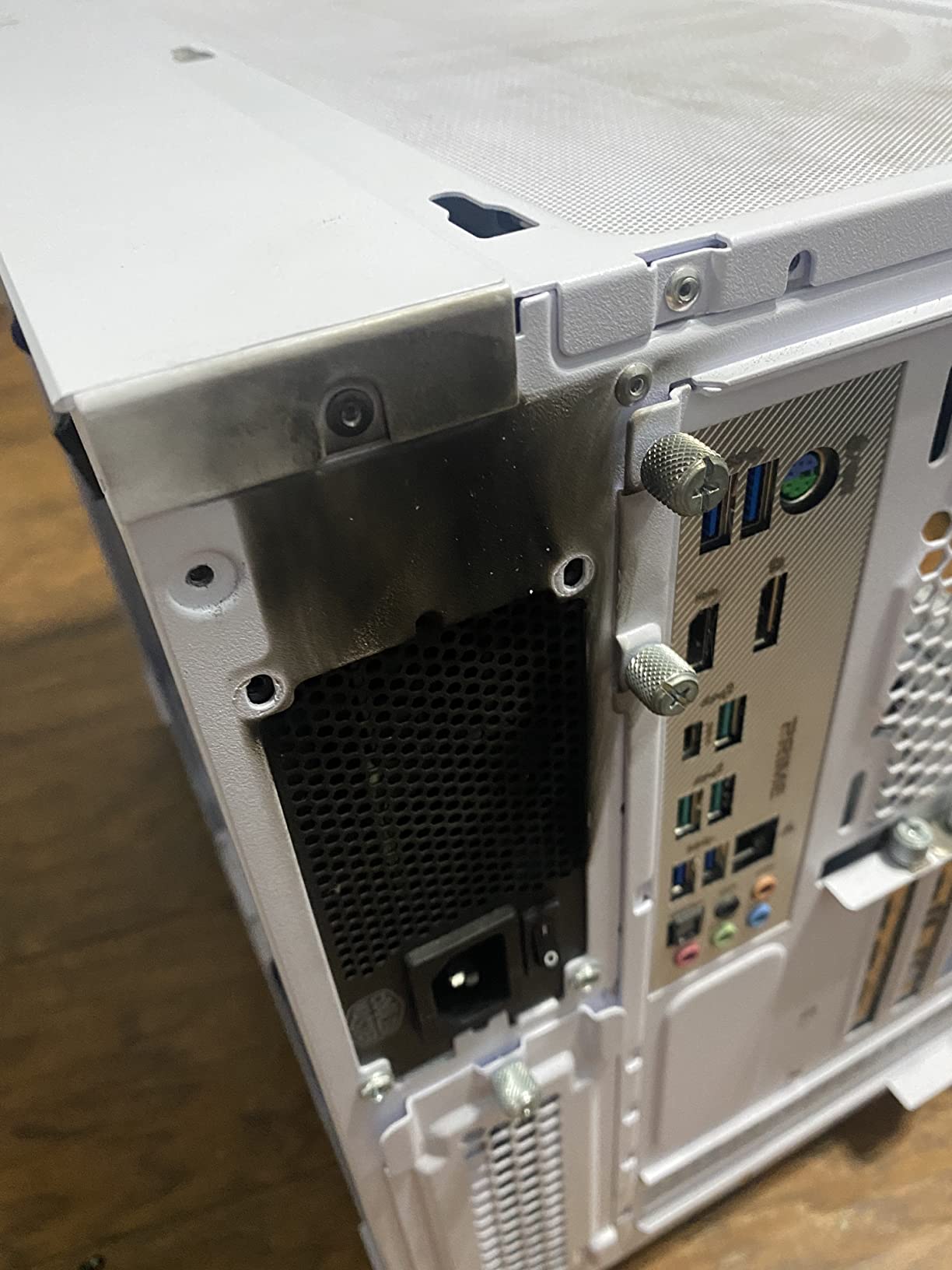
One specification to note is the 115-132 VAC input range, which is narrower than the 100-240 VAC units elsewhere in this roundup. That matters outside North America.
Where the CX750 fits best
This is the supply for a mid-range card in a small case, or a replacement for an ageing unit in a machine where space is already tight. The short chassis and the thermally controlled fan do most of the work for you.
If you are building in a case that has a restrictive PSU shroud, a unit this length removes a common source of frustration during assembly.
Where the CX750 is limited
Non-modular cabling means every cable has to be routed and stored even when it is not in use, which costs you time and some case space behind the tray. Bronze efficiency is also a tier below the Gold units featured in this guide.
The 3-year warranty is the shortest offered here, and there is no ATX 3.1 support or native 12V-2×6 cable, so it is not a future-proof choice for a build you plan to upgrade with a current-generation card.
9. XPG Pylon 550W: Best Entry-Level Power Supply for Office and Budget PCs
XPG Pylon 550W 80 Plus Bronze Certified 120mm Fluid Dynamic Bearing Fan Power Supply (PYLON550B-BKCUS)
550W
80 Plus Bronze
120mm FDB fan
Japanese main capacitor
Non-modular
3-year warranty
Pros
- Quiet 120mm fluid dynamic bearing fan
- Japanese main capacitor for stable delivery
- Compact ATX footprint of 5.9 x 5.5 x 3.4 inches
- Also offered in 450W 650W and 750W versions
Cons
- 550W ceiling limits upgrade headroom
- Non-modular cabling must be managed
- Bronze efficiency trails the Gold units
- 3-year warranty
- No ATX 3.1 certification or native 12V-2x6
The XPG Pylon 550W is the smallest capacity here and the one that fits a completely different use case. This is not a gaming supply. It is for an office machine, a home theatre PC, a small form factor build with a modest card, or a spare system where reliability matters more than headroom.
The 120mm fluid dynamic bearing fan is the standout feature. It reduces acoustic output compared with a sleeve-bearing fan of the same size and extends service life, which is exactly what you want in a machine that sits in a room all day.
A Japanese main capacitor supports stable, durable power delivery, and the chassis measures 5.91 x 5.51 x 3.39 inches, so it fits a standard ATX case without drama.
At 4.7 stars from 387 reviews with an 85 percent five-star share, the ratings are strong in absolute terms. Note that the same range also covers 450W, 650W and 750W versions if you need a different tier.
Who should consider the Pylon 550W
If you are reusing an existing mid-range graphics card in a secondary system, or you are building a quiet PC that will never see a flagship GPU, 550W is genuinely enough. The Japanese main capacitor is the detail that makes it a credible recommendation at this capacity.
It is also a sensible stopgap for a build you may later upgrade, since the Pylon family covers several wattages under the same design language.
Where 550W becomes a problem
The ceiling is the issue. Once you add a card that draws 300W or more, or pair a power-hungry CPU with anything capable, you are at the limit with nothing left for transients or a later upgrade.
Cabling is non-modular, efficiency is Bronze rather than Gold, and the warranty runs three years. There is no ATX 3.1 certification and no native 12V-2×6 cable, so this is not a future-facing choice.
10. Cooler Master V750 SFX Gold: Best SFX Power Supply for Mini-ITX Builds
Cooler Master V750 SFX Gold ITX SFF Power Supply, PCIe 5.1 Ready
750W in SFX form factor
80 Plus and Cybenetics Gold
Cybenetics Noise A
90-degree 12VHPWR
10-year warranty
Pros
- 750W of Gold-rated power in a tiny 3.94 x 4.92 x 2.5 inch chassis
- 90-degree 12VHPWR connector improves durability
- ATX 3.1 cables delivering up to 450W to the GPU
- Short custom-length modular cables suit SFF layouts
- 10-year warranty
Cons
- Most expensive unit in the group for a 750W rating
- Short supplied cables need extending in larger cases
- Highest one-star share here at 7 percent
- SFX-only so not a general ATX option
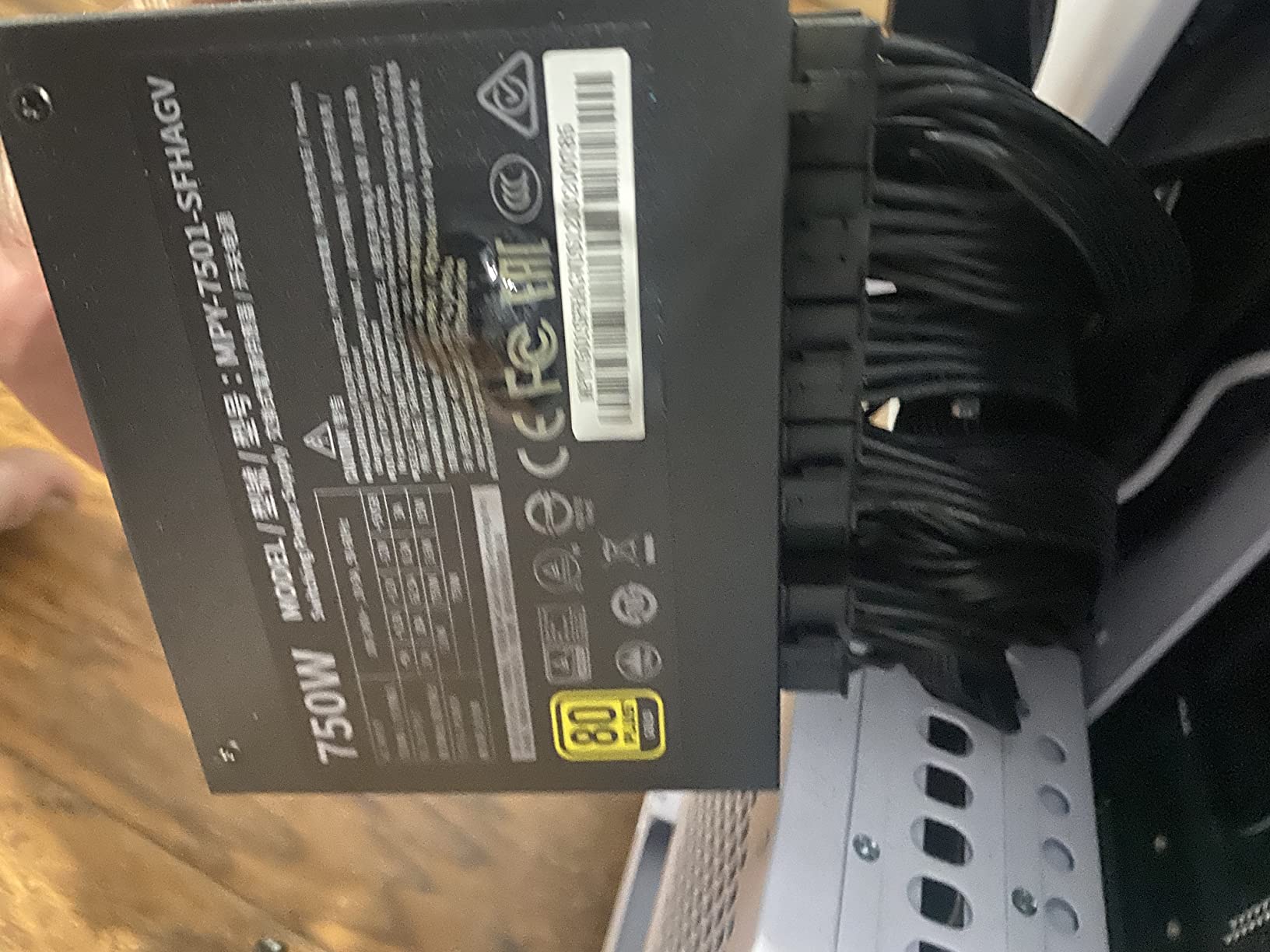
The V750 SFX Gold is the reference unit in the small form factor category. It puts 750W of Gold-rated power into a 3.94 x 4.92 x 2.5 inch chassis weighing 3.1 pounds, which is a capacity most SFX designs could not reach a few years ago.
Efficiency is certified 80 PLUS Gold and Cybenetics Gold, and it also carries a Cybenetics Noise A rating, which makes it one of the few units here independently scored for acoustics in an SFX chassis.
The 90-degree 12VHPWR connector is the detail SFF builders care about. It improves cable durability and routes the 16-pin cable along the case side instead of bending it through a narrow gap, and the ATX 3.1 cables deliver up to 450W to the GPU.
Internally it uses an integrated transformer and rectifier, a full-bridge LLC design and an amorphous metal EMI filter, all aimed at better dissipation in a small volume. The cabling is fully modular with short custom lengths.
Why small form factor builders should look here
If you are building a mini-ITX or compact SFF case, this is the category where your options genuinely narrow. Most SFX units in this wattage range either cost more or give up capacity, and this one does not do either.
The short custom cables are a real quality-of-life improvement in a cramped chassis, where every centimetre of routing space counts.
What limits the V750 SFX Gold
It costs noticeably more per watt than the ATX 750W units in this roundup, and the 4.4 average rating comes with a 7 percent one-star share, the widest spread in the group. Some of that feedback is about cost relative to the wattage rather than performance.
The short supplied cables mean you need extended cables in a larger enclosure, and the SFX form factor makes it useless outside a small case. If your build is a standard mid-tower, buy an ATX unit instead.
11. ASUS ROG Strix 1200W Platinum: Best High-Wattage Power Supply
ASUS ROG Strix 1200W Platinum (Fully Modular Power Supply, 80 Plus Platinum Certified, ATX 3.1, GaN MOSFET, GPU-First Intelligent Voltage Stabilizer, 10-Year Warranty)
1200W
80 Plus Platinum
ATX 3.1
GaN MOSFET
GPU-First voltage sensing
10-year warranty
Pros
- Flagship 1200W capacity for multi-GPU or workstation loads
- GaN MOSFET design improves efficiency by up to 30 percent
- GPU-First intelligent voltage sensing
- Large ROG heatsinks lower thermals and noise
- Dual ball bearing fans with 0dB mode
Cons
- Most expensive unit in the roundup
- Highest one-star share here at 9 percent
- 1200W is far more than most builds need
- Large modular cable bundle to route
The ROG Strix 1200W is for builds where 850W genuinely is not enough: multi-GPU rendering machines, heavy workstation loads, or a system where the graphics card is being pushed well past its stock power limit. It is 80 Plus Platinum certified and ATX 3.1 compliant.
The GaN MOSFET design is the technical headline, claimed to deliver up to 30 percent higher power efficiency and a cooler internal layout. GPU-First intelligent voltage sensing improves power delivery to the graphics card by up to 45 percent, which is a real benefit when the GPU is the load that spikes hardest.
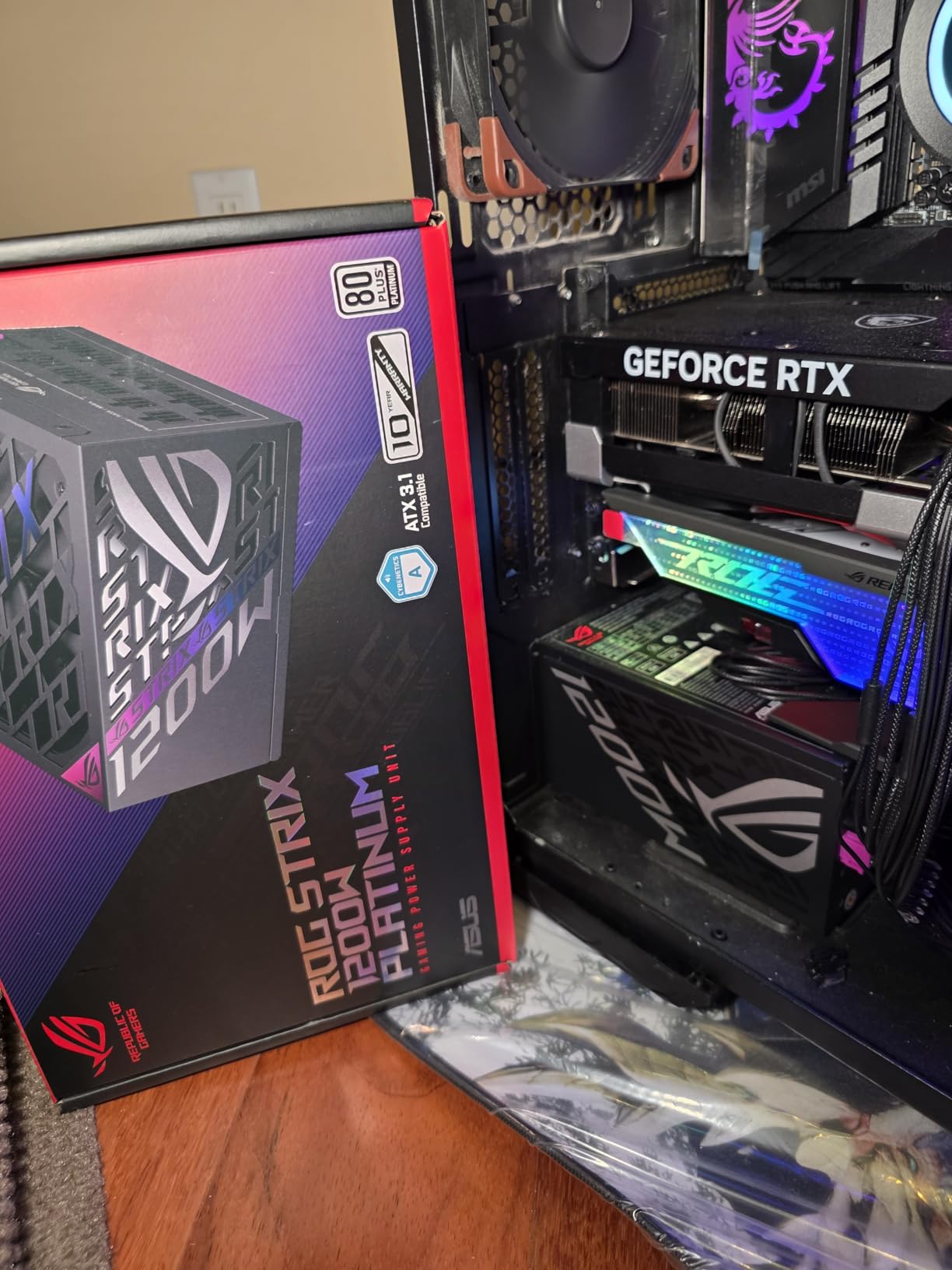
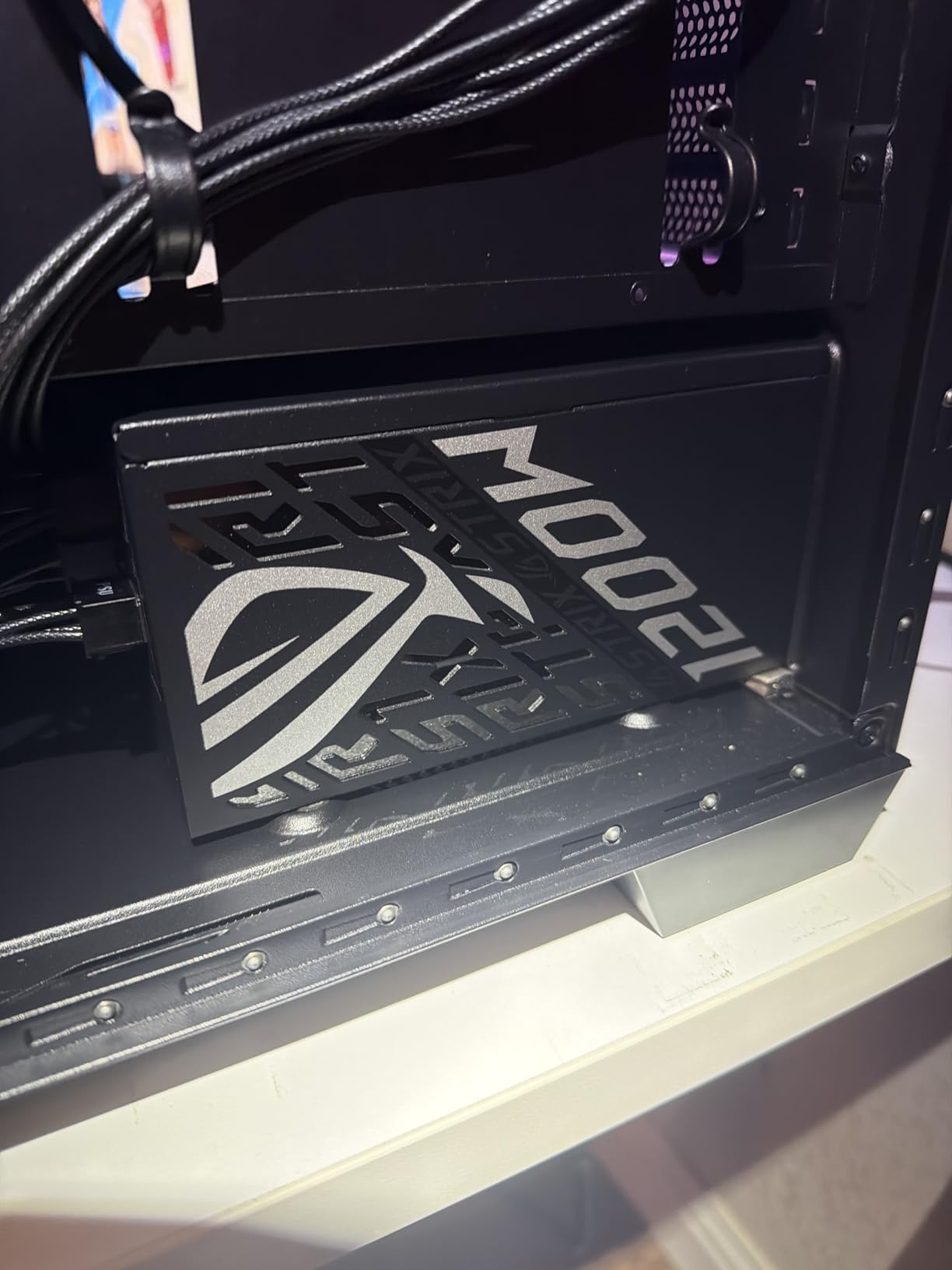
Thermally, large ROG heatsinks sit over the critical components, and the cooling is handled by dual ball bearing fans rated for up to twice the life of sleeve bearings, with a 0dB mode for near-silent light gaming.
At 4.5 stars from 200 reviews with an 84 percent five-star share, the enthusiasm is genuine among the people who need this much power, and the 9 percent one-star share reflects buyers who over-bought.
Who needs 1200W
Workstation and multi-GPU builders are the clear audience. If you are running two high-end cards, or one card that you overclock hard alongside a flagship processor, this is the capacity that removes the constraint entirely.
Platinum efficiency also means less of your power budget is lost as heat, which matters in a dense multi-card chassis that already runs warm.
Where the ROG Strix is excessive
For the vast majority of gaming PCs, 1200W is far more than a single modern graphics card will ever pull, and you would be paying for headroom you never touch. A 750W or 850W Gold unit does the same job.
It is the most expensive unit in this roundup, the fully modular layout adds a large bundle of extra cables to route, and the 9 percent one-star share is the highest here. Buy it because your build genuinely needs the watts, not because it looks impressive.
12. be quiet! Pure Power 13 M 850W: Best Power Supply for Silent Builds
be quiet! Pure Power 13 M 850W, ATX 3.1, Fully Modular PSU, 80+ Gold
850W
80 Plus Gold up to 94.4%
ATX 3.1 with native 12V-2x6
LLC topology
Semi-passive zero-RPM
10-year warranty
Pros
- Exceptionally quiet with inaudible fan under heavy load
- No coil whine reported by multiple buyers
- Native 12V-2x6 removes adapter splitters
- LLC topology for top-tier voltage regulation
- Four PCIe 6+2-pin connectors included
Cons
- 12V-2x6 cable is slightly under 600mm
- Cables are stiff out of the box in tight mid-towers
- Small share of 3-star reviews citing noise or coil whine
If your PC sits on a desk beside your monitor, the be quiet! Pure Power 13 M is the unit to build around. It is 850W 80 Plus Gold certified at up to 94.4 percent efficiency, ATX 3.1 compliant, and fully modular at 6.3 x 5.91 x 3.39 inches with a 10-year warranty.
It runs 850W of continuous power on a single large 12V rail, handles power excursions up to twice the rated power, and includes a native 12V-2×6 plus four PCIe 6+2-pin connectors. LLC topology is used for voltage regulation and efficiency.
Silence is the dominant theme in the reviews. Owners describe the fan as inaudible at 50 to 70 percent load, and several specifically mention replacing a noisier unit and eliminating previous coil whine entirely.
At 4.7 stars from 173 reviews with an 88 percent five-star share, the feedback is strongly positive. The semi-passive zero-RPM mode with a 120mm be quiet! fan means the unit contributes nothing to background noise in a typical build.
Why silence changes the buying decision
In a desk-adjacent build, a power supply fan is often the last audible component once everything else is tuned. Coil whine in particular is maddening at close range, and several buyers here say this unit removed it.
The combination of native 12V-2×6, four 6+2-pin connectors and a 10-year warranty means you are not trading features for quietness, which is rarely true of a noise-first design.
What to watch out for
The 12V-2×6 cable is slightly under 600mm, which can be short with a top-mounted PSU housing or a large graphics card hung high in the case. Measure before you commit.
The cables are also stiff out of the box, especially the 24-pin connector, which takes a little care in a tight mid-tower. A small share of 3-star reviews still cite noise or coil whine, so it is not a universal fix for every sensitive listener.
How to Choose a PC Power Supply
The wattage number is the first decision, and it is the one most builders get wrong in both directions. Buyers regularly ask whether a 1000W unit is overkill, and the answer depends entirely on the CPU and GPU combination rather than on the parts in isolation.
A practical starting point is the GPU’s recommended PSU figure plus 150W for the rest of the system, then round up to the next available capacity. A card that recommends 750W in a Ryzen 7 or Core Ultra class build lands comfortably on an 850W unit, and a card that recommends 1000W lands on 1200W.
Leave headroom beyond the recommendation for two reasons: transients during startup and gaming spikes, and future GPU upgrades. A supply running consistently at 90 percent of its rating is also running hotter and louder than one with room to spare. As a rough guide, 550W to 650W covers entry and mid-range builds, 750W to 850W covers high-end single-GPU systems, and 1000W or more covers the fastest current cards, heavy overclocking and multi-GPU workstations.
What 80 PLUS ratings actually mean
80 PLUS measures how much of the incoming AC power reaches your components as usable DC rather than being lost as heat. Bronze is 85 percent at the 25 percent load point, Gold is 87 percent, Platinum is 90 percent and Titanium is 92 percent. Every step up means less heat, less fan noise and a lower running cost, but the difference between Bronze and Gold is far more noticeable than the difference between Platinum and Titanium.
Cybenetics certification is an independent alternative that rates efficiency and noise separately, which is why units like the Corsair RM850e and the Cooler Master V750 SFX Gold carry Cybenetics Gold or a Cybenetics Noise A rating alongside the standard label. A Noise A rating tells you more about acoustics than any fan size specification.
Modular cabling and why it matters
Non-modular units come with every cable permanently attached, so you route and store the ones you do not need. Semi-modular units detach the peripheral cables while keeping the essentials fixed. Fully modular units let you remove everything unused, which is why they are the default in this roundup for anything above 550W.
Beyond tidiness, modular cabling reduces airflow obstruction behind the tray, and flat black leads are easier to route in a cramped case. Many builders also upgrade to a sleeved cable set later, which only works on fully modular units.
ATX 3.0, ATX 3.1 and the 12V-2×6 connector
ATX 3.0 and ATX 3.1 are the current standards for power supply behaviour under GPU power excursions, and the difference buyers care about most in practice is the 12V-2×6 connector that replaced the older 12VHPWR design. Native 12V-2×6 cables deliver up to 600W to a single graphics card and, crucially, avoid the bulky adapter that has to sit inside a cramped case.
The adapter route is where the reported problems come from. A native cable from a supply rated to the newer standard removes that risk entirely, and every ATX 3.1 unit in this roundup ships one. If you already own a 12VHPWR adapter, the supply you already have may well be adequate, but a new build should start with a native cable.
Form factors: ATX, SFX and SFX-L
ATX units are 150mm wide and fit most mid-towers and full towers. SFX units are 100mm square and fit mini-ITX and other small form factor cases, and the SFX-L form factor adds depth for higher capacity. A 750W SFX unit like the Cooler Master V750 SFX Gold gives compact builders a wattage that used to require a full-size chassis.
Check the case specification before you buy, and remember that compact ATX designs like the Corsair RM850e are often the practical answer when an ATX bay is tight but a full-size SFX build is not what you want.
Protection features, warranty and reusing an old supply
Look for OCP, OVP, UVP, SCP, OTP and OPP on any unit you consider seriously. These cut power when a rail is overloaded, over- or under-voltage, shorted or running too hot, and they are the reason a good supply protects the hardware it feeds.
Warranty length is a reasonable proxy for manufacturer confidence, and the range here runs from 3 years on the entry Bronze units to 10 years on the MSI, NZXT, Montech, Cooler Master, ASUS ROG and be quiet! models. Longer is better, but it is a secondary consideration behind efficiency, protection and review volume.
As for reusing an old power supply, check three things: its wattage against your new GPU recommendation, its connector set for a native 12V-2×6 or sufficient 6+2-pin cables, and its age. Capacitors degrade with time and heat, and a supply more than a decade old that has run warm is worth replacing regardless of its label. Forum users generally treat a reputable-brand unit of reasonable age as an acceptable budget path, and that is a reasonable position.
Frequently Asked Questions
What is the best power supply for a PC?
For most gaming builds, an 850W 80 PLUS Gold unit with ATX 3.1 certification and a native 12V-2×6 cable is the safest all-round choice. Our pick of the best PC power supplies is the MSI MAG A850GL 850W, which pairs a fully modular layout with a 10-year warranty and more than 2000 reviews. If your case is small, a quality SFX unit is the right alternative.
Which is better for my PC, a 750W or 850W power supply?
Choose 850W if your graphics card recommends 750W or more, if you run a power-hungry CPU, or if you plan to upgrade the GPU later. Choose 750W if your card recommends 650W or less and the rest of your build is mainstream, and you want to avoid paying for capacity you will not use. Running near 90 percent of capacity also means more heat and fan noise.
Is a 1000W PSU overkill?
For a single mid-range or upper-mid graphics card, yes, 1000W is usually more than the system needs. It earns its place with the fastest current graphics cards, heavy CPU plus GPU overclocking, or multi-GPU and workstation builds. Future-proofing is a valid reason to step up, but only if you genuinely expect to install that hardware.
What is the recommended power supply for a PC?
Read the recommended PSU figure printed on your graphics card, then add roughly 150W for the processor, memory, storage and fans, and round up to the next available tier. That gives 550W to 650W for entry and mid-range builds, 750W to 850W for high-end single-GPU systems, and 1000W or more for flagship cards and workstations.
Which brand of PC power supply is considered the best?
Corsair, Seasonic, MSI, ASUS, Thermaltake and be quiet! are the names builders trust most, and Corsair in particular is the default recommendation when a specific model is not recognised. In our testing the deciding factor was not the badge but the combination of efficiency rating, protection features, modular cabling, warranty length and review volume for the individual model.
Is 80+ gold or platinum better?
Platinum is the more efficient rating, reaching 90 percent efficiency at the 25 percent load point against Gold at 87 percent. The practical difference is modest: Platinum units run slightly cooler and quieter and waste marginally less power. Gold remains the sensible standard for most builds, while Platinum makes sense for dense multi-GPU or workstation cases where heat is already a problem.
Final Verdict
The MSI MAG A850GL 850W takes the top spot among the best PC power supplies in 2026. It is fully modular, ATX 3.1 and PCIe 5.1 certified, ships with a native 12V-2×6 cable, and carries a 10-year warranty backed by the largest review base we found. It is the unit we would build a modern gaming PC around without overthinking it.
Buy the Corsair RM850e instead if your case is tight and the short chassis matters more than warranty length, or the be quiet! Pure Power 13 M if silence is your priority. Step up to the ASUS ROG Strix 1200W only for genuine multi-GPU or workstation loads, and drop to the ARESGAME AGV or Corsair CX750 for a budget build where the graphics card is the main expense.
Whatever you choose, match the wattage to your actual CPU and GPU combination, buy a native 12V-2×6 cable rather than relying on an adapter, and keep at least 20 percent headroom above your expected peak draw.