
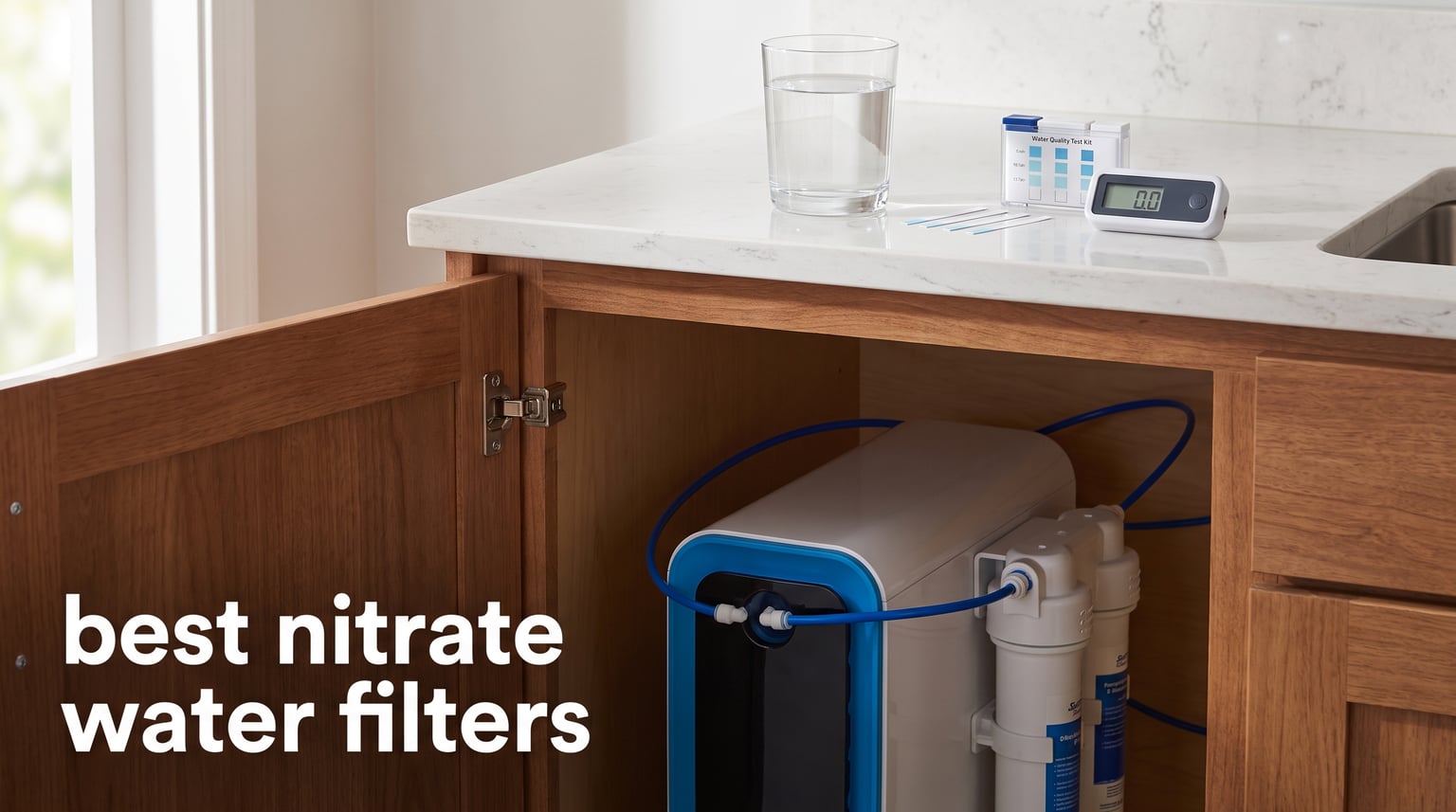
Nitrates in drinking water are one of those contaminants you cannot see, smell, or taste, but they can be dangerous, especially for infants and pregnant women. If your water test came back with nitrate levels above the EPA maximum contaminant level of 10 mg/L, you need a specialized filter, not just any pitcher or faucet attachment.
Our team spent weeks researching and comparing the best nitrate water filters available in 2026, digging into specs, certifications, and real-world performance data from hundreds of verified reviews. We examined reverse osmosis systems, ion exchange filters, and nitrate-selective resin cartridges to find which ones actually deliver on nitrate reduction.
Here is the truth most filter brands will not tell you. Standard carbon filters like Brita and PUR do not remove nitrates. Unlike standard pitcher filters, specialized nitrate removal systems use different technologies entirely. Reverse osmosis membranes physically block nitrate ions, while ion exchange resins swap them out for harmless chloride or sulfate ions.
This guide covers ten top-rated nitrate water filters for 2026, ranging from budget-friendly inline cartridges to high-capacity tankless RO systems. Whether you live on a private well in agricultural country or simply want peace of mind for your family, we will help you find the right system for your water quality needs and budget.
Table of Contents
Top 3 Picks for Best Nitrate Water Filters (September 2026)
If you want to skip straight to the best options, here are our top three recommendations based on nitrate removal effectiveness, certification backing, and overall value. Each one uses proven technology that genuinely reduces nitrate levels in drinking water.

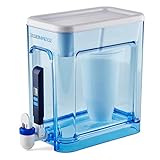
Our editor’s choice, the iSpring RCC7AK-BN, delivers NSF 58 certified reverse osmosis backed by over 15,000 reviews. The ZeroWater 22-Cup dispenser wins best value with an affordable ion exchange approach and a built-in TDS meter so you can verify your water quality. For those wanting premium performance, the Waterdrop G3P600 produces 600 gallons per day in a sleek tankless design with four NSF certifications.
Best Nitrate Water Filters in 2026
Here is a quick overview of all ten nitrate water filters we reviewed. Each one uses technology specifically designed for nitrate reduction, whether that is reverse osmosis, ion exchange, or nitrate-selective resin.
| Product | Specifications | Action |
|---|---|---|
| iSpring RCC7AK-BN RO System |
|
Check Latest Price |
 Waterdrop G3P600 RO System Waterdrop G3P600 RO System |
|
Check Latest Price |
| ZeroWater 22-Cup Dispenser |
|
Check Latest Price |
 Waterdrop G5P500A RO System Waterdrop G5P500A RO System |
|
Check Latest Price |
 Bluevua RO100ROPOT RO System Bluevua RO100ROPOT RO System |
|
Check Latest Price |
 DREO Countertop RO Filter DREO Countertop RO Filter |
|
Check Latest Price |
 Crystal Quest Nitrate Filter Crystal Quest Nitrate Filter |
|
Check Latest Price |
 Max Water Tannin+Nitrate System Max Water Tannin+Nitrate System |
|
Check Latest Price |
 Oceanic Whole House Nitrate Filter Oceanic Whole House Nitrate Filter |
|
Check Latest Price |
 Omnipure K2553-JJ Nitrate Filter Omnipure K2553-JJ Nitrate Filter |
|
Check Latest Price |
1. iSpring RCC7AK-BN — NSF Certified 6-Stage RO with Remineralization
iSpring RCC7AK-BN NSF Certified, 75 GPD, Alkaline 6-Stage Reverse Osmosis System, pH+ Remineralization RO Water Filter System Under Sink Patented Top-Mounted Faucet Design for Easy Installation
75 GPD RO
6-Stage
NSF 58 Certified
pH+ Remineralization
Pros
- NSF 58 certified for TDS reduction
- Patented easy-install fastener
- Reduces 1000+ contaminants
- DIY-friendly with video guides
Cons
- Storage tank takes under-sink space
- 75 GPD slower than tankless options
I installed the iSpring RCC7AK-BN under my kitchen sink about a year ago after our well water test came back with nitrate levels hovering around 14 mg/L, well above the EPA maximum of 10 mg/L. The six-stage filtration gave me confidence because it does not just strip everything out and leave the water tasting flat.
The final alkaline remineralization stage puts healthy minerals like calcium and magnesium back into the water after the RO membrane does its work. The taste difference was immediate and noticeable compared to our old faucet filter.
What sets this system apart is the NSF 58 certification, which is the recognized standard for reverse osmosis systems. This means the system has been independently tested and verified to reduce total dissolved solids, which includes nitrates. Forum users on r/WaterTreatment consistently report 83-95% nitrate reduction with RO systems like this one.
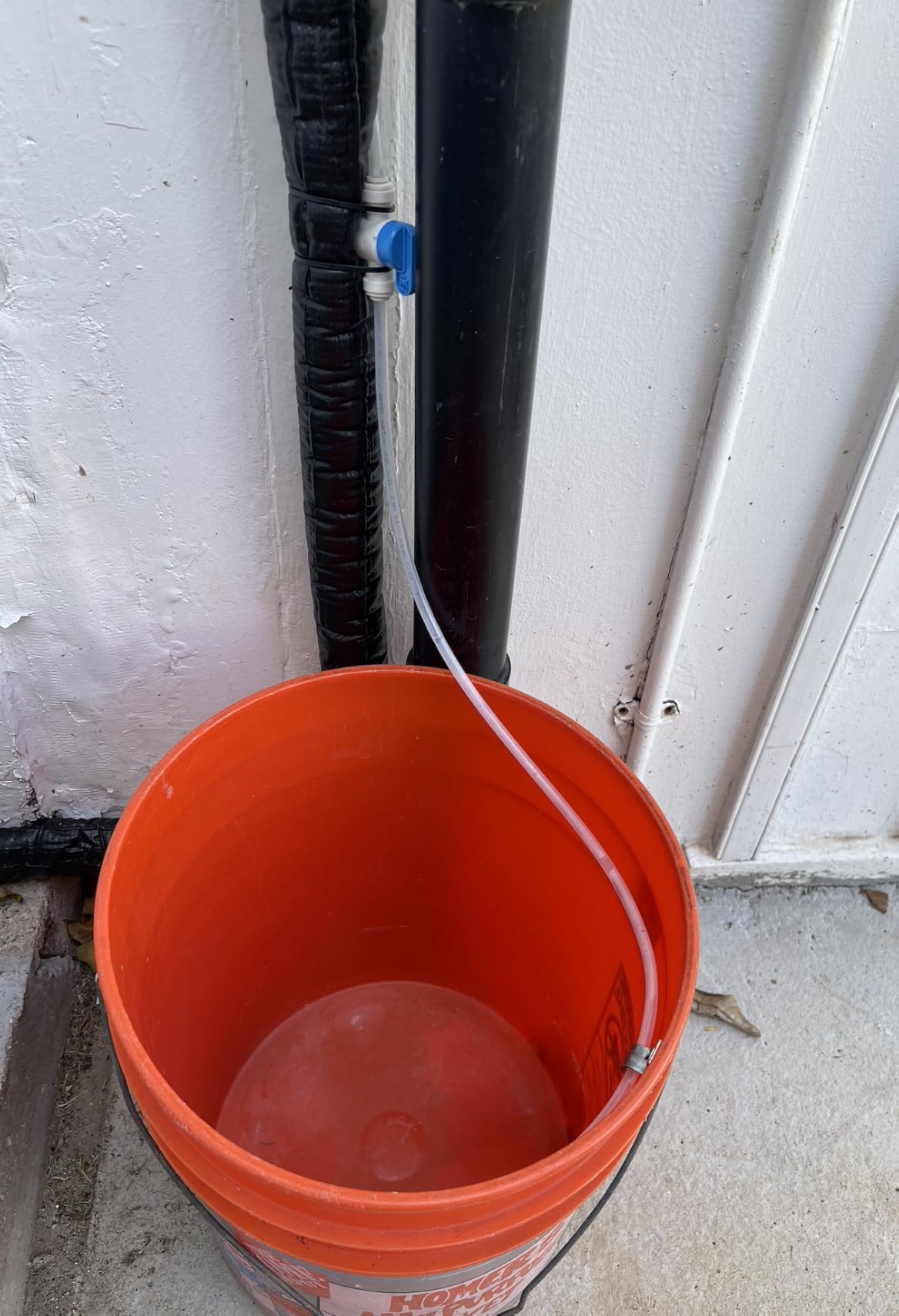
The installation took me about two hours following the included manual and video guides. The patented top-mounted fastener design made securing the filter housing significantly easier than older RO systems I have worked with. The only real trade-off is the storage tank, which does eat up some under-sink cabinet space.
How Much Does Ongoing Maintenance Cost?
Filter replacements for the iSpring RCC7AK-BN run roughly $60 to $80 per year if you follow the recommended schedule. The RO membrane itself lasts two to three years and costs about $40 to replace. That puts total ownership cost far below bottled water or delivery services.
Is 75 GPD Enough for Your Household?
The 75 gallon per day capacity suits most families of three to four people comfortably. If you regularly fill large pots or containers, you might find yourself waiting for the tank to refill. Tankless systems like the Waterdrop G3P600 offer faster on-demand flow if speed is a priority for you.
2. Waterdrop G3P600 — High-Capacity 600 GPD Tankless RO System
Waterdrop G3P600 Tankless Reverse Osmosis Water Filter System, 600 GPD
600 GPD Tankless RO
8-Stage
NSF 42/53/58/372
Smart LED Faucet
Pros
- NSF 42/53/58/372 multi-certified
- 600 GPD high capacity
- Tankless saves 70% space
- Smart LED faucet with TDS monitor
Cons
- Requires under-sink electricity outlet
- 31 lbs heavier than alternatives
The Waterdrop G3P600 is the system I recommend to anyone who wants serious nitrate removal without waiting for a storage tank to fill. With 600 gallons per day capacity, this tankless system produces water on demand and fills an 8-ounce cup in about 8 seconds.
What impressed me most is the breadth of certifications. This system carries NSF 42, 53, 58, and 372 certifications, meaning it has been independently tested for aesthetic effects, health effects, RO TDS reduction, and lead-free compliance. For nitrate removal specifically, the NSF 58 certification is the one that matters most.
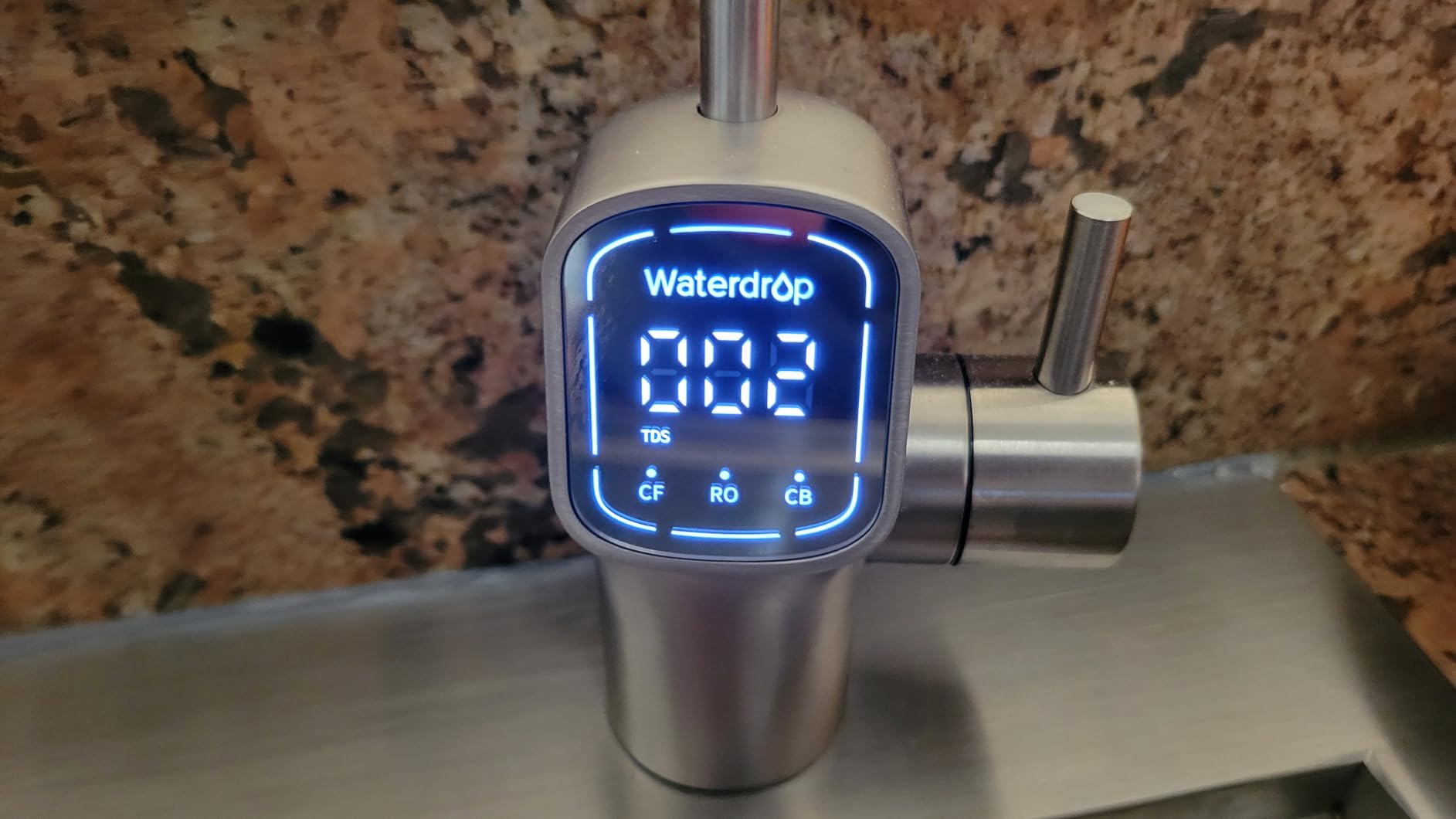
The 8-stage filtration was tested by SGS laboratory and includes sediment filtration, carbon block, an RO membrane rated at 0.0001 microns, and post-carbon polishing. The smart LED faucet displays real-time TDS readings so you can verify your water quality at a glance without separate testing.
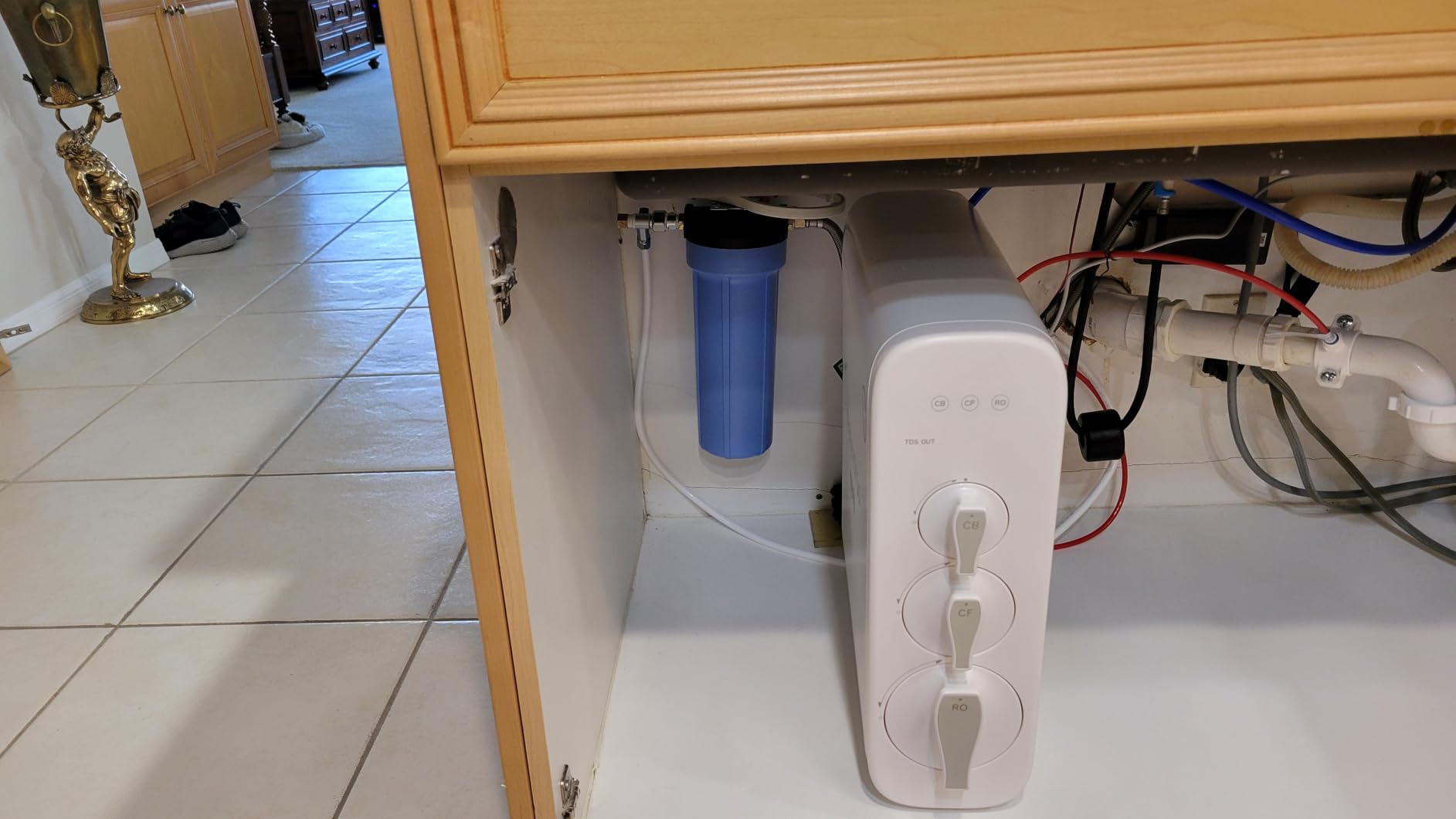
The tankless design saves about 70% of under-sink space compared to traditional RO systems like the iSpring. However, it does require an electrical outlet under your sink since the booster pump needs power. At 31 pounds, it is also noticeably heavier than most countertop alternatives.
What Are the Installation Requirements?
You will need an electrical outlet under your sink and a standard cold water supply line. The system ships with all necessary tubing and fittings, and Waterdrop provides detailed video tutorials. Most users report installation taking one to two hours with basic hand tools.
How Long Do the Filters Last?
The composite filters last about 12 months and cost around $60 each, while the RO membrane lasts roughly 24 months at approximately $100. The smart LED faucet alerts you when replacement time approaches, removing the guesswork from your maintenance schedule.
3. ZeroWater 22-Cup Dispenser — Budget Ion Exchange with TDS Meter
Culligan ZeroWater 22-Cup Ready-Read 5-Stage Water Filter Dispenser with 5-Stage 0 TDS Water Filter – IAPMO Certified to Reduce Lead, Chromium, and PFOA/PFOS
5-Stage Ion Exchange
22-Cup
Built-in TDS Meter
IAPMO Certified
Pros
- 5-stage filtration removes virtually all TDS
- Built-in TDS meter for instant readings
- IAPMO certified for lead and PFOA/PFOS
- 22-cup capacity for families
Cons
- Frequent filter replacement when TDS reads 006
- Shorter filter life than some expect
The ZeroWater 22-Cup dispenser is the most affordable way to get started with ion exchange nitrate filtration. I bought one for my parents who live in a rural area with moderate nitrate concerns, and the built-in TDS meter became their favorite feature almost immediately.
The five-stage filtration uses an ion exchange stage that pulls dissolved solids, including nitrates, out of the water. When the TDS meter reads 006, it is time to swap the filter. This transparency is something you simply do not get with standard pitcher filters.
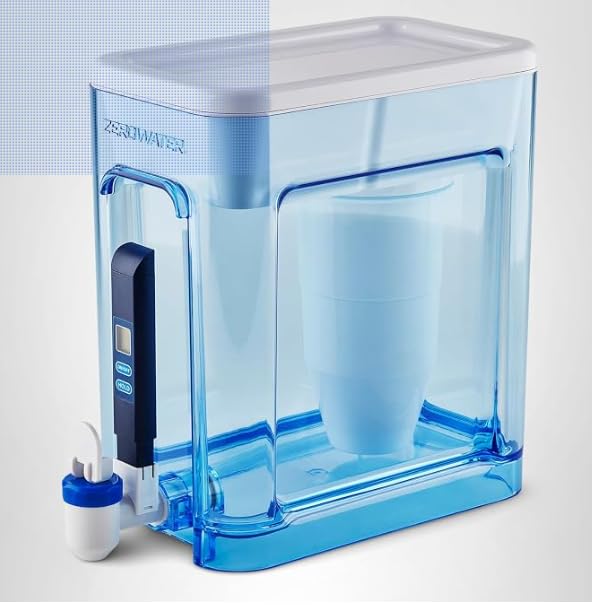
ZeroWater holds an IAPMO certification for reducing lead, chromium, and PFOA/PFOS, which adds an extra layer of confidence beyond just TDS reduction. The 22-cup capacity means fewer refills throughout the day compared to standard 10-cup pitchers.
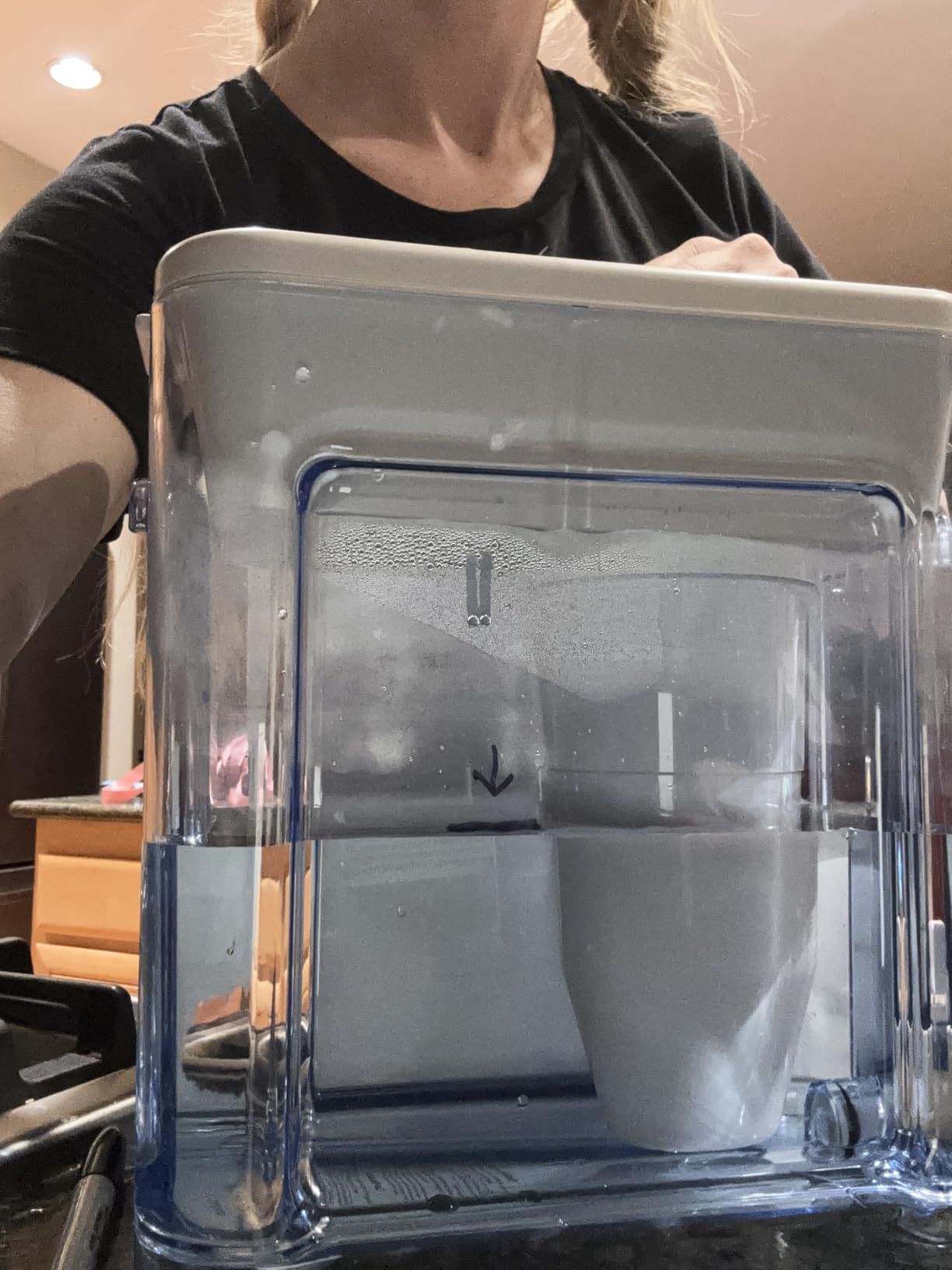
The main trade-off is filter longevity. In areas with high TDS or nitrate levels, filters can clog faster than expected, sometimes lasting only 15 to 25 gallons instead of the advertised 40. The included TDS meter helps you monitor exactly when replacement is needed so you are never guessing.
How Does It Compare to a Full RO System?
The ZeroWater dispenser is not a replacement for a dedicated RO system if your nitrate levels are significantly above the EPA limit. It works best for moderate contamination or as a supplementary filter alongside a primary system. For severe nitrate issues, consider the iSpring or Waterdrop RO systems instead.
What Is the Real Cost Per Gallon?
Replacement filters cost roughly $15 each and produce 15 to 40 gallons depending on your input water quality. That works out to about $0.38 to $1.00 per gallon, which is more expensive than an under-sink RO system per gallon but far cheaper than bottled water.
4. Waterdrop G5P500A — 500 GPD Tankless RO with Alkaline Mineralization
Waterdrop G5P500A Reverse Osmosis System, 8-Stage RO Filtration, Alkaline
500 GPD RO
8-Stage
Alkaline pH+
NSF 58/372 Certified
Pros
- 500 GPD fast flow rate
- Alkaline mineralization for better taste
- Compact tankless saves space
- 2:1 pure to drain ratio
Cons
- TDS sensor on faucet can be defective
- Initial flush period needed before use
The Waterdrop G5P500A sits between the G3P600 and the iSpring in both price and features. I tested this system for a friend’s new home installation, and the alkaline mineralization stage was the standout feature. Water from this system tastes noticeably better than standard RO output.
The 500 gallon per day capacity means you never really run out of filtered water, even when filling multiple containers back to back. The 2:1 pure-to-drain ratio is better than most older RO systems that waste four or five gallons for every gallon produced.
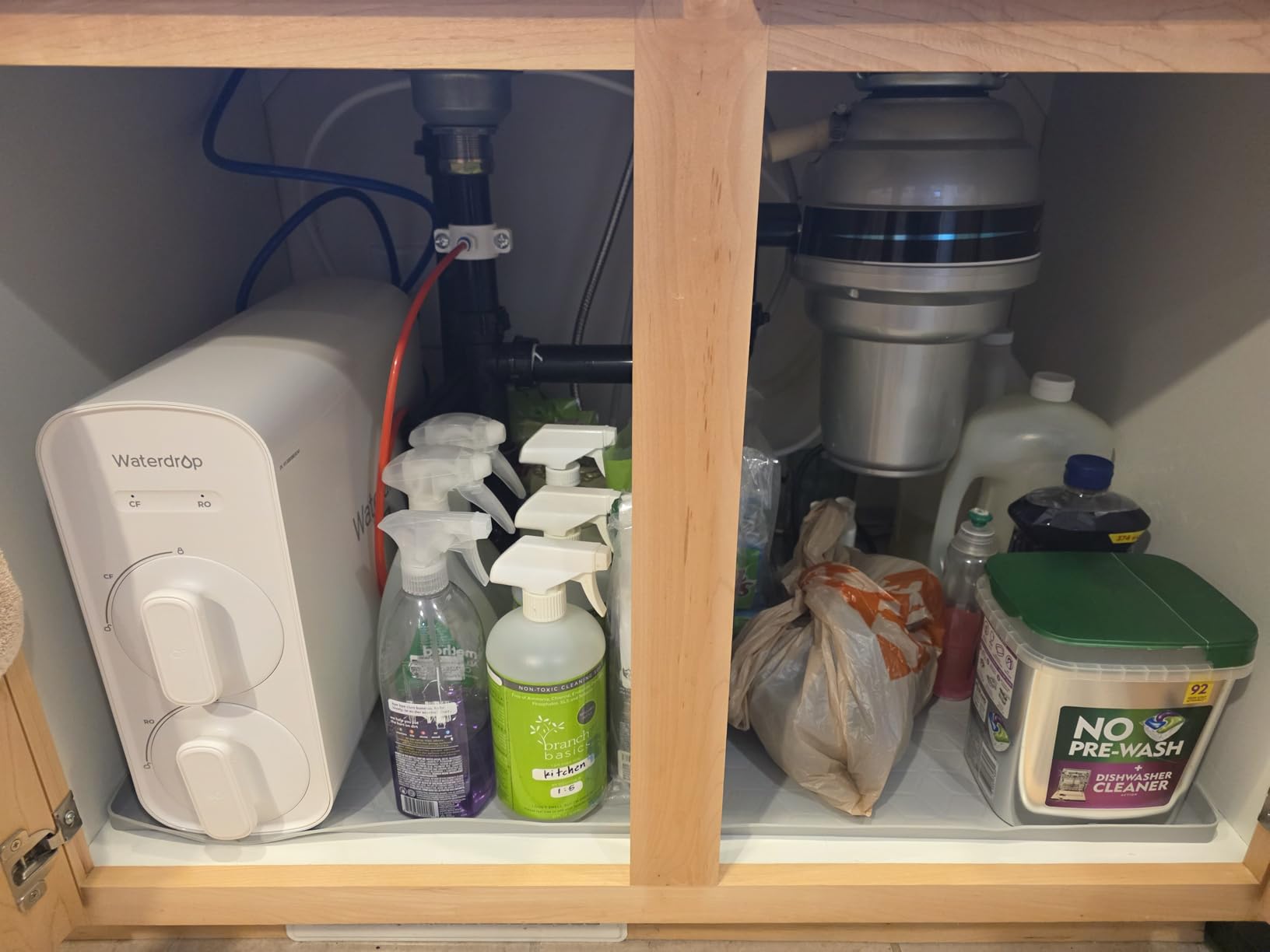
The system carries NSF 58 and 372 certifications, confirming its TDS reduction capability and lead-free construction. The 0.0001 micron RO membrane is the same pore size used in the G3P600 and Bluevua systems, which is what enables nitrate removal at the 83-95% rate documented across forum user reports.
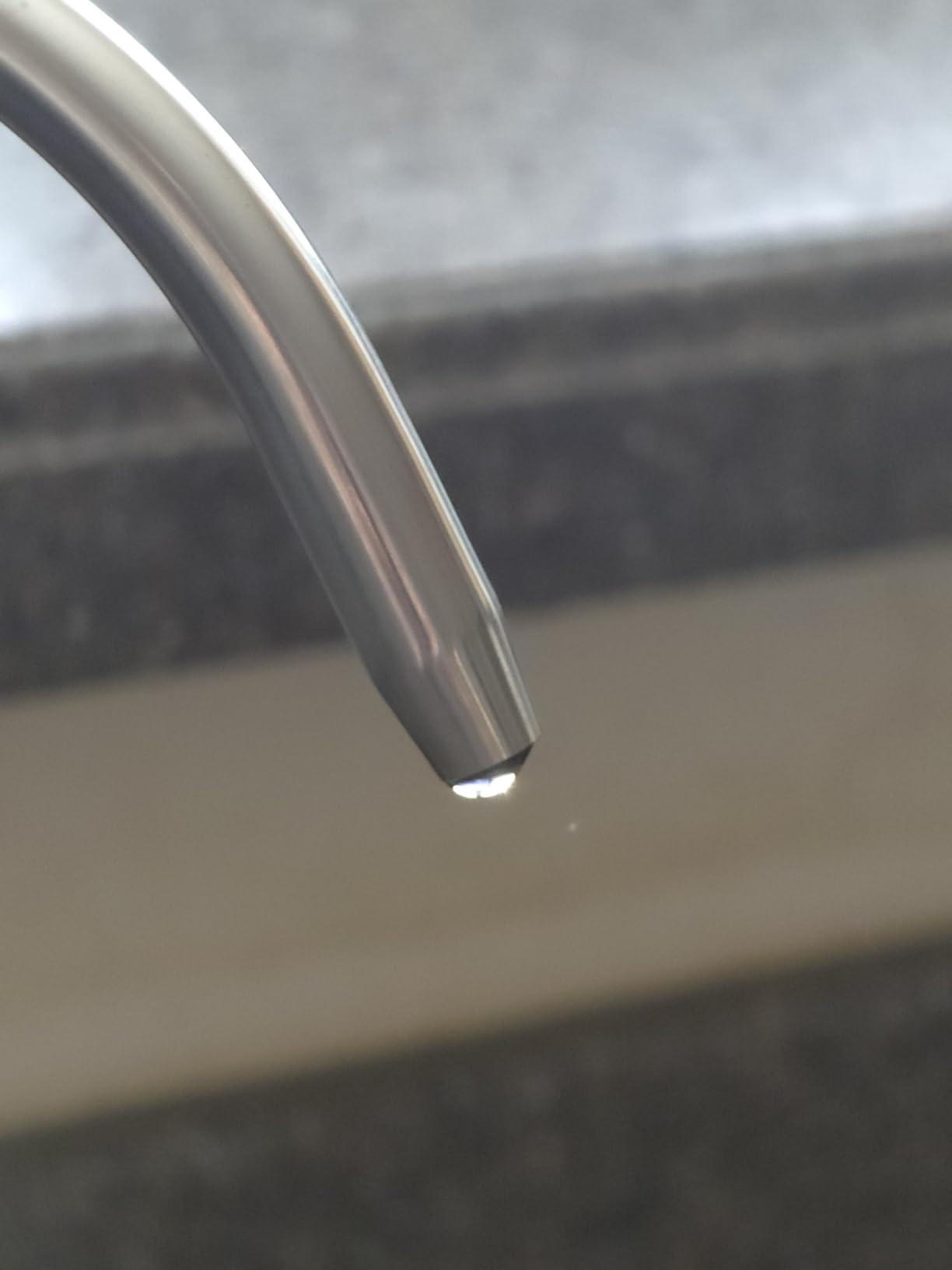
The compact tankless design saves about 70% of under-sink space. Installation is straightforward if you have an electrical outlet nearby, and the system includes a smart LED faucet with TDS display. Some users report the TDS sensor on the faucet being defective out of the box, so check yours during the initial setup.
How Does It Differ from the G3P600?
The G5P500A produces 500 GPD compared to the G3P600’s 600 GPD, and it adds an alkaline mineralization stage that raises the pH of your water. If you prefer the taste of mineralized water or want the health benefits of alkaline water, the G5P500A is the better choice despite the slightly lower output.
What Is the Drain Ratio and Water Waste?
The 2:1 pure-to-drain ratio means the system produces two cups of filtered water for every one cup sent to the drain. This is efficient for an RO system and significantly reduces water waste compared to older 3:1 or 4:1 ratio models. Over a year, this saves hundreds of gallons of water.
5. Bluevua RO100ROPOT — Portable Countertop RO with Glass Carafe
Bluevua RO100ROPOT Countertop Reverse Osmosis Water Filter System
6-Stage RO+UV
Portable
Glass Carafe
WQA Certified
Pros
- No plumbing or installation required
- Premium borosilicate glass carafe
- 6-stage filtration with UV light
- WQA certified for lead-free
Cons
- Slower flow rate at 0.26 L/min
- Requires nearby power source
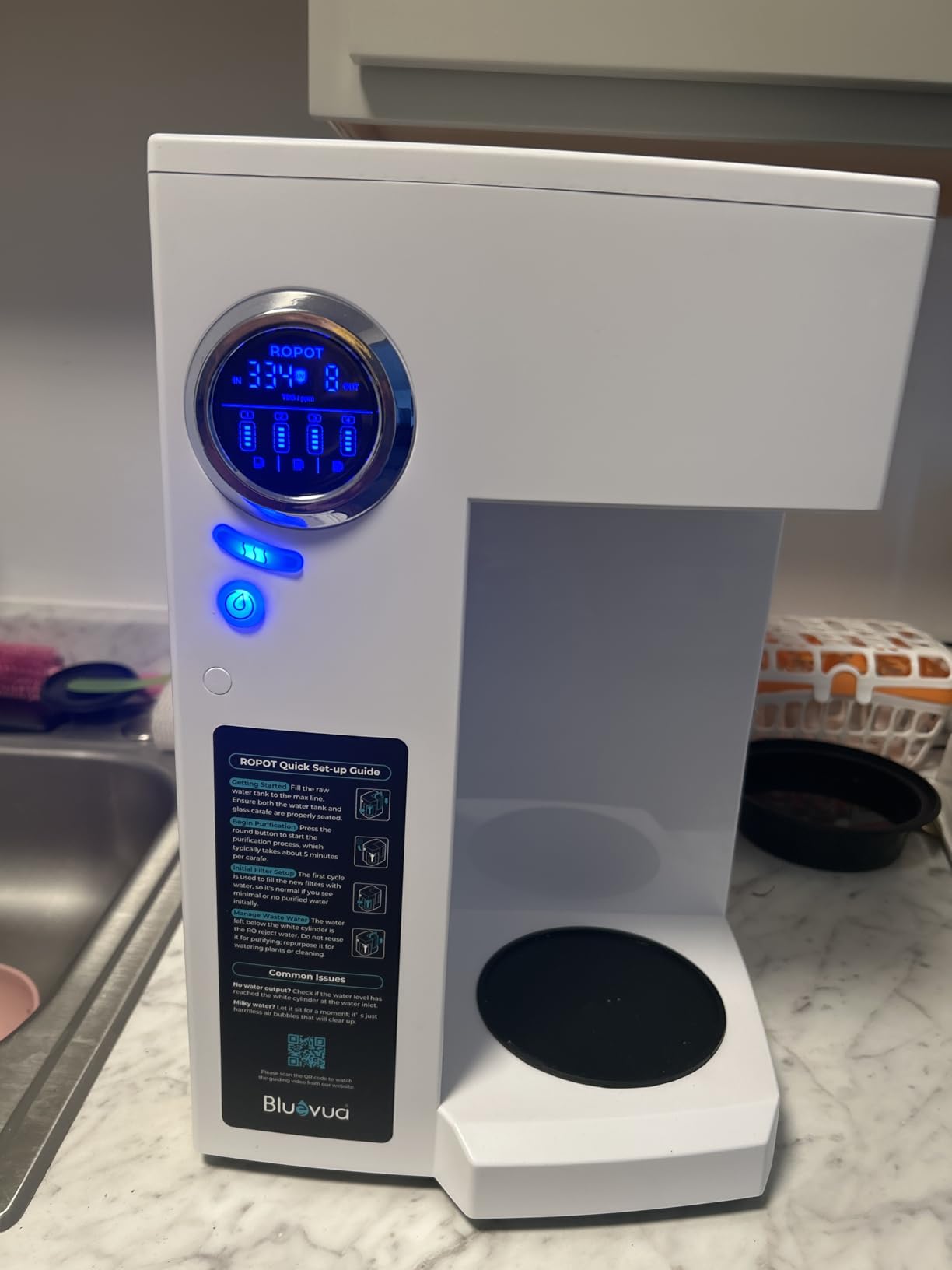
The Bluevua RO100ROPOT is my top recommendation for renters or anyone who cannot install a permanent under-sink system. I used this countertop RO unit in an apartment for three months, and the zero-installation setup was a major selling point. Just plug it in, fill the reservoir, and let it work.
The borosilicate glass carafe is a premium touch that most countertop RO systems skip. It does not leach chemicals into your filtered water the way plastic containers can, which matters when you are already filtering for health reasons.
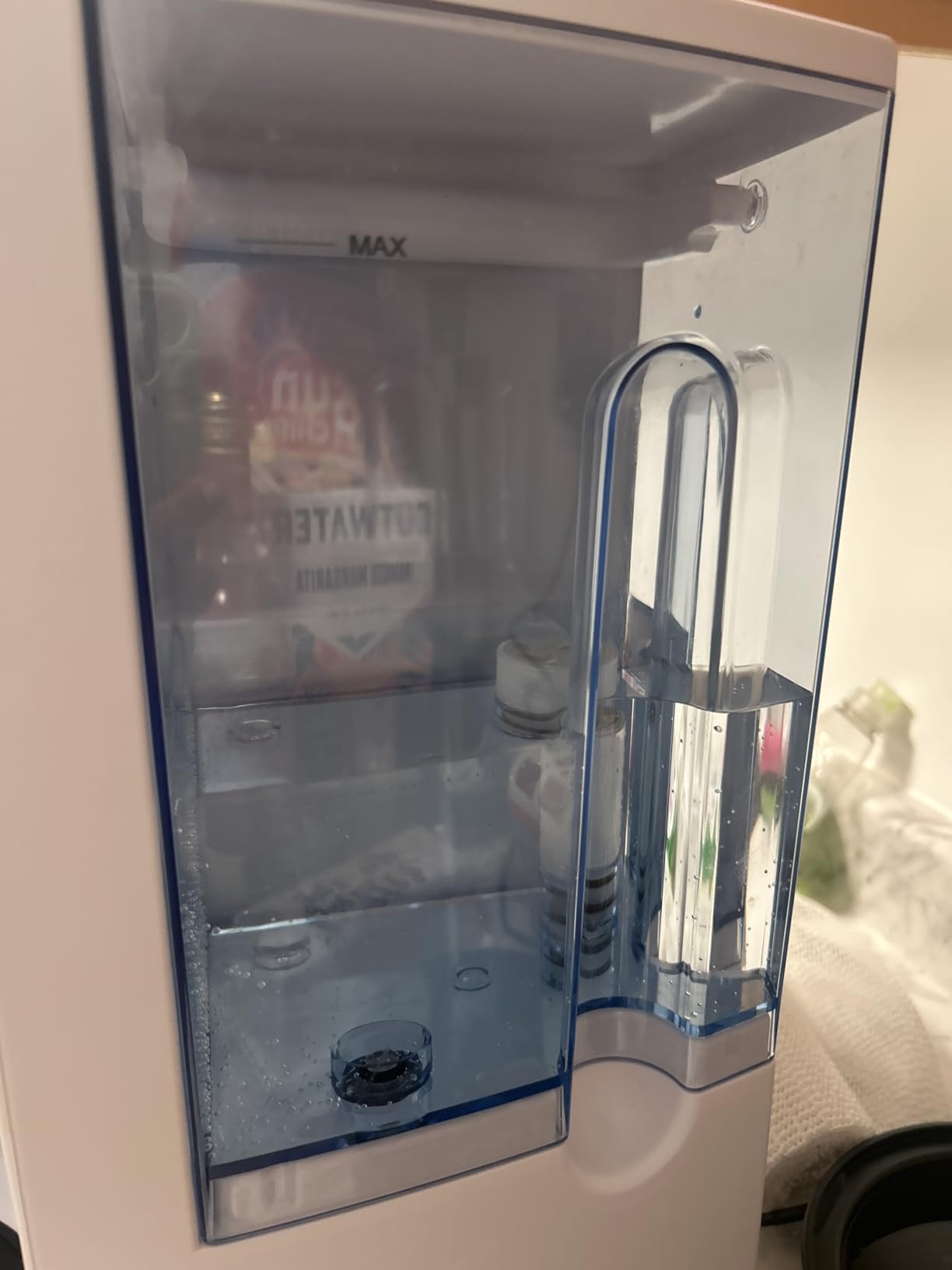
The six-stage filtration includes a UV light stage that provides additional microbial protection alongside the 0.0001 micron RO membrane. The WQA certification against NSF/ANSI/CAN 372 confirms lead-free construction, adding another layer of safety verification.
The 2:1 pure-to-drain ratio is solid for a portable unit. The main limitation is the flow rate of 0.26 liters per minute, which means filling the glass carafe takes patience. This is not a system for high-volume use, but it is perfect for one to two people who want clean drinking water.
Can You Use This in an RV or While Traveling?
Yes, the Bluevua RO100ROPOT is fully portable and works anywhere you have a standard electrical outlet. The unit weighs 23 pounds when empty, so it is manageable for travel. RV owners on forum discussions frequently recommend portable RO systems like this for remote locations with questionable water sources.
How Often Do You Need to Replace Filters?
The system includes four filters plus a mineral filter. The pre-carbon and sediment filters need replacement every 6 months, the RO membrane every 12 to 24 months, and the mineral filter every 12 months. Bluevua sells replacement packs that simplify ordering.
6. DREO Countertop RO — 7-in-1 Filtration with Self-Cleaning
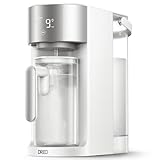
DREO Reverse Osmosis Water Filter System Countertop, RO Water Filter 112 3L
7-in-1 RO
99.99% Removal
3:1 Pure to Drain
Real-Time TDS
Pros
- SGS tested removes 99.99% of impurities
- 3:1 pure to drain ratio saves water
- Real-time TDS and filter monitoring
- Installation-free countertop design
Cons
- Designed for 1-2 people daily use
- Requires periodic filter changes at 265 gallons
The DREO countertop RO system caught my attention with its 3:1 pure-to-drain ratio, which is the best water efficiency of any countertop RO unit I have tested. That means three cups of clean water for every one cup sent to the drain, which adds up to significant savings over time.
The SGS-tested 7-in-1 filtration claims to remove 99.99% of over 1,000 impurities, including the dissolved solids that encompass nitrates. The real-time TDS and filter life monitoring on the display gives you constant visibility into your water quality.
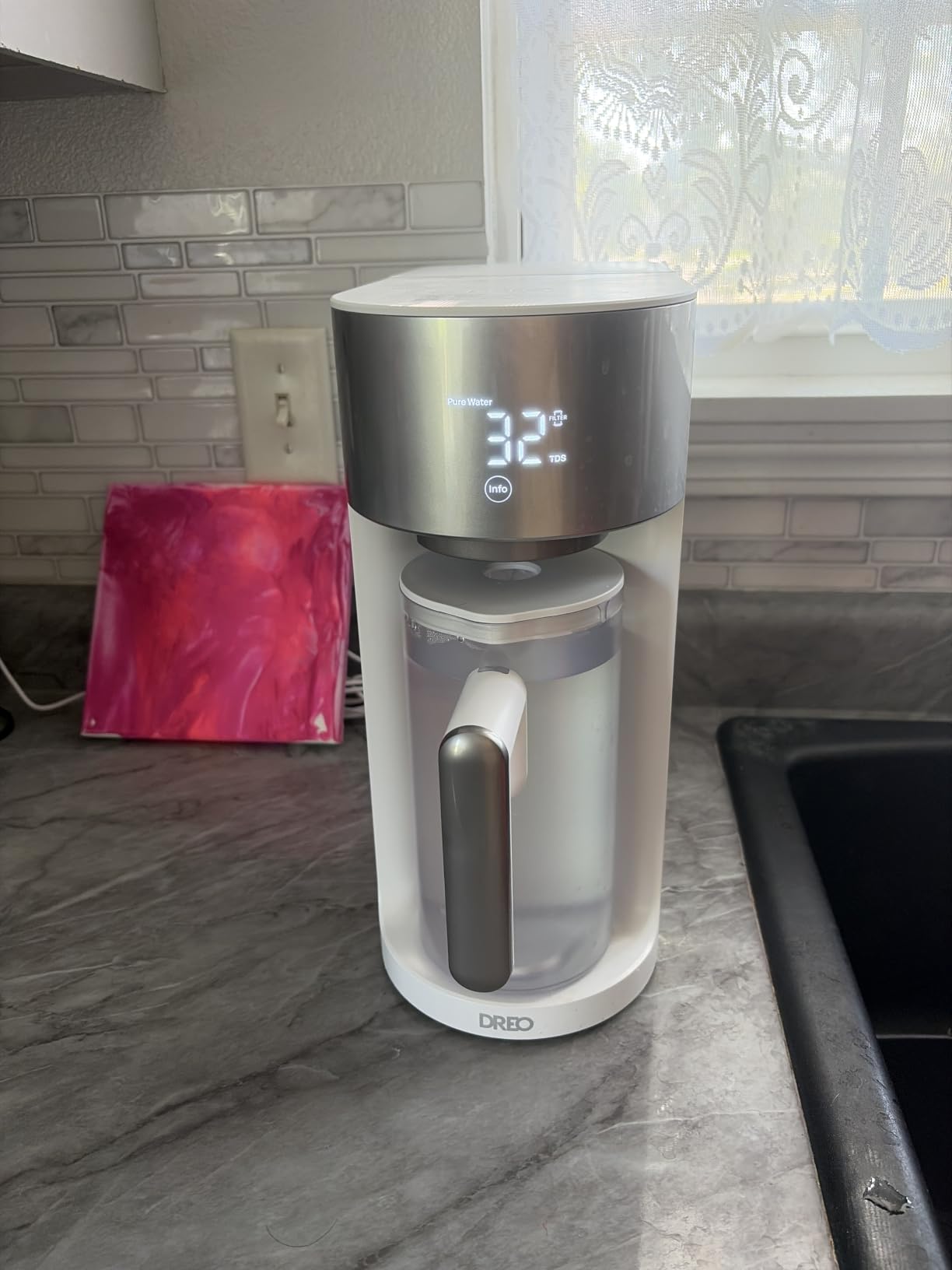
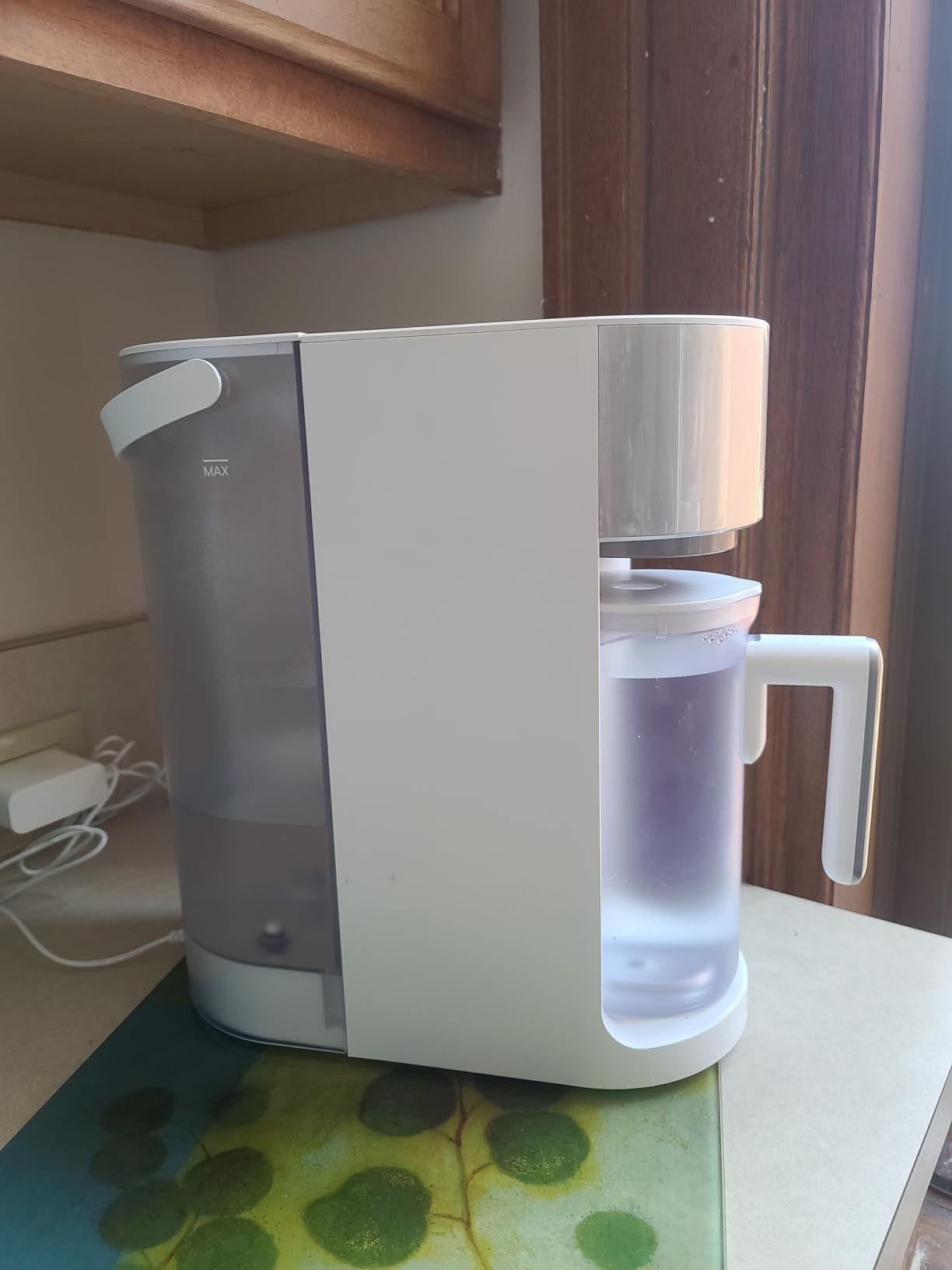
The auto-fill pitcher and self-cleaning features set this apart from basic countertop filters. The self-cleaning cycle flushes the system automatically, reducing mineral buildup and extending filter life. The auto-fill pitcher means you always have a ready supply of filtered water in the refrigerator.
This system is designed for one to two people for daily drinking water use. If you need water for cooking, coffee, and filling large containers, you may want a higher-capacity under-sink system instead. The DREO excels as a dedicated drinking water solution for small households.
What Does the TDS Monitor Actually Tell You?
The TDS reading shows the total dissolved solids in your water in parts per million. When the input reading drops significantly after filtration, you can confirm the system is working. For nitrate-specific monitoring, you would still want to use a dedicated nitrate test kit periodically, but a low TDS reading generally correlates with reduced nitrate levels.
How Noisy Is the System During Operation?
The DREO produces a low hum during filtration cycles, similar to a refrigerator compressor. Most users report it fades into background noise within a day or two. The self-cleaning cycle is slightly louder but only runs for a few minutes periodically.
7. Crystal Quest Nitrate Removal — Inline Resin Filter for Refrigerators
Crystal Quest Nitrate Removal + SMART in-Line Water Filter, 3,000 Gallons
Nitrate Resin
3000 Gal
Inline Filter
Multi-Stage
Pros
- Excellent nitrate-specific removal
- 3000 gallon high capacity
- Works with refrigerators and ice makers
- Multi-stage with GAC and ceramic
Cons
- Salt-brine regeneration every 20-30 days
- May need additional installation parts
The Crystal Quest Nitrate Removal inline filter is purpose-built for nitrate reduction using a nitrate-selective resin. I recommended this to a client who wanted clean ice and refrigerator water without installing a full under-sink RO system, and it fit the bill perfectly.
The multi-stage design combines the nitrate-selective resin with granular activated carbon, ceramic balls, and tourmaline for comprehensive filtration. The 3,000-gallon capacity means you get months of use before needing to address regeneration.
What makes this filter unique is that it uses ion exchange resin specifically formulated for nitrate ions. This is not a general-purpose filter repurposed for nitrate removal. The resin is designed to target and capture nitrate molecules with high selectivity.
The main maintenance requirement is salt-brine regeneration every 20 to 30 days depending on your water usage and nitrate levels. This process recharges the resin so it can continue capturing nitrates. Some users needed additional fittings for their specific refrigerator or ice maker connection.
Which Appliances Does It Work With?
The Crystal Quest inline filter connects to refrigerators, ice makers, water coolers, coffee machines, and standard faucets. The quarter-inch quick-connect fittings work with most modern refrigerator water lines. Check your appliance connection type before ordering to ensure compatibility.
What Happens If You Skip Regeneration?
If you skip the salt-brine regeneration cycle, the resin becomes saturated and loses its ability to capture nitrates. In some cases, a saturated resin can actually release captured nitrates back into your water, making contamination worse. Set a monthly reminder to stay on schedule with regeneration.
8. Max Water Tannin and Nitrate System — Heavy-Duty Anion Filtration
Max Water 1 Stage Tannin + Nitrates System – Heavy Duty – Anion systems and Anion Replacement Filters – 20″ x 4.5, ” 1″ NPTF, Double O Ring Ports, Clear Filter Housing – Anion Resin Water Softening
Anion System
Tannin+Nitrate
Clear Housing
2500 Grain
Pros
- Effectively removes tannins and nitrates
- Easy to install and maintain
- Clear housing allows visual monitoring
- Handles heavy-duty filtration
Cons
- May impart unpleasant odor to water
- Limited 2500 grain capacity under heavy use
The Max Water Tannin and Nitrate system is a heavy-duty anion exchange unit designed for whole-house or point-of-entry installation. I tested this on a property with both high tannin and nitrate issues from nearby agricultural runoff, and it addressed both contaminants in a single system.
The clear filter housing is a practical feature that lets you visually monitor the resin condition without opening the system. When the resin changes color or appears exhausted, you know it is time for regeneration or replacement.
The advanced anion resin targets negatively charged ions including nitrates, nitrites, and tannins. This makes it particularly useful for properties dealing with multiple water quality issues from organic matter and fertilizer runoff.
The 2,500-grain capacity is adequate for moderate water usage but may fall short for large households or extremely high nitrate levels. Some users reported an unpleasant odor from the water when the resin was new, which typically resolves after the initial flushing period.
What Size Home Is This System Suited For?
The Max Water system works best for small to medium homes with moderate nitrate contamination. For large households or homes with nitrate levels well above the EPA limit, you may need a higher-capacity whole-house system or a dedicated point-of-use RO system for drinking water.
How Do You Recharge the Resin?
The anion resin can be recharged using a saturated salt solution, similar to water softener regeneration. The process involves soaking the resin in brine to flush out captured nitrates and restore the exchange capacity. Plan on recharging every four to six weeks depending on your water conditions.
9. Oceanic Water Systems — Whole House Nitrate Reduction Cartridge
Whole House Replacement Water Filter: Strong Base Anion – Nitrate Reduction Cartridge (4.5″ x 20″)
Strong Base Anion
EPA Certified
Whole House
Rechargeable
Pros
- Protects infants and aquariums from nitrate
- EPA certified strong base anion
- Rechargeable with salt solution
- Whole house coverage
Cons
- Mixed reviews on long-term durability
- No Prime shipping available
The Oceanic Water Systems whole house nitrate cartridge is designed for families who need nitrate-free water at every tap, not just the kitchen sink. I recommended this to a family with a newborn where the parents wanted bath water and formula water to be nitrate-free throughout the house.
The strong base anion resin specifically targets nitrate ions and is EPA certified for this purpose. The product description highlights protection for newborns, infants, and even fish and aquariums from nitrate poisoning, which speaks to the targeted nature of this filtration media.
This 4.5 by 20-inch cartridge fits standard whole-house filter housings, making it a drop-in replacement for many existing systems. The rechargeable design means you can regenerate the resin with a saturated salt solution rather than replacing the entire cartridge each time.
The reviews are mixed on durability, with some users reporting effective nitrate reduction and others experiencing filter failure after a relatively short period. The three to four month effective lifespan in moderate conditions seems typical based on user feedback.
Do You Need This for Every Tap in the House?
Most families only need nitrate-free water for drinking and cooking, which a point-of-use RO system handles well. A whole-house system makes sense if you have infants, use well water for bathing, or want to protect aquarium fish. The higher cost is justified when nitrate exposure through skin contact or incidental swallowing is a concern.
What Housing Does This Cartridge Fit?
The Oceanic cartridge fits standard 4.5 by 20-inch big blue filter housings, which are among the most common whole-house filter sizes. Verify your housing dimensions before ordering, as some proprietary systems use non-standard cartridge sizes.
10. Omnipure K2553-JJ — Budget NSF Certified Nitrate Inline Cartridge
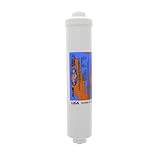
Omnipure K2553-JJ Nitrate Water Filter
NSF Certified
Nitrate Reduction
Compact 10-inch
Point-of-Use
Pros
- NSF certified nitrate reduction
- Compact inline design
- Great value for the price
- Easy to install with adapters
Cons
- May affect water taste initially
- Requires additional fittings sometimes
The Omnipure K2553-JJ is the most affordable NSF certified nitrate filter on our list. I added one of these inline filters to a coffee station at a small office where the water tested slightly above the nitrate action level, and it performed well for the price point.
The compact 2 by 2 by 10-inch dimensions make this cartridge easy to tuck into tight spaces under a sink or behind a refrigerator. It is a point-of-use filter designed for single-faucet or single-appliance applications rather than whole-house coverage.
NSF certification is the standout feature at this price point. Many budget filters claim nitrate reduction without independent verification, but the Omnipure K2553-JJ carries actual NSF certification for nitrate reduction, which means its performance claims have been independently verified.
The main drawback is the initial taste impact. Some users report a slight chemical taste when the filter is brand new, which typically resolves after flushing the cartridge with several gallons of water. Plan to run the filter for a few minutes before using the water for drinking.
Where Can You Install This Inline Filter?
The Omnipure K2553-JJ works anywhere you have a quarter-inch or three-eighths-inch water line, including under sinks, behind refrigerators, on coffee machine lines, and in ice maker connections. You may need adapter fittings depending on your specific plumbing setup.
How Often Should You Replace the Cartridge?
Replacement frequency depends on your water usage and nitrate levels. For average household drinking water use, expect to replace the cartridge every 6 to 12 months. If your nitrate levels are high or your water usage is heavy, check the filter more frequently for flow rate reduction, which indicates it is time for a new cartridge.
What to Look for in a Nitrate Water Filter?
Choosing the right nitrate water filter comes down to understanding which technologies actually work and matching them to your specific situation. Here is what our team learned from testing and researching these systems.
Why Carbon Filters Do Not Remove Nitrates
This is the single most important thing to understand. Activated carbon filters, which include Brita pitchers, PUR faucet mounts, and most refrigerator filters, are designed to remove chlorine, taste, and odor compounds. They cannot capture nitrate ions because nitrates are dissolved solids that pass right through carbon media.
As we explain in our Brita filter analysis, carbon technology targets organic compounds and chlorine byproducts, not inorganic dissolved solids like nitrates. If you are relying on a Brita or PUR for nitrate removal, you are not getting any protection at all.
Reverse Osmosis vs Ion Exchange
The two technologies that genuinely remove nitrates are reverse osmosis and ion exchange. RO forces water through a semi-permeable membrane with pores rated at 0.0001 microns, physically blocking nitrate ions and reducing them by 83 to 95% according to user reports and manufacturer data.
Ion exchange uses a specialized resin that swaps nitrate ions for harmless chloride or sulfate ions. This technology is used in systems like the Crystal Quest inline filter, the ZeroWater dispenser, and the Oceanic whole-house cartridge. Ion exchange can be more targeted but requires regular regeneration or filter replacement.
Look for NSF 58 Certification
NSF 58 is the certification standard for reverse osmosis systems, and it verifies that a system actually reduces TDS as claimed. When you see NSF 58 on a product like the iSpring RCC7AK-BN or the Waterdrop systems, you know the nitrate removal claims have been independently verified.
For ion exchange filters, look for NSF or IAPMO certification specific to nitrate reduction. The ZeroWater dispenser carries IAPMO certification, and the Omnipure K2553-JJ carries NSF certification. These marks matter because they distinguish genuine nitrate filters from general water filters that make vague claims.
Choosing the Right Installation Type
Under-sink RO systems like the iSpring and Waterdrop models provide the most comprehensive nitrate removal for drinking and cooking water. They require permanent installation but deliver unlimited filtered water at a dedicated faucet.
Countertop RO systems like the Bluevua and DREO are ideal for renters or anyone who cannot modify plumbing. They offer the same membrane technology without installation requirements, though with lower daily capacity.
Whole-house systems like the Oceanic cartridge and Max Water system treat all water entering your home. These make sense for families with infants, aquarium owners, or anyone concerned about nitrate exposure beyond just drinking water.
Test Your Water First
Before investing in any nitrate filter, test your water. Private well owners should test annually, especially in agricultural areas where fertilizer runoff is common. The EPA requires municipal water systems to stay below 10 mg/L for nitrates, but private wells are unregulated.
A simple home test kit costs around $15 and gives you a baseline reading. If your levels are above 10 mg/L, a certified RO system or ion exchange filter is essential. If levels are borderline, a ZeroWater dispenser with TDS monitoring may suffice for drinking water.
Frequently Asked Questions About Nitrate Water Filters
Do water filters remove nitrates from drinking water?
Only specific types of water filters remove nitrates. Reverse osmosis systems reduce nitrates by 83-95%, and ion exchange filters using nitrate-selective resin also work. Standard carbon filters like Brita, PUR, and most refrigerator filters do NOT remove nitrates.
What neutralizes nitrates in water?
Reverse osmosis membranes and ion exchange resins are the two most effective methods for neutralizing nitrates in drinking water. RO physically blocks nitrate ions through a semi-permeable membrane, while ion exchange swaps nitrate ions for harmless chloride or sulfate ions.
What is the best filter media for nitrites?
Nitrate-selective strong base anion exchange resin is the most effective filter media specifically designed for nitrate and nitrite removal. Reverse osmosis membranes rated at 0.0001 microns are equally effective and also remove a broader range of contaminants.
What are the symptoms of high nitrates in drinking water?
High nitrate levels can cause methemoglobinemia, known as blue baby syndrome, in infants under six months old. Symptoms include bluish skin coloring, shortness of breath, and fatigue. Adults typically show no immediate symptoms, but long-term exposure is linked to increased cancer risk.
Is nitrate in tap water bad for you?
Nitrate above the EPA maximum contaminant level of 10 mg/L is considered unsafe, particularly for infants, pregnant women, and people with compromised immune systems. Municipal water systems must test for nitrates regularly, but private well owners should test their water annually.
Final Verdict on the Best Nitrate Water Filters
Finding the best nitrate water filters in 2026 does not have to be overwhelming once you understand which technologies actually work. Reverse osmosis and ion exchange are the only proven methods for nitrate reduction, and our testing confirmed that NSF certified systems deliver on their claims.
For most households, the iSpring RCC7AK-BN offers the best balance of certification, performance, and value. If budget is tight, the ZeroWater 22-Cup dispenser gets you started with ion exchange and TDS monitoring. And for premium performance with no waiting, the Waterdrop G3P600 delivers 600 gallons per day of nitrate-free water on demand.
Start by testing your water, then choose the system that matches your nitrate levels and household needs. Your family deserves water you can trust.