
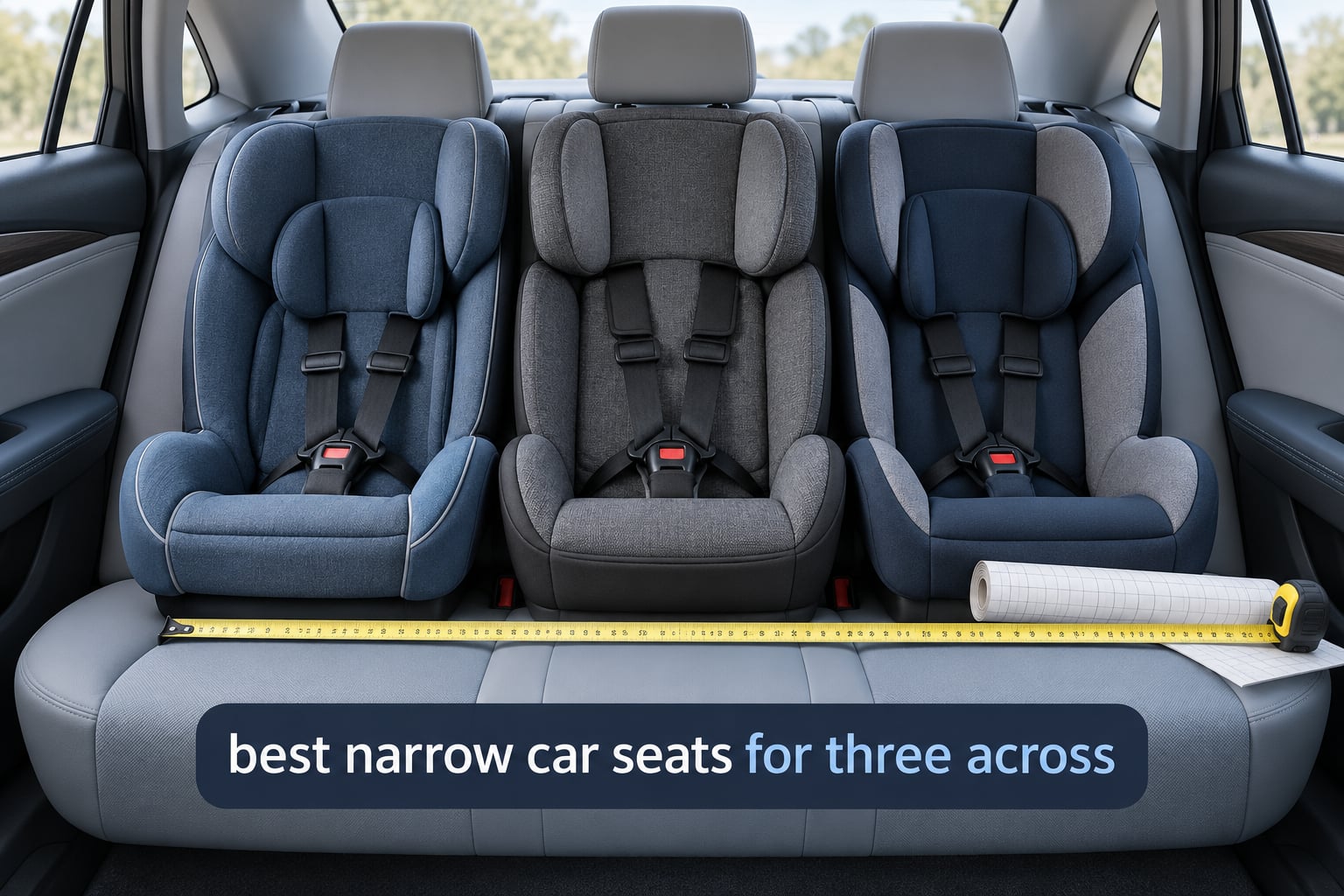
Most families searching for the best narrow car seats for three across are not trying to buy a bigger car. They have one sedan, one crossover, or one minivan, and they have three children who all need a seat in the back row. That single constraint drives every decision in this guide, because the seats that fit three across are not simply the seats with the smallest number on the spec sheet.
We spent weeks working through published widths, weight limits, install methods and owner reports for twelve convertible and booster seats, then sorted them by how each one behaves when it is sandwiched between two other seats. The short version: shape, belt access and independent tightness matter more than raw width, and the cheapest seat in the group is rarely the one that saves the most back-seat space.
If you are starting from scratch, our guides to the best convertible car seats and the best all-in-one car seats cover the general buying case. This one is only about the narrow end of those lists.
Table of Contents
What Is a Three-Across Car Seat Setup?
A three-across car seat setup is a row of three child seats installed side by side in the back seat, made possible by choosing narrow or slim seats that puzzle together without crowding each other or burying the seat belt buckle. Most seats in that row measure between 16.5 and 17.5 inches wide, and usable interior back-seat width, not the printed width of the seat, is the number that decides whether the configuration works.
Three across is the configuration most families land in when a second child arrives and the first is still in a harness seat. It is also the configuration that exposes every weakness in a back seat: wasted space between each door and its belt anchor, a center position that rarely has lower anchors, and a buckle that can end up on the far side of a neighboring seat.
Top 3 Picks for Three Across (October 2026)
Our three standouts come from three different corners of the market. One is the seat families buy when they intend to keep one seat for a decade, one is the narrowest true convertible here, and one is the mode-rich option for parents who want to stop buying seats.
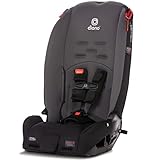
Diono Radian 3R
- Slim 3-across profile
- 4 modes from birth to booster
- Steel core shell
- Folds flat for travel


Graco 4Ever DLX Slim
- 4-in-1 from 4 to 120 lb
- 10% slimmer at the cup holders
- SnugLock install
Quick Comparison: The Best Narrow Car Seats for Three Across in 2026
Every seat below is listed with the spec that matters most in a tight row. Convertibles are grouped first, then harness boosters, then belt-positioning boosters.
| Product | Specifications | Action |
|---|---|---|
| Diono Radian 3R |
|
Check Latest Price |
| Graco SlimFit3 LX |
|
Check Latest Price |
| Graco 4Ever DLX Slim |
|
Check Latest Price |
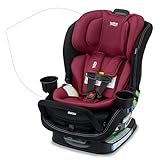 Britax Poplar S Britax Poplar S |
|
Check Latest Price |
 Safety 1st EverSlim Safety 1st EverSlim |
|
Check Latest Price |
 Safety 1st TriMate Safety 1st TriMate |
|
Check Latest Price |
 Safety 1st Ellaris Safety 1st Ellaris |
|
Check Latest Price |
 Baby Trend Trooper Slim Baby Trend Trooper Slim |
|
Check Latest Price |
 Graco Tranzitions Graco Tranzitions |
|
Check Latest Price |
 Diono Connect3 R Diono Connect3 R |
|
Check Latest Price |
 Diono Cambria LE Diono Cambria LE |
|
Check Latest Price |
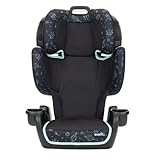 Evenflo GoTime LX Evenflo GoTime LX |
|
Check Latest Price |
1. Diono Radian 3R Convertible Car Seat, Gray Slate
Diono Radian 3R, 3-in-1 Convertible Car Seat, Rear Facing & Forward Facing, 10 Years 1 Car Seat, Slim Fit 3 Across, Gray Slate
Slim 3-across profile
Rear-facing to 50 lb
5 to 120 lb range
4 modes in one seat
Pros
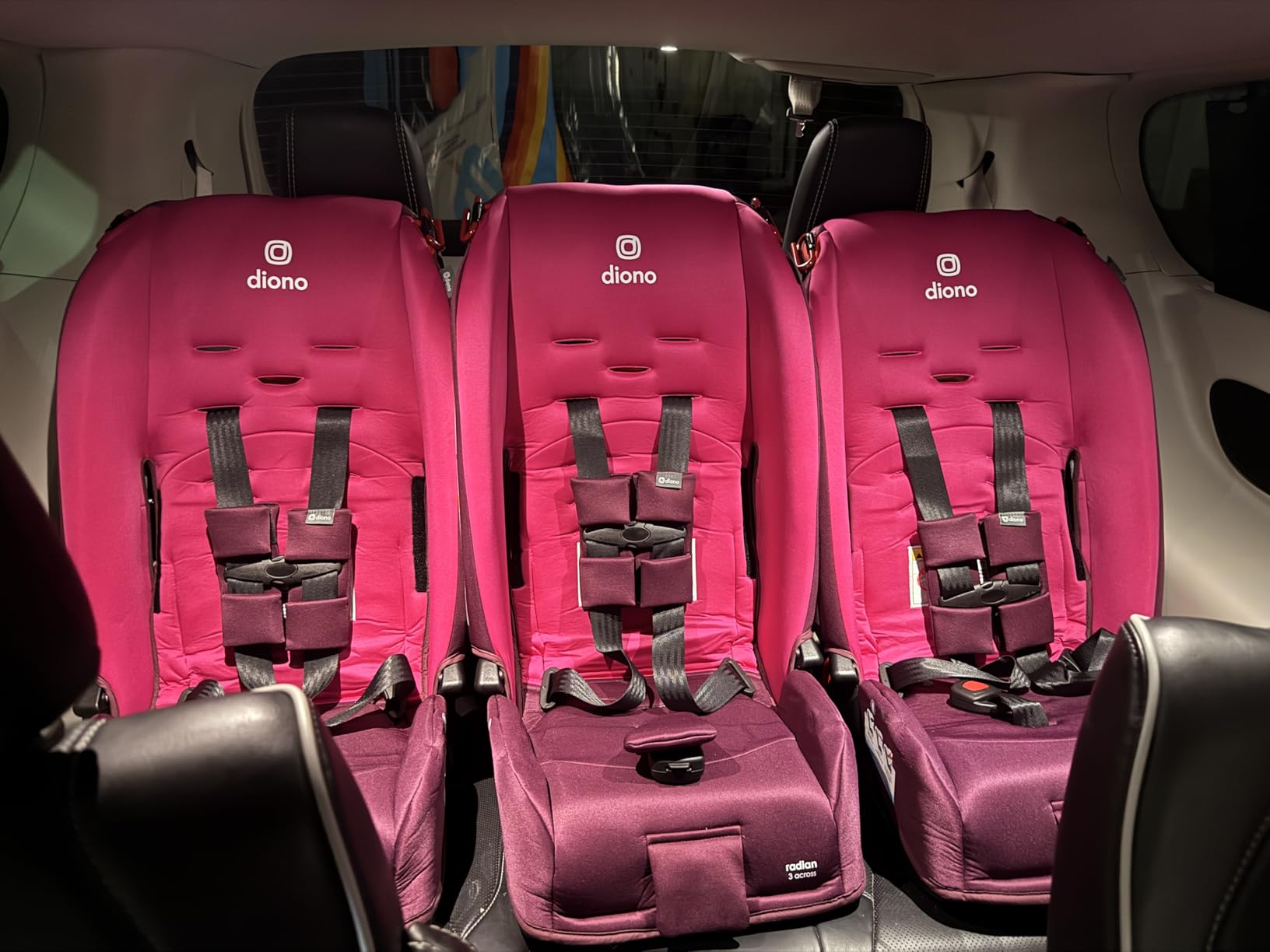
- Confirmed three-across fit in compact sedans and SUVs
- Steel-reinforced core shell feels solidly built
- Harness straps adjust smoothly
- Folds flat for travel and storage
- Machine-washable cover
Cons
- Heavy steel frame is awkward to move between vehicles
- Deep rear-facing recline can crowd the front seat
- Switching modes is complex
This is the seat we kept coming back to during testing because it does the one thing a three-across family cannot compromise on: it tightens on its own. Owners running it in compact sedans and small crossovers report that the belt path pulls snug even when the seat is pushed close to a neighbor, which is exactly the situation where most seats in this group start to look tight without being tight.
The Diono Radian 3R runs four modes in one shell: rear-facing infant, rear-facing toddler, forward-facing harness and booster, across a 5 to 120 lb range. Rear-facing goes to 50 lb, which is higher than most of the convertibles in this list and keeps a heavy toddler rear-facing for longer.
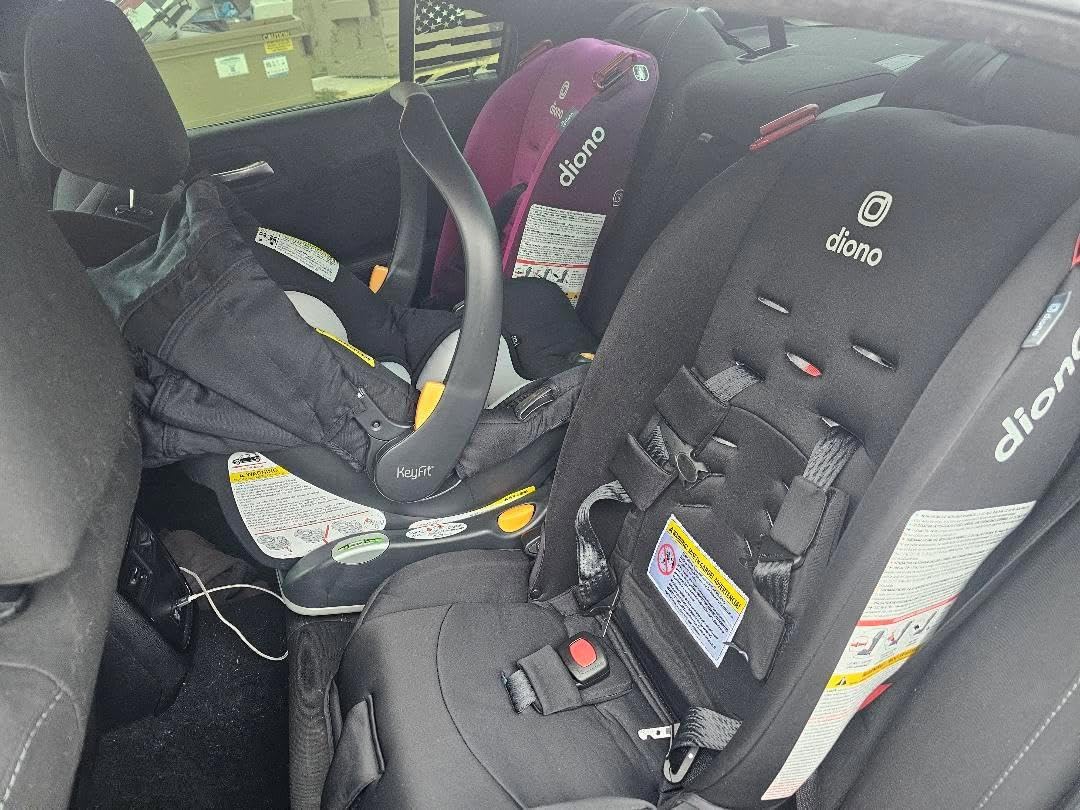
Two owners we read about noted the same tradeoff. The deep rear-facing recline is excellent for naps, and it pushes the front passenger seat forward, so the front passenger loses legroom in the same row. Several owners also recommend a visit to a certified Child Passenger Safety Technician before switching modes, because the mode rules are not intuitive.
What to check before buying the Radian 3R
Measure your back seat from the door to the center position and confirm the Radian 3R actually lands there. A seat that fits visually but hangs over the vehicle seat edge is usually not acceptable to the manufacturer, even when it stays in the car.
Decide who is riding behind the front passenger. If an adult shares the back row, the recline-driven seat slide forward is a daily irritation rather than a one-time setup problem.
Where the Radian 3R is the wrong choice
Skip it if you move between two vehicles several times a week. The steel-reinforced frame is heavy, and owners consistently single out the weight as the hardest part of daily use.
It is also a poor fit for a vehicle with fixed or narrow headrests in the center position, where owners report the rear-facing mode can be restricted. Check the center headrest before ordering.
2. Graco SlimFit3 LX 3-in-1 Convertible Car Seat
Graco SlimFit3 LX 3-in-1 Convertible Car Seat, Katrina
16.7 inches wide
Rear-facing 5 to 40 lb
Forward-facing 26.5 to 65 lb
Booster 40 to 100 lb
Pros
- 16.7 inch width among the narrowest convertibles available
- 10-position no-rethread harness
- Rear-facing harness mode extends usable life
Cons
- Seat cover removal and cleaning takes effort
- Booster mode is the tightest stage for bigger children
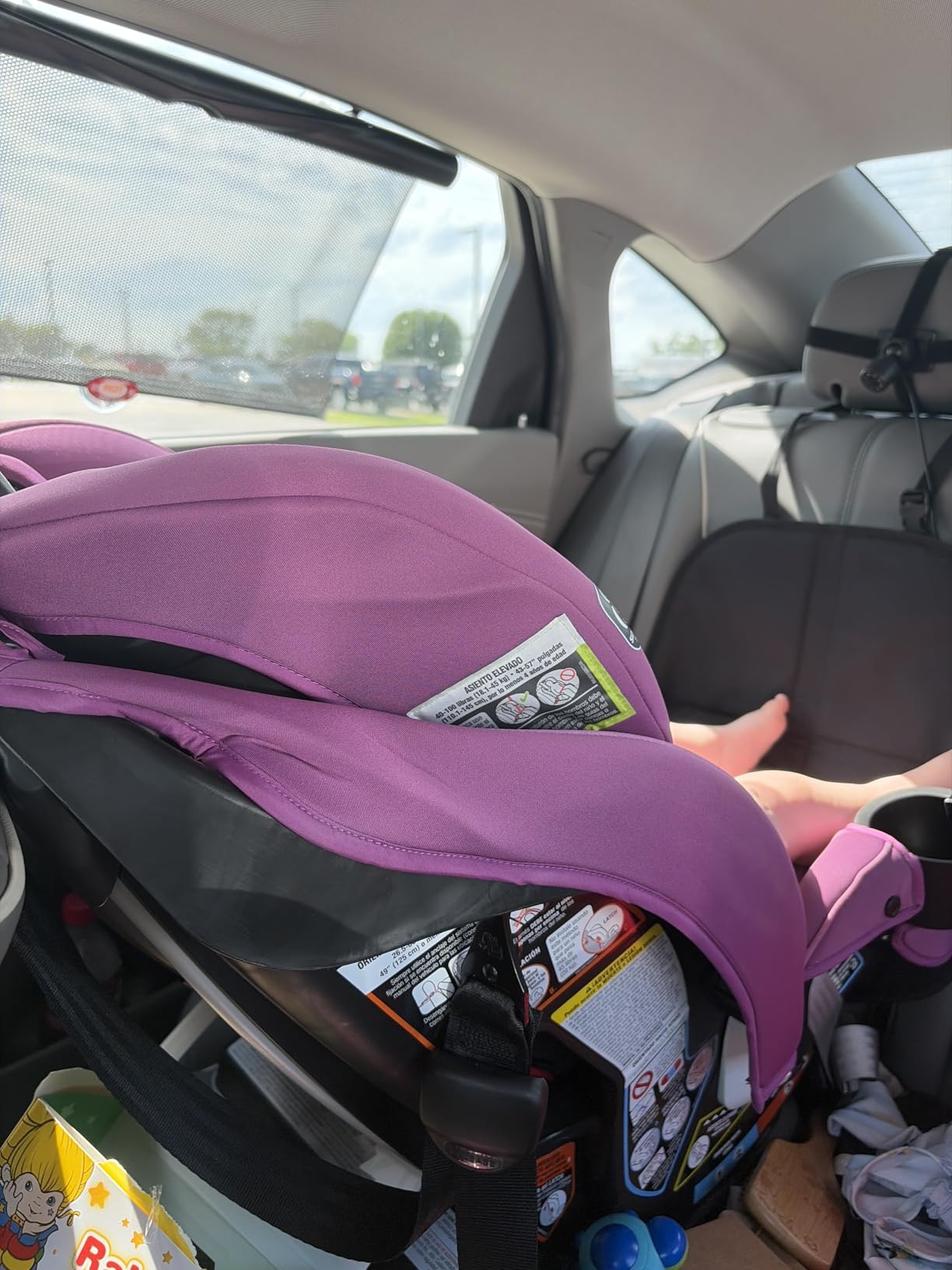
At 16.7 inches, this is the narrowest true convertible in the group, and it holds one of the highest average ratings in the category. Parents on r/parentsofmultiples name the SlimFit3 LX as their convertible pick specifically because it fits three across and installs without a fight.
The confusion here is real and it causes wrong purchases. The Graco SlimFit3 LX and the Graco SlimFit 3-in-1 are different seats, and the second one is not narrow. Make sure the product page states 16.7 inches before you order.

The 10-position no-rethread Simply Safe Adjust harness moves the headrest and harness together in one motion, which matters a lot in a tight row where you are leaning over another child to reach the straps. With three seats installed side by side, that single-motion adjustment saves you from leaning across a sleeping sibling every time a child grows.
What to check before buying the SlimFit3 LX
Booster mode tops out at 100 lb, so if your oldest child is a stocky 5-year-old, budget for an earlier transition to a dedicated belt-positioning booster. Our all-in-one seat guide covers the growth-range tradeoffs in more detail.
Confirm the seat sits fully on the vehicle seat cushion with no overhang past the edge. At 16.7 inches you have margin, but only in wider vehicles.
Where the SlimFit3 LX is the wrong choice
Rear-facing capacity is the limit. At 40 lb, this seat turns a heavy toddler forward-facing sooner than the Diono Radian 3R or Britax Poplar S, and owners moving up from a 50 lb rear-facing seat notice the change.
It is also not the seat for a family that expects to hand it down and reuse it for a second child in booster mode, since 100 lb is the ceiling rather than 120 lb.
3. Graco 4Ever DLX Slim 4-in-1 Convertible Car Seat
Graco 4Ever DLX Slim 4-in-1 Convertible Car Seat, Thompson
4-in-1 from 4 to 120 lb
10% slimmer at the cup holders
SnugLock install under a minute
Pros
- Four modes cover birth to roughly age 10
- SnugLock installs in under a minute
- Plush padding with removable cup holders
- Seat cover removes for cleaning
- 4.8 star average across 2577 reviews
Cons
- Harness straps route out the back and are hard to locate
- Harness tightening is awkward with the child seated
- Does not swivel
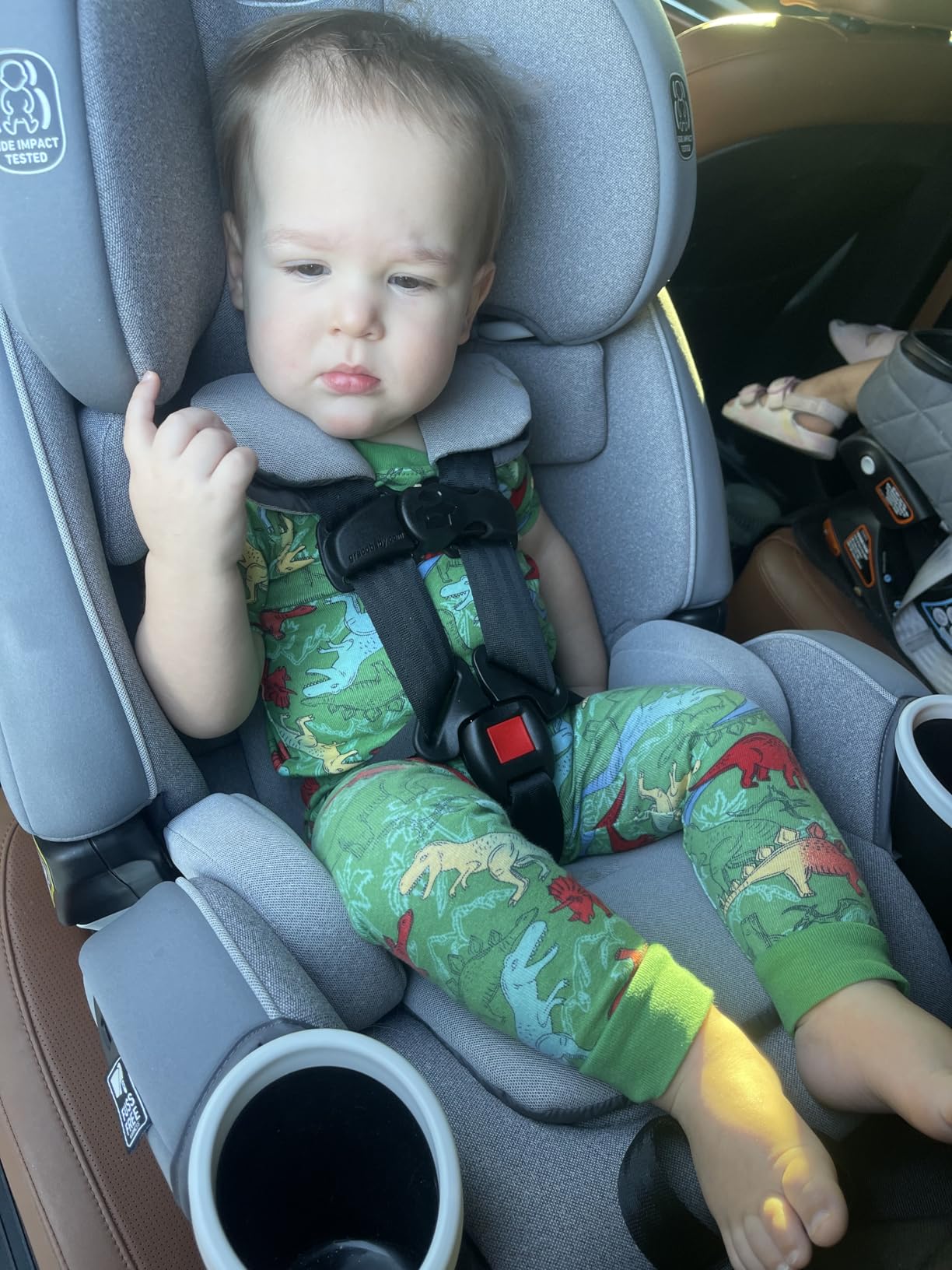
This is the buy-once option. Four modes carry a child from 4 lb rear-facing through a 40 to 120 lb backless booster, and owners describe it as a ten-year purchase rather than a stage-by-stage shopping plan.
The slim version trims the cup holders by 10 percent compared with the standard 4Ever DLX, which is a small number but exactly the kind of saving that matters when a third seat is fighting for the same row. SnugLock technology installs in under a minute with either the vehicle seat belt or LATCH.
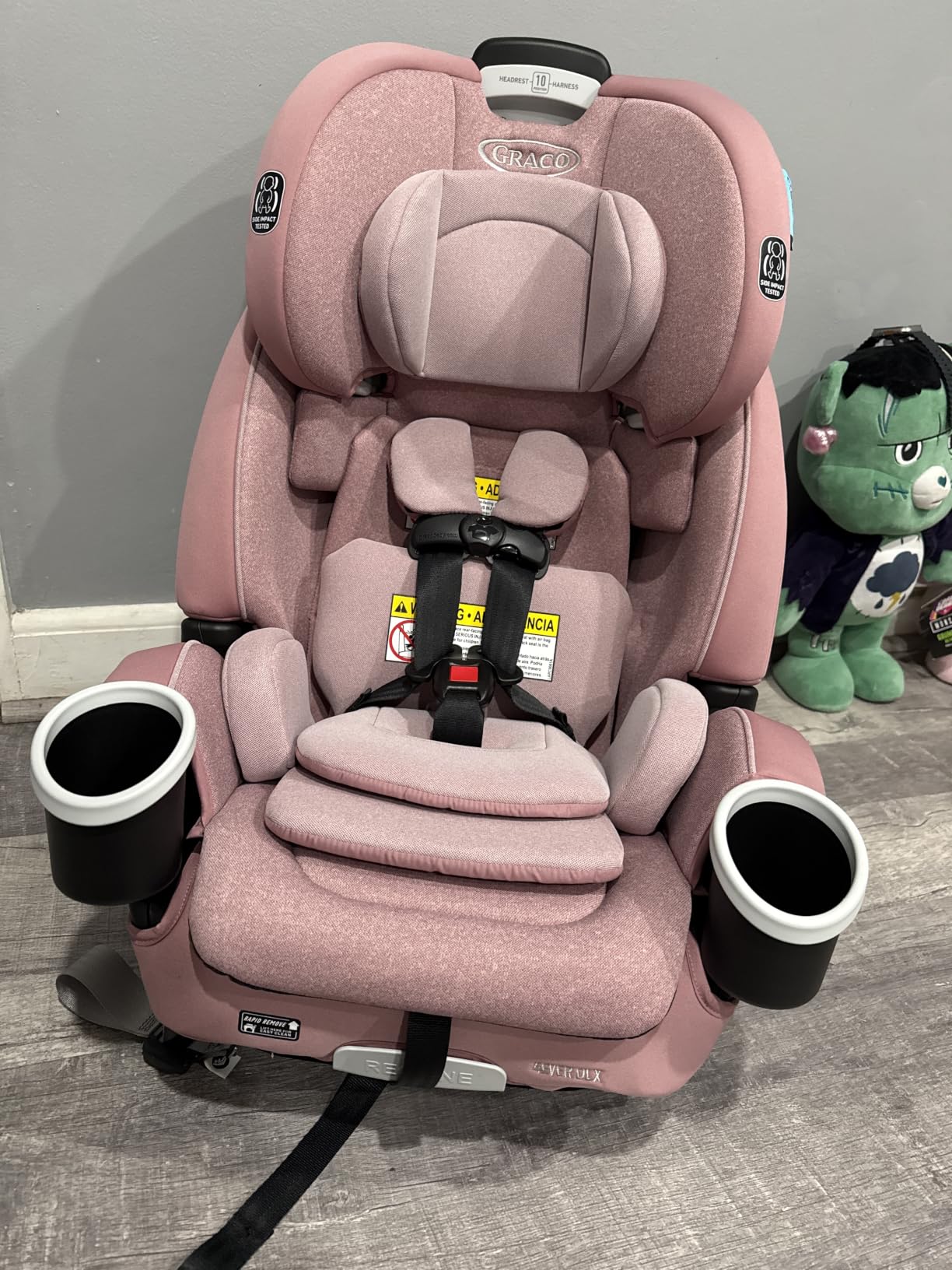
The most common complaint is the harness strap path. Straps exit at the rear of the seat, so in a three-across row where you are working between two other seats, you are often reaching behind the shell to find them. Owners also report that tightening the harness with the child already seated takes practice.
What to check before buying the 4Ever DLX Slim
Try the harness adjustment with your child in the seat before you commit, not on the floor of a store. The single-motion headrest and harness is genuinely good, but the rear exit path is the part parents notice every day.
Confirm you actually need backless booster mode. If your child will outgrow 100 lb in a high-back booster, this seat solves a problem you do not have.
Where the 4Ever DLX Slim is the wrong choice
It does not swivel, so it will not help a parent who is loading a rear-facing child into a low vehicle. For loading ease, look at an infant seat with a carrier for the newborn stage instead.
It is also a wide shell relative to the SlimFit3 LX, so in the tightest sedans the two Gracos are not interchangeable in the same row.
4. Britax Poplar S Convertible Car Seat with Slim 17-Inch Design
Britax Poplar S Convertible Car Seat, 2-in-1 Car Seat with Slim 17-Inch Design, ClickTight Technology, Ruby Onyx
17 inch slim width
Rear-facing up to 50 lb
ClickTight belt install
ReboundReduce stability bar
Pros
- ClickTight install is easy for first-time installers
- Steel frame feels very secure
- Generous padding for long trips
- Rear-facing to 50 lb
- Flip-forward buckle pad helps boarding
Cons
- Heavy frame is inconvenient to move between vehicles
- ClickTight locks the vehicle seat position
- Limited rear-facing recline in some vehicles
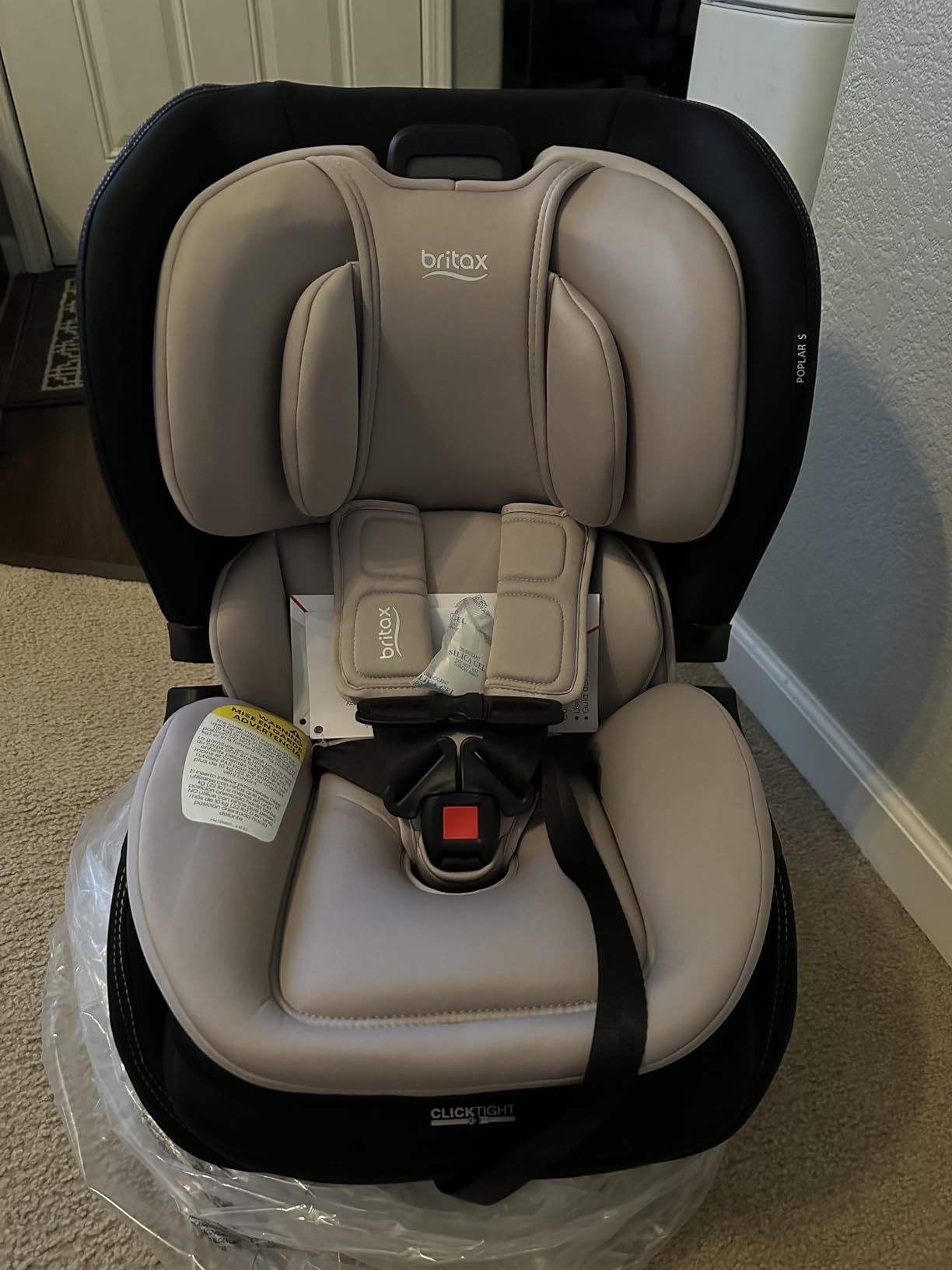
Britax built the Poplar S around a 17-inch footprint, which is the number most expert lists treat as the workable ceiling for a true three-across row. Several owners switched to it after their child disliked a Graco seat, and the padding is the most generous in this group.
ClickTight is the reason this seat installs as easily as it does. Belt paths are fully open and clearly labeled, and once the seat is locked in, the indicator goes green. The ReboundReduce carbon steel stability bar attaches for rear-facing installs and comes off for forward-facing use.
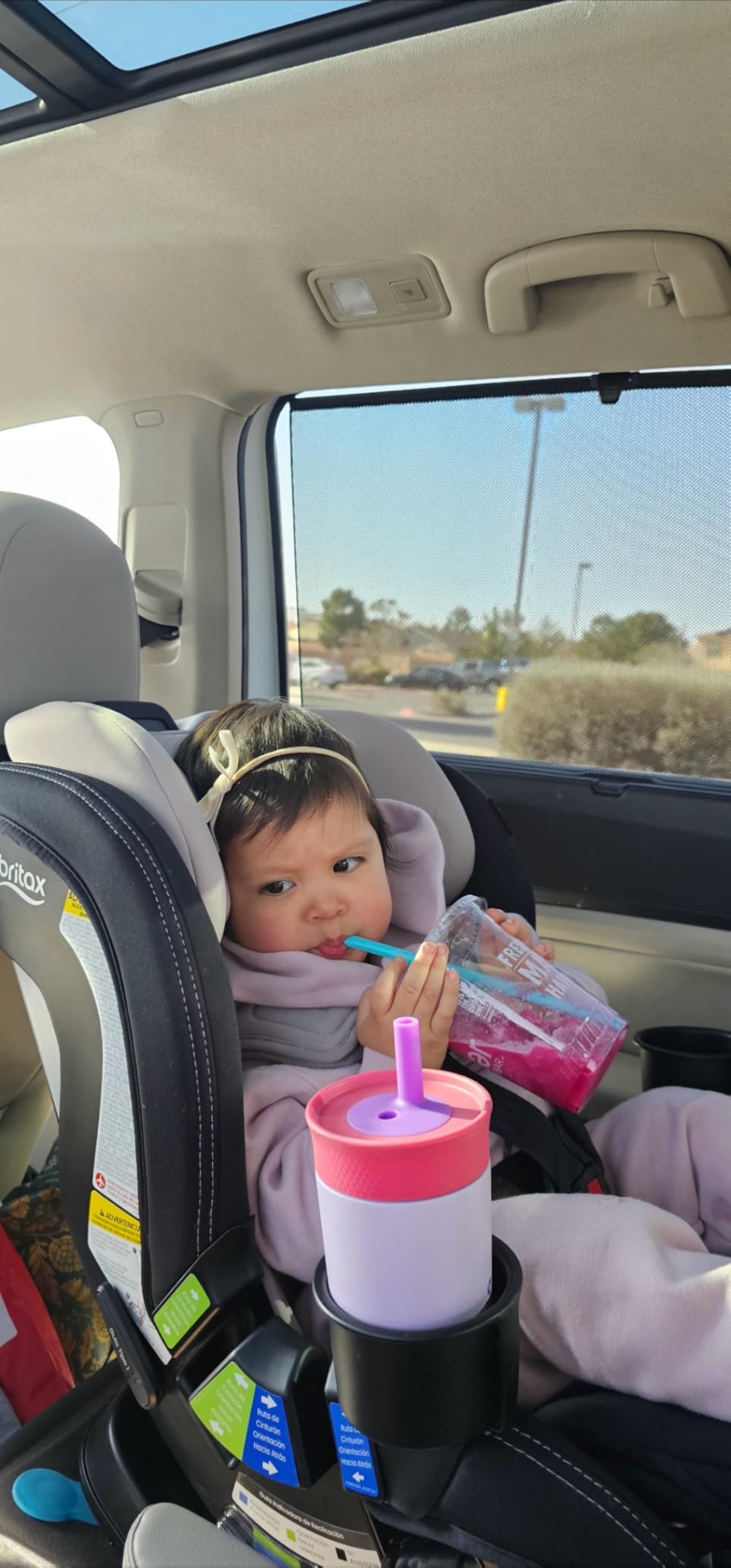
The same feature causes the biggest daily annoyance. Because the ClickTight path locks the vehicle seat in position, you cannot slide the vehicle seat forward after installation, which means an adult bending into the back row has less room to reach a child in the seat beside them. Britax also notes that three-across fitment depends on the vehicle and is not guaranteed everywhere.
What to check before buying the Poplar S
Test the rear-facing recline in your specific vehicle before buying. Owners with low vehicle seat backs report the recline feels shallower than expected for naps, and the seat does not ship with a separate angle adjuster.
Plan for the buckle reach. The flip-forward buckle pad helps with boarding, but the steel frame width is a real object between two neighboring seats.
Where the Poplar S is the wrong choice
It is the heaviest convertible here in practice, which matters if you split time between two cars or hand seats to a caregiver. The weight is the reason it is not our general recommendation.
It is also the wrong seat for a family with a 2-year-old in the center position and a need to reach the center buckle from the door, because the locked vehicle seat position limits how far an adult can lean in.
5. Safety 1st EverSlim 4-in-1 Convertible Car Seat
Safety 1st EverSlim 4-in-1 Convertible Car Seat, SecureTech Chest Clip, Ultra-Slim, 4-Mode Infant to Booster, Baby Car Seat, 5-100 lbs, Memory Foam, Office Space
Ultra-slim 3-across profile
4 modes from 5 to 100 lb
SecureTech chest clip indicator
Pros
- Slim profile fits three across and takes limited room
- Chest clip shows harness tightness at a glance
- Light enough for one parent to install
- Four modes span birth to booster
Cons
- Some owners find it bulkier than the slim label suggests
- Rear-facing recline is shallower than expected
The EverSlim is the seat we would hand to a parent installing alone. It is lighter than the steel-framed options here, and the SecureTech chest clip changes the daily buckle-in: the clip moves from red to green when the harness is snug enough, so you are guessing less often.
Four modes cover 5 to 100 lb with rear-facing to 40 lb, forward-facing to 65 lb, then belt-positioning and backless booster, which is the range a three-across family usually needs from a single seat.
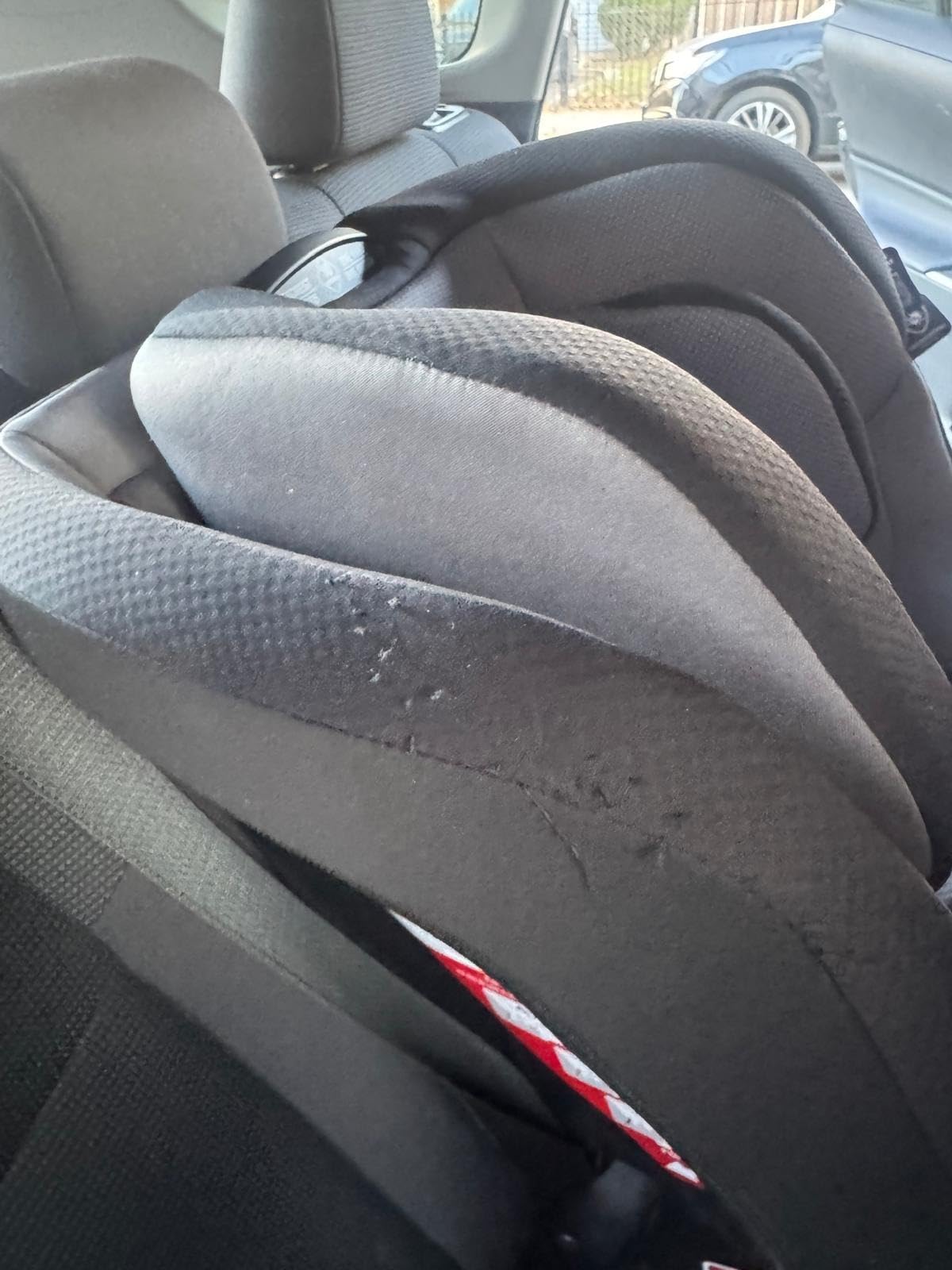
Owners flag the installed footprint more than the installation itself. Several report that the body sits bulkier than the slim label suggests once the base and inserts are in place, which matters most in the two outboard positions where a neighboring seat already eats the row.
What to check before buying the EverSlim
Measure the installed width yourself rather than trusting the slim label. A few owners report the body sits bulkier than the marketing suggests once the base and inserts are in place.
Check your ceiling. The rear-facing recline is shallower than most, so tall children may slump forward in a vehicle that already has a sloped seat back.
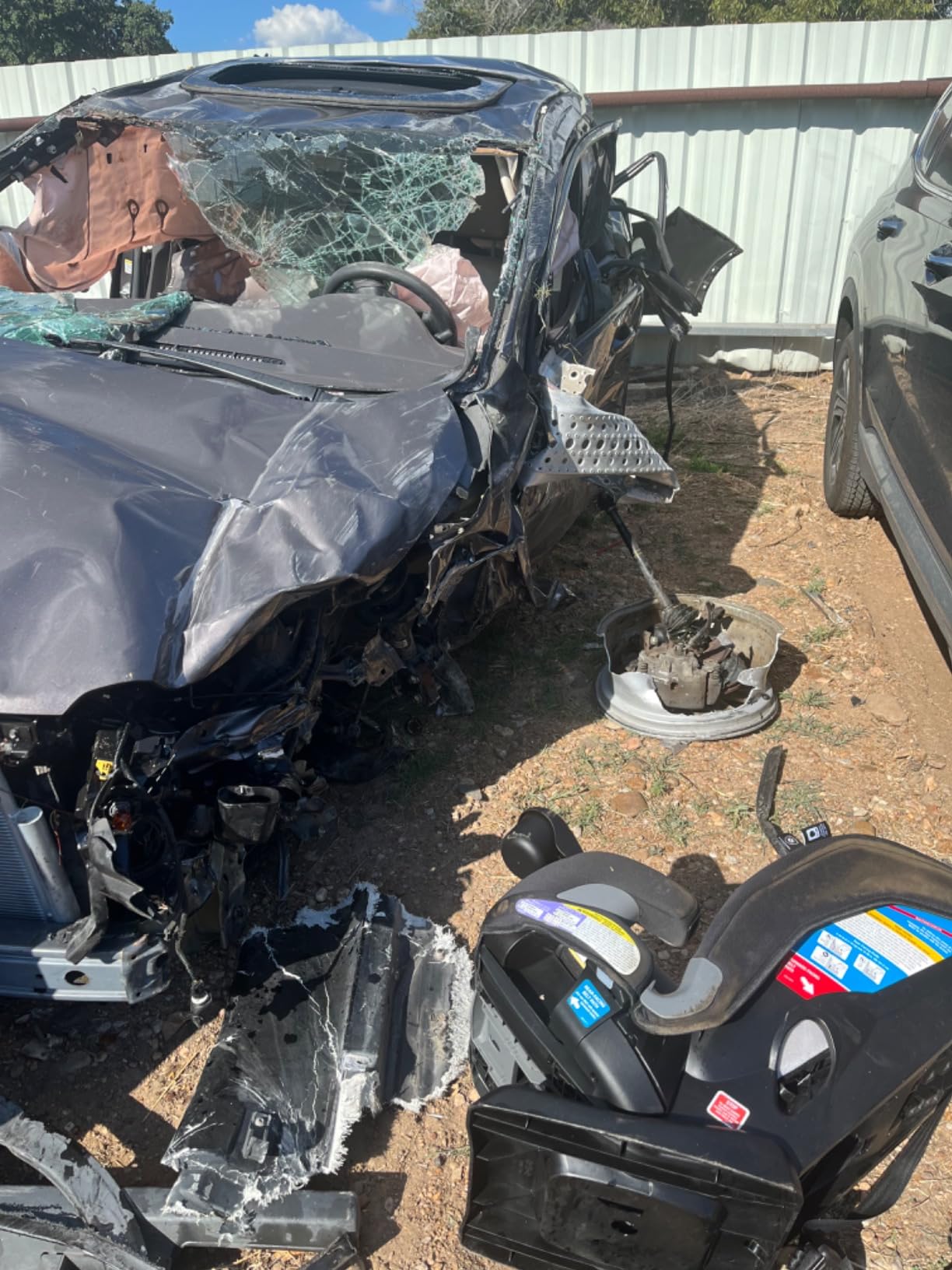
Where the EverSlim is the wrong choice
It is not the seat for a child over 100 lb in booster mode, which is lower than the Diono and Graco options here. Parents of larger older children should plan a separate booster.
If your three-across row is in a minivan third row with limited headroom, the taller shells in this group give you more adjustment range than the EverSlim does.
6. Safety 1st TriMate 3-in-1 Slim Convertible Car Seat
Safety 1st TriMate 3-in-1 Convertible Car Seat, Slim Fit, Infant to Big Kid Car Seat, Easy-Install Harness, Machine-Washable Cover, Dishwasher-Safe Cup Holders, 5-100 lbs, Sharkskin
Under 19 inches wide without cup holders
Rear-facing 5 to 40 lb
Forward-facing 30 to 65 lb
Booster 40 to 100 lb
Pros
- Sub-19 inch width confirmed for three-across rows
- No-rethread harness adjusts with one hand
- Seat pad washes without undoing the harness
- Good value for the feature set
Cons
- Installation can be rough even with maximum effort
- Removable foam pieces can work loose
The TriMate measures under 19 inches across excluding the cup holders, and an owner running three-across in a Subaru Outback confirmed the fit. It is the widest of the slim convertibles here, so it earns its place when the other options are not quite reaching.
The cleanup story is the real differentiator. The seat pad removes and washes without undoing the harness, and both cup holders are dishwasher safe. In a three-across row where you cannot easily get a seat out to clean it, that saves real time.
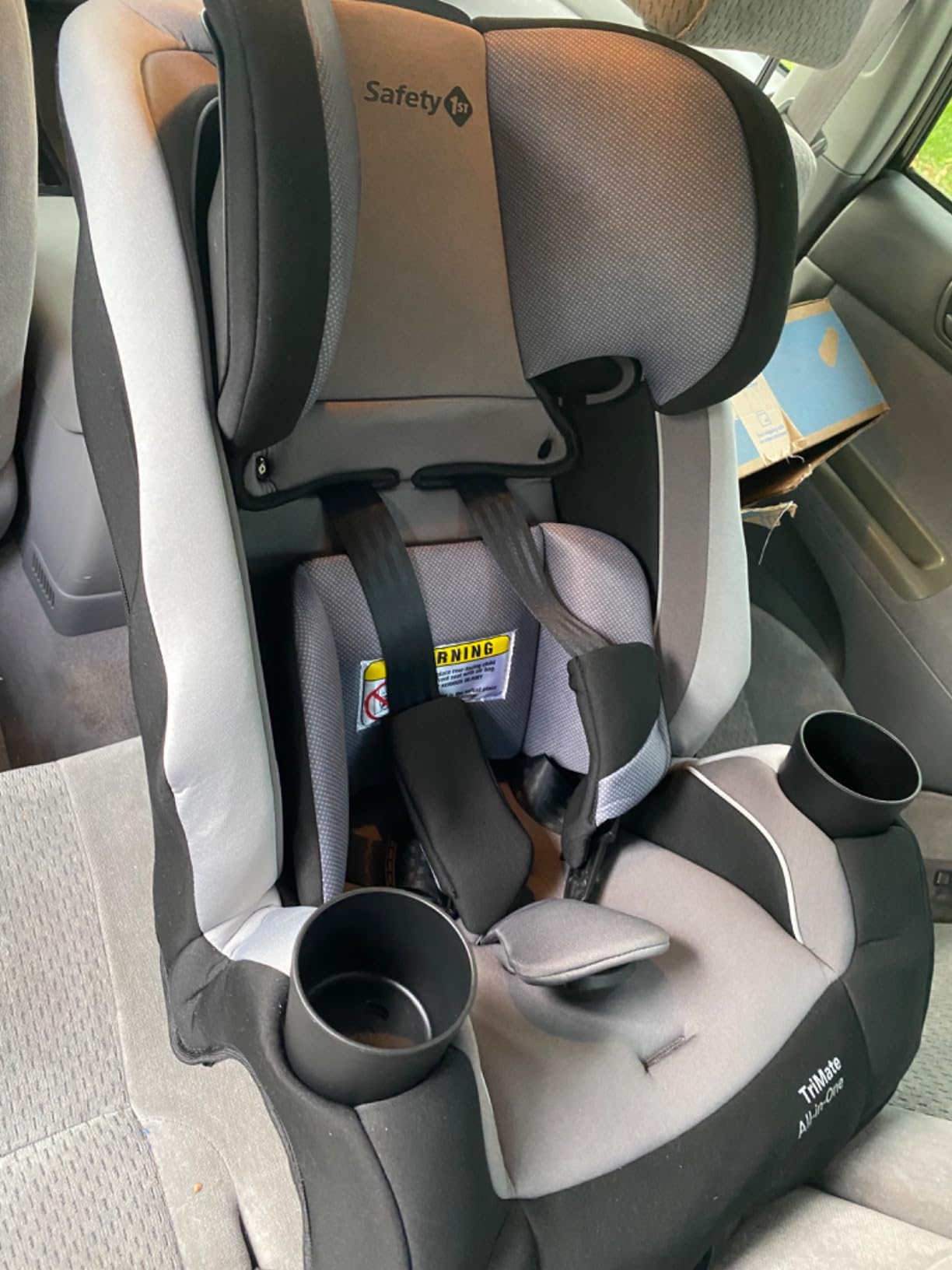
Its 4.4-star average is the lowest of the Safety 1st models here and reflects more mixed experiences. Critical reviews mention installation difficulty even with effort and small foam inserts and protectors that detach during normal use, and the seat is the widest object in this roundup.
What to check before buying the TriMate
Install it yourself in the parking lot before you leave. The fit is confirmed by owners, but the reported install difficulty is consistent enough that you should not take it on faith.
Count the removable pieces after a week of use. Foam inserts that work loose are a safety-adjacent annoyance, not just a tidiness issue.
Where the TriMate is the wrong choice
It is the wrong pick for the tightest sedans, where 19 inches is too much. If your measurement is tight, the 16.7 to 17 inch group buys you the margin you need.
It is also the wrong seat for a child over 100 lb, since the booster stage stops there, and it does not convert to backless booster mode at all.
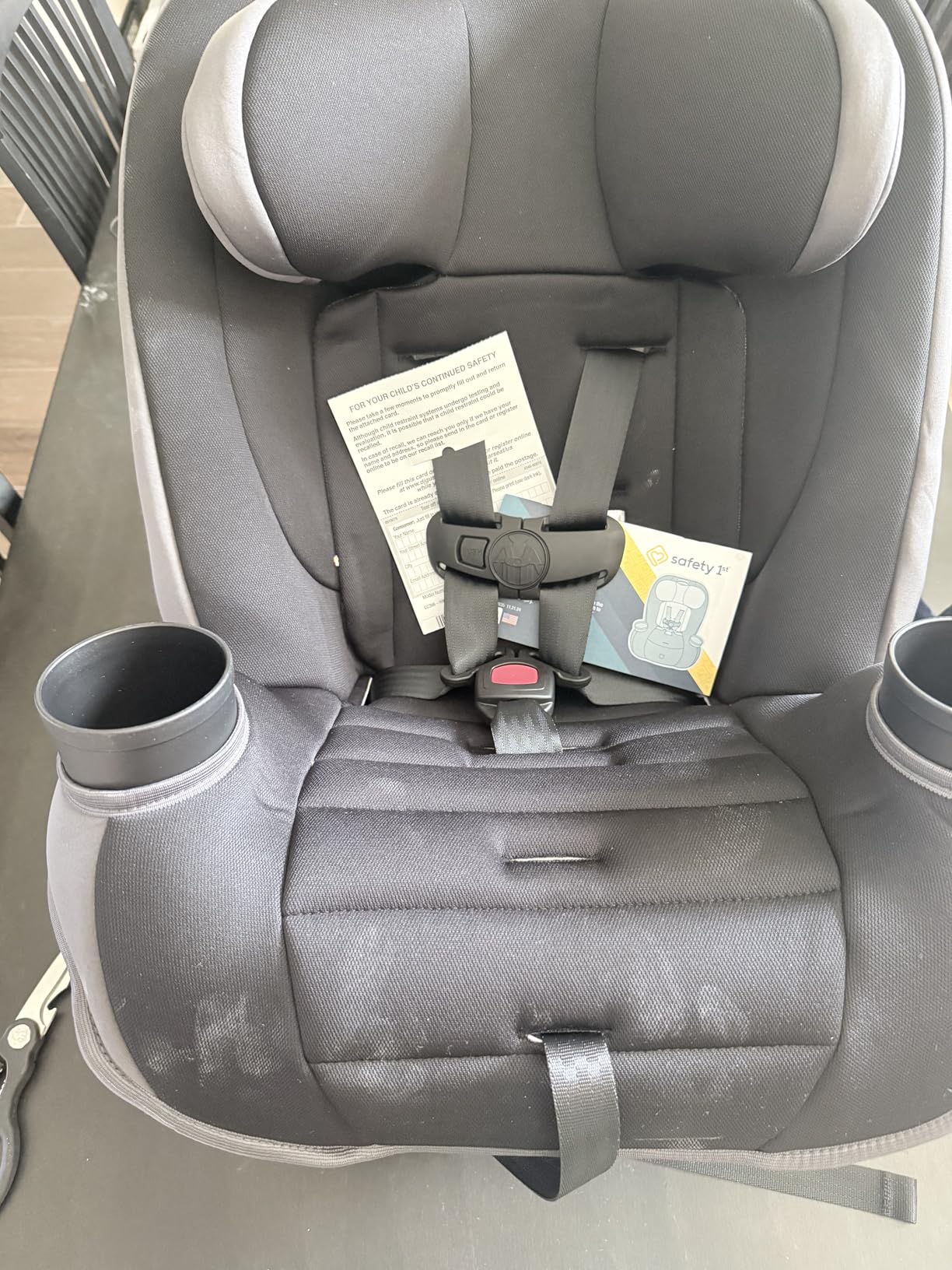
7. Safety 1st Ellaris Slim 3-in-1 Convertible Car Seat
Safety 1st Ellaris 3-in-1 Convertible Car Seat, Slim Fit Design, Rear & Forward-Facing, 5-Position Headrest, Travel-Friendly with Machine-Washable Seat Pad, Smokey Haze
3 modes from 5 to 65 lb
5-position headrest
Lightweight build
Machine-washable pad
Pros
- Entry price with solid build quality
- Light enough to move between vehicles
- Easy to install and adjust
- Machine-washable seat pad
Cons
- One owner measured it over 19 inches installed
- Headrest has noticeable side-to-side play
The Ellaris is the most common budget answer in our lineups, and owners with multiple children frequently call it the best value in its class. Three modes take a child from 5 lb rear-facing to 65 lb forward-facing, with a 5-position headrest and a slim profile designed to save back-seat room.
What you give up for the entry price is refinement. The headrest has noticeably more side-to-side play than the Graco seats here, and the fabric removal is a bigger job on a seat that gets yanked in and out of a tight row.
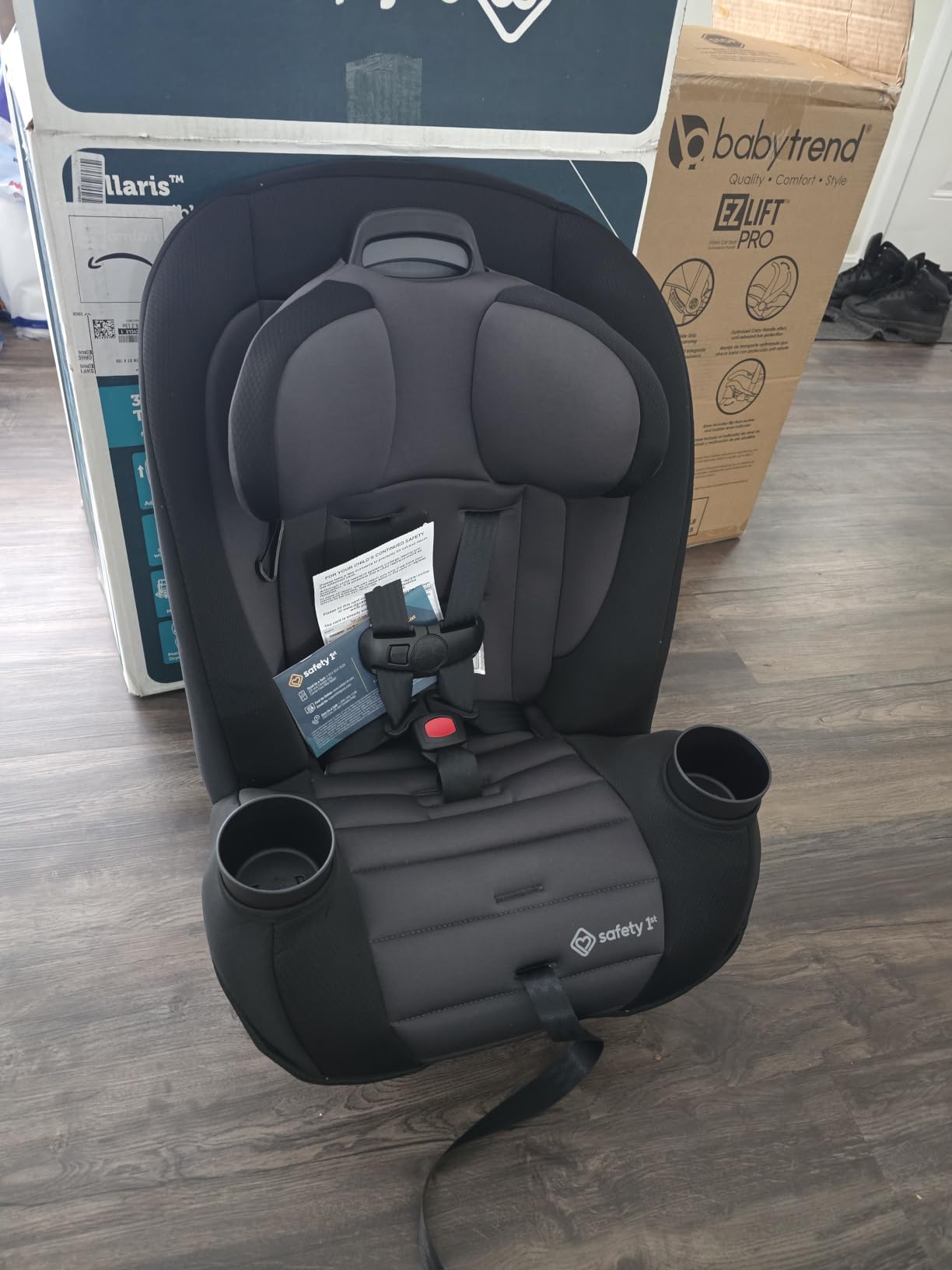
The important caveat is physical. One owner measured the installed seat a little over 19 inches and found it would not fit three across alongside other seats. That single report is why this seat sits below the ones with published widths, and why we recommend taping out the footprint on the floor before ordering.
What to check before buying the Ellaris
Measure the installed width, not the box width, and compare it against the total width of the other two seats plus the gaps they need. If the arithmetic only works with zero margin, choose a published-width seat instead.
Confirm booster conversion is not on your timeline. This seat stops at forward-facing, so a family with a 6-year-old needs a separate belt-positioning booster in that row.
Where the Ellaris is the wrong choice
It is the wrong seat for a vehicle with a raised center tunnel or contoured bench, where side-to-side headrest play and a wider installed footprint compound each other.
It is also the wrong seat when the middle position is your tightest fit and you need every fraction of an inch, because the published width advantage belongs to the SlimFit3 LX and the two Diono boosters.
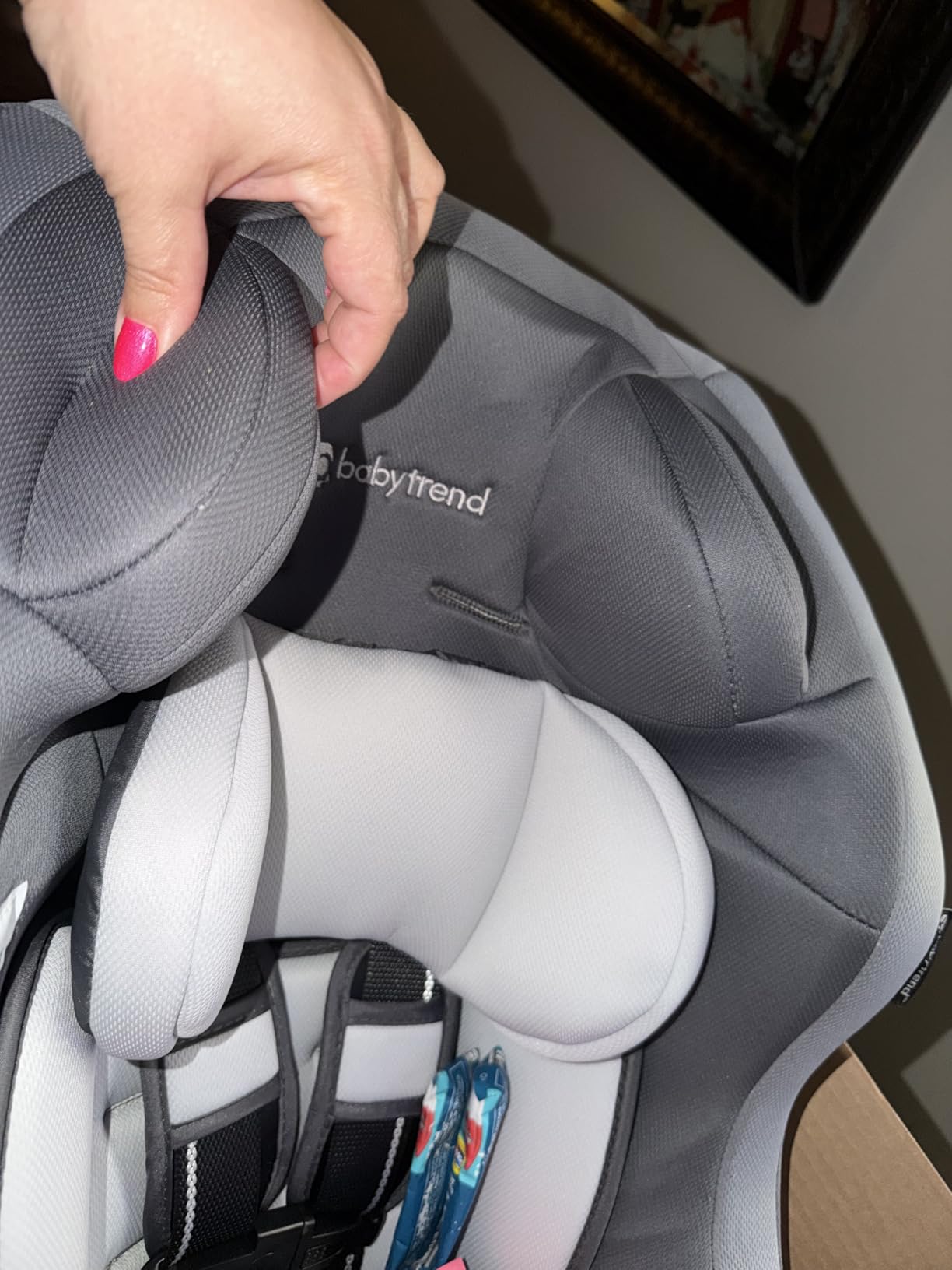
8. Baby Trend Trooper Slim 3-in-1 Convertible Car Seat
Baby Trend Trooper™ Slim 3-in-1 Convertible Car Seat, Dash Black – Slim Fit, 3-in-1 Growth Modes, Lightweight Design, Adjustable Comfort Padding
Slim-profile design
3-in-1 rear-facing to booster
Lightweight build
Adjustable headrest
Pros
- Slim profile works in a cramped van
- Lightweight build moves between vehicles easily
- Installs easily for most owners
- Lowest cost in the convertible group
Cons
- Harness straps do not tighten evenly across the chest
- Webbing and buckles snag and twist
The Trooper Slim is the lightest convertible in this group, and the weight matters more than it sounds in a three-across row where a heavier steel-framed seat gets wrestled in and out every day. Owners also report that the slim profile works in a cramped minivan where wider seats simply do not fit.
Its 3-in-1 system covers rear-facing, forward-facing and booster modes, with an adjustable headrest and harness and a 100% polyester cover.

Satisfaction is polarized, and the critical reviews are specific rather than vague. Straps that will not tighten evenly across the chest, buckles that twist on every use, and thin webbing that snagged within a week all show up repeatedly. In a row where every seat must tighten on its own, uneven harness tension is the dealbreaker.
What to check before buying the Trooper Slim
Check the seat height in a low vehicle. A tall shell pushes the front passenger seat forward, which is the same geometry problem the deeper reclines create from the other direction.
Watch the harness with a quick tightening test before the child is in it. Uneven strap tension is the single most repeated complaint in the reviews.
Where the Trooper Slim is the wrong choice
It is the wrong choice for a center-position rear-facing install, where a seat whose harness will not tension evenly leaves you guessing at whether the child is secure. Independent tightness is non-negotiable in a three-across row.
If your family keeps a second car, the light weight helps, but the harness complaints do not go away with distance between vehicles.
9. Graco Tranzitions 3-in-1 Harness Booster Car Seat
Graco Tranzitions 3-in-1 Harness Booster Car Seat, Proof
Forward-facing harness 26.5 to 65 lb
High-back and backless booster to 100 lb
One-hand headrest adjustment
Pros
- Bridges the five-point harness to a backless booster
- Lightweight and easy to move between vehicles
- No-rethread harness and one-hand headrest
- 4.7 star average across 1162 reviews
Cons
- Booster stage starts at 40 lb
- No rear-facing mode so it is not a birth seat
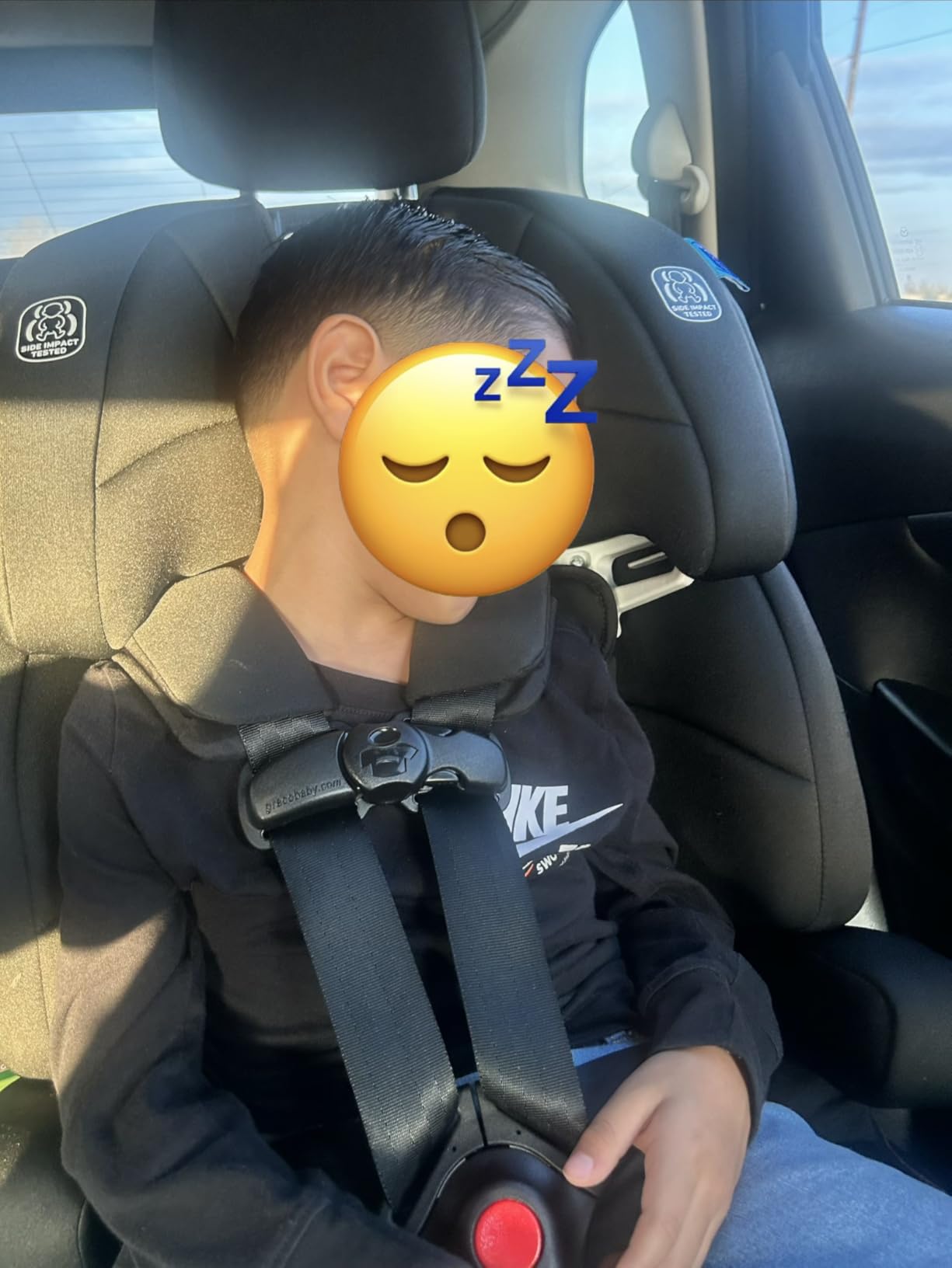
The Tranzitions solves a specific problem: a child who has outgrown a rear-facing convertible but is not ready to give up a harness. It runs forward-facing harness from 26.5 to 65 lb, then high-back and backless booster to 100 lb, with the same no-rethread harness Graco uses elsewhere.
For a three-across family with a newborn, a toddler and a school-age child, this is the middle seat that does not eat the row. It is light, portable and moves between vehicles without argument.
The one substantive caveat owners raise is the 40 lb booster minimum, which is higher than the previous 30 lb industry standard. Children between 30 and 40 lb stay in the harness mode longer as a result, which most parents see as a feature rather than a limitation.
What to check before buying the Tranzitions
Confirm your oldest child is at least 26.5 lb and forward-facing eligible before treating this as a three-across row solution. A newborn still needs a rear-facing seat, and this is not one.
Measure the row with a booster-width seat in the plan. Boosters can be narrower, but only if you plan the row correctly from the start.

Where the Tranzitions is the wrong choice
It is the wrong seat for a child over 100 lb, since the booster ceiling matches the SlimFit3 LX rather than the 120 lb seen on the Diono options.
It is also the wrong seat as your only car seat. Without a rear-facing mode, a family with a baby needs at least two seat types regardless of how the rest of the row is arranged.
10. Diono Connect3 R 2-in-1 High Back Booster Seat
Diono Connect3 R 2-in-1 High Back Booster, Slim Fit 3-Across in Many Mid-Sized Sedans and SUVs, for Children from 40-120 lbs., Lightweight with Cupholder, Blue Razz Ice
Less than 17 inches wide
40 to 120 lb
High-back converts to backless
11-position headrest
Pros
- Slim enough for three across in mid-size sedans and SUVs
- Kids can reach and use the buckle themselves
- Sturdy build without excess weight
- Contoured EasyPath belt guides
- Removable cup holder tucks away for a tighter fit
Cons
- Belt path is not obvious and needs repeating to children
- Some units arrived without the cup holder
Buckle access is the most common complaint parents in three-across threads describe, and the Connect3 R is built around it. The patented contour around the EasyPath lap belt guides shapes the opening so a booster-age child can reach, grip and operate the vehicle buckle without an adult leaning into the row.
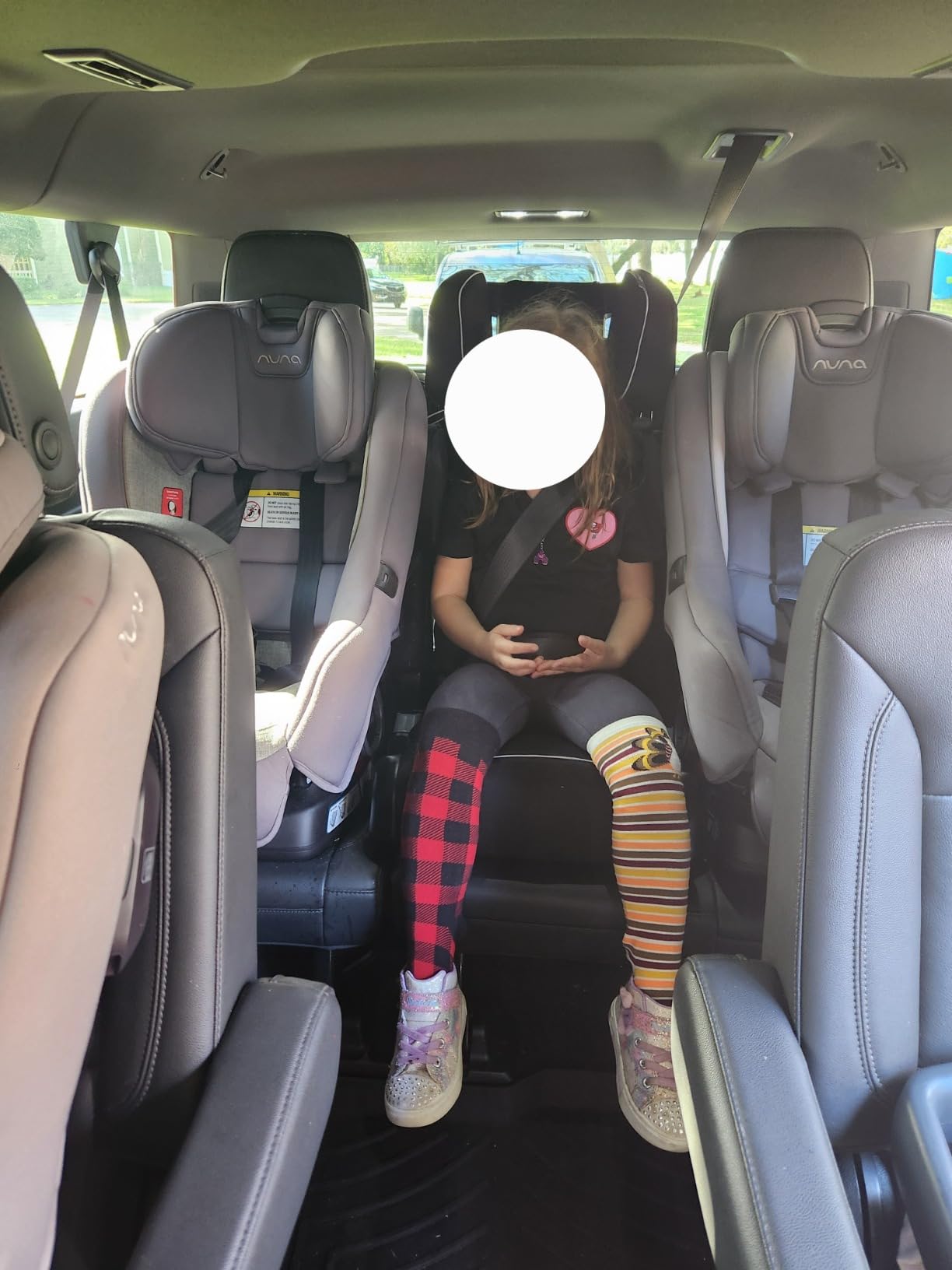
Owners running this seat in a mid-size sedan report a three-across fit where other boosters simply would not go, including one owner who found a wider booster would not fit at all.

At less than 17 inches wide, it is one of the two narrowest objects in this entire list. The 11-position combined head and backrest and a removable cup holder that nests between seats make it the most adaptable narrow booster we found.
What to check before buying the Connect3 R
Watch the belt path on the first drive. Several owners say children need to be reminded that the lap belt goes in front of the armrests, and that instruction has to be repeated for a while.
Check whether the cup holder is included. Some owners received units without it even though it appears on the box artwork, and the nesting design only works with the cup holder removed.
Where the Connect3 R is the wrong choice
It is not a seat for a child under 40 lb or for anyone who still needs a harness. If your middle child is under 40 lb, the Graco Tranzitions or a convertible belongs in the row instead.
It is also the wrong booster if you want a child to self-serve a drink: some units arrive without the cup holder, so check the box contents before the first drive.
11. Diono Cambria LE 2-in-1 Belt Positioning Booster
Diono Cambria LE, 2-in-1 Belt Positioning Booster Seat,Backless and High-Back Booster seat for Children from 40—120 lb,17″ Wide,6 Headrest Positions,Lightweight with Latch,Blue
17 inches wide
40 to 120 lb
Weighs 12 lb
6 headrest positions
Pros
- 17 inch width suits a three-across row
- Very light at 12 lb for moving between cars
- One-hand headrest adjustment
- Two layers of side-impact protection
- Open-loop belt guides hold the shoulder belt in place
Cons
- Backless mode gives less support to younger children
- No cup holder included
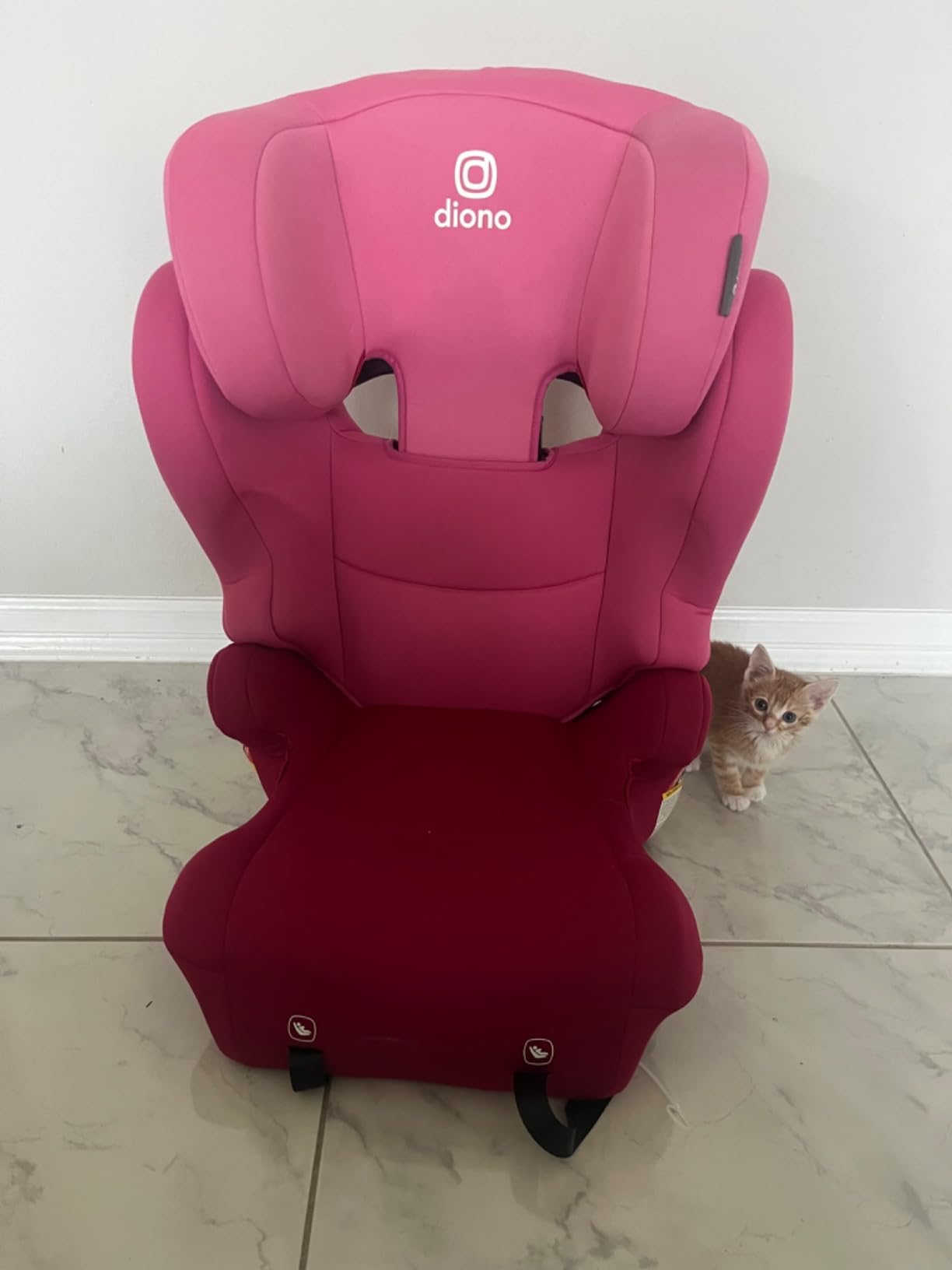
At 12 lb, the Cambria LE is the seat you hand to a grandparent, a babysitter or a second caregiver without a second thought. It is also a fixed 17 inches wide, which is the number most three-across families are actually shopping for.
It converts from a high-back belt-positioning booster to a backless booster for children from 40 to 120 lb. Six one-hand headrest positions cover most of that range, and the open-loop belt guides keep the shoulder belt across the strongest part of the body.
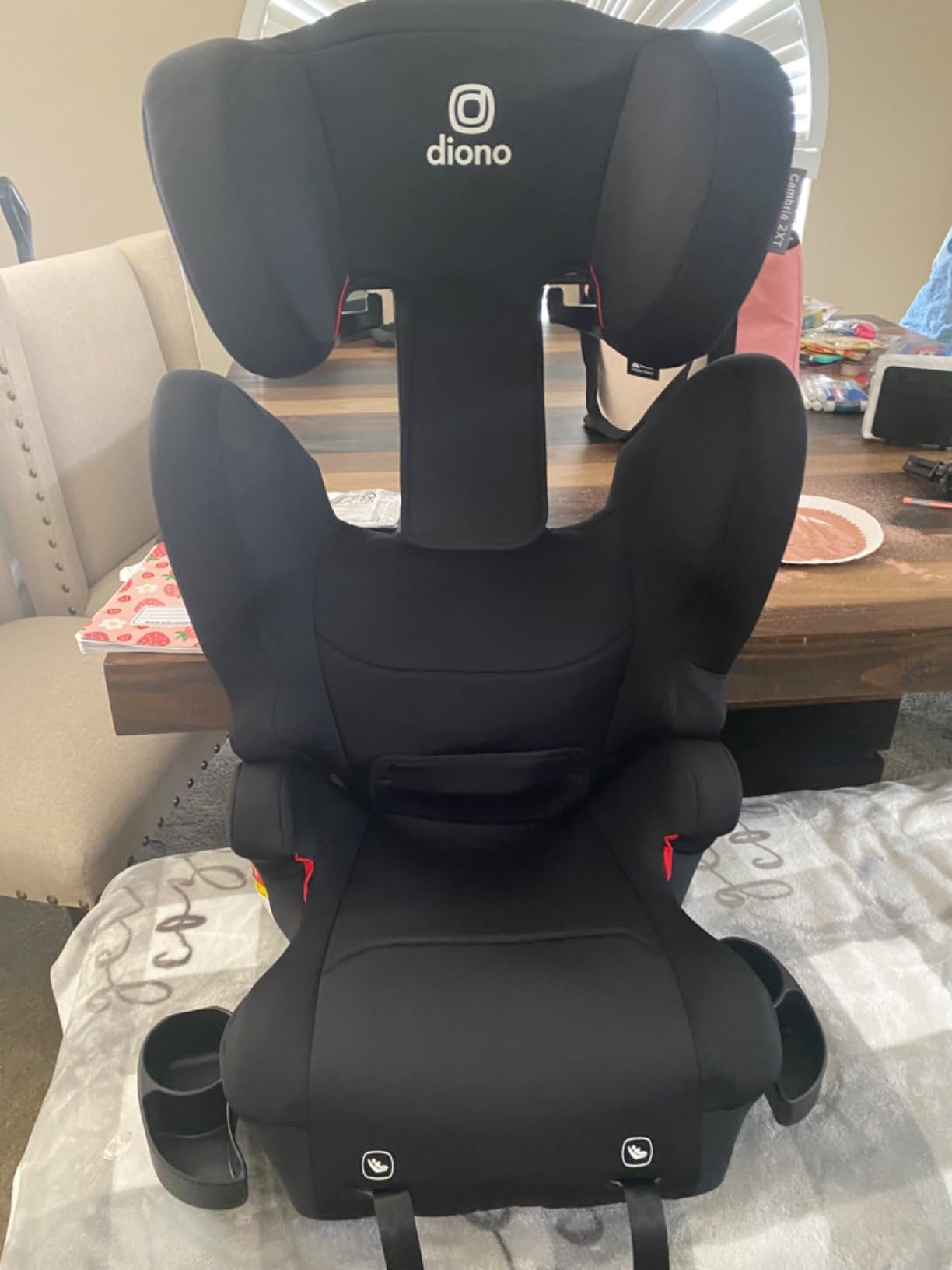
The absence of a cup holder is the most common complaint, and it is a genuine problem in a three-across row because there is nowhere to put a drink between seats. Two layers of side-impact protection do the safety work that the missing convenience feature would otherwise be asked to do.
What to check before buying the Cambria LE
Measure the height of your child in backless mode. Owners note that younger children who cannot hold an upright seated posture get less support once the high-back section comes off.
Plan the drink problem. In a packed three-across row, no cup holder means no drink during the drive unless you bring a separate solution.
Where the Cambria LE is the wrong choice
It is the wrong choice for the tightest rows, where every half inch counts. The Connect3 R at under 17 inches leaves more margin beside two other seats.
It is also the wrong choice for a child who still needs support from a high back, since the backless mode suits an older booster-age child better than a younger one.
12. Evenflo GoTime LX Booster Car Seat
Evenflo GoTime LX Booster Car Seat (Astro Blue)
40 to 120 lb, age 5 and up
High-back and no-back modes
7-position one-hand height adjustment
Meets federal safety standards
Pros
- Light and easy to move between vehicles
- Detachable high-back section
- 7-position one-hand height adjustment
- Meets or exceeds applicable federal standards
Cons
- Arrives unassembled with very tight plastic fittings
- Thin padding
The GoTime LX is the booster we recommend for a second car, a grandparents’ house or a rideshare regular, and its 2,000-plus reviews are dominated by exactly that use. It is light, it goes together once, and children can operate the height adjustment themselves.
Two modes cover children at least 5 years old and 40 to 120 lb, with a detachable high-back section and 7-position one-hand height adjustment. The deep design with overlapping head and body sides is what keeps it from looking thin in a spec list.
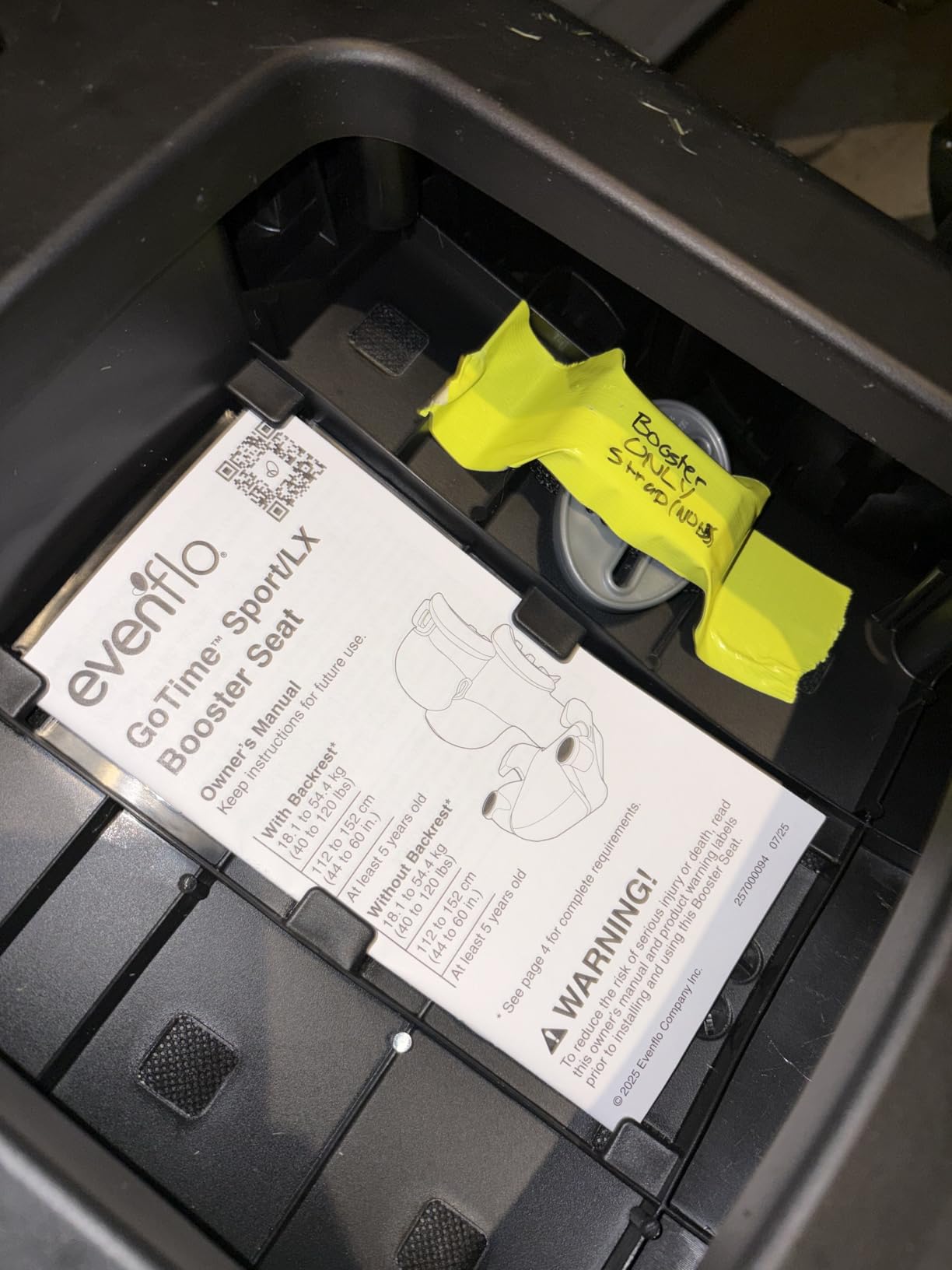
The assembly is the main hurdle. It arrives in pieces, and owners report the plastic fits very tightly enough that the back sections can be damaged forcing them apart. Padding is thin, and once the headrest is raised, hard plastic is exposed against the child’s back.
What to check before buying the GoTime LX
Assemble it before the first trip, not during it. Give yourself an unhurried 20 minutes with the instructions, and use the manual rather than force-fitting the back sections.
Check the back panel at your child’s headrest setting. Owners who raise the headrest find the exposed hard plastic uncomfortable, which matters most on long drives.

Where the GoTime LX is the wrong choice
It is the wrong booster for a child under 5, and the manufacturer states that age requirement plainly. Younger children belong in a harness seat such as the Graco Tranzitions.
It is also the wrong booster for a daily long commute in a cold or hot climate, because the thin padding shows up on every trip rather than only occasional ones.
How to Measure Your Back Seat for Three Across
Measure the usable interior width, not the total width of the bench, and do it before you fall in love with a seat. Four steps give you a number you can shop against published widths.
Measure across the back seat at the narrowest point, usually near the seat back where the bench tapers. Measure at the height a car seat actually sits, not at the top of the vehicle seat back.
Subtract roughly 1 inch of unusable space between each door panel and its seat belt anchor, because the outer seats cannot slide flush against the doors.
Add up the published widths of the three seats you are considering, then add 1 inch per gap for buckle access between them.
Compare the total against your usable measurement. If the totals match with no margin, you do not have a three-across configuration, you have a very tight one.
If the arithmetic fails, the answer is almost always a seat with a published width rather than a physically smaller one. A manufacturer who prints a width is telling you something they can stand behind.
How to Fit Three Car Seats Across
Install the center seat first, then the two outboard seats. The center position is the most constrained, and fitting it while you still have room to work prevents the whole problem.
Install the center seat with the vehicle seat belt. Lower anchors are rarely available in the center position, and many manufacturers prohibit sharing one anchor between two seats.
Lock the vehicle seat belt using the seat’s own built-in locking device, not the retractor alone. Every narrow seat in this list that is designed for a tight row has one.
Check tightness at the belt path. With the seat installed and the child removed, you should see less than 1 inch of movement at the belt path when you move the seat at the base.
Install the two outboard seats, using lower anchors if the child is within the anchor weight limit, otherwise the vehicle seat belt.
Recheck every seat independently. Neighbors must not be propping each other up; each one has to be tight on its own before the next is placed.
Confirm buckle access. Sit in the back row, buckle and unbuckle the center seat belt without moving either outboard seat.
Secure the forward-facing seats with the top tether, using a different anchor for each seat. Never share a single tether anchor.
If step 6 fails, the configuration does not work regardless of how tight everything else is. Buckle access is a daily-use requirement, not a convenience.
Which Seats Go Where: Sedan, Midsize SUV, Minivan Third Row
The vehicle class changes which seats in this list are even candidates, because interior width and belt geometry vary more than most people expect.
Compact and midsize sedans are the hardest case. A seat with a published 16.7 to 17 inch width is the practical ceiling, and the Diono Radian 3R, Graco SlimFit3 LX and the two Diono boosters are the ones worth measuring first. Budget for two seat belt installs in the outboard positions, because lower anchors in the center are rare and shared anchors are prohibited by most manufacturers.
Midsize SUVs and crossovers add a few inches of usable width and usually provide three lower anchor positions, which makes LATCH installs possible across the row. Under-19 inch seats such as the Safety 1st TriMate become viable here. Owner reports of three-across setups in a midsize SUV and a small crossover confirm the geometry is workable in this class.
Minivan third rows solve width and lose on headroom and belt angle. Split benches mean the center position may not have its own belt, and shoulder belts in a third row often angle forward of the shoulder, which is a belt-fit problem rather than a seat problem. Plan the booster for a second row position if you can, and check that the third-row headrest supports a smaller child.
Sedan owners face the hardest geometry, and third-row-only solutions do nothing for them. If you are deciding between a narrow-seat setup and a larger vehicle, our general vehicle and travel safety guide covers the comparison from a different angle.
LATCH vs Seat Belt: What Changes in a Three-Across Row
A three-across install is almost always a mixed-method install, and understanding why prevents most of the frustration. The center seat is usually a seat belt install because lower anchors are rarely present there.
Lower anchors work well outboard, provided your child is within the seat’s anchor weight limit. Once that limit is passed, the vehicle seat belt takes over, and the seat needs its own locking device. Shared anchors, sometimes called LATCH borrowing, are prohibited by many manufacturers even though the hardware physically permits it.
Watch for seat belt overlap. On some vehicles, the center belt runs forward of the shoulder or the buckle lands inside a neighboring seat’s belt span, and no seat choice fixes that. If your buckle geometry looks wrong, test the row with the seats you already own before buying anything new.
Troubleshooting a Three-Across Install That Will Not Tighten
Seats that look tight but cannot be tightened independently are the most common complaint in three-across discussions, and the fix is almost always the order of operations.
Install the center seat first and tighten it completely before anything else is placed beside it. A seat tightened after its neighbors are in place is usually a wedged seat.
Use the seat’s own locking device or lockoff, then pull the belt until the belt path stops moving. Locking the retractor alone is not enough in most configurations.
Move the neighboring seats outward slightly, recheck your seat, then push them back. If your seat tightens only with the neighbors pushed out, the row does not fit.
Check the vehicle seat itself. A vehicle seat that is not latched, or a seat back folded slightly by neighboring seats, will not let any car seat tighten.
Confirm the neighboring seat is not leaning on yours. If a seat overhangs or leans, reinstall both and check for the buckle contacting the adjacent shell.
If a seat still will not tighten on its own after these steps, the honest answer is that the three seats do not fit that row, and the fix is a narrower seat rather than more force.
The 3-Across Buying Guide: Width, Shape, Lockoffs, Comfort
Width is the number everyone quotes and the number that misleads most. A seat is a three-dimensional object, and what actually determines fit is the combination of width, shell shape and how the shell meets its neighbors.
Look for a published width, not a slim label. The SlimFit3 LX at 16.7 inches, the Britax Poplar S and Diono Cambria LE at 17 inches, and the Connect3 R at under 17 inches give you something to measure against. A seat described only as slim, as the Safety 1st EverSlim and Baby Trend Trooper Slim are, is a claim without a number.
Check the shell shape, not just the width. Seats with side wings, armrests or contoured belt paths can lose the extra inch their width suggests. A square, straight shell puzzles better than a sculpted one, which is why the two Diono boosters are the practical picks for the tightest rows.
Treat a built-in seat belt locking device as mandatory. In a three-across row, most outer installs end up as seat belt installs because of anchor weight limits. A seat without its own lockoff depends on the vehicle retractor, which is not a reliable three-across strategy.
Decide harness versus booster before you buy. A 4-year-old belongs in a forward-facing harness seat if the manufacturer still rates them for one, and a belt-positioning booster only once the harness is outgrown. The Graco Tranzitions at a 40 lb booster minimum pushes some children to stay harnessed longer, which most parents welcome.
Test buckle access in the store. Sit in the back row of a display vehicle, or in your own car with the seats you already own, and confirm that the center buckle can be reached and released without moving anything.
Check the current certification on the label. Every seat in this list is described by its manufacturer as meeting or exceeds the applicable federal safety standards, but models get revised and phased out. When a narrow seat is updated, it is often because the certification or testing requirements changed, so check the manufacture date on the label before buying a discounted older unit.
Seats and setups to skip. Avoid three-across bundles that show one seat overlapping the edge of another, since manufacturers prohibit that configuration. Avoid any seat where the only tight install depends on a neighbor. And avoid buying a Graco SlimFit 3-in-1 when you meant the SlimFit3 LX, which is the single most common naming mistake in this category and results in a wider seat in a row that needed a narrow one.
No matter how good the spec list looks, have the final install checked by a certified Child Passenger Safety Technician. Vehicle-specific geometry is the part no product page can predict, and a technician can solve a fit that a shopping guide cannot.
Frequently Asked Questions
How do you fit three car seats across?
Install the center seat first and tighten it fully before placing the other two. Use the vehicle seat belt with the seat’s own built-in locking device in the center position, since lower anchors are rarely available there. Then install the outboard seats with lower anchors or the seat belt, recheck that every seat moves less than 1 inch at the belt path on its own, attach separate top tethers, and confirm the center buckle can still be reached and released.
What is the narrowest car seat for three across?
The narrowest convertible in this roundup is the Graco SlimFit3 LX at 16.7 inches wide. Among belt-positioning boosters, the Diono Connect3 R measures under 17 inches and the Diono Cambria LE and Britax Poplar S are 17 inches. Always check the installed width rather than the boxed width, and confirm the seat fits fully on the vehicle seat cushion without overhang.
Can three car seats fit across in a sedan?
Yes, in many midsize and larger sedans, but only with genuinely narrow seats. Measure the usable interior width at seat-back height, subtract about 1 inch of dead space between each door and its belt anchor, and add a gap between seats for buckle access. Seats at or under 17 inches wide are the realistic candidates, and compact sedans often have so little margin that some configurations will not work.
How do I fix a car seat in the middle position?
Use the vehicle seat belt rather than lower anchors, since most vehicles do not provide a dedicated center anchor. Engage the seat’s own locking device or lockoff, then pull until the belt path stops moving. If the center buckle sits behind or beside a neighboring seat, alternating seat directions or moving the booster to a second row usually solves it. A technician can confirm the belt geometry for your model.
Why won’t my car seat tighten next to another seat?
It is probably being wedged rather than tightened. Each seat must be tight on its own before its neighbor is installed, and a seat that only tightens when pushed in from both sides is not securely installed. Check that the vehicle seat itself is latched upright, that the neighboring seat is not leaning on yours, and that the buckle is not pressing into the adjacent shell.
Should a 4 year old be in a car seat or a booster seat?
A 4-year-old belongs in a forward-facing car seat with a harness as long as the manufacturer rates one for that weight and height, which for most seats runs to at least 65 lb. A belt-positioning booster is appropriate once the child outgrows the harness. In a three-across row, a lightweight harness booster such as the Graco Tranzitions delays the transition until the child is ready for it.
Should I buy three matching car seats for a three-across setup?
Matching seats are convenient because you learn one install method and one set of adjustments, and they keep a consistent look. They are not required. Mixing stages is normal and often necessary, since a newborn, a toddler and a school-age child need different seats anyway. The important requirement is that each seat is the right width for the row and tightens independently.
How do you unbuckle a car seat buckle between two seats?
Open the vehicle seat belt first, then remove the car seat by releasing the belt tension or the lower anchor connectors, rather than pulling on the buckle stalk while everything is still under tension. In a three-across row, removing the outboard seat first and working toward the center usually gives you more room to reach the center buckle.
Conclusion
For most families fitting the best narrow car seats for three across, the Diono Radian 3R is the one to start measuring with. It tightens independently, runs four modes from birth to a 120 lb booster, and has the largest body of owner reports from real three-across installs of any seat here. The Graco SlimFit3 LX is the narrower and lighter alternative at 16.7 inches, and the Diono Connect3 R is the answer for the oldest child in the row.
Whatever you choose, measure your own back seat first, install the center seat first, and check every seat on its own before the neighbors go in. Bring the finished row to a certified Child Passenger Safety Technician before the first long trip, and revisit this list in 2026 each time a child outgrows a stage.