
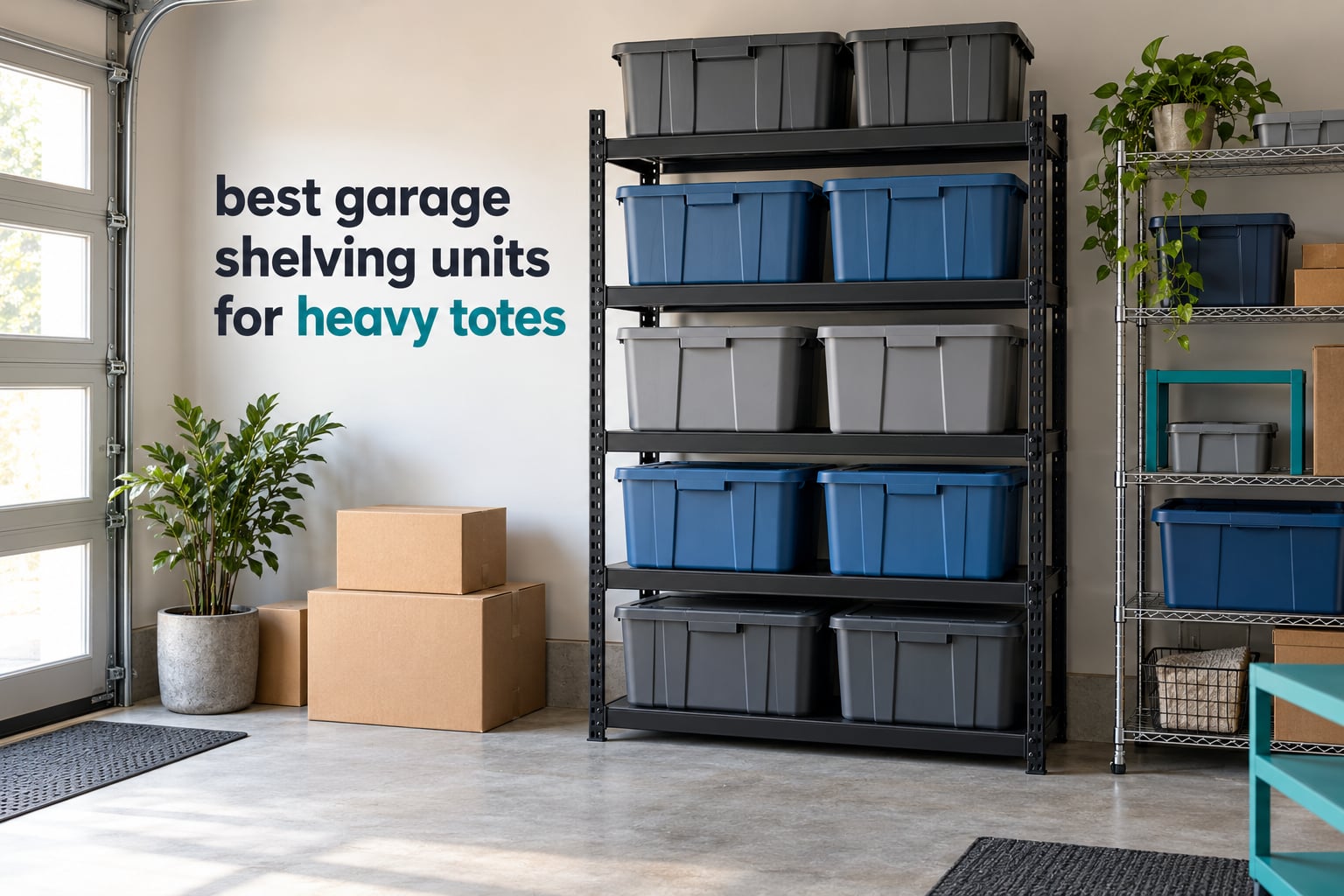
A 27-gallon tote filled with camping gear, tools, or a season’s worth of clothing lands somewhere between 60 and 90 pounds. Set three of those on a residential shelf rated at 100 pounds per tier and you are already over the line before you add a fourth.
That is the whole problem behind the best garage shelving units for heavy totes, and it is why so many racks that look identical in a listing photo end in a bowed beam three months later. The published number on the box is almost always an evenly distributed rating, and a row of filled totes is anything but even.
We compared ten of the strongest racks currently on the market, checking the two numbers that actually decide the outcome: pounds per shelf and shelf depth. If your tote overhangs the front edge by three inches, the rating means nothing. Our guide to garage shelving units covers the general category, and this roundup narrows it to the racks that survive loaded bins.
Two products stand apart immediately. The HOMEDANT 5-tier unit pairs a 24.1-inch shelf depth with a boltless build and a 4.6 rating across 3911 reviews, the deepest review base here. The VEVOR 60-inch rack does the same job with true carbon steel panels and a 400-pound per-shelf figure, at a mid-range price point. Everything else in the top ten earns its place on a specific strength: raw capacity, width, wire construction, or a rack designed around one exact tote size.
Table of Contents
Top 3 Picks for The Best Garage Shelving Units for Heavy Totes (October 2026)

HOMEDANT 5-Tier 24 in Deep Unit
- 24.1 inch shelf depth
- Tool-free boltless assembly
- 5 repositionable tiers
- Alloy steel and engineered wood

VEVOR 60 in 5-Tier 2000 lb Rack
- 400 lb per shelf
- True SPCC carbon steel panels
- 24 inch depth
- Press-fit no-bolt assembly

Notmise 63 in 5-Tier 3000 lb Rack
- Anti-fall safety rails on each tier
- Dual-layer columns
- 3000 lbs total capacity
- All-steel reinforced shelves
Will a 27-Gallon Tote Actually Fit? Depth and Load Math
Before comparing ratings, confirm the tote sits fully on the shelf. This is the step every competitor roundup skips, and it is the one that causes the most returns.
Standard tote footprints to measure against:
18-gallon tote: roughly 24.5 x 16.5 x 17 inches
27-gallon tote: roughly 28.2 x 18 x 17.2 inches
60-gallon tote: roughly 36 x 18 x 23 inches
A shelf needs to be at least as deep as the tote, or the front lip of the bin extends past the steel and the load tips forward every time you pull it. The 24.1-inch HOMEDANT depth, the 24-inch VEVOR and WORKPRO depths, and the 31-inch SafeRacks depth all clear a 27-gallon tote with room to spare. The 16-inch REIBII two-pack and the 18-inch REIBII wire unit do not, and reviewers on both mention overhang directly.
Now the load math. Take the weight of one filled tote, multiply it by the number you plan to place side by side, then compare that to the per-shelf rating rather than the total unit rating. Four filled 27-gallon totes at 70 pounds each is 280 pounds on one shelf. A unit advertised at 3000 pounds total across five tiers is carrying 600 pounds per tier on paper, which sounds enormous until you look at the beam span and the shelf gauge.
My rule: derate any published per-shelf figure by half when planning for a full row of totes, because the rating assumes a load spread across the whole deck rather than concentrated at the front edge. The 4.5 average on a 77-inch WORKPRO rack suggests its 1600-pound per-shelf claim is conservative. The 4.1 average on the 71-inch RAVIGIN suggests the same claim is not.
Users on r/HomeImprovement and r/garageporn raise the same complaint repeatedly: shelves labeled heavy duty at big-box stores seem tested under conditions unrelated to real use, and the flexing starts once bins are loaded. Another BuyItForLife poster put it plainly, saying trendy shelves are being used to store much lighter weight stuff than the heavy tools he actually stores. That gap between the rating and the real load is exactly what the per-shelf number is supposed to close.
Best Garage Shelving Units for Heavy Totes Compared
| Product | Specifications | Action |
|---|---|---|
| HOMEDANT 5-Tier 24.1 in Deep Unit |
|
Check Latest Price |
| VEVOR 60 in 5-Tier 2000 lb Rack |
|
Check Latest Price |
 WORKPRO 77 in 6400 lb Rack WORKPRO 77 in 6400 lb Rack |
|
Check Latest Price |
 REIBII 55.5 in Wire 3200 lb Rack REIBII 55.5 in Wire 3200 lb Rack |
|
Check Latest Price |
| Notmise 63 in 5-Tier 3000 lb Rack |
|
Check Latest Price |
 SafeRacks 27-Gallon Tote Rack 2-Pack SafeRacks 27-Gallon Tote Rack 2-Pack |
|
Check Latest Price |
 REIBII 2-Pack 36 in 2400 lb Racks REIBII 2-Pack 36 in 2400 lb Racks |
|
Check Latest Price |
 RAVIGIN 71 in Wide 5000 lb Rack RAVIGIN 71 in Wide 5000 lb Rack |
|
Check Latest Price |
 REIBII 40 in 2500 lb 5-Tier Rack REIBII 40 in 2500 lb 5-Tier Rack |
|
Check Latest Price |
 SISESOL 71.3 in Wide 5000 lb Rack SISESOL 71.3 in Wide 5000 lb Rack |
|
Check Latest Price |
One note before the individual reviews. Every rating listed on a retail page refers to an evenly distributed load per shelf unless the listing says otherwise. If a unit claims 5000 pounds, that is a whole-unit figure across four tiers, which works out to 1250 pounds per shelf, not 5000 on one shelf. Our heavy duty shelving guide breaks down the difference further.
1. HOMEDANT 5-Tier Unit: Best Overall for Loaded Totes
HOMEDANT Black 47.7″ Deep 5 Tier Storage Shelves Garage Shelving Unit Metal
24.1D x 47.7W x 71.3H inches
Alloy steel and engineered wood
771 lb total
5 repositionable tiers
Pros
- Tool-free boltless assembly
- Deep 24.1 inch shelves take large totes
- All five tiers repositionable
- Clean powder-coated finish
- Largest well-reviewed consensus in the group
Cons
- Shelf surface mixes alloy steel with engineered wood
- At 47.7 inches wide it needs a long wall
This is the unit I keep coming back to. The 24.1-inch depth is the single most useful number on this list, because it is wide enough that a 27-gallon tote sits with its full footprint supported and the lid still clears the tier above.
Assembly is a snap-together boltless design with no drill and no hardware, and it is the part buyers single out most often. Owners also like that all five tiers reposition, so the bottom shelf can take the heaviest totes while the top stays open for a storage bin with a swing lid.
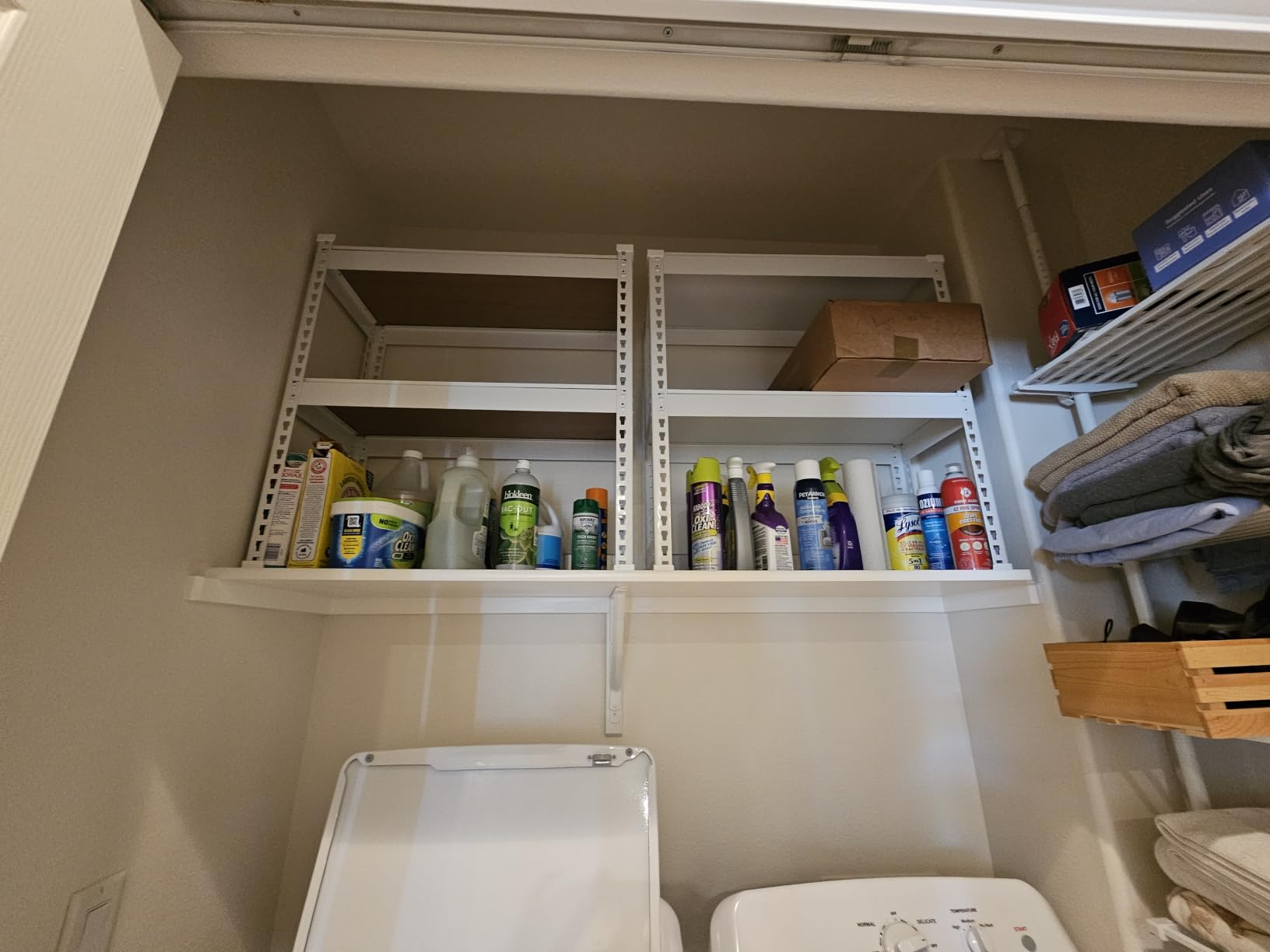
At 40.8 pounds it is light enough to move solo, which matters when you realize the right wall is not the one you planned. The finish is a black powder coat that looks more like furniture than a warehouse rack, and several reviewers note using it in a pantry or closet instead of a garage.
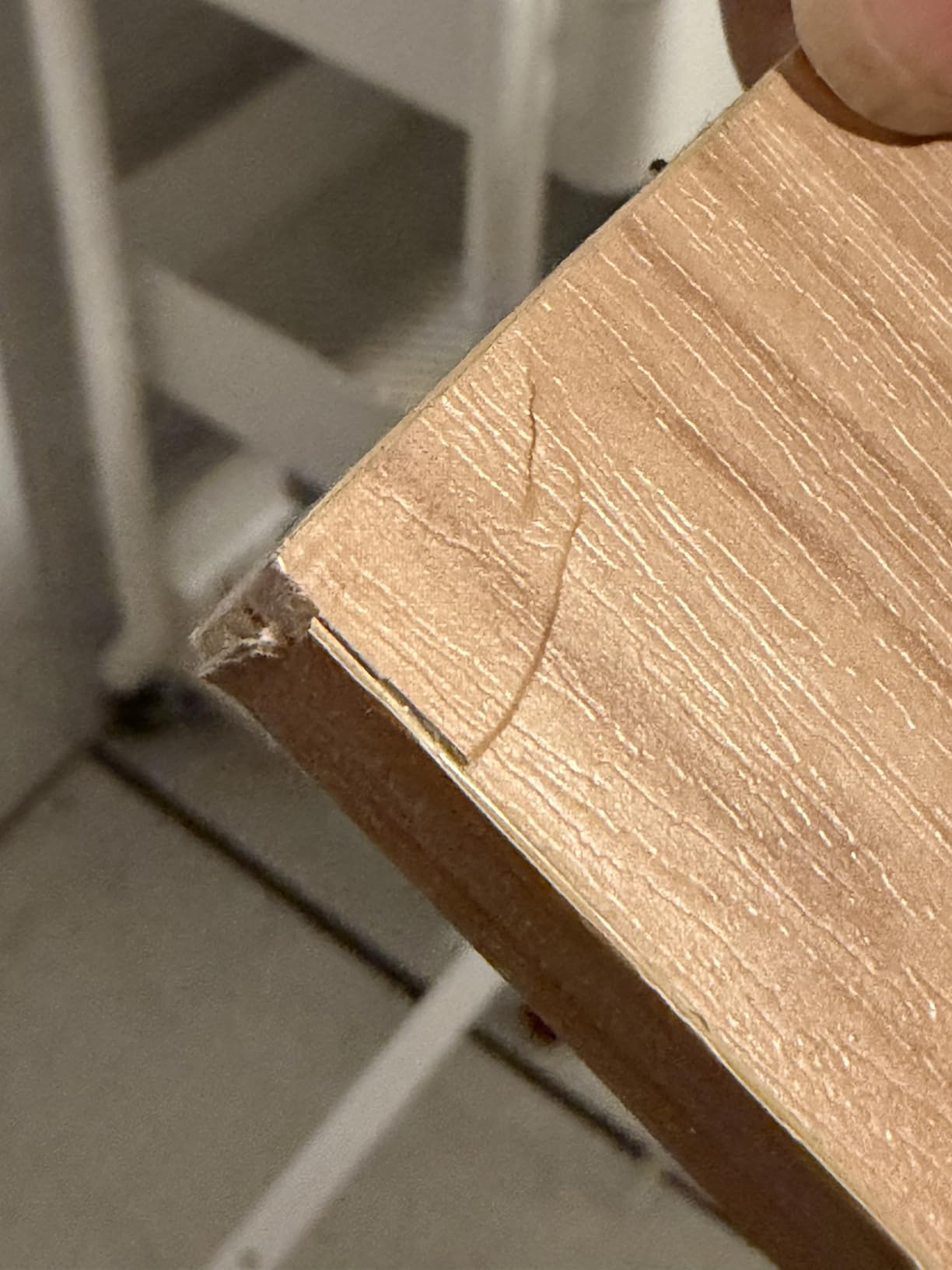
The compromise is the shelf material. These boards are alloy steel combined with engineered wood rather than solid steel, so in a persistently damp garage the wood components are the part that ages first. The Korean manufacture and the 1.18-inch shelf thickness are otherwise well regarded.
What we liked putting totes on
Three filled totes side by side on a 47.7-inch width leaves several inches of margin on each side, so nothing hangs off the edge. The repositionable tiers mean you can drop the bottom shelf low and space the upper tiers tightly around a 27-gallon tote with a lid.
The 771-pound total figure works out to roughly 154 pounds per tier if evenly spread, which is comfortably above a full row of three totes. The powder coat did not show scratching in the customer photos we reviewed.
Where it falls short
The engineered wood shelf surface is the sticking point. Reviewers who rated it for light household storage rated it less enthusiastically once they realized it is not a solid steel deck, and a 4.6 average reflects that split between appearance-oriented and load-oriented buyers.
At 47.7 inches across, this is one of the widest units here, so wall length becomes the limiting factor rather than load. In a one-car garage with a short back wall, that can rule it out entirely. If you need more width per shelf, the 77-inch WORKPRO fits three totes across.
2. VEVOR 60 in 5-Tier Rack: Best Value for Heavy Totes
VEVOR Storage Shelving Unit 5-Tier Adjustable 2000 lbs Capacity 60″x24″x78″
24D x 60W x 78H inches
SPCC carbon steel, powder coated
400 lb per shelf, 2000 lb total
5 tiers
Pros
- True carbon steel panels
- 400 pounds on each of five tiers
- 24 inch depth fits large totes
- Press-fit build needs no tools
- Anti-tip brackets and foot pads included
Cons
- Lowest rated capacity of the heavy-duty units here
- 2000 lb assumes evenly spread weight
- Anti-tip brackets must be fitted to keep the unit square
This is the rack most people should actually buy. The shelves are SPCC carbon steel with a powder coating, not a board and not a thin pressed panel, and that single material choice removes the moisture and puncture worries that dog the MDF options in this roundup.
At 400 pounds per tier across five tiers, three filled 27-gallon totes land at less than a quarter of the rating. The 24-inch depth handles a 60-gallon tote footprint far better than anything shallower on this list, and the 60-inch width fits two large totes side by side with clearance.
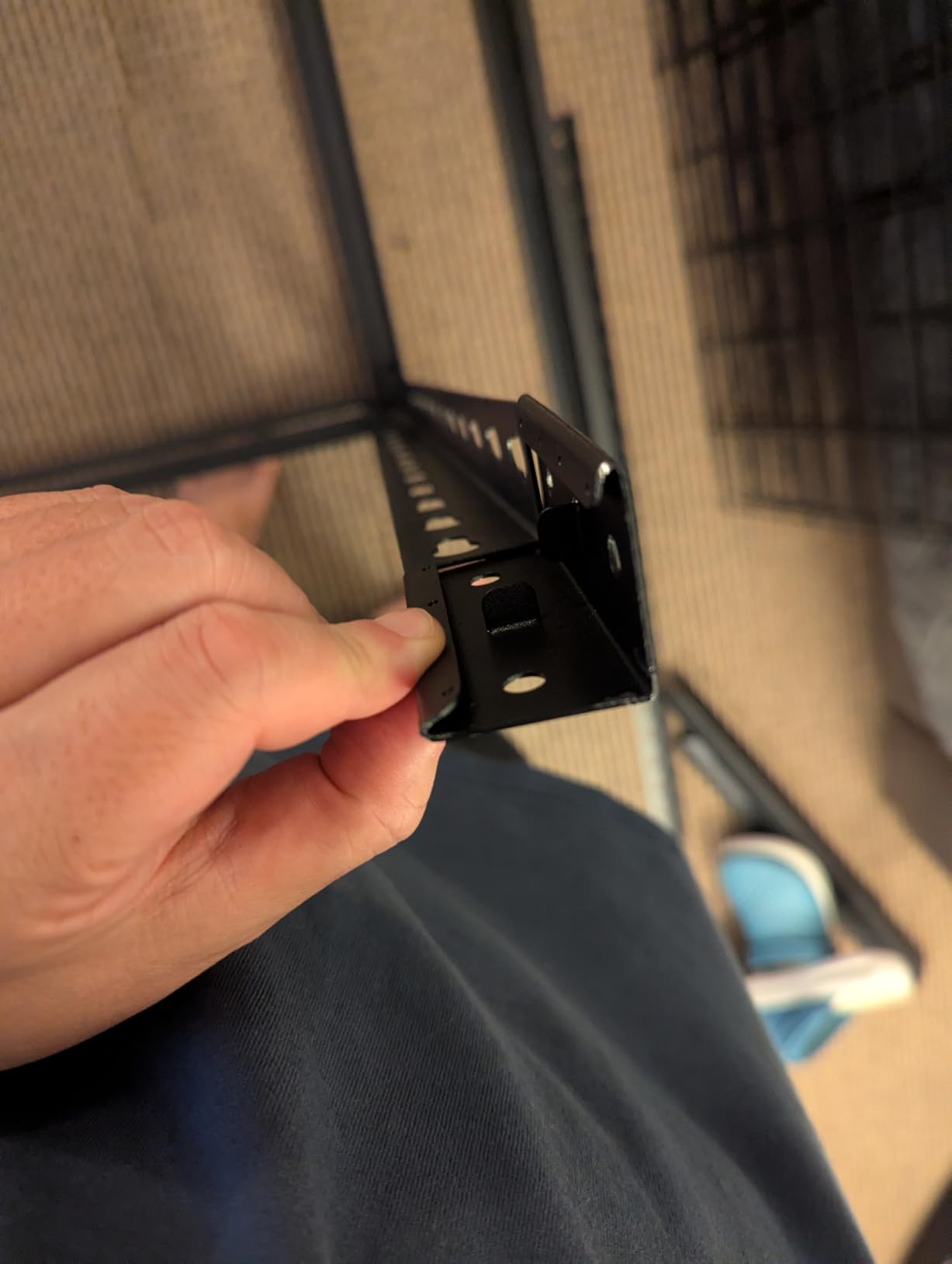
Assembly is a press-to-fit snap design that needs no bolts or nuts, and the box includes a rubber hammer plus gloves. Rubber foot pads protect a concrete garage floor, and two anti-tipping brackets are included, though you have to fit them yourself.
That last point matters. Skipping the anti-tip kit is the most common reason a rack like this ends up racked forward, and several reviewers mention it explicitly as the one assembly step not to skip.
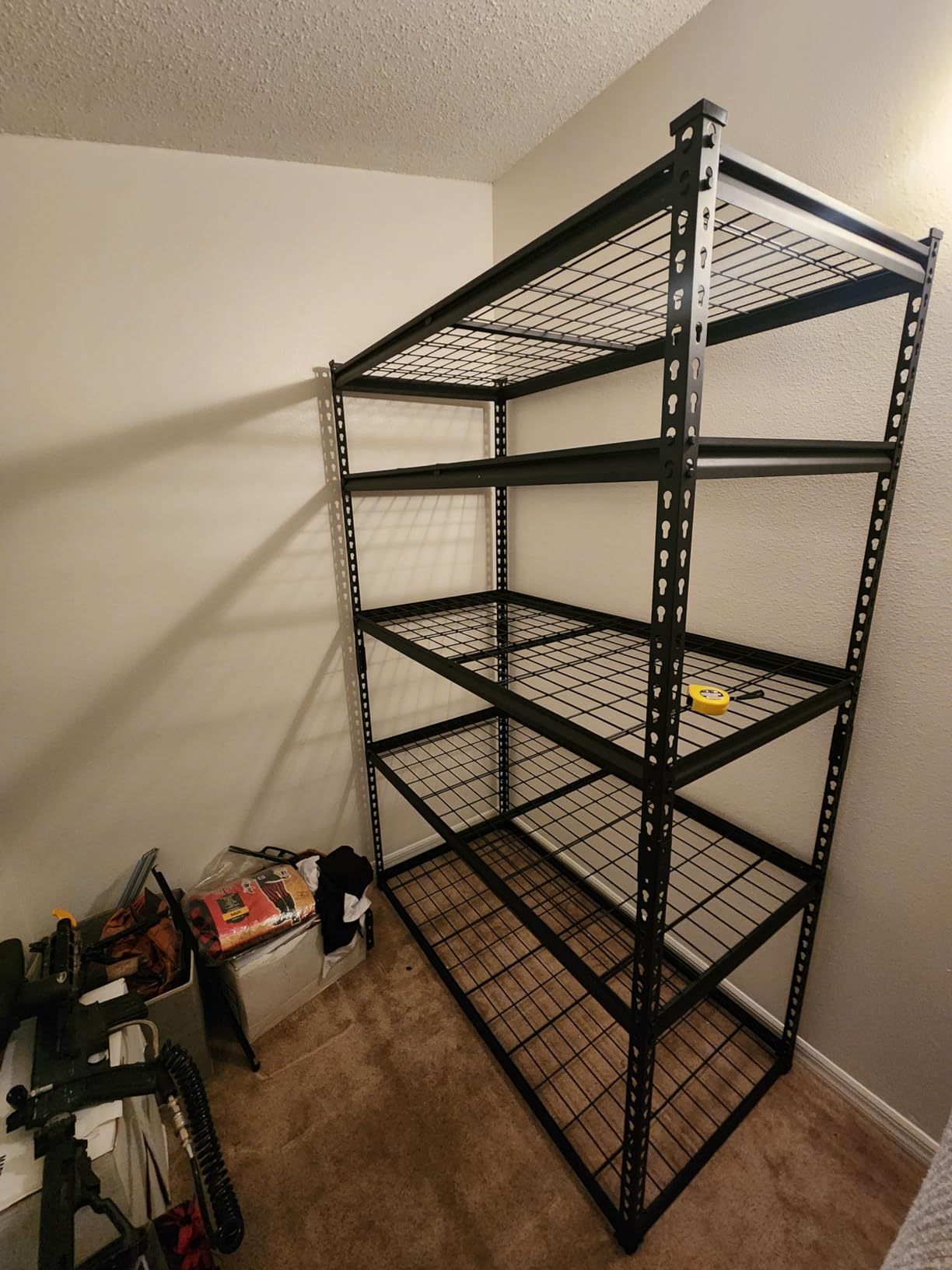
Why the load rating holds up
Solid steel panels are the reason this rack tolerates point loads. A shelf that is a single pressed sheet flexes under a concentrated tote edge; a carbon steel panel with a formed lip does not. Reviewers who replaced plastic or fiber shelves credit the cross members for not leaning or sagging.
The 2000-pound total is the lowest rating among the heavy-duty steel units here, and reviewers note it is a distributed figure rather than a per-shelf guarantee. In practice, 400 pounds per shelf leaves ample headroom for four or five filled totes.
What to watch before you order
The unit splits into two separate racks, which is genuinely useful if you want one in the garage and one in the basement, but it also means the 76.9-pound shipping weight is a two-person carry in single-unit form.
If your garage is dry and you want a decorative finish rather than raw utility, this is the least attractive option on the list. Reviewers of wire shelving options often prefer them for exactly the opposite reason, wanting the open profile on show.
3. WORKPRO 77 in Rack: Best for Three Totes Across
WORKPRO 77-Inch Garage Utility Shelving, 6400 lb Heavy-Duty Rack
24D x 77W x 72H inches
1600 lb per shelf, 6400 lb total
Reinforced diagonal braces
Rivet-lock boltless
Pros
- Highest rated capacity in the roundup
- 77 inch width fits three 27-gallon tubs
- Support rod under every shelf layer
- Rivet-lock boltless build
- Rubber footpads and powder coat
Cons
- At 141 lb it needs two people to reposition
- Some versions have a raised center brace
- Part orientation in the instructions is unclear
When the question is how much weight a rack will hold, this one answers with 1600 pounds per shelf and 6400 pounds across four tiers. That is the highest rated capacity in the group by a wide margin, and no reviewers report bowing under loaded totes.
The 77-inch width is the practical headline for tote storage. Three 27-gallon tubs fit across a single shelf, which means one tier holds a full set and the remaining tiers stay free for the overflow. Buyers mention this three-across fit as the first thing they noticed.
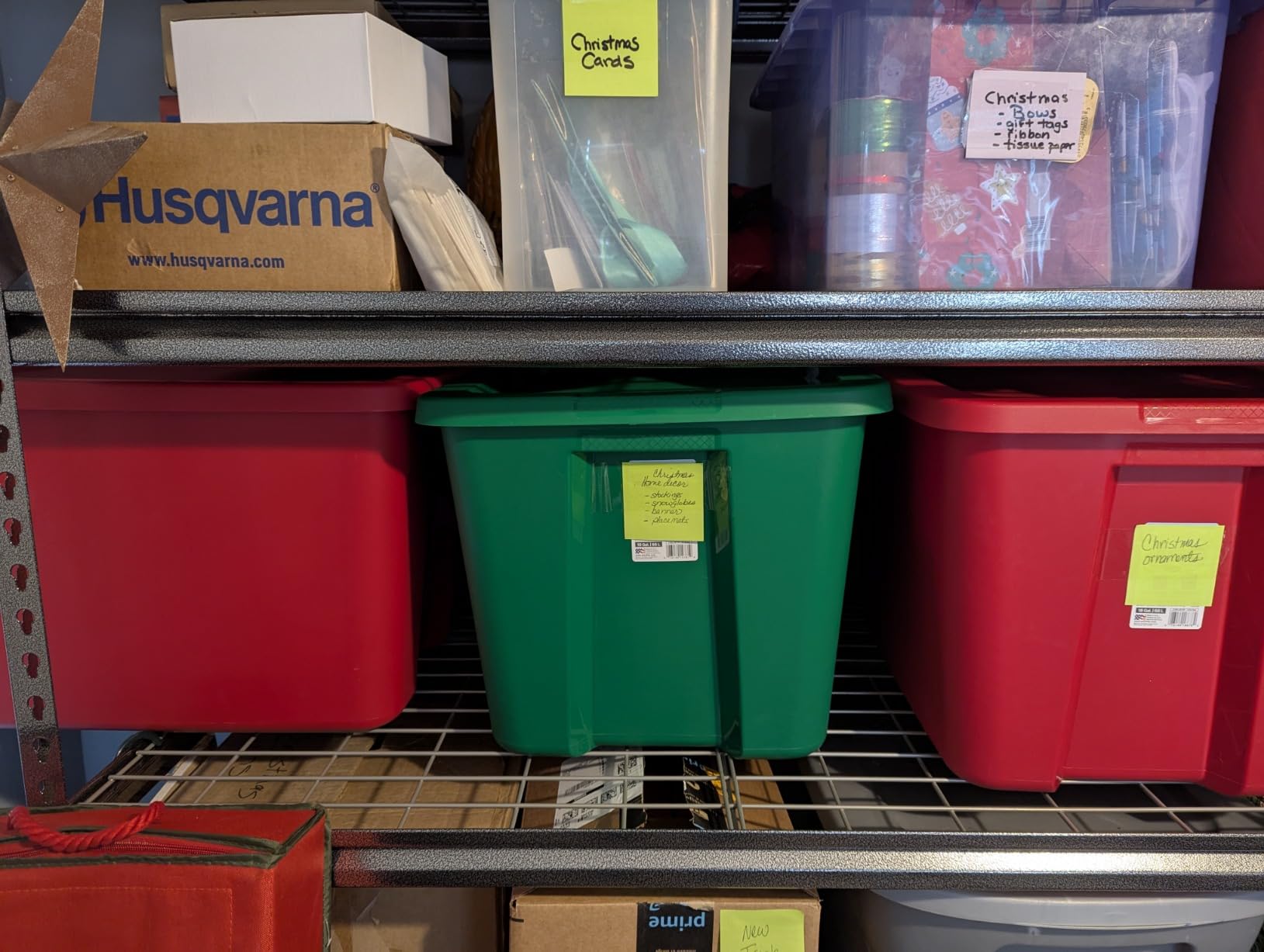
Every shelf layer has a support rod underneath, and reinforced diagonal braces run through the frame. One reviewer reported finishing the full 72-inch unit in about ten minutes with the rivet-lock boltless system, using a rubber mallet rather than a hammer.
It converts into two separate 2-tier units if your garage has two work areas, and the shelf heights adjust per tier. WORKPRO support also resolved shipping damage quickly for buyers who contacted them.
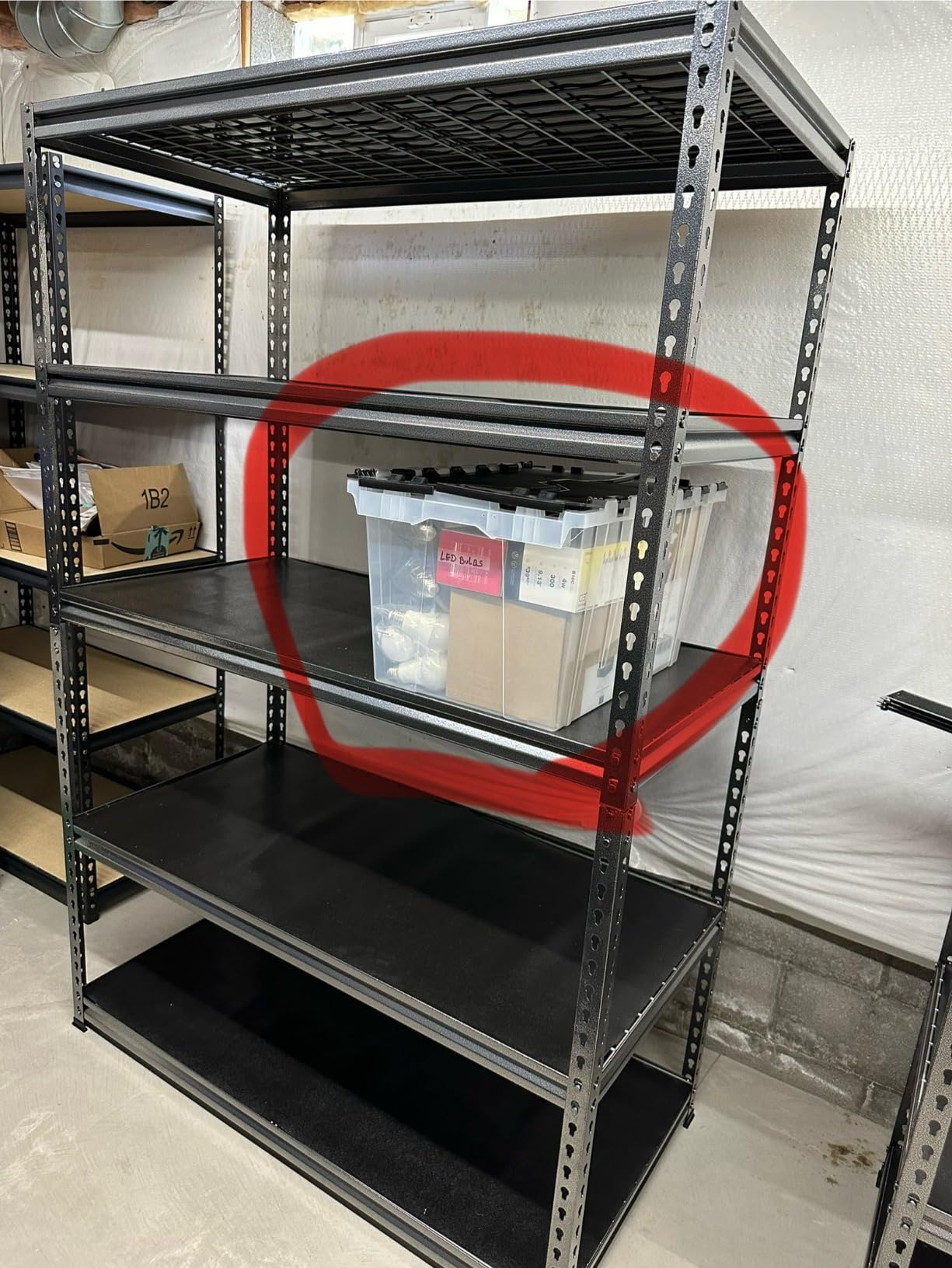
Where the extra capacity gets used
Six totes across two tiers is a realistic load for this rack, and at 70 pounds each that is 420 pounds spread over a shelf rated at 1600. The headroom is large enough that you can stack a second row of bins above without approaching the limit.
Users comparing big-box heavy duty shelves with commercial-grade options on r/HomeImprovement note that the commercial route is not dramatically more expensive but is built to a completely different standard. This rack sits in that middle ground.
The tradeoffs worth knowing
At 141.1 pounds, repositioning is a two-person job and getting it through a doorway takes planning. The raised center brace on some versions limits flat items wider than about two feet, so it is not a workbench surface out of the box.
More important, the instructions do not make the orientation of the B and C frame parts clear. Getting those backwards invites complaints about shelf grate flex that have nothing to do with the rack’s actual strength. Follow the part labels.
4. SafeRacks 27-Gallon Tote Rack: Built Around One Tote Size
SafeRacks 5-Tier Steel Tote Rack for 27 Gallon Bins – Black, 2 Pack
31D x 23W x 68H inches
NSF certified carbon steel
250 lb per bin level
5 levels, 2 racks per pack
Pros
- Purpose-built for 27-gallon bins
- Each bin gets a full slide-in level
- NSF certified all-steel construction
- 250 lb per bin level
- Sold as a two-pack
Cons
- Slide-in only
- so non-standard totes will not fit
- Narrow 23 in footprint stores bins and little else
- 64 lb carton makes it a two-person carry
This is the only rack on the list designed around a single tote dimension rather than a general shelf. Each level is sized for a bin with a 24.25 by 30.25 inch lid, which covers the common 27-gallon format, and the bins slide in rather than balance on a deck.
Owners frame it as the dedicated tote solution for exactly that reason. Nothing stacks and nothing double-stacks, so every bin stays individually accessible, and the 250-pound rating per bin level is plenty for densely packed totes of tools or seasonal gear.
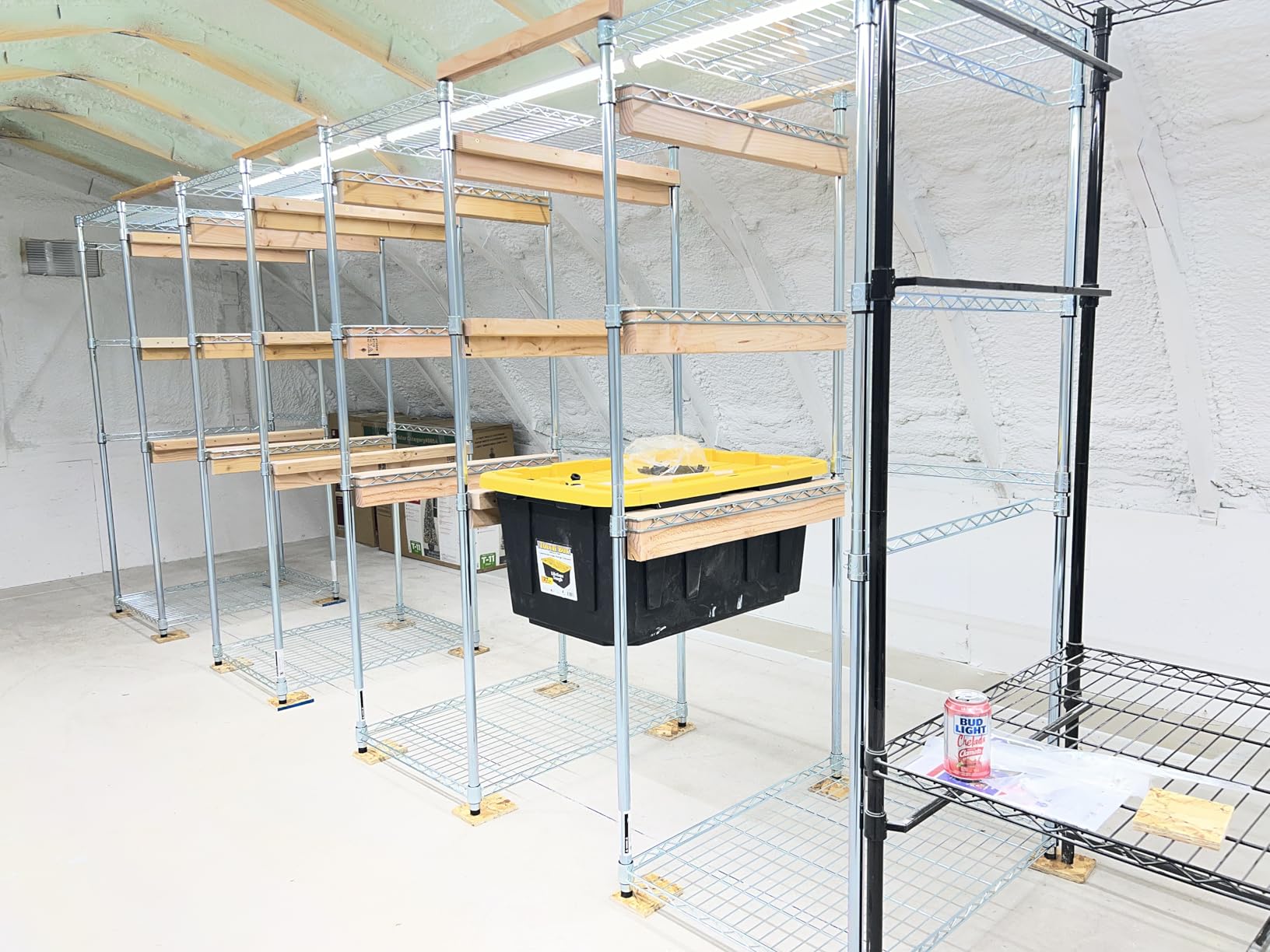
The construction is all carbon steel with a black powder coat, and it carries NSF certification. That certification is a real signal in this category because it means the rack was evaluated against a published standard rather than only against a marketing claim.
At 31 inches deep, this is the deepest shelf in the roundup by a clear margin. A 27-gallon tote drops in with room to spare, and the vertical format keeps every bin off the floor where damp concrete and pests are concerns.

Why the slide-in format matters
Slide-in levels remove the single most common failure mode in tote storage. There is no front edge to tip over, no load cantilevered past the beam, and no tote to slide forward when you pull the one behind it. Each bin carries its own weight straight down into the frame.
The 250-pound per-level rating also removes the derating problem. Three 27-gallon totes would be 210 pounds at 70 pounds each, and even a full row of oversize bins stays inside the figure without argument.
Where it will not work
Slide-in only means the rack accepts one footprint. If your totes are not 24.25 by 30.25 inches, they will not seat properly, and that is the limitation reviewers cite most often. Measure a bin before ordering.
The 23-inch width stores bins and essentially nothing else, so it is not a general-purpose garage shelf. A 64-pound carton across two racks also means a two-person carry. If you want mixed storage, our storage tote roundup is the better place to start sizing.
5. Notmise 63 in 5-Tier Rack: Best Budget Pick with Anti-Fall Rails
Metal Garage Shelving Unit, Heavy Duty 5-Tier Adjustable Storage shelves, Steel Shelving, 3000 lbs Capacity, Industrial Shelves for Heavy Tools and Equipment, Ideal for Garage, Basement, Black, 72″
19.7D x 63W x 66.9H inches
3000 lb total, all-steel shelves
Anti-fall safety rails on each tier
Dual-layer columns
Pros
- Anti-fall rails on every shelf
- All-steel shelves resist warping and moisture
- Dual-layer columns reduce wobble
- Tool-free slotted assembly
- Lowest price among the units reviewed
Cons
- 4.2 average with a 10 percent one-star share
- 19.7 in depth is tight for large totes
- Published dimensions vary between listing and spec block
The anti-fall rails are the feature that sets this rack apart at its price point. A lip runs along the front of every shelf, so a loaded tote pushed forward during a pull stays put instead of tipping off a deck.
Most budget racks use single-layer posts. This one uses dual-layer columns, which spreads the load more evenly and is the physical difference behind the reduced sagging and wobbling that lighter posts show. The shelves are all steel, so nothing here warps or takes on moisture.
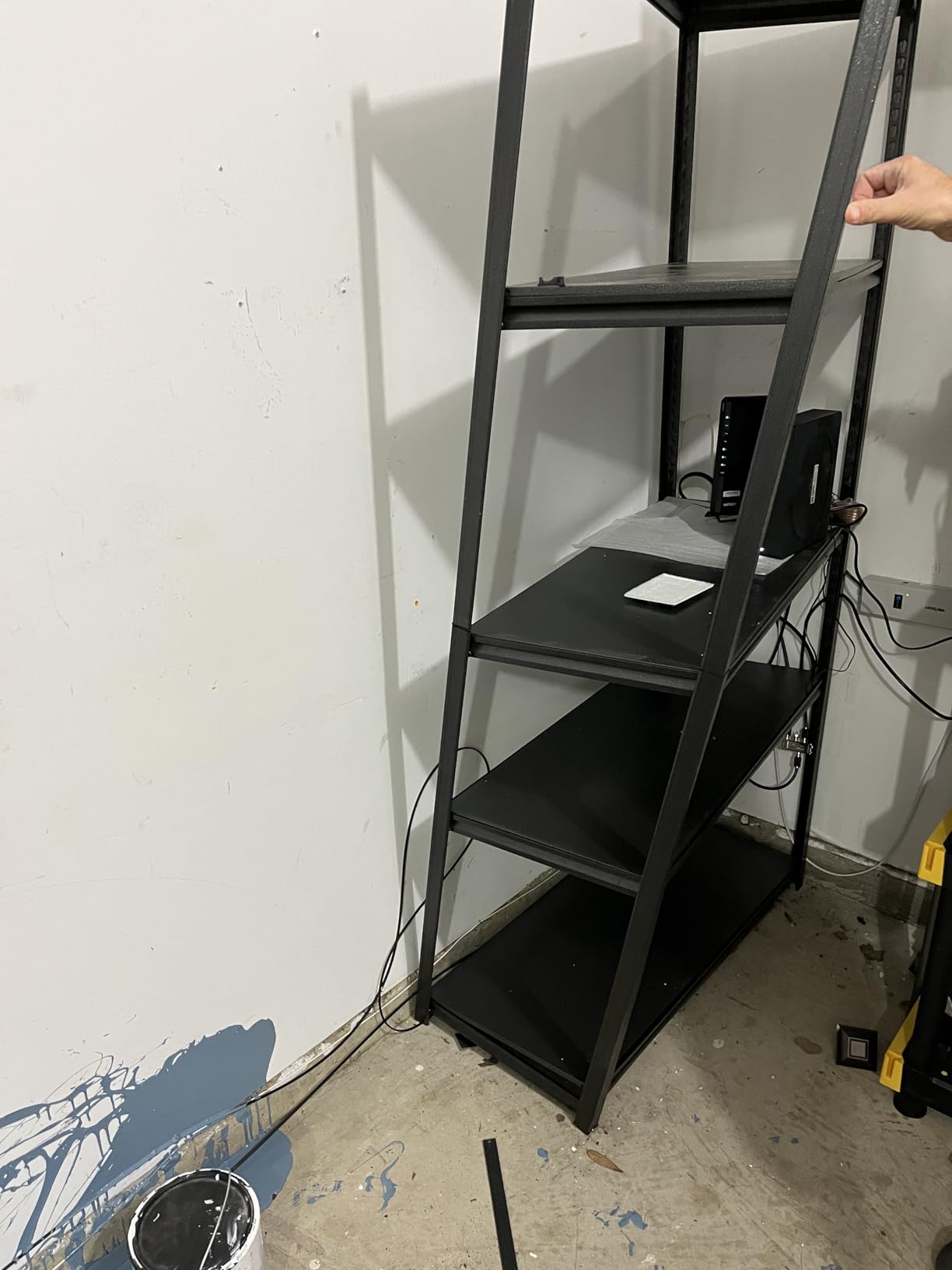
At 3000 pounds total across five tiers, the paper rating is comfortable for a row of totes. Assembly is a bolt-free slotted design with no tools required, and the hardware is included in the box.
It also splits into two separate units with independently adjustable shelf heights, which makes it useful in a garage and a basement at the same time, or as two shorter units under a window.
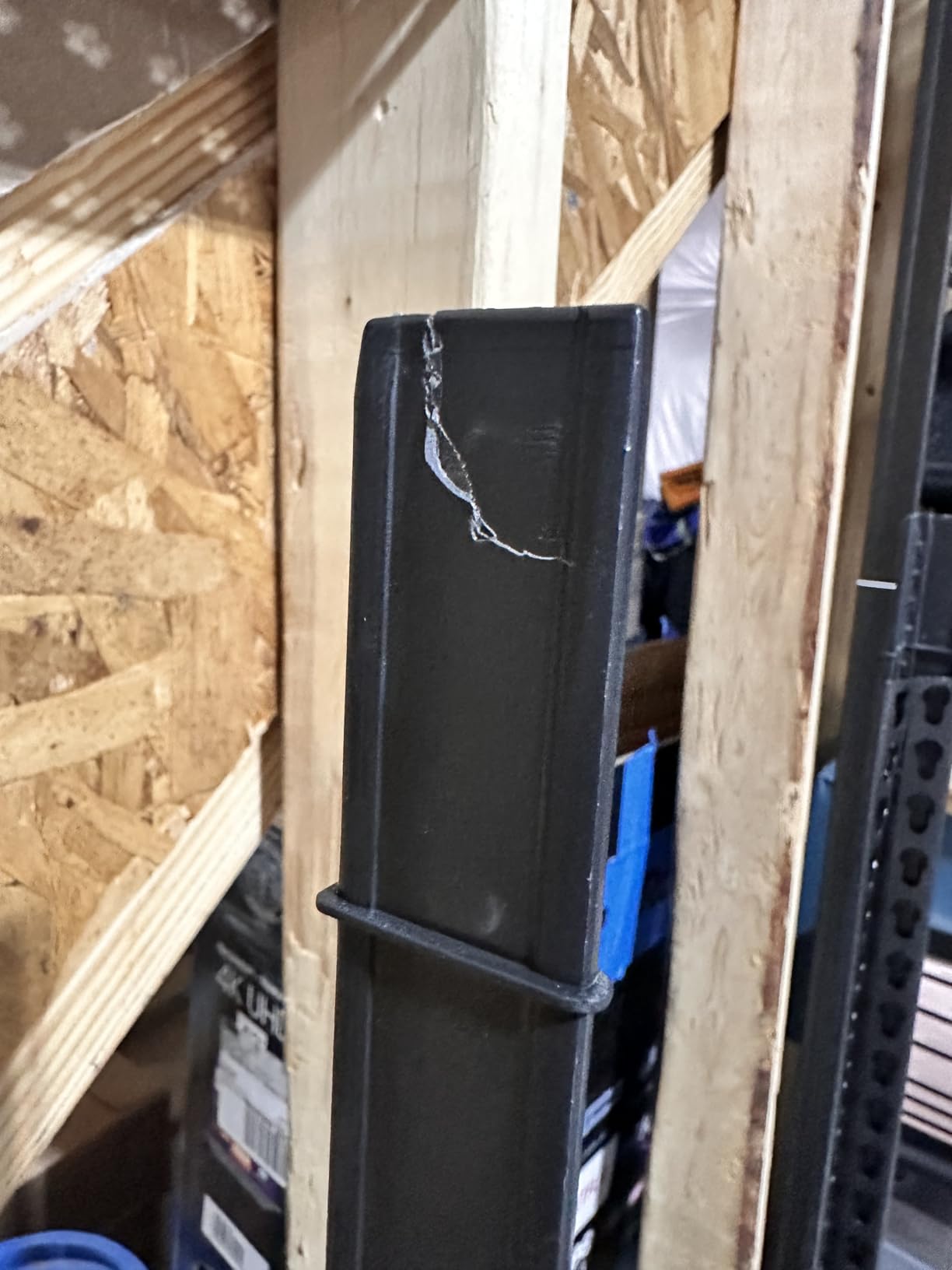
When the anti-fall rails earn their keep
They matter most for a wall-mounted arrangement where a tote sits near the shelf front with frequent access, and for stacked bins that are nudged when you reach past them. On a general garage rack in the middle of a floor, they are a quiet extra rather than a deciding factor.
Buyers who moved up from plastic or fiber shelving credit the all-steel panels and dual-layer columns for the absence of lean. The 50-pound unit weight is light enough to reposition alone.
Where caution is warranted
The 4.2 average with a 10 percent one-star share is the weakest consensus in this roundup, and mixed feedback on overall rigidity is the recurring thread. Treat the 3000-pound figure as a total rating, not a per-shelf promise.
Two fit issues to check. The 19.7-inch depth is tight for a 27-gallon tote, and the published dimensions differ between the listing title and the spec block, so measure your garage before ordering rather than after.
6. REIBII 55.5 in Wire Rack: Best Wire Shelving for Totes
REIBII 3200LBS Storage Shelves 55.5″ W Garage Shelving Heavy Duty 5 Tier Adjustable Wire Shelving Unit Metal Shelving for Garage Pantry Commercial Basement,55.5″ W X 18”D X 71″ H
18D x 55.5W x 71H inches
640 lb per tier, 3200 lb total
25mm wire rods with V-braces
5 tiers
Pros
- Highest average rating in the group at 4.8
- Tool-free ten-minute assembly
- Powder coating resists rust and oxidation
- Splits into two sections or a bench configuration
- 640 lb per tier leaves big headroom
Cons
- 18 inch depth is shallow for large totes
- Wire gaps let small loose items drop through
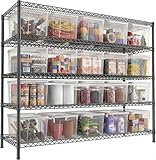
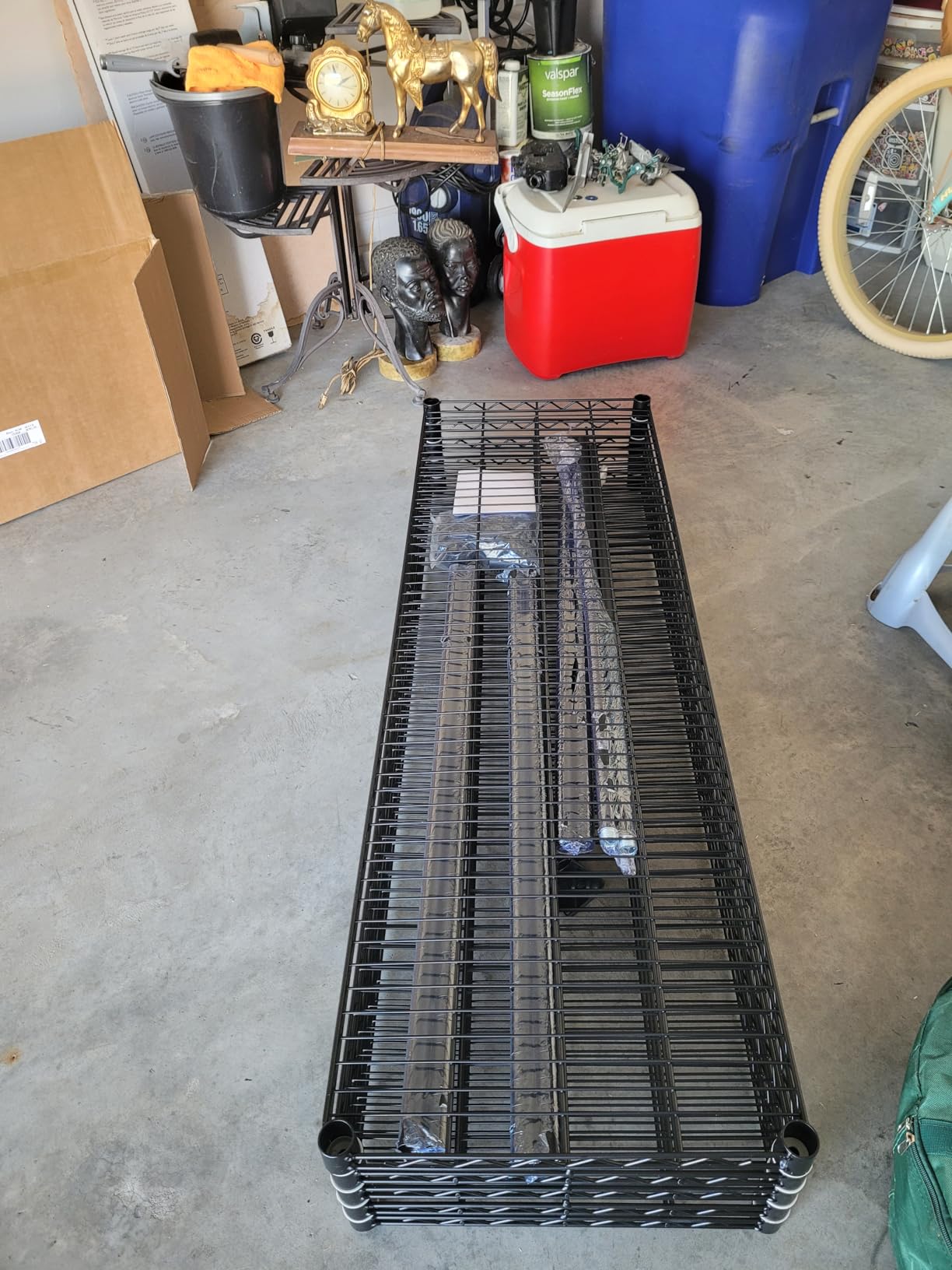
The highest average rating in the entire roundup belongs to a wire rack, which tells you something about build consistency. The shelves use 25mm diameter steel wire rods with V-type reinforced braces on every tier, and the 640-pound per-tier rating comfortably carries loaded totes.
Wire construction has one decisive advantage for garage use: there is nothing to chip, crack, or absorb moisture. In a damp space or a workshop where a steel deck would show scratches, an open wire deck simply ages without complaint.
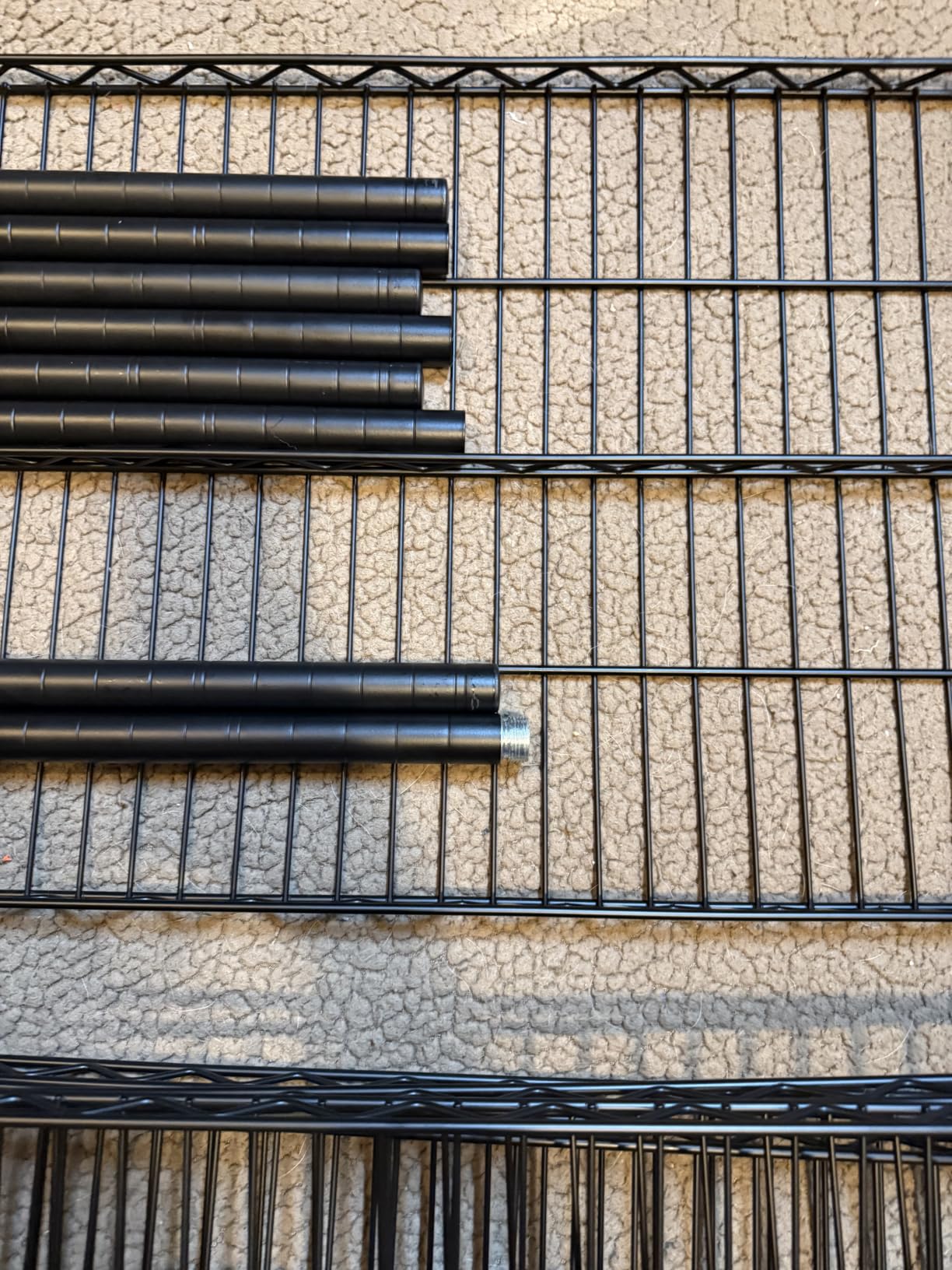
Assembly is bolt-free and takes about ten minutes, with leveling feet and anti-tip hardware in the box. The unit can be split into two independent sections or configured as a workbench when you need a flat surface for a few weeks.
Vertical shelf height adjustment lets you set the pitch to match different tote heights, so a row of 18-gallon bins and a row of 27-gallon bins can share the same rack. The powder coating is rated against rust and oxidation.
Where wire shelves win for totes
Spill-through is the real advantage. If a tote lid is cracked or a bin of gravel tips, the contents land on the shelf below rather than on the garage floor. That single property makes wire the better choice for a workshop rack near a workbench.
At 640 pounds per tier, even a concentrated stack of four filled totes stays at less than half the rating. Anti-tip hardware is included, so anchor it before loading.
The depth problem with wire racks
18 inches is the shallowest usable depth in this group and it is the caveat reviewers name most. A 27-gallon tote at 18 inches deep will overhang the rear of the shelf, and a 60-gallon tote is out of the question. This is a rack for medium bins, not the largest totes.
Small loose items also drop through the wire gaps, so it suits bins and boxes rather than open hardware. Our wire shelving comparison covers which profile suits which storage type.
7. SISESOL 71.3 in Wide Rack: Best for Long Wall Runs
71.3″ Wide Heavy Duty Garage Shelving Units,5000LBS Deep Storage Shelves,Black Metal Garage Shelves,Steel Shelf,Large Storage Rack,Industrial Shelving for Shop,Warehouse,Basement,71.3″W x 24″D x 70″H
24D x 71.3W x 70H inches
5000 lb total, one-piece uprights
8 reinforced lateral bars
4 tiers, locking pins
Pros
- Genuinely rigid frame reviewers confirm
- 71.3 in width holds multiple totes per shelf
- 24 in depth lets large bins slide in
- Interlocking uprights for longer runs
- Reinforced bars resist twisting
Cons
- Several buyers question the 5000 lb headline
- Panels flex under concentrated point load
- One reviewer received a broken support arm
- Four tiers is fewer shelf options
The best feature here is the interconnectable uprights. Two units share an upright to create one continuous run, which is how you cover a long garage wall without a seam or a gap, and the frame stays square because both halves share a post.
Reviewers widely confirm the frame and locking pins are strong, and the 24-inch depth lets large storage bins slide in without catching on the frame. Sold steel shelves rather than particle board is the correct choice for a garage floor.
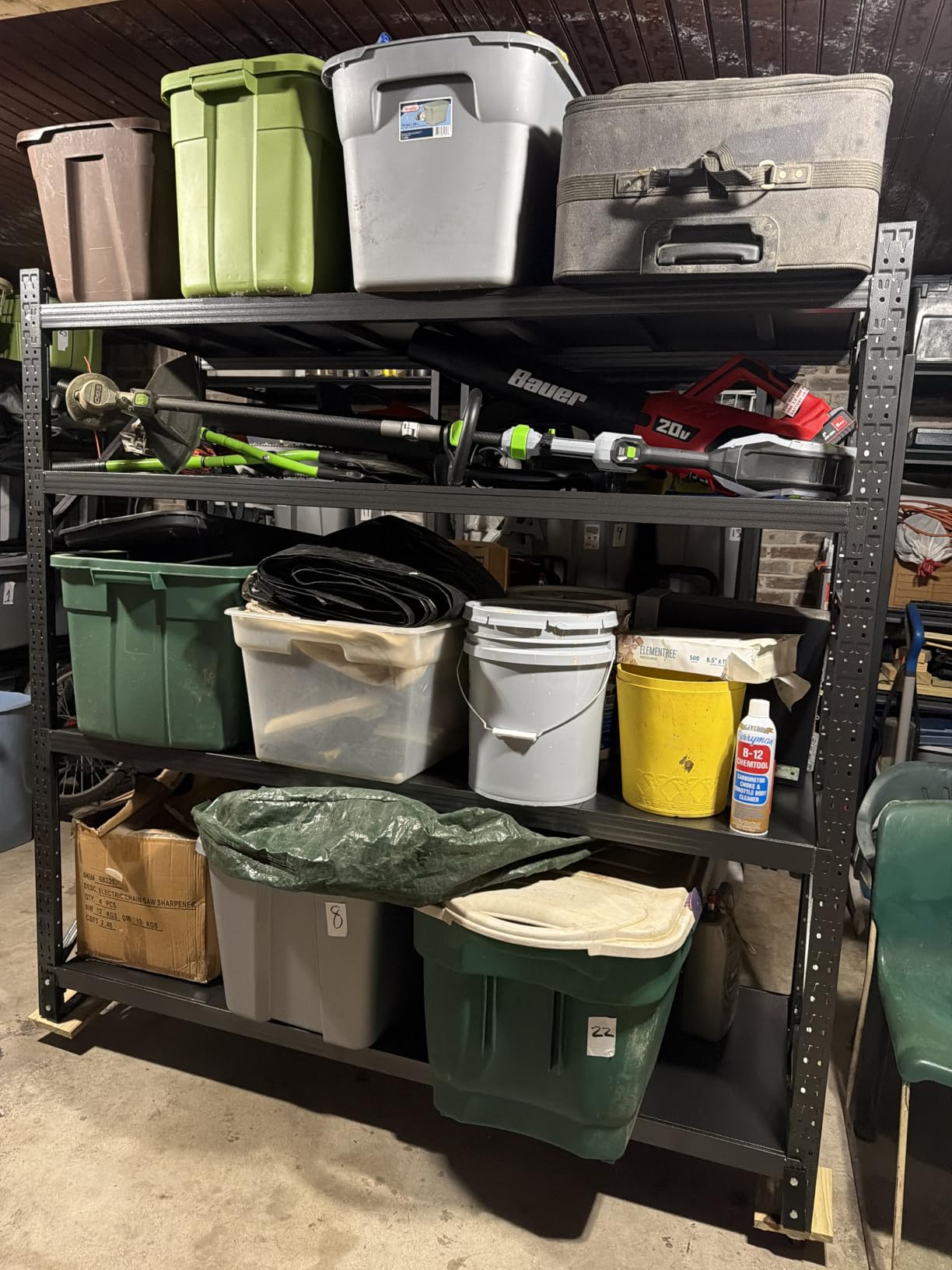
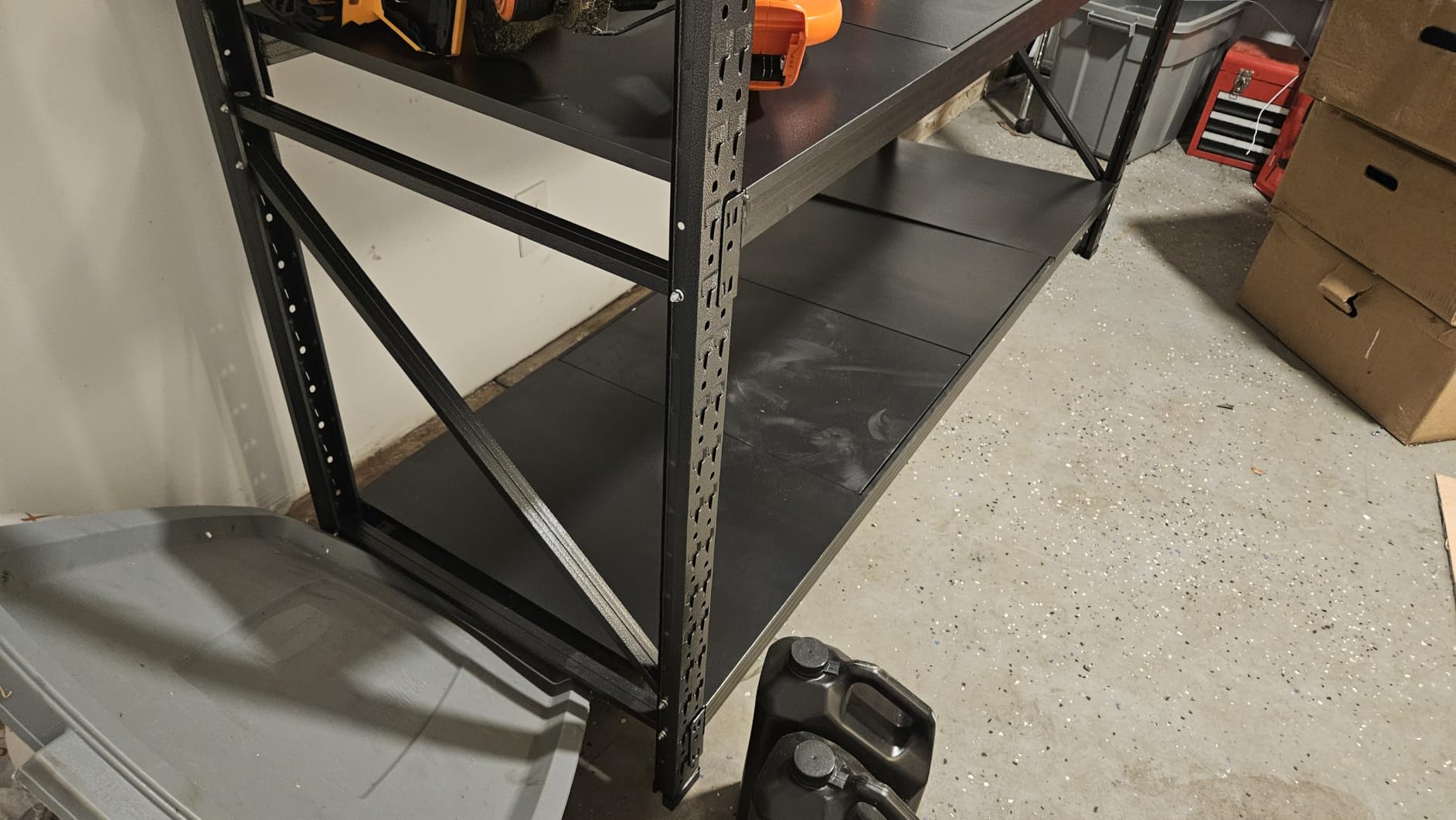
Eight additional reinforced lateral bars run through the frame to resist twisting and buckling, and the one-piece upright construction gives a continuous load path from foot to beam. Shelf heights adjust on locking pins, and foot mats plus a rubber mallet are included.
At 80 pounds the unit is a two-person move. Four tiers is fewer shelf positions than the five-tier racks here, so plan the vertical layout before you commit.
When a continuous run matters
Separate units placed end to end leave a small misalignment that shows as soon as you load them unevenly. Sharing an upright removes that entirely, and for a wall you want lined with uniform tote rows it is worth planning for from the start rather than adding a second unit later.
Users on r/garageporn talk about matching units as a priority for a different reason: they want the same rack available in five to ten years so an expansion will look identical. A shared-upright system makes that expansion cheaper.
Reading the capacity claim carefully
A recurring thread questions whether the advertised 5000-pound total rating holds for the shelf panels themselves, and several buyers report the individual panels flex somewhat under concentrated load. The 4.2 average reflects that split.
Treat the frame as the strong part and the panels as ordinary steel sheet. Two or three evenly spread totes per tier is a sensible working figure, and one reviewer reporting a broken support arm suggests inspecting the frame welds on arrival.
8. RAVIGIN 71 in Wide Rack: Best Wide Shelves, Mixed Reports
RAVIGIN 5000LBS Storage Shelves,71″ W Garage Shelving Heavy Duty Metal Adjustable Garage Shelves, Shelving Units Industrial Shelving for Warehouse,71″ W x 24″ D x 70″ H,Black
24D x 71W x 70H inches
5000 lb total capacity
One-piece jointless columns
4 tiers, locking pins
Pros
- 71 in width fits four totes per tier
- Screws included add a firmer joint than pin-only racks
- Most owners report a steady
- wobble-free frame once loaded
- Quick to assemble
- Ribbed steel shelves
Cons
- 5000 lb rating disputed by several buyers
- Shelves are drop-in sheets resting on crossbar lips
- Confusing J-pin instructions
- Lowest average rating here at 4.1
Sentiment on this rack is sharply split, and the split itself is the most useful thing in the reviews. Many owners describe a solid, quick-to-build frame with generous width for totes, while a well-documented group argues the panels are lighter than the listing claims.
The width is real regardless. At 71 inches, four totes fit per tier on the larger sizes, which is the most per-shelf tote count of any rack here. The 24-inch depth clears a 27-gallon tote with margin.
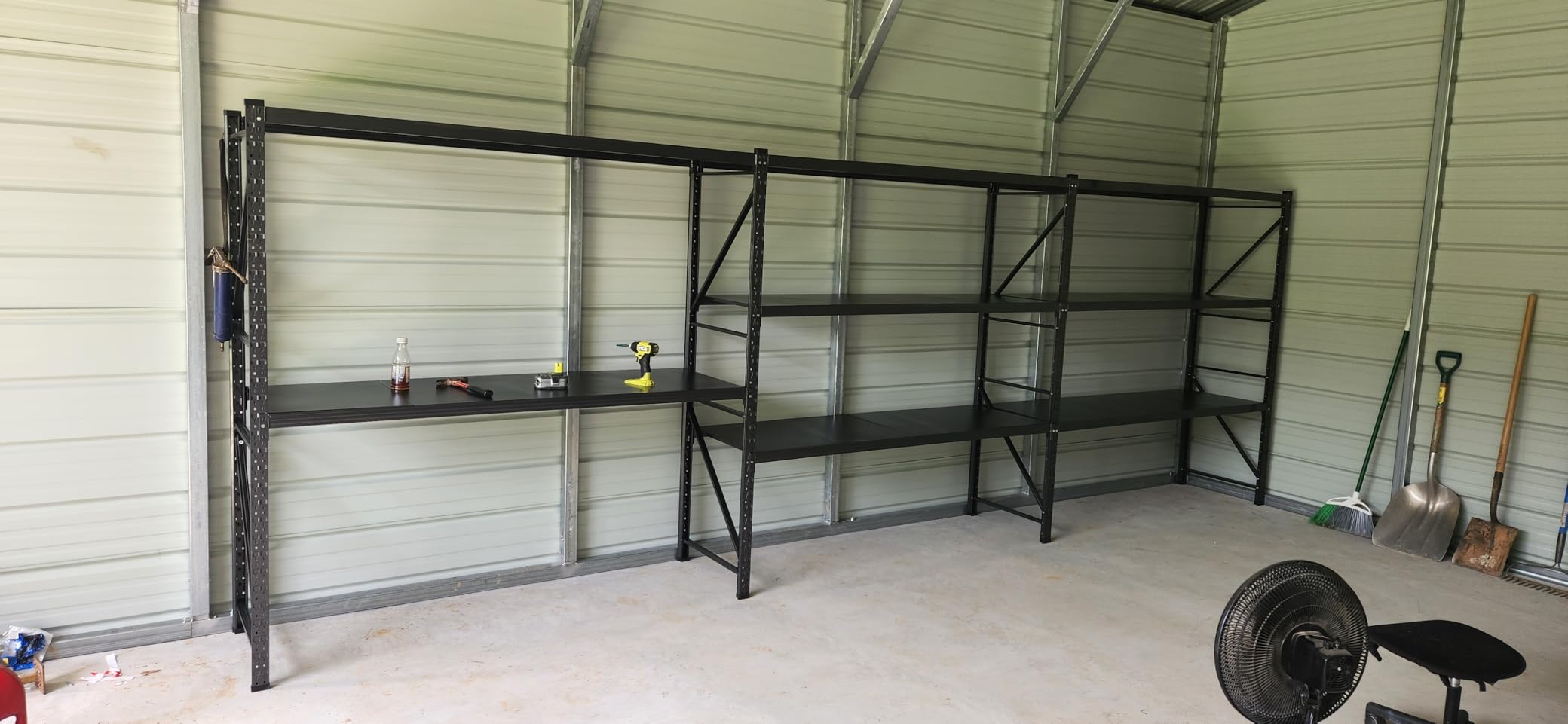
Construction is jointless one-piece columns for a continuous load path, with triple reinforcement across diagonal braces, ribbed steel shelves, and screw-secured uprights. The screws are a genuine upgrade over pin-only racks, and most owners find the frame stops wobbling once loaded.
Buyers who replaced older plastic or fiber shelves credit the cross braces for not leaning or sagging, and the powder coating handles the usual garage rust exposure.
Why four totes per tier is the draw
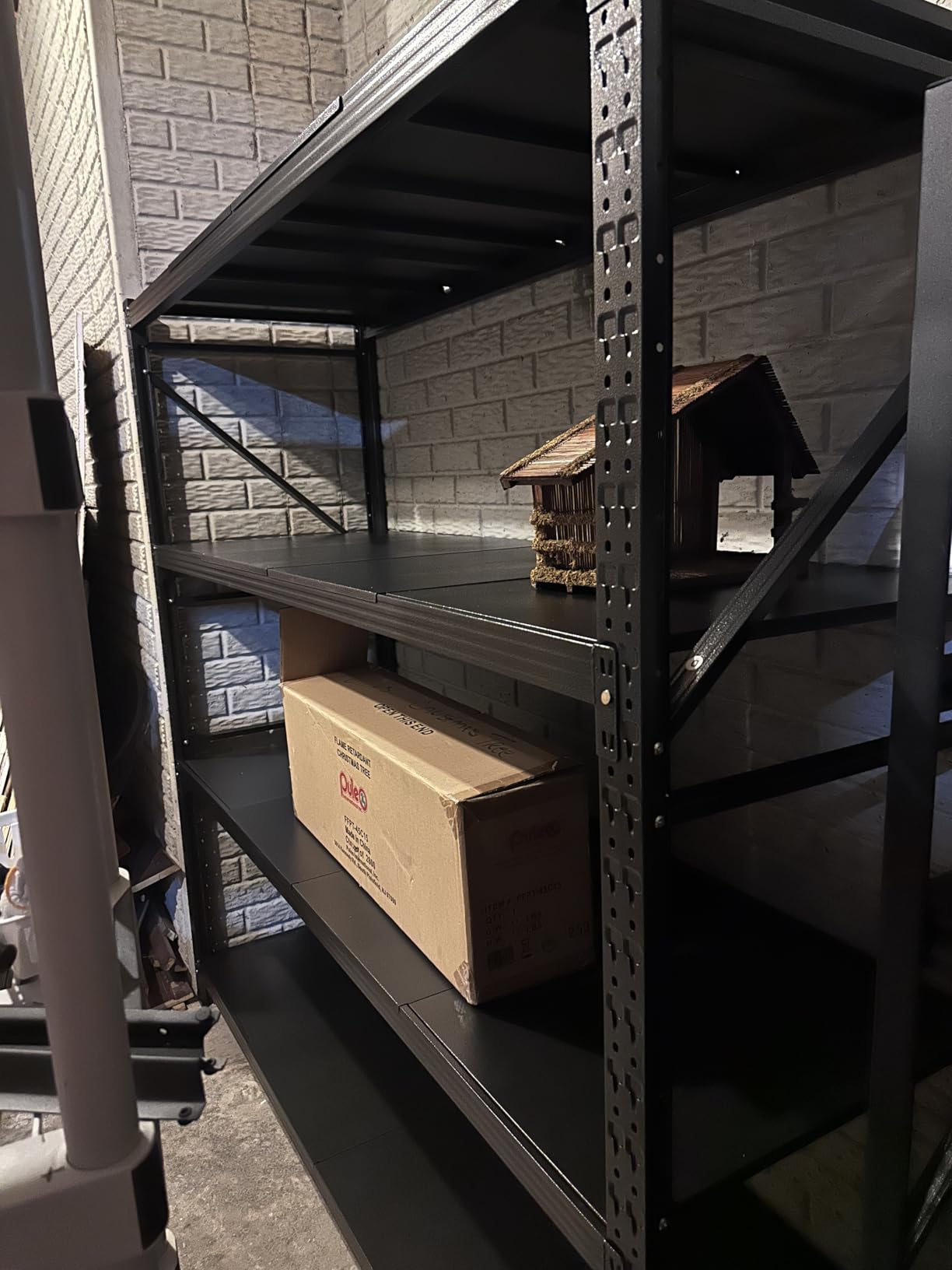
For a stockpile load, a wider shelf means fewer tiers doing the same work. Four totes at 70 pounds each is 280 pounds on one shelf, and the frame handles that even if the panel rating is more debatable. The trade is height: four tiers of wide shelves cover less vertical inventory than five narrow ones.
Owners consistently describe the value as good for the class, and 60 pounds is light enough to reposition with help.
The drop-in shelf question
Several buyers point out the shelves are simple drop-in sheets resting on the crossbar lips rather than being positively secured to the frame. That means a heavy tote dragged across the deck can walk sideways, and the shelf is not fixed in place the way a screw-secured deck would be.
The 4.1 average with a 13 percent one-star share is the lowest here, and the J-pin instructions leave some buyers bolting the rack together themselves. If you want a wide run and can check the shelves are seated flat, it works. If you want certainty, the WORKPRO is the stronger buy.
9. REIBII 2-Pack 36 in Racks: Best for Covering Two Spaces
REIBII 2 Pack Garage Shelving, 2400LBS Each,Heavy Duty Storage Shelves
16D x 36W x 72H inches per unit
2400 lb per unit, 480 lb per tier
5mm MDF shelves on steel support rods
2 units per pack
Pros
- Largest review count in the group at 3613 ratings
- Two complete 5-tier units in one order
- Flat MDF surface catches small items unlike wire
- Each unit splits into two shorter sections
- Ten-minute boltless assembly
Cons
- 16 inch depth means wide totes overhang the edge
- MDF shelves can be punctured by sharp point loads
- 480 lb per tier assumes even distribution
The best-supported consensus in this roundup, with 3613 ratings behind it. That matters more than any single spec: when ten thousand buyers have loaded a rack and rated it, the failure modes are already known rather than theoretical.
You get two complete 5-tier units, ten shelves total, each measuring 36 inches wide by 16 inches deep by 72 inches tall. A garage and a basement get covered in one order, and each tall unit splits into two shorter sections for workbench height or under a window.
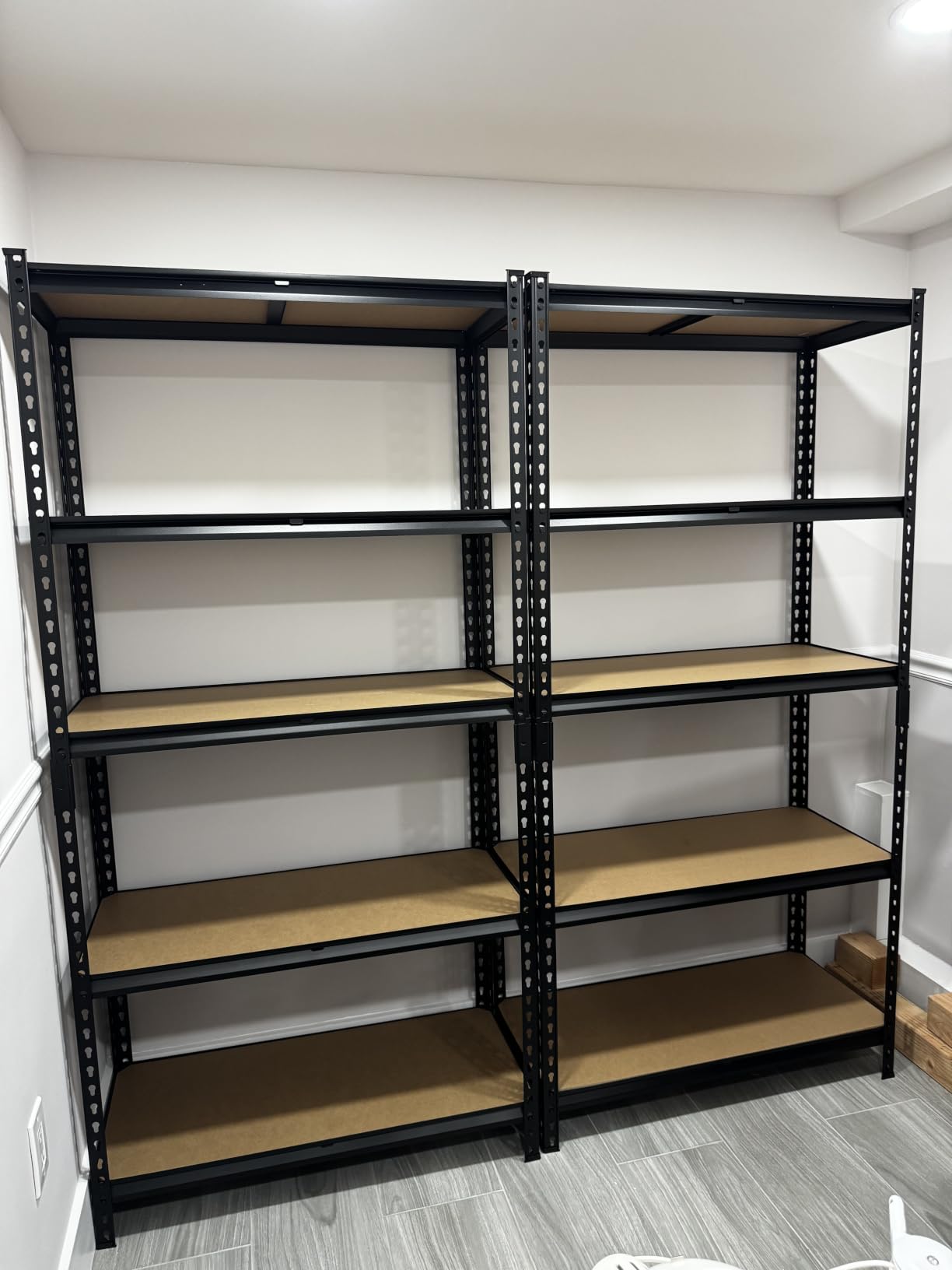
Each 5mm MDF shelf sits on a metal support rod underneath that spreads pressure, and the 1.4mm rolled-edge steel posts resist flexing and hand scratches during assembly. Assembly is interlocking without nuts or bolts, roughly ten minutes, with a hammer and gloves in the box.
The flat surface is the practical difference from a wire rack. Small hardware, screws, and fittings stay where you put them rather than falling through gaps.
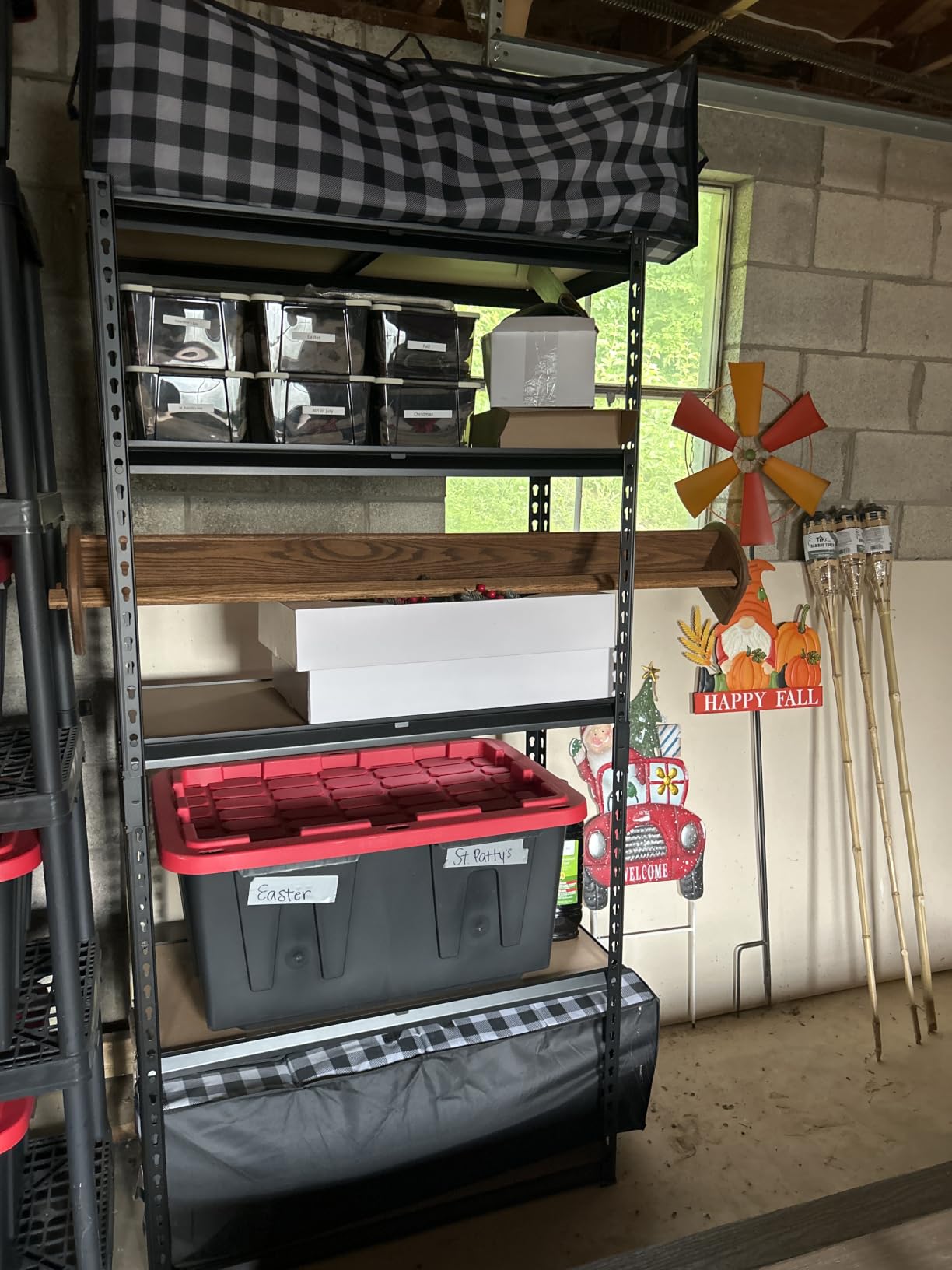
Where MDF works for totes
For standard totes of tools, clothing, and seasonal gear, an MDF deck is fine. A tote distributes its weight across its whole base, unlike a point load, and the under-shelf support rod is doing real work on a 36-inch span.
At 480 pounds per tier with even distribution, three filled totes sit at less than half the rating. Reviewers treat this as the value pick for that reason.
Where it will not work
Sixteen inches deep is the problem, and it is the caveat repeated most. Wide totes overhang the shelf edge, which tips the load forward and defeats the point of the support rod. This rack suits standard totes and pantry goods, not large bins.
MDF is also puncturable. A sharp tool dropped from height will mark the board, and in a damp garage the edges can swell. For maximum capacity or a steel deck, go up a tier rather than sideways.
10. REIBII 40 in 5-Tier Rack: Best for Deeper Board Shelves
REIBII 40″ W Storage Shelves,2500LBS Heavy Duty Garage Shelving for Basment
20D x 40W x 72H inches
500 lb per tier, 2500 lb total
5mm high-density boards at 760kg/m3
Five under-shelf support bars
Pros
- Highest per-tier rating among the board-shelf units
- 20 inch depth is roomier for totes and appliances
- Five under-shelf metal support bars
- Rolled edges and rubber feet
- Tool-free build in about ten minutes
Cons
- Pressboard and MDF boards are porous and degrade if damp
- Several buyers recommend it for light-to-medium loads only
- Part D joiner often needs reaming before seating
- 11 percent one-star rating
The 500-pound per-tier rating is the highest among the board-shelf racks here, and the 20-inch depth is roomier than the other REIBII options. That combination makes this the most tote-capable unit if a flat surface matters to you.
The boards are 5mm thick at 760kg/m3 high density, with five metal support bars underneath per shelf. Those bars are the difference between a board that sags at the center and one that holds a straight line under a row of totes.
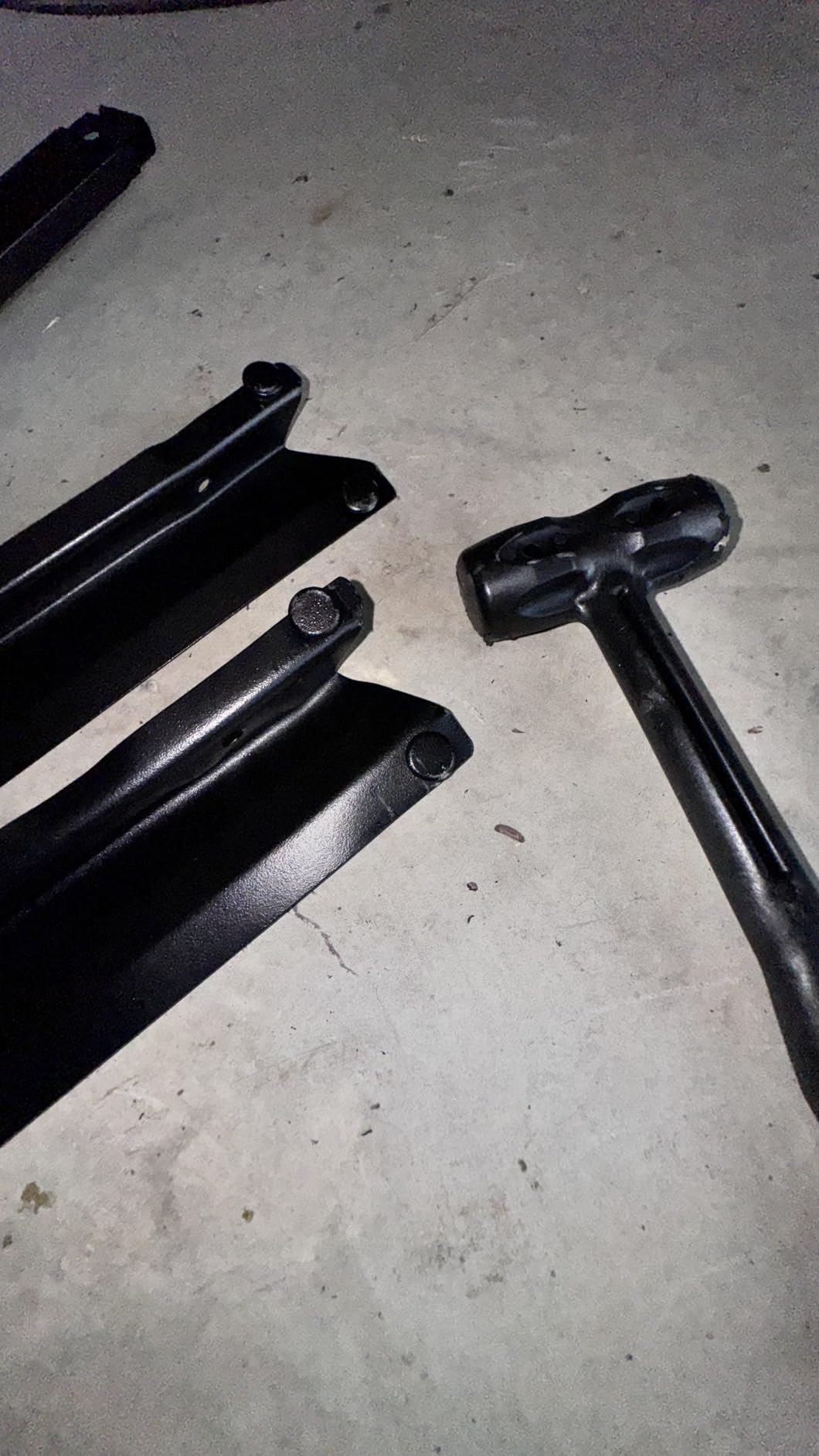
Buyers find it surprisingly stable and good-looking once assembled, and the adjustable shelf heights work well for matching storage tubs. Thickened columns and beams resist warping, and the rolled-edge posts protect hands during assembly and daily use.
Rubber feet and an anti-tip kit are included. The unit splits into two smaller racks, and the tool-free interlocking assembly takes about ten minutes.
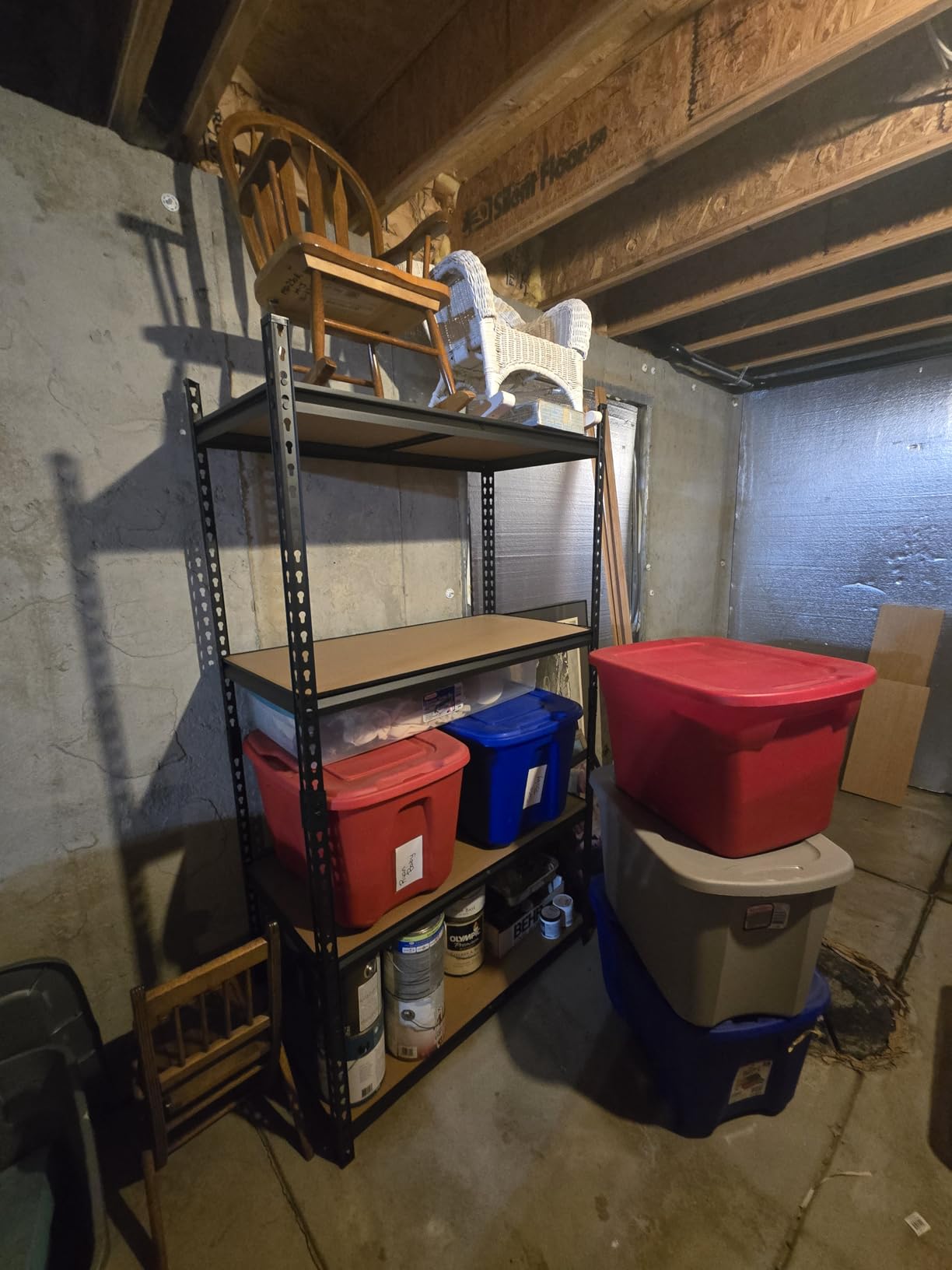
Reading the 500-pound claim honestly
Several buyers explicitly recommend this rack for dry, light-to-medium loads rather than the full per-tier figure, and that is a fair caution. A 500-pound rating assumes an evenly spread load across a full shelf deck, not five filled totes concentrated in the middle.
Buyers who replaced older plastic shelving report no leaning or sagging after a year, which suggests the boards perform well within a reasonable range. The mismatch is between the marketing figure and the heaviest real use.
The two build problems to expect
Part D often needs reaming before it seats properly, and the included mallet is undersized for the job. Budget twenty minutes of extra setup and a proper rubber mallet rather than fighting it.
More significantly, pressboard and MDF are porous. In a warm or humid garage, or anywhere with pests, the boards can chip, sag, or degrade over time. An r/DIY thread on building plywood shelving in a warm climate raised the same concern, and the moisture tradeoff is the deciding factor. If your garage is dry, this works. If it is not, choose steel.
How to Choose Garage Shelving Units for Heavy Totes
Understanding load capacity per shelf versus total
Every legitimate capacity rating carries the qualifier evenly distributed. A rack advertised at 3000 pounds across five tiers is rated at 600 pounds per tier if the weight is spread, and far less if you concentrate it. Always divide the total by the tier count, then halve that again as a working figure for filled totes.
Shelf gauge and beam construction matter as much as the number. A 14-16 gauge steel deck with a formed lip holds a point load; a thin pressed sheet bends. Weights quoted per shelf are only meaningful if the material behind them is stated.
Shelf depth versus tote footprint
Buy 24 inches of depth or more if you use 27-gallon or 60-gallon totes. Anything at 18 inches or less suits 18-gallon bins, pantry goods, and tote-top stacking rather than full-size tubs. Shelf width then decides how many fit across: 36 inches fits two, 48 inches fits three, 60 inches and up fits three to four.
Height per tier matters only if you are stacking totes two high. Measure a tote with its lid on, add a few inches of clearance, and check that the tier above leaves room to pull the lid straight up.
Steel, wire, board, and plastic scorecard
Steel wins on load capacity, moisture resistance, and puncture resistance, and loses on price and rust risk if the coating is thin. Wire is lighter, cheaper, and lets spills fall through to the tier below, but the depth is usually shallower and small items drop through the gaps.
Board gives a flat surface for small hardware and looks finished, but is porous, puncturable, and sensitive to damp. Plastic is light and rust-proof, and a loyal base of preppers and organizers on r/preppers and r/organizing still run plastic 5-tier units in high-ceiling basements. Plastic is the weakest of the four for filled totes.
Boltless versus bolted assembly for solo builders
Boltless snap-fit or interlocking designs finish in about ten minutes and need no tools, which is a genuine advantage if you are alone holding a 70-pound tote. A rubber mallet helps; a claw hammer damages powder-coated steel.
Bolted or screw-secured joints are slower but hold a firmer connection, and some owners of pin-only racks ended up bolting them together themselves. The deciding factor for a solo builder is weight: units above 100 pounds realistically need two people regardless of how simple the joint is.
Anchoring, anti-tip kits, and two-high stacking
Anchor every rack above five tiers to a wall stud. A unit holding several hundred pounds of totes that tips is the largest avoidable hazard in a garage, and a two-screw top-and-bottom anchor is what several DIY users describe as super sturdy. Include a level floor, since an out-of-square frame twists the beams.
Stacking totes two high roughly doubles the concentrated load and cuts your access to the bottom bin. It is reasonable on a steel rack rated at 640 pounds per tier or more with anti-fall rails, and a poor idea on a board shelf under 500 pounds per tier. Keeping the heaviest totes on the lowest tier matters more than the count on any shelf.
How to store totes in a garage in five steps
Measure your totes with lids on and note the footprint and closed height.
Choose shelf depth at least equal to tote depth, and width for the number you want per tier.
Divide the published total capacity by tier count, then halve it as your working per-shelf figure.
Anchor the rack into wall studs, level the floor, and fit any included anti-tip hardware.
Load heaviest totes low, spread them evenly, and inspect shelves and joints every few months.
Frequently Asked Questions
What is the best heavy-duty garage shelving unit?
The HOMEDANT 5-tier unit is the strongest all-around choice for loaded totes because its 24.1-inch depth lets a 27-gallon bin sit fully on the shelf and its tool-free boltless build is a genuine advantage for a solo builder. The VEVOR 60-inch rack is the value alternative with true SPCC carbon steel panels and 400 pounds per shelf. For maximum capacity, the WORKPRO 77-inch unit carries 1600 pounds per shelf.
How do I store totes in a garage?
Measure your totes with lids on, then match shelf depth to tote depth and width to how many you want per tier. Anchor the unit into wall studs, level the floor, and fit any included anti-tip hardware. Load the heaviest totes on the lowest tier and spread them evenly across the deck rather than concentrating them at the front edge.
How much weight can a garage shelving unit hold?
Look at the per-shelf rating, not the total unit rating. A rack advertised at 3000 pounds across five tiers carries about 600 pounds per shelf when the load is spread evenly, and less under a concentrated stack. For filled totes, use half the per-shelf figure as a safe working number since a row of bins concentrates load at the shelf front.
Is it cheaper to build or buy garage shelving?
Building plywood shelving costs less in materials and gives exact dimensions, but it takes considerably more time and the boards are vulnerable to moisture and pests in a warm or humid garage. Buying a steel rack costs more upfront and delivers a rated load capacity, adjustable tiers, and hardware included. One garage owner on r/garageporn built his own shelves sized to his totes, a workaround other users validate.
Do I need to anchor garage shelving to the wall?
Yes for any unit above five tiers or one holding several hundred pounds of totes. A two-screw anchor into a wall stud at the top and bottom is the simplest approach, and DIY users describe those racks as super sturdy. A level floor matters just as much, since an out-of-square frame twists the beams and is a common reason shelves stop sitting flat.
Will a 27-gallon tote fit on a garage shelf?
Yes on any shelf at least 18 inches deep, but a 27-gallon tote measures roughly 28.2 by 18 by 17.2 inches, so a 24-inch shelf lets it sit fully supported with clearance. Shallow 16-inch racks leave the tote overhanging the rear edge, which tips the load forward. A 60-gallon tote at 36 by 18 by 23 inches needs at least 24 inches of depth.
The Best Garage Shelving Units for Heavy Totes: Final Word
Ten racks, and only a few clear the bar for filled totes without argument. Buy the HOMEDANT 5-tier unit for the deepest shelf and the most proven assembly, or the VEVOR 60-inch rack if you want real carbon steel panels at a mid-range price. The WORKPRO 77-inch model wins on capacity and three-totes-across width, and the SafeRacks rack is the only one built around a single tote footprint.
Whatever you choose, measure before you order, derate the published per-shelf rating by half, and anchor the unit into wall studs. That last step takes fifteen minutes and removes the only failure mode in this category that can actually hurt someone.