
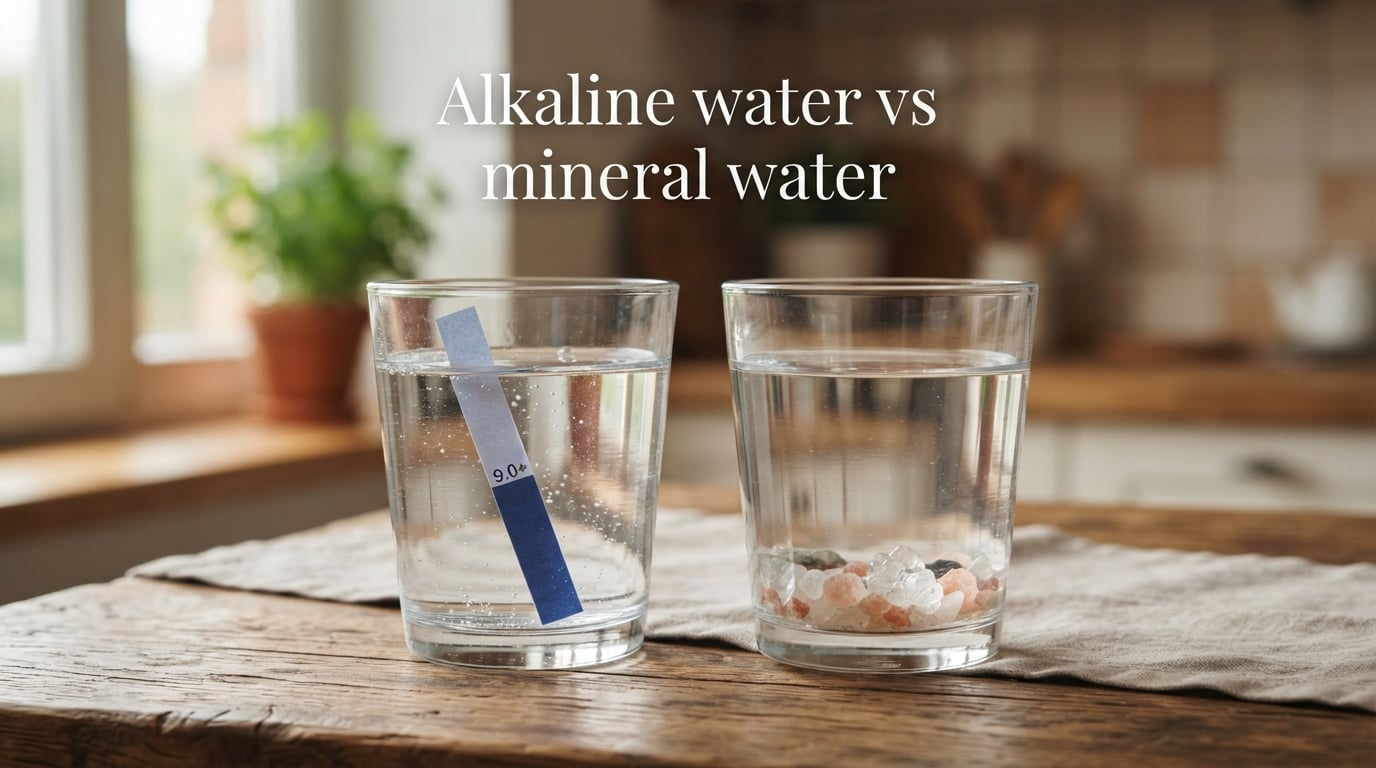
Walk into any grocery store in 2026 and you will see shelves lined with bottles promising better hydration, balanced pH, and natural minerals. But when it comes to the alkaline water vs mineral water debate, most people are not sure what actually separates the two. I have spent months researching water quality standards, talking to hydration experts, and reading hundreds of forum discussions to break this down without the marketing fluff.
The short answer: alkaline water has a higher pH (typically 8 to 9.5) created through electrolysis or added minerals, while mineral water contains naturally occurring dissolved solids like calcium and magnesium sourced from underground springs. They overlap in some ways but serve different purposes depending on what your body needs.
In this guide, we will walk through exactly what each type is, how they compare on pH and mineral content, what the science says about health benefits, and which one makes sense for you. If you have ever wondered whether that expensive alkaline bottle is worth it, or why mineral water taste differences vary so widely between brands, you are in the right place.
Table of Contents
Understanding the pH Scale
The pH scale measures how acidic or alkaline a liquid is, running from 0 to 14. A pH of 7 is neutral, anything below 7 is acidic, and anything above 7 is alkaline.
Regular tap water usually sits between 6.5 and 7.5. That neutral zone is what most of us grew up drinking without thinking twice about it.
Understanding this scale matters because the entire alkaline water vs mineral water conversation revolves around pH levels and what they do (or do not do) inside your body. Your body tightly regulates blood pH between 7.35 and 7.45 through a process called homeostasis, regardless of what you drink.
Here is a quick reference for where common waters fall:
Pure water: pH 7.0 (neutral)
Tap water: pH 6.5 to 7.5
Alkaline water: pH 8.0 to 9.5
Mineral water: pH varies widely (5.5 to 8.5 depending on source)
Battery acid: pH 0 (extremely acidic)
Baking soda solution: pH 9 (mildly alkaline)
What Is Alkaline Water?
Alkaline water is water that has been adjusted to have a pH higher than 7, typically between 8.0 and 9.5. The higher pH is what defines it, not the mineral content.
There are two main ways alkaline water is produced. The first is through electrolysis, a process that uses an ionizer to separate water into acidic and alkaline components through electrolysis. The alkaline portion is bottled and sold.
The second method is adding alkaline minerals like calcium, potassium, and magnesium to regular water. Many bottled alkaline brands use this approach because it is cheaper and more consistent than electrolysis.
Some alkaline water also carries a negative oxidation-reduction potential (ORP), which means it may act as an antioxidant. Proponents claim this helps neutralize harmful free radicals in the body, though the research here is still emerging and far from conclusive.
You can find alkaline water in three forms: bottled at the store, made at home with a water ionizer machine, or created using pH drops and drops added to regular water. Each method produces slightly different results in terms of mineral content and stability.
It is worth noting that natural alkaline water does exist. Water that flows over certain rocks and through mineral-rich springs can pick up alkaline properties naturally. This is where alkaline and mineral water sometimes overlap, which adds to the confusion.
What Is Mineral Water?
Mineral water comes from underground sources protected from surface contamination, emerging with naturally occurring dissolved minerals. It is not processed to add minerals, the minerals are already there from passing through layers of rock.
To legally qualify as mineral water in most countries, it must contain at least 250 parts per million of total dissolved solids (TDS). These solids include calcium, magnesium, potassium, sodium, and other trace elements that the water absorbed during its underground journey.
The mineral profile varies dramatically depending on the geological source. Water from a limestone-rich aquifer will be high in calcium, while water flowing through volcanic rock may contain more silica and magnesium.
This is why brands like Contrex and Vichy taste so different from each other despite both being mineral water. The dissolved mineral content directly shapes both the nutritional value and the flavor profile.
Mineral water can be still or sparkling. The carbonation in naturally sparkling mineral water comes from the source itself, though some brands add carbonation artificially during bottling.
From a regulatory standpoint, mineral water has stricter standards than regular bottled water in most regions. It must be bottled at the source and cannot undergo treatment that alters its mineral composition.
Alkaline Water vs Mineral Water: Key Differences
The main differences between alkaline water and mineral water come down to pH level, mineral source, production method, taste, and cost. Here is a side-by-side breakdown.
pH Level: Alkaline water consistently has a pH of 8.0 to 9.5. Mineral water ranges widely from 5.5 to 8.5 depending on its source, with some naturally alkaline mineral waters reaching higher.
How It Is Made: Alkaline water is produced through electrolysis or by adding alkaline minerals artificially. Mineral water gets its properties naturally from underground rock filtration.
Mineral Content: Mineral water is defined by its dissolved minerals (calcium, magnesium, potassium). Alkaline water may or may not have meaningful mineral content, its defining feature is pH.
Source: Alkaline water can start as any water source and be adjusted. Mineral water must come from a protected underground spring or aquifer.
Taste: Alkaline water tends to taste smooth and slightly sweet. Mineral water tastes distinct based on its mineral profile, ranging from light and crisp to intensely bitter.
Regulation: Mineral water has strict legal definitions requiring minimum TDS levels and source protection. Alkaline water has no universal regulatory standard for what qualifies.
Cost: Bottled alkaline water typically costs more due to processing and marketing. Mineral water pricing varies by brand and source exclusivity.
One key takeaway from forums like Reddit’s r/HydroHomies and r/nutrition: many people are surprised to learn that a water can be alkaline without being mineral-rich, and mineral water can be slightly acidic. The two categories measure completely different things.
Health Benefits Compared
The health claims surrounding alkaline water vs mineral water differ significantly in terms of scientific backing. Let us look at what the evidence actually supports.
Alkaline Water Health Claims
The most cited potential benefit of alkaline water is acid reflux relief. A 2012 laboratory study suggested that alkaline water with a pH of 8.8 could deactivate pepsin, an enzyme involved in acid reflux. However, this was an in vitro study, meaning it was done in a lab setting, not on humans.
Other commonly claimed benefits include better hydration, improved metabolism, anti-aging properties through antioxidant effects, and bone density preservation. Most of these claims lack robust human studies.
A small study on postmenopausal women showed slight improvements in bone density markers after drinking alkaline water, but the sample size was tiny and more research is needed.
Mayo Clinic has stated plainly that for most people, alkaline water is not better than plain water. The body regulates its own pH effectively through the kidneys and lungs regardless of what you drink.
Mineral Water Health Benefits
Mineral water benefits are better documented because the minerals it contains have established nutritional roles. Calcium supports bone health and muscle function, magnesium aids in nerve function and blood pressure regulation, and potassium helps maintain fluid balance.
Drinking mineral water can contribute meaningfully to your daily mineral intake. A liter of some mineral waters can provide 10 to 30 percent of your recommended daily calcium intake.
Research published in peer-reviewed journals has linked mineral water consumption to improved bone density, better cardiovascular markers, and support for digestive health. These benefits come from the actual mineral content, not from pH manipulation.
For athletes and people who exercise heavily, the electrolytes in mineral water (sodium, potassium, magnesium) can support post-workout recovery. This is a practical, evidence-based reason to choose mineral water over alkaline water.
Safety Concerns and Side Effects
Both water types are generally safe for healthy adults, but there are specific groups who should exercise caution. Understanding these risks is important before making either a daily habit.
Who Should Not Drink Alkaline Water
People with kidney disease should avoid high-pH alkaline water. The kidneys regulate acid-base balance in the body, and consuming highly alkaline water can interfere with this process.
There is also a risk of hyperkalemia (dangerously high potassium levels) from some alkaline waters that contain added potassium. This is particularly dangerous for anyone with compromised kidney function.
Drinking alkaline water with meals may also reduce stomach acid when it is needed for digestion. Some people report feeling bloated or experiencing digestive discomfort when drinking alkaline water with food.
Excessively high pH water (above 9.8) can cause skin irritation and gastrointestinal issues even in healthy people. Most commercially available alkaline waters stay within a safe range, but homemade ionizer setups can produce extreme pH levels.
Mineral Water Safety
Mineral water has a strong safety profile for most people. However, those on sodium-restricted diets should check labels, as some mineral waters contain significant sodium levels.
People with certain kidney conditions may need to monitor their intake of specific minerals. Always check with your doctor if you have a condition that requires mineral restriction.
The environmental cost of bottled mineral water is worth considering. Transporting heavy glass or plastic bottles long distances generates a significant carbon footprint compared to filtered tap water.
Taste and Cost: What to Expect
Taste is where personal preference becomes the deciding factor for many people. Alkaline water generally tastes smooth, clean, and slightly sweet because the higher pH can mask bitterness.
Mineral water taste varies enormously. Light mineral waters like Evian taste crisp and clean, while highly mineralized waters like Contrex or Vichy Catalan have a distinctly bitter or salty edge that some people love and others cannot stand.
Cost differences are real but depend heavily on how you consume each type. Bottled alkaline water from brands like Essentia or Flow tends to cost 30 to 50 percent more than standard bottled water. Mineral water pricing ranges from affordable store brands to premium imported options.
If you use a home ionizer for alkaline water, the upfront cost can be significant (several hundred dollars or more), but the per-gallon cost drops dramatically over time. Mineral water from a home source is only possible if you happen to live near a mineral spring.
For budget-conscious daily hydration, both types are more expensive than filtered tap water. The question is whether the benefits justify the extra cost for your specific needs.
How to Choose Between Alkaline and Mineral Water
Choosing between alkaline and mineral water depends on your health goals, taste preferences, and budget. Here is a practical decision guide that no competitor currently provides.
Choose Alkaline Water If You
Suffer from acid reflux and want to try a non-medication approach
Prefer smooth, neutral-tasting water without mineral bite
Are interested in the potential (but not yet proven) antioxidant benefits of negative ORP water
Want consistent pH levels in every bottle
Choose Mineral Water If You
Want proven nutritional benefits from calcium, magnesium, and potassium
Are an athlete or active person who needs electrolyte replenishment
Enjoy distinct, characterful water flavors
Want a product with natural origins and strict regulatory standards
Are focused on bone health, especially postmenopausal women who benefit from calcium intake
Stick With Filtered Tap Water If You
Are a healthy adult with no specific mineral deficiencies
Are concerned about environmental impact and plastic waste
Want the most cost-effective daily hydration option
Have no digestive issues that might benefit from pH adjustments
The reality, as many Reddit users in r/HydroHomies and r/nutrition point out, is that the most important thing is simply drinking enough water. The differences between alkaline and mineral water matter at the margins, but dehydration is a far bigger health risk than choosing the wrong water type.
FAQs
Is alkaline water better for you than mineral water?
Alkaline water is not inherently better than mineral water. For most healthy people, both are comparable to plain water. Mineral water has better documented health benefits because it provides proven minerals like calcium and magnesium. Alkaline water’s benefits (like potential acid reflux relief) have limited scientific backing. Mayo Clinic states that for most people, alkaline water is not better than plain water.
What is the healthiest type of water to drink?
The healthiest water to drink is clean, safe water that you will consume enough of daily. Mineral water offers the most proven nutritional benefits through its calcium, magnesium, and potassium content. However, filtered tap water is perfectly healthy for most people and far more cost-effective. The healthiest choice is the one that keeps you consistently hydrated.
Who should not drink alkaline water?
People with kidney disease should avoid alkaline water, especially high-pH varieties above 9.5. There is a risk of hyperkalemia from added potassium in some alkaline waters. Individuals on medication that affects stomach acid should also consult their doctor. Anyone with compromised kidney function needs to be cautious about alkaline water intake.
Why do Japanese drink alkaline water?
Japanese culture has embraced alkaline water since the 1950s when medical researcher Dr. Susumu Watanabe popularized the use of water ionizers. In Japan, water ionizers are classified as medical devices. The cultural preference stems from beliefs about digestive health, detoxification, and balanced body chemistry. Japan’s adoption of alkaline water is more rooted in wellness tradition and medical device regulation than in Western clinical evidence.
Conclusion
When comparing alkaline water vs mineral water, the core distinction is simple: alkaline water is defined by its pH level, while mineral water is defined by its natural dissolved mineral content. They are not opposites, they measure different things entirely.
Mineral water offers the most scientifically backed benefits through proven minerals like calcium and magnesium. Alkaline water may help with acid reflux for some people, but most of its health claims lack strong clinical evidence.
For healthy adults, the choice often comes down to taste preference and budget. Drink the water you enjoy enough to stay properly hydrated. If you have specific health concerns, especially kidney issues, talk to your doctor before switching to alkaline water.
The best water for you in 2026 is the one that keeps you drinking enough throughout the day, every day.