
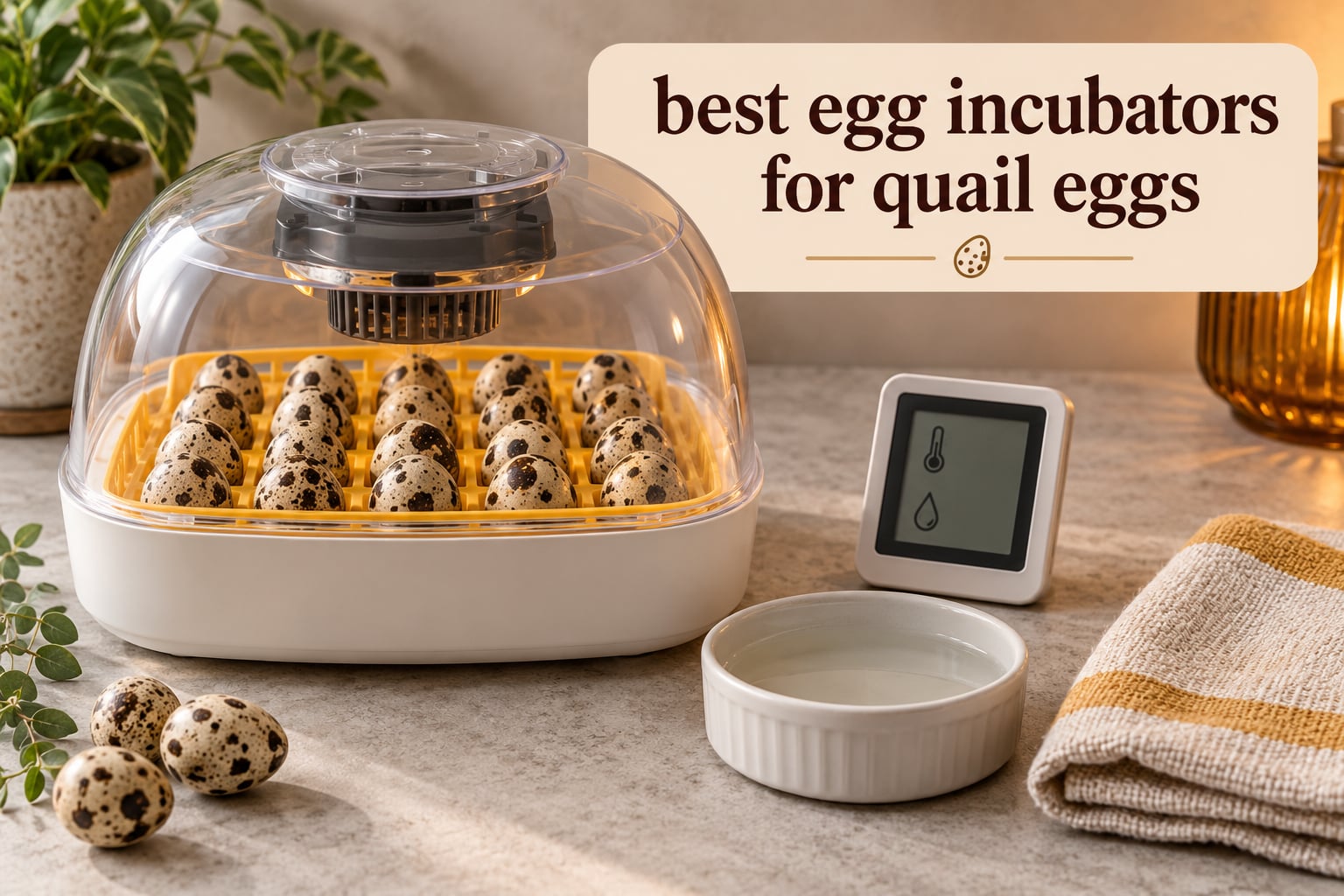
The best egg incubators for quail eggs are small forced-air models with digital temperature control, working humidity regulation, a quail-sized tray, and an automatic turner that stops before hatch day. Quail eggs are tiny and fragile, so swings in heat or dryness can wipe out a whole batch. The twelve models below cover everything from a first classroom hatch to larger backyard batches.
Quail eggs need a tighter environment than chicken eggs, mostly because there is so little shell and so little fluid inside them to buffer changes. A chick that survives to day 14 in a poorly regulated chamber often gets stuck in a dry shell or drowns in a flooded one. That is why humidity control, not brand name, decides most of your result.
We put these twelve incubators through the same set of questions: how steady is the temperature, can you raise and lower humidity without cracking the lid seal, does the turner treat quail eggs gently, and can you scrub it down between batches.
Measured hatch-rate figures from a controlled comparison study are included further down, because they explain more than any star rating.
Before you read further, the numbers that matter for Coturnix quail are these. Forced-air machines run at 99.5F, still-air machines at 101 to 102F. Humidity sits between 45 and 50 percent for the first fourteen days, then climbs to 65 to 70 percent for lockdown. They turn three to five times a day until day 14, and hatch on days 16 to 18. If a machine cannot hit those numbers reliably, the brand on the box matters far less.
We will also flag the parts of the process that decide whether a hatch succeeds: how to set up an incubator properly, what to do when humidity climbs at lockdown, and why candling speckled quail shells rarely tells you much. We cover other egg-related gear too, including our picks for the best egg chairs.
Table of Contents
Top 3 Picks for Quail Egg Incubators (October 2026)

Harris Farms Nurture Right 360
- 360-degree induced airflow
- Holds 22 eggs with auto turner
- Auto-stop three days before hatch

MATICOOPX 20 Egg Incubator
- Fan circulating airflow
- External water refill port
- Built-in egg candler

ONKO 40 Quail Egg Incubator
- Purpose-built 40 egg quail tray
- Digital temp and humidity readout
- Auto turn every two hours
The Nurture Right 360 takes the top spot because it has the deepest review history in the group and the most even airflow of the three, and it holds temperature well across a full cycle. The MATICOOPX 20 is the value pick, with a stronger rating than most and an external refill port that keeps you from cracking the seal. The ONKO 40 is the only one built around a purpose-made quail egg tray.
Best Egg Incubators for Quail Eggs at a Glance in 2026
All twelve incubators below run quail eggs. The differences are in tray sizing, how you control humidity, and whether the turner stops on its own before hatch day.
| Product | Specifications | Action |
|---|---|---|
| Harris Farms Nurture Right 360 |
|
Check Latest Price |
| MATICOOPX 20 Egg Incubator |
|
Check Latest Price |
 Apdoe 12 Egg Incubator Apdoe 12 Egg Incubator |
|
Check Latest Price |
 IBKINXX 18 Egg Incubator IBKINXX 18 Egg Incubator |
|
Check Latest Price |
 Onsju 18 Egg Incubator Onsju 18 Egg Incubator |
|
Check Latest Price |
 TRIOCOTTAGE 12 Egg Incubator TRIOCOTTAGE 12 Egg Incubator |
|
Check Latest Price |
 CluckRun 25 Egg Incubator CluckRun 25 Egg Incubator |
|
Check Latest Price |
 CoInceptus 16 Egg Incubator CoInceptus 16 Egg Incubator |
|
Check Latest Price |
 innhom 56 Egg Incubator innhom 56 Egg Incubator |
|
Check Latest Price |
| ONKO 40 Quail Egg Incubator |
|
Check Latest Price |
 VEVOR 24 Egg Incubator VEVOR 24 Egg Incubator |
|
Check Latest Price |
 DEZHXHE 8 to 30 Egg Incubator DEZHXHE 8 to 30 Egg Incubator |
|
Check Latest Price |
1. Harris Farms Nurture Right 360 – Best Overall for Quail Eggs
Harris Farms Nurture Right Egg Incubator with Auto Turner, Holds 22 Eggs
Holds 22 eggs
360-degree induced airflow
Auto turner stops 3 days before hatch
Pros
- Deepest review history in this group
- Induced airflow spreads heat evenly
- Turner halts automatically before hatch
- Clear humidity display and knob
Cons
- Tray spacing is sized around larger poultry eggs
- Quail eggs need a separate insert
We picked this model first because of one number: 5200 reviews, by a wide margin the largest sample in this roundup. Ratings mean little in isolation, but a sample that large tells you the failure rate is low, and here it sits at 4.3 with 72 percent five-star.
Quail eggs are small enough that air distribution matters more than the heater wattage. The 360-degree induced airflow is the part that does the work here, and reviewers repeatedly single it out when comparing this machine against cheaper dome models.
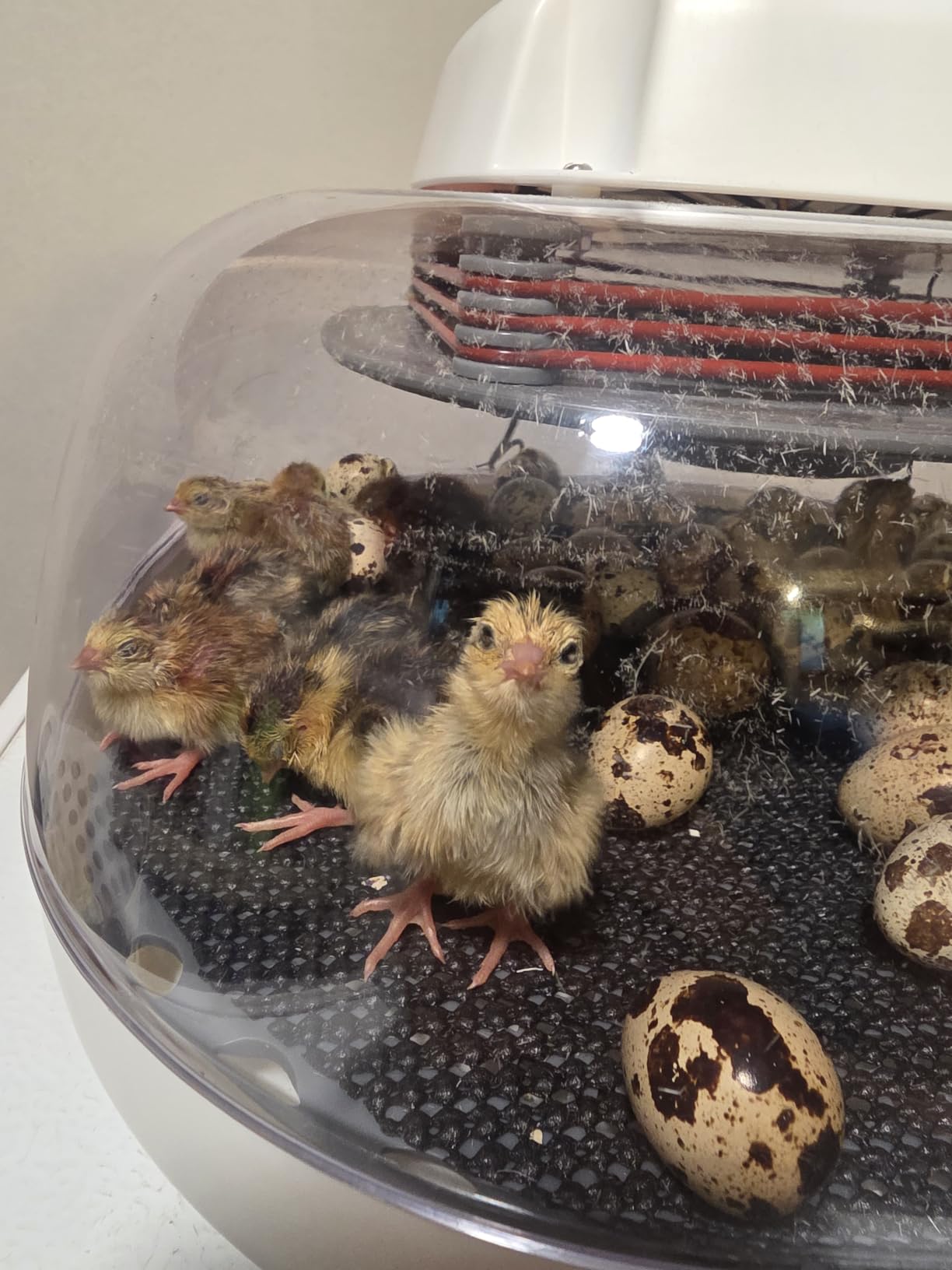
The turner is a genuine convenience for quail, because rolling small eggs by hand three to five times a day for fourteen days is a chore nobody keeps up. This one stops on its own three days before hatching, which lands around day 15 for a 17 to 18 day quail cycle, so remove or bypass it a day earlier and you are set for lockdown.
Humidity is adjusted from the top and the readout is easy to read at a glance. For a 17 to 18 day cycle on quail, that control is what separates a good hatch from a shrink-wrapped one.
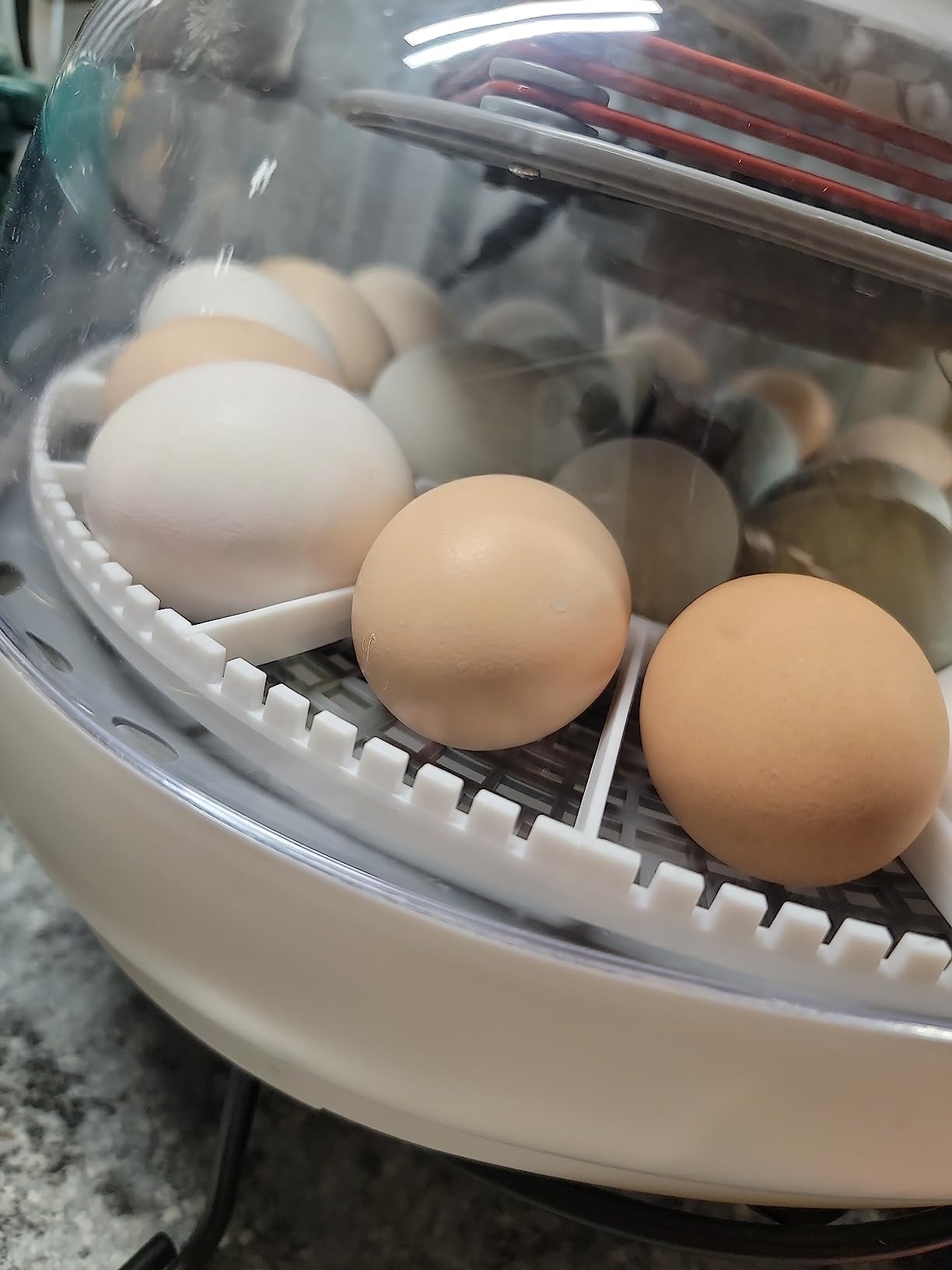
The catch is tray sizing. The listed capacity is 22 chicken eggs, 12 to 18 duck eggs and 22 to 24 pheasant eggs, so quail eggs will not fill the positions evenly. Plan on buying quail trays or stacking eggs closely by hand and turning manually.
Does it hold temperature through a full quail cycle?
It is one of the steadier performers in this lineup, and the airflow design is why. Check the reading twice a day for the first three days, then trust it.
If your room swings between daytime and night-time temperature, put the chamber somewhere away from a window and out of direct sun. Room temperature matters more for small tabletop incubators than most buyers expect.
Where it falls short for quail keepers
It was designed for chicken eggs, so the extras budget has to cover quail trays. Reviewers also report that the batch of eggs in the middle can sit against the wall without moving much air.
Buy it if you plan to hatch quail alongside chicken or pheasant eggs. If quail is the only species on your menu, the ONKO below fits the eggs properly out of the box.
2. MATICOOPX 20 Egg Incubator – Best Value Pick
MATICOOPX 20 Egg Incubator with Humidity Display, Egg Candler, Automatic Egg Turner, for Hatching Chickens
20 egg load
Fan driven circulating airflow
External water refilling
Pros
- 4.5 stars across 923 reviews
- Strong fan circulation holds temperature steady
- Refill without cracking the lid seal
- Built-in candler and one year warranty
Cons
- Tray layout is not built around small quail eggs
- Turns on a fixed 60 minute cycle
This one rates 4.5 across 923 reviews, with 80 percent five-star and only 6 percent one-star. That is one of the cleanest rating profiles in the category, and the fan, the side fill port and the built-in candler are all included.
The external water refilling is the detail that matters most for quail. Every time you crack the lid of a small incubator you dump humidity and warm air, and on a 17 day cycle that happens constantly. Filling from the side removes the biggest daily temptation to open it.
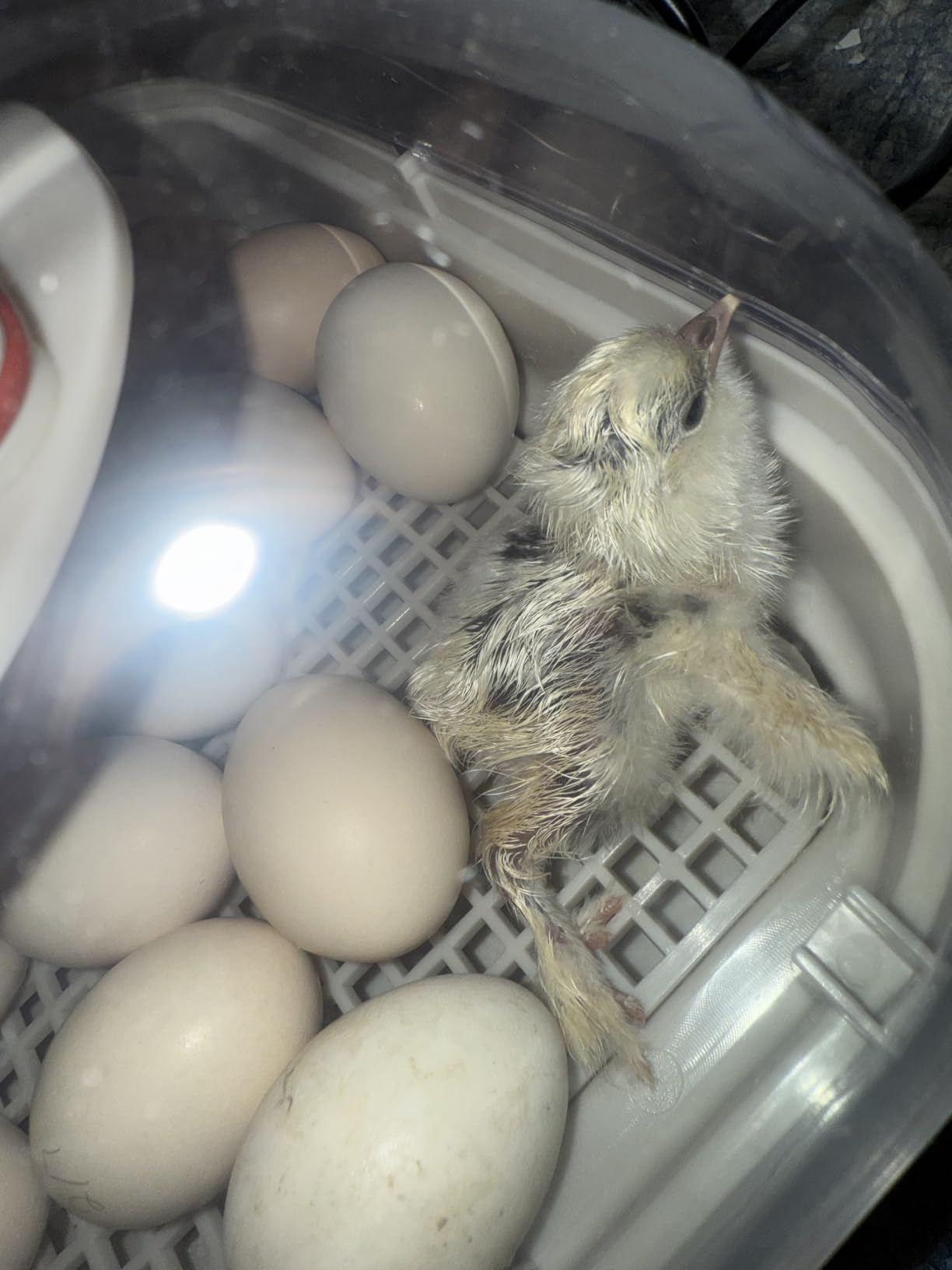
Airflow comes from a strong fan rather than a still-air chamber, which suits quail well. Small eggs sit close to the walls in a tiny dome, and without moving air the edge eggs run cooler.
Turner rolls the eggs every 60 minutes and shuts off three days before hatching. Quail eggs are lighter than chicken eggs, so a fast par-based turn can roll them into corners rather than rotating them in place.
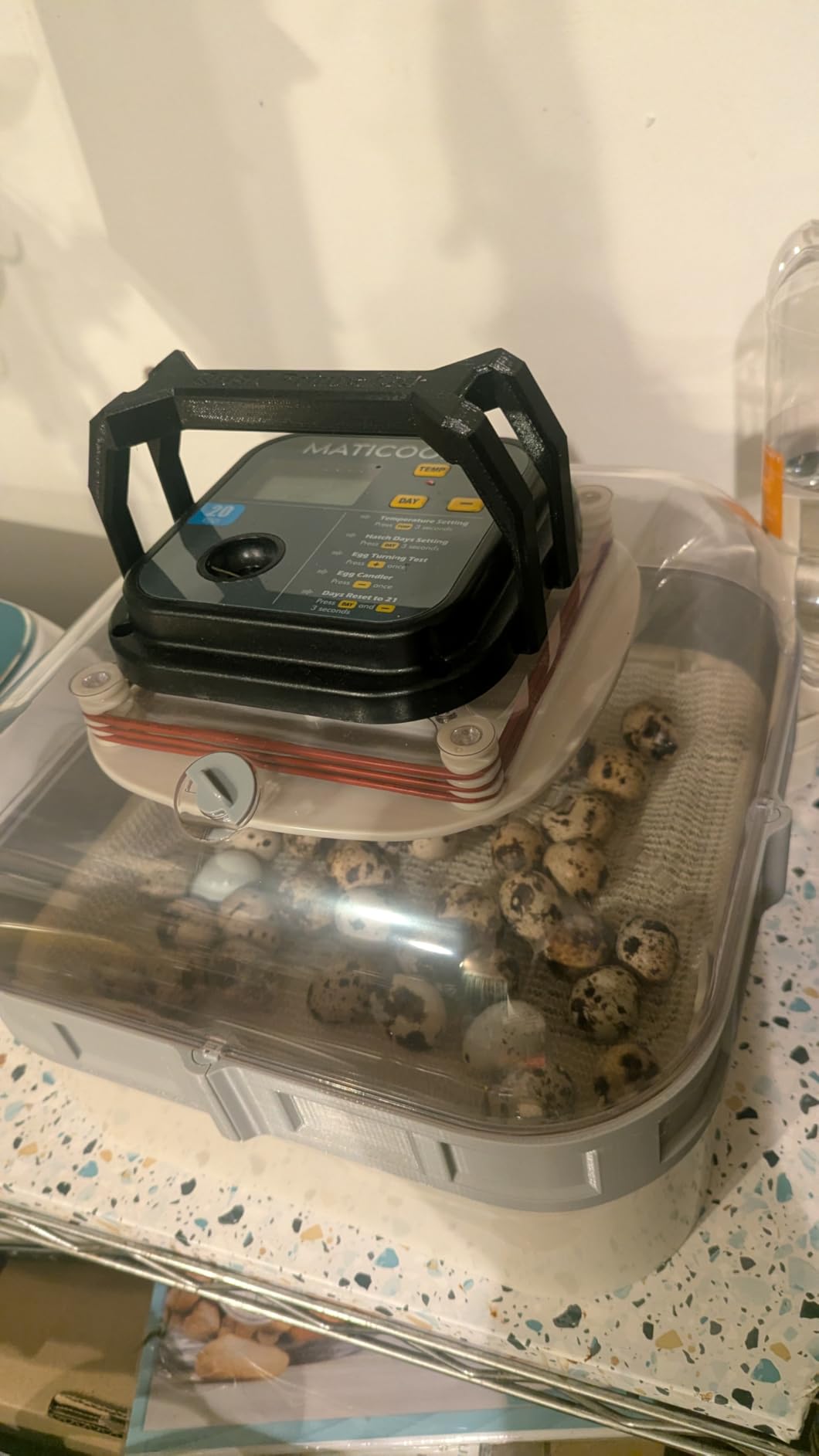
It has a one year warranty, and the built-in egg candler saves buying a separate lamp. On speckled quail shells that lamp is of limited use either way.
Is it accurate enough for quail temperature targets?
Yes, for the 99.5F forced-air setting quail need. Reviewers consistently praise the circulation and the stability, and the fan is the reason.
Buy a cheap independent thermometer anyway and place it at egg height. Every consumer incubator in this group drifts at least a degree from the number on its own display.
Where it falls short for quail keepers
The 20-egg tray is not designed around small quail eggs, which is the single recurring theme across this whole roundup. You will be spacing eggs by hand or adding a tray insert.
Turning is on a fixed 60 minute cycle with no interval choice. If your eggs are rolling rather than rotating, that speed is part of the problem.
3. Apdoe 12 Egg Incubator – Best for Beginners
APDOE Egg Incubators for Hatching Eggs, Temperature and Humidity Control, Automatic Egg Turning, Egg Candler, External Water Bottle, Air Vent, for Chicken, Duck & Quail Eggs, 12 Eggs
12 egg capacity
Digital temp and humidity display
Dual external water bottles
Pros
- Real time temperature and humidity readout
- Turning every two hours with tray removal option
- Thirty day return and three year warranty
- Trays detach and rinse clean
Cons
- Built in candler light is dim
- Humidity reading swings with the room
- Fan housing eats into hatch space
This is the model we would hand someone on their first hatch. It shows temperature and humidity on a digital screen in real time, which means you are not guessing from a knob, and twelve eggs is a realistic first batch.
Across 1441 reviews at 4.3 stars, 70 percent are five-star. One first-time hatcher reported 12 of 13, and the pattern across reviews is that beginners do well once humidity is dialled in.
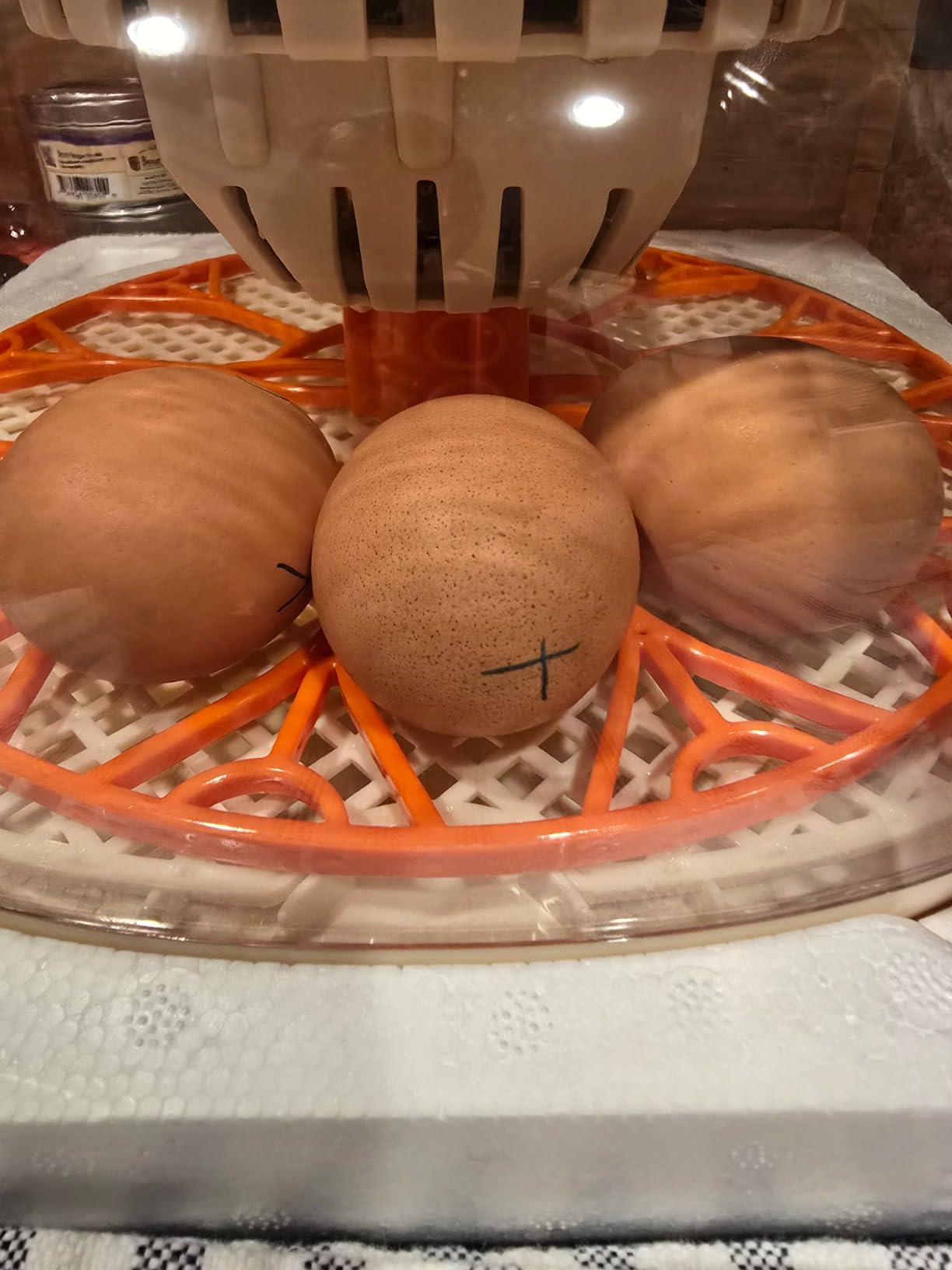
Two external water bottles plus an adjustable air vent give you two knobs for humidity, and two knobs is what quail asks for. Hold 45 to 50 percent through day 14, then fill both bottles and close the vent to push toward 65 to 70 percent for lockdown.
Turning runs every two hours and the tray lifts out for the final three days. Twelve eggs also means the whole batch fits in one layer, so you can see every egg at once when they start to pip.
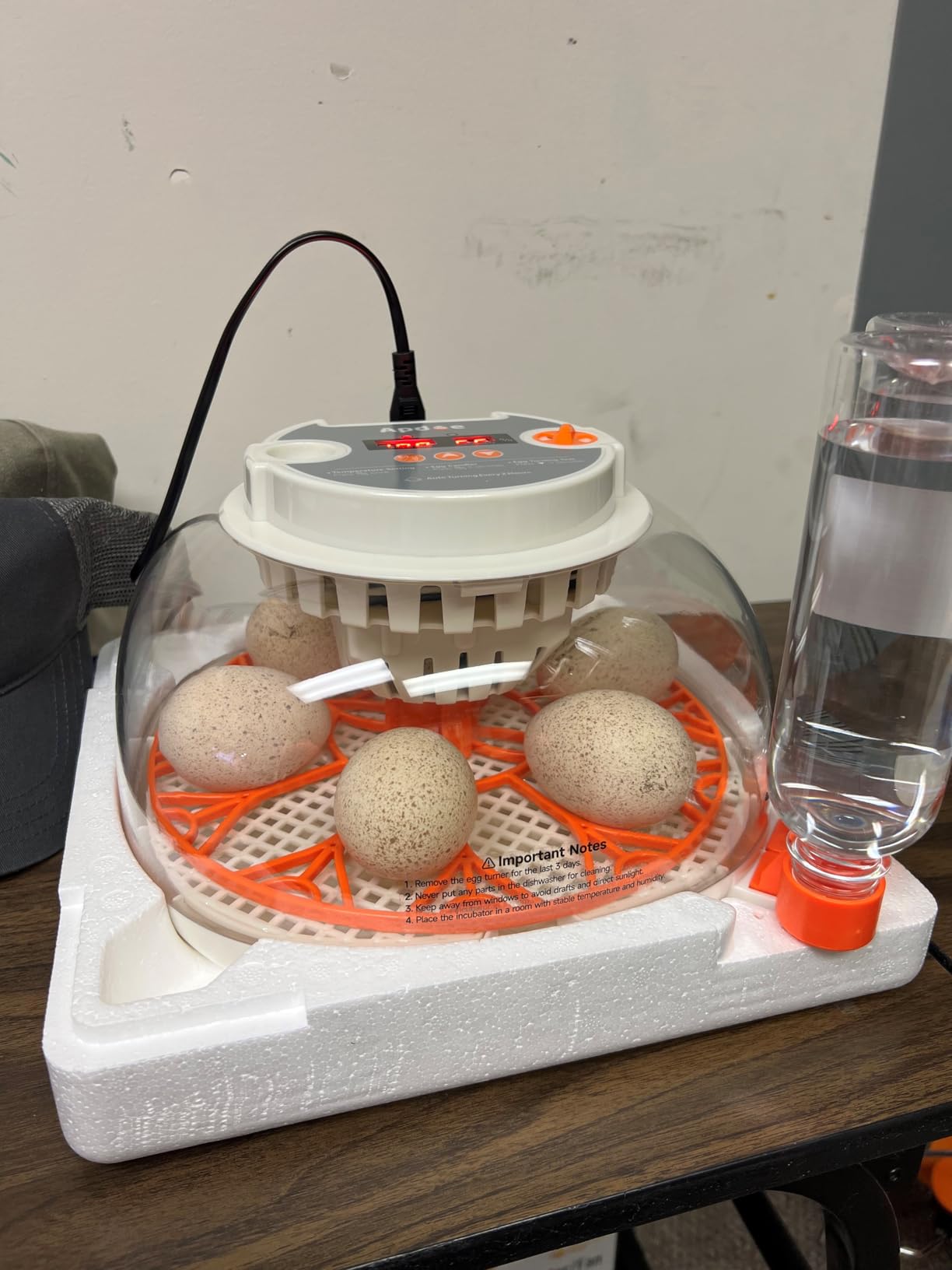
Cleaning is the easiest part. The tray detaches and rinses, and the dome wipes down, which matters if you are running one batch after another all year.
Can beginners manage humidity on a 12 egg unit?
Yes, because the display tells you where you stand. Put a separate hygrometer beside the eggs at egg height and calibrate the offset, because the internal reading is influenced by the room.
The main warning from reviews is that the styrofoam insert alone may not hold steady in dry conditions. If your house sits below 40 percent humidity in winter, add water more often than the alarm suggests.
Where it falls short for quail keepers
The fan housing hangs into the hatch space, so freshly hatched chicks have less floor to stand on. It is also among the most compact models here, so removing a hatchling is fiddly.
The built-in candler light is dim enough that many owners use a separate lamp instead. For speckled quail shells that matters less than it would for white eggs.
4. IBKINXX 18 Egg Incubator – Best Range of Capacities
IBKINXX Incubator for Hatching Eggs-18 Egg Capacity, Newly Upgraded Automatic Egg Turner, Temperature & Humidity Control, 360° Viewing for Chicken, Duck and Quail Eggs (Black)
18 egg capacity
Selectable 60/120/180 minute turning
Two year manufacture warranty
Pros
- Turning interval is user selectable
- External water fill avoids lid opening
- Fully disassembles for cleaning
- Built in candler
Cons
- Fan blade sits close to the shroud
- Water bottles drain unevenly
- Candler is weak on small quail eggs
IBKINXX makes the same shell in 12, 18, 20, 24 and 48 egg versions, and the 18 egg model is the middle of that range. That matters for quail because you can start small and step up without changing your whole routine.
The turning interval is the standout feature at 463 reviews and 4.2 stars. You can select 60, 120 or 180 minute cycles, and the turner stops before hatching. Quail eggs roll easily, so a slower interval is a real tool rather than a gimmick.
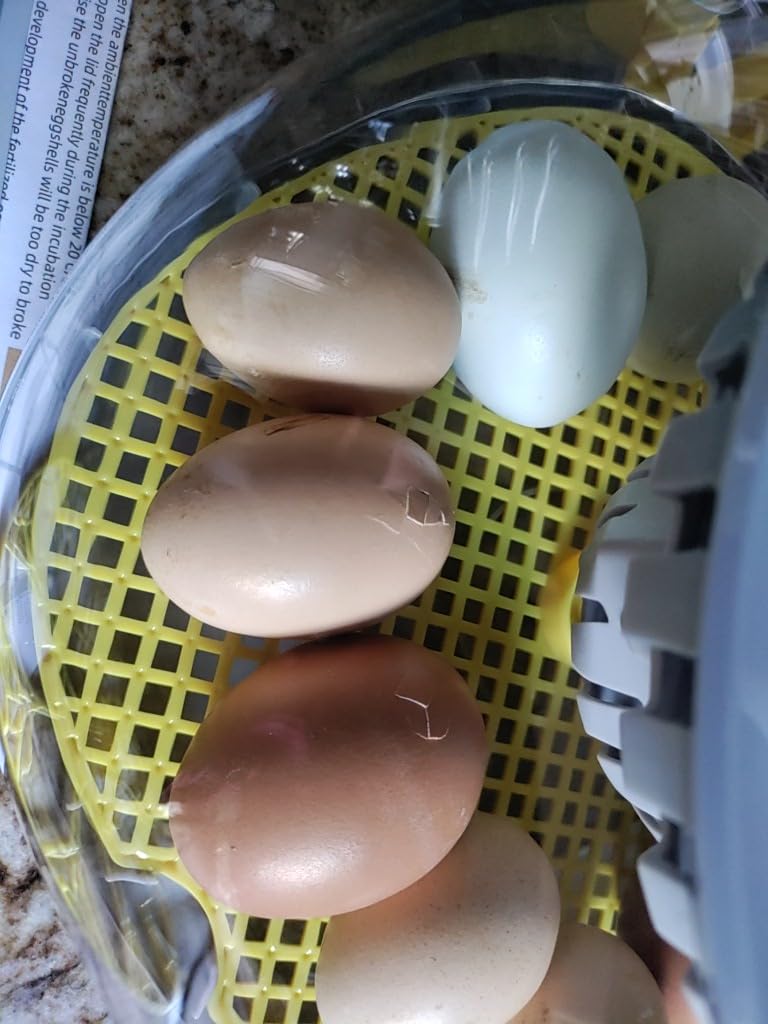
External water filling keeps the lid closed, and the shell comes apart for cleaning, which we rate highly for biosecurity between batches. The included parts are a cover, a removable tray and a water bottle.
Review outcomes range from 8 of 8 and 12 of 12 to 10 of 20, so do not read a single 4.2 as a promise. Most of the variance tracks back to how the owner set humidity rather than the machine itself.
Is the selectable turning interval useful for quail?
It is the main reason to pick this over a fixed-cycle machine. Set 120 or 180 minutes and eggs are nudged rather than thrown, which reduces the chance of them rolling into the corners and drying out.
For jumbo Coturnix eggs, the same setting slows the roll compared with a fast par turner. Smaller eggs still need a quail tray to stay in position.
Where it falls short for quail keepers
One reviewer reported the fan blade sits close enough to the shroud to injure newly hatched chicks toes. That is a genuine safety issue in a hatch space this compact.
The water bottles drain unevenly, so one side can run dry while the other holds water, and the candler is too weak to read much through a speckled shell. Buyers are advised to use a separate thermometer and hygrometer.
5. Onsju 18 Egg Incubator – Best for Classrooms
18 Egg Incubators for Hatching Eggs, Automatic Egg Turning and Humidity Control Incubator for Hatch Chicken Duck Quail Pigeon Pheasant Partridge Home Classroom Lab-
18 standard eggs or 40 small eggs
Silent fan airflow
Alerts for abnormal changes
Pros
- Rated for 40 quail or parrot eggs
- Turning interval options pause 96 hours out
- Visual and audible alarms
- High intensity LED candler
Cons
- Turning pause reads as a fault until you learn the indicator
- Manual reset needed between batches
This is the one to buy for a classroom or a lab. It holds 18 standard eggs or up to 40 smaller eggs such as quail or parrot eggs, and that smaller-egg capacity is the number that matters here.
At 404 reviews and 4.3 stars with 74 percent five-star, the profile skews towards teachers and lab buyers who value the monitoring, and the alarms report abnormal changes rather than making you poll the display.
Turning intervals are set to 60, 120 or 180 minutes and the system pauses automatically 96 hours before hatching. Lockdown for Coturnix quail normally starts around day 14, so a 96 hour pause lands close to the right point.
The high-intensity LED candling light paired with a clear dome is genuinely useful for a classroom demo, and it runs more quietly than most comparable models. A sealed water system replenishes humidity without frequent refills.
How many quail eggs will a 40 egg batch actually hatch?
Capacity is a physical count, not a promise. Quail eggs are small enough to move around in a tray, so filling a nominal 40 egg capacity loosely rather than tightly tends to give steadier results.
For classroom use, 20 to 30 eggs is plenty and gives you a visible range of outcomes, including the inevitable failures. That range is the teaching point, not a problem to hide.
Where it falls short for quail keepers
The automatic pause can look like a malfunction unless you know to check the stop indicator, and newcomers misread it as a fault more often than they read the alarms.
It also wants a manual reset and setup following the manual before each batch, which adds a step between hatches, and skipping that is how humidity ends up wrong on day one.
6. TRIOCOTTAGE 12 Egg Incubator – Best Compact Footprint
Incubators for Hatching Eggs 12 Egg Incubator with Automatic Egg Turning and Humidity Control,Egg Candler,Auto Water Replenishment,for Chicken Eggs and Quail Egg M12H
12 egg capacity
7.5 by 7.5 by 6.6 inches
Automatic water replenishment
Pros
- Very small counter footprint in this lineup
- Automatic turning and water replenishment
- Very quiet low fan noise
- Thick plastic base is washable
Cons
- Humidity reads about 10 percent high
- Humidity can climb fast depending on placement
- Big eggs crowd the auto turn
At 7.5 by 7.5 by 6.6 inches, it is one of the more compact incubators here, and for a kitchen counter that is the whole selling point.
The rating is strong at 4.4 across 374 reviews with 74 percent five-star, and the recurring theme is quiet running: there is only low fan noise, which makes it workable in a house rather than a garage.
Automatic egg turning and automatic water replenishment together mean you open the lid far less than on a manual model. For a 17 day quail cycle, fewer openings is a real advantage, since every one of them costs humidity.
Buy a separate hygrometer. Reviewers consistently find the internal reading runs roughly 10 percent higher than an independent meter, so calibrate once and then work from your own instrument.
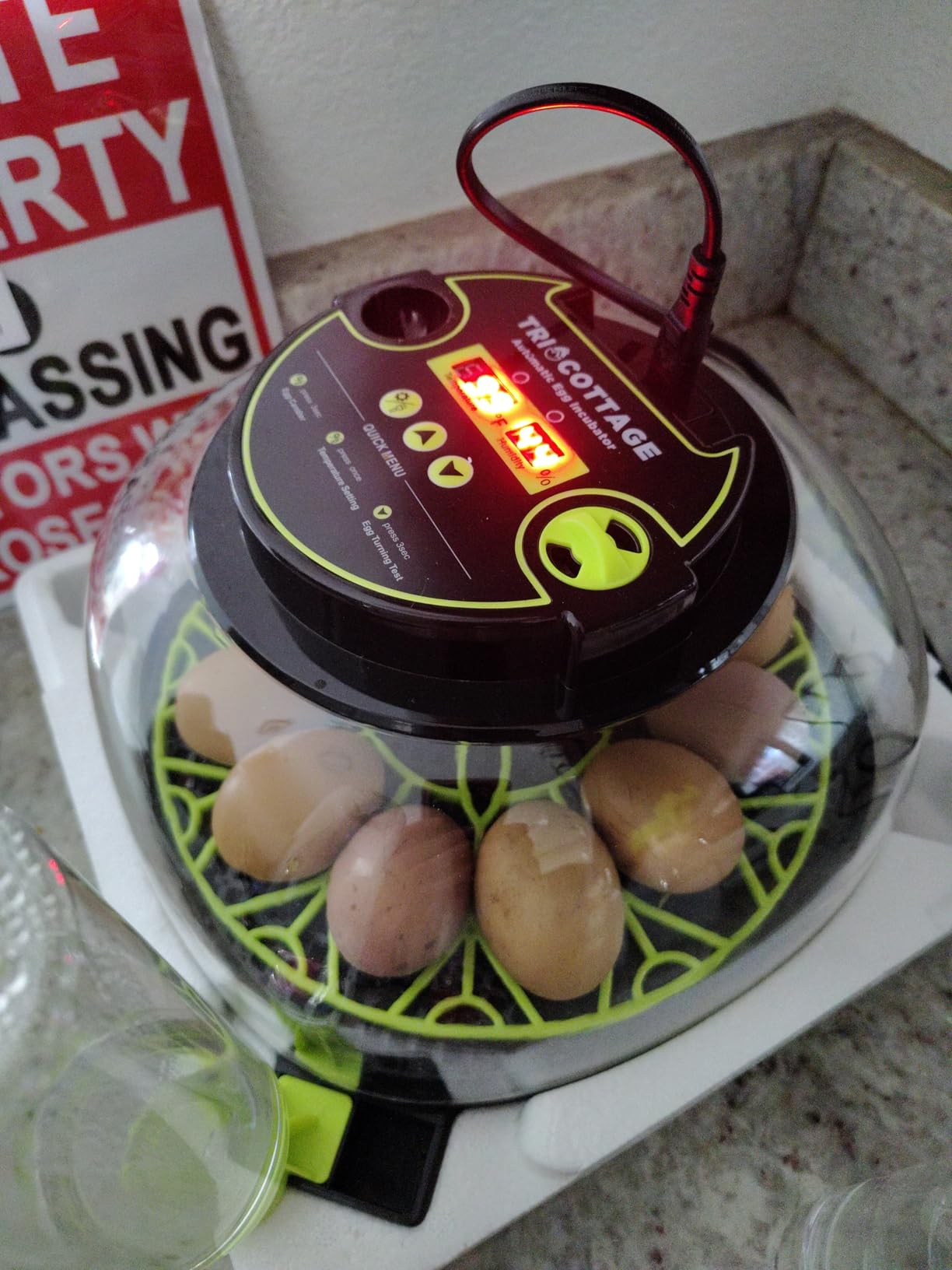
The 360-degree cover has a curved interior, which gives hatchlings more room to stand once they arrive, and the built-in candling light is brighter than most and shuts itself off.
Is 12 eggs enough quail capacity to be useful?
For a first batch or a small flock, yes. Twelve quail eggs is a realistic weekend project, and it is a batch size you can follow end to end.
It is also a batch size at which you can actually watch every egg. If one pipped early or looks stuck, you will see it at this size.
Where it falls short for quail keepers
Humidity can climb very quickly depending on where you put it. Near a radiator or a sunny window it will run high, so place it somewhere stable and check twice daily.
Large eggs such as turkeys and jumbo ducks crowd each other and interfere with the auto turn. For quail, that is not a problem, since the opposite issue is more common.
7. CluckRun 25 Egg Incubator – Best Controls and Alarms
25 Egg Incubators for Hatching Eggs, Auto Turning, Temp & Humidity Control
25 egg capacity
Turning countdown stops 4 days out
Multi function display
Pros
- Highest rating in this lineup at 4.6 across 300 reviews
- Day count and turning countdown on one display
- High protective walls keep chicks in
- Three year warranty
Cons
- Only 6 larger eggs fit comfortably
- Display backlight glows when candling
- Humidity takes practice to set
CluckRun scores 4.6 over 300 reviews, the highest average in this group, with 82 percent five-star and 6 percent one-star. Buyers single out the programmable day count and the auto lockdown behaviour.
That display matters for quail more than for chickens. Coturnix hatch in 16 to 18 days, so knowing your day number without counting on a calendar removes a real source of error at lockdown.
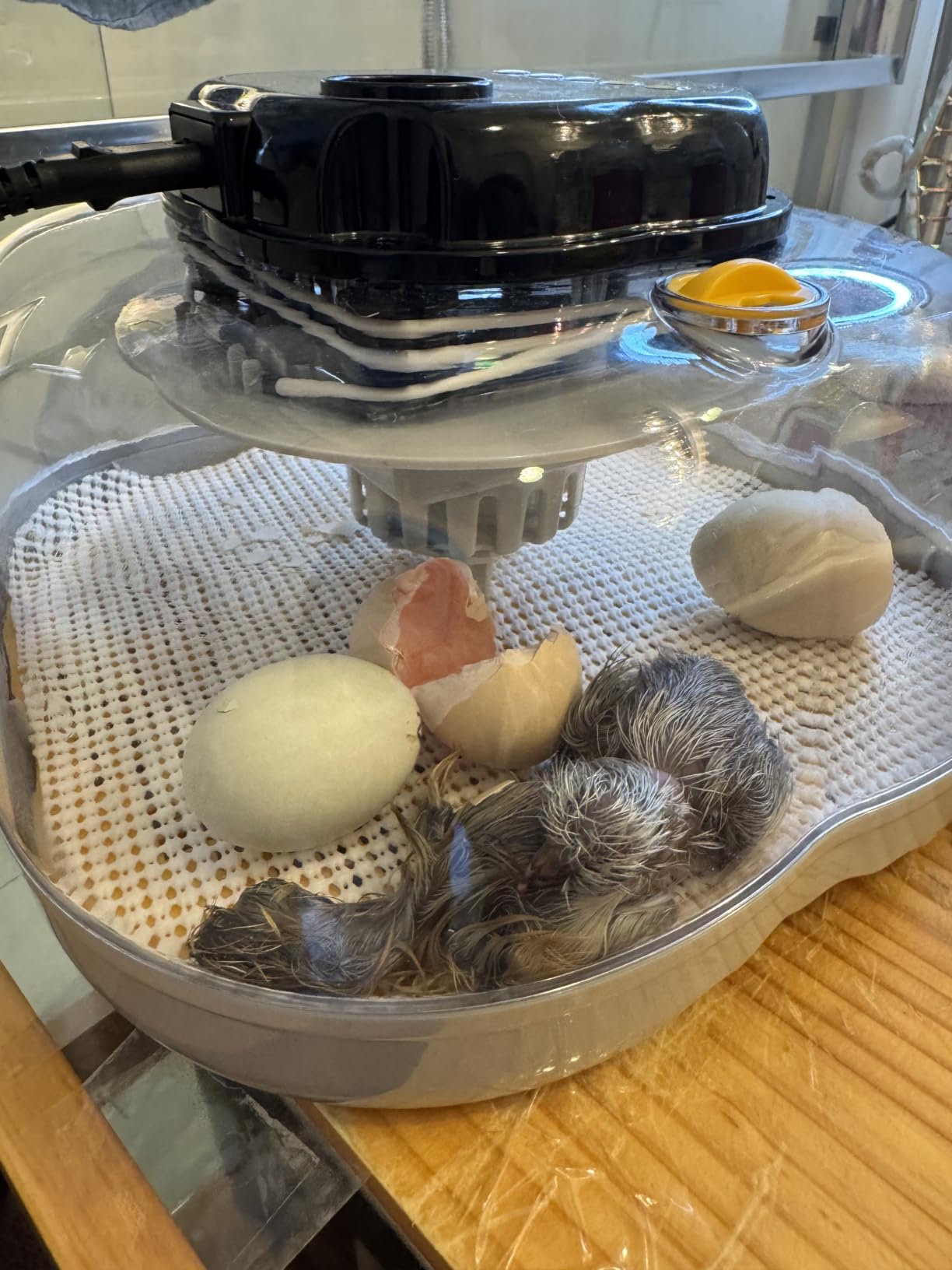
The turning system stops four days before hatching with a visible countdown, which for quail is slightly early but easy to override by removing the tray before lockdown. Intervals are selectable at 60, 120 or 180 minutes.
The high protective walls in a large hatch room are a good match for quail. Chicks are small and clumsy right after pipping, and the usual loss is a chick that climbs the wall and suffocates or falls.
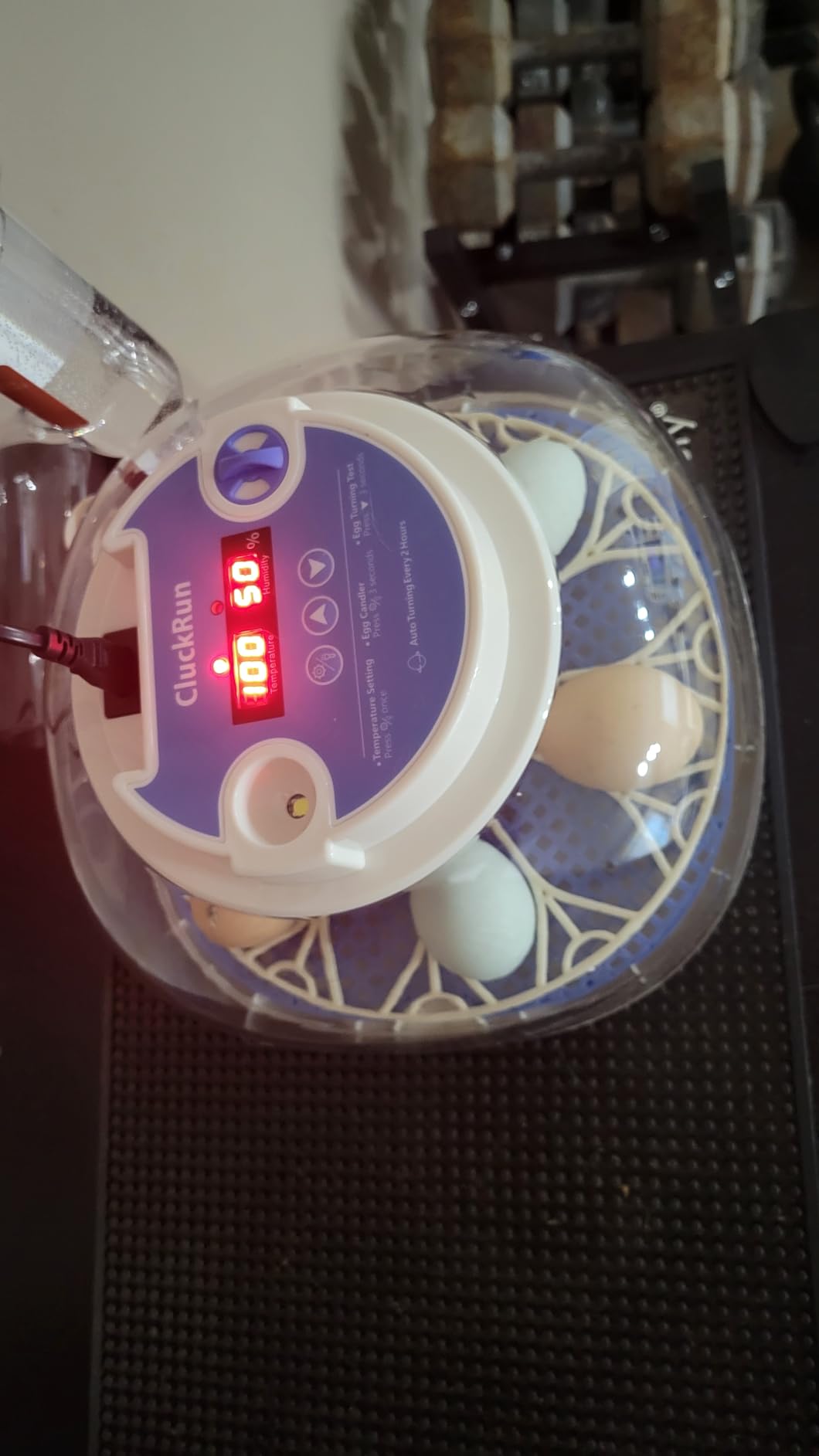
A low humidity alarm, quiet operation and a three year warranty round out a package that is more complete than most models here. The box includes two 10oz water bottles, a charger, a manual and a cleaning brush.
Does it maintain stable humidity for quail lockdown?
It can, but humidity is the variable that takes practice. Most owners reach 65 to 70 percent by closing the vent and topping up both bottles, and the alarm flags it if you fall short.
Reviewers say it runs away if the vent stays fully open. Treat the vent as a fine adjustment, not a main control, and check twice a day through the last three days.
Where it falls short for quail keepers
Only six larger eggs fit comfortably even though 12 chicken eggs do, so the spacing is tighter than the headline capacity suggests. Quail eggs fit that space without trouble.
The display backlight illuminates the whole chamber when you candle in a dark room, and the multi-function display is dense enough to need a minute with the manual.
8. CoInceptus 16 Egg Incubator – Best for Mixed Egg Sizes
CoInceptus 16 Eggs Incubators for Hatching Eggs, Egg Incubator with Automatic Egg Turning and Temperature Control, Chicken Egg Incubators with Egg Candler for Duck Goose Pigeon Quail
16 egg capacity
Adjustable roller spacing
110V and 12V clamp wiring
Pros
- Roller spacing adjusts for mixed egg sizes
- Works on 12V during a power cut
- Reaches set temperature in about an hour
- Built in candler
Cons
- No humidity value on the display
- Water bottles not included with the base
- Turner runs only once the wire is connected
The adjustable roller spacing is the reason to consider this one, because it holds chicken, duck, goose, pigeon and quail eggs in the same chamber.
At 294 reviews and 4.1 stars, it has the lowest average in this lineup, with 63 percent five-star and 11 percent one-star, and the most common complaint is that no humidity reading appears on the display.
Judging humidity by water level alone is workable but imprecise, and quail punish imprecision. If you buy this one, a standalone hygrometer is not optional.
It reaches set temperature in about an hour and holds it with an audible deviation alarm across a 68 to 104F range. Turning runs every 90 minutes, but only after you connect the turning wire by hand.
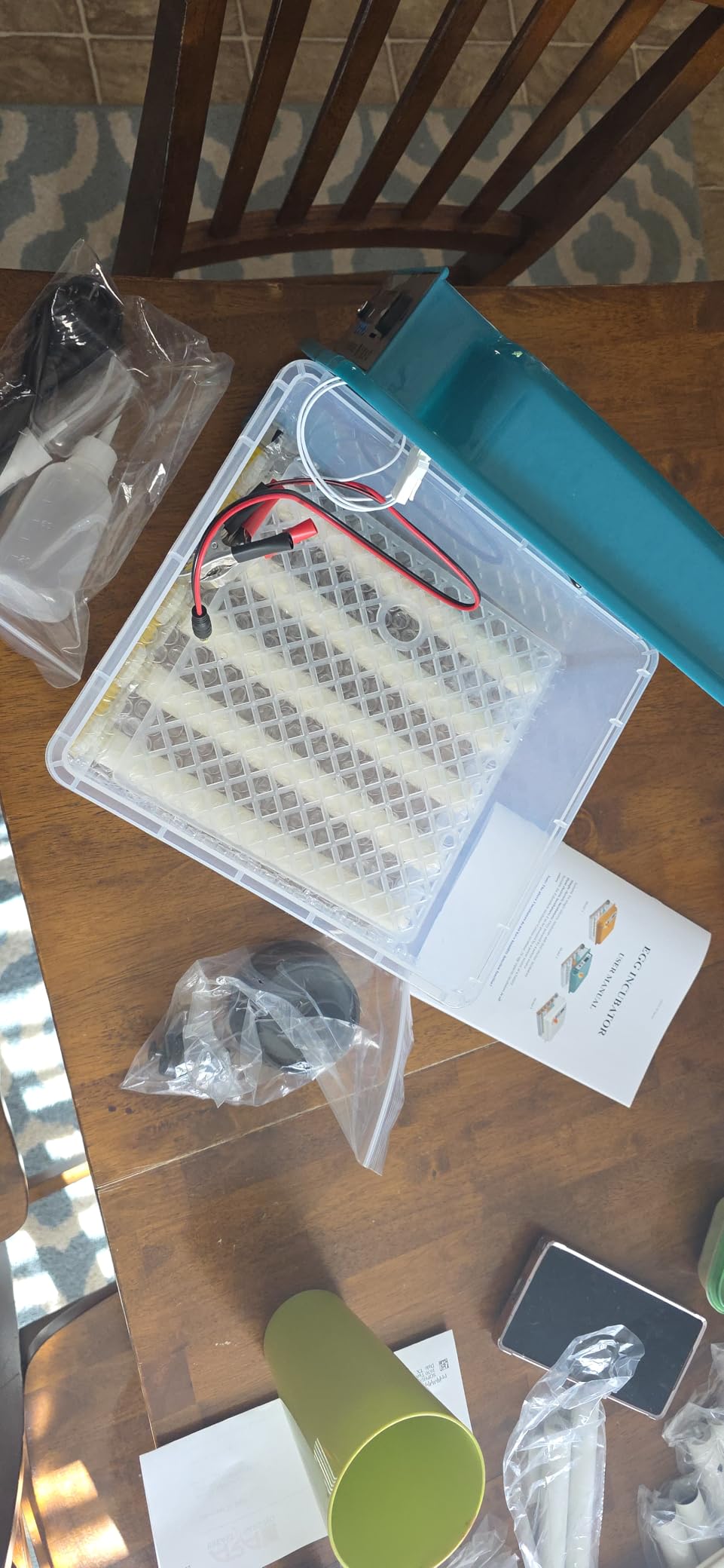
Dual 110V and 12V clamp wiring is the standout for anyone worried about a power cut mid-cycle. A battery and inverter can carry it through an outage without a temperature spike.
Is it safe for a power cut during a 17 day hatch?
More than most. The clamp wiring is designed for backup power, which is the single most useful feature on a long cycle. Cheaper models here have no such provision.
Have the battery and inverter ready before you set the eggs, not during the outage. Quail embryos are most vulnerable to temperature swings in the first week.
Where it falls short for quail keepers
No humidity display is the big one for this species. You are managing the single most important variable blind, and for quail that variable decides the hatch.
Water bottles are not included with the automatic water-adding base, and the turner only runs once you connect the wire. Read the manual before the first run.
9. innhom 56 Egg Incubator – Best for Large Quail Batches
Incubators for Hatching Eggs, 56 Eggs Incubator with Egg Candler, Auto Egg Turner, Temp & Humidity Control, Hatch Day,360° Viewing for Chicken,Duck,Quail Eggs,Ideal for Farm,School and Lab,Blue&Yellow
56 egg capacity
8 adjustable dividers
Humidity control motor
Pros
- Eight dividers handle mixed egg types in one run
- Humidity motor drips water at an adjustable rate
- Alarms on 2F temperature and 10 percent humidity drift
- Turns every two hours and stops three days out
Cons
- Hose assembly must be fitted correctly or humidity fails
- Day 19 needs tray removal and vent opened
- Manual misting required days 19 to 21
At 253 reviews and 4.1 stars, this is a larger model aimed at bigger batches, farms and schools, and eight adjustable dividers let you run quail alongside larger eggs in the same cycle.
The integral humidity control motor drips water in at a precisely adjustable rate, which is the most hands-off humidity system in this lineup. For a 56 egg batch that matters, because topping up by hand stops scaling well.
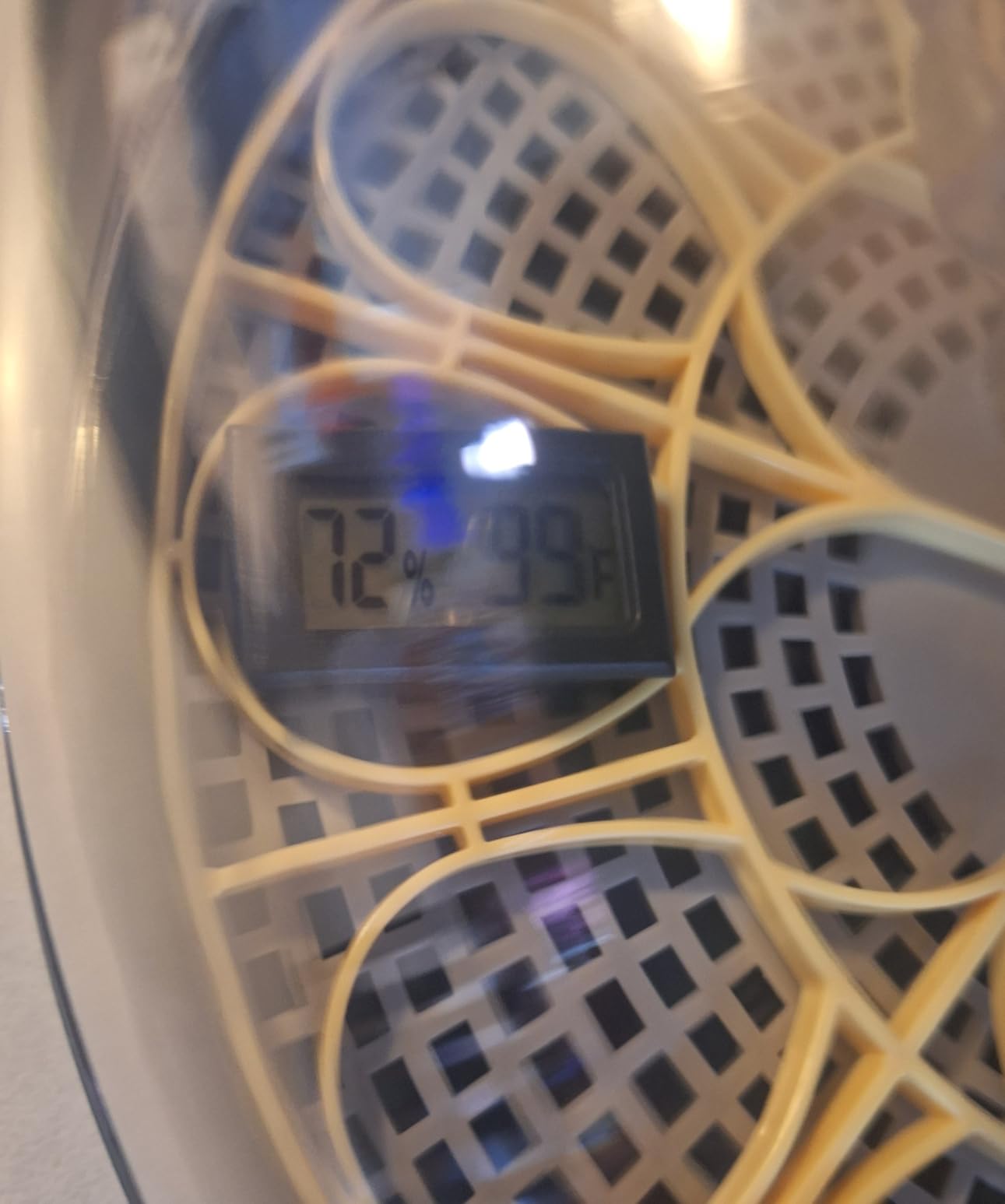
Automatic horizontal turning runs every two hours and stops three days before hatching. The alarm system flags temperature drift beyond 2F or 1C and humidity drift beyond 10 percent, so a problem gets noticed.
At 19.5 by 16.5 by 7 inches and 9 pounds, it is a countertop-to-shelf model rather than a portable dome. The 360 degree viewing is useful for spotting non-viable eggs early.
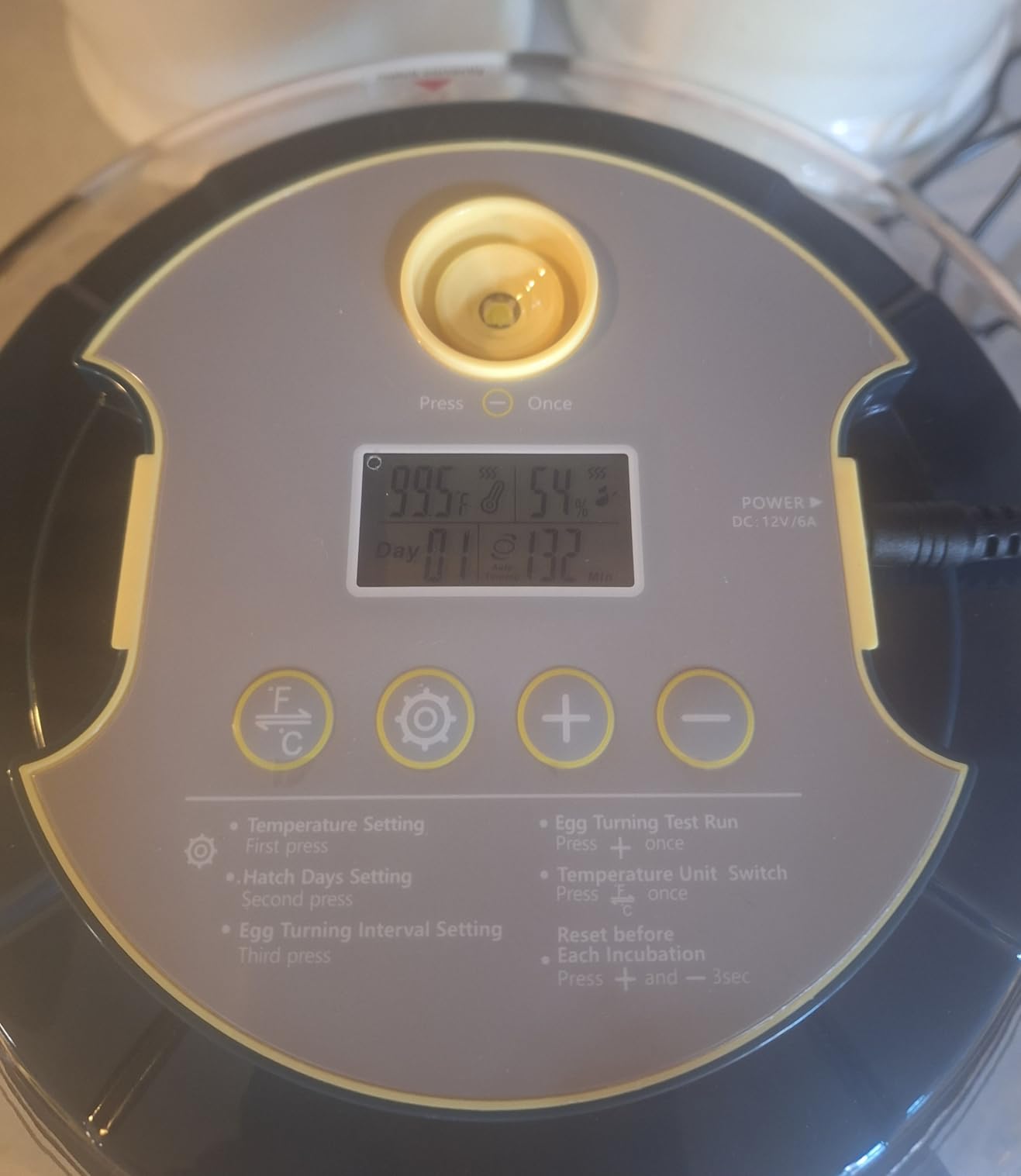
Is a 56 egg unit overkill for a backyard flock?
For a flock of 20 to 60 birds, it is sized right. Most quail keepers who want 30 to 50 eggs per batch end up crowding eggs into a 20 egg dome, which is exactly the layout that causes rolling and dead-in-shell results.
Check the mixed batch guidance before loading. The dividers are a genuine advantage only if your other eggs are at a similar stage.
Where it falls short for quail keepers
The hose assembly has to be installed correctly or the humidity system does nothing at all, and that is the most common setup mistake reviewers report. Read the assembly instructions fully.
Its schedule is written for 21 day chicken eggs. On day 19 you must remove the tray, open the vent and mist manually with the included sprayer, so a quail hatch finishes around day 17 to 18 without those steps.
10. ONKO 40 Quail Egg Incubator – Best Purpose-Built for Quail
40 Quail Egg Incubator with Automatic Egg Turning Humidity Control Eggs
40 quail egg capacity
Digital temp and humidity readout
Two external water bottles
Pros
- Only purpose built quail tray in this list
- Digital control auto adjusts heat and humidity
- Low humidity alarm
- Removable tray and base rinse clean
Cons
- No day counter on the display
- Humidity needs experimenting
- Electronics wiped not rinsed
Every other model in this list was designed around chicken eggs first, even the ones that accept smaller eggs. This one is built around a 40 egg quail tray, which removes the most common complaint we found about auto-turners rolling small eggs.
It holds 4.5 stars across 225 reviews with 76 percent five-star and only 4 percent one-star, one of the cleanest profiles here, and owners report hatching quail successfully with a full hatch from a first batch.
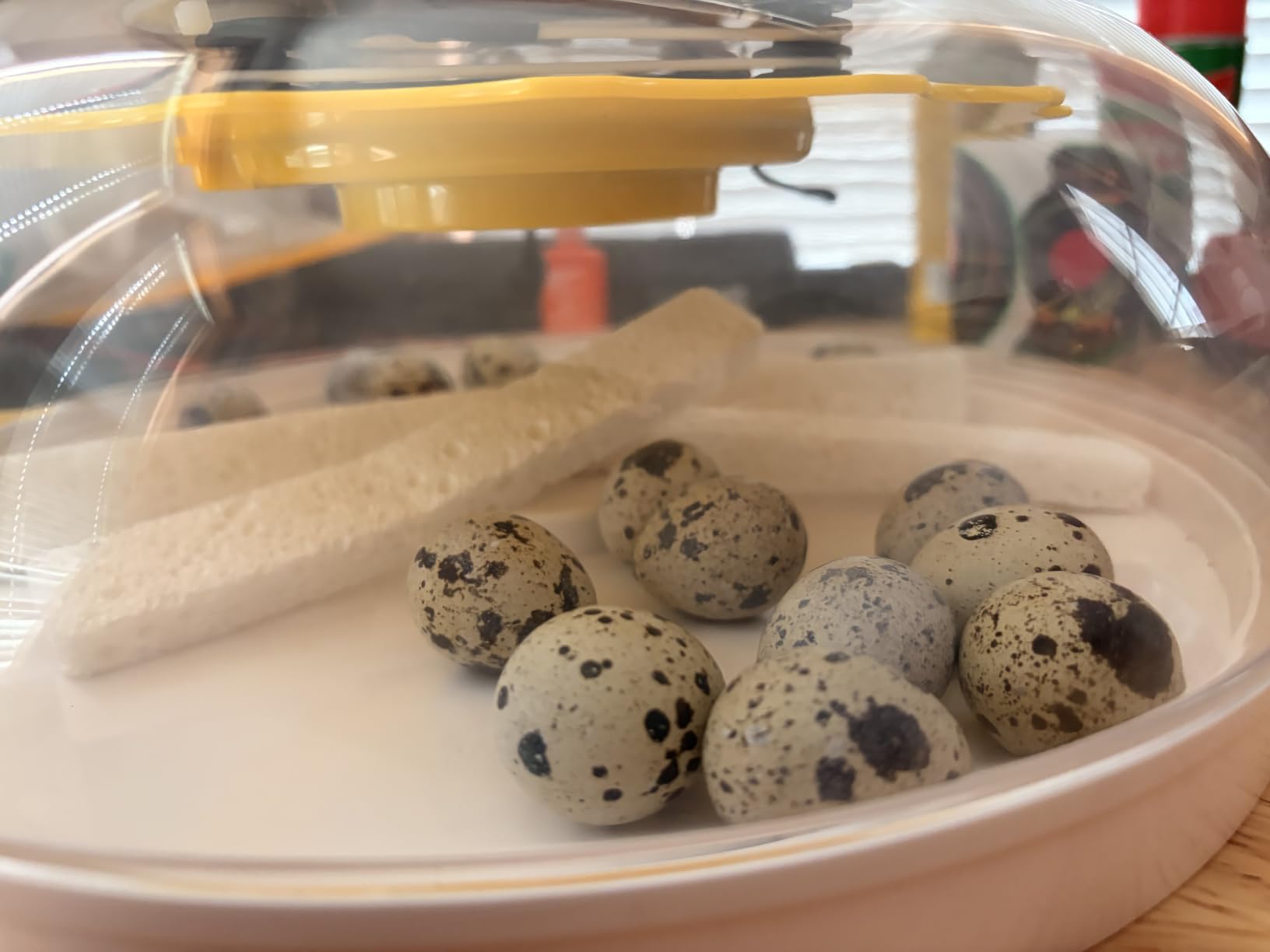
Automatic turning runs every two hours without opening the lid, and the tray lifts out on the final day for lockdown. Egg positions stay where you put them, which is the whole point of a purpose-built tray.
Two external water bottles mean only one or two top-ups across a full cycle, and an alarm sounds if humidity falls below target. The ONKO also rotates to even out hot and cold spots within the chamber.
A top-mounted candler and 360 degree transparent shell let you monitor without opening. The removable tray and base rinse under water, which makes a between-batch clean quick.
Does a purpose-built quail tray actually improve results?
It removes the rolling problem, and rolling is what causes a share of dead-in-shell results. Eggs held in fixed positions keep the same air cell orientation as the ones you placed pointed end down.
The display also shows real-time temperature and humidity and auto-adjusts both, so the day-to-day management burden is lighter than on a fixed-cycle machine.
Where it falls short for quail keepers
There is no day counter, so you track the cycle yourself. At 17 to 18 days for Coturnix, that means a calendar on the wall.
Humidity still takes experimentation with the bottles and the adjustable vent, and the top cover electronics must be wiped with a damp cloth rather than rinsed. The shell is transparent ABS at 10.2 by 10.5 by 4 inches and 4.2 pounds, so it is portable but scratch-prone.
11. VEVOR 24 Egg Incubator – Best 360 Degree View With Lighting
VEVOR 24 Egg Incubator, Automatic Egg Turner with LED Candler, Temperature & Humidity Control, 360° View Clear Window, Auto Water Refill, Poultry Eggs Incubators for Hatching Chicks Ducks Goose Quail
24 egg capacity
Integrated temp and humidity sensor
Automatic 360 degree turning
Pros
- Transparent shell with built in lighting
- Switches to 12V battery during an outage
- Auto water refill function
- Quail results reported including 13 of 15
Cons
- Base does not seal so humidity swings
- Side lifting holes trap chicks
- Turning motor coupling can detach
VEVOR lights the chamber from inside, so you can check the whole batch without lifting the lid. At 161 reviews and 4.3 stars, owners report good quail results including 13 of 15 from one hatch.
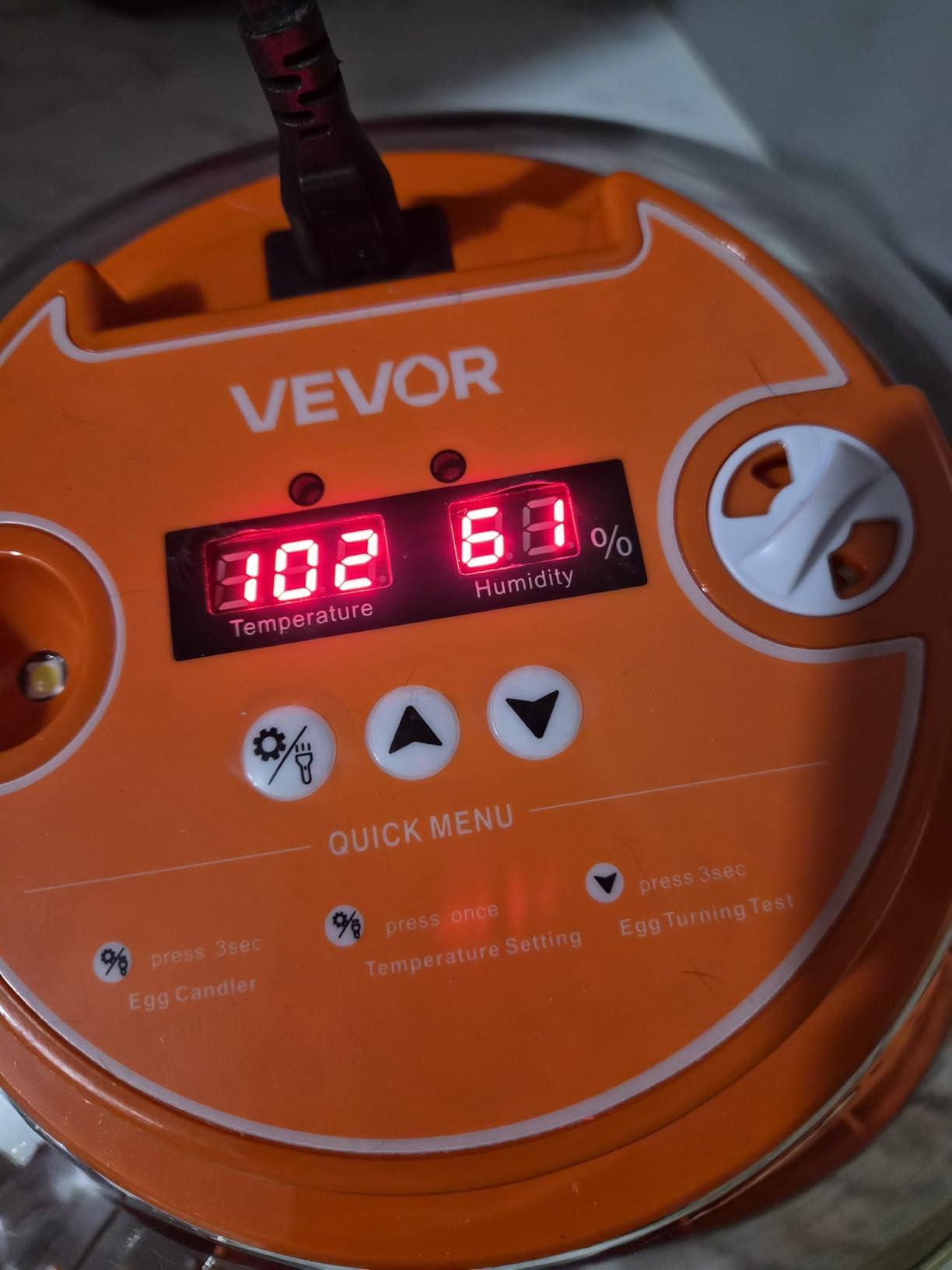
The integrated sensor shows real-time internal readings, and 360 degree air circulation distributes both heat and humidity evenly. Automatic 360 degree turning exposes every egg to the same conditions rather than only the ones on the outer ring.
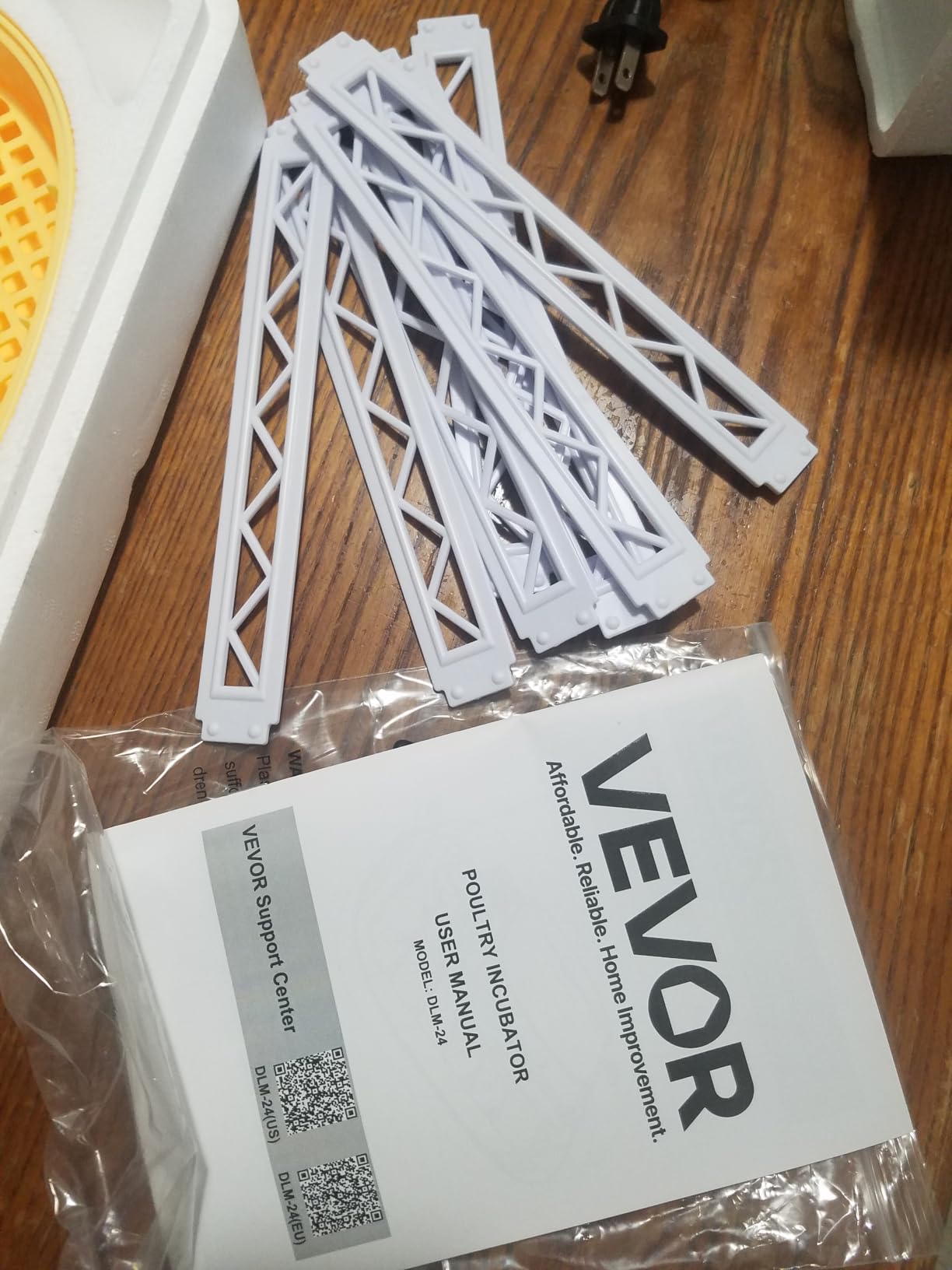
Two practical details are worth knowing. Styrofoam packing doubles as extra insulation in cold rooms, and it is switched manually to a 12V battery during a power outage.
There is an auto water refill function, and 12, 18 and 24 egg variants exist if you move up later. Do not expect a day counter though, or a humidity offset you can calibrate from the display.
Is 360 degree turning gentle enough for quail eggs?
It is thorough, since every egg position moves rather than just the perimeter. Quail eggs still need a tray or close spacing to stop them rolling between positions during the turn.
If your eggs are jumbo Coturnix, check the spacing before loading. Oversized eggs do not sit as securely in a 24 egg tray as standard quail eggs.
Where it falls short for quail keepers
The base does not seal well, so humidity swings day to day and hatch rate can drop sharply. This is the most serious complaint in the reviews and it is a humidity problem, which is the wrong problem to have on this species.
Two large lifting holes on the sides can trap newly hatched chicks, the lid does not always seat flush without care, and the turning motor coupling can come loose. The hood is also called out as hard to clean.
12. DEZHXHE 8 to 30 Egg Incubator – Budget Pick With Two Trays
8-30 Egg Incubators for Hatching Eggs, Chicken Egg Incubator with Automatic Egg Turning, Temperature Control & Humidity Display, Egg Candler, Incubator for Chicken, Duck, Quail, Bird, 2 Egg Trays
8 to 30 eggs across two trays
Automatic turning every 120 minutes
Humidity display
Pros
- Two interchangeable trays for standard and bird eggs
- External automatic water filler
- Switches to a 12V battery after a power failure
- Owners report a strong 99 percent hatch
Cons
- Quail tray slots too small so the chicken tray is needed
- Only the outer ring of eggs rotates
- No day counter and no insulation
Two interchangeable trays are included with this model, one standard and one bird egg tray, which is unusual at this level. It covers 8 to 30 eggs depending on which tray is fitted.
At 110 reviews and 4.0 stars, the rating spread is the widest in this lineup, with 56 percent five-star but also 18 percent three-star, and one UK review reports the motor beginning to smoke after a few days.
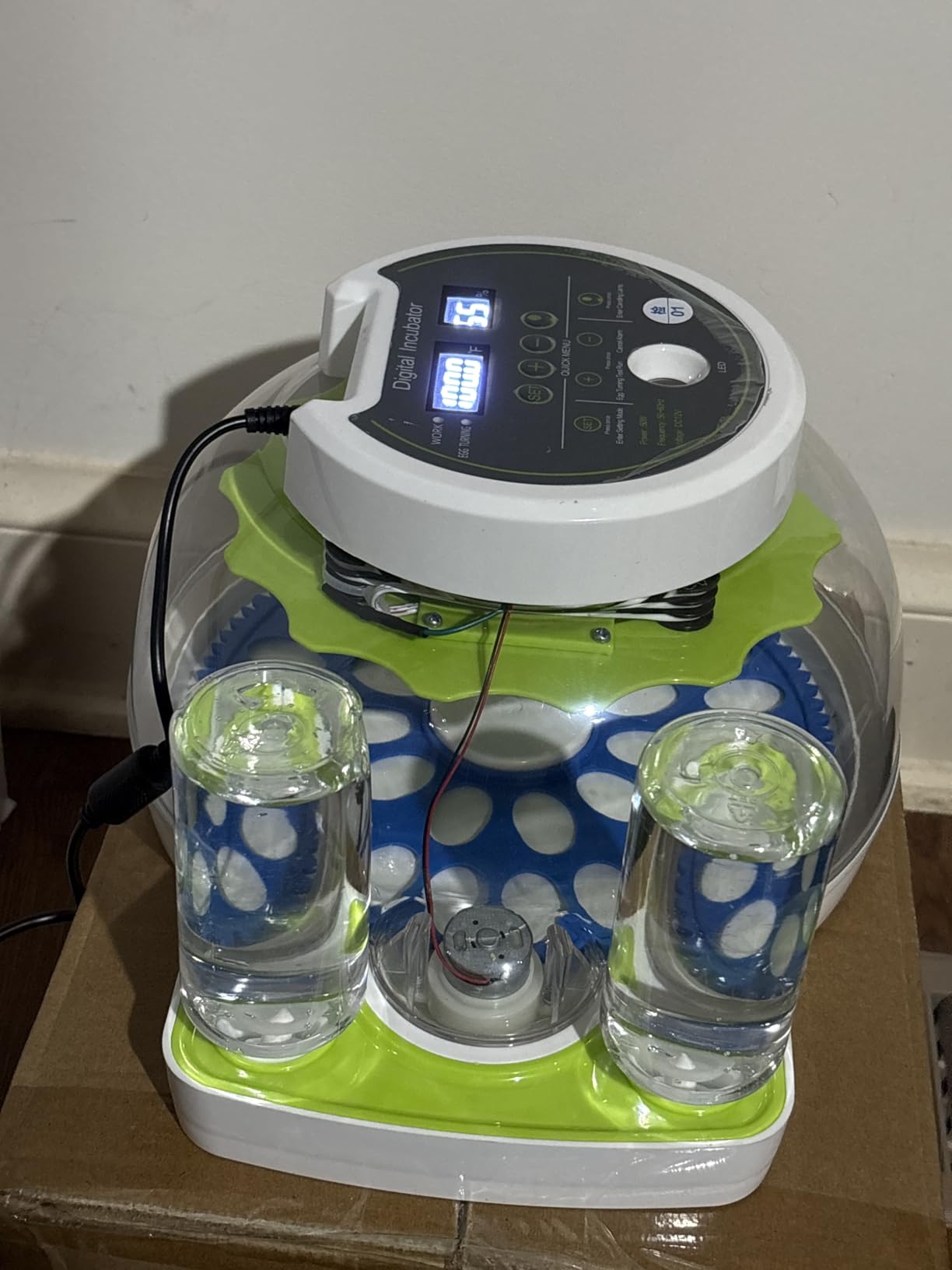
The practical quail note from reviews is that the quail tray slots are too small for standard Coturnix eggs, so most owners use the chicken tray instead. That is fine, but it means the second tray is not really a quail feature.
Humidity control comes from a display, an external automatic water filler and an adjustable air vent, all adjustable without opening the cover. A 12V battery of 50AH or larger can take over after a power failure.
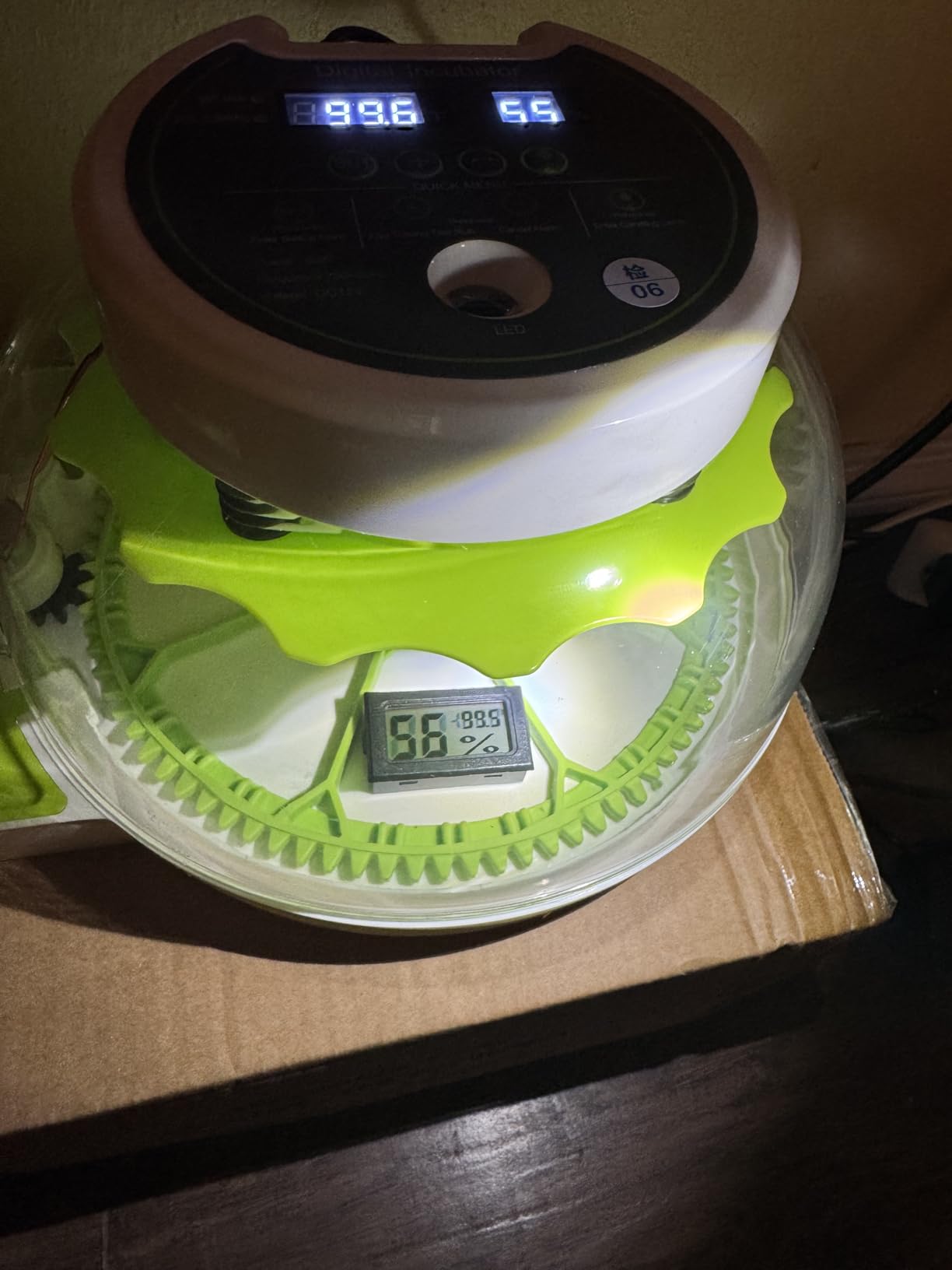
The built-in candle light is described as very bright by owners, and fan-driven airflow keeps the temperature homogeneous. One owner reports a 99 percent hatch rate, but a single report is an anecdote rather than a track record.
Is this enough incubator for a first quail hatch?
For a small first batch in a stable room, yes. The limits are structural: only the outer ring of eggs rotates, and there is no foam insulation, so keep the room temperature steady.
Check that the internal temperature matches a separate thermometer, since it can read off the set point. Without insulation, a draft or a sunny shelf will move the reading.
Where it falls short for quail keepers
The built-in candler is ineffective on Coturnix eggs, the turner motor can be loud when it engages, and there is no day counter to track the cycle.
Most importantly, the rotating ring leaves the middle eggs stationary. For a species where eggs roll, that is worth weighing before you commit a full batch.
How to Set Up and Run a Quail Egg Incubator
Setup matters more than the model for a first-time hatch. Follow these steps in order and most of the common failures disappear.
1. Pre-run the incubator empty for 24 hours. Plug it in with no eggs and let it stabilise. Check the reading against a separate thermometer placed at egg height and note the offset, which is usually a degree or two.
2. Set the target before loading. Forced-air machines run at 99.5F, still-air machines at 101 to 102F. Quail eggs are small, so pick the forced-air model wherever you have the choice.
3. Control humidity at 45 to 50 percent. Add warm water to the base or fill the external bottles, and place a hygrometer at egg height. Close the vent partially and re-check twice a day.
4. Load eggs pointed end down in a single layer. Quail eggs are usually set in a quail tray, or grouped closely so they cannot roll. If the tray spaces them for chicken eggs, expect gaps and gaps mean drafts.
5. Turn three to five times a day until day 14. If the model has an auto turner, check that it actually moves the eggs rather than only the outer ring. Nurture Right users and Onsju users get reliable turning; a DEZHXHE or VEVOR unit needs a physical check.
6. Enter lockdown on day 14. Stop turning, remove the turner or tray mechanism, and raise humidity to 65 to 70 percent. Coturnix eggs generally pip on days 16 to 18, so three to four days in lockdown is right.
7. Have the brooder ready before day 16. Quail chicks are tiny and need a warm brooder at around 95F on arrival. Moving them late is a common and avoidable loss.
While the run is going, keep a simple log: daily temperature, humidity, and any egg that looks suspect. Ten seconds a day makes a poor hatch diagnosable.
What Actually Decides Your Hatch Rate
Humidity control matters more than the brand on the box. A controlled comparison of quail incubators, run at 74F ambient and mid-30 percent ambient humidity over 21 day cycles, produced hatch rates from under 20 percent to 85 percent across a range of mainstream incubators.
The same machine produced very different results depending on how it was configured. One cabinet-style unit hatched 85 percent with turning and 63 percent without, so turning is a decisive factor rather than a convenience.
Humidity was the other decisive factor. One mid-capacity unit rose from 54 percent hatch in a dry configuration to 65 percent once a wet reservoir was added, with the machine otherwise unchanged.
The most striking result was variance within a single model. Three identical copies of the same popular dome incubator returned 6 percent, 37.5 percent and 47 percent. That should end the idea that a brand name predicts your result.
Cheap ambient-dependent machines landed at or near zero percent in that study, which matches forum reports of expensive-looking dome incubators with a 360 view window producing a handful of chicks. The turning point in every case was whether the machine could hold water and heat independently of the room.
Set expectations realistically. With a working turner and controlled humidity, 70 to 85 percent is a good result on fertile eggs. Anything under 50 percent usually points to humidity, egg storage, or fertility rather than the incubator.
Buying Guide for the Best Egg Incubator for Quail Eggs
Choose forced air over still air whenever the budget allows. A fan-driven chamber removes the hot and cold spots that hurt small eggs at the edges, and quail eggs have no shell thickness to buffer the difference.
Look for external water filling. Any model that needs the lid opened to add water will cost you humidity several times a day, and quail lose more to drying out than most breeders expect. Distilled or demineralised water also keeps mineral scale off the base plate, and heavily mineralised supply water raises the same question covered in our guide to sulfate in mineral water, so filling from a filtered source avoids a scaling problem.
You need the turning system to stop before hatch day, and the day it stops on should be one you can override. A turner that runs through lockdown on day 15 is worse than no turner at all.
Do I need a quail-specific incubator? Not strictly, but a quail tray matters more than the machine. Chicken incubators will hatch quail eggs, and most of the ones above will do so, but quail eggs do not fit standard chicken trays snugly.
Will a chicken egg incubator work for quail eggs? Yes, with the right tray and spacing. Set it to 99.5F for forced air, keep 45 to 50 percent humidity early and 65 to 70 percent at lockdown, and expect the hatch around day 17.
Is 50% humidity too high for quail eggs? No. 45 to 50 percent is the standard incubation target and keeps the membrane from drying, and the risk is running dry rather than running wet before lockdown.
Is 75% of humidity too high for hatching? For quail, 75 percent is high for incubation but close to the lockdown range some breeders use in dry rooms. Use 65 to 70 percent and add water gradually, because chicks that hatch wet at 75 percent often suffocate.
Jumbo Coturnix eggs are larger than standard quail eggs, and a tray sized for standard eggs can leave them loose enough to roll. Measure the tray spacing rather than assuming, and slow the turning interval where you can.
Two models in this roundup can switch to 12V during an outage. On anything else, keep a battery inverter ready and expect to keep the lid closed with no added water until power returns.
Cleaning between batches is not optional. Pull the tray, wipe the base with a dilute sanitiser, and let everything dry fully before the next load, since leftover humidity and residue both affect the following hatch.
Troubleshooting Common Quail Egg Incubation Problems
Low hatch rate with no obvious cause usually means humidity. Check the reading at egg height rather than at the top of the chamber, and compare it to a separate hygrometer, since several models here read high.
Sticky or shrink-wrapped chicks mean the eggs dried out too early. Humidity was too low for the first fourteen days, or the eggs were stored too long before setting.
Early hatching points to a temperature that runs high. Still-air machines at 101 to 102F will hatch quail a day or more ahead of schedule if the air gap is small.
Eggs that roll or sit in corners under an auto turner mean the tray spacing is too wide for quail eggs. Fill the gaps or switch to a purpose-built quail tray.
A musty or rotten-egg smell inside the chamber points to poor airflow and excessive humidity in the first half. It is the same compound that makes some water sources taste unpleasant, as our guide to the rotten-egg smell in water explains. Improve circulation and drop the water level slightly.
Temperature drifting more than 2F usually means the room is the problem. Move it away from windows, radiators and exterior doors before replacing anything.
For a long cycle, plan for a power cut. Keep a battery inverter ready, and if the model cannot take backup power, keep the lid closed and resist adding water until it is back on and stable.
Cleaning and Sanitising an Incubator Between Hatches
Remove everything that comes out of the chamber: tray, turner, water bottles and any foam insert, which is the first step and the one most often skipped.
Wipe the shell and base with a dilute sanitiser, then a clean damp cloth. Pay attention to the lid seal, where residue and mould collect unnoticed.
Sanitise the tray and turning parts separately, and let all of it dry completely. A tray that goes back in damp will raise humidity on its own.
Air the machine out for a full day with the lid open before the next load. For anything beyond a hobby batch, keep your hatch log so you can tie a poor result to a cleaning lapse.
Frequently Asked Questions
What kind of incubator is best for quail eggs?
A small forced-air incubator with digital temperature control, working humidity regulation, a quail-sized egg tray, and an automatic turner that stops before hatch day is the best choice. Run forced-air models at 99.5F, keep humidity at 45-50 percent through day 14, then raise it to 65-70 percent for lockdown. Coturnix eggs hatch on days 16-18.
Will a chicken egg incubator work for quail eggs?
Yes, a chicken egg incubator will hatch quail eggs if you set 99.5F for forced air, hold 45-50 percent humidity early and 65-70 percent at lockdown, and stop turning on day 14. The one thing you really need is a quail tray or close egg spacing, because quail eggs roll in trays sized for chicken eggs.
What is the typical hatch rate for quail eggs?
With a working auto turner and controlled humidity, 70-85 percent is a realistic hatch rate on fertile eggs. Anything under 50 percent usually points to humidity control, how long the eggs were stored, or egg fertility rather than the incubator itself.
Is 50% humidity too high for quail eggs?
No. 45-50 percent relative humidity is the standard target for the first fourteen days and helps stop the egg membrane from drying out. The real risk is running dry before lockdown, not running at 50 percent.
How long do Coturnix quail eggs take to hatch?
Coturnix quail eggs take 16-18 days to hatch in a forced-air incubator at 99.5F. Turning runs three to five times a day until day 14, then the machine goes into lockdown at 65-70 percent humidity until the chicks pip through.
Should I candle quail eggs?
Usually not worth the effort. Quail shells are heavily speckled and mottled, so the blood vessels and air cell are hard to read, and the small size makes handling risky. Track the cycle by day count instead and check the hatch at day 16.
Conclusion
The best egg incubators for quail eggs are the ones that hold humidity steady and turn the eggs gently, and on that basis the Harris Farms Nurture Right 360 is the pick for most people, with the largest review sample in the group and the most even airflow. Hatch quail as your only species and the purpose-built ONKO 40 quail tray removes the rolling problem from the start.
Whichever you choose, run the numbers that matter: 99.5F forced air, 45 to 50 percent humidity to day 14, 65 to 70 percent at lockdown, no turning after day 14, and a brooder ready before day 16. Get those right in 2026 and most of the problems we read about in the forums simply never come up.