
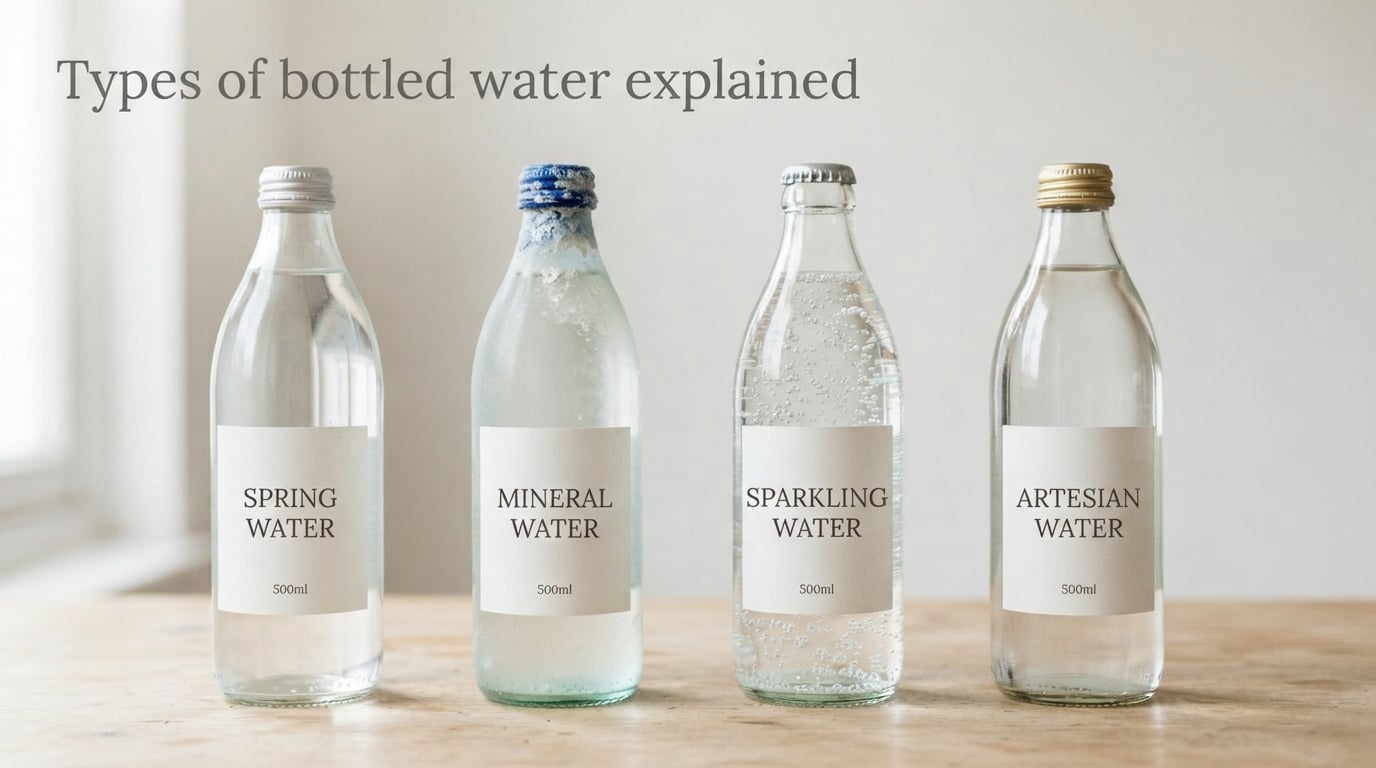
If you have ever stood in the beverage aisle staring at rows of bottles labeled spring, purified, mineral, artesian, or sparkling, you are not alone. The types of bottled water on the shelf today look similar but are defined under very different rules, and understanding those rules saves you money and confusion.
I write about mineral waters for a living, so I tested and compared more than 30 bottled water labels while researching this guide. In this article I will walk you through every FDA-recognized type of bottled water, explain how each one is sourced or processed, and show you the one detail on a label that tells you the most about what is inside.
This is a plain-English explainer with no marketing claims, no hype, and no purchase pressure. Just the facts, plus the consumer insights I have picked up from years of reading labels side by side.
Table of Contents
What Counts as Bottled Water Under FDA Rules
The U.S. Food and Drug Administration regulates bottled water as a packaged beverage, and only waters that meet specific FDA standards of identity can be labeled with names like spring, mineral, or artesian. If a product does not fit one of these definitions, the FDA generally treats it as a soft drink rather than bottled water.
There are seven FDA-recognized types: spring water, purified water, mineral water, artesian water, well water, sparkling bottled water, and sterile water. Each has its own sourcing, processing, and labeling rules. Getting the type right on the label is the manufacturer’s job, and the FDA does audit it.
The reason this matters to you is simple. Two bottles can sit next to each other and have wildly different mineral content, treatment methods, or even carbonation levels, and the only way to know is the FDA-defined type on the front of the label. Comparing filtered water and bottled water makes this distinction even clearer.
Spring Water: From Underground to Bottle
Spring water comes from a natural underground formation that flows naturally to the earth’s surface, called the point of emergence. The FDA allows the water to be collected either at the spring itself or through a borehole that taps the same underground source. If a company uses a borehole, the label must say so under FDA rules.
What spring water cannot do is have its mineral content materially altered before bottling. Companies can filter out debris or add or remove carbon dioxide, but the natural mineral profile has to remain essentially the same as what comes out of the ground. This is what gives spring water its regional character and reputation for crisp taste.
TDS in spring water varies wildly by source. Bottles from mountain springs often sit around 50 to 150 parts per million, while volcanic-region springs can exceed 400 parts per million. If you are curious about what contributes to that mineral character, our piece on silica content in bottled water explains one of the most common minerals you will find in spring water.
Purified Water and How It Is Processed
Purified water starts as any source, tap water, spring water, or even well water, and is then subjected to a treatment process that removes impurities. The FDA requires that purified water meet the U.S. Pharmacopeia definition, which means it cannot contain more than 10 parts per million of total dissolved solids.
Three main processes get water to that purity level. Reverse osmosis forces water through a semipermeable membrane that blocks most dissolved solids. Distillation boils water and condenses the steam, leaving minerals behind. Deionization swaps mineral ions for hydrogen and hydroxyl ions.
Many brands combine methods, such as reverse osmosis followed by ultraviolet treatment or carbon filtration for taste. This is why purified water often has a very clean, almost flat flavor profile. The minerals that give other waters their taste have been stripped out, which is one reason some people find purified water less satisfying than spring or mineral water.
If you have ever wondered whether home filtration removes the same minerals, our article comparing Brita filters and mineral content breaks down the difference between pitcher filtration and bottled water processing.
Mineral Water: TDS and Trace Elements
Mineral water is the most strictly defined type under FDA rules. To be labeled mineral water, the water must contain at least 250 parts per million of total dissolved solids, come from a geologically protected underground source, and cannot have any minerals added during processing.
The total dissolved solids come from natural contact with rock formations over decades or centuries. Calcium, magnesium, potassium, sodium, and bicarbonate are the most common minerals you will see on a mineral water label, along with trace elements like silica, lithium, and strontium.
The reason mineral water tastes different from other waters is that the mineral profile is what you taste. If you have ever noticed that some bottles hit your tongue with a strong mineral note, our guide on mineral water taste and intensity explains the chemistry behind that punch.
Because mineral water cannot be processed beyond filtration for clarity and sometimes carbonation, it is also the type most often praised by people who care about mineral intake. We dig into that topic in our article on whether the potassium in mineral water matters for hydration.
Artesian Water and Confined Aquifers
Artesian water is collected from a well that taps a confined aquifer. A confined aquifer is a layer of water trapped between two impermeable rock or clay layers. The pressure created by this geology is what pushes water toward the surface when the aquifer is drilled into.
Because artesian water sits deep underground, it is naturally filtered through rock and sediment. Most artesian sources also have very stable mineral profiles, which is one reason brands built around artesian sources tend to market consistency as a feature.
Artesian water is not required to have any specific TDS level under FDA rules. It just has to come from a confined aquifer and meet general FDA bottled water standards. If the TDS happens to exceed 250 ppm and the source is geologically protected, the same water can legally be labeled mineral water as well.
Well Water: Tapped From Underground
Well water sounds self-explanatory, but the FDA definition is narrower than most people think. Under FDA rules, well water is water drawn from a hole bored, drilled, or otherwise constructed into a permeable underground formation that taps the water table.
The difference between well water and spring water is mainly how the water reaches the surface. Spring water flows naturally out of the ground, while well water has to be mechanically pumped or brought up. Mineral content is treated the same way under FDA labeling, but the sourcing claim on the label has to match the method used.
Well water is less common than spring or purified water on grocery shelves, but you will find it in regional brands in parts of the Midwest and Northeast where municipal wells are standard. The taste usually sits somewhere between spring water and purified water, depending on the local geology.
Sparkling Water and Carbonation
Sparkling bottled water is water that contains carbon dioxide. The FDA recognizes two subcategories. Sparkling mineral water is mineral water that has lost its carbonation during bottling and then had the same amount of carbonation replaced. Sparkling water in general can have carbon dioxide added after bottling or be naturally effervescent from the source.
Natural sparkling water, sometimes called naturally carbonated water, gets its bubbles from the source. Volcanic or geothermal springs often produce this type naturally. Almost every other sparkling water you see on shelves was carbonated by injecting CO2 after bottling.
Sparkling water has a different mouthfeel than still water because carbonation changes how the bubbles interact with taste receptors. If you are choosing sparkling water for daily hydration, the FDA treats it as a bottled water. Soda water or club soda, which often have added minerals like sodium bicarbonate, fall under different labeling rules.
Specialty Waters: Vitamin, Electrolyte, Hydrogen
Walk down any beverage aisle today and you will see products labeled vitamin water, electrolyte water, hydrogen water, alkaline water, and others. According to the FDA, these products are generally classified as beverages rather than bottled water, because they contain added ingredients beyond the standard FDA types.
Vitamin water is essentially flavored water with added vitamins and usually sugar or sweeteners. Electrolyte water has added sodium, potassium, magnesium, or other electrolytes designed for athletic or recovery use. Hydrogen water is infused with molecular hydrogen and is marketed for its antioxidant properties.
Alkaline water has a pH above 7, achieved either through ionizers or by adding alkaline compounds. The FDA does not have a separate standard of identity for alkaline water. Health claims around these specialty waters sit in a regulatory gray area, which is why consumer groups like AARP frequently flag them as soft drinks in disguise rather than bottled water.
Comparing the Main Types Side by Side
Here is a quick comparison of the main FDA-recognized types of bottled water, including typical TDS ranges, source, and processing.
Spring water: TDS usually 50 to 400 ppm. Source is a natural spring or borehole tapping the same formation. Limited processing for clarity.
Purified water: TDS must be under 10 ppm. Source can be anything, then treated with reverse osmosis, distillation, or deionization.
Mineral water: TDS must be at least 250 ppm. Source is a geologically protected underground deposit. No minerals can be added.
Artesian water: TDS varies by source, no minimum requirement. Source is a confined aquifer under pressure.
Well water: TDS varies by source. Source is a drilled or bored well into a permeable underground formation.
Sparkling water: TDS depends on base water type. Carbonation can be natural or added.
How to Read a Bottled Water Label
The most important line on any bottled water label is the type of water, found right under the brand name. By FDA regulation, this has to be accurate. Spring water from a borehole has to say so, and mineral water must meet the 250 ppm TDS threshold.
Next, look at the mineral breakdown. Most labels list calcium, magnesium, potassium, sodium, and sometimes bicarbonate. If no minerals are listed and the product is labeled mineral water, it must contain less than 250 ppm TDS, which would actually make it illegally labeled. Always check.
Finally, look for the source location. Bottled water sold in the U.S. has to disclose its source on the label. If you care about where your water comes from, this is the line that matters. Reading the back of the label tells you more than the marketing on the front ever will.
Frequently Asked Questions About Types of Bottled Water
What is the healthiest type of bottled water?
No single type of bottled water is universally the healthiest. Mineral water offers natural minerals like calcium and magnesium, spring water provides a balanced mineral profile from its source, and purified water removes contaminants but also strips beneficial minerals. Choose based on whether you want added minerals, fewer dissolved solids, or a specific taste profile. The healthiest choice is whichever type encourages you to stay hydrated.
What are the three types of bottled water?
The three most common FDA-recognized types of bottled water are spring water, purified water, and mineral water. Spring water comes from a natural underground source flowing to the surface. Purified water has been processed through methods like reverse osmosis or distillation to meet strict purity standards. Mineral water contains at least 250 parts per million of total dissolved solids from a protected underground source and cannot have minerals added or removed.
What is the unhealthiest bottled water to drink?
Specialty waters like vitamin water, electrolyte water, and hydrogen water are classified by the FDA as beverages rather than bottled water, and many contain added sugar, sweeteners, or flavorings that can offset hydration benefits. Some flavored or sweetened waters deliver as much sugar as soda. For daily hydration, plain bottled water from the FDA-recognized types is a safer choice than sweetened or caffeinated beverage products marketed as water.
What are the five best bottled waters to drink?
The best bottled water depends on what you want from it. For mineral content, mineral water from European sources like Vichy or Contrex ranks highly. For everyday hydration with a clean taste, purified or spring water works well. For taste and consistent mineral profile, artesian water is a strong pick. For people who want lighter mineral content, spring water from mountain sources is a top option. For a balance of minerals and accessibility, well water from a tested municipal source is reliable.
Final Thoughts on Types of Bottled Water
Understanding the types of bottled water comes down to three details: where the water came from, what was done to it, and what the FDA requires the label to say. The seven types covered here (spring, purified, mineral, artesian, well, sparkling, and sterile) each have their own rules, and choosing between them depends on what you want from your water.
If you want minerals and character, mineral water is the clear pick. If you want clean, neutral taste and minimal dissolved solids, purified water is right. If you want something closer to water as nature produced it, spring water or artesian water will suit you. Specialty waters can be useful in specific situations, but for everyday hydration they are not necessary, and most are FDA-classified as beverages rather than bottled water.
The next time you pick up a bottle, flip it around and read the source line, the mineral breakdown, and the water type. You will know more about your bottle than 90 percent of shoppers in the aisle, and you will be able to choose based on facts rather than marketing claims.