
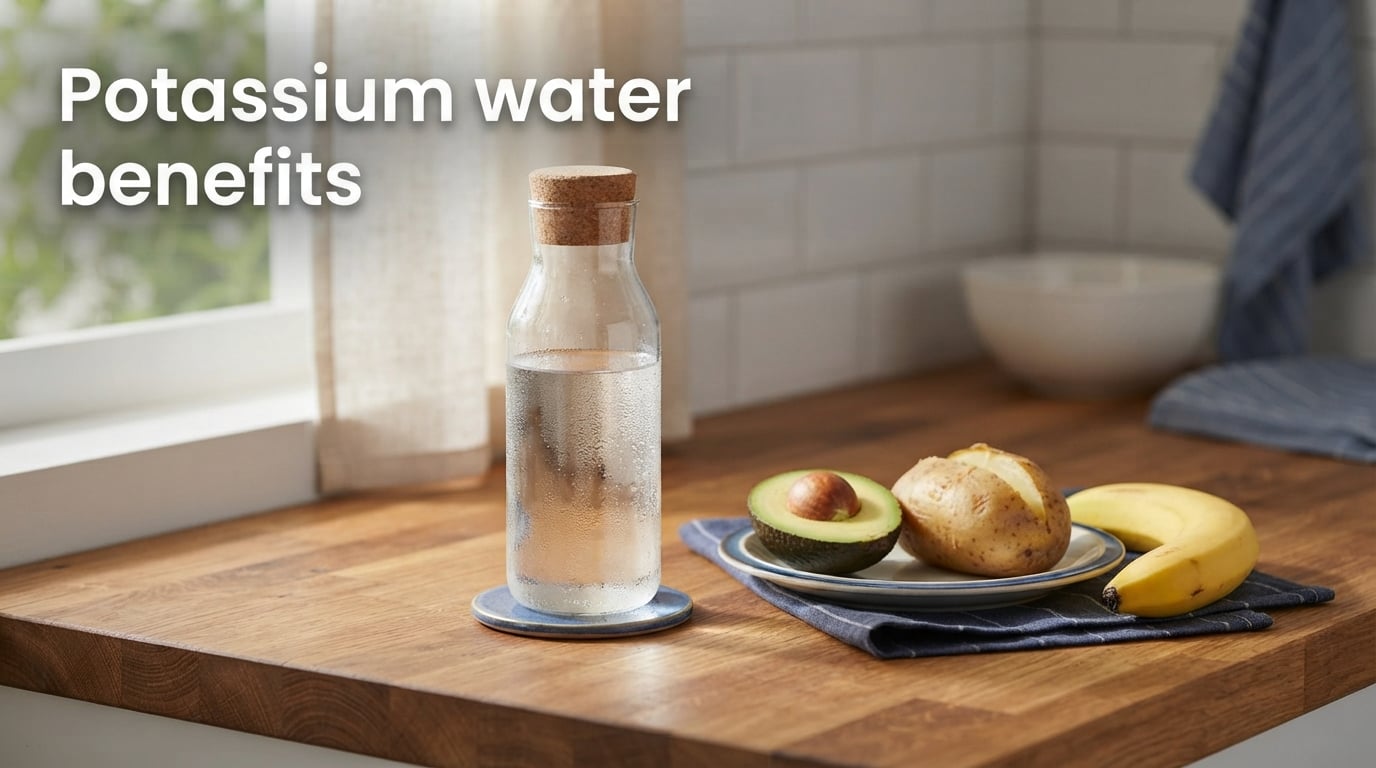
When I first started digging into potassium water benefits, I expected another recycled list of generic health claims. What I found instead surprised me. Most articles talk about bananas and supplements, but almost none explain that the mineral water sitting on your counter is one of the easiest ways to add this electrolyte to your daily routine.
This guide pulls together what the research actually shows about potassium water benefits for blood pressure, hydration, bone strength, and beyond. I reviewed studies from the NIH, the American Heart Association, and peer-reviewed journals. I also looked at what real users report on nutrition forums, where the practical pain points show up that clinical papers miss.
By the end, you’ll know how much potassium you need, which mineral waters deliver the most, and how to avoid the supplement mistakes that send some people to the ER every year.
Table of Contents
What Potassium Is and Why It Matters for Hydration
Potassium is a mineral electrolyte that carries a positive charge when dissolved in your body fluids. About 98% of it lives inside your cells, where it balances sodium to keep fluid moving in and out through cell membranes.
The reason potassium water benefits get so much attention from researchers is that most adults fall short of the daily target. The CDC’s NHANES data shows the average American gets roughly 2,600mg per day. The recommended intake sits at 2,600mg for women and 3,400mg for men, so a gap of several hundred milligrams is common.
The Role of Electrolytes in the Body
Electrolytes are minerals that conduct electricity when dissolved in water. Potassium, sodium, magnesium, calcium, and chloride are the main five your body depends on. Without them, your nerves cannot fire, your muscles cannot contract, and your heart cannot keep a steady rhythm.
Potassium is special because it works as the main positive ion inside cells. Sodium dominates outside cells, and the sodium-potassium pump uses ATP energy to keep that gradient alive. When that pump falters, fluid leaks, nerves misfire, and muscles cramp. That is why steady potassium intake matters more than most people realize.
If you care about mineral composition in water, our piece on silica content in mineral water breaks down another often-overlooked mineral that works alongside potassium.
How Potassium Works Inside Your Body
Potassium keeps three systems running at once: fluid balance, nerve signaling, and muscle contraction. Understanding each one helps you see why potassium water benefits touch so many parts of health.
Fluid Balance
Potassium is the main cation inside cells and counterbalances sodium outside them. This seesaw controls how much water sits inside versus outside each cell. When you lose potassium through sweat, urine, or diarrhea, water follows sodium out of cells, and you become dehydrated at the cellular level even if your total body water looks fine.
Nerve Signaling
Every nerve impulse depends on sodium rushing in and potassium rushing out of the nerve cell. If potassium levels drop, signals slow down or misfire. You feel this as brain fog, fatigue, or tingling in your hands and feet. It is one of the less obvious potassium water benefits: clearer thinking and steadier reflexes from simply keeping this electrolyte topped off.
Muscle and Heart Function
Your heart is a muscle, and it relies on the same potassium-driven electrical cycle as your biceps. Low potassium can trigger arrhythmia, while very high levels can stop the heart. The range between too little and too much is narrow, which is why balance matters more than megadosing.
Proven Potassium Water Benefits for Health
The strongest potassium water benefits come from clinical trials that tracked blood pressure, bone density, and stroke risk over years. Here is what the research actually shows.
Supports Healthy Blood Pressure
Potassium lowers blood pressure by relaxing blood vessel walls and helping the kidneys flush out excess sodium. A meta-analysis published in the British Medical Journal reviewed 33 randomized trials and found that higher potassium intake cut systolic blood pressure by an average of 3.5 mmHg and diastolic by 2.0 mmHg. That is roughly the same effect as cutting sodium in half.
The American Heart Association recommends increasing potassium intake as a first-line strategy for anyone with readings above 120/80. Drinking potassium-rich mineral water throughout the day is one of the simplest ways to follow that advice.
May Reduce Stroke Risk
A 2013 meta-analysis in the Journal of the American Heart Association pooled 11 cohort studies covering 247,510 adults. Participants who ate the most potassium had a 21% lower risk of stroke compared to those who ate the least. The protective effect was strongest for ischemic stroke, the most common type.
Researchers believe the benefit comes from the combined effect on blood pressure, arterial stiffness, and inflammation. Potassium water benefits for cardiovascular health stack up because they hit several risk factors at once.
Promotes Stronger Bones
Bone density drops when the body pulls calcium from bones to buffer acid in the blood. Potassium-rich foods and drinks create an alkaline environment that protects calcium stores. A 2011 study in the Journal of Clinical Endocrinology & Metabolism found that postmenopausal women who consumed the most potassium had higher bone mineral density and lost less bone over a decade.
Helps Prevent Kidney Stones
Calcium-based kidney stones form when urine becomes too concentrated with calcium oxalate or calcium phosphate. Potassium citrate, the form most common in mineral water, raises urine pH and binds calcium before it can crystallize. Studies show that people who drink potassium-rich water daily have roughly 50% fewer recurrent stones than those who do not.
Reduces Water Retention
Potassium counters sodium at the kidney level. When potassium intake is high, the kidneys release more sodium and water through urine. People who switch to potassium-rich water often notice less bloating within a week, especially around the hands, ankles, and face. This is one of the most immediately noticeable potassium water benefits.
For those curious about how filtration affects mineral content, our article on Brita filtered water mineral content explains what stays and what gets stripped out during common home filtration.
How Much Potassium You Need Each Day
The National Academies of Sciences set the Adequate Intake (AI) for potassium based on age and gender. Most adults do not hit these targets without paying attention.
| Age & Group | Recommended Daily Potassium (mg) |
|---|---|
| Infants 0-6 months | 400 |
| Infants 7-12 months | 860 |
| Children 1-3 years | 2,000 |
| Children 4-8 years | 2,300 |
| Males 9-13 years | 2,500 |
| Females 9-13 years | 2,300 |
| Males 14-18 years | 3,000 |
| Females 14-18 years | 2,300 |
| Adult males 19+ | 3,400 |
| Adult females 19+ | 2,600 |
| Pregnant women | 2,900 |
| Lactating women | 2,800 |
Athletes who train more than 90 minutes a day need extra potassium to replace sweat losses. People taking blood pressure medication, especially ACE inhibitors or potassium-sparing diuretics, should work with a doctor because their safe upper range is different.
Potassium in Mineral Water vs Food vs Supplements
Most coverage of potassium water benefits stops at “eat more bananas.” That misses the most practical source for people who already drink bottled water every day.
Why Mineral Water Is an Overlooked Source
Mineral water is groundwater that picks up dissolved minerals from rock layers over decades. The exact potassium content depends on the source. Some European mineral waters like Gerolsteiner, Badoit, and Ferrarelle contain 50-110mg of potassium per liter, while U.S. brands like Crystal Geyser and Mountain Valley sit closer to 5-15mg per liter.
Drinking two liters of a high-potassium mineral water adds 100-220mg to your day without changing anything else about your routine. Over a week, that is 700-1,500mg of additional potassium from hydration alone. This is the potassium water benefit most articles skip: consistent low-dose intake beats sporadic megadoses.
If you are remineralizing reverse osmosis water at home, our guide on remineralized water mineral balance walks through how to tune the mineral profile without overdoing it.
Mineral Water vs Potassium Supplements
Over-the-counter potassium supplements in the U.S. are capped at 100mg per tablet by the FDA. That limit exists because high-dose potassium can cause dangerous heart arrhythmias. One forum user on r/Supplements reported being hospitalized after a single 400mg dose that their doctor had not approved.
Mineral water delivers potassium in a slower, more diluted form. Your kidneys can regulate it without being overwhelmed. For most healthy adults, mineral water plus food gives better absorption with less risk than chasing high-dose pills.
Signs You May Be Low on Potassium
Most people with low potassium feel it before they ever get tested. Common symptoms include muscle cramps, especially at night, fatigue that does not match your sleep, constipation, and occasional heart palpitations.
Severe deficiency, called hypokalemia, shows up as muscle weakness, irregular heartbeat, and tingling or numbness. If you recognize these signs, ask your doctor for a basic metabolic panel. Blood potassium below 3.5 mmol/L is considered low.
Long-distance runners, people with digestive conditions like Crohn’s disease, and anyone on diuretics are at higher risk. These groups see some of the fastest improvements when they fix their potassium water intake.
Best Food Sources of Potassium
Food always leads for potassium density. A single medium baked potato with skin has 926mg. A cup of cooked white beans has 1,189mg. One medium avocado delivers 690mg. A banana has 422mg, less than most people assume.
Other strong sources include sweet potatoes, spinach, salmon, yogurt, and tomato paste. Coconut water is a natural electrolyte drink with about 600mg of potassium per cup, which is why it has become a popular post-workout option among ultrarunners and cyclists.
Aiming for 5-7 servings of potassium-rich foods across the day, paired with potassium-rich mineral water, is enough to meet the AI for most adults without supplementation.
Potassium Safety and When to Be Careful
More potassium is not always better. Healthy kidneys can clear several grams a day, but anyone with chronic kidney disease, advanced diabetes, or adrenal insufficiency can build up potassium to dangerous levels.
Before starting a potassium supplement, even an OTC one, get your kidney function checked. Pair any potassium increase with steady hydration so the kidneys can flush the excess. If you take blood pressure medication, talk to your prescriber first because some drugs are potassium-sparing.
Frequently Asked Questions
Is it safe to drink potassium every day?
Yes, drinking potassium-rich mineral water every day is safe for most healthy adults because the doses are small and well-diluted. The FDA caps over-the-counter potassium supplements at 100mg per tablet for safety, but mineral water typically delivers 5-110mg per liter. People with chronic kidney disease or those on potassium-sparing diuretics should check with their doctor before increasing daily intake.
What are the signs your body is lacking potassium?
The most common signs of low potassium include muscle cramps (especially at night), fatigue that does not match your sleep, constipation, and occasional heart palpitations. Severe deficiency can cause muscle weakness, irregular heartbeat, and tingling or numbness. A blood test showing potassium below 3.5 mmol/L confirms the issue.
Why do I feel better after taking potassium?
Most people feel better after correcting low potassium because their cells regain proper fluid balance, nerves fire more reliably, and muscles stop cramping. Energy, focus, and digestion often improve within a week. If you notice a clear change, ask your doctor for a blood test to confirm you were actually low before continuing.
What organ is potassium good for?
Potassium supports every organ that relies on electrical signaling, but the heart, kidneys, brain, and muscles benefit most. Your heart depends on potassium for a steady rhythm. Your kidneys use it to filter blood and balance sodium. Your brain and muscles need it for nerve transmission and contraction. Bones also benefit through reduced calcium loss.
How much potassium is in mineral water?
Mineral water potassium content varies widely by source. European brands like Gerolsteiner and Badoit contain 50-110mg per liter. U.S. brands like Crystal Geyser and Mountain Valley sit closer to 5-15mg per liter. Check the label or the brand’s published mineral analysis to know exactly what your water delivers.
Can potassium water help lower blood pressure?
Yes, potassium water can help lower blood pressure when consumed regularly as part of a balanced diet. A British Medical Journal meta-analysis of 33 trials found that higher potassium intake reduced systolic blood pressure by 3.5 mmHg on average. The effect builds up over weeks and works best alongside reduced sodium intake.
The Bottom Line on Potassium Water Benefits
Potassium water benefits are real and they show up across blood pressure, bone strength, kidney stone prevention, and steady energy. The most overlooked path is the simplest one: drinking mineral water that already contains meaningful potassium throughout the day.
Start by reading the label on your current bottled water. If it lists potassium below 5mg per liter, consider switching to a higher-mineral source for at least one or two liters of your daily intake. Pair that with potassium-rich foods, and most adults will hit their AI without ever touching a supplement.