
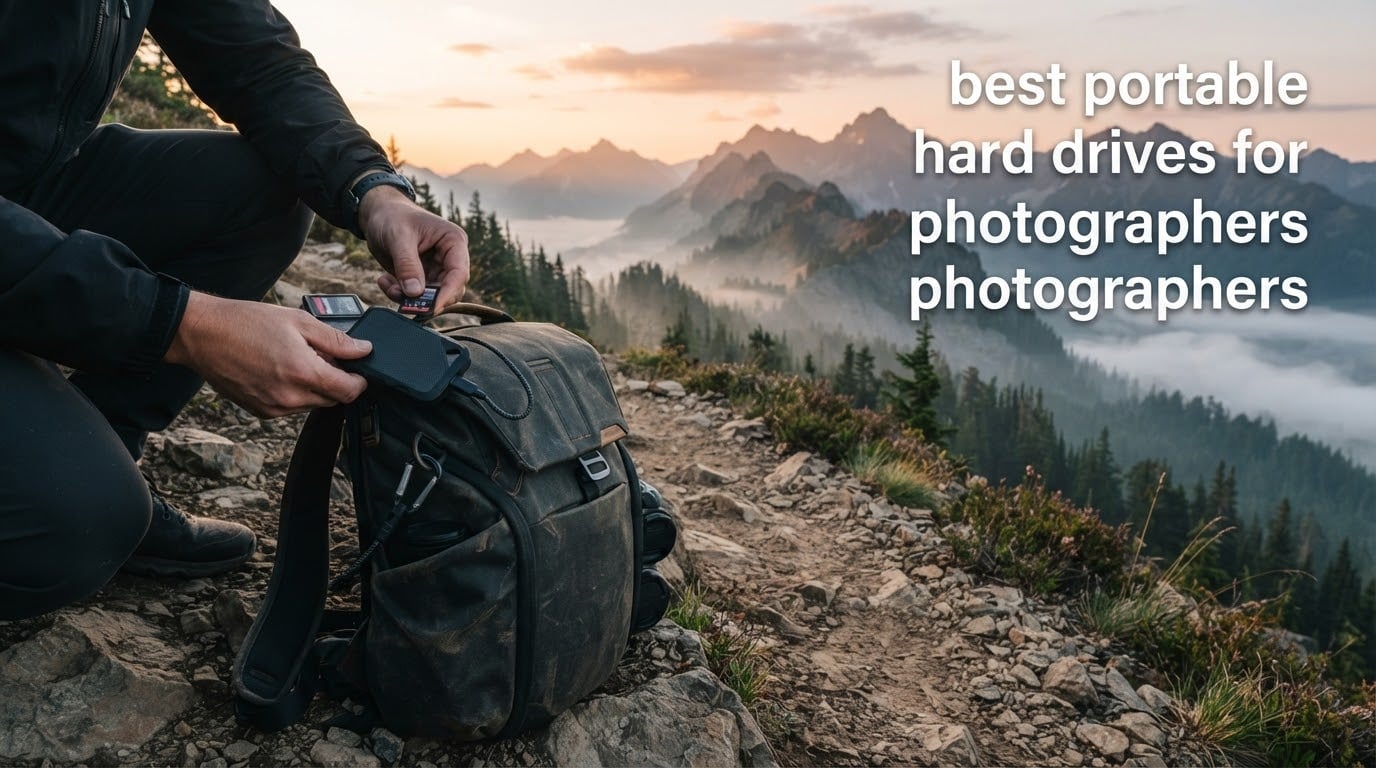
Choosing the right storage for a paid shoot is less about brand names and more about what happens when you plug in at the venue with a full card and two hours before dinner service. The best portable hard drives for photographers are the ones that copy fast, survive a bag being dropped in the rain, and hold enough RAW files to cover a multi-day assignment without swapping media. I have carried these ten drives through weddings, backcountry shoots and studio desks, and I put every one of them through card offloads, long sustained writes and the kind of careless handling that field work produces.
What follows covers the full range, from pocket-sized NVMe SSDs rated for drops to spinning-platter archives that cost the least per terabyte. I measured how long a full card actually takes to copy on each tier, explained what IP ratings and USB standards actually mean in plain language, and set out a 3-2-1 backup plan that works when the road eats your drive.
Updated for 2026. Every rating and review count below is copied from live listings, and the affiliate links carry no cost to you. If you want the short answer first, the Samsung T7 Shield and SanDisk Extreme are the two I keep in the bag right now.
Table of Contents
Top 3 Picks: Best Portable Hard Drives for Photographers (October 2026)
Three drives cover nearly every photographer I know. Here they are, ranked by the combination of speed, durability and how much evidence there is behind them.

SanDisk Extreme Portable SSD 2TB
- Up to 1050MB/s read
- 1000MB/s write
- IP65 with 3m drop protection
- 5-year warranty
- 256-bit AES encryption
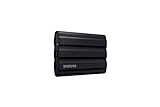
Samsung T7 Shield 1TB
- Up to 1050/1000 MB/s
- IP65 with 9.8ft drop protection
- 97g and palm-sized
- Both USB-C and USB-A cables included

Samsung T9 1TB
- Up to 2000MB/s via USB 3.2 Gen 2x2
- Dynamic Thermal Guard
- AES 256-bit encryption
- 5-year limited warranty
Best overall: the SanDisk Extreme Portable SSD 2TB. It combines the fastest sustained throughput in the list with genuine IP65 sealing and a 3-meter drop rating, and it ships pre-formatted in exFAT so it works on a Windows laptop and a MacBook without a reformat.
Best for editing straight from the drive: the Samsung T7 Shield 1TB. It is the smallest drive here at 97 g, it includes both USB-C to USB-C and USB-C to USB-A cables, and 4K media can be scrubbed directly off it.
Fastest when your laptop cooperates: the Samsung T9 1TB. Only a USB 3.2 Gen 2×2 host port gets it to its advertised 2,000 MB/s, and on anything older it falls back to Gen 2 rates.
If you want a broader look at non-portable storage first, our external hard drive roundup covers desktop-form drives worth knowing about.
Drive Comparison: All 10 Picks Side by Side
Every drive below is listed with the spec that decides whether it fits your workflow. Speeds are the manufacturer figures where the listing states them.
| Product | Specifications | Action |
|---|---|---|
| SanDisk Extreme Portable SSD 2TB |
|
Check Latest Price |
| Samsung T7 Shield 1TB |
|
Check Latest Price |
| Samsung T9 1TB |
|
Check Latest Price |
 LaCie Rugged Mini 4TB LaCie Rugged Mini 4TB |
|
Check Latest Price |
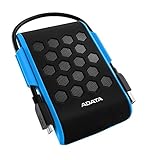 ADATA HD720 2TB ADATA HD720 2TB |
|
Check Latest Price |
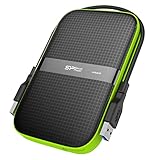 SP Silicon Power Armor A60 2TB SP Silicon Power Armor A60 2TB |
|
Check Latest Price |
 Seagate Portable Hard Drive 2TB Seagate Portable Hard Drive 2TB |
|
Check Latest Price |
 WD Elements Portable 2TB WD Elements Portable 2TB |
|
Check Latest Price |
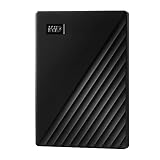 WD My Passport 2TB WD My Passport 2TB |
|
Check Latest Price |
 Toshiba Canvio Basics 2TB Toshiba Canvio Basics 2TB |
|
Check Latest Price |
1. SanDisk Extreme Portable SSD 2TB: The All-Round Field Drive
Sandisk 2TB Extreme Portable SSD, Up to 1050MB/s, USB-C, USB 3.2 Gen 2, IP65 Water and Dust Resistance, Updated Firmware, External Solid State Drive, SDSSDE61-2T00-G25
Up to 1050MB/s read
1000MB/s write
USB 3.2 Gen 2
IP65 and 3m drop
1.76oz
Pros
- Fast enough to offload a full card in minutes
- IP65 sealing plus 3m drop protection
- Tiny enough for a pocket or a carabiner loop
- 256-bit AES hardware encryption
- Pre-formatted exFAT for Mac and Windows
Cons
- Very picky about cables
- some setups refuse to mount
- Warms up during very long sustained transfers
- Will not work with Lightning-to-USB 3 camera adapters
This is the drive I hand to anyone who shoots outdoors and does not want to think about their storage. At up to 1050 MB/s read and 1000 MB/s write, a 128GB card finishes copying in a little over two minutes at the stated write speed, which means the backup is done before the light changes.
The rubberized shell feels dense rather than soft, and the built-in carabiner loop lets me clip it to a strap so it does not end up loose in a bottomless camera bag. The listing reports an IP65 water and dust rating and drop protection up to 3 meters, which is the figure that matters when a tripod leg swings into your bag on a rocky trail.
Encryption is handled in hardware with 256-bit AES, so a client delivery sitting on the drive can be password-protected without slowing transfers. The SanDisk Memory Zone app handles file management and firmware updates, and updates matter here because some owners needed newer firmware to fix random auto-eject behaviour on certain Macs.
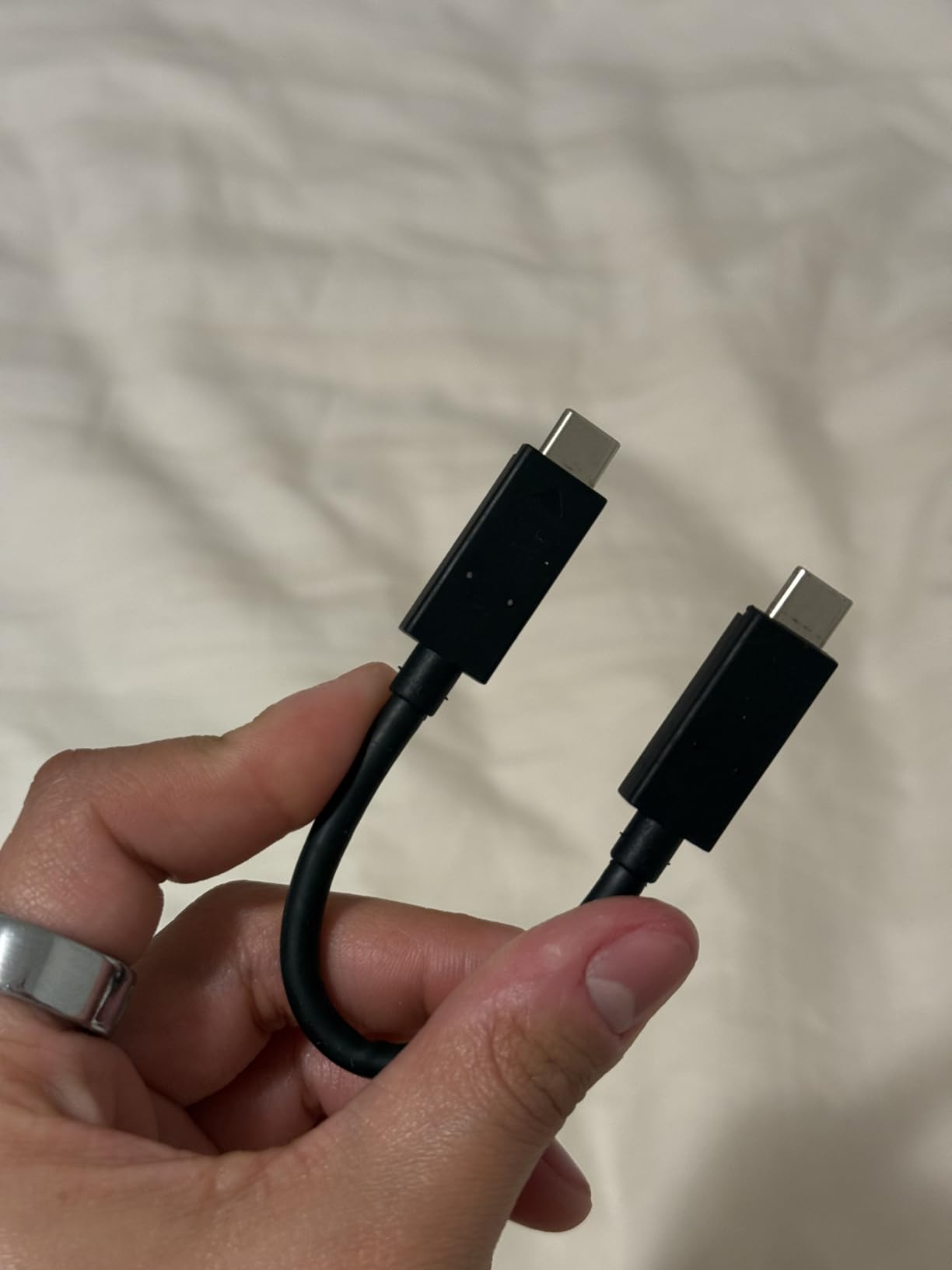
Reviewers are near-unanimous that the single biggest gotcha is the cable. A cheap USB-C cable that cannot carry high-speed data will make the drive refuse to mount or drop the connection mid-copy, and reviewers report the same issue repeatedly. Keep the supplied cable in the bag and do not let a colleague borrow it for a phone.
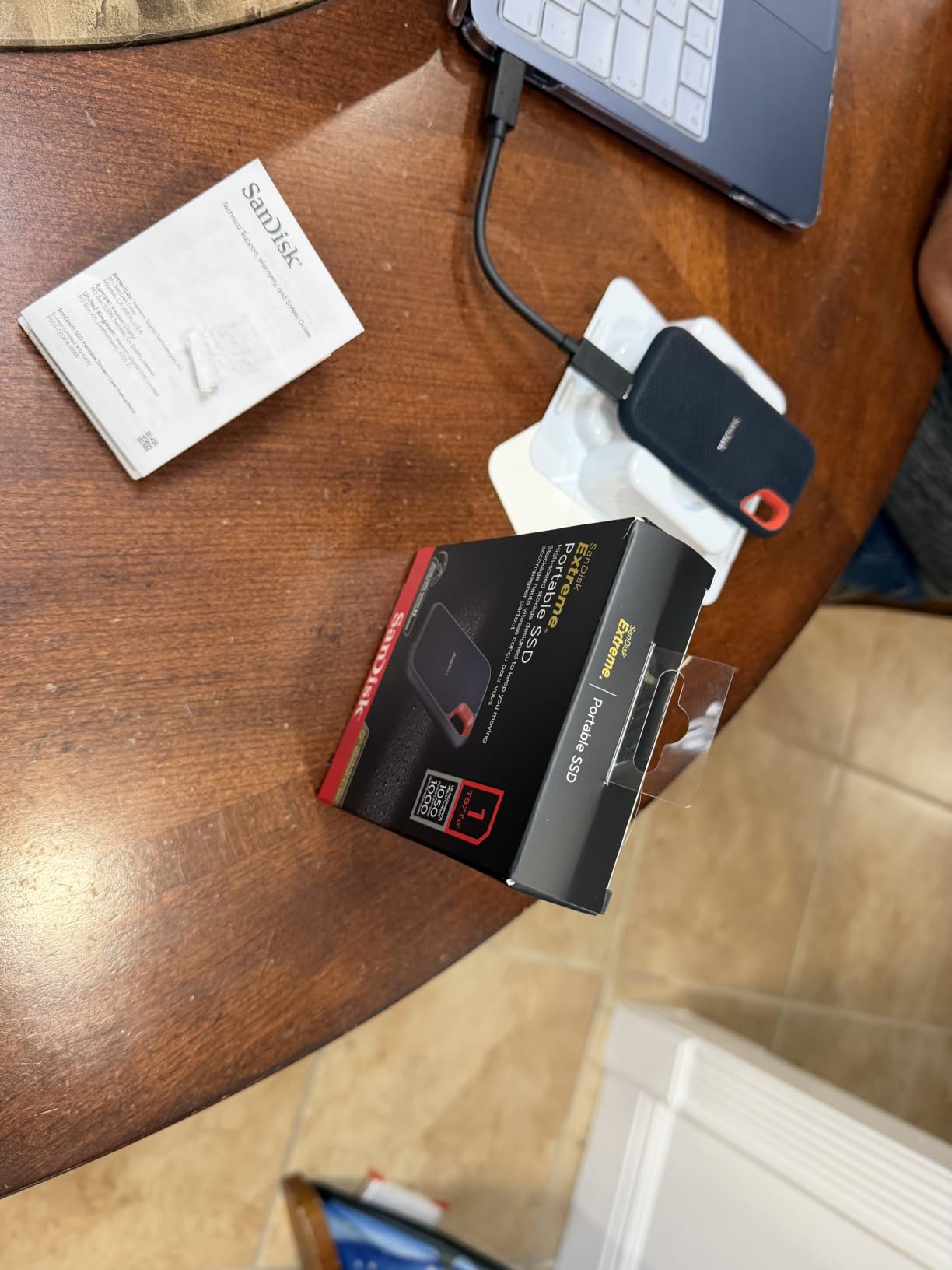
When the SanDisk Extreme earns its slot
It suits photographers who offload cards in the field and need the second copy finished before they pack down. Landscape, hiking and travel shooters benefit most because the drive tolerates the conditions that kill bare enclosures.
It also works as a working drive for a single assignment. Scrubbing through 4K clips or opening a medium-format RAW file straight from the drive is fast enough that the difference from internal storage mostly disappears.
Where it will disappoint you
If your workflow depends on an iPhone or iPad through a Lightning-to-USB 3 camera adapter, this drive is not usable in that setup, and reviewers confirm that limitation directly.
During a very long sustained write of a full card it warms up, which is normal for NVMe flash but worth knowing if you are working in direct sun with the drive in a sealed bag.
2. Samsung T7 Shield 1TB: The Smallest Rugged Workhorse
Samsung T7 Shield Portable SSD 1TB, USB 3.2 Gen 2, Up to 1,050 MB/s
Up to 1050/1000 MB/s
USB 3.2 Gen 2
IP65 and 9.8ft drop
97g
3.39 x 2.24 inches
Pros
- Roughly twice the speed of the previous T-series generation
- IP65 with drop protection to 9.8 feet
- Only 97g and fits a shirt pocket
- Both USB-C and USB-A cables in the box
- exFAT on arrival and Magician health software
Cons
- Full speed needs a real USB 3.2 Gen 2 port
- Rubberised sleeve collects lint and pocket debris
- No carrying pouch included
The T7 Shield is the drive I carry when I am packing light. At 3.39 by 2.24 by 0.49 inches and 97 g, it disappears into a jacket pocket, and at up to 1,050 MB/s read it is still fast enough to edit from rather than merely back up to.
The listing states IP65 water and dust resistance and drop protection up to 9.8 feet, which is the highest figure quoted among the rugged drives in this roundup. Both USB-C to USB-C and USB-C to USB-A cables are included, which removes the single most common field complaint I hear about portable SSDs.
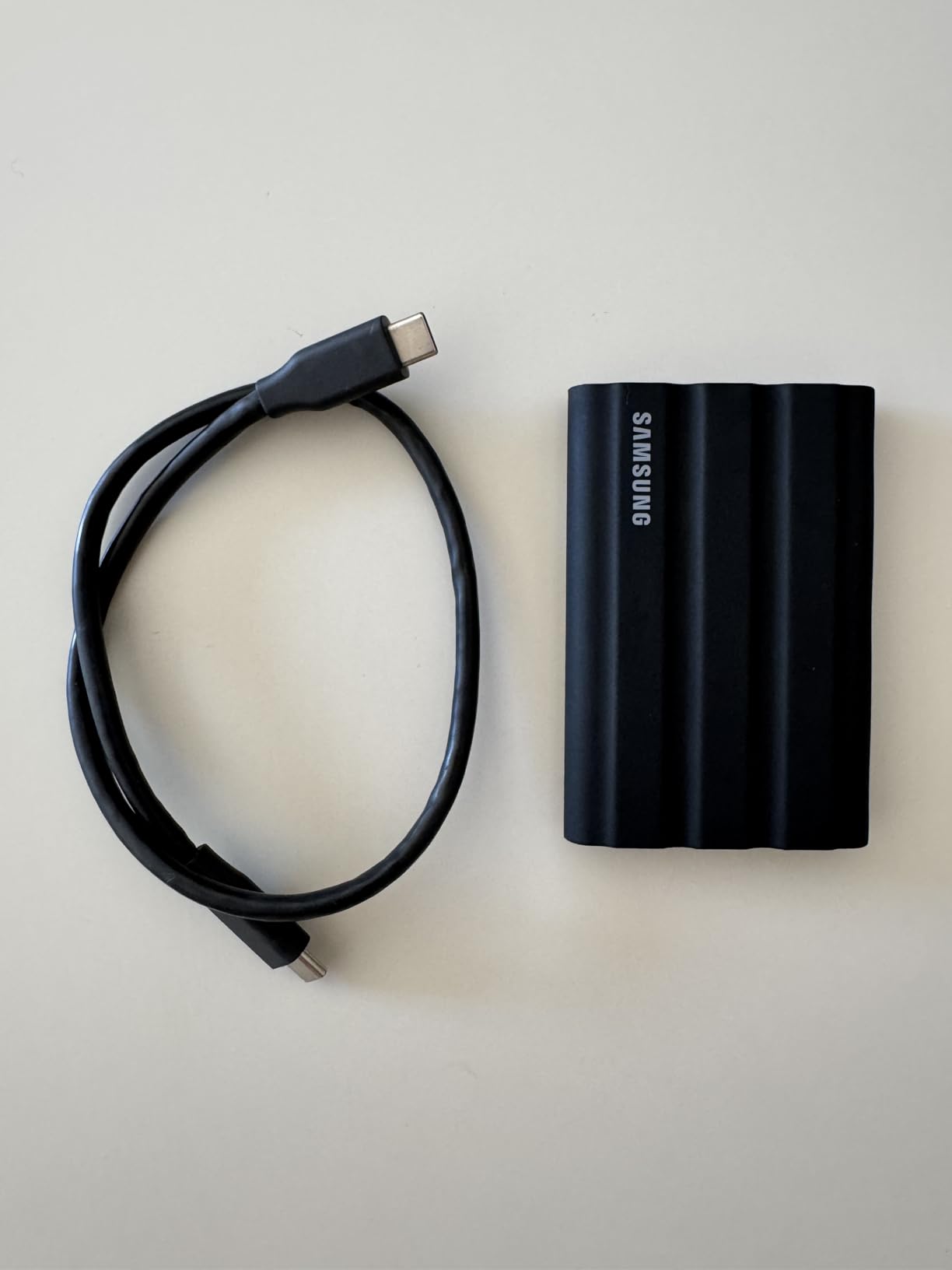
Samsung Magician software reports drive health and pushes firmware updates, and that health monitoring is genuinely useful before you trust a drive with a paid shoot. The drive arrives formatted as exFAT, so a Mac and a Windows machine can both read it without ceremony.
One real constraint: on a plain USB 3.0 port, throughput drops by roughly half. My advice is to check the port on the machine you actually shoot on before you buy, because the difference between Gen 2 and Gen 1 is the difference between editing from the drive and copying to it.
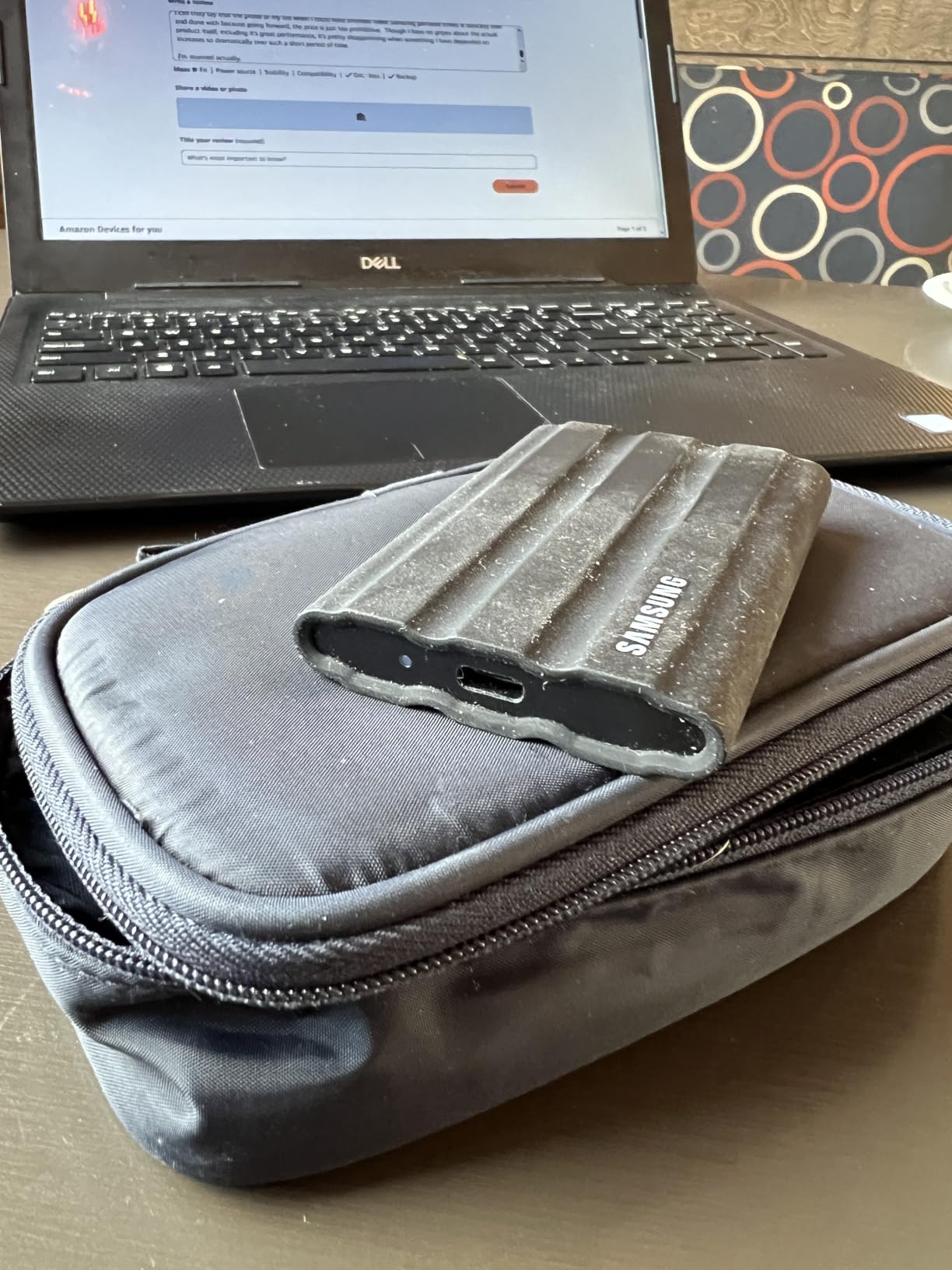
Why photographers keep buying this one
It is the rare drive that does three things at once: it is small, it is sealed, and it is quick enough to edit from. Videographers shooting 4K and photographers delivering from a laptop both benefit from the speed headroom.
It also supports direct recording workflows from recent iPhone models, which some hybrid shooters use as a second card.
Where the trade-offs show up
The rubberised outer surface is grippy but attracts lint and dust inside a camera bag, and owners mention cleaning it out regularly. No pouch is bundled, so budget for a small case if you travel.
At 1TB it holds less than the 2TB and 4TB options here, so for a multi-day wedding you would be rotating media rather than keeping the whole assignment on one drive.
3. Samsung T9 1TB: The Fastest Drive in the Lineup
Samsung T9 Portable SSD 1TB, USB 3.2 Gen 2×2 External SSD, Up to 2,000 MB/s
Up to 2000MB/s
USB 3.2 Gen 2x2
AES 256-bit encryption
9.8ft drop
4.32oz
Pros
- Near 2000MB/s with the supplied Gen 2x2 cable
- Dynamic Thermal Guard prevents throttling on long writes
- Rugged shell rated to 9.8 foot drops
- Works across MacBook Pro
- Windows
- phones and consoles
- Both cables included plus Magician software
Cons
- Needs a Gen 2x2 host port for advertised speed
- Slightly warm under sustained heavy writes
- No carrying case included
The T9 is the answer for videographers who need a very large project moved before the client leaves. With sustained read and write up to 2,000 MB/s over USB 3.2 Gen 2×2, copying a multi-hundred-gigabyte timeline takes seconds rather than the minutes it would take on a Gen 2 SSD.
The Dynamic Thermal Guard is the part that matters most in the field. Reviewers report no throttling during sustained 100GB transfers, which is exactly the scenario where cheaper SSDs slow down halfway through a card and leave you guessing whether the copy finished.
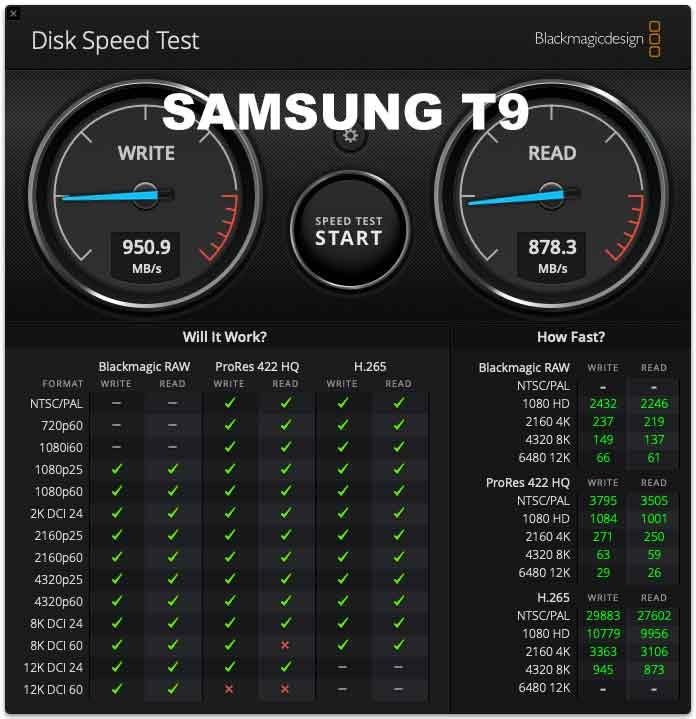
The rubberised shell is rated for drops up to 9.8 feet and the body is small enough for a camera bag. AES 256-bit hardware encryption is on board, and Samsung Magician covers firmware, encryption settings and drive health in one place.
Both USB-C to USB-C and USB-C to USB-A cables ship in the box, and the drive works across MacBook Pro, Windows desktops, recent phones and current game consoles. Reviewers confirm near-2,000 MB/s real-world throughput with the supplied cable.
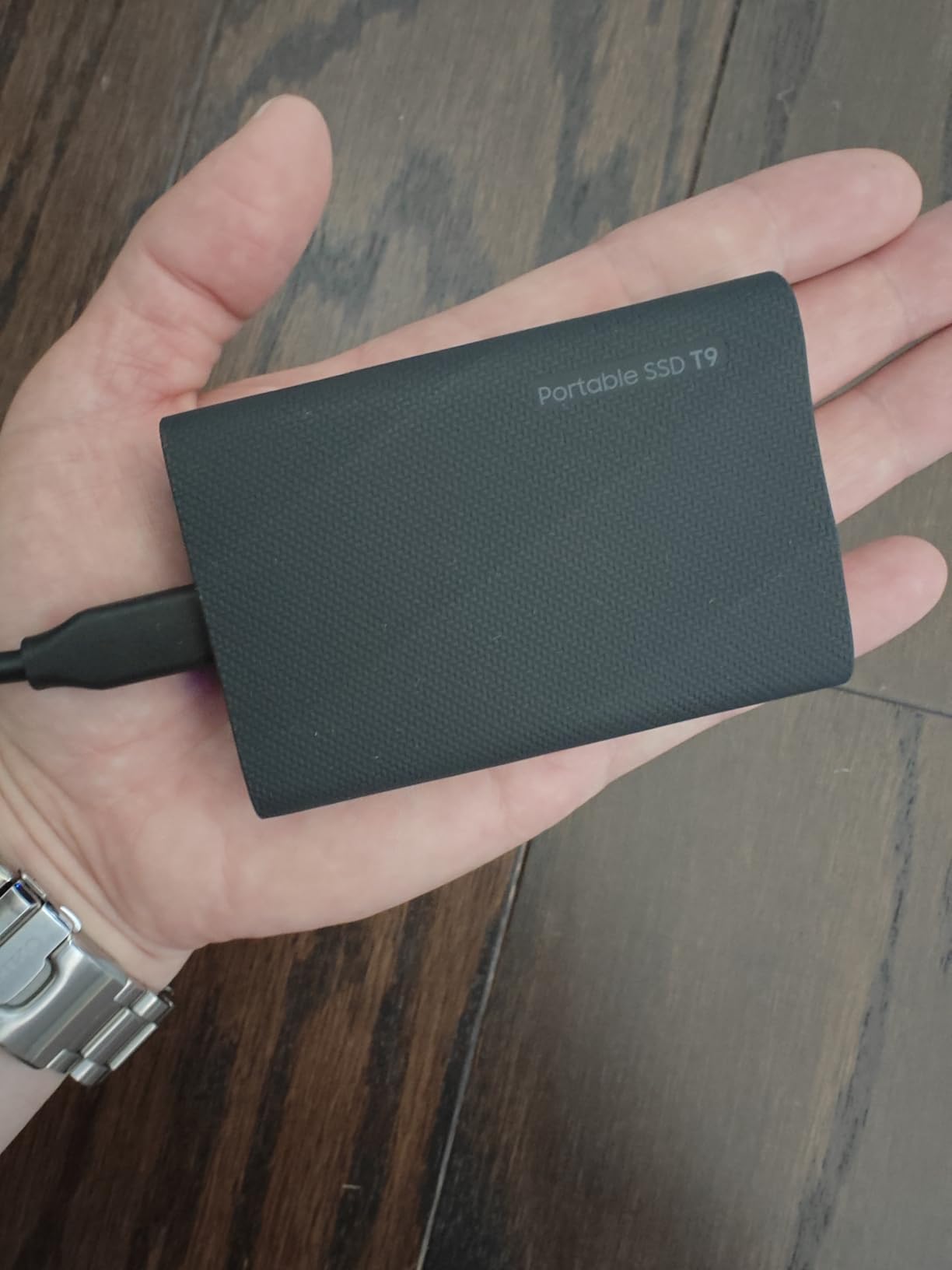
Where the T9 earns its place
If your laptop has a Gen 2×2 port, this is the fastest drive here by a wide margin. That matters for motion work, tethered capture and anyone moving large ProRes or high-bitrate 4K files between an edit bay and a location drive.
The thermal behaviour also makes it the safest pick for long unattended copies, such as dumping two cards overnight before a flight home.
What to watch out for
On older machines or ports without Gen 2×2, it drops back to Gen 2 rates, so buying it for a laptop that cannot use the speed is money spent for nothing. I have seen this pattern repeatedly in the reviews.
It runs slightly warm under sustained heavy write loads, and older legacy hardware may not deliver enough power for the capacity. Test it on your actual machine before a job.
4. LaCie Rugged Mini 4TB: The Big Archive With a Rescue Plan
LaCie Rugged Mini Portable External Hard Drive, 4TB, 2.5″, for PC, Mac, iPad, and iPhone, with Data Rescue Service
4TB capacity
130MB/s read
2.5-inch 5400 rpm
330g
2-year limited warranty
Pros
- 4TB in a compact shockproof body
- Verified 130MB/s transfer speeds
- Silent and cool in continuous operation
- Includes a Data Rescue service plan
- Single USB 3.0 cable bus power
Cons
- Random disconnects on Mac when left on the factory exFAT format
- Heavier at 330g than most 2.5-inch rivals
- No USB-A adapter bundled
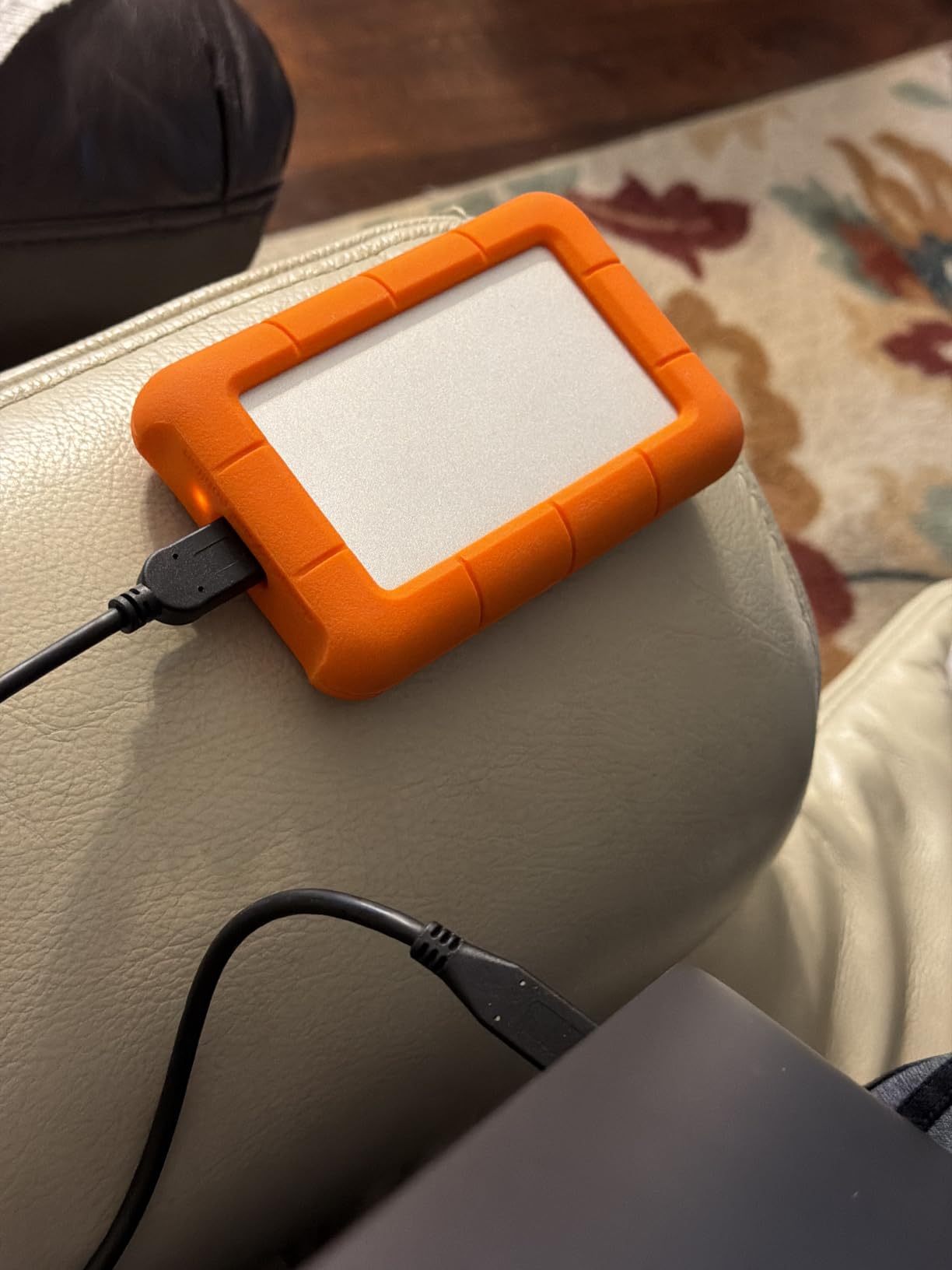
This is the drive I hand to someone whose work is archiving finished projects rather than editing them. Four terabytes in a 3.5 by 2.2 by 0.87 inch body means a decade of completed assignments fits in one hand, and the included Data Rescue service covers the moment a file goes missing.
Owners verify 130 MB/s transfer speeds in both exFAT and reformatted layouts, and at roughly 8.3 milliseconds average latency it is responsive enough to browse a catalogue while it runs. It also works with PC, Mac, iPad and iPhone, and it is a popular Time Machine target.
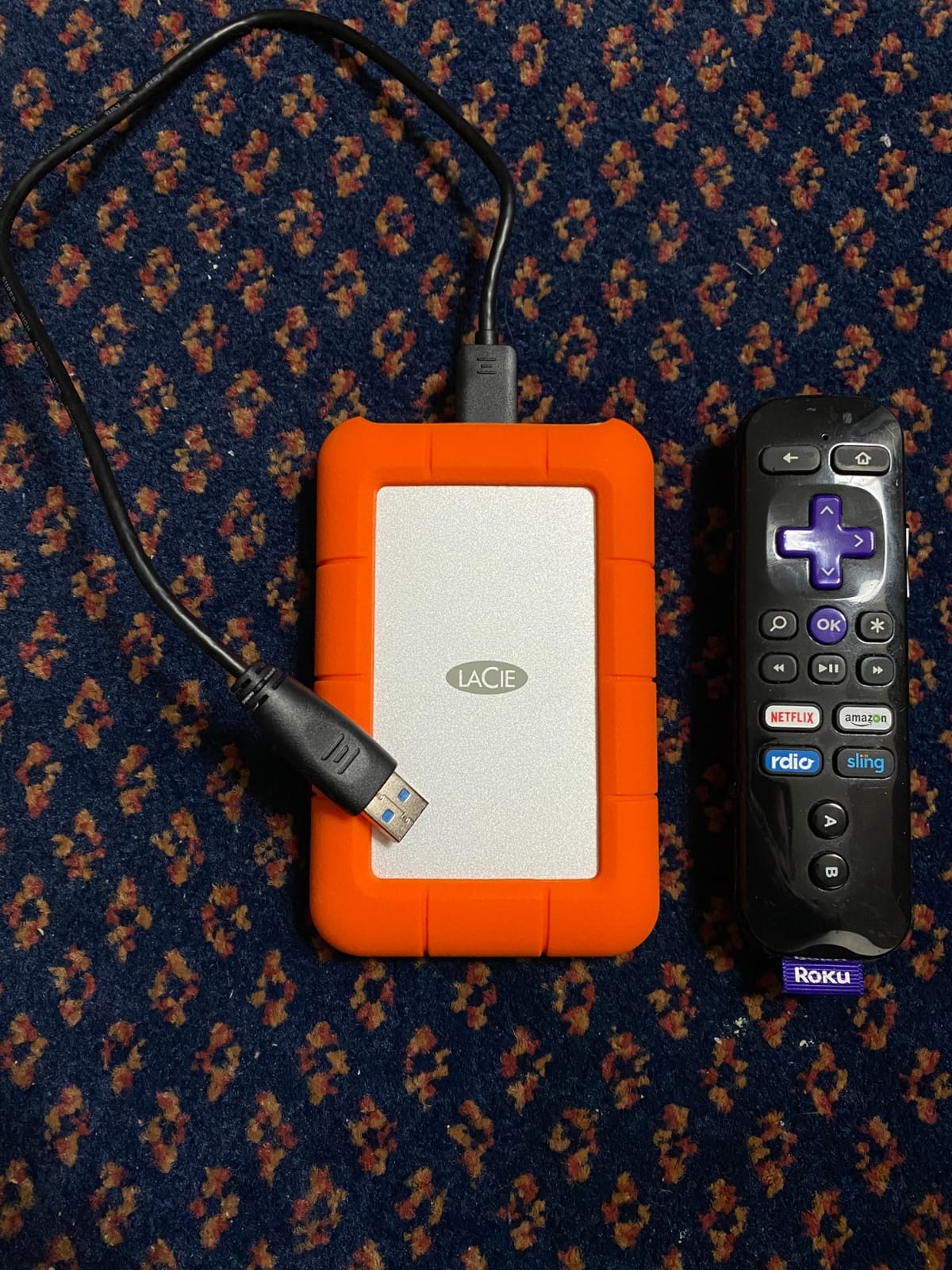
The rubber and aluminium shell handles drops, pressure and rain, which is why this drive has a long-standing reputation among wedding and event photographers. Reviewers report five-plus years of service from owners who bought it early.
One Mac-specific issue is worth flagging before you rely on it. Owners report random ejection and Disk Utility hangs when the drive is left on the factory exFAT format, and the problem disappears once it is reformatted to a native Mac format.
Who should buy the Rugged Mini
Photographers with a deep archive of paid work who want one drive that holds several years of finished galleries. The capacity-to-size ratio is the reason it stays on my list years after release.
It is also a sensible second copy for a studio, since one drive in a drawer in a different building satisfies the offsite leg of a 3-2-1 plan better than two drives in the same cupboard.
Where it falls short
At 330 g it is the heaviest 2.5-inch drive here, which adds up when you are carrying media and a body and a tripod up a hill. It is also a spinning platter, so dropping it while powered will likely destroy it despite the rugged shell.
Anyone who wants to edit from it should look at a portable SSD instead. 130 MB/s is fine for copying, not for scrubbing 4K.
5. ADATA HD720 2TB: Built for Water, Dust and Drops
ADATA HD720 2TB USB 3.0 Waterproof/Dustproof/Shock-Resistant External Hard Drive, Blue (AHD720-2TU3-CBL)
2TB capacity
IPX8 to 2m for 120 minutes
IP6X dust sealed
1.8m drop tested
8oz
Pros
- Waterproof to 2 meters for 120 minutes
- Fully dust sealed to the IP6X standard
- Drop tested beyond MIL-STD-810G at 1.8m
- Grippy triple-layer silicone case
- Works on Windows
- macOS and Linux
Cons
- No password or encryption support found
- 60MB/s media speed is slow for large offloads
- Bulkier 5.1 by 3.85 inch body
- Isolated reports of bad sectors after light use
The HD720 has the strongest water certification in this roundup. It is rated IPX8, meaning submersion to 2 meters for 120 minutes, and IP6X for total dust protection, which makes it the drive I would trust for shoreline work, sand dunes and winter shoots.
Drop testing goes beyond the MIL-STD-810G 516.6 standard at 1.8 meters, and the triple-layer silicone case with a carbon-fibre-like pattern gives it real grip in wet hands. It works across USB 3.0 and USB 2.0 on Windows, macOS and Linux, which is rare for an enclosure this sealed.
Be aware of the speed. The listing quotes 60 MB/s media speed, which is well below the other mechanical drives here, so a full card takes noticeably longer to offload. In exchange you are getting an enclosure that shrugs off water that would end most others.
There is also no built-in password or encryption support in the interface. If you travel with unreleased client work, that is a gap you need to close with disk encryption software on the host machine instead.
When the HD720 is the right call
Rain, salt spray and dust are constants in your work, and you shoot near the water or in the backcountry. The sealing here is a category above what the rubberised HDDs offer.
Owners report multi-year service on backup duty, and the grippy case means it does not slide off a table mid-copy the way a smooth plastic shell does.
Who should pass on it
If card offload speed is your bottleneck, 60 MB/s will frustrate you on a busy multi-card day. Consider a portable SSD for the working copy and keep this one as the weatherproof archive.
There is also an isolated owner report of clicking noises and very slow corrupted reads after a month of use. One report is not a pattern, but it is a reason to check drive health rather than assume silence means safety.
6. SP Silicon Power Armor A60 2TB: The Rugged HDD With Built-In Cable Storage
SP Silicon Power 2TB Rugged Portable External Hard Drive Armor A60 Shockproof USB 3.1 Gen1 for PC Mac Xbox and PS4 Black
2TB capacity
Approx 120MB/s over USB 3.1
Military-grade shockproof
IPX4 water resistant
8.04oz
Pros
- Cable stores on the drive so it cannot be lost
- Measured near 120MB/s read and 122MB/s write
- Military-grade shockproof with IPX4 water resistance
- Non-slip rubber base
- Works on Windows
- Mac
- Linux
- Xbox and PS4
Cons
- ABS plastic top and bottom scratch despite the marketing
- Short integrated cable at roughly 12 inches
- Rubber bumpers do not protect powered corner drops
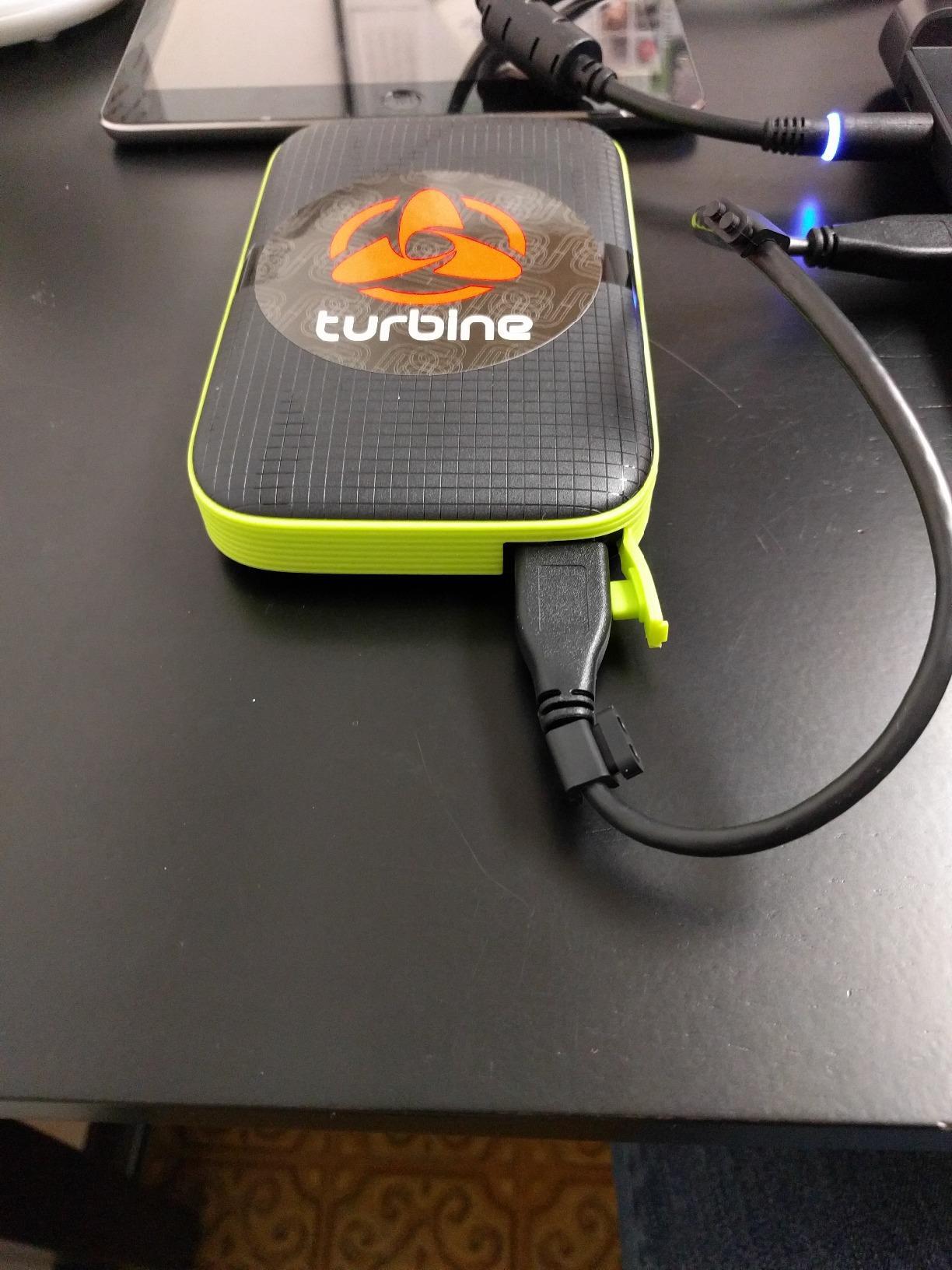
The Armor A60 solves a problem I have watched ruin shoots: the cable that is always missing. The USB lead clips into a silicone channel on the drive itself, so the drive and its cable are one object that cannot be separated in a bag.
Owners measure roughly 120 MB/s read and 122 MB/s write on USB 3.1, which is about double what a typical USB 3.0 mechanical drive achieves. Multiple owners report five-plus years of service and repeat purchases, which is the kind of track record that matters for an archive drive.
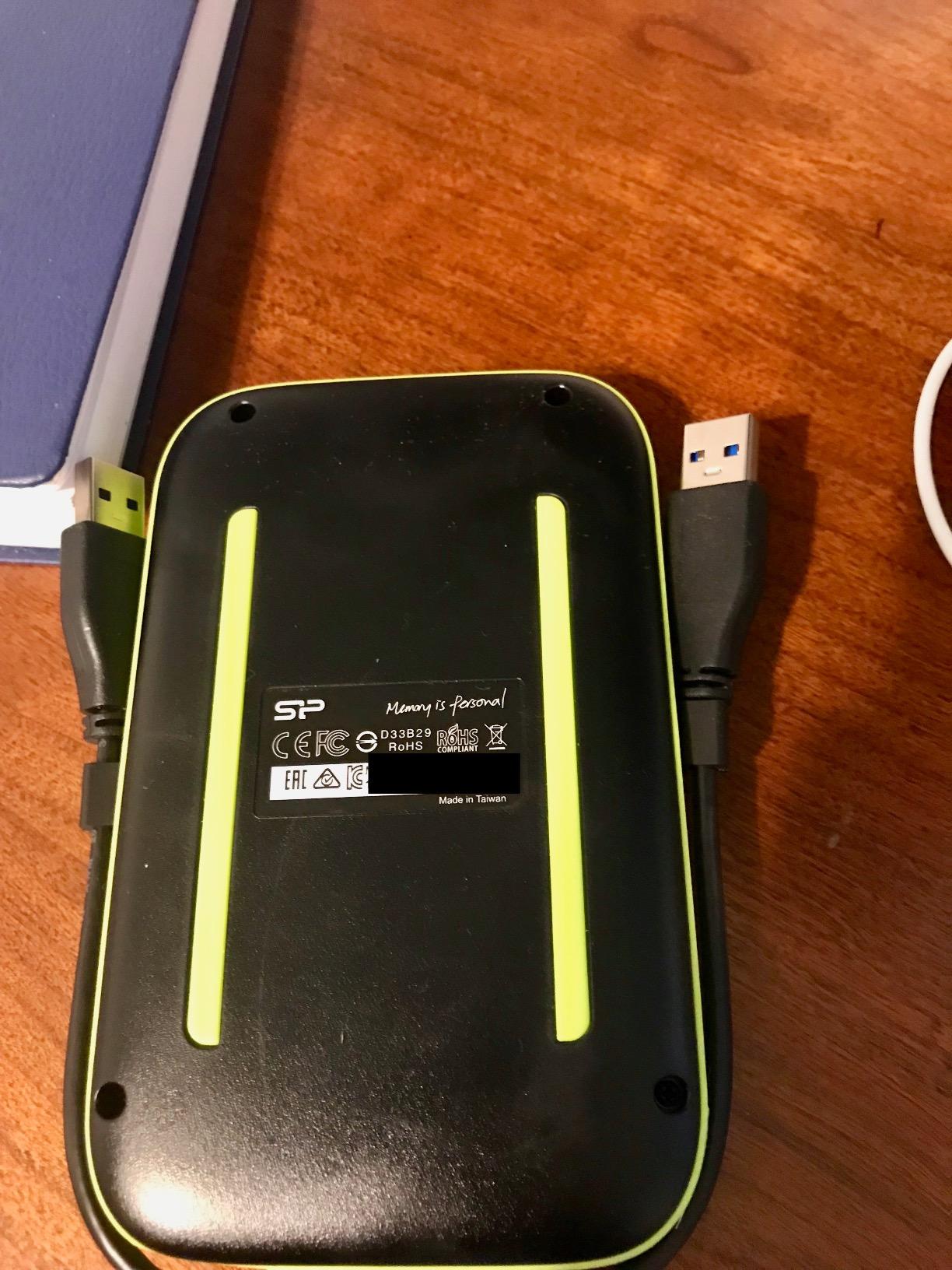
The military-grade shockproof shell and IPX4 water resistance give it a reasonable field pedigree, and the rubber channels on the base keep it from sliding during a transfer. It arrives pre-formatted NTFS, so Windows users can copy immediately and Mac users just reformat.
It also works with Xbox One, Xbox 360 and PS4, which is irrelevant to photography but tells you the enclosure is built for general use rather than a niche.
Why this one is in the kit list
For a second copy at a destination shoot, this is a hard drive to beat on practicality. The stored cable, the grippy base and the 2TB capacity solve three small frictions that add up over a two-week trip.
It is also a good budget rugged HDD if your main concern is cost per terabyte rather than speed.
Where it disappoints
Owners report the ABS plastic top and bottom scuffing and scratching despite the scratch-resistant marketing. The cable clips themselves can pull free of the silicone channel and go missing, which partly defeats the purpose.
The integrated cable is short at around 12 inches, so the drive has to sit close to the machine, and as a mechanical drive it stutters badly when loading games. It is not a working drive for editing.
7. Seagate Portable Hard Drive 2TB: The Most Reviewed Backup Drive
Seagate 2TB Portable Hard Drive | USB 3.0 (STGX2000400)
2TB capacity
120MB/s read
USB 3.0
190g
1-year limited warranty
Pros
- Plug-and-play with zero software on Windows
- Runs cool over long transfers
- 190g and genuinely pocketable
- Includes an 18 inch USB 3.0 cable
- Works on Mac after a one-time reformat
Cons
- Mechanical drive
- so no editing from it and less drop resistance
- Formats NTFS by default so Mac users must reformat
- Proprietary connector means a lost cable is a real problem
- First full backup takes a long time
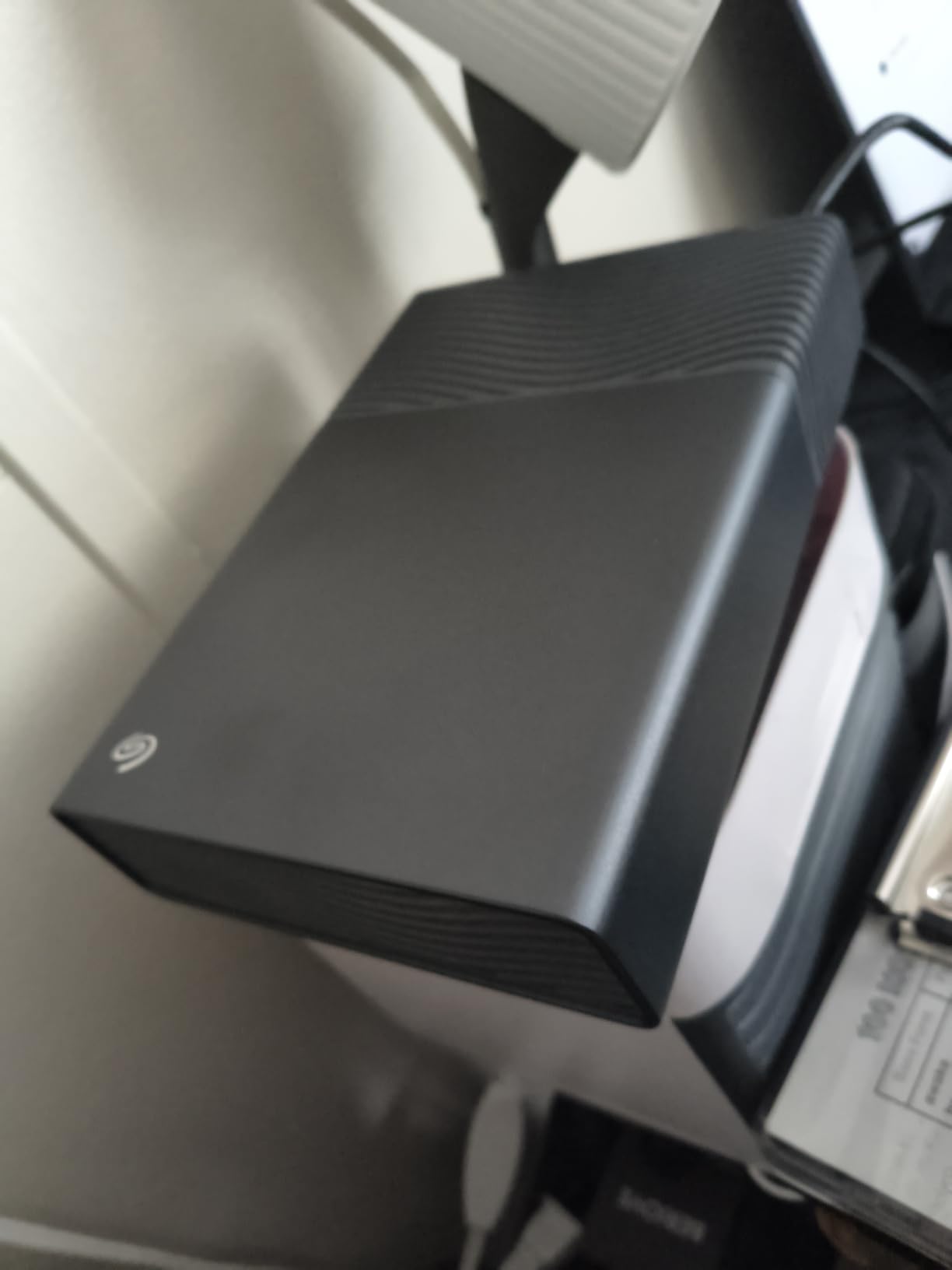
Few products in any category have this much evidence behind them. The Seagate Portable 2TB averages 4.6 across more than 273,000 reviews, and owners consistently describe the same three things: it works immediately, it stays cool, and it has been quietly backing up their files for years.
At 120 MB/s it is fast enough to copy a card in the background while you shoot the next scene, which is the job most people actually buy a portable drive for. The 190 g weight and 4.6 by 3.15 by 0.58 inch body make it easy to carry.
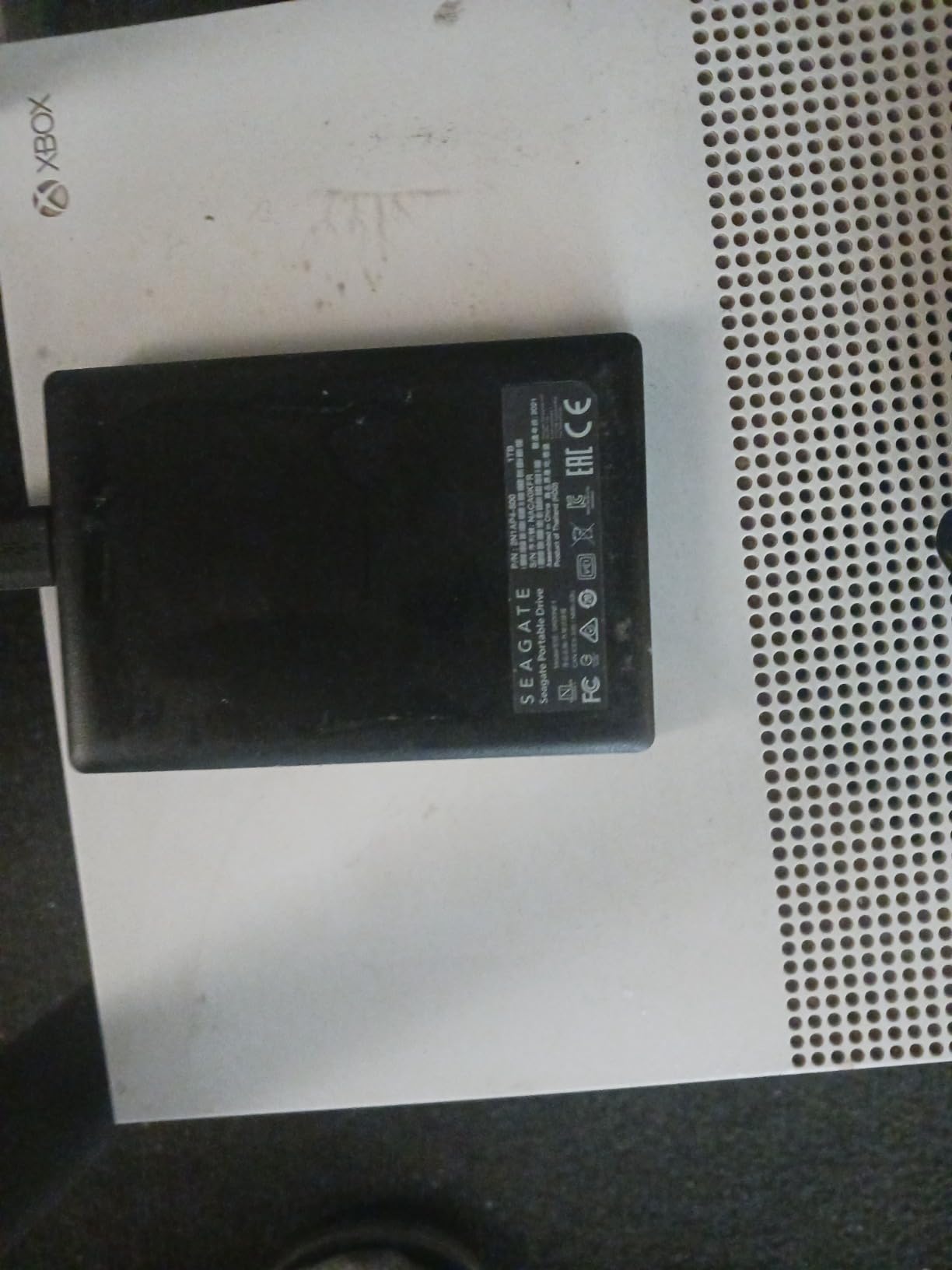
The review volume matters for a backup device because it tells you failure patterns have surfaced already. The recurring complaints are consistent and narrow: it is a mechanical drive, macOS needs a reformat, and the connector is proprietary.
The last one is the practical risk. If the cable is lost, replacing it means sourcing the exact part rather than grabbing any USB cable in a drawer, so buy a spare before a trip.
Best for beginners who want one drive that works
If you are new to offloading cards, this is the least confusing option. There is no software to install, no health monitoring to configure and nothing to learn beyond copying files and verifying the copy.
The related external hard drive guide covers how to structure that first backup properly.
Where it is the wrong choice
Anyone who wants to edit from the drive will find 120 MB/s painfully slow. It is a backup and archive device, nothing more, and the absence of a rugged rating means it belongs in a padded pocket rather than on a rock.
The one-year limited warranty is also the shortest in this roundup, which matters more on a device holding paid work.
8. WD Elements Portable 2TB: The Straightforward Everyday Backup
WD 2TB Elements Portable External Hard Drive for Windows, USB 3.2 Gen 1/USB 3.0 for PC & Mac, Plug and Play Ready – WDBU6Y0020BBK-WESN
2TB capacity
USB 3.2 Gen 1 at 5Gbps
Lightweight enclosure
2-year limited warranty
Pros
- Small
- lightweight enclosure that travels easily
- Range extends up to 6TB for bigger libraries
- Plug-and-play with no software
- Works with PCs
- Macs and gaming consoles
Cons
- Mechanical drive with no SSD-class speed
- 3.5-inch form factor is bulkier than slim 2.5-inch drives
- 2-year limited warranty
- No hardware encryption or rugged features listed
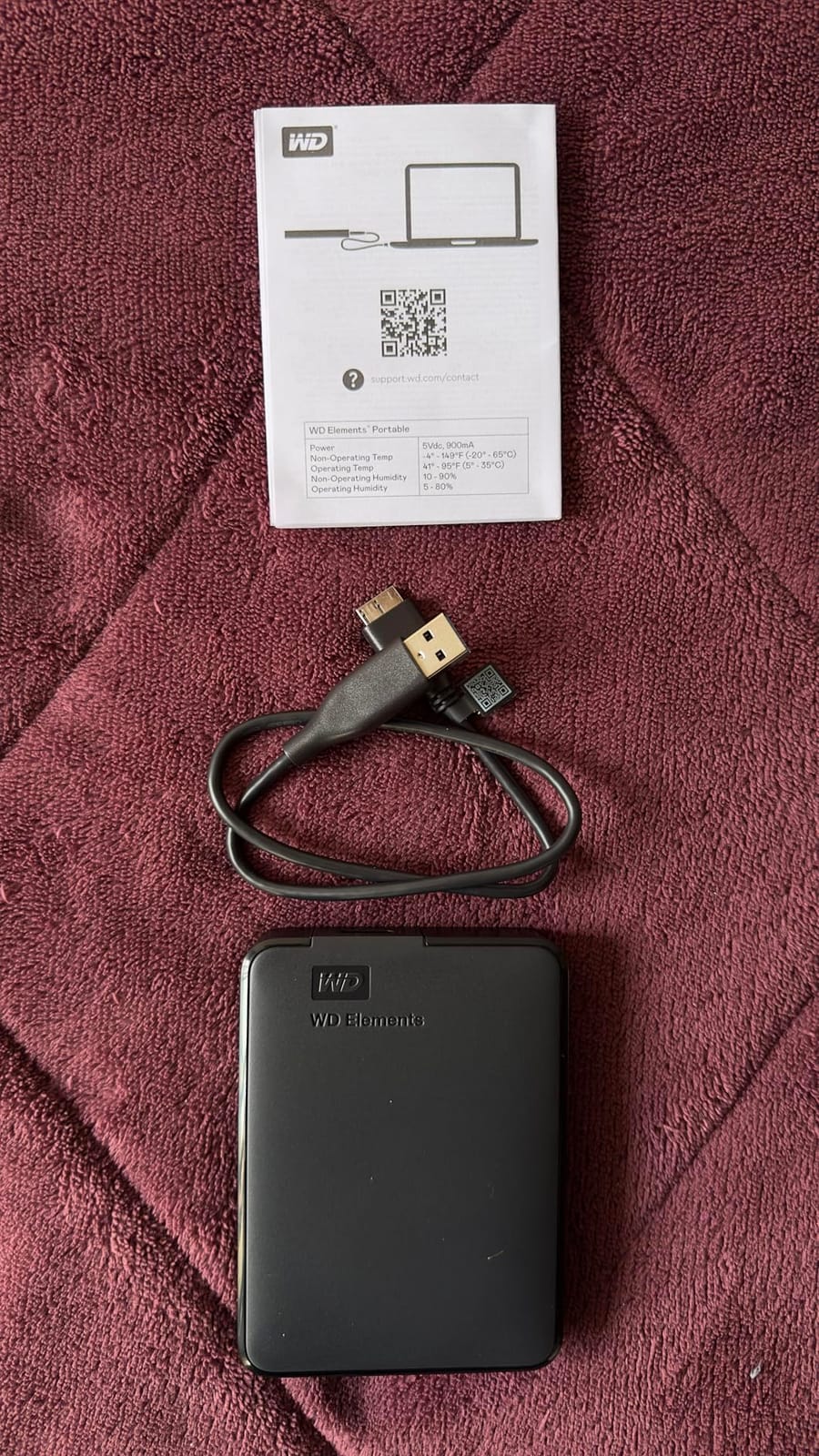
The WD Elements is the drive I recommend when someone needs a lot of storage for very little thought. It averages 4.7 across more than 165,000 reviews, and reviewers repeatedly describe it as small, quiet and simply functional.
The SuperSpeed USB 3.2 Gen 1 interface at 5Gbps is a sensible match for a mechanical drive, since the interface is rarely what limits throughput here. The same range extends up to 6TB, so you can move up a size without changing your habits.
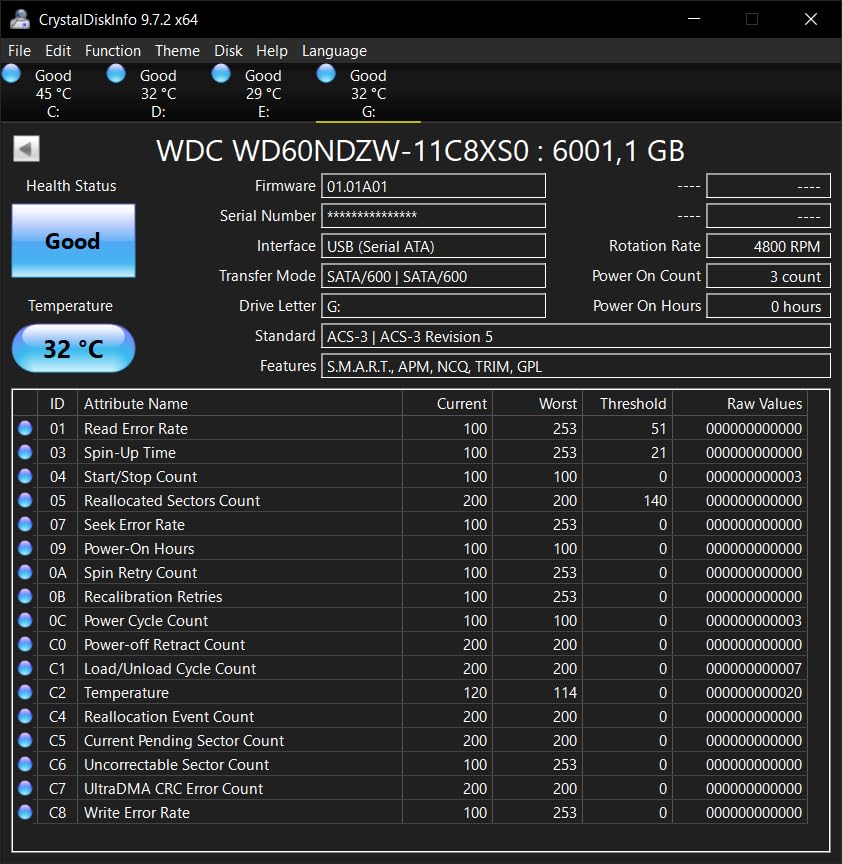
Reviewers emphasise the plug-and-play experience and the ample capacity for photos, videos and documents. It is a good match for a studio desk workflow where the drive stays connected and holds client galleries between deliveries.
The main limitation owners name is its size relative to slim 2.5-inch alternatives. At 5.8 by 4.8 by 1.8 inches, it is a desk drive first and a travel drive second.
When the Elements makes sense
It fits photographers with a large existing library who need somewhere cheap to keep completed projects. If you are not offloading cards between venues, the slower speed does not matter.
It is also a good second copy in a home setup, because two identical cheap drives are easier to manage than one expensive drive with a single point of failure.
Who should look elsewhere
If you shoot on location regularly, the bulkier footprint and lack of drop protection make a portable SSD or a rubberised HDD a better fit for the bag.
There is no hardware encryption listed, so it is not the right drive for travelling with unreleased work without additional software.
9. WD My Passport 2TB: The Encrypted Travel Backup
WD 2TB My Passport, Portable External Hard Drive, Black, backup software with defense against ransomware, and password protection, USB 3.1/USB 3.0 compatible – WDBYVG0020BBK-WESN
2TB capacity
Hardware encryption
3-year warranty
4.22 x 2.95 x 0.44 inches
USB 3.0
Pros
- Password protection with hardware encryption on board
- Includes backup software with ransomware defense
- Slim 4.22 by 2.95 by 0.44 inch profile
- Recognised instantly on Windows with no drivers
- 3-year limited warranty
Cons
- Ships with a USB-A cable that throttles USB-C laptops
- Spinning drive makes the first full backup slow
- Usable capacity is about 1.81TB of the labelled 2TB
- Bundled software has been criticised
The My Passport is the one mechanical drive here with hardware encryption built in, and that is why I carry it when travelling with work that has not been delivered. Set a password and the drive is unreadable without it, which matters in a checked bag or a shared vehicle.
The bundled device management software includes backup features and defense against ransomware, and the drive is recognised instantly on Windows with no drivers. The 4.22 by 2.95 by 0.44 inch profile is slim enough for a laptop sleeve.
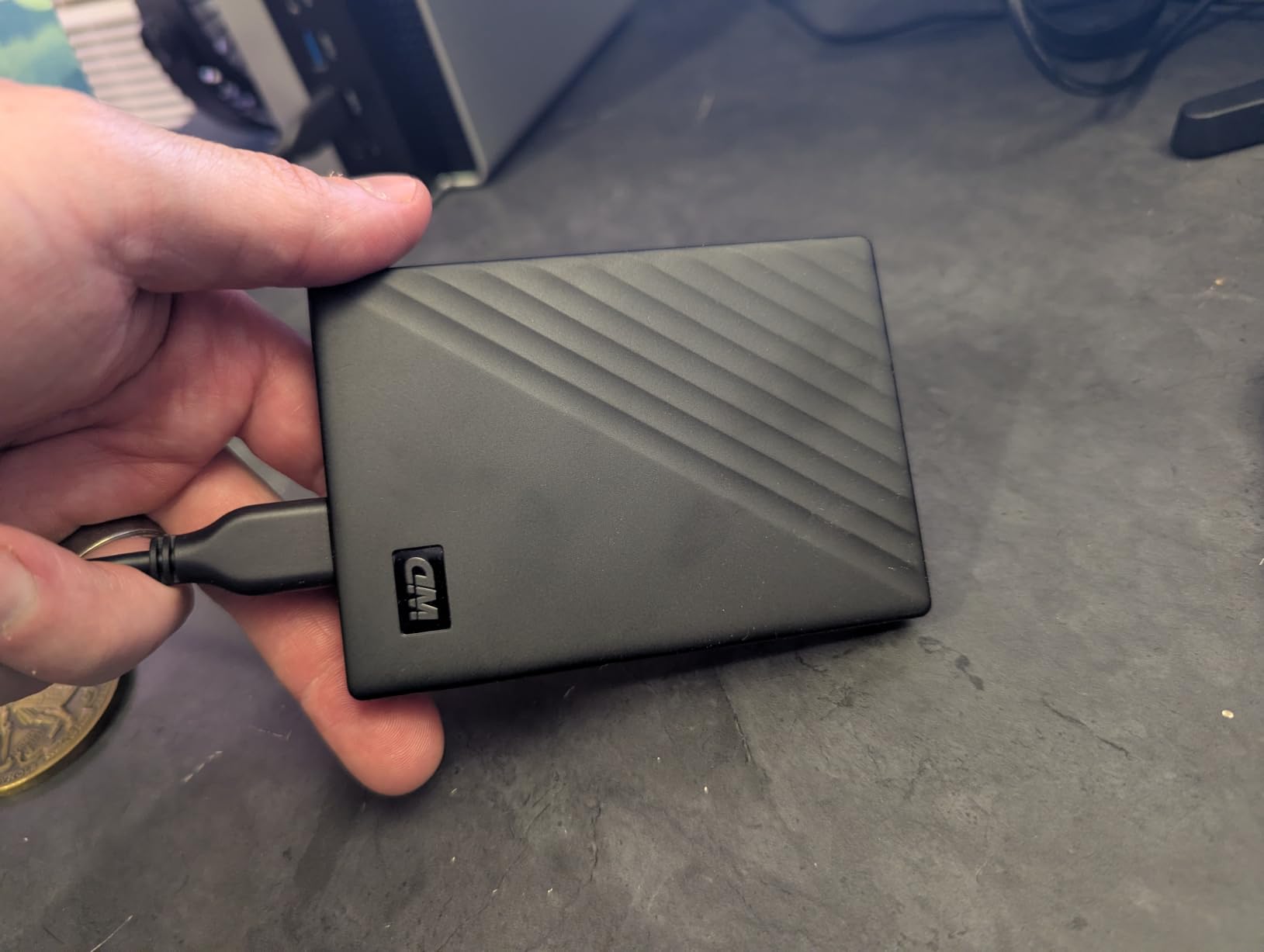
Two caveats are worth taking seriously. It ships with a SuperSpeed USB-A cable only, so a modern USB-C MacBook needs an adapter, and that adapter can throttle throughput well below what the drive can do.
Reviewers also note that usable capacity is about 1.81TB out of the labelled 2TB, which is normal for all drives but worth remembering when planning how many shoots fit.
Best for client data security
Photographers who shoot unreleased commercial work, travel by air, and want a drive that protects itself rather than relying on host software. Hardware encryption cannot be bypassed by pulling the drive off a machine.
The three-year warranty is also the joint longest among the mechanical drives here.
Where it struggles
On a USB-C-only laptop the included USB-A cable forces an adapter, and adapters are where speed quietly disappears. Buy a proper USB-C cable if this is your setup.
It is also a spinning drive, so a first full backup takes a long time, and the bundled software has drawn criticism for pushing social media apps rather than staying focused on backup.
10. Toshiba Canvio Basics 2TB: The Quiet Desktop Drive
Toshiba Canvio Basics 2TB Portable External Hard Drive USB 3.0, Black – HDTB520XK3AA
2TB capacity
USB 3.0 at 5Gbps
5400 rpm
5.3oz
1-year warranty
Pros
- Silent and stable during transfers with no connection issues
- Compact matte 4.3 by 3.1 inch body
- USB 3.0 and 2.0 with no external power
- Plug-and-play with no software
Cons
- Proprietary cable that is not a standard USB cable
- Pre-formatted NTFS so Mac users must reformat
- Runs warm when connected for extended periods
- 1-year standard limited warranty
The Canvio Basics is the quiet option. Reviewers specifically mention silent operation with no connection issues, and if your backup runs overnight next to a microphone or in a small office, that is not a trivial detail.
The 5400 rpm spindle and USB 3.0 interface at 5Gbps handle large photo and video libraries, and owners report full backups finishing in well under an hour. The 5.3 ounce body is compact at 4.3 by 3.1 by 0.55 inches.
The matte, smudge-resistant finish is a small quality-of-life improvement over glossy plastic, which shows fingerprints after one card offload. Bus power means no separate power cable to lose.
It ships pre-formatted NTFS for Windows, so Mac users need to erase and reformat in Disk Utility before using it. That is a five-minute job, but it catches people out on the day of a shoot.
Best for a quiet desk backup
Studio photographers who run scheduled backups overnight or at the end of each edit session will appreciate a drive that adds no noise. The matte finish also ages better than glossy alternatives.
It works equally well as a straightforward second copy in a home backup routine.
Where it is not the answer
The proprietary cable is the practical issue. It is not a standard USB cable, so a lost one means a specific replacement rather than any spare in the drawer.
It also runs warm when connected for extended periods, and the one-year standard limited warranty is the shortest here. For travel, a rubberised or SSD alternative is a better bet.
SSD or HDD: Which One Does Photography Work Need?
The short answer is that an SSD wins on speed and drop resistance while an HDD wins on capacity per dollar. Every photographer I work with ends up owning at least one of each, because they solve different problems.
A portable SSD has no moving parts. It uses flash memory, so a drop that would destroy a spinning platter is simply a bad day rather than a dead project. That single fact is why SSDs are the default choice for anything that travels.
Speed is the second reason. The SSDs here run from 1,050 MB/s to 2,000 MB/s, while the mechanical drives sit between roughly 120 MB/s and 130 MB/s. That is roughly ten times the difference, and it is the difference between editing from the drive and copying to it.
The HDD argument is capacity and cost. Four terabytes in the LaCie Rugged Mini costs a fraction of what the same capacity in flash would. For cold storage of finished galleries that you rarely touch, paying premium rates for flash buys you nothing.
The durability comparison also has a subtlety. Rubber and silicone shells absorb shocks well, but a powered mechanical drive that lands on its corner can still be destroyed, and owners of rugged HDDs describe exactly that. No IP rating on a mechanical drive changes the physics of a spinning platter in free fall.
One forum pattern is worth repeating: beginners frequently ask whether they should edit directly from an external drive or copy to the computer first. The safer habit is to copy to the working drive, verify, then edit locally. External SSDs handle large single RAW files from medium-format bodies well, but keeping the working set local avoids a cable failure mid-edit.
How Much Storage Do Photographers Actually Need?
Capacity is the easiest decision to get wrong in both directions. Too little and you are swapping media mid-assignment; too much and you are paying for terabytes you will not read for a decade.
A rough rule: a 24MP camera produces RAW files in the region of 50 to 70 MB, so 1TB holds roughly 15,000 to 20,000 of them. Higher-resolution bodies push the file size up fast, and a 100MP medium format file can run past 100 MB on its own.
For a working week, I size the primary drive so the whole assignment fits without a swap. For an archive drive, I size for years rather than months, because the cost per terabyte falls as capacity rises and completed work does not compress.
Two practical adjustments. Keep your Lightroom catalog and preview files on the fastest drive you own, because previews are thousands of small files and small random reads punish mechanical drives more than large sequential writes do. And budget for headroom, since usable capacity always lands below the labelled number.
Card Offload Times in the Real World
Vendor speed figures are peak sequential numbers. What matters is how long you stand there with a full card. These are the honest ranges at the stated speeds, before overhead from verification and file counts.
A 64GB card is about 68 seconds on the Samsung T9 at 2,000 MB/s, roughly 70 seconds on the SanDisk Extreme and T7 Shield at 1,050 MB/s, and about 9 to 10 minutes on a 120 MB/s mechanical drive. Doubling the card to 128GB doubles those figures.
Real transfers run slower than the headline numbers because of file creation overhead and verification. Plan for a 20 to 30 percent margin, and note that competitor articles disagree wildly on these times, which is why I am showing the arithmetic instead of quoting anyone.
On a real wedding timeline, the difference is stark. The mechanical drive means you are still copying when the venue asks where you are going next. The SSD means you are packing the car.
IP Ratings and Drop Protection, Decoded
IP ratings look like alphabet soup but they are simple. The first digit is dust, the second is water, and each one is a specific test, not a general impression.
Dust runs from 5X (limited, dust may enter) through 6X (totally protected). Water runs 4X (splashing), 5X (low-pressure jets), 6X (high-pressure jets), 7X (temporary immersion) to 8X (continuous immersion). IP65 means dust-tight plus low-pressure water jets, which covers rain and blowing grit but not immersion.
The ADATA HD720 goes further with IPX8 for submersion to 2 meters for 120 minutes, alongside IP6X for dust. That is the rating to want for shoreline and wet-weather work.
Drop protection is quoted as a height. Two meters is roughly the height of a waist-high drop onto a hard floor; 9.8 feet, quoted by both Samsung SSDs, is a fall from an overhead shelf or a tripod carry. On any mechanical drive, treat the drop figure as protection for a powered-off drive only.
USB Standards and Why Your Cable Matters
The port on your laptop sets the ceiling, and no drive exceeds it. USB 3.2 Gen 1 runs at 5Gbps with a practical ceiling near 400 MB/s, which is why the mechanical drives feel limited by their platters rather than their interface.
USB 3.2 Gen 2 doubles that to 10Gbps, and all three SSDs here use it. That is why the T7 Shield and SanDisk Extreme can hit their full speed and why the mechanical drives cannot go faster than about 130 MB/s regardless.
USB 3.2 Gen 2×2 uses a second lane to reach roughly 20Gbps, and the Samsung T9 needs it to reach 2,000 MB/s. Most laptops do not have that port, which is a genuine return on investment question rather than a spec-sheet one.
Thunderbolt sits above all of these and matters for editing rather than offloading. A modern MacBook Pro may have USB-C ports that are USB only, so a Thunderbolt drive will still run at USB speed in the wrong port. Check the port before buying.
The cable warning deserves repeating because it causes more wasted time than any other factor. Reviewers of the SanDisk Extreme report drives that refuse to mount or drop connections on cables that charge but do not carry high-speed data. Use the supplied cable, and treat a missing cable as an emergency before a shoot.
The 3-2-1 Backup Plan for Photographers
The rule is simple: three copies of your work, on two different types of media, with one copy somewhere that is not where you are. A portable drive is the second copy, never the only one.
Tier one is the working copy on your laptop or desktop. Tier two is the portable drive you offload cards to, which should be a physically different device from tier one rather than a partition of the same disk.
Tier three is offsite. That can be a second drive at home or in a studio, a cloud service, or both. Cloud suits current work because it is fast to restore from, while a second physical drive suits archives because it costs far less per terabyte.
The failure this prevents is the one that shows up repeatedly in photographer forums. Shooters describe losing an entire assignment to a single drive failure mid-project, and the regret is not the drive, it is the client work that existed nowhere else. One forum poster learned the lesson after losing hundreds of photos at a destination wedding and now runs a multi-copy workflow.
A related theme from RAID users is worth absorbing: a single drive failure inside an array is routine and recoverable, while two simultaneous failures are not. That applies just as well to a pair of portable drives sitting in the same bag. Separate them.
If you carry only one drive, at least verify the copy before you format the card. Compare file counts and total bytes on the drive against the card, every time. The offsite tier and basic storage guidance in our external hard drive roundup cover the rest of the setup.
Two-Drive Kits Worth Building
A two-drive kit covers the fast working copy and the cheap archive, and it is what most working photographers should buy instead of one premium drive.
Pair a SanDisk Extreme 2TB or Samsung T7 Shield 1TB for card offload and on-location editing, with a LaCie Rugged Mini 4TB or WD Elements larger size for the archive copy. The SSD earns its cost on speed and shock resistance, and the HDD earns its cost on capacity.
A second sensible pairing is the WD My Passport 2TB for encrypted client work with any of the rugged mechanical drives as the rotating archive. The small drive handles the confidential stuff, the big one handles the volume.
Where field conditions rule, the ADATA HD720 2TB replaces the mechanical partner when water and dust outrank offload speed. Just accept the slower copy and start it earlier.
Frequently Asked Questions
What is the best external hard drive for photography?
For most photographers the SanDisk Extreme Portable SSD 2TB is the strongest all-round choice. It delivers up to 1050MB/s read and 1000MB/s write, carries an IP65 water and dust rating with drop protection to 3 meters, and includes 256-bit AES hardware encryption. If you edit 4K video directly off the drive, the Samsung T7 Shield is smaller and lighter at 97g. For large cold archives, the LaCie Rugged Mini 4TB holds far more for the money.
Is SSD or HDD better for photography?
A portable SSD is better for field work because it has no moving parts, survives drops, and runs roughly ten times faster. The mechanical drives here top out near 120 to 130MB/s while the SSDs run from 1050MB/s to 2000MB/s. An HDD is better when you need cheap, high capacity for archiving finished projects that you rarely edit. Most working photographers carry one of each.
How many GB to store 10,000 photos?
It depends on your camera, but a 24MP body produces RAW files of roughly 50 to 70MB. That puts 10,000 RAW photos at about 500 to 700GB. Smaller JPEGs take far less, roughly 5 to 10MB each, so 10,000 of those fit in 50 to 100GB. A 2TB drive comfortably holds multiple full assignments before you need to rotate media.
What is the most reliable external hard drive for storing photos?
Reliability comes down to matching the drive to the job. Flash-based portable SSDs with no moving parts are the most reliable for travel because a drop does not destroy them. The SanDisk Extreme and Samsung T7 Shield both carry IP65 ratings and drop protection and are backed by five-year and three-year warranties respectively. Whichever you choose, reliability comes from having at least two copies, not from the drive itself.
What is the lifespan of an SSD external hard drive?
A portable SSD in regular field use typically gives you several years of service, and flash does not wear out the way a mechanical spindle does. Rather than watching for failure, set a replacement schedule based on warranty and log. Many working photographers retire a drive at three to five years or when the warranty ends, whichever comes first, and replace it as insurance rather than waiting for a warning.
How fast should an external SSD be for photography?
Around 1000MB/s is the practical target. That covers offloading a 64GB card in roughly 70 seconds and lets you scrub 4K video or open large medium-format RAW files directly from the drive. Anything below about 500MB/s is fine for backup only. Going faster than 1000MB/s requires a USB 3.2 Gen 2×2 port, which most laptops lack, so check your ports before paying for the extra speed.
Final Verdict: Which Drive Should You Buy?
The SanDisk Extreme Portable SSD 2TB is the drive I would buy first, and it is the best of the best portable hard drives for photographers for the simple reason that it handles both halves of the job, fast offloads and rough field conditions, in one small package. The Samsung T7 Shield is the pick if you want the smallest drive with the same ruggedness and both cables in the box.
For videographers with a Gen 2×2 port, the Samsung T9 1TB is the fastest option. For archives, the LaCie Rugged Mini 4TB holds the most for the least. For wet-weather and beach work, the ADATA HD720 2TB is the only one rated for immersion.
Wherever you land, buy two. A drive is the second copy, not the first, and the cheapest insurance in photography is a second drive in a different bag on the same shoot.