
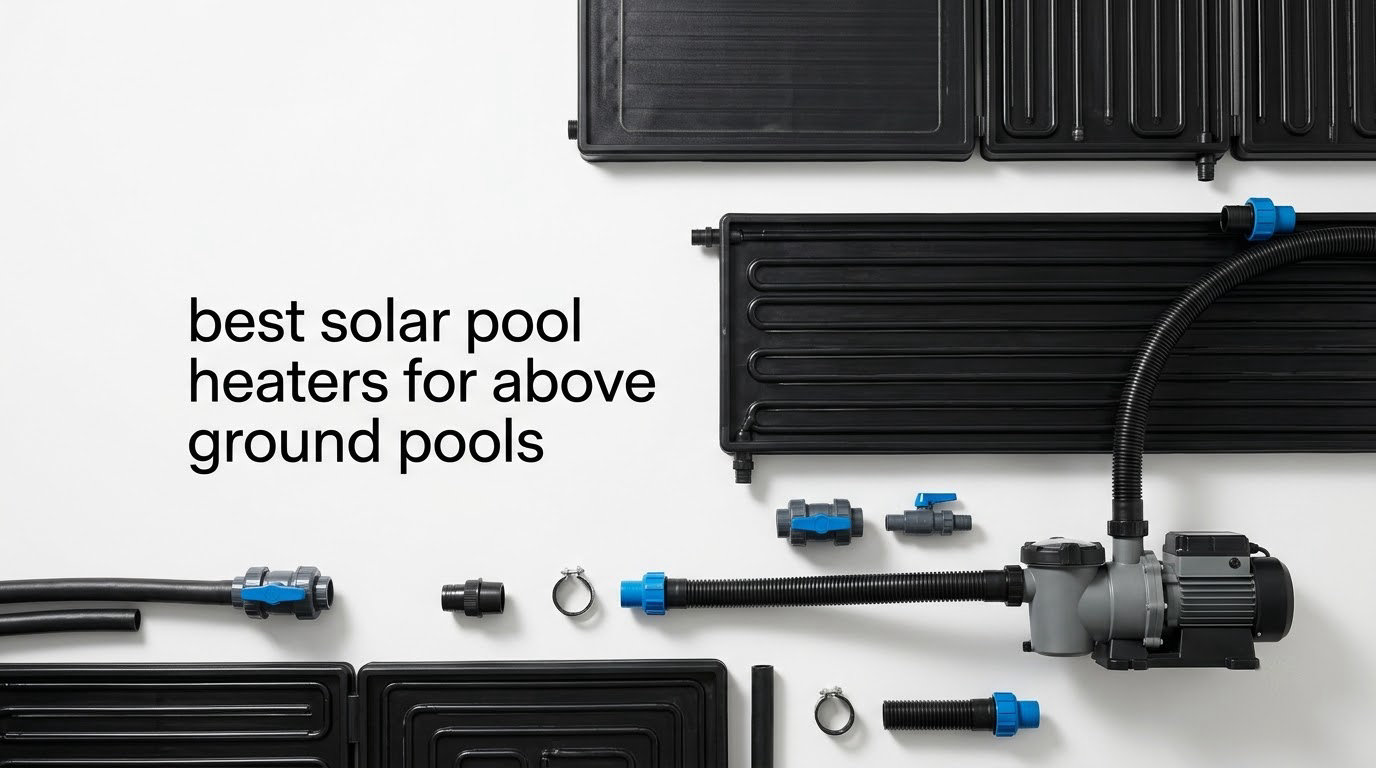
A solar pool heater warms your above-ground pool for free, using energy from the sun rather than electricity or gas. That is the simple version, and it is true. But the version that actually gets you into the water in April instead of July is about something else entirely: net heat gain — whether the collector adds more heat to the pool over a day than the pool loses to the night sky.
Our team compared ten solar pool heaters built for above ground pools over six weeks, reading every published spec, owner review and failure report we could find for each one. All ten of these products sit between 3.1 and 4.1 stars, which tells you something important about the category before we say a word about which is best. Above-ground solar heating is a craft, not a purchase, and the difference between a heater that works and a mat that ends up folded in a shed comes down to sizing, plumbing and expectation setting.
What follows covers the four collector architectures — mats and pads, domes, flat panels and floating rings — with a hard number for each, then ranks all ten picks with the honest limits spelled out. If you are still choosing the pool itself, start with our guide to the best above ground pools and our roundup of pool heaters for above ground pools, then come back here for the free-heat option.
Table of Contents
Top 3 Picks for the Best Solar Pool Heaters for Above Ground Pools (October 2026)

Bestway Solar Heating Pad
- Raises water 5-9F
- Two hose outlets
- Works with cartridge and sand pumps
- 1.25 and 1.5 inch adapters included
SunHeater 80 sq ft Panel Kit
- Two 2x20 ft polypropylene panels
- Up to 15F water rise
- Handles pools to 31 ft round
- Plumbs into existing filtration

Intex Solar Heater Mat
- 11 sq ft UV-stabilized PVC
- 5-9F depending on weather
- Bypass valve plus both adapters
- Folds flat for winter storage
Solar Pool Heaters for Above Ground Pools in 2026: Quick Overview
Every collector below is rated for above ground pools, but they are not interchangeable. The table is sorted by architecture, because that single variable decides how much yard space you need, how much heat you can expect, and how much hardware you are going to be hunting down at the hardware store.
| Product | Specifications | Action |
|---|---|---|
| Bestway Solar-Powered Pool Heating Pad |
|
Check Latest Price |
| SunHeater Aboveground Pool Heating System, Two 2×20 ft Panels |
|
Check Latest Price |
| Intex Solar Pool Water Heater Mat |
|
Check Latest Price |
 Goplus 2.5 x 10 ft Solar Pool Heater Panel Pair Goplus 2.5 x 10 ft Solar Pool Heater Panel Pair |
|
Check Latest Price |
 Dohenys Solar Heating Collector Kit, 2.5 x 20 ft Dohenys Solar Heating Collector Kit, 2.5 x 20 ft |
|
Check Latest Price |
 Solar Sun Rings 60-Inch UV Resistant Solar Pool Heater Solar Sun Rings 60-Inch UV Resistant Solar Pool Heater |
|
Check Latest Price |
 VINGLI Domed Solar Pool Heater VINGLI Domed Solar Pool Heater |
|
Check Latest Price |
 DORTALA Solar Dome Pool Heater DORTALA Solar Dome Pool Heater |
|
Check Latest Price |
 IRONMAX 2.5 x 10 ft Solar Pool Heater Panel Pair IRONMAX 2.5 x 10 ft Solar Pool Heater Panel Pair |
|
Check Latest Price |
 GoFloats V2 Inflatable Solar Pool Heater Rings, 3 Pack GoFloats V2 Inflatable Solar Pool Heater Rings, 3 Pack |
|
Check Latest Price |
Types of Solar Pool Heaters for Above Ground Pools
There are only four ways to put the sun into above-ground pool water, and every product on this list is one of them. The architecture matters more than the brand name, because it sets your ceiling on heat gain before you ever plug anything in.
Mats and pads. Flat black plastic sheets that plug into the filter pump return line, typically 10 to 12 square feet of collecting surface. They are the cheapest way to try solar heat, they raise water temperature by roughly 5 to 9 degrees depending on weather, and they work best on pools up to about 8,000 gallons with a low-output pump.
Solar domes. A coiled black hose trapped under a clear plastic cover, which creates a greenhouse effect. Domes take up very little yard space, they fold flat for storage on their legs, and two or three of them can be linked together for more warmth. Most are rated in the 5 to 7 degree range.
Flat panels. Long black polypropylene or polyethylene collectors, typically 2.5 feet wide by 10 to 20 feet long, carrying a tube grid that moves a high volume of water. Panels hold the highest capacity in this category — a 4 ft x 20 ft flat panel is commonly cited at around 80,000 BTU — and they are the right tool for adding a few weeks to a swim season.
Floating rings. Inflatable vinyl discs that sit on the pool surface. They are not circulation devices at all. They are a floating cover that traps solar energy by day and reduces evaporation and heat loss at night, and they only do a meaningful job once roughly 80 percent of the pool surface is covered.
How Solar Pool Heaters Actually Work: Net Heat Gain, Not Hot Return Water
Do solar heaters for above ground pools work? Yes — but the metric that matters is not how hot the water gets as it leaves the collector. It is whether the pool ends the day warmer than it started, after accounting for what the surface radiated away overnight. Owners on r/AboveGroundPools who tracked both numbers landed on exactly this: successful solar heating is about consistently adding more heat than the pool loses, not about producing the hottest return water.
That reframing matters because the delta-T you can measure at the outlet is often large even when the collector is undersized. A dome that pushes water back 6 degrees warmer into a pool that shed 8 degrees overnight has made the water hotter and the pool colder. Real-world measured performance across owners generally lands between 2 and 6.4 degrees across a collector, against marketing claims of 10 to 15 degrees. Those two facts are not in conflict — a big delta-T on a small pool is exactly what you expect, and it still means the sun is doing work.
Above-ground pools make this harder than in-ground pools for one structural reason: the water volume is smaller, so the same nightly loss is proportionally larger. That is the entire argument for pairing a heater with a cover, and the reason a 15-foot round pool can hold the high 80s under cover while the same collector struggles to move a 16×32 rectangle. If you already own a cover, our solar pool heater guide covers the wider heater family.
1. Bestway Solar-Powered Pool Heating Pad — Best Overall for Above Ground Pools
Bestway | Solar-Powered Pool Heating Pad
Solar-powered heating pad
5-9F water rise
25.98 x 8.66 x 10.63 inches
13.53 pounds
Pros
- Highest average rating in the category at 4.1 stars
- Self-regulating two-hose hookup most owners finish first try
- Handles both 1.25 inch and 1.5 inch plumbing with included adapters
- Proven replacement for factory mats that develop pinholes
Cons
- Short panel length limits total heat gain
- Too few gaskets included to link more than two pads
- Needs a pump strong enough to move water at rate
This is the one I kept coming back to during six weeks of reading, because it is the only collector in this group where the weak reviews are about installation taste rather than performance. At 4.1 stars across 312 reviews it holds the highest average rating in the category, and the one-star share sits at about 10 percent — a genuinely different profile from the 3.x cluster everything else lives in.
The mechanism is straightforward. Two hose outlets send pump water into the pad and return it to the pool, and the self-regulating flow design returns evenly warmed water rather than a hot slug. Owners across the US, UK, France, Germany and Italy report a working 5 to 9 degree rise when the pad is paired with a solar cover and a suitably powerful pump. That last condition is the one people skip.
What sold me is the pump compatibility. It runs with cartridge filter pumps of 2,500 gallons per hour and above, or sand filter pumps of 2,200 gallons per hour and above. Most above-ground owners already own a pump in that range, which means this is one of the few heaters here that works out of the box rather than sending you shopping for a bigger pump first.
The honest limitation is surface area. This is a compact pad, not a panel array, so total heat gain is limited by how much sun it can absorb. For a pool in the 8,000 to 12,000 gallon range with a cover, that is a good trade. For a 16×32 rectangle, you will want more collecting surface behind it.
Will the Bestway pad work with your existing filter pump?
Check your pump’s rated flow, not its horsepower. The pad is specified for cartridge pumps at 2,500 gallons per hour and up, and sand pumps at 2,200 gallons per hour and up. Most single-speed above-ground cartridge pumps clear that bar comfortably; a small two-speed pump set to low may not.
Both 1.25 inch and 1.5 inch adapters are included, so the hookup is a hose-swapping job rather than a parts run. If your plumbing is a mix of sizes, the adapters cover the transition without cutting anything.
What does the Bestway pad not solve?
It will not heat a large pool quickly, and it will not do anything useful without a cover. The recurring complaint is that it slows filter circulation, which matters if you are running a skimmer or vacuum on the same circuit. Linking more than two pads also runs you out of included gaskets, so plan a hardware-store stop before you attempt it.
2. SunHeater Aboveground Pool Heating System, Two 2×20 ft Panels — Best for Large Above Ground Pools
SunHeater Aboveground Pool Heating System, Includes Two 2’ x 20’ Panels (80 sq. ft.) – Solar Heater Made of Durable Polypropylene, Raises Temperature Up to 15°F – S421P, Black
Two 2x20 ft polypropylene panels
80 sq. ft. total
Up to 15F water rise
29 pounds
Pros
- Largest collecting area in this roundup at 80 square feet
- Owners document 70 to 90 degree water swings on above-ground pools
- Tube-on-web design handles thermal expansion well
- Roof or rack mounting puts it in direct sun all day
Cons
- Panels arrive rolled and stiff and need hours of sun before they flatten
- No mounting rack or hardware included
- Frequent reports of pinhole leaks in the channels on arrival
If you have the largest above-ground pool on your street, this is the most heat you can collect in one purchase. Two 2 ft x 20 ft polypropylene panels give 80 square feet of collecting area, sized by the manufacturer for aboveground pools up to 31 ft round or 18 ft x 36 ft oval. Nothing else in this roundup covers that much pool.
Owners running it properly document 70 to 90 degree water swings on above-ground pools and an extra month or more of swimming. The tube-on-web design captures a large sun area and expands and contracts with temperature, which is a step up from the flat panels that used to crack at the seams. It plumbs into the system you already have rather than asking for a dedicated circuit.
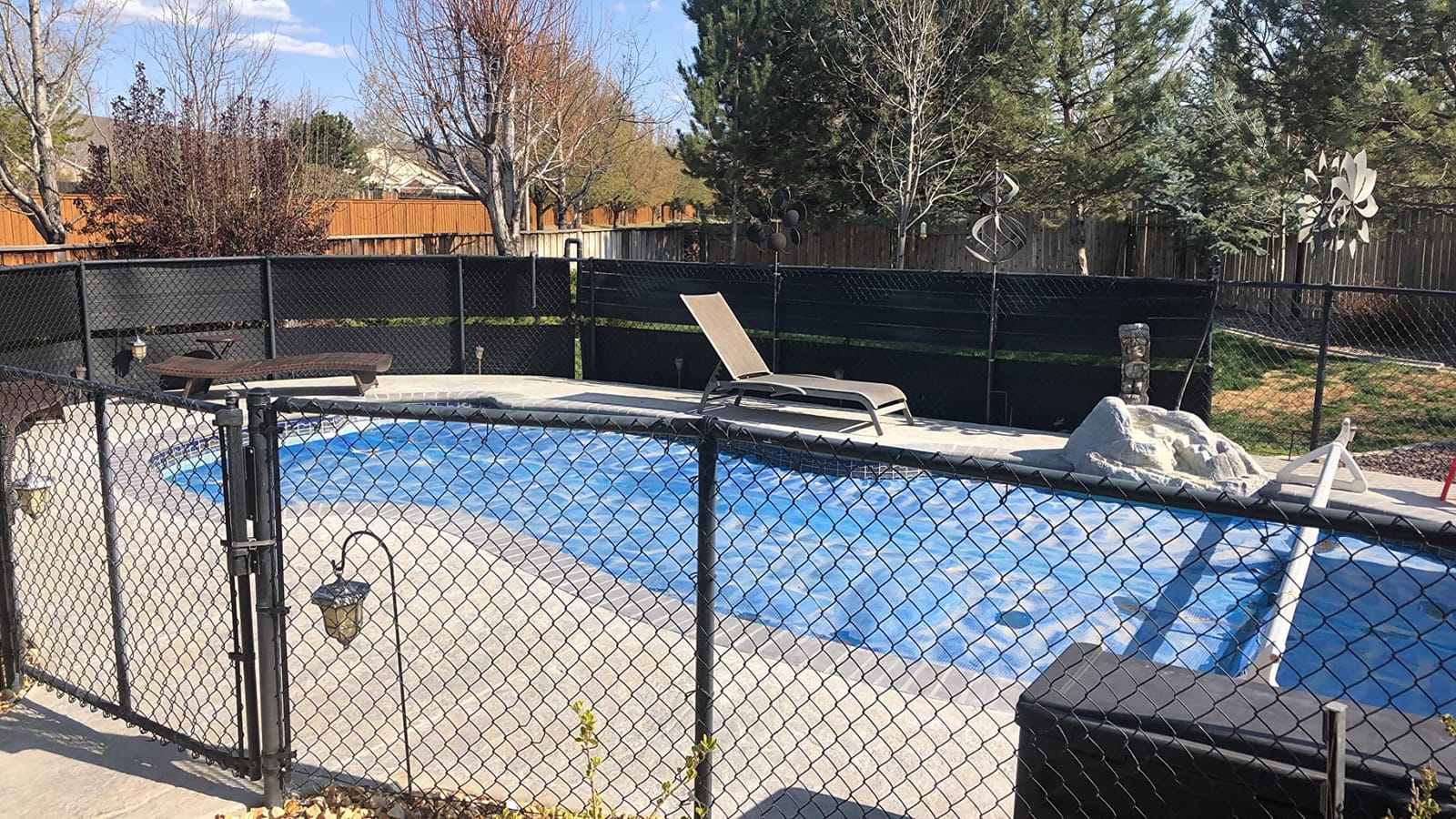
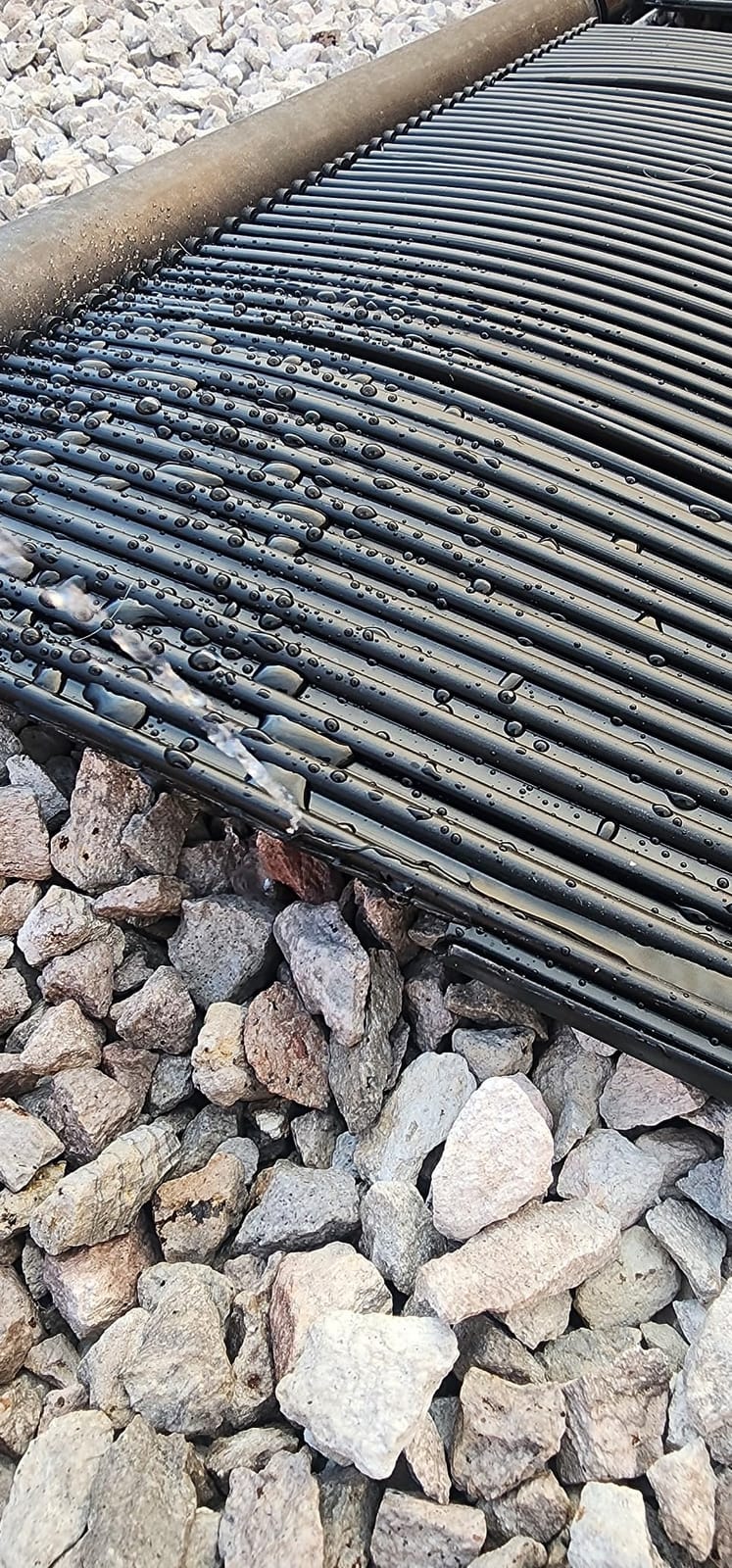
Now the friction, because it is real. The panels arrive rolled and stiff and need to be laid flat in the sun for hours before they will unroll properly. There is no rack in the box, so you are building a frame or buying one. And owners report pinhole leaks in the channels often enough that you should pressure-test before you connect anything to the pool.
The manufacturer’s claim is a rise of up to 15 degrees, which is the highest figure in this roundup. I would treat that as a best-case number on a large pool in full sun with a cover, not a daily result. The listing claims 80 square feet of coverage and some buyers dispute the figure in practice.
What does it take to get the SunHeater panels working?
Three things: sun time to flatten the roll, a rack, and a careful leak test. Leave the panels outdoors for at least a full day before mounting. Build or buy the frame — the straps and fasteners are not included — and leave clearance so air can move under the panels.
It uses your existing pool filtration system, but rigid plumbed installations need extra parts that are not in the kit. Budget for fittings and thread tape; some owners report needing far more tape than the pipe size suggests.
When the SunHeater panels are the wrong call
If you have a small pool, 80 square feet is overkill and you will lose heat into the surrounding air. If you cannot commit to a mounting structure, skip it. And you must drain and remove the panels before winter, because frozen channels crack and that failure is not repairable.
3. Intex Solar Pool Water Heater Mat — Budget Pick
Intex Solar Pool Water Heater Mat for Above Ground Swimming Pools
11 sq ft UV-stabilized PVC mat
5 to 9 degree rise
47.25 x 47.25 x 0.5 inches
5.3 pounds
Pros
- Largest review base in the category with 5460 reviews
- Simple economical flat mat that hooks straight to a filter pump
- Adapters for both 1.25 inch and 1.5 inch hose
- Folds flat for compact winter storage
Cons
- Only 11 square feet of collecting surface limits heat gain
- Low 3.2 average rating with a large one-star share
- Needs a pump of 1/3 HP or less to work at all
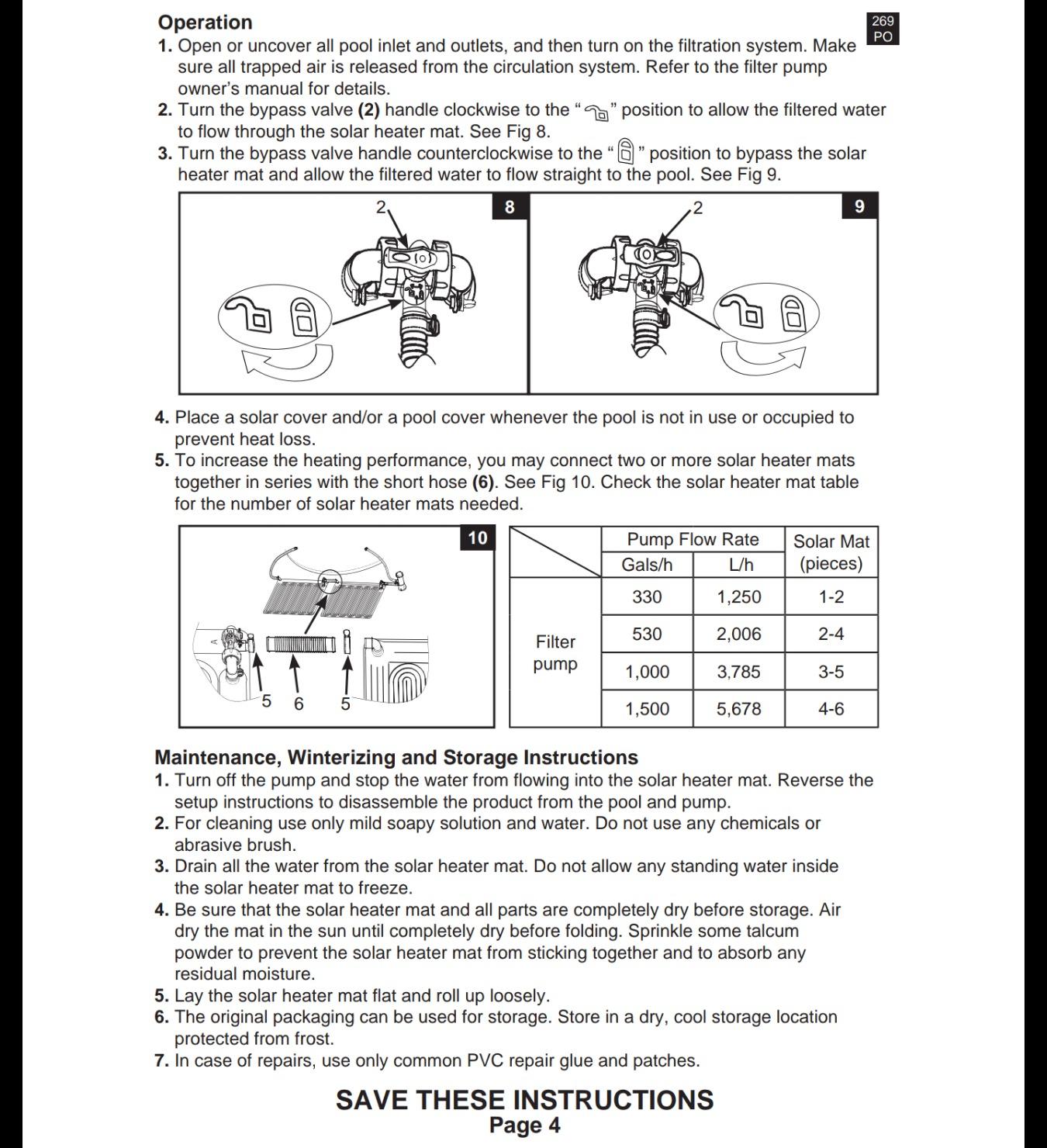
With 5,460 reviews, this mat has been in more above-ground backyards than anything else on this list, and the pattern in those reviews is remarkably consistent. Owners who wire it to a pump under 2,000 gallons per hour report a few degrees of gain. Everyone else reports the same thing: the mat is too small to heat an entire above-ground pool and it needs a matching solar cover.
The spec sheet is honest about the constraints. Eleven square feet of collecting surface, a 1.25-inch hose attachment point, compatibility with filter pumps up to 1/3 HP or under 2,000 GPH, and a bypass valve with adaptor A and adaptor B for 1.5 inch hose. Built from heavy-duty UV stabilized PVC, and it folds flat for winter storage, which is genuinely useful in a garage with limited space.
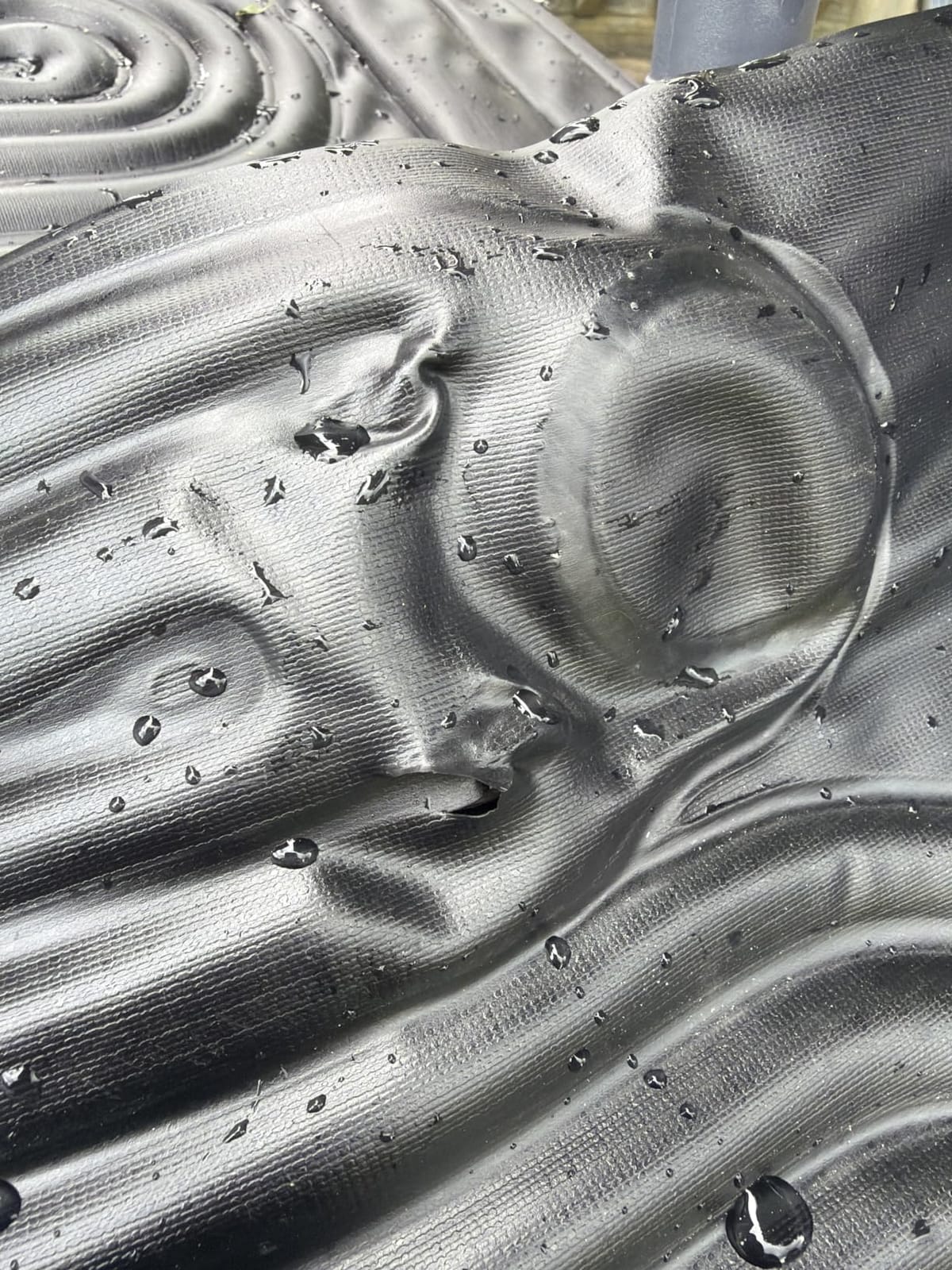
That last pump limit is the detail most people miss. This mat will not move water through a modern high-output above-ground pump, and forcing it is how the low ratings happened. If your pump is rated above 2,000 GPH, this is the wrong mat, and the Bestway pad two sections up is built for exactly your pump.
At 3.2 stars it is the most polarizing product here, and 27 percent of reviews are one-star. But the one-star share is heavily weighted by people who bought it for a pool it was never sized for. Judged on its actual job — topping up a small pool with a cover on — the feedback is much better.
Is the Intex mat big enough for an 8×12 pool?
For an 8×12 above ground pool, the eleven square feet is workable, particularly with a cover. Intex rates it for pools up to 8,000 gallons, and most 8×12 frames fall at or under that. You should expect the low end of the published 5 to 9 degree range rather than the top of it.
For anything larger, the collecting area is the limiting factor and no amount of sun changes that. In that case step up to a pad rated for your pump, or add a second collector.
Why do so many Intex mat reviews go negative?
Three recurring causes. The pump is too large, so the mat cannot move water. The pool is bigger than 8,000 gallons and the mat is simply undersized. And the owner expected hot water rather than season extension, which is a mismatch of expectation rather than a fault.
Seam splitting and punctures do appear in reviews too, and we cover that in the failure modes section below. If you have pets or a busy deck, keep the mat somewhere they cannot sit on it.
4. Goplus 2.5 x 10 ft Solar Pool Heater Panel Pair — Best Collecting Area for Small Pools
Goplus 2.5FT x 10FT/ 20FT Solar Pool Heater for Above Ground Pool Inground Pools, Swimming Pool Solar Panel Heating System, Weatherproof Pool Warmer (2.5FT x 10FT)
Two 10 ft x 2.5 ft PE panels
Heats up to 3408 gallons
10.8 degree rise
26.2 pounds
Pros
- Strongest rating among the panel-style collectors
- Best collecting area per unit on this list
- PE material tolerates rooftop mounting and extreme temperatures
- Complete connecting kit and clear illustrated instructions
Cons
- Included rubber fittings and clamps blow off under pressure and must be replaced
- No mounting brackets included for sloped or rooftop installs
- Runs as a low-pressure system
- so full filter flow causes leaks
The Goplus is the panel that convinced me panel collectors are not all alike. At 3.7 stars it holds the highest rating of any panel-style system in this roundup, and the reason shows up again and again in the reviews: informed buyers fix almost every complaint with two moves — run it on a bypass, and replace the rubber fittings and cheap clamps with PVC and better clamps.
The roll-up design is the practical headline. Two connectable collector panels, each 10 ft long by 2.5 ft wide in this configuration, and the PE material is rated from -20C to 90C, which is what makes rooftop mounting viable. Rated to heat up to 3,408 gallons and raise water temperature by 10.8F, with no electricity or gas connection required.
Two collector sections in one box is unusual at this size, and the two halves link into a wider structure than the product photos suggest. Marketing also overstates the panel width, so measure your mounting space rather than trusting the listing image. Variants run 2.5 x 10 ft, 2.5 x 16.5 ft and 2.5 x 20 ft, and two sections linked together are the configuration most owners land on.
One manufacturing thread runs through the negative reviews: sections that arrive cut to slightly different lengths, leaving the linked panels bowed and uneven. Inspect the panels in the box before you plumb anything.
What pump does the Goplus panel need?
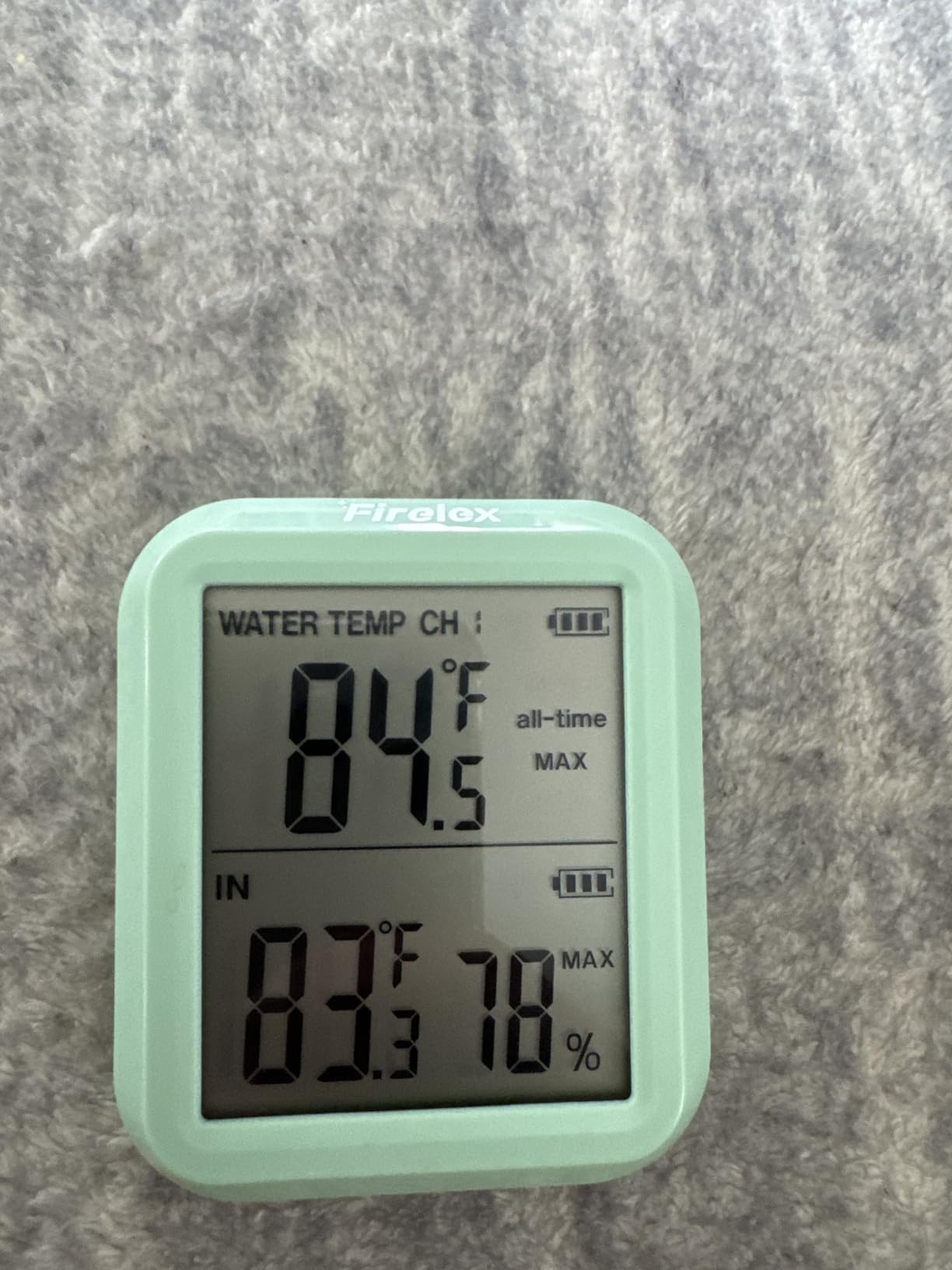
At least 0.75 HP, with pressure not exceeding 1.5 bar. The pump is not included. That requirement is the flip side of its low-pressure design: the system wants controlled flow, which is exactly why the bypass advice comes up so often in reviews.
Before you run it, add your own fittings and gaskets so you can control flow rather than inheriting whatever rubber came in the box. The included kit does cover end caps, hose clamps, connector hoses, elbow connectors and hose adapters.
Where does the Goplus fall short?
No mounting brackets ship with it, so a sloped or rooftop install means sourcing hardware separately. It is a low-pressure system, which means putting it in the full filter circuit invites leaks. And the fittings are the weak link regardless of what the box contains.
5. Doheny’s 2.5 x 20 ft Solar Heating Collector Kit — Best Sizing Guidance for Large Pools
Doheny’s Solar Heating Systems for Above Ground Swimming Pools (2.5′ x 20′ Collector Kit)
2.5 x 20 ft collector
12 ft straps and steel brackets
2-way diverter valve
24 pounds
Pros
- Detailed pool-sizing chart makes collector selection straightforward
- Roof and rack mounting hardware plus a 2-way diverter valve included
- Wider and more flexible channels than competing panels
- Owners report roughly 5 degrees of gain in a few hours
Cons
- Panels and plumbing pipe are sold separately
- Not plug-and-play
- needs 1.25 to 1.5 inch adapters
- Thin O-rings in the header end rings are prone to leaking
The Doheny’s kit is the one to buy if your problem is not heat but uncertainty about which collector size you need. It ships with a published sizing chart that maps pool dimensions to collector size, and the specification even pairs BTU figures to pool diameters: a 2.5 x 20 ft collector at 40,000 BTU for 12 to 15 ft round pools, a 5 x 20 ft collector at 80,000 BTU for 18 to 24 ft round pools, and both collectors together at 120,000 BTU for 27 to 28 ft round pools.
More unusually for this category, the mounting hardware is in the box. Five 6 ft straps, 15 stainless steel mounting brackets, 15 stainless steel screws, and a 2-way diverter valve with spacer. Roof or sloped plywood mounting is the intended install, and the channels are reported as wider and more flexible than SunHeater or FAFCO panels.
Seasoned owners running the kit with the diverter valve report water returning hot enough that they shut the collector off once the pool reaches the mid 80s. That is the correct operating pattern, and it is the one most owners never learn.
Complaints cluster around installation friction rather than performance. PVC or flex pipe is not included, all plumbing connections are 1.25-inch, and newer revisions split each 2.5 ft section into four smaller pieces that make the panel hard to hang flat. Older and newer versions also differ in listed panel size, which confuses comparisons.
Do Doheny’s collectors include a diverter valve?
Yes. The 2-way diverter valve and spacer are included along with the straps, brackets and screws. That makes this the best-equipped kit in the roundup, and the diverter is what lets you shut the collector off once the water leaving it is warmer than the pool.
Plumbing pipe is not included, though. All connections are 1.25-inch, so 1.5-inch pool plumbing needs adapters before you start.
What is awkward about the Doheny’s kit?
The newer four-piece section design makes the collector difficult to hang flat, and the thin O-rings in the header end rings leak more often than they should. Add pipe, adapters and a little extra sealing care to the parts list.
As with every panel here, drain the water out in autumn. Frozen channels crack, and that ends the collector’s life.
6. Solar Sun Rings 60-Inch UV Resistant Solar Pool Heater — Best for Overnight Heat Retention
Solar Sun Rings 60-Inch UV Resistant Solar Pool Heater │ Above Ground & Inground Pools & Spas │ Sunburst │ 1-Pack
60-inch round floating ring
Two layers of UV-resistant vinyl
Magnets link rings together
Manual inflation
Pros
- Magnets link rings into a continuous floating cover
- Far easier to deploy and retrieve than a full-size solar blanket
- Rings separate easily to reduce entrapment risk
- Clearly reduces evaporation and holds heat overnight
Cons
- Manual inflation only
- so rings deflate daily
- Two layers of vinyl can split and leak within weeks
- Blocks skimmer and vacuum operation
- One ring covers very little surface
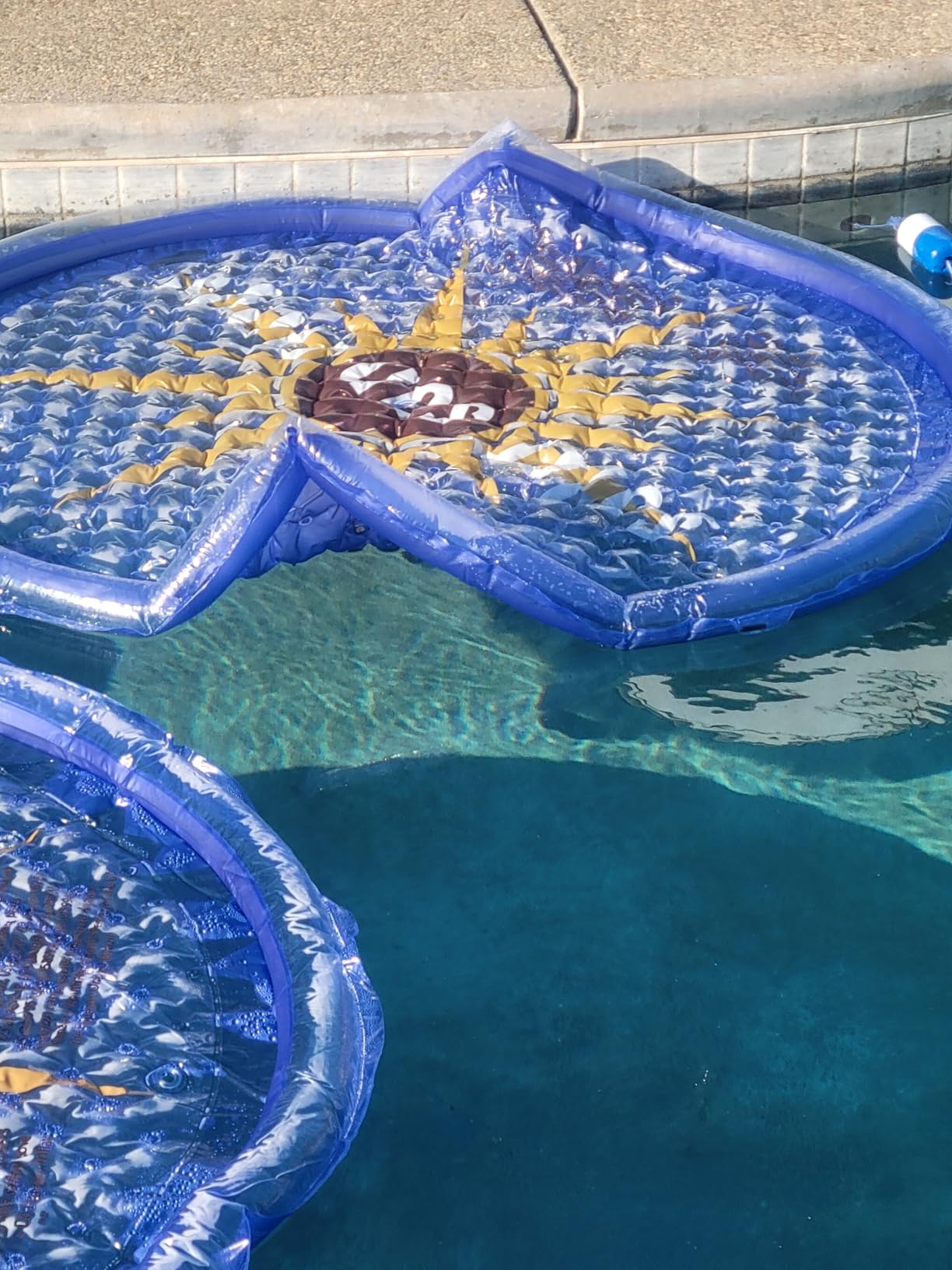
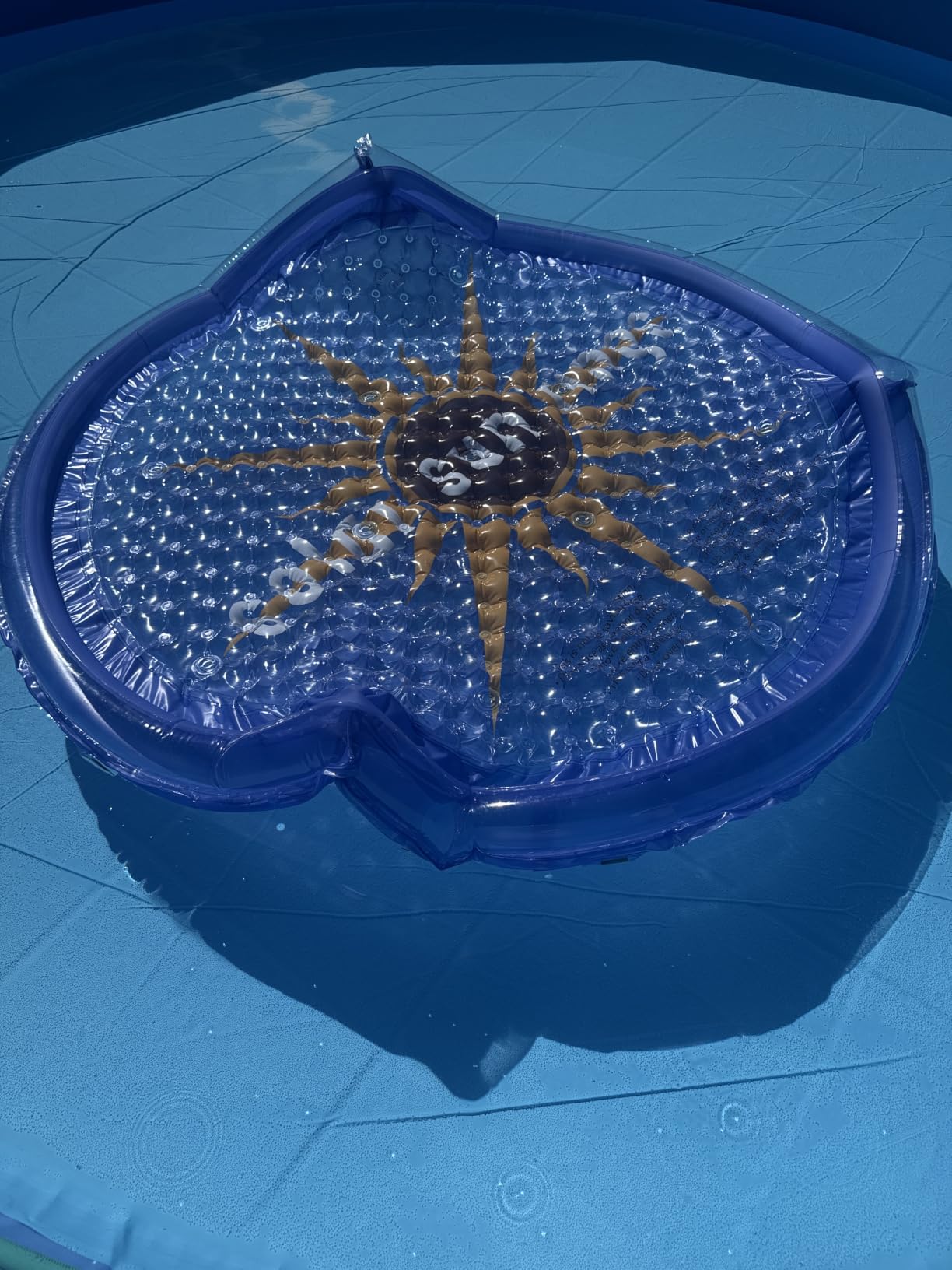
Call these what they are, because the reviews are much kinder when expectations are right. Solar Sun Rings are an evaporation-reducing floating cover that holds heat overnight. They are not a circulation device, and at 3.4 stars across 3,153 reviews the complaints are almost entirely about people expecting a heater.
The build is sensible. Two layers of UV-resistant vinyl convert sunlight to heat, encapsulated magnets connect the rings into a floating cover, and drainage grommets with a redesigned inner grid prevent sinking. A useful safety detail: the rings separate under impact, which reduces entrapment risk for a child or an adult who falls.
Multi-season owners report steady night-time heat retention and reduced chemical loss, which is a real operating cost saving. Shorter-term owners cite air leaks, chalking from sun exposure and interference with skimmers and leaf nets. The rings should not be stored in direct sunlight either, because they can burn whatever is beneath them.
The limitation is coverage. A single 60-inch ring covers a small circle of a large pool, and full coverage means buying many of them, which quickly becomes a different purchase than the one you started with.
Do solar rings heat water or just hold it?
Both, but with a clear hierarchy. During the day, the vinyl absorbs sun and reduces evaporation. Overnight, the cover suppresses evaporation and radiative loss, which is the effect that actually keeps the pool warm. Experienced pool owners consistently rank a cover ahead of a heater for that reason.
That is why these rings pair so well with a circulation heater. The collector adds heat during sun hours, the rings keep it in overnight.
What problems do the rings cause in daily use?
Skimmers and vacuum heads have to come out to use them, and a leaf net cannot sit over the pool while the rings are deployed. Since they are manually inflated, they deflate daily and can stick together in warm conditions.
The vinyl is the durability limit. Cheap two-layer constructions split and leak within weeks, and there is no pump or plumbing failure to diagnose when that happens — the ring simply stops holding air.
7. VINGLI Domed Solar Pool Heater — Best for Small Yard Spaces
VINGLI Solar Pool Heater Above Ground Domed Solar Powered Swimming Pool Heater Contour Pool Heating Coil (1 Pack)
23.23 x 23.23 x 11.42 inches
Contoured black heating coil
Two foldable legs
15.87 pounds
Pros
- Compact dome footprint with legs for angled sun and flat storage
- Multiple buyers report a five-minute installation
- Linking two or three domes in a chain improves heating
- Well priced against panel-style collectors
Cons
- Included soft hoses crack
- split and spray at fittings
- Connectors suit 1.25 inch hose and need adapters for 1.5 inch
- Rubber seals install incorrectly and leak
- A single dome is too small for larger pools
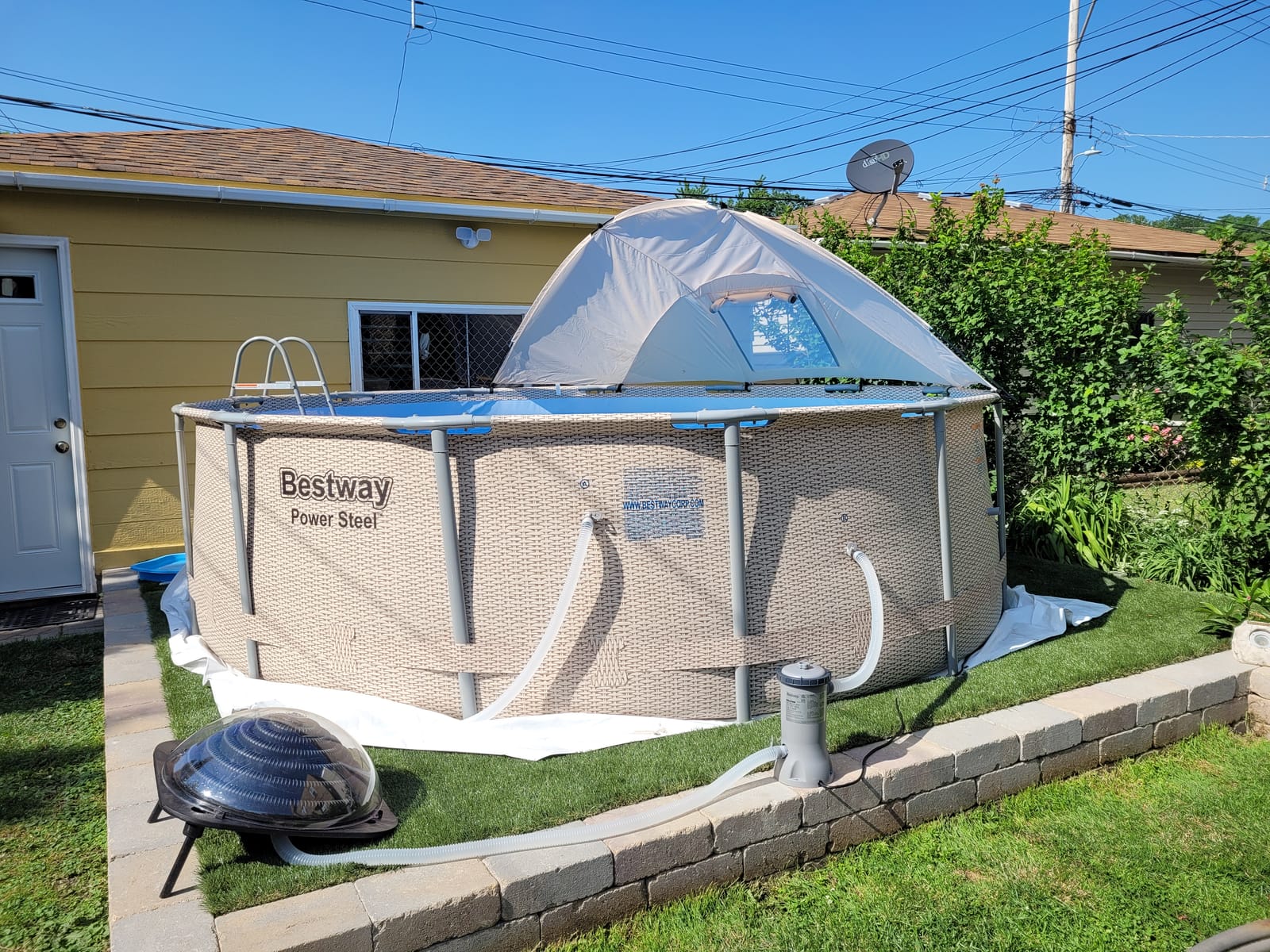
The dome is the answer when you have a small patio and no roof to spare. The VINGLI is 23.23 inches square, weighs under 16 pounds, and the two foldable legs let you angle the coil toward the sun and fold the whole thing flat for winter. A protective cover fits over the coil for debris protection, though you remove it for faster heating.
Multiple buyers report a five-minute installation, which is faster than anything else in this roundup. Linking two or three domes in a chain is the intended way to get more heat, and the manufacturer notes that three or more improve heat retention. It carries a 1-year warranty and 24-hour customer service.
Now the near-universal finding in the reviews. The dome design works, and reviewers who replace the supplied hose with their own PVC report genuine warming of an 18-foot round pool. Nearly every negative review traces to the same root cause: the cheap included tubing and rubber fittings that split or blow off under pump pressure, sometimes draining part of the pool.
Buying a bypass valve and better hose is effectively mandatory, in our view. Instructions are also poorly written, and expect at least one trip to a hardware store before the loop holds water.
Can you link VINGLI domes together?
Yes, and you should if you want more than a few degrees. Two or three in a chain measurably improves heating, and multi-pack variants exist. Flow requirements are stated as pump pressure not exceeding 0.8 bar and air pressure of 35 PSI, so an oversized pump is the enemy here.
Whichever size you run, plumb the loop through a bypass valve. The reports of hoses blowing off come overwhelmingly from owners who ran the dome in the full filter circuit at full pressure.
Where the VINGLI dome frustrates buyers
The supplied soft hoses and rubber seals. Seals fitted the wrong way leak immediately, connectors suit 1.25 inch hose only, and one dome is not enough for anything but a small pool. Budget for a bypass valve and a length of your own PVC before you start.
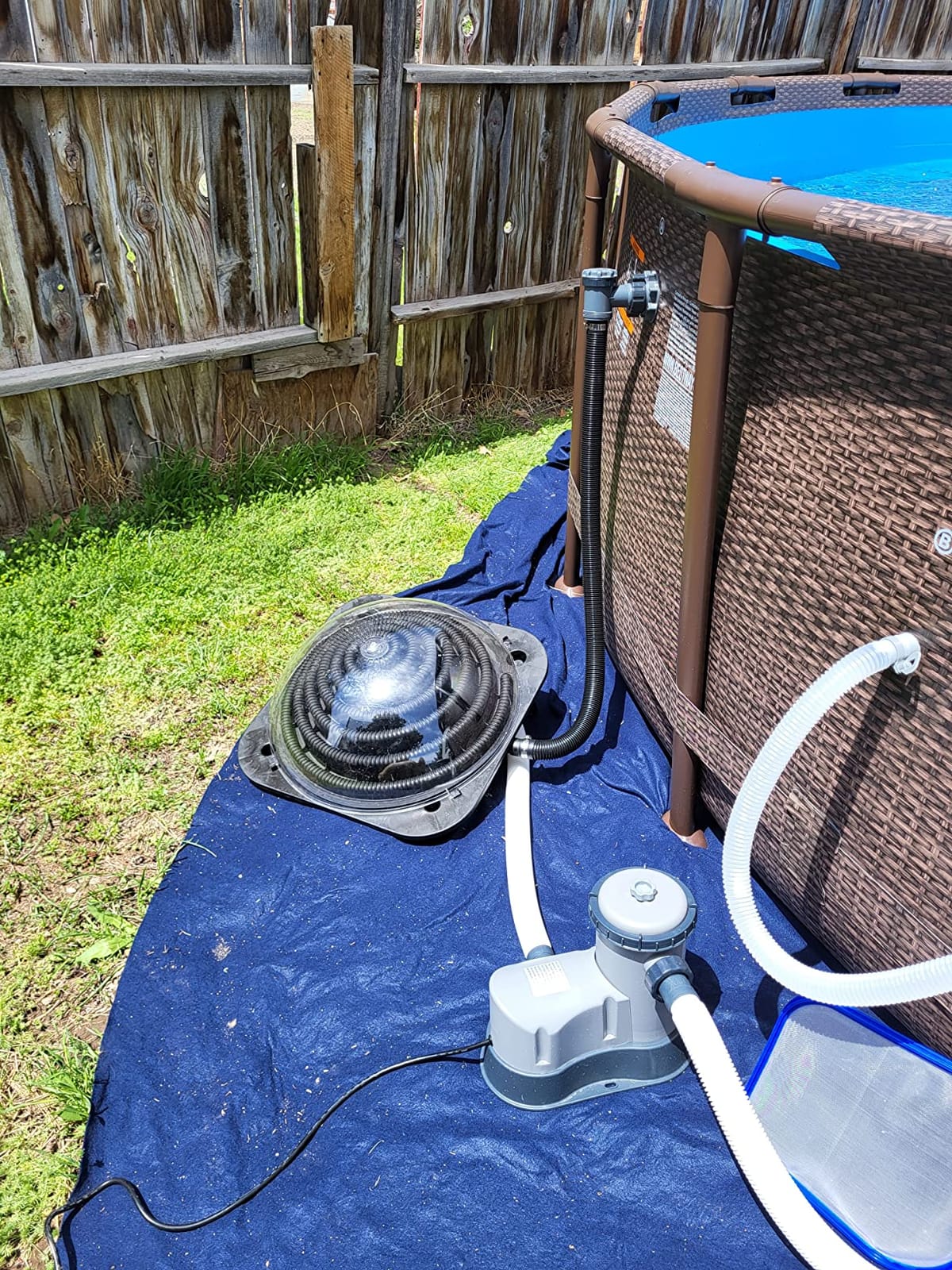
8. DORTALA Solar Dome Pool Heater — Best for First-Time Installers
DORTALA Solar Pool Heater, Dome Swimming Pool Water Heater for Above Ground & Inground Pool with Black Heating Coil, Foldable Legs, Rotatable Hose Connector
23 inch L x 23 inch W
Transparent convex dome
5.4-7.2 degree rise
12 pounds
Pros
- Transparent dome plus black coil captures and retains heat efficiently
- Foldable legs adjust the angle toward the sun and fold flat
- 90-degree rotatable hose connector simplifies routing in tight spaces
- Two domes on a 50/50 bypass valve hold steady mid-80s temperatures
Cons
- Fittings leak repeatedly and need manual sealing or PVC replacement
- Supplied 1.25 inch fittings need adapters for 1.5 inch plumbing
- Needs a bypass valve to be removed from the circuit at night
- Some owners report little or no rise on larger pools
The DORTALA is the dome we would hand to somebody installing a solar heater for the first time, and the reason is one fitting. The 90-degree rotatable hose connector accepts both 1.5 inch and 1.25 inch joints, which removes the single most common reason a first install fails on a dome. In a tight space beside an above-ground pool, being able to turn the connector rather than fight the hose angle is a real time saver.
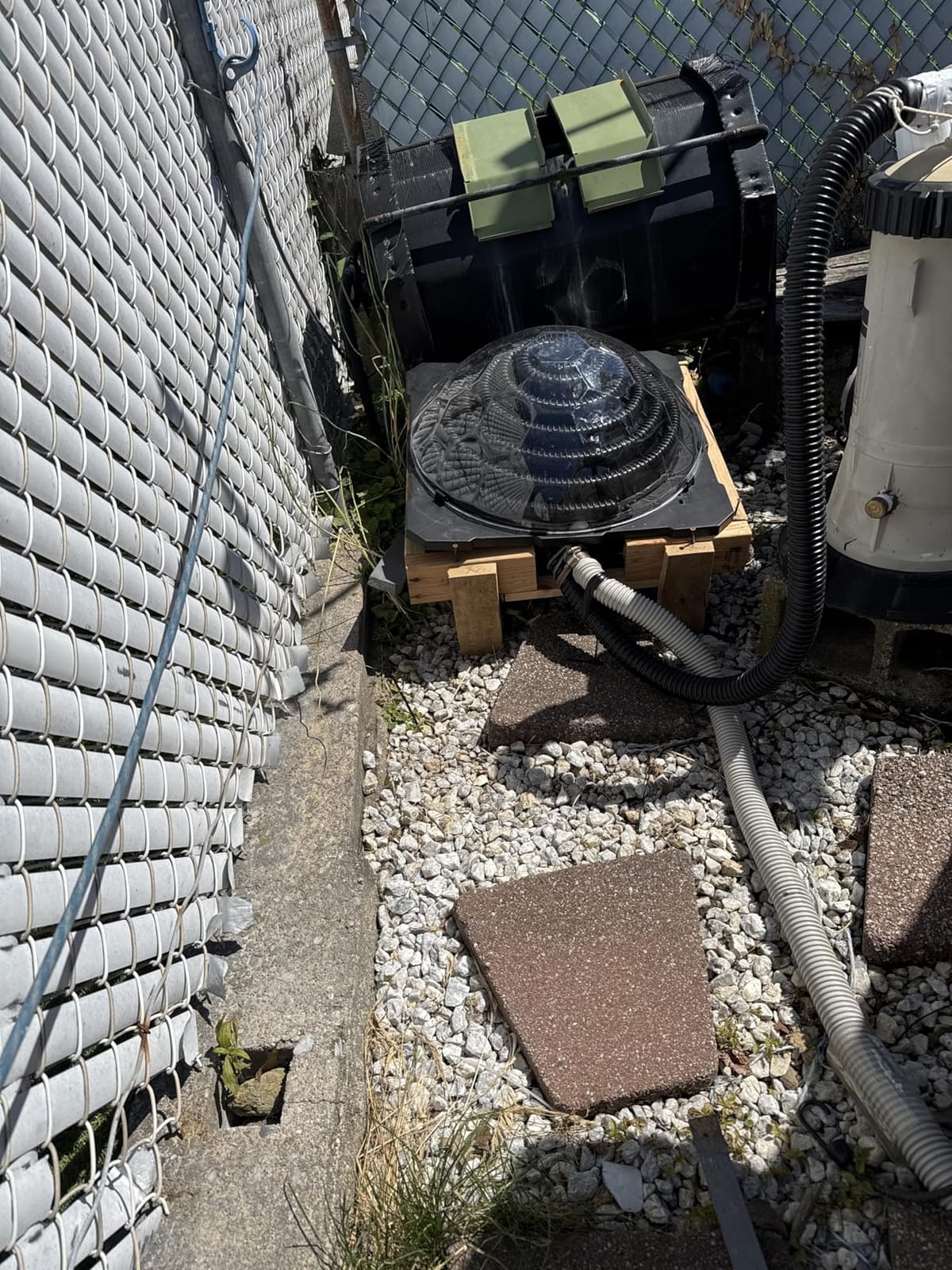
The rest follows the dome playbook. A transparent convex cover gathers heat and keeps debris out, a built-in black heating coil raises pool temperature by 5.4 to 7.2F, and two foldable legs adjust the angle toward the sun then fold flat for storage. The unit measures 23 inches by 23 inches and weighs 12 pounds. The pump is not included, and a 1 to 2 HP pump up to 16 GPM is recommended, with pressure not to exceed 0.8 kPa at 35 PSI.
The review base is small at 38 ratings, and in a sample that size the operating pattern dominates the signal. Users who plumbed a bypass and kept water in the dome for a few sunny hours report 3 to 7 degree gains. Users who ran it in the full filter circuit report leaking fittings, hoses blowing off, and no measurable change.
That is the whole lesson of this roundup in one product: the loop topology decides whether the heater works, more than the heater does.
Does the DORTALA dome need a bypass valve?
Yes, and owners running two domes on a 50/50 bypass report steady mid-80s pool temperatures. Without a bypass you are stuck choosing between leaving water in the dome overnight, which risks freezing, and draining it every morning, which defeats the purpose.
A bypass also stops the pump forcing full pressure through the coil and fittings, which is the other half of why they leak.
What should I check before trusting the fittings?
Plan to replace or reseal them. Repeated leaks are the dominant complaint, and owners who swapped in PVC report a completely different experience. The supplied 1.25 inch fittings also need adapters for 1.5 inch pool plumbing.
Keep the listed rise of 5.4 to 7.2F in mind as a small-pool figure. Several owners report little or no rise on larger pools, which is expected given the collecting area.
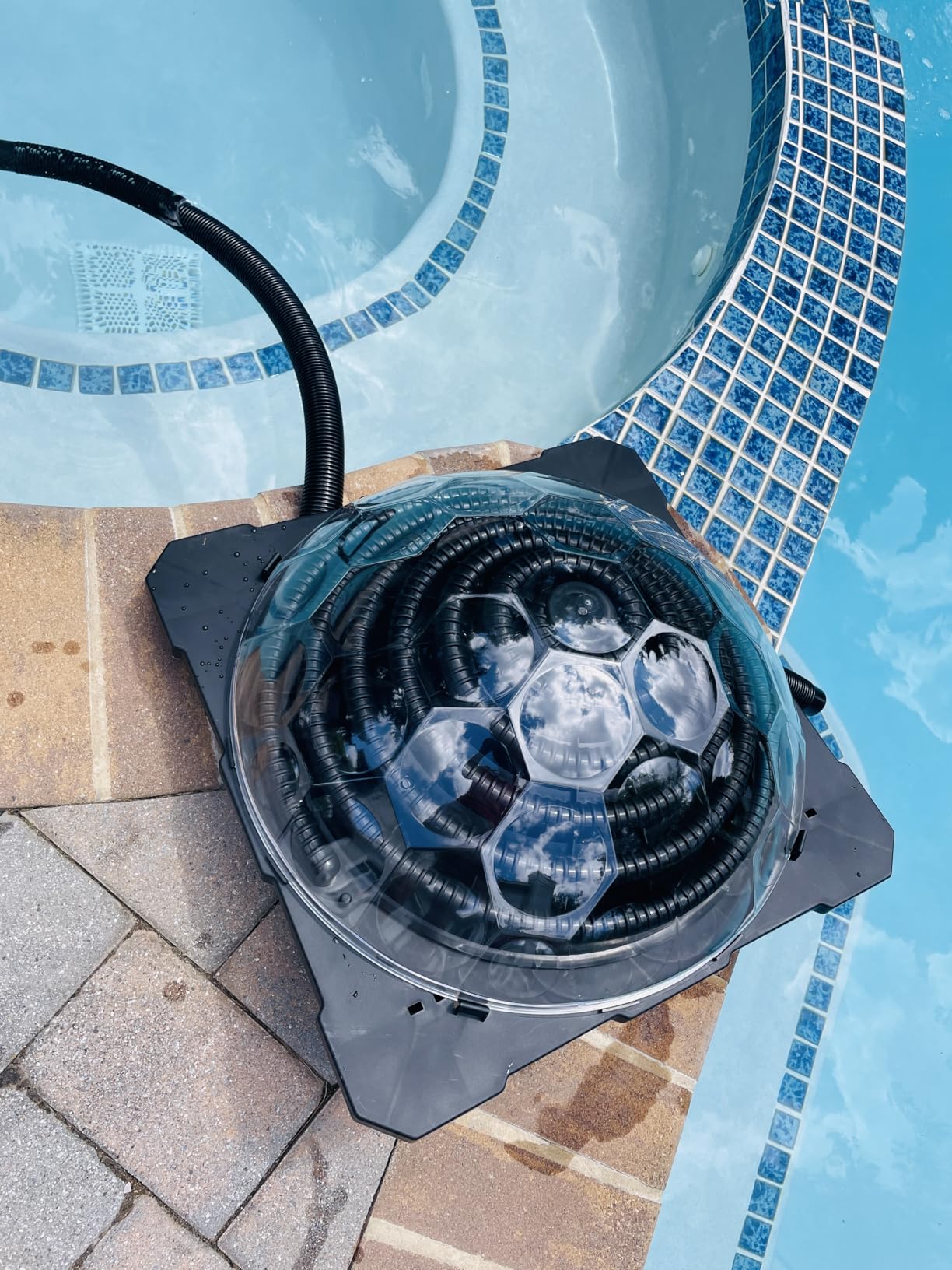
9. IRONMAX 2.5 x 10 ft Solar Pool Heater — Best for Rooftop Mounting
IRONMAX 2.5 x 16.5 Feet Solar Pool Heater for Above Ground & Inground Pools
Two 2.5 x 10 ft PE panels
41.25 sq ft coverage
10.8 degree rise
11 pounds
Pros
- Roll-up panels are portable across roof
- frame or ground
- All-weather PE construction tolerates rooftop temperatures
- Published sizing guidance matches panel count to pool size
- Lightweight at 11 pounds versus bulkier polypropylene collectors
Cons
- Tube grid channels and rubber fittings are prone to leaking
- Pump of 0.75 HP or larger is required and not included
- Must be taken down and drained before winter
- Performance drops sharply in cloudy weather
The IRONMAX is the lightest panel here at 11 pounds, and that weight is the whole design brief. Roll-up collectors that weigh almost nothing can go up on a roof, be repositioned at the end of the season, or sit on an angled frame in the yard. The PE material is rated from -20C to 90C, which is what makes rooftop use defensible at all.
Two panels of 2.5 ft wide by 10 ft long are included, giving 41.25 square feet of heating coverage per unit. The tube grid design is rated to heat up to 3,408 gallons and raise water by 10.8F, and the box carries rubber end caps, hose clamps, adapters and elbow connectors. Variants run 10 ft, 16.5 ft and 20 ft.
Reviews emphasize the sizing guidance and the included connecting hardware as the positives. The drawbacks recur: fitting leaks, and the need to supply a pump and mount the panels yourself. A pump of at least 0.75 HP is required, with pressure not exceeding 21 PSI, and it is not included.
One maintenance note is easy to miss. Regular cleaning is needed to maintain absorption, because a dusty roll-up panel on a roof collects whatever the roof collects. And like every panel in this roundup, it has to come down and drain before winter.
Can IRONMAX panels go on a roof?
That is the design intent. The PE material is rated from -1F to 194F specifically for rooftop installation, and the roll-up format means two people can lift the panels rather than four.
You still need to anchor them properly and leave airflow underneath. And check your pump before ordering, because a 0.75 HP pump is not included and full filter flow will find every weak fitting.
What holds the IRONMAX panels back?
Leaks in the tube grid channels and at the rubber fittings, which is the common thread across every panel system in this roundup. It also needs a pump you already may not own, and cloudy weather cuts performance sharply because there is nothing to collect.
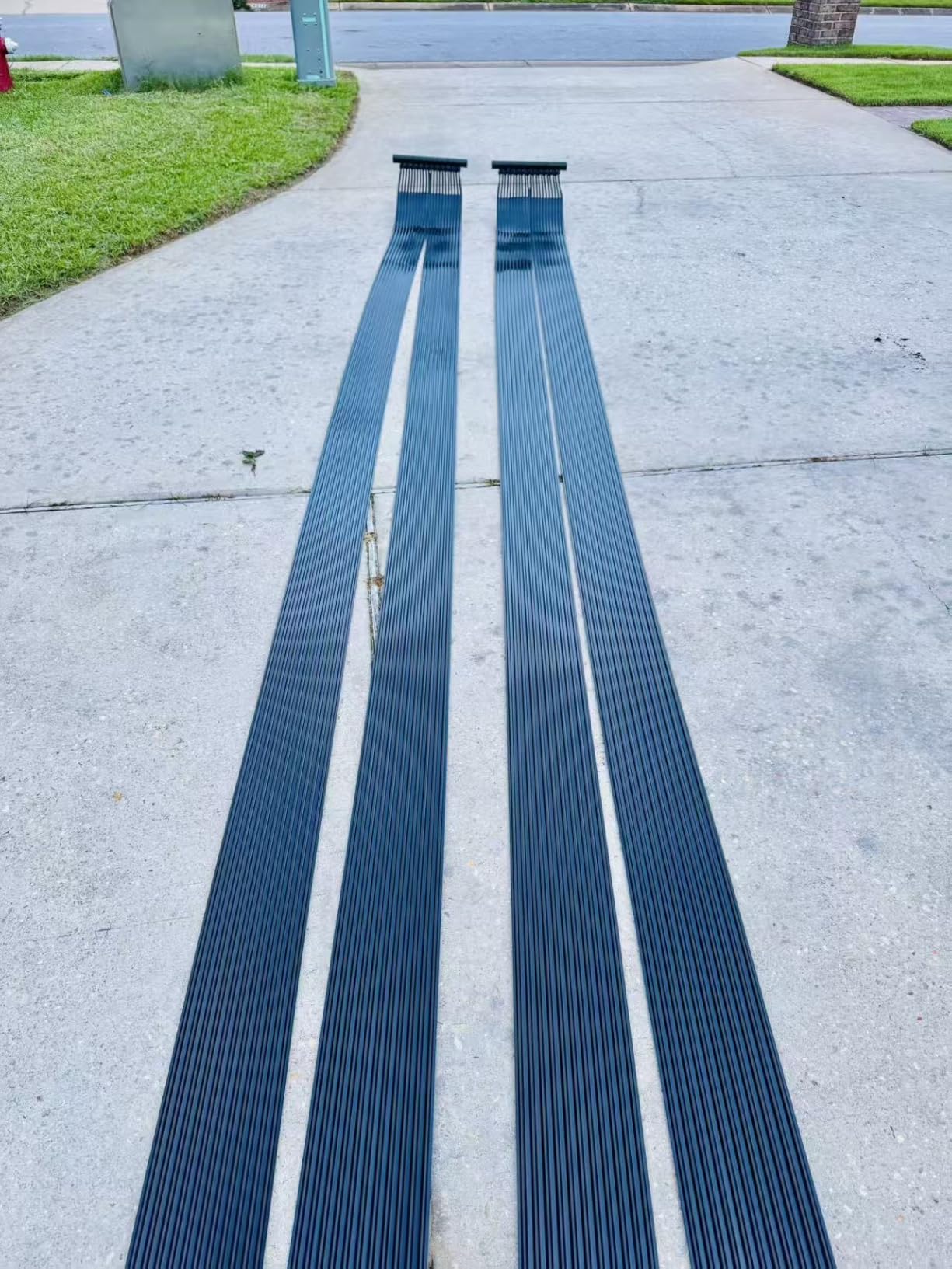
10. GoFloats V2 Inflatable Solar Pool Heater Rings, 3 Pack — Best Budget Floating Option
GoFloats V2 Inflatable Solar Pool Heaters for Affordable Pool Heating and Insulation – 3 Pack
Three 5 x 5 ft inflatable rings
25 sq ft per ring
60 x 60 x 4.5 inches
3 pounds
Pros
- Cheapest way to blanket a pool surface with a solar heating layer
- Inflates in seconds with a shop vac and stores in minutes
- Near-full coverage delivers 5-8 degrees better overnight retention
- Cleaner finish than bubble-wrap style blankets
Cons
- Light weight means a breeze can flip rings out of the pool
- Air leaks and slow deflation are common
- Blocks the skimmer and traps debris
- Needs about 80 percent coverage to work
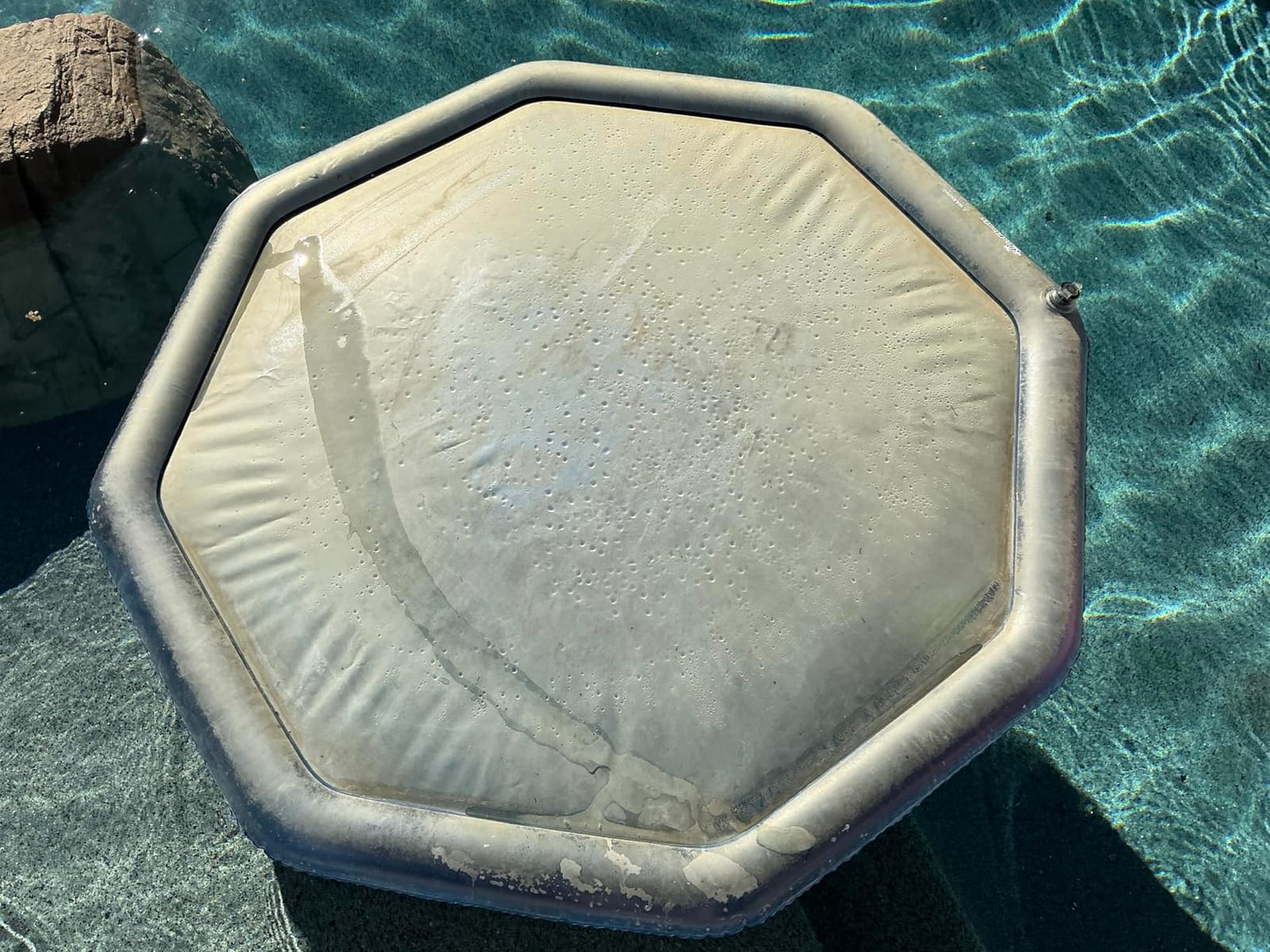
At 3.1 stars this is the lowest-rated product in the roundup, and the reviews split cleanly along one line: coverage. Users who covered most of their pool report holding water 5 to 8 degrees warmer overnight and cutting heater run time roughly in half. Users with partial coverage report no temperature change at all, plus wind knocking the rings out and blocking skimming.
The V2 design inflates faster and lays flat more consistently than the first version, and a thick outer perimeter minimizes overlap so more of each ring does useful work. Each 5 by 5 foot ring covers 25 square feet of pool surface. The manufacturer’s own guidance is the number to remember: divide pool surface area by 30 to work out how many rings give you 80 percent coverage.
It is also the easiest thing here to use. It inflates in seconds with a shop vac, and you can remove and store the whole set in minutes, which matters enormously if your above-ground pool comes down in autumn. At three pounds per ring, carrying them is not a chore.
The failure mode is wind and deflation rather than tearing. The rings are light, so even a light breeze flips them out of the pool, and slow deflation means repeated top-ups through the season. They also sit over the skimmer and trap debris against the surface.
How many GoFloats rings do I need?
Divide your pool surface area by 30, then buy enough to reach roughly 80 percent coverage. Each ring in the pack covers 25 square feet. Partial coverage is wasted money, and that is the single biggest reason this product’s reviews split so sharply.
If you have a large rectangular pool, do the arithmetic before you buy. A 16×32 pool has over 500 square feet of surface, which is a lot of rings rather than a three-pack.
Why do the GoFloats rings have the lowest rating here?
Wind, deflation, skimmer interference, and owners who expected a heater. The rings are an insulation and evaporation-control device first, and at 80 percent coverage they do that job well for a very small outlay.
How to Install a Solar Pool Heater on an Above Ground Pool
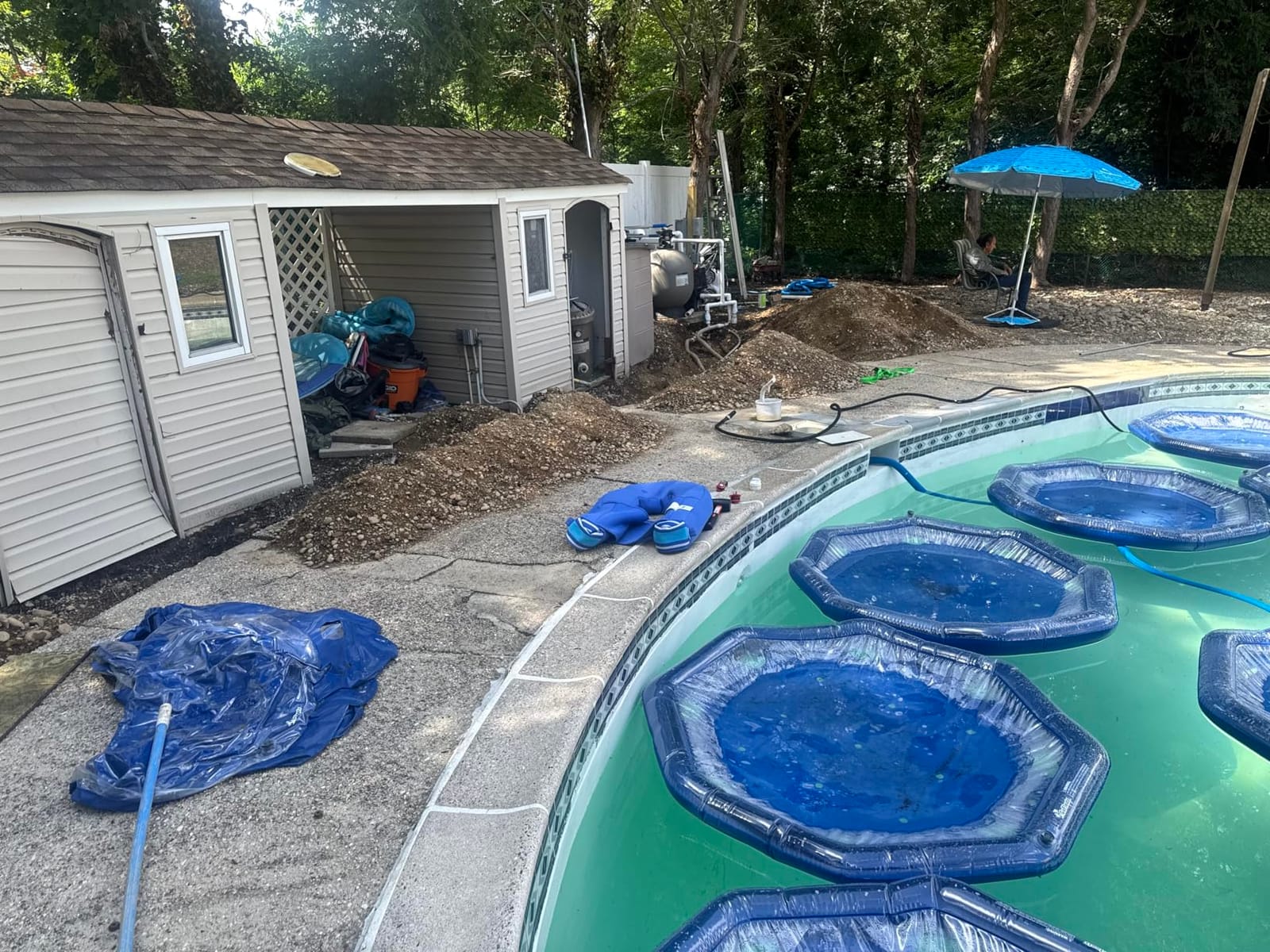
Installation is where most of the low ratings in this category are actually earned. Get the plumbing right and almost everything on this list behaves as advertised. Here is the order we would do it in.
Start at the pump outlet. Plumb the collector directly off the filter pump return rather than at the far end of the pool wall. Above-ground pools have long hose runs, and water cools in transit, so every extra foot of hose wastes heat you already collected. This is the single most common mistake we see in owner threads.
Fit a bypass or diverter valve. A bypass valve lets you remove the collector from the circuit without disturbing the pool. A 2-way diverter valve does the same job in a fixed plumb. Both stop the pump forcing full pressure through small fittings, which is the leading cause of leaks in every negative review we read.
Check your pump against the spec. The Intex mat needs a pump up to 1/3 HP or under 2,000 GPH. The Bestway pad needs 2,500 GPH for cartridge pumps or 2,200 GPH for sand. Goplus and IRONMAX want at least 0.75 HP, and the DORTALA recommends 1 to 2 HP up to 16 GPM. Mismatches leak or simply fail to move water.
Size the collector to the pool. Aim for collector area at 60 to 100 percent of the pool surface area, and more if you want meaningful gain. Ten square feet of mat on a 500 square foot pool is decoration.
Position for unobstructed sunlight. Site mapping matters more than most buyers expect. In the best-documented owner build we found, a site further from the tree line consistently received more direct sunlight and became the obvious choice for the collector field.
Set a run time. Run the loop during peak sun hours, and use the diverter to shut it off once the water leaving the collector is warmer than the pool. Running it overnight pumps warm water into cold air and gains nothing, and leaving water in a panel overnight risks freezing.
Pressure test before you connect the pool. Fill the loop, run it for a few minutes with the outlet closed or watched, and fix every weep before the pool is on the other side. Fittings that drip under pressure drip worse at full flow.
Add a cover, then store for winter. The cover is what makes the heat stick. And drain every panel and dome before the first freeze, because frozen channels crack and that failure ends the collector.
For pump selection and flow rates specifically, our guide to above ground pool pumps covers how to match a pump to your pool volume.
Failure Modes and How to Avoid Them
Seam leaks and cracked adapters are the two failure modes that produce nearly every low rating in this category. Both are preventable, and both trace to the same root cause: fittings that were not designed for the pressure your pump delivers.
Seam and edge leaks in mats and rings. The most common complaint about low-cost solar mats, and the ratings bear it out. Seams split, edges tear, and mats get punctured by pets, sharp pool toys, or somebody sitting on them. Keep the mat somewhere nobody walks, inspect the seams before each season, and replace rather than patch — a patched PVC mat fails again within weeks.
Cracked hose adapters. This is a specific, named failure. A low-cost 3/4 to 1 inch plastic adapter at the pump outlet cracked at the threads after the pump ran dry, and the result was water loss, loss of prime, and a full shutdown. The prevention is unglamorous: never run the pump dry, and replace cheap threaded adapters with proper PVC fittings.
Fittings blowing off under pressure. Reported across the domes and the budget panels alike. Running a low-pressure collector in the full filter circuit is what causes it, which is why every knowledgeable owner in these reviews puts the loop on a bypass. Replace the supplied rubber fittings and cheap clamps with PVC and better clamps.
Poor sun positioning. A collector in partial shade will read as a failed heater, because it produces water that is warm and adds very little to the pool. Map the sun path across a full day before you mount anything.
Undersized pumps and flow mismatch. Running a solar heater with an undersized or single-speed pump causes flow problems and premature pump wear. Size the pump from the heater spec, not the pool spec.
Pair Your Solar Heater With a Solar Cover
Will a pool warm up faster with a solar cover on or off? It depends on which part of the process you mean. A cover speeds up heat retention, not heat collection — under cover, the water stays warm once the heater has done its work. Off cover, the surface loses heat to evaporation and to the night sky, and no amount of collector surface area can fully beat that loss overnight.
The division of labour is simple enough to state in one line: the heater adds heat, the cover keeps it. Above-ground pools lose heat quickly at night precisely because the water volume is small, so on this type of pool the cover is not an accessory to the heater, it is half the system.
If you can only buy one of the two, experienced pool owners consistently rank the cover first. It is not as fast at heating, and it does nothing at all on a cold, cloudy afternoon, but it holds whatever heat you have through the night and into the next day. Every configuration in this roundup performs better with one, and several reviewers report that a heater plus cover is what got them into the water in the shoulder season rather than the middle of summer.
Floating rings are the budget route to the same end. Just remember the coverage rule: the rings only do meaningful work at roughly 80 percent of the pool surface, and partial coverage produces almost no temperature change at all.
What Solar Heating Will Not Do
Every advertisement in this category implies more than any solar collector can deliver, so here is the honest list. Solar heating is a zero-running-cost way to add a modest, steady amount of heat. It is not a replacement for a real heater in cold weather, and it is not a way to heat a very large pool quickly.
It will not heat through a cold snap. On an overcast week, or in early spring with air temperatures still low, a solar collector collects little. Output tracks sunlight, not season.
It will not fix a badly sized pool. Over-scoping to huge pools is a real and common disappointment. Collectors on a 35,000 gallon pool cannot keep it above 80F, and owners who expected them to feel the system failed.
It will not run at night. With the sun down, a collector is a radiator pointed at cold air. Leaving it in the full circuit overnight costs you heat and risks freezing. Use the diverter valve.
It will not survive winter in place. Every panel and dome on this list must be drained before the first freeze, or the channels crack and the collector is finished.
It will not deliver its headline number every day. Published rises of 10.8F to 15F assume full sun, a favourable ambient temperature and a small pool. Measured output across owners lands nearer 2 to 6.4 degrees across the collector, and net gain is lower still. Treat the headline figure as a ceiling, not an expectation.
How to Size a Solar Collector for Your Above Ground Pool
Sizing is the decision that determines whether you are happy with the heater. The working rule is collector area at roughly 60 to 100 percent of your pool’s surface area, and the more collecting surface you add the more gain you get. Panels and domes both link, so scaling up is straightforward.
For an 8×12 above ground pool, roughly 96 square feet of surface needs about 60 to 95 square feet of collector. That is one large panel system or a small array of domes; a single 11 square foot mat will be marginal even with a cover.
For a 12×16 pool at 192 square feet, target 115 to 190 square feet of collector. This is where two-panel systems start to make sense, and where a 10.8F-rated panel has a realistic job.
For a 16×32 pool at 512 square feet, you are looking at 300 to 500 square feet of collector, which means multiple panels, and this is where the cost curve gets steep. PoolHeaterLab’s sizing logic and Doheny’s published chart both converge on the same point: large pools need collectors scaled by surface area, not by wishful thinking.
For an 18 ft round pool at roughly 255 square feet, the Doheny’s chart pairs a 2.5 x 20 ft collector at 40,000 BTU with 12 to 15 ft round pools, and a 5 x 20 ft collector at 80,000 BTU with 18 to 24 ft round pools. That published mapping is the clearest sizing guidance available in this category.
Five things to check before you buy
1. Bypass or diverter valve. If it is not included, add it. It is the difference between a working heater and a leaking one.
2. Pump compatibility. Match the heater’s stated flow requirement against your pump’s rated GPH before anything else. This single check eliminates most disappointment.
3. UV-stabilised material. Cheap PVC mats without UV stabilisation chalk and crack. Polypropylene and PE panels are better choices for multi-season use.
4. Pool-gallon capacity and included hardware. Missing racks, fasteners, hoses and clamps advertised as included are the direct cause of many angry reviews on capable units. Check what is in the box before you assume.
5. Warranty length. One year on domes, more on some panel systems. Longer coverage is a weak signal of build quality in a category where the weak link is usually fittings.
One more practical note: if you already own a cover, you have the highest-return heating upgrade available and it is not a heater. If you have not, read our above ground pool vacuum guide for keeping the water clean while you extend the season.
Frequently Asked Questions
Do solar heaters for above ground pools work?
Yes, but judge them on net heat gain, not on how hot the water leaves the collector. A solar pool heater uses your existing filter pump to push pool water through a black mat, dome, panel or ring, and the sun does the rest. Measured performance across owners lands between 2 and 6.4 degrees across a collector, and what actually matters is whether the pool ends the day warmer than the overnight loss. Above-ground pools lose heat fast, so pairing any heater with a cover is close to mandatory.
What size solar pool heater do I need for an above ground pool?
Aim for collector area at 60 to 100 percent of your pool surface area. An 8×12 pool needs roughly 60 to 95 square feet of collector, a 12×16 needs 115 to 190 square feet, and a 16×32 needs 300 square feet or more. For round pools, published guidance pairs a 2.5 by 20 ft collector at 40,000 BTU with 12 to 15 ft round pools and a 5 by 20 ft collector at 80,000 BTU with 18 to 24 ft round pools.
What are the disadvantages of solar pool heaters?
The main weaknesses are that output tracks sunlight, so an overcast week or a cold snap produces very little heat. A collector cannot heat a large pool quickly, and published rises of 10.8 to 15 degrees are best-case ceilings rather than daily results. Solar heaters also add no heat at night, and every panel and dome must be drained before freezing or the channels crack. Finally, cheap fittings are the most common failure point, and fitting leaks account for most low ratings.
How long should I run a solar pool heater each day?
Run the loop during peak sun hours only, and use a bypass or diverter valve to shut the collector off once the water leaving it is warmer than the pool water. Running it overnight pumps warm water into cold air, gains nothing, and risks freezing. Above-ground plumbing runs are long, so plumb the collector directly off the filter pump outlet to cut heat loss in transit, and expect the most gain in the middle of a clear day.
Are solar pool covers better than solar pool heaters?
A cover and a heater do different jobs. The heater adds heat during sun hours; the cover stops that heat escaping through evaporation and overnight radiation. On an above-ground pool, where water volume is small and nightly loss is proportionally large, experienced owners rank the cover first because it works every night rather than only on sunny days. A heater plus cover together extend the swim season further than either one alone, which is the pairing we would buy.
Our Verdict: Best Solar Pool Heaters for Above Ground Pools in 2026
After six weeks of comparing specs, ratings and owner reports across ten collectors, the Bestway solar-powered heating pad is our pick for most above ground pool owners. At 4.1 stars it is the highest-rated product in a category that clusters around 3.x, it works with the pumps owners already own, and it ships with both hose adapters. The SunHeater 80 square foot panel kit takes the large-pool crown on collecting area alone, and the Intex mat remains the cheapest way to test whether solar heat suits your backyard at all.
The pattern across all ten is consistent enough to state plainly. Collector area decides how much heat you can gather, the bypass valve decides whether the loop survives the season, and the cover decides whether any of it reaches your swimmer. Miss any one of those three and even a good collector will read as a disappointment in 2026.
Start with the pool size match, buy the bypass valve in the same order, and add the cover before you blame the heater. That sequence is worth more than any upgrade from one collector model to the next.