
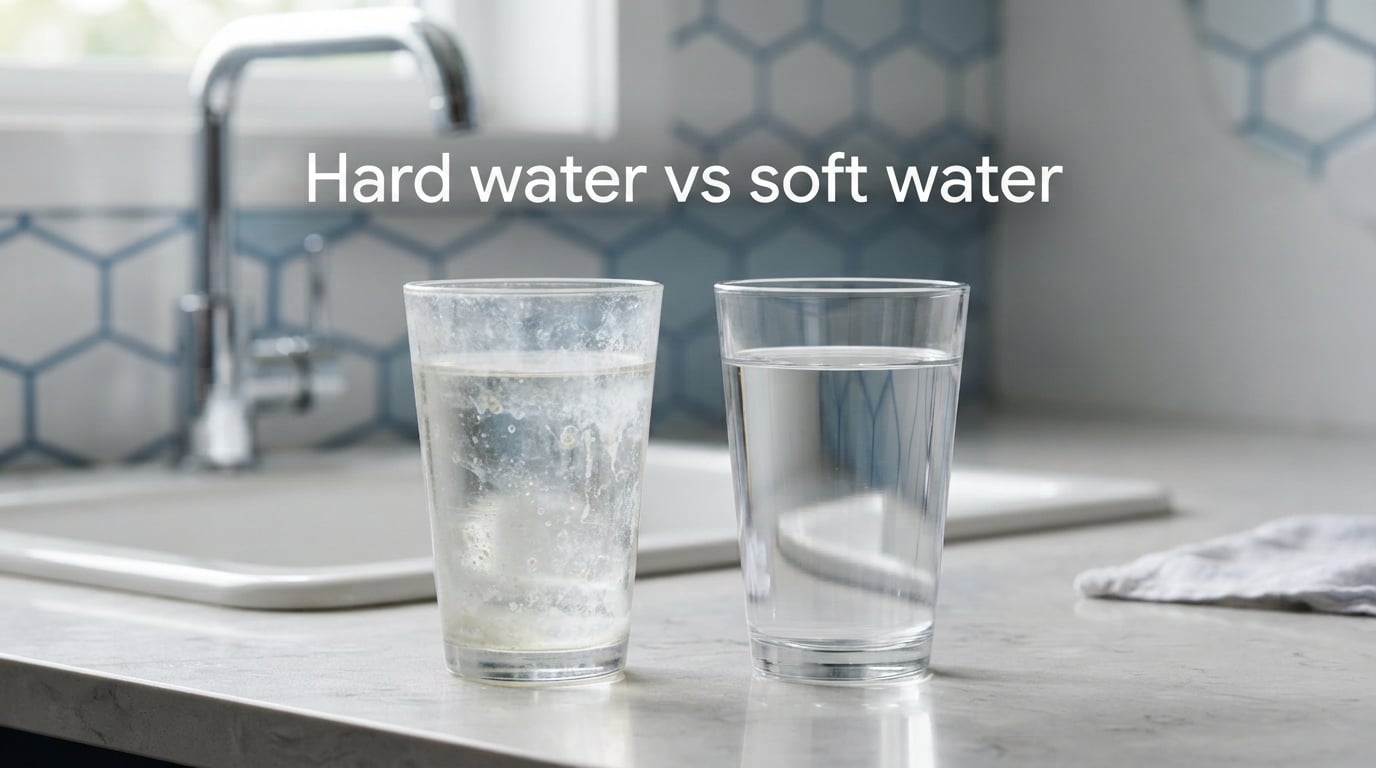
If you’ve ever noticed white spots on clean glasses, soap that refuses to lather, or a film on your skin after a shower, your home’s water hardness is probably to blame. Hard water vs soft water is one of the most common water-quality topics homeowners face, and the differences affect everything from how your laundry feels to how long your water heater lasts.
I started digging into this topic a few years ago when my dishwasher started leaving cloudy residue on every glass. After testing our tap water, we discovered roughly 180 parts per million (ppm) of dissolved minerals, which qualifies as very hard water. That single number explained years of frustrating cleaning problems. In this guide, I’ll walk you through exactly what hard water and soft water are, how they differ, and how to figure out which one is flowing through your pipes. If you’re also curious about how water filters and mineral content interact, we cover that in a separate guide.
By the end, you’ll understand the science, the practical effects on your home, and the trade-offs of softening your water.
Table of Contents
What Is Hard Water?
Hard water is water that contains high levels of dissolved minerals, primarily calcium and magnesium, picked up as it passes through limestone, chalk, or dolomite deposits underground. The U.S. Geological Survey estimates that more than 85% of U.S. homes have some degree of hard water, which makes it one of the most common water-quality issues across the country.
These dissolved minerals are not contaminants in the traditional sense. They come from natural rock formations and are perfectly safe to drink in most cases. The trouble begins when calcium and magnesium ions react with soap and detergents, forming a sticky curd that doesn’t rinse away easily. That same reaction also deposits limescale on heating elements, showerheads, and faucet aerators over time.
Hardness is measured in either grains per gallon (gpg) or parts per million (ppm). Water with more than 7 gpg, roughly 120 ppm, is generally considered hard by U.S. standards. Anything above 180 ppm is classified as very hard.
Where hard water comes from
Groundwater absorbs calcium and magnesium as it moves through soil and rock. Regions with lots of limestone bedrock, like the Midwest, the Southwest, and parts of Florida, tend to have harder water on average. Well water is almost always harder than municipal surface water because it spends more time in contact with mineral-rich rock.
What Is Soft Water?
Soft water is water that contains very low levels of dissolved calcium and magnesium, generally less than 3.5 gpg or about 60 ppm. There are two distinct types: naturally soft water and artificially softened water.
Naturally soft water occurs in regions with granite or volcanic rock instead of limestone. Rainwater before it hits the ground is also naturally soft because it has not yet picked up any minerals. Some municipal supplies in places like the Pacific Northwest and parts of New England are naturally soft because their source water comes from snowmelt and mountain runoff that has minimal mineral contact.
Artificially softened water is hard water that has been treated through an ion exchange process to remove the calcium and magnesium ions. The most common method replaces those ions with sodium or potassium. Many homes in hard-water regions install salt-based water softeners specifically for this reason.
Two ways to soften water
Ion exchange softeners are the most common treatment method. They pass water through a tank filled with resin beads that swap calcium and magnesium for sodium ions. The resin is periodically recharged with a salt solution in a process called regeneration.
Reverse osmosis systems, salt-free conditioners, and template-assisted crystallization devices offer alternatives, though each works differently and produces water with varying characteristics.
Hard Water vs Soft Water: Key Differences at a Glance
The fundamental difference between hard water and soft water comes down to mineral content, but the practical effects ripple through almost everything you do with water in your home. Here’s a side-by-side view of how the two compare.
| Characteristic | Hard Water | Soft Water |
|---|---|---|
| Calcium and magnesium | High (over 60 ppm) | Very low (under 60 ppm) |
| Sodium content | Minimal naturally | Higher in ion-exchange softened water |
| Soap lather | Poor, forms scum | Rich, rinses clean |
| Scale on fixtures | Common white deposits | Rare, no chalky buildup |
| Effect on skin | Can feel dry or itchy | Feels slippery after rinsing |
| Hair feel | Dull, hard to manage | Smoother, easier to detangle |
| Appliance lifespan | Shorter due to scale | Longer, less maintenance |
| Laundry results | Stiff, faded colors | Soft, brighter colors |
| Taste | Mineral, sometimes metallic | Smoother, sometimes salty |
| Cleaning effort | Requires more detergent | Less soap needed |
How Water Hardness Is Measured
Two scales are commonly used to describe hardness, and understanding both helps you interpret water reports and water softener settings.
The U.S. Geological Survey uses parts per million (ppm) or milligrams per liter (mg/L), which represent the actual mass of calcium carbonate in the water. The other scale, grains per gallon (gpg), is what most water softener manufacturers use. One grain per gallon equals about 17.1 ppm of calcium carbonate.
| Classification | ppm (mg/L) | gpg |
|---|---|---|
| Soft | 0 to 60 | 0 to 3.5 |
| Moderately hard | 61 to 120 | 3.5 to 7 |
| Hard | 121 to 180 | 7 to 10.5 |
| Very hard | Over 180 | Over 10.5 |
If you live in a hard-water region, your municipal water utility typically publishes hardness data in annual consumer confidence reports. Private well owners should test their water annually since hardness can shift with seasonal aquifer levels.
Signs You Have Hard Water
Most homeowners recognize hard water only after the damage is well underway. Here are the telltale signs I look for when troubleshooting a home that may have hardness problems.
- Soap won’t lather properly. You keep adding shampoo or body wash in the shower but never get rich suds. The soap is reacting with minerals instead of foaming.
- White, chalky spots on glasses and dishes. Those cloudy marks that don’t come off with normal drying are calcium deposits left behind when water evaporates.
- Scale buildup on faucets and showerheads. A crusty ring around the spout or clogged nozzles are classic indicators that minerals are precipitating out of your water.
- Laundry feels stiff and looks faded. Minerals bind to fabric fibers, leaving clothes rough and dull over time, especially dark colors.
- Dry, itchy skin after bathing. Soap residue and mineral film can clog pores and strip natural oils, leaving skin feeling tight and uncomfortable.
- Hair that feels dry or unmanageable. Mineral buildup on hair strands is a frequent complaint discussed in beauty and skincare communities online.
If you notice three or more of these issues in your home, you almost certainly have hard water. The next step is confirming with a test.
Hard Water vs Soft Water for Skin and Hair
The difference between hard water and soft water is most noticeable in the shower. With hard water, soap reacts with calcium and magnesium to form a curd that clings to skin and hair rather than rinsing away. Even after a thorough rinse, you may feel a faint film that keeps skin from feeling truly clean.
Softened water behaves very differently. Because there are no calcium ions to form scum, soap rinses off completely. Many first-time soft water users describe the sensation as slippery or even slimy, which often catches people off guard. This isn’t soap residue; it’s just the natural feel of clean skin with nothing left behind.
For hair specifically, soft water allows shampoo to actually cleanse strands rather than coating them. People with hard-water-related hair brittleness often see major improvements within a few weeks of switching. Our team has seen noticeable improvements in curl definition and reduced breakage when comparing the same hair types before and after installing a softener.
On the flip side, those with very sensitive skin sometimes find soft water too stripping because it rinses away natural oils more aggressively. In rare cases, the slightly higher sodium from ion-exchange softening can aggravate eczema. If your skin reacts poorly, switching to a salt-free conditioner or installing a reverse osmosis filter for drinking water can help.
Hard Water vs Soft Water for Pipes and Appliances
The most expensive effect of hard water happens behind your walls and inside your appliances. Calcium and magnesium precipitate out of hot water and form limescale, a hard, chalky mineral layer that coats heating elements, pipes, and internal components.
Water heaters are particularly vulnerable. A traditional tank heater operating on 180 ppm hard water can lose up to 25% of its efficiency within two years because the scale layer acts as insulation around the heating element. The heater works harder, runs longer, and dies younger. Dishwashers, washing machines, and coffee makers suffer the same fate on a faster timeline.
Soft water keeps scale from forming, which translates to longer appliance lifespans and lower energy bills. The Water Quality Research Council estimates that water heaters last up to 50% longer when running on softened water. Over the life of a major appliance, the savings can easily exceed the cost of a softener.
The downside is mostly about maintenance. Ion-exchange softeners need periodic salt refills, and the regeneration cycle uses both salt and water. Owners also need to clean the brine tank occasionally and check the resin bed every few years.
Hard Water vs Soft Water for Cleaning and Laundry
Hard water quietly sabotages your cleaning routine. Detergents contain water-softening additives like phosphates or zeolites precisely because they have to compete with calcium and magnesium ions. When mineral content is high, a large portion of your detergent gets used up neutralizing hardness instead of cleaning clothes.
The result is laundry that feels stiff, towels that lose absorbency, and dishes with that familiar cloudy haze. You may find yourself using more soap, more dishwasher detergent, and more fabric softener to compensate. Some households discover they can cut their soap usage by 50% or more after switching to soft water.
Glassware and shower doors are the most visible casualties. Hard-water spots form when droplets evaporate and leave mineral residue behind. Wiping down surfaces or using a rinse aid helps, but the underlying problem is the water itself. Soft water eliminates the residue entirely, so glass comes out of the dishwasher clear and shower walls stay clean with less scrubbing.
How to Test Water Hardness at Home
Confirming your water’s hardness is easier than most homeowners expect. Several DIY methods work reasonably well, and you don’t need to be a chemist to run them.
The soap test
Fill a clear bottle about one-third full with room-temperature tap water. Add a few drops of pure liquid castile soap and shake vigorously for 10 seconds. If the water clouds up and forms only a thin layer of foam, your water is hard. A thick, persistent bubble cloud that lasts 30 seconds or more means your water is on the softer side. This is the same test the USGS has recommended for decades.
Hardness test strips
Total hardness test strips are inexpensive and widely available at hardware stores and online. Dip the strip in your tap water, wait a few seconds, and compare the color change to the chart on the packaging. Most strips give a result in both gpg and ppm.
TDS meter
A total dissolved solids (TDS) meter measures the sum of dissolved minerals in parts per million. While not as precise as a dedicated hardness test, a TDS reading above 180 ppm is a strong indicator of hard water. These meters cost roughly $15 to $25 and last for years.
Professional lab testing
For accurate, legally defensible results, send a water sample to a state-certified laboratory. This is the best option if you have a private well, suspect contamination, or need precise numbers for a softener sizing calculation. Most labs charge between $25 and $150 for a basic hardness panel.
How Water Softeners Work
An ion-exchange water softener is the most common home treatment for hard water. The technology has been used for nearly a century and remains the gold standard because it actually removes hardness rather than just masking it.
Inside the softener tank, thousands of tiny resin beads carry a negative charge and are pre-loaded with sodium ions. As hard water flows through the tank, the positively charged calcium and magnesium ions stick to the resin and displace the sodium, which is released into the water. The result is water with very low calcium and magnesium but slightly elevated sodium.
Over time, the resin becomes saturated with hardness minerals and needs to be recharged. The control valve initiates a regeneration cycle, typically at night when water demand is low. The system flushes the resin with a concentrated salt brine from the brine tank, which strips off the accumulated calcium and magnesium and sends them to a drain. The resin then gets reloaded with sodium and is ready for another service run.
Modern softeners run on demand rather than timers, which reduces salt and water waste. The typical home unit uses roughly 25 to 50 pounds of salt per month and recharges every 7 to 14 days, depending on usage and hardness level.
Is Hard Water Safe to Drink?
Yes, hard water is generally safe to drink and may even contribute beneficial minerals to your diet. The World Health Organization has noted that drinking water with moderate hardness may provide a meaningful portion of daily calcium and magnesium needs, particularly in regions where dietary intake of these minerals is low.
Studies from the 1960s onward suggested an association between hard water and lower rates of cardiovascular disease, although more recent research has been mixed. The current scientific consensus is that hard water is not a health risk, and for many people it is a net positive.
The main drawback with hard water is taste. Some people find the mineral flavor unappealing, especially if they’re used to filtered or bottled water. That metallic or earthy note is harmless, but it can be off-putting. If the taste bothers you, a simple activated carbon filter at the tap or in a pitcher takes care of it without removing the minerals.
Well water owners should also note that hardness on its own is not the same as contamination. Bacteria, nitrates, and lead are separate concerns that need specific testing and treatment.
Is Soft Water Safe to Drink?
Drinking water from an ion-exchange softener is safe for most adults but adds a small amount of sodium to each glass. The exact amount depends on the hardness of your original water and how the softener is configured, but a rough rule is that every grain of hardness removed adds about 7.5 milligrams of sodium per quart of water.
For someone on a moderately hard supply of 10 gpg, that’s about 75 mg of sodium per quart from the softened water alone. The American Heart Association recommends limiting sodium intake to under 1,500 mg per day, so most people stay well within that range. People with hypertension or on a sodium-restricted diet, however, often install a separate unsoftened cold-water line for drinking and cooking.
Many newer softeners include a “bypass valve” that sends cold kitchen tap water around the softener, leaving it at original hardness. This is the simplest way to keep drinking water mineral-rich while still getting soft water everywhere else. Another option is a reverse osmosis system at the kitchen sink, which strips out both sodium and minerals.
One thing soft water does not do is leach metals from pipes the way some aggressive cleaning agents might. Properly plumbed copper and PVC systems are unaffected by softened water.
Benefits of Soft Water
After two months of running a softener in my own home, several improvements were noticeable without having to think about them. Here are the main benefits homeowners can expect when they switch.
- Cleaner dishes and glassware. No more spotting or film on drinking glasses and stemware.
- Softer laundry. Towels and sheets feel noticeably fluffier, and colors stay brighter longer.
- Less soap and detergent use. Most households cut soap, shampoo, and detergent consumption by 30 to 50%.
- Longer-lasting appliances. Water heaters, dishwashers, and washing machines run more efficiently and last longer.
- Healthier skin and hair. Less residue means less irritation for most people, with noticeable improvements within a few weeks.
- Cleaner fixtures and shower doors. No more scrubbing limescale off faucets and tiles every weekend.
For most households in hard-water regions, these benefits add up to several hundred dollars per year in reduced cleaning products, lower maintenance costs, and delayed appliance replacement.
Environmental and Cost Considerations
No discussion of water softeners is complete without addressing the trade-offs. Ion-exchange systems use salt and water during regeneration, which has both an environmental and a financial impact.
A typical household softener produces about 35 to 65 gallons of wastewater per regeneration cycle and consumes 6 to 10 pounds of salt per month. In drought-prone regions, some jurisdictions restrict softener discharges or require high-efficiency units. Washington State, for example, has long had stricter softener rules than most other areas.
Salt-free conditioners and template-assisted crystallization (TAC) devices offer a more eco-friendly alternative. They don’t actually remove hardness minerals, but they change their structure so they don’t form scale as easily. They’re less effective for very hard water and don’t improve soap performance the way true ion exchange does, but they eliminate salt and wastewater concerns entirely.
Operating costs vary widely. Salt runs roughly $5 to $10 per 40-pound bag, electricity for the control valve is minimal, and the resin bed typically lasts 10 to 20 years before needing replacement. Many homeowners recover their installation cost through reduced cleaning products and longer appliance life within 3 to 5 years.
For more on water quality and health considerations, that related guide breaks down how different mineral contents affect your body during exercise and daily hydration.
Frequently Asked Questions
Which is better hard water or soft water?
Neither is universally better. Soft water wins for cleaning, appliance longevity, and skin feel, but hard water contributes healthy minerals to your diet. The best choice depends on what you value most and how hard your water actually is. Many homeowners soften their household water but keep an unsoftened tap for drinking.
How do you tell if your water is hard or soft?
You can spot hard water by symptoms like poor soap lather, white spots on dishes, scale on faucets, and stiff laundry. For a definitive answer, use a hardness test strip, run the castile-soap shake test in a clear bottle, or send a sample to a certified water-testing lab. Test strips and home kits typically cost under $20.
Is soft or hard water better for showering?
Soft water is generally better for showering because soap lathers fully and rinses cleanly, leaving skin and hair softer. Hard water often leaves a mineral film that can dry out skin and dull hair. First-time soft water users sometimes describe the slick feeling as unusual, but this is normal and not an indication of poor rinsing.
What is a disadvantage of soft water?
Ion-exchange soft water contains added sodium, which can be a concern for people on sodium-restricted diets. Softened water also feels slippery or slimy to some users, which takes adjustment. Softeners use salt and water during regeneration, which adds a small ongoing cost and environmental footprint.
Is hard water better for you than soft water?
Hard water provides small amounts of calcium and magnesium, both essential minerals. The WHO has noted that hard drinking water may help reduce dietary mineral deficiencies. There is no strong evidence that hard water is harmful to drink, and many health authorities consider it a net positive for most adults.
What is the difference between soft water and hard water?
The difference is mineral content. Hard water has high levels of dissolved calcium and magnesium picked up from underground rock. Soft water has very little of these minerals, either because it comes from a naturally soft source or because it has been treated with an ion-exchange softener.
Is soft water safer to drink than hard water?
Soft water and hard water are both considered safe to drink for most adults. Soft water from an ion-exchange system does add a small amount of sodium, which people with hypertension or on a low-sodium diet should account for. Beyond sodium, neither type poses a unique health risk.
Final Thoughts on Hard Water vs Soft Water
Hard water vs soft water comes down to one simple question: do you want the minerals your water carries, or do you want it free of them? Hard water delivers natural calcium and magnesium that can supplement your diet and is the default in most U.S. homes. Soft water delivers cleaner surfaces, longer-lived appliances, and noticeably softer skin and hair, at the cost of a bit of sodium and ongoing softener maintenance.
For most families in genuinely hard water regions, softening the household supply while leaving a single unsoftened cold tap for drinking offers the best of both worlds. If you’re on a private well, start with a certified hardness test. If you’re on municipal water, your utility’s annual consumer confidence report will tell you most of what you need to know. From there, the right treatment becomes a straightforward calculation based on your home’s water and your priorities.
Whichever route you choose, understanding your water hardness puts you in control of cleaning, appliance costs, and daily comfort, which is exactly the kind of practical knowledge every homeowner deserves. Updated for 2026, this guide reflects current U.S. water-quality standards and the softener technology available today.