
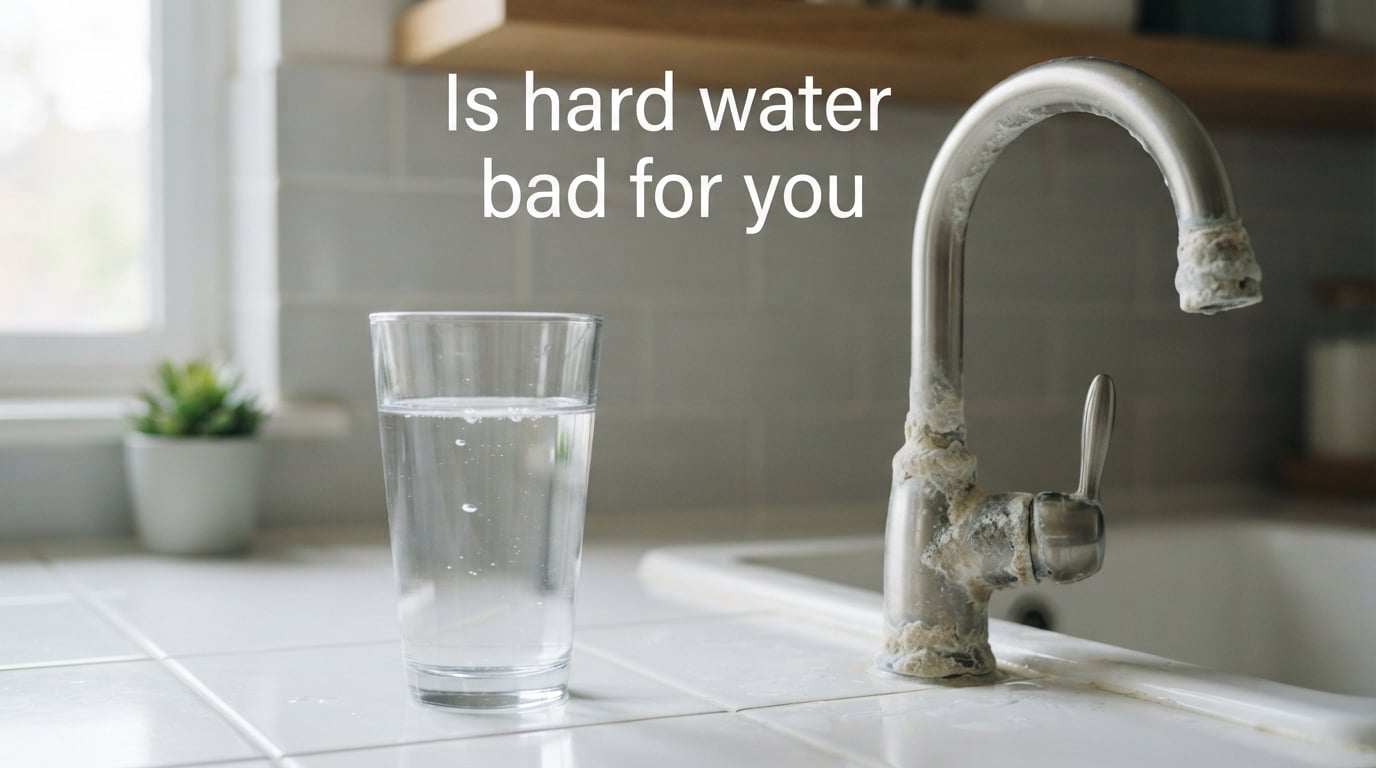
No, hard water is generally not bad for you to drink. According to the World Health Organization, hard water has no known adverse health effects and actually contributes beneficial minerals like calcium and magnesium to your diet. The real concerns with hard water show up on your skin, hair, and home plumbing, not in your body.
I’ve researched this topic extensively for our team at mineralwaters.org, and I want to give you a clear, evidence-based answer. Whether you live in an area with mineral-rich groundwater or you’ve noticed white spots on your dishes, here’s the complete picture on whether is hard water bad for you.
Table of Contents
What Is Hard Water?
Hard water is water that contains high levels of dissolved minerals, primarily calcium and magnesium. These minerals pick up as water travels through limestone, chalk, and dolomite rock formations underground, before reaching your tap.
The hardness of water is measured in grains per gallon (gpg) or milligrams per liter (mg/L). Water with less than 3.5 gpg is considered soft, 3.5 to 7.5 gpg is moderately hard, and anything above 7.5 gpg is classified as very hard.
About 85% of American homes receive hard water, according to USGS data. If you’ve ever spotted chalky white residue on your faucets or noticed your soap won’t lather properly, you’ve seen hard water at work.
The Two Types of Hardness
Temporary hardness comes from calcium bicarbonate and disappears when you boil the water. Permanent hardness comes from calcium sulfate and magnesium sulfate, and boiling won’t remove it.
Health Effects of Drinking Hard Water
Drinking hard water is not bad for you and may even provide health benefits. The calcium and magnesium in hard water contribute to your daily mineral intake, supporting bone health and cardiovascular function.
A 14-year study cited by NIH researchers found that participants drinking hard water had roughly half the mortality risk compared to those drinking soft water. The WHO confirms that hard water is not a health hazard for the general population.
What About Your Kidneys?
No, drinking hard water is not bad for your kidneys for most people. The minerals in hard water actually appear to reduce the risk of kidney stones in some studies, since calcium binds to oxalate in your gut before it can form stones.
However, if you already have kidney disease, your doctor may recommend filtered water to control mineral intake. The same advice applies if you’re on a sodium-restricted diet, since some water softeners add sodium to the water.
Cardiovascular and Bone Health
Studies from the NIH suggest a correlation between hard water consumption and lower rates of cardiovascular disease. The magnesium in hard water may contribute to these protective effects, though researchers note that diet remains a more significant factor.
For most healthy adults, hard water acts as a small mineral supplement. If you’re curious about mineral content beyond hardness, our guide on silica content in bottled water explains another common mineral found in drinking water.
Hard Water Effects on Skin and Hair
Yes, hard water can be bad for your skin and hair, even when it’s safe to drink. The minerals in hard water leave a film on your skin that clogs pores and strips natural oils, leaving you feeling dry and itchy after showering.
Forum users on Reddit frequently report that showering in hard water leaves hair feeling limp, frizzy, and difficult to manage. The mineral buildup also weighs down hair and reduces shine over time.
Hard Water and Eczema
Research suggests hard water can worsen eczema symptoms, especially in children. A study published in the Journal of Investigative Dermatology found that hard water exposure increased eczema risk in young children living in hard water areas.
If you have sensitive skin or eczema, a shower filter or whole-house softener may help. You can also learn about related water health topics like sparkling water effects on hydration.
How Hard Water Affects Your Home and Plumbing
Hard water can be bad for your home because it causes limescale buildup in pipes, water heaters, and appliances. This mineral scale reduces water flow, lowers water heater efficiency by up to 30%, and shortens the lifespan of dishwashers and washing machines.
Culligan reports that hard water can cut appliance lifespan by one-third or more. The most common signs include white spots on clean dishes, soap scum in showers, and reduced water pressure from faucets.
Signs of Hard Water in Your Home
Look for these telltale signs around your house:
White or chalky spots on glassware after washing
Soap that won’t lather properly or leaves a film
White buildup on showerheads and faucets
Dingy, stiff laundry even after washing
Reduced water pressure over time
Hard Water vs Soft Water: Key Differences
The main difference between hard and soft water is mineral content. Hard water contains calcium and magnesium; soft water has had these minerals removed or replaced with sodium through a softening process.
| Factor | Hard Water | Soft Water |
|---|---|---|
| Mineral content | High calcium and magnesium | Low minerals, often added sodium |
| Health effects | Generally safe, may add minerals | Safe, but may increase sodium intake |
| Skin and hair | Can cause dryness and buildup | Leaves skin feeling slippery, hair softer |
| Plumbing | Causes limescale buildup | Protects pipes and appliances |
| Soap performance | Poor lathering, leaves scum | Lathers easily, rinses clean |
| Taste | Some prefer the mineral taste | Can taste slightly salty |
How to Test Your Water Hardness
Testing your water hardness is simple and inexpensive. You can buy test strips at any hardware store for under ten dollars, or contact your municipal water supplier for an annual water quality report.
Test strips change color when dipped in water, matching your result against a chart that shows grains per gallon. For well water, the EPA recommends professional testing every three to five years.
Solutions for Hard Water Problems
You don’t need to remove hard water from your drinking supply, but you can address hard water issues in your home. The most common solution is a whole-house water softener that uses ion exchange to replace calcium and magnesium with sodium.
Other options include shower filters that target chlorine and minerals, magnetic descalers that claim to prevent buildup, and regular vinegar soaks for faucets and showerheads. For drinking water, a simple pitcher filter removes minerals if you prefer the taste of soft water.
Most importantly, don’t stress about drinking hard water. The science shows it’s safe, and the minerals may even support your long-term health.
FAQs
Is it healthier to drink hard or soft water?
For most healthy adults, neither is significantly healthier. Hard water adds beneficial calcium and magnesium to your diet, while soft water may add sodium. People on low-sodium diets or with kidney disease should consult their doctor, but the general population can drink either safely.
What are the negative effects of hard water?
The main negative effects of hard water are aesthetic and practical: dry skin and hair, soap scum in bathrooms, limescale buildup in pipes and appliances, reduced water heater efficiency, and white spots on dishes. It does not pose direct health risks when consumed.
Is it bad to shower in hard water?
Showering in hard water is not dangerous, but it can leave mineral residue on your skin and hair. This buildup may cause dryness, irritation, and worsen conditions like eczema. A shower filter or water softener can help if you notice these effects.
Is drinking hard water bad for your kidneys?
No, drinking hard water is not bad for your kidneys for most people. Some research suggests the calcium in hard water may actually reduce kidney stone risk. However, people with existing kidney disease should follow their doctor’s advice on mineral intake.
Final Verdict: Is Hard Water Bad for You?
So, is hard water bad for you? The honest answer is no, not for drinking. Hard water is safe, provides beneficial minerals, and isn’t linked to any serious health problems according to the WHO and NIH research.
The real drawbacks of hard water show up in your shower, on your hair, and inside your pipes. If those issues bother you, a water softener or shower filter solves them without giving up the mineral benefits in your drinking water.