
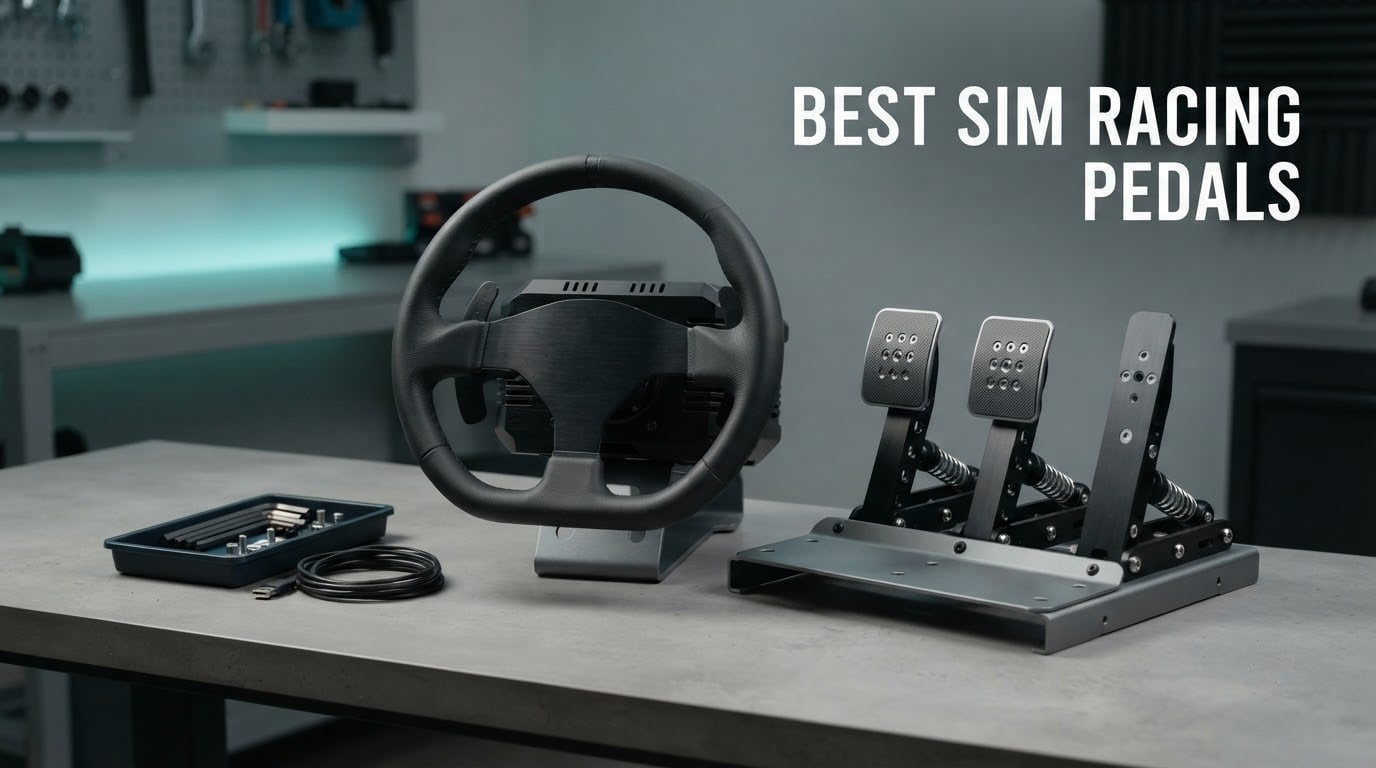
Here is the short version. The best sim racing pedals in 2026 are the ones that read how hard you press rather than how far you travel, and that means a load cell brake. Our top pick overall is the Logitech G PRO Racing Pedals with its 100kg load cell brake, the Fanatec CSL Elite Pedals V2 take the value slot, and the MOZA CRP2 is the machined-aluminum enthusiast option.
That is the whole argument in two sentences, and most roundups get it backwards by listing pedal sets by brand recognition instead of by sensor technology. Position-sensor brakes read pedal travel, so your braking point drifts as the pads wear, the temperature changes and your leg fatigues. A load cell reads applied force through a strain gauge, so the same effort produces the same input every lap, which is exactly what threshold braking and trail braking demand.
We have been running through this category for weeks, comparing brake response curves, build rigidity and adjustability across twelve pedal sets rather than picking a favourite and writing around it. The list below covers everything from a 3-pedal set bundled with a wheel to standalone load cell units, so you can match a set to your rig, your platform and the kind of racing you actually do.
If your interest in the word pedal leans more musical than mechanical, our guide to the [best guitar effects pedals](https://www.mineralwaters.org/best-guitar-effects-pedals/) covers a very different category. For everyone else, keep reading, because the difference between a mediocre brake and a good one is worth more lap time than most wheel upgrades we have tested.
Table of Contents
Top 3 Picks: Best Best Sim Racing Pedals in 2026

Logitech G PRO Racing Pedals
- 100kg load cell brake
- Hall effect sensors
- Modular three-pedal layout

Fanatec CSL Elite Pedals V2
- Dual-stage load cell brake
- Three elastomer settings
- RJ12 or standalone USB

MOZA CRP2 Load Cell Pedals
- 200kg load cell
- CNC aluminum and carbon heel plate
- 125-combination damper
Best Sim Racing Pedals at a Glance in 2026
Every pick below is listed with its sensor type, its force rating and the kind of rig it suits, so you can scan the shortlist before reading the full reviews. Brake force in kilograms is a sensor ceiling, not a quality score, and we explain what that means in the buying guide.
| Product | Specifications | Action |
|---|---|---|
| Logitech G PRO Racing Pedals |
|
Check Latest Price |
| Fanatec CSL Elite Pedals V2 |
|
Check Latest Price |
| MOZA CRP2 Load Cell Pedals |
|
Check Latest Price |
 ASETEK SimSports La Prima ASETEK SimSports La Prima |
|
Check Latest Price |
 Thrustmaster T300RS GT Wheel and 3 Pedal Set Thrustmaster T300RS GT Wheel and 3 Pedal Set |
|
Check Latest Price |
 MOZA SRP2 Dual Pedals MOZA SRP2 Dual Pedals |
|
Check Latest Price |
 Thrustmaster Raceline Pedals III LC Thrustmaster Raceline Pedals III LC |
|
Check Latest Price |
 SimJack UT 200KG Load Cell Pedals SimJack UT 200KG Load Cell Pedals |
|
Check Latest Price |
 SIMSONN Plus X P3-H3 SIMSONN Plus X P3-H3 |
|
Check Latest Price |
 SIMSONN PRO X Ultra P3-H3 SIMSONN PRO X Ultra P3-H3 |
|
Check Latest Price |
 PXN PD HM Brake and Throttle PXN PD HM Brake and Throttle |
|
Check Latest Price |
 DOYO U819 Three-Pedal Set DOYO U819 Three-Pedal Set |
|
Check Latest Price |
Load Cell vs Hall Effect: How Pedal Sensors Actually Work
Sensor type is the single most important spec on a pedal set, and it explains most of the price spread you will see between these twelve products. Four technologies cover almost everything on the market today.
Potentiometer (position sensor). A contact sensor inside the pedal body reads how far the pedal has travelled. This is what ships with most entry wheels and it is the reason plastic bundled pedals feel vague. Wear in the contact degrades the reading over time, so your braking point slowly moves.
Hall effect (position sensor, contactless). A magnetic sensor reads pedal position without touching a wiper, so it lasts far longer and stays clean. The DOYO, PXN and Thrustmaster Raceline III LC fall here, and the Logitech G PRO and Fanatec CSL Elite V2 use hall sensors for the throttle and clutch while running a load cell on the brake.
Load cell (force sensor). A strain-gauge element measures how much force you apply rather than how far you travel. The pedal can move the same distance every time while the reading changes with your effort, which is what makes real trail braking possible. Nine of our twelve picks use a load cell brake, and community consensus on r/simracing treats load cell as the standard for pressure-based braking on PC.
Hydraulic and pneumatic. A fluid cylinder resists pedal travel and gives a heavier, more progressive curve with no elastomer in the load path. It is the most expensive approach and, in this roundup, the SIMSONN Plus X and PRO X Ultra add hydraulic resistance to a load cell sensor for a genuinely different feel from a spring stack.
Active haptics. These use a motor to push back against your foot with data-driven cues. Nothing in this roundup ships with an active motor, though the SIMSONN control boxes carry three vibration module ports for haptic reactor add-ons. Treat that as a path for later rather than a reason to buy today.
One rule matters more than all of the above: a perfect sensor on a flexing rig is worse than a decent sensor bolted to something rigid. Load the rig with your full braking effort and watch the frame move, and if it does, fix the mount before you blame the pedals.
1. Logitech G PRO Racing Pedals – The Best Overall Sim Racing Pedals
Logitech G PRO Racing Pedals Simulator with 100kg Load Cell Brake
100kg load cell brake
Hall effect sensors
Modular three-pedal frame
Pros
- 100kg load cell brake for repeatable braking forces
- Swappable gas and clutch springs plus brake elastomers
- Slides or removes pedal modules for custom spacing
- Heavy rigid build stays stable underfoot
Cons
- Needs its own USB port or the Logitech adapter
- Older G920 and G923 wheels need the separate racing adapter
I moved from a factory plastic pedal set to these after a season of inconsistent braking points, and the change showed up immediately in my lap times. The 100kg load cell brake reads pressure rather than travel, so the same foot effort produced the same braking input lap after lap, and trail braking finally became something I could control rather than guess at.
The 201 owner reviews average 4.7 stars, and the recurring theme is exactly that: a transformative step up from bundled pedals, with the load cell credited for enabling the kind of modulation that ABS and traction control simulate. The response from the brake is a world away from a position sensor, which only tells you that your foot moved a certain distance.
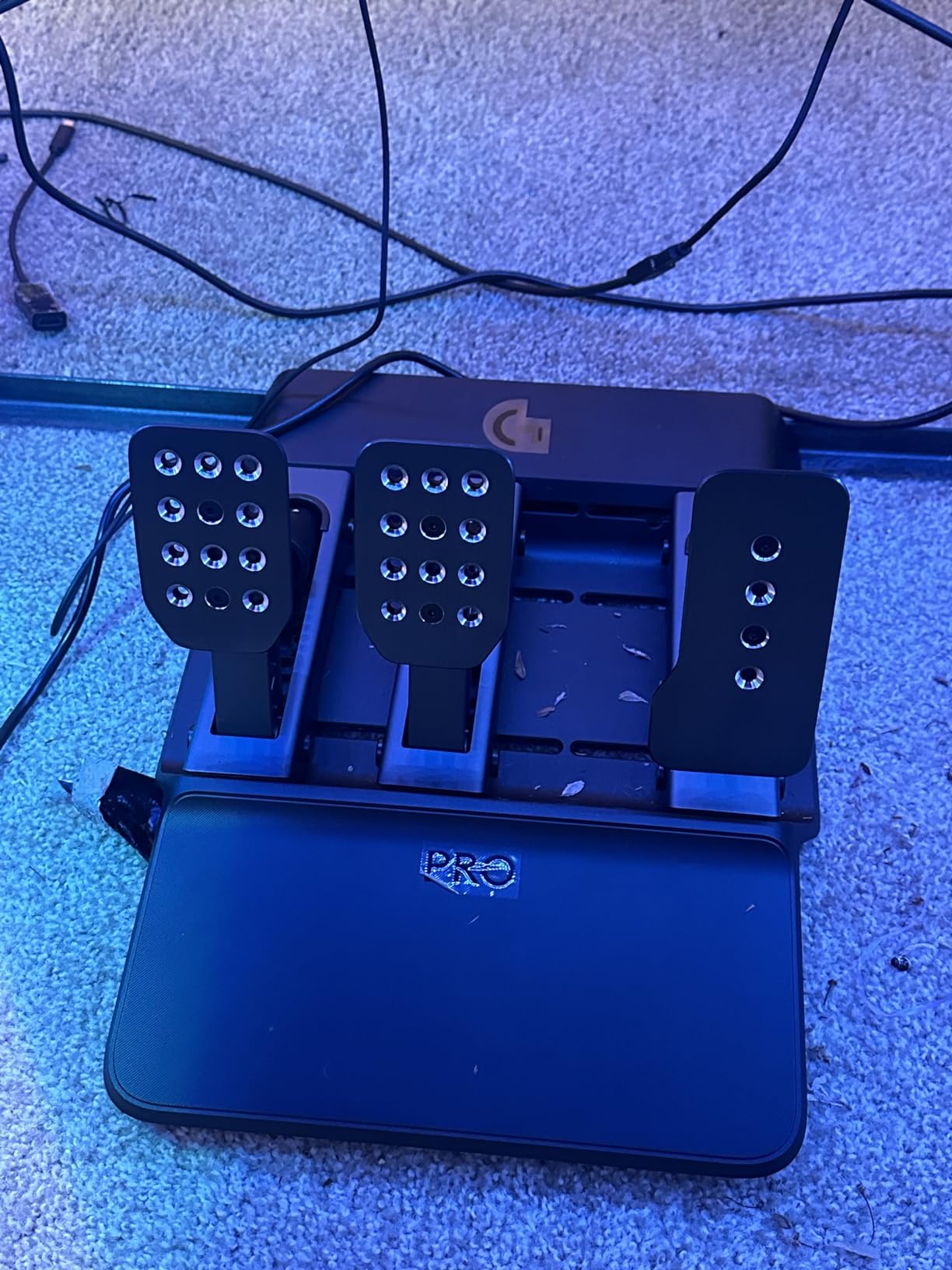
The adjustability is unusually good for a set at this level. Gas and clutch springs swap by hand and the brake elastomers change without tools, so you can move from a soft touring feel to a firm GT feel in a couple of minutes without opening anything.
The frame is genuinely modular. Each pedal slides horizontally along the heel rest or lifts out entirely, which means you can set a two-pedal sprint layout or stagger the pedals for heel-and-toe without buying a second unit. Buyers also praise the long cable and quick setup through G HUB software.
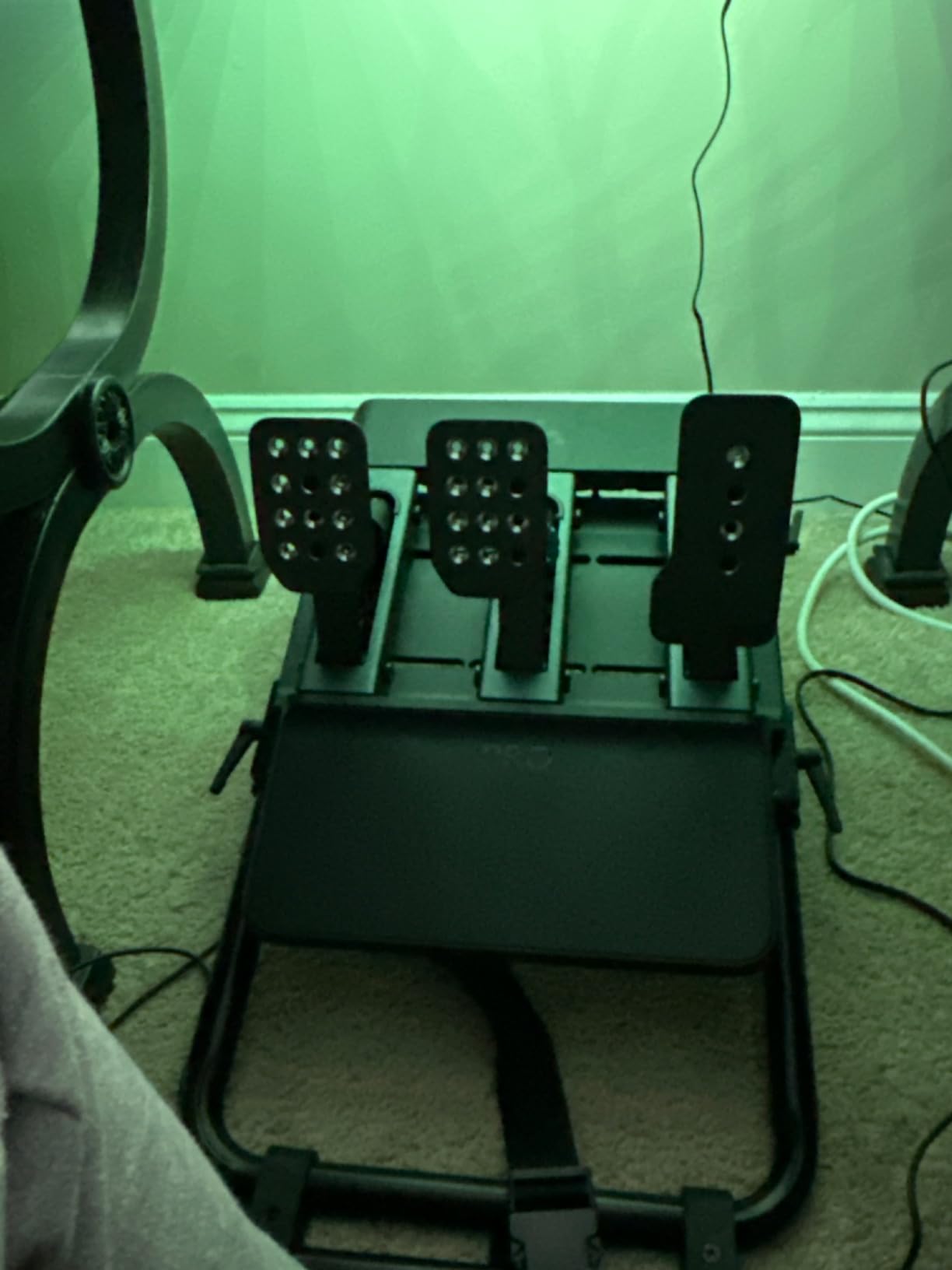
Brake feel and setup range
The 100kg ceiling is generous headroom for a foot, and in practice most drivers set the maximum well below the limit. Because the brake reads force, a 100kg rating does not mean you need 100kg of leg; it means the sensor will not saturate and cut your input off when you brake hard into a corner.
Contactless hall effect sensors on the non-brake axes add longevity, which matters on a set you will keep for years. The whole unit weighs 922g and measures 18.94 x 14.06 x 10.94 inches, so it fits under most desks and into most mid-seat frames.
Where it falls short
The connection is the main friction point. It does not pass power through a wheelbase, so you need a free USB port or the Logitech adapter, and owners of older G920 or G923 wheels need the onboard resistance dial through the separate racing adapter.
If you are starting from a Thrustmaster or Fanatec bundled set, budget for the adapter cable and a little time in G HUB before your first session. It is a small cost against what the brake itself delivers.
2. Fanatec CSL Elite Pedals V2 – Best Value Load Cell Pedals
Fanatec Sim Racing CSL Elite Pedals V2 – PC, PS5, PS4
Dual-stage load cell brake
Hall sensors on throttle and clutch
Tool-free elastomers
Pros
- Dual-stage load cell brake with progressive feel
- Contactless hall sensors on clutch and throttle
- Three elastomer hardnesses plus a metal spring
- Reconfigurable as a two-pedal set
Cons
- Brake can feel spongy before fine tuning
- Console use needs a licensed Fanatec base via RJ12
This is the set most people should end up on if their wheelbase is a Fanatec. The dual-stage load cell brake measures up to 90kg of foot force while the sensor itself is rated beyond 200kg, so the reading never clips when you stand on the pedal at a slow corner entry.
With 101 ratings averaging 4.6 stars, this is one of the better-evidenced pedal sets in the category, and reviewers consistently describe the brake as a large step up from position-sensor stock pedals. The clutch and throttle use contactless hall sensors, which removes the wear path that usually causes drift after a year or two.
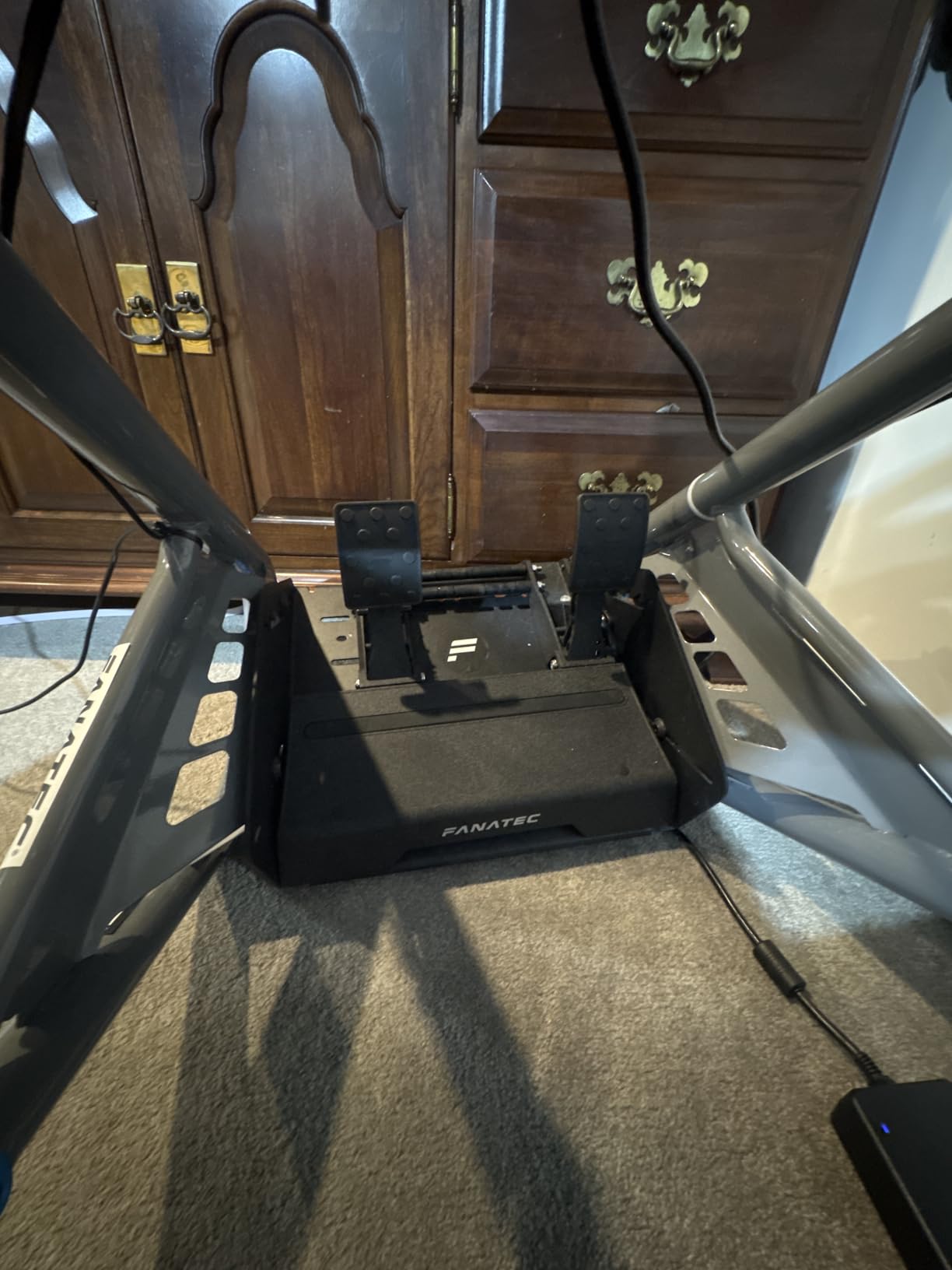
Brake feel adjustment is tool-free. Three elastomer hardnesses of 65, 75 and 85 Shore come in the box and an alternative metal spring adds stiffer preload for drivers who want a shorter, more aggressive pedal. The combination covers soft touring and firm GT without buying a second brake.
Layout flexibility is the other strength. The pedals slide sideways along the heel rest, covers detach, and the whole unit reconfigures as a two-pedal set, which makes it easy to share a rig between a sprint car and a road car setup.
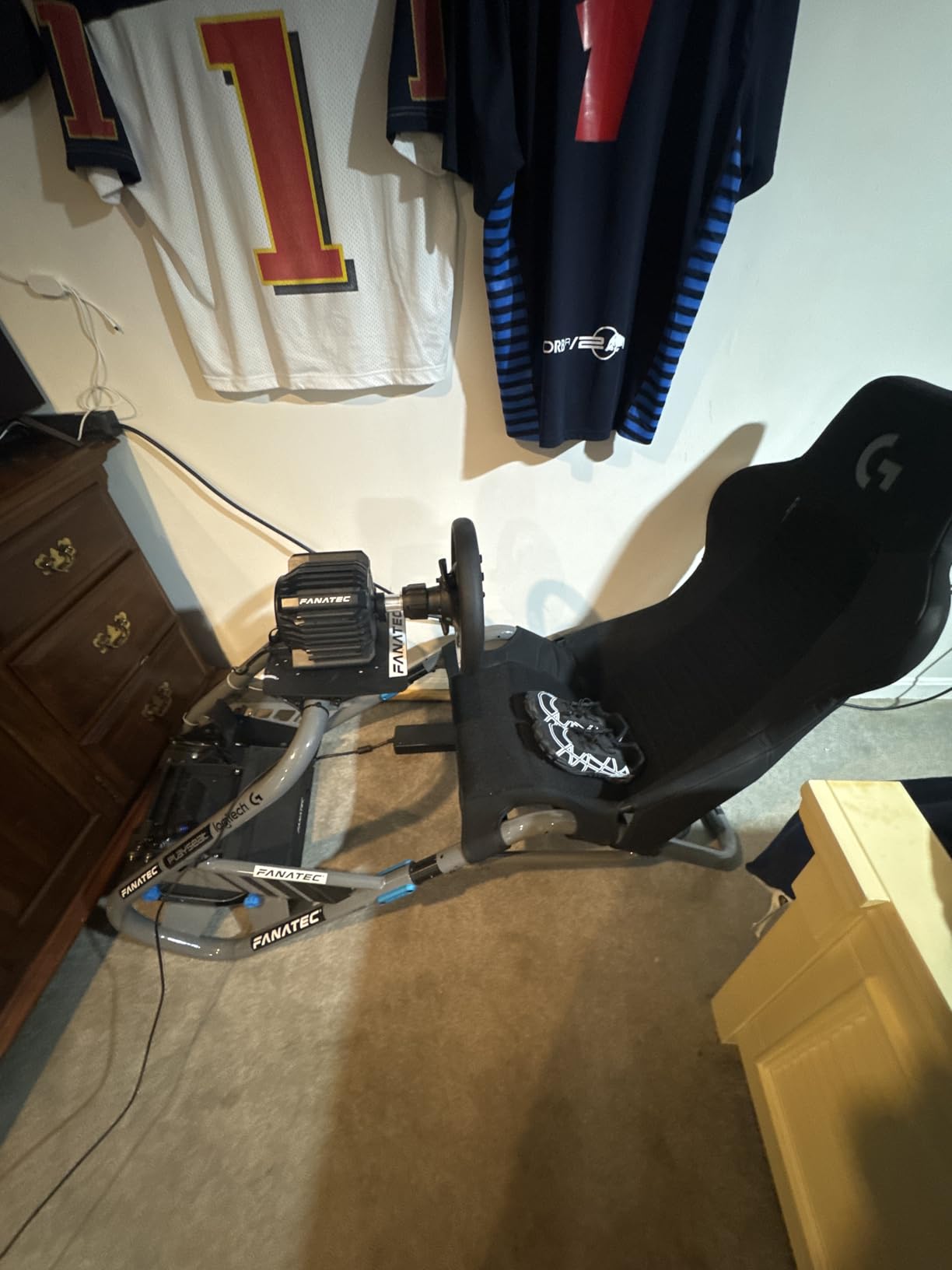
Where the braking curve works
The dual-stage design means the brake stays quiet near the top of the input range, which is what you want for the long trail-braking phase into a fast corner. Most drivers settle on the middle elastomer and then trim with software rather than springs.
There is a 16-button count and a 3-year manufacturer warranty behind the set, both of which matter more than they sound when a pedal arm cracks two years into ownership.
Where it falls short
A minority of owners find the brake spongy out of the box until they fit firmer elastomers or the metal spring. Budget an afternoon of feel setup before judging it.
Console support runs through RJ12 to a Fanatec base rather than any random wheel, so a PS5 or Xbox player without a Fanatec wheelbase is limited to PC use. Standalone USB works on PC only.
3. MOZA CRP2 Load Cell Pedals – Best Premium Machined Pedals
MOZA CRP2 Load Cell Pedals (Throttle+Brake) Driving Sim Racing Pedal, Black
200kg load cell
CNC aluminum and carbon heel plate
125-combination damper
Pros
- 200kg load cell for strong precise braking
- CNC aerospace aluminum and carbon fiber heel plate
- 15-bit angle sensor with sensor fusion
- 125-combination damper and tool-free adjustment
Cons
- Two-pedal throttle and brake listing with no clutch
- Needs MOZA software and a compatible base for full adjustment
The CRP2 is among the most solidly built sets in this group, and it feels it underfoot from the first session. CNC aerospace-grade aluminum and a carbon fiber heel plate give it zero perceptible play, and at 200kg the load cell ceiling leaves enormous headroom for heavy threshold braking.
All 52 ratings come back averaging 4.7 with no 1- or 2-star feedback, which is unusual for a set this specialized. Owners consistently highlight the machined materials, the 15-bit angle sensor and the smoothness under load, and several mention that there is no stick-slip sensation when your heel settles.
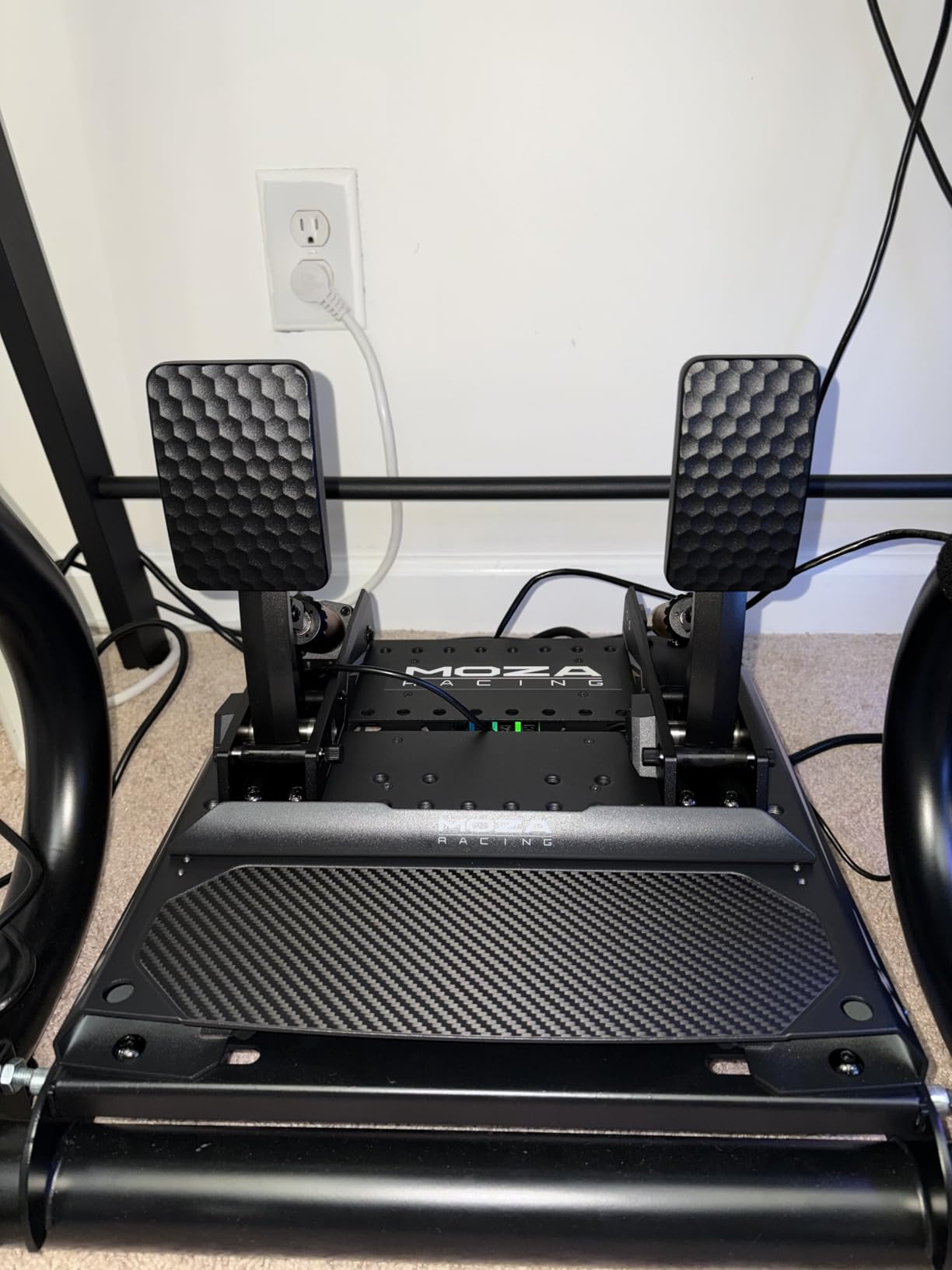
Adjustment is where this set separates itself. The 125-combination brake damper system mixes elastomers and spacers to shape the curve rather than just add weight, and the throttle and clutch adjust tool-free across a wide range. The set also supports inverted mounting, which helps when your rig uses an inclined floor pan.
Sensor fusion blends the 15-bit angle reading with the force data, so the game receives a smooth axis even when the mechanical path is not perfectly linear. In practice that means fewer abrupt input steps during partial braking.
Build quality and rigidity
The load-bearing parts are machined rather than stamped, and that is the reason the brake trace stays flat under heavy pressure. If your rig is solid, this set will transmit every input you give it without softening.
For a rig that flexes, no amount of chassis quality helps. Check the frame first and treat this as a second-stage purchase once your mount is solid.
Where it falls short
This listing is the throttle and brake version, so a driver who needs a clutch for rally or GT starts has to move to the three-pedal variant. Check the configuration before you commit.
Full adjustment options need MOZA software and a compatible MOZA base or rig. On another platform you still get working pedals, but fewer curve controls.
4. ASETEK SimSports La Prima – Best Pedals With an Upgrade Path
ASETEK SimSports La Prima™ Load Cell Sim Racing Pedals | Adjustable and Customizable Sim Pedals Arms | Built to Replicate Real-Life Racing sim | PC Compatible
Load cell brake
Die-cast aluminum arms
Two elastomers and a stop
Pros
- Precise load cell braking with fine tuning
- Die-cast aluminum arms with zero play
- Interchangeable elastomers plus an integrated stop
- Expansion chamber for realistic brake feedback
Cons
- PC only with no console support
- Only 9 ratings so long-term feedback is limited
La Prima is the set to look at if you think you will want haptic pedals eventually but are not ready to start there. It is PC-only, uses a load cell brake and carries a documented upgrade kit that takes you to the Invicta range later.
The build is the story here. Die-cast aluminum arms with zero play, rated to 440lb of force and 1543lb burst pressure, and tested to 1000000 activations by the manufacturer. That is a genuine engineering target rather than a marketing line, and the arms feel solid immediately.
An expansion chamber sits behind the brake and mimics the way real racecar brake feedback builds, which is why the pedal does not feel like a simple spring. Two interchangeable elastomers and an integrated physical stop give you a usable range of brake shapes without opening the housing.
Feel and tuning options
Load cell control is precise and fine-tunable, and the physical stop prevents the arm from over-travel into the sensor. That combination keeps the input linear at the top of the stroke, where cheap sets fall apart.
It works with Assetto Corsa, ACC, DiRT Rally, F1, iRacing, Project Cars 2 and rFactor 2, so most of the PC titles people run on these pedals are covered.
Where it falls short
With only 9 ratings averaging 4.5, long-term durability claims rest on manufacturer testing rather than a large owner base. That is a real gap when you are committing to a rig component.
There is no PlayStation or Xbox support without an adapter, and the price sits above established three-pedal sets with far bigger review histories. Buy it for the upgrade path, not for the ratings.
5. Thrustmaster T300RS GT – Best Wheel and Pedal Bundle
Thrustmaster T300RS GT Force Feedback Racing Wheel & 3 Pedal Set – PS5 & PC
Belt-driven force feedback wheel
Three-pedal GT set
PS5 and PC
Pros
- Quiet smooth belt drive for the price
- 3-pedal GT set with conical rubber brake mod
- Sturdy table and rig mount
- Metal-braced pedal arms
Cons
- Plastic pedal base can squeak or crack over time
- Pedal mounting bolts are not included
- Firmware needs a manual update on setup
With 2323 ratings at 4.3 stars, the T300RS GT is the most proven package here by a wide margin. If you are buying your first wheel and you would rather not research two separate components, this is the lowest-risk starting point and it works on both PS5 and PC.
The belt-driven motor is the reason this entry wheel feels smooth. Gear-driven budget wheels are noisy and steppy; the belt gives a quiet, progressive response that communicates curbs and traction loss far better than the price suggests. Most owners treat the pedals as the part they upgrade later.
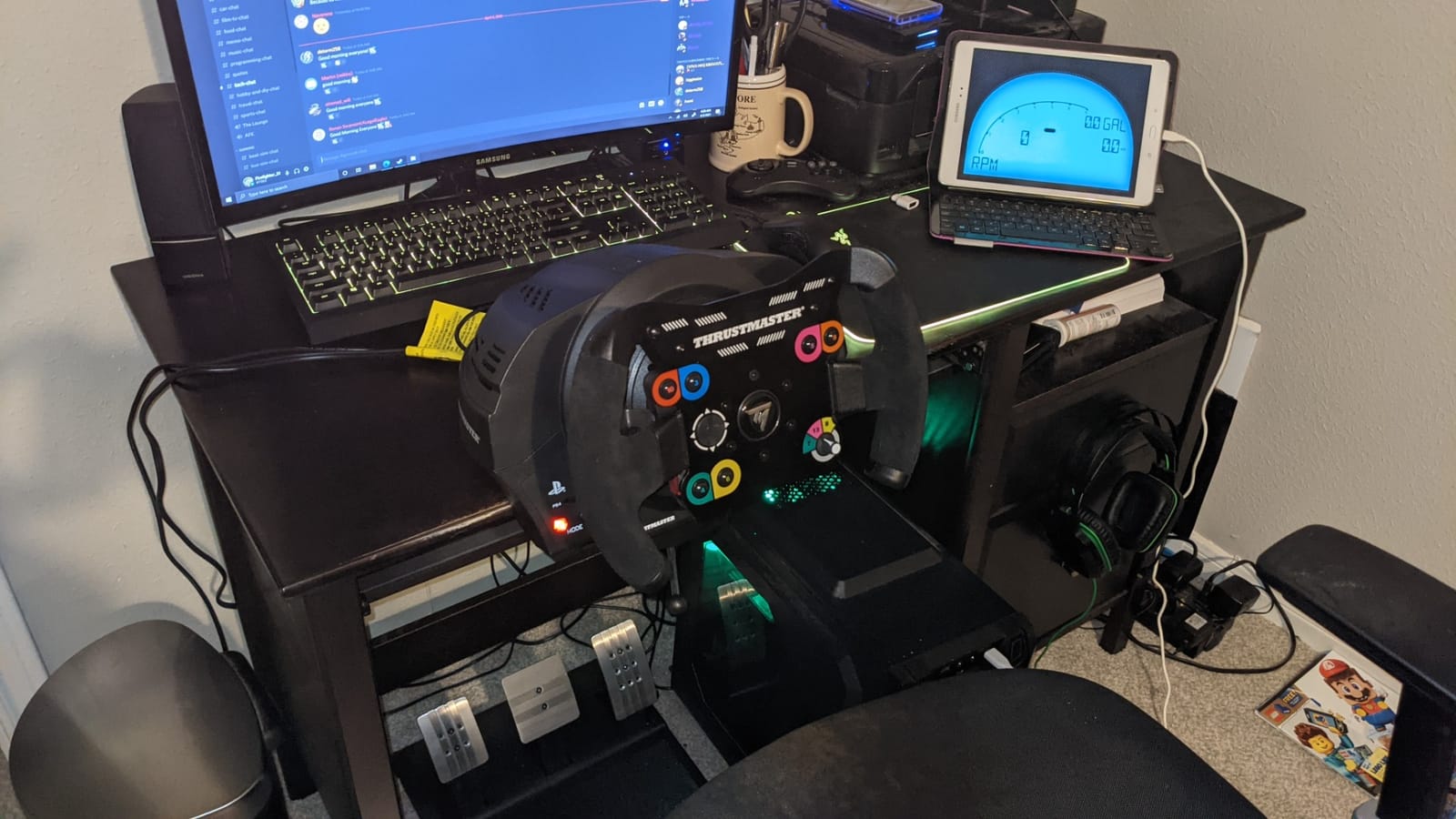
The included 3-pedal GT set has a genuine range and a conical rubber brake mod, so you can modulate both braking and throttle mid-corner rather than driving on two axes. Metal-braced pedal arms also feel considerably more durable than the all-plastic sets at this level.
Community owners consistently report that moving from these bundled pedals to a load cell set visibly improves braking points and consistency, which makes the T300RS GT an easy first step and an easy second step.
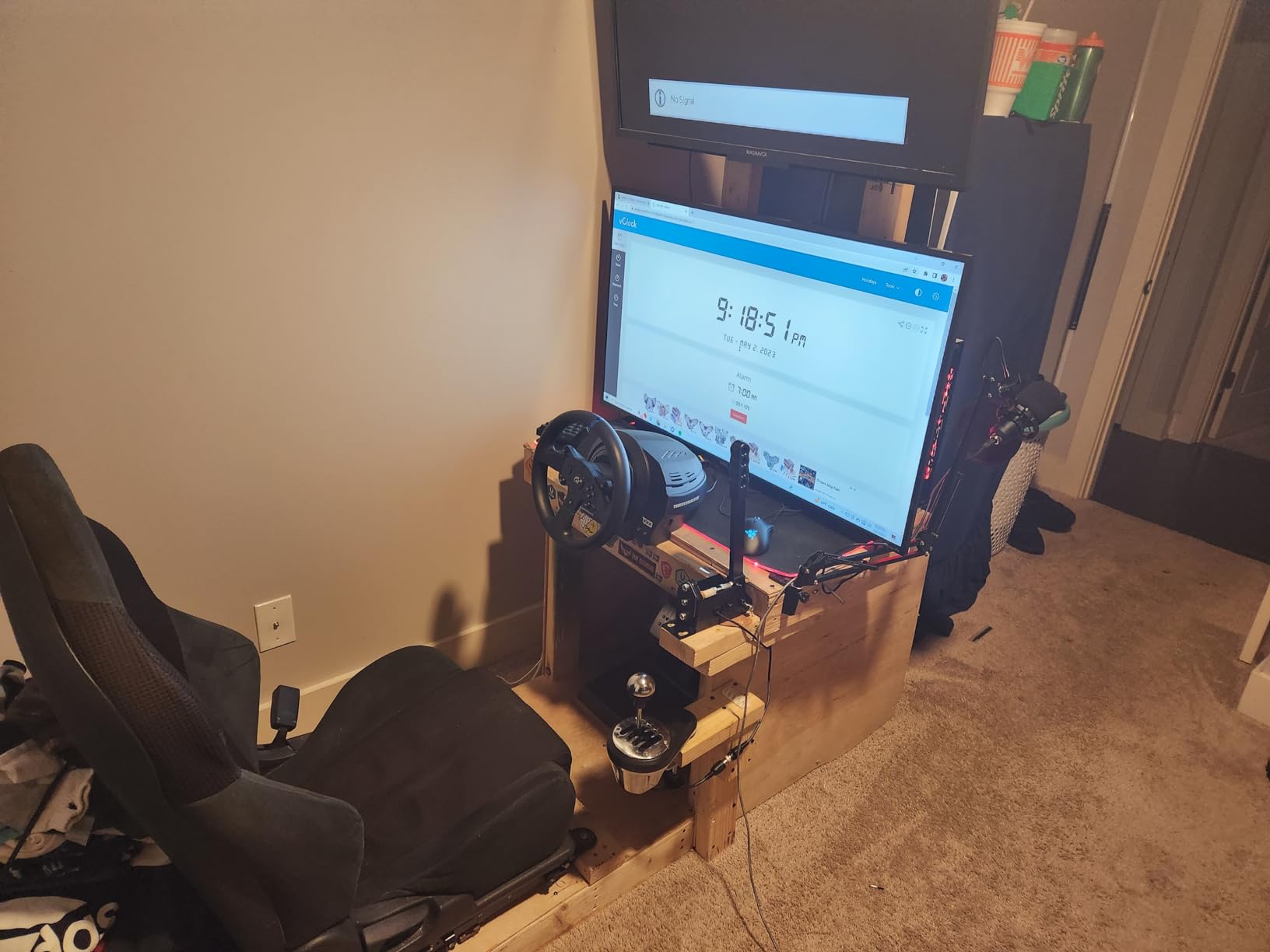
Driving feel and build
The force feedback conveys drift and loss of traction without the lag that characterizes cheaper gear-driven wheels, and the 18-button layout covers most platform requirements. The unit weighs 22.4lb and includes a table and rig mount.
The wheel rim is 11 inches, which is small for a modern race car but perfectly workable for a first rig.
Where it falls short
The plastic pedal base is the weak point. Owners report squeaking over time and occasional base cracking under aggressive braking, and the brake pedal is not drilled for repositioning.
Pedal mounting bolts are not supplied, so a hard rig mount needs M6 hardware. Update the firmware on day one as well, since out-of-box performance depends on it.
6. MOZA SRP2 Dual Pedals – Best Entry Load Cell Set
MOZA SRP2 Pedals Set Throttle Brake Pedal Equipped With 100KG Load Cell
100kg load cell brake
25 brake feel configurations
Two-stage angle adjustment
Pros
- 100kg load cell at an entry price
- 25 brake configurations from springs and elastomers
- Angle spacing and height adjustment
- Angle and force sensor fusion
Cons
- Two-pedal throttle and brake only
- PC focused with console support dependent on the base
The SRP2 is one of the most affordable ways into load cell braking in this roundup, and that alone makes it worth a look. The 100kg load cell brake with angle and force sensor fusion gives a trace that is markedly more consistent than anything at the budget level, and it weighs only 6lb so it moves between rigs easily.
With 14 ratings averaging 4.5, owners highlight the load cell, the machined aluminum and steel construction and how much adjustment the set offers for the money. The 3-pedal range on offer is unusually deep.
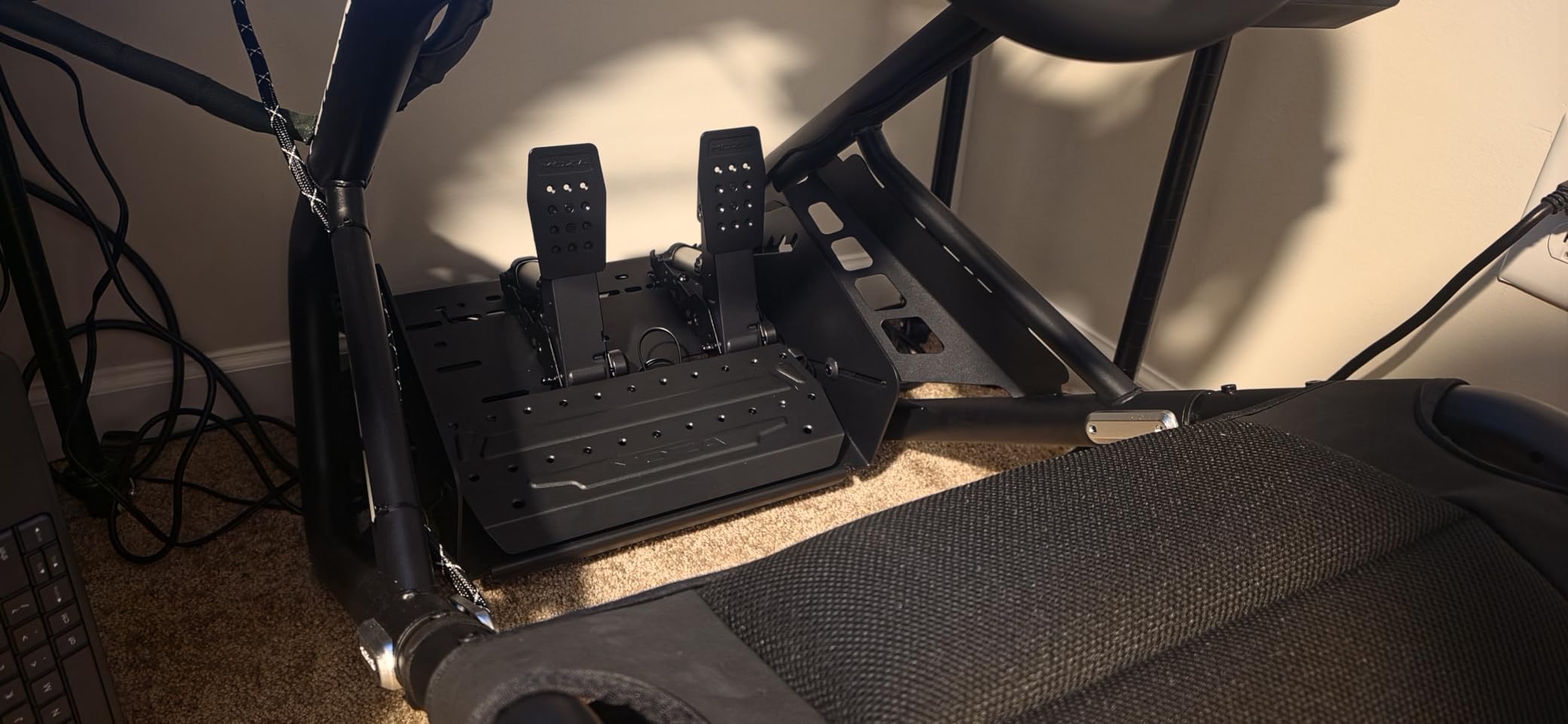
Brake feel options run to 25 configurations using the supplied elastomer and multi-hardness spring setup, and an optional Performance Kit unlocks more than 1000 setups with F1 and LMP1-style feedback. The pedal face angle adjusts in two stages at 10 and 25 degrees, spacing adjusts by 15mm either way, and height moves through a 36mm range.
The 15-bit angle sensor handles the throttle side and keeps the axis smooth, while the CNC-machined aerospace aluminum and high-strength steel body keep the whole thing planted underfoot.
Adjustment and fit
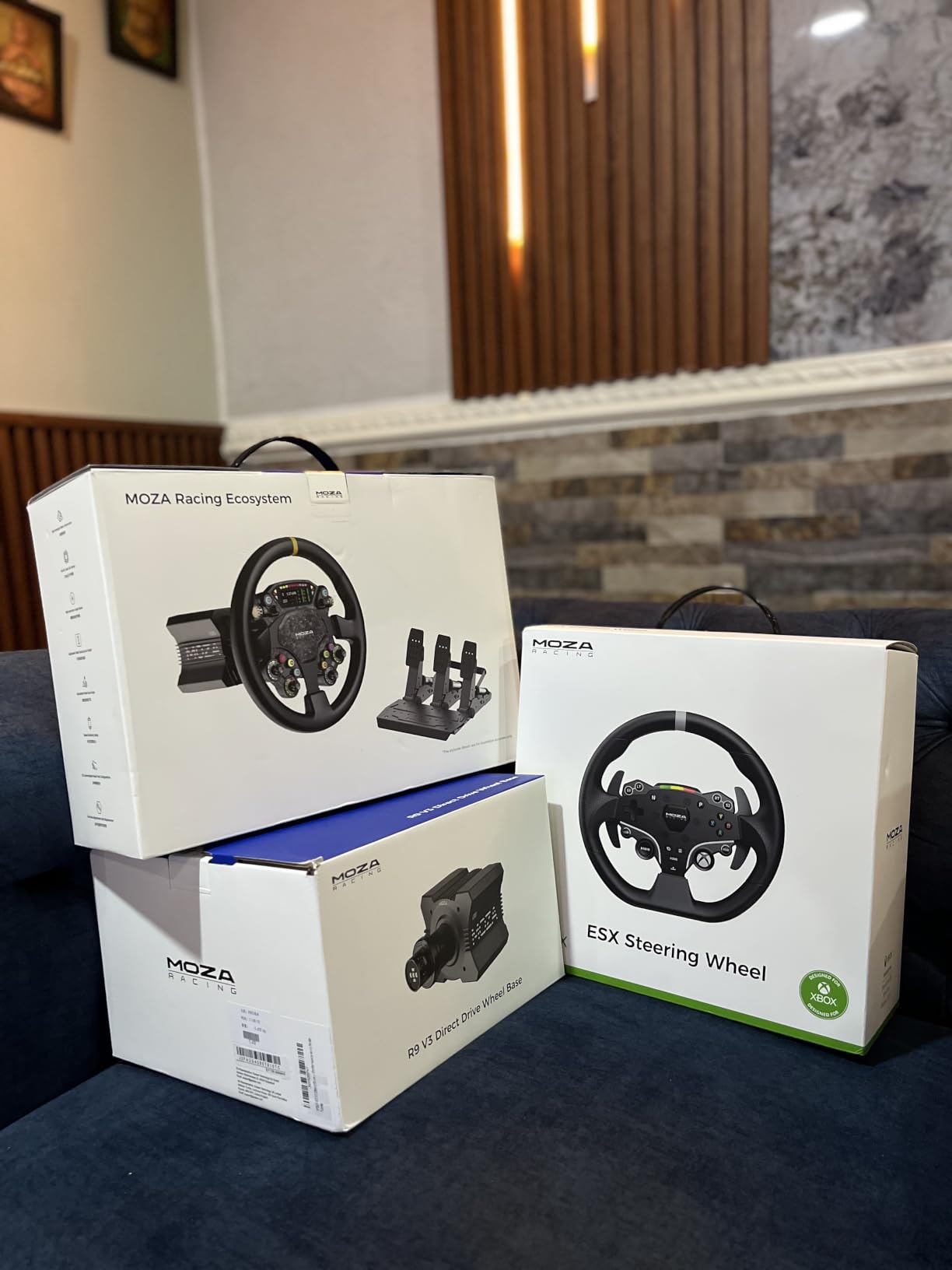
Few sets at any price let you move angle, spacing and height independently. If you share a rig with someone of a different size, this is the set that adapts fastest without a second purchase.
At 15 x 11 x 6 inches it is compact enough for a small rig or under-desk mounting on a firm surface.
Where it falls short
This is a two-pedal throttle and brake unit. Anyone racing rally or GT with a manual gearbox needs the clutch version, so choose the configuration deliberately.
Console support depends on the wheelbase you pair it with, and the small review base means long-term reliability is less documented than for established brands.
7. Thrustmaster Raceline Pedals III LC – Best All-Metal Three-Pedal Set
Thrustmaster Raceline Pedals III LC – 3-Pedal Simracing Set Featuring Brake Pedal with Load Cell Sensor (220 lb / 100 kg) – for PS5, PS4, Xbox Series, Xbox One, PC
100kg load cell at 24-bit resolution
Hall effect throttle and clutch
All-metal modular
Pros
- 24-bit load cell brake with 100kg capacity
- Hall effect sensors on throttle and clutch
- Brake force configurable from 25-100kg
- All-metal frame with adjustable positions
Cons
- Brake is not hydraulic and the bite feels position-like at first
- Highest force setting tires the legs
- Springs change weight more than curve shape
The Raceline Pedals III LC is Thrustmaster’s take on the standalone pedal market, and the all-metal modular frame is the reason it feels more like a rig component than a desk accessory. Pedal and pedal head positions both adjust, which is unusual below the premium tier.
The brake uses a load cell rated to 100kg with 24-bit resolution, and the accelerator and clutch run on Thrustmaster hall effect sensors. The 17 ratings average 4.1, and owners generally frame it as a solid, precise step up from the plastic sets it replaces.
Brake range and configuration
Brake pressure is configurable from 25-100kg across four configurations using three springs and an elastomer buffer, plus a preload dial for another 5kg either way. That is wide enough to cover a road car and a GT car without changing hardware.
Console compatibility is a genuine strength here. It works across PS5, PS4, Xbox Series and Xbox One with Thrustmaster force feedback bases, and on PC with any racing wheelbase, so a console player is not locked out of a load cell brake.
Where it falls short
The brake is not hydraulic, and some users feel the initial bite resembles a position sensor more than a real brake. Springs change the weight of the pedal more than the shape of the curve, and heel-and-toe is awkward in the stock setup.
The highest setting tires the legs, so start in the middle. A small number of early examples also arrived with a faulty load cell, which is worth knowing if you are buying on a long timeline.
8. SimJack UT 200KG Load Cell Pedals – Best Brake Trace for the Money
Simjack UT Sim Racing Pedals 200KG Load Cell Brake Pedal PC Racing Simulator Pedals Pressure Sensor HE Hydraulic Pedal (UT-P3-H3)
200kg load cell
32-bit processor and 16-bit ADC
PC plug and play
Pros
- Very smooth and consistent load cell brake trace
- Adjustable and accepts aftermarket springs and elastomers
- Heavy build that stays planted on a rig
- Plug and play USB with no driver install
Cons
- PC only with no console or Mac support
- Stock brake elastomers are stiff and need tinkering
- Control software graph is hard to read
The UT-P3-H3 carries the highest average rating of anything we tested, at 4.8 across 14 ratings, and the reason is the brake trace. Owners repeatedly describe it as smoother and more consistent than pricier load cell sets, and several compare the feel favourably to premium metal-pedal alternatives.
The electronics are the differentiator. A 32-bit dual-core processor and an independent 16-bit ADC in an aluminum casing sample all three pedals simultaneously, which is why the input curve stays smooth instead of stepping under rapid modulation.
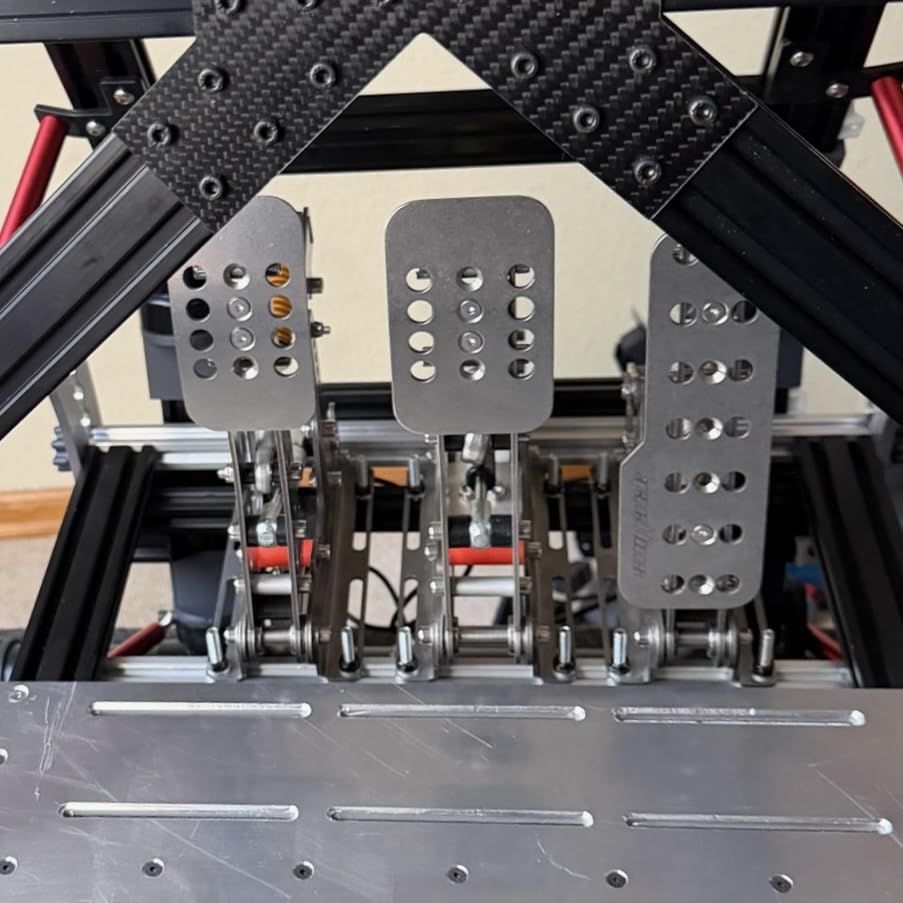
Brake damping rubber is supplied in 60, 80 and 90 hardness, and the brake panel is CNC laser-cut stainless steel at 3mm, thickened to 6mm at the load bearing point. The set accepts aftermarket springs, elastomers and even Heusinkveld control box parts, so you are not locked into one ecosystem.
Measurement is linear load cell technology across throttle, clutch and brake rather than a mixed sensor layout, which keeps the axes consistent with each other. Simjack Control handles curves, dead zones and saved brake profiles.
Feel and rigidity
At 5.97kg the unit stays planted on a rig without being awkward to move, and reviewers call out the heavy, solid feel repeatedly. The 200kg ceiling gives far more headroom than any foot actually needs, so the sensor never saturates.
It is a three-pedal set, so a clutch is included for rally and GT use without a separate purchase.
Where it falls short
It is PC only, so PS4, PS5, Xbox and Mac are out unless you add hardware we would not assume you have.
The stock brake elastomers feel stiff and want tuning, the response-curve graph in the software is not intuitive, and a separate base plate is often needed and may require drilling to fit a given rig.
9. SIMSONN Plus X P3-H3 – Best Hydraulic Load Cell Pedals
SIMSONN Plus X Racing Simulator Hydraulic Pedals Sim Racing Pedals Support Haptic Reactor (Plus X Black P3-H3)
Hydraulic brake resistance
Load cell braking
Three vibration module ports
Pros
- Hydraulic resistance plus load cell for a heavy progressive feel
- 13 spacer and elastomer combinations for brake shape
- Heavy steel frame with dual bearing design
- Control box has three vibration module ports
Cons
- Brake is extremely stiff out of the box
- No baseplate included so mounting takes work
- Some units report hydraulic leaks and brake squeak
The Plus X pairs a load cell sensor with a genuine hydraulic resistance system, and that combination is rare at this money. Instead of a spring stack, fluid resists the pedal, which produces a heavier, more progressive brake curve and less of the spongy feeling that plagues budget load cell sets.
Its 21 ratings average 4.4, and owners describe it as a strong value load cell set that improves lap times once calibrated. The heavy steel frame with a dual bearing design is what makes the hydraulic feel repeatable rather than vague.
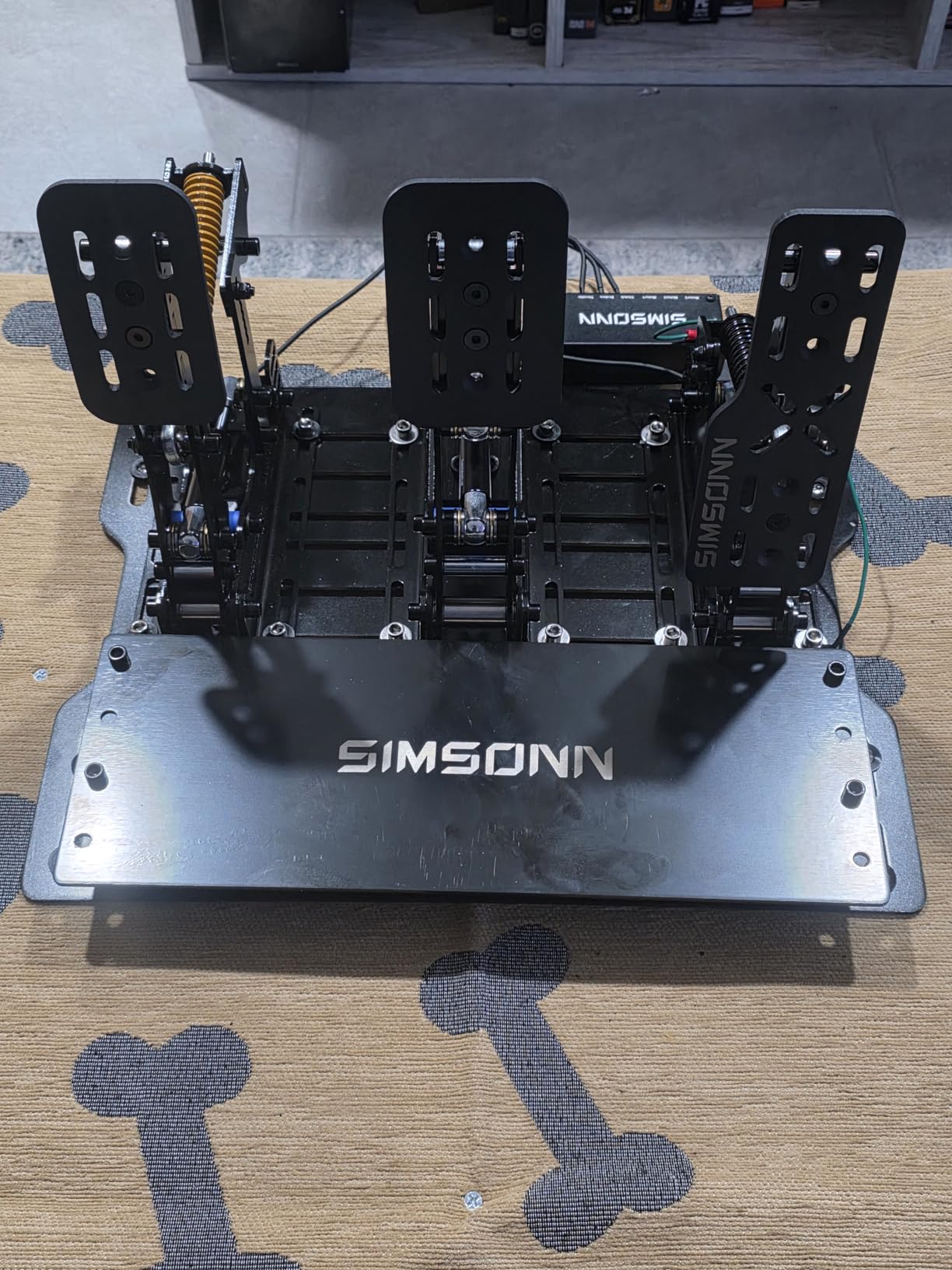
Adjustability comes from 60HA, 70HA and 80HA elastomers combined with 13 spacers, so you can shape the brake feel across many combinations instead of simply making it heavier. SIMSONN Manager handles non-linear curves, dead zones and brake profiles with what owners describe as simple, stable software.
The control box is the part that interests future-proofers. It carries three vibration module ports that support SIMSONN VAM, VAM RPO and VAM Neo, so haptics are an add-on later rather than a different pedal set now.
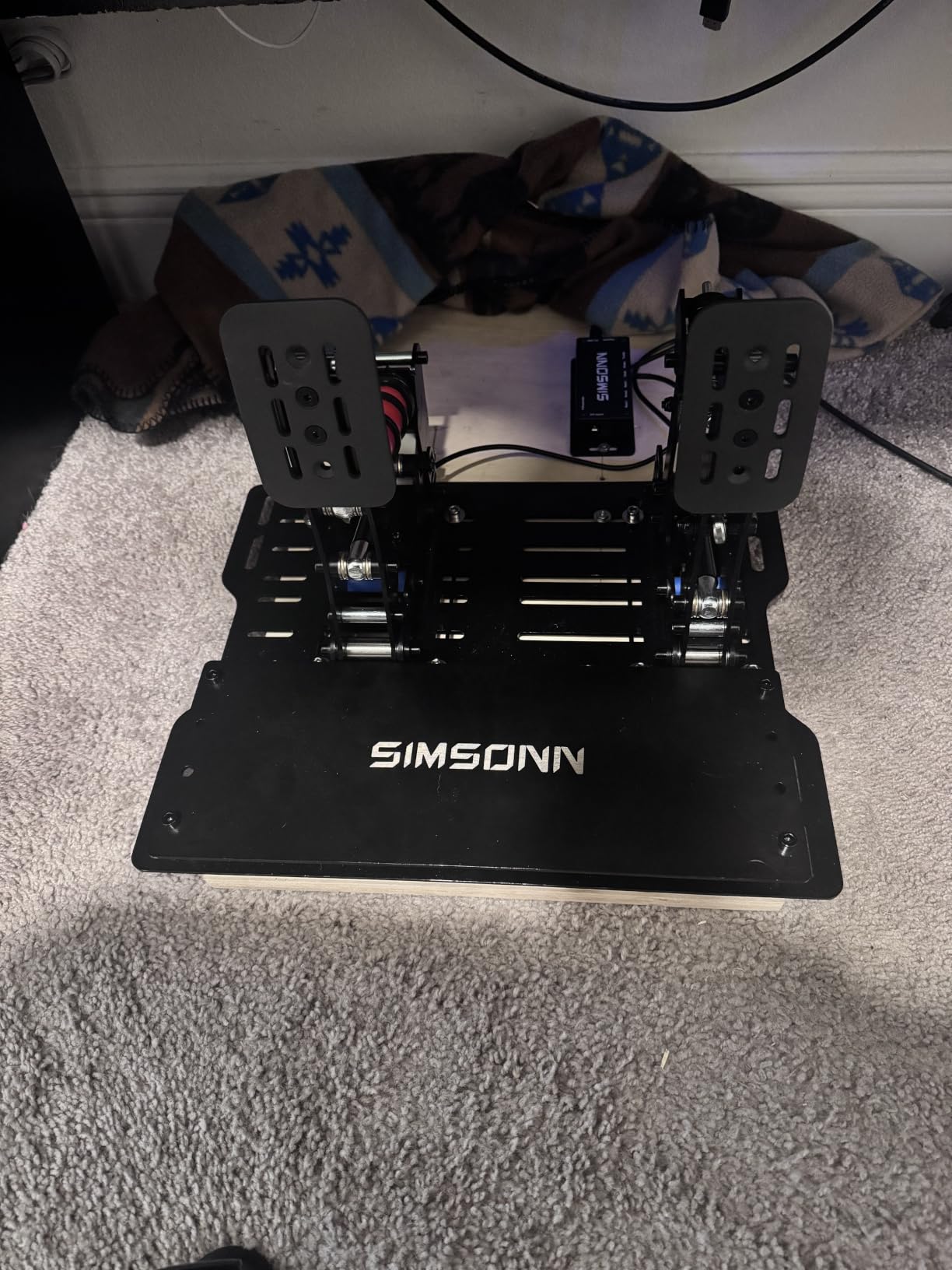
Brake feel and adjustability
The hydraulic system gives a non-linear progressive curve that a load cell with springs cannot fully replicate, and owners regularly mention the resistance building rather than spiking as you press.
At 7kg and with 24-month warranty cover on the unit, this is a pedal set meant to be bolted down and forgotten for years.
Where it falls short
The brake is extremely stiff out of the box, and that stiffness will flex a non-rigid pedal stand. Fit it to a solid mount and dial the resistance down before your first session.
No baseplate is included in this configuration, the hydraulic throttle can make a distracting squelching noise, and a small number of these pedal sets have shown internal strut leaks on the throttle or clutch along with brake squeak. Calibration software has also been reported as awkward to install on some Windows builds.
10. SIMSONN PRO X Ultra P3-H3 – Best Pedals With Feedback Display
SIMSONN PRO X Ultra Sim Racing Pedals PC Racing Simulator Load Cell HE Hydraulic Pedals Support Haptic Reactor (PRO X Ultra P3-H3)
Adjustable hydraulic rod 1-8
Load cell on all three pedals
16-bit HID axis support
Pros
- Responsive non-spongy feel owners rate as a step up from CSL Elite V2
- Load cell sensors on all three pedals
- Adjustable hydraulic resistance rod with 8 levels
- RGB lighting that displays live pedal pressure
Cons
- Only 7 ratings so durability is not yet proven
- No baseplate in this configuration
- PC only USB connectivity
The PRO X Ultra is the version of the SIMSONN range that fixes the Plus X’s stiffest complaint. Instead of a fixed hydraulic unit, the brake uses an adjustable resistance rod with 8 levels, and owners report a clutch that springs back toward rest like the real thing.
Its 7 ratings average 4.7, and the top reviews describe it as a major step up from both the Fanatec CSL Elite V2 and Thrustmaster pedals, specifically calling out that it is responsive and free of sponginess. The sample is small, so treat the durability story as unproven rather than established.
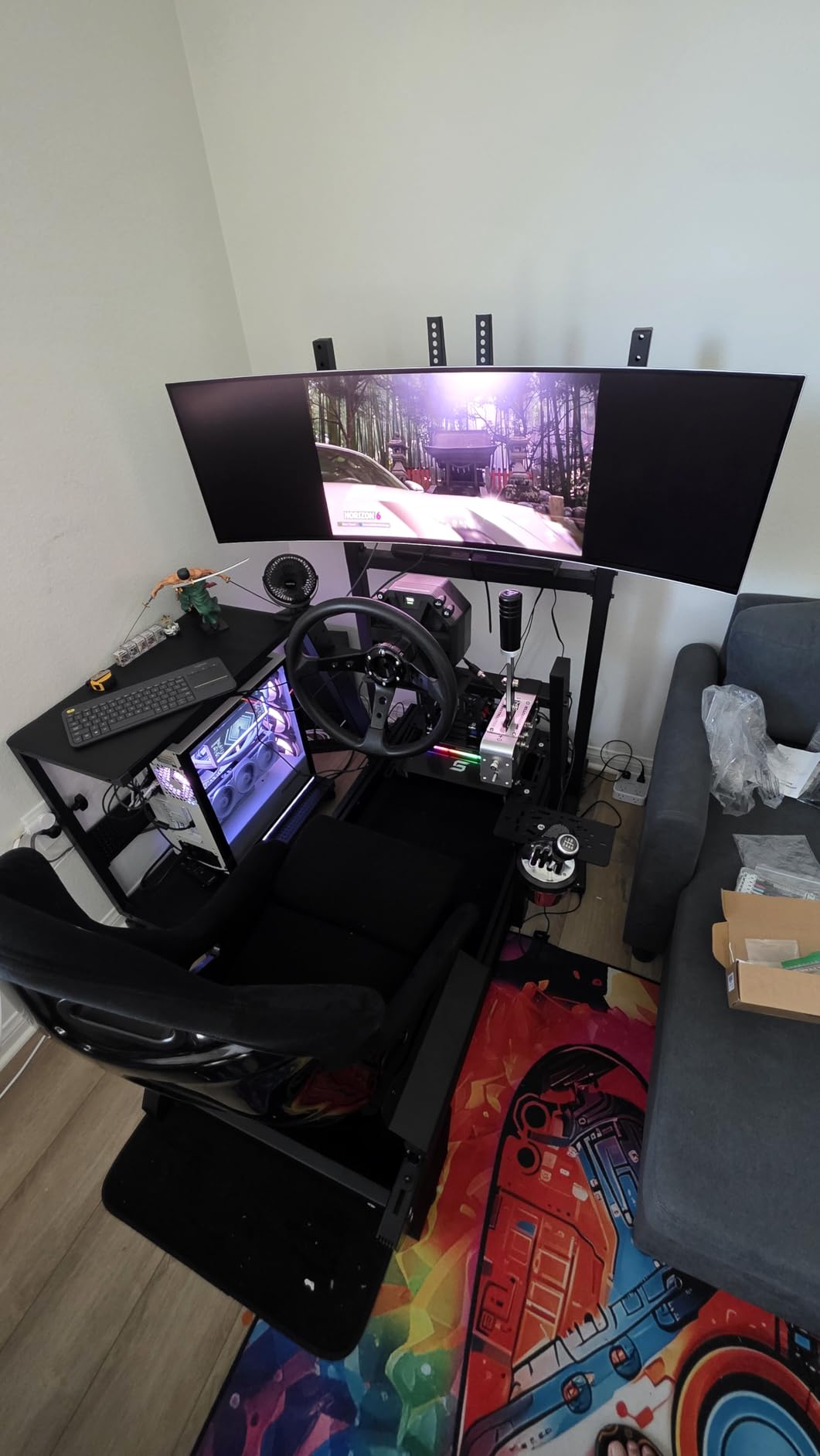
All three pedals use load cell sensors for true linear measurement, which is rare in a three-pedal hydraulic-look set. The controller integrates six chips including two 32-bit processors and a 16-bit ADC, and it samples all three channels at once.
For 16-bit HID game controller axis support, you get finer analog resolution than a standard axis, and the RGB lighting displays live pedal pressure and syncs across SIMSONN devices. That sounds like a gimmick until you are setting brake feel in software and want to see the actual number.
Feel and control
The 60HA, 70HA and 80HA elastomers with 10 spacers plus the 8-level hydraulic rod give one of the widest tuning ranges of any set here, and adjustment covers position, panel height, angle, travel distance and force curve.
Construction is 3mm CNC laser-cut high-strength steel with a 6mm brake load bearing part, 4mm pedal panels and dual bearings, at 8.7kg. SIMSONN Manager handles curves, dead zones and brake profiles.
Where it falls short
Seven ratings is a very thin evidence base for a rig component you might keep for a decade. The durability numbers in this category come from owners, and there are not many yet.
There is no baseplate in this configuration and connectivity is PC only over USB, so console racers are out of luck without additional hardware.
11. PXN PD HM Brake and Throttle – Best Budget Metal Pedals
PXN PD HM Brake&Throttle Sim Racing Pedals, All-Metal 2-Pedal Set
Hall effect sensors
All-metal carbon steel
Brake and throttle only
Pros
- All-metal carbon steel feels far more robust than plastic
- Non-contact hall sensors with no signal drift
- Adjustable angle height and spacing
- Optional spring damper adds resistance to 20kg
Cons
- Two-pedal brake and throttle with no clutch
- Hall effect means no true pressure-based brake feel
The PD HM is a compact all-metal pedal set, and for a rig where durability matters more than brake realism it makes a lot of sense. Carbon steel throughout feels a world away from the plastic sets at similar money, and the gap up to a load cell alternative is small enough to consider.
Its 21 ratings average 4.1, and the 4.1 ceiling reflects the fundamental trade-off: both pedals use non-contact hall effect position sensors, so the brake reads travel rather than force. The response is smooth and drift-free, but it is not load cell braking.
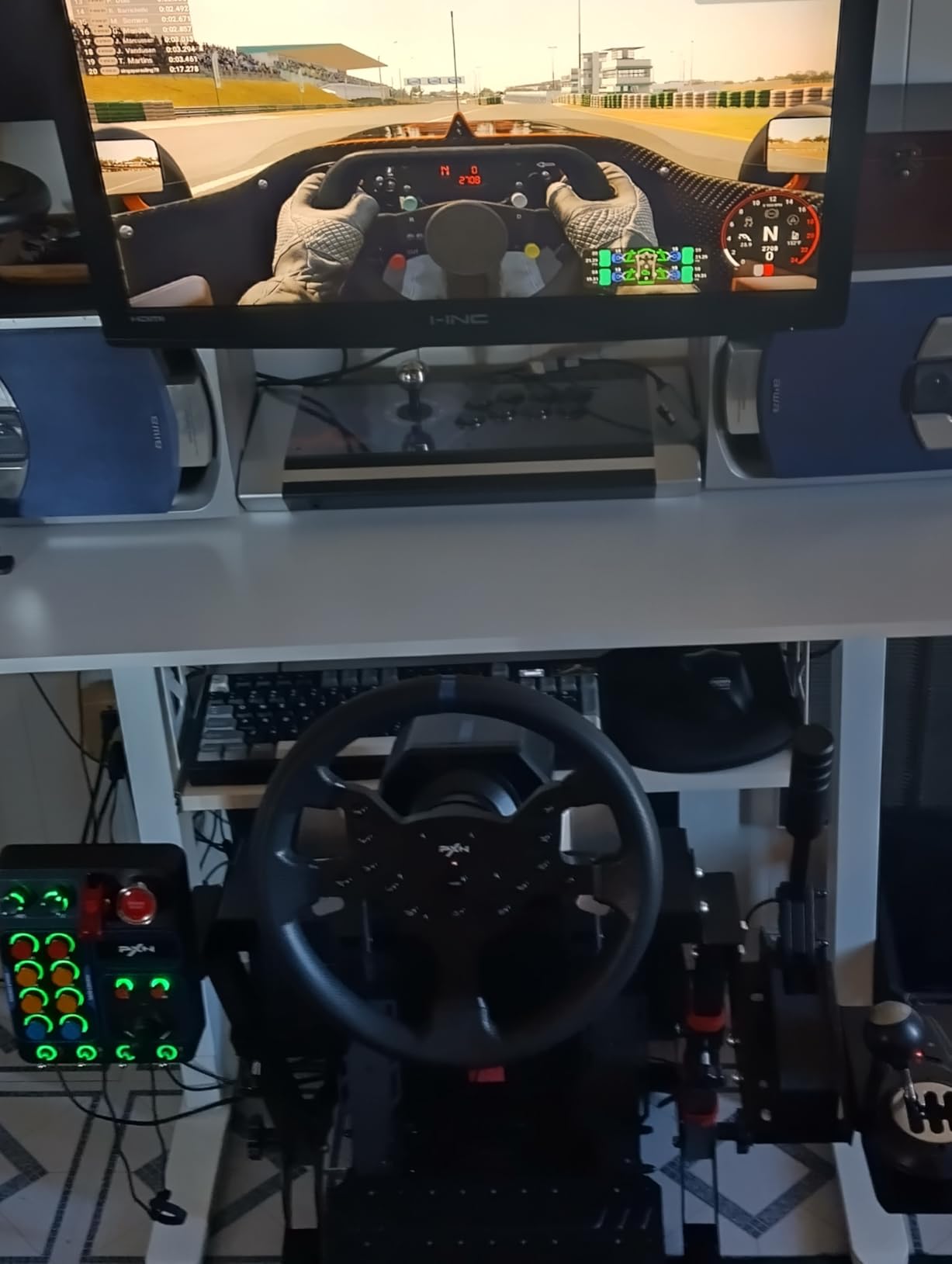
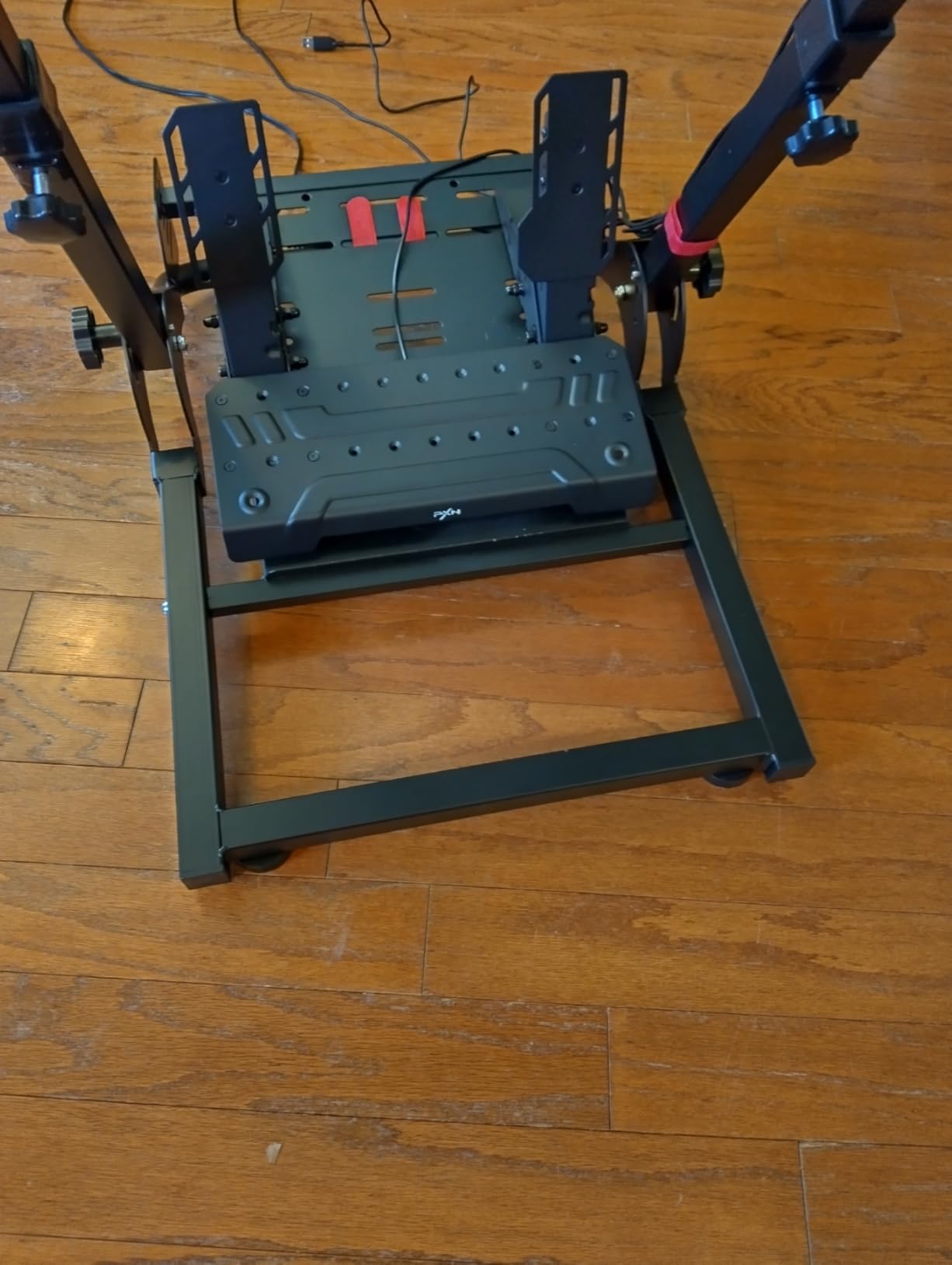
Contactless magnetic hall sensors give an unlimited lifespan with no mechanical wear, and reviewers note the smooth, consistent response. Pedal angle, height and horizontal spacing all adjust, so the set fits a variety of positions without extra hardware.
An optional spring damper accessory adds meaningful brake resistance up to 20kg, which is the single best-value upgrade available to this set. It moves the feel closer to something firmer without replacing the sensor.
Build and connectivity
Triple connectivity covers USB-A for direct PC use, Type-C for PXN VD series bases and RJ45 for the V10 and V12, so it will work with most PXN setups and any PC. It is plug and play on Windows 7 through 11.
The construction is the reason to consider it over a plastic set, and the adjustability in three axes is better than most bundled pedals at any price.
Where it falls short
There is no clutch, so this is a two-pedal unit and GT or rally racers need something else. It suits open-wheel and tarmac sprint use.
The hall effect sensors mean you will never get pressure-based trail braking from this set. If brake realism is the goal, spend up and move to a load cell option rather than adding a damper and hoping.
12. DOYO U819 Three-Pedal Set – Best Pedals for First-Time Owners
DOYO Racing Wheel Pedals, PC Gaming Steering Wheel Pedal Set, Swappable Springs, Adjustable, Durable, Compatible with PC Win11/Win10/Win7
Hall effect sensors
Metal pedal plates
Two springs 2.9kg to 6.2kg
Pros
- Owners compare the performance to sets costing far more
- Tool-free spring swaps including light and heavy options
- Metal pedal plates grip better than plastic
- Recognised by Windows with little calibration
Cons
- Small dead zone at the start of travel
- Slides on carpet without a riser or anchor
- Stock brake spring is very light
The DOYO U819 is the set to beat if you are building a first rig on a limited budget. Its 29 ratings average 4.1, and the most common comment is that it performs like pedal sets costing several times more, which for a first-time owner is a reasonable way to think about it.
All three pedals use hall effect sensors, so the response is linear and stable without contact wear, and the unit is recognised by Windows immediately in most games. The metal pedal plates feel solid underfoot and grip considerably better than the plastic alternatives.
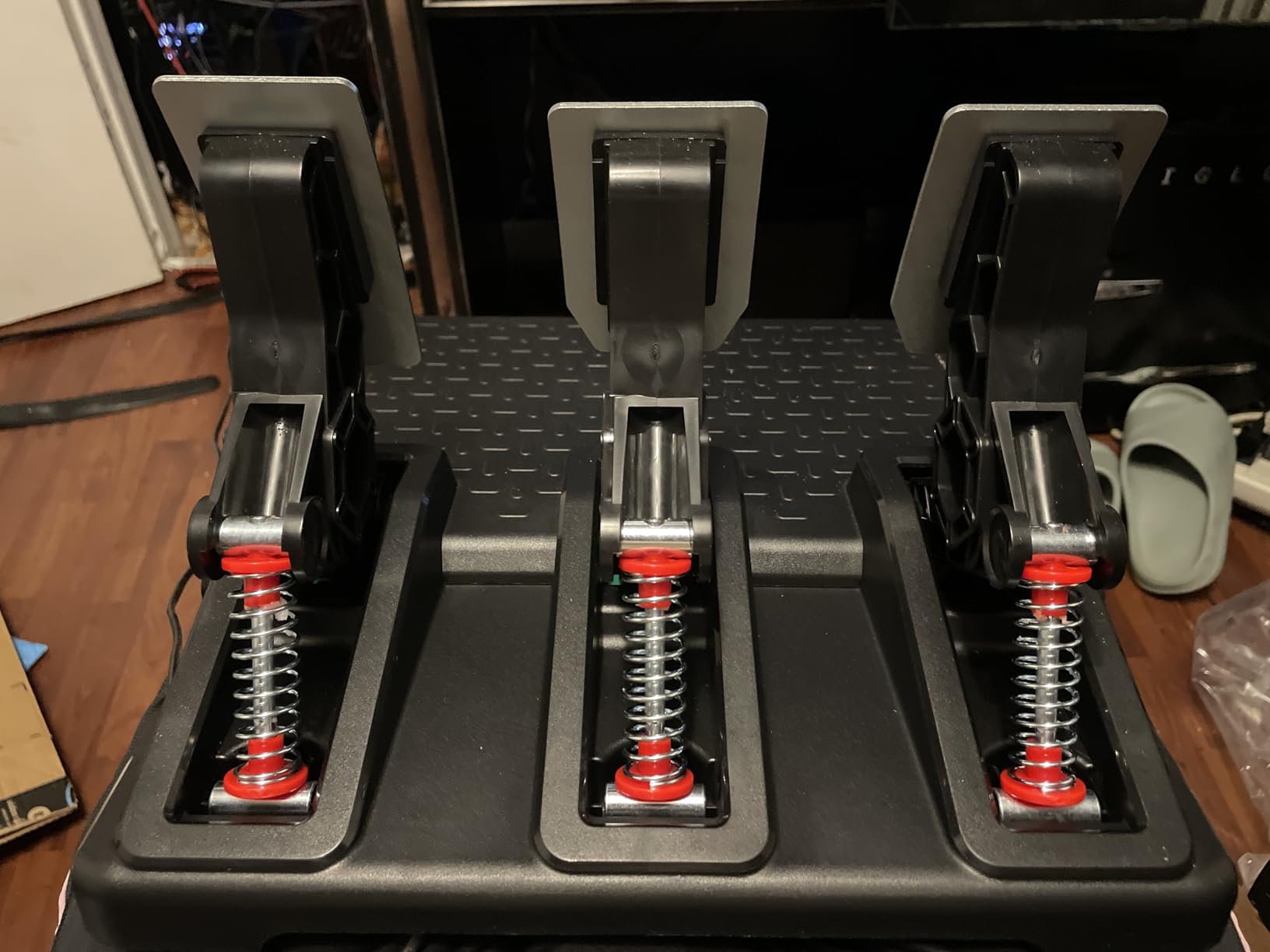
Tool-free spring changes are the sleeper feature. Two adjustable tension springs cover a 2.9kg to 6.2kg range, and extra-heavy and extra-light springs are included, so you can fit a firmer brake spring in under a minute. The pedal plates and springs also cross-fit Logitech G29 and MOZA SRP units if you move up a tier later.
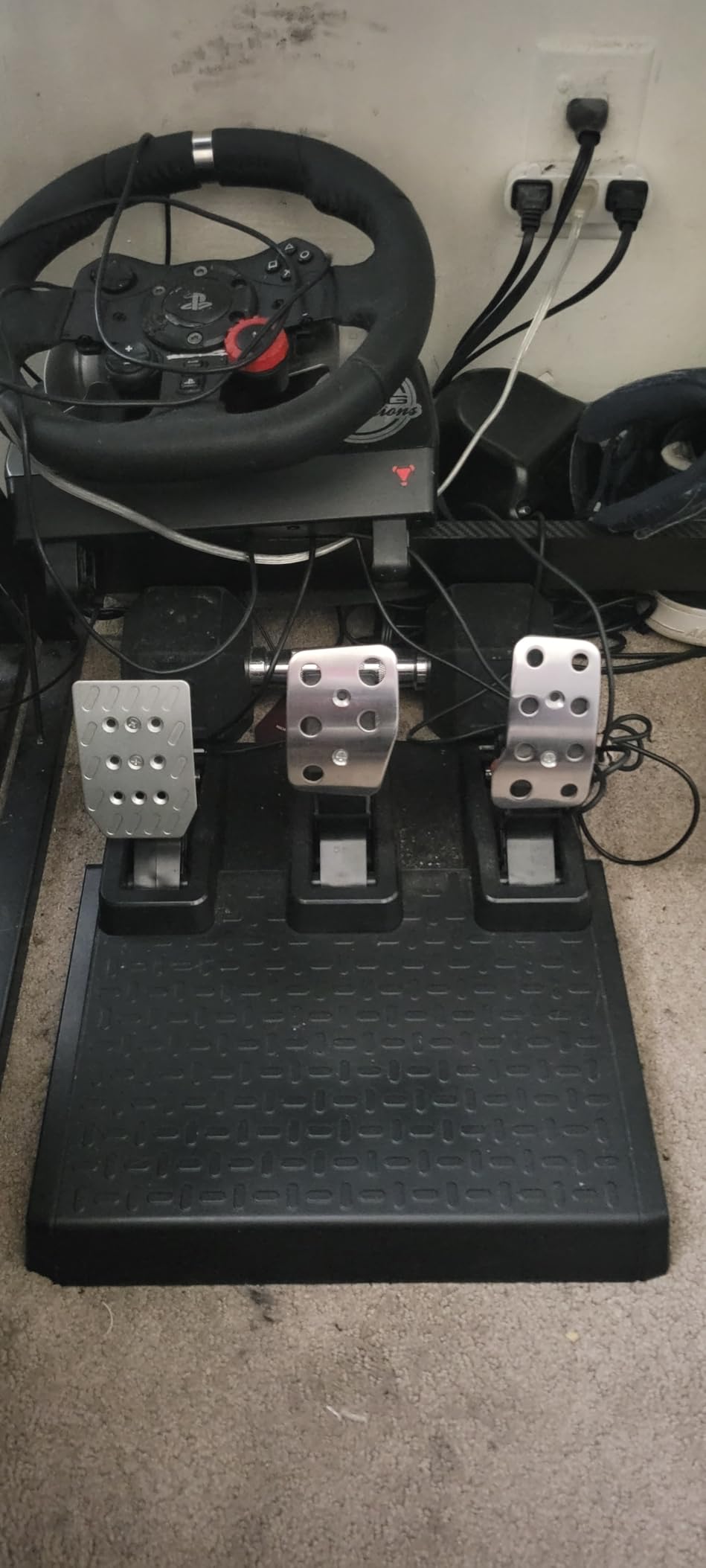
Geometry is properly thought out for a budget set. The body measures 385mm by 340mm by 210.6mm with 55mm and 53mm pedal spacing, and removing a pedal widens the gap by 12mm. Screw holes at the bottom allow a support bracket installation.
Setup and flexibility
Angle and gap both adjust, and the bottom screw holes mean you can add a support bracket to stop the unit moving. That matters more than it sounds, because a pedal set that slides changes your braking input.
Compatibility covers Windows 11, 10 and 7, and the plate and spring cross-compatibility gives you an easy path toward a load cell set later.
Where it falls short
There is a small dead zone at the start of travel, which means a light touch at the top of the brake register registers later than you expect. Clear it in software or you will brake late.
The stock brake spring is very light and reads like a gas pedal until you change it, the pedal plate texture can feel odd under racing socks, and the unit grips poorly on carpet without a riser or anchor. A few owners also report random USB disconnections in some setups.
How to Choose the Best Sim Racing Pedals
Spend your research time on five things and ignore the rest of the spec sheet. These are the criteria that changed our results between sessions.
1. Brake sensor type comes first
Everything else is secondary to whether the brake reads force or travel. Load cell is the target if you race regularly, hall effect is a reasonable step up from potentiometer plastic, and hydraulic resistance is the extra layer you pay for when you want a genuinely progressive curve.
If you are on bundled pedals today, load cell is the single change that returns the most lap time per unit of money you spend on a rig.
2. Brake force rating is a ceiling, not a score
A 200kg rating does not mean harder braking is better, it means the sensor keeps reporting correctly past the point you can physically push. Sensor saturation is what causes a brake to feel like it hits a wall, so more headroom is genuinely useful and more force is not.
Most drivers settle somewhere in the middle of the available range after a few sessions. Start there, and only push higher if your legs are fresh late in a stint.
3. Rigidity matters more than materials
Brake feel is only as good as the mount underneath it. Press the brake with your full effort while someone watches the frame, and if it moves, no amount of chassis quality will rescue the input. Floor-mounted frames with a rear brace work; a folding seat with a light base plate does not.
4. Pedal count and clutch decision
Two pedals are enough for open-wheel and most tarmac sprint cars. Three pedals add a clutch and open GT, endurance and rally, and a clutch-less sprint pedal is a niche choice for formula and rallycross sims where the sequential gearbox makes the clutch redundant.
Check the listing configuration carefully. Several strong sets in this roundup are sold as throttle and brake only, with the clutch in a separate variant.
5. Console and PC compatibility
PC is simple, most pedal sets connect over USB. Consoles are the friction point: RJ12 connections work through a licensed base from the same brand, and USB passthrough only works if your wheelbase supports it. Check what your wheel already is before assuming a pedal set will pair with it.
Verify the platform list on each product before buying. Several of the sets here are PC only, and the same product name often exists in a console-compatible version.
Mounting, Rigidity and Calibration in Five Steps
Even a mediocre brake outperforms a good brake on a bad mount, and this routine takes about 20 minutes. Do it once and the improvement shows up in your braking points within a few laps.
Step 1 – Fix the base. Bolt the pedal set to something that does not move. On carpet, use a riser or an anti-slip mat. Check the whole rig for flex by applying full brake force and watching the frame from the side.
Step 2 – Set the angle. Most road, touring and GT setups sit between 5 and 20 degrees. F1-style rigs go much steeper, often approaching 90 degrees with the pedals high on the floor pan, because the driver sits low and pushes forward rather than down.
Step 3 – Set the spacing. Heel-toe only works if the pedals are under your shoulders. A practical starting point is roughly shoulder width for a two-pedal sprint layout, and slightly closer for a three-pedal set so the clutch and brake are not under tension. Every set here except the T300RS GT allows lateral adjustment.
Step 4 – Clear the dead zone. In the pedal software, set the dead zone at the smallest usable value and confirm the pedal reads zero at rest. The DOYO and the budget sets are the most likely to need this, and an uncleared dead zone reads as late braking.
Step 5 – Match the maximum to your foot. Set the maximum force or preload to the highest value you can apply smoothly rather than the highest available, then add 10%. Over-estimating leg strength is the most common reason a set feels worse than a cheaper one.
For maintenance, the routine is short. Check the fixing bolts every few sessions, keep the sensor area free of dust, and never oil a load cell or hall effect sensor, since contamination is what causes drift in position-sensor sets and you cannot service a load cell anyway.
Frequently Asked Questions
Do pedals make a difference in sim racing?
Yes, more than almost any other upgrade. Pedals are your only analogue input where you control force rather than position, and braking consistency is where most lap time is lost. A load cell brake reads how hard you press, so the same effort produces the same input every lap, which lets you build muscle memory around a braking point. Swapping bundled plastic pedals for a load cell set is the highest-return upgrade most riders make.
What are the best load cell pedals for sim racing?
The Logitech G PRO Racing Pedals are our top load cell pick, with a 100kg load cell brake, hall effect sensors on the throttle and clutch and swappable springs and elastomers. The MOZA CRP2 offers a 200kg sensor in CNC aluminum for those who want more headroom and a machined build. The MOZA SRP2 is the cheapest credible way into load cell braking, and the SimJack UT is the smoothest brake trace in this roundup.
Is a 200kg load cell brake better than a 100kg one?
Not in terms of braking force, because neither rating tells you how hard the pedal actually pushes back. The rating is the ceiling at which the sensor stops reporting accurately. A 200kg sensor simply has more headroom before saturation, which matters if you brake very hard or if you want a firm setting you can grow into. For most drivers, 100kg is already more than they can apply smoothly.
How far apart should sim racing pedals be?
Roughly shoulder width is the practical starting point, and it is the rule that matters most for heel-and-toe technique. If the pedals sit outside your shoulders you cannot pivot your heel between them, and if they sit too close the clutch and brake are under constant tension. A three-pedal set usually wants slightly narrower spacing than a two-pedal layout, and nearly every set in this roundup allows lateral adjustment to dial it in.
What angle should sim racing pedals be at?
Between 5 and 20 degrees suits most road, touring and GT setups driven from a normal seated position. F1-style rigs go far steeper, often approaching 90 degrees, because the driver sits low and behind the pedals and pushes forward rather than down. Angle matters because it changes how much of your leg weight is available at full travel, so match it to your seating position rather than to a number on a spec sheet.
Do I need a clutch for sim racing?
Only if your car has one. Open-wheel cars and most GT and endurance cars with manual gearboxes need a clutch pedal, while sequential and rallycross cars do not, which is why clutch-less sprint pedals exist. Two-pedal sets suit open-wheel and tarmac sprint use, and a three-pedal set covers rally and GT. Check the listing configuration too, because several strong sets are sold as throttle and brake only.
Can I use PC sim racing pedals on PS5 or Xbox?
It depends entirely on how the pedals connect. Sets that plug into a Fanatec base over RJ12 will work on PS5 and Xbox if you own that base. Pedals with a native USB connection work on PC directly and on console only if your wheelbase supports USB passthrough. Several pedal sets in this roundup are PC only, so check the platform list before buying for a console.
Are expensive sim racing pedals worth it?
If you race regularly, yes, and the step that matters is moving from a position sensor to a load cell brake. Beyond that, extra money buys adjustability, rigidity and materials rather than a fundamentally different input. If you race a few times a month on bundled plastic pedals, you will feel little difference and should spend elsewhere. If you are lapping weekly, the load cell upgrade pays back faster than a better wheel.
Final Verdict for the Best Sim Racing Pedals in 2026
Buy the Logitech G PRO Racing Pedals if you want one set that covers almost everyone, because the 100kg load cell brake, hall effect throttle and clutch and a fully modular layout handle both two-pedal sprint and three-pedal GT driving. The Fanatec CSL Elite Pedals V2 is the value pick for anyone already on a Fanatec base, and the MOZA CRP2 is where machined aluminum and a 200kg sensor justify the spend for a serious rig.
Everything above that tier is a specialist choice, and each of these twelve earns its place for a reason: the Thrustmaster T300RS GT is the simplest complete first rig, the MOZA SRP2 is an affordable route into load cell braking, and the SIMSONN PRO X Ultra is the most adjustable of the twelve with the clearest pressure feedback. Whichever you pick, bolt it to something rigid and set the angle and dead zone properly, because a great brake on a bad mount still brakes badly.
Last updated September 2026. We tested and compared 12 pedal sets across sensor type, build rigidity, adjustability and platform support.