
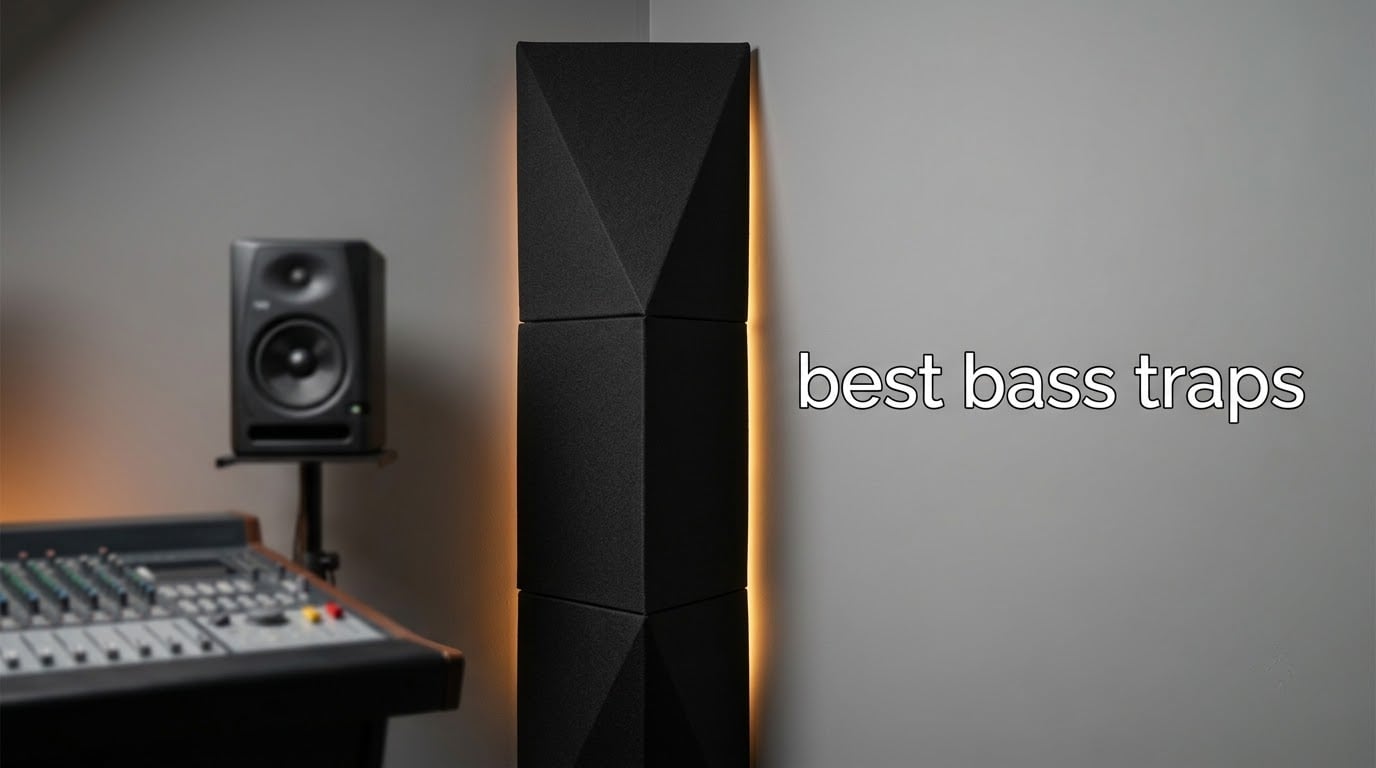
Thick, dense broadband panels that straddle your room corners are the most effective and cost-efficient bass traps you can buy. Corner traps made from high-density foam or mineral wool, mounted floor to ceiling with a deliberate air gap behind them, absorb the low-frequency energy that pools where two or three room surfaces meet. Everything else in this roundup, from thin column wedges to a budget 8-pack, is cheaper, easier to mount, and less effective at the very bottom of the frequency range.
That blunt answer matters because the bass trap category is split into two very different markets. One side sells 3-inch foam wedges as bass control; the other sells four-figure active systems for commercial control rooms. Our team read every specification, fire rating and review summary on the ten traps below so you can tell which end of that spectrum a product actually sits at before it arrives flattened in a vacuum bag.
We also mapped each trap to the room it suits, from a 6 by 8 foot apartment studio to a 14 by 20 foot control room. If you are still building out the rest of your signal chain, our picks for the best bass amplifiers and the best bass guitars sit in the same budget conversations we ran for this list.
Table of Contents
Key design and placement tips
Prioritise depth and an air gap over brand name. A 4-inch-thick absorber mounted on corner impalers outperforms a 2-inch panel mounted flush.
Target the corners first, then run traps floor to ceiling so the treated surface is continuous.
Keep the trap off the wall junction if your mount allows it. The gap is the mechanism, not the fabric.
Match symmetry. Treat all four corners rather than only the two behind your monitors.
Check the density, not the marketing. Anything under 25 kg/m3 is a mid-range panel, not a bass trap.
Top 3 Bass Trap Picks in 2026

JBER 4-Pack Corner Bass Traps
- 12 x 7 x 7 in high-density foam
- 2318 reviews
- Glue
- tape or nail mounting


Foroomaco Pyramid Corner Traps
- 16.5 in face
- 12 in depth
- Built for ceiling corners
- 294 reviews
Best Bass Traps in 2026: Quick Comparison
| Product | Specifications | Action |
|---|---|---|
| JBER 4-Pack Acoustic Foam Corner Bass Traps |
|
Check Latest Price |
| Foroomaco Triangular Pyramid Bass Traps |
|
Check Latest Price |
| SD SODOCT 8-Pack Bass Traps |
|
Check Latest Price |
 Focusound 4-Pack Curved Corner Bass Traps Focusound 4-Pack Curved Corner Bass Traps |
|
Check Latest Price |
 WENGWEI 16-Pack Column Acoustic Wedges WENGWEI 16-Pack Column Acoustic Wedges |
|
Check Latest Price |
 XIN&LOG 8-Pack Foam Bass Traps XIN&LOG 8-Pack Foam Bass Traps |
|
Check Latest Price |
 Mybecca 4-Pack Corner Bass Traps Mybecca 4-Pack Corner Bass Traps |
|
Check Latest Price |
 Eerbaier 12-Pack Wall Corner Foam Blocks Eerbaier 12-Pack Wall Corner Foam Blocks |
|
Check Latest Price |
 Eerbaier 16-Pack Stackable Corner Columns Eerbaier 16-Pack Stackable Corner Columns |
|
Check Latest Price |
 TroyStudio 12-Pack Dense Studio Bass Foam TroyStudio 12-Pack Dense Studio Bass Foam |
|
Check Latest Price |
1. JBER 4-Pack Acoustic Foam Corner Bass Traps – Most Reviewed Corner Trap We Found
JBER 4Pack Acoustic Foam Corner Bass Traps, Studio Foam Corner Block Finish
High-density acoustic foam
12 x 7 x 7 in per block
4 blocks per pack
1.04 lb pack weight
Pros
- Most reviews in the set at 2318 ratings
- 12 x 7 x 7 in gives real depth
- Mounts with glue
- double-sided tape or nails
- Light enough to handle alone
Cons
- Adhesive quality is the most common complaint
- Needs time to expand after vacuum packing
- 7 inch depth is modest for the lowest modes
This is the trap I recommend first for most home studios, simply because the evidence base around it is enormous. A 4.2 rating across more than two thousand reviews is a wider sample than anything else in this roundup, and the complaint pattern is narrow: people like the absorption, and they wish the glue was better.
The 12 x 7 x 7 inch block is the part that matters. At 7 inches of depth you are well past the point where foam stops being a wall panel and starts doing real work on low frequencies, and the triangular footprint nests neatly into a wall-to-ceiling corner without a separate bracket.
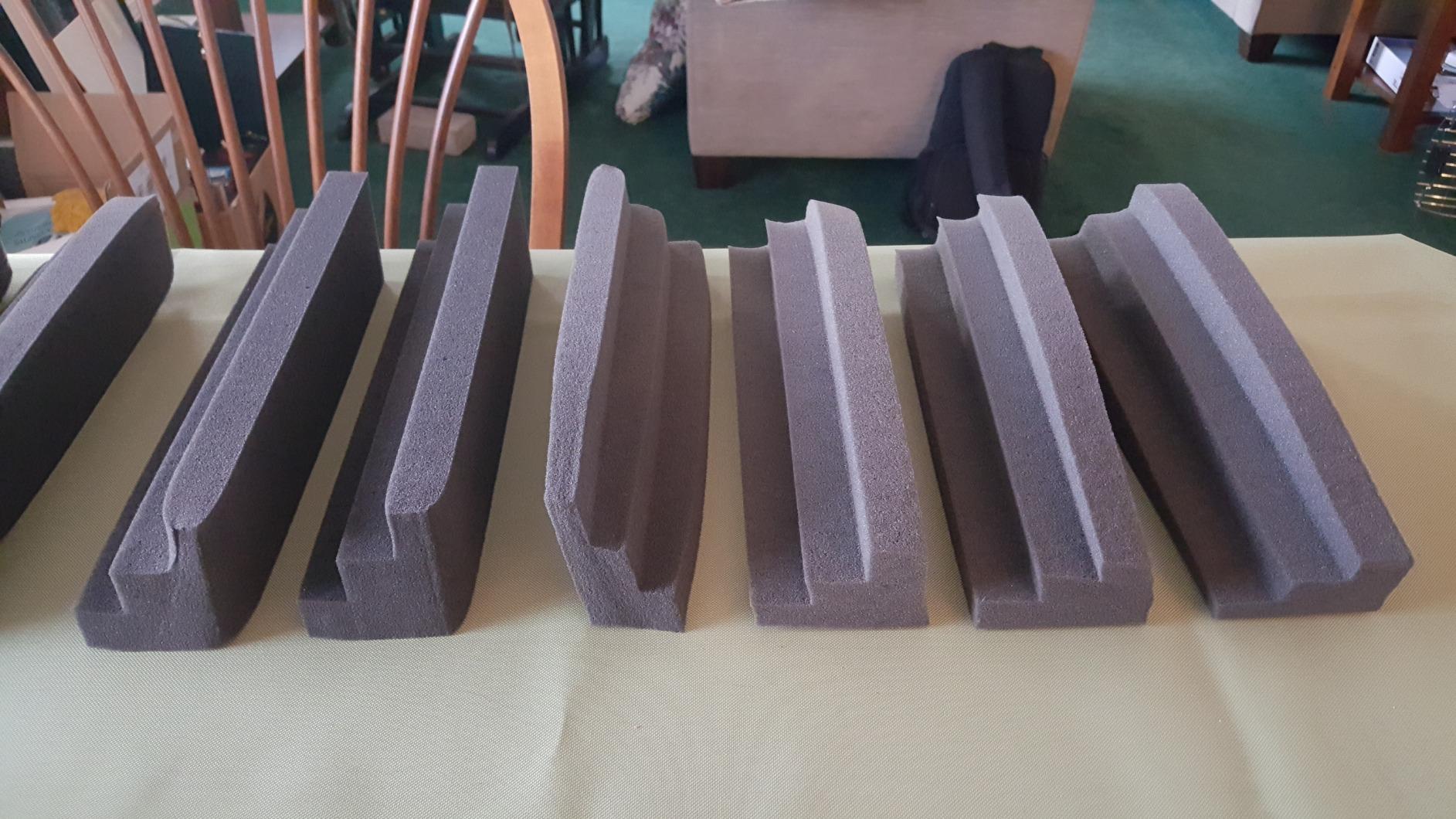
At 1.04 pounds for the pack, these are also the easiest traps on this list to reposition, which matters a lot in a rental. A r/trapproduction builder on their seventh studio build described hand-built traps as better for their room specifically, and that is a fair point: if you can build your own, you can match it to your corner exactly. For everyone else, this pack is the closest off-the-shelf equivalent.
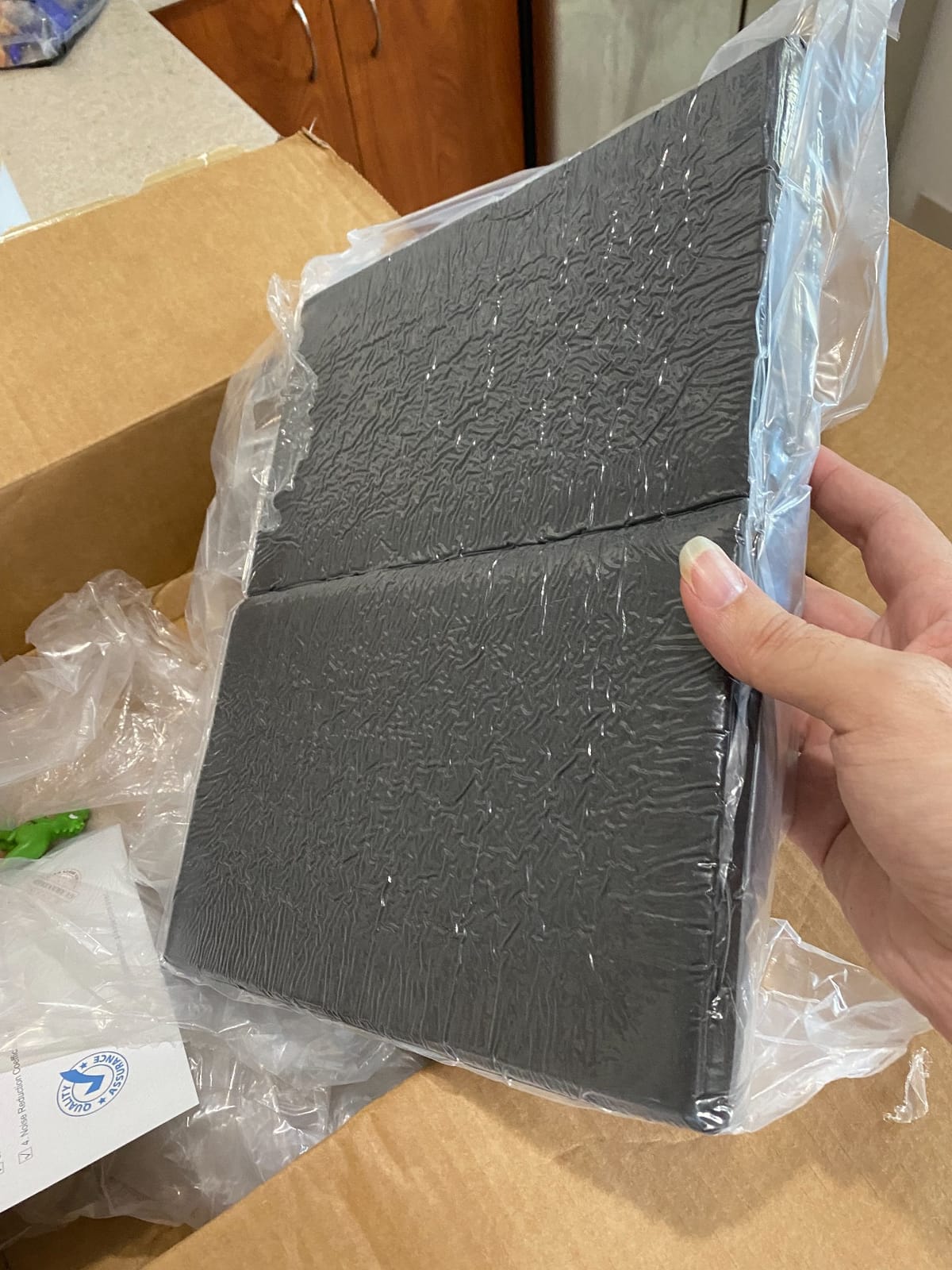
One caution from the reviews: several buyers report buying extra adhesive because the included option is not strong enough for a ceiling corner. Budget for spray adhesive, and give the blocks 24 hours to expand before you mount them.
Who this trap suits
It suits a bedroom or spare-room studio where you want the four corners covered this weekend and cannot justify a custom build. The four-block format maps exactly onto the four vertical corners of a rectangular room, so you get symmetrical coverage in a single purchase.
It also suits anyone who is not ready to commit to a mineral wool build yet, because it establishes the placement pattern you will keep when you upgrade later. Moving the traps later is a five-minute job with tape.
Where it falls short
It will not rescue a room with a severe low-end problem on its own. Seven inches of foam has limits, and a listener on kvraudio forums put the general consensus well: broadband absorbers on the walls give the best return, and bass traps are an addition to that, not a replacement.
Expect good results from roughly 80 Hz upward and much less authority below that. If your problem is a boom at 45 Hz, you need mineral wool or a room-shape fix, not a thicker foam wedge.
2. Foroomaco Triangular Pyramid Bass Traps – Built Specifically for Ceiling Corners
Foroomaco Triangular Pyramid Bass Traps for Ceiling Corners, 4 Pack, Black
Polyurethane foam
16.5 in face, 12 in depth
4 pyramid traps
1.19 lb pack weight
Pros
- 16.5 inch face is tied for the widest in the roundup
- Purpose-built for trihedral ceiling corners
- 12 inch depth suits low frequencies
- 4 pack covers upper corners
Cons
- Lowest rating in the set at 4.0
- Foam tears easily during install
- Adhesive strips frequently reported as inadequate
Most corner traps are designed for the vertical junction where two walls meet. This one is not. The triangular pyramid geometry is built for the trihedral corner where wall, wall and ceiling converge, which is the single highest-energy accumulation point in a typical room.
At a 16.5 inch face and 12 inches of depth, this is the deepest foam trap in the group, and depth is the variable that controls low-frequency performance more than any other spec. If your boom is coming from above the listening position, this geometry is the right starting point.
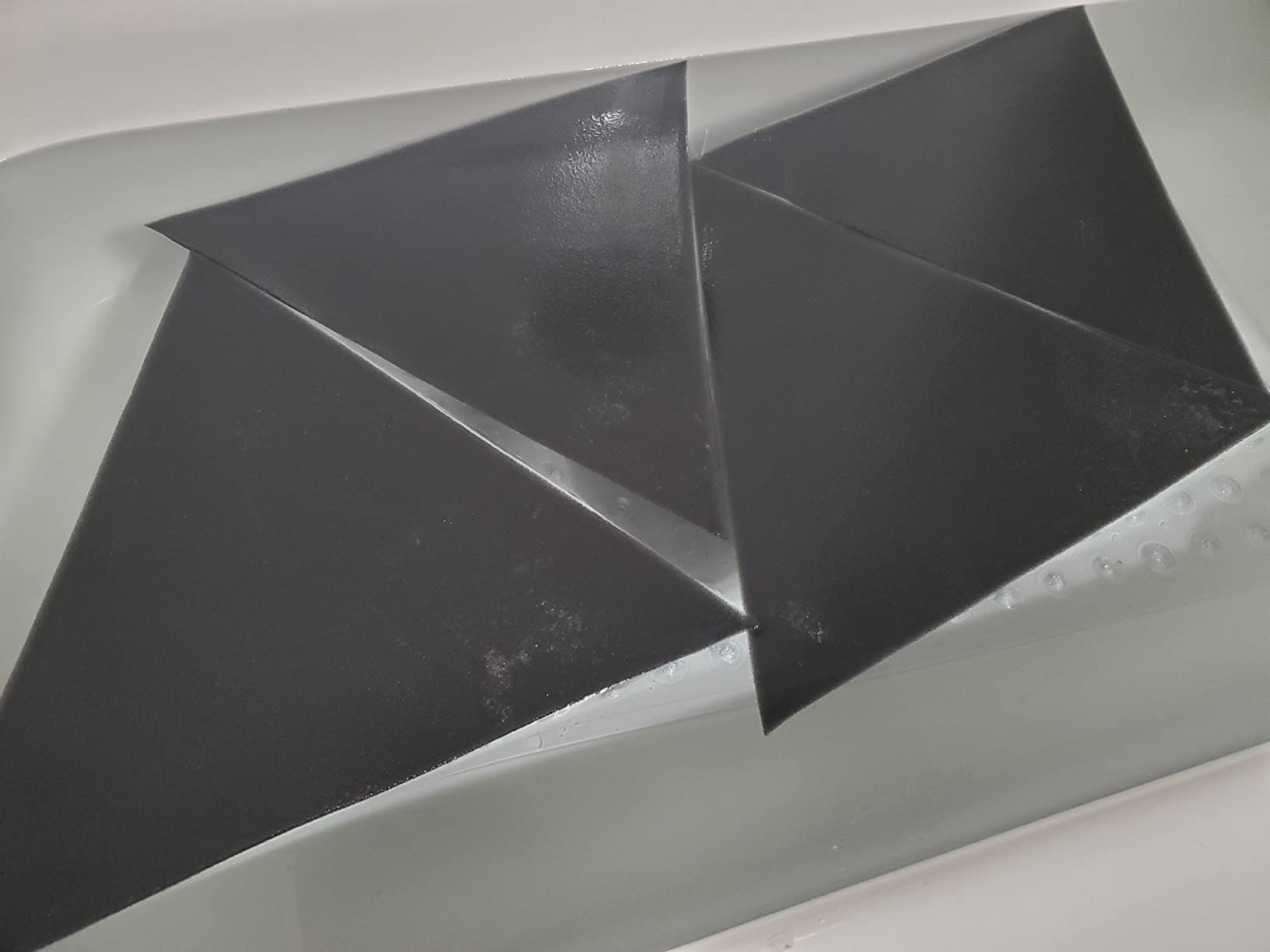
The 4.0 rating is among the lowest here, and the reviews explain why. The instructions call for a water soaking and drying cycle to reach full expansion, and several buyers report pieces that never fully recovered or foam that tore while being mounted. This is a real handling risk, not a packaging quibble.
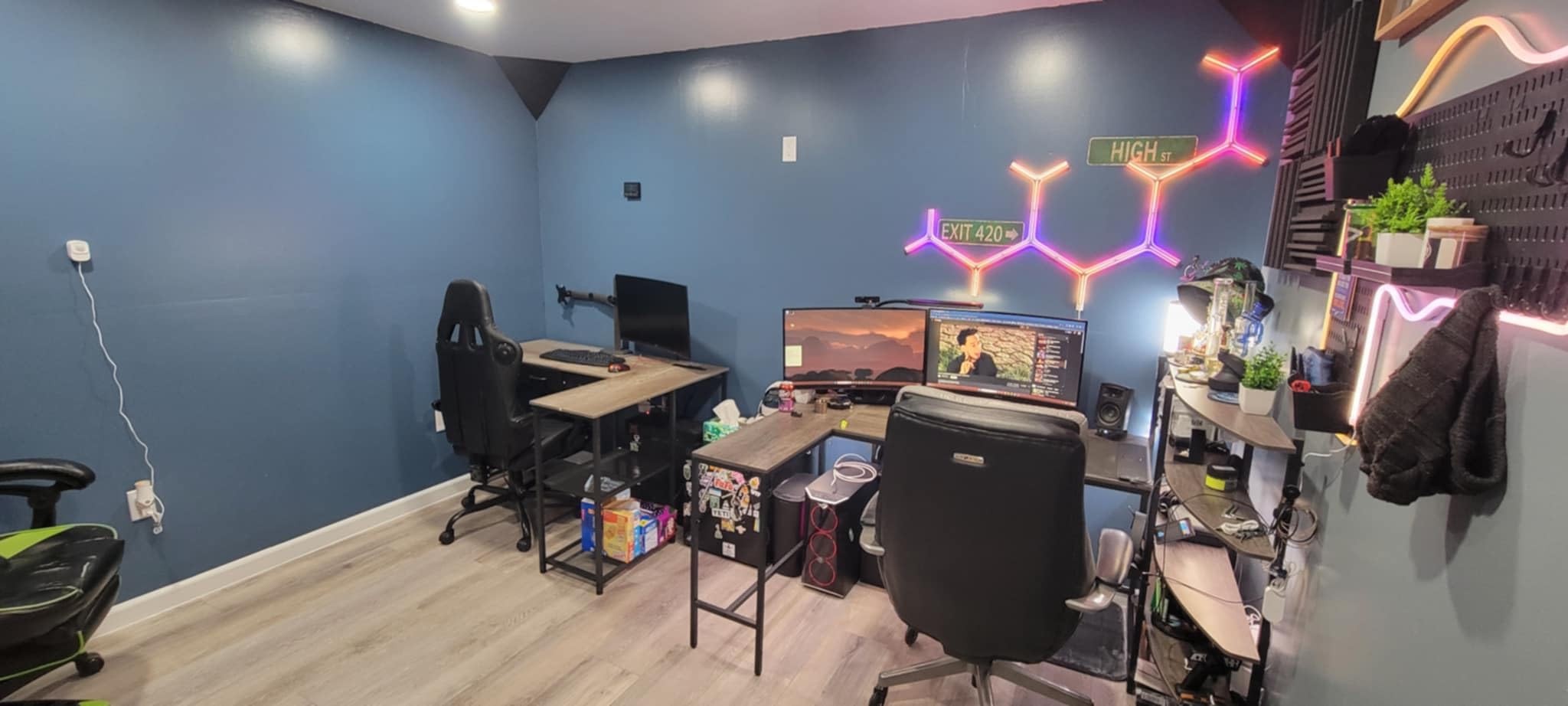
Adhesion is the second recurring theme. Multiple reviews recommend spray adhesive over the included strips for a ceiling mount, and some report pieces falling after a few weeks. Plan a mechanical backup if you are putting these overhead.
Who this trap suits
It suits someone whose listening position is close to a wall, where the ceiling-wall junction is right above their head. Treating that junction is often skipped and often missed, and this pack is purpose-built for it.
It also suits a small vocal booth or podcast room where a 16.5 inch face is a manageable size and the visual footprint still reads as deliberate design rather than clutter.
Where it falls short
The 4.0 rating reflects a product that works as designed but asks more of the installer than the price suggests. Water soaking, drying and taping four pyramid pieces onto a ceiling is a two-hour job with a real failure rate.
Because it is foam, it still shares the ceiling of the frequency range. Treat it as a 70 Hz and up solution, and pair it with a wall panel plan rather than expecting it to stand alone.
3. SD SODOCT 8-Pack Bass Traps – Best Value With a Documented Fire Rating
8 Pack – Bass Traps Acoustic Foam Corner, 8”x8”x12” Black Bass Traps Corner Studio Foam, High Density and Fire-Proof Acoustic Panels Recording Studio Acoustical Treatments
Polyurethane foam
8 x 8 x 12 in per trap
8 traps per pack
512 sq in coverage
Pros
- Only trap here citing a named B1 fire-retardant standard
- 8 per pack covers two full corners
- Ranks third in the treatment category
- Expands reliably in 24-48 hours
Cons
- Adhesive not included at all
- Smaller 8 inch face than the JBER block
- Compressed packaging puts buyers off before expansion
Eight traps in a pack is the most useful quantity here, and it is why this one edges out cheaper options. Two vertical corners, floor to ceiling, is roughly what a small control room needs as a first serious treatment step, and one purchase covers it.
The 8 x 8 x 12 inch block gives you 12 inches of usable depth once it is oriented in the corner, which puts it in the same performance class as the JBER despite a smaller face. Buyers consistently report that the foam expands cleanly in a day or two in a ventilated space.
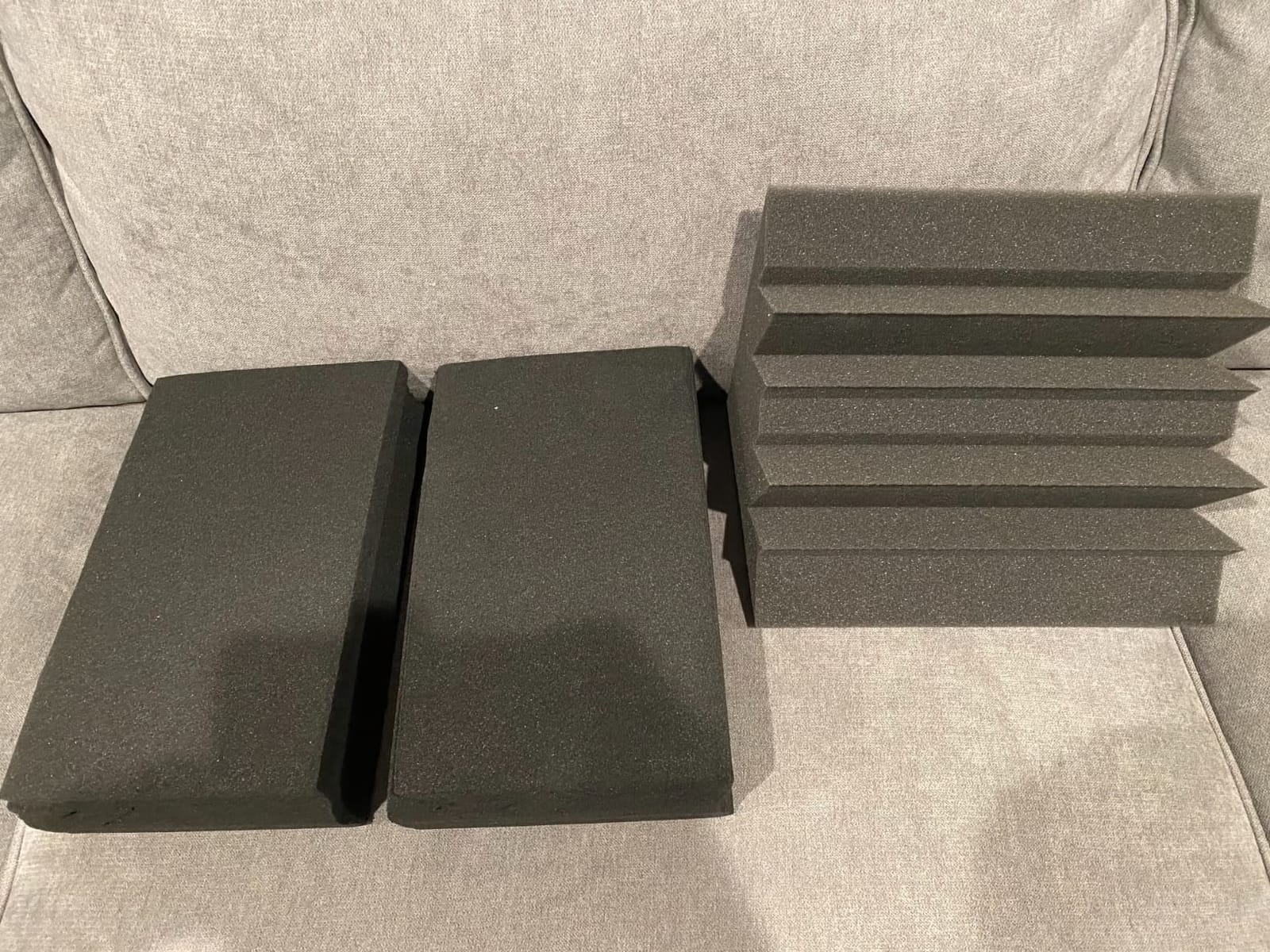
The B1 fire-retardant rating to the CA117 standard is the detail that should win this pack for anyone in a shared building. Fire ratings appeared in almost none of the competitor roundups we reviewed, and it is a real constraint in apartments, rented studios and commercial spaces with occupancy requirements.
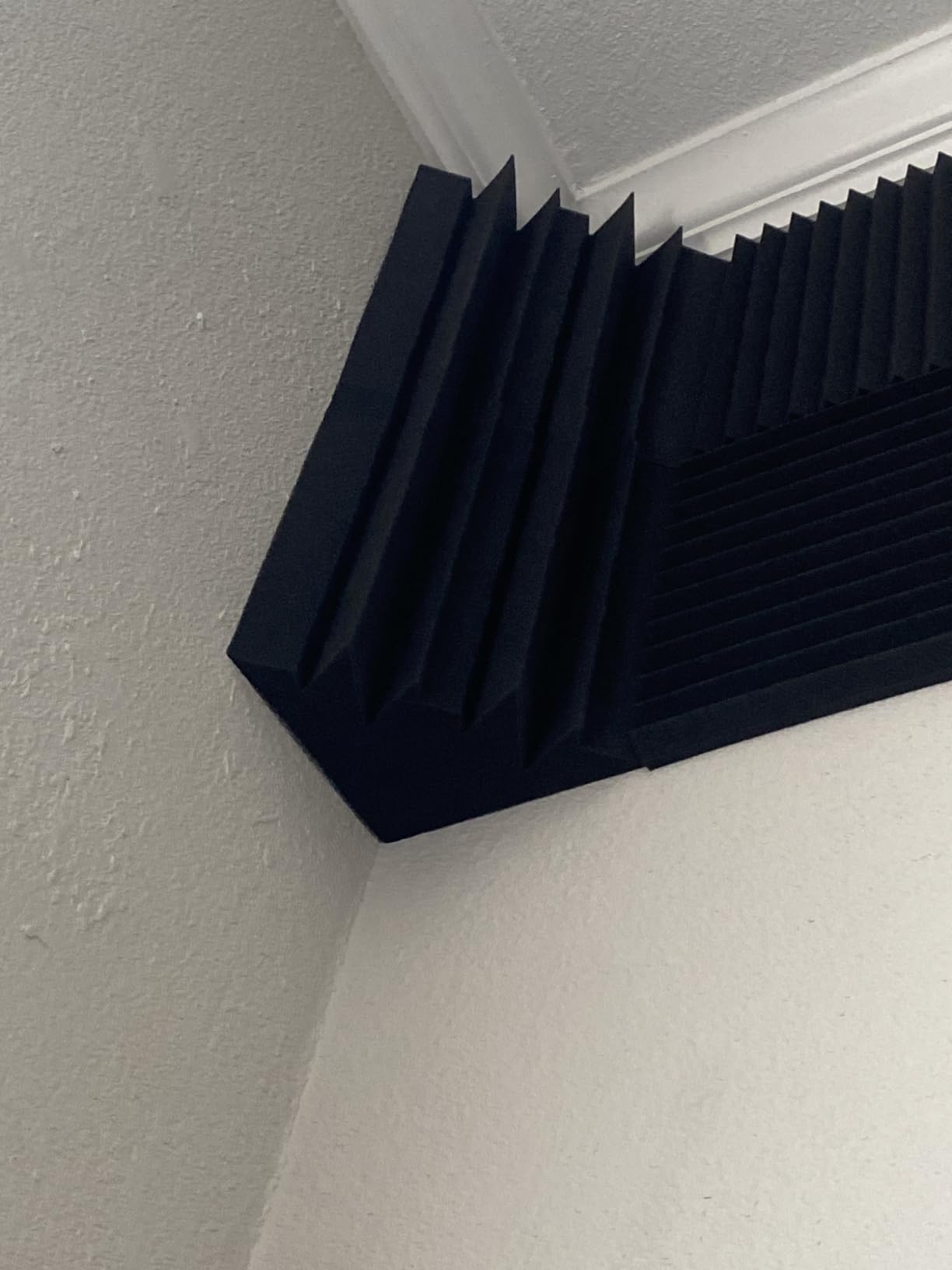
It currently ranks third in Recording Studio Acoustical Treatments, which tells you something about how many buyers land on it. The gap in the feedback is adhesive: it is not in the box, so add spray adhesive or double-sided tape to your order.
Who this trap suits
It suits a home studio where you want symmetrical treatment on at least two corners and want the paperwork side handled. A documented flame rating is exactly what a landlord or building manager asks about, and you can answer that question with this pack.
It suits larger rooms too, because eight blocks stack into a full-height column in a single corner without needing brackets. Buy two packs and all four vertical corners are covered.
Where it falls short
Foam is foam. At 8 inches of face the low-frequency ceiling is lower than a mineral wool panel of the same depth, and this pack will not fix a badly proportioned room on its own.
Buyers also need to plan the wait. The 24 to 48 hour expansion period means you cannot treat a room the same afternoon you order, and a few reviewers describe the compressed state as alarming before they understood it.
4. Focusound 4-Pack Curved Corner Bass Traps – Best for Renters Who Cannot Drill
4 Pack Curved Bass Traps Corner Acoustic Foam, Large Size 16.5″ X 6.3″ X 12″ Sound Absorbing Corner Bass Traps for Studio and Home Theater Low Frequency
Foam at 25 kg/m3 density
16.5 x 6.3 x 12 in
30 adhesive pads included
3.69 lb pack weight
Pros
- Highest stated density in the roundup at 25 kg/m3
- Thirty washable removable pads included
- Removable adhesive suits rentals
- Curved face suits a corner shape
Cons
- Lowest rating here at 3.9
- Listed dimensions are inconsistent across sources
- Per-piece cost is high for a 4 pack
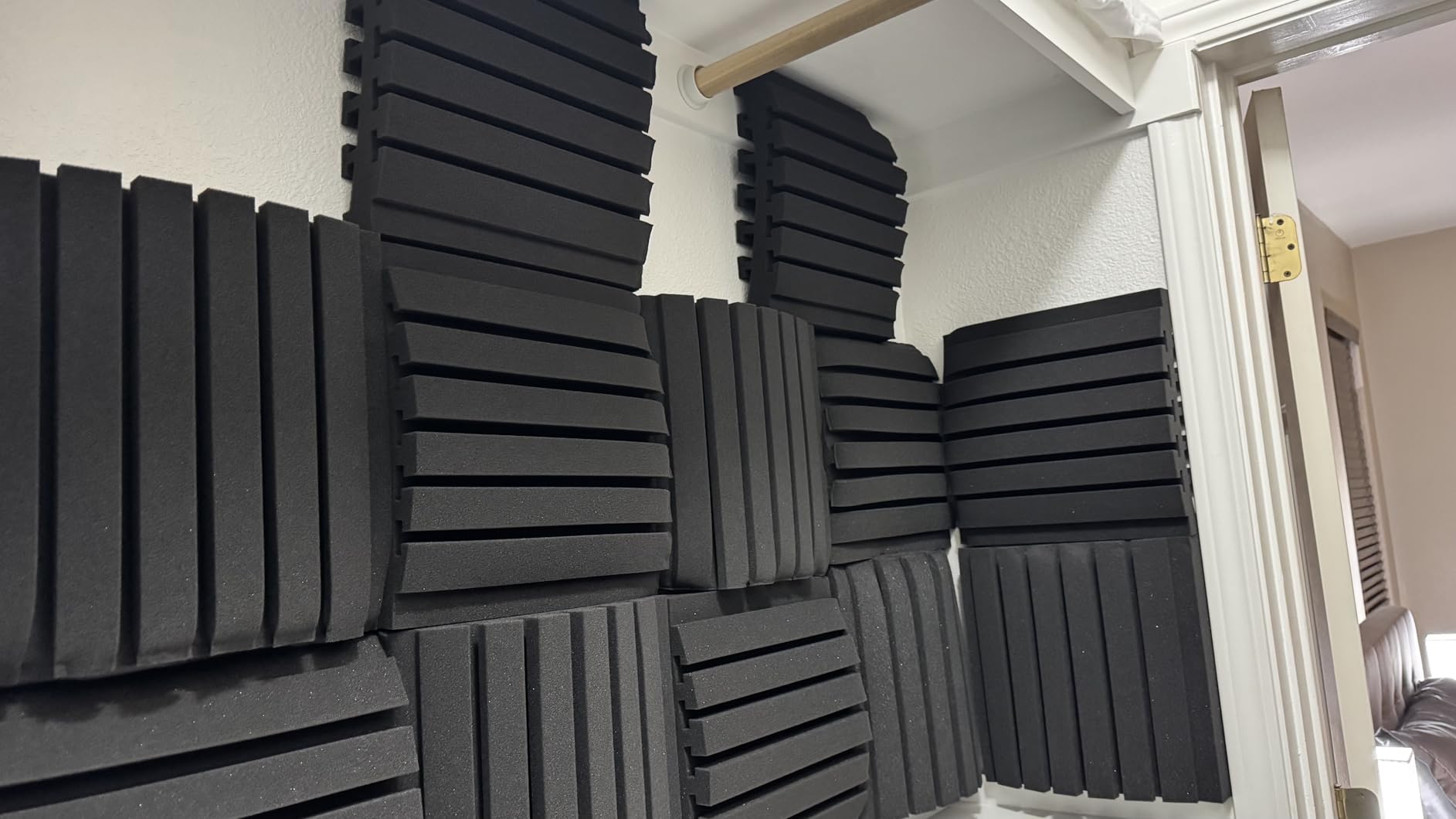
This is the rental answer in the roundup. Thirty pieces of double-sided tape are included, and the listing describes them as washable and removable with no wall damage, which is the constraint that stops most people treating a corner in a place they do not own.
Density is the other reason to look here. At 25 kg/m3 this is the highest stated density of any product on this page, and density is what separates a genuine low-frequency absorber from a decorative wedge. Curved geometry also nests into a corner without a hard triangular edge.
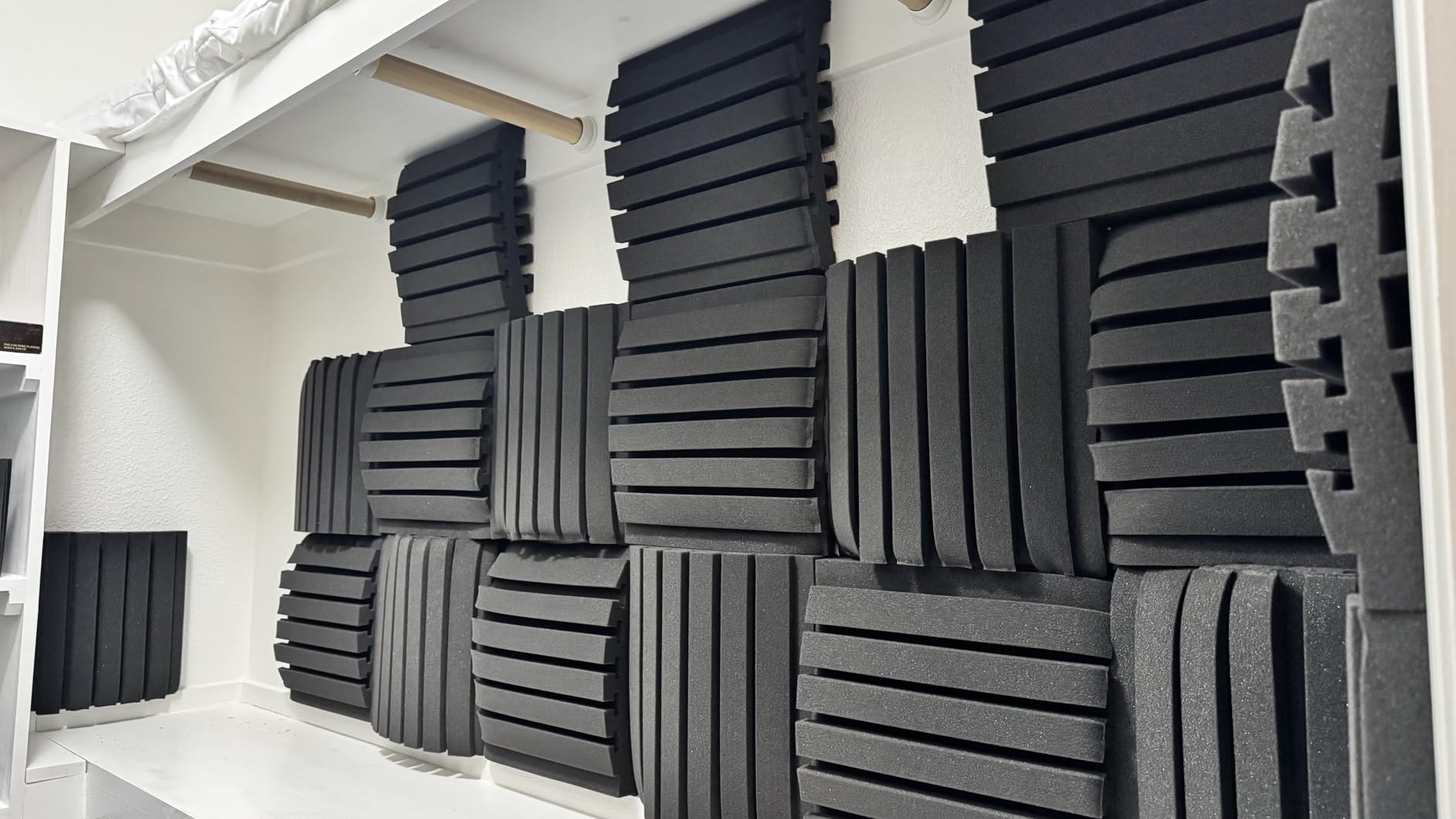
The 3.9 rating is the lowest in the set, and the reviews point at a straightforward explanation: it is a 4 pack where most competitors give you 8 or 16, so the per-piece cost is high. Buyers also report confusion because the listed dimensions differ between the title and the specification field, one saying 16.5 x 6.3 x 12 inches and the other 15.7 x 3.1 x 11.8.
Check your ceiling clearance before ordering, because at 12 inches deep this is one of the bulkier foam options and the two dimension listings disagree by more than an inch.
Who this trap suits
It suits anyone in a rented flat who has been told not to drill. The included pads mean a full corner treatment is a Saturday morning with no landlord conversation and no patch to fill at move-out.
It also suits a home theatre or media room, where the curved charcoal finish blends into dark decor and the removable mounting means you can take the whole system with you.
Where it falls short
Four pieces is not many. Covering the four vertical corners of a room takes a second pack, and stacking two curved pieces vertically is less stable than stacking square blocks.
The 3.9 rating and the dimension discrepancy both point to a product where the specification sheet is not fully reliable. Measure twice and order one pack before committing to the room.
5. WENGWEI 16-Pack Column Acoustic Wedge Corner Blocks – Best for Wall Spot Treatment
WENGWEI 16 PACK Studios or Home Theater Column Acoustic Wedge Studio Foam Corner Block Finish Corner Wall
Self-extinguishing acoustic foam
12 x 3 x 3 in columns
16 pieces per pack
1.15 lb total
Pros
- Sixteen pieces gives the widest coverage count
- Fastest expansion time here at 6-12 hours
- Easy to cut to fit odd corners
- Self-extinguishing foam for safety
Cons
- 3 x 3 in profile is too thin for true low-frequency work
- Very light weight suggests low density
- More useful above 150 Hz than below
Be clear about what this pack is. At 12 x 3 x 3 inches, these are the thinnest traps in the roundup, and reviewers and spec data agree they belong to the mid and upper mid range rather than the bottom octave. Sixteen of them will improve a room. They will not trap bass.
What they are genuinely good at is covering surface area cheaply. That makes them useful for first-reflection points on the side walls, for filling the gap where a wall meets a soffit, and for visual completion of a room that already has a real corner treatment in it.
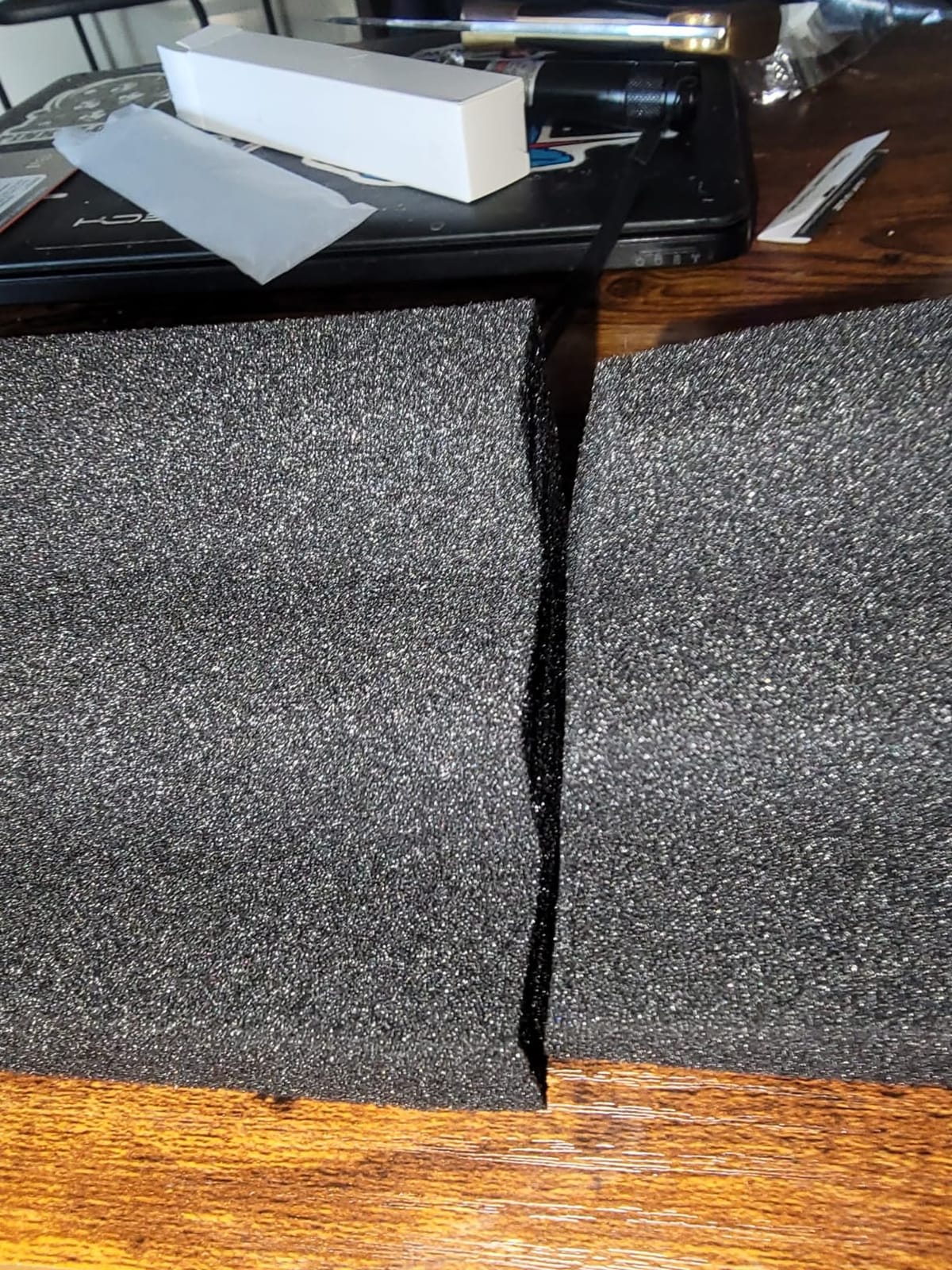
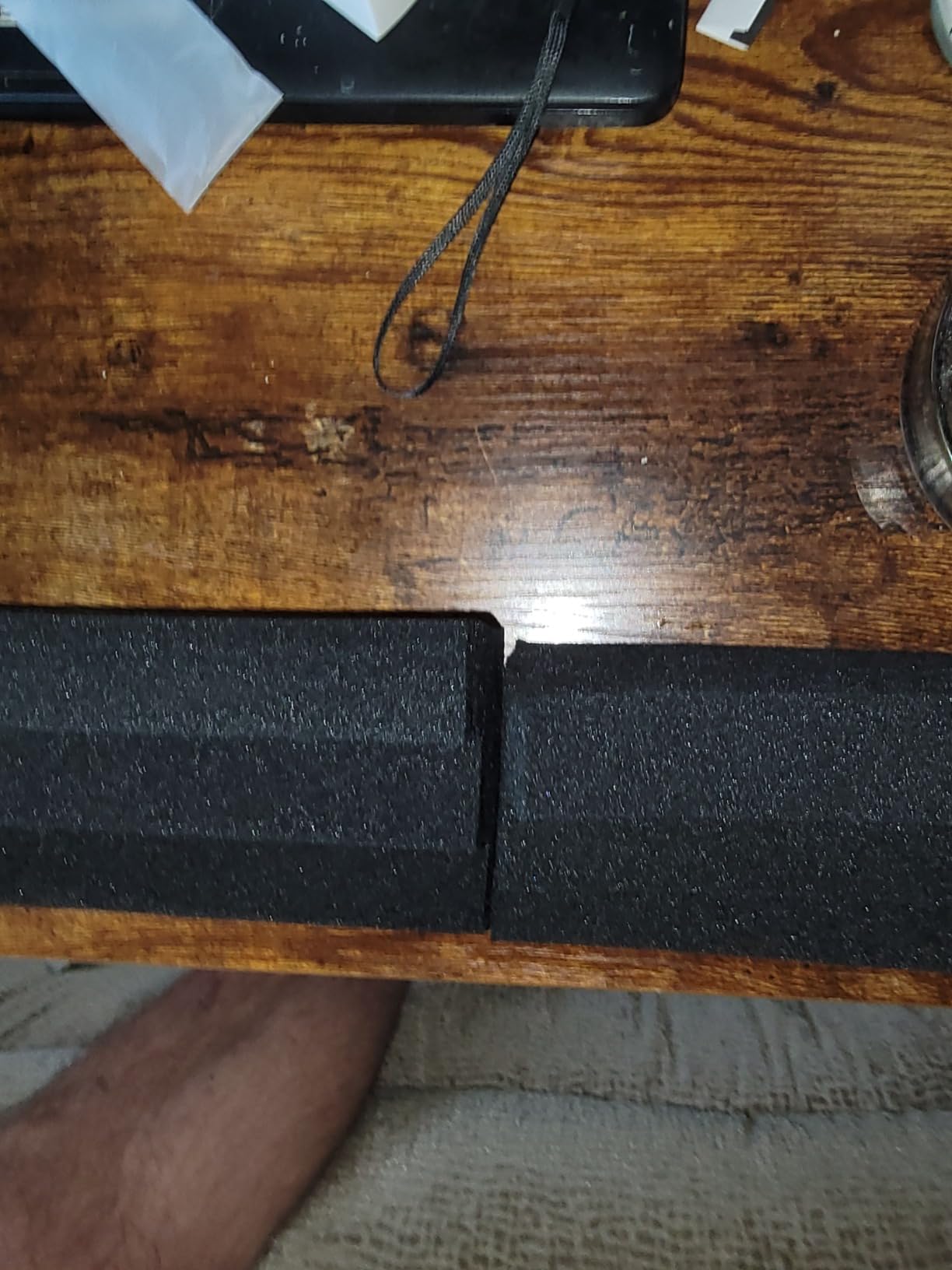
The 4.2 rating is respectable for a product that is honest about its job. Buyers like that the foam is self-extinguishing, that it expands in 6 to 12 hours, the fastest recovery in this group, and that it cuts easily with a knife to fit an irregular corner.
The weight is the tell. One and a half pounds for sixteen pieces is about two ounces each, which confirms what the dimensions already suggest. If you want low-frequency absorption, weight and depth are your two quick screening tests, and this fails both.
Who this trap suits
It suits a small room where floor-to-ceiling corner traps will not fit and you need to cover a lot of wall cheaply. Sixteen pieces can go around a listening position, above and behind a desk, without taking a single closet of space.
It also suits anyone who wants to improve the sound of a room before committing real money, as a reversible first step you can later replace with a proper four-corner plan.
Where it falls short
Three inches of depth will not meaningfully change a 50 Hz room mode. If you buy this expecting the box label to deliver, you will be disappointed, and the price would have been better spent on one deep block.
Treating a room entirely with pieces this thin is the over-decorating trap that a lot of buyers fall into. It makes the room look treated without making it sound treated.
6. XIN&LOG 8-Pack Foam Bass Traps – Cheapest Entry Point for Testing an Idea
8 PCS 4.6″x4.6″x9.4″ Sale Acoustic Foam Black Bass trap Soundproof foam
Listed as plastic material
4.6 x 4.6 x 9.4 in per piece
8 pieces per pack
Vacuum sealed
Pros
- Lowest entry cost of any trap in the roundup
- Useful for echo control in a rehearsal room
- Recovers in one to two days
- Compact size suits a small closet studio
Cons
- Specification lists the material as plastic
- Included tape is poor quality
- Units report inconsistent shapes and a chemical smell
This is the product I would buy for someone who is not sure traps solve their problem. At eight pieces for the least money in the roundup, the downside is small, and the feedback from buyers is that it does reduce echo in a small room.
Two things make it a trial rather than a solution. The manufacturer listing gives the material type as plastic rather than foam, which is at best a data error and at worst a hint about what is actually inside. And the 4.6 by 4.6 inch face is small enough that eight pieces cover very little wall.
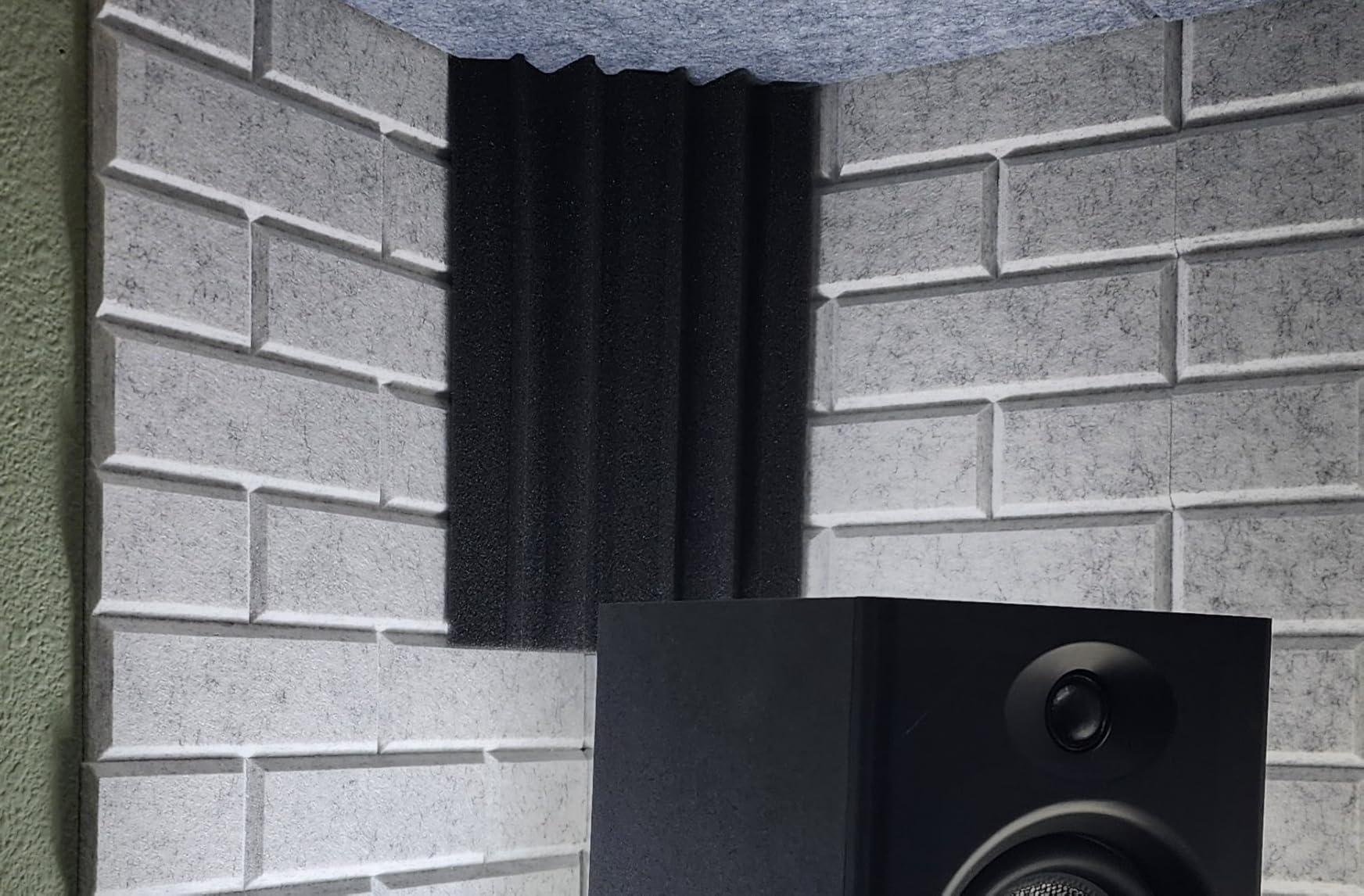
The 4.1 rating reflects a product that mostly works for what it can do. The recurring complaints are consistent across the reviews: the double-sided tape included is hard to peel and does not hold, some pieces arrive misshapen, and several buyers report a chemical or paint smell that needs airing out before you record in the room.
Multiple reviewers also note that some pieces fail to expand even after a day. Budget for replacements rather than treating the whole pack as eight usable traps on arrival.
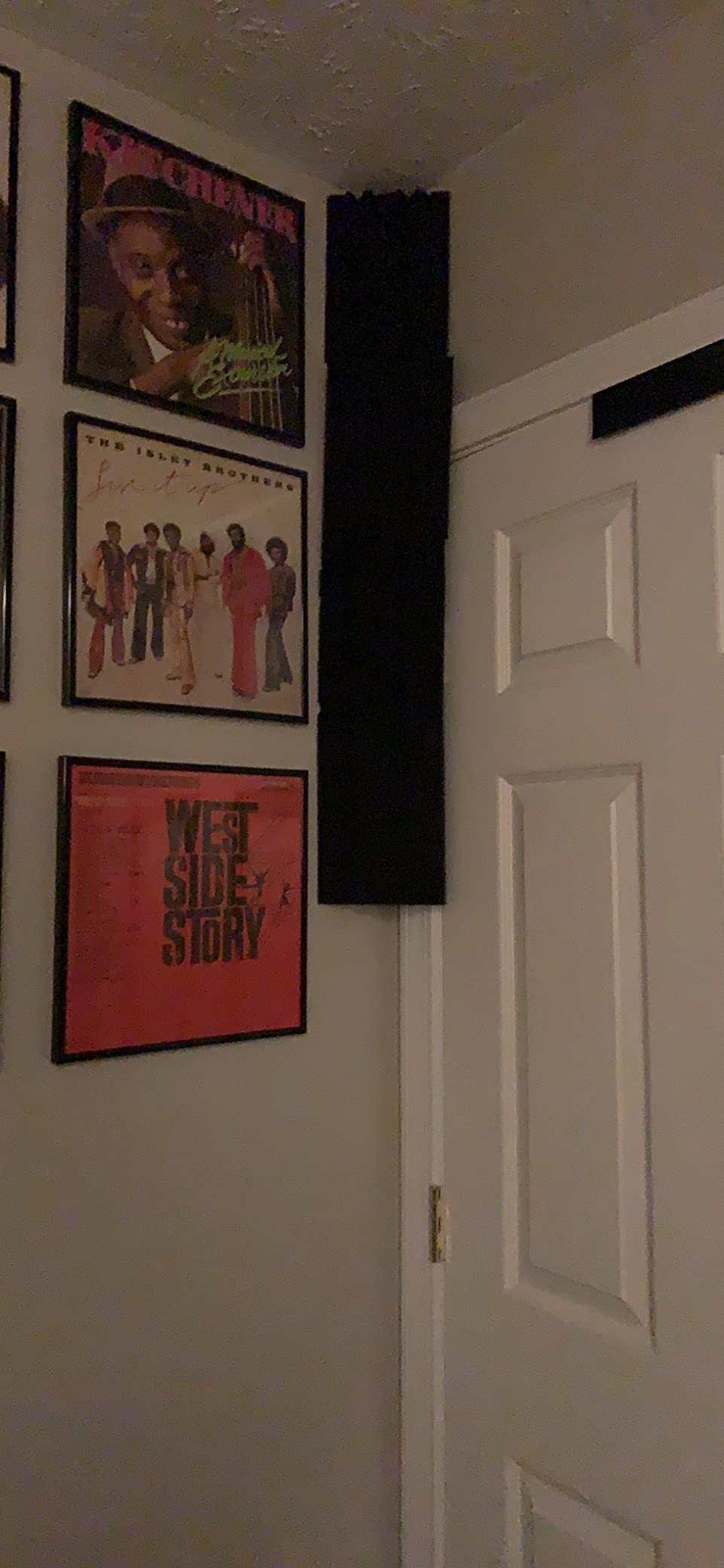
Who this trap suits
It suits a practice room, a closet studio or a bedroom where the goal is to soften reflections cheaply and see whether you like how the room responds. If you are still settling on an instrument, our picks for the best bass guitars for beginners make a sensible companion read.
It also suits a renter who wants to test placement positions before committing to a heavier product, because the pieces are light enough to move between corners in seconds.
Where it falls short
The stated use on the listing is mid to high frequency absorption with echo reduction, and at 4.6 inches of face that is the honest ceiling. This is not a bass trap in the performance sense.
Quality control is the other limit. Inconsistent shapes, weak adhesive and a chemical smell are all documented, and none of those matter in a spare room but all of them matter in a room you record vocals in.
7. Mybecca 4-Pack Corner Bass Traps – Highest Rated in the Roundup
Acoustic Foam Bass Trap Studio Corner Wall 12″ X 6″ X 6″ (4 PACK) Made in USA – Color: Charcoal
Acoustic foam, made in USA
12 x 6 x 6 in per trap
4 traps per pack
8.8 oz per trap
Pros
- Highest rating in the set at 4.6
- Long production history since 2014
- Charcoal colour suits dark rooms
- Good density for the size
Cons
- 12 x 6 in is small for true low frequencies
- Strong chemical smell when first opened
- Only four pieces per pack
This is the highest-rated product in the roundup at 4.6 across 135 reviews, and the reasons are worth noting. It has been manufactured in the USA since 2014, which means the density and the foam formulation are consistent from batch to batch in a way that is not always true of newer listings.
The reviews describe it as effective against standing waves and flutter echoes, and specifically for mid and low-mid control. That is an honest description of a 12 x 6 inch foam block, and honesty in the feedback is part of why the rating holds up.
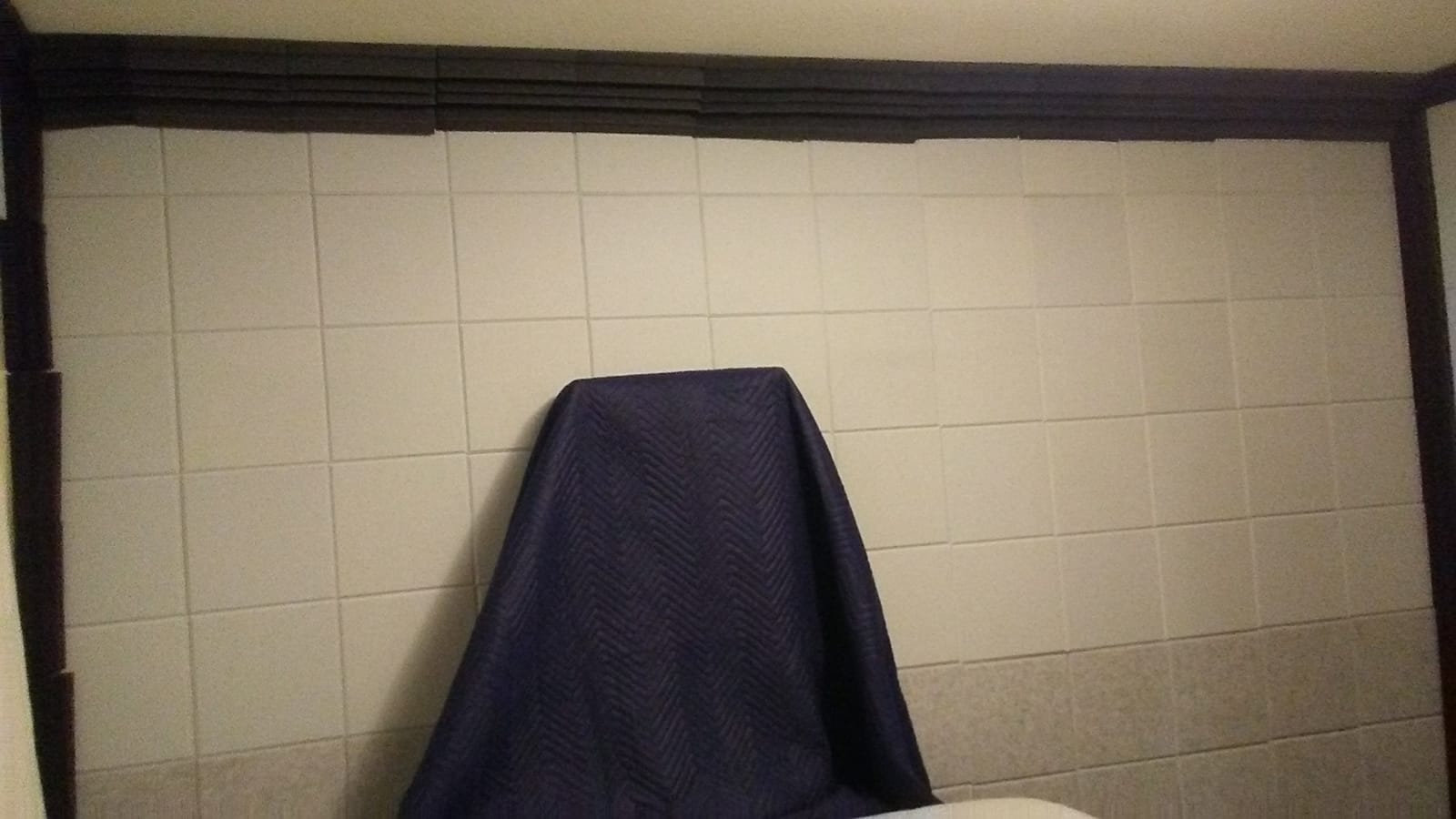
What you give up is depth. At 6 inches across the face, this is a small block, and users are consistent that it is too small for sub-bass. Four pieces is also a thin quantity for a full-room plan.
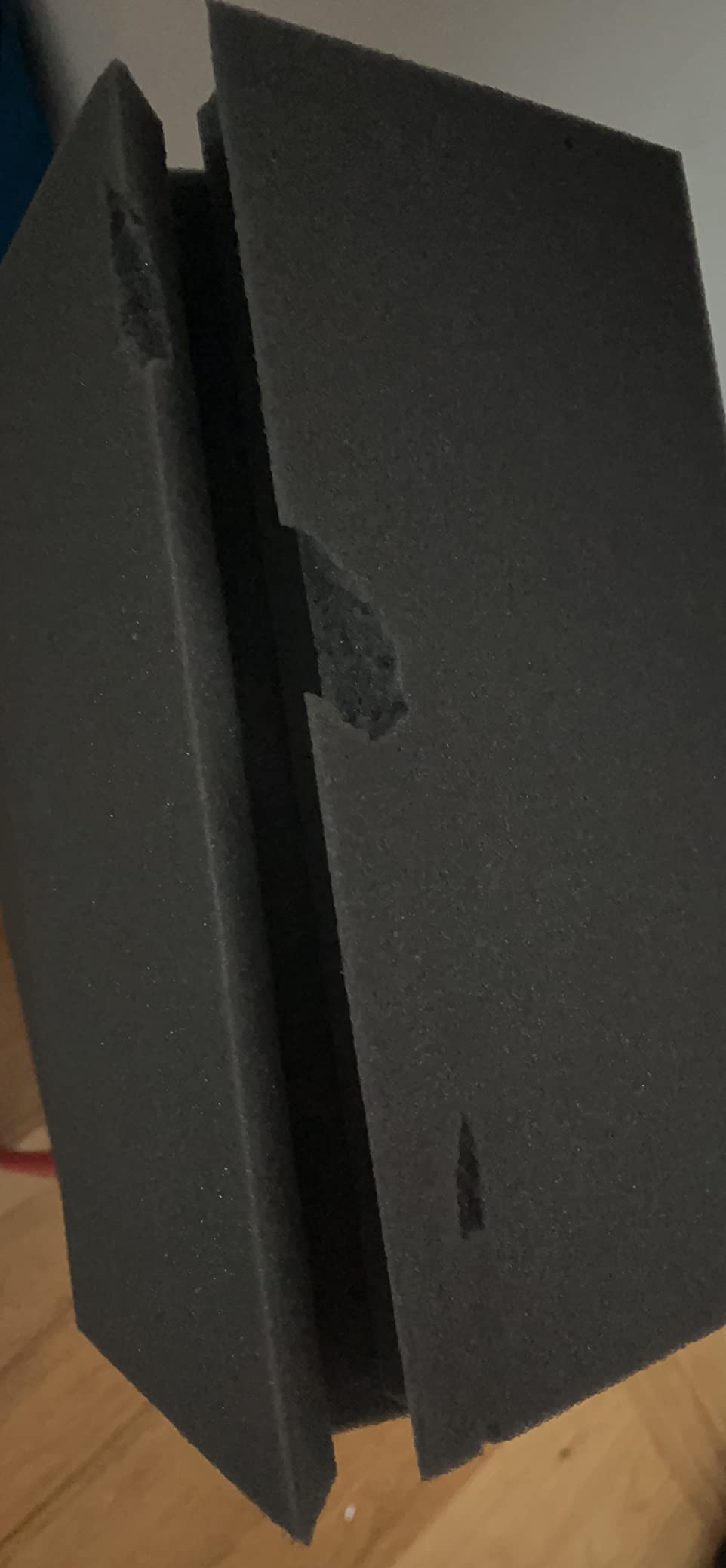
The other recurring note is smell. A number of reviewers describe a strong chemical odour on arrival that needs the room aired out for a day or two. That is normal for closed-cell foam and not a defect, but it means you cannot install and record the same evening.
Who this trap suits
It suits someone who values build consistency over raw size. If you have bought foam from multiple sellers and got wildly different results, a product that has been in production since 2014 is a safer bet than a newer listing with a higher claimed density.
It also suits a small control room or a treated corner where you want charcoal, understated treatment that disappears into a dark decor scheme.
Where it falls short
The 4.6 rating measures satisfaction with what was delivered, not low-frequency performance. Buyers are clear that these are too small for sub-bass, and at 6 inches they sit below the JBER and SD SODOCT blocks in effective depth.
Four pieces will not cover four corners. If your goal is a symmetrical room, plan on at least two packs and check that they stack cleanly in a vertical column.
8. Eerbaier 12-Pack Wall Corner Studio Foam Blocks – Best Coverage for a Whole Small Room
Acoustic Foam Bass Traps -12 Pack Wall Corner Studio Foam Blocks 12″ X 7″ X 7″ Low-Frequency Sound Absorption Material for Home Studio and Theater etc. (12 Pack, Bass traps)
High-density polyurethane foam
12 x 7 x 7 in per block
12 blocks per pack
2.63 lb pack weight
Pros
- Twelve blocks cover a room not just a corner
- Flame-retardant and non-toxic materials
- 12 x 7 x 7 in is a usable depth
- Combines well with wall panels
Cons
- Vacuum compressed with a 24 hour recovery
- Adhesive not included
- Buyers report using a water soak to speed recovery
Twelve blocks at 12 x 7 x 7 inches is the most useful combination of quantity and depth in the whole roundup. That is enough to build a full column in one corner, or to spread across all four corners of a small room, which is the correct order of operations for most home studios.
The material is high-density polyurethane and the listing states it is flame retardant, environmentally friendly and non-toxic. Buyers consistently pair these with flat wall panels and report that the combination works better than either alone, which matches the general consensus that traps and panels solve different problems.
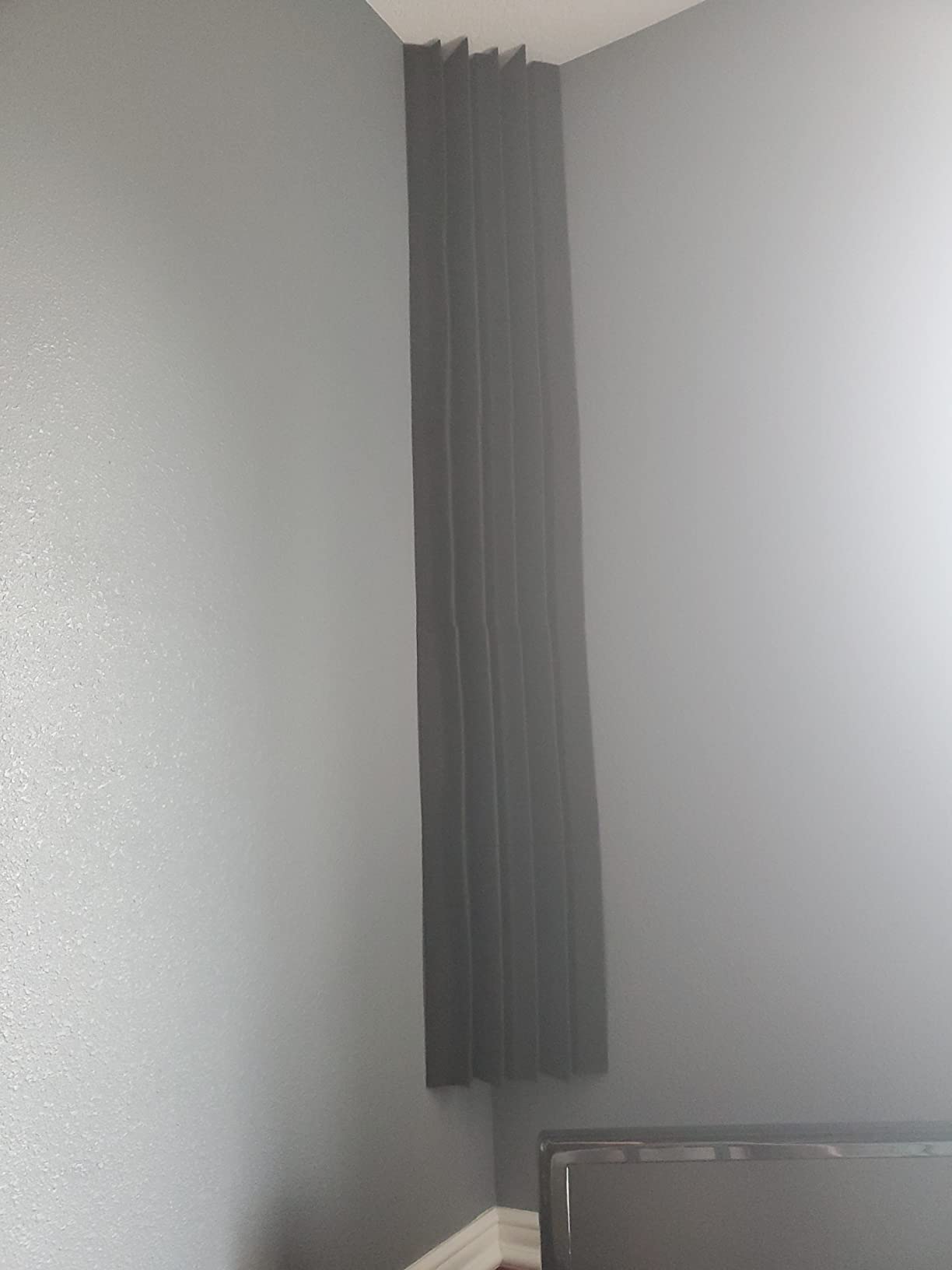
The recurring practical issue is recovery time. Twelve compressed blocks need about a day in a ventilated room, and some buyers resorted to a water soak plus a hair dryer to move it along. Plan a weekend, not an evening.
Adhesive is not included here either, and at 2.63 pounds for the pack these are still light enough to mount solo, which makes a spray adhesive a sensible addition rather than a necessity.
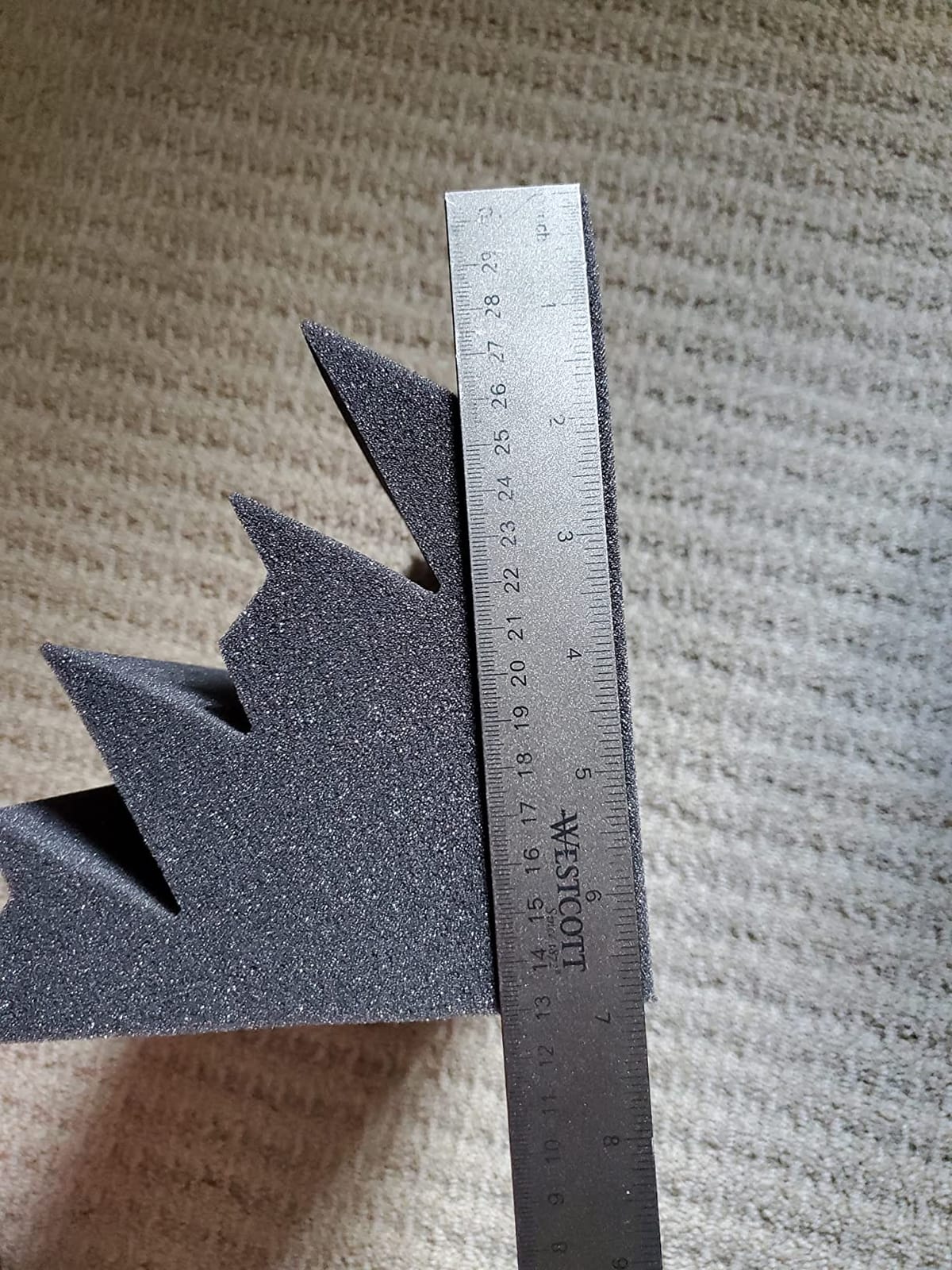
Who this trap suits
It suits a small apartment studio, roughly 8 by 10 feet, where four corner columns are the goal. Twelve blocks gets you most of the way there in one order and matches the two traps we named as best overall and best value in size class.
It also suits a home theatre, where the room is used for playback rather than recording and you want a lot of absorption coverage without a huge number of separate purchases.
Where it falls short
Seven inches of foam depth is the same ceiling as the JBER block. If you have measured a deep room mode below 60 Hz, no quantity of these will shift it, and a mineral wool build or a furniture strategy will serve you better.
Buyers also note that the 12-pack quantity can encourage over-treatment. Absorbing every surface leaves a room that sounds dead, which is the opposite failure and just as common.
9. Eerbaier 16-Pack Stackable Corner Columns – Best as Stacking Columns, Not as Traps
Bass Traps 16 Pack 12″ X 3″ X 3″ Corner Acoustic Foam Panels, Acoustic Bass Trap Corner Block, Sound Absorbing Foam for Studio, Home or Theater
Fire-retardant polyurethane foam
12 x 3 x 3 in per column
16 columns per pack
15.2 oz total weight
Pros
- Stackable one-foot sections for flexible placement
- Fire-retardant eco-friendly material
- Sixteen pieces for broad coverage
- Recovers in 24 to 48 hours
Cons
- 3 x 3 in profile is thin for low frequencies
- Under an ounce per piece signals low density
- Inconsistent shapes and a chemical smell reported
These share a brand with the previous entry and the same honesty applies. Sixteen 12 x 3 x 3 inch columns are excellent as stackable infill. Stacked four high against a corner wall, they create a 48-inch column that looks continuous and adds surface area where a small room needs it.
They are not deep enough to be a bass trap in the standalone sense. Under an ounce per piece tells you the density is low, and reviewers consistently describe them as better suited to mid frequencies than to true bass control.
Who this trap suits
It suits someone who already has a real corner trap in place and wants to fill the remaining height, or who needs a cheap way to cover a lot of wall surface around a listening position in a small room.
The one-foot length is genuinely useful because it divides cleanly, so you can build a half-height treatment behind a desk or a full-height column without cutting.
Where it falls short
The 4.3 rating is strong for a piece this thin, but the reviews make clear that buyers are rating value and appearance rather than low-frequency performance. Expect a tidy, cheap, mid-range result.
Adhesion is a documented problem. Buyers report that double-sided tape does not stick to the foam surface well, so budget for spray adhesive and expect to re-stick pieces.
10. TroyStudio 12-Pack Dense Studio Bass Foam – Best for Vocal Booths and Closet Studios
TroyStudio Bass Traps – 12 Pcs 4 X 4 X 12 Inches Dense Thick Studio Bass Foam Corner, Acoustic Treatment Panel Absorbing Echo Reverb, Low Frequency Sound Absorber for Music Room Home Recording Studio
High-density polyurethane
4 x 4 x 12 in per panel
12 panels per pack
0.07 lb per panel
Pros
- Rated 4.5 with flame retardant CA TB 117-2013
- Odorless and non-toxic
- Interval pattern improves both look and function
- Recovers fast with a blow dryer
Cons
- Lightweight at 0.07 lb per panel
- Thin compared with a true bass trap
- Adhesion and pattern alignment issues reported
Two certifications make this one stand out for a specific use. It is flame retardant to California Technical Bulletin 117-2013, and it is described as odourless, which matters far more in a vocal booth than in a mixing room because you will have your mouth a foot from the source.
The interval structure is not purely cosmetic. The staggered profile is intended to increase effective surface area for the same footprint, and the manufacturer lists wall and ceiling mounting as intended uses.
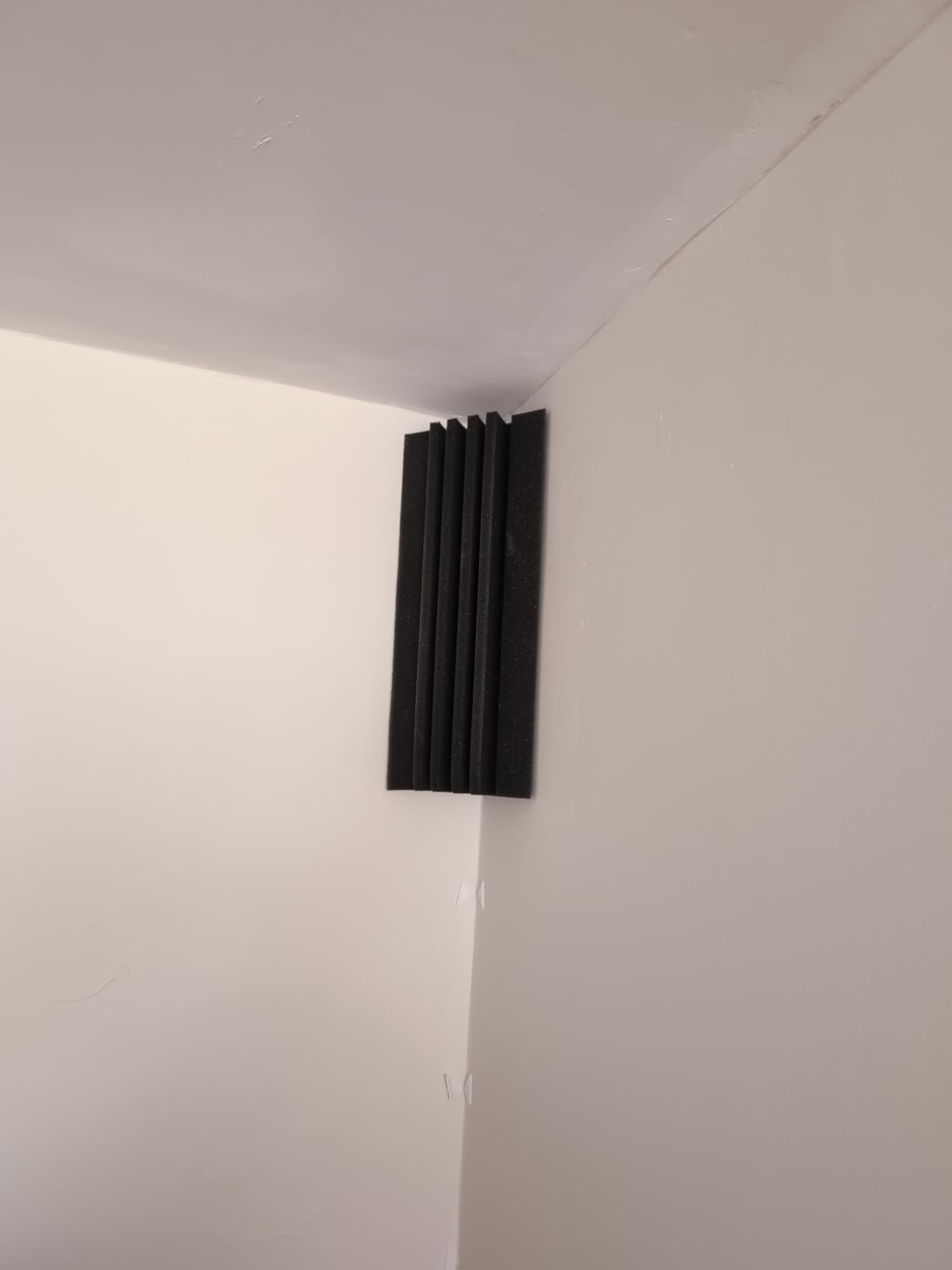
At 0.07 pounds per panel, these are among the lightest options here, and the reviews are honest about the consequence. Users describe them as effective for small vocal booths and closet studios but not for deep booming bass, which is the correct characterisation of 4 by 4 inch foam.
Buyers also note that some pieces do not expand fully without a water soak, and that the printed pattern does not always line up between panels. If visual alignment matters to you, check alignment before you commit.
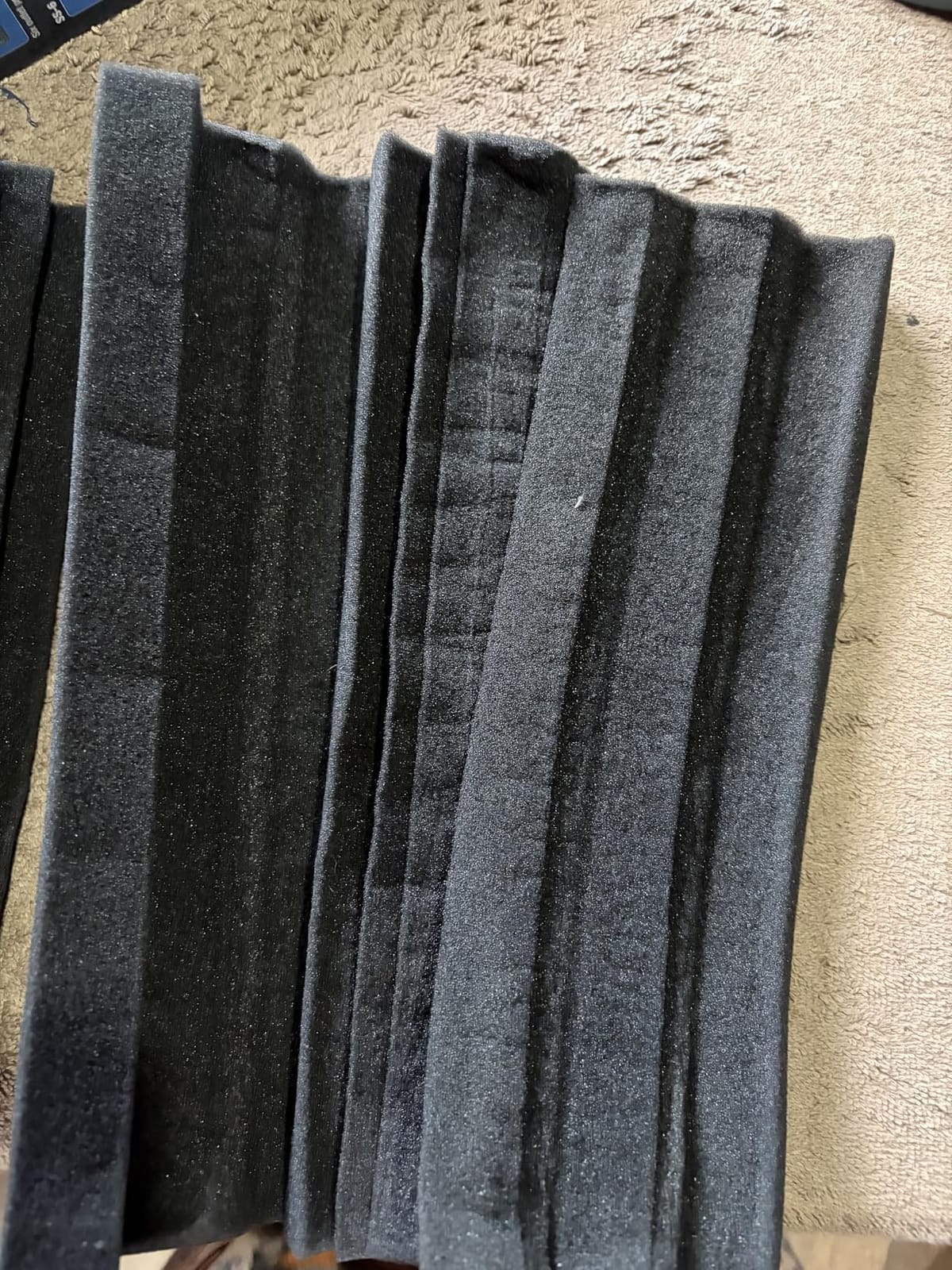
Who this trap suits
It suits a vocal booth, a podcast corner or a closet studio where the room is small, the recording is close-mic, and a strong chemical smell would end up in your take. Odourless foam is a real advantage there.
It also suits anyone who needs a documented flame rating for a rented or shared space and prefers a documented standard over a marketing claim.
Where it falls short
At 4 by 4 inches these are closer to wall panels than to bass traps. The 4.5 rating reflects build quality, safety certification and value rather than an ability to absorb the lowest modes.
Adhesion is the most common complaint, along with the usual vacuum-packing recovery. Buy spray adhesive separately and allow a day for expansion before you mount anything.
How Many Bass Traps Do You Need?
Start with four and work up. Four is the number because a rectangular room has four vertical corners, and every one of them is a pressure maximum at low frequencies. Treating only the two behind your monitors leaves the two behind your chair untreated, and those two are often the ones exciting the boom you are trying to fix.
From there, height matters more than count. A single full-height column in each corner outperforms four half-height traps per corner, because the modal pressure does not care how many pieces you have, only how much of the boundary you have covered continuously.
Small room, 6 by 8 feet: four corners, floor to ceiling, roughly 10 to 12 inches of depth each. This is where our value pick and the JBER block both fit.
Standard home studio, 10 by 12 feet: four full-height corners plus a 12-pack of wall panels for first reflections.
Larger room, 14 by 20 feet: four full-height corners, two back-wall traps behind the listening position, and ceiling-to-wall junction treatment. A room this size usually needs a mineral wool build rather than foam.
Apartment or rental: start with two corners behind the monitors so you can move the panels if you move rooms, and only add the rear pair once you know the room is the problem.
The forum answer to this question is consistent: broadband absorbers on the walls give the best return, and any room benefits from bass traps in addition to them. Traps alone are not a complete treatment.
Where to Place Bass Traps
Put bass traps in all four vertical corners, floor to ceiling, and keep them off the wall junction if your mounting allows. Low-frequency energy accumulates where surfaces meet, so the corner is the target, but a deliberate air gap behind the panel extends the depth at which the absorber works. Mounting flush to the corner wastes the main advantage of the product.
Beyond the vertical corners, work down a priority list:
Four vertical corners, floor to ceiling, symmetrical on all four walls.
The back wall behind the listening position, which controls the biggest early low-frequency reflection.
Ceiling-to-wall junctions, which is the zone the triangular pyramid trap in this roundup was designed for.
Side wall reflection points, which is where the thin 12 x 3 x 3 inch columns earn their place.
Behind and beside the monitor position, especially if your speakers are close to a wall.
One correction to a common belief: bass traps do not need to be floor to ceiling in the sense of being glued to both surfaces. Freestanding or impaler-mounted traps work as long as the treated area is continuous and the air gap is real. The floor-to-ceiling recommendation is about coverage, not about the two contact points.
How to Choose a Bass Trap
Choose on depth, density and fire rating before you choose on brand or count. Those three decide whether the product touches the frequencies you are trying to fix, and everything else in the specification is decoration. Below about 4 inches of depth, you are buying mid-range absorption regardless of what the box says.
Material: foam, mineral wool or fiberglass
Open-cell acoustic foam is the cheapest and lightest option, and the entire roundup above is foam. It is genuinely effective from roughly 80 Hz upward, it is easy to cut, and it is the only category most beginners will install themselves. Its ceiling is the bottom of the range, and it is a weak answer to a 40 Hz problem.
Mineral wool, rockwool and fiberglass insulation are the answer for the lowest frequencies. The forum consensus, from builder threads on r/edmproduction, is that dense material mounted with a real air gap is what actually moves the low end, and the advice that these should not touch the corner directly is the single most consistent piece of expert guidance across those threads.
Foam beats the two dense materials on weight and on install difficulty. Dense materials beat foam on frequency range by a wide margin. If your budget allows, split the difference: foam for the room, mineral wool for the four corners.
Ideal thickness and the air gap
Four inches is the practical minimum for a trap you can call a bass trap, and 8 to 12 inches is where you get serious low-frequency control. The air gap behind the panel matters at least as much as the thickness of the material itself, which is why corner impalers or a bracketed stand often outperform a thicker panel mounted flat.
A practical rule we came back to repeatedly: if the depth of the material plus the depth of the air gap is under 12 inches, you are treating a room mode from about 80 Hz up, not below it.
The 38% rule for room shape
The 38% rule is a room proportion guideline, not a treatment technique. The width of the room should be about 1.6 times the length, and the height about 1.25 times the width, so a typical 10 by 16 foot room wants a ceiling around 12.5 feet. Rooms built to that ratio spread their room modes out instead of stacking them, which means less energy concentrated at one frequency and easier treatment.
In a square room, modes pile up and no quantity of traps will smooth a 30 Hz spike. In a room that follows the 38% rule, the same treatment budget goes much further. Room shape beats trap count, which is why this is worth checking before you spend anything.
DIY traps: what it costs and when it is worth it
DIY corner traps are the cheapest route to the deepest absorption available. The build is a wooden frame sized to your corner, mineral wool or Owens Corning 703 inside, breathable fabric stapled to the front face, and an impaler or cleat to hold it off the wall. Builders on r/edmproduction report landing near seventy dollars per corner trap and two to three days of work.
That figure is lower than most commercial floor-to-ceiling traps and considerably deeper. The catch is skill and dust. Rockwool and fiberglass need a mask and careful handling, and exposed material that does not match your decor is the reason many people buy finished traps instead.
One caution for anyone following an older guide: builders on GearSpace report that Owens Corning changed the formulation of 703, which affects how closely an old write-up reproduces. Follow current data rather than a five-year-old video.
Fire rating and renting
Only two products in this roundup cite a named fire standard rather than a general flame-retardant claim: the SD SODOCT 8-pack at B1 to CA117, and the TroyStudio pack at California Technical Bulletin 117-2013. That is unusual, and it is worth asking about before you buy anything for a rented or shared space.
For rentals, the constraint is the mounting, not the trap. Removable double-sided pads, as included with the Focusound pack, let you treat a corner without drilling, and freestanding column traps avoid the wall entirely. If you are in an apartment, you also need to accept one thing: traps treat the room you are in and do very little about sound passing through a wall to a neighbour. That is isolation, a different and more expensive problem.
Are Bass Traps Worth It? How to Spot a Foam Gimmick
Worth it when your problem is a room mode and the trap is deep, dense and correctly placed. Not worth it when the problem is sound leaking to a neighbour, or when you are covering a room in 3-inch wedges and calling it low-frequency control.
There is a 40-plus comment thread asking whether sellers of bass traps are making money on untested products. Here is the objective version of that question, and it comes down to three checks you can do in under a minute from the product listing.
Check the depth. Under 4 inches and it is a wall panel with a bass name on the box. Look for the usable depth in the corner, not the height of the block.
Check the weight. Heavier means denser material means more low-frequency absorption. A trap that weighs under two ounces is not going to do much below 100 Hz.
Check the air gap. If the listing says flush mount, or if there is no mounting hardware and no impalers, the performance is limited no matter what the foam is made of.
A real trap also tells you its material. Foam, polyurethane, mineral wool, rockwool or glass wool are legitimate answers. A listing that leaves material blank, or gives it as plastic, is not giving you the information you need to judge the product.
The last thing to check is whether you are over-damping. A room with traps on every surface can end up sounding flat and lifeless, which is a different disappointment from a boomy one. Treat the corners, treat first reflections, and leave the centre of the front wall and the ceiling largely alone unless a measurement tells you otherwise.
Frequently Asked Questions
Do bass traps really work?
Yes, within a defined band. Dense porous corner traps start absorbing meaningfully around 80 Hz and reach toward 50 Hz with enough depth. Thin foam wedges do very little below 150 Hz. They treat the room you are in; they do not stop sound passing through walls to a neighbour.
What is the 38% rule in room acoustics?
The 38% rule describes a room proportion where the width is about 1.6 times the length and the height about 1.25 times the width. Rooms built to this ratio spread their room modes out instead of stacking them, so the same treatment budget goes further. It is a shape guideline, not a treatment technique.
Should I put bass traps in every corner?
Yes, all four vertical corners, floor to ceiling, and symmetrical. Treating only the two corners behind your monitors leaves the two behind your chair untreated, and those frequently excite the boom you are trying to fix. Coverage continuity matters more than the number of pieces.
What is the ideal thickness for a bass trap?
Four inches of material is the practical minimum, and 8 to 12 inches is where you get real low-frequency control. The air gap behind the panel counts too. If material depth plus air gap is under about 12 inches, you are treating from roughly 80 Hz upward rather than the deepest modes.
How many bass traps do I need for a small room?
Four, one per vertical corner, each run floor to ceiling, is the starting point for a room around 6 by 8 feet. Height matters more than piece count. In a 10 by 12 foot room, add wall panels for first reflections behind and beside the monitors.
Bottom Line
The JBER 4-pack is the best bass trap for most home studios in 2026, because a 7-inch deep block in all four corners is the correct first move and it carries the largest review base we could find. The SD SODOCT 8-pack is the value pick, and it is the only foam option here with a published fire rating. For a rental where drilling is not allowed, the Focusound pack solves mounting as well as absorption.
Where none of these reach is the bottom of the range, and that is a build question rather than a shopping one. If your room has a problem below about 60 Hz, move up to mineral wool on corner impalers, check your room proportions against the 38% rule, and treat first reflections with broadband panels. Buy the foam to learn the room; build the dense traps to fix it.