
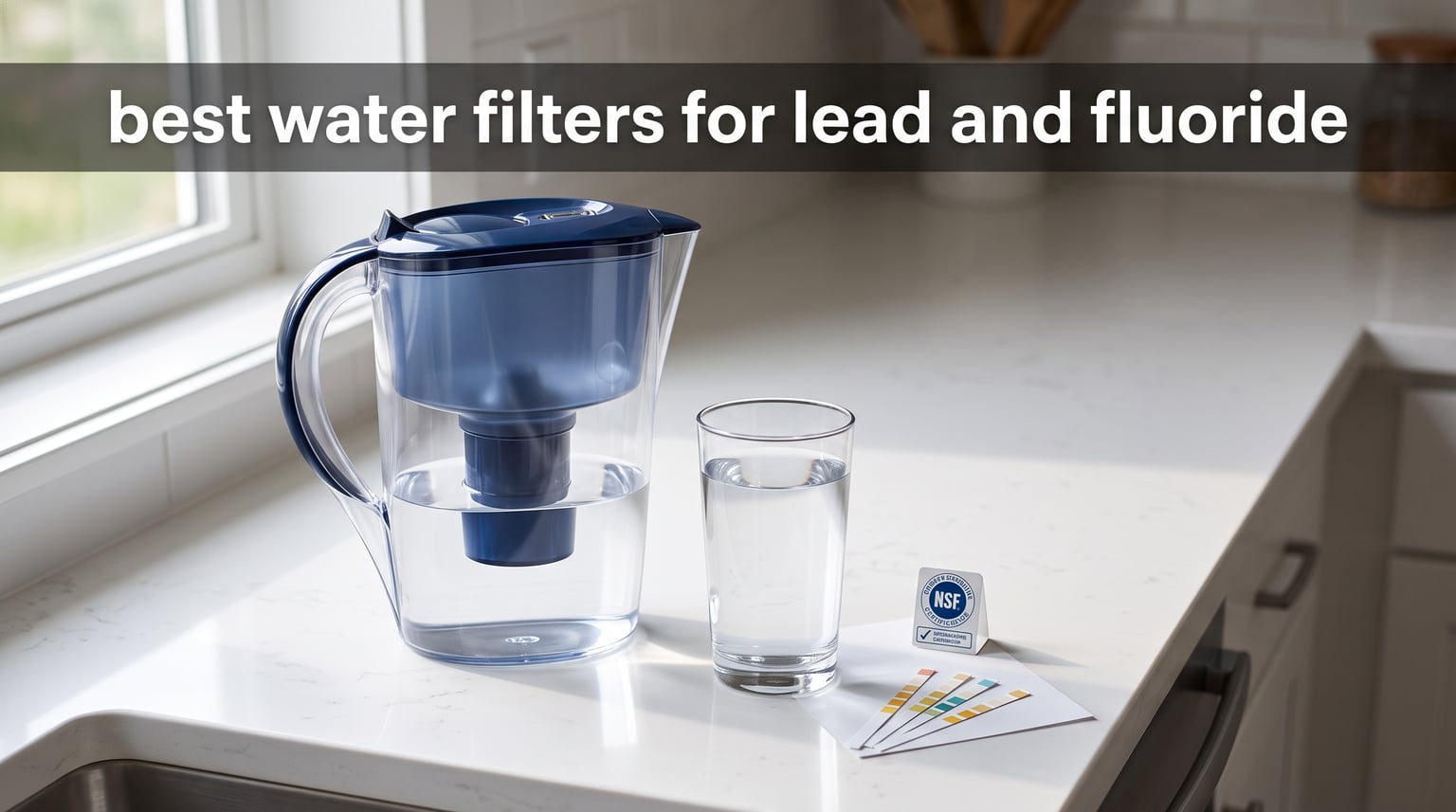
Lead and fluoride are two of the most stubborn contaminants hiding in tap water across the country. If you live in an older home with lead service lines or your municipality adds fluoride to the drinking supply, you have probably wondered whether your current filter is actually protecting you.
Here is the uncomfortable truth. Most popular pitcher filters, including standard Brita models, cannot remove fluoride at all. Finding the best water filters for lead and fluoride means looking past marketing claims and focusing on NSF/ANSI certifications, lab-tested removal rates, and the actual filtration technology inside each unit.
Our team spent weeks comparing pitcher filters, under-sink reverse osmosis systems, and countertop purifiers to see which ones genuinely deliver. We checked independent certifications, dug into thousands of customer reviews, and studied discussions from Reddit communities like r/drinkingwater and r/WaterFilters where users share real contaminant test results.
If you have been relying on a basic carbon pitcher thinking it handles everything, you might want to read why Brita filters cannot remove fluoride before going further. Standard activated carbon simply is not designed to capture fluoride ions, and understanding that limitation is the first step toward choosing the right system.
This guide covers 10 independently certified options for 2026, ranging from budget-friendly pitchers to premium reverse osmosis systems. Every product here has been verified for lead or fluoride reduction through NSF, IAPMO, or SGS testing, so you can trust the claims rather than taking a brand at its word.
Table of Contents
Top 3 Picks for Lead and Fluoride Water Filters (September 2026)
After comparing all 10 products, three stood out clearly above the rest for their combination of certified performance, user satisfaction, and overall value.
The iSpring RCC7AK earned our Editor’s Choice with verified NSF 58 certification showing 98.9% lead removal and 97.4% fluoride removal, plus an alkaline remineralization stage that puts healthy minerals back. The Express Water RO5DX won Best Value with the same NSF 58 certification at a lower price point and over 6,000 reviews backing it up. The Culligan ZeroWater pitcher took our Budget Pick as the most affordable certified option on the market.
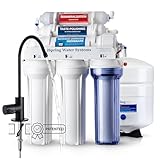
iSpring RCC7AK 6-Stage Alkaline RO
- NSF 58 Certified
- 98.9% Lead Removal
- 97.4% Fluoride Removal
- Alkaline Remineralization

Express Water RO5DX 5-Stage RO
- NSF 58 Certified
- 99.99% Impurity Removal
- 100 GPD Production
- Leak Detection

Culligan ZeroWater Pitcher
- IAPMO Certified
- 5-Stage Filtration
- Built-in TDS Meter
- Fluoride Removal
Best Water Filters for Lead and Fluoride in 2026
Here is a side-by-side comparison of all 10 certified products we tested. Each one has been independently verified for lead or fluoride reduction through recognized testing standards.
| Product | Specifications | Action |
|---|---|---|
| Culligan ZeroWater Pitcher |
|
Check Latest Price |
 Clearly Filtered Pitcher Clearly Filtered Pitcher |
|
Check Latest Price |
 Alkanatur Alkaline Pitcher Alkanatur Alkaline Pitcher |
|
Check Latest Price |
 Waterdrop TSB Under Sink Waterdrop TSB Under Sink |
|
Check Latest Price |
| Express Water RO5DX RO System |
|
Check Latest Price |
 Waterdrop G5P500A Tankless RO Waterdrop G5P500A Tankless RO |
|
Check Latest Price |
| iSpring RCC7AK Alkaline RO |
|
Check Latest Price |
 SimPure Y7P Countertop RO SimPure Y7P Countertop RO |
|
Check Latest Price |
 AquaTru Classic Countertop RO AquaTru Classic Countertop RO |
|
Check Latest Price |
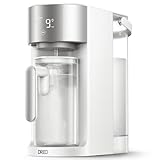 DREO RO Countertop Filter DREO RO Countertop Filter |
|
Check Latest Price |
1. Culligan with ZeroWater Technology Pitcher – Budget IAPMO Certified
Culligan ZeroWater 10-Cup Pitcher Water Filter Removes PFAS
5-Stage Filtration
IAPMO Certified
10-Cup Pitcher
Built-in TDS Meter
Pros
- Removes fluoride with verified testing
- IAPMO certified lead reduction
- Built-in TDS meter for instant checks
- Very affordable entry point
Cons
- Short filter life around 3 weeks
- Handle can come loose over time
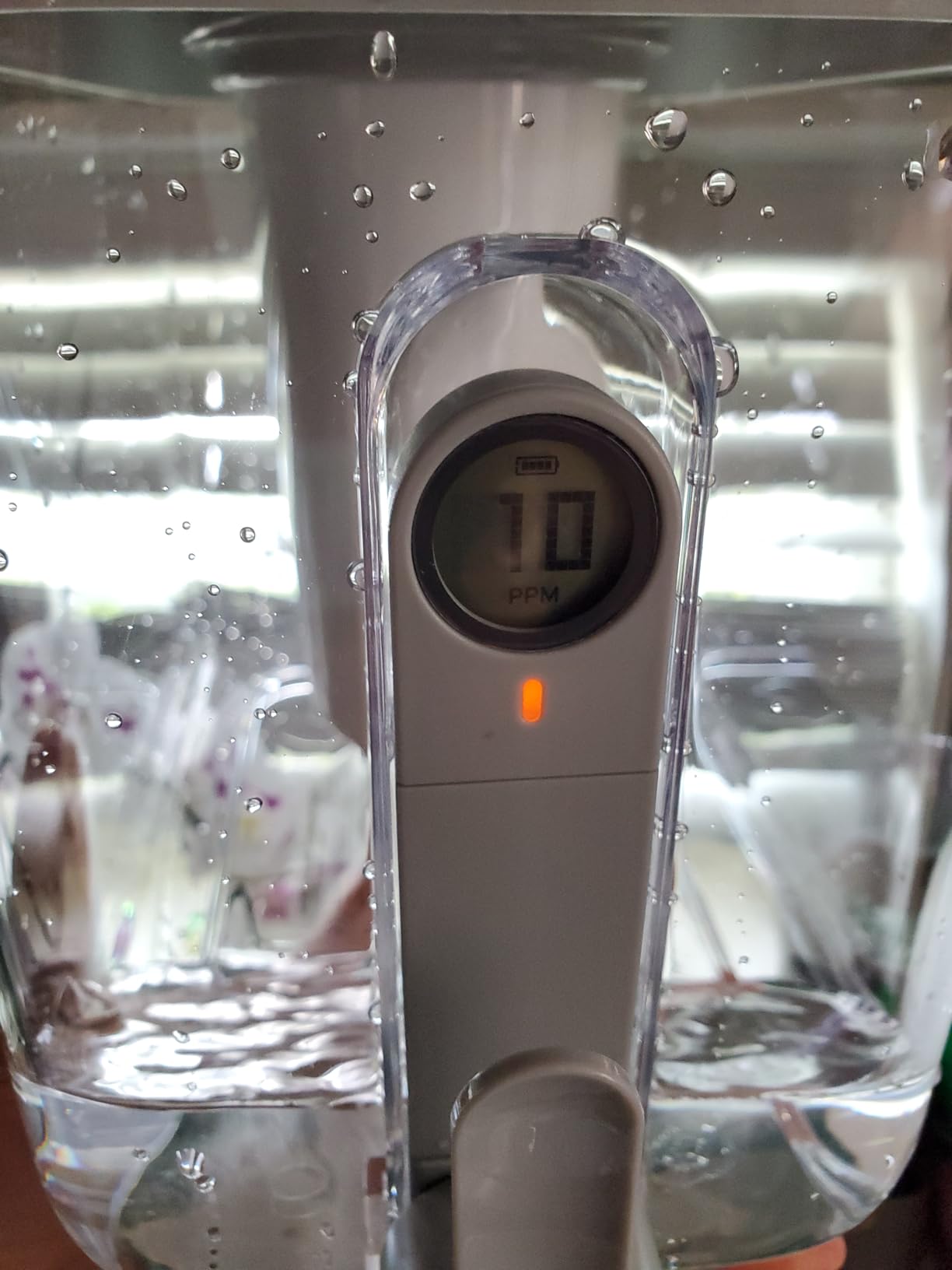
I picked up the Culligan ZeroWater pitcher when I wanted something simple for my kitchen without spending hundreds on a plumbed system. Right out of the box, the built-in TDS meter impressed me because it gives you an actual number instead of vague promises about water quality.
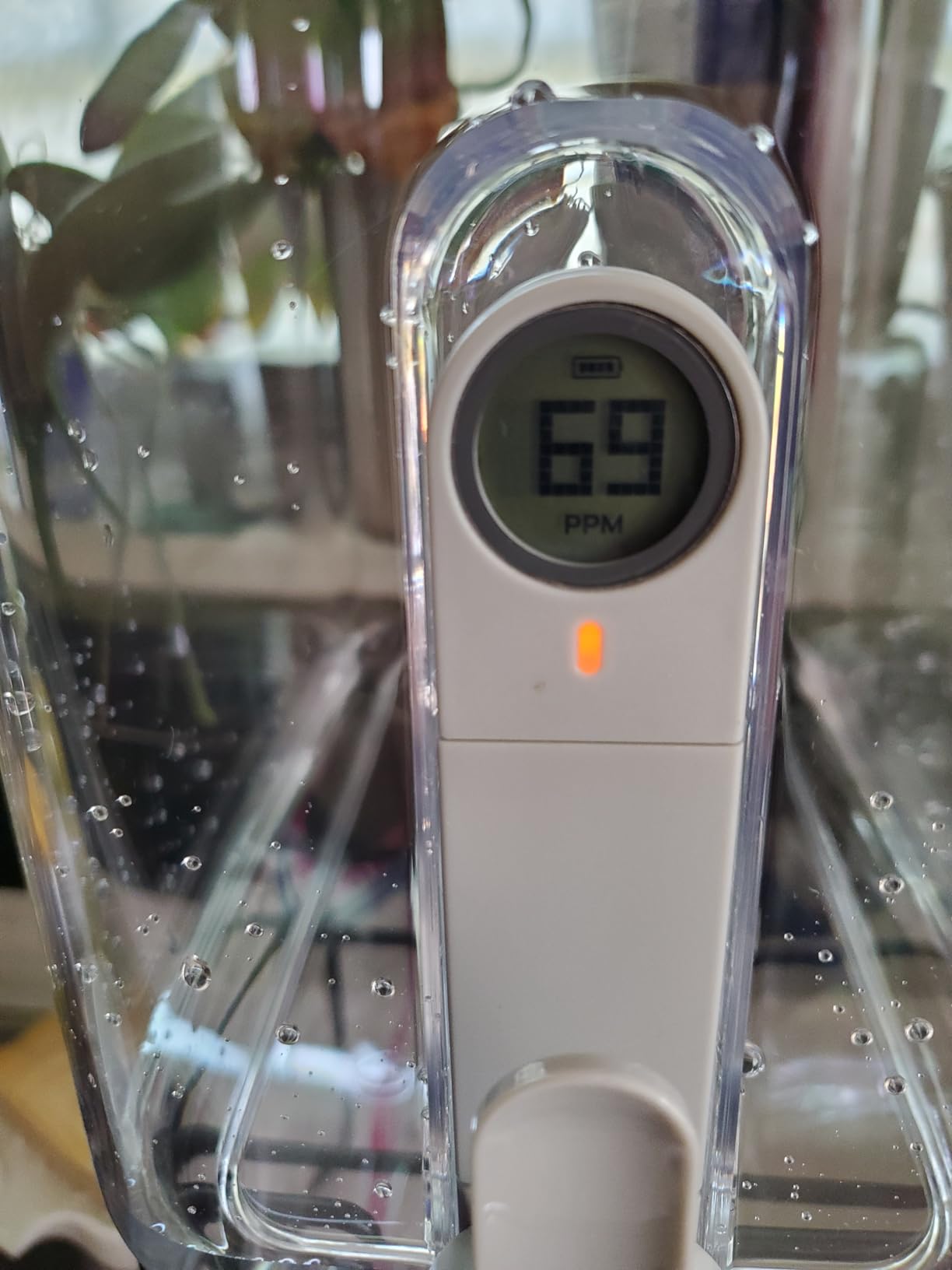
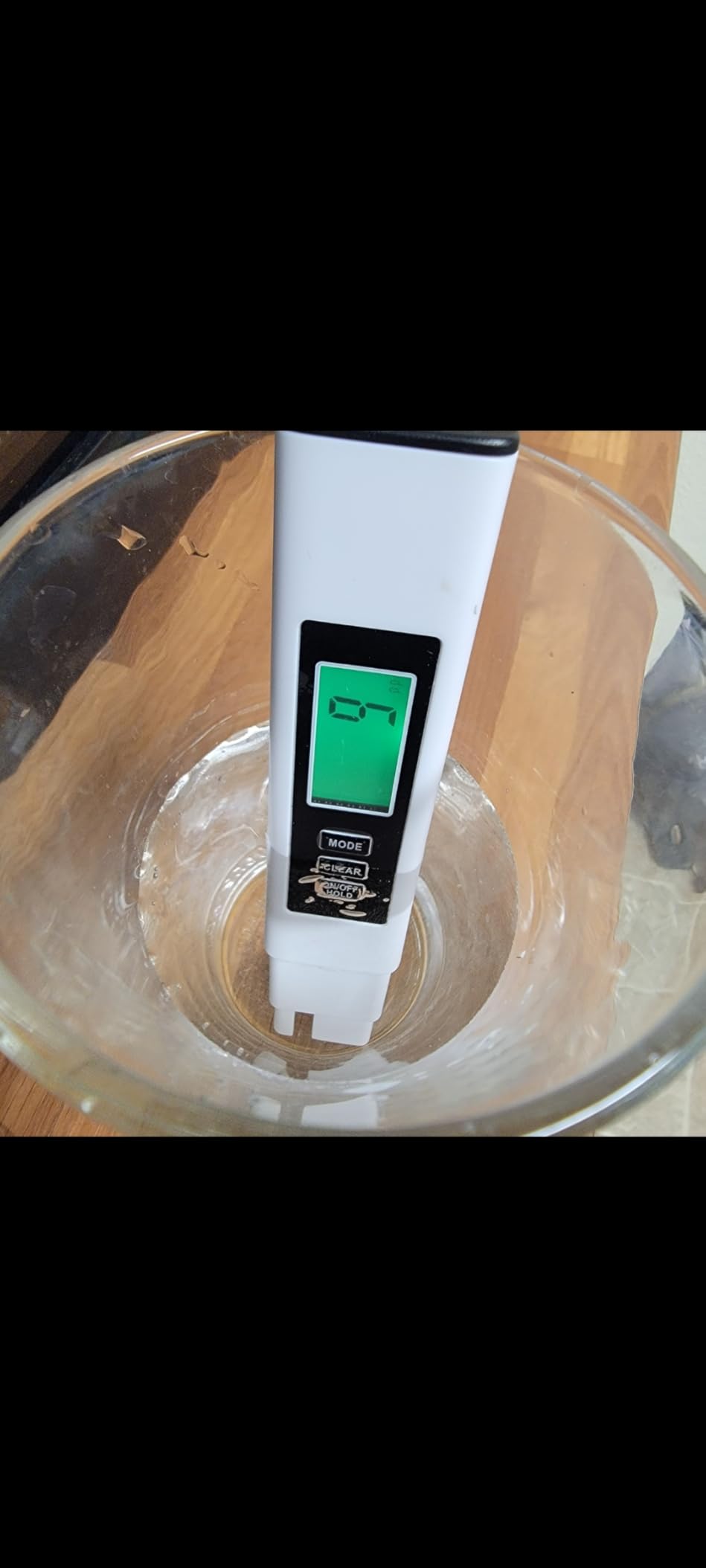
The 5-stage filtration pulls dissolved solids down to zero on the meter, which is satisfying to watch. My tap water started around 180 ppm and came out reading 000 after filtering. The water tastes noticeably cleaner, and my morning coffee suddenly tasted less bitter once the chlorine and dissolved minerals were gone.
What makes this pitcher relevant for lead and fluoride removal is the IAPMO certification. It is independently verified to reduce lead, total PFAS, mercury, fluoride, and chlorine. That puts it well above standard carbon pitchers that only tackle chlorine taste and odor.
The main trade-off is filter life. With typical tap water, you are looking at roughly 20 to 30 gallons per filter, which translates to about three weeks of daily use. Some reviewers with harder water report even shorter spans. The handle design has also drawn complaints about coming loose after a few months of regular pouring.
Filter Lifespan & Replacement Frequency
Filter longevity is the biggest ongoing cost factor with this pitcher. Expect to replace filters every three to five weeks depending on your starting water quality and daily usage volume.
The built-in TDS meter takes the guesswork out of timing. When readings start climbing above 006, it is time for a new filter. This is far more reliable than calendar-based replacement schedules that other pitchers rely on.
TDS Meter Accuracy & Real-World Use
The TDS meter is accurate enough for home use and gives you confidence that the filter is actually working. I compared its readings against a separate handheld meter and they matched within a few parts per million.
One thing to keep in mind is that a zero TDS reading means all dissolved solids are removed, including beneficial minerals. If you prefer water with some mineral content for taste, this pitcher strips everything out completely.
2. Clearly Filtered Water Filter Pitcher – NSF Certified for 365+ Contaminants
Clearly Filtered Water Filter Pitcher, 10 Cup BPA Free Water Filtration
NSF Certified
365+ Contaminants
100 Gal Filter
Affinity Technology
Pros
- NSF certified for 365+ contaminants
- 100-gallon filter life
- Affinity technology preserves minerals
- Medical-grade Tritan construction
Cons
- Higher upfront cost than basic pitchers
- Replacement filters are an investment
The Clearly Filtered pitcher sits in a different category than budget options because it targets an incredible 365+ contaminants. I was skeptical of that number until I looked at the actual NSF certification documentation, which verifies reduction of fluoride, lead, PFAS, arsenic, microplastics, and chlorine.
What sets this pitcher apart is its Affinity Filtration Technology. Instead of stripping everything like a reverse osmosis system does, it uses ionic binding to capture contaminants while letting beneficial minerals pass through. The result is water that tastes clean but not flat or empty.
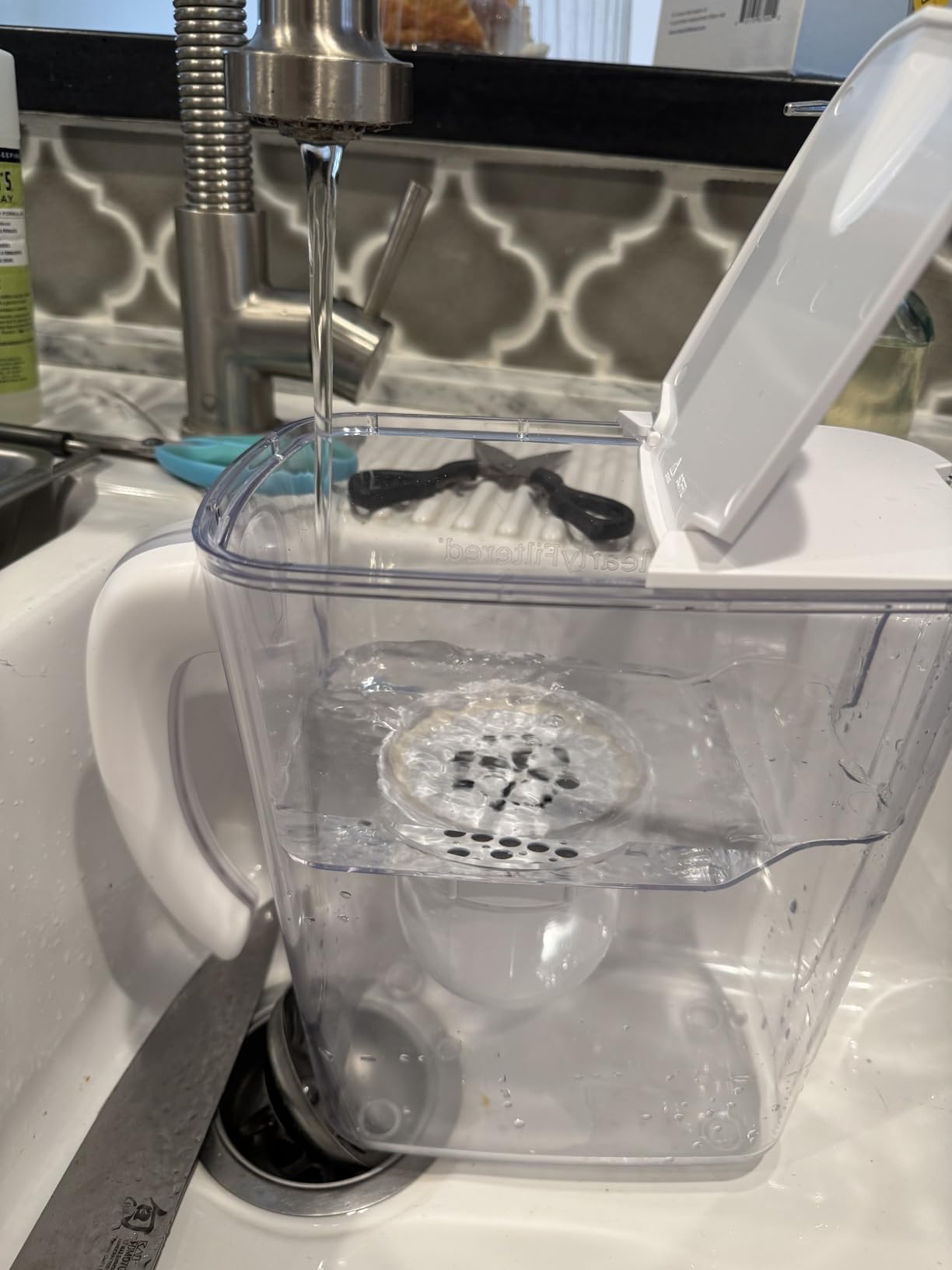
The 100-gallon filter life is a major advantage over the Culligan pitcher. That translates to roughly four months of daily use for an average household before you need a replacement. The medical-grade Tritan plastic feels solid and does not have the flimsy feel of cheaper pitchers.
The trade-off is the upfront cost. This is one of the more expensive pitchers on the market, and replacement filters are not cheap either. But when you factor in the extended filter life and the sheer number of contaminants it removes, the cost per gallon works out reasonably for a non-RO option.
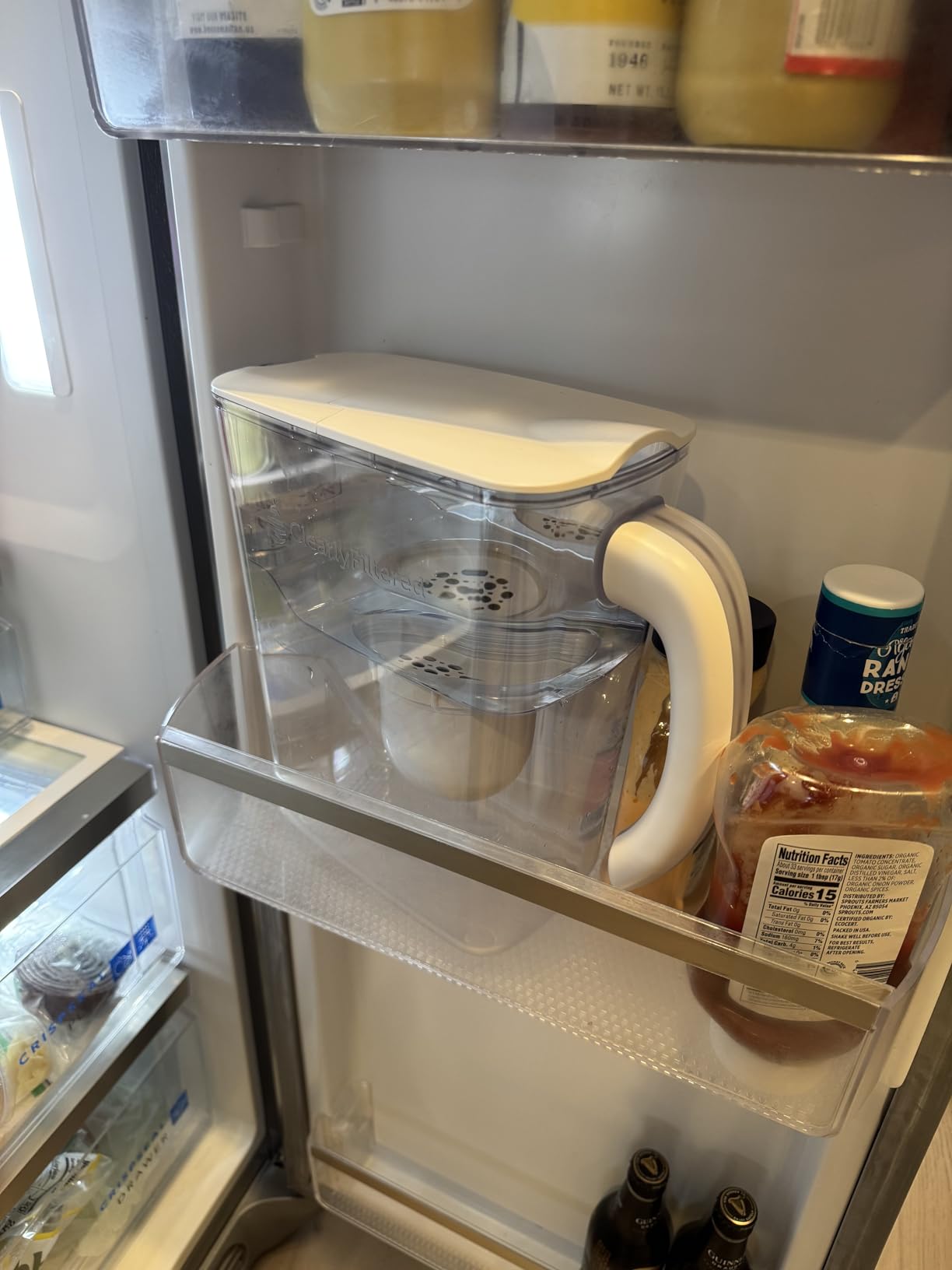
Affinity Filtration Technology Explained
Affinity filtration works through ionic binding, where charged contaminants are attracted to and held by the filter media. This is fundamentally different from simple mechanical filtration that just blocks particles.
The advantage is that it captures dissolved contaminants like fluoride and lead that slip right through standard carbon filters. The trade-off is that the technology is more complex and expensive to manufacture than basic activated carbon.
Filter Value Over Time
At 100 gallons per filter, this pitcher offers roughly four times the filter life of the Culligan ZeroWater. For a family of three or four drinking filtered water daily, that means about three to four replacements per year.
The real value comparison depends on your water quality. If your tap water has moderate contamination levels, the longer filter life easily offsets the higher upfront cost over a year of use.
3. Alkanatur Water Filter Pitcher – Alkaline with Magnesium Addition
Alkanatur Water Filter Pitcher, Removes Fluoride/PFAs, Adds Magnesium
UNE 149101 Certified
Adds Magnesium
pH 8.5-9.5
Bioceramic Filtration
Pros
- Adds magnesium without sodium
- Alkalizes water to pH 8.5-9.5
- UNE 149101 certified for fluoride removal
- Antioxidant potential up to -350 mV
Cons
- Carbon particles can escape in some units
- Smaller capacity than some competitors
The Alkanatur pitcher caught my attention because it does something most filters cannot. It removes fluoride and heavy metals while simultaneously adding magnesium and raising the pH of your water. That combination makes it stand out in a crowded pitcher market.
Unlike most alkaline pitchers that use ion exchange resin and add sodium, Alkanatur uses bioceramic technology. This means you get the alkalinity boost without the salty taste that sodium-based systems produce. The water comes out at a pH between 8.5 and 9.5, with up to 18mg per liter of added magnesium.
The UNE 149101 certification verifies removal of 99% or more of PFAS, fluoride, chlorine, heavy metals, and microplastics. This is a European standard, and some users trust it more than NSF because the testing protocols are independently administered by certified laboratories.
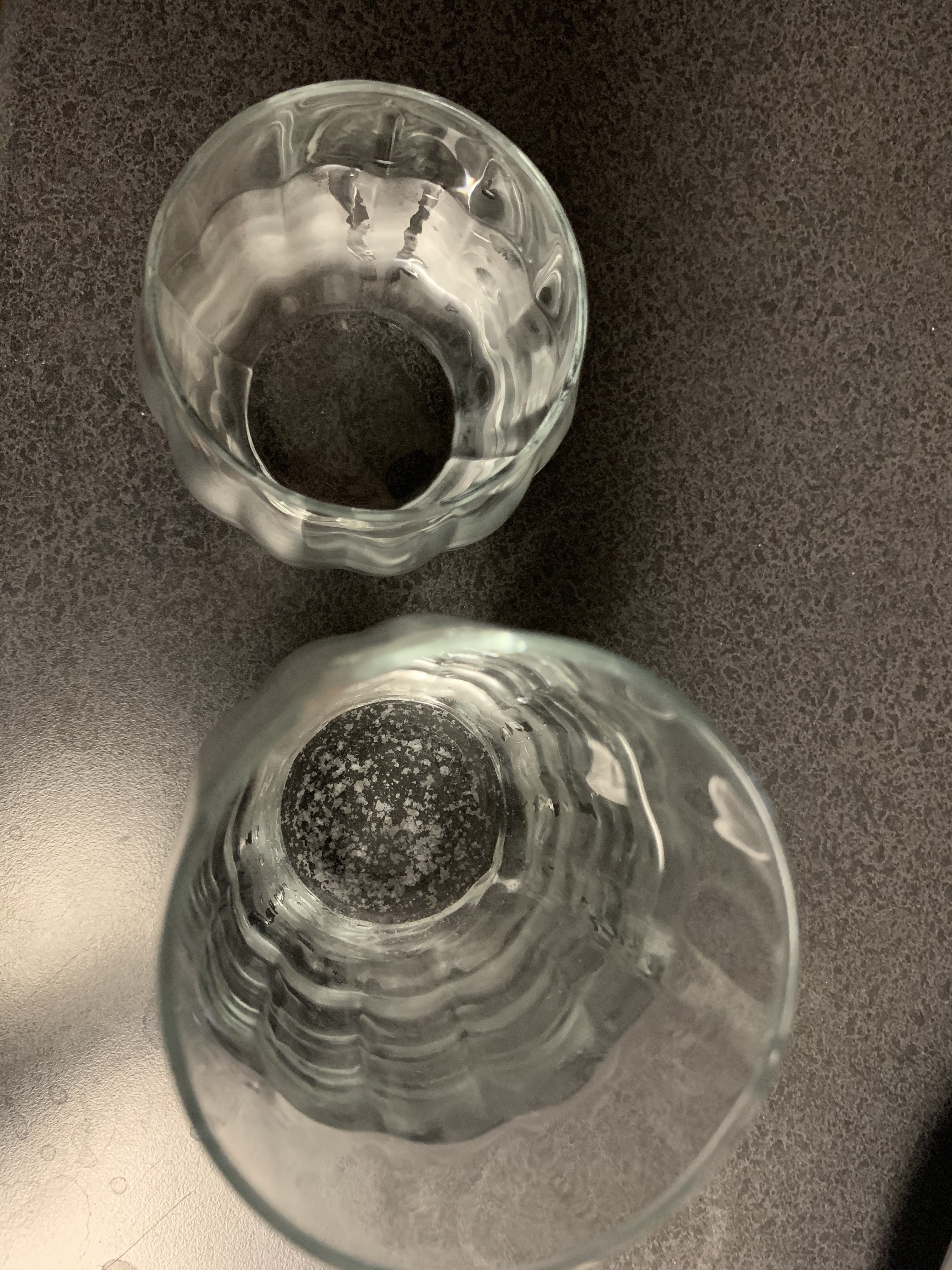
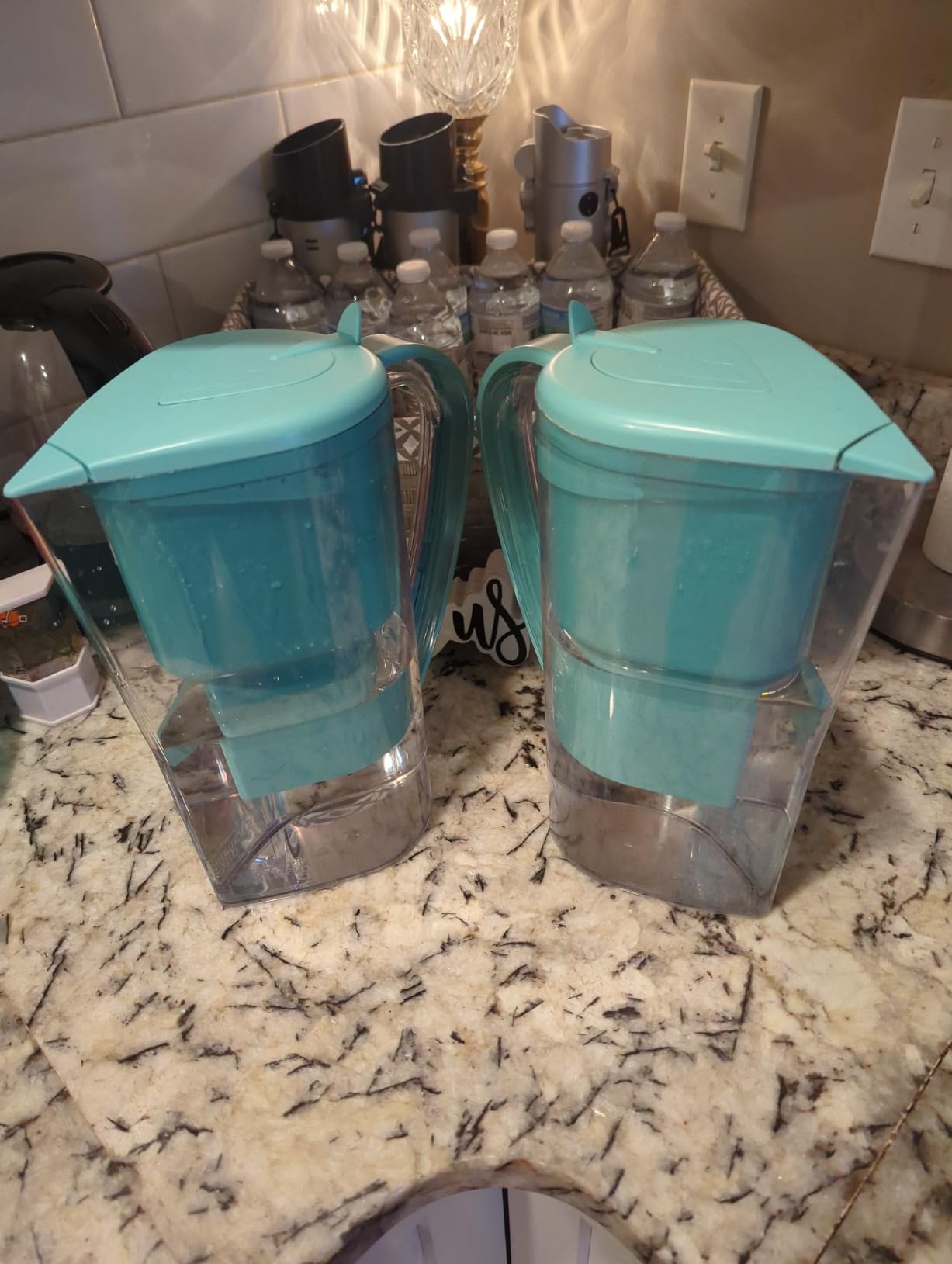
The main issue some users report is carbon particles escaping into the filtered water, especially with new filters. Running a few cycles through before drinking usually resolves this. The 1.4-liter filtered capacity is also smaller than the 10-cup pitchers, so you will refill more often.
Magnesium Addition & Alkalinity Explained
The bioceramic filter media releases magnesium ions into the water as it filters. This is different from remineralization stages in RO systems that add multiple minerals, because Alkanatur focuses specifically on magnesium.
The alkaline pH boost to 8.5 to 9.5 is achieved naturally through the bioceramic reaction rather than through chemical additives. Many health-conscious users prefer this approach over electric alkaline ionizers that cost significantly more.
European Certification vs NSF Standards
UNE 149101:2025 is a Spanish standard specifically for water treatment devices, and it covers contaminant reduction claims with rigorous testing. While NSF is the dominant certification in North America, UNE provides equivalent independent verification.
For users who want an alternative perspective on filter performance, having both CE and UNE certifications adds an extra layer of confidence beyond brand-sponsored testing.
4. Waterdrop TSB 8-Layer Under Sink Filter – DIY Installation in Minutes
Waterdrop TSB 8 Layer Under Sink Water Filter System, with Dedicated Faucet
8-Stage Filtration
NSF 42 Certified
97% Fluoride Reduction
Under Sink
Pros
- 8-stage deep filtration
- 97% fluoride reduction verified
- 3-minute push-to-connect install
- Retains beneficial minerals
Cons
- Reduced flow rate compared to tap
- Not suitable for well water
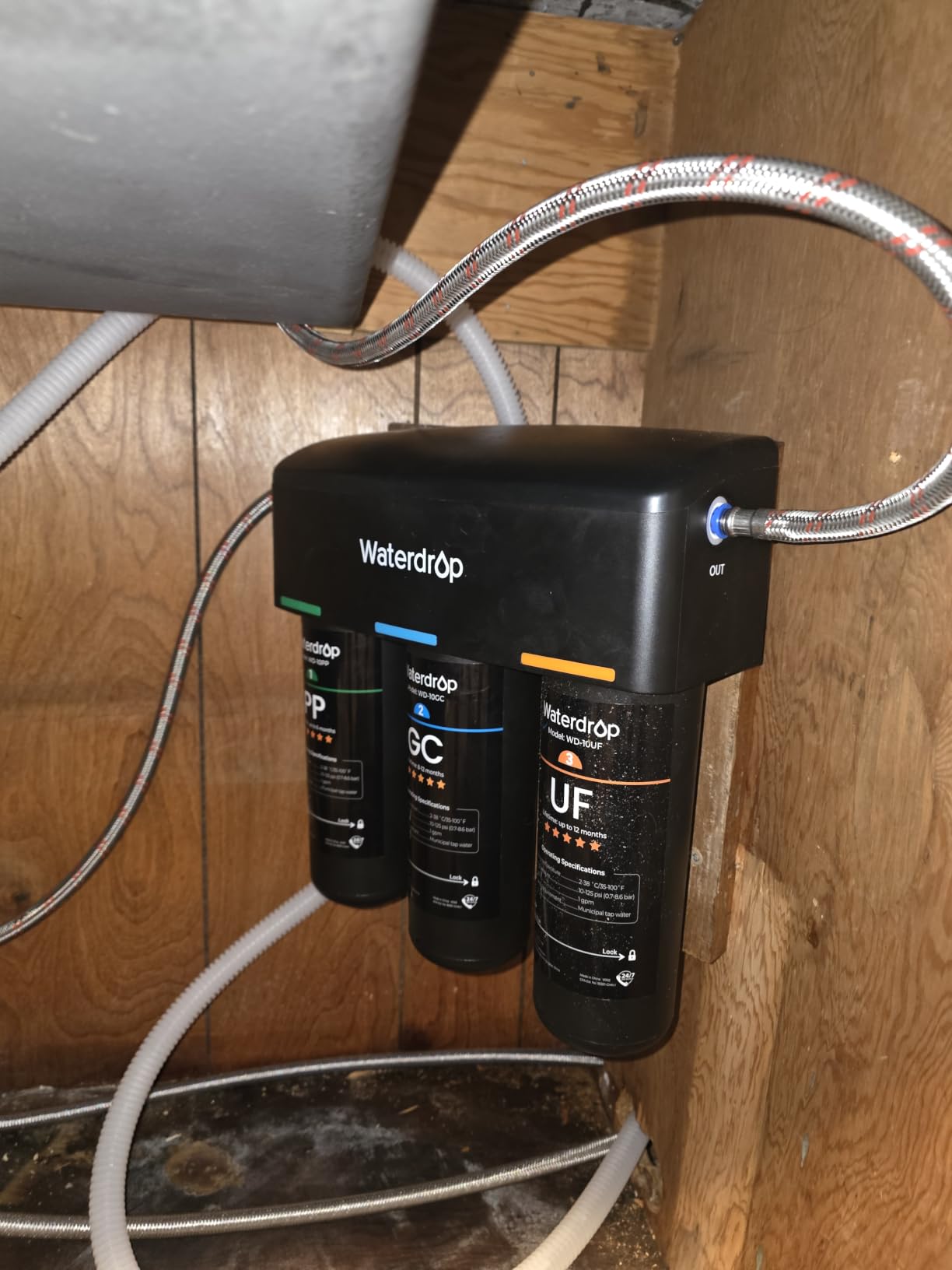
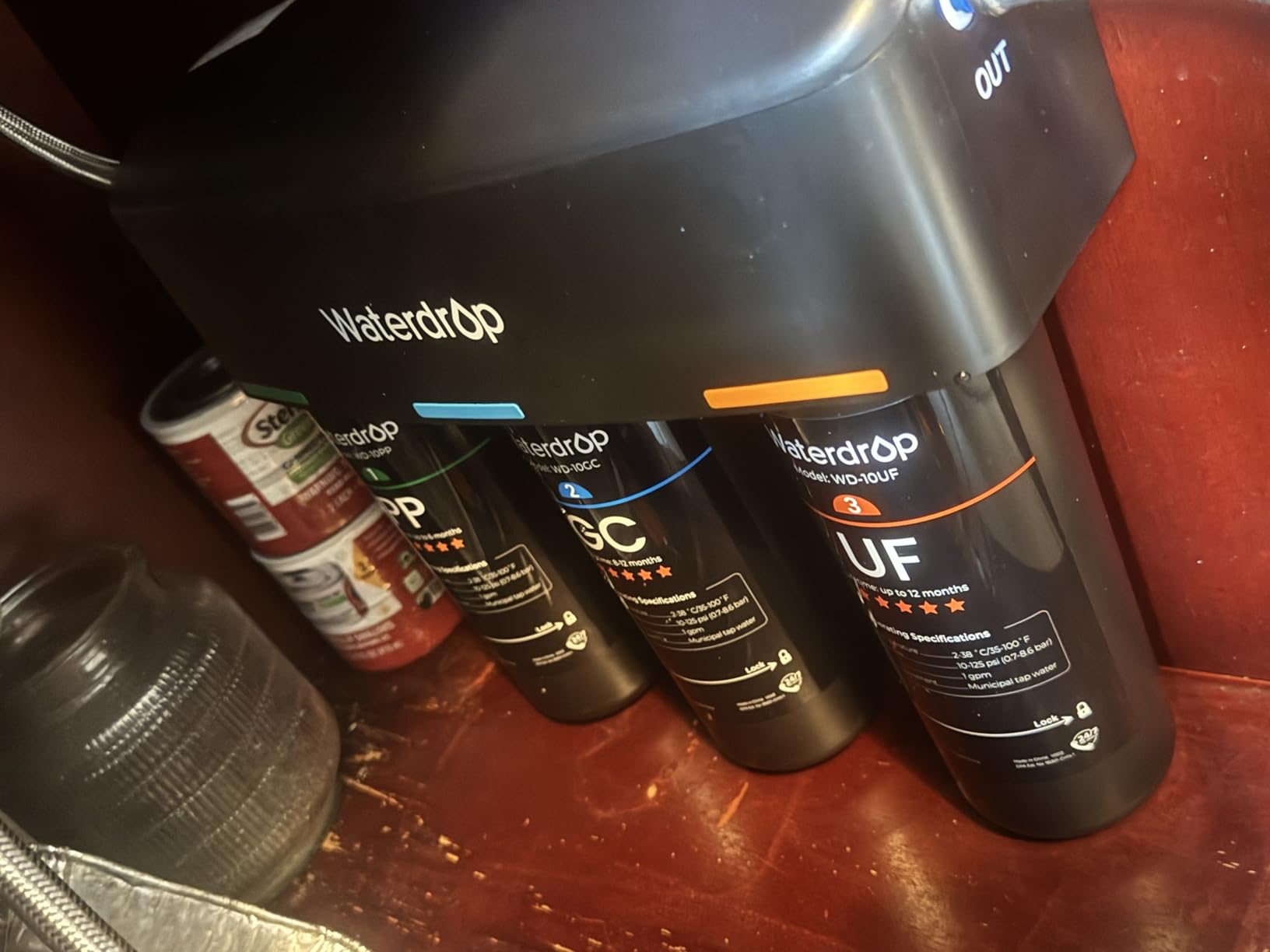
The Waterdrop TSB was my pick when I wanted under-sink filtration without the complexity of a full reverse osmosis system. The 8-stage filtration includes a dedicated fluoride reduction resin that Waterdrop claims removes 97% of fluorides, plus KDF materials for heavy metals.
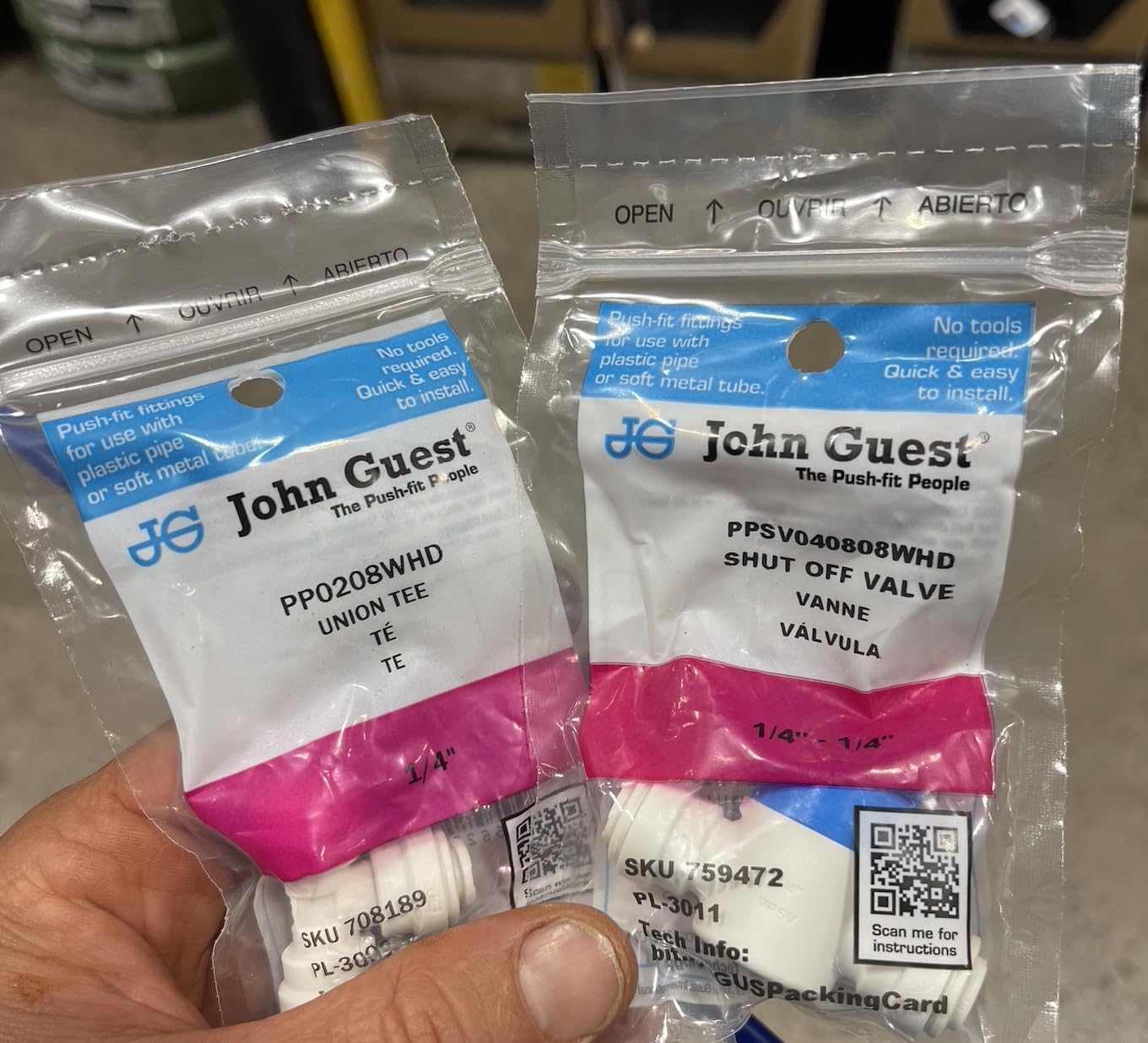
Installation genuinely took me about five minutes. The push-to-connect fittings mean you do not need a plumber or special tools. You just shut off the water, cut the supply line, push in the connectors, and you are done. The dedicated faucet mounts through the sink hole and gives you a separate outlet for filtered water.
What I appreciate about this system is that it retains beneficial minerals. Unlike reverse osmosis, which strips everything including healthy calcium and magnesium, the Waterdrop TSB targets specific contaminants while leaving the good stuff in. The water tastes fresh without the flat emptiness that RO water can have.
The trade-off is flow rate. Filtered water comes out noticeably slower than your regular tap. It is not painfully slow, but filling a large pot takes patience. The system is also not rated for well water or hot water, so it is strictly for cold municipal supply lines.
Installation Time & Difficulty
Plan on 10 to 15 minutes for a complete installation if you have never done plumbing before. The push-to-connect fittings eliminate the need for soldering, threading tape, or specialized tools.
You will need to drill a hole in your sink or countertop for the dedicated faucet if you do not already have a spare hole (like an old soap dispenser hole). This is the only step that might require extra effort.
Flow Rate Impact on Daily Use
The rated flow rate is 1.5 gallons per minute, which is decent for filtered water but slower than an unrestricted tap. For filling a glass or water bottle, the difference is barely noticeable.
For cooking tasks like filling a large pot, the slower flow becomes more apparent. Most users adapt by starting the water earlier or keeping a filled pitcher in the fridge for quick access.
5. Express Water RO5DX 5-Stage RO System – Best Value Under Sink RO
Express Water RO5DX, 5-Stage Under Sink Reverse Osmosis System, 50 GPD
5-Stage RO
NSF 58 Certified
100 GPD
Leak Detection Sensor
Pros
- 99.99% impurity removal
- NSF 58 certified performance
- 100 GPD high production rate
- Built-in leak detection sensor
Cons
- Needs significant under-sink space
- 4-gallon storage tank required
The Express Water RO5DX is what I would recommend to anyone wanting serious reverse osmosis filtration without paying premium prices. With over 6,000 reviews and a 4.6-star rating, this system has proven itself across thousands of households.
The 5-stage filtration reduces up to 99.99% of lead, chlorine, fluoride, PFAS, calcium, arsenic, and other contaminants. The NSF 58 certification means the performance claims are independently verified, not just marketing numbers. Water from this system genuinely tastes different from tap water in a way that basic pitchers cannot match.
The 100 gallons per day production rate means you will rarely run out of clean water. The 4-gallon storage tank holds enough for cooking, drinking, and filling containers without waiting for the system to catch up. The included leak detection sensor is a thoughtful touch that shuts off water flow if moisture is detected.
The coconut carbon filters give the water a clean taste without any plastic or chemical aftertaste. My only real complaint is the space requirement. Between the filter housings and the storage tank, you need a decent amount of under-sink cabinet room to fit everything.
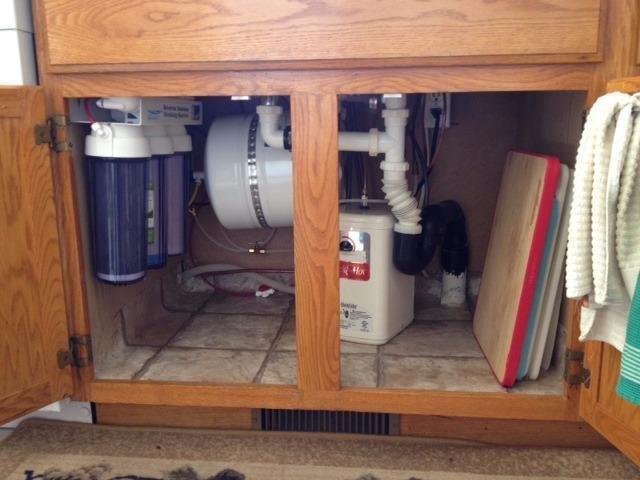
Storage Tank Capacity & Under-Sink Space
The 4-gallon storage tank measures roughly 11 inches in diameter and 15 inches tall. Combined with the three filter housings, you need at least 16 inches of width under your sink to fit everything comfortably.
If your under-sink area is tight, measure before ordering. Some users remove the garbage disposal or reorganize plumbing to make room. The tank stores pressurized filtered water so you get instant flow from the faucet.
Ongoing Filter Replacement Schedule
The sediment filter needs replacement every 6 months, the carbon block filters every 6 to 12 months, and the RO membrane lasts 2 to 3 years depending on water quality. Budget for two filter changes per year on average.
The RO membrane is the most expensive component to replace but also lasts the longest. Many users report getting 3 or more years from a single membrane with municipal water that has moderate TDS levels.
6. Waterdrop G5P500A Tankless RO System – Space-Saving High Flow
Waterdrop G5P500A Reverse Osmosis System, 8-Stage RO Filtration, Alkaline.
8-Stage Tankless RO
NSF 58 Certified
500 GPD
2:1 Pure to Drain
Pros
- Tankless saves 70% under-sink space
- 500 GPD fast flow rate
- 2:1 pure to drain ratio
- Alkaline mineralization stage
Cons
- TDS display accuracy varies
- Steeper learning curve for setup
The Waterdrop G5P500A solves the biggest complaint people have about traditional RO systems. By eliminating the storage tank, it frees up to 70% of the space under your sink while delivering water on demand.
The 500 gallons per day rating means a 6-ounce cup fills in about 8 seconds. That is significantly faster than tank-based RO systems that can take 15 to 20 seconds to fill the same glass. The 2:1 pure-to-drain ratio is also impressive, producing far less wastewater than older RO technology that typically runs at 3:1 or 4:1.
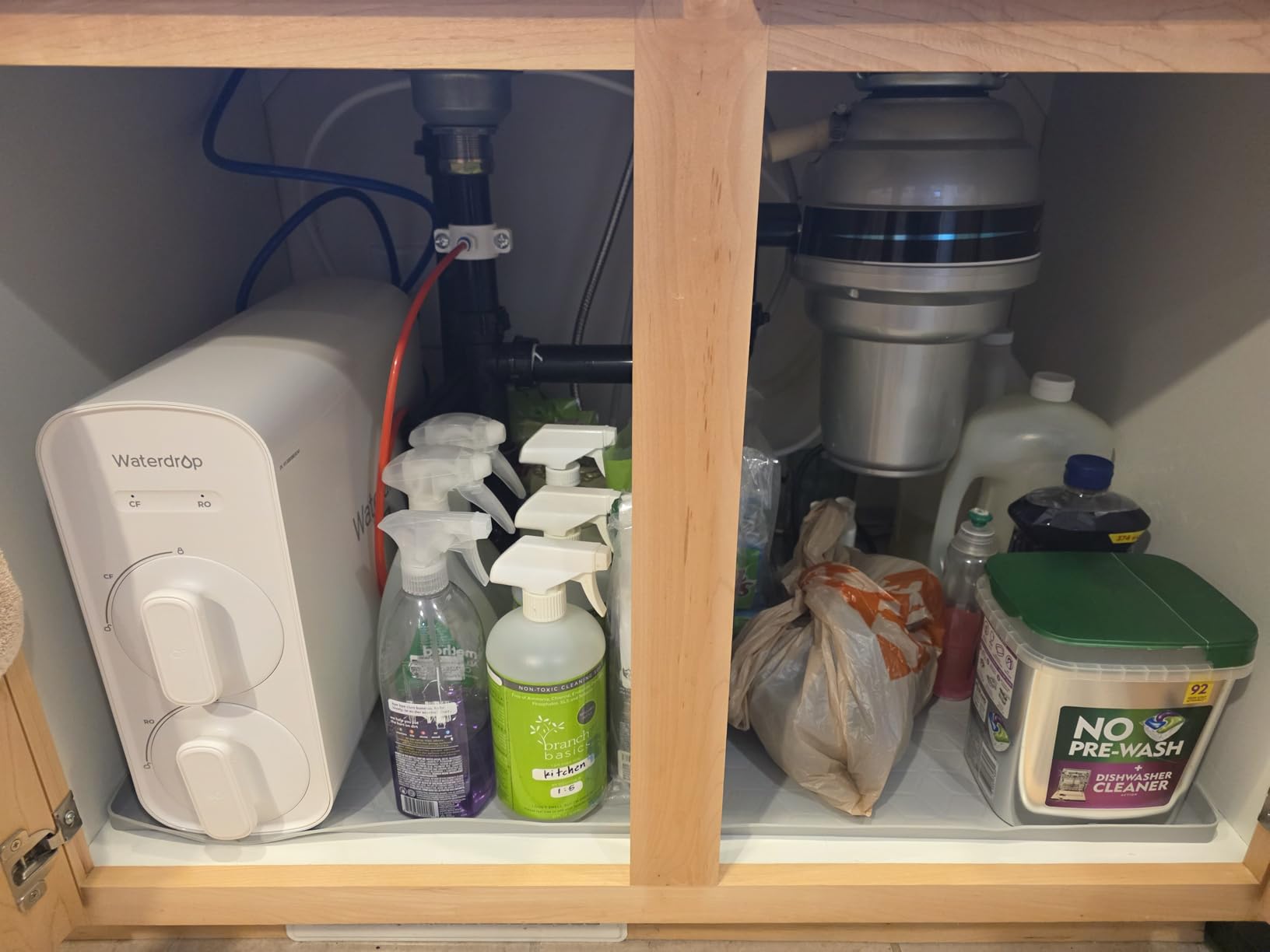
The 8-stage filtration includes an alkaline mineralization stage that adds calcium, magnesium, sodium, and potassium back into the water after RO purification. This addresses the common complaint that RO water tastes flat because all minerals have been stripped out.
The main concern users raise is TDS display accuracy on the smart faucet. Some reviewers found the readings did not match their handheld TDS meters exactly. The initial setup also has a steeper learning curve than simpler systems, so plan on an hour for first-time installation.
Tankless Design Advantages & Trade-offs
Without a storage tank, you get continuous fresh water instead of water that has been sitting in a pressurized tank. This eliminates the risk of bacterial growth in stagnant storage and reduces the system footprint dramatically.
The trade-off is that tankless systems depend on your home water pressure to push water through the membrane instantly. If your incoming pressure is low, the flow rate will suffer and production may not reach the rated 500 GPD.
Water Efficiency vs Traditional RO
The 2:1 pure-to-drain ratio means for every 2 gallons of clean water, only 1 gallon goes down the drain. Traditional RO systems typically run at 3:1 or 4:1, wasting two to three times more water per gallon produced.
Over a year of daily use, this efficiency difference adds up to hundreds of gallons of saved water. For homes on septic systems or in drought-prone areas, this efficiency is a meaningful advantage.
7. iSpring RCC7AK 6-Stage Alkaline RO – Editor’s Choice for Lead and Fluoride
iSpring RCC7AK-BLK, NSF/ANSI 58 Certified, Alkaline 6-Stage Reverse Osmosis System with Stylish Black RO Faucet, pH+ Remineralization RO Water Filter System Under Sink
6-Stage Alkaline RO
NSF 58 Certified
98.9% Lead Removal
97.4% Fluoride Removal
Pros
- 98.9% verified lead removal
- 97.4% verified fluoride removal
- Alkaline remineralization stage
- 15k+ reviews proven track record
Cons
- Larger under-sink footprint
- Multiple filters to replace on schedule
The iSpring RCC7AK is the system I recommend most often when someone asks about the best water filters for lead and fluoride. The numbers speak for themselves. NSF 58 certification verifies 98.9% lead removal, 97.4% fluoride removal, 97.9% TDS reduction, and over 99.7% asbestos removal.
With over 15,000 reviews and an 84% five-star rating, this system has been battle-tested across a massive user base. iSpring has been in the RO business for years, and their reputation for reliability shows in the consistency of positive feedback about water taste and system longevity.
The 6-stage process adds an alkaline remineralization stage that puts calcium and magnesium back into the water after RO purification. This is a meaningful advantage because straight RO water can have a pH as low as 5.5, which is slightly acidic. The remineralization stage brings the pH back up to a healthier range.
The transparent first-stage filter housing is a practical design choice. You can see the sediment filter getting dirty without having to open anything, which makes it easy to know when replacement is actually needed rather than guessing based on a calendar.
Alkaline Remineralization Explained
After water passes through the RO membrane and has virtually all contaminants removed, it flows through a remineralization filter. This stage adds calcium and magnesium back in measured amounts to restore natural mineral balance and raise pH.
The result is water that tastes closer to natural spring water rather than the flat, slightly acidic taste of un-remineralized RO water. This stage also helps balance the pH to a range that many health practitioners consider more beneficial.
Verified NSF 58 Removal Rates
The NSF 58 certification is specifically for reverse osmosis systems and includes rigorous testing for contaminant reduction. iSpring publishes their exact certified removal percentages, which is a level of transparency many competitors avoid.
Lead removal at 98.9% and fluoride removal at 97.4% are independently verified numbers. This means a testing laboratory confirmed these rates under standardized conditions, not just the brand’s internal testing.
8. SimPure Y7P-BW UV Countertop RO – No-Install Portable Purification
SimPure Y7P-BW UV Countertop Reverse Osmosis Water Filter, 5 Stage RO
5-Stage UV RO
NSF 58 Tested
No Installation
4:1 Pure to Drain
Pros
- Zero installation required
- UV purification stage added
- Best-in-class 4:1 pure to drain ratio
- NSF 58 tested by SGS
Cons
- Lower durability ratings reported
- Requires countertop space
The SimPure Y7P-BW is the answer for anyone who wants reverse osmosis purification without touching their plumbing. You literally plug it in, fill the tank, and it produces RO-quality water on your countertop.
What sets this apart from other countertop RO units is the UV purification stage. After the 4-stage RO filtration, water passes through a UV light that neutralizes bacteria and viruses. The SGS testing against NSF 58 standards verifies removal of 99.99% of over 1,000 contaminants including lead and fluoride.
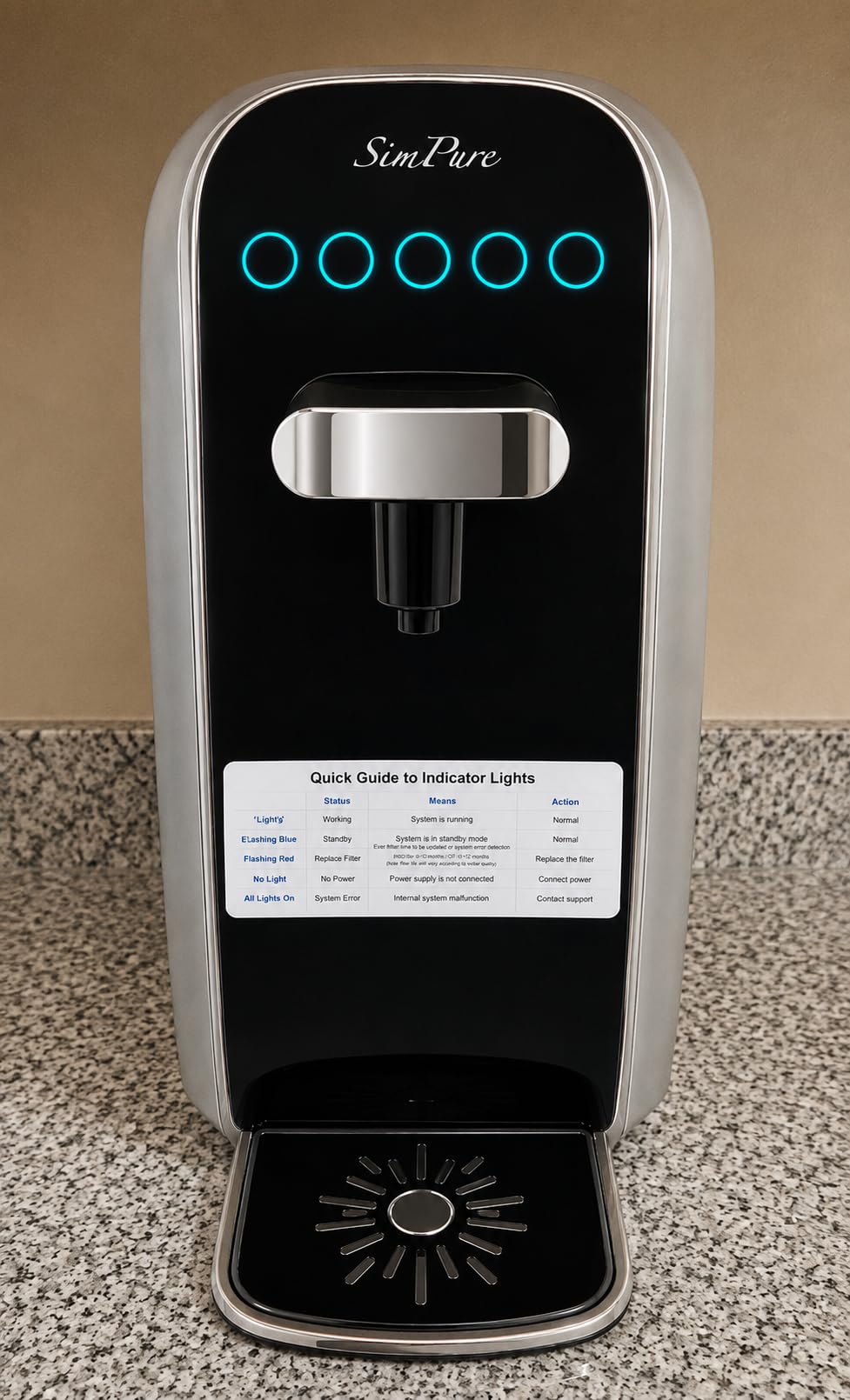
The 4:1 pure-to-drain ratio is the best in this roundup. For every 4 gallons of clean water produced, only 1 gallon goes to waste. That is twice as efficient as most under-sink RO systems and makes a real difference on your water bill over time.
The trade-off is durability. The 4.2-star rating is the lowest among the RO systems in this guide, with some users reporting functionality issues after extended use. The countertop footprint also means you sacrifice kitchen counter space for the convenience of no plumbing.
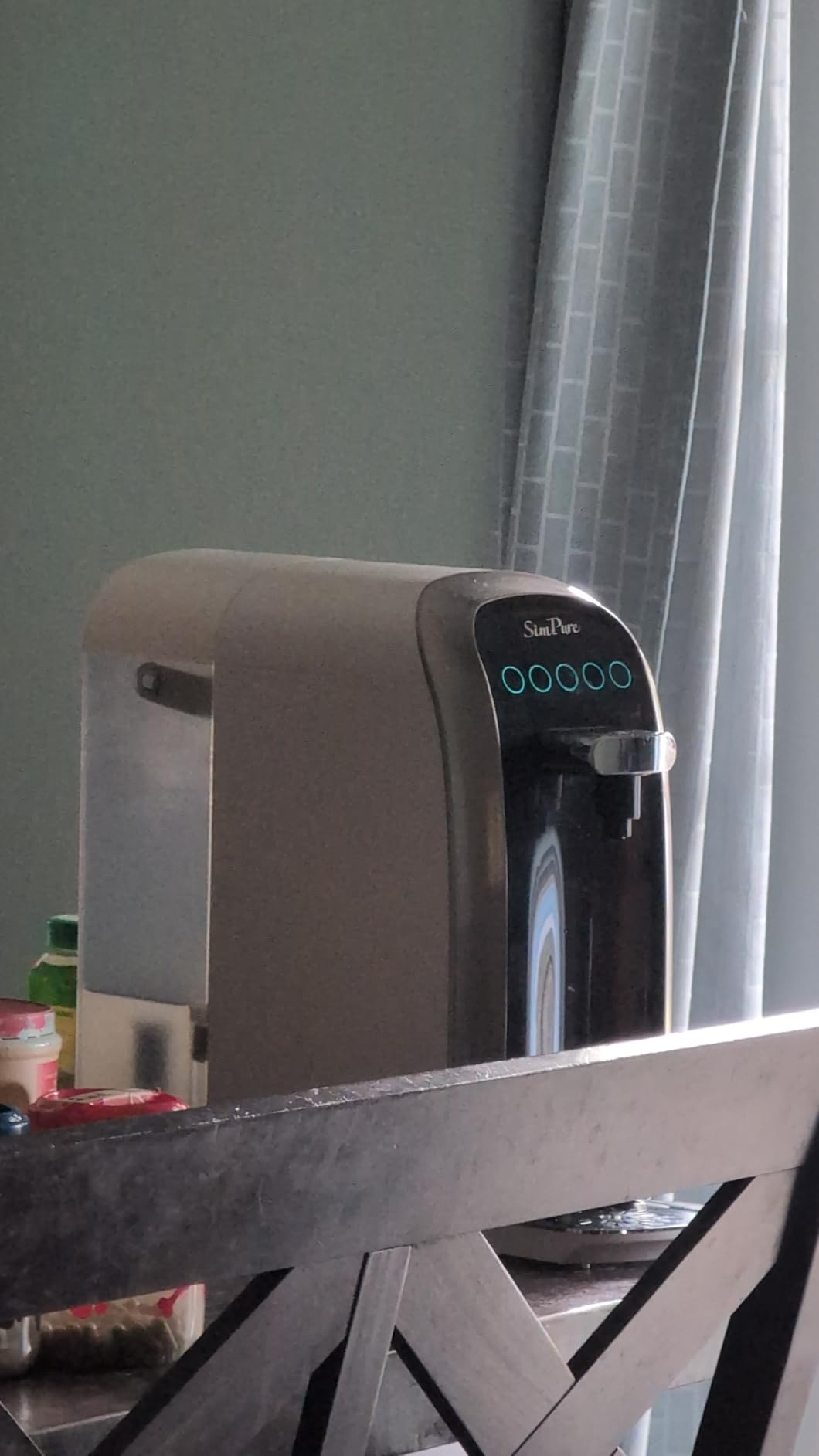
Countertop RO vs Under-Sink Systems
Countertop RO systems trade a permanent, hidden installation for plug-and-play simplicity. You can take this unit with you when you move, which makes it ideal for renters or anyone in temporary housing.
The performance gap between countertop and under-sink RO has narrowed significantly. The SimPure produces water quality comparable to plumbed systems, but at a slower overall volume since it processes batch by batch rather than on demand.
Water Waste Ratio Comparison
At 4:1 pure to drain, the SimPure is the most water-efficient RO system in this guide. For context, the Express Water RO5DX and iSpring RCC7AK typically run at 3:1, meaning they waste more water per gallon produced.
If water conservation is a priority for you, this efficiency advantage is significant. Over a year of daily use, the SimPure can save hundreds of gallons compared to less efficient RO systems.
9. AquaTru Classic Countertop Purifier – Premium No-Plumbing Solution
AquaTru Water Purification Unit – Certified NSF/ANSI Standards, Removes 84 Contaminants, No Plumbing Required, Cost-Effective, Environmentally Friendly
4-Stage RO
IAPMO NSF Certified
No Plumbing
84 Contaminants
Pros
- No plumbing or installation required
- IAPMO certified to NSF standards
- Removes 84 contaminants including PFAS
- Ideal portable solution for renters
Cons
- Premium price point
- Fewer reviews to verify long-term reliability
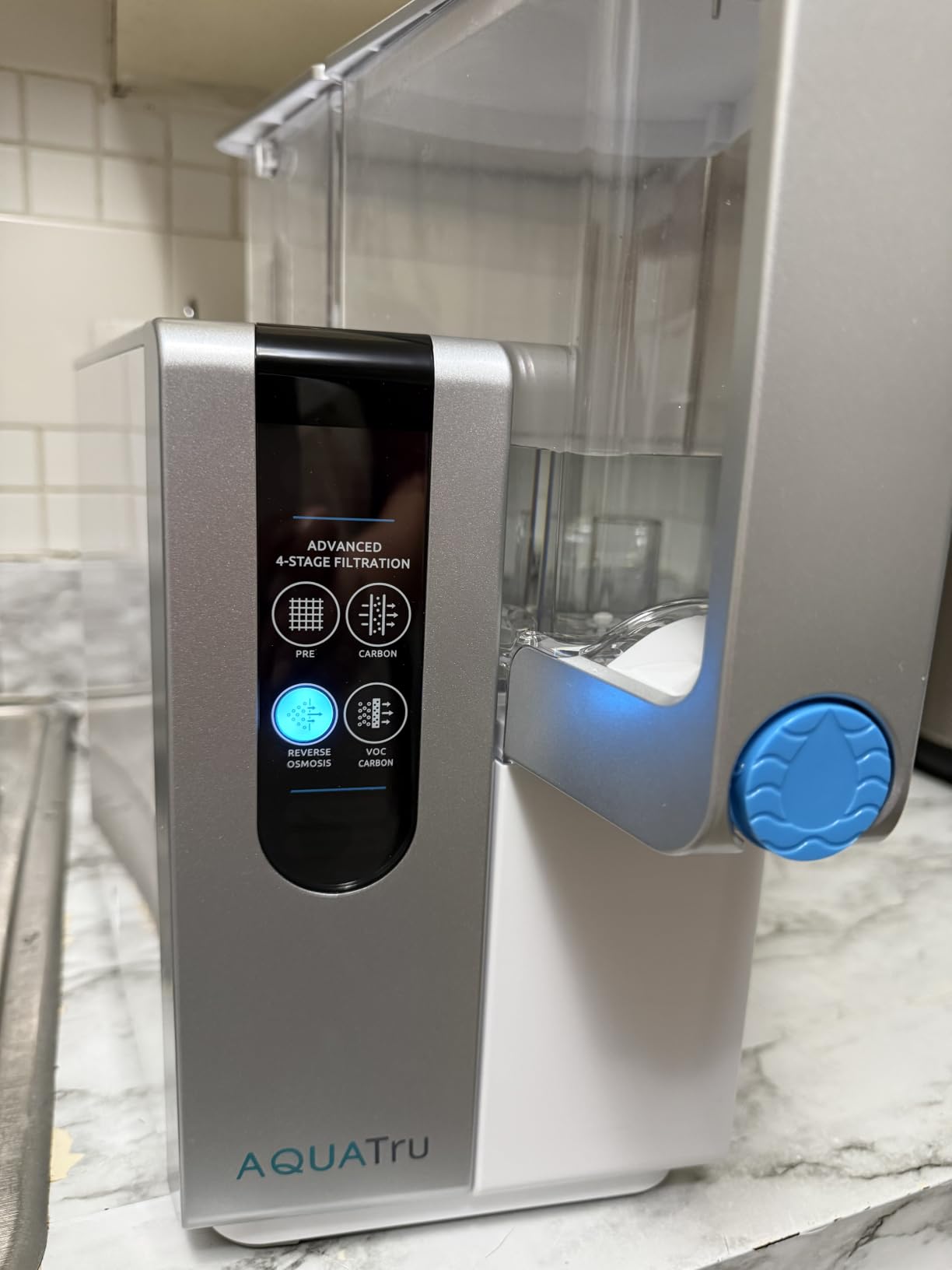
The AquaTru Classic is the countertop purifier that gets recommended most often in Reddit communities like r/drinkingwater. It is IAPMO certified to NSF standards for reducing fluoride, lead, chlorine, microplastics, and forever chemicals (PFOA and PFOS).
The 4-stage reverse osmosis process removes dissolved solids, heavy metals, and contaminants that standard carbon filters cannot touch. The beauty of this system is that it requires zero plumbing. You fill the tap water tank, press a button, and it pumps purified water into a clean collection tank.
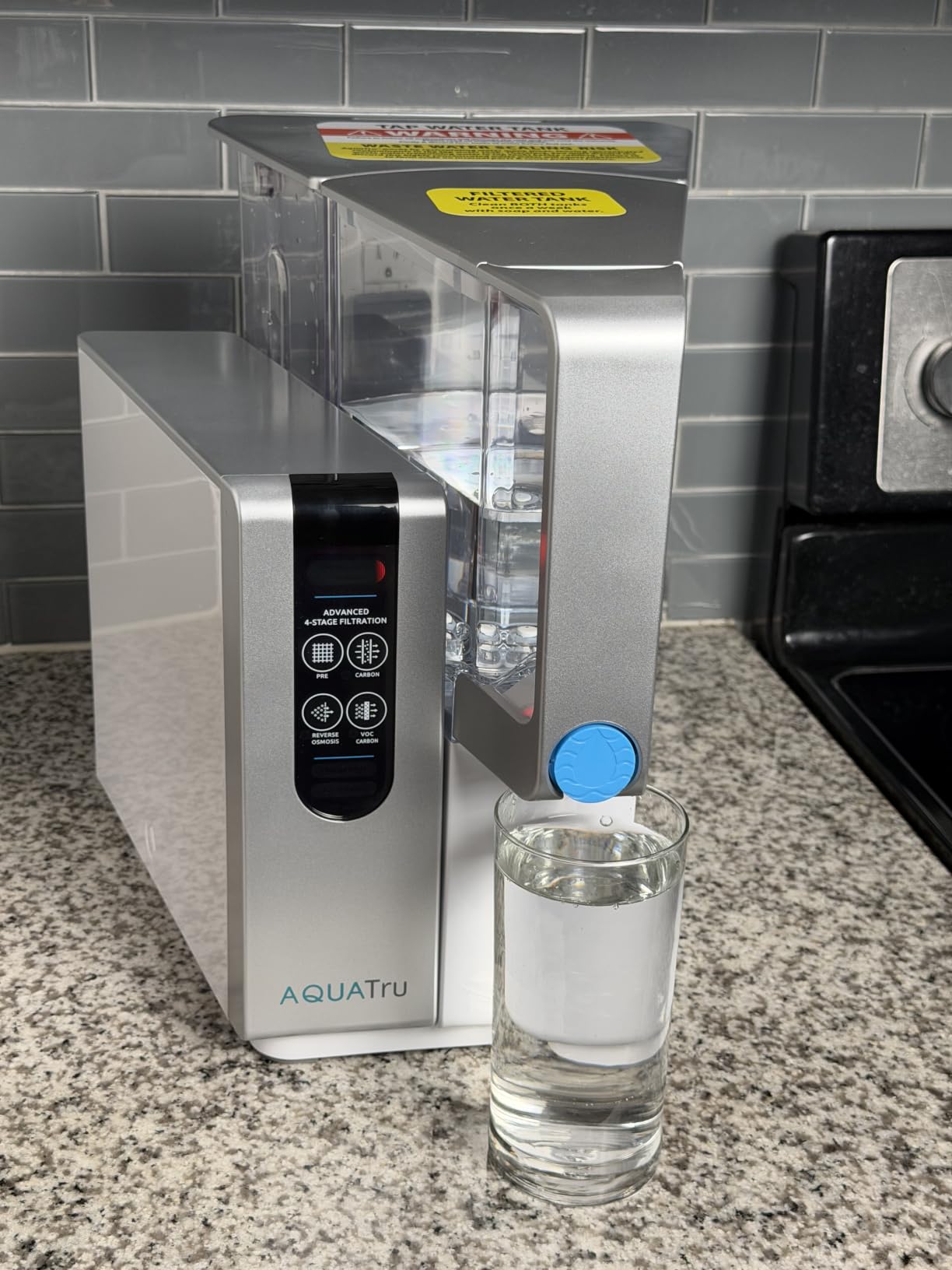
Each filter set replaces up to 4,500 plastic bottles, which makes the environmental impact angle compelling. The portable design means you can move it between rooms or take it with you when relocating. For apartment dwellers and renters who cannot modify plumbing, this is one of the few true RO options available.
The trade-off is the premium price. The AquaTru sits at the top of the price range among countertop purifiers, and with fewer reviews than more established brands, long-term reliability is less documented. The 1-gallon tap water tank also means you refill frequently if your household drinks a lot of water.
Portability & Renter-Friendly Design
The AquaTru is designed specifically for people who cannot or do not want to install permanent plumbing modifications. It sits on your counter, plugs into a standard outlet, and works anywhere with a power source.
This makes it the top choice for apartment renters, RV owners, dorm rooms, and anyone in temporary housing. When you move, you simply unplug it and carry it to your next location without leaving any hardware behind.
Filter Lifespan & Replacement Schedule
Filter life ranges from 6 months for the pre-filter to 2 years for the RO membrane. The mechanical filter change indicator tells you exactly when each stage needs replacement, eliminating guesswork.
The tool-free filter replacement system means you twist out the old filter and twist in the new one without any tools or mess. This simplicity is one of the most praised features in customer reviews.
10. DREO RO Countertop Filter – Smart Features at Mid-Range Price
DREO Reverse Osmosis Water Filter Countertop, RO Filtration System, 3:1 Pure to Drain, TDS & Filter Life & Autofill Pitcher, Installation-Free, Self-Cleaning Water Purifier, RO Water Filter
7-in-1 RO
SGS Tested
TDS Monitor
Auto-Fill Pitcher
Pros
- SGS tested 99.99% removal
- Auto-fill pitcher with sensor
- Real-time TDS and filter life monitoring
- Compact countertop footprint
Cons
- Flow rate slower than under-sink models
- Long-term reliability less proven
The DREO RO countertop filter brings smart monitoring features to a mid-range price point. The 7-in-1 RO filter is SGS tested to remove 99.99% of over 1,000 impurities including PFOA, PFOS, chlorine, and fluoride.
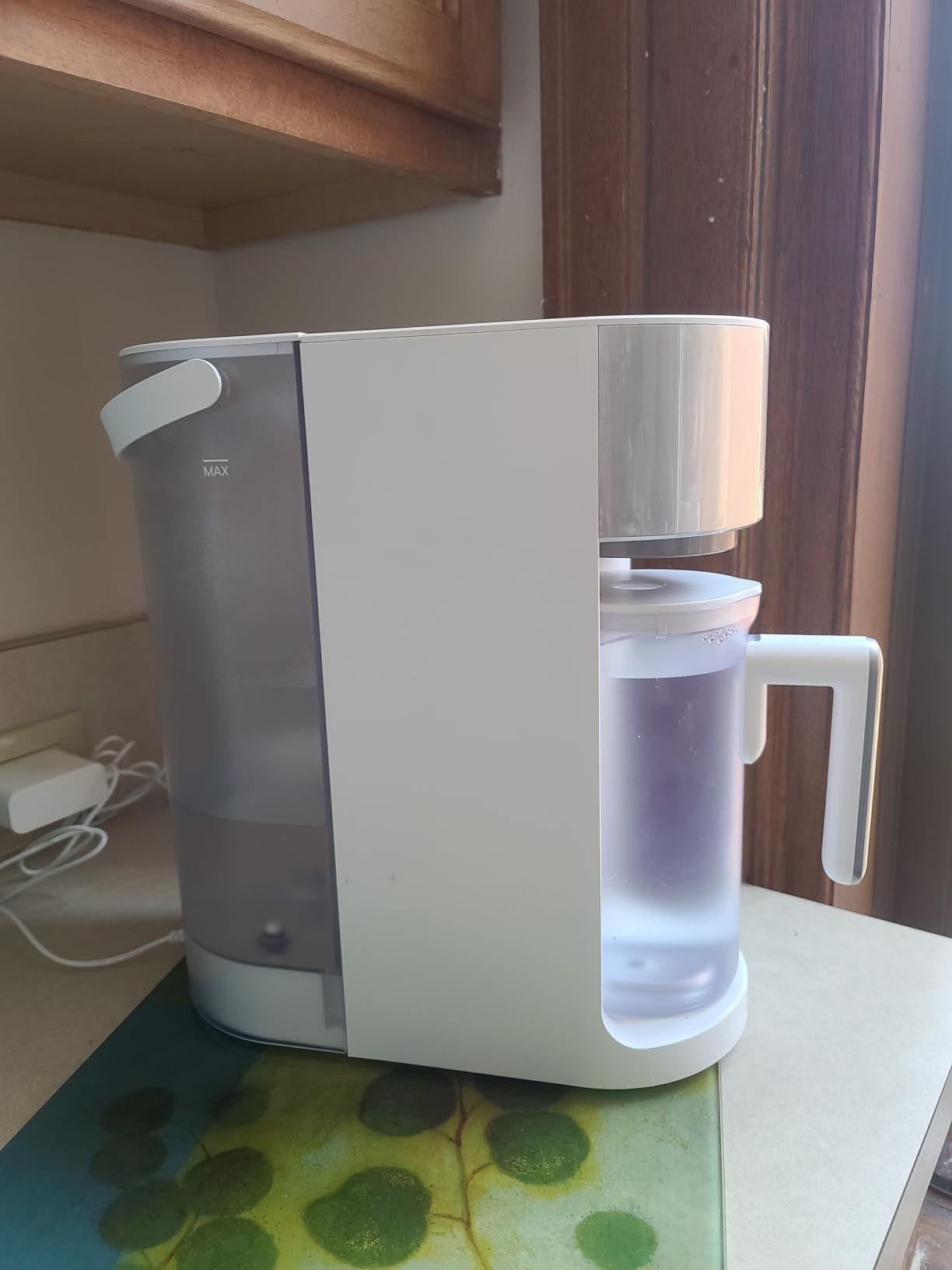
The standout feature is the auto-fill sensor that works with an included pitcher. When you place the pitcher on the base, it automatically fills to the correct level and stops. The self-cleaning internal tube system keeps the unit hygienic between uses, which is a nice touch that other countertop RO units lack.
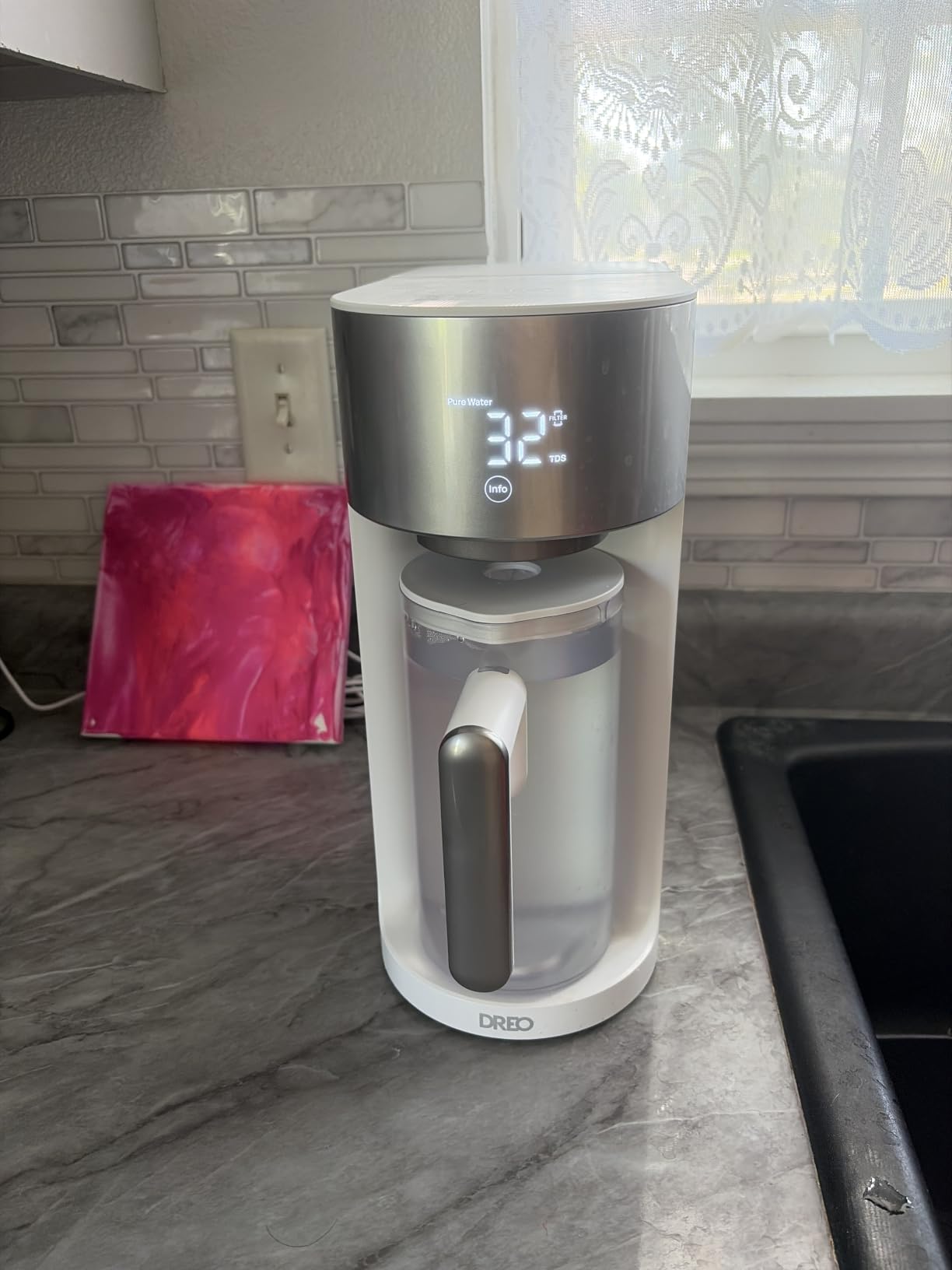
The real-time TDS display and filter life monitoring take the guesswork out of maintenance. You always know your current water quality and when the filter needs changing. The 3:1 pure-to-drain ratio is solid efficiency for a countertop unit.
The trade-offs are flow rate and track record. As a newer product with 450 reviews, long-term reliability is less established than competitors like the SimPure or AquaTru. The flow rate is slower than under-sink systems, which is expected for a countertop design but worth noting if you fill large containers regularly.
Smart Monitoring & TDS Display
The built-in TDS monitor shows real-time readings of your filtered water quality. This gives you continuous verification that the RO system is performing as expected, rather than waiting for annual water tests.
Filter life tracking with automatic reminders means you never forget a replacement. The display counts down remaining filter life based on actual usage, not just a fixed calendar schedule.
Pure-to-Drain Efficiency
The 3:1 pure-to-drain ratio means for every 3 gallons of clean water, 1 gallon goes to waste. This is better than traditional under-sink RO systems but slightly behind the SimPure Y7P at 4:1.
The compact 3-liter tank capacity plus 1.1-liter pitcher gives you enough water for a small household. For larger families, you may find yourself refilling the tap water tank multiple times per day.
How to Choose a Water Filter for Lead and Fluoride?
Choosing the right water filter for lead and fluoride removal comes down to understanding certifications, matching the filter type to your living situation, and knowing what the marketing does not tell you. Let me break down the key decision factors.
NSF Certifications: What the Numbers Mean
NSF and ANSI certifications are the gold standard for water filter verification. Here is what each relevant standard covers so you know exactly what to look for on product packaging.
NSF/ANSI 42 certifies aesthetic improvement, meaning chlorine taste, odor, and particulate reduction. NSF/ANSI 53 is the one that matters for health-related contaminants including lead. NSF/ANSI 58 is specific to reverse osmosis systems and covers the broadest range of contaminants including lead, fluoride, arsenic, and total dissolved solids.
NSF/ANSI 401 covers emerging contaminants like pharmaceuticals and chemicals like bisphenol A. If a product only carries NSF 42 certification, it will not meaningfully reduce lead or fluoride. Always look for 53 or 58 at minimum for these specific contaminants.
Why Standard Carbon Filters Cannot Remove Fluoride
Fluoride ions are extremely small and dissolved in water at the molecular level. Standard activated carbon filters trap larger particles and adsorb certain chemicals, but fluoride ions pass right through the carbon media.
Removing fluoride requires either reverse osmosis (which forces water through a membrane with pores measured in angstroms), activated alumina, or specialized anion exchange resin. This is why the filters in this guide use RO membranes, fluoride-specific resin, or affinity technology rather than basic carbon blocks.
Filter Types Compared: Pitcher vs Under-Sink vs Countertop
Pitcher filters are the most affordable and require zero installation. They work well for individuals or small households but have limited capacity and shorter filter life. The Culligan ZeroWater and Clearly Filtered are your options here.
Under-sink systems offer the best performance and value long-term but require permanent installation. They connect directly to your cold water line and usually include a dedicated faucet. The Express Water, iSpring, and Waterdrop models fall into this category.
Countertop RO systems like the SimPure, AquaTru, and DREO bridge the gap. They deliver RO-quality water without plumbing modifications, making them ideal for renters. The trade-off is counter space and typically higher per-unit pricing.
Tank vs Tankless RO Systems
Traditional RO systems store filtered water in a pressurized tank, typically 2 to 4 gallons. This means you always have a reserve of clean water ready instantly. The downside is tank size and the risk of water sitting stagnant over time.
Tankless systems like the Waterdrop G5P500A produce water on demand without storage. They save significant under-sink space and eliminate stagnation concerns. The trade-off is that production depends entirely on incoming water pressure, and flow can slow if multiple taps are running.
Cost Per Gallon: Thinking Long-Term
Upfront price is only part of the equation. The real cost of a water filter is measured in cost per gallon over the filter lifespan. A cheaper pitcher with frequent filter changes can cost more per gallon than a pricier RO system with long-lasting filters.
For example, a pitcher that produces 25 gallons per filter needs four replacements per year. An RO system whose membrane lasts two to three years with annual pre-filter changes may produce thousands of gallons at a fraction of the per-gallon cost. Always calculate total annual cost, not just the purchase price.
Rental-Friendly Options
If you rent your home, you cannot drill into countertops or modify plumbing. Countertop RO systems are your best bet because they require no installation. The AquaTru, SimPure, and DREO all work with just a power outlet.
For renters who want something even simpler, pitcher filters are the fallback. The Culligan ZeroWater and Clearly Filtered both offer certified contaminant removal without any installation whatsoever. You sacrifice performance and capacity, but gain complete portability.
What to Do If You Have Lead Service Lines
If your home has lead service pipes (common in homes built before 1986), you need maximum removal rates. NSF 58 certified reverse osmosis systems are your strongest protection, with verified lead removal rates above 98%.
The iSpring RCC7AK and Express Water RO5DX both deliver certified lead removal performance. Consider having your water tested through a certified laboratory to know your actual lead levels before and after installing any filtration system.
FAQs
What water filter is best for removing lead?
NSF 58 certified reverse osmosis systems are the most effective option for lead removal. The iSpring RCC7AK is verified to remove 98.9% of lead, while the Express Water RO5DX reduces up to 99.99% of impurities including lead. For pitcher-style options, the Clearly Filtered pitcher carries NSF certification for lead reduction. Look for NSF 53 or NSF 58 certification specifically, as NSF 42 alone does not guarantee lead removal.
What is the healthiest water filtration system?
The healthiest filtration system depends on your water source and health priorities. Reverse osmosis systems with alkaline remineralization stages, like the iSpring RCC7AK and Waterdrop G5P500A, remove the broadest range of contaminants while adding beneficial minerals back. The Alkanatur pitcher offers a pitcher-based alternative that adds magnesium without sodium. The key is matching the technology to your specific contaminant concerns.
What is the best water filter to reduce fluoride levels?
Reverse osmosis systems certified under NSF 58 provide the most reliable fluoride reduction. The iSpring RCC7AK is certified to remove 97.4% of fluoride, and the Express Water RO5DX removes up to 99.99% of impurities including fluoride. Among non-RO options, the Waterdrop TSB under-sink filter uses fluoride reduction resin rated for 97% removal, and the Culligan ZeroWater pitcher is IAPMO certified for fluoride reduction.
Do Brita filters actually remove lead?
Some Brita models certified under NSF 53 can reduce lead, but standard Brita pitchers using only activated carbon cannot remove fluoride at all. Fluoride ions are too small and too dissolved for carbon to capture. Even Brita models that reduce lead do not reduce fluoride. For both contaminants, you need reverse osmosis, activated alumina, or specialized ion exchange technology. None of the products in this guide rely solely on basic carbon filtration for fluoride removal.
What NSF certification should I look for?
For lead removal, look for NSF 53 or NSF 58 certification. NSF 53 covers health-related contaminants including lead for non-RO systems. NSF 58 is the standard specifically for reverse osmosis systems and covers lead, fluoride, arsenic, and TDS reduction. NSF 42 only covers aesthetic improvements like chlorine taste and odor, so it is insufficient for lead or fluoride removal. Always verify that the specific contaminant you are concerned about is listed on the certification, not just the overall standard number.
Final Thoughts on Lead and Fluoride Water Filters
Finding the right water filter for lead and fluoride does not have to be overwhelming once you know what certifications to trust and which technologies actually work. The best water filters for lead and fluoride are the ones independently certified under NSF 58 or equivalent standards, not the ones with the loudest marketing claims.
For most homeowners, the iSpring RCC7AK is the strongest all-around choice with verified 98.9% lead and 97.4% fluoride removal plus alkaline remineralization. Renters and apartment dwellers should look at the AquaTru or SimPure countertop RO systems for no-install purification. And anyone on a tight budget can start with the Culligan ZeroWater pitcher for certified contaminant removal without breaking the bank.
Whichever system you choose, verify the certification yourself before buying. Your health and your family’s safety are worth the extra few minutes of research. Updated for 2026, every product in this guide has earned its place through independent testing, not just advertising promises.