
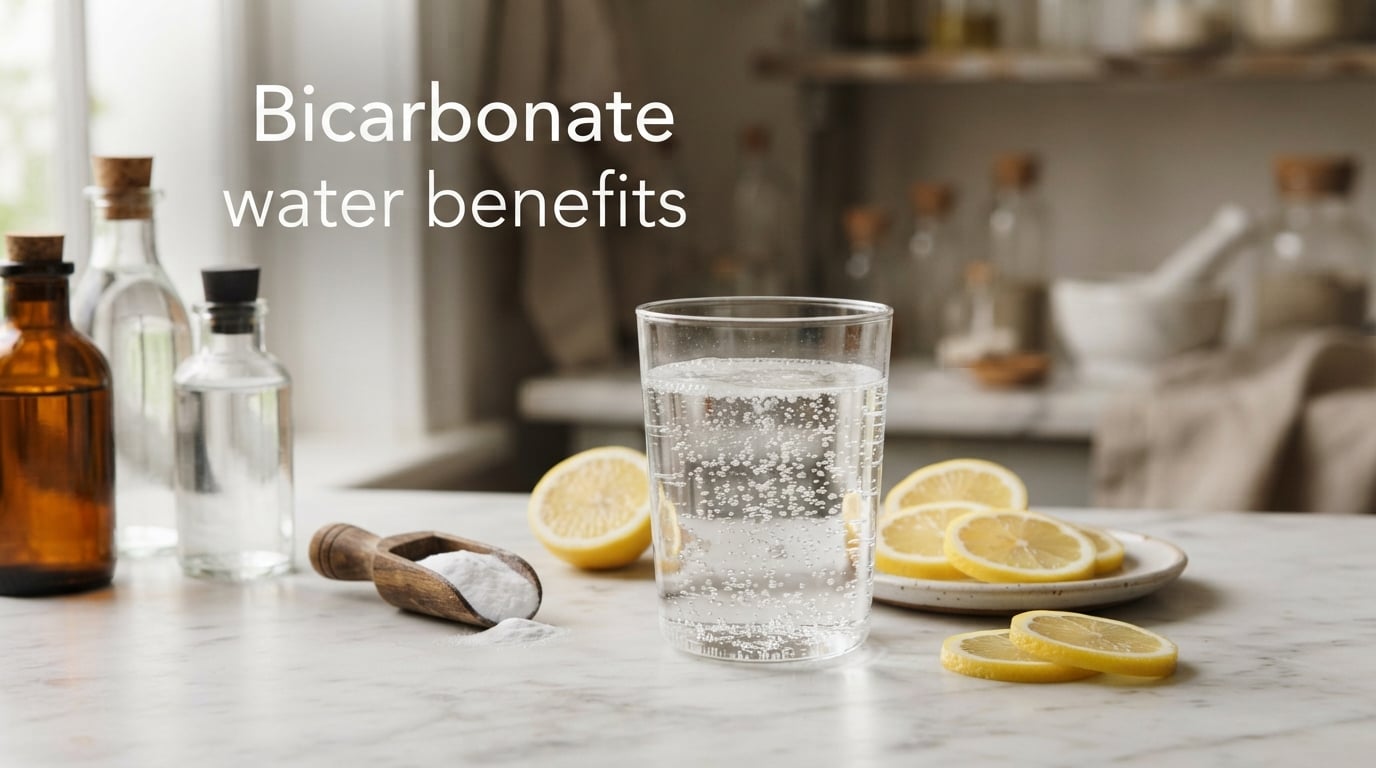
If you have ever stirred a half-teaspoon of baking soda into a glass of water after a heavy meal, you already understand the appeal of bicarbonate water. People have used this simple mixture for generations to settle the stomach, and researchers have spent decades studying exactly what it does inside the body. The bicarbonate water benefits conversation has grown louder recently as athletes, people with occasional heartburn, and those curious about natural remedies share their experiences online.
Our team dug into peer-reviewed studies, medical guidance from WebMD and Everyday Health, and dozens of forum discussions to put together a clear, practical guide. We wanted to separate what the evidence actually supports from what is mostly anecdote. We also wanted to address the questions that come up again and again, like how much is safe, when to drink it, and who should stay away entirely.
By the end of this guide you will understand what bicarbonate water is, how it works in the body, the specific benefits backed by research, the real risks of overdoing it, and a practical dosage framework you can follow. If you are also curious about how mineral content in water changes depending on filtration, we have a separate deep dive on that topic.
Table of Contents
What Is Bicarbonate Water?
Bicarbonate water is simply water that contains bicarbonate ions, which are negatively charged molecules made of hydrogen, carbon, and oxygen. The most common form people encounter is sodium bicarbonate, the same compound sold in every grocery store as baking soda. When sodium bicarbonate dissolves in water it creates a mildly alkaline solution, typically with a pH between 8 and 9.
Here is where the terminology gets confusing, and it is worth slowing down to clarify. There are two main ways you end up drinking bicarbonate water, and they are not the same thing.
The first is naturally occurring bicarbonate in mineral water. Certain spring and mineral waters pick up bicarbonate as they flow through limestone and other rock formations rich in calcium and magnesium carbonates. These waters can contain anywhere from a few hundred to over 1,800 milligrams of bicarbonate per liter. Brands like Gerolsteiner, San Pellegrino, and Badoit fall into this category. The bicarbonate in these waters comes alongside other dissolved minerals like calcium, magnesium, and potassium.
The second is water you make yourself by dissolving baking soda in plain water. This gives you sodium bicarbonate in isolation, without the balanced mineral profile found in natural mineral waters. Most of the health research on bicarbonate water uses this form because it is easy to control and measure in studies.
The difference matters because natural mineral water delivers bicarbonate in a package your body recognizes from food, while homemade baking soda water is a concentrated single-mineral dose. Both can be useful, but they behave differently and carry different risk profiles, which we cover in detail below.
The reason bicarbonate does anything at all in the body comes down to its job as a buffer. Your blood and tissues maintain a tightly controlled pH, and bicarbonate is one of the main molecules that keeps that balance stable. When excess acid builds up, whether from stomach acid splashing into the esophagus or from lactic acid produced during intense exercise, bicarbonate steps in to neutralize it. That single chemical reaction is behind almost every benefit on the list that follows.
Top Bicarbonate Water Benefits
The bicarbonate water benefits list is longer than most people expect, but not every claim carries the same weight of evidence. We organized the best-supported benefits below in order of research strength, starting with the most solidly documented uses.
1. Heartburn and Acid Reflux Relief
Bicarbonate water works as a natural antacid. When sodium bicarbonate reaches the stomach it reacts with hydrochloric acid, the acid responsible for breaking down food. The reaction produces carbon dioxide gas, water, and sodium chloride (table salt). The acid is consumed in the process, which raises stomach pH and reduces the burning sensation of heartburn.
This is the same mechanism behind over-the-counter antacids like Alka-Seltzer and Tums, which is why baking soda has been a home remedy for acid reflux for over a century. Studies and clinical references consistently list sodium bicarbonate as an effective short-term acid neutralizer. Most people feel relief within minutes of drinking a properly diluted mixture.
The key word is short-term. Bicarbonate water addresses the symptom, not the underlying cause of chronic reflux. If you reach for it more than two or three times a week, it is time to talk to a doctor about what is driving the heartburn.
2. Indigestion Relief
Closely related to heartburn relief, bicarbonate water helps with general indigestion and dyspepsia. That uncomfortable fullness, bloating, and mild nausea after eating often comes from excess stomach acid or slow gastric emptying. By neutralizing acid and releasing carbon dioxide gas (which can trigger burping and relieve pressure), bicarbonate water can ease that post-meal heaviness.
Forum users on Reddit’s nutrition and interstitial cystitis communities frequently mention this benefit. People describe mixing a quarter-teaspoon of baking soda into a small glass of water after rich meals and feeling significantly more comfortable within 15 to 20 minutes. The effect is real, and it is consistent with how sodium bicarbonate has been used in clinical settings for decades.
3. Athletic Performance Enhancement
This is one of the most researched benefits on the list, and it surprises people who only think of bicarbonate water as a digestive remedy. During high-intensity exercise, your muscles produce lactic acid as a byproduct of energy production. As lactic acid accumulates, blood and muscle pH drop, which is a major contributor to the burning sensation and fatigue that force you to stop or slow down.
Sodium bicarbonate acts as a buffer against that acid buildup. By loading bicarbonate before exercise, you give your body extra buffering capacity to delay the pH drop. Multiple meta-analyses, including a widely cited review published in the Journal of the International Society of Sports Nutrition, found that sodium bicarbonate supplementation improved performance in high-intensity exercise lasting between one and seven minutes.
The gains are modest, usually in the range of 1 to 3 percent improvement, but for competitive athletes that margin can matter. The catch is that effective doses for performance (typically 0.2 to 0.3 grams per kilogram of body weight) are high enough to cause significant gastrointestinal distress in many people. Cyclists and runners on forums like Slowtwitch and TrainerRoad discuss strategies to minimize nausea, including splitting the dose, taking it with a small carbohydrate meal, and timing it 60 to 90 minutes before competition.
For the average gym-goer doing moderate-intensity work, the performance benefit is unlikely to be noticeable. This application is really for athletes pushing into anaerobic territory: sprint intervals, 400-to-800 meter running, high-rep CrossFit workouts, and competitive swimming.
4. Oral Health Support
Bicarbonate water supports oral health in a few different ways. First, the alkaline environment it creates is hostile to the acid-producing bacteria that cause tooth decay. Second, baking soda is mildly abrasive, which helps remove surface stains when used as a rinse or paste. Third, neutralizing acid in the mouth protects enamel, which cannot regenerate once it erodes.
Studies on baking soda mouthwash show it can reduce plaque and gingivitis scores when used regularly alongside normal brushing. A bicarbonate water rinse (half a teaspoon dissolved in a half-glass of warm water) swished for 30 seconds after meals can help neutralize the acid attack that follows eating or drinking anything sugary or acidic.
Note that you should rinse with it, not sip it throughout the day. Constantly bathing your teeth in any alkaline solution is not a substitute for brushing and flossing, and the sodium content adds up if you are swallowing it.
5. Support for Chronic Kidney Disease
This benefit applies to a specific population: people with chronic kidney disease (CKD) who develop metabolic acidosis. As kidney function declines, the kidneys struggle to excrete acid and maintain bicarbonate balance. Blood pH drifts downward, which accelerates kidney damage, breaks down muscle protein, and worsens bone health.
Clinical trials have shown that oral sodium bicarbonate supplementation can slow the progression of CKD in patients with metabolic acidosis. A study published in the Journal of the American Society of Nephrology found that sodium bicarbonate supplementation significantly reduced the rate of kidney function decline compared to standard care. This is now a recognized treatment that nephrologists prescribe, not a home remedy.
What this does not mean is that healthy people should drink baking soda water to protect their kidneys. If you have CKD, bicarbonate supplementation should only be done under medical supervision because the sodium load and pH effects need to be monitored. For everyone else, this benefit does not apply.
6. Anti-Inflammatory Potential
Emerging research suggests sodium bicarbonate may influence the immune system in ways that reduce inflammation. A study from the Medical College of Georgia found that rats fed baking soda water showed a shift in immune cell populations toward a less inflammatory state, similar to what anti-inflammatory drugs produce. The researchers proposed that bicarbonate signals the spleen to dial back inflammatory immune responses.
This is intriguing but early-stage. Human studies are limited, and the autoimmune and anti-inflammatory applications of bicarbonate water are still being investigated. People on forums dealing with chronic fatigue and autoimmune conditions sometimes report subjective improvements, but anecdotes are not clinical evidence. If this area of research interests you, watch for upcoming human trials, and do not treat baking soda water as a substitute for prescribed anti-inflammatory medication.
Bicarbonate Water vs Commercial Antacids
Since bicarbonate water and over-the-counter antacids work through the same basic mechanism, people often ask which is better. The honest answer is that it depends on what you value and how you plan to use it.
Commercial antacids come in chewable tablets, liquids, and effervescent forms. They combine sodium bicarbonate with other compounds like calcium carbonate, magnesium hydroxide, and aluminum hydroxide to spread the acid-neutralizing work across multiple ingredients. This can reduce the sodium load per dose and target acid from different angles. They are pre-measured, portable, and have consistent dosing.
Bicarbonate water you make at home is cheaper, contains a single active ingredient, and avoids artificial flavors, sweeteners, and binders. For people who want to avoid the aluminum found in some antacids, or who want a solution with no additives, baking soda water is the cleaner option. It is also more flexible because you can adjust the concentration.
The trade-off is the sodium content. A standard antacid dose of baking soda (half a teaspoon) contains roughly 600 to 700 milligrams of sodium. That is about a third of the daily sodium limit recommended for most adults. If you are using it more than occasionally, or if you have high blood pressure, the sodium load becomes a real concern. Calcium-based antacids like Tums deliver calcium instead of sodium, which is preferable for people watching their salt intake.
For occasional heartburn once or twice a week, either option works fine. For frequent or chronic use, talk to a doctor about a strategy that does not rely on daily sodium loading.
Natural Mineral Water vs Baking Soda Water
This is the distinction most guides skip, and it matters for anyone thinking about daily or long-term use. Natural mineral waters high in bicarbonate deliver their bicarbonate alongside other minerals in a naturally balanced profile. A liter of Gerolsteiner, for example, contains around 1,800 milligrams of bicarbonate, but also significant calcium and magnesium, and relatively modest sodium compared to a homemade baking soda solution.
This balanced profile is why some nutrition-minded drinkers prefer high-bicarbonate mineral waters for daily consumption. You get the buffering and digestive benefits of bicarbonate without the isolated sodium hit of baking soda. The minerals also support bone health, muscle function, and hydration in ways that plain baking soda water does not.
Homemade baking soda water has its own advantages. It is essentially free, you can control the exact dose, and you can make it as strong or weak as you want. For a one-off heartburn remedy or a pre-workout buffer, it is hard to beat the convenience.
If you are considering making bicarbonate water a daily habit, natural high-bicarbonate mineral water is generally the better choice for long-term use. Reserve homemade baking soda water for occasional, targeted situations. This is also where understanding mineral content in filtered water helps, because standard home filters strip out the very minerals that give natural mineral water its benefits.
Safety, Risks, and Side Effects
This is where the conversation about bicarbonate water benefits needs to slow down and get serious. Baking soda is a real chemical compound with real pharmacological effects, and people have ended up in emergency rooms from misuse. Understanding the risks is not optional, it is the most important part of this guide.
Common Side Effects
Even at recommended doses, bicarbonate water can cause some uncomfortable but generally harmless side effects. The most common is gas and bloating. The reaction between baking soda and stomach acid produces carbon dioxide, which has to go somewhere. This usually means burping, but trapped gas can cause sharp stomach discomfort if it does not release easily.
Nausea is another frequent complaint, especially at higher doses. Athletes using performance-level doses report nausea regularly, which is why dosing strategy and timing matter so much in that context. Some people also notice a metallic or soapy aftertaste that lingers, which is one of the most common reasons people quit using it.
Increased thirst and mild fluid retention can occur due to the sodium content. If you are tracking sodium for blood pressure or kidney reasons, factor baking soda water into your daily total.
Who Should Avoid Bicarbonate Water
Certain groups should not use baking soda water at all without explicit medical guidance. People with high blood pressure or heart conditions need to be cautious because of the sodium load. Each half-teaspoon dose delivers roughly 630 milligrams of sodium, which is significant on top of an already sodium-heavy diet.
Pregnant women should avoid routine use of baking soda water. The sodium load and systemic pH effects are not well-studied in pregnancy, and the safety margin is too thin to recommend it.
Children should not be given baking soda water as a remedy. Their smaller body weight makes overdose easier, and Medical News Today references cases of serious toxicity in children from baking soda ingestion. Stick to pediatrician-approved options for kids.
Anyone on a sodium-restricted diet for kidney disease, liver disease with ascites, or heart failure needs to clear this with their doctor first. Even though bicarbonate can help certain kidney patients, the sodium complicates the picture and dosing must be managed by a nephrologist.
People taking prescription medications should check for interactions before mixing baking soda into their routine. Baking soda changes stomach pH, which can alter how quickly certain drugs are absorbed. It can also affect how the kidneys clear medications, effectively changing the dose your body actually receives.
Medication Interactions
Bicarbonate water interacts with several common medication classes. It can reduce the absorption of drugs that need an acidic environment to dissolve properly, including some antifungal medications like ketoconazole and certain antibiotics. It can speed up the elimination of drugs cleared by the kidneys, potentially making some medications less effective. This is particularly relevant for drugs like lithium and certain antidepressants.
Aspirin and other salicylates are cleared faster when the urine is more alkaline, which baking soda promotes. This can be medically useful in aspirin overdose treatment, but in everyday use it means your aspirin dose may not last as long as expected.
The safe approach is to space baking soda water at least two hours apart from any prescription medication, and to ask your pharmacist or doctor whether the specific drugs you take are affected.
Signs You Have Taken Too Much
Overdose of sodium bicarbonate is dangerous. Symptoms of excess include severe nausea and vomiting, muscle weakness or twitching, confusion, slow or shallow breathing, and swelling in the feet or ankles from fluid retention. In severe cases, overdose can cause seizures, cardiac rhythm problems, and rupture of the stomach from gas pressure when baking soda is taken on a full stomach in large amounts.
If you suspect you have taken too much, call poison control immediately or seek emergency medical care. Do not wait for symptoms to worsen. The sodium and alkaline load from a serious overdose can cause metabolic alkalosis, a dangerous shift in blood chemistry that requires medical treatment.
Long-Term Use Considerations
This is a gap we noticed in nearly every competing guide. Almost no one addresses what happens if you drink baking soda water every day for months or years. Here is what the science and clinical experience suggest.
Chronic daily use of baking soda water carries a few concerns. First is cumulative sodium intake, which over time can contribute to high blood pressure and strain the cardiovascular system. Second is the risk of metabolic alkalosis, where blood pH rises too high. Mild alkalosis can cause muscle twitching, hand tremors, and irritability. Severe cases are medical emergencies.
Third, there is a theoretical concern about gastric adaptation. If your stomach constantly encounters an alkaline solution, it may compensate by producing more acid, potentially worsening reflux symptoms over time. This rebound effect is documented with long-term use of proton pump inhibitors and may apply to frequent antacid use as well.
For most people, the safe approach is occasional use rather than daily. If you find yourself reaching for baking soda water every single day, that is a signal to investigate the root cause of whatever you are treating rather than layering on a permanent remedy.
Dosage Guide and How to Use Bicarbonate Water
Dosage is the most common question in forums and the area where people make the most dangerous mistakes. Here is a clear framework based on standard references from WebMD, the Mayo Clinic, and the product label on commercial baking soda.
Standard Heartburn and Indigestion Dose
The standard adult dose for occasional heartburn is one-half teaspoon of baking soda dissolved in a half-glass (4 ounces) of water. Drink it slowly. This delivers about 1,800 to 2,000 milligrams of sodium bicarbonate along with roughly 630 milligrams of sodium. Do not exceed seven half-teaspoon doses in a 24-hour period, and do not use this maximum for more than two weeks without medical supervision.
People over 60 should use a smaller dose (a quarter-teaspoon) because older bodies handle sodium and pH changes less efficiently. Start low and only increase if needed.
Never take baking soda on a completely full stomach. The gas produced by the acid-base reaction can cause painful stomach distension and, in extreme cases, rupture. Always wait at least an hour after a large meal before drinking it.
Athletic Performance Dose
The research-backed dose for performance enhancement is 0.2 to 0.3 grams of sodium bicarbonate per kilogram of body weight, taken 60 to 90 minutes before exercise. For a 70-kilogram (154-pound) athlete, that works out to roughly 14 to 21 grams, which is about 3 to 4 teaspoons of baking soda.
This is a large dose and it commonly causes nausea and diarrhea, which is why researchers have tested strategies to reduce the stomach upset. Splitting the dose into two portions taken 30 minutes apart, consuming it with a small carbohydrate-rich snack, and using enteric-coated capsules all help some people tolerate it better.
If you want to try this protocol, test it during training before using it in competition. Finding out that a full dose makes you sick is not something you want to discover on race day.
Best Time of Day to Drink Bicarbonate Water
For digestive purposes, the best time is after a meal when symptoms appear, or before bed if nighttime reflux is the issue. For athletic use, the window is 60 to 90 minutes pre-workout as described above. Some people in nootropics and fatigue-focused communities drink a small amount (quarter-teaspoon) first thing in the morning, claiming it helps with alertness and reduces perceived fatigue.
There is no strong evidence that timing on an empty stomach improves the benefits, and the gas and nausea risk is higher without food. Stick to post-meal or pre-exercise timing unless you have a specific reason to do otherwise.
Taste Improvement Tips
The most common complaint in every forum is the taste. Baking soda water has a metallic, soapy, slightly salty flavor that most people find unpleasant. A few strategies help. Add a squeeze of lemon or lime juice after the bubbling stops. The acid reacts with leftover bicarbonate to create a fizzy, more pleasant drink, and the citrus masks the soapy flavor.
Using cold water reduces the perceived saltiness. A small amount of honey or stevia can also improve palatability. Some people mix it into a small amount of juice rather than plain water.
Whatever you do, do not increase the baking soda concentration beyond the recommended dose to get more effect. Higher concentrations taste worse and dramatically increase the risk of side effects. Better to use the proper dose and mask the flavor.
Frequently asked questions
Is bicarbonate in water good for you?
Bicarbonate in water can be good for you in moderate amounts. It acts as a natural buffer that neutralizes excess stomach acid, supports hydration in mineral waters, and may improve high-intensity exercise performance. The benefits are best documented for occasional heartburn relief, indigestion, and athletic use. However, too much bicarbonate from baking soda can cause nausea, gas, and dangerous sodium overload, so it should be used in moderation and avoided by people on sodium-restricted diets.
How much bicarbonate is safe in drinking water?
For occasional heartburn relief, the safe adult dose is one-half teaspoon of baking soda dissolved in 4 ounces of water, taken no more than seven times in 24 hours and not for longer than two weeks without medical supervision. For natural mineral waters, bicarbonate levels of 300 to 1,800 milligrams per liter are safe for daily consumption in healthy adults. People with high blood pressure, kidney disease, or on sodium-restricted diets should consult a doctor before using bicarbonate water regularly.
What is the best time of day to drink baking soda water?
For heartburn and indigestion, the best time is after a meal when symptoms appear, or before bed for nighttime reflux. For athletic performance, drink it 60 to 90 minutes before high-intensity exercise. Avoid taking baking soda water on a completely full stomach because the gas produced can cause painful bloating. A small morning dose is sometimes used by people seeking a mild energy lift, but post-meal timing is the most common and safest approach.
How much baking soda is safe to drink daily for inflammation?
There is no established safe daily dose of baking soda specifically for inflammation in humans. The anti-inflammatory research is still early-stage and based mostly on animal studies. If you want to try it, limit intake to no more than one-half teaspoon per day dissolved in water, and do not exceed seven doses in 24 hours. Long-term daily use is not recommended because of the cumulative sodium load and risk of metabolic alkalosis. Always consult a doctor before using baking soda water for any chronic condition.
Conclusion
Bicarbonate water benefits are real and well-documented for the right situations. Occasional heartburn, post-meal indigestion, and high-intensity athletic performance all have solid evidence behind them. Oral health rinsing and chronic kidney disease management are supported for specific populations when supervised appropriately. The early anti-inflammatory research is promising but not yet ready for everyday clinical recommendations.
The risks are equally real. Sodium overload, medication interactions, stomach gas and rupture on a full stomach, and metabolic alkalosis from chronic overuse are all genuine concerns. The safest pattern is occasional, targeted use rather than daily habit-forming consumption. If you find yourself needing bicarbonate water constantly for the same symptom, that symptom deserves a medical evaluation rather than a permanent home remedy.
For daily use, natural high-bicarbonate mineral waters are the better choice because they deliver bicarbonate in a balanced mineral package without the isolated sodium hit of baking soda. Reserve homemade baking soda water for the situations where you need a fast, concentrated, and inexpensive remedy.
Understanding the bicarbonate water benefits helps you make smarter choices about when and how to use it. Pair that knowledge with the dosage framework and safety warnings above, and you have a practical, evidence-based approach to a remedy that has been in medicine cabinets for over a century.