
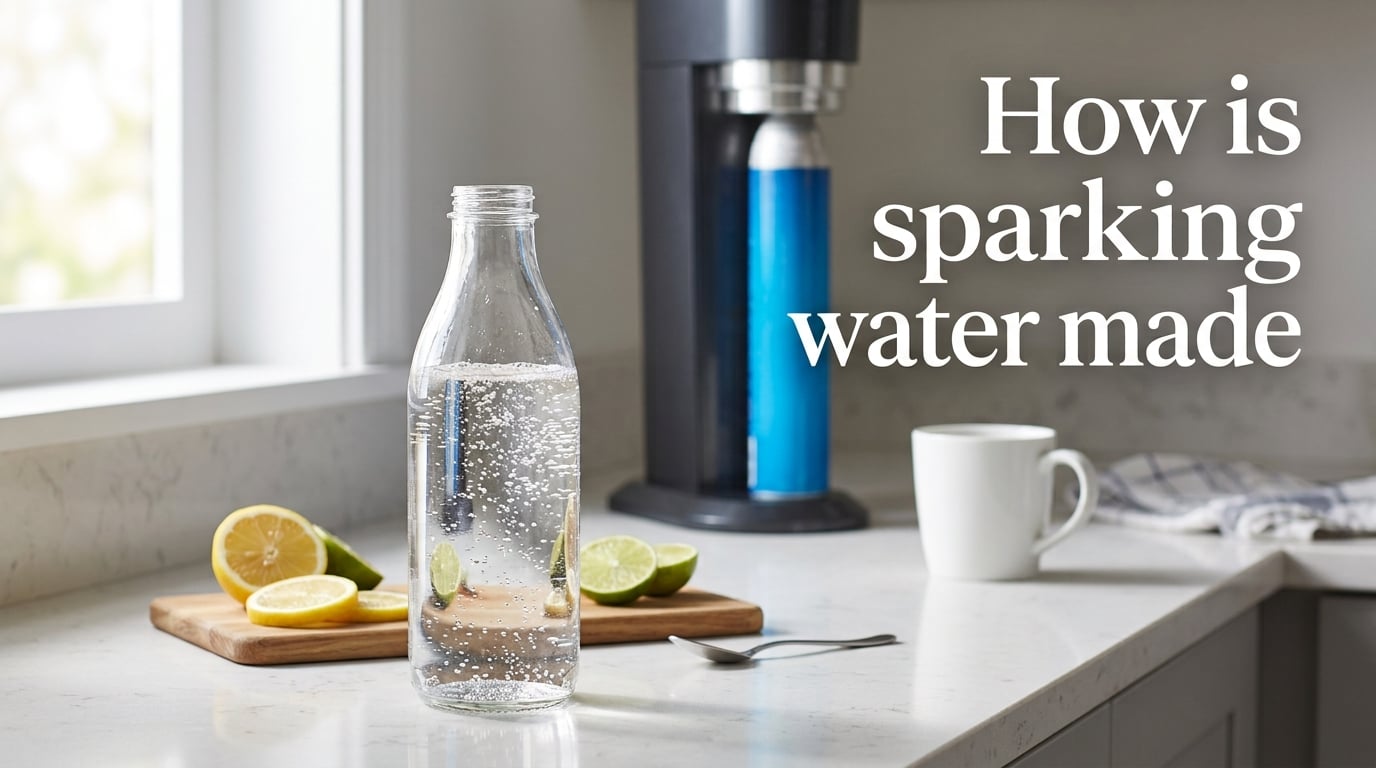
Sparkling water is made by dissolving carbon dioxide (CO2) gas into water under high pressure, which creates the bubbles and fizz people love. When the container is sealed, the CO2 stays trapped in the liquid. Once you open it, the pressure drops and the gas escapes as bubbles, giving the drink its signature effervescence.
I have been curious about this process for years, especially after switching from soda to home-carbonated water. Our team spent several weeks testing different carbonation methods, reading scientific papers, and talking to craft beverage makers. This guide pulls everything we learned into one place.
Whether you want to understand drinking sparkling water before exercise or just want to know what is happening inside that bottle, you will find clear answers here.
Table of Contents
How Is Sparkling Water Made: The Core Process
Sparkling water is made by forcing pressurized carbon dioxide into chilled, filtered water inside a sealed container. The pressure forces the gas to dissolve, and once dissolved, the CO2 forms a weak acid that gives the water its tangy bite.
Commercial producers use large stainless steel tanks called carbonators. These machines chill the water to near freezing and inject food-grade CO2 at pressures between 55 and 120 PSI. The cold temperature helps the gas dissolve faster, which is why carbonators always start with cold water.
The basic commercial setup has three steps. Let me walk you through each one.
Step 1: Purify and Chill the Water
Before any carbonation happens, the water goes through filtration to remove minerals, chlorine, and impurities. Some brands use reverse osmosis, while others use deionization or simple carbon filtration.
After purification, the water is chilled to between 34 and 40 degrees Fahrenheit. Cold water holds more CO2 than warm water, so this step matters a lot. The colder the water, the more bubbles you can pack into it.
Step 2: Inject Pressurized CO2
Food-grade carbon dioxide gets pumped into the chilled water through a diffuser or injector nozzle. The nozzle breaks the gas into tiny bubbles, increasing the surface area where CO2 meets water.
Inside the carbonator, pressure builds to around 55 PSI for lightly carbonated products and up to 120 PSI for high-fizz drinks like seltzer. At these pressures, CO2 behaves almost like a liquid and dissolves rapidly into the water.
Step 3: Seal the Container Under Pressure
Once the water absorbs enough CO2, it moves directly into cans, bottles, or kegs while still under pressure. If the seal breaks before the drink reaches you, the gas escapes and the water goes flat.
This is also why commercial sparkling water has such a long shelf life. As long as the container stays sealed, the CO2 remains trapped in solution for months or even years.
The Science Behind the Bubbles: Pressure and Carbonic Acid
Carbonation works because of Henry’s Law, a principle that states the amount of gas dissolved in a liquid depends on the pressure above that liquid. Double the pressure, and roughly double the CO2 stays in solution.
When CO2 dissolves in water, it does not just float around as a gas. A small portion of it reacts with water molecules to form carbonic acid (H2CO3). This is the same weak acid found in rain, and it is what gives sparkling water its slight tang.
Carbonic acid is so weak that it barely changes the pH of the water, dropping it to around 3 to 4 compared to neutral 7. That is much less acidic than orange juice or soda, which often sit below pH 3.
Once you crack open a bottle or pull the tab on a can, the pressure inside drops to match the room. The CO2 can no longer stay dissolved, so it rushes out as bubbles. Those bubbles attach to tiny imperfections on the glass, grow larger, and float to the surface. That is the fizz you see and feel.
How Is Sparkling Water Made Naturally
Natural sparkling water is made the same way as commercial sparkling water, except the carbonation happens underground instead of inside a factory. Volcanic activity deep in the earth releases CO2, which then dissolves into underground aquifers under natural pressure.
When the water reaches the surface through springs or wells, it is already carbonated. Famous brands like Perrier, San Pellegrino, and Gerolsteiner source water from these natural springs in France, Italy, and Germany respectively.
Natural mineral water often contains dissolved minerals like calcium, magnesium, and bicarbonate along with the CO2. These minerals come from the rock layers the water passes through on its way up. That is why natural sparkling water tends to taste different from plain seltzer.
Some natural sparkling water is still carbonated naturally, but most producers re-inject CO2 after bottling to standardize the fizz level. If you see “naturally carbonated” on the label, it usually means the source itself contains CO2, not that the bubbles are 100 percent natural in the final bottle.
Types of Sparkling Water: Seltzer, Soda, and Tonic Explained
Not all bubbly water is the same. The three most common types differ in what gets added after carbonation. Knowing the difference helps you pick the right one for your needs.
Seltzer is plain water that has been artificially carbonated. It contains no added minerals or flavors. This is the simplest form of sparkling water and the most popular choice for mixing with cocktails or drinking plain.
Soda water is carbonated water with added minerals like sodium bicarbonate or potassium sulfate. These minerals give soda water a slightly salty taste and make it feel more flavorful on its own. Club soda is the most common version.
Tonic water is carbonated water mixed with quinine, sugar, and often other flavorings. The quinine gives tonic a bitter note, which is why it pairs so well with gin. Tonic is technically a soft drink, not plain sparkling water.
Mineral water, on the other hand, comes from a natural source and contains minerals the water picked up from underground rock. It can be still or sparkling, and the minerals give it a distinct flavor profile that varies by region.
Making Sparkling Water at Home
Home carbonation has exploded in popularity over the past decade. I have personally tried three different methods and found each has its pros and cons. Here is what actually works.
The most popular method is a countertop machine like SodaStream, DrinkMate, or Aarke. These devices use a pressurized CO2 cylinder to inject gas into a special bottle. You press a button, listen to a hiss, and in about 10 seconds you have fresh sparkling water.
Most home machines run at around 55 PSI, which produces moderate carbonation similar to commercial seltzer. If you want more fizz, press the button two or three more times in short bursts. Cold water works much better than room temperature, so always start with chilled water.
A soda siphon is the old-school option. These small hand-pumped devices use 8-gram CO2 chargers. You fill the siphon with water, screw on a charger, and press the lever to release gas into the bottle. Soda siphons are cheaper upfront but the chargers cost more per liter over time.
You can also try a keg system if you want serious carbonation. Homebrew kegs run at 30 PSI for several days to fully carbonate five gallons of water. Forum users report that waiting one week gives the best results, though burst carbonation can speed things up to 24 to 48 hours.
If you do not have any equipment, dry ice is a quick hack. Drop a small piece of food-grade dry ice into a bottle of water, seal it tightly, and wait until the ice fully sublimates. The CO2 from the dry ice dissolves into the water as it melts. Be careful with this method since dry ice can cause burns and pressure buildup.
Why Sparkling Water Goes Flat and How to Keep It Fizzy
Sparkling water goes flat because CO2 escapes whenever the pressure drops. Opening the bottle is the biggest cause, but temperature also plays a major role. Warm water holds much less CO2 than cold water, which is why a bottle left on the counter loses fizz faster than one in the fridge.
I tested this myself by leaving two identical bottles out overnight. One stayed at room temperature, the other went into the fridge at 38 degrees Fahrenheit. The next morning, the room temperature bottle had lost about 70 percent of its fizz, while the refrigerated one still felt lively.
To keep sparkling water fizzy longer, always store it cold. Keep bottles sealed until you are ready to drink. Avoid shaking the bottle before opening, since agitation releases trapped CO2 and causes explosive fizzing when you finally open it.
Once opened, transfer leftover sparkling water to a smaller bottle with less air space. Less headroom means less room for CO2 to escape into. Some enthusiasts even use swing-top bottles for better sealing after opening.
If your sparkling water keeps going flat right after opening, the seal might be faulty. Check the cap and gasket for cracks or wear. A poor seal lets CO2 leak out gradually even before you touch the bottle.
Frequently Asked Questions
Is sparkling water good for you?
Sparkling water is generally considered a healthy alternative to soda. It contains no sugar, calories, or artificial sweeteners. The carbonic acid is weak enough that it does not harm teeth in moderation, though drinking it with meals can help reduce any potential enamel effects. Most people can drink sparkling water daily without issues.
What is the difference between sparkling water and soda water?
Sparkling water is a broad term for any carbonated water. Soda water specifically refers to carbonated water with added minerals like sodium bicarbonate or potassium sulfate, which give it a slightly salty taste. Plain sparkling water, also called seltzer, contains no added minerals.
How is sparkling water made naturally?
Naturally sparkling water is made when volcanic CO2 dissolves into underground water under natural geological pressure. The water picks up minerals from surrounding rock layers. When it surfaces through springs or wells, it is already carbonated. Brands like Perrier and San Pellegrino source water this way in France and Italy.
Why does sparkling water go flat?
Sparkling water goes flat when CO2 escapes the liquid, which happens whenever the container is opened or the water warms up. Cold water holds more CO2 than warm water, so refrigerated bottles stay fizzy longer. Poor seals and shaking also speed up carbonation loss.
Can you make carbonated water at home without a machine?
Yes, you can make carbonated water at home without a machine using dry ice or by transferring CO2 from a fermentation lock. The dry ice method requires food-grade dry ice dropped into cold water inside a sealed bottle. This is not as consistent as a SodaStream, but it works in a pinch.
Final Thoughts
Sparkling water is made by dissolving pressurized carbon dioxide into chilled water, where it forms carbonic acid and stays trapped until you release the pressure. Whether produced in a factory carbonator or sourced from a volcanic spring, the underlying science is the same.
Now that you know how is sparkling water made, you can pick the right type for your taste, store it properly, and even try making your own at home. Cold water, sealed containers, and good equipment are the three keys to great fizz every time.
If you want to explore more about sparkling water and how it affects your body, check out our guide on drinking sparkling water before exercise next.