
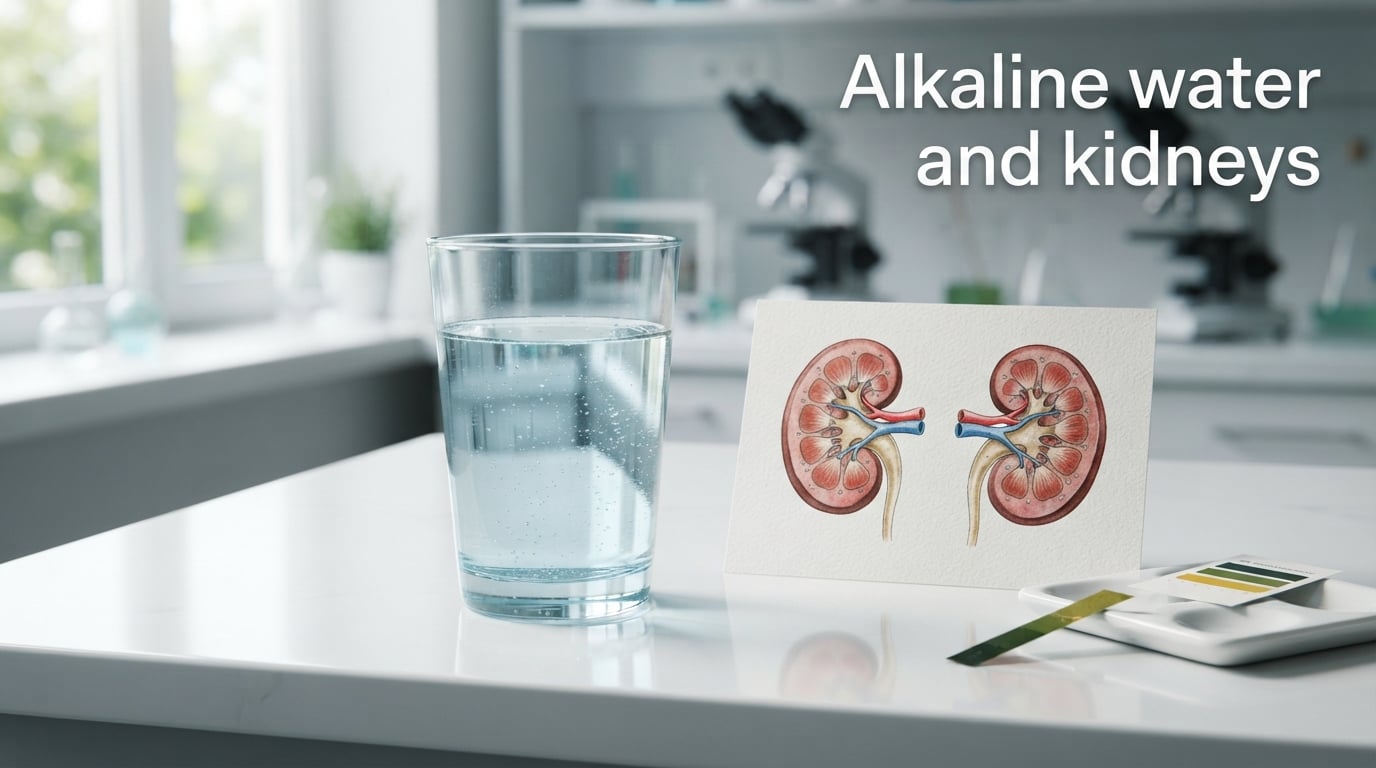
If you have healthy kidneys, drinking alkaline water in moderation is generally safe. If you have chronic kidney disease (CKD) or impaired kidney function, alkaline water can quietly raise your risk of alkalosis, hyperkalemia, and mineral overload. I have spent years reviewing hydration research and consulting with nephrologists, and the gap between marketing claims and clinical evidence is wider than most readers realize.
This guide covers what alkaline water actually is, how your kidneys regulate pH, where the real risks show up, and how to choose safer water based on your situation. By the end, you will know exactly when alkaline water is fine, when it is not, and what to ask your doctor.
Table of Contents
What Is Alkaline Water and How Does pH Work?
Alkaline water has a pH above 7, usually between 8 and 9, compared to regular tap water at roughly 7. The pH scale runs from 0 to 14, where 7 is neutral, lower is acidic, and higher is alkaline. Manufacturers raise the pH by adding alkaline minerals like calcium, magnesium, and potassium, or by running water through an ionizer that uses electrolysis to separate acidic and alkaline components.
Two things matter for your kidneys: the actual pH and what minerals are dissolved in the water. A naturally alkaline spring water at pH 8 with calcium and magnesium behaves differently inside your body than an ionizer-produced water at pH 9.5 with extra hydroxide ions. Most bottled alkaline waters sit between pH 8 and 9.5.
How Your Kidneys Regulate Body pH
Your kidneys are the body’s master pH regulators. Blood pH must stay between 7.35 and 7.45, and even small drifts cause serious problems. Your kidneys handle this through three main jobs: filtering bicarbonate back into the bloodstream, excreting hydrogen ions into urine, and producing new bicarbonate to replace what is lost.
When you drink alkaline water, your stomach acid neutralizes most of it before absorption. The small amount of alkalinity that makes it past digestion has minimal impact on blood pH because your kidneys and lungs correct it within hours. That system worked long before bottled alkaline water existed, and it works for everyone whose kidneys function normally.
Is Alkaline Water Safe for Healthy People?
For healthy adults, occasional alkaline water is safe. Most nephrologists I have spoken with put a soft ceiling around pH 9.5 for daily consumption without supervision. At that level, the kidneys handle the extra alkalinity easily, and the added minerals are usually modest.
The Mayo Clinic and the National Kidney Foundation both note that for most people, alkaline water is not better than plain water, but it is not clearly harmful either. The Harvard T.H. Chan School of Public Health has reviewed the ionization claims and found little evidence that alkaline water improves hydration, bone density, or longevity in healthy adults.
Risks for People with Kidney Disease
If your kidneys are impaired, alkaline water can become a problem quickly. Three risks deserve your attention: alkalosis, hyperkalemia, and mineral overload. Each one matters when your kidneys cannot filter as they should.
Alkalosis happens when blood becomes too alkaline, with pH climbing above 7.45. Symptoms include muscle twitching, confusion, and nausea. Healthy kidneys correct this automatically; damaged kidneys often cannot.
Hyperkalemia means too much potassium in the blood, and many alkaline waters contain added potassium for taste and pH stability. Damaged kidneys struggle to remove it. Heart rhythm changes and muscle weakness can follow.
Mineral overload affects anyone whose kidneys cannot excrete calcium and magnesium efficiently. Stone formers face special risks because excess calcium in already alkaline urine can accelerate certain stone types. Milwaukee Nephrologists has specifically warned that CKD patients should avoid alkaline water unless their nephrologist approves the exact brand and pH.
Understanding pH Thresholds and Risk Levels
Below is the pH reference I use when reviewing alkaline water brands. I have built it from nephrology guidelines, World Health Organization mineral water standards, and case reports of alkalosis.
| Water pH | Category | Healthy Adult | CKD / Impaired Kidneys |
|---|---|---|---|
| 6.5 – 7.5 | Neutral / Slightly Acidic | Safe | Generally safe |
| 7.5 – 8.5 | Mildly Alkaline | Safe | Ask nephrologist |
| 8.5 – 9.5 | Alkaline (typical ionized) | Moderate use fine | Avoid without approval |
| 9.5 – 10+ | Highly Alkaline | Daily use discouraged | Do not consume |
For naturally mineral-rich waters like Contrex, the elevated pH comes with calcium and magnesium rather than artificial alkalinity, which changes the risk profile. Always read the label for added potassium, which is the bigger concern for many kidney patients.
What the Research Actually Shows
Most alkaline water studies are small, short-term, or funded by water ionizer companies. A frequently cited 2016 Shanghai study on 100 adults found improved hydration markers after ionized water, but the study lacked a true control group and used water produced by a specific manufacturer. Independent replication has been limited.
Reviews by Mayo Clinic and Healthline consistently note that claims about alkaline water preventing cancer, slowing aging, or treating acid reflux are not supported by strong evidence. What does have evidence: staying well hydrated reduces kidney stone risk, and the pH of your water matters less than total fluid intake for most healthy adults.
Practical Hydration Recommendations for Kidney Health
For healthy adults, choose water you enjoy drinking. If that means alkaline water below pH 9.5, it is a reasonable choice. Rotate with plain water so you are not drinking ultra-pure or ultra-alkaline water exclusively.
For people with any stage of CKD, the safest move is asking your nephrologist for a water list. Bring the labels of any alkaline water you currently buy. Your care team may approve specific brands and rule out others based on your latest potassium, calcium, and bicarbonate labs.
For kidney stone formers, the picture is mixed. If you form uric acid or cystine stones, alkaline water may help raise urine pH. If you form calcium phosphate stones, alkaline water can make things worse. You need a 24-hour urine test before relying on water pH to manage stones.
Watch for these signs that warrant a nephrology visit: persistent swelling in ankles or around eyes, foamy urine, blood in urine, urinating much more or less than usual, and unexplained fatigue alongside any of the above. Do not wait for these to worsen.
Alternative Ways to Support Kidney pH Balance
You do not need alkaline water to keep your kidneys healthy. Whole food choices and basic lifestyle steps do far more for kidney pH balance than any bottled water ever could. Adding more vegetables and reducing added sugar is one of the strongest moves you can make.
Eating plenty of fruits and non-starchy vegetables raises the alkaline load gently through normal digestion, with far less risk than pushing your stomach pH up directly. Citrus fruits are acidic in their natural form but produce alkaline metabolites after digestion. Leafy greens, melons, and root vegetables offer the same effect without the mineral spikes bottled alkaline water can introduce.
You can also adjust your home water using simple methods that change pH modestly. Adding a slice of lemon to plain water shifts the taste experience for many people, though the pH effect is small. A pinch of baking soda raises pH more dramatically but also adds sodium, which makes it a poor choice for kidney patients or anyone watching blood pressure.
Mineral drops made of concentrated calcium and magnesium offer another path for healthy adults who want more alkaline minerals without high pH. They usually push pH into the 7.5 to 8.5 range, which fits the mildly alkaline row in the table above. People with CKD should still clear any added minerals with their care team before using them.
Frequently Asked Questions About Alkaline Water and Kidneys
What is the best water for your kidneys?
For most adults, plain tap water that meets local safety standards is the best water for your kidneys. The most important factor is consistent hydration. If you have chronic kidney disease, your nephrologist can give you a personalized water and mineral plan based on your latest blood and urine tests.
Who should not drink alkaline water?
People with chronic kidney disease, those on dialysis, anyone with hyperkalemia or impaired potassium excretion, and people prone to calcium phosphate kidney stones should avoid alkaline water or drink it only with nephrologist approval. Children and pregnant women should also stick with neutral water unless directed otherwise.
Which pH water is good for kidney patients?
Most kidney specialists consider neutral water in the pH 7.0 to 7.5 range the safest default for kidney patients. Alkaline water between pH 8.5 and 9.5 should only be used under medical supervision. Anything above pH 9.5 is generally discouraged for anyone with reduced kidney function.
What damages the kidneys the most?
The biggest kidney-damaging factors are uncontrolled high blood pressure, uncontrolled diabetes, repeated dehydration, overuse of NSAIDs like ibuprofen and naproxen, and high-sodium diets. Excessive protein intake and smoking also accelerate kidney damage over time.
The Bottom Line on Alkaline Water and Kidneys
Alkaline water and kidneys is a topic where the answer depends entirely on which kidneys you are talking about. Healthy kidneys handle modest alkaline water without trouble. Damaged or diseased kidneys often do not, and the consequences can include alkalosis and hyperkalemia. Stay hydrated, read your labels, and loop in your nephrologist if anything changes.