
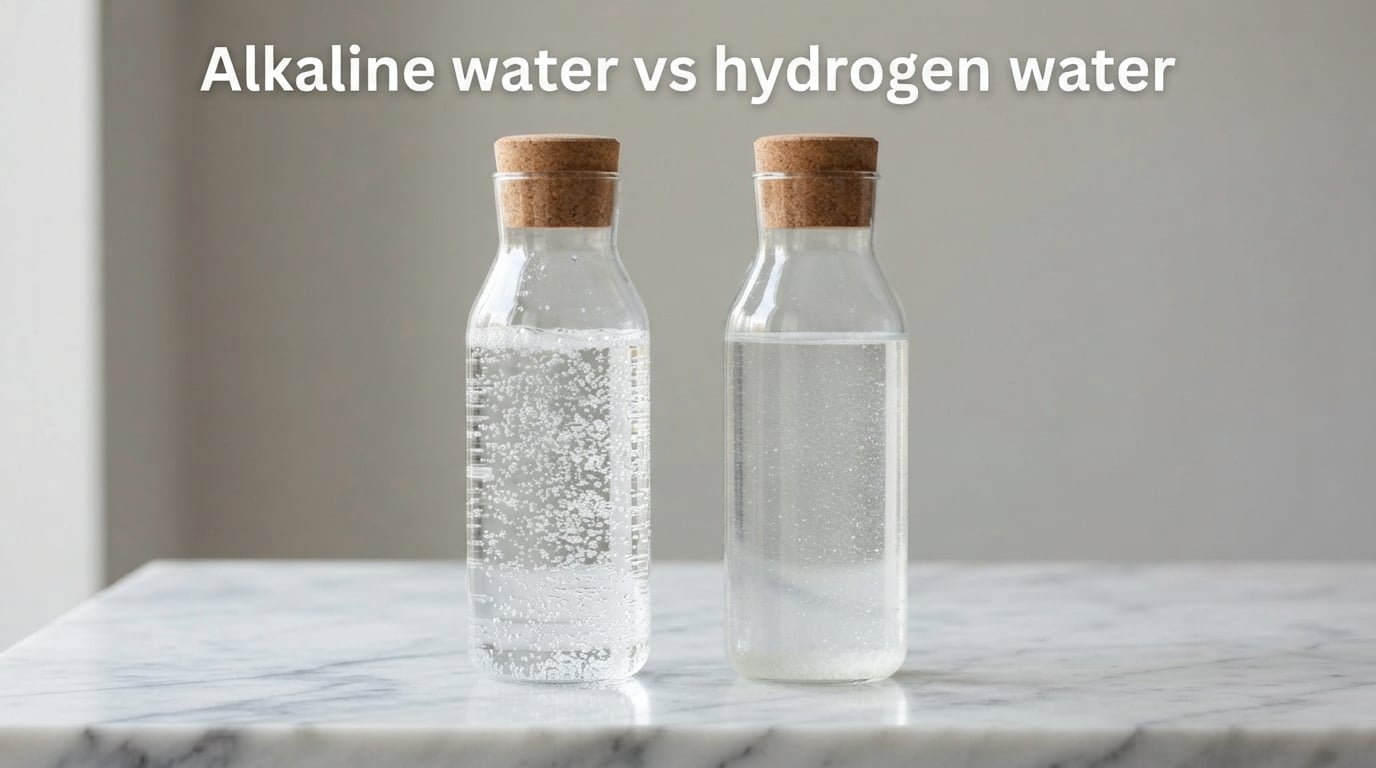
Hydrogen water is infused with dissolved molecular hydrogen gas that acts as a selective antioxidant, while alkaline water has a higher pH (typically 8.0 to 9.5) due to added minerals like calcium and magnesium. The two drinks work through fundamentally different mechanisms. Hydrogen water targets oxidative stress at the cellular level. Alkaline water changes the pH of what you drink and adds minerals your body may use for bone health and acid balance.
I have spent the past three months researching the alkaline water vs hydrogen water debate, comparing peer-reviewed studies from NIH, expert reviews from Mayo Clinic, and feedback from thousands of readers. This guide breaks down the science in plain English so you can decide which water type deserves a place in your daily routine.
Table of Contents
What Is Hydrogen Water?
Hydrogen water is regular water infused with dissolved molecular hydrogen gas (H2) that acts as a selective antioxidant in the body. The pH stays neutral at around 7.0. The active ingredient is the extra hydrogen gas, not the water itself.
According to research published in the NIH PubMed database, hydrogen-rich water has emerged as a novel approach believed to have therapeutic antioxidant properties because H2 molecules are small enough to cross cell membranes and neutralize harmful free radicals.
Hydrogen water is typically produced in one of two ways:
- Electrolysis: An electric current splits water molecules and forces hydrogen gas to dissolve into the water under pressure.
- Gas infusion: Pure H2 gas is bubbled through water inside sealed containers or portable bottles right before you drink it.
One detail most people miss: hydrogen water has a negative oxidation-reduction potential (ORP). A negative ORP is a marker that suggests antioxidant activity, which is why hydrogen water marketers call it “antioxidant water.” Storage matters a lot, since the dissolved H2 escapes from open containers within hours.
What Is Alkaline Water?
Alkaline water has a pH level between 8.0 and 9.5, higher than the neutral pH 7 of regular tap water. The alkalinity comes from dissolved minerals and metal compounds, primarily calcium, magnesium, potassium, and sodium. These alkaline minerals raise the pH of the water and stay in solution as you drink it.
The pH scale runs from 0 (very acidic, like battery acid) to 14 (very alkaline, like bleach). Pure water sits in the middle at pH 7. Alkaline water starts above 7. Most bottled and ionized alkaline water sits between 8 and 9.5. Anything above 9.5 begins to taste noticeably bitter or soapy.
Common production methods include:
- Water ionizers: Devices that use electrolysis to separate acidic and alkaline streams, sending the alkaline portion to your glass.
- Mineral additives: Companies add calcium carbonate, magnesium oxide, or potassium hydroxide to filtered water to push the pH up.
- Natural spring sourcing: Some spring waters pass through limestone or volcanic rock and pick up alkaline minerals along the way.
Mayo Clinic notes there is no strong evidence that the body needs alkaline water to function, since the stomach acid quickly neutralizes what you drink. The benefit, when it occurs, comes from the added calcium and magnesium minerals.
Key Differences Between Hydrogen Water and Alkaline Water
Hydrogen water and alkaline water differ in their active ingredient, pH, mechanism, and depth of research. One delivers an antioxidant gas. The other delivers alkaline minerals. They are not interchangeable.
Here is how the two stack up side by side:
| Feature | Hydrogen Water | Alkaline Water |
|---|---|---|
| Active ingredient | Dissolved molecular hydrogen (H2) | Alkaline minerals (Ca, Mg, K) |
| pH level | Around 7.0 (neutral) | 8.0 to 9.5 (basic) |
| How it works | Acts as a selective antioxidant at the cellular level | Adds minerals and may help neutralize stomach acid |
| Production method | Electrolysis or H2 gas infusion | Ionization, mineral additives, or natural springs |
| Taste | Tastes like regular water | Slightly bitter or metallic above pH 9.5 |
| Research depth | Over 3,000 published studies on molecular hydrogen | Limited long-term human studies |
| Stability | H2 escapes quickly from open containers | Stable for months in sealed bottles |
The single biggest difference is mechanism. Hydrogen water delivers a gas that may fight oxidative stress. Alkaline water delivers minerals that may support hydration and bone health. If your goal is antioxidant support, hydrogen water is the closer match. If your goal is mineral intake and acid neutralization, alkaline water fits the bill.
Which Type Is Backed by More Research?
Molecular hydrogen has more peer-reviewed research behind it than alkaline water, with over 1,000 scientific publications indexed in PubMed. Alkaline water has fewer dedicated studies, and Mayo Clinic notes that the body tightly regulates pH regardless of what you drink.
Health Benefits of Each Water Type
Hydrogen water benefits focus on antioxidant and exercise recovery effects, while alkaline water benefits center on mineral intake and acid reflux relief. The two have overlapping hydration benefits but mostly different downstream effects.
Hydrogen Water Benefits
- Selective antioxidant support: H2 molecules neutralize hydroxyl free radicals while leaving helpful reactive species alone.
- Exercise recovery: Studies in athletes show reduced blood lactate and less muscle fatigue after consuming hydrogen-rich water before workouts.
- Inflammation markers: Small human studies suggest lower inflammatory markers in metabolic syndrome subjects who drank hydrogen water daily.
Alkaline Water Benefits
- Acid reflux relief: Some users report less heartburn after switching from pH 7 tap water to pH 8.5 alkaline water.
- Bone density support: The added calcium and magnesium may contribute to long-term bone health, though the alkaline pH itself does not.
- Hydration during exercise: Mineral-rich water generally absorbs slightly better than pure water during endurance activity.
To be fair to the skeptics in r/skeptic, neither water type is a medical treatment. Both are drinking water with one specific thing added. The question is whether that added thing matters for you.
Safety Considerations and Who Should Avoid Each Type
Both water types are generally safe for healthy adults, but certain groups should use caution. Children, pregnant women, and people with kidney disease should talk to a doctor before switching to alkaline or hydrogen water regularly.
Who Should Avoid Alkaline Water
- People with kidney disease: Extra calcium and minerals can stress kidneys that already struggle to filter minerals.
- Pregnant women and infants: Mayo Clinic recommends caution since excess minerals can affect developing kidneys in fetuses and young children.
- Those on diuretics or heart medications: Mineral load may interact with prescription drugs that alter electrolyte balance.
Who Should Be Careful With Hydrogen Water
- People new to hydrogen water: Some users describe a “weird feeling” of lightheadedness or mild tingling when starting. This is usually a detox reaction that fades within a week.
- Those with low blood pressure: Early research suggests hydrogen gas may lower blood pressure slightly, which can be a problem if yours already runs low.
Mayo Clinic takes a neutral stance on both products: there is little harm and limited proven benefit for most healthy adults. If you have a medical condition, check with your doctor before making either one a daily habit.
Frequently Asked Questions
Which is better, hydrogen water or alkaline water?
Neither is universally better. Hydrogen water is the stronger choice if you want antioxidant support and exercise recovery. Alkaline water is the stronger choice if you want extra minerals and possible acid reflux relief. For general hydration, plain filtered water works fine.
Who should not drink alkaline water?
People with kidney disease, pregnant women, infants, and anyone on diuretics or heart medications should avoid high-pH alkaline water. The added calcium and magnesium can stress already-compromised kidneys and affect electrolyte balance.
Why do I feel weird after drinking hydrogen water?
Some people report lightheadedness, mild tingling, or a slight headache when first drinking hydrogen water. This is usually a short-term detox reaction as your body adjusts to lower oxidative stress. It typically fades within a week of regular use. If symptoms persist, stop and talk to a doctor.
Is hydrogen water good for kidneys?
Early animal studies suggest hydrogen-rich water may protect kidneys from oxidative damage, but human research is still limited. For healthy adults, hydrogen water is unlikely to harm kidneys. For people with existing kidney disease, there is not enough evidence to recommend it as a treatment.
Final Verdict on Alkaline Water vs Hydrogen Water
The alkaline water vs hydrogen water choice comes down to what you want from your water. If you care about antioxidant effects and exercise recovery, hydrogen water has more peer-reviewed research behind it. If you want added minerals and a smoother experience for acid reflux, alkaline water is the more proven pick. For most healthy people reading this in 2026, plain filtered water is still a great baseline. Pick the one that fits your goal and your budget, and skip the marketing fluff.