
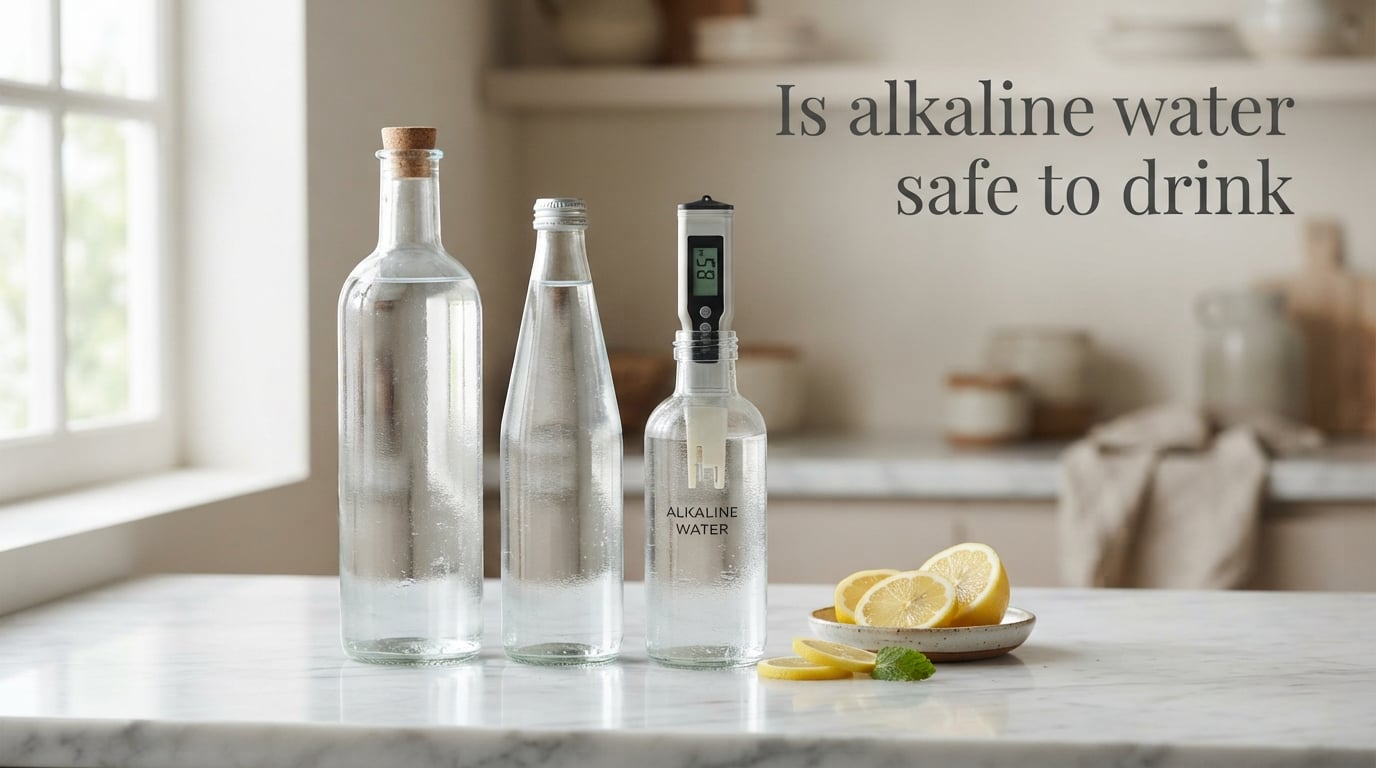
For most healthy people, drinking alkaline water is generally considered safe, but it offers no proven advantages over regular drinking water for everyday hydration. The main safety concerns apply to specific groups, especially people with kidney disease, those taking certain medications, and anyone drinking water with a pH above 9.8.
Alkaline water has surged in popularity over the past decade, with brands like Essentia and Fiji marketing their products as a healthier alternative to tap water. Walk through any grocery store in 2026 and you’ll find entire shelves dedicated to high-pH bottled water. But the science behind these marketing claims is mixed, and the safety profile depends heavily on what type of alkaline water you drink and your underlying health.
In this guide, I’ll walk you through what alkaline water actually is, how it differs from regular water, what the research says about its safety, and who should approach it with caution. We’ve drawn from Mayo Clinic, Harvard Health, and Healthline’s medically reviewed content to give you a balanced, evidence-based answer.
Table of Contents
What Is Alkaline Water and How Does pH Work
Alkaline water has a higher pH level than regular tap or bottled water. The pH scale runs from 0 to 14, where 7 is neutral, anything below 7 is acidic, and anything above 7 is alkaline. Regular drinking water typically sits between pH 6.5 and 7.5, while most alkaline waters on the market fall between pH 8 and 9.
The pH of water is determined by the concentration of hydrogen ions it contains. Fewer hydrogen ions means higher pH and more alkalinity. Alkaline water gets its higher pH from dissolved minerals, primarily calcium, magnesium, potassium, and bicarbonate.
Your body tightly regulates blood pH between 7.35 and 7.45 through your kidneys and lungs. This tight control means drinking alkaline water has minimal impact on your overall blood pH. Your stomach, on the other hand, produces hydrochloric acid at a pH of 1.5 to 3.5, which is much more acidic than anything you would drink, and it easily neutralizes alkaline water during digestion.
How Alkaline Water Gets Made
There are two main ways alkaline water is produced. The first is naturally, by water passing through rock and soil formations that add alkaline minerals like calcium and magnesium. The second is artificially, through a process called electrolysis, where a water ionizer machine uses an electrical current to separate water into acidic and alkaline components.
Manufacturers can also add alkaline minerals directly to purified water through a process called re-mineralization. This artificial method is how most bottled alkaline water brands achieve their high pH levels, and it differs significantly from naturally alkaline spring sources.
Natural vs Artificial Alkaline Water: What Is the Difference
The distinction between natural and artificial alkaline water matters more than most consumers realize. According to Healthline, drinking natural alkaline water is generally considered safe since it contains beneficial minerals in their natural form. These minerals, like calcium and magnesium, are the same ones found in many natural mineral waters like Contrex and Vichy, which have earned their pH profile through geological filtration over decades.
Artificial alkaline water, on the other hand, often goes through processes like reverse osmosis or distillation first, stripping out minerals before alkaline compounds are added back in. This may result in water with a high pH but fewer of the trace minerals that naturally alkaline sources provide. Some artificial alkaline waters may also contain contaminants introduced during processing, though reputable brands test for this.
Mineral Content Comparison
Natural alkaline mineral waters typically contain measurable amounts of calcium (often 100-500 mg/L), magnesium (50-150 mg/L), and bicarbonate (300-2,000 mg/L). These minerals contribute to both the pH and the taste profile. Artificially alkalized water may show similar pH numbers on the label but lack this same mineral complexity, which is part of why naturally sourced mineral waters have distinct characteristics that affect their mouthfeel and how the body processes them.
Is Alkaline Water Safe for Healthy Adults
For healthy adults without underlying medical conditions, drinking alkaline water in moderation is generally safe. Mayo Clinic notes that there is no evidence that alkaline water is better than plain water for hydration in healthy people. The biggest safety flag Mayo raises is for water with a pH above 9.8, which may contain excessive levels of alkaline minerals that can disrupt your body’s mineral balance.
Short-term consumption of water with a pH between 8 and 9.5 appears to pose minimal risk based on current research. Many people on Reddit and other forums report drinking Essentia (pH 9.5) or similar brands daily for months or years without experiencing negative effects. The most commonly reported side effects involve digestive adjustments rather than serious health concerns.
Long-term safety data is limited. Most studies on alkaline water have been short-term, and there is little research on what happens when you drink high-pH water exclusively for decades. This uncertainty is one reason Harvard Health’s position is that there is no compelling reason to choose alkaline water over safe tap water.
Who Should Not Drink Alkaline Water
Several groups should approach alkaline water with caution or avoid it entirely. These contraindications come up consistently in medical literature and are the most important safety considerations when answering whether alkaline water is safe to drink.
People with Kidney Disease
Kidney patients represent the highest-risk group for alkaline water consumption. Mayo Clinic specifically warns that drinking water with a pH above 9.8 can cause hyperkalemia, a dangerous condition where potassium builds up in the blood. Damaged kidneys cannot efficiently excrete excess potassium, and alkaline water with added potassium compounds can push levels into a medically dangerous range.
People Taking Proton Pump Inhibitors (PPIs)
Medications like omeprazole (Prilosec), esomeprazole (Nexium), and pantoprazole reduce stomach acid production. People taking these drugs already have altered stomach acidity, and alkaline water may further suppress what little acid remains. Harvard Health flags this interaction as worth discussing with your doctor before making alkaline water your primary source of hydration.
Infants and Young Children
Infants have underdeveloped kidneys that cannot regulate pH and mineral balance as effectively as adult kidneys. Pediatric guidelines generally recommend plain water for babies over 6 months, with no need for specially alkalized products. Babies under 6 months should receive breast milk or formula only.
Pregnant Women
Pregnancy places additional stress on the kidneys and alters mineral requirements. While moderate consumption of naturally alkaline water is unlikely to cause problems, pregnant women should talk to their OB-GYN before regularly drinking artificially alkalized water, especially if it contains added minerals like potassium.
Side Effects and Risks of Drinking Alkaline Water
Even for healthy adults, alkaline water can cause some unwanted effects, particularly when consumed in large amounts or when switching from regular water abruptly.
Digestive Discomfort
Many people report feeling bloated, gassy, or nauseous when they first start drinking alkaline water. This happens because alkaline water can temporarily reduce stomach acidity, which slows digestion. People with sensitive stomachs or conditions like acid reflux may notice this more than others.
Altered Mineral Absorption
Your stomach acid helps you absorb certain minerals, especially iron, calcium, and magnesium. Drinking highly alkaline water regularly may slightly reduce absorption of these minerals by raising stomach pH, though the effect is usually minor unless you already have digestive issues.
Skin and Mucous Membrane Irritation
Water with very high pH (above 9.5) can irritate the skin and eyes. This is why industrial cleaning products often use alkaline solutions. While drinking such water is unlikely to cause direct harm to your digestive tract, it can feel harsh, and some people report a soapy or bitter taste.
Medication Interactions
Stomach acid plays a role in breaking down many oral medications. Drinking alkaline water at the same time as medications may affect how well they absorb. General guidance is to take medications with plain water and wait at least 30 minutes before consuming highly alkaline beverages.
Naturally Alkaline Mineral Waters: A Different Category
It is worth distinguishing bottled alkaline water brands like Essentia from naturally alkaline mineral waters that come from underground springs. The latter category includes European mineral waters like Contrex (pH ~7.4), Vichy Célestins (pH ~6.8), and Badoit (pH ~6.0), which earn their mineral profile from centuries of geological filtration.
These natural mineral waters contain meaningful amounts of bicarbonate, calcium, and magnesium, but their pH is often only mildly above neutral. The pH of Vichy and Contrex is not as high as artificially ionized water, but their mineral content is naturally balanced and free from processing chemicals. For people who want the potential benefits of mineral-rich water without the concerns about artificial ionization, natural mineral waters represent a middle ground between regular tap water and high-pH bottled products.
If you are curious about how mineral content affects water taste and mouthfeel, our guide on why Contrex and Vichy taste so intensely mineral explores the science behind these flavor differences.
How Much Alkaline Water Is Safe Daily
There is no official daily recommendation for alkaline water specifically. Most health authorities suggest that water with a pH between 7 and 9 is safe for general consumption, with caution increasing above pH 9.5. If you are drinking artificially alkalized water with added minerals, sticking to half your total daily water intake is a reasonable approach.
Your body’s natural pH regulation handles the rest. If you notice persistent digestive issues, skin reactions, or unusual fatigue after switching to alkaline water, reduce your intake or return to regular water and consult your doctor.
FAQs
What are the disadvantages of alkalinity of water?
High alkalinity in drinking water (pH above 9.8) can cause hyperkalemia in people with kidney disease, reduce stomach acidity which affects digestion and mineral absorption, irritate skin and mucous membranes, and interact with certain medications. For healthy adults, moderate consumption of mildly alkaline water (pH 8-9) carries minimal risk.
What are the side effects of alkaline water?
Common side effects include digestive discomfort such as bloating, nausea, or gas, especially when first switching to alkaline water. Some people experience reduced iron or calcium absorption, altered medication effectiveness, and a soapy or bitter taste. These effects are usually mild and resolve when intake is reduced.
Who cannot drink alkaline water?
People with kidney disease should avoid alkaline water with pH above 9.8 due to hyperkalemia risk. Those taking proton pump inhibitors (PPIs) like omeprazole should use caution, as should infants under 6 months and pregnant women. Anyone with chronic digestive conditions should consult their doctor before making alkaline water their primary hydration source.
Why do I feel weird after drinking alkaline water?
Feeling off after drinking alkaline water is usually related to temporary changes in stomach acidity, which can affect digestion. Some people experience bloating, nausea, headaches, or fatigue as their body adjusts. These symptoms typically fade within a week of regular consumption. If they persist, stop drinking alkaline water and consult a healthcare provider.
Final Verdict: Is Alkaline Water Safe to Drink
So, is alkaline water safe to drink? For most healthy adults, the answer is yes, with the understanding that there is no proven health benefit that regular drinking water cannot provide. Alkaline water is generally safe in moderation, especially at pH levels between 8 and 9, and many people enjoy the taste difference.
If you have kidney disease, take acid-reducing medications, are pregnant, or are considering alkaline water for an infant, talk to your doctor first. For everyone else, treat alkaline water as an occasional choice rather than a necessity. Plain water from a trusted source remains the gold standard for hydration, and no peer-reviewed evidence currently shows that alkaline water provides additional health benefits worth the added cost in 2026.