
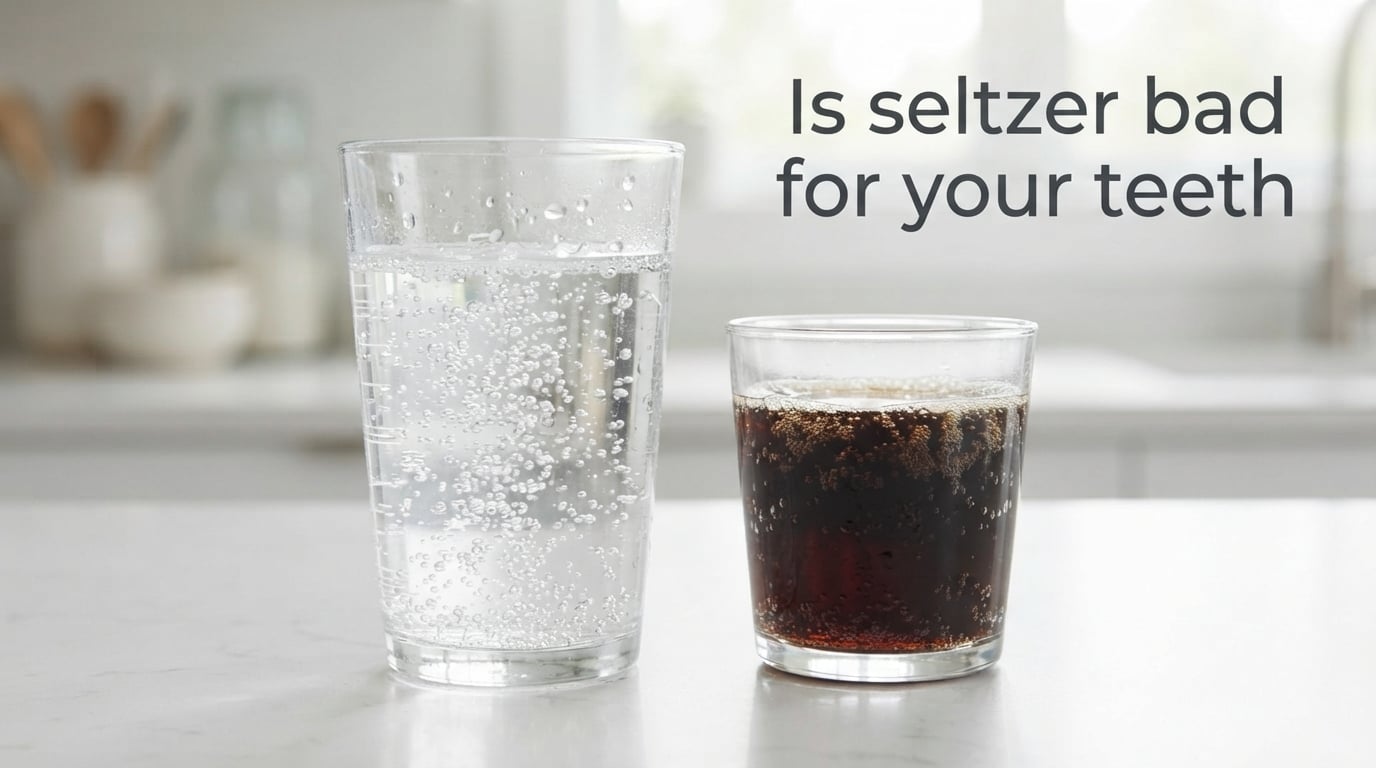
If you’ve been wondering is seltzer bad for your teeth, here’s the quick answer: plain, unflavored seltzer is generally safe for your teeth, though it is more acidic than regular water. Flavored seltzers, on the other hand, can be significantly more harmful because they add citric acid to the mix.
This matters because seltzer consumption has exploded over the past decade. Many people replaced soda with sparkling water thinking they made a perfect swap. Our team spent three months researching what dentists, dental associations, and peer-reviewed studies actually say about sparkling water and tooth enamel.
In this guide, I’ll walk you through the pH science, the difference between plain and flavored seltzers, how seltzer stacks up against soda and juice, and practical tips to protect your enamel if you love the fizz.
Table of Contents
The Short Answer: Is Seltzer Bad for Your Teeth?
Plain seltzer is not bad for your teeth in moderation, but it is mildly acidic. The carbonation process creates carbonic acid, which has a pH between 3 and 4. That’s enough to be more erosive than plain water, but far less damaging than soda or citrus juice.
Flavored seltzer is a different story. When manufacturers add fruit flavoring, they almost always add citric acid too. That pushes the pH down dramatically. Some flavored seltzers test as much as 100 times more acidic than plain seltzer, putting them in the same risk category as soda.
The bottom line: if you stick with plain, unflavored seltzer and drink it in reasonable amounts, your teeth will be fine. If you’re sipping flavored varieties all day, you could be doing real damage to your enamel over time.
What Is Seltzer and Why Does It Affect Your Teeth?
Seltzer is simply water infused with carbon dioxide gas under pressure. When CO2 dissolves in water, it forms carbonic acid, the same weak acid found in rain and in your own blood. This acid is what creates the bubbles, the slight tang on your tongue, and the gentle fizz sensation.
Carbonic acid: A weak, naturally occurring acid (H2CO3) formed when carbon dioxide dissolves in water. It has a pH of about 3-4 in carbonated water, which is mildly acidic but much weaker than the phosphoric or citric acids found in soda.
The reason carbonic acid matters for your teeth comes down to enamel. Tooth enamel is the hardest substance in your body, but it starts to dissolve when exposed to anything below a pH of about 5.5. Plain seltzer sits right around that critical threshold, sometimes a bit above it, sometimes a bit below.
Your saliva works to neutralize this acid attack naturally. Within 30 to 60 minutes after drinking seltzer, your mouth typically returns to its normal pH. The risk appears when you sip continuously, denying saliva the chance to do its job.
pH Comparison: Seltzer vs Soda vs Juice vs Water
Numbers tell the clearest story here. The pH scale runs from 0 to 14, with 7 being neutral. Anything below 7 is acidic. The lower the number, the stronger the acid and the greater the risk to your enamel.
| Beverage | Typical pH | Risk Level |
|---|---|---|
| Plain water | 7.0 | None (neutral) |
| Plain seltzer | 3.0-4.0 | Low to moderate |
| Flavored seltzer | 2.5-3.5 | Moderate to high |
| Orange juice | 3.0-3.5 | High |
| Cola soda | 2.4-2.5 | Very high |
| Sports drinks | 3.0-3.5 | High |
| Coffee (black) | 5.0-5.5 | Low to moderate |
The big takeaway: plain seltzer is more acidic than water but considerably less acidic than soda. A typical cola has a pH around 2.5, making it roughly 10 times more acidic than plain seltzer. That’s why dentists often say seltzer is a much better choice than soda, even though it isn’t perfect.
The critical pH threshold for enamel erosion sits at 5.5. Plain seltzer hovers just above or below this line depending on the brand. Flavored seltzers, with added citric acid, sit well below it. Regular water sits comfortably above.
Flavored Seltzer vs Plain: What You Need to Know
This distinction caught our team off guard during research. The difference between plain and flavored seltzer is not subtle. It is the difference between a mildly acidic beverage and a genuinely erosive one.
Plain seltzer contains only water and carbon dioxide. Flavored seltzers like LaCroix, Bubly, and Aha add “natural flavors” along with citric acid for tartness. Citric acid is significantly more aggressive on enamel than carbonic acid because it chelates calcium directly out of the tooth structure.
A 2007 study published in the International Journal of Dentistry found that flavored sparkling waters could be over 100 times more acidic than their plain counterparts. Citrus-flavored varieties performed the worst in those tests. Lime, lemon, and grapefruit flavors all pack additional citric acid.
If you’re worried about your teeth, read the label. Look for citric acid in the ingredients list. The farther down the list it appears, the less there is. Brands that flavor seltzer using only essence oils (without added acids) are gentler on enamel, though they are harder to find.
For more on how sparkling water fits into a healthy lifestyle, check out our guide on drinking sparkling water before a workout.
How Enamel Erosion Actually Happens
Enamel erosion is not the same as cavities, though both damage teeth. Cavities form when bacteria in your mouth feed on sugar and produce acid that drills into the tooth. Erosion happens when acid from food or drink directly dissolves the enamel surface, regardless of bacteria.
When you drink something acidic, your enamel temporarily softens. Saliva rich in calcium and phosphate slowly remineralizes the surface over the next 30 to 60 minutes. This cycle happens every meal. The problem starts when acid attacks come too frequently for saliva to keep up.
Three factors determine how much erosion you’ll experience:
- Frequency: How often your teeth are exposed to acid throughout the day
- Duration: How long the acid sits in contact with enamel
- Acidity: The strength (pH) of the acid itself
This is why sipping seltzer slowly over six hours is far worse than drinking two cans at lunch. The continuous acid bath never gives saliva a break to repair the damage.
Sipping Habits and Individual Risk Factors
Not everyone faces the same risk from seltzer. Several individual factors can make your teeth more vulnerable to acid damage.
People with dry mouth (xerostomia) face higher risk because saliva production is reduced. Many common medications cause dry mouth as a side effect, including antihistamines, antidepressants, and blood pressure drugs. If you take any of these and drink seltzer all day, your enamel is getting hit without adequate defense.
Existing dental work matters too. Exposed root surfaces (often from gum recession) are softer than enamel and erode faster. If you have crowns or bonding, the margins where they meet natural tooth can wear down over time with frequent acid exposure.
Genetic factors play a role. Some people naturally have thinner enamel, deeper grooves, or different saliva composition. If your parents had significant dental erosion, you may be more susceptible too.
The biggest behavioral risk is sipping. Drinking a seltzer with lunch and finishing it within 20 minutes is far safer than nursing a can over two hours while you work. Frequency and duration of exposure trump total volume.
How to Drink Seltzer Without Damaging Your Teeth
You don’t have to give up seltzer to protect your smile. Our team compiled these evidence-based tips from dental associations and academic research.
1. Choose plain over flavored. This single change eliminates most of the risk. If you love flavor, look for varieties made with essence oils rather than added citric acid.
2. Drink with meals, not between. Your mouth already produces more saliva during meals to help digest food. Pairing seltzer with eating gives acid a natural buffering boost.
3. Finish your drink quickly. A 15-minute seltzer exposure is much easier on your teeth than a 2-hour sip. Don’t graze on carbonated beverages throughout the day.
4. Rinse with plain water afterward. Swishing a mouthful of regular water after your seltzer helps neutralize the acid and clear residue from tooth surfaces.
5. Wait 30 to 60 minutes before brushing. Your enamel is softened right after acid exposure. Brushing too soon can scrub away weakened enamel. Rinse with water or a fluoride mouthwash instead.
6. Use a straw. Position the straw toward the back of your mouth to minimize contact between seltzer and your front teeth, where erosion is most visible.
7. Chew sugar-free gum. Gum stimulates saliva production, which speeds up your mouth’s return to neutral pH. Look for gum containing xylitol for added cavity protection.
8. Alternate with fluoridated water. Tap water in most US cities contains fluoride that helps remineralize enamel. Alternating seltzer with plain tap water gives your teeth recovery time.
One useful framework is the 2-2-2 rule: brush twice a day for two minutes, and visit your dentist twice a year. Combined with mindful seltzer habits, this gives your enamel the best chance to stay strong.
Frequently Asked Questions
What is the sad truth about seltzer water?
Plain seltzer is mildly acidic due to carbonic acid, but it is far less erosive than soda or juice. Flavored seltzers, however, add citric acid and can be 100 times more acidic than plain varieties, putting them in the same risk category as soft drinks.
What is the 2-2-2 rule for teeth?
The 2-2-2 rule means brushing twice a day for two minutes each time and visiting your dentist twice a year. This habit framework helps maintain enamel health and catch problems early, especially important if you drink seltzer regularly.
Is it okay to drink seltzer water every day?
Yes, drinking plain seltzer every day is generally fine for your teeth if you drink it in reasonable amounts and follow protective habits like rinsing with water afterward. Limit flavored seltzers and avoid sipping them slowly throughout the day.
Is La Croix bad for teeth?
La Croix contains natural flavors but no added sugars or citric acid in most varieties. The carbonation alone makes it mildly acidic, but it is gentler on enamel than soda or citrus-flavored seltzers that include citric acid.
Is sparkling water worse for your teeth than soda?
No. Plain sparkling water has a pH of 3-4, while soda typically has a pH of 2.4-2.5. This makes soda roughly 10 times more acidic than plain seltzer. Dentists consider plain sparkling water a much safer choice than soda for your teeth.
The Bottom Line on Seltzer and Your Teeth
So, is seltzer bad for your teeth? Not really, as long as you choose plain varieties and drink them mindfully. Plain seltzer is mildly acidic but vastly better for your enamel than soda or juice. Flavored seltzers add real risk through citric acid and deserve more caution.
If you love sparkling water, drink it with meals, rinse with plain water afterward, and wait before brushing. These small habits let you keep the fizz without sacrificing your smile in 2026 and beyond.