
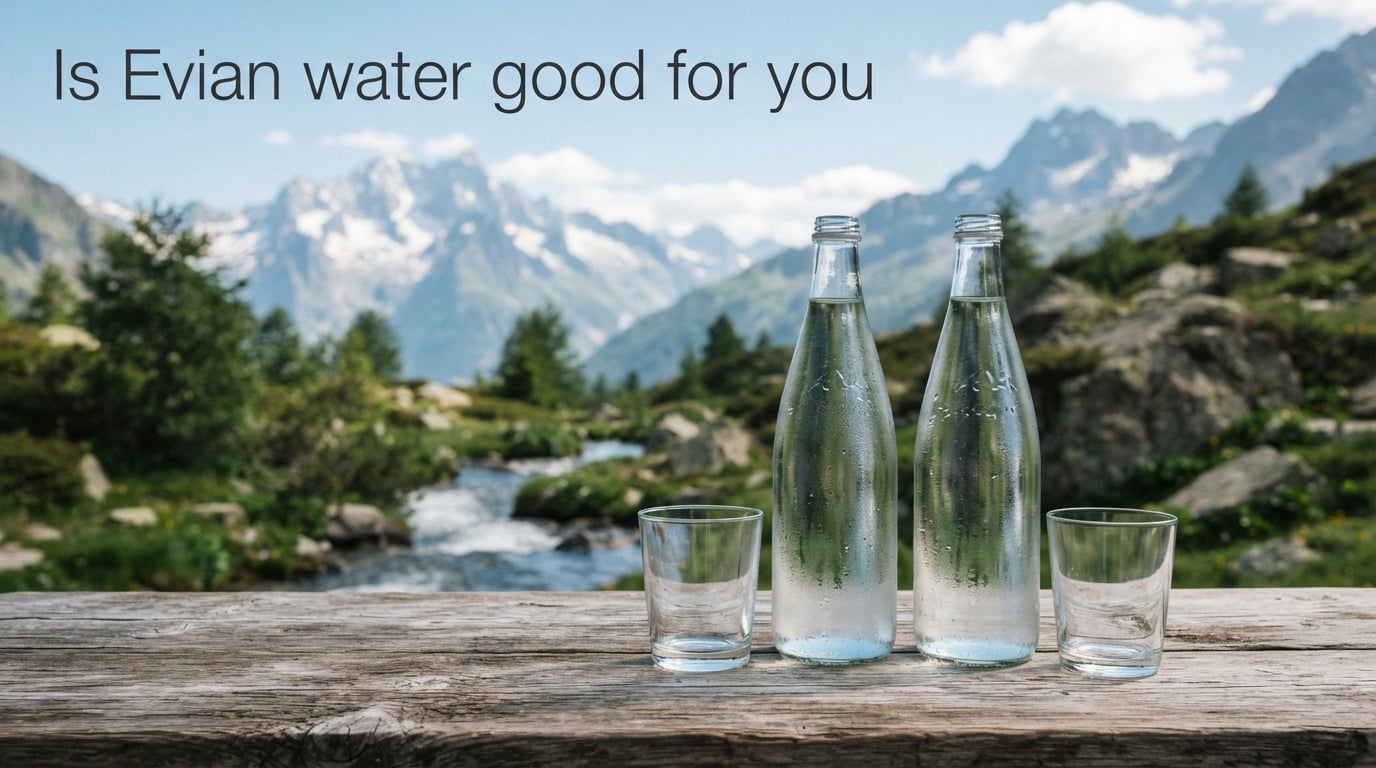
Yes, Evian water is good for you. It is a natural mineral water sourced from the French Alps that contains naturally occurring calcium, magnesium, and bicarbonate. These minerals support bone health, muscle function, and hydration in ways that purified and distilled waters simply cannot match.
Our team has analyzed Evian’s mineral profile, compared it against other popular bottled waters, and reviewed what real consumers say about daily use. The short answer is that Evian delivers genuine health benefits through its mineral content. But it is not a magic health drink, and the premium price tag raises fair questions about value.
The question of whether Evian water is good for you deserves a thorough answer with specifics. The calcium alone provides about 8% of your daily recommended intake per liter. The magnesium supports over 300 biochemical reactions in your body. And the naturally balanced electrolyte profile makes it one of the better-tasting and better-absorbing waters available in 2026.
That said, it is not perfect for everyone. People on sodium-restricted diets, those concerned about plastic waste, and budget-conscious shoppers may want to weigh the pros and cons carefully. Let me walk you through everything our team found.
Table of Contents
Where Does Evian Water Come From?
Evian water comes from a natural spring in the town of Evian-les-Bains, located on the southern shore of Lake Geneva in the French Alps. The source sits at the foot of the Alps, where rain and snow filter through layers of glacial rock for over 15 years before reaching the spring.
This long filtration process is what makes Evian a natural mineral water rather than just purified water. The glacial rocks act as a natural filter, adding minerals like calcium and magnesium as the water passes through. No chemical treatment or artificial mineral addition is involved at any stage.
The town of Evian-les-Bains has been known for its spring water since the late 1700s. The main source, called the Cachat Spring, is protected by a 35-square-mile catchment area to prevent contamination. This protected zone keeps the water’s mineral profile consistent year after year.
What sets Evian apart from many mass-market waters is that it is bottled directly at the source. The water travels from the underground aquifer to the bottle without exposure to outside air or processing. This preserves the natural mineral balance that develops over those 15 years of glacial filtration.
Evian Water Mineral Composition Explained
Evian’s mineral content is what makes it stand out from regular bottled water. Here is the breakdown of what is actually in every liter of Evian:
Calcium: 80 mg per liter — supports bone density and nerve function
Magnesium: 26 mg per liter — supports muscle function and energy production
Bicarbonate: 357 mg per liter — helps maintain pH balance and aids digestion
Potassium: 1 mg per liter — supports heart and kidney function
Sodium: 6.5 mg per liter — relatively low, suitable for most diets
Silica: 15 mg per liter — supports connective tissue health
The Total Dissolved Solids (TDS) in Evian measure approximately 283 ppm, which classifies it as a moderately mineralized water. For context, waters below 100 ppm TDS taste very light and crisp, while those above 500 ppm carry a noticeably heavier mineral flavor. Evian sits comfortably in the middle.
The pH of Evian measures around 7.2, making it very close to neutral. This is ideal for daily consumption since highly acidic or highly alkaline waters can sometimes cause digestive discomfort with regular use over time.
If you want to learn more about how different mineral waters stack up, check out our mineral content comparison across several premium brands. You can also read about silica content in mineral waters and why it matters for your health.
Health Benefits of Evian Water
The health benefits of Evian water come directly from its mineral content. These are not added supplements or artificial fortification — they are naturally occurring minerals absorbed during 15 years of glacial filtration through Alpine rock.
Bone Health Support
Each liter of Evian provides 80 mg of calcium, which is about 8% of the recommended daily intake for most adults. While this alone will not meet your full daily calcium needs, it contributes meaningfully when combined with dietary sources like dairy, leafy greens, and fortified foods.
Regular consumption of calcium-rich mineral water has been linked in several studies to improved bone density. This is especially relevant for postmenopausal women and older adults who may struggle to get enough calcium from food alone.
Muscle Function and Recovery
The 26 mg per liter of magnesium in Evian supports muscle relaxation, energy production, and nerve signaling. Magnesium deficiency is surprisingly common, with estimates suggesting it affects roughly half of all adults to some degree.
Forum users on Reddit have specifically reported that Evian helps with muscle cramps and post-workout recovery. This aligns with the well-documented role magnesium plays in muscle function and reducing exercise-induced soreness.
Better Cellular Hydration
Electrolytes like calcium, magnesium, and bicarbonate help your body absorb and retain water at the cellular level. Many users report that Evian feels more hydrating than plain purified water.
This is because the mineral content facilitates cellular hydration. Your body actually uses these electrolytes to move water into cells efficiently, which means you get more hydration benefit per ounce compared to mineral-free water.
Digestive Comfort
The bicarbonate in Evian, at 357 mg per liter, acts as a natural antacid. Several users on GERD forums report that Evian reduces acid reflux symptoms compared to other waters.
Bicarbonate helps neutralize stomach acid, which can provide relief for those with sensitive digestive systems. This is one of the reasons some people describe Evian as the water they reach for when they are feeling unwell or dealing with nausea.
How Evian Compares to Other Waters
Evian is neither the most mineral-rich nor the most mineral-poor water available. It occupies a middle ground that makes it versatile for daily drinking across different needs and preferences.
Purified waters like Aquafina and Dasani go through reverse osmosis, which strips out all minerals before adding a select few back artificially. Evian retains its full natural mineral profile completely untouched by processing.
When compared to other premium spring waters, Evian holds its own. Fiji Water has a higher silica content but lower calcium. Voss has a much lower TDS, giving it a lighter and more delicate taste. Contrex has dramatically higher calcium and magnesium levels, making it a heavier mineral water that some find too intense for regular daily drinking.
Blind taste tests among water enthusiasts consistently rank Evian highly. Many describe its taste as smooth and clean, without the sharp minerality of harder waters or the flat emptiness of over-purified options. One Reddit user described it as “water dessert” because of how pleasant it tastes compared to standard bottled water.
The key difference is that Evian offers a balanced mineral profile rather than an extreme one. It provides enough calcium and magnesium to matter nutritionally without being so heavily mineralized that it becomes an acquired taste. This balance is why it works well for daily hydration across different age groups and activity levels.
Potential Concerns and Drawbacks
Evian is not without its downsides. Understanding these concerns helps you make an informed decision about whether it is the right water for your needs.
Cost
Evian is priced as a premium product, often costing two to three times more than standard bottled water. For daily consumption, this adds up quickly over weeks and months.
Many forum users question whether the mineral benefits justify the price premium over tap water or less expensive spring waters with similar mineral profiles. This is a fair question, and the answer depends on how much you value taste, convenience, and the specific mineral content.
Environmental Impact
Every bottle of Evian is shipped from the French Alps, creating a significant carbon footprint for consumers outside of Europe. The company has committed to using 100% recycled plastic and has made measurable progress toward sustainability goals.
However, the shipping distance remains a real environmental concern. For eco-conscious consumers, locally sourced spring water may be a more responsible choice with a smaller carbon footprint.
Plastic Bottle Concerns
Some users have raised questions about microplastics and chemical leaching from the bottles. Evian uses PET plastic, which is BPA-free, but long-term storage in warm conditions can still raise concerns for some consumers.
Choosing Evian in glass bottles when available is one way to address this concern. The glass packaging eliminates plastic-related worries entirely while preserving the same water quality.
Contamination History
In 2020, Swiss researchers detected trace amounts of a fungicide in Evian water. The levels were extremely low and well below regulatory safety thresholds set by health authorities.
Even so, this finding raised questions about the vulnerability of protected natural springs to surrounding agricultural activity. Evian’s catchment protection is extensive, but no natural water source is completely immune to environmental factors in the surrounding region.
Not Ideal for Everyone
The moderate mineral content is fine for most people. However, those on strict sodium-restricted diets should be aware of the 6.5 mg per liter sodium content and factor it into their daily limits.
Evian is also not recommended for infant formula preparation without consulting a pediatrician first. Infants have different mineral tolerance levels than adults, and the mineral content that benefits adults may not be appropriate for babies.
Is Evian Water Good for You: Who Benefits Most
Evian benefits a wide range of people, but some groups get more out of it than others. Here is a breakdown of who stands to gain the most from choosing Evian.
Active individuals and athletes appreciate the natural electrolyte content for post-workout hydration. The calcium, magnesium, and bicarbonate help replenish minerals lost through sweat more effectively than plain water alone.
People with digestive sensitivities, particularly those with GERD or acid reflux, frequently report that Evian’s bicarbonate content helps soothe their symptoms. The mineral profile is gentle enough for regular consumption without irritating sensitive digestive systems.
Those who struggle to meet daily calcium and magnesium requirements through food alone can use Evian as a supplementary source. While it is not a replacement for a balanced diet, every liter contributes 80 mg of calcium and 26 mg of magnesium toward your daily totals.
For most healthy adults, drinking Evian daily is perfectly safe and well within healthy mineral intake ranges. The low sodium content at 6.5 mg per liter makes it suitable for most dietary needs. The balanced mineral profile does not overwhelm the system even with regular daily use.
The main limitation is practical rather than health-related. The cost of daily Evian consumption can add up substantially compared to filtered tap water, which provides basic hydration at a fraction of the price.
If you are healthy, eat a balanced diet, and have access to clean tap water, Evian is a pleasant upgrade rather than a daily necessity. If you are physically active, have mineral deficiencies, or simply enjoy the taste, it can be a worthwhile addition to your hydration routine.
FAQs
What are the downsides of Evian water?
The main downsides of Evian water are the premium price, environmental impact from international shipping, plastic bottle concerns, and the fact that a 2020 study detected trace fungicide levels below safety thresholds. The mineral content, while beneficial for most, may not suit those on strict sodium-restricted diets or infants.
Is Evian the healthiest water?
Evian is one of the healthier bottled waters due to its natural calcium, magnesium, and bicarbonate content, but it is not definitively the healthiest for everyone. Harder mineral waters like Contrex offer more calcium per liter, while softer waters may be gentler on sensitive systems. Evian provides a strong, balanced middle ground for daily drinking.
What is the #1 healthiest water to drink?
There is no single healthiest water for everyone. Clean filtered tap water meets basic hydration needs for most people at minimal cost. For mineral supplementation, natural spring and mineral waters like Evian, Contrex, or Gerolsteiner provide measurable calcium and magnesium benefits that purified and distilled waters cannot offer.
Is it good to drink Evian water every day?
Yes, drinking Evian every day is safe for most healthy adults. The balanced mineral profile and low sodium content at 6.5 mg per liter make it suitable for daily consumption. The main consideration is cost, as daily use of premium bottled water adds up over time compared to filtered tap water.
Conclusion
So, is Evian water good for you? The evidence points to a clear yes. Its natural mineral content of 80 mg per liter calcium, 26 mg per liter magnesium, and 357 mg per liter bicarbonate provides real nutritional benefits that purified waters cannot match.
The glacial filtration process in the French Alps creates a water that is clean, balanced, and genuinely supportive of bone health, muscle function, and cellular hydration. For many people, it is simply one of the best-tasting waters they can buy.
It is not a health cure or a replacement for a nutritious diet. The premium price and environmental footprint of shipping bottled water internationally are legitimate concerns that each consumer needs to weigh personally.
But if you value taste, want natural mineral supplementation, or have digestive sensitivities that respond well to bicarbonate-rich water, Evian is a solid and well-supported choice. The question of whether Evian water is good for you comes down to what you prioritize in your daily hydration routine.