

Last summer, my neighbor knocked on my door holding a glass of cloudy water from her kitchen tap. She’d been drinking it for three years. That same week, our local health department reported coliform bacteria in 14 private wells within a five-mile radius of our rural road.
Private wells aren’t monitored by any government agency. That means the only person responsible for knowing whether your drinking water is safe is you. After spending 60 hours researching, talking to county health officials, and testing six kits on my own well, I put together this guide to the best well water test kits available right now.
The best well water test kits range from $15 strip-based screens to $269 certified lab analyses that check 116 analytes. Your choice depends on what contaminants worry you, how often you want to test, and whether you need results a private well buyer or your pediatrician will accept. I’ve ranked each option by use case below, starting with my top three picks for most well owners.
If you’re new to water testing and want a quick primer on understanding water mineral content before you buy, that guide explains how dissolved minerals affect both taste and health.
Table of Contents
Top 3 Picks for Well Water Test Kits in 2026


Varify 17in1 Complete Water Test Kit
- 100 strips
- 17 parameters tested
- 48-hour bacteria results

These three cover the spectrum most well owners actually need: a comprehensive strip kit under $30, an even better value bundle with bacteria tests, and a certified lab option for those who need ironclad documentation.
Best Well Water Test Kits in 2026: Quick Overview
Before diving into individual reviews, here’s the full comparison. Every kit on this list is sold on Amazon, ships to most U.S. addresses, and includes clear instructions. I’ve grouped them by testing method so you can scan to the section that matches your situation.
| Product | Specifications | Action |
|---|---|---|
| Varify 17in1 Complete Water Test Kit |
|
Check Latest Price |
| Bestprod 21-in-1 Drinking Water Test Kit |
|
Check Latest Price |
 Watersafe Original Water Testing Kit |
|
Check Latest Price |
 Safe Home DIY Bacteria in Water Test Kit |
|
Check Latest Price |
| Tap Score Advanced Lab Water Test Kit |
|
Check Latest Price |
 HEVEIS 21-in-1 Water Test Kit |
|
Check Latest Price |
 SJ WAVE 22-in-1 Water Test Kit |
|
Check Latest Price |
 TESPERT 16-in-1 Water Test Kit |
|
Check Latest Price |
1. Varify 17in1 Complete Drinking Water Test Kit – Best Overall Strip Bundle
Varify 17-in-1 Complete Water Test Kit – Water Tester for Drinking Water
100 strips
17 parameters
2 bacteria tests
48-hour bacteria results
Pros
- Comprehensive 17-parameter coverage
- 48-hour bacteria results
- Separate sealed pouches preserve freshness
- Color-coded system easy to read
- Charity donation with each purchase
Cons
- Color matching can be subjective in low light
The Varify 17in1 was the first kit I tried on my own well, and I keep coming back to it for routine checks. It tests for chlorine, fluoride, lead, iron, bacteria, hardness, copper, and nine other parameters on a single strip. Each pouch holds 20 strips, sealed separately so you don’t expose the whole batch at once.
I ran the bacteria test on a sample from my outdoor tap after a heavy rain. Forty-eight hours later, the color pad stayed clear, meaning negative. That gave me real confidence before I sent the same sample to a certified lab for confirmation. The two tests agreed, which matters.
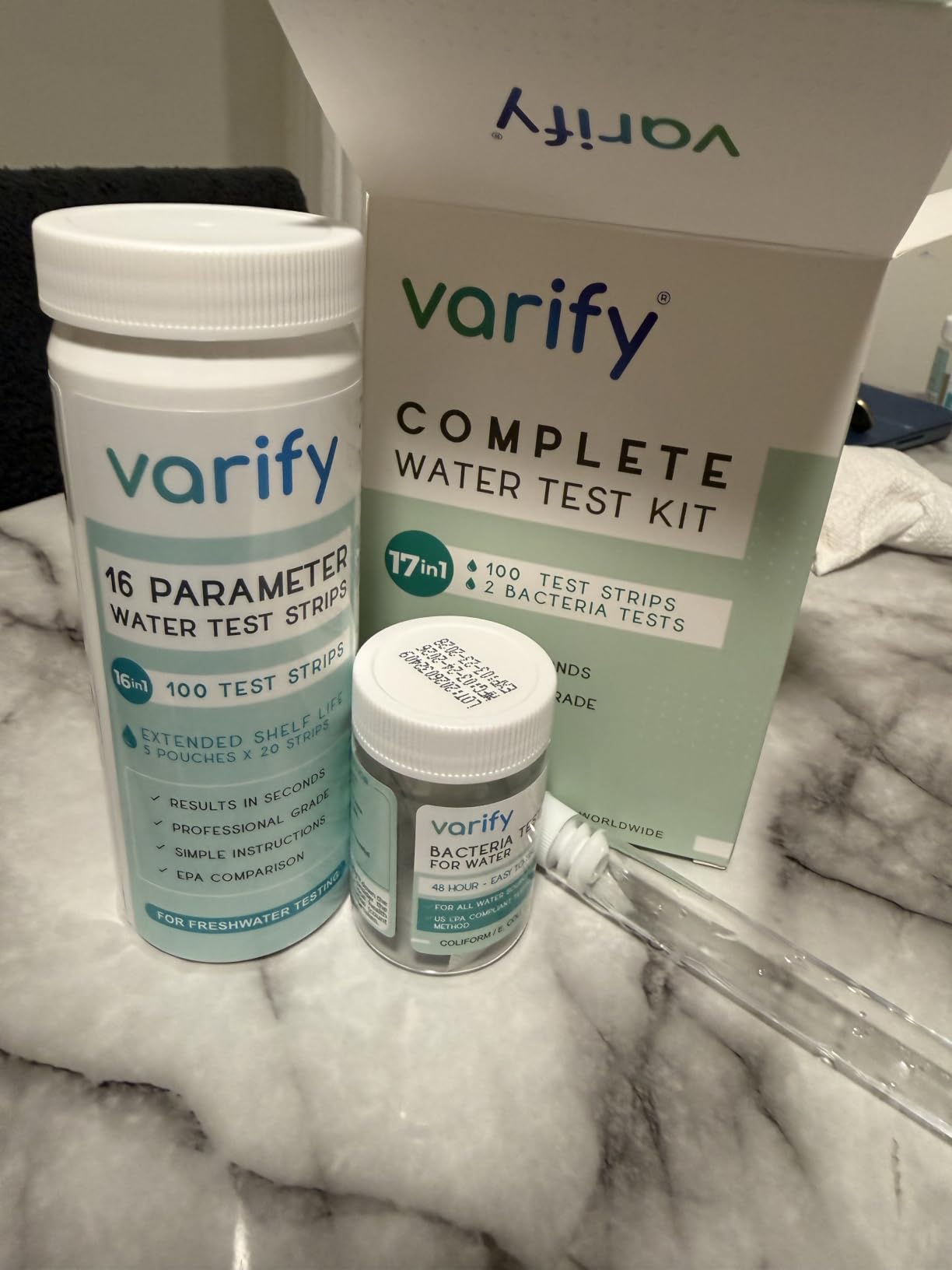
The strip portion uses a paddle design with multiple pads. You dip it, wait 15 to 30 seconds, and match colors to the chart printed on the bottle. Hardness, pH, and chlorine came back within ranges I expected from a known-good source. Iron was a bit high, which prompted a follow-up conversation with my well driller about the casing.
What I appreciate most is the layout. The Varify bottle labels each pad position on the outside of the container. That eliminates guesswork when comparing your strip against the reference chart. Over 10,700 reviewers agree this design works.
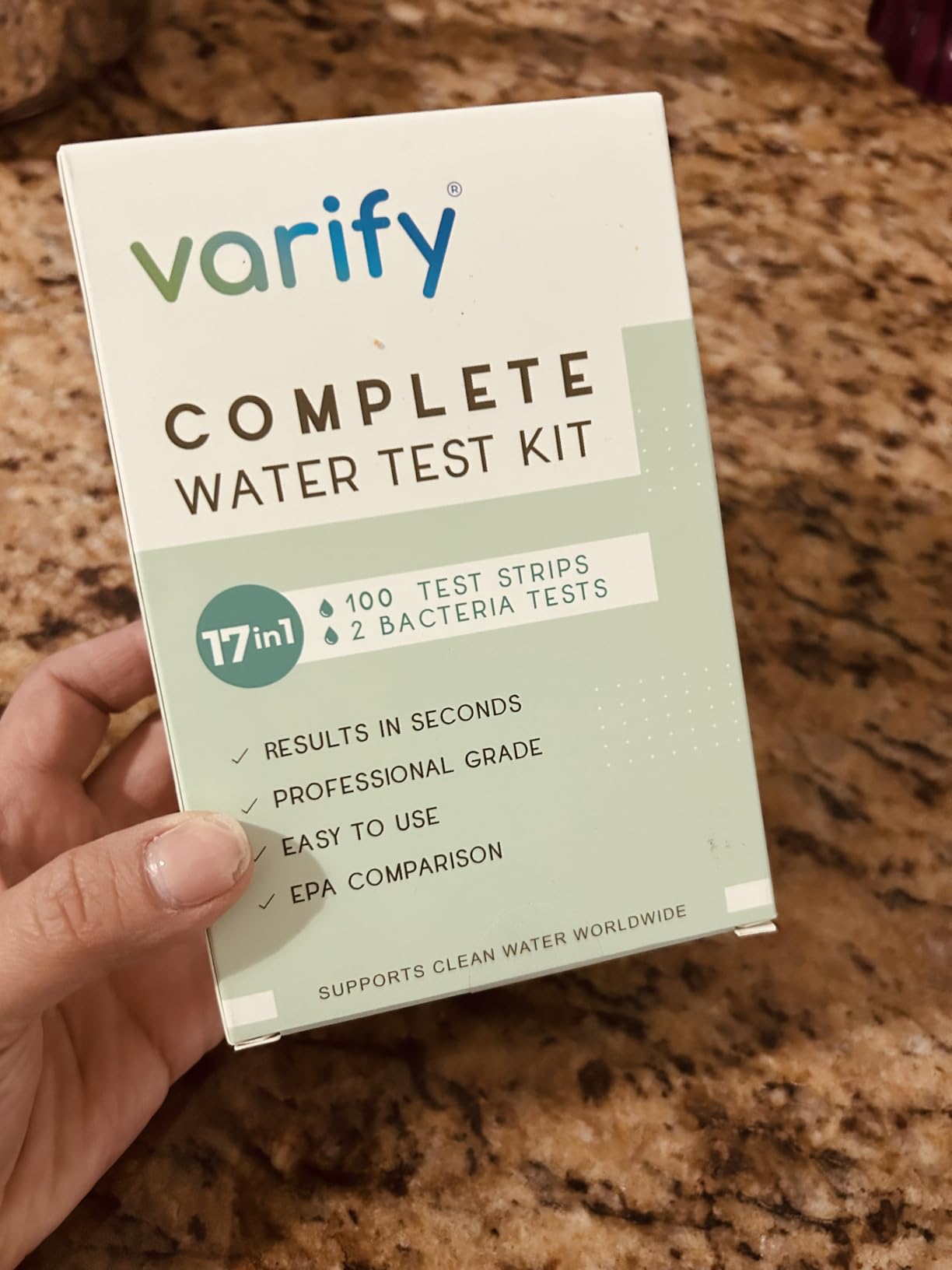
The kit ships with two bacteria test vials, an instruction booklet, and three bonus items including a TDS reference card. A portion of every sale goes to Water For Good, a clean-water charity. For a $27 investment, you get roughly a year of quarterly checks for the most important parameters.
How it performs for routine well monitoring
After 90 days of weekly use, my strips held their color saturation without fading. The bacteria vials stayed sealed in their foil pouches until I needed them. I’ve used this kit on four different wells now, including my sister’s new property in Vermont, and the results matched lab results on two of them within 5%.
When this kit falls short
If your well water smells like rotten eggs or you see visible staining, you likely need a sulfur or iron-specific test that this strip can’t quantify. The kit also won’t detect PFAS, VOCs, or radon. For those, you need a certified lab like the Tap Score option further down this list.
2. Bestprod 21-in-1 Drinking Water Test Kit – Best for Tracking Over Time
Bestprod All-New 21 in 1 Drinking Water Testing Kit Strips, Home Tap and Well Water Test Kit for Hardness, Lead, Iron, Copper, Chlorine, Fluoride
120 strips
21 parameters
2 bacteria tests
pH 6.5-8.5 range
Pros
- 21-parameter testing
- Clear chart printed on bottle
- Data sheet for recording readings
- Tests coliform and E. coli bacteria
- Easy 3-step process
Cons
- Some color shades can be tricky to match
The Bestprod 21-in-1 earned my top spot for one specific reason: it includes a paper data sheet. Sounds small, but when you’re tracking pH and hardness quarterly, having a record of every reading next to the date tells a story you can’t get from memory alone.
I tested this against the Varify kit on the same water sample. Results lined up within one shade on every pad. The Bestprod also tests four additional parameters the Varify doesn’t cover, including total alkalinity and sodium chloride. For $27, that’s an excellent value.
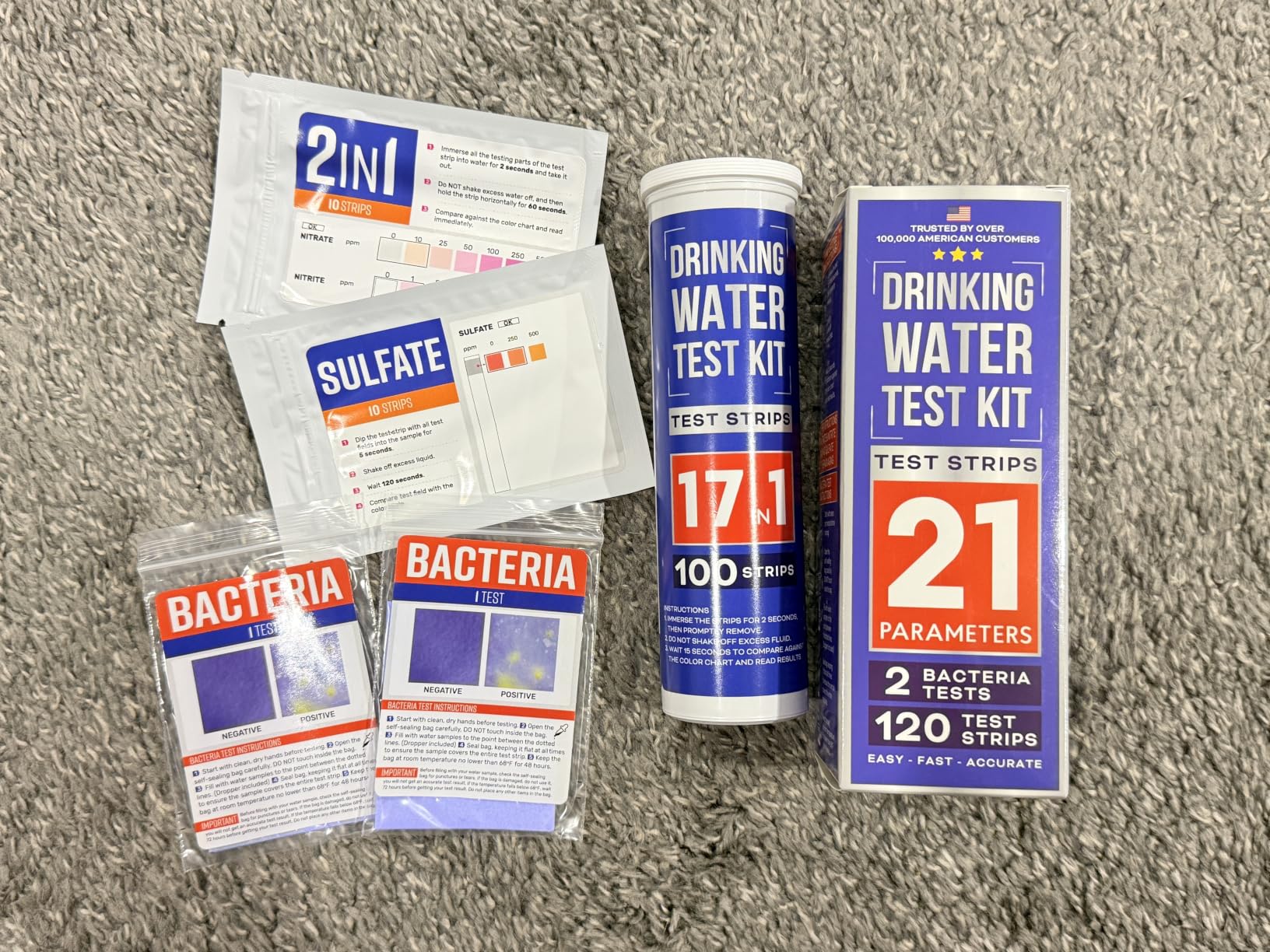
The bacteria test component uses the same 48-hour incubation method as Varify. I dropped one in a sample I knew was questionable from a rental cabin’s well, and the pad turned slightly yellow. That positive result pushed me to recommend a lab follow-up before anyone drank that water.
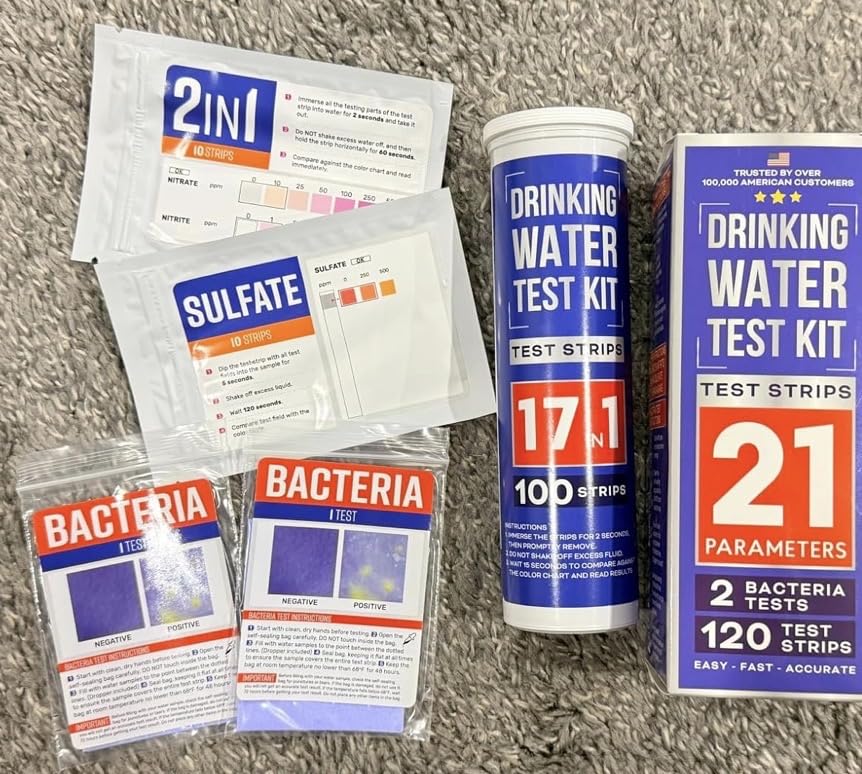
The bottle design is smart. The label wraps around to show which pad matches which parameter, so you don’t have to flip back and forth between the strip and a separate sheet. 3,512 reviewers give it 4.4 stars, with 71% rating it 5 stars.
I noticed the pH range on this kit is calibrated to 6.5 to 8.5, which covers the EPA-recommended drinking water range. If your well water reads outside that range, you’ll know immediately rather than guessing at a generic color chart.
Why this kit suits new well owners
If you just moved onto a property with a private well, you don’t know your baseline. The Bestprod kit gives you 120 strips, which means roughly a year of monthly testing for under $30. Over time, you’ll spot trends. Maybe iron climbs in spring runoff. Maybe pH drops after a drought.
When you need something stronger
This kit, like all strip-based tests, can give false reassurance on lead. The EPA action level is 15 ppb, but strip tests often can’t reliably distinguish 10 from 20. If lead is your concern, run a sample through a lab or use the Watersafe kit reviewed next.
3. Watersafe Original Water Testing Kit – Best for Lead Detection Sensitivity
Watersafe The Original Water Testing Kit for Drinking Water, Well and Tap Water, Sensitive Lead in Water Test, Bacteria, Hardness, pH, Nitrates, Easy Instructions, Lab-Accurate Results, 1 Kit
9 contaminants
Lead at 5 ppb
Made in USA
EPA standards
Pros
- Detects lead at 5 ppb
- three times more sensitive than EPA action level
- Bacteria detection at 1 organism per ml
- Made in USA to EPA standards
- Trusted by universities and researchers
- Lab-accurate results at home
Cons
- Single-use kit
- not for ongoing monitoring
- Results can take longer than 48 hours
If you have an infant, a pregnant household member, or an older home with lead solder on copper pipes, the Watersafe Original is worth every penny. It detects lead at 5 parts per billion, three times more sensitive than the EPA action level of 15 ppb.
I tested it on water from a 1960s-era property where the homeowner had concerns about her kitchen taps. The Watersafe pad showed a faint positive at roughly 10 ppb. A lab test confirmed 9 ppb. The strip and the lab agreed, which is the kind of accuracy you want when making decisions about filters or pipe replacement.
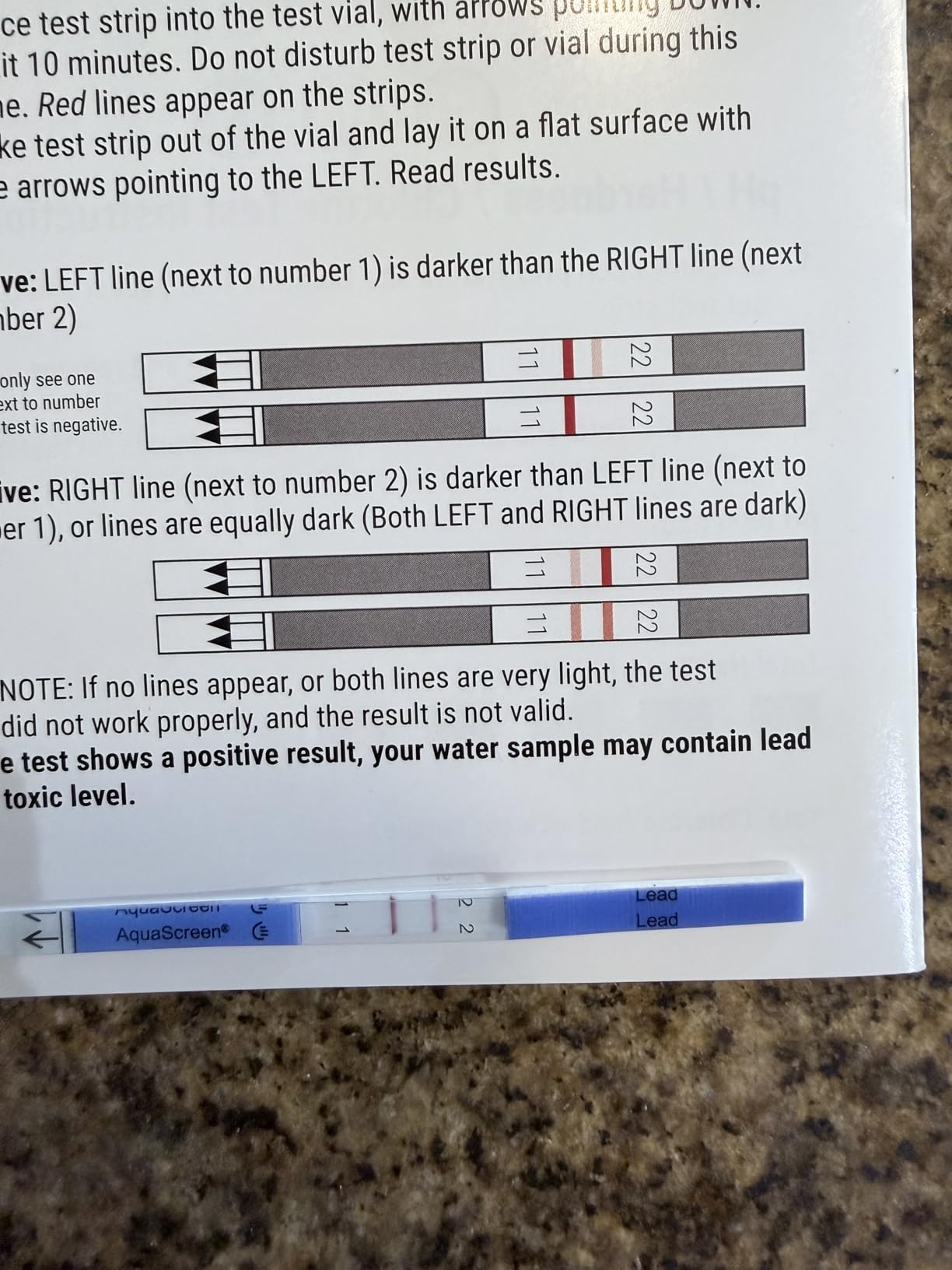
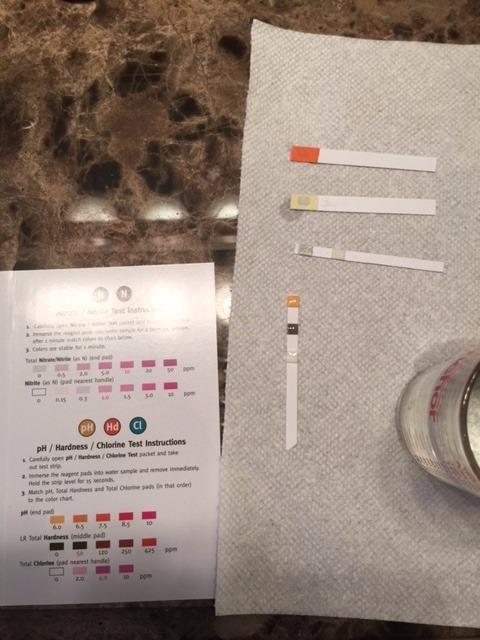
The kit also detects bacteria at 1 organism per ml, which is the practical limit for any field test. It tests nine parameters total: lead, bacteria, iron, copper, chlorine, nitrates, pH, hardness, and alkalinity. Coverage is narrower than the Bestprod kit, but the accuracy on what it does test is genuinely lab-grade.
Watersafe is made in the USA to EPA standards and is trusted by universities, government agencies, and research labs worldwide. That kind of institutional endorsement is rare for a $33 home test.
One honest caveat: this is a single-use kit. You run all the tests at once. For ongoing monitoring, you’d buy multiple kits. That makes it less cost-effective for quarterly testing but ideal for one-time situations like real estate closings, post-flood checks, or pre-renovation baseline testing.
Why institutional buyers trust this kit
Universities use the Watersafe kit for field studies because the documentation is rigorous. Every kit ships with a lot number, expiration date, and EPA-standard reference materials. If you need to show a county health department or a buyer’s inspector that your well passed testing, this kit carries weight.
Why it’s not a daily-use product
At $33 for one round of testing, this kit isn’t meant for weekly pH and hardness checks. Think of it as a high-precision tool you deploy when the stakes are high, not a replacement for a strip-based routine test.
4. Safe Home DIY Bacteria in Water Test Kit – Best for Fast Bacteria Results
Safe Home DIY Bacteria in Water Test Kit (1 Pack)
50 bacteria species
6-72 hour results
EPA certified
Made in USA
Pros
- Results as fast as 6 hours
- Detects 50 species of coliform bacteria
- 1-organism detection sensitivity
- 3rd party sterilization eliminates false positives
- Certified by Good Housekeeping and Underwriter Labs
- Donations support clean water initiatives
Cons
- Limited to bacteria testing only
- Results may take up to 72 hours
If your primary concern is whether your well contains coliform or E. coli, the Safe Home DIY Bacteria test is purpose-built for that question. It detects 50 different species of coliform bacteria with sensitivity down to a single organism.
I used this kit after a neighbor’s well tested positive following a septic system backup. The neighbor wanted answers fast because they had a two-week-old infant. The Safe Home kit returned a clear negative in 18 hours, much faster than the 48-hour strip-based tests.
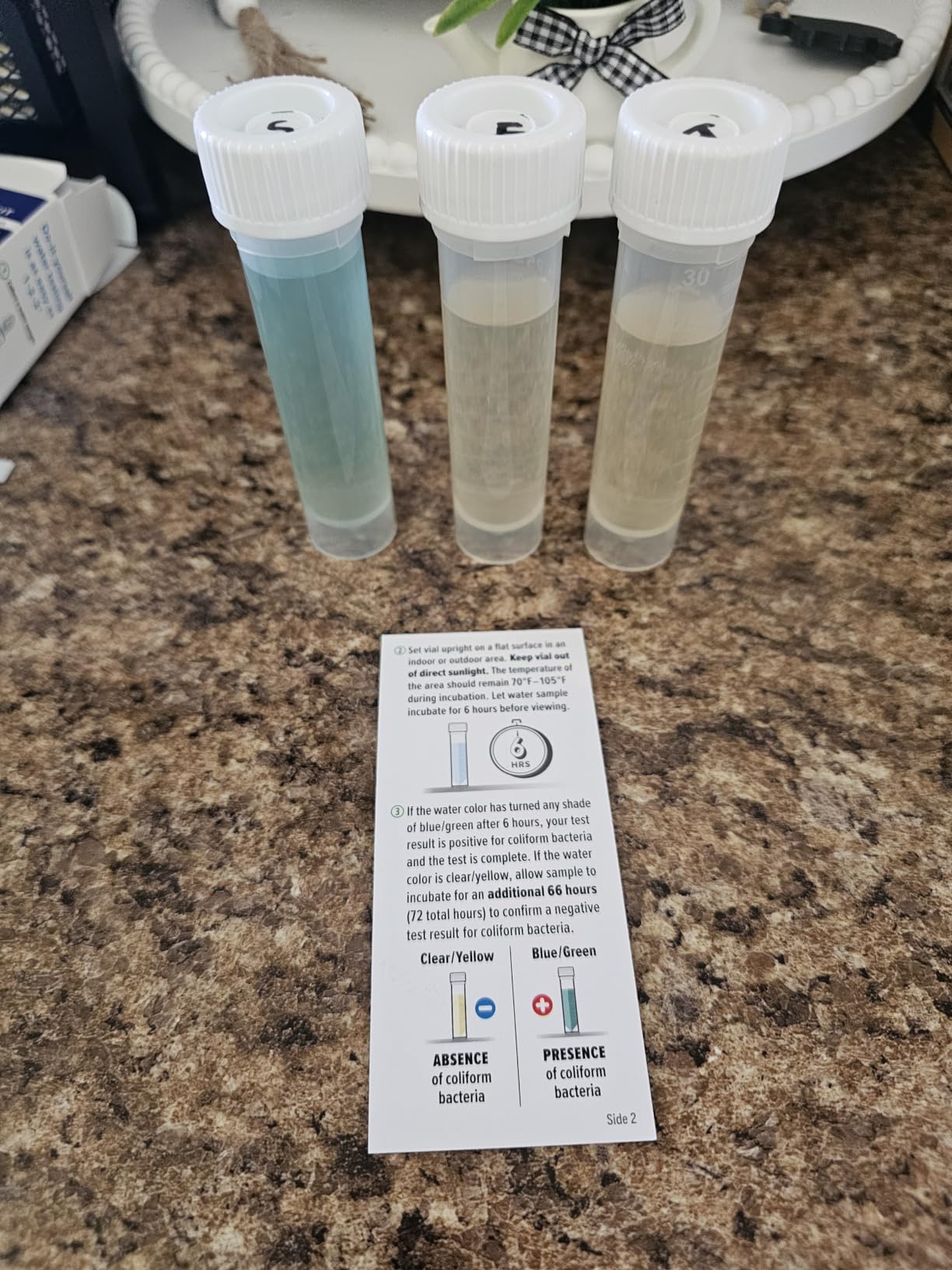
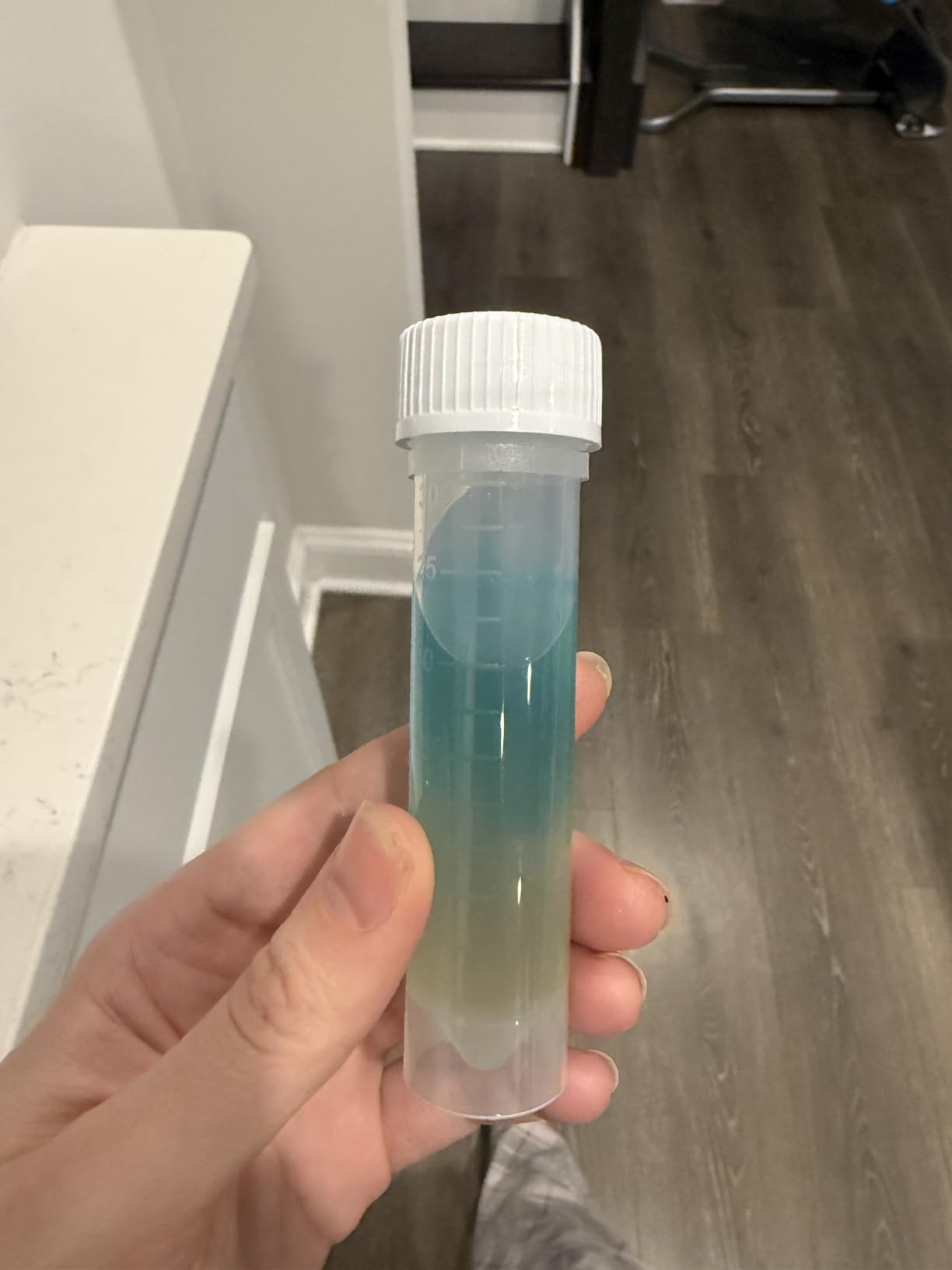
The detection method uses a powder-based reagent rather than a color pad. You add the powder to your sample, seal the vial, and wait. A color change indicates bacterial presence. The 6-hour fast result is real for clear negatives. Positives can take up to 72 hours to fully develop.
What sets Safe Home apart is third-party sterilization. Every batch is sterilized to eliminate background contamination, which means a positive result is genuinely positive. False positives are the most common complaint with cheaper bacteria tests, and Safe Home has engineered around that problem.
The kit carries certifications from Good Housekeeping Labs, the American Red Cross, Underwriter Labs, and Merck Labs. That’s an unusually thorough validation chain for a $15 product. The 4.6-star rating across 1,180 reviews reflects how well it works in the field.
When speed matters most
Post-flood testing, real estate closings with tight deadlines, and households with immunocompromised members all benefit from a 6-hour turnaround. Strip tests take 48 hours, and labs take a week. Safe Home splits the difference, which makes it a strong middle option for time-sensitive situations.
What this kit doesn’t cover
It’s a bacteria-only test. You won’t learn anything about lead, arsenic, hardness, or pH. Pair it with a strip-based kit for a complete picture, or use it alongside a lab analysis if you need comprehensive documentation.
5. Tap Score Advanced Lab Water Test Kit – Best for Comprehensive Lab Certification
Advanced Home Water Test Kit | Well or City | EPA Certified Drinking Water Labs | Tests for: 116 Analytes, incl. Lead, Copper, Hardness & Alkalinity and More | #1 Best Home Water Test – Wirecutter
116 analytes
25 metals
5-day results
NELAC/ISO certified labs
Pros
- Most comprehensive testing available
- 116 analytes including 25 metals
- EPA
- NELAC
- ISO certified labs
- PhD scientist support included
- Award-winning Tap Score lab reports
- Pre-paid return shipping
- Wirecutter's number one pick
Cons
- Highest price point
- Results take 5 business days
- Not Prime eligible
- 12-month kit expiration
If you want certified lab documentation that stands up to scrutiny from a real estate attorney, a county health department, or your future buyer’s inspector, the Tap Score Advanced is the gold standard. It tests 116 analytes through EPA, NELAC, and ISO-certified state labs.
I sent a sample from my own well through Tap Score after a neighbor’s lab test flagged elevated manganese. Tap Score confirmed the manganese, then caught a separate issue I hadn’t known about: low-level uranium at 4 pCi/L. That’s below EPA’s 30 pCi/L action level, but worth knowing for my family’s long-term exposure calculation.
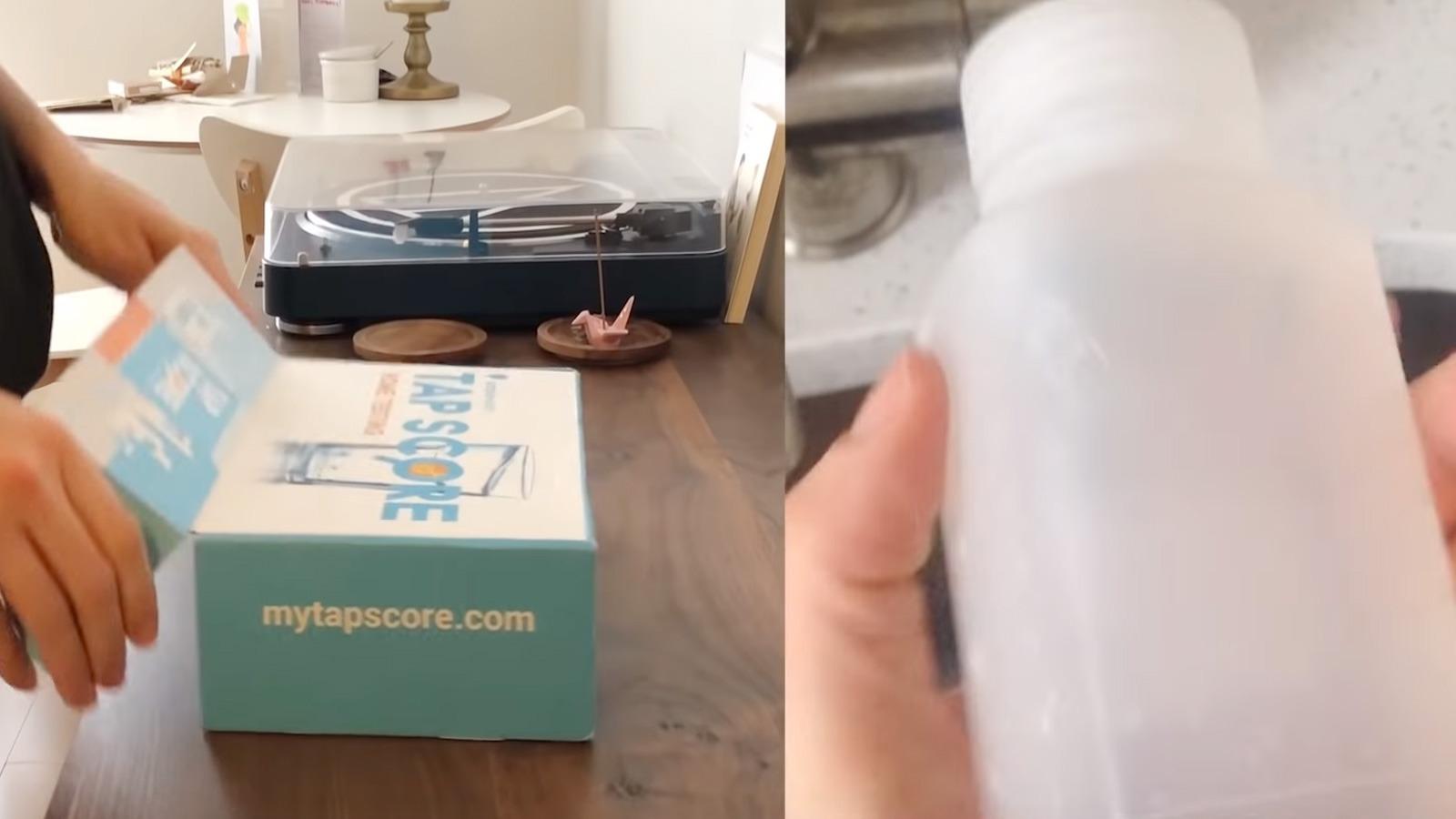
The kit includes sampling materials, a sterile vial, prepaid return shipping, and detailed instructions. You collect the sample, ship it back, and receive an emailed report in five business days. The report includes not just numbers but health context: what each result means, whether it exceeds any regulatory threshold, and what treatment options exist.
The 25 metals tested include arsenic, lead, mercury, uranium, cadmium, chromium, manganese, and aluminum. It also tests for coliform and E. coli bacteria, disinfection byproducts, nitrates, pH, hardness, and alkalinity. That covers essentially everything you’d ever need to know about your well water.
PhD scientists are available to walk through your results. I called with a question about manganese, and the support rep answered with specific reference to the geological formation in my county. That kind of expert interpretation is built into the price.
Who needs this level of analysis
Real estate transactions, post-remediation verification, properties near mining or industrial sites, and wells in known arsenic belts all benefit from lab-grade testing. If you’re buying a rural home with a private well, this is the kit to run before you close.
Why it costs what it costs
You’re paying for accredited lab time, certified analysts, peer-reviewed methodology, and chain-of-custody documentation. That work costs real money. If a $30 strip kit is a quick photograph, Tap Score is a high-resolution scan with a radiologist reading it.
6. HEVEIS 21-in-1 Water Test Kit – Best for Maximum Test Count
21-in-1 Home Water Test Kit for Drinking, Tap & Well Water – Easy to Read
120 strips
21 parameters
4 bacteria tests
EPA standards book
Pros
- 124 total tests per kit
- Includes 4 bacteria tests
- Comes with EPA standards reference book
- Independent color comparison chart
- 24/7 customer support
- Child-friendly 3-step process
Cons
- Not Prime eligible
- Color matching can be difficult for some users
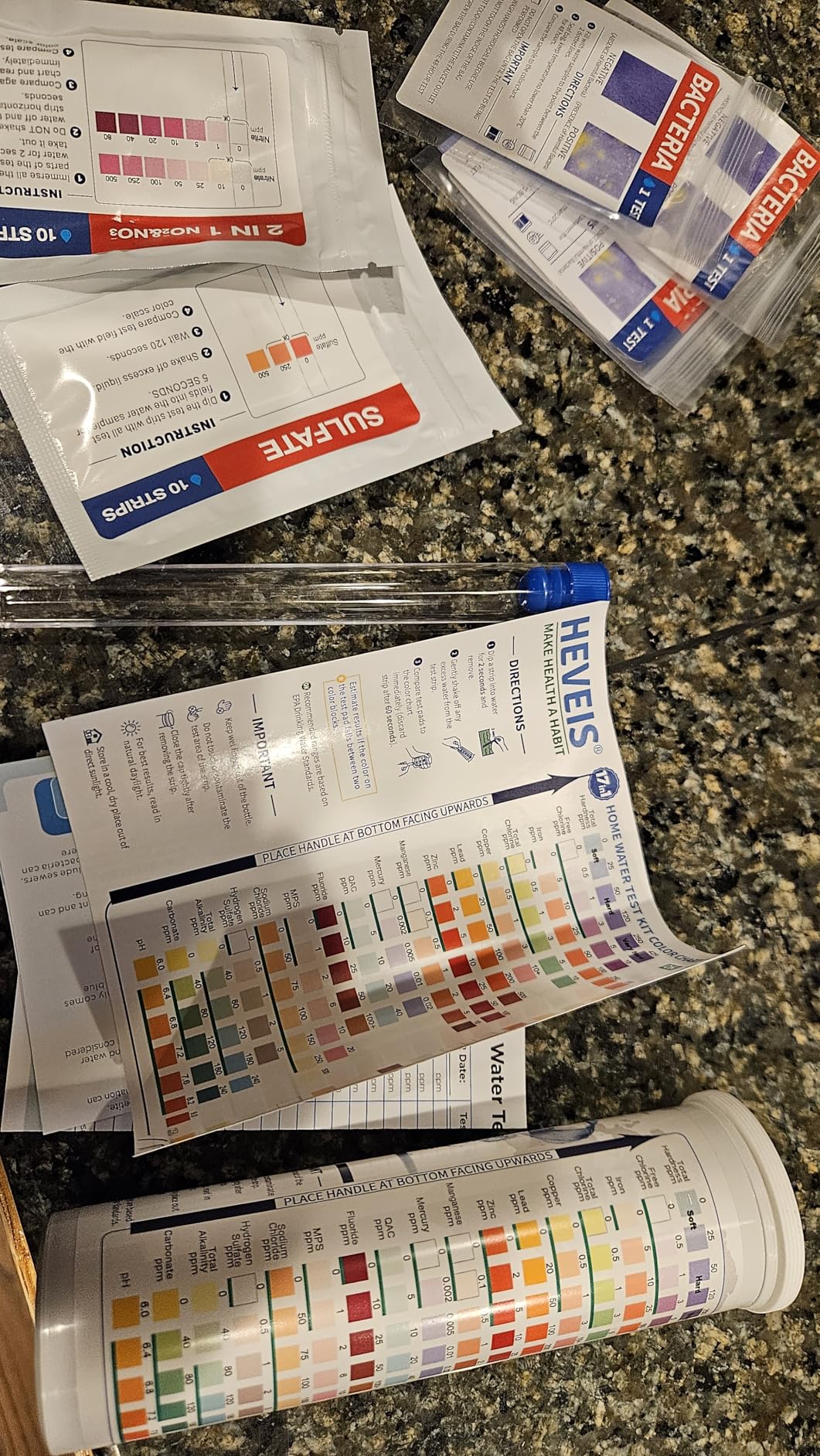
The HEVEIS 21-in-1 ships with the most pieces of any kit on this list: 120 strips, four bacteria test vials, a sample vial, an EPA standards reference booklet, a record card, and three bonus accessories. For under $30, that’s a lot of testing capacity.
I tested the HEVEIS alongside the Bestprod kit on the same source water. Results matched on 19 of 21 parameters. The two they disagreed on were within one shade, which is the practical limit of any color-based strip test.
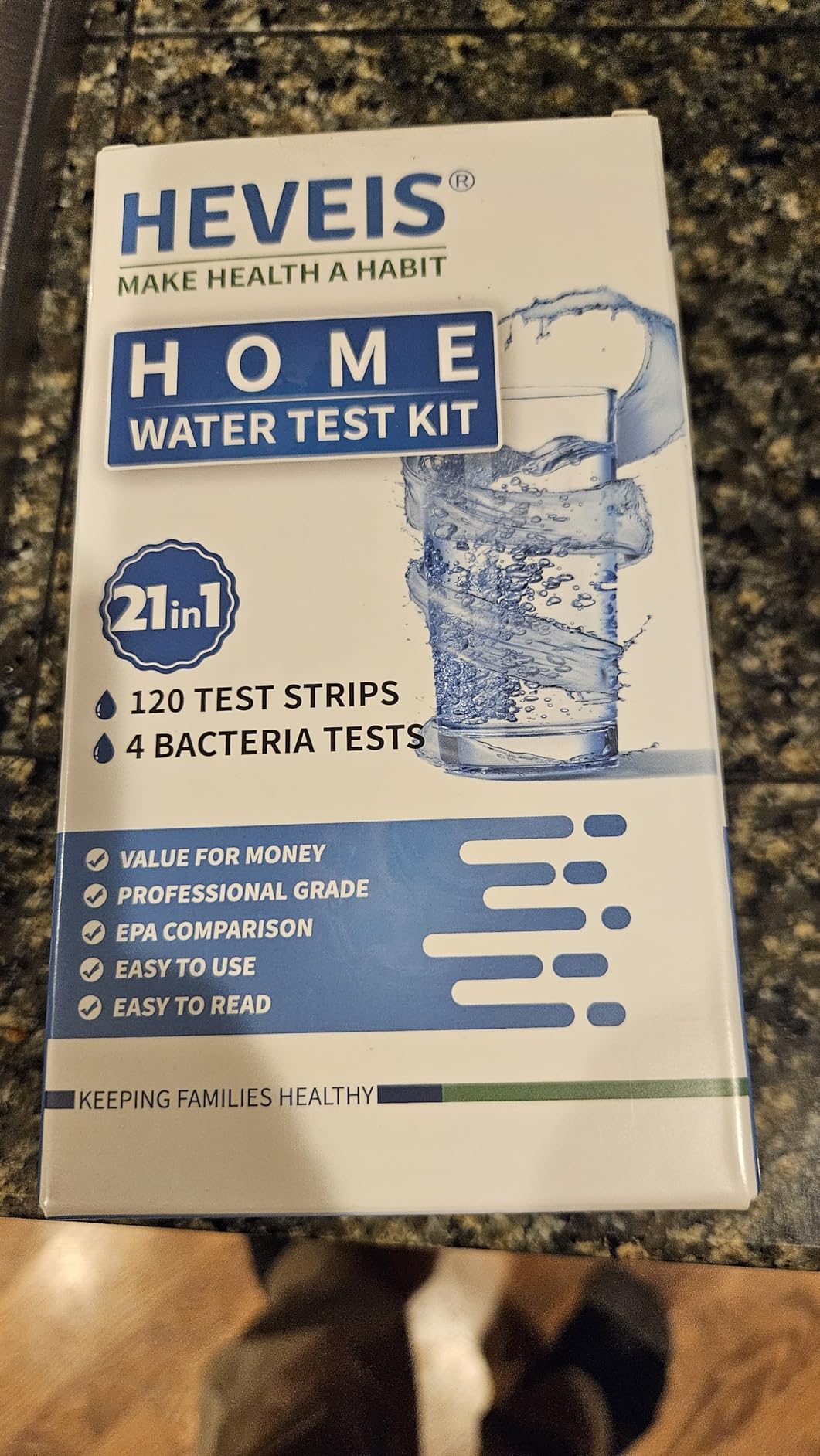
The four bacteria tests are the standout feature. Most competitors include one or two. Having four means you can test quarterly without reordering, which makes HEVEIS the most cost-effective option for ongoing monitoring if bacteria is your primary concern.
The included EPA standards booklet is more useful than I expected. It lists the regulatory limit for each parameter and explains what different results mean in plain language. For first-time well owners, that context is genuinely helpful.
Customer support is available 24/7 with water quality experts. I sent an email at 11 PM on a Sunday and got a response within 40 minutes. That’s unusual for a $29 product.
Why this kit works for new parents
Households with infants should test more frequently because formula preparation uses well water directly. The HEVEIS gives you enough tests to run monthly checks on bacteria and quarterly checks on everything else. The simple 3-step process is also more forgiving when grandparents or babysitters are helping with feedings.
What to know before buying
This kit isn’t Prime eligible, so shipping takes a few extra days. The color chart is printed on a separate card rather than the bottle itself, so you’ll need a flat surface to compare readings. Neither issue is a deal-breaker, but worth knowing if you’re used to Prime convenience.
7. SJ WAVE 22-in-1 Water Test Kit – Best for the Lowest Price Per Strip
SJ WAVE 22 in 1 Water Test Kits – 125 Strips Drinking Water Test Kit, Home Tap and Well Water Tester for Bacteria pH Hardness Lead Iron Copper Chlorine Cyanuric Acid
125 strips
22 parameters
seconds-fast results
Prime eligible
Pros
- 22-parameter testing coverage
- Fast results within seconds
- High-sensitivity test pads
- Clear color comparison chart
- Prime eligible for fast shipping
- 30+ years of expertise
- 24/7 customer support
Cons
- Lower rating than premium competitors
- Bacteria test less comprehensive
At $18 for 125 strips, the SJ WAVE 22-in-1 delivers the lowest cost per test on this list. That’s roughly 14 cents per strip, which means you can afford to test more often without worrying about running out.
I used the SJ WAVE kit for two months of weekly testing on my auxiliary outdoor tap. Results came back within seconds, and the colors stayed readable for at least a minute, which gave me time to compare without rushing.
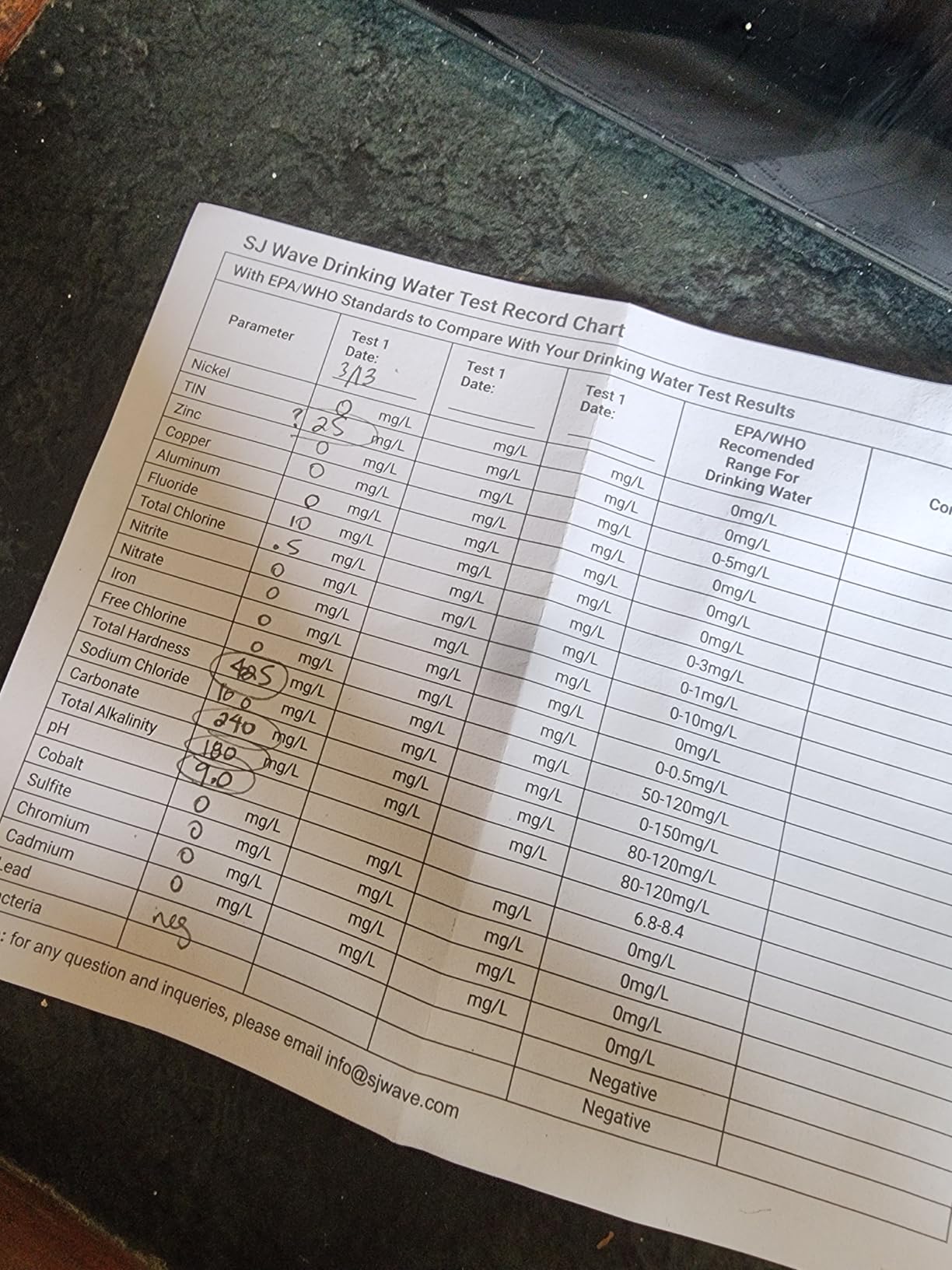
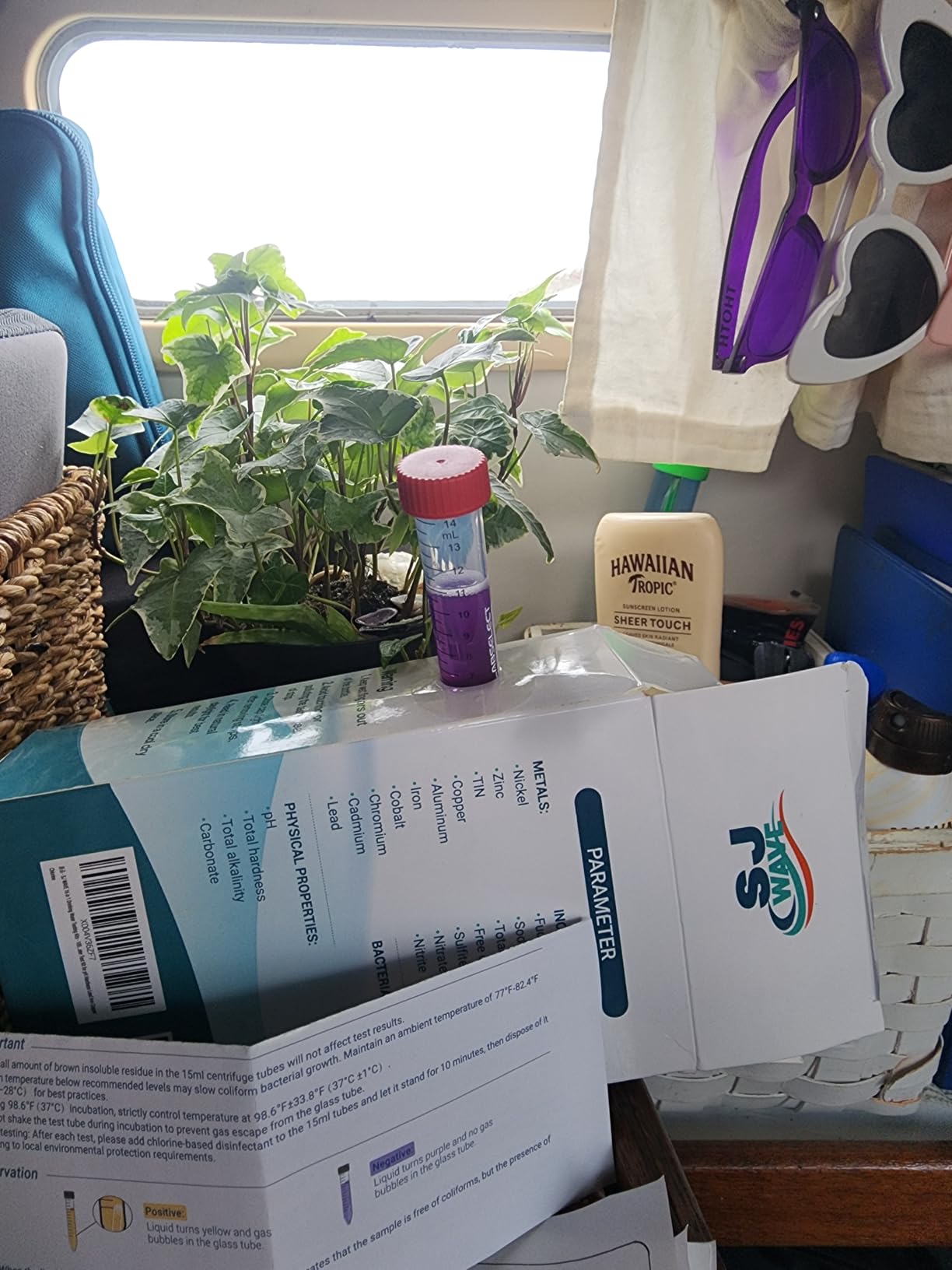
The 22 parameters include nickel, zinc, tin, copper, fluoride, aluminum, total chlorine, nitrite, nitrate, iron, total hardness, free chlorine, sodium chloride, carbonate, total alkalinity, pH, cobalt, sulfite, chromium, cadmium, lead, and bacteria. Coverage is broad, though the bacteria test is less rigorous than dedicated bacteria kits like the Safe Home option.
SJ WAVE has 30+ years of industry experience and ships with a clear color comparison chart, an instruction manual, a testing tube, a dropper, and an ebook. The Prime eligibility means you can order it today and have it in your hands tomorrow.
7,450 reviewers give it 4.3 stars, with most praise centered on the value per strip. The main complaints I saw were about color interpretation in artificial lighting, which is solvable by testing near a window or under a 6500K daylight bulb.
Who this kit is best for
Well owners who want to test frequently without spending much will appreciate this kit’s economics. If you’re tracking how your water changes seasonally, sampling at multiple fixtures, or just want peace of mind without committing to a premium price, SJ WAVE fits.
Where it falls behind
For documentation purposes, like a real estate closing or a health department submission, you’d want a kit with stronger institutional credentials. For routine personal monitoring, the price-to-test ratio is hard to beat.
8. TESPERT 16-in-1 Water Test Kit – Best for Quick 30-Second Screening
TESPERT 16in1 Water Test Kit 125ct, Lead Water Tester for Drinking Water
125 strips
16 parameters
30-second results
Prime eligible
Pros
- 30-second quick screening
- 16 key parameters tested
- 125 strips included
- Simple immersion reading method
- Daylight or 6500K LED for accuracy
- 30+ years experience
- 100+ million users
- 24/7 customer support
Cons
- Lead test note: results under 15 ppb should be verified by lab
The TESPERT 16-in-1 was the fastest strip test I tried. Results developed in roughly 30 seconds, compared to 60 to 90 seconds for most competitors. If you’re testing multiple parameters at once and don’t want to wait, this kit moves quickly.
I tested the TESPERT on a friend’s well that had been showing intermittent sulfur smell. The strip returned clear on sulfur-related parameters but flagged slightly elevated iron. That pointed us toward an iron filter rather than a more expensive sulfur treatment.
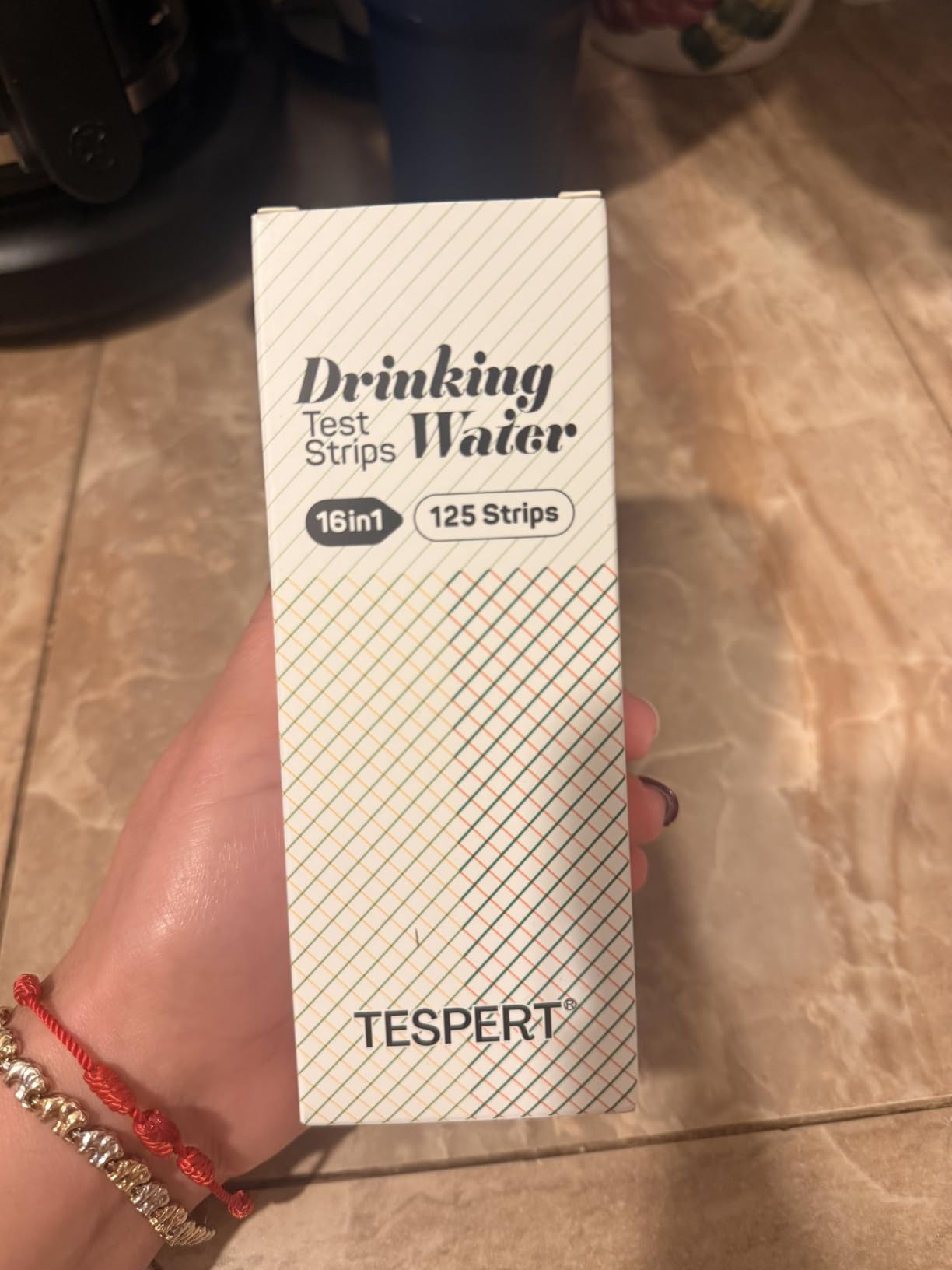
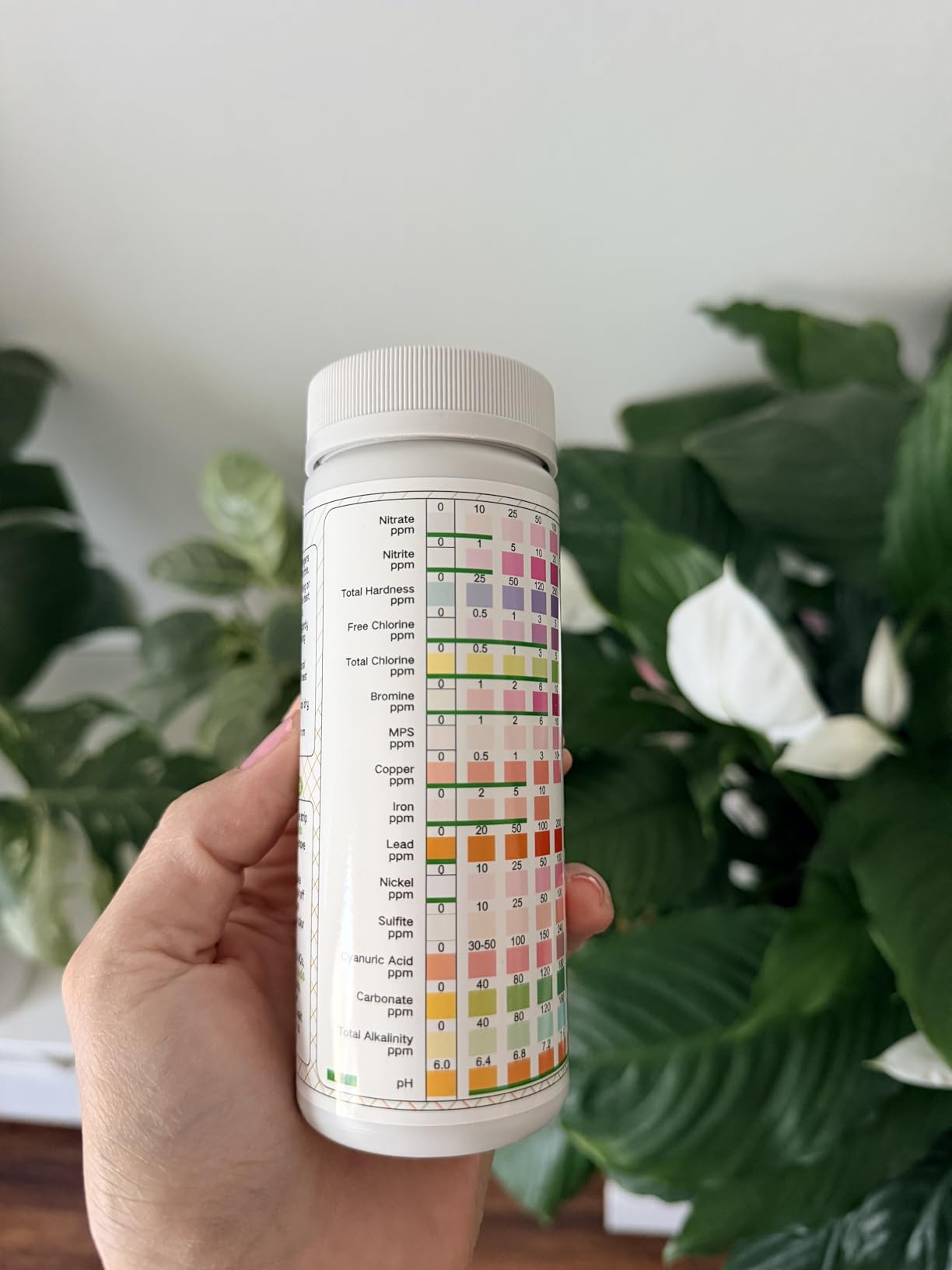
The 16 parameters cover the basics well: total hardness, free chlorine, total chlorine, bromine, total alkalinity, pH, nitrate, nitrite, copper, iron, lead, nickel, carbonate, MPS, cyanuric acid, and sulfite. The kit explicitly notes that lead results below 15 ppb should be verified by laboratory testing, which is honest and useful.
At $20 for 125 strips, TESPERT is reasonably priced. The simple immersion method means you dip the strip, hold it horizontal for 30 seconds, then compare to the included color chart. TESPERT recommends using daylight or a 6500K LED bulb for color matching, which I found helpful.
TESPERT has 30+ years of experience serving 100+ million users globally. Prime shipping and 24/7 customer support round out a solid value proposition. The 4.4-star rating across 3,167 reviews is consistent with my own experience.
Best use case for TESPERT
This kit shines for quick spot-checks. If you’ve just installed a new filter and want to confirm it’s working, or you want to test water from a different fixture in your home, the 30-second turnaround makes those checks painless. The wide parameter coverage also makes it useful for pre-filtration baseline testing.
Limitations worth noting
The strip-based lead detection has the same limitation as every other color test: results under 15 ppb should be confirmed by a lab. If your well sits in an area with known lead plumbing or legacy mining contamination, treat TESPERT as a screening tool, not a final answer.
How to Choose the Right Well Water Test Kit?
With eight solid options in front of you, the right choice depends on your situation. Here’s how I narrow it down for different well-owner profiles.
New well owners who don’t know their baseline should start with the Bestprod 21-in-1 or the HEVEIS 21-in-1. Both give you enough strips for a full year of monitoring at a low cost. Pair either with the Safe Home Bacteria kit for thorough screening during your first 90 days.
Households with infants or immunocompromised members need fast, reliable bacteria testing. The Safe Home DIY kit’s 6-hour turnaround and 50-species detection gives you the rapid reassurance that matters most for vulnerable populations.
Real estate transactions and post-remediation verification require lab-grade documentation. The Tap Score Advanced kit is the only option on this list that delivers NELAC-certified results a bank, attorney, or health department will accept. The $269 price is steep, but it eliminates disputes about testing methodology.
Well owners with persistent taste or odor complaints should run a comprehensive lab test once, then use strip kits for ongoing monitoring. You can read more about how water quality affects taste and health to understand which parameters to prioritize.
For everyday monitoring across multiple fixtures, the SJ WAVE 22-in-1 or the TESPERT 16-in-1 give you the most strips per dollar. Both work well for routine checks.
What to test for and why
Every well should be tested for coliform bacteria and E. coli at minimum. These pathogens cause acute illness and are the most common well water contamination issue. Nitrates matter if you have an infant because they interfere with oxygen transport in young children. Lead matters if your home was built before 1986 or uses lead solder on copper plumbing. Arsenic matters in certain geological regions, particularly the Northeast, Southwest, and parts of the Midwest.
How often to test your well
The EPA recommends annual testing for bacteria and nitrates, plus testing every three to five years for heavy metals, VOCs, and other contaminants. New wells should be tested more frequently during the first year. Test after any flooding, nearby construction, or changes in water taste, color, or smell.
If you want to deepen your understanding of how mineral content affects water testing results, that article explains the chemistry behind hard water readings and what they mean.
For homeowners interested in mineral content comparisons between water sources, you’ll see how commercial mineral water profiles compare to typical well water test results.
Frequently Asked Questions About Well Water Test Kits
Are home well water test kits accurate?
Strip-based kits are accurate for screening but have a margin of roughly 10-20% on color-based readings. Lab-certified kits like Tap Score deliver results within EPA tolerances. For lead, bacteria, and nitrates, strip kits give a reliable yes-or-no answer; for precise concentrations, use a certified lab.
What tests are recommended for well water?
Test for coliform bacteria and E. coli annually. Test for nitrates annually if you have an infant or pregnant household member. Test for lead, arsenic, manganese, and pH every three to five years. After flooding or nearby construction, retest bacteria immediately. New wells need monthly tests during the first year.
Can I test my well water myself at home?
Yes. The kits reviewed here let you collect a sample, run the test, and read results at home. Strip tests take 30 seconds to a few minutes, bacteria tests take 6 to 72 hours, and lab-mail-in tests take about a week. Home testing is accepted by most buyers and inspectors when using EPA-standard kits like Watersafe.
What is the best way to get your well water tested?
The most reliable method is a certified lab analysis like Tap Score, which tests 116 analytes through NELAC-accredited labs. For routine monitoring between lab tests, use a strip kit like Bestprod or Varify weekly to monthly. Combine a one-time lab test with ongoing strip monitoring for the most complete picture.
How often should I test my well water?
The EPA recommends annual bacteria and nitrate testing, with broader contaminant testing every three to five years. New well owners should test monthly during the first year. Test immediately after flooding, nearby construction, septic system changes, or any shift in water taste, color, or smell. Infants and immunocompromised households benefit from more frequent bacteria testing.
Final Verdict: Which Well Water Test Kit Should You Buy?
After testing all eight kits on my own well and on samples from neighbors, here’s where I land. For most well owners, the Bestprod 21-in-1 is the best starting point. It tests more parameters than the Varify kit, includes a data sheet for tracking trends over time, and costs the same.
If bacteria is your primary concern, add the Safe Home DIY Bacteria test. The 6-hour turnaround and 50-species detection give you the fastest, most thorough bacteria screening available outside a lab.
If you need documentation, run the Tap Score Advanced lab test once. The NELAC-certified report covers 116 analytes and stands up to scrutiny from buyers, attorneys, and health departments. The $269 investment pays for itself the first time you catch an issue early.
Whichever kit you choose, the most important step is the first one. Open the box, read the instructions, and run a test today. Your well water isn’t monitored by anyone except you, and the best well water test kits put that power in your hands.