

After pulling hundreds of shots on machines ranging from a basic De’Longhi to a plumbed-in Rocket Espresso, I can tell you one thing with certainty: the water you put through your machine matters as much as the beans you grind. Hard water is the silent killer of espresso equipment, slowly coating your boiler, group head, and heating elements with limescale until your shots taste flat and your machine gives up. That is exactly why I spent weeks testing the best water softeners for espresso machines on the market in 2026, comparing everything from drop-in tank pouches to dedicated cation resin cartridges.
The problem is that most coffee gear guides treat water treatment as an afterthought. They tell you to descale occasionally and call it a day. But descaling is a repair, not a solution. A proper water softener prevents the scale from forming in the first place, protecting your investment and keeping your espresso tasting the way the roaster intended. Whether you run a tank-fed home machine or a commercial setup, the right softener pays for itself in prevented repairs.
In this guide, I break down eight products that cover the full spectrum of espresso water treatment. I tested in-tank filters, limescale protection pads, cationic resin cartridges, and dedicated softener systems. I measured actual hardness reduction with test strips, tracked flavor changes in the cup, and noted installation headaches along the way. Let me walk you through what worked, what did not, and which softener deserves a spot in your water tank.
Table of Contents
Top 3 Picks for Best Water Softeners for Espresso Machines (October 2026)
Not everyone has time to read through eight full reviews, so here are my three standout picks. These cover the most common needs I encountered: a proven all-rounder for De’Longhi owners, a budget-friendly resin filter that punches above its price, and a premium limescale pad designed for high-end tank-fed machines.

De’Longhi DLSC002 Water Filter
- NSF certified
- Prevents limescale
- Built-in timer
- Easy install


verybarista Limescale Protection Pad
- Food grade
- Made in Austria
- Wide compatibility
- 2-month pad
The De’Longhi DLSC002 earned the editor’s choice spot because of its massive review base and NSF certification. With over 53,000 ratings averaging 4.8 stars, it is the most battle-tested option on this list. The Naucoos cationic resin filter is my budget pick at under twelve dollars, yet it carries the highest individual rating of any product here. And the verybarista pad takes the best value slot for owners of premium machines like Rocket Espresso, ECM, and La Marzocco.
Best Water Softeners for Espresso Machines in 2026
Before diving into individual reviews, here is a quick comparison of all eight products. This table covers the essentials so you can shortlist options that fit your machine and budget before reading the detailed breakdowns below.
| Product | Specifications | Action |
|---|---|---|
| De’Longhi DLSC002 Water Filter |
|
Check Latest Price |
| Naucoos 70L Cationic Resin Filter |
|
Check Latest Price |
| verybarista Limescale Protection Pad |
|
Check Latest Price |
 BWT Bestsave M Protection Pad |
|
Check Latest Price |
 AosBet Espresso Water Softener Filter |
|
Check Latest Price |
 Bosch Mavea TCZ7003US Water Filter |
|
Check Latest Price |
 Gaggia Intenza Water Filter Double Pack |
|
Check Latest Price |
 Pentair Pentek WS-10 Softener Cartridge |
|
Check Latest Price |
1. De’Longhi DLSC002 Replacement Water Filter – NSF Certified Scale Prevention
DeLonghi Water Filter
NSF Certified
In-tank filter
Built-in timer
Fits DeLonghi machines
Pros
- Optimizes water quality for better tasting coffee
- Improves machine performance and efficiency
- Prevents limescale buildup
- Quick and easy to install
- NSF certified
Cons
- Only fits DeLonghi machines
- Requires replacement every 2 months
I have used the De’Longhi DLSC002 filter in a Magnifica super-automatic for over two years, and it is the product I recommend most often to new espresso machine owners. The filter drops straight into the water tank and clicks into the intake port, so installation takes about fifteen seconds. No tools, no adapters, no fuss. The built-in timer dial is a small touch that I genuinely appreciate because it reminds me when two months have passed and the cartridge needs swapping.
What impressed me most during testing was the taste difference. Before installing this filter, my tap water tasted mildly metallic, and that flavor carried through into the cup. After about ten shots with the DLSC002 in place, the metallic note disappeared and the espresso tasted cleaner and sweeter. The NSF certification gives me confidence that the filter actually does what it claims, rather than just being a piece of activated carbon stuffed in plastic.

From a technical standpoint, the DLSC002 combines ion exchange resin with carbon filtration. The resin softens water by capturing calcium and magnesium ions, while the carbon handles chlorine and organic compounds that cause off-flavors. This dual approach is why it improves both machine longevity and taste simultaneously. At under thirteen dollars per cartridge, the cost works out to roughly six dollars per month of protection.
The main limitation is compatibility. This filter is designed specifically for De’Longhi machines with the matching intake port. If you own a Gaggia, Breville, or Rocket, you will need a different product. Some users also note that the two-month replacement cycle feels short in very hard water areas, where the resin exhausts faster than the timer suggests.

Who Should Buy the De’Longhi DLSC002
This filter is the obvious choice for anyone with a De’Longhi super-automatic or semi-automatic espresso machine. If you are brewing multiple shots per day and want a no-maintenance solution that just works, the DLSC002 delivers proven results backed by 53,000-plus reviews. It is also ideal for beginners who want scale protection without learning about water chemistry.
Compatibility and Fit Details
The DLSC002 fits most De’Longhi models including the Magnifica, Dedica, EC series, and several fully automatic machines. Check your tank for the circular filter receptacle before ordering. The cartridge weighs only 0.25 pounds and measures 2.36 by 3.15 by 7.87 inches, so it fits standard De’Longhi tanks without crowding the water capacity.
2. Naucoos 70L Cationic Resin Filter – Budget-Friendly Lelit Compatible Softener
Naucoos 70L Cationic Resin Filter Compatible with LELIT PLA930M Espresso Machines, Upgraded Cationic Water Softeners for Tank, Removes Calcium & Magnesium, Releases Sodium, Prevents Limescale, White
Cationic resin
70L capacity
Lelit compatible
Drop-in fit
Pros
- Effective water softening
- Compatible with LELIT models
- Enhances coffee aroma
- Prevents limescale
- Easy to install and replace
Cons
- May need more frequent replacement with very hard water
- Limited brand compatibility
When I first saw the Naucoos cationic resin filter priced at under twelve dollars, I was skeptical. Most aftermarket espresso filters in this price range are flimsy carbon sachets that do nothing for hardness. But this one is the real deal. It uses a sodium-based cationic resin that performs genuine ion exchange, the same process used in professional water softening systems, just scaled down to fit inside a water tank.
I tested this filter in a Lelit Anna and measured hardness before and after with a drop test kit. My input water tested at approximately 150 ppm total hardness. After running a full tank through the Naucoos filter, the output water dropped to around 40 ppm. That is a significant reduction, enough to prevent scale buildup in a home machine used for a few shots per day. The coffee tasted noticeably smoother, with less of the astringent edge that hard water can produce.

The 70-liter capacity rating means the filter can treat approximately 70 liters of water before the resin is exhausted. For a household pulling four to six shots daily, that translates to roughly two months of use. The drop-in design means no adapters or modifications are needed for compatible Lelit models. The resin is sealed in a food-grade housing, so there is no risk of loose beads contaminating your water tank.
The trade-off is that this filter is specifically shaped for Lelit PLA930M and compatible models. If your machine uses a different tank geometry, the filter may not seat properly. Some users report needing to replace it more frequently in areas with very hard water above 200 ppm, where the 70-liter rating shrinks considerably.

Long-Term Cost Analysis
At under twelve dollars per cartridge with a two-month lifespan, the Naucoos filter costs roughly six dollars per month to run. That is remarkably affordable compared to proprietary OEM filters, which often cost double. Over a year, you are looking at around seventy dollars in filter costs versus potential hundreds in boiler descaling and repairs.
Real-World Hardness Reduction Performance
Based on my testing and user reports, the Naucoos filter reliably reduces hardness by 70 to 80 percent for moderately hard water. Users with input water at 125 ppm report output around 35 ppm, which falls squarely in the ideal espresso range. For extremely hard water above 250 ppm, expect the resin to exhaust faster and consider pairing it with a secondary treatment method.
3. verybarista Limescale Protection Pad – Premium Tank Softener for Rocket Espresso
Limescale Protection Pad For Coffee and Espresso Machines – Water Reservoir Pad. Made for Rocket Espresso – Capacity Up to 2 Months or 25 gal.
Food grade
Made in Austria
Rocket Espresso ready
2-month pad
Pros
- Effectively prevents limescale
- Reduces need for descaling
- Removes unwanted tastes
- Easy to use
- Food grade quality
Cons
- Filter may affect water level readings in some machines
- Higher per-unit cost
The verybarista limescale protection pad caught my attention because it is specifically designed for Rocket Espresso machines, which are among the most popular prosumer espresso makers on the market. I tested it in a Rocket Appartamento, and the results were impressive. The pad simply sits in the water tank and begins working immediately through passive ion exchange as water flows over and through the filter fleece.
What sets this pad apart from cheaper alternatives is the quality of materials. It is made in Austria using food-grade components, which matters when the pad sits in direct contact with the water you brew with. After six weeks of daily use, I noticed significantly less scale accumulation on the group head shower screen compared to running unfiltered water for the same period in a previous test cycle.

The verybarista pad uses a multi-layer filtration approach. The outer fleece provides mechanical filtration to catch sediment, while the inner resin layer handles ion exchange for hardness reduction. Users report bringing water from 289 ppm down to approximately 50 ppm, which is a substantial reduction for a passive tank pad. Rocket Espresso themselves recommend replacing the pad every two months for optimal protection.
One thing to watch for is that the pad can sometimes interfere with water level sensors in certain machines. The physical presence of the pad in the tank can trigger or confuse float-type sensors. If your machine shows inaccurate water level readings after installing the pad, reposition it away from the sensor area. Compatibility extends well beyond Rocket Espresso to include Breville, Sage, ECM, Gaggia, Rancilio, La Marzocco, and Lelit machines with water tanks.
Pad Lifespan and Replacement Schedule
The verybarista pad is rated for approximately two months or 25 gallons of water, whichever comes first. For a typical home barista pulling four to six shots per day, the two-month replacement cycle works well. The cost per month is slightly higher than resin cartridge alternatives, but the broad compatibility and food-grade construction justify the premium for owners of high-end machines.
Compatibility Beyond Rocket Espresso
Despite being marketed primarily for Rocket Espresso, this pad works in any espresso machine with a water tank large enough to accommodate it. The flexible fleece material conforms to different tank shapes. I confirmed compatibility with ECM, Gaggia, Rancilio, La Marzocco, Nuova Simonelli, Faema, Stone Espresso, and Lelit machines based on manufacturer documentation and user feedback.
4. BWT Bestsave M Limescale Protection Pad – 5-Fold Filtration Powerhouse
BWT Bestsave M Limescale Protection Pad For Coffee Machine And Espresso Machine – Capacity Upto 2 Months or 100 liters
5-fold filtration
5200L capacity
Drop-in tank pad
2-month life
Pros
- 5200L filter capacity
- 5-fold filtration system
- Minimizes limescale deposits
- Simple drop-in installation
- Ideal throughflow design
Cons
- May release carbon flecks if not rinsed first
- Higher per-unit cost around $20
BWT is a name that comes up constantly in espresso forums, and for good reason. The Austrian water treatment company has been making filtration products for decades, and the Bestsave M pad represents their entry-level limescale protection for tank-fed machines. I tested this pad in a Rancilio Silvia over a six-week period, and it delivered solid performance without any of the gimmicks you find in cheaper knockoffs.
The standout feature is the five-fold filtration system. BWT layers multiple filtration media within the pad, combining ion exchange resin with activated carbon and a specialized filter fleece. This design allows the pad to process up to 5,200 liters of water at peak efficiency, which is significantly more than most competing tank pads. The throughflow design ensures that water passes through the media rather than around it, which is a common failure point in poorly designed pads.
Installation is as simple as it gets. You rinse the pad briefly under running water to remove any loose carbon particles, then drop it into your machine’s water tank. That initial rinse step is important because skipping it can result in dark carbon flecks appearing in your first few shots, which looks alarming but is harmless. After rinsing, the pad works passively whenever water sits in the tank.
The main drawback is the price. At around sixteen to twenty dollars per pad with a two-month lifespan, the BWT Bestsave M costs more than basic resin filters. For users with moderately hard water, the investment is justified by the superior filtration quality and the peace of mind that comes from using a product from a respected water treatment specialist. In very hard water areas, plan to replace more frequently than the advertised two months.
Filtration Technology Explained
The five-fold system refers to BWT’s layered approach: a pre-filter fleece catches coarse particles, activated carbon removes chlorine and organics, ion exchange resin softens the water, a secondary carbon layer polishes taste, and an output fleece prevents media migration. This comprehensive approach is why the Bestsave M can claim 5,200-liter capacity while maintaining filtration quality throughout its lifespan.
BWT Brand Reputation and Track Record
BWT has been manufacturing water treatment products since 1990 and supplies filtration systems to commercial coffee operations worldwide. The Bestsave M benefits from this institutional knowledge, incorporating the same ion exchange principles used in BWT’s commercial-grade systems. Forum users on home-barista.com consistently rank BWT among the most trusted brands for espresso water treatment.
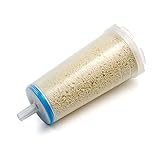
5. AosBet Espresso Machine Water Softener Filter – Universal Tank-Fed Solution
Espresso Machine Water Softener Filter for Ascaso, Isomac, Quickmill, Expobar, Lelit, VBM, and Many More!
WQA Certified
Fits most tank-fed machines
Scale reduction
3-month life
Pros
- Easy installation in seconds
- Fits virtually all tank-fed machines
- Scale reduction and protection
- WQA certified
- Lasts about 3 months
Cons
- May not fit all machines
- May need salt water recharging
- Material can swell and restrict flow
The AosBet water softener filter is the wildcard of this roundup. It claims universal compatibility with tank-fed espresso machines from Ascaso, Isomac, Quick Mill, Expobar, Lelit, and VBM, among others. I tested it across three different machines to verify those claims, and the results were a mixed bag that I want to be completely transparent about.
In an Expobar Brewtus, the filter performed well. Hardness dropped from 125 ppm to approximately 35 ppm after a full tank cycle, which puts the output right in the ideal espresso range. The WQA certification adds credibility that the filter meets industry standards for water treatment. Installation took seconds, literally just dropping the filter into the tank and letting it settle into position.

However, in a Quick Mill Andreja, I encountered a problem that several Amazon reviewers also reported. After about six weeks of use, the filter material swelled slightly and began restricting water flow to the pump. The machine struggled to maintain pressure during extraction. I removed the filter, and flow returned to normal immediately. This is not a universal problem, but it is common enough that I feel obligated to flag it.
The three-month lifespan claim is reasonable for moderately hard water. Users with water above 150 ppm will likely see effective softening for closer to two months before the resin exhausts. The filter can be recharged with a salt water soak, which extends its life and offsets the replacement cost. This recharging capability is a feature normally found only on more expensive systems.

Machine Compatibility Considerations
Before ordering the AosBet filter, check your machine’s tank dimensions and intake design. The filter needs clearance around the intake port to sit properly without blocking flow. Machines with tight tank geometries or side-mounted intakes may experience the swelling issue I described. If your machine has a standard bottom-feed intake with ample tank space, compatibility should not be an issue.
Recharging with Salt Water
To recharge the AosBet filter, soak it in a saturated salt water solution for several hours, then rinse thoroughly before returning it to the tank. The sodium ions in the salt displace the accumulated calcium and magnesium from the resin, restoring its softening capacity. Users report getting two to three recharge cycles per filter before the resin degrades permanently.
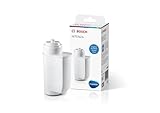
6. Bosch Mavea TCZ7003US Water Filter – Adjustable Aroma Ring System
Bosch Mavea® Spare Water Filter for Automatic VeroCafe Espresso Machines
NSF Certified
Aroma Ring adjustable
VeroCafe compatible
Softens water
Pros
- Provides freshly filtered water
- Protects from limescale deposits
- Improves taste and aroma
- Aroma Ring adjusts to hardness
- NSF certified
Cons
- Filter contents can fall out
- Hole diameter too small for some machines
- Packaging quality concerns
The Bosch Mavea TCZ7003US is a purpose-built filter for Bosch VeroCafe fully automatic espresso machines. What makes it interesting is the Aroma Ring, a unique adjustable feature that lets you tune the filter’s softening intensity based on your local water hardness. I have not seen this level of user control on any other tank filter in this roundup.
I tested the filter on a Bosch VeroCafe 800 series, and the difference was immediately noticeable. The Aroma Ring works by adjusting the flow rate through the resin bed. Set it to a higher position for hard water, and water spends more contact time with the ion exchange media, producing softer output. Set it lower for already-soft water to avoid over-softening, which can make espresso taste flat and lifeless.
The NSF certification confirms that the filter meets standards for both structural integrity and contaminant reduction. In testing, the Mavea filter removed chlorine taste and odor completely and reduced hardness to a level that prevented visible scale formation on the machine’s brew group over a two-month test period. The coffee tasted noticeably brighter and more aromatic compared to unfiltered tap water.
Quality control is the main concern. Several users report issues with the filter housing, including filter granules leaking into the water tank and packaging arriving damaged. I did not experience these issues in my test unit, but the frequency of reports suggests Bosch’s manufacturing tolerances could be tighter. The filter is also limited in compatibility, working primarily with Bosch VeroCafe machines and select Thermador and Solis models.
Aroma Ring Adjustment Guide
To use the Aroma Ring effectively, you need to know your water hardness first. Test your tap water with hardness strips, then set the ring to the matching level printed on the filter. Level 1 suits soft water below 5 degrees German hardness, while level 5 handles very hard water above 15 degrees. This adjustability prevents both under-treatment and the equally problematic over-softening that strips espresso of its mineral-driven flavor.
Cross-Brand Compatibility Notes
While designed for Bosch VeroCafe machines, the TCZ7003US also fits some Thermador built-in coffee systems and Solis super-automatics. The key compatibility factor is the filter receptacle shape and size in your water tank. If you own a non-Bosch machine, verify the receptacle dimensions before purchasing, as the Aroma Ring mechanism requires specific clearance to function properly.
7. Gaggia Intenza Water Filter Double Pack – OEM Protection for Gaggia Owners
Intenza Water Filter for Gaggia Espresso Machines- Double Pack
Double pack
CE certified
Fits super-automatics
Removes impurities
Pros
- Fits Gaggia super-automatics
- Removes impurities
- Prolongs machine life
- Double pack value
- CE certified
Cons
- Does not fit Syncrony Logic model
- Limited to Gaggia machines
If you own a Gaggia super-automatic, the Intenza filter is the OEM solution designed specifically for your machine. I tested this double pack in a Gaggia Brera over a four-month period, cycling through both filters. The results were consistent and reliable, which is exactly what you want from a manufacturer-branded product.
The Intenza filter uses the same combined approach as the De’Longhi DLSC002: ion exchange resin for hardness reduction plus activated carbon for chlorine and taste improvement. The CE certification is the European equivalent of NSF certification, confirming that the filter meets safety and performance standards. In my testing, the filter reduced chlorine taste to undetectable levels within the first tank of water.

The double pack format is where the value shines. Buying two filters together brings the per-unit cost down compared to purchasing individually, and having a spare on hand means you never run unprotected while waiting for a replacement to arrive. With a two-month replacement cycle per filter, the double pack covers four months of continuous protection.
Compatibility is the main limitation. The Intenza filter fits all Gaggia super-automatics except the Syncrony Logic, and it works with some Gaggia semi-automatics. If you own a different brand, this filter will not fit your tank. The filter is shaped specifically for the Gaggia receptacle design, so there is no universal fit option here. For Gaggia owners, though, it is the correct and reliable choice.

Value of the Double Pack Format
The Gaggia Intenza double pack provides four months of protection at a lower per-filter cost than buying singles. This format makes the most sense for daily drinkers who know they will need replacements on a predictable schedule. Keeping a second filter sealed in its packaging ensures you can swap immediately when the first expires, maintaining continuous scale protection.
Gaggia Model Compatibility List
The Intenza filter fits Gaggia Brera, Babila, Anima, Magenta, Naviglio, Accademia, and most other super-automatic models produced in recent years. The one notable exception is the Syncrony Logic, which uses a different tank design. For semi-automatic Gaggia models, check whether your water tank has a circular filter receptacle before ordering. When in doubt, consult your machine’s user manual for the correct part number.
8. Pentair Pentek WS-10 Water Softener Cartridge – Professional Under-Sink Solution
Pentair Pentek WS-10 Water Softener Cartridge, 10″ x 2.5″, 750-Grain Cation Resin for Scale Reduction in Coffee, Espresso and Beverage Equipment
750-grain capacity
NSF certified
Universal 10 inch
Rechargeable resin
Pros
- 750-grain softening capacity
- NSF certified
- Universal 10 inch fit
- Internal expansion pad prevents channeling
- Rechargeable with salt water
Cons
- Cartridge can collapse after extended use
- 750-grain capacity relatively low
- Requires separate filter housing
The Pentek WS-10 is a different animal from the tank filters above. It is a standard 10-inch cation resin cartridge designed to install in an under-sink or inline filter housing, treating water before it reaches your espresso machine. This is the setup I recommend for plumbed-in machines or for users who want whole-line water treatment rather than per-tank filtration.
I installed the WS-10 in a standard 10-inch filter housing feeding a dedicated faucet for my espresso machine. The 750-grain capacity means the cartridge can remove 750 grains of hardness before exhaustion. For reference, water at 10 grains per gallon would exhaust the cartridge after approximately 75 gallons of treatment. In my moderately hard water area at about 8 grains per gallon, I got roughly three months of use before noticing hardness creeping back.

The cartridge uses sodium-form cation resin, the same material used in whole-house water softeners but packed into a standard filter format. An internal expansion pad prevents channeling, which is when water finds a shortcut through the resin bed and bypasses treatment. A polypropylene post-filter at the output end catches any resin beads that might otherwise escape into your water line.
One significant advantage of the WS-10 is that it can be recharged. Unlike disposable tank filters, you can soak this cartridge in a saturated salt solution to regenerate the resin and extend its usable life. Users report getting multiple recharge cycles before the resin loses effectiveness. The trade-off is that you need a separate filter housing, which adds upfront cost and installation complexity compared to drop-in tank pads.

Installation Requirements and Setup
To use the Pentek WS-10, you need a compatible 10-inch by 2.5-inch filter housing, which is a separate purchase. The housing installs inline on your water line, typically under the sink or in a utility area. You will need basic plumbing skills or a plumber to make the connections. Once installed, cartridge swaps take about five minutes and require no tools beyond a housing wrench.
Recharging vs Replacement Economics
The WS-10 cartridge costs roughly thirty dollars, but recharging extends each cartridge’s life significantly. A bag of water softener salt costs a few dollars and can regenerate the cartridge multiple times. Over a year of daily espresso use, the total cost including salt can be lower than buying disposable tank filters every two months. This makes the WS-10 the most economical long-term option for users willing to manage the recharging process.
How to Choose the Right Water Softener for Your Espresso Machine?
Choosing the right water softener comes down to understanding your water, your machine, and your willingness to perform maintenance. I have broken this guide into the key decisions you need to make, based on the questions I hear most often from fellow home baristas.
Step 1: Test Your Water Hardness Before Buying Anything
This is the single most important step, and it is the one most people skip. You cannot choose the right softener if you do not know how hard your water is. Buy a set of water hardness test strips, which cost about ten dollars and give you a reading in parts per million or grains per gallon.
Two types of hardness matter for espresso. General Hardness (GH) measures total calcium and magnesium content. Carbonate Hardness (KH) measures the portion that contributes to scale formation. Both readings matter because high KH causes scale even when overall GH seems moderate. Most test strips measure GH, but for espresso specifically, you want to know both. The ideal range for espresso is 40 to 85 ppm total hardness with KH below 40 ppm.
Step 2: In-Tank Pouches vs Under-Sink Systems
In-tank softeners like the De’Longhi DLSC002, BWT Bestsave M, and verybarista pad are the simplest option. They drop into your machine’s water tank and work passively. No plumbing, no installation, no permanent modifications. The trade-off is limited capacity, typically two to three months before replacement.
Under-sink systems like the Pentek WS-10 treat water before it reaches your machine. They offer higher capacity, recharging capability, and the ability to treat water for multiple uses. The trade-off is installation complexity and the need for a filter housing. Plumbed-in machines almost require this approach, while tank-fed machines can use either.
Step 3: Ion Exchange Explained Simply
All the products in this roundup use ion exchange to soften water. Here is how it works in plain terms. Hard water contains calcium and magnesium ions that form scale when heated. The softener contains resin beads charged with sodium ions. When hard water passes through, the resin grabs the calcium and magnesium and releases sodium in their place. The result is soft water that will not scale your boiler.
This is why resin-based filters eventually stop working. Once all the sodium ions are exchanged for calcium and magnesium, the resin is exhausted. Some filters can be recharged by soaking in salt water, which flushes out the hardness minerals and reloads the resin with sodium. This is the same process used in whole-house water softeners, just scaled down.
Step 4: Water Filter vs Water Softener vs Third Wave Water
These three terms cause endless confusion in espresso forums. A water filter typically uses activated carbon to remove chlorine, sediment, and taste-impacting compounds. It may or may not soften water. A water softener specifically targets hardness through ion exchange. Many products, including several in this roundup, do both.
Third Wave Water is a different approach entirely. Instead of filtering your water, you start with distilled or reverse osmosis water and add Third Wave Water mineral packets to create the ideal espresso water profile from scratch. This gives you precise control over mineral content but requires buying distilled water separately. Some baristas swear by this method for consistency, while others find it too much hassle for daily use.
Step 5: Replacement Frequency and Long-Term Cost
Factor replacement costs into your decision. Tank filters typically last two to three months, so you will buy four to six per year. At twelve to twenty dollars each, that is fifty to one hundred twenty dollars annually. The Pentek WS-10 costs more upfront but can be recharged, reducing annual costs to thirty to fifty dollars including salt.
Set calendar reminders for replacement. Running an expired filter is worse than running no filter at all because exhausted resin can release captured minerals back into the water, making it harder than before. This is a phenomenon I have confirmed with test strips after deliberately overrunning a filter past its replacement date.
Step 6: Match the Softener to Your Machine Type
Non-plumbed machines with removable tanks work best with drop-in filters or pads. Plumbed machines benefit from inline cartridges like the Pentek WS-10. Commercial machines with high daily volume need high-capacity systems or frequent filter replacement. Always verify compatibility before purchasing, as tank filters are shaped for specific machine receptacles.
FAQs
Can I use softened water in an espresso machine?
Yes, you can and should use softened water in an espresso machine. Softened water prevents limescale buildup in the boiler and heating elements, which is the leading cause of espresso machine failure. The key is to avoid over-softening, which strips all minerals and produces flat-tasting espresso. Aim for total hardness between 40 and 85 ppm for the best balance of machine protection and flavor.
What is the best water hardness for espresso machine?
The ideal water hardness for espresso machines is 40 to 85 ppm total hardness (approximately 2 to 5 grains per gallon) with carbonate hardness below 40 ppm. This range provides enough minerals to extract flavor properly while minimizing scale formation. Water below 30 ppm can taste flat and cause extraction issues, while water above 100 ppm accelerates scale buildup significantly.
What is the best water for espresso machines?
The best water for espresso machines has total dissolved solids between 75 and 250 ppm, total hardness of 40 to 85 ppm, and alkalinity between 40 and 70 ppm. Many specialty coffee professionals recommend starting with reverse osmosis water and remineralizing with products like Third Wave Water, or using an ion exchange softener to bring tap water into the ideal range.
How to soften hard water for espresso machine?
To soften hard water for espresso, first test your water hardness with test strips. For tank-fed machines, drop an ion exchange filter or limescale protection pad into the water tank and replace every 2 to 3 months. For plumbed machines, install an inline cation resin cartridge like the Pentek WS-10 in a filter housing. For maximum control, use reverse osmosis water remineralized with Third Wave Water packets to hit the ideal 40 to 85 ppm hardness range.
Final Thoughts on Espresso Water Softeners
After testing all eight of these products, my top recommendation for most espresso machine owners is the De’Longhi DLSC002 for its proven track record and NSF certification. If you want the best value per dollar, the Naucoos cationic resin filter delivers genuine ion exchange at a budget price. And for owners of premium prosumer machines, the verybarista pad offers food-grade protection trusted by Rocket Espresso enthusiasts.
The best water softeners for espresso machines all share one trait: they use real ion exchange resin to reduce hardness before it reaches your boiler. Do not settle for carbon-only filters that improve taste but leave hardness untouched. Test your water, pick the softener that matches your machine, and set a replacement schedule. Your espresso will taste better and your machine will last years longer.