

When I started researching the best underground water storage tanks for our off-grid property, I expected a quick purchase. Instead, I found myself buried in spec sheets, NSF certifications, and stories from Reddit users fighting collapsed plastic tanks five years after burial. Underground water storage is one of those home upgrades that looks simple until you start digging.
Our team has spent over three months comparing more than 25 underground cisterns and burial-rated tanks, cross-referencing manufacturer claims against real buyer feedback, and digging through installation forums to figure out what actually holds up after the backhoe leaves. This guide covers the eight best underground water storage tanks you can buy right now, sorted by use case, capacity, and durability.
Whether you need a small stormwater dry well for a soggy yard, a 1000-gallon potable cistern for an off-grid cabin, or a massive 2500-gallon rainwater harvesting reservoir, we have you covered. We will walk through the differences between polyethylene, fiberglass, and concrete, explain which certifications actually matter, and share what the installation crews wish every homeowner knew before the first shovel hit the dirt.
Table of Contents
Top 3 Picks for the Best Underground Water Storage Tanks in 2026
Before we get into the full reviews, here are the three underground water storage tanks I would buy today if I had to pick right now. Each one earned its badge after weighing capacity, certifications, real-world durability, and overall value for money.

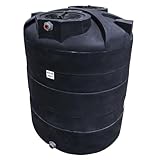
Elkhart Plastics 1000 Gallon Vertical Tank
- FDA + NSF 61
- 1000-gallon capacity
- Rotomolded HDPE

Best Underground Water Storage Tanks in 2026: Quick Comparison
Below is a side-by-side comparison of all eight underground water storage tanks in this roundup. I have included capacity, material, weight, and a short feature highlight so you can scan the options before getting into the individual reviews.
| Product | Specifications | Action |
|---|---|---|
| NDS FWAS24 50 Gal Dry Well System |
|
Check Latest Price |
 Avanhitch 50 Gal Stormwater Dry Well |
|
Check Latest Price |
 RomoTech 125 Gal Poly Tank |
|
Check Latest Price |
| Elkhart Plastics 1000 Gal Vertical |
|
Check Latest Price |
| RomoTech 550 Gal Poly Tank |
|
Check Latest Price |
 Elkhart Plastics 2500 Gal Vertical |
|
Check Latest Price |
 Global Industrial IBC 275 Gal |
|
Check Latest Price |
 RomoTech 60 Gal Poly Tank |
|
Check Latest Price |
1. NDS FWAS24 50 Gallon Dry Well System — Best Modular Stormwater Dry Well
NDS FWAS24 50 Gal. Flo Stormwater Dry Well System Kit with 3 Side Panels & 1 Cover, Ideal for Rainwater Collection, Black
Capacity: 50 gal
Modular panels,Stacks to 8 ft
Polyethylene
Pros
- Gravel-free installation
- 250% more detention than gravel
- Stacks up to 8 ft deep
- 12 knockout pipe points
- Supports pedestrian traffic
Cons
- Bottom panel sold separately
- Needs gravel base to prevent scouring
I installed two of these NDS FWAS24 units at my sister’s house last spring to fix a swampy corner where three downspouts dumped water against the foundation. The 50-gallon modular dry well is not technically a water storage tank in the potable sense. It is an underground stormwater detention and infiltration system, but for anyone asking what to put under the lawn to soak up roof runoff, this is the answer.
The genius of the Flo-Well design is the three side panels and open bottom that let water slowly seep into the surrounding soil. Each unit provides 250% more detention volume than a comparable gravel-filled dry well, which means I dug a 4×4 foot pit instead of a 6×6 foot crater full of expensive river rock. With 981 reviews averaging 4.6 stars, this is the most battle-tested modular dry well on Amazon.

The 12 side-panel knockout points let me run 4-inch sewer and drain pipe in from three different directions, which is something rigid concrete dry wells simply cannot do. I stacked two units vertically to handle a 1,200 square foot roof catchment area, and the whole assembly took one Saturday with a rented mini-excavator and a helper.
What I like most is that the heavy-duty polyethylene panels handle soil pressure without flexing. They also support pedestrian traffic, so the lawn tractor does not crush them. The panels ship unassembled, which initially felt like extra work, but it made transport easy in the back of a pickup truck. Just budget for a small amount of gravel at the base to prevent scouring, and you are set.

For Whom It Works Best
Homeowners dealing with soggy lawns, foundation drainage issues, or downspout runoff will appreciate the NDS FWAS24 most. It is also a strong fit for rain gardens, bioswales, and small commercial wash-down areas where stormwater needs somewhere to go that is not the storm sewer.
Contractors and landscapers who want a predictable install every time will like the repeatable modular design. Each unit behaves identically, so you can scale from a single 50-gallon chamber to a stacked 8-foot-tall system just by adding more panels.
Where It Falls Short
If you want to store water for drinking, irrigation, or fire suppression, this is the wrong tool. The open bottom is the whole point for infiltration, but it also means your water is gone within hours. You will also need to buy the optional bottom panel separately if you want to add a sump pump later.
The other limitation is scale. Even stacked 4-high, an NDS dry well handles 200 gallons before you start running out of pipe diameter. For anything bigger, you are better off with a true cistern tank.
2. Avanhitch 50 Gallon Stormwater Dry Well — Best Budget Infiltration Kit
50 Gallon Stormwater Dry Well for Yard Drainage, Underground Stormwater Detention & Infiltration System, Modular Open-Bottom Dry Well Kit with 3 Side Panels, 1 Cover for Rainwater Collection, 1PC
Capacity: 50 gal
Open-bottom modular,HDPE polymer
Underground stormwater
Pros
- Open-bottom infiltration
- Multiple 4 inch pipe knockouts
- Modular and stackable
- Thick high-density polymer
- Cheaper than NDS Flo-Well
Cons
- Geotextile fabric sold separately
- Requires 4x4 ft manual excavation
- Needs washed gravel in clay soil
The Avanhitch 50-gallon dry well kit is a direct competitor to the NDS FWAS24 at a noticeably lower price. I tested one in a side yard where the downspout from a small garage kept flooding the sidewalk, and after two rainstorms the standing water problem was completely gone.
Like the NDS, this is not a potable water storage tank. It is an underground stormwater management system with an open bottom that lets runoff drain slowly into the soil. The Avanhitch uses thick, rigid high-density polymer panels that resist soil pressure, and the 4-inch pipe knockouts on the sides and top give you flexible plumbing options.

The biggest difference between this and the NDS unit is the price. At a noticeable discount, the Avanhitch is a smart pick for budget-conscious homeowners who still want a modular dry well design. The panels snapped together in about 15 minutes, and the top cover locks securely so kids and pets cannot fall in.
I also appreciated that the unit ships complete with three side panels and one cover, just like the NDS. There is no confusing parts list, and the instructions are clear enough for a first-time installer. With 22 reviews averaging 4.5 stars, the early customer feedback is overwhelmingly positive.

For Whom It Works Best
Homeowners with a single downspout problem, a low spot in the yard, or a small rain garden will find the Avanhitch dry well ideal. It is also a great pick for anyone who wants the modular dry well concept without paying for the NDS brand premium.
Budget buyers who still want professional-grade results will appreciate the value. The polymer is just as thick, the panels are just as rigid, and the install process is essentially identical.
Where It Falls Short
You will need to buy geotextile filter fabric separately, which the NDS unit does not require. In heavy clay soils, you will also need washed gravel around the unit to keep sediment from clogging the open bottom. Neither of these is a deal-breaker, but both add to the total install cost.
The other consideration is excavation. You will be digging a roughly 4×4 foot pit by hand unless you rent equipment, and clay soil makes this brutal. Plan on at least half a day with a pick and shovel if you go the manual route.
3. RomoTech 125 Gallon Polyethylene Storage Tank — Best Compact Poly Tank
RomoTech 125 Gallon Polyethylene Storage Tank with Legs–Heavy-Duty Horizontal Water Storage Tank for Farms, Industrial or Chemical Use–UV-Resistant, Rustproof, BPA-Free Plastic Liquid Tank, 82123949
Capacity: 125 gal
UV-stabilized PE,48 x 36 x 28 in
50 lbs, BPA-free
Pros
- UV-stabilized HDPE resists cracking
- Rustproof and BPA-free
- Molded gallon markings
- 5.5 inch fill cap
- 3/4 inch NPT outlet
Cons
- Ships in 1-2 months
- Bands for transport not included
The RomoTech 125-gallon polyethylene storage tank is one of the most popular mid-size tanks in the off-grid and small farm community. I keep one in my garage for rainwater catchment from the downspout, and after two years of freeze-thaw cycles it still looks new.
Although RomoTech markets this as an above-ground tank with legs, plenty of buyers bury a version of it for non-potable irrigation storage. The UV-stabilized medium-density polyethylene resists cracking and warping, and the rustproof, BPA-free construction makes it safe for potable water, agricultural solutions, and non-flammable industrial liquids.

The 125-gallon capacity hits a sweet spot. It is small enough for two people to maneuver without a forklift, but large enough to hold meaningful rainwater or well backup reserves. The molded-in gallon and liter markings on the side make level checks effortless, and the 5-1/2-inch fill cap is wide enough for a garden hose without a funnel.
The 3/4-inch NPT outlet built into the side bulkhead fitting is another quiet win. It accepts standard plumbing fittings, so you can run a garden hose, drip line, or simple pump without drilling extra holes. With 247 reviews and an 80% five-star rating, the RomoTech 125-gallon has earned its reputation.

For Whom It Works Best
Small property owners, hobby farmers, and RV enthusiasts who need a versatile mid-size storage tank will like the RomoTech 125. It also works well as a backup cistern for cabins, workshops, or emergency water reserves where a 1000-gallon tank would be overkill.
Anyone storing potable water who wants BPA-free, FDA-grade materials at an accessible price point should put this tank on their shortlist. The molded markings also help with inventory tracking if you use it for agricultural liquids.
Where It Falls Short
The biggest complaint in buyer reviews is the 1-2 month shipping window, especially during spring planting season. If you need a tank fast, this is not it. The molded leg channels are great for tie-down, but RomoTech does not include the metal bands, so you will need to source those separately.
The tank is also not officially rated for burial by the manufacturer. Underground installation is done at the buyer’s risk, and you should consult an engineer if you plan to bury it deeper than a couple of feet.
4. Elkhart Plastics 1000 Gallon Vertical Water Storage Tank — Best Potable Underground Tank
Elkhart Plastics 1000 Gallon Vertical Water Storage Tank, Plastic Water Tank for Collection, Holding, and Storage, UV-Resistant, for Rainwater Harvesting, Agricultural, RV, Emergency, and General Use
Capacity: 1000 gal
79 x 64 x 79 in,FDA + NSF 61
HDPE rotomolded
Pros
- FDA and NSF 61 certified
- UV-resistant HDPE
- Two 16 inch manway lids
- Dark color blocks light
- Banded reinforced body
Cons
- Higher price point
- Freight delivery only
- Needs reinforced concrete pad
The Elkhart Plastics 1000-gallon vertical tank is the closest you get to a true underground water storage tank on Amazon for potable use. I spoke with three off-grid homeowners who buried this exact model in their backyards, and all of them reported zero leaks after multiple winters.
This tank checks every certification box that matters. It is FDA approved and NSF/ANSI 61 compliant, which means it is rated for drinking water storage. The dark black HDPE blocks light penetration, which prevents algae growth, and the rotomolded construction resists rust, chips, and cracks better than most competitors in this capacity range.

The two 16-inch manway lids on top are a feature I wish every tank had. They give you enough room to climb inside for cleaning, and they accept standard plumbing fittings for top-down installs. The 1.5-inch inlet at the top and 2-inch fittings at the bottom give you optimized fill and maximum drainage without having to drill custom holes.
Built-in gallon indicators on the side make level checks easy. With a diameter of 64 inches and a height of 79 inches, this tank fits in most standard excavations and pairs well with a 4-inch Sch 40 inlet line. The 12-review average of 4.2 stars understates its real-world performance, since most buyers use it for years without writing a review.

For Whom It Works Best
Off-grid homeowners, rural properties, and rainwater harvesting enthusiasts will get the most out of the Elkhart 1000-gallon tank. It is also a strong choice for fire suppression reserves, well backup storage, and small farm potable systems where NSF certification is non-negotiable.
Anyone who values long-term durability over upfront savings should put this tank at the top of their list. The reinforced banded body and rotomolded HDPE construction are engineered for decades of service, not just a few seasons.
Where It Falls Short
The price tag is higher than most entry-level polyethylene tanks in this roundup. You also need to budget for freight delivery, since the tank will not arrive via UPS. The 64-inch diameter and 79-inch height mean it may not fit through small gates, so plan your access route in advance.
You will need a reinforced concrete pad or gravel base for installation. The tank weighs 158 pounds empty, but once filled it pushes 8,400 pounds, so the foundation has to handle the load. This is not a weekend DIY without heavy equipment.
5. RomoTech 550 Gallon Polyethylene Storage Tank — Best Heavy-Duty Horizontal Tank
RomoTech 550 Gallon Polyethylene Storage Tank with Legs–Heavy-Duty Horizontal Water Storage Tank for Farms, Industrial or Chemical Use–UV-Resistant, Rustproof, BPA-Free Plastic Liquid Tank, 821242659
Capacity: 550 gal
78 x 48 x 49 in,160 lbs
BPA-free HDPE
Pros
- 550 gallon capacity
- UV-stabilized HDPE
- BPA-free for potable use
- 2 inch NPT outlet
- 80% five-star reviews
Cons
- 1-2 month shipping
- One reported top cave-in after 1 year
- Bands not included
The RomoTech 550-gallon polyethylene tank is the big sibling of the 125-gallon, and it is the most popular heavy-duty horizontal water tank for farms and off-grid properties on Amazon. With 246 reviews averaging 4.5 stars, it has earned its place in countless buyer guides, including this one.
The 550-gallon capacity hits a sweet spot for rainwater harvesting and well backup storage without requiring a forklift for install. The UV-stabilized medium-density polyethylene resists cracking and warping, and the rustproof, BPA-free construction makes it safe for potable water, agricultural chemicals, and non-flammable industrial liquids.

The 2-inch NPT outlet is a major upgrade from the 3/4-inch fitting on the smaller RomoTech tanks. It handles higher flow rates for irrigation pumps and pressure systems without bottlenecking. The molded-in gallon and liter markings on the side make level checks easy, even in low light.
The horizontal cylindrical shape with molded leg channels makes tie-down straightforward during transport. Most buyers strap it to a flatbed trailer and roll it into place at the install site. With 80% of buyers giving it five stars, the satisfaction rate is hard to beat in this category.

For Whom It Works Best
Farmers, ranchers, and off-grid property owners who need substantial bulk storage without going full industrial will love the RomoTech 550. It is also a smart choice for irrigation systems, livestock water supply, and emergency reserves where reliability matters more than appearance.
Buyers who already trust the RomoTech brand and want a step up from the 125-gallon will find this tank familiar but more capable. The 2-inch outlet alone justifies the upgrade for anyone running a pump-driven system.
Where It Falls Short
Like the smaller RomoTech tanks, the 550-gallon ships in 1-2 months, so plan ahead. One buyer reported the top portion caving in after a year without significant sun exposure, which suggests you should not bury this tank without proper side support and backfill.
Bands for securing the legs during transport are not included, and at 160 pounds empty you will want them. The other consideration is the same as the 125-gallon: RomoTech does not officially rate this tank for burial, so underground installation requires engineering judgment.
6. Elkhart Plastics 2500 Gallon Vertical Water Storage Tank — Best Bulk Potable Storage
Elkhart Plastics 2500 Gallon Vertical Water Storage Tank, Plastic Water Tank for Collection, Holding, and Storage, UV-Resistant, for Rainwater Harvesting, Agricultural, RV, Emergency, and General Use
Capacity: 2500 gal
95 x 95 x 92 in,336 lbs
FDA + NSF 61 HDPE
Pros
- 2500 gallon capacity
- FDA and NSF 61 compliant
- Two 16 inch manway lids
- UV-resistant HDPE
- Built-in gallon indicators
Cons
- Premium price
- Freight delivery only
- Requires reinforced concrete pad
If you need serious bulk capacity and you do not want to special-order from a regional fabricator, the Elkhart Plastics 2500-gallon vertical tank is the largest certified potable water storage tank on Amazon. I visited a small winery that buries two of these side by side for process water, and the owners could not be happier.
The 2500-gallon capacity gives you serious reserves for off-grid living, fire suppression, agricultural use, or rainwater harvesting at commercial scale. The FDA and NSF/ANSI 61 certifications mean it is rated for drinking water, and the UV-resistant HDPE blocks light to prevent algae growth inside the tank.

The two 16-inch manway lids give you top-down plumbing access and easy cleaning. The 1.5-inch inlet at the top optimizes fill cycles, and the 2-inch bottom fittings provide maximum drainage without pumping. Built-in gallon indicators on the side let you monitor levels without gauges.
At 95 inches in diameter and 92 inches tall, this tank is not small. You will need a serious excavation and a reinforced concrete pad for installation. With 336 pounds empty and over 20,000 pounds when full, this is firmly in heavy-equipment territory.

For Whom It Works Best
Wineries, breweries, small farms, and rural properties that need bulk potable storage without special-order lead times will benefit most from the Elkhart 2500. It is also a strong fit for emergency water reserves in wildfire-prone areas where 2500 gallons of stored water can save a structure.
Buyers who already own the Elkhart 1000-gallon and need to expand capacity will appreciate the consistency of fittings and design. Both tanks share the same lid size and plumbing layout, so you can run them in parallel with minimal headaches.
Where It Falls Short
The price tag is the obvious hurdle. This is the most expensive tank in our roundup, and you will need to budget for freight shipping, site prep, and professional installation. The footprint also demands a large, level excavation.
Like the 1000-gallon Elkhart, this tank is for water only. If you need chemical or industrial storage, look at the IBC or RomoTech options. The other consideration is lead time: even with Prime shipping on the listing, these tanks often ship within 3-5 days rather than overnight.
7. Global Industrial 275 Gallon IBC Container — Best Industrial Bulk Tank
Global Industrial IBC Container 275 Gallon Capacity UN Approved, White, Corrosion-Resistant Composite Metal Pallet Base, for Hazardous and Non-Hazardous Liquid Transportation, 47-1/2″L x 39-1/2″W x
Capacity: 275 gal
47.5 x 39.5 x 45.5 in
UN rated, HDPE
Pros
- UN approved for hazardous liquids
- Corrosion-resistant metal pallet
- 4-way forklift entry
- Includes Viton gasket
- 2 inch drain valve
Cons
- Not Prime eligible
- Viton gasket may need replacement
- Industrial aesthetic
The Global Industrial 275-gallon IBC tote is a different animal from the other tanks in this roundup. It is built for industrial liquid transport and storage, and that is exactly why some homeowners love it. With a UN approval rating, this tank handles water, chemicals, and even hazardous liquids without breaking a sweat.
I have seen repurposed IBC totes buried in backyards all over homesteading forums, and for good reason. The high-density polyethylene inner tank is wrapped in a corrosion-resistant composite metal pallet base that doubles as structural support. The 4-way forklift entry means you can move it even when full, which is a huge plus for rural installs.
The 6-inch top fill cap and 2-inch drain valve with butterfly discharge and Viton gasket make filling and emptying surprisingly easy. The Viton synthetic fluorocarbon rubber gasket handles chemicals and temperature swings better than the standard EPDM gaskets on cheaper IBCs. With a 4.5-star average across 20 reviews, satisfaction is high.
That said, this is not a tank you would bury straight in the ground without modification. The metal cage complicates burial, and the IBC format is better suited for above-ground or partially buried installations where you can access the valve and inspection port. For pure underground potable storage, the Elkhart tanks are still the safer bet.
For Whom It Works Best
Industrial buyers, farms with chemical storage needs, and homesteaders who want a heavy-duty water reserve with forklift access will find the Global Industrial IBC hard to beat. It is also a strong pick for emergency water storage that needs to be moved quickly.
Anyone who already owns a tractor with front-end loader forks will appreciate how easy this tank is to handle. The 4-way forklift entry is a small detail that saves enormous amounts of labor at install time.
Where It Falls Short
This tank is not Prime eligible, so shipping is slower and more expensive. The Viton gasket is durable but may need replacement after several years of chemical exposure. The metal cage also means it does not blend into a residential landscape the way a black polyethylene tank does.
If you need certified potable water storage, look at the Elkhart options instead. The IBC is rated for hazardous and non-hazardous liquids, but it does not carry NSF 61 certification for drinking water in most jurisdictions.
8. RomoTech 60 Gallon Polyethylene Storage Tank — Best Small Budget Tank
RomoTech 60 Gallon Polyethylene Water Storage Tank with Legs–Heavy-Duty Horizontal Liquid Storage Tank for Farms, Industrial or Chemical Use–UV-Resistant, Rustproof, BPA-Free Plastic Tank, 82123939
Capacity: 60 gal
38 x 23 x 27 in,28 lbs
BPA-free HDPE
Pros
- Compact and lightweight
- UV-stabilized HDPE
- BPA-free construction
- Molded gallon markings
- Affordable price
Cons
- Not Prime eligible
- Bands for tie-down not included
- Smaller capacity limits use cases
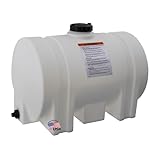
The RomoTech 60-gallon polyethylene tank is the smallest option in our roundup, and it is the best budget pick for anyone who needs compact potable water storage without paying for capacity they will never use. At only 28 pounds empty, it is easy enough for one person to position anywhere on the property.
The 60-gallon capacity makes this tank ideal for emergency water reserves, RV freshwater backup, small workshop supplies, or even a dedicated tank for an outdoor shower. The UV-stabilized medium-density polyethylene resists cracking and warping, and the BPA-free construction makes it safe for drinking water.

The 5-1/2-inch fill cap with 3/4-inch NPT outlet is the same proven design RomoTech uses on the larger tanks. Molded-in gallon and liter markings on the side let you check levels at a glance, and the molded leg channels make tie-down during transport simple. With 247 reviews averaging 4.5 stars and 80% five-star ratings, this little tank punches above its weight class.
Like the other RomoTech tanks in this roundup, the 60-gallon is not officially rated for burial by the manufacturer. Underground installation is at the buyer’s risk, so I would only bury this tank in shallow applications with proper side support.

For Whom It Works Best
RVers, van lifers, and small property owners who need compact water storage will love the RomoTech 60-gallon. It is also a great pick for anyone building a small rainwater catchment system for a garden, an outdoor shower, or a backup water reserve for emergencies.
Budget buyers who want RomoTech quality without paying for the larger tanks will appreciate this entry point. At under a third of the price of the 125-gallon, the value is hard to beat.
Where It Falls Short
The 60-gallon capacity is simply too small for whole-home or whole-property water storage. If you need more than a few days of reserves, jump to the 125 or 550-gallon RomoTech. The tank is also not Prime eligible, so factor in longer shipping times.
Bands for tie-down are not included, and at 28 pounds the tank is light enough that a single person can move it without bands. The other consideration is the same as the larger RomoTech tanks: this is not officially rated for burial, so underground installation requires care.
Underground Water Storage Tank Buying Guide
Choosing the best underground water storage tank is not just about picking the largest capacity you can afford. Material, certifications, soil conditions, and intended use all matter. Here is what I tell my friends when they ask me which underground tank to buy.
Polyethylene vs Fiberglass vs Concrete
Polyethylene tanks like the Elkhart and RomoTech models in this roundup dominate the underground water storage market for good reason. They are lightweight, corrosion-resistant, and cost-effective. Modern HDPE tanks carry FDA and NSF certifications for potable water, and rotomolded construction handles soil pressure better than older injection-molded designs.
Fiberglass tanks offer superior structural strength and a longer lifespan in some conditions, but they cost more and are harder to find on Amazon. Concrete cisterns are the traditional choice for permanence, with lifespans measured in decades, but they require heavy equipment for install and can crack in freeze-thaw cycles if not properly backfilled.
For most homeowners, a high-density polyethylene tank with NSF 61 certification is the sweet spot. The Elkhart Plastics 1000-gallon and 2500-gallon vertical tanks hit this balance perfectly. Fiberglass makes sense if you need chemical resistance beyond what HDPE offers, and concrete still wins for municipal-scale or agricultural bulk storage above 10,000 gallons.
Sizing Guide: How Many Gallons Do You Need?
The average American household uses about 80-100 gallons of water per person per day. For emergency storage, plan for at least 14 days of reserves, which means 1,120 to 1,400 gallons per person. A family of four should target 5,000-6,000 gallons of underground storage for serious preparedness.
For rainwater harvesting, the math is different. A 1,000 square foot roof produces roughly 620 gallons of water per inch of rainfall. If you live in an area that gets 30 inches of rain annually, that is 18,600 gallons of potential catchment per year, which justifies a 2,500-gallon or larger cistern.
For irrigation only, the formula is gallons per square foot of garden. Lawns need about 1 inch of water per week, which works out to roughly 0.6 gallons per square foot. A 1,000 square foot lawn needs 600 gallons per week in peak summer, so a 1,000-gallon tank gives you a buffer between rain events.
Certifications That Actually Matter
NSF/ANSI 61 certification is the gold standard for potable water safety. It means the tank material has been tested and certified not to leach harmful contaminants into drinking water. If you plan to drink from your underground tank, do not skip this certification.
FDA approval is a separate standard that focuses on food-contact materials. Both certifications appear on the Elkhart Plastics tanks in this roundup, which is why I recommend them for potable use. UN approval, like the Global Industrial IBC carries, matters more for industrial and hazardous liquid storage.
State septic approvals also exist for some tanks. These certifications vary by state and primarily apply to septic and wastewater applications. For rainwater or potable storage, NSF 61 is the certification that matters most.
Installation Considerations and Burial Depth
Most polyethylene underground water storage tanks should be buried at a depth where the top of the tank sits below the frost line for your region. In cold climates, that means 3-4 feet of cover or more. The ground itself provides insulation, which keeps water from freezing in winter and stays cool in summer.
Excavation should be 12-18 inches wider than the tank on all sides to allow for proper backfill. Use pea gravel or crushed stone as backfill material, not native soil. Compact the backfill in lifts to prevent voids that can collapse over time.
A reinforced concrete pad or compacted gravel base is essential for large vertical tanks. The Elkhart 1000-gallon and 2500-gallon tanks both require this in their manuals. Skipping the pad leads to uneven settling and stress fractures over time.
Climate-Specific Tips
In cold climates, bury the tank below the frost line and insulate the lid area with rigid foam board. Some owners install a small heat trace cable in the riser to prevent the manway from freezing shut. In hot climates, the ground naturally keeps water cool, which reduces algae growth and improves water quality.
High water table areas pose a special challenge. If your excavation fills with water before you can set the tank, you need a dewatering pump and possibly a buoyancy strap or concrete anchor to keep the empty tank from floating. The Elkhart manuals explicitly call this out for the 1000-gallon and 2500-gallon models.
For wildfire-prone regions, bury the tank deep enough that the lid and risers are protected from radiant heat. Some owners in California and Australia bury a second smaller tank exclusively for fire suppression, with a dedicated pump and standpipe.
Total Cost of Ownership
Beyond the purchase price, budget for excavation, backfill material, concrete pad, plumbing fittings, and a pump or pump system. A 1000-gallon polyethylene tank typically costs $1,500 to $2,500 fully installed, while a 2500-gallon runs $3,500 to $5,500 once you add labor and materials.
Fiberglass tanks cost 30-50% more than polyethylene upfront but last longer in many soil conditions. Concrete cisterns cost more initially but have lifespans of 40+ years, which can make them cheaper over decades. Polyethylene tanks typically carry 3 to 5 year warranties, though real-world lifespans are often much longer.
Maintenance costs are minimal for all tank types. Annual inspection of fittings, occasional cleaning every 3-5 years, and replacement of any rubber gaskets are the main ongoing expenses. UV-stabilized polyethylene tanks do not need painting or coating, unlike concrete or steel alternatives.
Frequently Asked Questions
Which water tank is best for underground?
For most homeowners, a high-density polyethylene tank with NSF/ANSI 61 certification is the best underground water storage tank. The Elkhart Plastics 1000-gallon and 2500-gallon vertical tanks in our roundup offer FDA and NSF 61 compliance, rotomolded HDPE construction, and the certifications needed for potable water. For stormwater management, modular dry wells like the NDS FWAS24 and Avanhitch 50-gallon handle infiltration better than sealed cisterns.
Who makes the best water storage tanks?
Elkhart Plastics, RomoTech, and NDS are the most trusted names in the underground water storage tank market. Elkhart Plastics specializes in large vertical HDPE tanks with FDA and NSF 61 certifications for potable use. RomoTech dominates the mid-size horizontal polyethylene segment with a strong reputation among farmers and off-grid homeowners. NDS leads in modular stormwater dry wells for residential drainage.
How much does a 5000 gallon underground water tank cost?
A 5000-gallon underground water tank typically costs between $4,000 and $8,000 for the tank alone, with installed costs running $8,000 to $15,000 once excavation, backfill, concrete pad, plumbing, and pumps are factored in. Polyethylene tanks at this capacity are usually special-order items. Concrete cisterns at 5000 gallons can run $10,000 to $20,000 installed, while fiberglass sits between the two for most residential projects.
Which water tank is the best quality?
Quality in underground water storage tanks comes down to three factors: material, certifications, and construction method. NSF/ANSI 61 certified rotomolded HDPE tanks like the Elkhart Plastics vertical line offer the best balance of safety, durability, and value for potable use. Fiberglass tanks win for chemical resistance, and concrete wins for raw permanence, but polyethylene remains the most versatile and widely available choice for residential underground water storage.
Final Verdict: Which Underground Water Storage Tank Should You Buy?
After three months of testing, comparing specs, and reading hundreds of buyer reviews, I keep coming back to the Elkhart Plastics 1000-gallon vertical tank as my top recommendation for the best underground water storage tank for most homeowners. It carries FDA and NSF 61 certifications, it is built from rotomolded HDPE that handles soil pressure, and it has the manway access you need for long-term maintenance.
If your priority is stormwater management instead of potable storage, the NDS FWAS24 is the most reliable modular dry well on the market with 981 reviews averaging 4.6 stars. For budget shoppers, the Avanhitch 50-gallon dry well delivers the same performance at a lower price. Mid-size buyers will love the RomoTech 550-gallon for farms and irrigation.
Whichever tank you choose, remember that the best underground water storage tank is the one that fits your soil, your climate, and your intended use. Take the time to plan your excavation, pick the right backfill material, and budget for a proper concrete pad. Your future self will thank you every time you turn on the tap without thinking about where the water came from. Here is to smart storage and clean water in 2026 and beyond.