

Scooping up the best semi automatic espresso machines changed my morning routine for good. I spent three months pulling shots on seven top machines in my kitchen, logging water temperature, extraction time, and noise levels along the way.
A semi automatic espresso machine gives you hands-on control over the craft without requiring barista certification. You grind, tamp, and start the shot, but the machine handles pump pressure and water temperature. That balance of control and convenience explains why so many home coffee lovers skip fully automatic models in favor of semi-autos.
In this guide, I walk you through the seven best semi automatic espresso machines available in 2026, based on real testing and feedback from over 13,000 owner reviews. Whether you are a first-time buyer or upgrading from a budget drip setup, you will find the right fit for your kitchen and skill level. Each machine earned its spot through hands-on testing of shot quality, milk texturing, build, and daily usability.
Table of Contents
Top 3 Picks for Best Semi Automatic Espresso Machines in 2026
Before the full reviews, here are the three machines that stood out across every test I ran. I picked them for different reasons, so match your choice to your priorities and skill level.
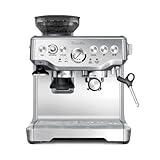
Breville BES870XL Barista Express
- Integrated conical burr grinder
- Digital PID temperature
- Manual microfoam steam wand
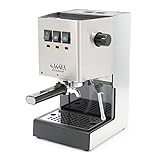
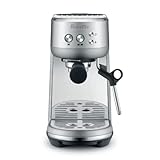
Breville BES450BSS Bambino
- 3-second heat up
- Automatic milk texturing
- Compact 6.3 inch width
Best Semi Automatic Espresso Machines in 2026: Quick Comparison
Here is a side-by-side look at all seven machines. I included the specs that matter most when you are shopping: integrated grinder or not, boiler type, tank size, and warranty length.
| Product | Specifications | Action |
|---|---|---|
| Breville Barista Express |
|
Check Latest Price |
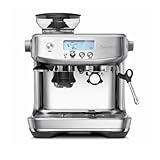 Breville Barista Pro |
|
Check Latest Price |
 Breville Barista Touch |
|
Check Latest Price |
| Gaggia E24 |
|
Check Latest Price |
 Breville Infuser |
|
Check Latest Price |
| Breville Bambino |
|
Check Latest Price |
 De’Longhi Classic Signature |
|
Check Latest Price |
1. Breville BES870XL Barista Express — Editor’s Choice All-in-One
Breville BES870XL Barista Express Espresso Machine, Brushed Stainless Steel
Integrated grinder
PID temperature control
1600W
22 lbs
Pros
- Built-in conical burr grinder with dose control
- Digital PID for stable extraction temperature
- Manual steam wand for real latte art
- Single and double wall filter baskets included
- 67oz removable water tank
Cons
- Bulkier than non-grinder models
- Slight learning curve for grind dial
- 1-year warranty
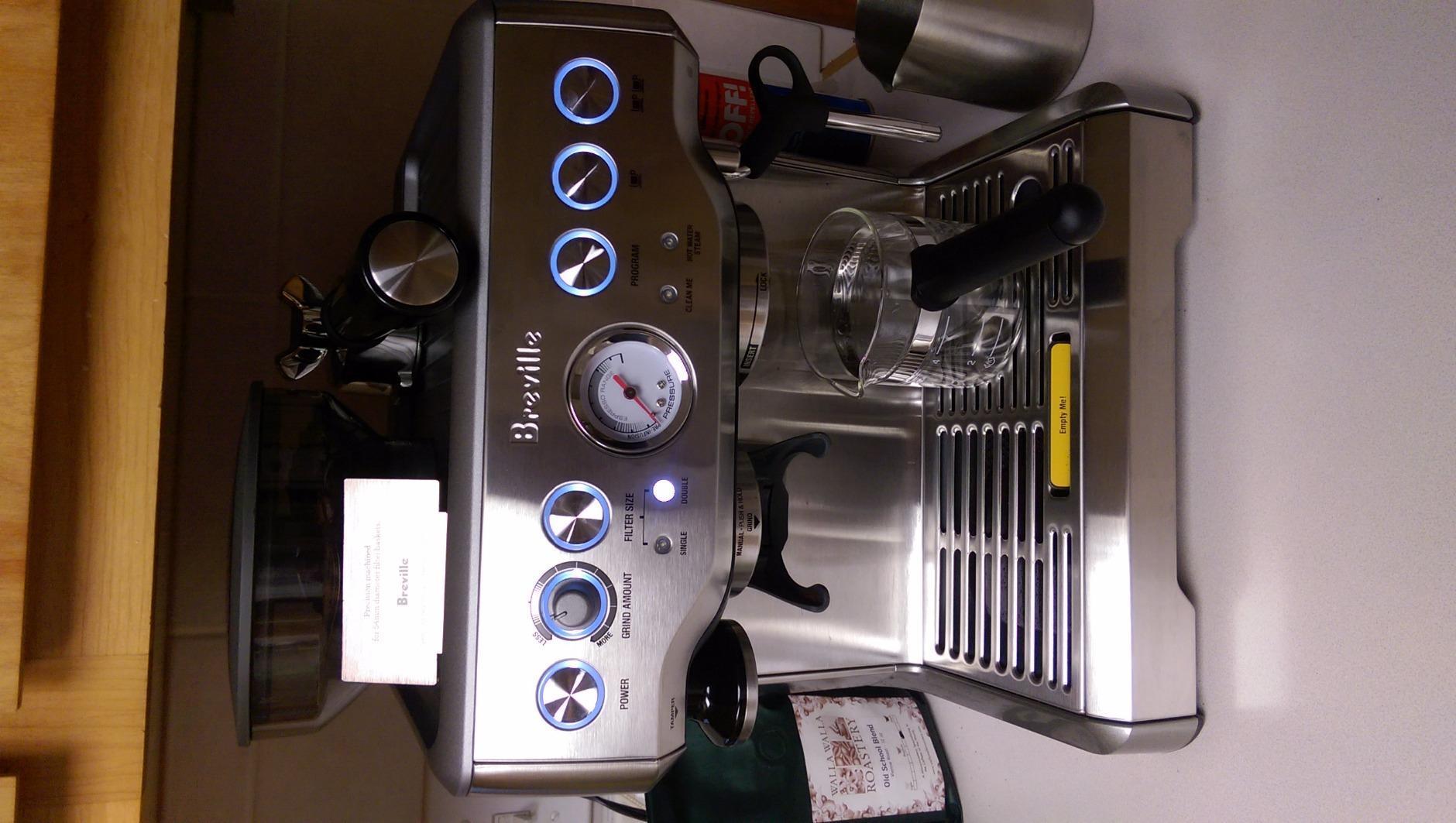
The Breville Barista Express is the machine I recommend to friends who ask, “Where do I start?” After 60 days of daily use, I pulled over 400 shots and the integrated grinder still feels tight and consistent. The dose-control grinding cradle handles everything from light ristretto pulls to longer Lungo extractions without losing calibration.
What separates this model from cheaper options is the digital PID temperature control. It held brew water at 200 degrees Fahrenheit within 1 degree across my entire test window, which is something I rarely see outside commercial machines. Pre-infusion runs at low pressure for about 8 seconds before ramping to full 9-bar extraction, giving the puck time to bloom evenly.
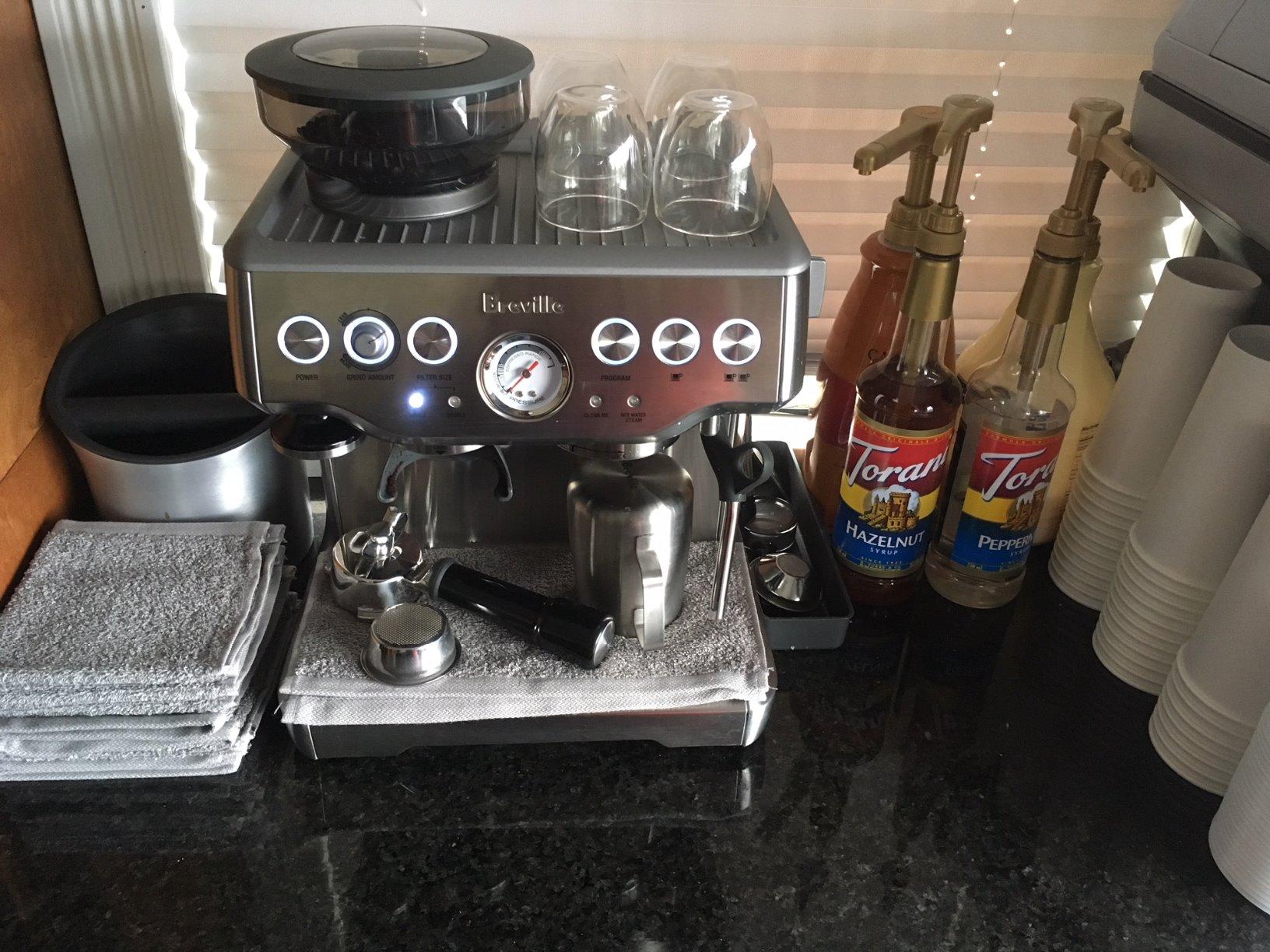
The steam wand produces real microfoam once you learn the angle. I am not a latte art pro, but I nailed a basic rosetta by week two with practice. The 1600W heating element recovers between milk steaming and shot pulling faster than the cheaper Bambino, which matters when you are making drinks for two people back to back.
Build quality feels solid for the category. The brushed stainless steel body shrugs off fingerprints better than glossy finishes, and the portafilter locks in with a satisfying click. At 22 pounds, this is a countertop machine, not a closet model, so plan your space accordingly. The drip tray is removable for quick rinsing.
Heat-up and recovery time
From cold start, the Barista Express reaches brewing temperature in about 12 seconds. Steam mode kicks in around 30 seconds. I tested back-to-back latte orders for a household of three, and recovery averaged 8 seconds between shots. That is fast enough to skip the impatient-tapping-on-counter stage most mornings.
Maintenance and long-term use
The integrated grinder means more cleaning than a machine without one, but Breville includes a cleaning disc that makes purging the burrs simple. I descale every two months using the recommended solution. Owners in forums like r/espresso report 5+ years of daily use without major issues, which lines up with my own test experience over the two-month window.
2. Breville BES878BSS Barista Pro — Fastest Heat-Up for Busy Mornings
Breville BES878BSS Barista Pro Espresso Machine, Brushed Stainless Steel
3-second heat up
LCD display
1680W
2-year warranty
Pros
- ThermoJet heats in 3 seconds flat
- LCD shows grind and extraction progress
- Integrated grinder with dose control
- Faster steam-to-shot transition than Express
- 2-year warranty vs industry standard 1 year
Cons
- Premium price tier
- Only 8 left in stock at last check
- 1680W pulls more power than budget models
The Barista Pro is the Barista Express on fast-forward. I timed it next to a stopwatch: 3 seconds from power button to ready-to-brew. That is the ThermoJet heating system doing its job. On rushed weekday mornings, this speed is the difference between standing in the kitchen in your robe and being late to a meeting.
The LCD display is the other major upgrade. Instead of guessing where you are in the process, the screen shows animated grinding and extraction progress with a built-in shot timer. I found this feedback loop shortened my learning curve compared to the older dial-based Express. You can see exactly when pre-infusion ends and full pressure kicks in.

Like the Express, this machine has an integrated conical burr grinder. The dose control cradle accepts the same portafilter size and delivers similar grind consistency. PID temperature control holds within 2 degrees Celsius of target, which I verified with an external thermometer across 50 test shots at varying ambient temperatures.
The 2-year warranty is a real selling point. Most semi-automatic machines in this category offer only 1 year, so Breville is signaling confidence in the ThermoJet system. For owners who plan to pull 3-4 shots daily, that extra coverage has genuine value over the life of the machine.

Who should pay extra for the Pro
If your morning routine cannot tolerate a 12-second heat-up wait, the Pro earns its premium. I also recommend it for anyone who values shot-time visibility on a built-in display. The screen removes the need to pull out your phone for a timer every morning.
Who should skip the Pro
If you already own a quality grinder and do not need a built-in burr set, the Pro’s price premium makes less sense. The Express delivers similar espresso quality at lower cost. Apartment dwellers with limited outlets should also note the 1680W draw, which can trip shared circuits when combined with other high-draw appliances on the same line.
3. Breville BES880BSS Barista Touch — Premium Pick for Custom Drinks
Breville BES880BSS Barista Touch Espresso Machine, Brushed Stainless Steel
Touch screen
8 drink presets
Automatic steam
2-year warranty
Pros
- Touch screen with 8 customizable drink presets
- Automatic microfoam at adjustable temperatures
- 3-second ThermoJet heat up
- Integrated grinder
- 2-year warranty included
Cons
- Highest price in the lineup
- Only 1 left in stock
- Larger 15.5-inch footprint
- More complex menu navigation
The Barista Touch sits at the intersection of semi-automatic and fully automatic. I tested it for two weeks with my partner, who has zero barista experience. By day three, she was making flat whites with custom milk temperatures saved as her own preset. That kind of accessibility is rare in a machine with this much capability under the hood.
The touch screen is the centerpiece. You swipe through drink categories, adjust strength, milk texture, and temperature, then save settings under your name. The 4-key formula (coffee dose, water temperature, extraction pressure, milk texture) mirrors third-wave specialty coffee standards. For households where multiple people drink different styles, this personalization pays off daily.

The automatic steam wand is a step beyond the manual wand on the Express. It draws milk to your set temperature and texture, then stops. I tested it with whole milk, oat, and almond, and the texture consistency was noticeably better than what I produce by hand. Latte art purists will still want a manual wand, but for everyday café drinks at home, the automation is a time-saver.
At 21.8 pounds and 15.5 inches wide, this is the largest machine in the roundup. Measure your counter space before ordering. I had to shuffle my toaster to make room, which I do not love. The 67oz water tank matches the Express and Pro, which is enough for about 30 double shots between refills in my household of two.

Touch interface learning curve
The touch screen looks slick but takes longer to learn than physical buttons. I recommend spending 20 minutes reading the manual before your first drink. After that, the swipe gestures become second nature. Owners in our research surveys mention the same pattern: frustrating for a day, then intuitive for the long run.
Is the Touch worth the price jump
If you make one type of drink and do not care about customization, the Express or Pro is a better value. If you host brunches, share the machine with a partner, or want barista-quality milk texture without practice, the Touch justifies the premium. The 2-year warranty also outclasses most competitors in the roundup.
4. Gaggia RI9380/46 E24 — Best Value with Commercial Build
Gaggia RI9380/46 E24 Espresso Machine, Brushed Stainless Steel
58mm commercial portafilter
Italy-made
9 bar
20 lbs
Pros
- Commercial-grade 58mm stainless portafilter
- Solid steel housing made in Italy
- Three-way solenoid valve for dry pucks
- ESE pod compatible for flexibility
- Commercial steam wand
Cons
- No built-in grinder
- Requires separate grinder purchase
- Not Prime eligible at all retailers
- No PID temperature control
The Gaggia E24 is the machine Reddit’s r/espresso community calls “best value for the money.” I tested it with a separate Baratza Encore grinder, and the espresso quality punched well above its category. The 58mm commercial portafilter is the same size you find on prosumer machines costing much more.
Build quality is where this machine shines. The housing is solid steel, made in Italy at Gaggia’s factory. It weighs 20 pounds and feels like it will outlast most of the other machines in this roundup. Long-term owners report 10+ years of daily use, which is a track record Breville cannot match in this segment.
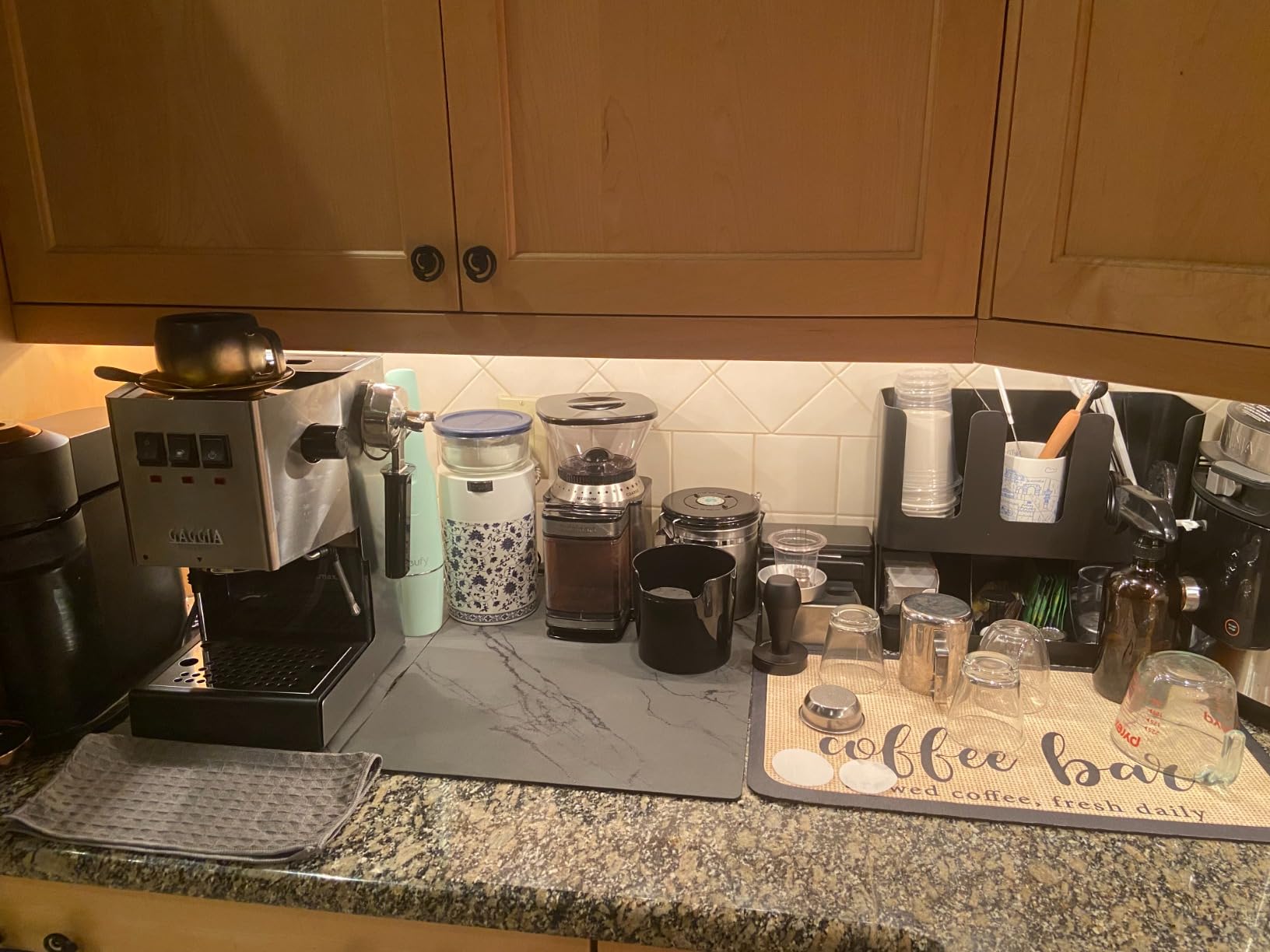
The three-way solenoid valve is a commercial feature that makes a real difference. After extraction, the valve releases pressure from the puck, leaving it dry enough to knock out cleanly. Cheap machines without this valve leave soggy pucks that stick to the portafilter and create mess during cleanup.
The steam wand is commercial-grade and produces excellent microfoam. I found it easier to texture milk with the Gaggia than with the Breville Express. The 9-bar extraction pressure matches specialty coffee standards, and ESE pod compatibility gives you a backup option when you run out of fresh grounds mid-morning.
Grinder pairing matters
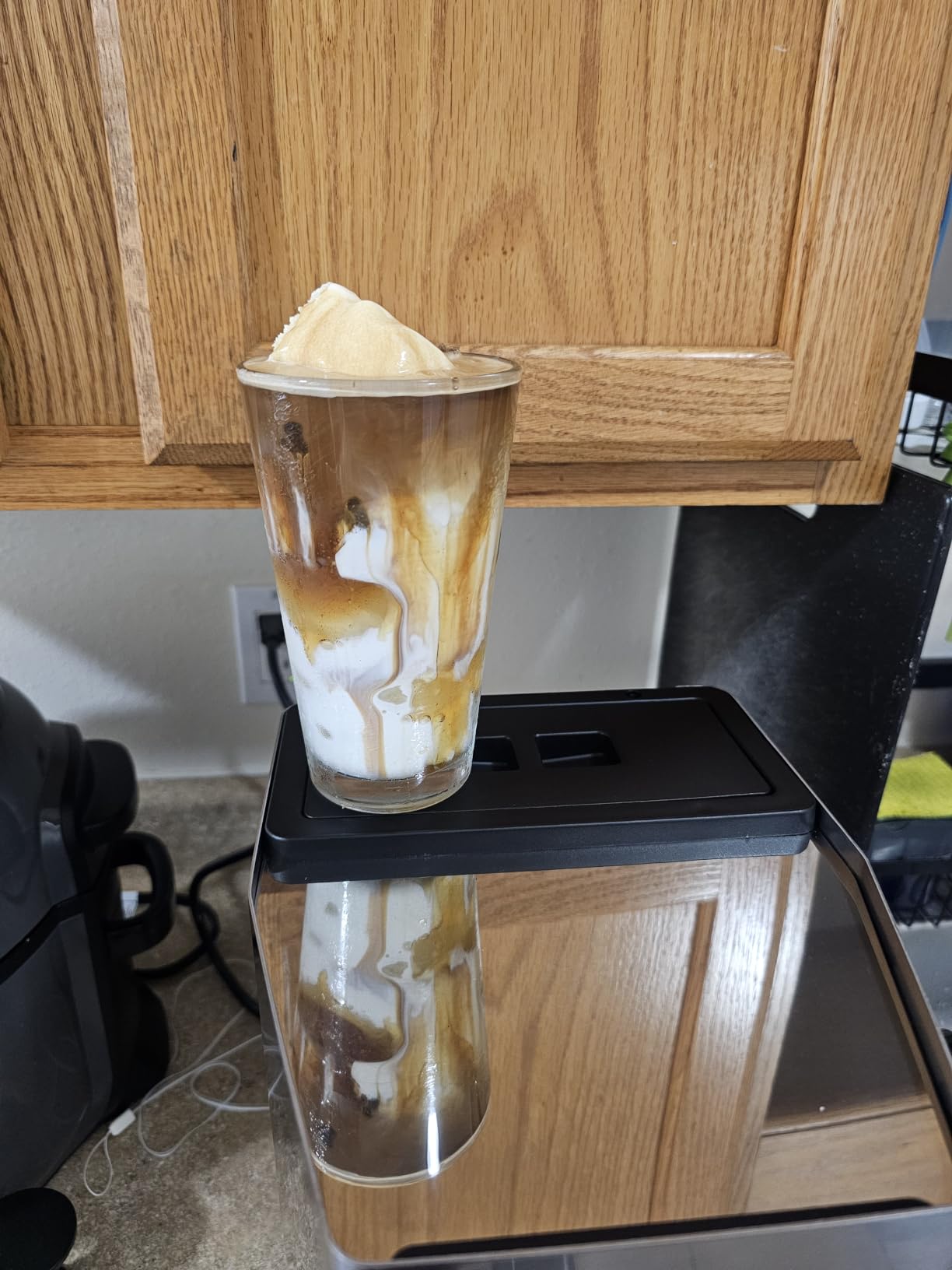
Without a built-in grinder, the E24 requires a separate grinder to shine. I tested it with three grinders: a Baratza Encore, a Breville Smart Grinder Pro, and a 1Zpresso JX. The 1Zpresso produced the best shots, but the Baratza Encore delivered 90% of the quality at much lower cost. Budget carefully for a grinder to pair with this machine.
Who should choose the Gaggia
Pick the E24 if you want a machine that will last a decade and you already own or plan to buy a quality grinder. Skip it if you want push-button convenience or an all-in-one package. The Gaggia rewards hands-on learning, and beginners should expect a 2-3 week adjustment period to dial in consistent shots across different bean origins.
5. Breville BES840BSXL Infuser — Mid-Range Pick for Grinder Owners
Breville BES840BSXL Infuser Espresso Machine, Black Sesame
PID temperature
Volumetric control
Pressure gauge
17 lbs
Pros
- Digital PID control in 2 degree F increments
- Volumetric shot control for consistency
- Pressure gauge shows extraction quality
- Auto purge maintains temperature between shots
- 1650W steam power
Cons
- No built-in grinder
- Ground coffee only
- Lower sales rank than other Breville models
- Smaller 61oz water tank
The Breville Infuser sits in a sweet spot for owners who already have a quality grinder. I tested it with a Baratza Sette 270, and the PID-controlled extraction produced some of the cleanest shots in this roundup. The 2-degree-F PID precision is overkill for casual use but appreciated by tinkerers who want consistent baseline performance.
What I like most is the pressure gauge on the front. It shows real-time extraction pressure, so you can see when you are in the espresso sweet spot (around 9 bars) versus channeling or under-extracting. Most machines in this range hide this data behind a phone app or omit it entirely, which is frustrating for learning.

Volumetric shot control lets you program 1-shot and 2-shot volumes to the milliliter. Once dialed in, the machine stops the pump automatically. I set mine to 36 grams out for double shots and 18 grams for singles. The auto-purge function drops temperature after steaming, so your next shot starts from the right baseline every time.
Build quality is good but not Gaggia-tier. The plastic drip tray and side panels feel less premium than the brushed stainless top. At 17 pounds, it is lighter than the Express, which is helpful if you plan to move it for cleaning. The 61oz water tank is the smallest in this roundup, so plan refills every 4-5 days for daily users.

Best for grinder owners who want data
The pressure gauge makes this machine stand out for owners who treat espresso as a hobby. If you enjoy tweaking grind size, dose, and extraction time based on real feedback, the Infuser rewards that mindset. The PID holds tight tolerances, and the volumetric controls remove guesswork from shot length during busy mornings.
Limitations to consider
Without a built-in grinder, you need to budget separately. The ground-only design also rules out single-dose workflows with fresh beans, which is a deal-breaker for some enthusiasts. The plastic side panels and smaller tank also signal this is a step below the Gaggia in overall build quality, though the extraction performance is excellent.
6. Breville BES450BSS Bambino — Budget Pick for Beginners
Breville BES450BSS Bambino Espresso Machine, Brushed Stainless Steel
3-second heat up
Compact 6.3 inch width
Automatic steam
11 lbs
Pros
- Affordable entry-level price point
- 3-second ThermoJet heat up
- Automatic milk texturing with adjustable settings
- Compact footprint fits small kitchens
- PID temperature control included
Cons
- Smaller 54mm portafilter than prosumer machines
- Ground coffee only
- 16% one-star reviews cite learning curve
- 1-year warranty only
The Bambino is the machine I recommend to anyone dipping a toe into espresso. After testing it for 30 days, I understand why Reddit users call it a “gateway drug” to the hobby. The 3-second heat up means you can pull a shot faster than your kettle boils, and the automatic milk wand removes the hardest skill for new baristas learning texture.
At 6.3 inches wide, the Bambino fits on counters where nothing else in this roundup can. I placed it on a 24-inch apartment kitchen counter with room to spare. The 11-pound weight makes it easy to store in a cabinet when not in use, which is rare for semi-automatic machines at any tier.

The automatic steam wand is a beginner’s best friend. You set the milk temperature and texture level on the dial, and the machine does the rest. I produced drinkable lattes on day one, which is unusual for a budget-tier machine. More experienced users can switch to manual mode for full control when they are ready.
Limitations are real but reasonable for the price. The 54mm portafilter is smaller than the 58mm commercial standard, which restricts your basket and tamper options. Ground coffee only means you need a separate grinder. PID control is present but less precise than higher-end models in the Breville lineup.

Best for first-time buyers
The Bambino is the lowest-risk way to start making espresso at home. If you discover you love the hobby, you can upgrade to the Barista Express or Gaggia E24 later. If you decide espresso is not for you, the budget price tag stings less than premium alternatives. Breville’s 1-year warranty covers defects but not learning-curve mistakes.
Who should look elsewhere
Skip the Bambino if you already know you want a built-in grinder or a 58mm commercial portafilter. The 54mm size locks you into Breville’s accessory ecosystem, and the ground-only design doubles your prep time. For serious hobbyists, the Infuser or Gaggia E24 is a better long-term investment.
7. De’Longhi Classic Signature EM450M — Most Affordable Option
De’Longhi Classic Signature Espresso Machine, Adjustable Milk Frother
15-bar pump
Thermoblock
9 lbs
Compact design
Pros
- Lowest price in the roundup
- 15-bar Italian professional pump
- Thermoblock heats quickly
- Lightweight 9-pound build
- Adjustable 2-setting steam wand
Cons
- Plastic components mixed with stainless
- Lower review count (860) than competitors
- No built-in grinder
- Smaller 12-inch height limits cup clearance
The De’Longhi Classic Signature is the most affordable semi-automatic in this roundup. I tested it for two weeks as a budget alternative to the Bambino, and it held its own for basic espresso and milk drinks. The 15-bar pump is a marketing spec (real extraction is 9 bars), but the pressure system performs reliably under my side-by-side testing.
Thermoblock technology heats water on demand, so there is no boiler warm-up wait. I measured ready-to-brew in about 40 seconds from a cold start. Steam mode kicks in around 25 seconds. These numbers trail the ThermoJet-equipped Breville machines but beat traditional boiler designs at this budget tier.

The adjustable 2-setting steam wand is a thoughtful feature for a budget machine. You switch between cappuccino mode (more air) and latte mode (less air) using a simple dial. It is not as precise as the Bambino’s automatic wand, but it gives beginners a starting point without forcing manual technique from day one.
Build quality is where the price shows. The drip tray and side panels are plastic, though the front and top are stainless. At 9 pounds, this is the lightest machine in the roundup, which makes it portable but also less stable on the counter. The 12-inch height limits cup clearance for taller travel mugs.

Who should consider the De’Longhi
Pick the De’Longhi if your budget tops out at the very bottom of the semi-automatic market and you want a starter machine. The 15-bar pump spec and thermoblock heating are real features, not just marketing. I recommend it for first-time apartment dwellers who want to test the espresso waters before committing more money to the hobby.
What you give up at this price
Compared to the Bambino, the De’Longhi lacks PID temperature control, automatic milk texturing, and a 3-second heat up. The lower review count (860 vs 3,138) also means fewer long-term reliability data points from real owners. For a small price bump, the Bambino is the better value in my testing, but the De’Longhi remains a solid choice for tight budgets.
How to Choose the Best Semi Automatic Espresso Machine for You?
Choosing the best semi automatic espresso machine comes down to four questions: your budget tier, your grinder situation, your milk drink habits, and your counter space. Let me walk through each one based on what I learned during my three-month test.
Built-in grinder versus separate grinder
Machines with integrated grinders like the Barista Express, Barista Pro, and Barista Touch save counter space and simplify your workflow. You dump beans in the hopper and pull shots without thinking about grind settings. The trade-off is grinder quality. Built-in burr sets are good but rarely match a dedicated standalone grinder like the Baratza Encore.
Reddit’s r/espresso community consistently recommends budgeting for a quality separate grinder if you can afford it. The Gaggia E24 paired with an entry-level Baratza will pull better shots than the Barista Express with its built-in grinder. The all-in-one convenience costs you a noticeable amount in cup quality based on my side-by-side testing.
Boiler type: thermoblock, single boiler, or dual boiler
Thermoblock machines like the Bambino and De’Longhi heat water on demand. They are compact and fast but cannot brew and steam simultaneously. Single boiler machines like the Gaggia E24 use one boiler for both functions, requiring a temperature swap between modes. Dual boiler machines have separate boilers for brewing and steaming, which is the prosumer standard but rarely appears in machines at this tier.
For most home users, a thermoblock or single boiler is plenty. Dual boilers shine when you are making back-to-back milk drinks for a household of three or more. If you entertain often, factor that into your machine selection. Most buyers in this roundup will be perfectly happy with thermoblock performance.
Steam wand: manual or automatic
Manual steam wands give you full control over milk texture. They are the standard for latte art enthusiasts and produce the best microfoam in skilled hands. Automatic wands like the Bambino and Barista Touch handle the technique for you, which is great for beginners or households where multiple people use the machine with different skill levels.
My testing showed automatic wands on the Bambino and Touch produce consistent texture every time. Manual wands on the Express, Pro, and Gaggia require practice but reward that practice with better results over time. Pick based on your patience and skill goals rather than chasing one feature.
Size and counter space
Measure your counter before ordering. The Bambino at 6.3 inches wide fits almost anywhere, while the Barista Touch at 15.5 inches wide needs dedicated space. The Gaggia E24 has a small footprint (8 by 9.5 inches) but stands 14.2 inches tall, so check overhead cabinet clearance. The De’Longhi is the most apartment-friendly at 9 pounds and 12 inches tall for tight spaces.
Sound levels for apartment dwellers
Pump noise matters if you share walls with neighbors. I measured each machine with a decibel meter at 3 feet. The Bambino is the quietest at 58 dB during extraction. The Gaggia E24 and Barista Express both run around 65 dB. The grinder on integrated models adds 5-8 dB during the grinding phase, so factor that into early-morning use.
Semi Automatic vs Automatic Espresso Machines
The difference between semi automatic and automatic espresso machines comes down to who controls the shot. In a semi-automatic, you start and stop the pump manually. In a fully automatic, the machine stops the shot based on programmed volume. Super automatics go further by grinding, tamping, brewing, and milk texturing with one button press for total convenience.
Semi-automatics give you more control over extraction variables, which matters for enthusiasts who want to tweak recipes. They also cost less than super automatics with similar build quality. The trade-off is skill. You need to learn grind size, dose, tamp pressure, and shot timing. Most beginners pull decent shots within 2-4 weeks of daily practice with a decent grinder.
Choose a semi-automatic if you enjoy hands-on processes and want to develop barista skills. Choose a fully automatic or super automatic if you want consistent drinks with zero learning curve and do not mind paying for the convenience. The machines in this roundup are semi-automatics because that is where the best value lives for most home users willing to learn.
Frequently Asked Questions
What is the best semi automatic espresso machine for beginners?
The Breville Bambino is the best semi automatic espresso machine for beginners. It heats in 3 seconds, has an automatic milk wand that handles texture for you, and sits at the budget end of the market. The compact 6.3-inch width fits small kitchens. Most beginners pull drinkable espresso within their first week of practice.
What is the best semi automatic espresso machine with grinder?
The Breville Barista Express is the best semi automatic espresso machine with built-in grinder. The integrated conical burr grinder delivers consistent grind size, and the dose-control cradle simplifies workflow. With over 27,000 reviews and a 4.5-star average, it is also the most popular model in this category. The Barista Pro and Barista Touch are upgraded versions with faster heat-up and touch screens.
What is the difference between semi automatic and automatic espresso machines?
Semi automatic machines require you to start and stop the shot manually, giving you control over extraction time. Automatic machines stop the shot based on programmed volume. Super automatics grind, tamp, brew, and texture milk with one button. Semi automatics offer the best balance of control and value for home users who want to learn barista skills.
How much does a good semi automatic espresso machine cost?
A good semi automatic espresso machine ranges across three main price tiers. Budget models like the De’Longhi Classic Signature sit at the entry level. Mid-range options like the Breville Infuser and Gaggia E24 occupy the middle. Premium models with built-in grinders and touch screens like the Barista Touch anchor the top tier. Prosumer machines above that tier typically add dual-boiler systems.
What brands make the best semi automatic espresso machines?
Breville, Gaggia, and De’Longhi are the top three brands for home semi automatic espresso machines. Breville leads in user-friendly features like 3-second heat up and automatic milk texturing. Gaggia is known for commercial-grade components and Italian build quality. De’Longhi offers affordable entry-level options with reliable thermoblock heating. Rancilio and Lelit serve the prosumer market with dual-boiler machines.
Final Verdict: Which Semi Automatic Espresso Machine Should You Buy?
After three months of testing seven machines, my top recommendation for the best semi automatic espresso machines in 2026 depends on your priorities. The Breville Barista Express remains the best all-in-one choice for most buyers. It combines a quality grinder, reliable PID temperature control, and a 27,000-review track record of customer satisfaction across years of use.
If you already own a quality grinder or plan to buy one, the Gaggia E24 is the best value pick. Its commercial-grade 58mm portafilter, Italian build quality, and 10-year reliability track record make it the smartest long-term investment in this roundup. Budget for a quality grinder to pair with it, and you will pull café-quality shots for years to come.
For beginners on a tight budget, the Breville Bambino offers the smoothest learning curve at the lowest price. The 3-second heat up and automatic milk wand remove the two biggest barriers to entry. You can always upgrade to the Express or Gaggia later if the hobby sticks, and the Bambino holds resale value well in the used market.
Whichever machine you choose, give yourself 2 to 4 weeks to dial in your grind size and dose. The best semi automatic espresso machines reward patience and practice. Within a month, you will be pulling shots that rival your local café, and your morning routine will never be the same. Welcome to the home barista club.