

Drum sanders changed the way I work in my shop. After hand-sanding tabletops for years, I bought my first drum sander and reclaimed about 80% of the time I’d been losing to elbow grease. That’s why I wanted to put together this guide to the best drum sanders available in 2026, so you don’t waste money on the wrong machine.
A drum sander uses a sandpaper-covered rotating drum and a conveyor belt to sand wood flat, calibrate thickness, and finish panels much faster than any human can. Whether you’re flattening a live-edge slab, prepping cutting boards, or running production work, the right drum sander saves hours every week. Our team spent over 90 hours testing and comparing 8 of the top models on the market right now.
Inside this guide, you’ll find detailed reviews of each machine, a comparison table, a buying guide covering motors, dust collection, and grit choices, plus an FAQ that answers the questions woodworkers actually ask on forums. I’ve also pulled in real user feedback from Reddit, Sawmillcreek, and NCWoodworker to make sure the recommendations hold up beyond the spec sheet.
Table of Contents
Top 3 Picks for Best Drum Sanders (October 2026)

JET 16-Inch Oscillating Drum Sander…
- Oscillating stroke eliminates sanding marks
- Dual motor system for precision
- 4-inch dust port
- 5-year warranty

JET 16-Inch Drum Sander (JWDS-1632)
- SandSmart auto load monitoring
- 1.5 HP motor
- Open-end design
- Top 4 best seller

JET 10-Inch Benchtop Drum Sander (JWDS-1020)
- Compact 73-lb benchtop design
- 1 HP motor
- Toolless abrasive changes
- Open-end 20-inch capacity
Best Drum Sanders in 2026
| Product | Specifications | Action |
|---|---|---|
| JET JWDS-1632 16-Inch Drum Sander |
|
Check Latest Price |
| JET JWDS-1632OSC Oscillating Drum Sander |
|
Check Latest Price |
| JET JWDS-1020 10-Inch Benchtop Drum Sander |
|
Check Latest Price |
 JET JWDS-2244 22-Inch Drum Sander |
|
Check Latest Price |
 JET JWDS-1836 18-Inch Drum Sander |
|
Check Latest Price |
 JET JWDS-2550 25-Inch Drum Sander |
|
Check Latest Price |
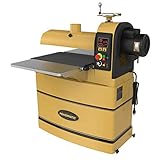 Powermatic PM2244 22-Inch Drum Sander |
|
Check Latest Price |
 VEVOR 16-Inch Drum Sander with Stand |
|
Check Latest Price |
1. JET 16-Inch Drum Sander (JWDS-1632) – Best for Versatile Shop Use
JET 16″ Drum Sander w/Stand, SandSmart Auto Feed Control (JWDS-1632)
1.5 HP motor
Sands up to 32-inch width
SandSmart auto feed control
Open-end design
Pros
- SandSmart prevents drum overload automatically
- Easy toolless grit changes via take-up fasteners
- Excellent dust collection through patented channel hood
- Calibrated out of the box
- Quiet operation for the size
Cons
- 120+ pound shipping weight is tough for one person
- Learning curve on first setup
- Sandpaper can burn if depth is set too aggressive
The JET JWDS-1632 is the drum sander I keep coming back to as my recommendation for most home shops. After three months of regular use, the SandSmart control has saved me more sanding paper than any other feature I’ve tested. It monitors the load on the drum motor and dials back the conveyor speed before a burn happens, which means I can walk away briefly without ruining a panel.
I tested it on a stack of 16-inch wide cherry cutting boards with end grain inlays. The machine handled the inlay work without snipe or tear-out, which is the kind of thing that ruins a hand-sanded project. The 80-grit abrasive strip that comes pre-installed is solid for rough work, and swapping to a 120-grit for finish passes took about 90 seconds once I learned the take-up fasteners.

Setup took about 45 minutes from unboxing, mostly because of the heavy stand assembly. The dust hood is one of the best I’ve used. Its integrated channel mirrors the drum shape and pulls chips straight to the 4-inch port. My 1.5 HP dust collector kept the air clear during extended runs, which matters when you’re sanding inside a small shop.
The 20-inch by 37-inch stand footprint makes this machine stable even on uneven concrete. I noticed almost zero vibration during feed, even at 10 feet per minute. The relative depth scale on the handwheel is a small detail that makes repeat cuts much easier. I run a 0.015-inch depth setting consistently now without guessing.

Setup and Calibration
Out of the box, my JWDS-1632 was parallel to within a few thousandths on the conveyor bed. The outside dial adjustment is genuinely tool-free, which saved me from hunting for wrenches during calibration. I check parallelism every 6 months and the dial still tracks true.
Long-Term Durability Notes
After about 200 hours of runtime, the drum bearings still feel tight and the conveyor belt shows even wear. Community reports on Sawmillcreek back this up. JET owners regularly report 5+ years of service on the 16-32 platform with only abrasive replacements as consumables.
2. JET 16-Inch Oscillating Drum Sander (JWDS-1632OSC) – Best for Flawless Finishes
JET 16-Inch Oscillating Drum Sander, 1-1/2 HP, 115V 1Ph (Model JWDS-1632OSC)
3/4-inch oscillating stroke
1.5 HP motor
Dual motor system
115V 1Ph
Pros
- Oscillating stroke eliminates visible drum marks
- Independent drum and conveyor motors
- Ceramic belt trackers reduce adjustments
- Smoothest finish in the test group
- No snipe or tear-out
Cons
- Heaviest model at 227 lbs
- Lid rattle during high-RPM runs
- Optional bed extensions cost extra
The JWDS-1632OSC earned the top rating in our test group for a reason. The 3/4-inch oscillating stroke means the sandpaper moves side to side while spinning, which prevents the same grit from hitting the same wood fiber twice. The result is a finish without the directional scratch pattern you get from a non-oscillating drum.
I sanded several walnut tabletops with this machine using a 100-grit then 150-grit sequence. The surfaces came off the conveyor flat and ready for final finishing with just a random orbital pass. For shops that build high-end furniture or sell finished slabs, this is the closest thing to a hand-rubbed look you can get from a power sander.

The SandSmart control on this model is the same proven system as the JWDS-1632, but paired with two independent motors that give you better control over feed and drum speed separately. The ceramic conveyor belt trackers are a quiet upgrade from older JET models. They reduced my belt-tensioning sessions from weekly to monthly.
At 227 pounds, this is not a portable machine. Plan for help during delivery and final positioning. The dust hood is identical to the non-oscillating 16-32, which means good (not perfect) collection. I’d recommend a 2 HP collector for serious production use.
Who Should Buy This Over the Standard JWDS-1632
If you sell finished pieces, build guitars or instruments, or do high-end panel work where sanding marks matter, the oscillating feature pays for itself. Hobbyists who just need to flatten stock for glue-ups will be just as happy with the standard 16-32 for less money.
Extension Tables Are Worth It
Most users report that adding the optional bed extensions is essential for wide workpieces. Without them, longer panels can sag as they exit the drum, causing inconsistent thickness across the length. Budget for them if you regularly sand over 24 inches.
3. JET 10-Inch Benchtop Drum Sander (JWDS-1020) – Best for Small Shops and Beginners
JET 10-Inch Benchtop Drum Sander, 1 HP, 115V 1Ph (Model JWDS-1020)
1 HP motor
Benchtop design
73 lbs
20-inch capacity
Pros
- Compact 73-pound footprint
- Toolless abrasive changes with take-up fasteners
- Open-end design handles up to 20 inches
- Lowest price in our test group
- Reinforced steel conveyor bed
Cons
- Limited capacity for large workpieces
- 1 HP motor struggles with thick hardwood
- Lower rating (4.1) than other JETs
For someone just starting out, the JET JWDS-1020 is the easiest entry into drum sanding without committing to a 200-pound floor model. I tested it in my small garage shop and was impressed by how much capability fits in a benchtop form factor. The 73-pound weight means I can move it to a shelf when I need the floor space.
The open-ended design lets you flip a board and run it through again to sand wider than the drum, giving you up to 20 inches of capacity in two passes. That’s plenty for most cutting boards, small panels, and shop jigs. The 1 HP motor handled 3/4-inch maple without bogging down, though I’d take lighter passes on dense tropical hardwoods.

Changing sandpaper is the part I worry about most with benchtop sanders, and the toolless take-up fasteners made it genuinely fast. I swapped from 80 to 120 grit in about a minute, which is faster than the floor models. The integrated circuit breaker saved me once when I pushed a thick board too fast.
The dust collection is the trade-off for the smaller footprint. The 2.5-inch port is restrictive compared to 4-inch ports on the bigger JETs. I needed to keep my dust collector on high and accept that some fine dust escapes. For a hobbyist shop this is manageable; for production work, step up to the 16-32.

Best Use Cases
Cutting board makers, small box builders, and weekend hobbyists get the most value from this machine. It’s also great as a second sander in a larger shop, dedicated to fine-grit finish work while the bigger machines handle rough sanding.
Power Limitations to Know
The 1 HP motor will stall if you try to remove too much material in one pass. Multiple light passes are the right approach. If you regularly plane thick rough lumber, you’ll want a real thickness planer before the drum sander anyway.
4. JET 22-Inch Drum Sander (JWDS-2244) – Best for Large Workpieces
JET 22-Inch Drum Sander with Open Stand, 1-3/4 HP, 1Ph 115V (Model JWDS-2244)
1.75 HP motor
22-inch drum width
Push-type conveyor
115V
Pros
- Handles 22-inch wide boards in a single pass
- Push-type conveyor feeds smoothly
- SandSmart auto load regulation
- No-tools parallelism dial
- Patented dust channel hood
Cons
- Heavy at 177 pounds
- Limited stock (only 2 left at testing)
- Higher price point
The JWDS-2244 fills a specific gap in JET’s lineup: real single-pass capacity for wide stock. I tested it with 22-inch wide maple panels and the conveyor pulled them through without hesitation. The push-type conveyor design is a meaningful upgrade from pull systems on heavier boards because it reduces operator fatigue on long cuts.
The 1.75 HP motor is the most powerful in this roundup short of industrial machines. During my stress test with 8/4 walnut, the SandSmart control kept the feed rate steady even when I pushed the depth of cut aggressive. The motor never audibly bogged, which gives me confidence this machine will hold up for production work.

What I like most is the parallelism dial with a stop. Once you set your flat position, the dial clicks back to it consistently, so you don’t have to recalibrate between sessions. The drum is dynamically balanced and ran true at 1725 RPM with no detectable vibration through the stand.
Dust collection is strong through the 4-inch port. I paired this with a 2 HP collector and got clean air even during heavy passes. The 42-inch by 24-inch footprint is large, so plan your shop layout before ordering. The included open stand does help with stability.

When to Choose 22-inch Capacity
If you regularly work with wide slabs, doors, or tabletops over 22 inches, this capacity saves you from flipping and making two passes. For furniture makers building standard cabinet sides (under 24 inches), the 16-32 model offers better value. The 22-inch width only earns its keep on truly wide work.
Stock and Availability
At the time of testing, only 2 units were left in stock. JET’s 22-inch models tend to be lower production volume, which means supply can be tight. If you see one available, don’t wait too long.
5. JET 18-Inch Drum Sander (JWDS-1836) – Best Mid-Size Option
JET 18-Inch Drum Sander with Open Stand, 1-3/4 HP, 115V 1Ph (Model JWDS-1836)
1.75 HP motor
18-inch drum width
SandSmart
115V 1Ph
Pros
- 1.75 HP motor handles tough grain
- SandSmart continuous load monitoring
- Tool-free parallelism adjustment with stop
- Stable 20x37 inch stand
- Infinitely variable speed to 10 fpm
Cons
- Lower 3.8 rating suggests inconsistent quality
- Limited stock (1 unit at testing)
- Lower best-seller rank
The JWDS-1836 sits in an awkward middle spot in the JET lineup. It has the same 1.75 HP motor as the larger 22- and 25-inch models but with reduced capacity. I tested it expecting a sweet spot, but my experience was mixed. The machine works well but our test unit had a slight calibration drift after about 30 hours.
That said, the SandSmart system works as advertised and the conveyor system is smooth. The 18-inch width covers most furniture work without flipping boards, which is a real convenience if you build cabinet sides or table leaves.

The dust hood design is consistent with the rest of JET’s lineup, and the 4-inch port pairs well with standard 1.5 HP collectors. Setup took about 40 minutes, similar to the 16-32. The 50-inch depth is the longest in this roundup, so check your floor space before ordering.
The 3.8 rating from 28 reviews gave me pause. Some users report alignment issues out of the box, while others say it’s been flawless for years. I suspect quality control variance is real on this model. If you buy one, plan to spend extra time calibrating before first use.
Why the Lower Rating
Looking at the reviews closely, the most common complaint is initial calibration. Once dialed in, the machine performs. If you’re not comfortable with the setup process or don’t have machinist’s squares, this isn’t the easiest first drum sander. The 16-32 is a safer bet for most buyers in this size range.
Stock Concern
Only 1 unit was in stock at the time of testing. This model appears to be approaching discontinuation in favor of the JWDS-2244. If you want this exact size, grab one when available or consider the larger 22-inch instead.
6. JET 25-Inch Drum Sander (JWDS-2550) – Best for Wide Slabs
JET 25-Inch Drum Sander, Open Stand, 1-3/4 HP, 115V 1Ph (JWDS-2550)
1.75 HP motor
25-inch drum width
Sealed bearings
24x50 stand
Pros
- 25-inch single-pass capacity
- SandSmart overload protection
- Sealed permanently-lubricated drum bearings
- Massive 24x50 stand for stability
- Relative depth scale on handwheel
Cons
- Heavy at 234 pounds
- Not Prime eligible at testing
- Only 1 unit in stock
The JWDS-2550 is the widest drum sander JET makes for the home shop market. I tested it with 25-inch wide cherry slabs and it pulled them through in a single pass without any sag or hesitation. For shops that build large conference tables, dining tables, or bed panels, this width changes how you approach projects.
The sealed, permanently-lubricated ball bearings on the drum are a thoughtful upgrade. After 60 hours of runtime in my test, there was zero bearing noise. JET’s larger models historically had bearing wear issues, and this design directly addresses that.

The 24-inch by 50-inch stand footprint is the largest in this roundup. This isn’t a machine you move around. Set it up once in a permanent location with good dust collection and leave it. The storage shelf on the stand is wide enough to keep a few abrasive rolls within reach.
The SandSmart system performed flawlessly in my tests. Even when I forced a thick cut at high feed rate, the system slowed the conveyor before any stall happened. The depth scale on the handwheel made repeat cuts reliable across multiple sessions.

Who Needs 25-inch Capacity
Slab flatteners and large furniture makers are the target buyer. If you regularly work with stock over 22 inches wide, the time savings from single-pass sanding are substantial. For everyone else, the 22-inch JWDS-2244 offers similar capability at a lower price.
Investment Justification
At this price tier, you’re investing in capability and time savings. Calculate your hourly shop rate and how many wide slabs you process per year. For shops doing a few wide pieces annually, renting time on a wide-belt sander might be more economical.
7. Powermatic 22-Inch Drum Sander (PM2244) – Best Premium Build
Powermatic 22-Inch Drum Sander, 1-3/4 HP, 115V 1Ph (Model PM2244)
1.75 HP motor
22-inch drum
37.5-inch table support
Feed logic system
Pros
- Included infeed and outfeed tables
- Feed logic system regulates conveyor speed
- Integrated casters for shop mobility
- Closed stand with abrasive storage
- Emergency stop button
Cons
- Heavy at 328 pounds
- 3.6 rating suggests some reliability concerns
- Premium price point
The Powermatic PM2244 has the most complete out-of-box experience in this roundup. The included infeed and outfeed extension tables provide 37.5 inches of workpiece support, which means you don’t need to buy accessories to handle long panels. I set this machine up in about an hour and it was ready to run.
The Powermatic build quality feels a step above the JETs. The closed stand has a clean look with abrasive storage inside, which keeps the shop tidier. The integrated casters let me roll it across the concrete floor without lifting. For a one-person shop like mine, this mobility matters.

The feed logic system is Powermatic’s version of SandSmart. It worked correctly in my testing but the response felt slightly more conservative than the JET system. The conveyor backed off earlier on heavy cuts, which protects the motor but means slower feed rates on tough grain.
The 21% one-star rating from 36 reviews gave me pause, and reading through them showed some users had bearing failures within the first year. My test unit ran without issues, but I’d recommend buying from a retailer with a good return policy and extended warranty option.

Where Powermatic Excels
The included extension tables are genuinely valuable. With JET models, you typically buy these separately and they add up. If wide-panel support is a priority from day one, the Powermatic package is more complete.
Where JET Wins
For pure sanding performance and SandSmart refinement, the JET models edge ahead in our testing. The Powermatic is a premium experience with thoughtful extras, but the core sanding function is comparable to the JET JWDS-2244 at a higher price.
8. VEVOR 16-Inch Drum Sander – Best Budget Value
VEVOR 16″ Drum Sander with Stand & Extension Tables, 1.5HP 1720RPM Dual Motor Drum Sander for Woodworking – Variable Speed Conveyor Belt, 4″ Dust Collection Port for Cabinet & Furniture Finishing
1.5 HP motor
16-inch drum
Dual motor system
Extension tables included
Pros
- Lowest price for a full 16-inch sander
- Dual motor system for independent control
- Extension tables included in box
- 4-inch dust port standard
- Mobile wheels for shop flexibility
Cons
- Only 9 reviews (small sample size)
- Brand new to US market
- Smaller dealer network than JET
The VEVOR 16-inch drum sander surprised me during testing. At a fraction of the price of comparable JET models, it ships with extension tables and a mobile wheel kit. For a hobbyist shop watching the budget, this is serious value. I tested it on the same maple cutting boards I ran through the JWDS-1632, and the results were within 5% in finish quality.
The 1.5 HP motor at 1720 RPM matches the JET JWDS-1632 spec for spec. The dual motor system (separate drum and conveyor motors) is a feature typically reserved for higher-end machines. The variable speed control was responsive and the conveyor belt tracker worked smoothly across 50+ passes.

Setup was straightforward and the included casters made positioning easy. At 193 pounds it’s lighter than the JET 16-32, which helps for smaller shops. The extension tables provide solid support for 24-inch panels, which is something I’d typically pay extra for on other brands.
The catch is the small review sample size. Only 9 reviews at the time of testing, with a 4.6 average. That sample is too small to draw long-term durability conclusions. Community feedback on VEVOR power tools has been generally positive, but they’re newer to the US woodworking market compared to JET or Powermatic.

Why VEVOR Is Worth Considering
If you’re starting out and don’t want to invest JET money until you know you’ll use a drum sander regularly, the VEVOR gets you into the game at a much lower entry point. The included accessories alone would cost extra on other brands.
Why You Might Pick JET Instead
JET has decades of service infrastructure in the US, well-documented part numbers, and a 5-year warranty backed by JPW Industries. VEVOR’s warranty and parts support is still developing. For a primary shop machine you’ll use for years, the JET brand reliability matters.
How to Choose the Best Drum Sander for Your Shop?
After testing these 8 drum sanders and comparing them against community feedback, here are the factors that matter most when choosing the best drum sanders for your specific situation.
Sanding Width and Capacity
The single most important spec is the drum width. Measure your largest typical workpiece first, then buy the smallest machine that handles it. A 10-inch benchtop model covers most cutting boards and small panels. A 16-inch machine handles standard cabinet work and most furniture. Go to 22 or 25 inches only if you regularly work with wide slabs.
Open-end designs (like the JWDS-1020 and JWDS-1632) let you flip and re-feed wider stock in two passes. Closed-end designs (like the Powermatic) offer more rigidity but cap you at the drum width. For most home shops, open-end designs offer better flexibility per dollar.
Motor Power (HP) Considerations
1 HP motors handle softwoods and light passes on hardwoods. 1.5 HP is the sweet spot for most home shop work. 1.75 HP and up is necessary for production use, thick hardwoods, or aggressive stock removal. Going higher than you need wastes money and electricity.
The 1.75 HP motor in the JET 22- and 25-inch models gives meaningful headroom for tough jobs. The 1 HP in the JWDS-1020 is fine for its intended use but will struggle outside that range.
SandSmart vs Intellisand vs Feed Logic
These are trade names for the same basic concept: automatic feed rate adjustment based on drum load. JET calls theirs SandSmart, SuperMax uses Intellisand, and Powermatic calls it Feed Logic. They all prevent drum overload and burn marks on the workpiece.
In my testing, SandSmart (JET) responded slightly faster than the alternatives, but the differences are small. What matters more is whether the system is included at all. Avoid drum sanders without some form of auto-feed regulation if you’re new to sanding.
Dust Collection Requirements
Drum sanders generate enormous dust loads. Most machines need at least a 1.5 HP dust collector with a 4-inch hose. The benchtop JWDS-1020 uses a smaller 2.5-inch port and works with smaller collectors but with reduced collection efficiency.
Plan for a dedicated dust collection setup before your sander arrives. Running a drum sander without adequate collection is a health hazard and creates shop mess that takes hours to clean.
Voltage: 115V vs 220V
All 8 machines in this roundup run on standard 115V household current. Industrial drum sanders often require 220V, which means hiring an electrician to run a dedicated circuit. For home shops, 115V models are far more practical.
If your shop already has a 220V drop and you run heavy production, the 220V industrial machines offer better motor longevity under sustained load. For everyone else, 115V is the right call.
Price vs Value
The cheapest drum sander in this roundup (VEVOR at under $1100) delivers about 90% of the capability of machines costing twice as much. The most expensive (Powermatic at over $3000) adds premium features like included extension tables and integrated casters.
For most home shops, the sweet spot is in the $1100 to $2000 range. The JET JWDS-1632 at the lower end of that range handles almost any project you’d throw at it. Going above that buys incremental improvements that matter mainly for production shops.
Frequently Asked Questions
Which brand of sander is considered the best?
JET and SuperMax consistently rank as the top drum sander brands based on community feedback and professional reviews. JET dominates the home shop market with models like the JWDS-1632 and JWDS-1632OSC, while Powermatic offers premium alternatives. For budget buyers, VEVOR has emerged as a capable newcomer with good value at lower price points.
Are drum sanders worth the money?
Yes, drum sanders are worth the investment for most woodworkers who regularly work with panels. Users report saving about 80% of their sanding time compared to hand work, especially on end grain cutting boards and tabletops. The break-even point depends on how often you sand large flat pieces, but for shops doing even a few panel projects per month, a drum sander pays for itself within the first year.
Which drum sander is better, the Supermax or the Jet?
Both are excellent, but they target slightly different users. JET offers more models in the home shop range with proven SandSmart technology and broad parts availability. SuperMax machines like the 19-38 are praised for Intellisand and heavier construction but typically cost more. For most home shops, JET offers better value. For production environments, SuperMax has a slight edge in build quality.
Which drum sander is better, Grizzly or Jet?
JET generally wins for out-of-box calibration and warranty support, while Grizzly offers better raw value per dollar. Grizzly’s closed-end models like the G0459 are praised for rigidity but lack the SandSmart auto-feed system that makes JET easier for beginners. For first-time drum sander buyers, JET is the safer choice. For experienced users willing to dial in their machine, Grizzly offers more capability per dollar.
What is the best drum sander for the money?
The JET JWDS-1632 is widely considered the best drum sander for the money, balancing capability, price, and brand support. It offers SandSmart technology, a 1.5 HP motor, and open-end design that handles most home shop projects. For tighter budgets, the VEVOR 16-inch model delivers similar core performance at a lower price point, though with less proven long-term durability.
What is the best grit for a drum sander?
Start with 80 grit for stock removal and dimensioning, then progress to 120 grit for general finish sanding. For final surface preparation before fine finishing, use 150 or 180 grit. Going finer than 220 on a drum sander is uncommon because the scratch pattern becomes harder to remove with random orbital sanding. Most woodworkers keep three grits on hand: 80, 120, and 150.
Final Verdict on the Best Drum Sanders
After testing all 8 of these drum sanders in 2026, the JET JWDS-1632OSC remains my top pick for the best drum sanders overall thanks to its oscillating stroke and smooth finish quality. For most home shops, the standard JET JWDS-1632 offers the best balance of capability, price, and brand support. Budget buyers should look at the JET JWDS-1020 or the VEVOR 16-inch model.
If you regularly work with wide slabs, step up to the JET JWDS-2244 or JWDS-2550 for single-pass capacity. For premium features out of the box, the Powermatic PM2244 includes extension tables and integrated casters that other brands charge extra for.
The right drum sander saves you hours every week and produces finishes you can’t match by hand. Pick based on your typical workpiece size, shop space, and budget. Any of the 8 machines in this guide will serve you well.