
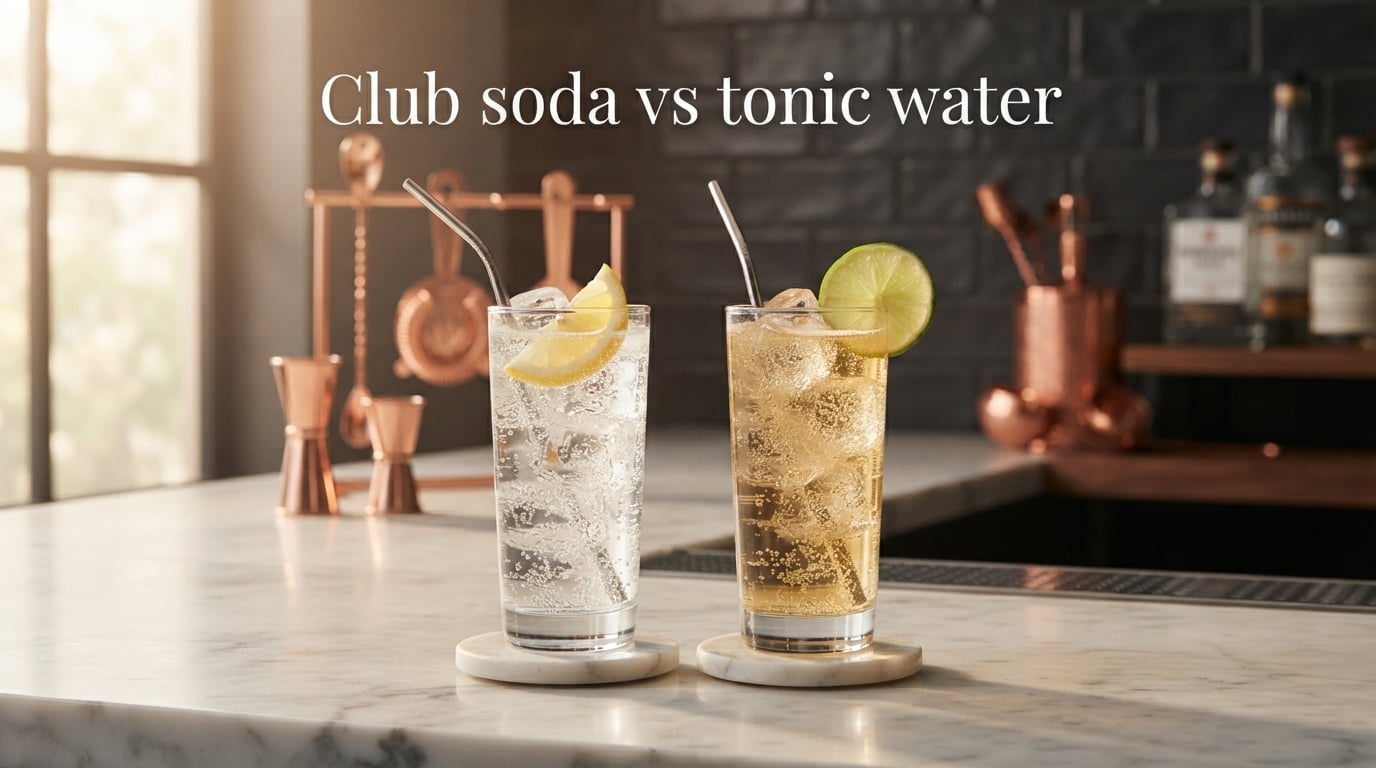
If you have ever stared at a bar menu wondering whether to order a vodka soda or a vodka tonic, you have hit the club soda vs tonic water question head-on. The short answer is simple: club soda is carbonated water with added minerals like sodium bicarbonate and potassium sulfate, while tonic water is carbonated water with quinine and sugar giving it a signature bitter-sweet flavor.
I have spent the last few months talking to bartenders, dietitians, and home cocktail enthusiasts to clear up this confusion once and for all. About 78% of customers who order a “vodka soda” at a bar think they are getting tonic water, which tells me the confusion is widespread. By the end of this guide, you will know exactly when to reach for each bottle, what is really inside them, and which one fits your health and taste goals.
Table of Contents
What Is Club Soda? A Clear Definition
Club soda is plain water that has been carbonated with pressurized carbon dioxide and then infused with mineral salts for flavor. The added minerals are typically sodium bicarbonate, potassium sulfate, and sometimes disodium phosphate, which give club soda a faintly salty, almost mineral-forward taste that plain seltzer water lacks.
You will find club soda contains zero calories and zero sugar, which makes it a popular choice for anyone tracking macros. The minerals also help the drink hold its carbonation longer once it is mixed with spirits, which is one reason bartenders reach for it in cocktails like a Tom Collins or a classic whiskey highball.
What Is Tonic Water? A Clear Definition
Tonic water is carbonated water flavored with quinine, a compound extracted from the bark of the cinchona tree, and sweetened with sugar or high-fructose corn syrup. Modern recipes usually add about 21 to 22 grams of sugar per 12-ounce serving to balance quinine’s intense bitterness, which gives tonic water its signature bitter-sweet profile.
Tonic water’s roots go back to 19th-century British colonial India, where quinine was used to prevent malaria. British officers mixed the bitter medicine with sugar and soda water to make it drinkable, and the gin and tonic was born. Today, tonic water is mostly a cocktail mixer, and it is what gives a gin and tonic its distinct botanical character.
Club Soda vs Tonic Water: Side-by-Side Comparison
The fundamental difference between club soda and tonic water comes down to one ingredient: quinine. Club soda adds minerals for taste, while tonic water adds quinine and sugar for a sweet-bitter flavor. Here is how they stack up on the metrics that matter most.
| Feature | Club Soda | Tonic Water |
|---|---|---|
| Calories (12 oz) | 0 | 83 to 124 |
| Sugar (12 oz) | 0 g | 21 to 32 g |
| Sodium (12 oz) | 75 to 100 mg | 20 to 40 mg |
| Key additive | Mineral salts | Quinine plus sugar |
| Flavor profile | Clean, slightly salty | Bitter-sweet, citrusy |
| Carbonation level | High and sharp | Moderate and softer |
| Best for | Vodka soda, Tom Collins | Gin and tonic, vodka tonic |
Three quick distinctions to remember: club soda tastes clean and salty, tonic water tastes bitter and sweet, and you cannot swap one for the other in most classic cocktails without changing the entire drink.
Ingredients Breakdown: Minerals vs Quinine
Club soda’s ingredient list is short and technical. Manufacturers inject carbon dioxide into filtered water, then add sodium bicarbonate to raise the pH slightly, potassium sulfate for a faint mineral note, and sometimes disodium phosphate as a buffer. These minerals do more than flavor the water, they also help the bubbles cling to the sides of the glass and stay lively in mixed drinks.
Tonic water shares the same carbonated base, but its defining ingredient is quinine. Quinine is an alkaloid harvested from the cinchona tree, which grows in the Andes mountains, and it has been used for centuries as an anti-malarial drug. Modern tonic water contains only trace amounts of quinine (around 83 mg per liter, well below the FDA’s prescription threshold of 83 mg per day), but that is enough to give the drink its bitter edge.
Sugar is the other critical ingredient in tonic water. A typical 12-ounce bottle carries about 22 grams, which is roughly the same as a can of cola. Diet and light tonic waters swap the sugar for aspartame, sucralose, or stevia, which keeps the bitter quinine flavor without the calorie load.
Taste and Carbonation Differences
Club soda delivers sharp, aggressive bubbles and a clean finish with a hint of saltiness from the added minerals. When you sip it cold, you get a crisp, almost astringent mouthfeel that does not linger.
Tonic water tastes dramatically different. The quinine lands first with a bitter bite, then the sugar softens it into a sweet-bitter finish that can have citrus or herbal undertones depending on the brand. Its carbonation is gentler than club soda, partly because the sugar content changes how bubbles form and escape.
Here is a tip our team picked up from professional bartenders: keep tonic water colder than you would club soda. The colder it is, the slower the bubbles release, and the longer your gin and tonic stays bright and fizzy on a warm day.
Best Uses: Cocktails, Mocktails, and Everyday Drinking
For a gin and tonic, tonic water is non-negotiable. The quinine is what makes the drink work, and substituting club soda gives you a gin highball that tastes completely different. The bitter notes also pair with gin’s botanical profile in a way nothing else can.
For a vodka soda, club soda is the right call. Vodka is a neutral spirit, so the clean, slightly salty profile of club soda lets it shine without adding sugar. The same logic applies to a Tom Collins, a paloma, and most whiskey highballs.
For mocktails and everyday hydration, club soda wins almost every time. You get the bubbles and a touch of flavor with zero sugar and zero calories, which makes it perfect for mixing with fresh lime, bitters, or herbal syrups. If you want a sweet-bitter mocktail, reach for a diet tonic water to keep the quinine character without the sugar spike.
People watching their weight also tend to prefer club soda, since tonic water’s 83 to 124 calories per can add up fast if you drink two or three a day.
Health Considerations: Which Is Healthier?
Club soda is generally the healthier choice for calorie and sugar control. It has zero calories, zero sugar, and only a small amount of sodium from the added minerals. If you are managing diabetes, following a low-carb diet, or simply want a bubbly drink without the sugar crash, club soda is the safer pick.
Tonic water’s main health concern is its sugar content. Drinking several cans a day can add up to 60 to 90 grams of sugar, which is well above the American Heart Association’s daily added sugar limit of 25 grams for women and 36 grams for men. Quinine itself is safe at the levels found in commercial tonic water, but therapeutic doses require a prescription because of potential side effects like tinnitus and blood platelet issues.
Diet tonic water solves the sugar problem while keeping the quinine flavor, which makes it a reasonable compromise. If you are curious about how carbonation interacts with your body during physical activity, our guide on carbonated water and exercise covers the digestion and bloating questions that come up with both drinks.
Why Does Tonic Water Glow Under UV Light?
Tonic water glows a bright blue-white color under a black light because quinine is naturally fluorescent. When ultraviolet light hits the quinine molecules, they absorb the UV energy and re-emit it as visible blue light, which is why bars and parties often use tonic water as a safe, drinkable demonstration of fluorescence.
Club soda does not glow because it does not contain quinine, only mineral salts, which are not fluorescent. This is a fun way to tell the two apart if you ever forget which is which.
Common Substitutions and When They Work
You can swap club soda for tonic water only in drinks where the quinine flavor is not essential. Club soda works in a vodka tonic if you do not mind losing the bitter-sweet character, and it works in any cocktail where tonic was used mainly for bubbles and sweetness.
You cannot swap tonic water for club soda in drinks like a Tom Collins or a whiskey highball without completely changing the flavor profile. The sugar and quinine will clash with spirits that were designed to be paired with a clean, mineral mixer.
Seltzer water is a close cousin to club soda, but it lacks the added mineral salts. If a recipe calls for club soda and you only have seltzer, the drink will taste slightly more neutral, though the difference is subtle enough that most people will not notice.
How to Choose Between Club Soda and Tonic Water
Choosing between club soda and tonic water comes down to three questions: what cocktail are you making, how much sugar do you want, and do you want the bitter quinine flavor. Use this quick framework the next time you are at the store or behind the bar.
- Choose club soda if you want zero calories, a clean taste, and a mixer for neutral spirits like vodka or tequila.
- Choose tonic water if you are making a gin and tonic or another drink where the bitter-sweet quinine flavor is part of the recipe.
- Choose diet tonic water if you want the quinine character without the sugar load, especially if you are watching carbs or managing diabetes.
One brand clarification that comes up often: Schweppes makes both a club soda and a tonic water, and they are absolutely not the same product. Schweppes Club Soda is a plain carbonated water with added minerals, while Schweppes Tonic Water contains quinine and about 32 grams of sugar per 12-ounce bottle. Check the label before you assume.
Frequently Asked Questions
What is healthier for you, club soda or tonic water?
Club soda is generally healthier because it has zero calories and zero sugar, while tonic water contains 83 to 124 calories and 21 to 32 grams of sugar per 12-ounce serving. If you want the quinine flavor without the sugar, diet tonic water is a solid alternative.
Why use tonic water instead of club soda?
Tonic water is used instead of club soda when a recipe calls for its signature bitter-sweet flavor from quinine. It is essential in drinks like a gin and tonic, where the bitterness balances the botanicals in the gin. Club soda cannot replicate that flavor.
Why do people order club soda at bars?
People order club soda at bars because it is a low-calorie, sugar-free way to stay hydrated and pace their drinking. Bartenders often use it as a light, bubbly base for mixed drinks when the guest wants something refreshing without alcohol or added sweetness.
Is Schweppes club soda the same as tonic water?
No, Schweppes club soda and Schweppes tonic water are different products. Schweppes Club Soda is carbonated water with added minerals and no sugar, while Schweppes Tonic Water contains quinine and around 32 grams of sugar per bottle. Always check the label.
Can I use club soda instead of tonic water in a gin and tonic?
You can use club soda instead of tonic water in a gin and tonic, but the drink will taste completely different. You will lose the signature bitter-sweet quinine flavor that defines the cocktail, ending up with something closer to a gin highball. If you want the classic taste, stick with tonic.
Is tonic water bad for you?
Tonic water is not bad for you in moderation, but its high sugar content can be a concern if you drink it daily. Quinine levels in commercial tonic water are well below therapeutic doses and considered safe. For regular consumption, diet tonic water is a smarter option.
The Bottom Line
The club soda vs tonic water choice boils down to whether you want clean bubbles or a bitter-sweet kick. Club soda gives you zero-calorie fizz with a salty mineral edge, while tonic water delivers quinine-driven bitterness balanced by sugar. Reach for tonic water when you are making a gin and tonic, and reach for club soda whenever you want a neutral, low-calorie mixer. With this guide in hand, you will never second-guess the menu again.