
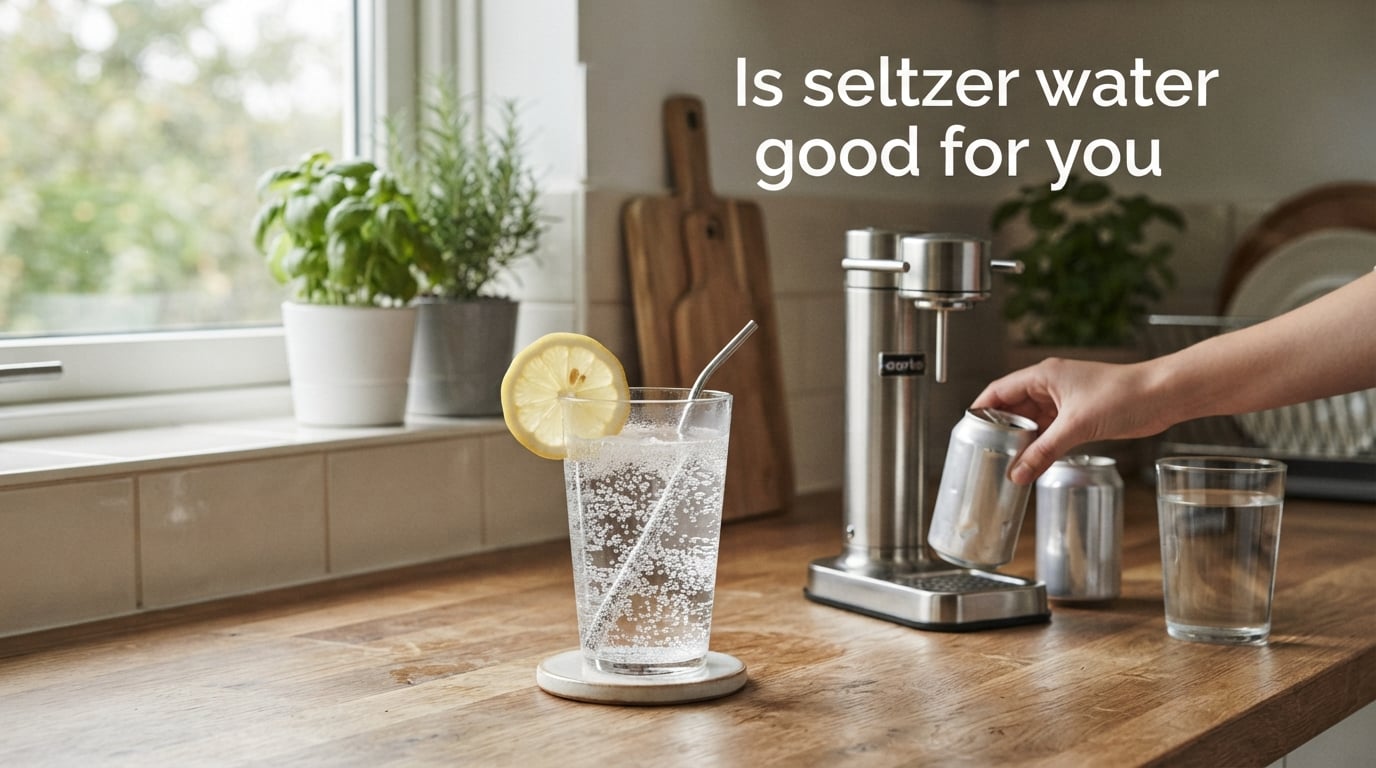
Yes, plain seltzer water is good for you. It hydrates your body just as effectively as still water, contains zero calories, and offers a satisfying alternative to sugary sodas. The catch is that its carbonation can cause bloating in some drinkers, and its mild acidity may gradually wear on tooth enamel if you sip it all day. For most healthy adults, plain seltzer is a smart everyday swap.
In this guide, I break down what seltzer actually is, the real benefits backed by dietitians, the side effects worth watching for, and the dental concerns you actually need to worry about. I also pull from real user experiences on Reddit and Mayo Clinic connect threads to give you practical answers, not marketing fluff.
Table of Contents
What Is Seltzer Water and How Is It Made?
Seltzer water is plain water that has been infused with carbon dioxide gas under pressure. That process creates the signature fizz and a weak carbonic acid, which gives seltzer its slightly tangy bite. Nothing else is added, which is why it’s both calorie-free and sugar-free in its plain form.
The term “seltzer” gets thrown around loosely, but it’s not the same as every other fizzy water on the shelf. Here’s a quick comparison:
Seltzer: Plain water + CO2. No minerals added. Zero calories. Zero sodium.
Sparkling water: Naturally carbonated from a spring or well, often with trace minerals like calcium and magnesium.
Club soda: Plain water + CO2 + added minerals (typically sodium bicarbonate or potassium sulfate) for a saltier, slightly alkaline taste.
Tonic water: Carbonated water plus quinine and usually high-fructose corn syrup or sugar. Around 124 calories per 12 oz can.
The plain seltzer you buy by the case or make at home with a soda maker is the simplest, cleanest version. It’s also the one that dietitians point to when asked if carbonated water is healthy.
The Health Benefits of Drinking Seltzer Water
Seltzer water delivers most of the same benefits as plain water, with a few added perks. Here’s where it shines.
Hydration equal to still water: Despite the fizz, multiple studies confirm that carbonated water hydrates just as well as flat water. A small crossover study published in Nutrition Reviews found no difference in hydration markers between carbonated and still water in healthy adults. If plain water feels boring, seltzer can pull its weight.
Drinking more water overall: I see this constantly in forum threads on r/HydroHomies and r/nutrition. People who hate the taste of still water often report doubling their fluid intake after switching to seltzer. One Reddit user mentioned going from roughly 30 oz of water a day to 80 oz once they started adding carbonation. Hydration wins, however you get there.
A useful tool for weight management: Seltzer gives you something fizzy in your hand without the 140 calories of a regular soda. A 2024 review in Frontiers in Nutrition noted that swapping sugar-sweetened drinks for carbonated water leads to modest reductions in body weight over time, mostly because of the calorie swap itself. The bubbles can also help you feel fuller. A Japanese study of women showed that drinking carbonated water increased feelings of satiety compared to still water.
Digestive support: There’s a reason people order sparkling water with rich meals. Carbonation can help with dyspepsia (general indigestion), and several studies suggest it improves the ability to swallow, particularly in older adults with dysphagia. If fatty foods typically leave you feeling heavy, a glass of seltzer may genuinely help settle things.
Smart soda replacement: This is the biggest practical win. Every regular soda swapped for plain seltzer removes around 39 grams of sugar. If you’re weighing whether seltzer is healthier than soda, the answer is yes, by a wide margin.
Potential Drawbacks and Side Effects
Seltzer isn’t perfect for everyone. Here are the real downsides, ranked by how often they actually show up.
Bloating, gas, and burping: This is the most common complaint. The same fizz that makes seltzer satisfying also fills your stomach with gas. For most people this is mildly annoying. For people with IBS, gastroparesis, or functional bloating, it can be a real problem. If carbonation triggers constant belly distension, switch back to still water.
GERD and acid reflux triggers: Carbonation can relax the lower esophageal sphincter, the muscle that keeps stomach acid in your stomach. If you have GERD, the bubbles may push more acid upward and worsen symptoms. Dietitians at Health.com flag this as a real concern for anyone with chronic reflux. Limiting seltzer to mealtimes, rather than between them, often helps.
Dental erosion (more on this below): Seltzer’s carbonic acid makes it slightly more acidic than still water, sitting at a pH of roughly 3 to 4, compared to plain water’s neutral 7. Soda and citrus juice are far worse, but the acidity is real.
Flavored varieties and hidden sweeteners: Plain seltzer is fine. Many flavored seltzers are fine too, but always check the label. Some “sparkling water” drinks contain sucralose, aspartame, stevia, or sugar alcohols. Most registered dietitians consider sugar alcohols like erythritol safe in moderate amounts, but in sensitive people they can cause bloating and diarrhea, the same issues carbonation already causes. A quick scan of the ingredient list tells the whole story.
The bone-calcium myth: A persistent rumor claims that carbonation “pulls calcium from your bones.” This is not supported by current evidence. A 2006 study in JAMA followed older women who drank mostly carbonated beverages and found no association with hip bone density after adjusting for calcium intake. The concern historically applied to colas, which contain phosphoric acid, not seltzer, which uses carbonic acid.
Is Seltzer Water Bad for Your Teeth?
Plain seltzer is meaningfully gentler on teeth than soda, orange juice, and sports drinks, but it’s not completely neutral. Here’s what the science says.
Seltzer’s pH typically falls between 3 and 4. That’s below the 5.5 threshold where enamel begins to demineralize. In contrast, cola sits around 2.4 to 2.5, and orange juice lands near 3.5 to 4, often lower when sweetened.
A 2018 in vitro study in the International Journal of Paediatric Dentistry found that plain sparkling water caused significantly less enamel loss than soda, but more than still water. The effect was small compared to sugary drinks but measurable.
If you want the benefits of seltzer while protecting your teeth, a few habits go a long way:
Drink seltzer with meals rather than slowly sipping it throughout the day.
Rinse your mouth with plain water after finishing a glass.
Avoid brushing your teeth for at least 30 minutes after drinking seltzer, because enamel is softer right after acid exposure.
Use a straw so the bubbles hit the back of your mouth instead of your front teeth.
Don’t hold seltzer in your mouth before swallowing.
Plain seltzer at mealtimes, two or three times a day, is unlikely to cause noticeable erosion. Constant sipping from early morning to bedtime is where problems start.
Who Should Avoid or Limit Seltzer Water?
Plain seltzer is generally safe for most healthy adults. But certain groups should ease back or skip it entirely:
People with GERD or chronic acid reflux: The carbonation can worsen symptoms. Stick to still water between meals.
Those with IBS or functional bloating: The gas buildup can be painful. If your gut already struggles with fermentation, fizziness makes it worse.
Anyone with active dental erosion or high sensitivity: Talk to your dentist. Seltzer may need to be limited until enamel is restored.
Post-bariatric surgery patients: Carbonation can stretch a healing stomach pouch and is usually restricted in early recovery.
For everyone else, seltzer is a safe, calorie-free way to stay hydrated. If you’re curious about how timing matters, our post on drinking sparkling water before exercise walks through the workout-specific tradeoffs.
FAQs
Is seltzer water ok for kidneys?
For healthy adults, yes. Plain seltzer does not stress the kidneys the way sugary sodas can. A 2018 Harvard study found that women who replaced one sugary drink per day with water or seltzer had a lower risk of chronic kidney disease. People with existing kidney disease should still follow fluid guidance from their nephrologist.
What happens when you drink seltzer water every day?
In most people, daily seltzer simply adds variety to hydration without harm. Some people notice more burping or bloating, and sipping it constantly between meals can contribute to gradual enamel wear. Drinking it with meals and rinsing with plain water handles both concerns.
Do doctors recommend sparkling water?
Most dietitians and physicians do, mainly as a tool to displace sugary drinks. The American Dental Association notes plain sparkling water is far less erosive than soda, and hydration research shows no downsides versus still water for healthy adults.
Is flavored seltzer water healthy?
Most flavored seltzer water is healthy. The main thing to check is the ingredient list. Anything sweetened with real sugar adds calories, and heavy doses of sugar alcohols can trigger GI upset. Plain seltzer or lightly flavored options with no sweeteners are the safest everyday choice.
What is the difference between seltzer and sparkling water?
Seltzer is plain water that has been artificially carbonated. Sparkling water is typically naturally carbonated from a spring and often contains trace minerals like calcium or magnesium. Both are calorie-free, but sparkling water may contribute small amounts of minerals per glass.
Can seltzer water help with weight loss?
Seltzer itself does not burn fat, but using it to replace sugar-sweetened drinks removes calories and helps you feel fuller than flat water. That swap, plus the satiety effect, makes seltzer a useful weight-management tool rather than a magic one.
The Bottom Line
Seltzer water is good for you when you keep it plain and use it as a hydration tool. It hydrates as well as still water, replaces sugary drinks effectively, and adds variety to your fluid intake, especially if plain water feels boring. Watch out for bloating if your gut is sensitive, sip it during meals rather than all day to protect enamel, and check labels on flavored varieties. With those habits in place, plain seltzer is one of the easiest swaps you can make for your health in 2026.