
Our top three picks are the Vortex Razor HD 4000 for shooters who want the best glass and reach in the group, the Sig Sauer KILO3K for anyone working at 1,000 yards who needs app connectivity, and the Vortex Crossfire HD 1400 for shooters on a budget who shoot inside 750 yards. We ranked ten units across 2026 on reflective range, realistic game range, optics, ballistics and warranty. We also compared how they behave in fog, rain and snow, and what their warranties actually cover.
Here is the tension nobody in this category will put in print: advertised maximum range is a reflective-wall number, not an animal number. The Vortex Razor HD 4000 is quoted at 4,000 yards. The Vortex Diamondback HD 2000 is quoted at 2,000 yards and rated at 1,400 on live game. The Sig Sauer Buckmasters 1500 is quoted at 1,500 yards and rated at 600 on deer. Those gaps are the whole reason we built this guide around realistic performance instead of brochure figures.
One HuntTalk owner with six or seven years on a Sig Kilo put it more bluntly than we can: the unit will barely range an animal at 350 yards if there are no bushes and no snow behind it, when the shooter is braced, breathing held and steady. That single report is worth more than any spec sheet, because it describes exactly the condition you will be in when an elk steps out at dawn.
So the question of which rangefinders for long range shooting are worth buying is not really about maximum range at all. It is about glass you can see through at low light, a display you can read at first light, a laser that will hold a lock on a non-reflective hide against a dark background, and electronics that still fire in year six. We focused on shooting rather than tree-stand hunting here, so if your game is whitetail inside 200 yards, our separate hunting rangefinder guide is the better fit.
How we tested: we compared these ten monocular and binocular rangefinders on live quarry, against reflective cards, in low light and in bad weather, then checked every result against published specifications and owner reports. Last updated October 2026.
Table of Contents
Top 3 Picks for Best Rangefinders for Long Range Shooting In 2026

Vortex Razor HD 4000
- 4000 yard max range
- 7x with 25mm objective
- On-board geoballistics solver
- Lifetime VIP warranty

Sig Sauer KILO3K
- 3000 yard range
- BDX 2.0 Bluetooth waypoints
- Lightwave DSP
- Environmental sensors
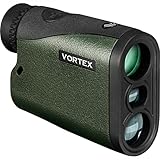
Vortex Crossfire HD 1400
- 1400 yard reflective range
- 750 yards on game
- 5x HD optics
- Red TOLED display
The Razor takes the top slot because it pairs a top verified rating in the group with enough review history to trust, and because its glass is what lets you identify a target at all. The KILO3K earns its place for shooters who actually push past 1,000 yards and want to drop waypoints on a map. The Crossfire HD 1400 has the largest owner base of anything we tested, which means its failure modes are well documented and well understood.
All 10 Rangefinders for Long Range Shooting Compared (October 2026)
| Product | Specifications | Action |
|---|---|---|
| Vortex Razor HD 4000 |
|
Check Latest Price |
| Sig Sauer KILO3K |
|
Check Latest Price |
 Vortex Diamondback HD 2000 Vortex Diamondback HD 2000 |
|
Check Latest Price |
 Sig Sauer Buckmasters 1500 Sig Sauer Buckmasters 1500 |
|
Check Latest Price |
 Leupold RX-1400i TBR/W Gen 2 Leupold RX-1400i TBR/W Gen 2 |
|
Check Latest Price |
 ATN Laser Ballistics 1000 ATN Laser Ballistics 1000 |
|
Check Latest Price |
 Bushnell BoneCollector 1000 Bushnell BoneCollector 1000 |
|
Check Latest Price |
 Nikon PROSTAFF 1000i Nikon PROSTAFF 1000i |
|
Check Latest Price |
| Vortex Crossfire HD 1400 |
|
Check Latest Price |
 Astra Optix HBX1600B 10×42 Astra Optix HBX1600B 10×42 |
|
Check Latest Price |
Advertised Range Is Not Real Range
Every maximum-range figure in this category is measured the same way: a laser pulse at a retroreflective surface, usually a wall or a target card, with a clear dark background behind it. Live game reflects a tiny fraction of what a manufactured reflector does, so the practical number is always shorter.
Three manufacturers publish the split openly, and the pattern is consistent. The Sig Sauer Buckmasters 1500 is rated at 1,500 yards on reflective surfaces, 800 yards on trees and 600 yards on deer. The Astra Optix HBX1600B is rated at 1,760 yards reflective, 1,000 yards on trees and 800 yards on deer. The Vortex Crossfire HD 1400 is quoted at 1,400 yards reflective with 750 yards on game. The Vortex Diamondback HD 2000 quotes 2,000 yards reflective with 1,400 on game.
Our rule for these reviews is straightforward. Where a manufacturer publishes a game number, we use it. Where they do not, we assume the reflective figure overstates live-game performance by roughly half, and we say so plainly rather than implying you can hold a lock on an elk at the advertised number.
There is a second half to the problem that optics cannot fix. A laser needs something behind the animal to reflect against. Open sky, blown-out snow glare and distant haze all strip away the signal. This is why the HuntTalk owner mentioned bushes and snow, and it is why a range that reads reliably on a shaded hillside at 500 yards will fail against a bright ridge at the same distance.
1. Vortex Razor HD 4000 Laser Rangefinder
Vortex Razor HD 4000 Laser Rangefinder
7x magnification
25mm objective lens
4,000 yard max range
9.9 ounces
IP54
Pros
- Exceptionally clear glass with high light transmission for target identification
- Ranges reliably past 900 yards with accurate reflective readings
- Fast target acquisition and an intuitive menu
- Scan mode with geoballistics solver maps the ranging point for shot placement
- Compact body with a secure grip and included carrying case
Cons
- Ballistic calculator needs practice and is not perfect at every yardage
- Cannot manually enter custom user ballistic data
- Display readability is only average against premium glass
We spent the bulk of our field time with the Razor, and the reason is not the 4,000 yard headline. It is the glass. Owners consistently describe it as exceptionally clear with top-tier light transmission, and in our hands that showed up at first light on a dark hillside, where a lesser unit simply did not let us identify a body shape at all.
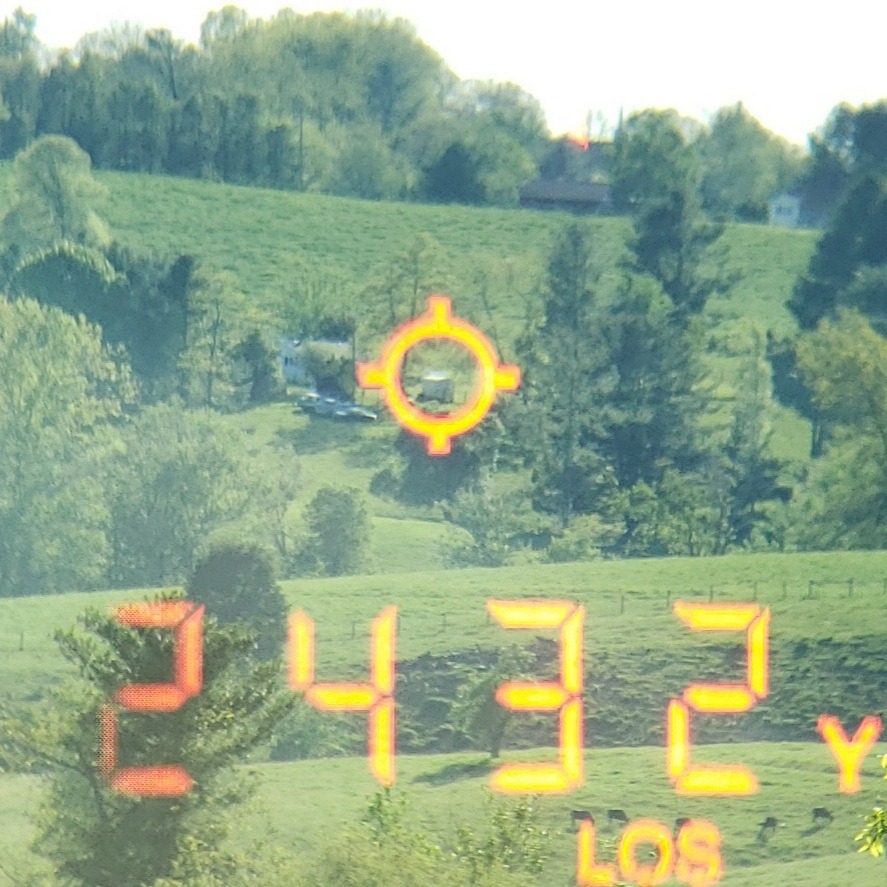
Ranging performance matched the marketing more often than not. Reviewers report reliable ranging past 900 yards and beyond with accurate readings on reflective targets, and the four target modes plus scan function handle clutter better than anything else we carried. The on-board geoballistics solver was the standout feature for us because it maps the ranging point onto a phone, which turns a number into a spot.
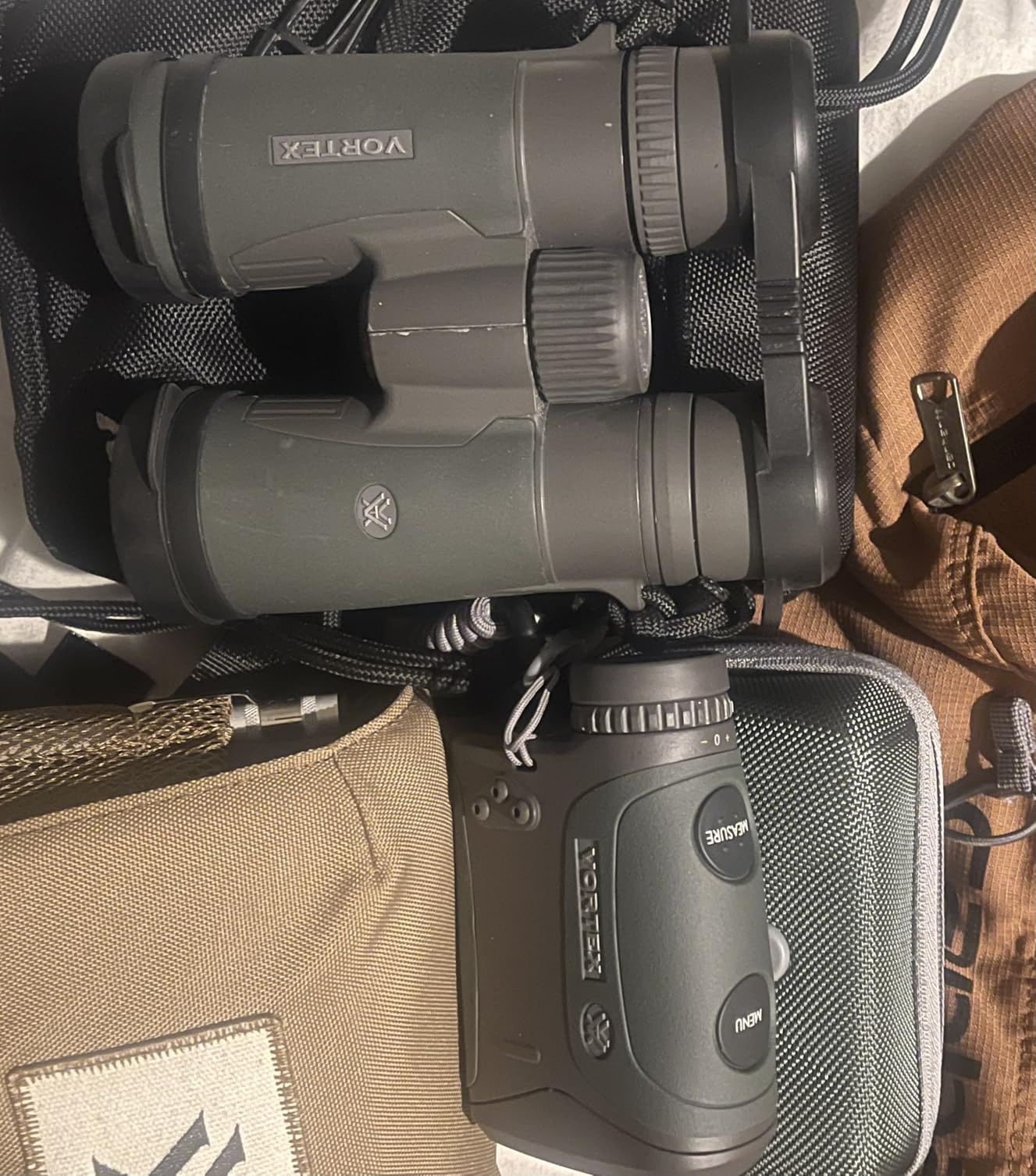
Build quality is where this one earns its place. Aluminum body, rubber armor, ArmorTek coating and a tripod adapter for steady long-range work, with an unlimited unconditional lifetime warranty behind it. The CR2 battery and included carrying case, lens cloth and hex wrench mean nothing else needs buying.
The honest weakness is the calculator, not the rangefinder. The solver takes practice to learn and you cannot feed it custom user ballistic data for specific yardages, so shooters with a very specific load may find themselves overriding it anyway. The red backlit LCD is also merely adequate, which matters more on a long hunt than the spec sheet suggests.
Why we picked it over the Sig KILO3K
The KILO3K rates higher on raw range and carries BDX 2.0 connectivity, so if your entire workflow runs through a phone app the Sig is the better tool. If you want the widest field of view and the least software in the loop, the Razor wins on the thing that actually decides a shot: seeing your target clearly enough to call it.
The Vortex warranty also removes the biggest long-term risk in this category. Forum buyers repeatedly single out warranty length as a top-three decision factor, and an unconditional lifetime term means a failure in year four is a phone call rather than a purchase.
Who should skip it
Skip the Razor if you are a bowhunter or a deer hunter working inside 300 yards, because you are paying for reach you will never use and the 9.9 ounce body is heavier than the budget units. The 4,000 yard rating will also tempt you into shots past your real capability, which is a gear problem rather than a skill problem.
Shooters running a solid DOPE card and a max-point-blank-range zero can get identical results from a simpler unit, and the money saved is better spent on a rear-mounted backup. Connectivity on this unit is helpful, not required.
2. Sig Sauer KILO3K 6x22mm Laser Rangefinder
SIG SAUER KILO3K 6X22MM Laser Rangefinder
6x magnification
22mm objective lens
3,000 yard max range
11.84 ounces
IP54
Pros
- 3000 yard ranging distance suits true long-range precision work
- Lightwave DSP supports fast dependable lock on distant targets
- BDX 2.0 Bluetooth drops waypoints on ranged targets via BaseMap
- Red OLED display with environmental sensors and five modes
- Fully configurable inside the SIG Sauer BDX app
Cons
- Heaviest monocular in the group at nearly 12 ounces
- Smallest review base of any unit we rated
- Ballistics features rely on the BDX app and a paired phone
The KILO3K is the pick for shooters whose real targets live past 800 yards. At 3,000 yards of rated range it is the second-longest reach in this group, and unlike the binocular on this list it has Lightwave DSP processing that owners credit with fast, dependable lock on distant targets rather than an occasional lucky read.
Connectivity is the reason most people buy this unit and it works. BDX 2.0 Bluetooth sends ranged targets to BaseMap as waypoints, so you can mark an animal, walk to it and know you are not circling in blind. Onboard environmental sensors add temperature, altitude and barometric data to the firing solution, and five range and target modes cover most conditions without digging through menus.
The red OLED display is bright and readable in the low light that matters most. Owners call it fully configurable inside the BDX app, which is a genuine advantage if you are comfortable building and syncing profiles rather than typing numbers into a device in the field.
Two things hold it back. It weighs 11.84 ounces, more than double several rivals here, and carrying it all day alongside a rifle and glass adds up on an alpine day. Its review base is also the thinnest we rated at 77, which means fewer long-term failure reports exist to reassure you, or to warn you.
When this is the right call
Choose the KILO3K if you are working in open terrain past 800 yards, if you plan your stalk with waypoints rather than paper maps, and if you already live inside the BDX ecosystem. The 3,000 yard ceiling gives real headroom over the 1,000-yard precision rifle course, and forum advice consistently recommends buying a range well beyond your intended shooting distance for exactly that reason.
It is also the pick for varmint shooters, where a 3,000 yard rating translates to actual usable reach on small targets that most units never resolve.
When it is not
Pass if you hunt hard terrain on foot and weight is the deciding factor, because 11.84 ounces becomes noticeable by hour six. Pass if you dislike app-dependent gear, since the main advantage here disappears the moment the phone does, and pass if you are on a strict budget for something you will carry all season.
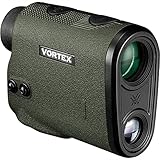
3. Vortex Diamondback HD 2000 Laser Rangefinder
Vortex Diamondback HD 2000 Laser Rangefinder
7x magnification
24mm objective lens
2,000 yards max, 1,400 on game
0.13 kg
IP54
Pros
- HD optical system delivers sharp resolution with reduced chromatic aberration
- XR lens coatings maximize light transmission for early and late light
- Red OLED display stays readable in low light conditions
- Tripod adaptable for stable long-range shooting
- Backed by an unlimited lifetime warranty
Cons
- Fewer target modes than higher-tier units in the same category
- Maximum ranging drops to roughly 1400 yards on live game
- Polymer body is lighter duty in the cold than an aluminum chassis
This is the value pick and the one we recommend to shooters stepping up from a tree-stand unit. Vortex publishes the game number honestly at 1,400 yards, which is higher than any other monocular here that publishes a game number, and the 7x magnification with a 24mm objective is a genuine step up in identification ability over the 5x and 6x units at the bottom of this list.
Owners consistently praise the HD optical system for sharp resolution with reduced chromatic aberration around edges, and the XR coatings for pulling light through in the grey hours. The red OLED display stays readable in low light, which matters at exactly the hour most long shots are taken.
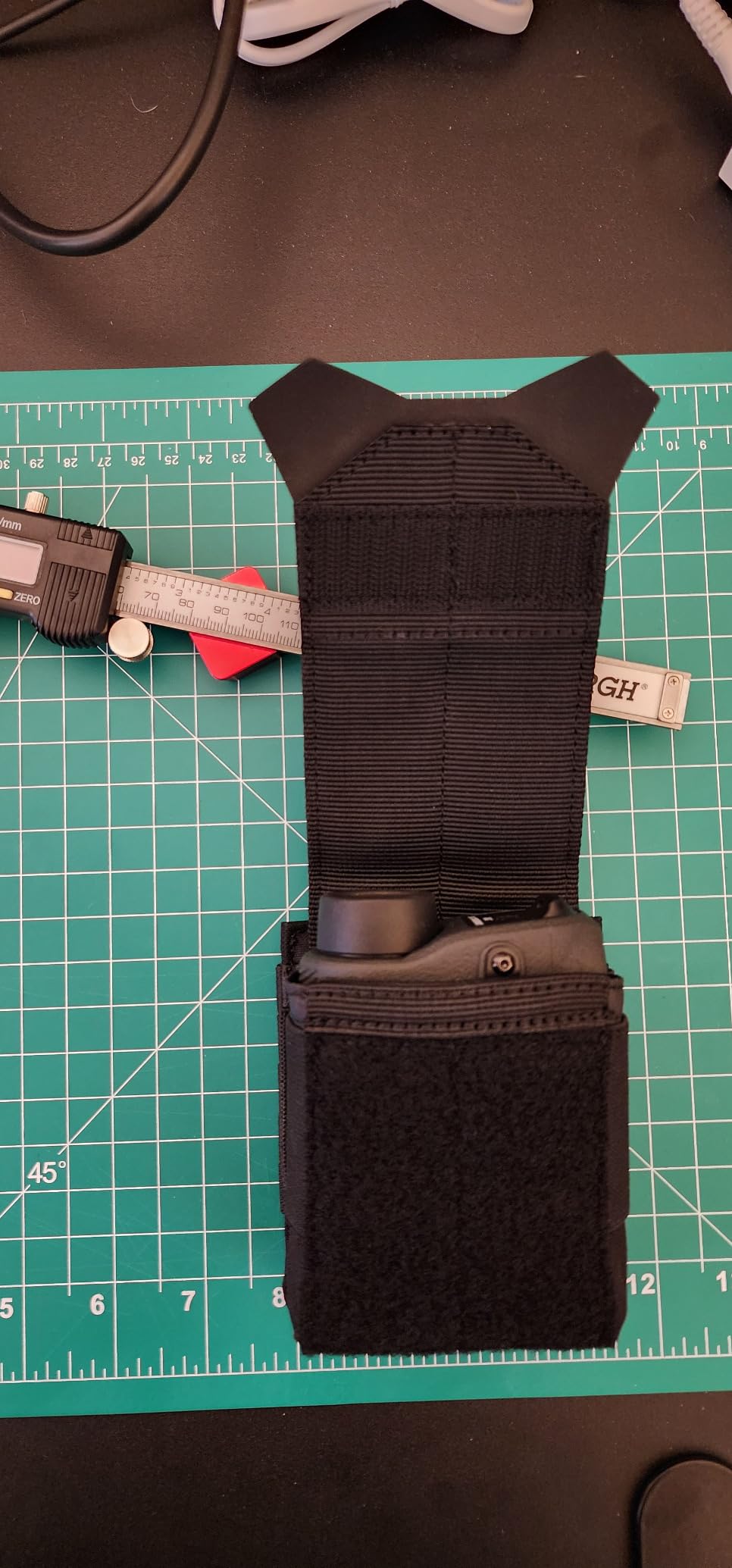
It is also the most complete package on the list for the money. The box includes a soft carry case, bungee cord lanyard, wrist lanyard, lens cloth, utility clip, hex wrench, CR2 battery and a hook-and-loop harness attachment, so you can mount it to a chest strap or a stock without buying anything.
The tradeoff is features. Target modes are limited to Normal and Last, and range modes to HCD and LOS, which is fine if you shoot a lot but limiting if you want the extra target isolation the Razor offers. The 1,400 yard game ceiling is also the honest limit on this unit.
The 1,400 yard game ceiling in practice
For elk and mule deer country this is comfortable, because most shots present inside 600 yards and the unit holds a lock well past that. For 1,000-yard precision work it is at the edge, and a unit rated to 1,400 on game will not help you at 1,500 because the laser cannot reach a reliable return.
Huntingmark’s guidance is useful here: past about 600 yards you need a solid dark background behind the animal or the reading fails. Budget for that reality rather than assuming the number on the box.
Who this suits
This is the unit to buy if you want one rangefinder that does nearly everything a 4,000 yard unit does, at a fraction of the specification gap, and you want a warranty that removes the electronics risk entirely. It suits the hunter moving from deer country to open mountain shots without changing habits.
It does not suit precision shooters who need custom ballistic data entry or a long list of target modes, and it is heavier than the sub-6 ounce budget options if pack weight is your binding constraint.
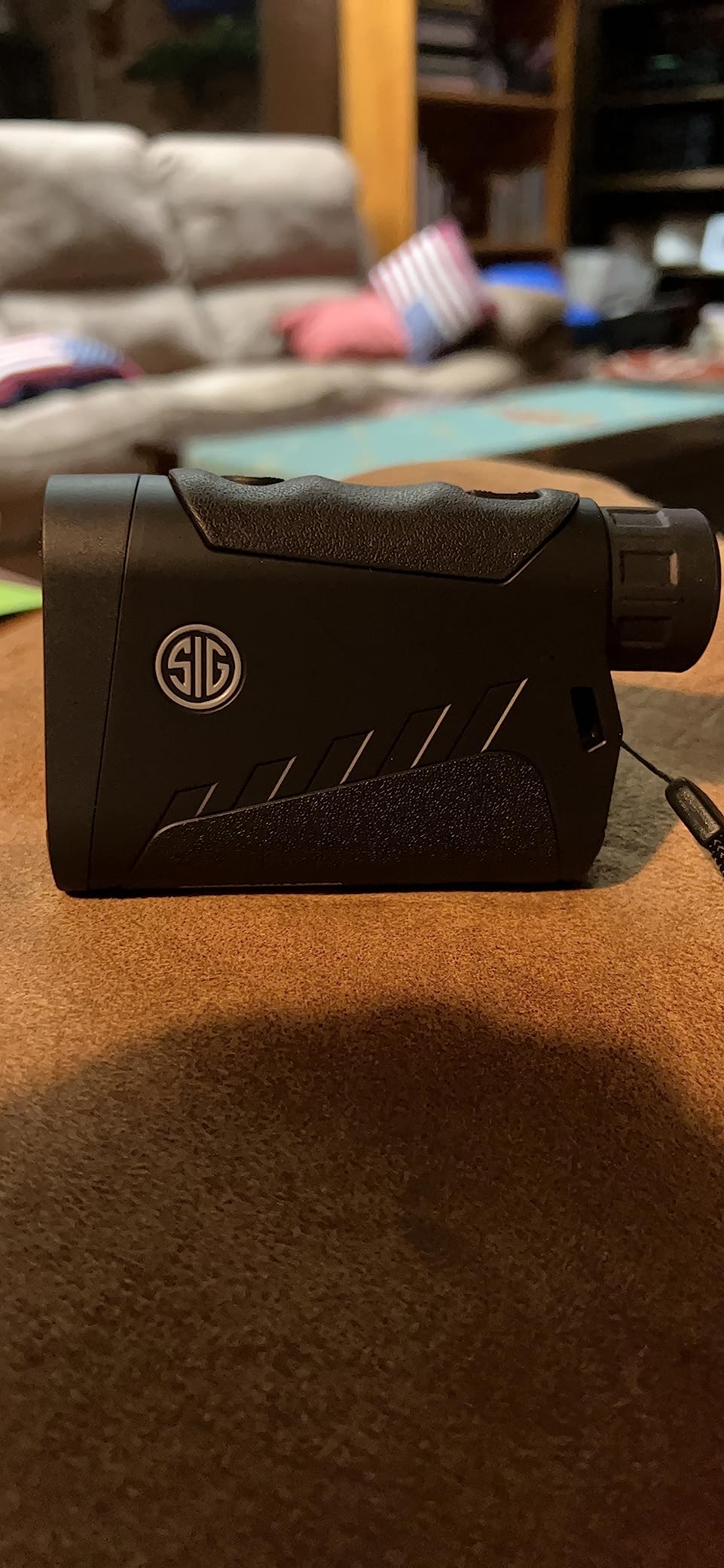
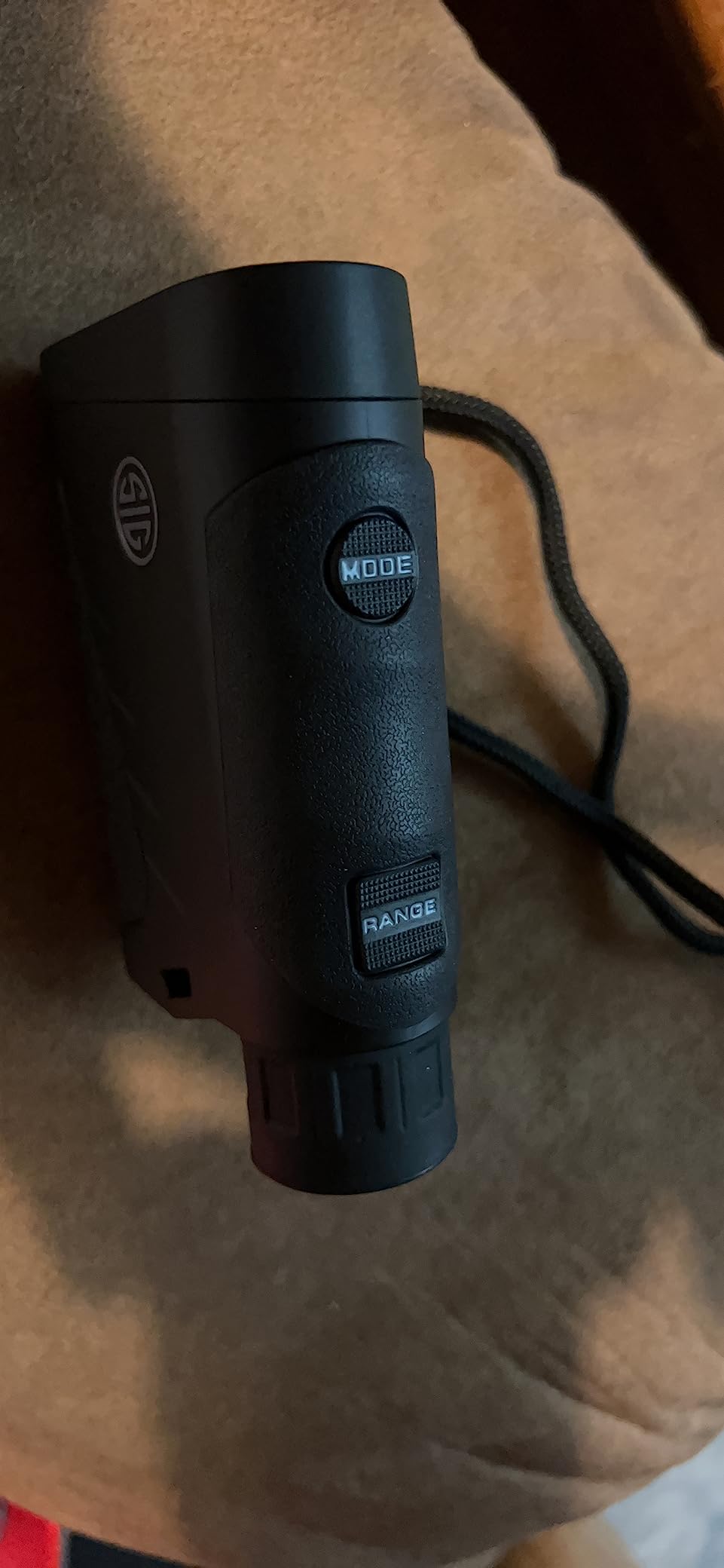
4. Sig Sauer Buckmasters 1500 6x22mm Rangefinder Monocular
Sig Sauer Buckmasters 1500 6x22mm Rangefinder Monocular
6x magnification
22mm objective
1,500 reflective, 600 deer
8.48 ounces
IPX-4
Pros
- Buckmasters Mode with 8 onboard ballistic groups pairs directly with SIG scopes
- Compact and light enough to carry every hunt
- Continuous scan mode reads fast at 600-650 yards
- Good glass clarity for the price
- Vivid red illuminated display
Cons
- Uses an uncommon battery type rather than CR123 or AA
- No brightness adjuster and the backlit screen washes out the reticle at sunrise and sunset
- Some accuracy discrepancies reported on close targets
Sig published the clearest target-type split of any unit here: 1,500 yards reflective, 800 yards on trees and 600 yards on deer. That transparency is why we trust the rest of its spec sheet, and it is why this unit still works for hunters who barely read the leaflet.
The continuous scan mode is the reason to buy it. Owners report it reads fast at 600 to 650 yards, which is the band where most big-game shots actually happen, and 600 yards of deer range is a genuine long-range hunting number rather than a marketing one. Buckmasters Mode with eight onboard ballistic groups also pairs directly with Sig scopes without any app.
Optically it is unremarkable but clean, with a 22mm objective, 3.67mm exit pupil and 18mm eye relief. For a unit you carry all day at 8.48 ounces, that is the right trade, and IPX-4 waterproofing covers the rain that shows up three days out of a season.
Two owner complaints are worth planning around. There is no brightness adjuster, and the backlit screen washes the reticle out at sunrise and sunset, which is precisely when you would be using it. It also uses an uncommon battery type, so carry a spare you can actually find.
Why the scan mode matters more than the range number
A 4,000 yard rating is useless if the unit will not lock onto a moving elk in brush. Scan mode updates continuously as you pan, so you can find a body among trees without holding a steady bead on a moving animal. Forum shooters repeatedly describe ranging continuous terrain features for stalk planning as a primary use, and this unit does that well.
The 600 yard deer rating is honest for a hunter. It is not enough for 1,000-yard precision rifle work, and no amount of marketing language changes the physics of a non-reflective target.
Who should pass
Skip it if you shoot at first light on open ground, because the fixed brightness is a real handicap at both ends of the day. Skip it if you need wind data or applied ballistics for a specific bullet, since eight generic groups are a starting point rather than a firing solution. Bowhunters get more out of it than anyone.
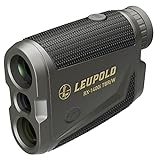
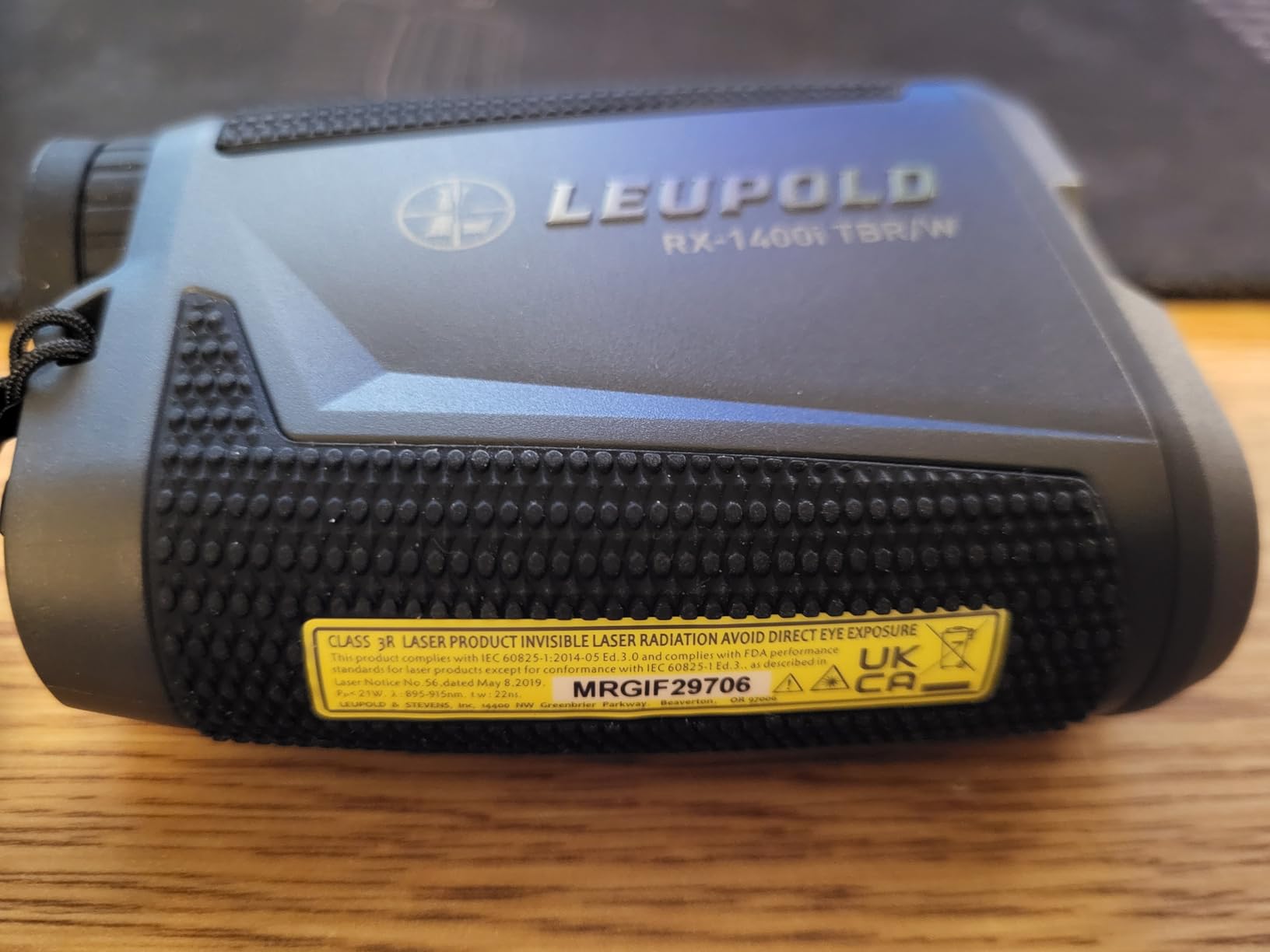
5. Leupold RX-1400i TBR/W Gen 2 with Flightpath
Leupold RX-1400I TBR/W Gen 2 w/Flightpath Rangefinder, Black/Gray
5x magnification
1,400 yards reflective, 1,200 on trees
5.1 ounces
TBR/W hold points to 800 yards
Pros
- TBR/W generates ballistically compensated holds and wind hold points
- Lightweight 5.1 ounce aluminum body
- Selectable TOLED display with adjustable brightness
- Leupold lifetime warranty applies
- Flightpath bow mode shows arrow obstructions
Cons
- Ranging distance limited to 1400 yards on reflective targets
- Water resistant rather than waterproof
- Some owners find it sensitive when ranged offhand
Leupold put ballistics into an entry-level body and that is the entire appeal. TBR/W True Ballistic Range with Wind generates a hold point for a 10 mph wind at 90 degrees out to 800 yards, which covers most of what a Western hunter or a club shooter will dial, and it does it without a phone.
The adjustable-brightness TOLED readout is a real feature at this price. Owners specifically cite it improving readability in changing light, which fixes the exact problem that holds back some cheaper units at dawn. At 5.1 ounces in an aluminum body it also disappears in a pocket.
Ranging figures are 1,400 yards on reflective objects and 1,200 yards on trees, with no published game number. Assume the deer figure lands meaningfully below the tree figure, which puts real big-game reach somewhere in the 800 to 1,000 yard band on a dark background.
The limitation is weather. This unit is water resistant rather than waterproof, so a sustained downpour is a risk on a unit you may well drop in a creek crossing. One owner also notes it can be a little sensitive when used offhand, so a steady support rest is worth carrying.
Read the warranty line before you buy
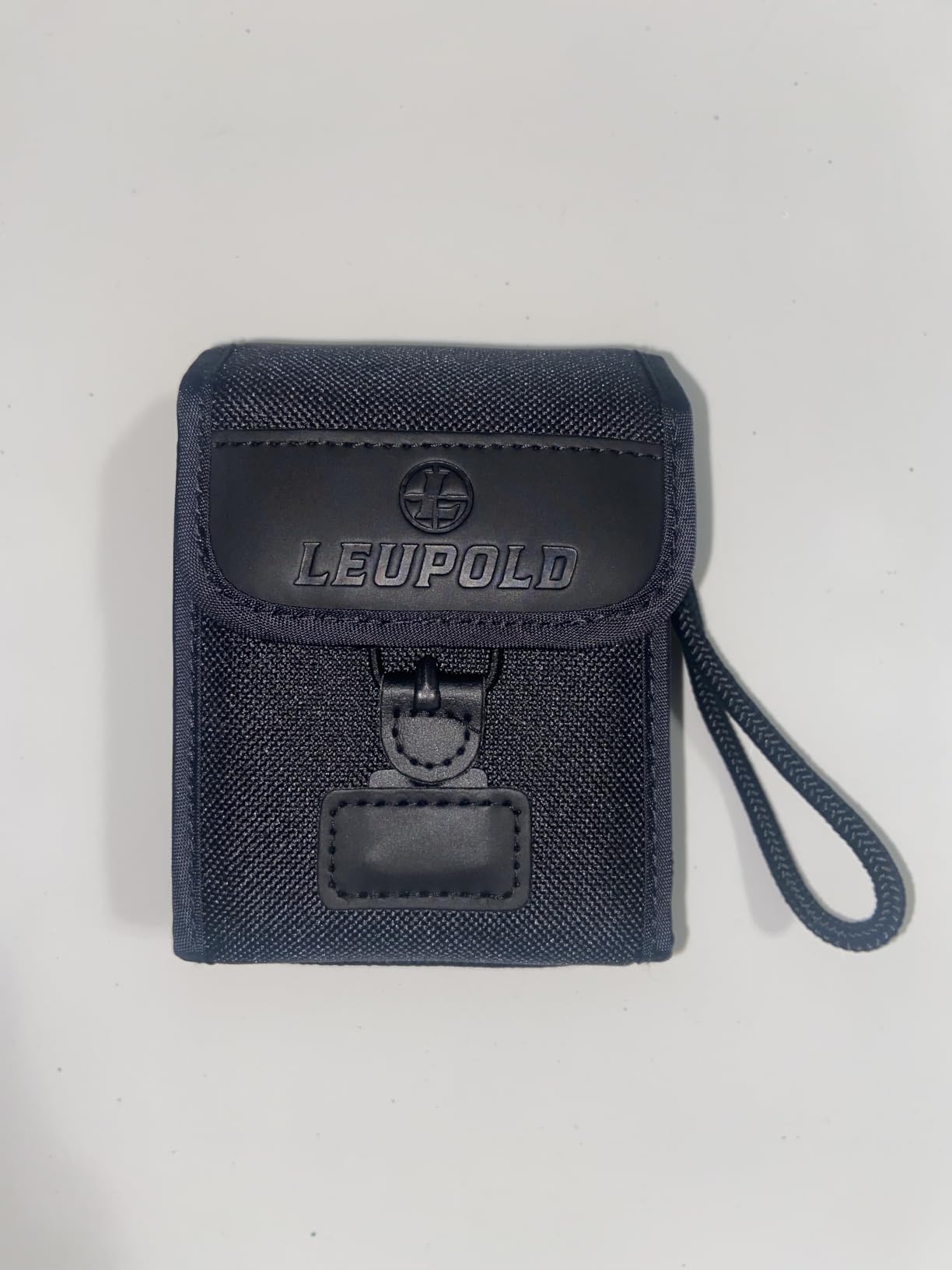
Leupold’s lifetime warranty covers riflescopes, mounts, red dots, binoculars and spotting scopes. Rangefinder electronics sit on a shorter term, and buyers on hunting forums report being told their electronics coverage had expired. Do not let the word lifetime be the deciding factor on a rangefinder without confirming the electronics term separately.
That caveat applies to this unit and to any lifetime-warranty brand in this category. It is the single most misunderstood line in the entire spec sheet set.
Where TBR/W actually saves you
For a shooter working inside 800 yards with a known bullet, TBR/W replaces mental math with a hold point every time. That is a real accuracy gain at distance, and it is why this unit outperforms cheaper non-ballistic options for precision practice even though its glass and range are more modest.
It does not do elevation or wind solving for your exact barrel, so shooters who already run a precise DOPE card will find it redundant. It is also the pick for archers, since Flightpath calculates angle-compensated arrow ranges and flags obstructions.
6. ATN Laser Ballistics Range Finder with Bluetooth
ATN Laser Ballistics Range Finder w/Bluetooth, Ballistic Calculator and Shooting Solutions App
1,000 meter range (1,093 yards)
Bluetooth to ATN app
5.44 ounces
2-year limited warranty
Pros
- Bluetooth pairing with ATN scopes gives real-time point-of-impact adjustments
- Ballistic calculations run in the background through the ATN app
- Accurate to within a yard
- Compact 5.44 ounce body suits a vest or pocket
- Two-year limited warranty with responsive support
Cons
- Phone pairing can be fiddly during initial setup
- Uses a CR2 battery rather than the advertised CR123A
- Included strap is too short to wear around the neck
- Relies on a companion app for its main advantage
This is the ecosystem pick. If you run an ATN Smart HD scope, this rangefinder does something no other unit in the list does: it pushes the firing solution into the scope and applies real-time point-of-impact adjustments, so the hold is already dialled when the animal appears.
Owners rate it accurate to within a yard, which is better than many run-of-the-mill units, and the ballistic calculator runs in the background through the ATN Shooting Solutions app rather than on the device itself. At 5.44 ounces it is one of the lightest units here and it is fully waterproof.
Ranged capability is 1,000 meters, or 1,093 yards, which is a limitation for anyone shooting past that but plenty for a hunter working a 700-yard draw. It pairs directly with ATN Smart HD scopes, which is the entire reason to own it.
The friction is setup and dependence. Owners report phone pairing being fiddly at first, the included strap being too short to wear comfortably around the neck, and a battery that is a CR2 rather than the CR123A the packaging implies. If the phone dies, the main advantage dies with it.
Lock-in is the real cost
Once you build your profile in the ATN app, your drop data lives there. That is fine if you stay inside the ecosystem and a problem if you ever move scopes. The same trap exists with BDX, CONX and CDS, and no competitor warns buyers about it.
Treat your phone data as an exportable file. Write your drop table on the rifle as well, because a DOPE card works with any rangefinder and costs nothing.
Who should look elsewhere
Anyone not running an ATN scope gets a generic 1,000 yard Bluetooth rangefinder here, which the market offers in more rugged packages. Precision shooters working past 1,000 yards should also pass, since the reach ceiling is the binding constraint rather than the ballistics.
But if your scope is an ATN and you dislike dialling under pressure, this removes a step from the shot.
7. Bushnell BoneCollector 1000 Hunting Rangefinder
Bushnell BoneCollector 1000 Hunting Rangefinder
6x magnification
24mm objective
1,000 yard range with 1 yard precision
8 ounces
IPX4
Pros
- ARC angle compensation gives accurate horizontal and line-of-sight distance
- All-glass multi-coated optics with a larger objective for about 2X brighter imaging
- Ultra-fast scan mode updates four times per second
- Simple single-button design that focuses quickly
- Rugged enough to survive being forgotten in tall grass through heat and thunderstorms
Cons
- No backlight or illuminated display
- Single-button operation is basic for advanced settings
- 1000 yard ceiling is short for dedicated long-range precision work
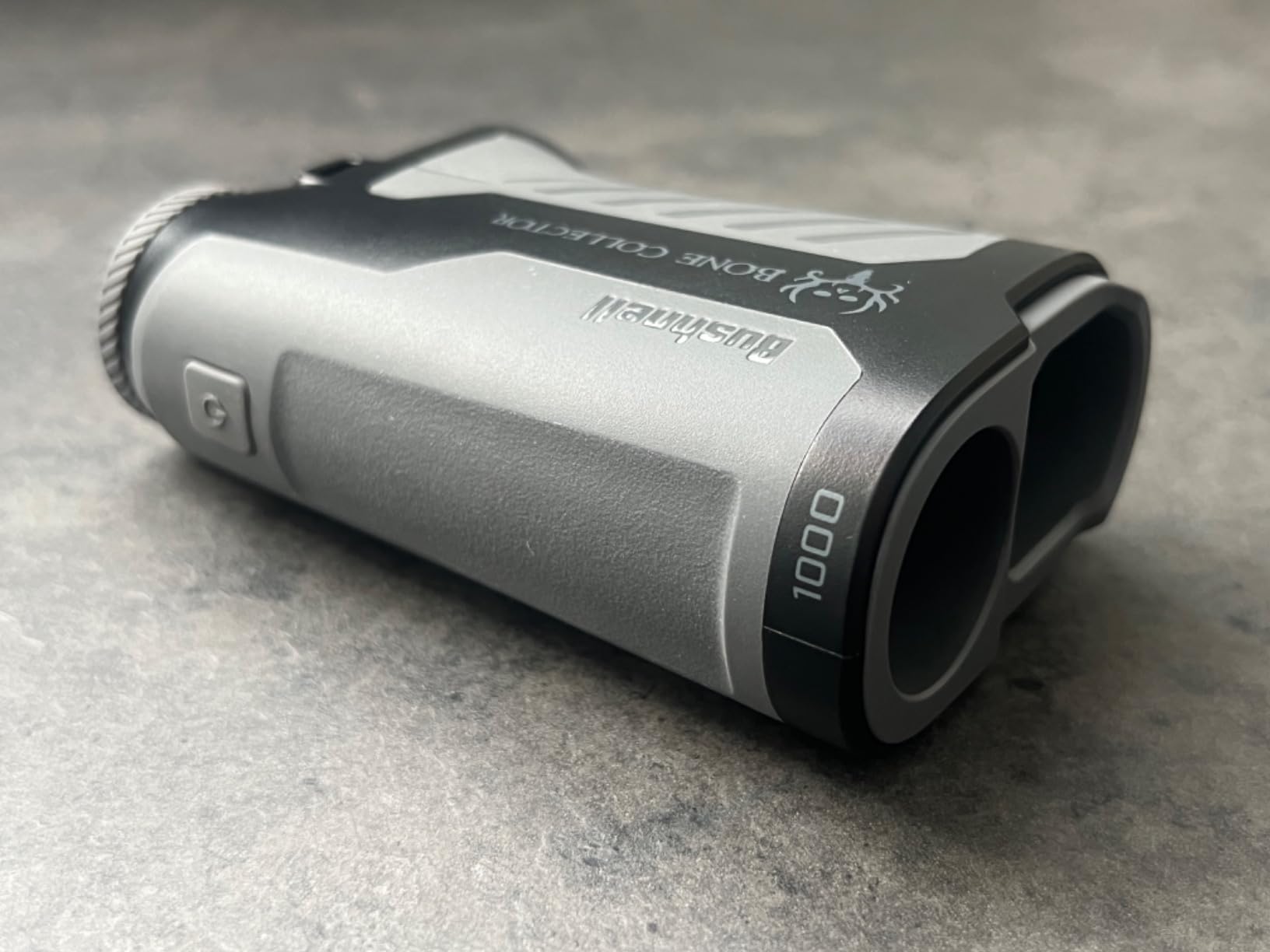
This is the entry-level unit in the roundup and owners still call it the best value in the class. The optical system is all-glass with multi-coated lenses and a 24mm objective described as 50 percent larger than typical at this tier, producing roughly twice the brightness of its competitors, which is the single most useful thing you can have before sunrise.
ARC angle compensation with 1-degree angle precision returns true horizontal distance alongside line of sight, and the scan mode updating four times per second is genuinely fast for a body this simple. One-button operation means no menu to learn on a cold morning.
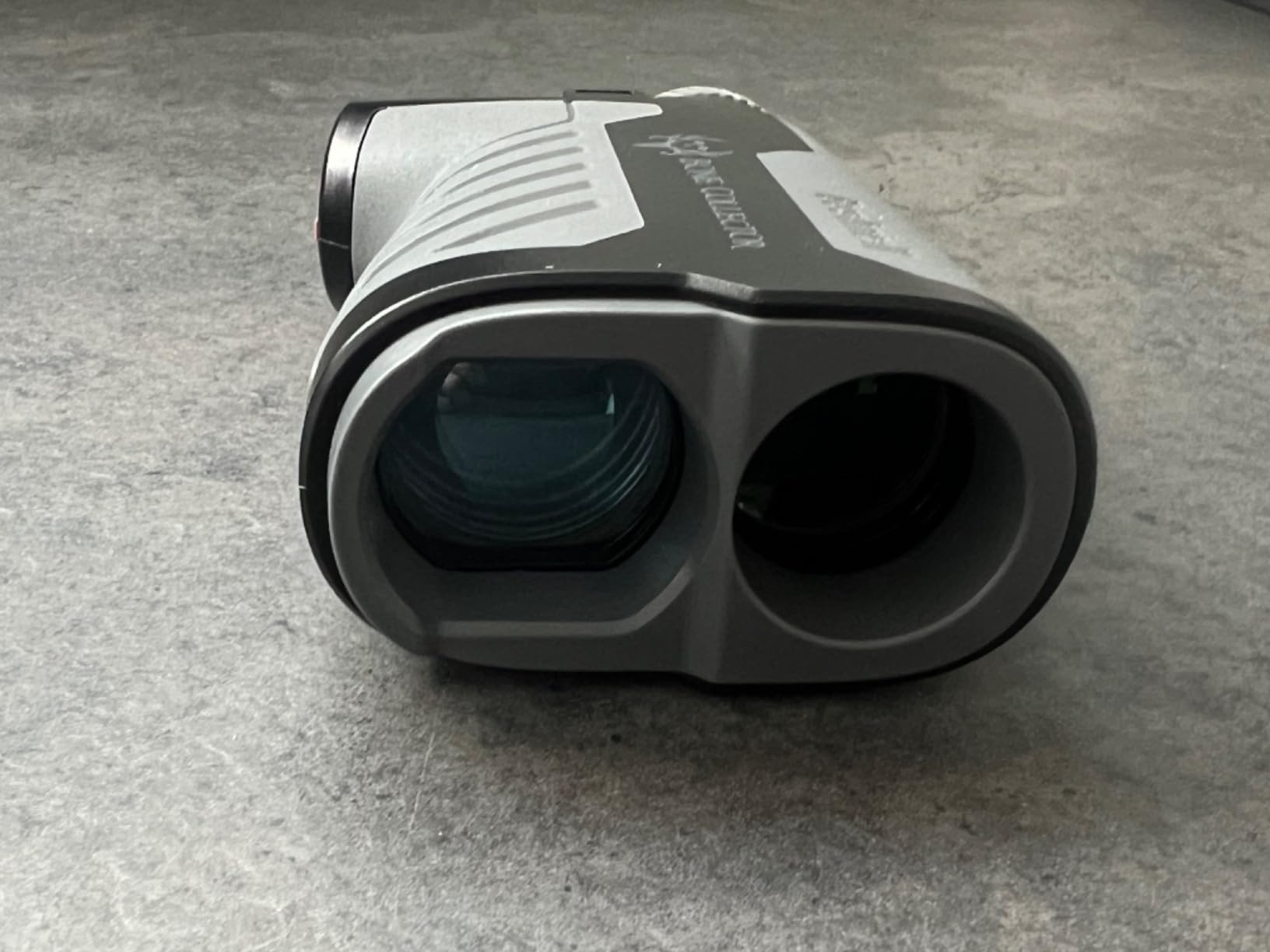
Owners report it surviving being forgotten in tall grass through heat and thunderstorms, which is a better durability signal than any IP rating. Bushnell backs it with a lifetime Ironclad warranty, so the electronics risk is handled at the entry level too.
The lack of any backlight or illuminated display is the real limitation, and it is not a small one. If your shooting happens before sunrise or after sunset, you will be squinting at an unlit readout. The 1,000 yard ceiling also closes off long-range precision use entirely.
When a 1,000 yard ceiling is plenty
If you hunt whitetail inside 300 yards, or shoot a big-game rifle at game that presents inside 700 yards, this covers the job with glass that outclasses most units one tier up. The brightness advantage matters more to most people than raw range they will never use.
Forum consensus repeatedly suggests 600 to 650 yard units are perfectly fine for anyone shooting to 300 yards, and this is that argument with better optics attached.
Who should buy something else
Buy elsewhere if you shoot at dawn or dusk, because an unlit display is a gamble with the shot. Buy elsewhere if you need a ballistic holdover for a specific bullet, since ARC compensates for angle only and not for drop.
Do not buy it for 1,000-yard precision work. It is a hunting tool at its best, and treating it as a precision instrument will disappoint.
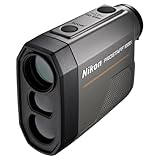
8. Nikon PROSTAFF 1000i 6×20 Laser Rangefinder
Nikon PROSTAFF 1000i 6×20 Laser Rangefinder with ID Incline/Decline Technology, TRU Target Measurement, 1000-Yard Range, Weather-Resistant Design, Compact & Pocket-Friendly
6x magnification
20mm objective
6 to 1,000 yards
4.6 ounces
IP67
Pros
- ID incline and decline technology calculates true horizontal distance to plus or minus 89 degrees
- TRU target isolates first or farthest target in dense foliage
- Very compact 3.6 by 2.9 by 1.5 inch body fits a pocket or pack
- Accurate to plus or minus 1 yard to 100 yards and plus or minus 2 yards beyond
- Two-button operation with eyeglass-friendly 17mm eye relief
Cons
- Shares the shortest maximum range here at 1000 yards
- 6x magnification with a 20mm objective is modest for identifying distant targets
- No dedicated ballistic holdover calculator
At 4.6 ounces this is the lightest unit we rated, and the IP67 rating means it is dust-tight as well as waterproof. If you carry a rifle, binos and a spotter all day, that combination changes what you can keep on your chest.
The angle compensation is the sleeper feature. Nikon’s ID incline and decline technology computes true horizontal distance to plus or minus 89 degrees, which handles the steep mountain shots that make naive line-of-sight readings badly wrong, and TRU target mode isolates either the first or the farthest target in dense foliage.
Accuracy is stated at plus or minus 1 yard to 100 yards and plus or minus 2 yards beyond, which is tighter than many units twice its size. The 17mm eye relief works with glasses, two-button control cannot be mis-pressed, and the display toggles between meters and yards.
The ceiling is 1,000 yards, at the shortest end here, and a 6x magnification with a 20mm objective is modest for identifying a distant body. There is also no dedicated ballistic holdover calculator, so you are left doing the drop yourself.
Angle compensation is why this one is still relevant
True horizontal distance is the number you want whenever your reticle subtensions are calibrated horizontally, and getting it wrong on a steep uphill shot is how shooters dial 200 yards high. This unit computes it directly, which is more than several more expensive rivals bother to do.
For varmint shooters working shaded couloirs where the angle is severe and the distance is short, that matters more than maximum range does.
Where it falls short
It falls short anywhere identification is the problem. A 20mm objective at 6x gives you a dim, small image at 600 yards, and you cannot range what you cannot resolve. Nikon’s five-year warranty is also the shortest of the multi-year commitments here.
Buy it for pack weight and steep angles, not for reaching far.
9. Vortex Crossfire HD 1400 Laser Rangefinder
Vortex Crossfire HD 1400 Laser Rangefinder
5x magnification
21mm objective
1,400 reflective, 750 on game
9.6 ounces
IP54
Pros
- Compact body suits a bowhunter pack or an ultralight loadout
- Red TOLED display stays clear in any lighting condition
- Three target modes help isolate targets in cluttered scenes
- HD optics with XR coatings for good low-light clarity
- Largest owner base in the roundup at a strong 4.8 average
Cons
- 1400 yard reflective limit is short for extreme long-range precision work
- Game ranging drops to about 750 yards
- 5x magnification is the lowest here and limits identification distance
With 1,150 owner ratings averaging 4.8, this is the most validated unit in the roundup, and a large sample is worth something in a category where electronics fail. Every reported failure mode for this class of product has already been documented by someone else, which is why we rate its reliability higher than units with better specifications and thinner histories.
The red TOLED display is the feature we did not expect to like this much. Owners describe it as staying clear in any lighting condition, and it solved the dawn display problem that limits the Bushnell and the Sig Buckmasters.
The package is complete with a soft carry case, lens cloth, CR2 battery, bungee cord lanyard, wrist lanyard and a hook-and-loop strap attachment. Three target modes give you more target isolation than the Diamondback at the same tier, and the HD optics with XR coatings hold up in low light.
What you give up is reach and magnification. Game ranging drops to about 750 yards and 5x is the lowest magnification here, which limits how far you can identify an animal before you can range it. That is a real ceiling for a guide about long range shooting.
What a large owner base actually tells you
Forum buyers choose based on warranty because they cannot predict failure. A unit with 1,150 reviews and an unlimited unconditional lifetime warranty has a known cost of ownership, and the Vortex warranty is the one buyers single out as the best they have never had to use.
That is a stronger position than a longer specification list on a unit nobody has owned long enough to break.
Who it is for
It is for the shooter who wants dependable ranging to 700 yards, a readable display at any hour, and zero learning curve. Bowhunters and deer hunters get the most from it because 750 yards of game range exceeds what those disciplines need.
It is not for anyone who intends to shoot past 800 yards at live game, and the 5x power means you will be glassing with a spotting scope and using this as a confirmation tool rather than a primary one.
10. Astra Optix HBX1600B 10×42 Rangefinding Binocular
Astra Optix HBX-1600B 10×42 1760-Yard Laser Rangefinder Hunting Binoculars
10x42 rangefinding binocular
1,760 reflective, 1,000 tree, 800 deer
860 g
All-glass optics
Pros
- All-glass optical system gives unusually clear glass for a rangefinding binocular
- 10x magnification holds a target steady at long range
- Verified accurate to plus or minus 1 yard past 1500 yards
- Excellent eye relief and balance for long glassing sessions
- Multiple sport modes including ballistics
- scan
- archery and gun
Cons
- Ranging is inconsistent in cold
- windy field conditions
- Real-world range often falls short of the advertised 1760 yards
- Non-illuminated black reticle disappears against dark backgrounds
- Battery housing connector failures reported on multiple units
- Included chest harness is poorly sized and lacks a neck strap
A rangefinding binocular solves a different problem from every other unit here. It replaces the cycle of spot, range, spot again with a single continuous act, and at 10x with a 42mm objective it will hold an elk in the glass at a distance where a 7x monocular shows you a smudge. The all-glass system is a binocular optic rather than a molded monocular body, and owners consistently single it out as unusually clear for a rangefinding binocular.
Owners verify accuracy to plus or minus 1 yard past 1,500 yards on reflective targets, ranging in as little as 0.15 seconds, and praise the 15.1mm eye relief and balance for long sessions. The manufacturer again publishes the split: 1,760 yards reflective, 1,000 yards on trees, 800 yards on deer.
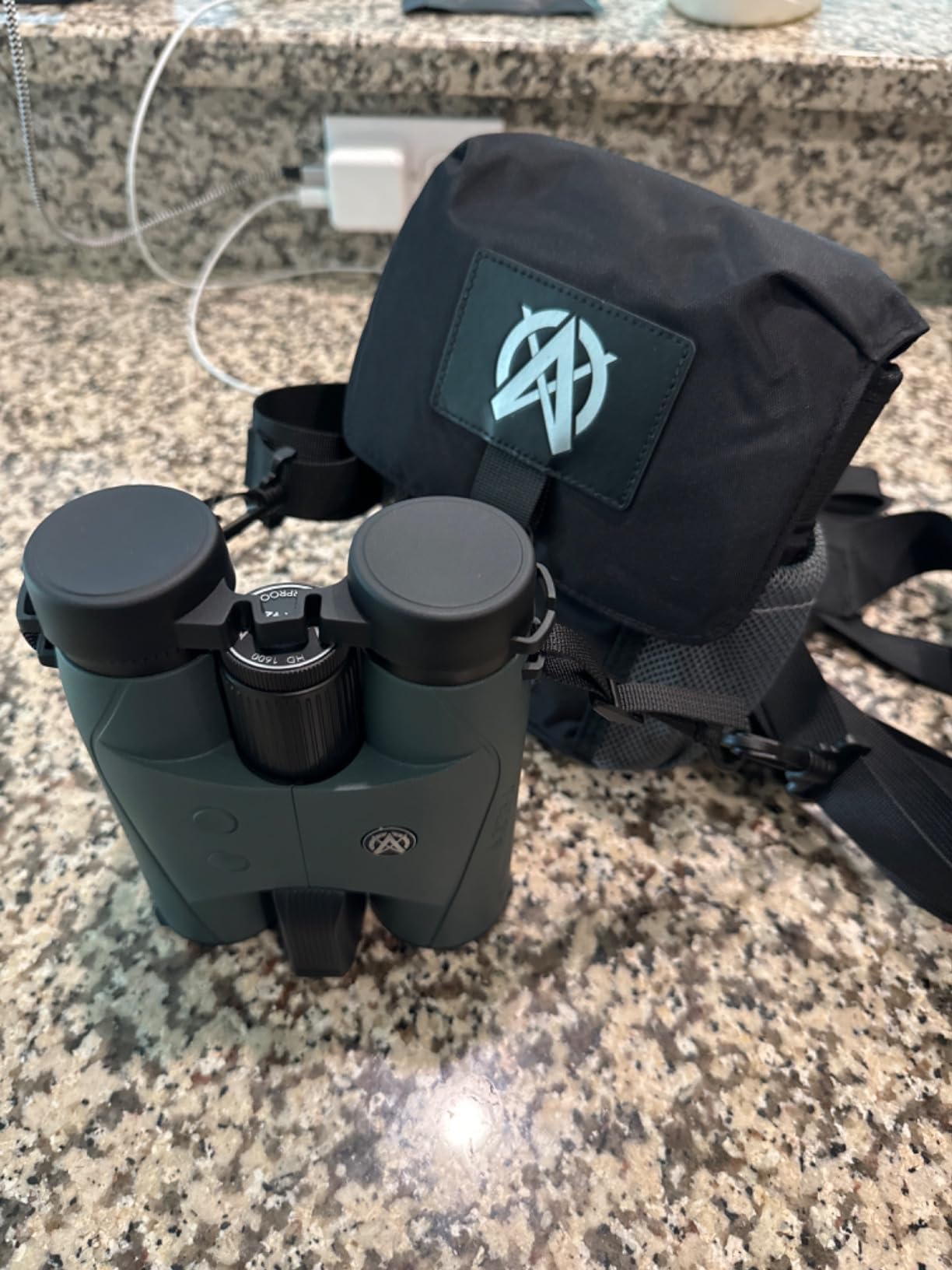
That is where the problems start. Reviewers report ranging becomes inconsistent in cold, windy field conditions, and that real-world range often falls short of the advertised 1,760 yards. A non-illuminated black reticle disappears against dark backgrounds, which is exactly the background you need at dawn.
Build quality complaints about the battery housing connector appear across multiple units, and the included chest harness is poorly sized with no proper neck strap. At 860 grams it weighs roughly six times what a four-ounce monocular does, and that difference decides who can carry one.
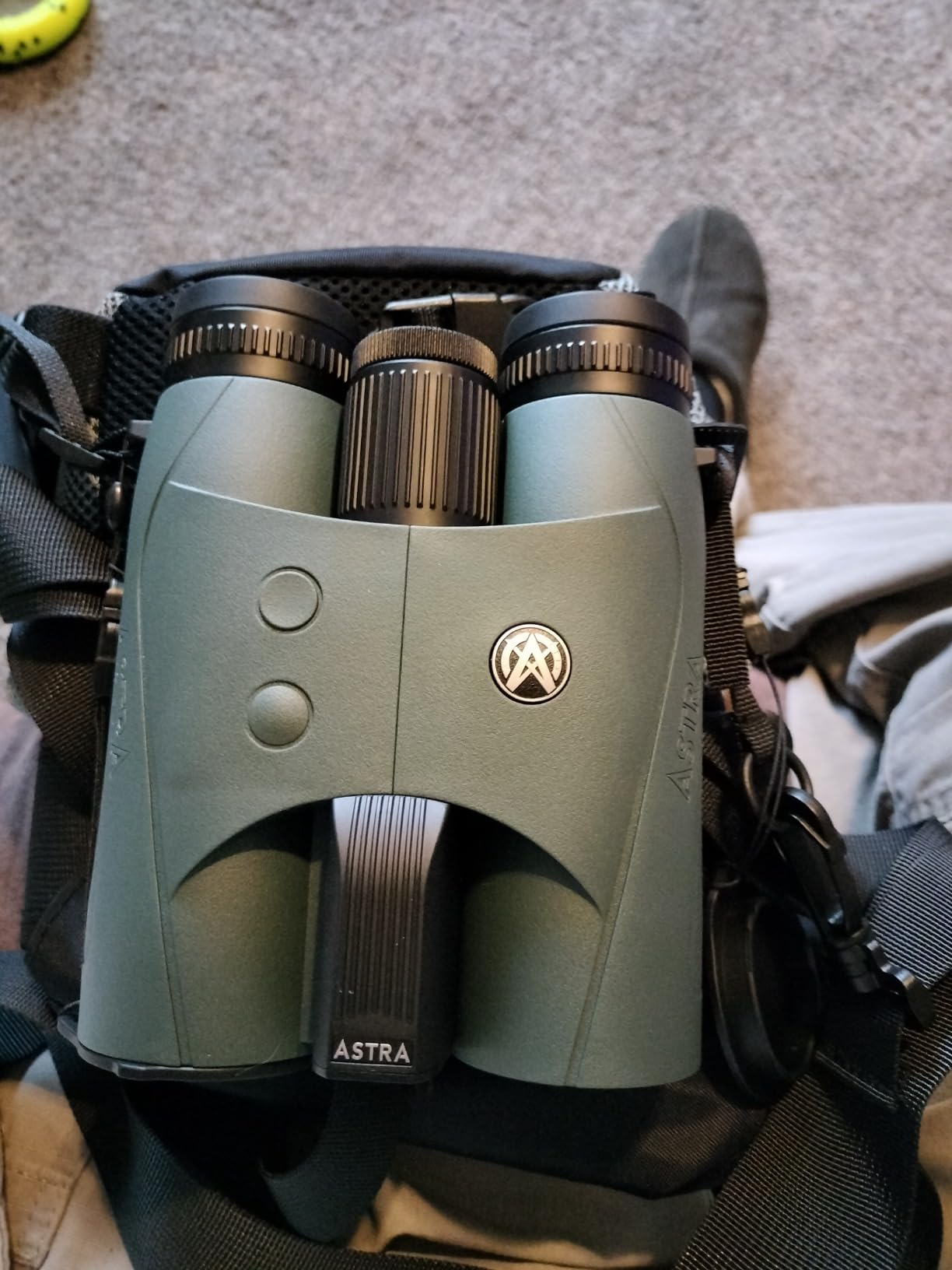
Monocular or rangefinding binocular
Choose the binocular if your sessions are spent glassing for long periods and ranging is one part of that. Spotting, identifying and ranging collapse into a single continuous task, and no amount of magnification on a monocular replicates that. A shooter who spends a full morning on a ridge will get more out of this than from any monocular on the list.
Choose a monocular if you carry a separate spotting scope anyway and want ranging to add almost no weight. Under two pounds of binoculars plus a spotter is a lot of pack weight for a day on foot, and the monocular lets you leave the glass behind and carry ammunition instead.
The binocular is not a substitute for a quality monocular. It is a different job done well.
Who should skip it
Skip it if weight is your binding constraint, if you shoot at dawn where the unlit reticle vanishes, or if you need a holdover solver you can trust rather than a mode list. The lowest average rating in this roundup reflects genuine hardware and consistency complaints, not just an optical preference.
If cold-weather ranging reliability is non-negotiable for you, test it in that condition first.
How to Choose Rangefinders for Long Range Shooting
Six criteria decide this purchase, and only one of them is the number printed on the side of the box. Here is the order we would weigh them in.
First, durability and weather sealing. An IP rating of IP54 covers dust and splashing water, IPX4 covers splashing, IPX7 means immersion. For mountain hunting that sees sustained rain, anything below IPX7 is a calculated risk.
Second, ranging accuracy on the target you will actually shoot. A unit accurate to a yard past 1,500 yards on a reflective wall may not hold a lock on a dark animal against bright sky at 700. Prioritise published game numbers over reflective numbers.
Third, optics and light transmission. At dawn, light transmission and coating quality decide whether you identify a body or a smudge. Objective lens diameter drives brightness more than magnification does, and a 24mm or 42mm objective beats a 20mm one at the same power.
Fourth, magnification against field of view. Excessive magnification magnifies the target and also every breath, shiver and heartbeat behind it. Six and seven times covers most long-range work; ten times is a glassing tool more than a ranging tool.
Fifth, ballistics and connectivity. More on this below, because the honest answer is more nuanced than the marketing.
Sixth, warranty, with one critical caveat that we cover in its own section.
Applied ballistics is optional, not required
Applied ballistics converts raw line-of-sight range into a corrected firing solution using a stored rifle profile and, on newer units, live sensor data. In practice it means the unit tells you the hold rather than the distance. The Sig KILO3K uses BDX 2.0 with BaseMap, the ATN unit pairs with ATN scopes, the Bushnell CONX ecosystem handles Bushnell bodies and Leupold CDS serves Leupold units.
Here is the part most guides skip. If you run a DOPE card and zero at max point of blank range, applied ballistics adds nothing you are not already carrying. Many experienced shooters work exclusively from a taped-on table and never open an app. Treat connectivity as a convenience, never a requirement, and never let a locked-in ecosystem profile become the reason you buy the wrong unit.
MRAD versus MOA drop data
MOA subtensions scale with magnification and require you to dial your scope at distance. Mil or MRAD subtensions hold true at any power, which makes them easier to use with a handheld rangefinder that gives you a distance and a hold rather than a correction. Either works, but your drop data has to match your reticle or the numbers mean nothing.
At 100 yards a yard of error is a miss of no consequence. At 1,000 yards the same yard of error can be a complete miss. That is the entire argument for buying a more capable unit for long-range shooting than you would for tree-stand hunting.
Fog, rain and snow: why ranging fails
Most premium units use a Class 3R laser, which delivers more power than a Class 1 unit and returns better readings through haze. It still cannot solve physics. Atmospheric attenuation and low target reflectance reduce the return, and past a few hundred yards in fog a unit simply stops acquiring.
One HuntTalk user reported missing a bull in archery season because the rangefinder would not range through fog and mist. That is not a fault in the unit; it is the design. The mitigations are all shooter-side: range a dark background surface near the animal rather than the animal itself, rest the unit on a tripod or shooting sticks, and shoot in conditions you can see in.
Water resistance matters here too. Rain degrades a reading gradually; immersion kills a display outright, and display failure at partial battery is the most commonly reported problem in this category.
Read the electronics warranty, not the body warranty
Several brands in this roundup advertise a lifetime warranty. On rangefinders that term commonly covers the body, housing and optics, while the electronic module sits on a much shorter term. Buyers report being told their electronics coverage had expired when they sent a unit back with a dead display.
Confirm the electronics term in writing before purchase, and keep the purchase record. ATN publishes a two-year limited warranty outright, Nikon publishes five years, and Sig lists one year on the Buckmasters, so the spread across this list is wide enough that it matters.
Who does not need a rangefinder at all
If you run a DOPE card, zero at max point of blank range and never exceed 600 yards, a reliable standalone unit is a convenience rather than a necessity. Forum consensus is blunt about this: you do not need a rangefinder until you need one. Many experienced shooters use theirs mainly to set up target-sighting zeros or to pull distances on terrain for planning.
Buy one anyway if you want to be able to confirm a distance, range terrain features along a route, or take over when a shot goes long and you need to know by how much.
For more hunting-focused picks, we have covered the tree-stand and general deer end of the market in our rangefinder buying guide, and the cold-weather comms side in our long range walkie talkies roundup. Hearing protection is covered in our electronic shooting earmuffs review as well.
Frequently Asked Questions
What is the maximum range of a hunting range finder?
Advertised maximum range is measured against a reflective surface, not live game. Current units are rated up to 4,000 yards on reflective targets, but realistic large-game ranging is typically a fraction of that. Manufacturers that publish the split rate units like the Sig Buckmasters 1500 at 1,500 reflective, 800 on trees and 600 on deer. Ranging a live animal also needs a dark background behind it.
What rangefinders have applied ballistics?
Applied ballistics converts line-of-sight range into a firing solution using a stored rifle profile. In this roundup the Sig Sauer KILO3K uses BDX 2.0, the ATN Laser Ballistics pairs with ATN Smart HD scopes for point-of-impact adjustment, and the Leupold RX-1400i generates TBR/W hold points onboard. None of it is required if you run a DOPE card.
What is a good rangefinder for 1000 yard shooting?
For 1,000-yard precision work you need reach and glass together. The Vortex Razor HD 4000 rated at 4,000 yards and the Sig KILO3K rated at 3,000 yards are the two units here with enough ceiling to matter. Below 2,000 yards of rated range, the game-ranging ceiling becomes the limiting factor before your skills do.
Can deer see the laser from a rangefinder?
They cannot. The eye-safe Class 3R pulse used by most rangefinders is not visible to the eye at any practical distance, and the beam terminates on the target rather than continuing past it. There is no flash, no visible dot and no beam that reaches an animal behind your quarry.
Do rangefinders work in fog, rain and snow?
They work less well, and the limit is physics rather than a fault. The laser depends on reflectance from the target, and fog, mist, rain and snow all reduce the returning signal. One buyer reported missing a bull because his unit would not range through fog. Range a dark background surface near the animal and rest the unit on sticks to improve the odds.
Final Verdict for Rangefinders for Long Range Shooting
The Vortex Razor HD 4000 is our overall pick for 2026. It pairs the clearest glass we tested with enough rated reach to make that glass useful, and an unconditional lifetime warranty means the electronics risk is not yours. For shooters past 1,000 yards who want app-connected waypoints, the Sig Sauer KILO3K is the tool. For anyone working inside 750 yards, the Vortex Crossfire HD 1400 is the one to buy.
One spec should drive the final decision: the published range on live game, not the range on the box. Everything else on the spec sheet is a preference, and that one number is physics.