
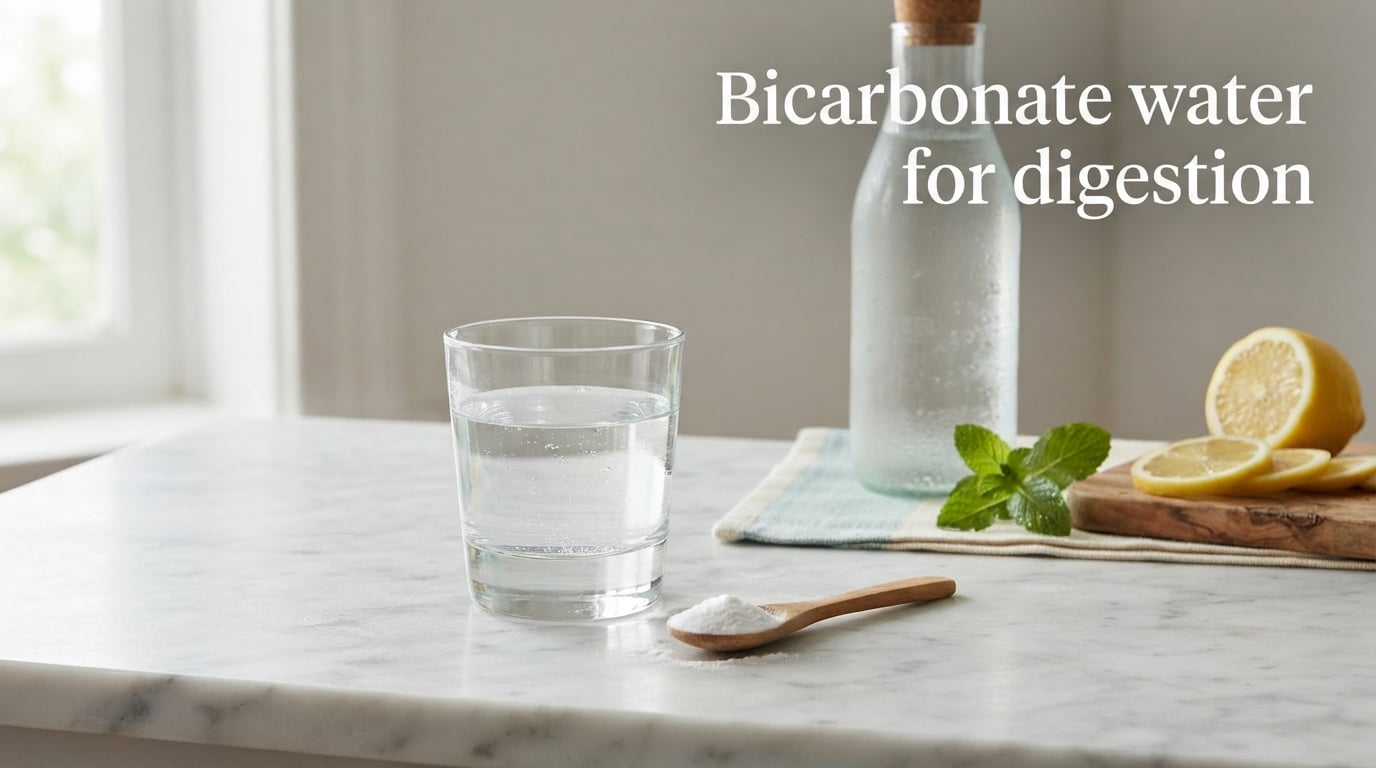
That burning sensation after a heavy meal is something most of us know all too well. Before reaching for a bottle of chalky tablets, plenty of people pour a simple glass of water mixed with a pinch of baking soda. Bicarbonate water for digestion has been a trusted home remedy for generations, and there is genuine science behind why it works.
The idea is straightforward. Bicarbonate is an alkaline compound that neutralizes excess stomach acid, the culprit behind heartburn, acid reflux, and general indigestion. You can make it yourself in seconds, or you can drink naturally bicarbonate-rich mineral water drawn from deep underground springs. Either way, the active ingredient is the same: the bicarbonate ion (HCO3-) that your stomach and pancreas actually produce on their own.
In this guide, our team breaks down exactly how bicarbonate water works, how much is safe to drink, what side effects to watch for, and when a natural mineral water might be the better choice. If you are exploring mineral water for digestive health more broadly, this article gives you the full picture.
Disclaimer: This article is for informational purposes only and does not constitute medical advice. Always consult a qualified healthcare professional before using bicarbonate water as a remedy, especially if you have a chronic condition or take prescription medications.
Table of Contents
What Is Bicarbonate Water?
Bicarbonate water is simply water that contains bicarbonate ions, either added deliberately or occurring naturally. The most common DIY version is water mixed with a small amount of sodium bicarbonate, which is ordinary baking soda from your kitchen pantry.
When dissolved in water, sodium bicarbonate breaks apart into sodium (Na+) and bicarbonate (HCO3-) ions. The bicarbonate ion is the same compound your pancreas secretes into your small intestine every day to neutralize stomach acid as food moves through your digestive tract. In that sense, you are giving your body a compound it already uses to keep digestion running smoothly.
Not all bicarbonate water comes from a box of baking soda, though. Many natural mineral waters contain substantial bicarbonate levels picked up as they flow through limestone and other mineral-rich rock formations over decades or centuries. If you have ever wondered about the minerals in your water and whether they survive filtration, natural bicarbonate is one of the most important.
On the pH scale, where 7 is neutral and anything above is alkaline, a typical bicarbonate water solution sits around 8.3 to 8.5. That mild alkalinity is exactly what makes it effective against excess digestive acid.
How Bicarbonate Water Aids Digestion
Understanding bicarbonate water for digestion starts with a quick chemistry lesson. Your stomach produces hydrochloric acid (HCl) to break down food and kill harmful bacteria. Under normal conditions, that acid stays in the stomach and does its job. Problems like heartburn and acid reflux happen when acid creeps up into the esophagus or when the stomach produces more acid than needed.
When you drink bicarbonate water, the bicarbonate ions react with excess hydrochloric acid in a classic acid-base neutralization reaction. The bicarbonate (HCO3-) combines with hydrogen ions (H+) to form carbonic acid, which quickly breaks down into water and carbon dioxide gas. That CO2 is the reason you often burp shortly after drinking baking soda water, a sensation many people find relieving when bloating is part of the problem.
The result is a rapid raise in pH within the stomach and upper digestive tract. Heartburn sufferers on forums frequently report feeling relief within minutes of drinking a glass, and that timing matches the speed of the chemical reaction taking place.
This mechanism is identical to how over-the-counter antacids like Tums or Alka-Seltzer work. The difference is that sodium bicarbonate is the active ingredient in many of those products anyway, so a DIY glass can deliver similar results at a fraction of the cost.
It is worth noting that bicarbonate does not stop your stomach from producing acid in the first place. It only neutralizes what is already there. That makes it a short-term remedy for occasional discomfort rather than a treatment for the underlying cause of chronic acid production.
Digestive Benefits of Bicarbonate Water
People reach for bicarbonate water to address several specific digestive complaints. Here is a closer look at what the evidence and user experiences suggest.
Heartburn and Acid Reflux Relief
Heartburn is the most common reason people try bicarbonate water, and it is also the best-supported use case. By neutralizing stomach acid on contact, bicarbonate water can reduce the burning sensation in the chest and throat within minutes. Forum users in communities like r/GERD frequently report that a glass of baking soda water works faster and more completely than standard chewable antacids.
However, this relief is temporary. If you experience heartburn more than twice a week, that may signal gastroesophageal reflux disease (GERD), which requires a proper medical evaluation rather than ongoing self-treatment.
Reducing Bloating and Gas
The carbon dioxide gas produced when bicarbonate reacts with acid has a secondary benefit: it encourages burping. Many people who feel uncomfortably full or bloated after a large meal find that the induced belching releases trapped gas and relieves pressure quickly.
For everyday hydration that also supports digestive comfort, some people prefer naturally sparkling mineral waters. If you are curious about how carbonation interacts with your system, our guide on carbonation and digestion covers the details.
Easing General Indigestion
Not all indigestion is caused by excess acid, but when acid is the trigger, bicarbonate water can settle an upset stomach effectively. It works best for that heavy, acidic feeling that follows spicy food, large portions, or late-night meals.
For those who also want hydration alongside digestive support, mineral water hydration benefits make a compelling case for choosing mineral-rich sources over plain tap water.
Supporting Digestive pH Balance
Beyond immediate symptom relief, some research suggests that maintaining a healthy bicarbonate reserve in the body supports overall digestive efficiency. Your body naturally uses bicarbonate as a buffer system, and occasional bicarbonate intake may help that system function at its best. That said, most healthy people produce all the bicarbonate they need internally.
Recommended Dosage and Preparation
Making bicarbonate water at home takes about ten seconds. The standard recipe, confirmed across medical sources and forum communities, is simple and consistent.
Combine 1/2 teaspoon of baking soda with 8 ounces of water. Stir until fully dissolved. Drink it slowly rather than chugging the entire glass at once, since rapid consumption can increase the risk of gas and bloating.
Timing matters for effectiveness. Most people get the best results drinking bicarbonate water between meals or at the first sign of heartburn rather than immediately after eating, when a full stomach can increase pressure and worsen reflux symptoms.
The general safety guideline from poison control centers and medical authorities is to limit intake to no more than the equivalent of 1/2 teaspoon dissolved in water per dose, and no more than a few doses per day. The maximum recommended daily intake for adults is roughly 5 to 7 grams of sodium bicarbonate total, though anyone with high blood pressure, kidney issues, or a low-sodium diet should consume far less or avoid it entirely.
For the cleanest taste and best results, use filtered or spring water rather than distilled water, which can taste flat. And always use fresh baking soda from an unopened or recently opened box, since old product absorbs odors and loses potency over time.
Safety Warnings and Side Effects
Bicarbonate water is generally safe for occasional use in healthy adults, but it is not without risks. Understanding the warning signs helps you use it responsibly.
Common Side Effects
Even at normal doses, you may experience increased burping, mild bloating from the released carbon dioxide gas, and a temporary feeling of fullness. These effects are expected and usually pass within minutes.
Higher doses or frequent use can lead to more concerning issues. Excess sodium intake is the biggest concern, since each 1/2 teaspoon of baking soda contains roughly 629 milligrams of sodium. That is over a quarter of the daily sodium limit recommended for most adults. Regular use can contribute to high blood pressure and fluid retention.
Signs of Overuse and Poisoning
Taking too much baking soda at once can cause serious harm. Warning signs of overdose include nausea and vomiting, severe abdominal pain, muscle weakness or spasms, irritability or confusion, and rapid breathing. In extreme cases, overdose can lead to dangerous shifts in blood chemistry, low potassium levels, and even cardiac problems.
Children are especially vulnerable to baking soda toxicity and should never be given bicarbonate water without explicit medical guidance. If you suspect an overdose, contact poison control immediately.
Who Should Avoid Bicarbonate Water
Several groups should steer clear of bicarbonate water or use it only under medical supervision. This includes people with high blood pressure, those on sodium-restricted diets, individuals with kidney disease or impaired kidney function, anyone taking prescription medications (especially those affected by stomach acid levels), pregnant and breastfeeding individuals, and young children.
Long-term daily use is not recommended for anyone. Your body can become dependent on external antacids, and chronic use may mask an underlying condition that needs proper diagnosis and treatment. If you find yourself reaching for bicarbonate water daily, it is time to talk to a doctor.
Naturally Bicarbonate-Rich Mineral Waters
This is where the conversation gets interesting and where most health articles stop short. Not all bicarbonate water has to come from a box of baking soda.
Certain natural mineral waters contain high levels of bicarbonate absorbed from the geological formations they pass through. These waters offer the same acid-neutralizing benefits but in a more balanced package that includes calcium, magnesium, and other beneficial minerals. The bicarbonate concentrations in premium mineral waters can range from several hundred to over 4,000 milligrams per liter.
The advantage of naturally bicarbonate-rich mineral water is that it delivers digestive support without the concentrated sodium hit of straight baking soda. Many of these waters are also naturally sparkling, which some people find more pleasant to drink. The trade-off is that they cost more than DIY baking soda water and are not always easy to find.
If you want to understand why some mineral waters taste so distinctly alkaline and mineral-heavy, naturally bicarbonate-rich mineral waters like Contrex and Vichy are a great place to start. These European classics have been used in spa therapy for digestive complaints for well over a century.
For everyday digestive support, many people find that swapping a glass of baking soda water for a bottle of bicarbonate-rich mineral water a few times per week provides gentle, consistent relief without the risks of concentrated sodium intake.
Bicarbonate Water vs. Over-the-Counter Antacids
Since the mechanism is the same, how does a simple glass of bicarbonate water stack up against commercial antacids? Here is a quick breakdown.
Speed: Bicarbonate water and liquid antacids like Alka-Seltzer work at roughly the same pace, usually within a few minutes. Chewable tablets like Tums may take slightly longer to dissolve and react.
Cost: Baking soda costs pennies per glass, while brand-name antacids run significantly more per dose. For budget-conscious users, this is a major factor.
Convenience: Antacids are portable and require no mixing. Bicarbonate water needs water and a stirring implement, making it less practical on the go.
Sodium content: This is where commercial products often win. Many modern antacids use calcium carbonate or magnesium-based compounds that avoid the high sodium load of baking soda. If sodium is a concern, check labels carefully.
Added ingredients: Some antacids include simethicone for gas relief or additional active ingredients for specific symptoms. Bicarbonate water is a single-ingredient remedy.
Neither option is inherently better. The right choice depends on your symptoms, budget, and sodium tolerance.
Frequently Asked Questions
Is it good to drink bicarbonate water?
For most healthy adults, drinking bicarbonate water occasionally is safe and can provide effective relief from heartburn, acid reflux, and indigestion. However, it is high in sodium, so it is not appropriate for people with high blood pressure, kidney problems, or those on sodium-restricted diets. Bicarbonate water is best used as an occasional remedy rather than a daily habit.
Does bicarbonate soda help with digestion?
Yes, bicarbonate of soda (baking soda) helps with digestion by neutralizing excess stomach acid. When dissolved in water, the bicarbonate ions react with hydrochloric acid in your stomach, raising the pH and reducing the burning sensation associated with heartburn and indigestion. Many people report relief within minutes of drinking a glass.
Is it okay to take a teaspoon of baking soda and water every day?
No, taking a full teaspoon of baking soda daily is not recommended for most people. A single teaspoon contains about 1,200 milligrams of sodium, which is nearly half the recommended daily limit. Daily use can also lead to dependency and may mask underlying conditions. The safe occasional dose is 1/2 teaspoon in 8 ounces of water, used only when symptoms arise. Consult a doctor before making it a regular habit.
How much baking soda is safe to drink daily for inflammation?
Some preliminary research suggests baking soda may help reduce inflammation by influencing immune cell function, but daily consumption is not recommended without medical supervision. The general safety ceiling is about 5 to 7 grams of sodium bicarbonate per day for healthy adults, but anyone with blood pressure or kidney concerns should avoid regular use entirely. Always consult a healthcare provider before using baking soda for any ongoing purpose.
Final Thoughts on Bicarbonate Water for Digestion
Bicarbonate water for digestion is one of those rare home remedies that actually lives up to the hype, provided you use it sensibly. The science is simple and proven: bicarbonate neutralizes excess stomach acid, and relief comes within minutes. The catch is the sodium content and the risk of overuse.
Keep it occasional, stick to 1/2 teaspoon per glass, and pay attention to how your body responds. If your symptoms keep coming back, that is your signal to see a doctor rather than pour another glass. And for a gentler, more mineral-balanced approach, naturally bicarbonate-rich mineral waters offer the same benefit without the concentrated sodium load.
Your digestive system does a lot of heavy lifting every day. Giving it occasional, well-informed support with bicarbonate water can make a real difference, as long as you respect the chemistry and the limits.