
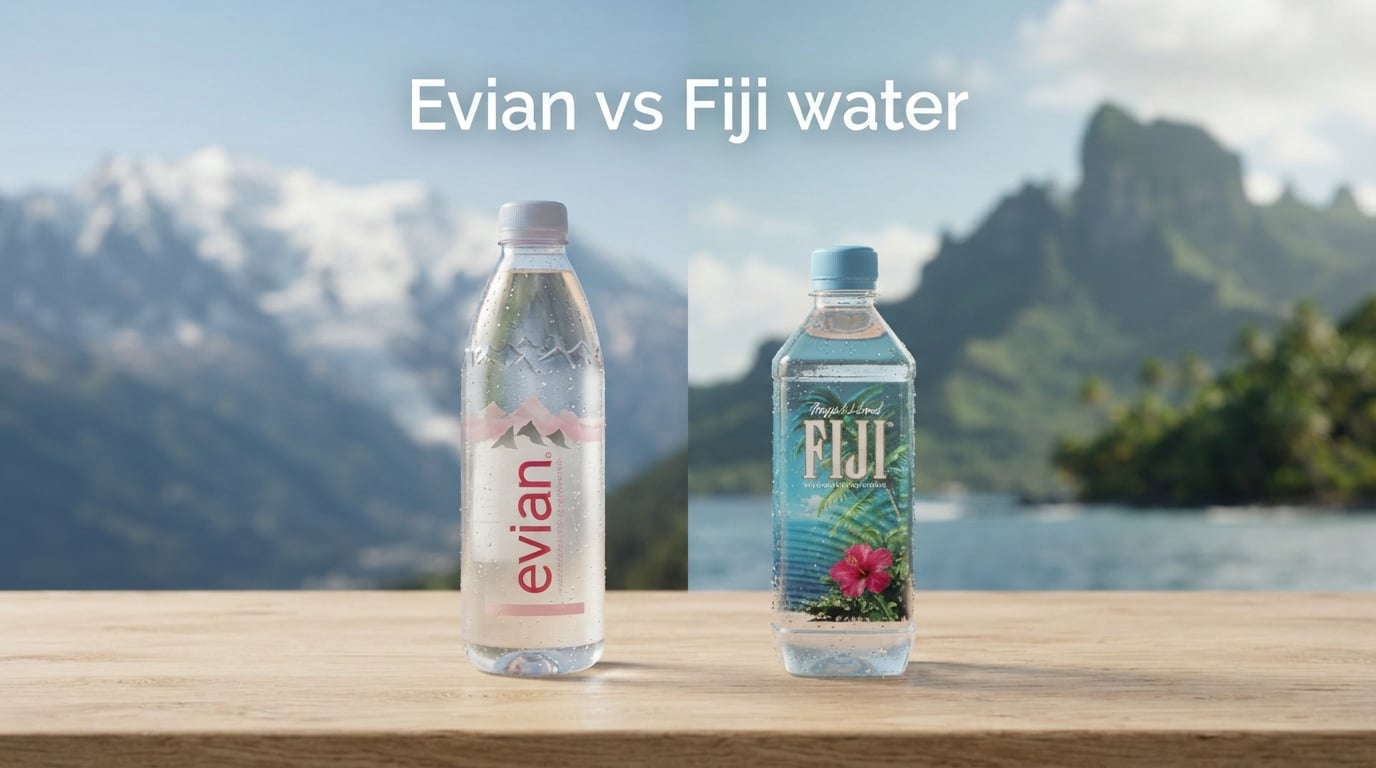
Two of the most recognized premium bottled waters in the world sit side by side on shelves everywhere. One traces its path through glacial rock in the French Alps. The other filters slowly through volcanic stone on a remote Pacific island. The Evian vs Fiji water comparison gets discussed constantly on forums, in taste tests, and around dinner tables, but most conversations stop at personal preference.
Our team dug into the actual mineral data, sourcing details, taste profiles, and use case scenarios to give you a real answer instead of another “it depends.” Whether you are stocking a fridge, planning a dinner pairing, or just curious why your friend swears by one over the other, this guide breaks down what genuinely separates these two brands in 2026.
Both waters are natural, both come from protected sources, and both are widely considered premium. The differences start with where they come from and how they get their mineral signatures, and they end with how they actually taste in the glass.
Table of Contents
Where Does Evian and Fiji Water Actually Come From
The story of any bottled water begins underground, and the Evian vs Fiji water comparison is no exception. Their origins are about as far apart geographically as two sources can get, and that distance shapes everything from mineral content to shipping footprint.
Evian: From the French Alps
Evian traces its source to the town of Évian-les-Bains on the southern shore of Lake Geneva, in the French Alps. Rain and snowmelt filter through a glacial moraine, a deep deposit of sand and gravel left behind by ancient glaciers. The water spends roughly 15 years moving through this natural filter before it emerges at the Source Cachet spring.
During that long journey, the water picks up a balanced mineral signature from the alpine rock. This slow filtration is what gives Evian its classification as natural spring water. The source has been protected since the late 18th century, when a French nobleman claimed the water helped his kidney ailments.
Fiji: From a Volcanic Aquifer in the Pacific
Fiji water comes from an entirely different kind of geology. The source sits in the Yaqara Valley on Viti Levu, the largest island in the Republic of Fiji. The water is drawn from an artesian aquifer, which means it sits trapped under pressure between layers of volcanic rock.
As tropical rainfall slowly percolates through layers of ancient volcanic stone, it picks up silica and other minerals unique to that formation. Because the aquifer is sealed under natural pressure, the water never sees daylight until the moment it is bottled. This is what makes Fiji water artesian rather than simply spring water.
Why Origin Matters in the Comparison
The geographic origin of each brand is not just marketing. It directly determines the mineral composition, mouthfeel, and even shelf considerations. Evian’s alpine filtration produces a higher-mineral water. Fiji’s volcanic filtration produces a softer, silica-rich profile. When people argue about Evian vs Fiji water, they are really arguing about two completely different geologic fingerprints.
Spring Water vs Artesian Water vs Mineral Water Explained
The Evian vs Fiji water comparison gets confusing partly because both brands sit in slightly different regulatory categories. Understanding these labels helps cut through the marketing.
Spring water is collected from an underground formation from which water flows naturally to the surface. Evian qualifies here because it emerges from a protected spring fed by alpine filtration. Spring water must be collected only at the spring or through a borehole tapping the underground formation.
Artesian water comes from a confined aquifer under pressure. When the aquifer is tapped, the water rises on its own without pumping. Fiji water is the textbook example. The natural pressure keeps surface contaminants out, which is a major selling point.
Mineral water is a separate classification that requires a consistent level of trace minerals from a geologically protected source. Both Evian and Fiji could qualify, but mineral water must also maintain a stable composition and cannot have minerals added or removed.
The takeaway is that Evian and Fiji are both natural, both premium, and both subject to strict sourcing rules. The label difference (spring vs artesian) tells you how the water reaches the surface, not whether one is inherently healthier than the other.
Mineral Content Comparison Between Evian and Fiji
If there is one section worth bookmarking in the Evian vs Fiji water debate, it is this one. Mineral content is the technical reason the two waters taste and feel different in your mouth. Numbers are based on published brand lab data and independent analyses.
Total Dissolved Solids (TDS)
TDS measures the total amount of dissolved minerals in the water. Evian runs around 309 mg per liter, putting it firmly in the medium-mineralized range. Fiji sits lower at roughly 110 to 150 mg per liter, depending on the test, placing it on the softer, lighter end of the scale.
Higher TDS does not mean better. It just means more mineral presence on the palate. Some drinkers love the structured feel of a higher-TDS water. Others prefer the clean, almost weightless sensation of a lower-TDS option.
Calcium and Magnesium
Evian delivers around 78 to 80 mg per liter of calcium and approximately 24 to 25 mg per liter of magnesium. These are meaningful amounts, and they contribute to its crisper, slightly mineral-forward profile. Both minerals are essential for bone health, muscle function, and nerve signaling, although bottled water should not be your primary dietary source.
Fiji contains less calcium at around 17 to 18 mg per liter and similar magnesium at roughly 13 to 15 mg per liter. The lower mineral load is part of why many drinkers describe Fiji as smooth and easy to drink quickly.
Silica: The Fiji Differentiator
This is where the comparison tilts. Silica, also known as silicon dioxide, contributes to the soft, almost silky mouthfeel that Fiji fans constantly mention. Fiji water contains roughly 85 to 93 mg per liter of silica, one of the highest levels of any commercial bottled water.
Evian’s silica content is far lower at around 14 to 15 mg per liter. If you want to dig deeper into what silica actually does for taste and whether it matters for your body, our writeup on silica content in bottled water covers the science behind this mineral.
The silica difference is the single biggest reason the two waters feel so distinct in the mouth. High silica creates what sommeliers call a “creamy” or “velvety” texture. Lower silica lets the other minerals, like calcium and bicarbonate, come through more sharply.
Bicarbonate and pH
Evian contains around 357 mg per liter of bicarbonate, which is what gives it that slightly alkaline, structured feel. Its pH typically sits around 7.2 to 7.5, slightly above neutral. Fiji is similar on pH at around 7.5 to 7.7, with bicarbonate at roughly 140 to 152 mg per liter.
Both waters land on the mildly alkaline side, which is what most premium waters aim for. Neither is extreme enough to matter for health purposes, but the higher bicarbonate in Evian does add to its fuller mouthfeel.
Sodium Levels
Neither brand is considered a high-sodium water. Evian carries roughly 6 to 7 mg per liter of sodium. Fiji is similar at around 18 mg per liter. Both are well below the threshold most people would notice on a low-sodium diet, and neither should be a concern for daily hydration.
How Evian vs Fiji Water Taste Different
Mineral data only tells half the story. The actual tasting experience is where personal preference takes over. The Evian vs Fiji water taste debate is one of the most active topics in communities like r/HydroHomies, and the divide is real.
Evian’s Taste Profile
Evian has a crisper, more structured taste. The higher calcium and bicarbonate give it a clean snap on the palate with a slightly mineral finish. Many drinkers describe it as feeling more “alive” or “sharp” than softer waters.
Some people, however, detect what they call a soapy or chalky aftertaste. This is almost always the bicarbonate and calcium combination. If you are sensitive to mineral taste, Evian can come across as heavier than you expect.
Forum users on r/HydroHomies often describe Evian as a water you sip slowly rather than gulp. Its minerality makes it more interesting with food but less chuggable for some.
Fiji’s Taste Profile
Fiji is the soft, smooth one. The high silica content creates what tasters consistently call a velvety or creamy mouthfeel. Many describe a slight, almost imperceptible sweetness that has nothing to do with sugar and everything to do with mineral balance.
The lower TDS means Fiji drinks very clean and easy. People who do not love the mineral bite of higher-TDS waters tend to land on Fiji as their favorite. In one widely cited blind taste test, 77 percent of participants preferred Fiji over Evian.
The flip side is that some drinkers find Fiji almost too smooth, almost thick, which can feel unusual if you are used to standard spring water. That texture comes directly from the silica.
What Blind Taste Tests Actually Show
Independent taste tests, including the Product Playoffs comparison with 18 participants, show a consistent pattern. Fiji tends to win on initial smoothness and ease of drinking. Evian tends to win among tasters who prefer mineral complexity and a more “structured” water experience.
Neither water is objectively better. Your preference will likely come down to whether you like a clean, soft pour or a more mineral-forward, almost savory sip.
Price Comparison Between Evian and Fiji
Both Evian and Fiji sit firmly in the premium bottled water tier, but there is a price gap worth understanding. We avoid quoting exact dollar amounts because pricing shifts by retailer, region, and bottle size, but the relative relationship is consistent.
Fiji typically lands at the higher price point per liter. This reflects the cost of shipping water from a remote Pacific island to global markets, plus the brand’s positioning as a luxury product. Evian, sourced in France and distributed through established European logistics, is usually a bit more affordable per equivalent volume.
On a per-liter basis, both are noticeably more expensive than standard grocery spring waters. The premium reflects sourcing, bottling standards, and brand positioning rather than any dramatic health advantage.
For daily hydration, most forum users in the Evian vs Fiji water conversation treat both as occasional purchases rather than everyday staples. If cost is a primary factor, the comparison tips toward Evian. If the silky mouthfeel of Fiji is the experience you are after, you are paying for that specific texture.
Best Food Pairings for Evian and Fiji Water
Water sommeliers treat still water the same way wine professionals treat wine. The mineral profile dictates what foods it complements. The Evian vs Fiji water comparison gets genuinely interesting when you apply pairing principles.
Pairing Fiji Water
Fiji’s soft, low-mineral profile and high silica make it an excellent companion for spicy and acidic dishes. The clean finish does not compete with bold flavors, which is why it pairs well with Thai curries, citrus-forward ceviche, sushi with wasabi, and other dishes where you want the water to reset the palate without leaving its own mark.
Fiji also works well alongside delicate white fish and raw preparations. The smooth mouthfeel complements rather than overpowers subtle textures.
Pairing Evian Water
Evian’s higher mineral content and fuller body make it a stronger pairing for richer, more savory foods. It stands up well to aged cheeses, roasted meats, butter-based sauces, and dishes with deep umami notes. The calcium and bicarbonate profile mirrors the structural bite of a good red wine, which is why sommeliers often reach for Evian at cheese-centric events.
Evian also pairs well with bread, charcuterie, and dishes where you want the water to feel like part of the meal rather than a neutral reset.
General Pairing Principles
As a rule, soft, low-mineral waters like Fiji suit bold, spicy, and acidic foods. Higher-mineral waters like Evian suit rich, savory, and aged foods. Match the body of the water to the body of the dish, and you will rarely go wrong.
Environmental Impact of Both Bottled Water Brands
No honest Evian vs Fiji water comparison in 2026 can skip sustainability. Both brands face criticism for the environmental cost of shipping water in single-use plastic across the globe, and that conversation deserves a fair look.
Fiji faces the bigger logistical footprint because the water travels from the South Pacific to North America, Europe, and Asia. The brand has invested in carbon-negative claims, renewable energy at its bottling facility, and the FIJI Water Foundation, which funds local community projects in Fiji. Critics still point to the fundamental impact of shipping water internationally in plastic.
Evian benefits from shorter distribution routes within Europe but still ships globally. The brand has committed to 100 percent recycled plastic bottles by 2025 and has rolled out a verified circular bottle program. Evian’s bottling facility in France is also carbon neutral certified.
For environmentally conscious buyers, neither brand is a perfect choice. Both are better than they were five years ago, but the core issue of bottling and shipping water remains. If sustainability is your top priority, locally sourced water in a reusable container is almost always the lower-impact option.
Frequently Asked Questions
Is Fiji Water the healthiest bottled water?
Fiji is not objectively the healthiest bottled water, but it does have one of the highest silica contents of any commercial brand, at roughly 85 to 93 mg per liter. Its low TDS and low sodium also make it easy to drink in volume. Health claims about bottled water should be viewed cautiously, since your diet provides most minerals more effectively than water.
Is Evian the healthiest bottled water?
Evian is not the single healthiest bottled water, but it does offer higher calcium and magnesium content than Fiji, at around 80 mg and 25 mg per liter respectively. These minerals support bone and muscle function. Evian is a solid choice if you want a more mineral-rich water, but it should supplement, not replace, a balanced diet.
Which water tastes closest to Evian?
Waters with similar alpine spring sourcing and medium-high mineral content tend to taste closest to Evian. Volvic, also from France, is a frequent comparison, as is San Pellegrino for those who want a similar structured feel. Voss is sometimes mentioned as a more neutral alternative.
Is Evian or Fiji water worth the price?
Both are worth the price if you value the specific experience they deliver. Fiji is worth it for the silky mouthfeel and low-mineral smoothness. Evian is worth it if you prefer a more structured, mineral-forward taste. For purely functional daily hydration, neither offers enough health advantage over cheaper spring water to justify the premium.
Conclusion: Which Should You Choose in the Evian vs Fiji Water Debate
The Evian vs Fiji water comparison comes down to what you want from a glass of water. Evian delivers a crisp, mineral-forward experience with higher calcium and bicarbonate, sourced from 15 years of alpine filtration. Fiji delivers a soft, silky pour driven by exceptional silica content, sourced from a sealed volcanic aquifer thousands of miles away.
If you want smooth, easy-drinking water that pairs with spicy or delicate food, Fiji is the stronger pick. If you prefer a more structured, mineral-rich taste that stands up to cheese and savory dishes, Evian wins. Neither is healthier in any meaningful way, and both are premium choices that cost more than basic hydration requires.
Our recommendation is to try both side by side, ideally at the same temperature and in the same glass. The differences that statistics describe become obvious the moment you actually taste them. Once you know which profile fits your palate, the Evian vs Fiji water debate becomes a personal call, not a marketing decision.