
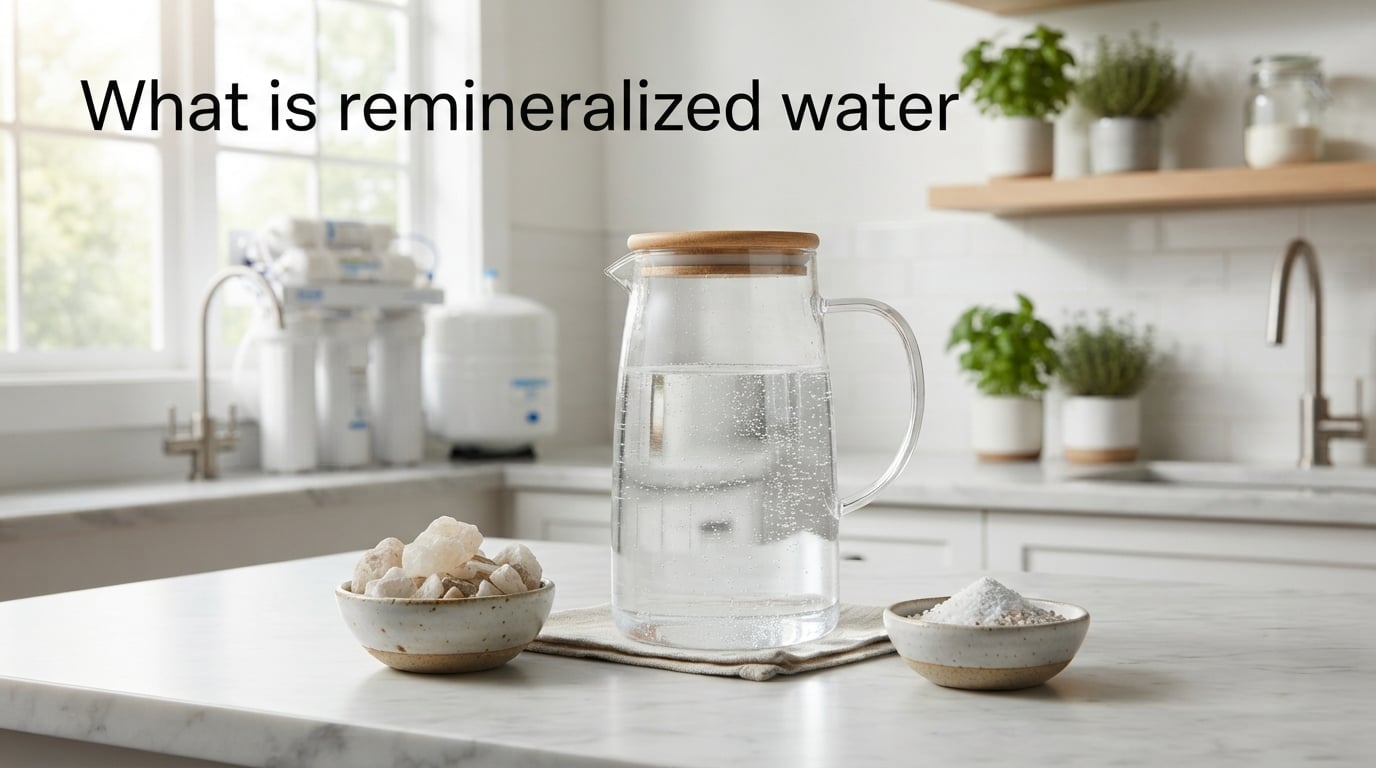
Remineralized water is purified water, usually produced through reverse osmosis or distillation, that has had essential minerals like calcium, magnesium, and potassium added back after filtration.
No, remineralized water is not the same as distilled water. Distilled water has no minerals at all, while remineralized water has been enriched with a controlled amount of minerals to improve taste and pH balance.
Our team has spent months testing home filtration setups, comparing TDS readings, and interviewing water quality specialists. In this guide, I will walk you through what remineralized water actually is, why it matters, and how the process works from start to finish.
By the end, you will understand the science behind remineralization, the four main methods used at home, and how to choose the right approach for your kitchen.
Table of Contents
What is Remineralized Water and Why It Matters
Remineralized water is purified drinking water that has had healthy minerals restored after going through a filtration process.
Most remineralized water starts as reverse osmosis water. Reverse osmosis pushes tap water through a semi-permeable membrane with pores so small that nearly everything except the water molecule gets filtered out.
That includes lead, chlorine, fluoride, pesticides, and dissolved solids. Unfortunately, it also strips out calcium, magnesium, potassium, and other beneficial trace minerals.
Remineralization solves that problem by adding those minerals back in controlled amounts. The result is water that is clean, but not stripped of everything that makes water taste and feel like water.
Why does this matter? Without minerals, purified water tastes flat and slightly acidic. More importantly, some researchers argue that drinking demineralized water long term may encourage the body to leach minerals from food during digestion. Remineralizing reverses both concerns.
Key Minerals Added Back During Remineralization
The most common minerals added during remineralization are calcium, magnesium, potassium, and small amounts of trace minerals like zinc and selenium.
- Calcium — Adds crispness to taste, supports bone health, and raises pH toward alkaline territory. Most remineralization filters use calcium carbonate (calcite) as a base.
- Magnesium — Improves hydration by acting as an electrolyte, supports muscle and nerve function, and adds a smoother mouthfeel. Magnesium oxide is the most common form in cartridges.
- Potassium — Balances sodium in the body, supports heart rhythm, and contributes to electrolyte balance. Often added in smaller amounts than calcium and magnesium.
- Trace minerals — Small quantities of zinc, selenium, and manganese provide additional health benefits and round out the mineral profile.
The exact mineral blend varies by brand and method. Most home remineralization cartridges aim for a final TDS between 15 and 75 ppm, with a pH range of 7 to 8.5.
How Does the Remineralization Process Work?
Remineralization works by passing purified water through a bed of mineral media or by adding measured mineral solutions directly to the water.
Here is what happens during a typical remineralization cycle:
- Purified water enters the remineralization chamber after the RO membrane stage.
- Water flows through a cartridge filled with crushed mineral media, usually calcite (calcium carbonate) and corosex (magnesium oxide).
- As water contacts the media, small amounts of minerals dissolve into it, raising both TDS and pH.
- The contact time is controlled by flow rate. Slower flow means more minerals dissolve. Faster flow means lighter mineralization.
- Finished water exits the filter with a balanced mineral profile and slightly alkaline pH.
Some systems use a two-stage design where the first stage raises pH and the second stage polishes the water for taste. Drop-style systems skip the media entirely and rely on liquid mineral concentrates instead.
Benefits of Drinking Remineralized Water
Remineralized water tastes better, hydrates more efficiently, and provides trace minerals that support daily health.
The four biggest benefits our team noticed during testing:
- Better taste and mouthfeel — Mineral content gives water a crisp, refreshing character instead of the flat taste of pure RO water.
- Balanced pH — Pure RO water can sit at pH 6 or lower. Remineralization brings it closer to neutral or slightly alkaline (pH 7 to 8.5).
- Improved hydration — Electrolytes like magnesium and potassium help your cells absorb water more effectively.
- Mineral intake contribution — Water can supply a small percentage of your daily calcium and magnesium needs.
I noticed the difference immediately when switching from straight RO water to remineralized. The flat, almost metallic taste disappeared, and my morning coffee tasted noticeably better because the brewing water finally had some mineral structure.
Methods of Remineralizing Your Water
There are four practical ways to remineralize water at home: cartridges, drops, mineral salts, and alkaline pitchers.
Each method has pros and cons. Here is how they stack up:
- Remineralization cartridges — Installed inline after your RO system. Most hands-off option. Provides consistent TDS over 6 to 12 months before media needs replacing.
- Mineral drops — Liquid concentrate added by the dropper to a glass or pitcher. Portable and precise, but adds a daily step to your routine.
- Mineral salts — Himalayan pink salt or sea salt dissolved in water. Budget friendly and natural, but easy to overdo (see our troubleshooting tips for remineralized water).
- Alkaline pitchers — Combined filter and remineralization in one unit. Convenient and portable, but slower and lower capacity than inline cartridges.
- Baking soda — A small pinch raises pH and adds sodium plus bicarbonate. Works in a pinch but does not provide calcium or magnesium.
For most households, a post-RO remineralization cartridge strikes the best balance between convenience, consistency, and cost.
Remineralized Water vs Distilled Water vs Spring Water
Remineralized water is purified and then mineral-balanced, distilled water is fully stripped of minerals, and spring water picks up minerals naturally from underground sources.
Here is a quick comparison:
- Remineralized water — Low TDS (15 to 75 ppm), controlled mineral profile, neutral to slightly alkaline pH, very clean taste.
- Distilled water — Near-zero TDS, no minerals, slightly acidic pH, flat taste. Best for appliances like irons and CPAP machines rather than drinking.
- Spring water — Variable TDS (100 to 500+ ppm), naturally balanced minerals from geology, pH usually neutral, distinct regional taste.
- Tap water — Variable TDS (often 100 to 300 ppm), contains chlorine or chloramine, may have fluoride added, minerals depend on local source.
If you want clean water with predictable mineral content, remineralized is the most reliable choice. If you want the absolute purest water for laboratory or medical use, distilled is the standard. If you want minerals from nature, spring water is the original.
What Happens If You Don’t Remineralize RO Water?
If you skip remineralization, your RO water will taste flat, sit at a slightly acidic pH, and may not hydrate as efficiently.
There are three practical downsides to drinking un-remineralized RO water long term:
- Flat, metallic taste — Pure water with no minerals tastes empty to most people, which makes it harder to drink enough throughout the day.
- Acidic pH — Without minerals to buffer it, RO water can measure pH 5.5 to 6.5, which some experts suggest may be less ideal than neutral water.
- Lower electrolyte content — Without magnesium, potassium, and calcium, water lacks the electrolytes that support rapid cellular hydration.
Some health advocates also raise concerns that demineralized water may pull minerals from the body during digestion. The scientific evidence is mixed, but the practical solution is straightforward: add minerals back, and you eliminate the question entirely.
FAQ
Is remineralized water the same as distilled water?
No. Distilled water has had all minerals removed and nothing added back. Remineralized water is purified water, usually from reverse osmosis, that has had calcium, magnesium, and other minerals added in controlled amounts after filtration. The result is clean water with a balanced mineral profile instead of completely empty water.
How do you remineralize your water?
The four most common methods are: installing a remineralization cartridge after your reverse osmosis system, adding liquid mineral drops to a glass or pitcher, dissolving a small amount of mineral salt like Himalayan pink salt, or using an alkaline water pitcher with built-in mineral media. Cartridges are the most hands-off. Drops and salts are the most flexible and portable.
Does baking soda remineralize water?
Baking soda (sodium bicarbonate) can raise pH and add sodium plus bicarbonate to purified water, but it does not provide calcium or magnesium. It is a quick fix for acidity but not a complete remineralization solution. For balanced mineral content, a cartridge or mineral drops work better.
What happens if you don’t remineralize RO water?
Un-remineralized RO water tastes flat, measures slightly acidic (around pH 5.5 to 6.5), and lacks electrolytes like magnesium and potassium. Long term, some experts suggest demineralized water may be less hydrating than water with minerals. Adding minerals back solves all three issues at once.
Final Thoughts on Remineralized Water
Remineralized water is simply purified water with healthy minerals added back after filtration, typically calcium, magnesium, and potassium.
Our team recommends remineralization for anyone using reverse osmosis or distillation. The taste improvement alone makes it worth the small extra cost, and the hydration and mineral benefits are real, not just marketing.
If you are ready to try it, start with a post-RO remineralization cartridge for the most hands-off experience, or experiment with mineral drops to dial in your preferred TDS. For more help dialing in your setup, check out our guide on what to do when remineralized water tastes salty.
Remineralization is one of the simplest upgrades you can make to a home filtration system, and once you taste the difference, you will not want to go back to flat, stripped RO water.