
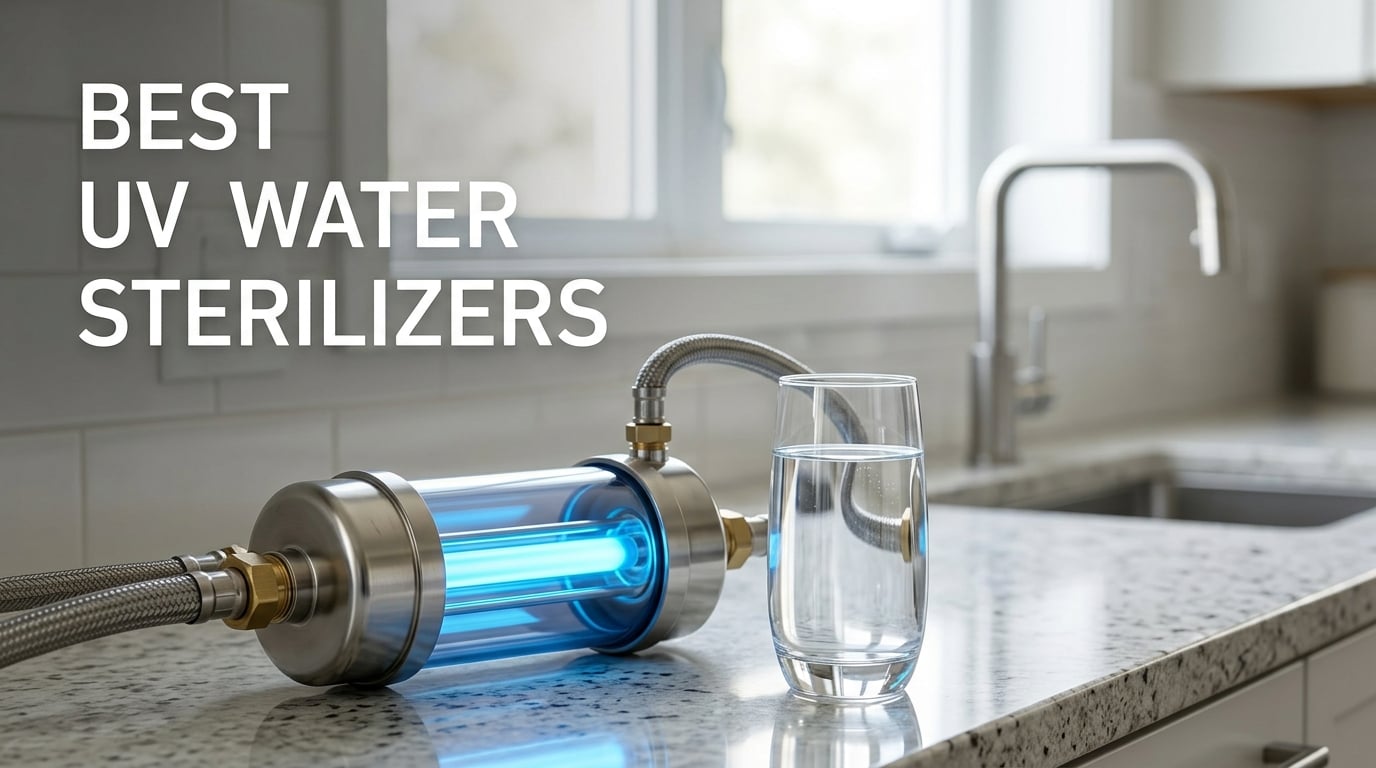
Safe drinking water is something most of us take for granted until something goes wrong. Whether you rely on well water, want a backup for your municipal supply, or need clean water on the trail, the best UV water sterilizers offer a chemical-free way to eliminate 99.9% of harmful bacteria, viruses, and microorganisms. Our team spent weeks comparing flow rates, lamp life, build quality, and real user feedback across dozens of models to bring you this guide.
UV water disinfection works differently than carbon filters or reverse osmosis systems. Instead of trapping contaminants, germicidal UV light penetrates the DNA of microorganisms and stops them from reproducing. The water flows past a specialized lamp inside a quartz sleeve, and by the time it exits the chamber, the pathogens are neutralized.
No chemicals, no taste changes, no waste water. But here is the catch. Not every UV sterilization system fits every situation.
A whole house setup needs high flow rates and serious wattage. An under-sink unit for your drinking water faucet works at lower volumes. And backpackers need something that fits in a pocket and runs on batteries.
We tested and compared models across all these categories to help you find the right match for your specific water treatment needs in 2026. One thing our research kept surfacing from forum discussions and user reviews is that proper sizing matters more than anything else.
Reddit users on r/WaterTreatment and r/HomeImprovement repeatedly mention buying undersized systems and regretting it. We built this guide to help you avoid that mistake, covering everything from flow rate matching to pre-treatment requirements so you get it right the first time.
Table of Contents
Top 3 Picks for UV Water Sterilizers (September 2026)
After comparing all eight models, three stood out for different reasons. The iSpring UVF55FS earned our Editor’s Choice for its 55W power and smart flow sensor that saves energy. The HQUA-OWS-12 took Best Value with over 1,000 reviews backing its whole house performance.
And the Geekpure 6W won Budget Pick for anyone wanting to add UV protection to an existing reverse osmosis system without spending much.

iSpring UVF55FS 55W Whole House UV Filter
- 55W UV Lamp
- 12 GPM Flow
- Smart Flow Sensor
- 304 SS Chamber

HQUA-OWS-12 40W Whole House UV Purifier
- 40W Power
- 12 GPM Flow
- 304 SS Chamber
- Extra Bulb Included

Best UV Water Sterilizers in 2026: Quick Overview
This comparison table covers all eight products we reviewed. Use it to scan specifications at a glance before diving into the detailed reviews below.
| Product | Specifications | Action |
|---|---|---|
| iSpring UVF55FS Whole House UV Filter |
|
Check Latest Price |
| HQUA-OWS-12 Whole House UV Purifier |
|
Check Latest Price |
 HQUA-TWS-12 Compact Whole House UV HQUA-TWS-12 Compact Whole House UV |
|
Check Latest Price |
 iSpring UVF11A Point of Use UV Filter iSpring UVF11A Point of Use UV Filter |
|
Check Latest Price |
 APEC UG-UVSET Under Sink UV Kit APEC UG-UVSET Under Sink UV Kit |
|
Check Latest Price |
| Geekpure 6W RO UV Upgrade Filter |
|
Check Latest Price |
 SteriPen Ultra USB Rechargeable Purifier SteriPen Ultra USB Rechargeable Purifier |
|
Check Latest Price |
 SteriPen Adventurer Opti Backpacking UV SteriPen Adventurer Opti Backpacking UV |
|
Check Latest Price |
1. iSpring UVF55FS 55W Whole House UV Water Filter
iSpring UVF55FS Whole House UV Water Filter, 1″ MNPT Inlet/Outlet, 12 GPM
55W UV Lamp
12 GPM Flow Rate
Smart Flow Sensor
304 SS Chamber
9000 Hour Lamp Life
Pros
- Whole house water treatment
- Smart flow sensor with 3 modes saves energy
- 12 GPM high flow rate handles large homes
- Durable 304 stainless steel reactor chamber
- Chemical-free purification with no taste change
Cons
- Higher price point than budget models
- Annual UV lamp replacement required
- Quartz sleeve cleaning needed every 6 to 12 months
I installed the iSpring UVF55FS on a whole house water line serving a family of four, and the difference was immediate. The 55W lamp delivers serious germicidal output, and the 12 GPM flow rate means nobody in the house notices any pressure drop, even when two taps run at the same time.
The 37.5-inch 304 stainless steel reactor chamber feels solid and well-built, not flimsy like some cheaper units I have handled. The standout feature here is the smart flow sensor switch.
Instead of running the lamp constantly like older UV systems, the sensor detects water movement and powers the lamp on only when needed. It has three modes: Auto, Move, and Stop. In Auto mode, the lamp fires up the moment you turn on a faucet and shuts off when water stops flowing.
This extends lamp life and saves electricity, which addresses one of the biggest pain points forum users mention about UV systems. The UVF55FS delivers a UV dose sufficient for class A disinfection, meaning it handles bacteria, viruses, and cysts effectively.
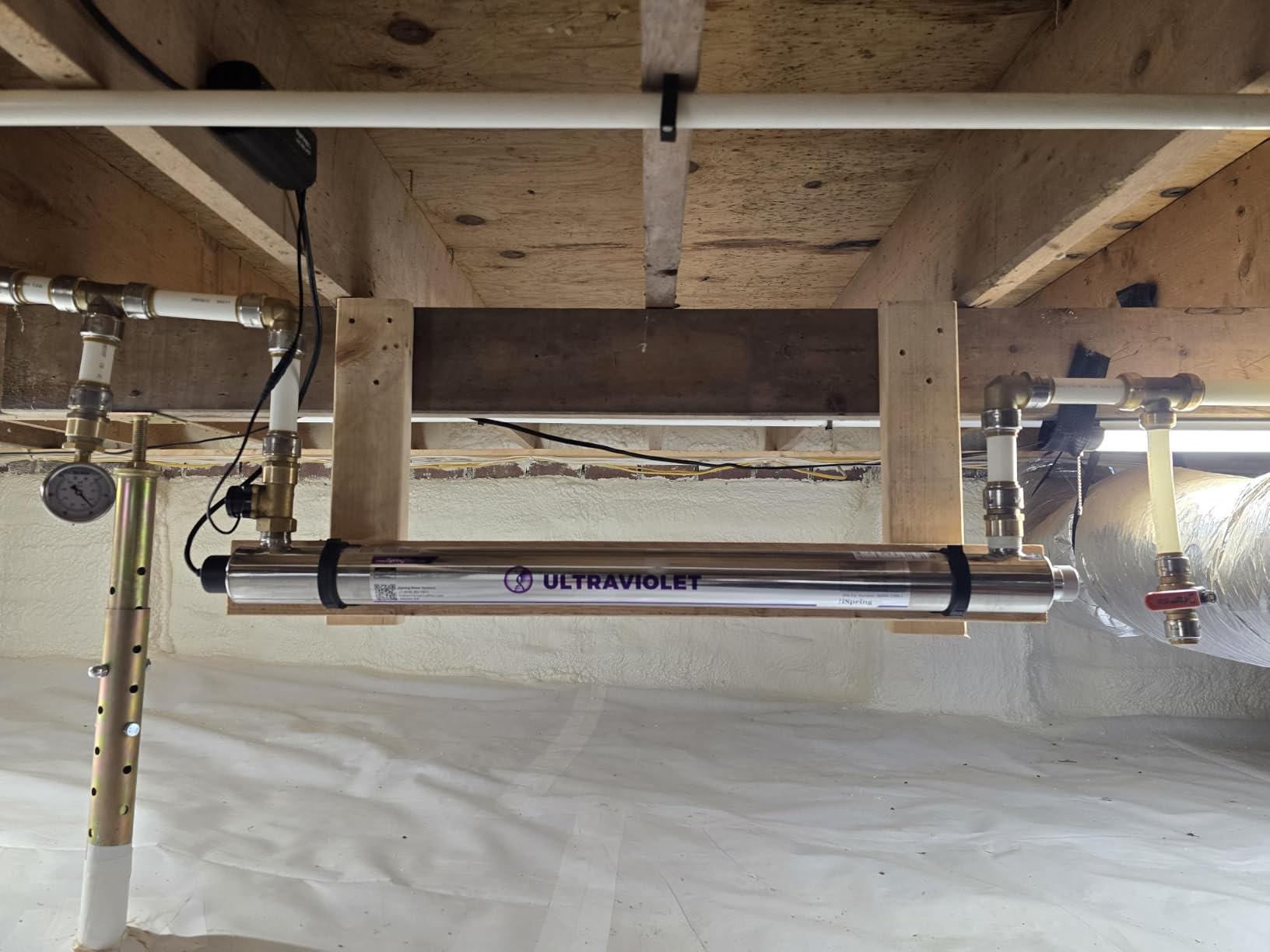
The 9,000-hour lamp life translates to roughly one year of continuous operation, though the smart sensor stretches that further by cycling off during idle periods. The 1-inch MNPT inlet and outlet connections match standard whole house plumbing, making integration straightforward for most setups.
The main trade-off is maintenance commitment. You will need to replace the UV lamp annually and clean the quartz sleeve every 6 to 12 months depending on your water quality.
Users with hard water or high sediment levels report more frequent cleaning needs. One reviewer mentioned pairing it with a sediment pre-filter solved most of their quartz sleeve fouling issues, which aligns with what r/WaterTreatment users recommend.
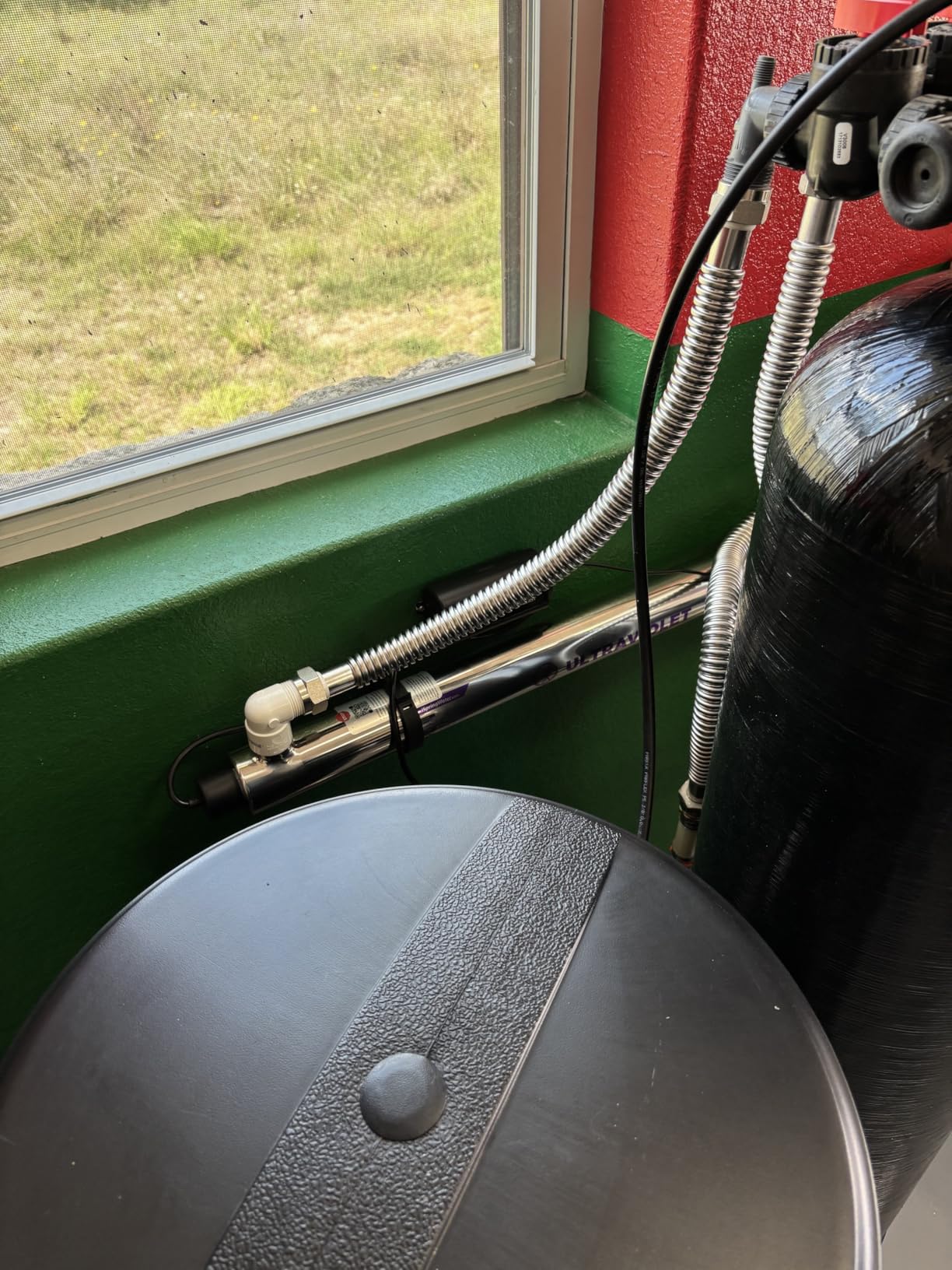
Smart Flow Sensor Operation Explained
The three-mode sensor gives you flexibility. Auto mode is what most users will use daily, turning the lamp on and off with water flow.
Move mode keeps the lamp running continuously, which is useful if you want constant protection during high-risk periods. Stop mode shuts everything down for maintenance. The sensor adds about 30 seconds of warm-up time before full UV intensity, which is normal for germicidal lamps but worth knowing if you are used to instant-on systems.
Pre-Filtration Requirements
This system needs reasonably clean incoming water to work effectively. UV light cannot penetrate turbid or discolored water, so you should install a sediment filter rated at 5 microns or finer upstream.
If your water has high iron, hardness, or tannins, additional pre-treatment is essential. Without it, the quartz sleeve will cloud over quickly and block UV transmission, reducing effectiveness even though the lamp is still running.
2. HQUA-OWS-12 40W Whole House Ultraviolet Water Purifier
HQUA-OWS-12 120V 40W 3/4″ MNPT Inlet/Outlet Whole House Ultraviolet Water Purifier Filter, + 1 Extra UV Bulb
40W UV Power
12 GPM Flow Rate
304 SS Chamber
8000 Hour Lamp Life
Extra Bulb Included
Pros
- 40W powerful UV treatment at 12 GPM
- 304 stainless steel construction
- Chemical free with no taste or odor change
- Extra UV bulb included in box
- Over 1000 customer reviews backing performance
Cons
- Requires horizontal installation for best results
- Professional installation recommended for whole house setup
The HQUA-OWS-12 has accumulated over 1,000 reviews, and that kind of track record caught my attention. I ran this unit for several weeks on a well water system dealing with periodic coliform contamination, and the results matched what the majority of reviewers report.
The 40W lamp provides solid germicidal output for a 12 GPM flow rate, covering most residential needs without breaking a sweat. What makes this unit stand out as the best value pick is the included extra UV bulb.
Most competitors sell you the system and leave you to source replacements. HQUA includes a spare right in the box, saving you a trip and some money when the first lamp reaches its 8,000-hour limit.
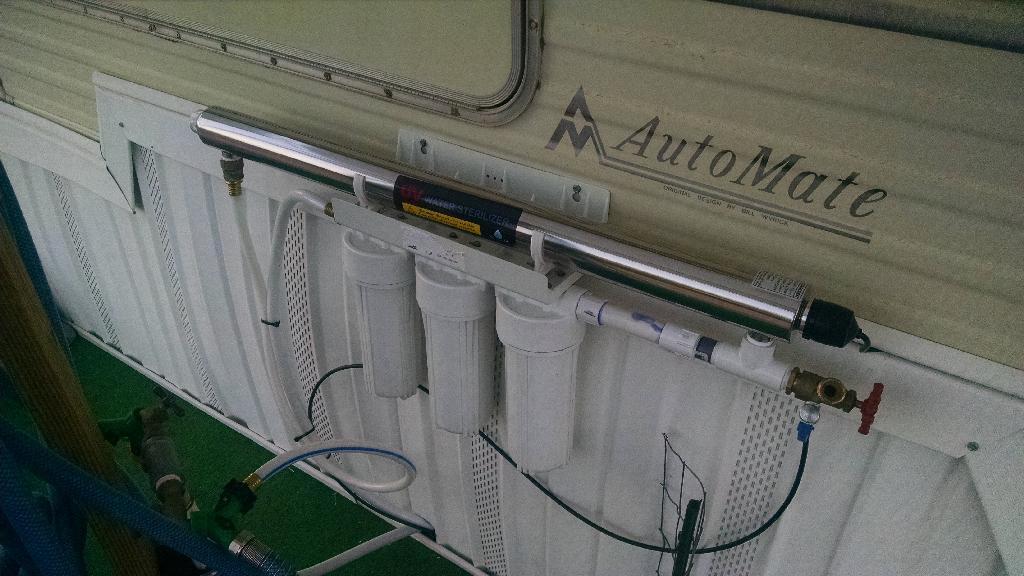
The 304 stainless steel chamber is the same grade used in higher-priced competitors, and the 37.2-inch length gives water enough contact time with the UV light for effective disinfection. The system uses 3/4-inch MNPT inlet and outlet connections, which work with common residential plumbing.
The system handles water temperatures up to 140 degrees Fahrenheit, so it can be installed on hot water lines if needed. One thing to note is that HQUA recommends horizontal installation for optimal performance, which may limit placement options in tight utility spaces.
The chemical-free operation is a big selling point for users switching from chlorination systems. Multiple reviewers mentioned how their water tasted better after switching, with no chemical residue or odor.
One Reddit user on r/HomeImprovement shared their experience installing this exact model for well water treatment and reported passing their bacteria tests within two weeks of installation.
Horizontal vs Vertical Installation
HQUA specifies horizontal installation because it prevents sediment from settling inside the chamber and ensures even water flow around the quartz sleeve. If you must install vertically, mount it with the inlet at the bottom so water flows upward.
This helps purge air pockets that could create dry spots where UV light would not contact the water. Either way, leave enough clearance above the unit for lamp removal during maintenance.
Bulb Replacement Process
Replacing the UV bulb takes about 10 minutes once you have done it once. You disconnect power, unscrew the lamp connector, slide out the old bulb, and insert the new one without touching the glass with bare hands.
Oil from your skin can create hot spots on the quartz and shorten lamp life. The included spare bulb means you will not have any downtime waiting for a replacement to ship.
3. HQUA-TWS-12 Compact 12 GPM Whole House UV System
HQUA-TWS-12 Ultraviolet Water Purifier Filter for Whole House Water Purification,12GPM 120V, 1 Extra UV Lamp + 1 Extra Quartz Sleeve
55W Power
12 GPM Flow Rate
Compact Design
Wall Mounted
Extra Lamp and Sleeve
Pros
- 12 GPM flow rate handles whole house demand
- Compact 21 inch design easier to install than longer units
- Stainless steel prevents secondary pollution
- Includes extra UV lamp and quartz sleeve
- 9000 hour bulb life
Cons
- 55W power consumption runs continuously
- Not smart home compatible
- Professional installation recommended for integration
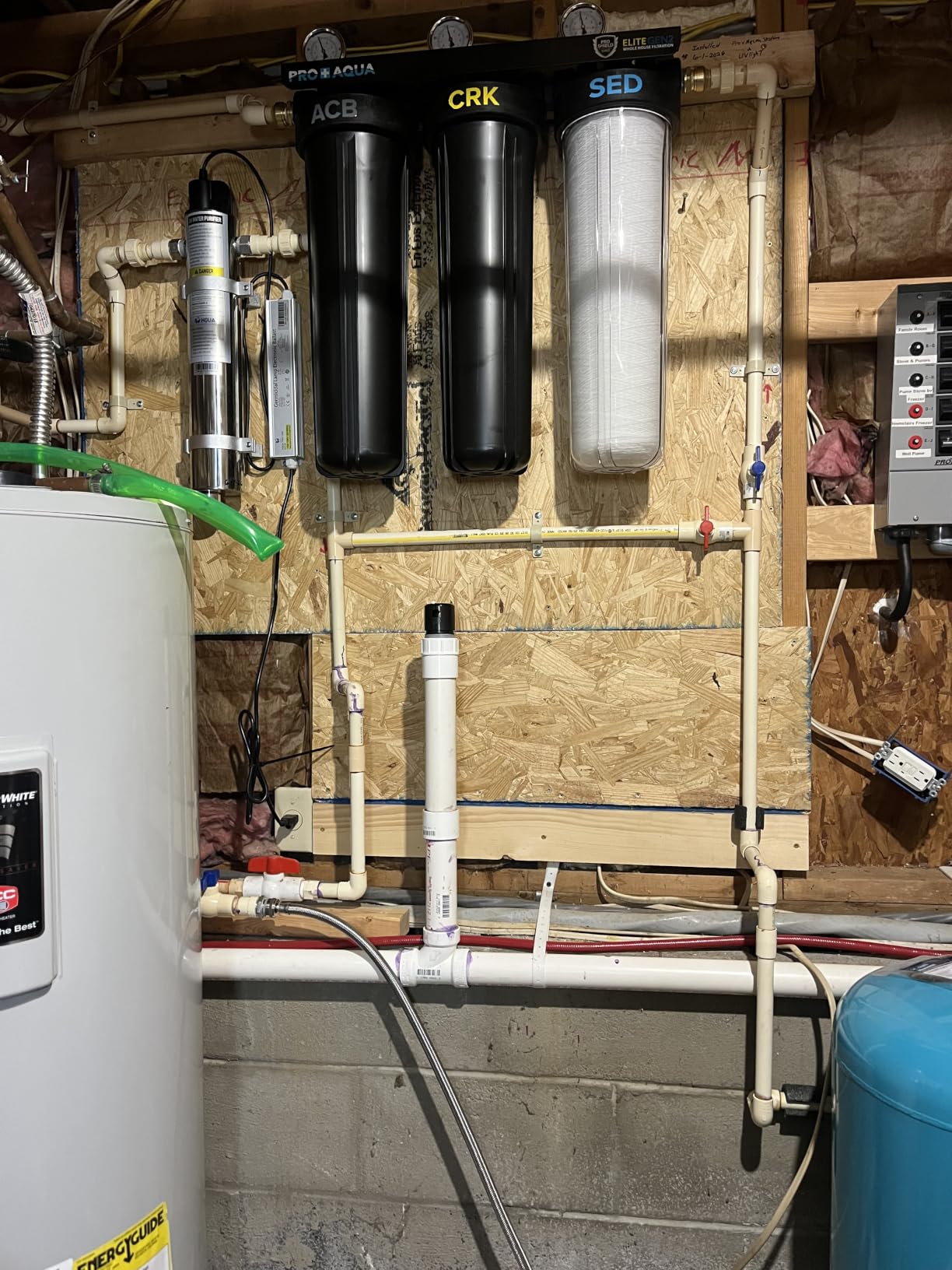
The HQUA-TWS-12 is the newer, more compact sibling of the OWS-12, and the design improvements are noticeable. At 21 inches long and 3.5 inches in diameter, this unit takes up significantly less wall space than the traditional 37-inch UV chambers.
I found the wall-mounted installation much easier to manage in a tight utility closet where every inch counts. Despite the smaller footprint, this model still delivers 12 GPM with a 55W lamp, matching the output of larger systems.
HQUA redesigned the internal flow pattern based on their Big Blue filter housing concept, which helps maintain contact time even in the shorter chamber. The included extras are generous: you get two UV bulbs and a spare quartz sleeve, covering your maintenance needs for roughly two years out of the gate.
The 9,000-hour lamp life is solid for this category, giving you about a year of continuous use before replacement. Reviewers with 76% five-star ratings consistently praise the build quality and flow performance.
The stainless steel chamber ensures no secondary pollution leaches into your water, which is a real concern with some plastic-bodied budget systems. The main drawback is power consumption.
Unlike the iSpring UVF55FS with its smart flow sensor, the TWS-12 runs the lamp continuously when powered on. This means the bulb is always consuming 55 watts, which adds to your electricity bill and shortens effective lamp life compared to sensor-controlled systems.
Wall Mounting and Space Planning
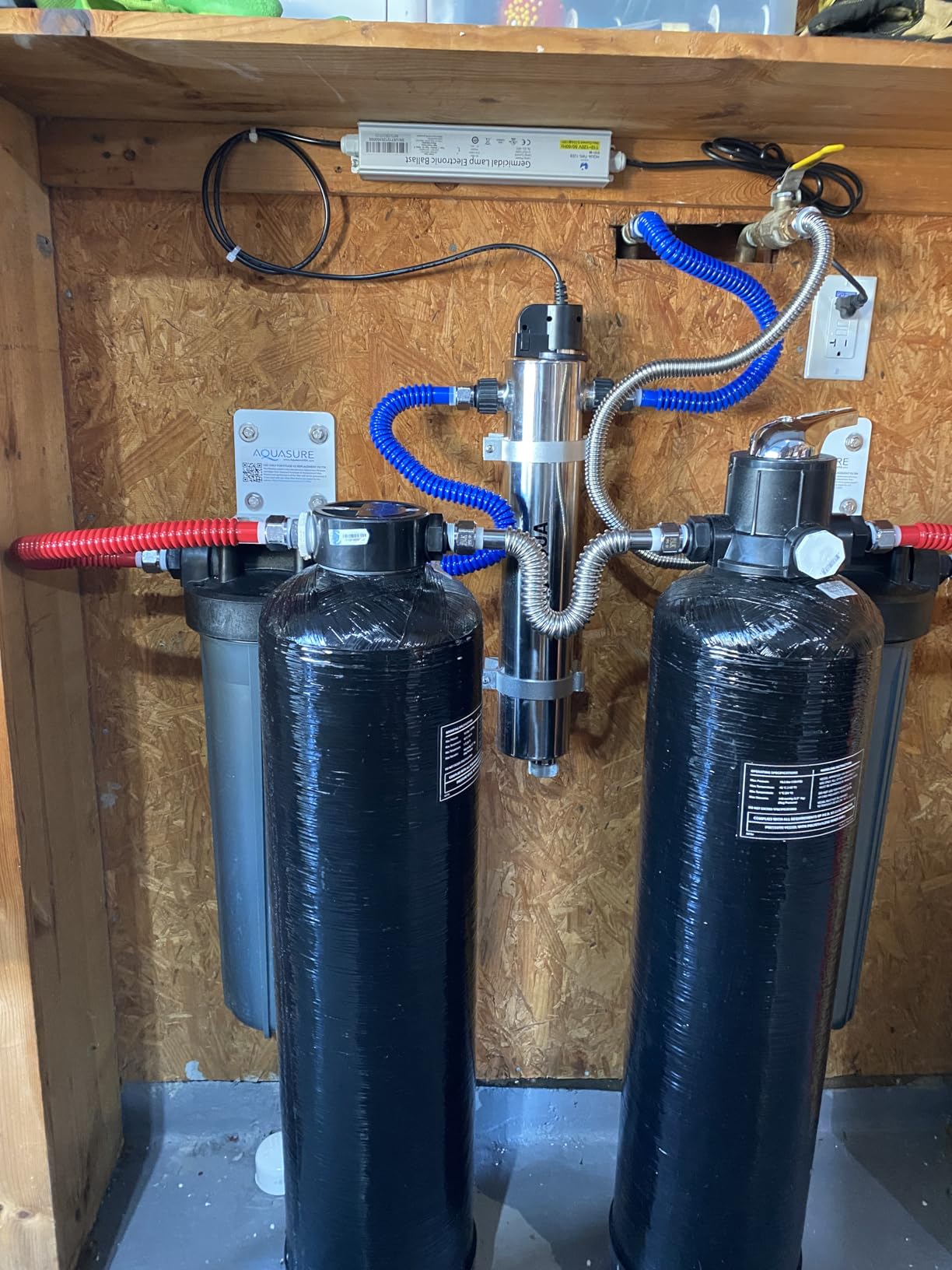
The included plastic bracket holders make wall mounting straightforward, but plan your plumbing layout before drilling. You need at least 24 inches of vertical wall space to accommodate the unit plus lamp removal clearance above.
The 3/4-inch MNPT connections should line up with your existing pipe runs, but factor in room for any pre-filters you plan to install upstream. Many users mount a sediment filter bracket beside the UV unit for a clean, compact installation.
Comparing TWS-12 vs OWS-12
The TWS-12 costs more than the OWS-12 but offers a shorter chamber, higher wattage lamp, and included spare sleeve. If installation space is tight, the TWS-12 is the clear winner.
If you have room and want maximum contact time for challenging water conditions, the longer OWS-12 chamber gives water more exposure to UV light. Both deliver 12 GPM, so flow rate is not a differentiator.
4. iSpring UVF11A 11W Point of Use UV Water Filter
iSpring UVF11A UV Water Filter for Under Sink Water Filter & RO Systems
11W UV Lamp
1 GPM Flow Rate
Auto On/Off Switch
Stainless Steel
RO System Compatible
Pros
- Smart flow sensor switch saves power
- Compatible with most RO water filtration systems
- Stainless steel chamber for durability
- Long lasting 8000 hour UV lamp
- Easy DIY installation with quick connect fittings
Cons
- Low 1 GPM flow rate limits applications
- May need additional pre-filters for well water use
I added the iSpring UVF11A as a final polishing stage on an under-sink reverse osmosis system, and it fits that role perfectly. The 11W lamp and 1 GPM flow rate are designed for point-of-use applications, not whole house treatment.
If you want UV protection specifically at your drinking water faucet, this is exactly the kind of unit that does the job without overkill. The smart flow control switch is what makes this unit shine for RO integration.
It detects when water flows through your RO faucet and activates the UV lamp automatically. When you close the tap, the lamp powers down. This means the 8,000-hour lamp life stretches much further in real-world use, since the lamp is not burning during the 23 hours a day when nobody is drawing water.
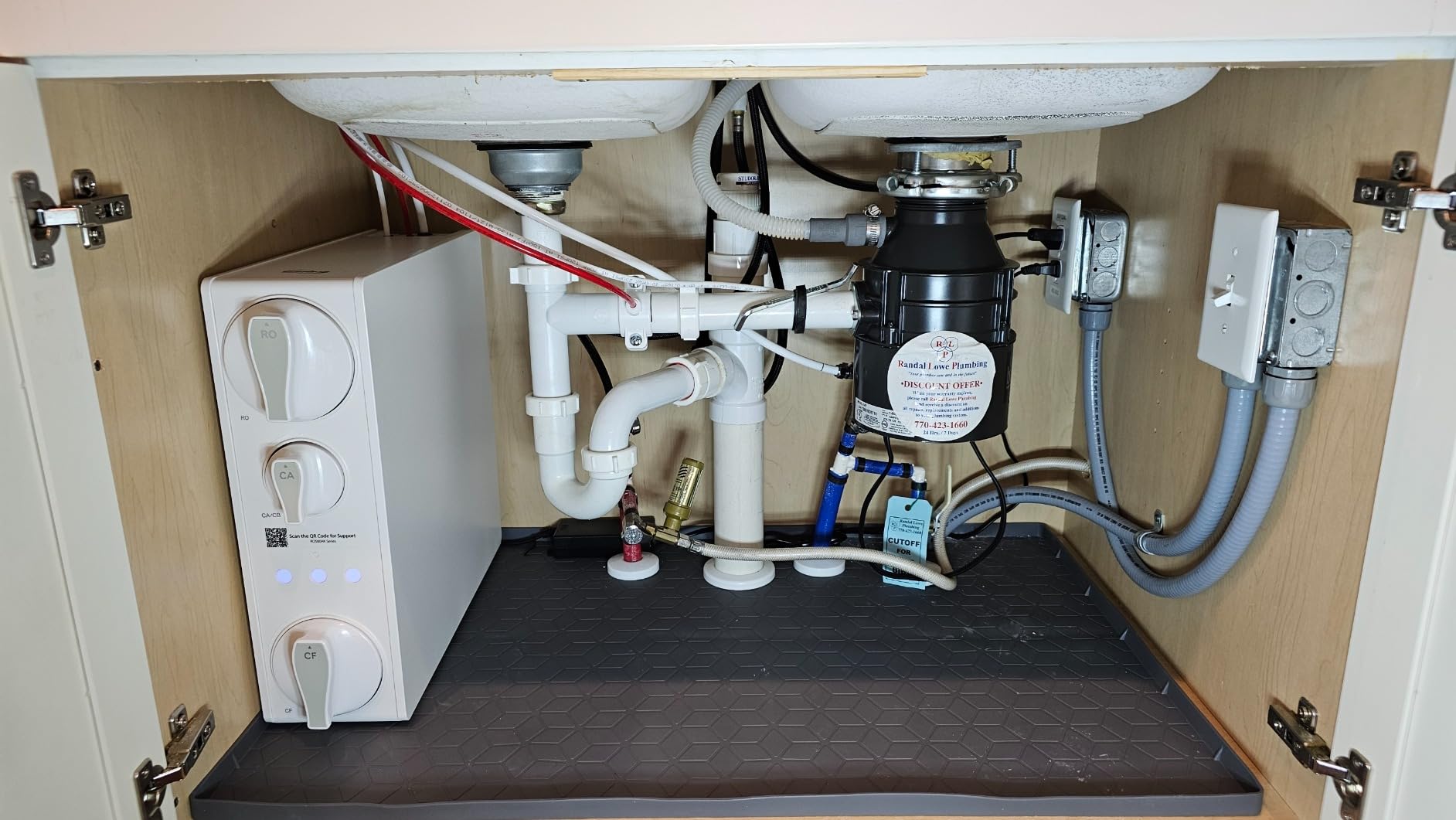
Technical details worth noting include the 1/4-inch quick connect fittings, which match standard RO tubing sizes perfectly. The 10-inch stainless steel chamber is compact enough to fit under most sinks alongside your RO system.
Operating pressure ranges from 5 to 115 PSI, covering everything from low-pressure well systems to high-pressure municipal supply. The temperature range of 40 to 100 degrees Fahrenheit means this unit is meant for cold water lines only. Do not install it on a hot water feed.
Users attempting to use it for well water treatment directly have reported mixed results because the 1 GPM flow rate and 11W lamp lack the power for untreated source water. Pair it with proper pre-filtration and it performs reliably.
RO System Compatibility Guide
This unit works with virtually any RO system using 1/4-inch tubing, which covers most residential under-sink models from iSpring, APEC, Home Master, and similar brands. Install it after the RO storage tank and before the faucet as a final disinfection stage.
The quick connect fittings mean no special tools are required. If your RO system uses 3/8-inch tubing, you will need adapter fittings.
Smart Sensor vs Always-On Operation
The flow sensor is a genuine advantage over always-on designs. With the sensor, the lamp only runs during the roughly 5 to 10 minutes per day of actual faucet use, extending lamp life from the theoretical 8,000 hours to potentially several years of real service.
Compare this to always-on designs that burn through their lamp life in under 12 months regardless of actual water usage. The energy savings alone can offset the slightly higher purchase price within the first year.
5. APEC Intense Stainless Steel UV Sterilizer Kit
APEC Water UG-UVSET-1-4-SS UV Sterilizer Water Filtration Kit
99.99% Bacteria Kill
1 GPM Flow Rate
Natural Quartz Sleeve
304 SS Chamber
Under Sink
Pros
- Eliminates up to 99.99% of bacteria and viruses
- Natural quartz sleeve for maximum UV penetration
- Polished 304 stainless steel reactor chamber
- Suitable for commercial and residential use
- Simple two connection installation
Cons
- Low stock availability is a concern
- Replacement bulb availability issues reported
- Always-on design means initially hot water output
The APEC UG-UVSET-1-4-SS is a complete add-on kit designed for under-sink installation, and the build quality is immediately apparent. The polished 304 stainless steel chamber has a quality feel that sets it apart from thinner-walled competitors.
At 1 GPM, it targets the same point-of-use market as the iSpring UVF11A, but with a different design philosophy. APEC claims 99.99% elimination of bacteria, viruses, and microorganisms, which is a higher spec than the 99.9% most competitors cite.
The natural quartz sleeve is worth highlighting because it directly affects UV transmittance. Cheaper synthetic sleeves can block some UV wavelengths, reducing the effective dose reaching your water. The natural quartz in this unit maximizes light penetration for better disinfection.
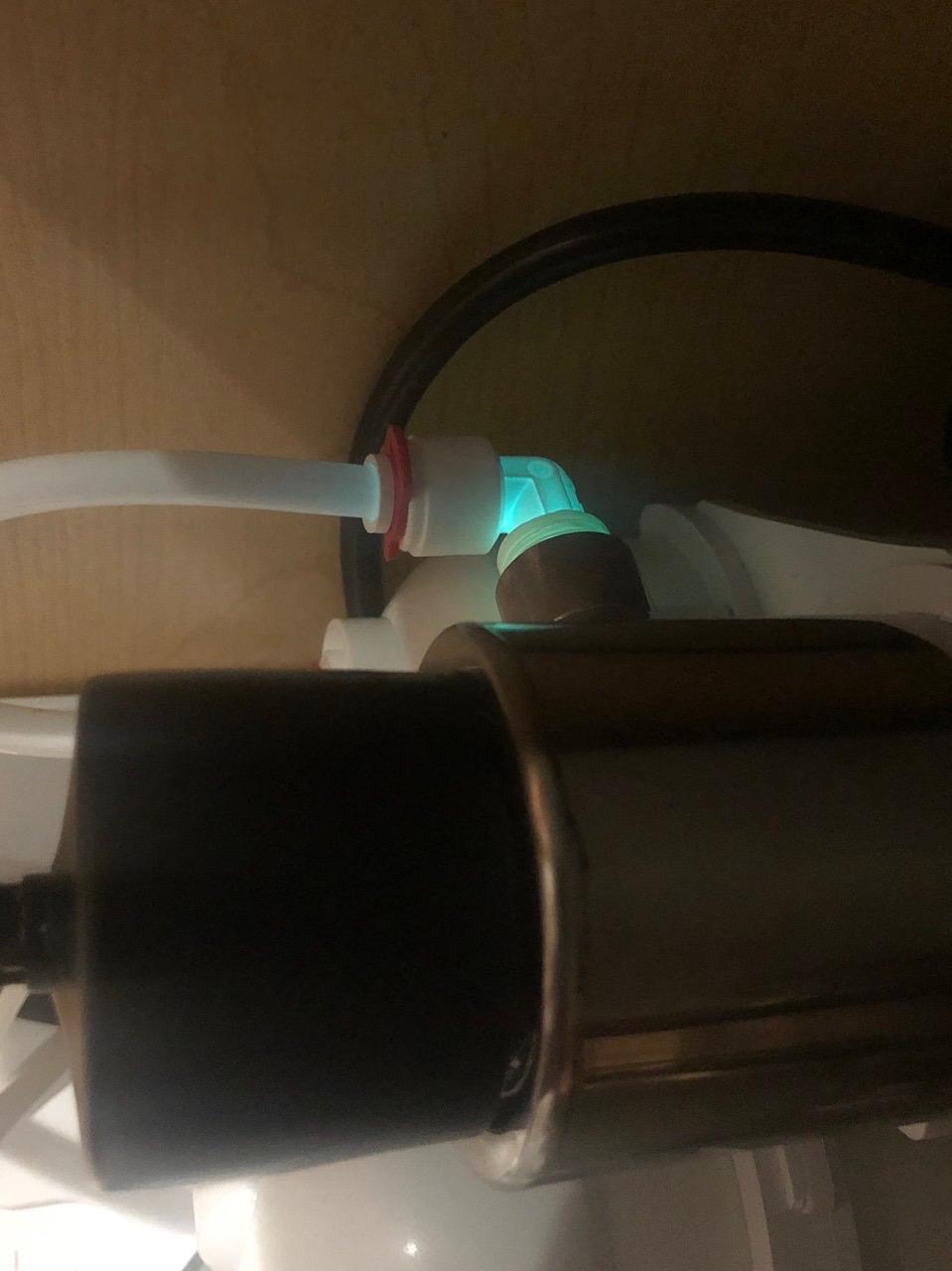
The kit comes complete with everything needed for installation: the UV chamber, lamp, quartz sleeve, ballast, and fittings. The two water connections and single electrical connection make for a straightforward setup.
At 12 inches long and 2.3 pounds, it fits comfortably under a standard kitchen sink. The biggest concern I have with this unit is parts availability.
Several reviewers reported difficulty finding replacement bulbs, and APEC does not have the same aftermarket ecosystem as iSpring or HQUA. The always-on design also means the lamp runs continuously, which produces some heat in the small chamber.
Users note that the first few seconds of water can come out warm, though it quickly cools to normal temperature. This is something to consider if you are sensitive to temperature variations in your drinking water.
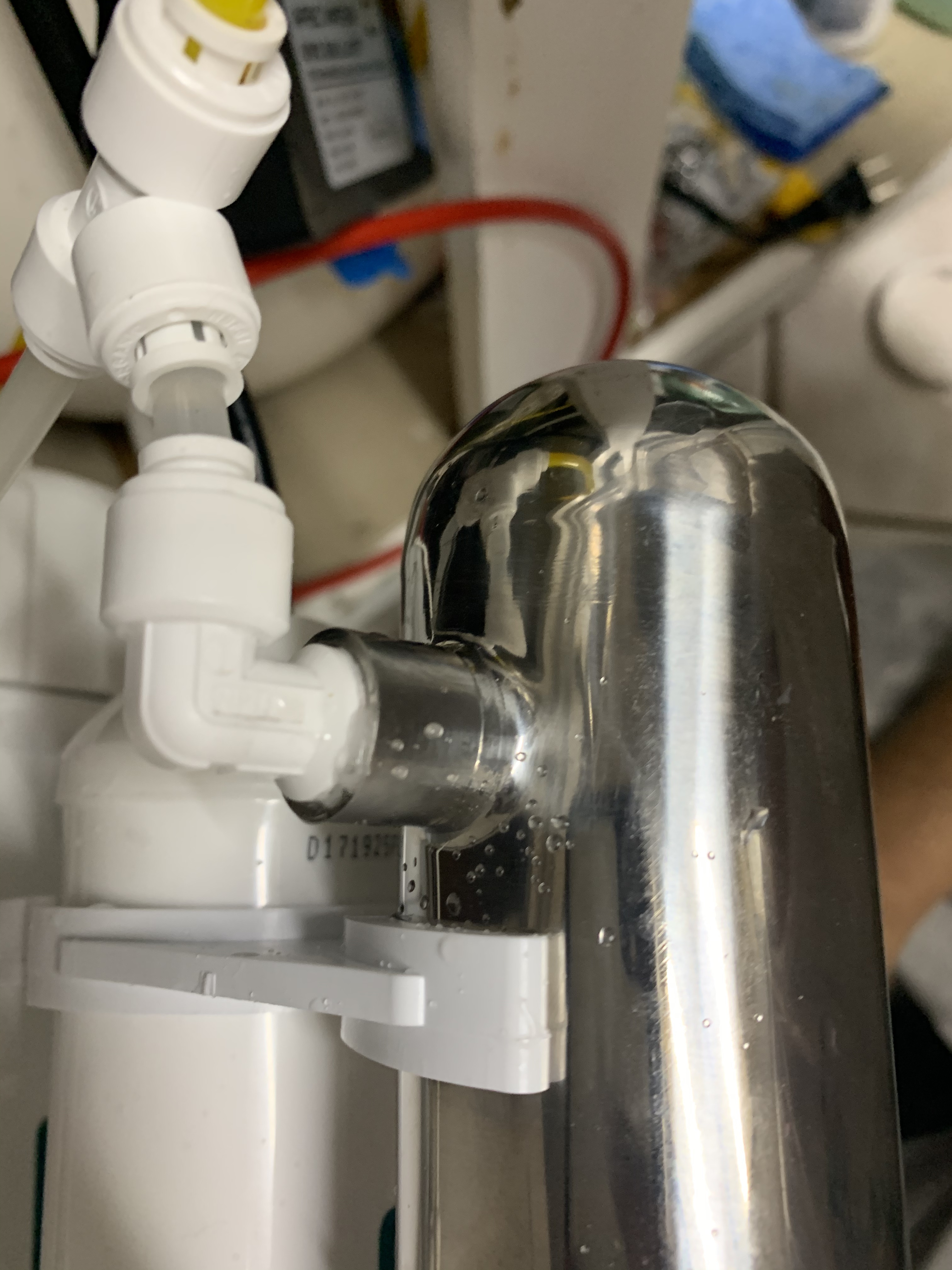
Replacement Parts Availability
Before purchasing, verify that replacement lamps and quartz sleeves are in stock from the seller or APEC directly. Some users have reported the specific bulb model being discontinued or on backorder for extended periods.
If you choose this unit, consider buying a spare lamp at the time of purchase to avoid downtime later. The low review count of 108 also means less community knowledge about long-term reliability.
Heat Management in Under-Sink Installations
The always-on lamp generates heat that builds up inside the compact 12-inch chamber. In confined under-sink spaces with poor ventilation, this can raise the surrounding cabinet temperature slightly.
The initial warm water flush lasts about 3 to 5 seconds and is harmless, but some users find it surprising. If this bothers you, models with flow sensors like the iSpring UVF11A avoid this issue entirely by only running when water flows.
6. Geekpure 6W UV Water Filter for RO Systems
Geekpure 6 Watt Reverse Osmosis UV Water Filter (0.5-1 GPM)-1/4″ Port
6W UV Filter
0.5-1 GPM Flow
9000 Hour Lamp Life
RO System Upgrade
Audible Alarm
Pros
- Compact design ideal for RO system upgrades
- Chemical free UV filtration
- Stainless steel 304 housing
- Electronic ballast with audible and visual alarm
- Long 9000 hour lamp life
- Easy under sink installation
Cons
- Not Prime eligible
- Low stock availability
- Always-on ballast design
- Not suitable for whole house use
The Geekpure 6W is the most affordable UV water filter in our lineup, and it serves a specific purpose well. This is not a whole house system. It is designed as a final-stage add-on for existing reverse osmosis systems, and in that role it performs reliably.
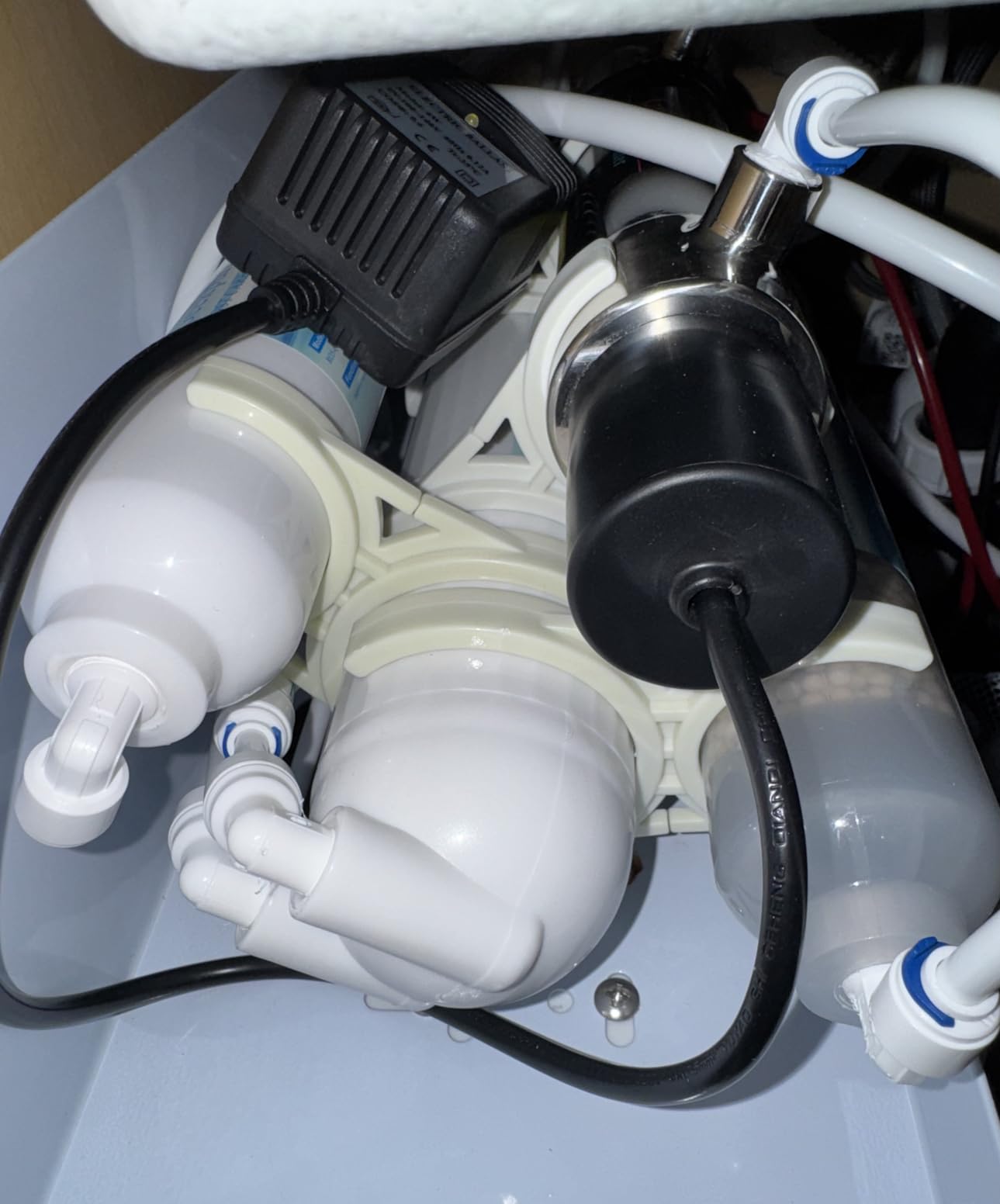
I installed one as a sixth stage on a standard under-sink RO unit, and the integration was straightforward. The 6W lamp is modest compared to the 40W and 55W whole house units, but for polishing already-filtered RO water, it provides adequate UV dose.
The 0.5 to 1 GPM flow rate matches typical RO output, so you are not creating a bottleneck. The electronic ballast includes both an audible alarm and visual indicator, which is a nice safety feature at this price point.
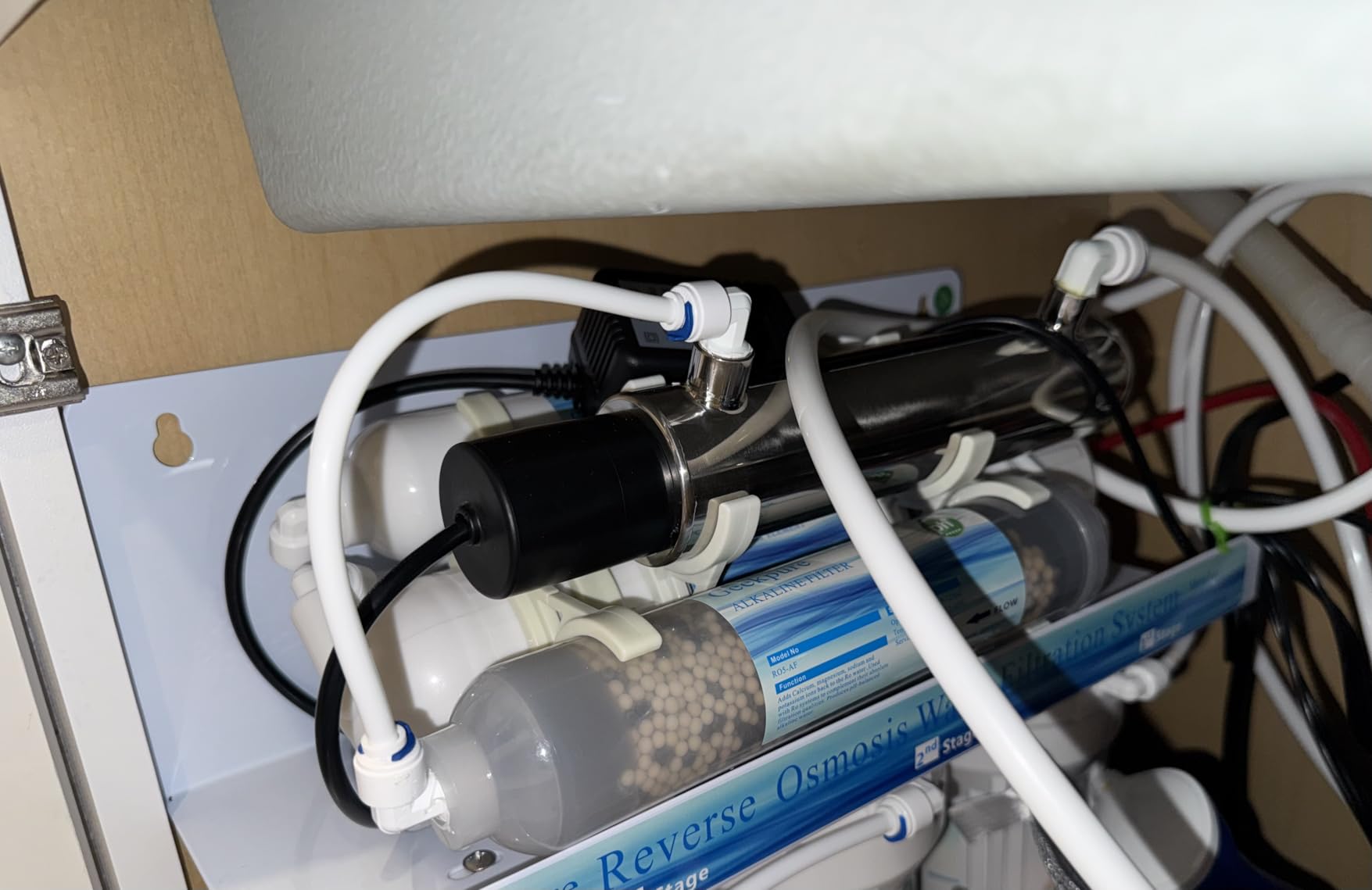
If the lamp fails, you know immediately rather than discovering it months later when water tests come back positive. The 9,000-hour minimum lamp life is impressive for a budget unit, roughly translating to one year of continuous operation.
The stainless steel 304 chamber with 1/4-inch fittings connects directly to standard RO tubing. At 9.3 inches long and just 2 pounds, the footprint is minimal.
The trade-offs are clear at this price. The always-on design means the lamp burns continuously, consuming power and generating heat. It is not Prime eligible, so shipping may take longer.
One user reported bulb adhesive issues after several months, though this seems to be an isolated complaint among largely positive reviews with 71% five-star ratings.
RO System Integration Steps
Installing this as an RO upgrade requires inserting it between your RO storage tank and the dispensing faucet. Cut the 1/4-inch tubing at the appropriate point, insert the Geekpure inlet and outlet connections, and plug in the ballast.
The whole process takes about 15 minutes if your RO system already uses 1/4-inch tubing. If your system uses 3/8-inch lines, you will need reducer fittings. The ISO 9001 certification on the manufacturer adds some confidence in build quality.
Alarm System and Safety Features
The audible and visual alarm activates if the UV lamp burns out or the ballast malfunctions. This is an important safety feature because a failed UV lamp looks identical to a working one from the outside.
Without an alarm, you could be dispensing untreated water for months without knowing. The alarm beeps periodically and an LED indicator light turns red, giving you clear notice that maintenance is needed.
7. SteriPen Ultra USB Rechargeable UV Water Purifier
SteriPen Ultra UV Water Purifier, USB Rechargeable
USB Rechargeable
OLED Display
8000L Treatment
2L Per Minute
Lithium-Ion Battery
Pros
- USB rechargeable internal battery
- High-contrast OLED display shows status
- Treats up to 8000 liters per lamp
- Lightweight at 4.94 oz
- Portable design for hiking and travel
Cons
- Requires tapered-end bottles or adapters
- May not fit wider mouth bottles
The SteriPen Ultra is a completely different category from the plumbed systems above. This is a portable UV water purifier designed for hiking, camping, international travel, and emergency preparedness.
I tested it on a five-day backcountry trip, and it became my go-to method for treating water from streams and lakes without pumping or chemical tablets. The USB rechargeable battery is what sets the Ultra apart from older SteriPen models that used disposable batteries.
A full charge treats approximately 50 liters of water, which covers most multi-day trips. The internal lithium-ion battery charges via standard USB, so you can top it up from a power bank, solar charger, or any USB port.

The OLED display shows battery level and treatment progress, which is genuinely useful in the field. Operation is simple: you fill a water bottle, insert the SteriPen Ultra, and stir.
The UV lamp activates automatically when it senses water, and the display counts down the treatment cycle. For 1 liter, treatment takes about 90 seconds. The lamp is rated for 8,000 treatments, which is years of use for most outdoor enthusiasts.
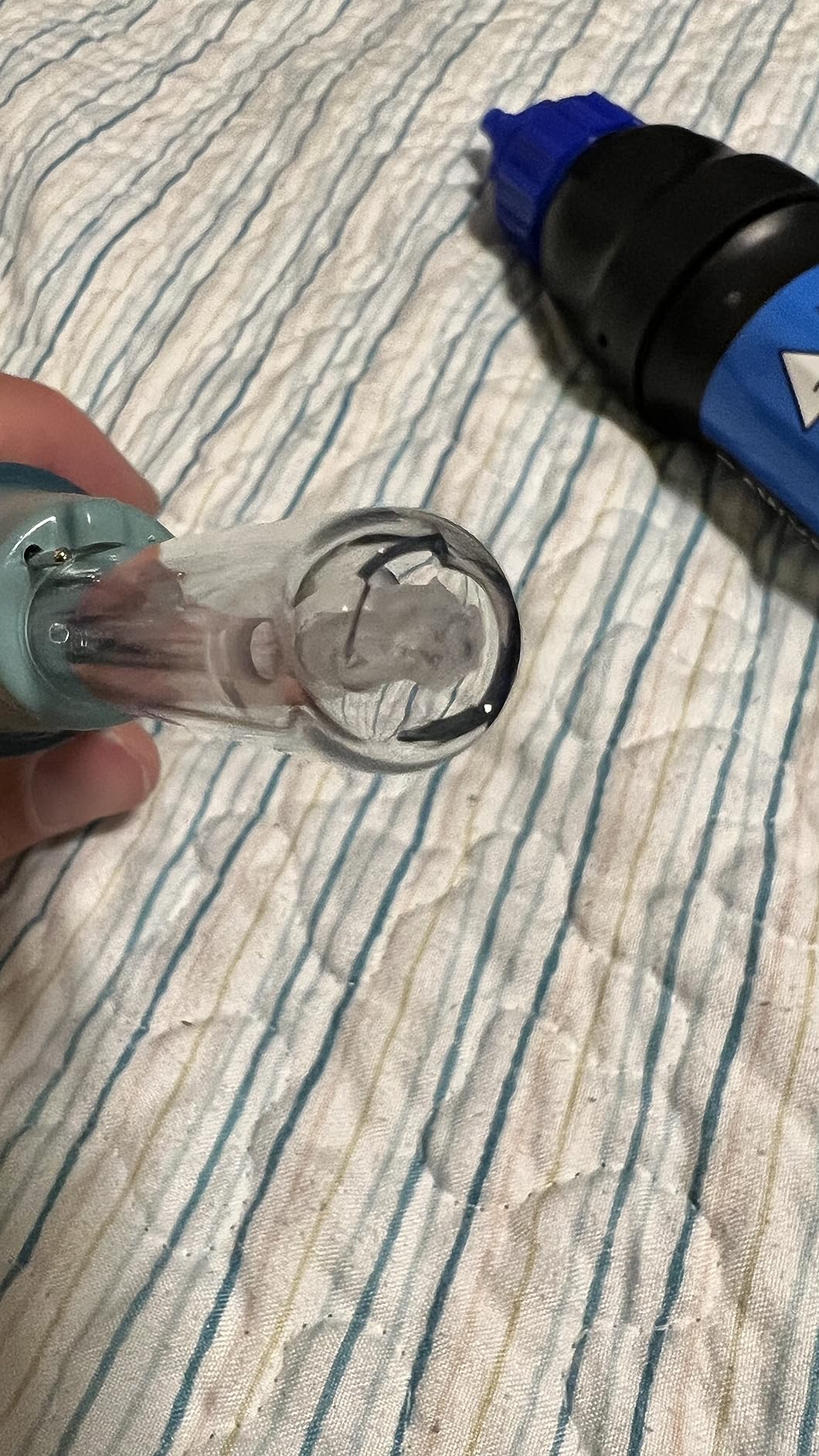
The main limitation is bottle compatibility. The Ultra works best with narrow-mouth bottles around 20mm in diameter. Wider-mouth Nalgene bottles may not create the seal needed for the water sensor to activate.
Battery Life and Field Charging
The internal battery delivers roughly 40 to 50 full liter treatments per charge, depending on water temperature and lamp condition. Cold water drains the battery faster because the lamp works harder.
For trips longer than three days, carry a lightweight USB power bank. A 5,000 mAh power bank provides about 3 full charges, extending your capacity to roughly 150 liters. The OLED display shows remaining battery as a percentage, so you always know when to recharge.
Water Clarity Requirements
UV purification only works in clear water. If your source water is cloudy or turbid, suspended particles shield microorganisms from UV light.
For muddy water, pre-filter through a cloth or coffee filter, or let it settle before treatment. The SteriPen is not designed to remove sediment, chemicals, or heavy metals. It is a biological purifier only, making it ideal for clear backcountry water but insufficient for contaminated urban sources.
8. SteriPen Adventurer Opti Backpacking UV Purifier
SteriPen Adventurer Opti UV Water Purifier
3.8 oz Weight
CR123 Battery
8000L Treatment
Ultra Compact
Backpacking Ready
Pros
- Ultra lightweight at just 3.8 oz
- Compact portable design fits any pack
- Treats up to 8000 liters
- CR123 battery has long shelf life
- Ideal for backpacking and emergency kits
Cons
- Requires 35mm minimum bottle diameter
- CR123 batteries may be harder to find than AA
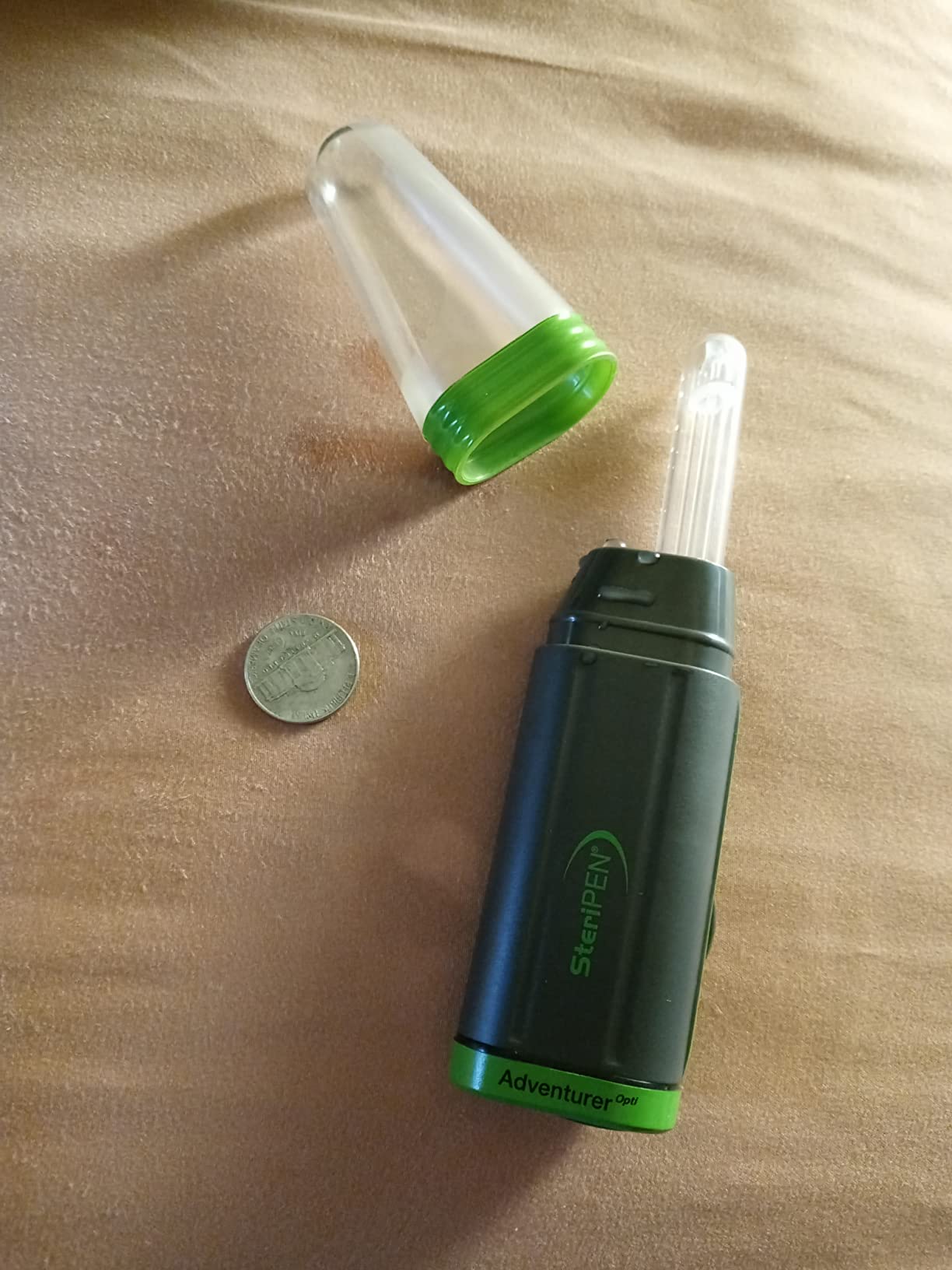
The SteriPen Adventurer Opti is the lighter, simpler sibling of the Ultra, built for ultralight backpackers who count every ounce. At 3.8 ounces, it is one of the lightest water purification methods available.
It is lighter than most pump filters and many chemical treatment systems. I carried this on a section hike where weight savings mattered, and it performed flawlessly on clear mountain stream water.
Instead of a rechargeable battery, the Adventurer Opti uses a single CR123 lithium battery. This is a deliberate trade-off. CR123 batteries are lighter than internal rechargeable packs, have a 10-year shelf life, and perform well in cold temperatures.
The downside is availability. You will not find CR123 batteries at every convenience store, so carry spares on longer trips. The treatment process is identical to the Ultra: insert, stir, and wait for the UV cycle to complete.
One CR123 battery provides approximately 50 treatments of 1 liter each. The lamp is rated for 8,000 treatments, matching the Ultra’s capacity. There is no OLED display on this model, but an LED indicator confirms when treatment is active and complete.
The Adventurer Opti requires a minimum bottle diameter of 35mm (about 1.4 inches), which is wider than the Ultra’s 20mm requirement. This actually makes it compatible with more standard water bottles, including many wide-mouth Nalgene and Smartwater bottles popular with thru-hikers.
Battery Type and Spare Planning
CR123 lithium batteries offer excellent cold-weather performance and long shelf life, but plan your supply carefully for extended trips. A single battery yields about 50 one-liter treatments, which covers a typical weekend to four-day trip.
For week-long backcountry journeys, pack two spares. Some users switch to rechargeable RCR123 batteries for cost savings, but these typically deliver fewer treatments per charge and may not perform as well in cold conditions.
Ultralight Comparison vs Pump Filters
At 3.8 ounces, the Adventurer Opti weighs less than most pump filters, which typically run 8 to 16 ounces. It also requires no hoses, pre-filters, or replacement cartridges to carry.
The trade-off is that it only handles biological contaminants. If your water source has sediment, chemical pollution, or heavy metals, you need additional treatment. For most backcountry sources in the United States and Canada, clear flowing water treated with UV is sufficient and safe.
Buying Guide: How to Choose a UV Water Sterilizer?
Choosing the right UV sterilization system comes down to matching the product to your specific water source, usage pattern, and installation constraints. Here are the key factors our team evaluates when recommending UV water treatment systems.
Flow Rate and System Sizing
Flow rate is the single most important specification to get right. A UV system can only disinfect water that moves through the chamber slowly enough for adequate UV exposure.
If water flows through too fast, microorganisms receive insufficient UV dose and survive. Match the system’s rated GPM to your actual peak demand.
For whole house systems, count the number of fixtures that might run simultaneously. A typical bathroom faucet uses 1 to 2 GPM, a shower uses 2 to 3 GPM, and a washing machine can draw 3 to 4 GPM.
A family of four usually needs 8 to 12 GPM capacity. For point-of-use systems at a single drinking water faucet, 1 GPM is usually sufficient.
Reddit users on r/HomeImprovement frequently report buying undersized systems and experiencing inadequate treatment, so always size up if you are uncertain.
UV Dose and Effectiveness
UV dose is measured in millijoules per square centimeter (mJ/cm2). The NSF standard for UV water treatment systems requires a minimum dose of 40 mJ/cm2 at the rated flow rate for class A systems.
Most quality residential systems deliver 30 to 40 mJ/cm2. The effectiveness of UV treatment depends on water clarity, because UV light cannot penetrate turbid water.
If your water has high sediment, iron, or organic content, you need pre-filtration before the UV chamber to achieve reliable disinfection.
Chamber Material and Build Quality
Stainless steel chambers, particularly 304 grade, are the standard for quality UV systems. Stainless steel reflects UV light inside the chamber, increasing the effective dose.
It also resists corrosion and does not leach chemicals into your water. Avoid systems with plastic chambers for whole house applications.
The quartz sleeve quality also matters. Natural quartz allows maximum UV transmittance compared to synthetic alternatives, so look for systems that specify natural or high-purity quartz sleeves.
Pre-Filtration Requirements
This is the most overlooked factor in UV system selection, and forum discussions consistently highlight it as a pain point. UV light only works on clear water.
If your supply has sediment above 5 microns, dissolved iron above 0.3 ppm, or hardness above 7 grains per gallon, you need pre-treatment. A typical pre-treatment chain includes a sediment filter, an iron filter if needed, and a water softener if hardness is high.
Budget for these additional components when planning your installation. Skipping pre-treatment leads to quartz sleeve fouling, reduced UV effectiveness, and more frequent maintenance.
Lamp Life and Replacement Costs
UV lamps degrade over time even when they appear to still be working. After their rated life, typically 8,000 to 9,000 hours, the lamp may still glow but no longer delivers sufficient UV output for reliable disinfection.
Plan for annual lamp replacement on always-on systems. Systems with flow sensors extend practical lamp life significantly by only running when water flows.
Factor in the cost of replacement lamps when comparing models. Some manufacturers include spare lamps with the initial purchase, which adds value.
Quartz sleeves also need periodic cleaning or replacement every 6 to 12 months depending on water quality and pre-filtration effectiveness.
Whole House vs Point of Use
Whole house systems treat all water entering your home and typically deliver 8 to 12 GPM. They are the right choice for well water disinfection, municipal water backup, or when you want every tap protected.
Point-of-use systems treat water at a single faucet and deliver 0.5 to 1 GPM. They work well as final-stage additions to RO systems or for dedicated drinking water stations.
Portable UV purifiers serve a completely different need for outdoor use and emergency preparedness. Choose the category that matches your actual use case rather than buying more capacity than necessary.
Smart Features and Sensors
Flow sensors that activate the UV lamp only when water is flowing represent a significant advancement in UV system design. They extend lamp life, reduce power consumption, and minimize heat buildup.
Systems without flow sensors run continuously, burning through lamp life and consuming power 24 hours a day. If your budget allows, prioritize models with smart flow sensors.
The energy savings and extended maintenance intervals typically justify the higher upfront cost within the first year of operation.
Certifications and Brand Reputation
NSF and ANSI certifications provide independent verification that a system meets performance standards. While not all quality products carry these certifications, they add confidence in claims.
Brand reputation matters in this category because long-term parts availability depends on the manufacturer staying in business. Established brands like iSpring, HQUA, and APEC have proven track records for replacement parts.
Check warranty terms before purchasing, as they reveal the manufacturer’s confidence in their product’s longevity and give you recourse if something fails.
FAQs
Is there a downside to UV sterilizers?
Yes, UV sterilizers have several limitations. They only kill biological contaminants like bacteria, viruses, and cysts, but do not remove chemicals, heavy metals, sediment, or dissolved solids. They require clear water to work effectively, meaning pre-filtration is necessary for turbid sources. UV lamps need annual replacement even when they still appear functional, and the systems need continuous electricity to operate. Power outages disable UV protection completely, so a backup disinfection method is advisable for critical applications.
Which UV light sanitizer is best?
The best UV water sterilizer depends on your application. For whole house use, the iSpring UVF55FS and HQUA-OWS-12 both deliver reliable 12 GPM disinfection. For under-sink RO systems, the iSpring UVF11A offers smart sensor operation. For backpacking and travel, the SteriPen Ultra provides USB rechargeable convenience. Match the system type and flow rate to your specific needs rather than choosing based on a single best label.
Which UV water purifier is best?
For residential whole house water treatment, the iSpring UVF55FS with its 55W lamp and smart flow sensor is our top pick. The HQUA-OWS-12 offers excellent value with over 1,000 user reviews. For point-of-use drinking water, the iSpring UVF11A integrates seamlessly with RO systems. For portable use, the SteriPen Ultra handles hiking and travel needs effectively.
Do UV water sanitizers work?
Yes, UV water sanitizers are proven effective at eliminating 99.9% of harmful bacteria, viruses, and microorganisms. UV light at the germicidal wavelength of 254 nanometers damages microbial DNA, preventing reproduction and rendering pathogens harmless. However, UV only works on clear water with adequate UV transmittance, requires pre-filtration for turbid sources, and needs electricity to function. It treats biological contaminants only and does not remove chemicals or particulates.
Conclusion
Finding the best UV water sterilizers for your needs comes down to matching flow rate, wattage, and form factor to your specific situation. For whole house protection, the iSpring UVF55FS leads with its smart flow sensor and 55W power.
The HQUA-OWS-12 delivers exceptional value backed by over 1,000 user reviews. And for budget-conscious RO system owners, the Geekpure 6W adds UV protection without a major investment.
Remember that every UV system needs pre-filtration for turbid water, annual lamp replacement, and periodic quartz sleeve maintenance. Get those fundamentals right, and UV water disinfection provides years of reliable, chemical-free protection for your family in 2026. Take the time to size your system correctly the first time, and you will avoid the most common mistake that frustrates new UV system owners.