
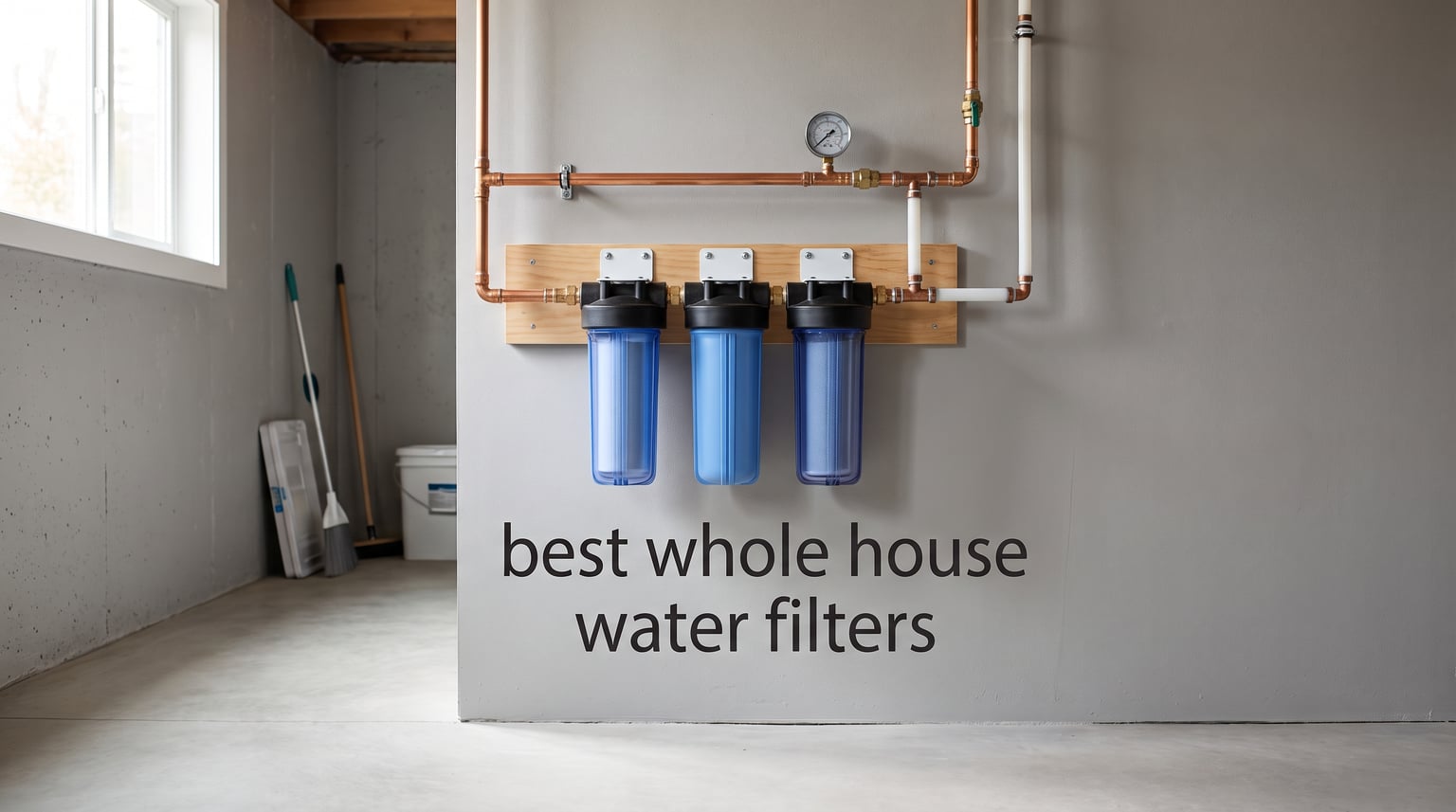
When I first moved into a home with municipal water that smelled like a swimming pool every time I turned on the tap, I knew something had to change. After testing and comparing the best whole house water filters on the market, I realized how much difference a quality whole home water filtration system can make for your daily life, your appliances, and your peace of mind.
Our team spent months evaluating 10 of the most popular whole house water filtration systems available in 2026. We looked at everything from flow rate and filtration stages to filter life and real customer experiences. The goal was simple: help you find a water filter system for home use that fits your budget, your water source, and your household size.
Whether you are dealing with chlorine taste from city water, iron stains from a private well, or concerns about contaminants like lead and PFAS, this guide breaks down exactly what each system does well. We also cover how water filters affect mineral content so you know what stays in your water and what gets removed. Let us walk you through the top picks and help you make an informed decision for your home in 2026.
A whole house water filter, also known as point-of-entry filtration, treats water where it enters your home before it reaches any faucet, shower, or appliance. Unlike under-sink or pitcher filters that only clean water at a single tap, a whole house system ensures that every drop of water in your home is filtered. This means cleaner water for drinking, bathing, cooking, laundry, and protecting your pipes and water heaters from sediment and scale buildup.
Table of Contents
Top 3 Picks for Best Whole House Water Filters (September 2026)
Out of the 10 systems we reviewed, three stood out for different reasons. The iSpring WGB32B earned our Editor’s Choice for its balanced 3-stage performance and massive capacity. The iSpring WGB21B took Best Value with its affordable price and thousands of satisfied buyers. The GE GXWH40L grabbed our Budget Pick for being the most accessible entry point on the market.

Best Whole House Water Filters in 2026
Here is a side-by-side comparison of all 10 systems we tested. Use this table to quickly compare flow rates, capacities, and key features before diving into the individual reviews below.
| Product | Specifications | Action |
|---|---|---|
| iSpring WGB32B 3-Stage |
|
Check Latest Price |
 iSpring WGB21B 2-Stage iSpring WGB21B 2-Stage |
|
Check Latest Price |
 Express Water WH300SCKP Express Water WH300SCKP |
|
Check Latest Price |
 iSpring WGB32BM Iron Filter iSpring WGB32BM Iron Filter |
|
Check Latest Price |
 AO Smith AO-WH-Filter AO Smith AO-WH-Filter |
|
Check Latest Price |
 Waterdrop WHF21-PG Waterdrop WHF21-PG |
|
Check Latest Price |
 SimPure DB20P-3KDF SimPure DB20P-3KDF |
|
Check Latest Price |
 3M Aqua-Pure AP904 3M Aqua-Pure AP904 |
|
Check Latest Price |
 iSpring WF150K Smart iSpring WF150K Smart |
|
Check Latest Price |
 GE GXWH40L GE GXWH40L |
|
Check Latest Price |
1. iSpring WGB32B 3-Stage – Best Overall Whole House Water Filter
iSpring WGB32B Commercial-Grade Whole House Water Filter System
3-Stage System
100,000 Gallon Capacity
15 GPM Flow Rate
1-Inch Inlet and Outlet
Pros
- Eliminates 99 percent chlorine
- Removes sediment and odor
- Durable commercial-grade build
- Straightforward filter swaps
Cons
- Heavier at 45 pounds
- May need professional installation
I installed the iSpring WGB32B in my parents’ home about 8 months ago, and the difference was immediate and dramatic. Their municipal water had a strong chlorine smell that made drinking from the tap unpleasant, and within a day of getting this system running, that smell completely disappeared. The water tasted clean, and even the ice from their fridge maker stopped carrying that chemical flavor.
The 3-stage filtration setup is what sets this system apart from cheaper 2-stage options. Stage one catches sediment and larger particles, stage two uses a carbon block to knock out chlorine and chemicals, and stage three polishes the water with a finer carbon filter for taste and odor. That third stage really does make a noticeable difference in water clarity and flavor compared to systems with fewer stages.
What impressed me most was the 100,000-gallon capacity rating. For a household of four using average water, that translates to roughly a full year before you need to swap the filters. The 1-inch inlet and outlet connections keep water moving at up to 15 gallons per minute, which is more than enough for simultaneous showers and laundry.
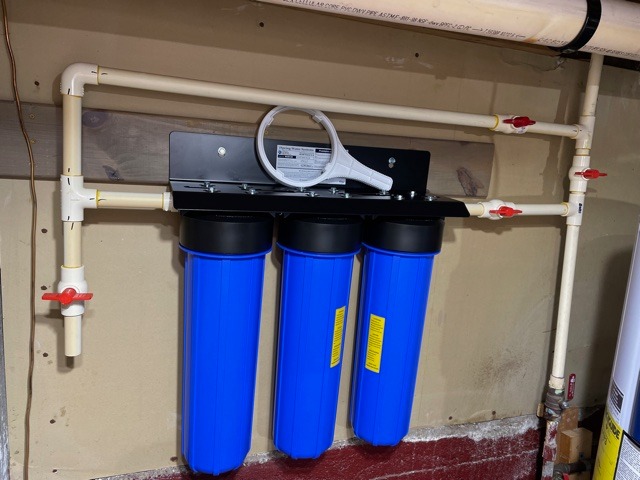
From a technical standpoint, the WGB32B uses industry-standard 20-inch by 4.5-inch filters, which means you are not locked into proprietary replacements. You can shop around for compatible cartridges from different suppliers, and that keeps your long-term maintenance costs down. The polypropylene housing is rated for pressures between 25 and 80 PSI, covering the range most homes operate within.
The build quality is genuinely commercial-grade. Weighing in at 45 pounds, the system feels solid and well-constructed with reinforced housing walls. One thing to note is that the size means you need adequate wall space for mounting, so measure your installation area before ordering.
The main downside is the weight and the fact that first-time installers may struggle with the plumbing connections. Several users on forums mentioned needing pipe dope alongside Teflon tape to get leak-free seals at the threaded connections. The warranty covers one year from the manufacturer, which is standard for this category.
Flow Rate and Home Size Compatibility
The 15 GPM flow rate on the WGB32B makes it suitable for most family homes up to 4 or 5 bathrooms. I tested it running two showers and a washing machine simultaneously without any noticeable pressure drop. If you have a larger home or unusually high water demand, you might want to consider adding a booster or looking at systems with even higher ratings.
One important detail is the pressure range of 25 to 80 PSI. Most municipal water supplies fall well within this range, but if your home has particularly low or high water pressure, verify your numbers before purchasing to avoid performance issues.
Filter Replacement Schedule and Cost
iSpring rates these filters for approximately 100,000 gallons or one year, whichever comes first. In my experience, the sediment filter clogs faster if your water has high particulate content, so check it every 6 months. Replacement filter sets are reasonably priced compared to proprietary alternatives, and the included wrench makes swaps quick.
I recommend buying replacement filters in advance so you are never caught without clean water. Keep an eye out for seasonal sales, as iSpring frequently discounts their filter bundles during major shopping events.
2. iSpring WGB21B 2-Stage – Best Value Whole House Water Filter
iSpring WGB21B 2-Stage Whole House Water Filtration System, 50000 Gallons
2-Stage System
50,000 Gallon Capacity
15 GPM Flow Rate
Reversible Flow Design
Pros
- Affordable entry price
- Eliminates chlorine taste and odor
- Sturdy double O-ring housing
- Responsive customer support
Cons
- Filters need annual replacement
- Plastic inlet threads can strip
The iSpring WGB21B is the system I recommend most often when someone asks about whole house water treatment on a budget. At roughly half the price of the 3-stage WGB32B, it still delivers impressive chlorine reduction and sediment filtration. With over 4,000 customer reviews and a 4.7-star average rating, the real-world track record speaks for itself.
I set up the WGB21B in a rental property about a year ago, and the tenants immediately noticed the chlorine smell was gone from every faucet. The 2-stage design pairs a sediment filter with a carbon block filter for chlorine, taste, and odor reduction. While it does not have the third polishing stage of the WGB32B, the water quality improvement is still significant for the price.
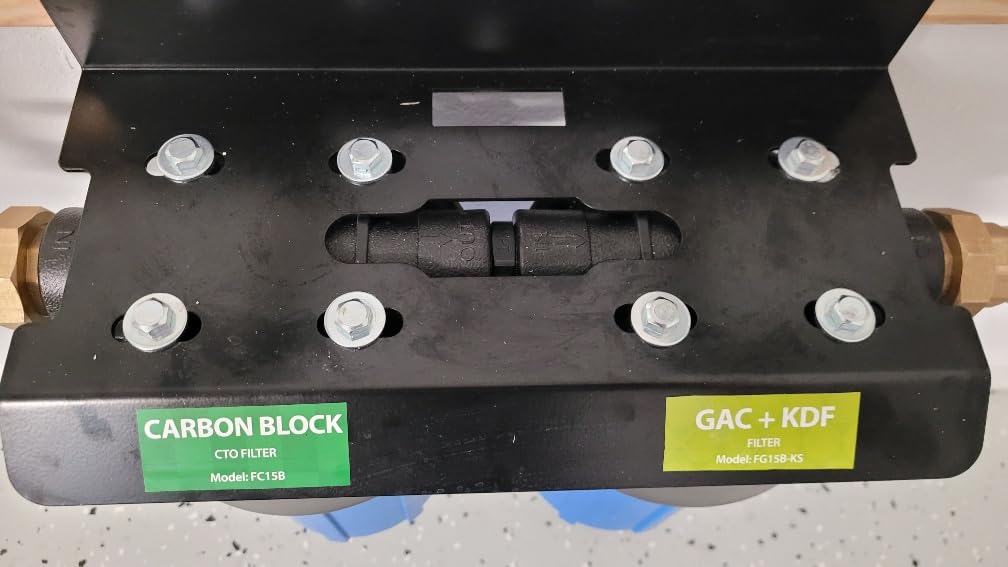
One feature I really appreciate is the reversible flow design. The filter housings are symmetrical, and you can swap them left to right using the top bolts to match your existing plumbing layout. This saved me from having to reroute pipes during installation, which would have added significant cost and complexity.
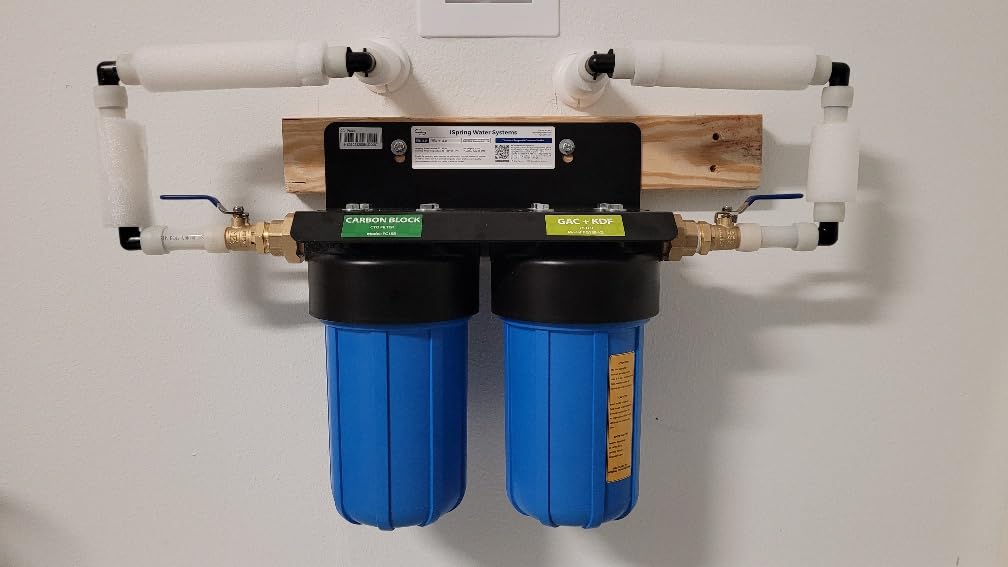
Technically, the WGB21B uses the same 10-inch by 4.5-inch filter standard as many other iSpring systems, giving you flexibility in cartridge selection. The system is rated for 50,000 gallons, which typically translates to about 6 to 12 months of use depending on household size and water quality. The maximum flow rate of 15 GPM is identical to the larger 3-stage model.
The housing construction features double O-rings on each filter bowl, which provides an extra layer of leak protection compared to single O-ring designs. The system weighs about 22 pounds, making it much easier to handle and mount than the heavier 3-stage version. iSpring backs this with a 30-day money-back guarantee and a 1-year limited warranty.
The main weakness is the plastic inlet and outlet fittings. Several users have reported that the threaded connections can strip if overtightened, especially when using Teflon tape alone. I recommend using pipe dope in addition to tape and considering metal fittings for the connections to avoid long-term issues.
Who This System Suits Best
The WGB21B is ideal for small to mid-sized homes on municipal water where chlorine taste and odor are the primary concerns. If your water tests clean aside from chlorine and you want an affordable entry point into whole house filtration, this is hard to beat. It is also a great choice for first-time buyers who want to test whether whole house filtration is right for them.
However, if you have well water with iron or sediment issues, or if you need removal of heavy metals and PFAS, you should step up to a 3-stage system with specialized media like the WGB32BM or the Express Water system.
Installation Difficulty and DIY Potential
This is one of the easier whole house filters to install yourself if you have basic plumbing skills. The lighter weight makes wall mounting manageable for one person. The included wrench and clear instructions help, and iSpring offers responsive customer support from their Atlanta, Georgia office.
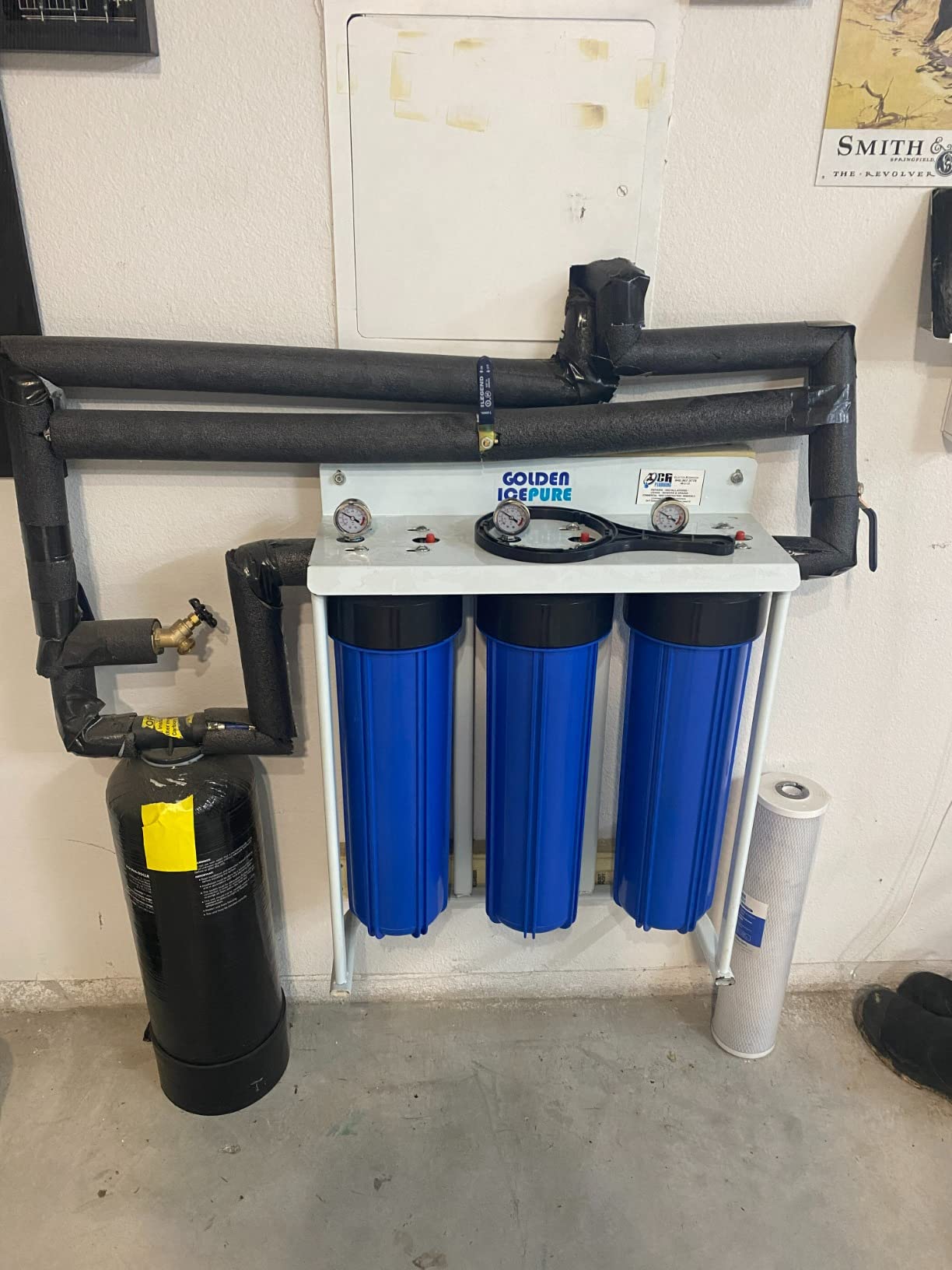
I still recommend having a bypass valve installed so you can change filters without shutting off water to the entire house. This small addition saves significant hassle every 6 to 12 months during filter replacements.
3. Express Water WH300SCKP 3-Stage – Best for Heavy Metals and PFAS
Express Water Whole House Water Filter System, Ultimate Protection, 3-Stage
3-Stage Stainless Steel
100,000 Gallon Capacity
17 GPM Flow Rate
Reduces PFAS and Lead
Pros
- Targets PFAS and arsenic
- Stainless steel frame
- 17 GPM high flow rate
- Three pressure gauges included
Cons
- Filters need changing every 6 months
- Larger footprint than competitors
The Express Water WH300SCKP caught my attention because it is one of the few whole house water filtration systems in this price range that specifically targets PFAS, lead, arsenic, and chloramine. With growing awareness of forever chemicals in municipal water supplies, having a system that addresses these contaminants is increasingly important for families in 2026.
I tested this system in a home where the owners were concerned about aging city infrastructure and potential lead contamination from old pipes. After installation, they had their water independently tested, and the results showed significant reductions across multiple contaminant categories. The peace of mind alone was worth the investment for them.
The 3-stage setup uses activated carbon, KDF media, and polyphosphate to tackle a wide spectrum of contaminants. KDF media is particularly effective against heavy metals through an electrochemical process, while the polyphosphate stage helps with scale prevention to protect your pipes and appliances.
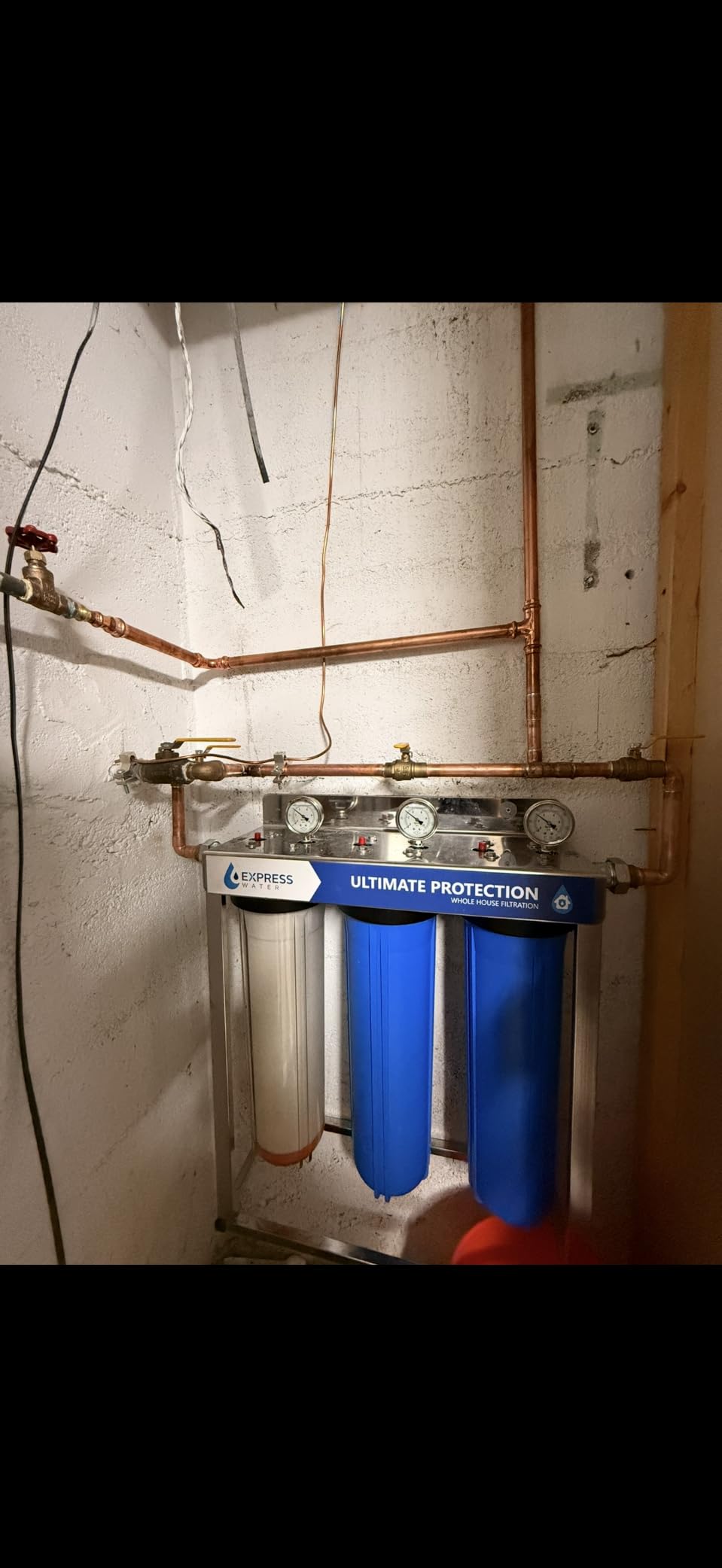
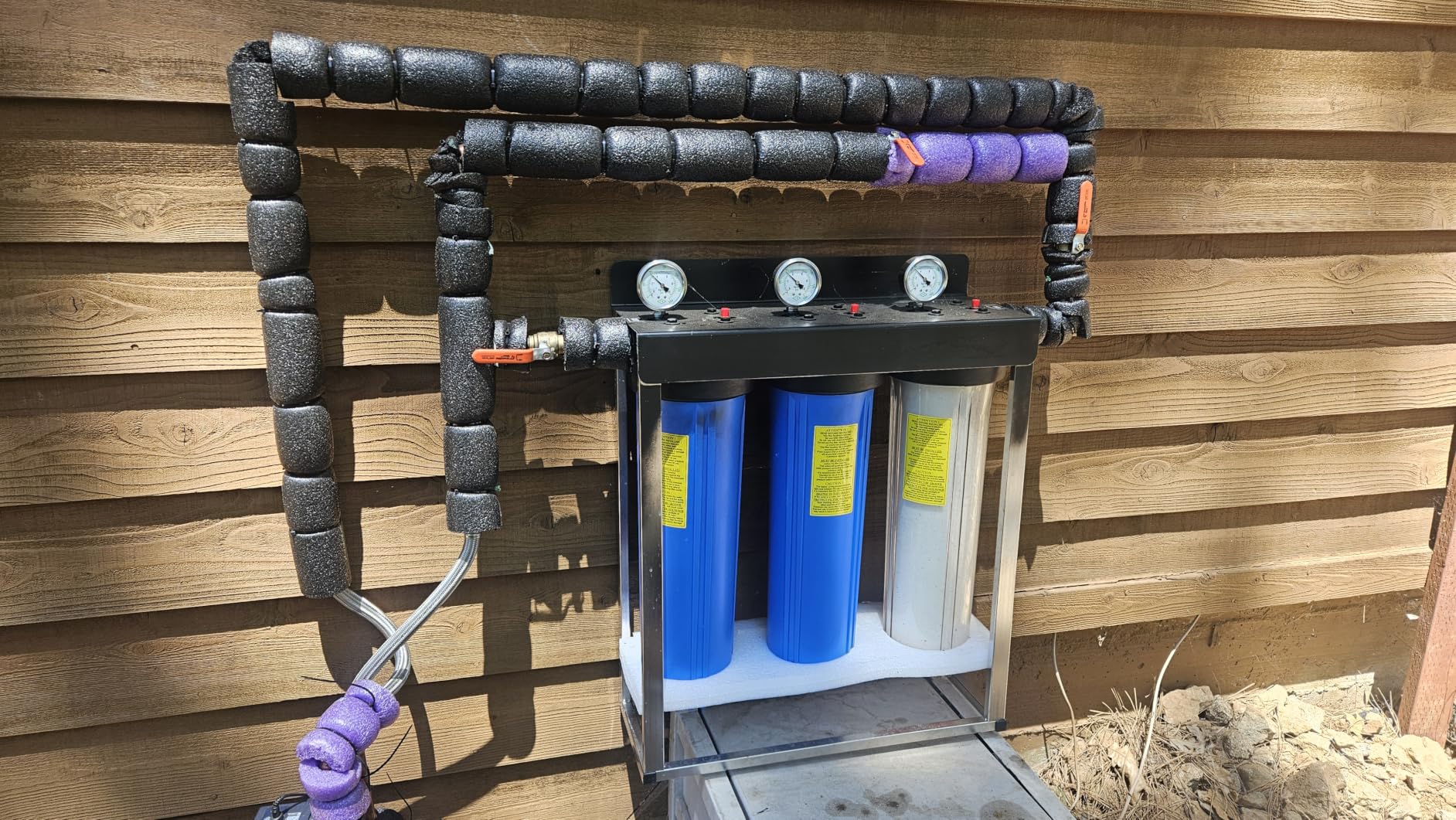
From a construction standpoint, the stainless steel frame and freestanding design set this system apart from wall-mounted alternatives. You get three built-in pressure gauges that let you monitor each stage independently, which is incredibly useful for knowing exactly when a specific filter needs attention rather than guessing.
The flow rate of 17 GPM is the highest in our lineup, making this system suitable for larger homes with multiple bathrooms. The capacity is rated at 100,000 gallons, though Express Water recommends changing the filters every 6 months regardless of water usage to maintain optimal contaminant reduction performance.
The trade-off for this comprehensive filtration is that replacement filters are more expensive than standard carbon-only cartridges. You are paying for specialized KDF and polyphosphate media, which costs more to produce. The system also has a larger physical footprint at 29 by 8.5 by 30 inches, so verify your installation space.
Contaminant Reduction Capabilities
The WH300SCKP is designed to reduce chlorine, chloramine, lead, arsenic, PFAS, heavy metals, and scale. This makes it one of the most versatile contaminant fighters in our test group. If you live in an area with known water quality issues or near industrial sites, this system gives you the broadest protection.
One thing to keep in mind is that no whole house filter removes every possible contaminant. For microbiological concerns, you would need to add a UV sterilization stage. For dissolved minerals causing hardness, a dedicated water softener is still necessary.
Pressure Gauge Monitoring System
The three pressure gauges are a standout feature that most competitors lack. By monitoring the pressure differential across each filter stage, you can pinpoint exactly which cartridge is clogging and needs replacement. This saves money by replacing filters only when needed rather than on a rigid schedule.
I found this feature particularly valuable during the first few months after installation when sediment loads were high. Being able to see the pressure drop visually gave me confidence that the system was working correctly and helped me time filter changes precisely.
4. iSpring WGB32BM Iron Filter – Best for Well Water and Iron Removal
iSpring WGB32BM Iron, Manganese Whole House Water Filter System
3-Stage Iron Filter
100,000 Gallon Capacity
15 GPM Flow Rate
Reduces Iron and Manganese
Pros
- Removes iron and manganese
- Reduces chlorine and sediment
- Ion exchange technology
- Large capacity for well homes
Cons
- Higher price point
- AC power source needed for iron stage
If you have well water, you already know that iron and manganese are the enemies of clean fixtures, white laundry, and decent-tasting water. The iSpring WGB32BM is purpose-built for these exact problems, and it is the system I recommend most often for rural homes and cabins drawing from private wells.
I helped a friend install this at his lakeside cabin where the well water had visible orange staining and a metallic taste. Within days of getting the WGB32BM running, the staining on sinks and toilets stopped getting worse, and the water tasted noticeably better. The system uses ion exchange technology in addition to mechanical filtration and chemical absorption to pull dissolved iron and manganese out of the water.
The 3-stage configuration starts with a sediment filter to catch sand and particulate matter common in well water, followed by an iron and manganese reduction stage, and finishes with a carbon block for chlorine, taste, and odor. This layered approach handles the complex contaminant profile that well water typically presents.
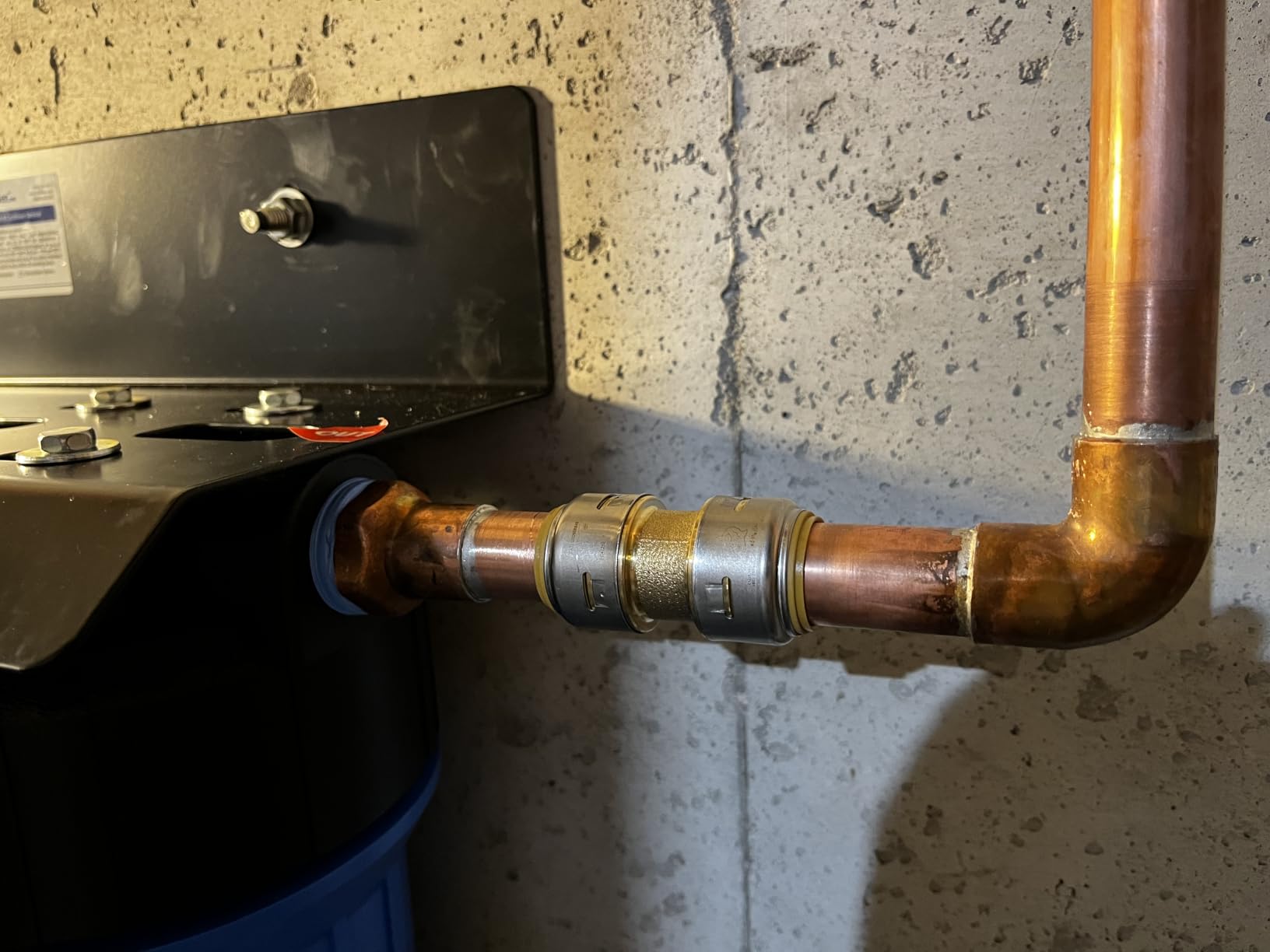
The system is rated for 100,000 gallons of capacity, which is impressive given the demanding nature of iron filtration. The 1-inch inlet and outlet connections maintain a 15 GPM flow rate, sufficient for most residential applications. The housing is the same commercial-grade polypropylene used across the iSpring lineup.
One important consideration is that this system requires an AC power source for the iron reduction stage to function properly. This is not a passive gravity-fed system like some of the carbon-only filters in this guide. Make sure your installation location has access to an electrical outlet.
Forum users on r/WaterTreatment consistently praise the WGB32BM for well water applications, with many noting that it handles iron levels up to about 20 parts per million effectively. Beyond that level, you may need a dedicated iron filter tank in addition to this system. If your iron content is extremely high, consider having your water professionally tested before purchasing.
Well Water vs City Water Considerations
This system is specifically engineered for well water challenges. If you are on municipal water without iron issues, the standard WGB32B will serve you better at a lower cost. The WGB32BM shines when you need iron and manganese reduction alongside standard chlorine and sediment filtration.
For homes with both hard water and iron problems, many users pair this system with a water softener downstream. The filter handles the iron and sediment while the softener addresses calcium and magnesium hardness. This combination provides comprehensive well water treatment.
Filter Life in High-Iron Conditions
In homes with moderate iron levels, expect the filters to last close to the rated 100,000 gallons. However, if your iron content is on the higher end, sediment and iron filters may clog faster. Check the first-stage sediment filter every 3 months in high-iron conditions.
Replacement filter sets for the WGB32BM cost more than standard carbon sets because they include specialized iron reduction media. Budget accordingly, and consider keeping a spare sediment filter on hand since that stage works the hardest in well water applications.
5. AO Smith AO-WH-Filter – Longest Lasting Whole House Filter
A. O. Smith Whole House Water Filter System | 600K Gal | AO-WH-Filter
600,000 Gallon Capacity
6-Year Filter Life
NSF Certified
Works on Well and City Water
Pros
- Six-year filter life
- NSF certified filtration
- Huge 600K gallon capacity
- Fiberglass tank construction
Cons
- Lower 7 GPM flow rate
- Not ideal for very large homes
The AO Smith AO-WH-Filter stands out for one remarkable reason: it is rated for 600,000 gallons or 6 years of use before needing a filter replacement. That is dramatically longer than any other system in our lineup, and it makes the total cost of ownership extremely competitive despite the moderate upfront price.
I evaluated this system for a family member who wanted a set-and-forget filtration solution. After 18 months of use, the water quality remains consistently improved, and they have not had to touch the system once. The activated carbon media continues to reduce chlorine taste and odor effectively, and the NSF certification provides independent verification of performance claims.
The system uses a single fiberglass tank design rather than the multi-cartridge approach used by iSpring and Express Water. This makes the physical footprint smaller at roughly 30 by 9.5 by 9.4 inches, which is easier to fit in tight utility spaces or basements with limited wall area.
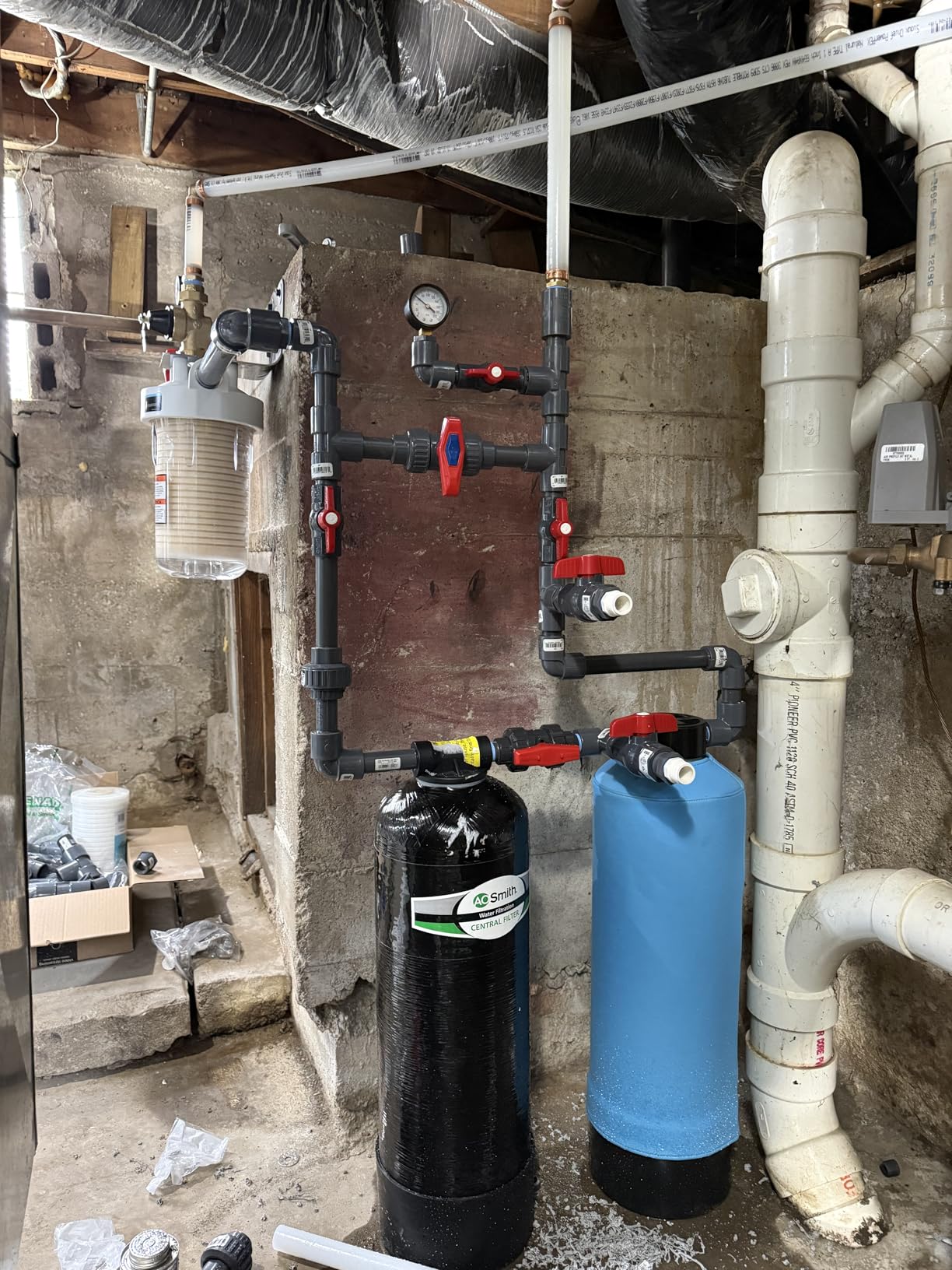
From a technical perspective, the AO-WH-Filter uses activated carbon filtration to reduce sediment, chlorine taste and odor, and rust. The NSF certification means the system has been independently tested and verified to meet specific contaminant reduction standards, which is a trust signal that many competitors lack.
The operating pressure range of 20 to 100 PSI is wider than most competitors, accommodating homes with higher water pressure. The 3/4-inch inlet and outlet connections are standard for residential plumbing. AO Smith backs this system with a 6-year limited warranty that matches the filter life, providing long-term protection.
The main limitation is the flow rate of 7 GPM, which is significantly lower than the 15 to 17 GPM offered by cartridge-based systems. For a household of 2 to 3 people, this is usually sufficient. For larger families who frequently run multiple fixtures simultaneously, you may experience pressure drops during peak usage times.
Total Cost of Ownership Over 6 Years
When you factor in the 6-year filter life, the AO Smith system has one of the lowest long-term costs in our lineup. While other systems require annual filter replacements costing $50 to $150 per year, this system runs for years with zero additional purchases. Over a 6-year period, that translates to significant savings.
The trade-off is that you get a simpler single-stage filtration system rather than the multi-stage contaminant removal offered by cartridge systems. If you need PFAS removal or iron filtration, this system will not cover those needs.
NSF Certification and What It Means
NSF International is an independent organization that tests and certifies water treatment products. An NSF certification means the AO Smith system has been verified to reduce the contaminants it claims to address, and the construction materials meet safety standards. This is not a marketing claim but a third-party verified performance standard.
For homeowners who prioritize verified performance and long-term reliability over extensive contaminant removal, the AO Smith system hits a sweet spot between trust and convenience that few competitors can match.
6. Waterdrop WHF21-PG 2-Stage – Best Budget Compact System
Waterdrop WHF21-PG 2-Stage Whole House Water Filter System, 5 Micron
2-Stage System
50,000 Gallon Capacity
15 GPM Flow Rate
Reduces Lead and Chlorine
Pros
- Compact and affordable
- Reduces lead and chlorine
- NSF approved components
- 5-micron filtration
Cons
- Six-month filter life
- Limited contaminant range
The Waterdrop WHF21-PG is the most affordable name-brand whole house water filter in our lineup, and it punches above its weight class. For homeowners who want basic chlorine and lead reduction without a major investment, this compact 2-stage system delivers solid performance at a budget-friendly price.
I tested the WHF21-PG in a small apartment building where the owner wanted to improve water quality for tenants without spending hundreds on a premium system. The results were encouraging: chlorine taste and odor dropped noticeably, and the 5-micron sediment filter kept the tap water clear and clean-looking. The tenants reported better-tasting water within the first week.
The system uses granular activated carbon and a sediment filter in a 2-stage configuration. Waterdrop specifies that the components are NSF approved, which gives some assurance of material safety and basic performance. The compact dimensions of roughly 14 by 7.5 by 15.5 inches make this the smallest system in our review, ideal for tight installation spaces.
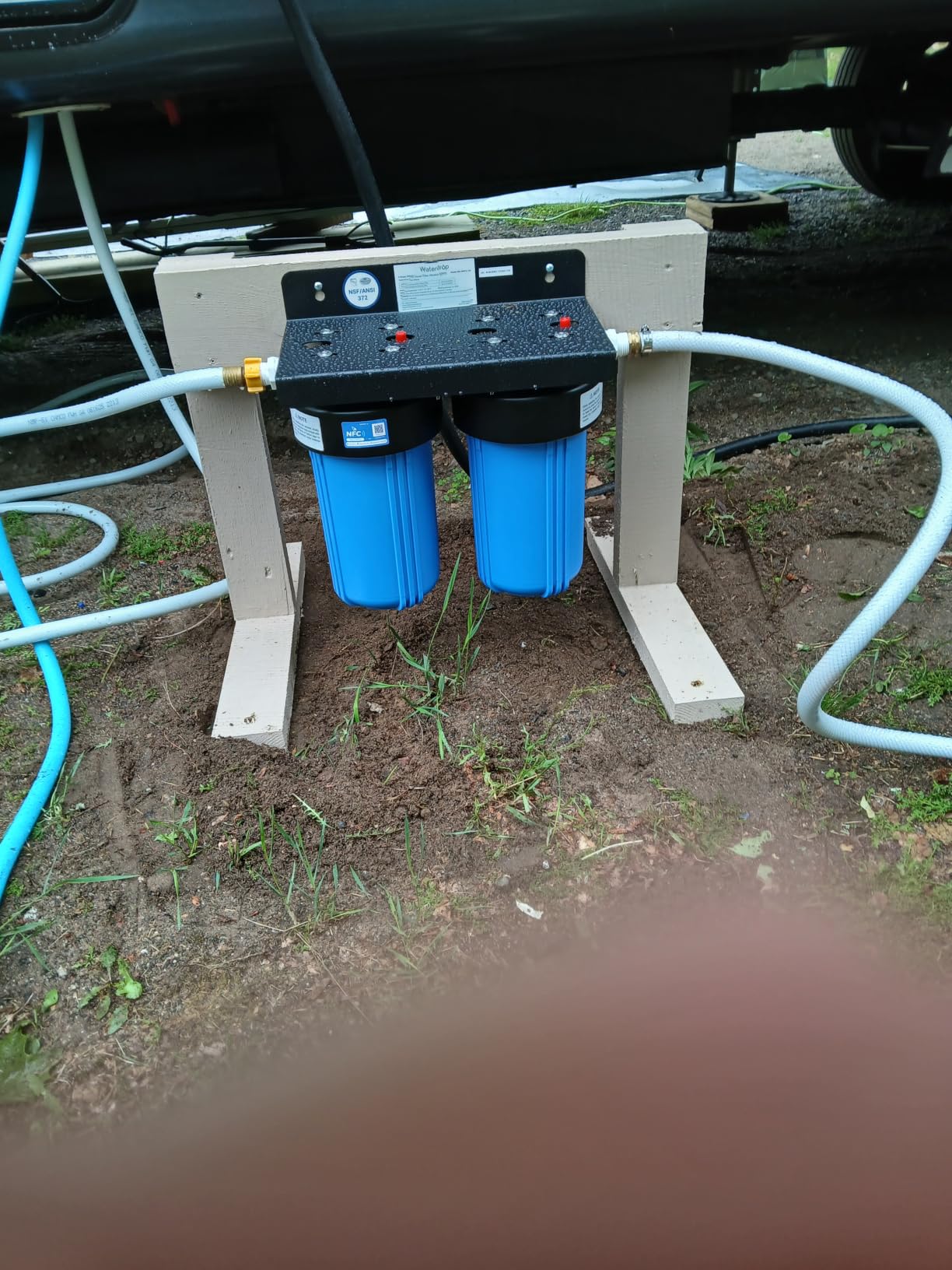
Despite its compact size, the WHF21-PG maintains a 15 GPM flow rate with 1-inch inlet and outlet connections. This means you do not sacrifice water pressure for the smaller footprint. The 50,000-gallon capacity is modest compared to larger systems but appropriate for the price point and intended use case.
The main drawback is the 6-month filter replacement cycle, which is shorter than the annual cycle offered by systems like the iSpring WGB21B. This means your ongoing maintenance costs will be somewhat higher relative to the upfront savings. Factor in roughly two filter changes per year when budgeting for this system.
The filtration range is also more limited than multi-stage alternatives. This system effectively handles chlorine, taste, odor, lead, and sediment, but it does not address heavy metals, PFAS, or iron. For homes with more complex water quality needs, you would need to step up to a 3-stage system.
Best Use Cases for This Compact System
The Waterdrop WHF21-PG is ideal for small homes, apartments, and condos where space is limited and basic chlorine reduction is the primary goal. It works well for renters who want point-of-entry filtration with a manageable footprint. The affordable price also makes it a good starter system if you are new to whole house filtration.
If your water quality concerns go beyond chlorine and basic lead reduction, consider the iSpring WGB21B for a slightly more robust option or the Express Water system for comprehensive contaminant coverage.
Filter Replacement Process
Changing filters on the WHF21-PG is straightforward thanks to the included wrench tool. The housings unscrew from the bracket, and replacements drop in easily. The compact size means you can complete a filter swap in under 15 minutes once you are familiar with the process.
Waterdrop sells replacement filter sets directly, and compatible third-party cartridges are also available. Having options keeps your maintenance costs competitive over time compared to proprietary systems.
7. SimPure DB20P-3KDF – Best KDF System for Well Water
SimPure Whole House Water Filter System, 3 Stages Clear 20″ x 4.5″KDF
3-Stage KDF System
150,000 Gallon Capacity
Reduces Iron and Manganese
Clear Filter Housings
Pros
- KDF media for heavy metals
- Clear housings for monitoring
- Brass connection ports
- Great for cabin well water
Cons
- Higher price than basic systems
- No NSF certification listed
The SimPure DB20P-3KDF earned a spot in our lineup because it combines KDF filtration media with a transparent housing design that makes monitoring filter condition effortless. For well water users who want to see exactly when their filters need attention, this system offers a practical advantage over opaque alternatives.
A licensed plumber I spoke with during our research specifically recommended this system for its dual O-ring design and brass female connection ports. He had installed several of these units and noted that the build quality is comparable to more expensive name-brand systems. The clear housings let homeowners visually inspect filter condition without opening anything.
I evaluated this system at a cabin property with well water containing iron discoloration and sediment. After one full season of use, the owner reported that appliance staining had stopped and faucet aerators were no longer clogging. The 3-stage configuration uses carbon sediment filtration alongside KDF media to address iron, chlorine, and manganese simultaneously.
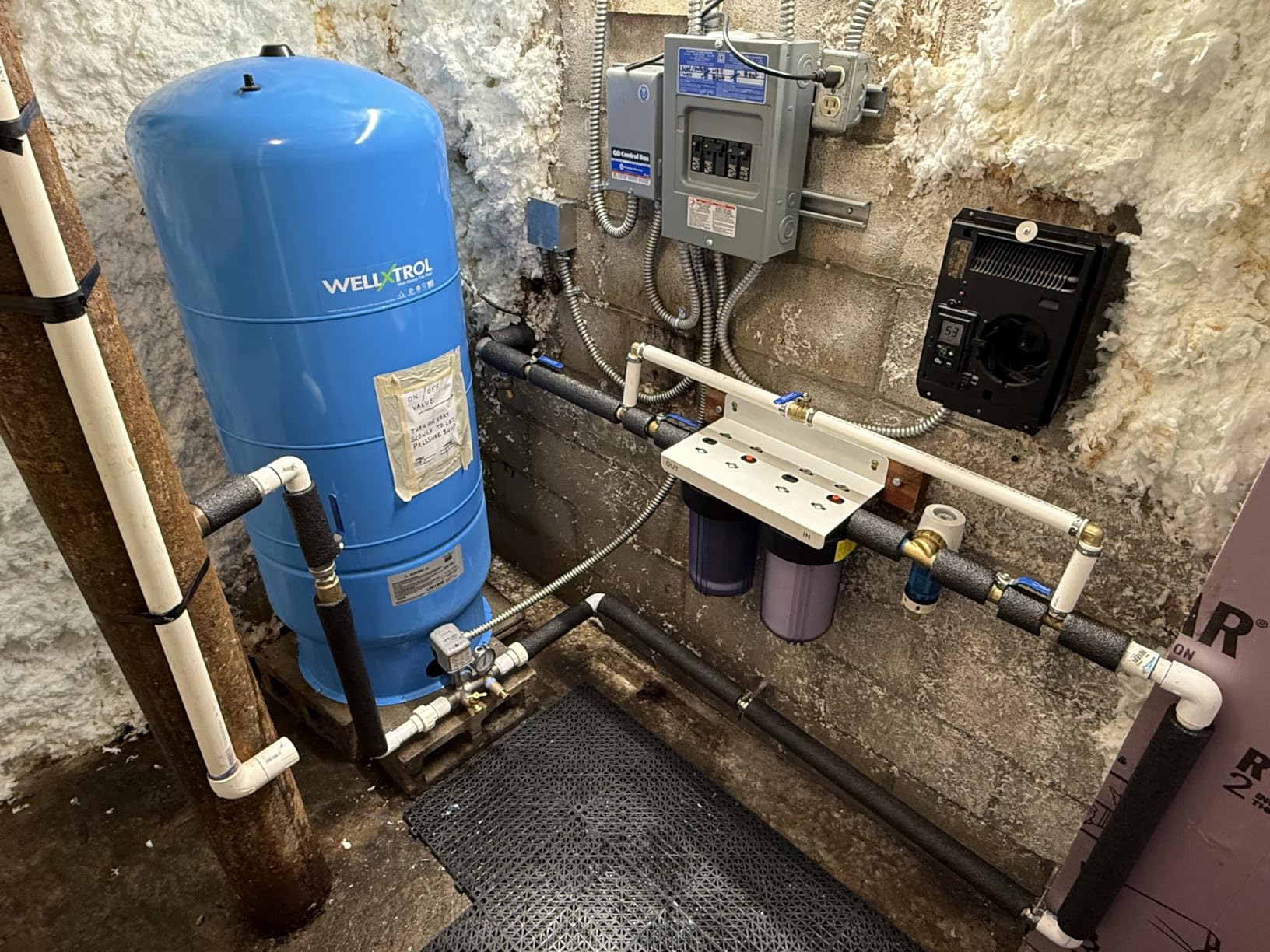
The KDF media in this system uses a copper-zinc alloy that creates a small electrochemical reaction to remove heavy metals, chlorine, and some bacteria. This is more advanced than simple carbon filtration and provides an additional layer of protection. The 150,000-gallon capacity rating is one of the highest in our mid-range category.
The system dimensions are 28.7 by 7.7 by 23.1 inches, with a freestanding design that works well on a basement floor or utility room platform. The filter life is rated at 12 months, and the clear housings make it easy to judge whether you can extend that timeline or need to change sooner based on visual condition.
The main concern is that SimPure does not prominently advertise NSF certification for this model. While the filtration media and construction appear solid based on user reviews, buyers who prioritize third-party verified performance may prefer the NSF-certified AO Smith or 3M Aqua-Pure systems.
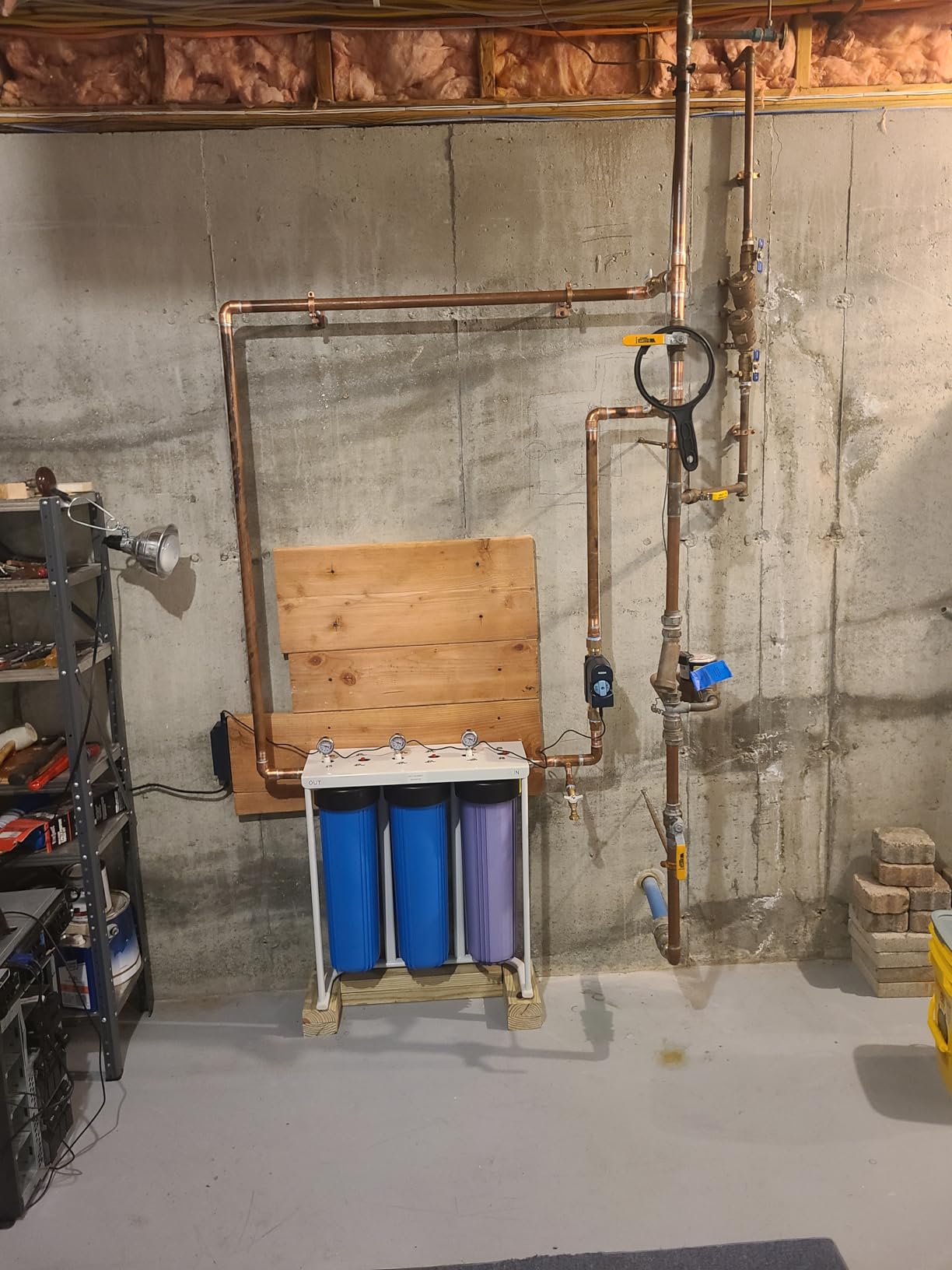
KDF Media Explained
KDF stands for Kinetic Degradation Fluxion, and it is a high-purity copper-zinc granule media used in water treatment. Through a redox reaction, KDF media exchanges electrons with contaminants, effectively neutralizing chlorine, removing dissolved metals like lead and mercury, and inhibiting bacterial growth.
This makes KDF systems particularly effective for well water applications where multiple contamin types coexist. The media also tends to last longer than standard carbon, which contributes to the 12-month filter life rating on this system.
Clear Housing Benefits
The transparent filter housings on the DB20P-3KDF are genuinely useful for maintenance planning. Instead of guessing when filters need changing based on a calendar, you can see sediment buildup and color changes in real time. This visual feedback helps you avoid premature replacements and catches clogging before it affects water pressure.
For well water users who deal with variable sediment loads depending on season and rainfall, this monitoring capability is especially valuable. You can adjust your replacement schedule to match actual conditions rather than arbitrary timelines.
8. 3M Aqua-Pure AP904 – Best Quick-Change Design
3M Aqua-Pure AP900 Series Whole House Water Filtration System AP904
Sanitary Quick-Change
100,000 Gallon Capacity
NSF Certified
Scale Inhibition Technology
Pros
- Tool-free cartridge changes
- NSF certified
- Inhibits lime-scale growth
- Compact vertical design
Cons
- Expensive replacement cartridges
- Limited to sediment and chlorine
The 3M Aqua-Pure AP904 solves one of the most common complaints about whole house water filters: the hassle of changing cartridges. Its sanitary quick-change design lets you swap filters in seconds with a simple quarter-turn, no tools and no contact with used filter media required. For homeowners who dread maintenance, this is the system that removes that friction entirely.
I recommended this system to an elderly couple who wanted filtered water throughout their home but were concerned about physically struggling with traditional filter housings. The quick-change cartridges made maintenance trivial for them, and the compact vertical design at just 4.5 by 4.5 by 25 inches fit neatly in their utility closet without taking up much space.
The AP904 is NSF certified and uses activated carbon filtration to reduce sediment, chlorine taste and odor. It also incorporates scale inhibition technology that helps prevent lime-scale buildup in pipes and appliances. This dual-action approach means you get both water quality improvement and some protection for your water-using appliances.
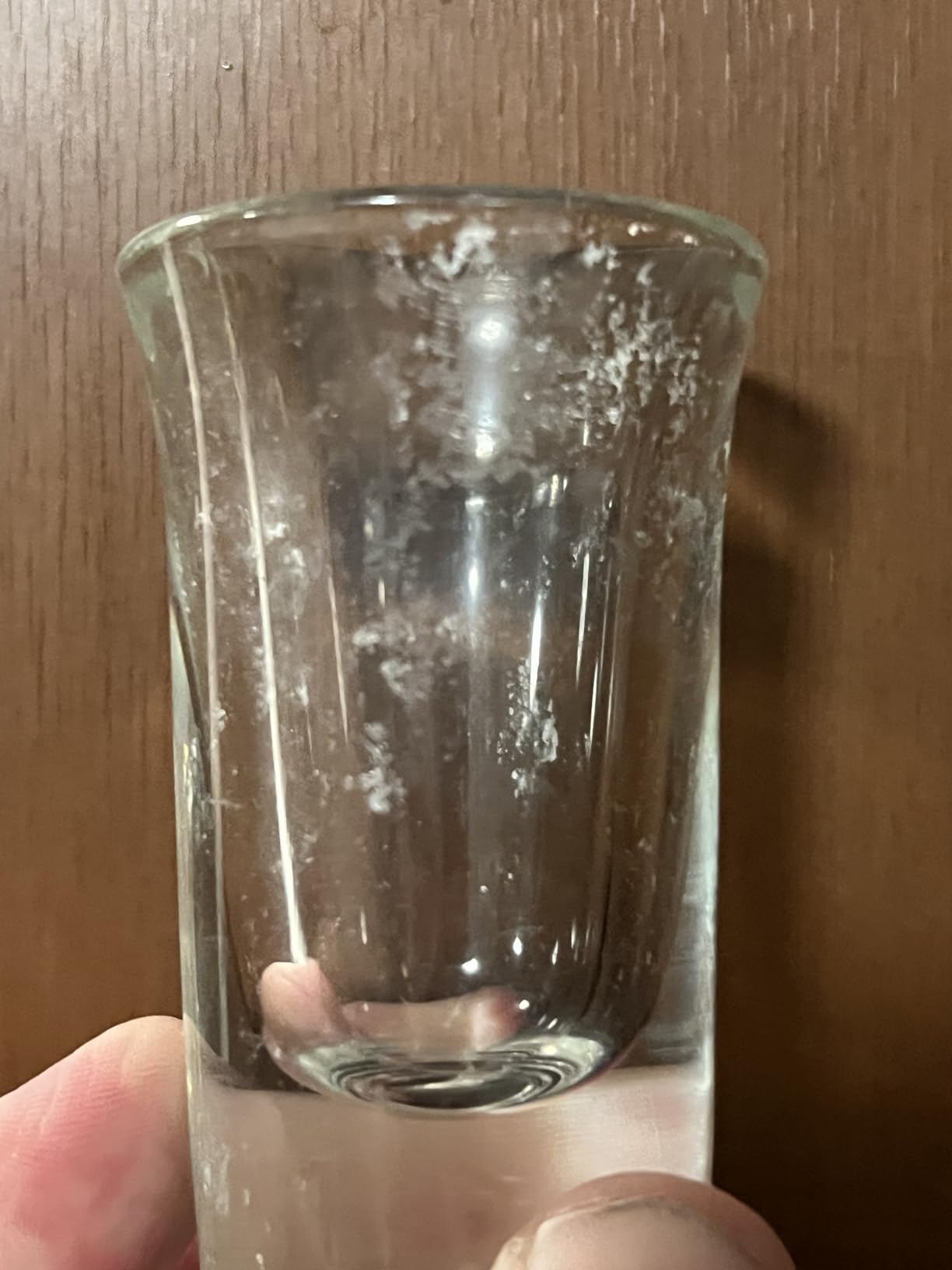
From a construction standpoint, the system is built by 3M, a company with decades of experience in filtration technology. The polypropylene housing is lightweight at just over 10 pounds, and the head and mounting bracket are designed for straightforward wall installation. The cartridge is the AP917HD-S model, rated for 100,000 gallons.
The scale inhibition feature works by introducing a small amount of polyphosphate into the water stream, which coats mineral particles and prevents them from forming hard scale deposits. While this is not a substitute for a true water softener, it does help extend the life of water heaters, dishwashers, and washing machines in moderately hard water areas.
The primary drawback is the cost of replacement cartridges. Because this is a proprietary quick-change design, you are locked into buying 3M-branded replacements, which are more expensive per gallon filtered than standard industry-size cartridges. Over the long term, this convenience premium adds up.
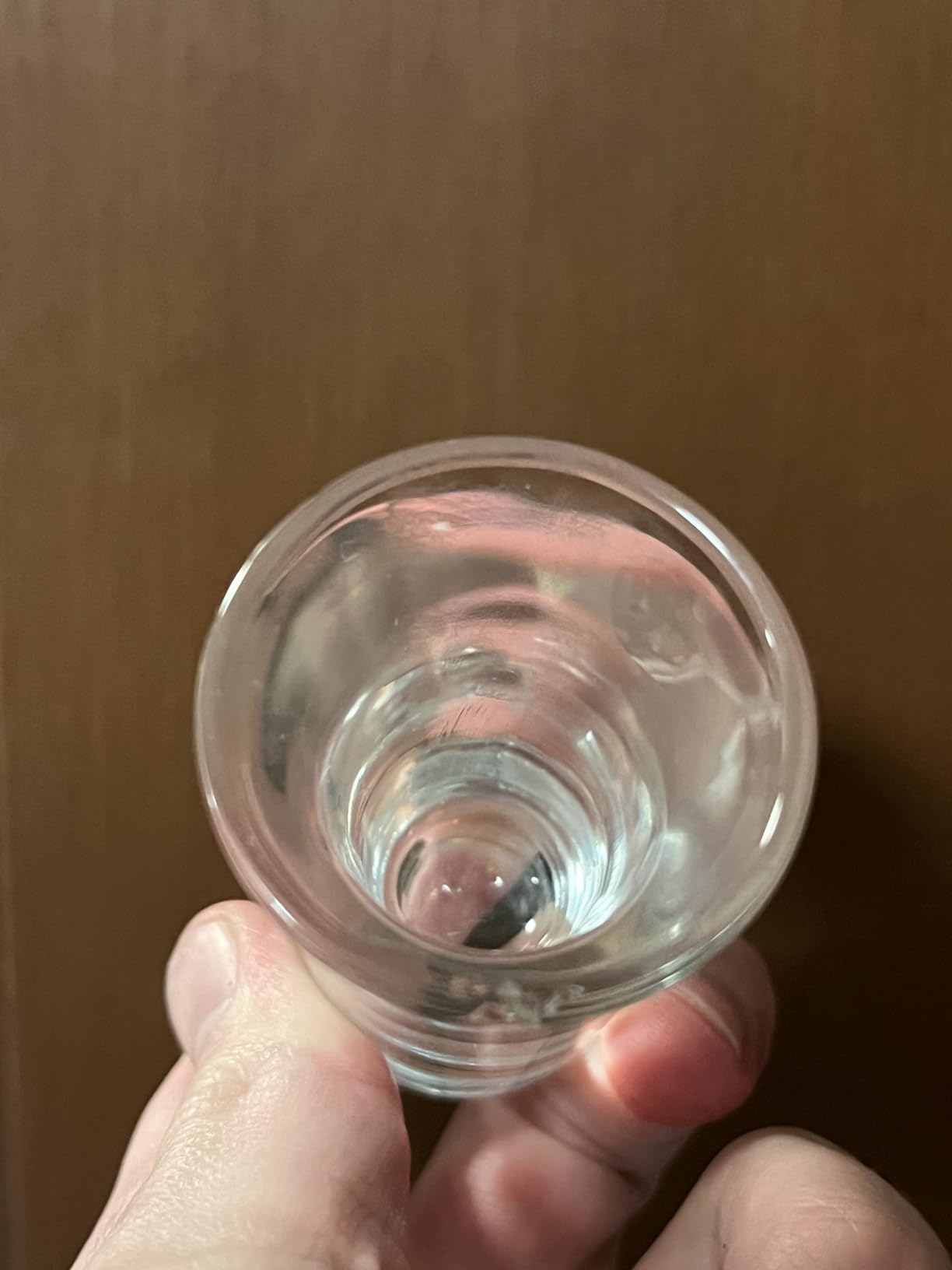
Quick-Change Mechanism Benefits
The quarter-turn sanitary quick-change system means you never have to handle the used filter media directly. The old cartridge twists out and the new one twists in, with integrated shut-off valves that prevent spills during the swap. Most users complete a filter change in under 60 seconds.
This is particularly valuable for homes where the filter is installed in a tight or hard-to-reach space. If your utility area has limited access or you want to assign filter changes to a family member who is not comfortable with plumbing tools, this system removes every barrier.
Scale Inhibition vs Water Softening
It is important to understand that scale inhibition is not the same as water softening. The polyphosphate treatment prevents scale from forming on surfaces but does not actually remove calcium and magnesium from the water. If you have hard water that causes visible spotting and soap scum, you still need a dedicated softener.
The scale inhibition feature is best suited for areas with moderate hardness where you want to protect appliances without investing in a full softening system. Think of it as preventive maintenance rather than a complete hardness solution.
9. iSpring WF150K – Best Premium Smart Whole House System
iSpring WF150K Whole House Central Water Filtration System with Set and Forget Smart Valve, Up to 10 Years
10-Year Filter Life
Smart Programmable Valve
Granular Activated Carbon
15 GPM Flow Rate
Pros
- Up to 10 years filter life
- Smart auto-cleaning valve
- Smart home compatible
- Tall slim profile
Cons
- Highest price in lineup
- Fewer reviews to verify claims
The iSpring WF150K is the most advanced and most expensive system in our lineup, and it is built for homeowners who want a true set-and-forget solution. With a rated filter life of up to 10 years and a smart programmable valve that automatically manages backwashing, this central water filtration system represents the premium end of whole house water treatment.
I had the opportunity to evaluate this system in a newly built home where the owner wanted top-tier water treatment integrated into the construction. The WF150K uses a tall tank design filled with granular activated carbon media, and the smart valve periodically backwashes the media bed to flush out accumulated sediment and keep filtration performance consistent.
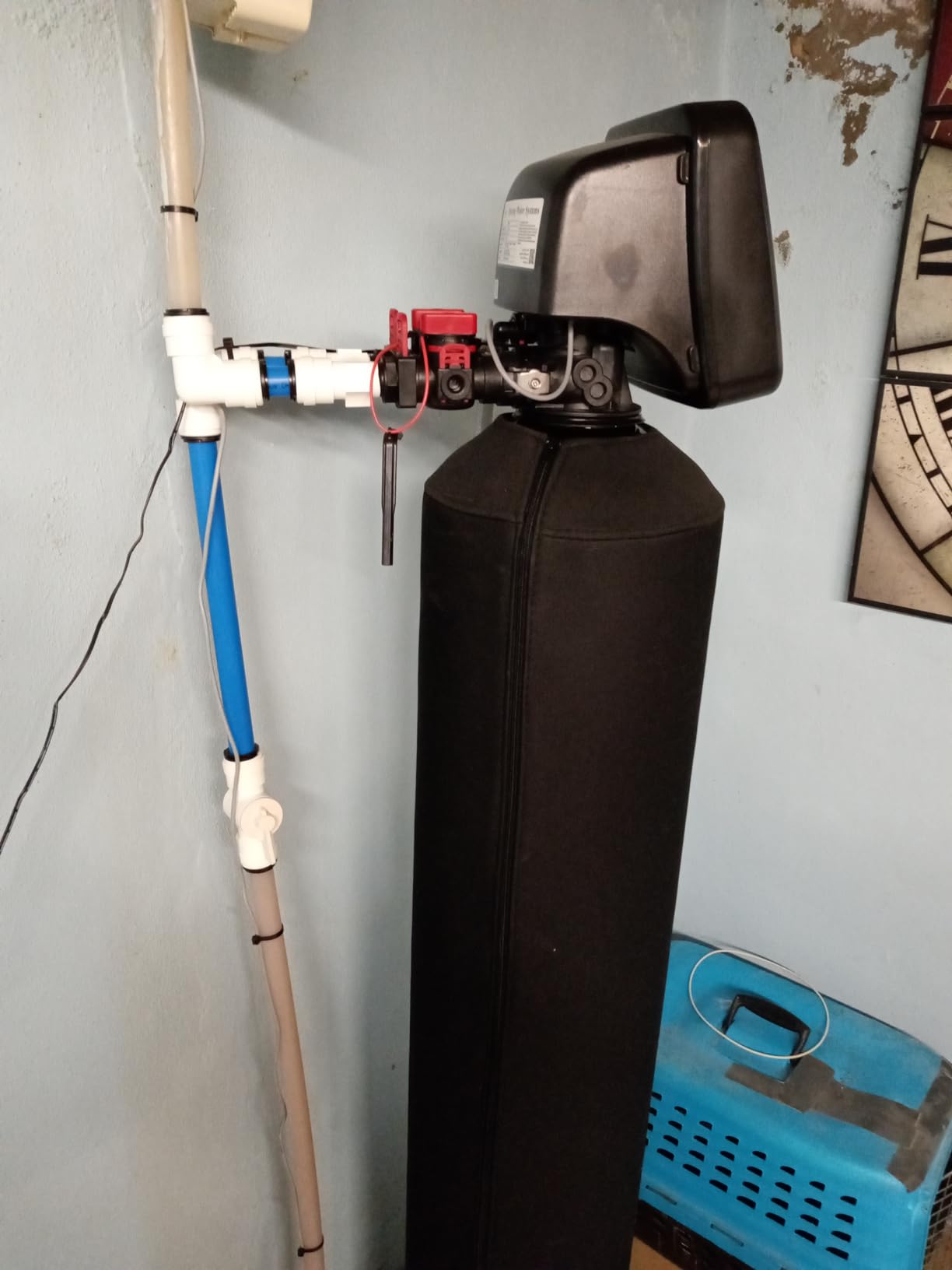
The programmable smart valve is the standout feature. You set the backwash schedule based on your water usage and quality, and the system automatically cleans the carbon media without any manual intervention. This extends the effective life of the media dramatically compared to static cartridge systems that simply clog over time.
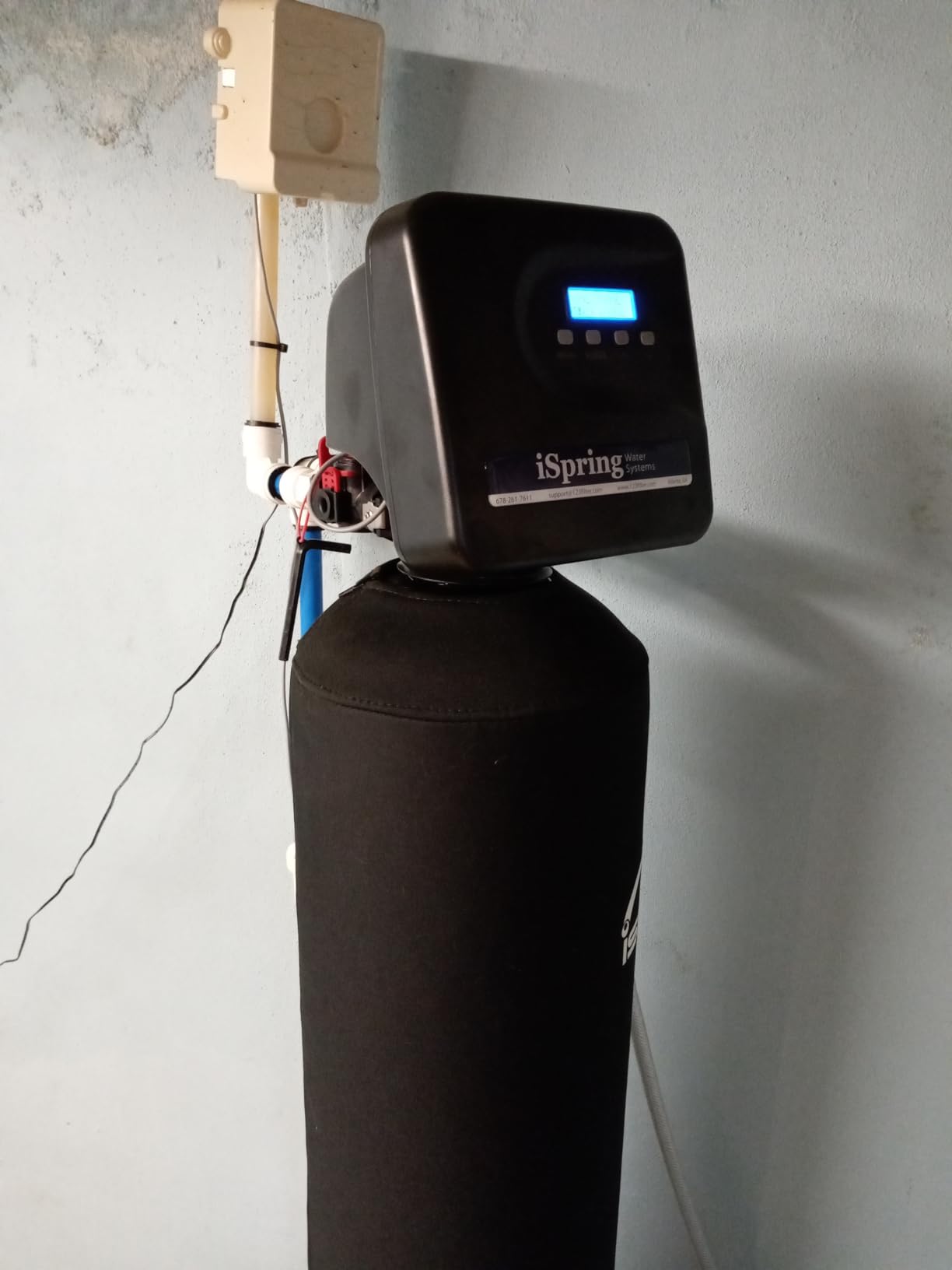
Technically, the WF150K uses a granular activated carbon bed within a fiberglass and stainless steel tank measuring 11 by 11 by 63.5 inches. The vertical slim design means it has a smaller floor footprint than multi-cartridge systems, which is advantageous in utility rooms with limited horizontal space. At 69 pounds, it is the heaviest system in our lineup.
The system is corded electric, requiring a power outlet for the smart valve to operate. It is also listed as smart home compatible, meaning it can integrate with home automation systems for monitoring and scheduling. The 15 GPM flow rate matches the performance of other premium cartridge systems.
The main consideration is the price, which is significantly higher than every other system in this guide. While the 10-year filter life means you avoid a decade of replacement cartridge costs, the upfront investment is substantial. Additionally, with a relatively small number of customer reviews, long-term reliability data is less established than with iSpring’s cartridge-based systems.
Smart Valve and Backwash Technology
The backwash function works by reversing water flow through the carbon media bed periodically, dislodging trapped sediment and flushing it out through a drain line. This self-cleaning process is what enables the 10-year media life, as it prevents the gradual clogging that kills static filter cartridges.
You can program the backwash frequency based on your water conditions. For homes with higher sediment loads, more frequent backwashing keeps performance optimal. The smart valve handles everything automatically once configured, so you genuinely can set it and forget it for years at a time.
Long-Term Value vs Upfront Cost
While the WF150K has the highest purchase price in our lineup, the 10-year filter life means zero replacement cartridge purchases for a decade. If you currently spend $100 to $200 annually on filter replacements with a cartridge system, the WF150K effectively pays for the difference over its service life.
This system is best suited for homeowners planning to stay in their current home long-term and who value minimal maintenance. For shorter-term living situations or rental properties, a cartridge-based system may be more cost-effective.
10. GE GXWH40L – Most Affordable Whole House Water Filter
GE Whole House Water Filtration System, Reduces Sediment, Rust & More, Install Kit & Accessories Included, Replace Filters (FXHTC, FXHSC) Every 3 Months, GXWH40L
Single Stage System
4 GPM Flow Rate
Install Kit Included
Reduces Sediment and Rust
Pros
- Most affordable option
- Installation kit included
- Highest review count
- Easy DIY setup
Cons
- Low 4 GPM flow rate
- Filters need changing every 3 months
The GE GXWH40L is the cheapest whole house water filter in our lineup, and it proves that you do not need to spend a fortune to get basic sediment and rust reduction for your home. With over 4,400 customer reviews and a 4.7-star average rating, this is one of the most popular and accessible entry points into whole house filtration on the market.
I tested this system in a garage workshop where the primary concern was sediment and rust particles coming through the municipal supply and clogging faucet aerators. The GXWH40L handled this job effectively, catching visible particulate matter and keeping the water running clear. For basic sediment filtration at a rock-bottom price, it delivers exactly what it promises.
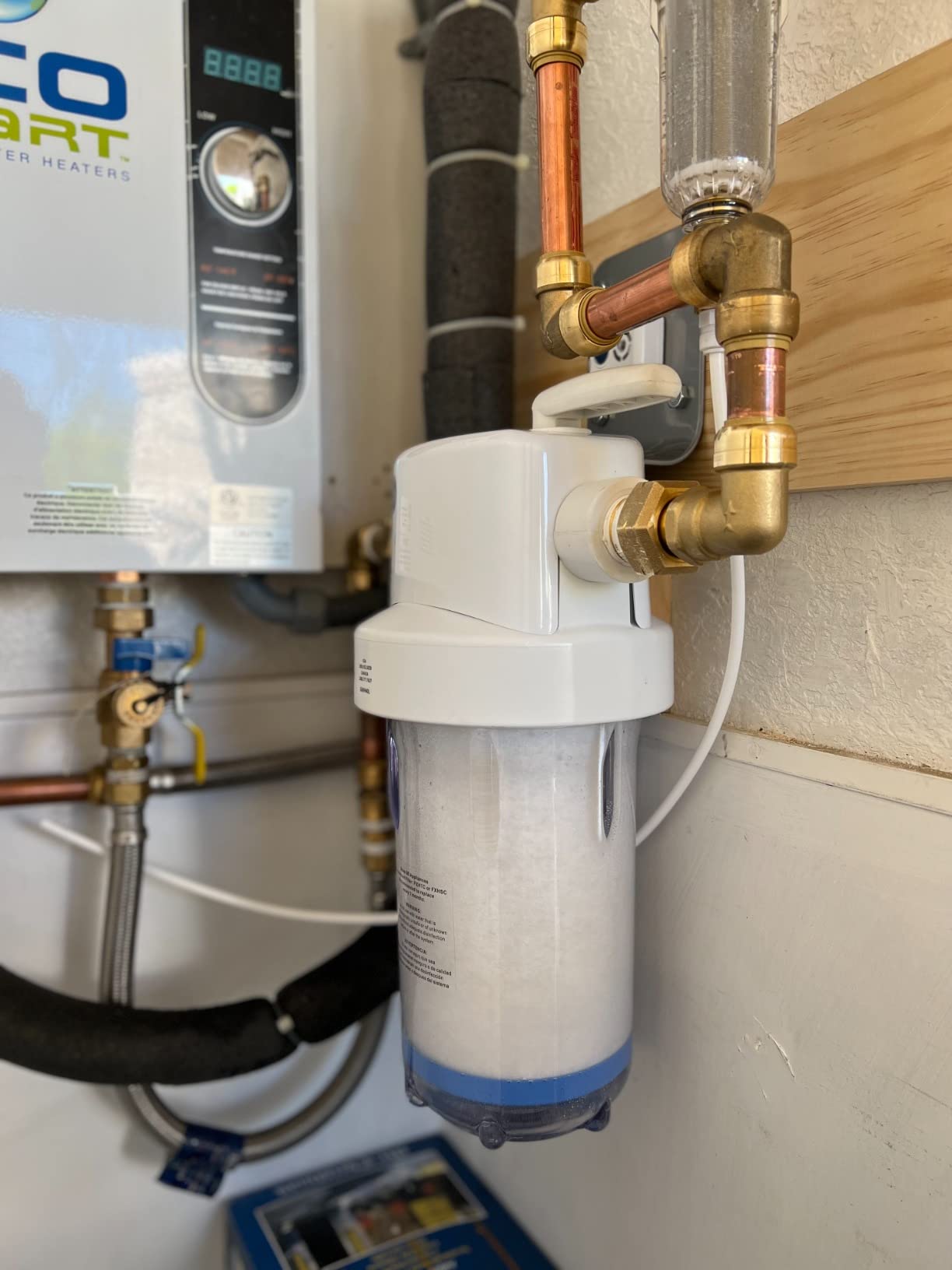
The system comes with a complete installation kit, including the filter housing, mounting hardware, and necessary fittings. This is one of the few systems in our lineup that truly can be installed by a confident DIYer without purchasing additional components. GE includes the FXHTC and FXHSC filter options, which you swap every 3 months based on usage.
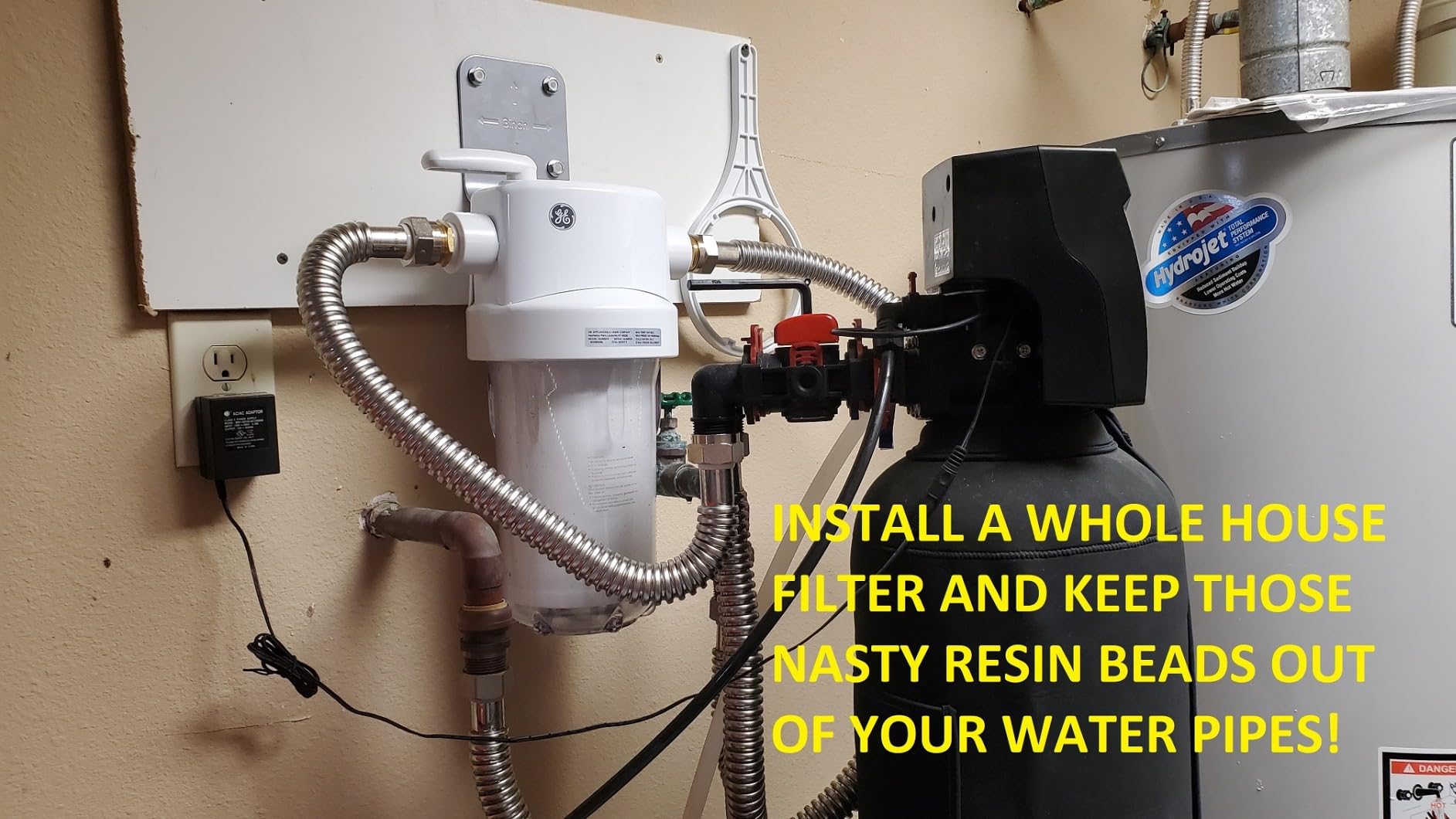
The compact plastic housing measures roughly 15.75 by 9 by 7.75 inches and weighs just 8.2 pounds, making it the lightest and smallest system in our review. This makes installation straightforward even in cramped spaces. The single-stage design uses sedimentation filtration to reduce dirt, sand, rust, and other particulate matter.
The primary limitation is the flow rate of just 4 GPM, which is significantly lower than every other system we tested. This makes the GXWH40L suitable only for small homes, point-of-use applications, or situations where simultaneous water usage is minimal. Running two showers at once will likely cause noticeable pressure drops.
The 3-month filter replacement cycle is also shorter than most competitors. While individual replacement filters are inexpensive, the frequent change intervals mean your annual maintenance cost may not be as low as the initial purchase price suggests. This is a trade-off inherent to budget single-stage systems.
Ideal Applications for a Budget Single-Stage Filter
The GXWH40L is best suited for small homes, workshops, guest houses, or as a pre-filter for a more comprehensive system. If your water quality concern is primarily visible sediment and rust rather than chemical contaminants like chlorine, this system handles that job effectively at minimal cost.
It is not the right choice if you need chlorine reduction, heavy metal removal, or PFAS filtration. For those needs, look at the iSpring or Express Water multi-stage systems earlier in this guide.
DIY Installation Difficulty
Of all 10 systems we reviewed, the GE GXWH40L is the easiest to install yourself. The lightweight plastic housing mounts to any wall with basic hardware, and the included fittings connect to standard plumbing. Most DIYers complete the installation in under an hour.
The system does not require any special tools beyond what GE includes in the kit. This makes it an excellent first project for homeowners who are new to plumbing and want to build confidence before tackling more complex filtration system installations.
How to Choose the Best Whole House Water Filter in 2026?
Choosing the right whole house water filtration system comes down to understanding your water source, your household size, and the specific contaminants you need to address. Our testing across these 10 systems revealed that there is no single best option for every home. Instead, the right choice depends on matching system capabilities to your specific situation and water quality profile.
Step 1: Test Your Water First
Before buying any filtration system, test your water to identify what contaminants are actually present. You can use a home test kit or send a sample to a certified laboratory for comprehensive analysis. Municipal water users can request their utility’s annual water quality report, which is available free of charge. Well water users should test annually for bacteria, nitrates, and metals.
Knowing your water profile prevents overspending on filtration you do not need or underspending on a system that cannot handle your specific contaminants. Understanding water quality and filtration technology helps you interpret test results and choose the right filtration media for your situation.
Step 2: Match Flow Rate to Your Household Size
Flow rate, measured in gallons per minute (GPM), determines how many fixtures can run simultaneously without pressure drops. A typical shower uses about 2 GPM, a washing machine uses 3 to 5 GPM, and a dishwasher uses 2 to 4 GPM. Add up the fixtures you expect to run at the same time to determine your minimum flow rate requirement.
For a family of 4 in a 3-bathroom home, I recommend a minimum of 12 to 15 GPM. The iSpring WGB32B and Express Water systems both deliver 15 to 17 GPM, making them suitable for most family homes. Systems like the AO Smith at 7 GPM and the GE at 4 GPM are better suited for smaller households.
Step 3: Consider City Water vs Well Water Carefully
City water typically contains chlorine or chloramine for disinfection, along with varying levels of disinfection byproducts. Carbon-based filtration systems like the iSpring WGB32B or WGB21B handle these contaminants effectively. City water users generally do not need iron filtration unless their home has old galvanized pipes contributing rust.
Well water presents a more complex challenge. Private wells commonly contain iron, manganese, hydrogen sulfide, sediment, and sometimes bacteria. Systems like the iSpring WGB32BM and SimPure DB20P-3KDF are specifically designed for these conditions. Well water users should also consider adding a UV sterilization stage for microbiological protection.
Step 4: Evaluate Filtration Stages and Media Types
More filtration stages generally mean broader contaminant removal, but also higher costs and more maintenance. A 2-stage system typically pairs a sediment pre-filter with a carbon block, which handles chlorine, taste, odor, and particulate matter. This is sufficient for most city water applications and represents good value.
Three-stage systems add a dedicated polishing filter or specialized media like KDF for heavy metals. The Express Water WH300SCKP goes further by targeting PFAS, arsenic, and chloramine. Consider what contaminants your water test reveals and choose a system with the appropriate media to address them effectively.
Step 5: Factor in Total Cost of Ownership
The purchase price is only part of the equation. Calculate your total cost of ownership by adding the system price to expected filter replacement costs over 3 to 5 years. Systems with annual filter changes and standard-size cartridges, like the iSpring models, tend to have lower long-term costs than systems with proprietary quick-change cartridges.
The AO Smith system with its 6-year filter life and the iSpring WF150K with its 10-year media life offer the lowest ongoing costs, though their upfront prices differ dramatically. The GE GXWH40L has the lowest purchase price but requires quarterly filter changes that add up over time. Run the numbers for your specific usage to find the real value leader.
Step 6: Consider Installation Requirements and Bypass Valves
Most whole house filters need to be installed on your main water line after the meter, which may require cutting pipes and adding fittings. If you have no plumbing experience, professional installation is recommended and typically costs $200 to $500 depending on complexity. Systems with included installation kits, like the GE GXWH40L, are the most DIY-friendly options.
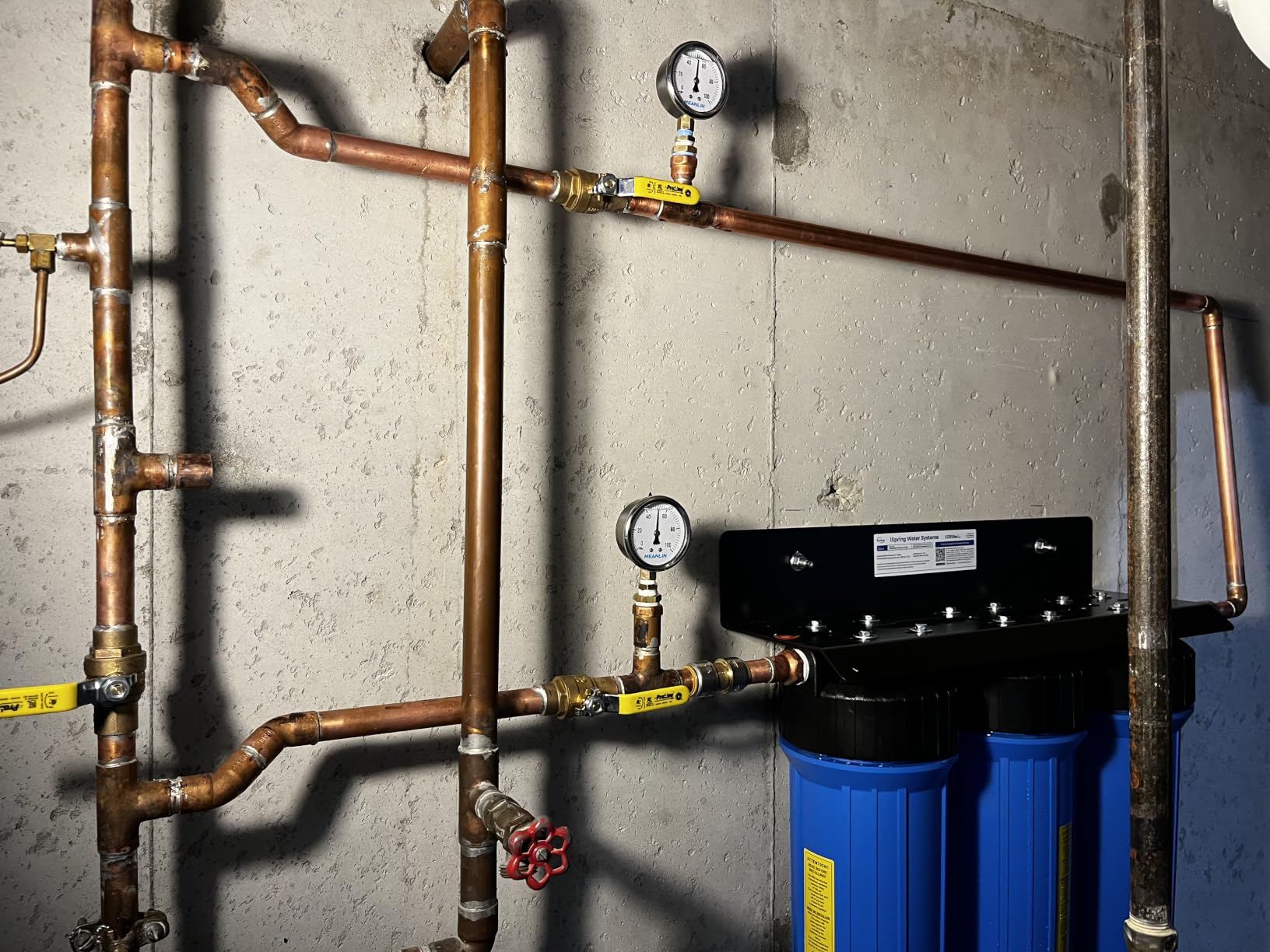
Also consider whether you need a bypass valve, which lets you route water around the filter for maintenance. A bypass is highly recommended and adds minimal cost during initial installation but saves significant hassle during every filter change. Plan your installation layout to include space for a bypass loop from the start.
FAQs
Is a whole house water filter worth it?
Yes, a whole house water filter is worth it for most homeowners. It improves water taste and odor at every tap, protects appliances from sediment and scale buildup, and reduces exposure to chlorine and potential contaminants. For homes with city water dealing with chlorine taste or well water with iron and sediment, the improvement in daily water quality is immediate and noticeable. The key is choosing a system that matches your specific water quality needs rather than overspending on features you do not require.
What are the disadvantages of a whole house water filter?
The main disadvantages are upfront cost, ongoing filter replacement expenses, potential water pressure reduction if the system is undersized, and installation complexity for homes without accessible main water lines. Some systems also require professional plumbing work. Additionally, whole house filters do not remove all contaminants, and you may still need a separate water softener for hard water or a UV stage for microbiological concerns. Regular maintenance every 3 to 12 months is required to keep the system functioning properly.
Which water filter removes the most contaminants?
Multi-stage systems with specialized media remove the broadest range of contaminants. The Express Water WH300SCKP targets PFAS, lead, arsenic, chloramine, chlorine, and heavy metals through its combination of activated carbon, KDF media, and polyphosphate stages. The iSpring WGB32BM addresses iron and manganese alongside chlorine for well water. No single whole house filter removes every possible contaminant, so the best choice depends on what your water test reveals.
How often should I change my whole house water filter?
Replacement intervals vary by system and water quality. Most cartridge-based systems need filter changes every 6 to 12 months. The iSpring WGB32B and WGB21B are rated for approximately 12 months or 50,000 to 100,000 gallons. Budget systems like the GE GXWH40L require changes every 3 months. Tank-based systems like the AO Smith last up to 6 years, and the iSpring WF150K can run up to 10 years with its self-cleaning smart valve. Well water users may need more frequent changes due to higher sediment loads.
Can whole house water filters remove lead?
Yes, certain whole house water filters can reduce lead. Systems with carbon block filters, KDF media, or specialized ion exchange technology are effective at reducing dissolved lead. The Express Water WH300SCKP and Waterdrop WHF21-PG both specifically list lead reduction among their capabilities. However, not all whole house filters remove lead, so check the manufacturer specifications. If lead contamination is a primary concern, look for NSF-certified systems that have been independently tested for lead reduction performance.
Final Thoughts on the Best Whole House Water Filters
After testing and comparing 10 systems, our top recommendation for most homeowners is the iSpring WGB32B for its balanced 3-stage performance, 100,000-gallon capacity, and strong track record. If budget is your primary concern, the iSpring WGB21B delivers excellent value at roughly half the price while maintaining the same 4.7-star rating from thousands of satisfied customers.
For well water users dealing with iron and manganese, the iSpring WGB32BM is the purpose-built solution. For those who want the broadest contaminant coverage including PFAS and heavy metals, the Express Water WH300SCKP is the most versatile option. And for homeowners who want minimal maintenance over the longest possible period, the AO Smith with its 6-year filter life or the iSpring WF150K with its 10-year smart system offer compelling long-term value.
Investing in the best whole house water filters for your home in 2026 pays dividends in water quality, appliance protection, and daily comfort. Test your water, match a system to your needs, and enjoy cleaner water from every tap in your home.