
Most people who search for the best smart light switches for dimmable lights are not really shopping for a switch. They are trying to solve a wiring problem. The dimmer they want only works if a neutral wire sits behind the old toggle, and almost nobody opens a wall box to find out before they buy. So the first thing our team does with any candidate is work out whether it can physically go where the reader needs it.
A smart dimmer switch is an in-wall device with an electronic dimming circuit and a radio built in. You set brightness from a phone app, a voice assistant, a schedule, or a physical slider, and it dims the bulbs that are already in the ceiling. That is a different thing from a smart bulb, which is a bulb with a radio inside it. Smart bulbs give you app control but a plain wall switch cuts their power and turns them back into ordinary bulbs. Dimmer switches keep the wall switch useful for guests, kids and anyone who does not want to ask a phone to turn on the hall light.
Is there a smart dimmable light switch available? Yes, and there are a dozen good ones in this price class, from no-hub Wi-Fi models to Matter-certified kits that join Apple Home, Alexa and Google Home from the same wall plate. The catch is that no single model is best at everything, so this roundup names the best overall pick first and then the specialists.
If you are choosing the fixtures rather than the switch, our guides to picture lights and light therapy lamps cover the hardware that actually produces the light. This guide covers the thing on your wall that controls it.
Before you scroll further, answer three questions. First, do you have a neutral wire in that box? Second, is the light on a single-pole switch, or a 3-way or 4-way circuit with more than one switch? Third, which smart home system do you already use, if any? Those three answers eliminate more than half the list below, which saves you from a return shipping trip.
Table of Contents
Top 3 Picks for the Best Smart Light Switches for Dimmable Lights (October 2026)

Kasa Smart Dimmer Switch HS220
- Smooth LED dimming with no dead zones
- Neutral wire required
- Works with Alexa and Google Assistant

Tapo Matter Dimmer S505D
- Matter certified
- 0-100 percent dimming with fade on and off
- Neutral wire required

Kasa Smart 3-Way Dimmer KS230
- Dims at both switch locations
- 1 to 100 percent brightness
- Neutral wire at both boxes
Those three cover the widest range of real houses. The Kasa HS220 is the one we recommend when the wiring is standard and the bulbs are modern LEDs. The Tapo S505D does the same job for less money and adds Matter, which matters if you plan to move ecosystems later. The Kasa KS230 kit is the one for hallways, stairways and any room with a second switch.
The 12 Best Smart Light Switches for Dimmable Lights in 2026
| Product | Specifications | Action |
|---|---|---|
| Kasa Smart Dimmer Switch HS220 |
|
Check Latest Price |
 Lutron Caseta Smart Dimmer Switch Lutron Caseta Smart Dimmer Switch |
|
Check Latest Price |
 TREATLIFE Smart Dimmer Switch DS01 TREATLIFE Smart Dimmer Switch DS01 |
|
Check Latest Price |
| Kasa Smart 3-Way Dimmer Switch Kit KS230 |
|
Check Latest Price |
 Amazon Basics Smart Dimmer Switch Amazon Basics Smart Dimmer Switch |
|
Check Latest Price |
| Tapo Matter Smart Dimmer Switch S505D |
|
Check Latest Price |
 ELEGRP Smart Dimmer Switch DTR10 2-Pack ELEGRP Smart Dimmer Switch DTR10 2-Pack |
|
Check Latest Price |
 GE CYNC Smart Dimmer Switch GE CYNC Smart Dimmer Switch |
|
Check Latest Price |
 Tapo Matter Smart 3-Way Dimmer Kit S515D Tapo Matter Smart 3-Way Dimmer Kit S515D |
|
Check Latest Price |
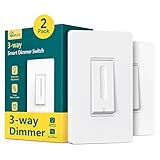 TREATLIFE 3-Way Smart Dimmer 2-Pack TREATLIFE 3-Way Smart Dimmer 2-Pack |
|
Check Latest Price |
 Leviton Decora Smart Dimmer D26HD Leviton Decora Smart Dimmer D26HD |
|
Check Latest Price |
 Shelly Plus Wall Dimmer Shelly Plus Wall Dimmer |
|
Check Latest Price |
Every switch in that table is a real in-wall dimmer except the GE CYNC, which is a battery-powered wireless remote. We keep it in the list because it solves a genuine problem for renters and for anyone who would rather not open a box.
1. Kasa Smart Dimmer Switch HS220 – The All-Rounder
Kasa Smart Dimmer Switch HS220, Single Pole, Needs Neutral Wire
300W load
2.5A current rating
2.4GHz Wi-Fi
Neutral wire required
Alexa and Google Assistant
Pros
- Exceptionally smooth dimming across mixed modern LED bulbs with no dead zones
- App-based low-end calibration that removes flicker at minimum brightness
- Customizable fade-on and fade-off speed plus Away Mode
- Reliable 2.4 GHz Wi-Fi that holds the connection
- Works with Alexa and Google Assistant without a hub
Cons
- Requires a neutral wire in the switch box
- Bulky internal module is tight in shallow or crowded boxes
- One to two second delay on physical on and off
- Some switches squeak when the button is pressed
This is the switch we ended up recommending to the most people. It carries a 4.6 rating across more than 34000 reviews, which is the largest review base of any in-wall dimmer we evaluated, and that volume matters because it means the failure modes are well known rather than theoretical.
The dimming is the story. Owners report smooth output across mixed batches of modern LED bulbs with no dead zone, and the app lets you calibrate the low end so the bulb does not flicker or drop out at minimum brightness. That calibration slider is the single most useful feature on a Wi-Fi dimmer I have used.
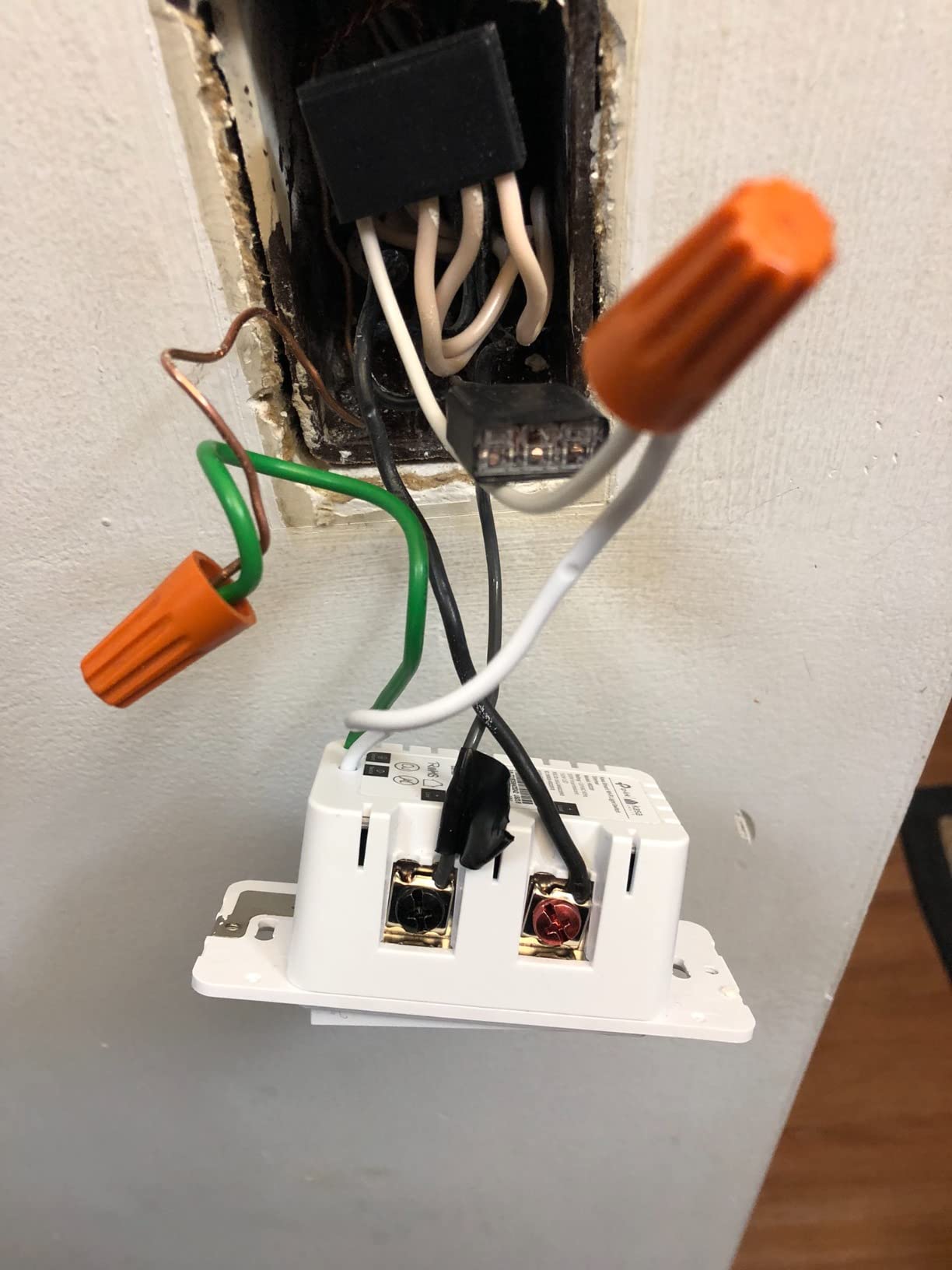
It is rated for 300 watts of load on a 2.5 amp rating at 120 volts, which covers a typical ceiling fixture with a handful of bulbs. The included hardware covers a straightforward single-pole swap: wall plate, two wire nuts, a wire label sheet and a quick installation guide. The app walks you through the wiring steps as you go, which matters more than it sounds if this is your first switch.
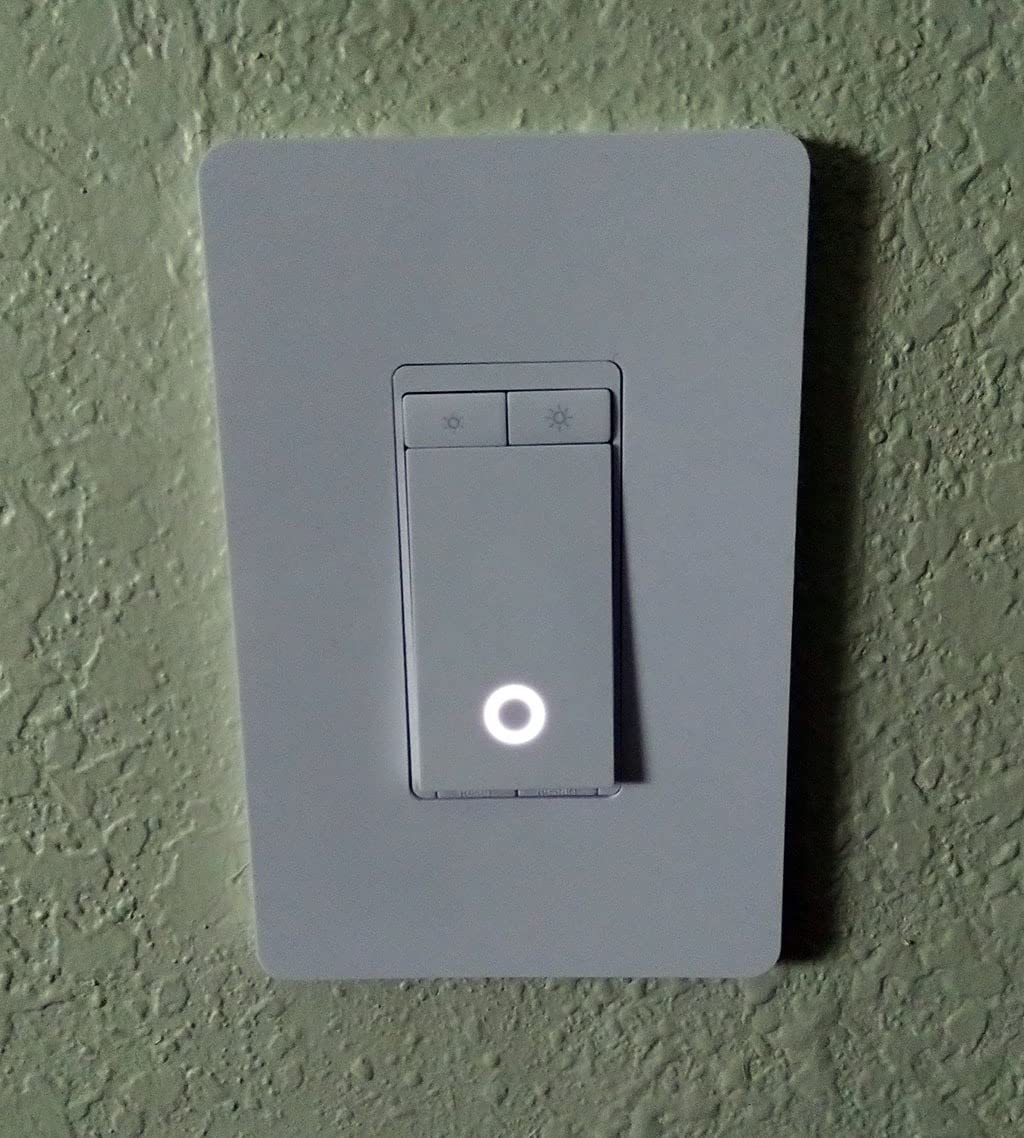
The physical button has a double-tap detection, so a single tap is on and off while a double tap triggers the gentle fade. Owners do report a one to two second lag on the physical response because the switch is waiting to see if a second tap is coming. There is also a faint squeak reported on some units when the button is pressed. Neither ruins the experience, but both are the kind of detail you stop noticing after a week and never again.
What to check before you buy the HS220
Flip the breaker and pull the switch off the wall. If you see a white or grey wire bundled with the black ones going to the fixture, this switch will install cleanly. If the box only has black and red, or just two wires, stop and read the Lutron section instead.
Measure your box depth. The dimming electronics make this one of the chunkier switches, and in a shallow or crowded box the wires get difficult to tuck. If your existing box is the shallow retrofit kind found in many 1980s and 1990s walls, expect a fight.
Where the HS220 falls short
There is no Matter here, and no Apple HomeKit. You get the Kasa app plus Alexa and Google Assistant, which covers most homes but locks you into a TP-Link account if you ever move on.
The 2.4 GHz requirement is worth repeating. If your router runs a single 5 GHz network with band steering, this switch will not join it and setup will stall. Also note the switch is single-pole only. If the light is controlled from two locations, this is the wrong product and the KS230 kit in position four is the right one.
2. Lutron Caseta Smart Dimmer Switch – Dims Older Wiring
Lutron Caseta Smart Dimmer Switch (Smart Hub Required), No Neutral Required
150W LED and 600W incandescent
No neutral wire required
Lutron Smart Hub needed for smart control
Pairs with Pico remotes
Pros
- Installs without a neutral wire so it retrofits into older wiring
- Works with existing dimmable bulbs rather than smart bulbs
- Adjustable minimum and maximum dim levels for LED behaviour
- Pico remotes give wire-free 3-way control
- Hub runs without Wi-Fi for fast stable response
- Broad ecosystem support including Apple HomeKit and the major voice assistants
Cons
- Lutron Smart Hub sold separately and required for smart control
- Coordinating wall plate sold separately
- Smart bulbs do not dim properly through this switch
- Flat switch face is hard to locate in the dark
This is the only in-wall dimmer on the list that installs without a neutral wire, and that single fact makes it the answer for a huge number of pre-1980s houses. It also carries the highest average rating in the group at 4.7 across more than 5600 reviews.
It works by using the traveller wire itself to sense whether the circuit is on, which means the electronics do not need constant power. The trade-off is that the off state is slightly less certain, and Lutron is upfront about the design rather than hiding it. The practical result is a switch that installs in as little as 15 minutes in a box that other smart dimmers simply cannot use.
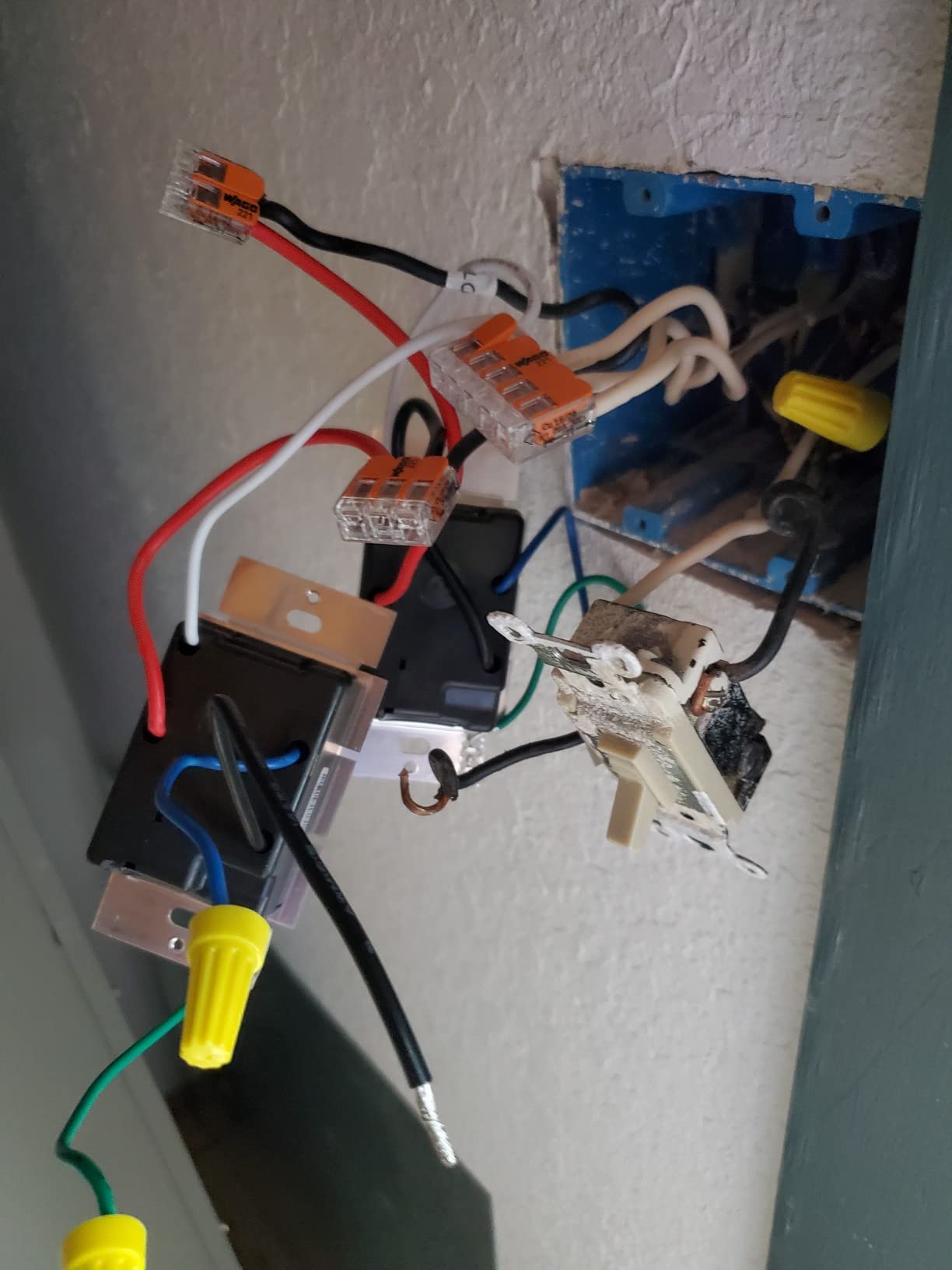
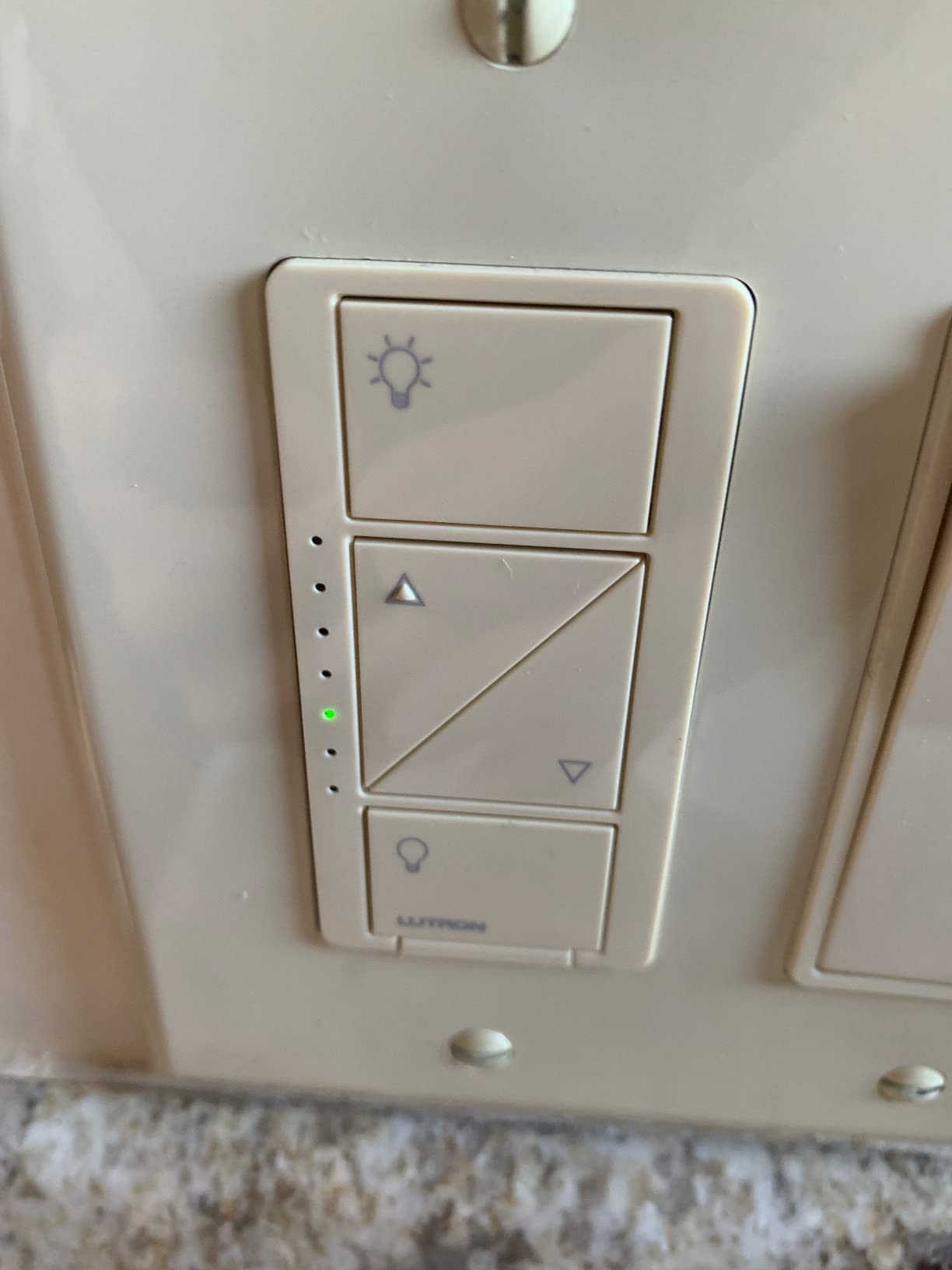
The dimming controls are the best in this roundup for LED behaviour. You get adjustable minimum and maximum dim levels, which is exactly the setting that fixes flicker and dead zones on awkward bulbs. Rated at 150 watts for LED and up to 600 watts for incandescent or halogen, with a 1.25 amp current rating.
For 3-way setups, the Pico remote is the clever part. It mounts over an existing switch faceplate and communicates wirelessly, so you get two-location control without pulling new traveller wires. The Smart Hub supports up to 10 devices, and the hub itself can operate without Wi-Fi on a local network, which makes the system fast and stable even on a poor internet connection.
Why owners keep recommending Caseta
Because it does not need a neutral wire and because the ecosystem answers to Alexa, Apple Home, Google Home, Ring and Sonos without extra bridges for each one. The Lutron app covers scenes, scheduling, geofencing, smart-away and timers, which is more than most competitors offer out of the box.
It is also the safest pick for anyone who already owns Philips Hue or LIFX bulbs. Because the dimmer is designed for ordinary dimmable bulbs, you keep your existing lighting and gain wall-switch control back. Just accept the hub and wall plate as additional purchases.
Where the extra hardware adds up
The Lutron Smart Hub is not included and is required for smart functionality. The coordinating wall plate is also sold separately, and it is the part that makes the switch look right in a modern multi-gang box. Budget for both before you decide the switch itself is too expensive.
One real limitation: smart bulbs do not dim properly through this switch and are not recommended with it. If your plan is to combine Caseta with Hue bulbs, use a different approach. That trade-off is covered in the smart bulb section further down.
3. TREATLIFE Smart Dimmer Switch – Smooth Touch on a Budget
TREATLIFE Smart Dimmer Switch, Single-Pole Smart Switch for Dimmable Bulbs, 2.4GHz WiFi Smart Light Switch Works with Alexa and Google Home, APP Remote Control, Neutral Wire Required
150W LED and 400W total
3.3A current rating
2.4GHz Wi-Fi
Neutral wire required
Single-pole
Pros
- Touch slider gives smooth fine-grained brightness adjustment
- Remembers the last brightness level after a power outage
- No hub needed for the major voice assistants
- Schedules with custom brightness levels plus grouping and family sharing
- Includes a 1-gang faceplate and hardware
Cons
- Neutral wire required and single-pole only
- Will not work on 3-way circuits
- 2.4GHz Wi-Fi only
- Not compatible with non-dimmable or smart bulbs
- No Apple HomeKit support
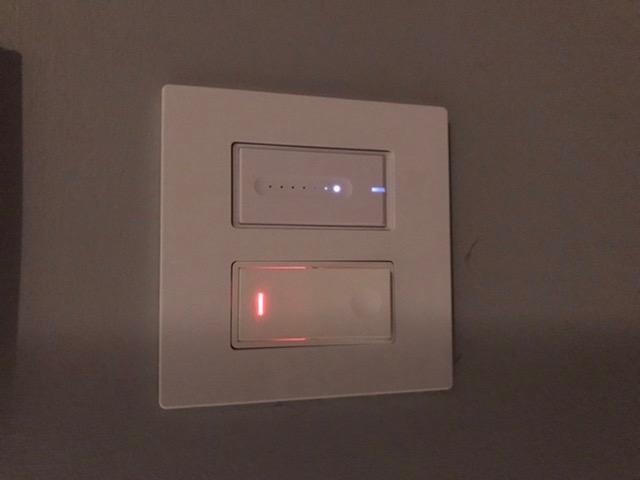
This is the switch I suggest when someone wants a touch dimming surface without the touch dimming price. The panel is a touch slider rather than a rocker, and sliding a finger up or down adjusts brightness in a way that feels closer to a phone than to a light switch.
Load handling is better than the Kasa at the same wattage class. It is rated 400 watts total with LED and CFL up to 150 watts, on a 3.3 amp rating. It also restores your last brightness level after a power outage, which is a small courtesy that you notice every single evening.
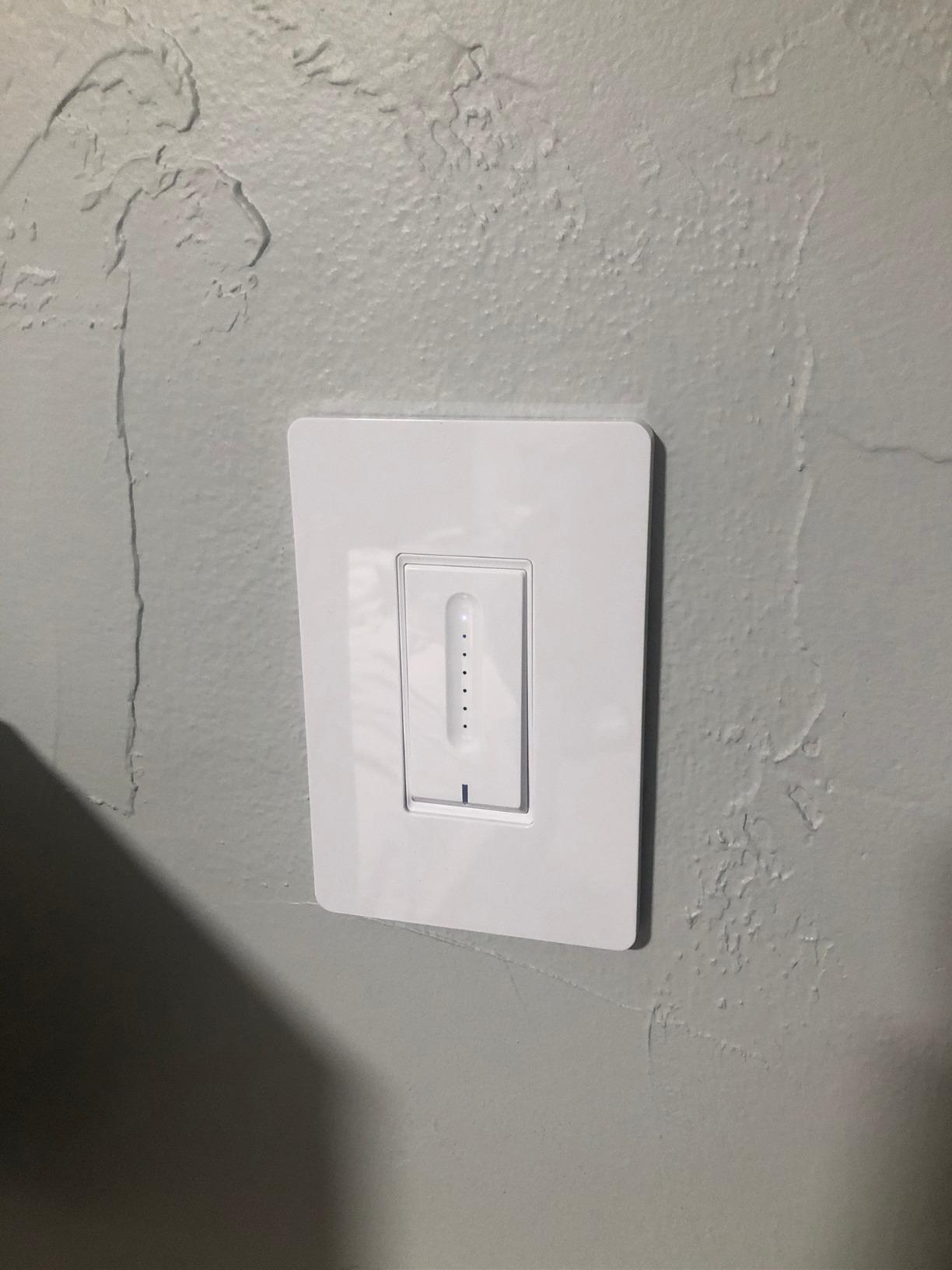
The app supports schedules with custom brightness levels, device grouping and family sharing, and it works with Alexa and Google Assistant over 2.4 GHz Wi-Fi with no hub at any point. The box includes the wallplate, four wire nuts and two screws, so a single-pole replacement is genuinely a one-session job.
Fit is handled thoughtfully. The body is 5.04 by 3.31 by 1.42 inches and the listing specifies it fits boxes down to 2.75 by 1.69 by 1.61 inches, which covers shallow retrofit boxes that trip up bulkier competitors.
Best reasons to pick it
It is a smooth dimming surface at a modest price, and owners consistently single out the app for scheduling. If you want a dimmer that remembers where you left the brightness, this is the cheapest reliable way to get that behaviour.
It also suits a first smart switch purchase. The wiring mirrors a standard single-pole setup, and the app guides you through it without asking you to understand anything beyond line, load and neutral.
Limits worth knowing before you order
Neutral wire required, single-pole only, 2.4 GHz only, and no Apple HomeKit. The bigger one is bulb compatibility: this switch will not work with non-dimmable bulbs, with smart bulbs, or with bulbs that have their own remote controls. Forum discussions about LED flicker name this class of switch most often, so if your bulbs are difficult, look at the Kasa or the Leviton instead.
4. Kasa Smart 3-Way Dimmer Switch Kit KS230 – Hallways and Stairways
Kasa Smart 3-Way Dimmer Switch Kit, KS230 KIT v2, Need Neutral Wire
150W LED and 300W incandescent
3-way kit with satellite
Neutral wire at both boxes
2.4GHz Wi-Fi
Pros
- Full 1 to 100 percent dimming from either switch
- Schedules can set brightness levels for night lighting
- App-guided install covers the main switch and the satellite
- Works with the major voice assistants and SmartThings
- ETL certified with a 2-year warranty and firmware support
Cons
- Neutral wire required at both switch locations
- 2.4GHz Wi-Fi only
- The kit is bulkier than a standard single-pole dimmer
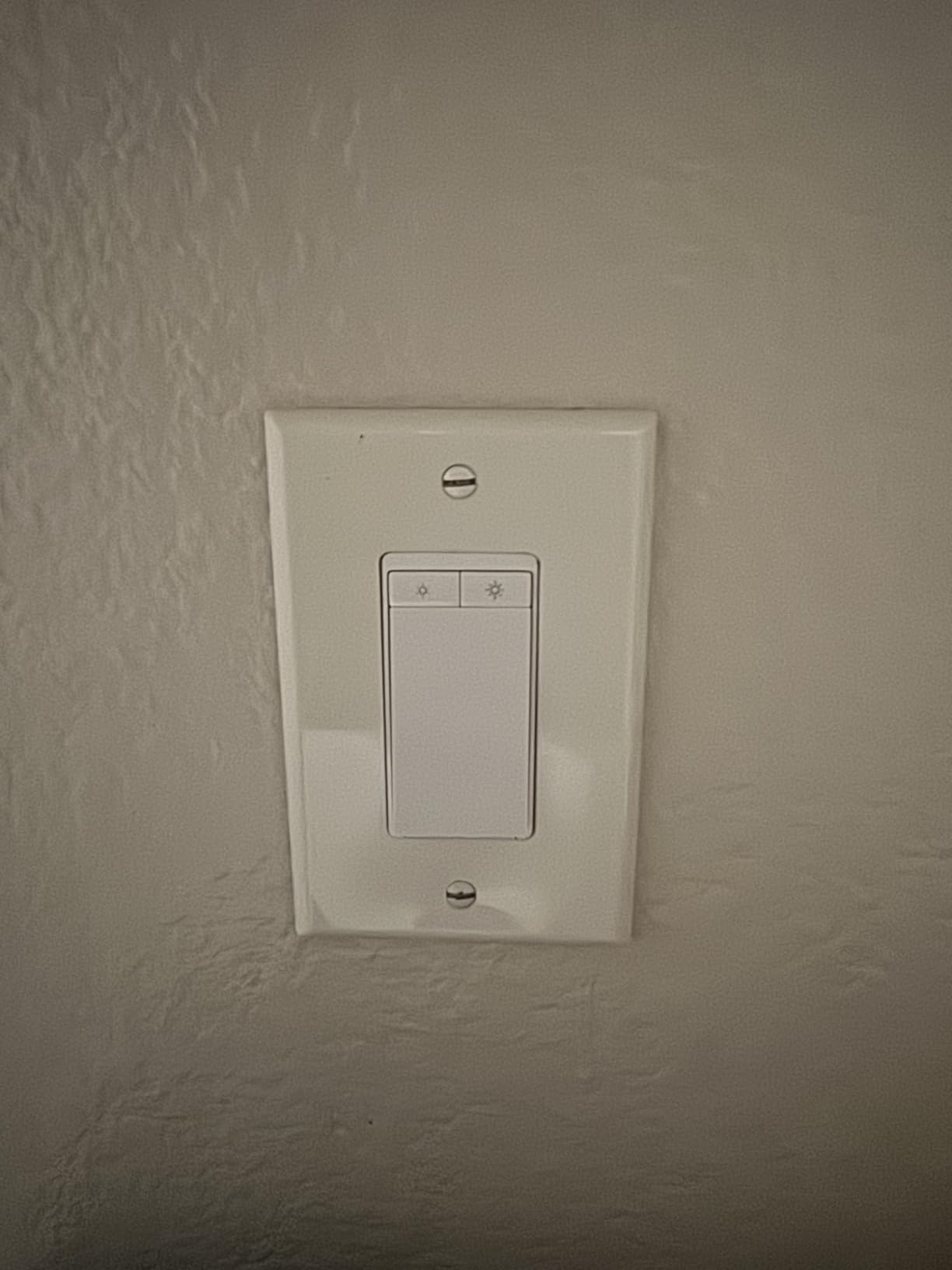
If a room is controlled from two switches, this is the kit to buy. It ships as a matched pair: a main smart dimmer and a satellite dimmer switch, with two wall plates and five wire nuts. Both switches dim, which is where most three-way smart setups let you down.
Owners report genuine 1 to 100 percent dimming from either location rather than on and off at the second switch. Scheduling can store brightness levels, so the hall light can come up at 15 percent at night instead of full brightness, which is the kind of detail that makes a stairway safer at night.
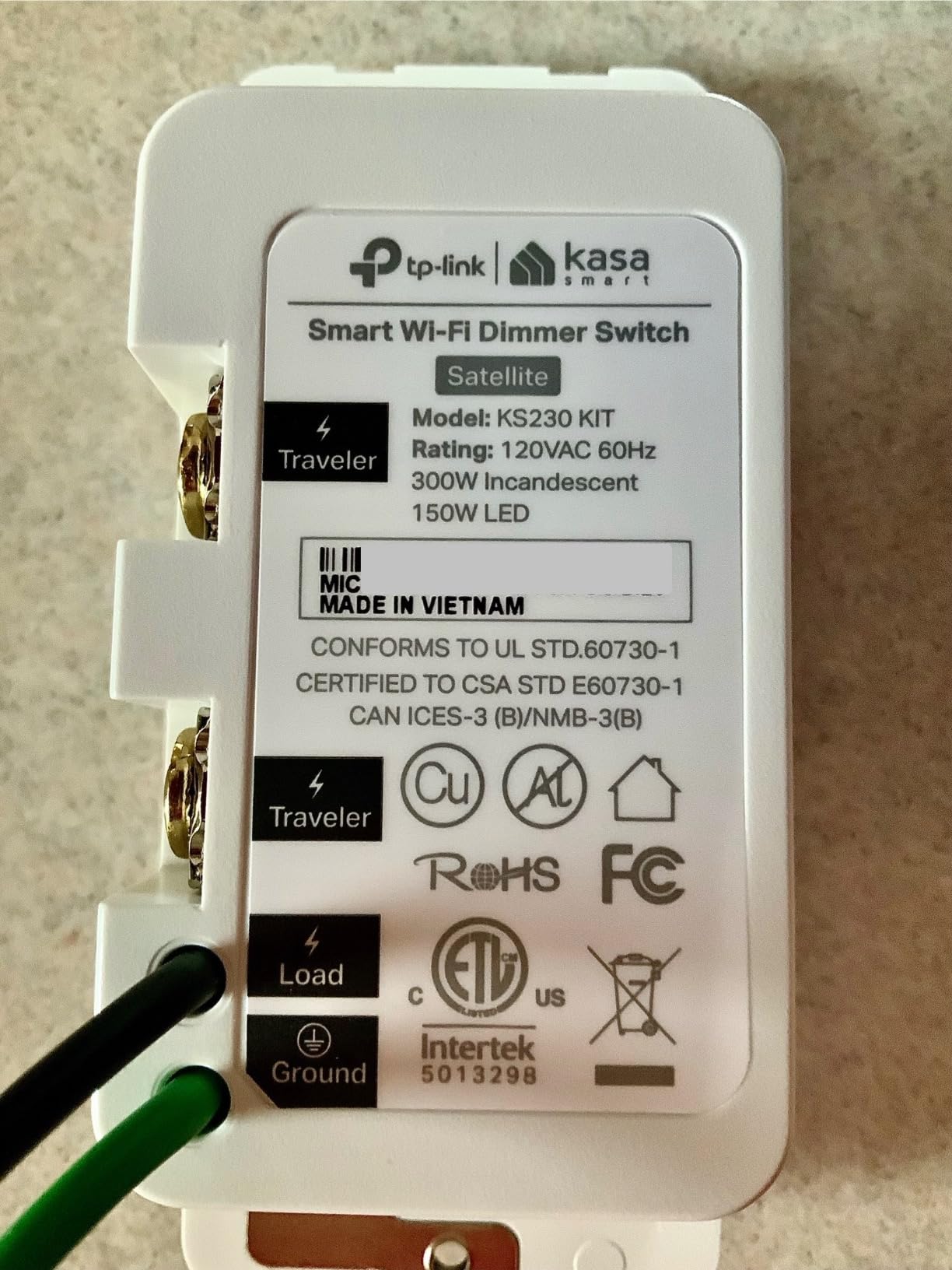
Load ratings are 300 watts for incandescent and up to 150 watts for dimmable LED, on a 15 amp rating. The app walks through wiring the main switch and the satellite separately, which is genuinely helpful because the traveller wires at the two ends of a 3-way circuit are the part people get wrong.
It is ETL certified and carries a 2-year warranty with firmware update support. Alexa, Google Assistant and SmartThings are all supported, and the SmartThings support means it can be pulled into an existing hub-based setup without a new one.
Getting a 3-way circuit right
A 3-way circuit has two switches sharing a pair of traveller wires. Count the wires at each box: two black or red wires plus a white neutral means 3-way, while three wires at one box means 4-way and you will need a different plan. Count before you buy, not after.
This kit needs a neutral wire at both locations, which rules out many older homes entirely. The app guide covers the correct wire pair for the satellite, but if you are unsure which traveller goes where, that is the point to stop and read the section on calling an electrician.
What the kit costs you in space
The two-plate format takes noticeably more box space than a single-pole dimmer, and it is bulkier than the HS220 in the same wall. In a shallow box the two units can be hard to seat without crushing a wire.
If you only need one smart dimmer per circuit and want the second switch to stay a plain mechanical switch, the TREATLIFE 3-way pack in position ten is a cheaper route. If you want both locations to dim, this is the answer.
5. Amazon Basics Smart Dimmer Switch – Voice-Only Simplicity
Amazon Basics Smart Dimmer Switch, Single Pole, Works with Alexa Only, Voice Control, 2.4 GHz Wi-Fi, No Hub Required, Neutral Wire Required, White
160W load
4A current rating
2.4GHz Wi-Fi
Neutral wire required
Amazon Alexa only
Pros
- Simplest option for an Alexa-only home with no hub or extra app
- Guided installation video plus a written troubleshooting guide
- Schedules lights through Alexa routines and the Alexa app
- Compact body fits standard single-gang boxes
- ETL certified
Cons
- Works with Alexa only with no Google Home or Apple Home support
- Neutral wire and 2.4GHz Wi-Fi both required
- Low-end dimming control is less refined than premium dimmers
- No standalone app of its own
This switch exists for one situation: everyone in the house speaks to Alexa and nobody has ever opened the SmartThings app. There is no separate app to install, no account beyond your Amazon one and no hub to buy. Ask for the light to dim and it dims.
It is rated 160 watts on a 4 amp rating at 120 volts, with clamp-style connectors and brass contacts. The body measures 2.91 by 4.64 by 1.62 inches and fits standard single-gang boxes, which makes it a safer bet in a tight box.
Installation support is the other selling point. A guided installation video walks through setup, and there is a written guide with a troubleshooting section for the moments when a dimmer refuses to pair. Control happens entirely through Alexa routines and the Alexa app.
Roughly 1475 reviews at a 4.2 average is a solid base, and the feedback is consistent: people buy it for simplicity inside an Alexa household and accept the ecosystem limits as the price of that simplicity.
Who should buy it
Buy this if Alexa is genuinely the only voice assistant in the home and you have no plans to add Google Home or Apple HomeKit. The setup path is short, and a guided video is a real help on a first install.
It is also a reasonable pick for a single room, such as a bedroom or a porch, where you want voice dimming without building out a system.
When it is the wrong choice
Amazon-only is a genuine lock-in. The moment someone in the household buys a HomePod or a Google Nest speaker, this switch becomes the odd one out. There is also no independent app, so if you ever leave Amazon’s ecosystem the switch becomes a dumb dimmer with a microphone expectation attached.
Owners also report less refined low-end control than the premium dimmers provide. If you are dimming a dining room to candlelight rather than switching a lamp on and off, the HS220 or the Leviton will serve the mood better.
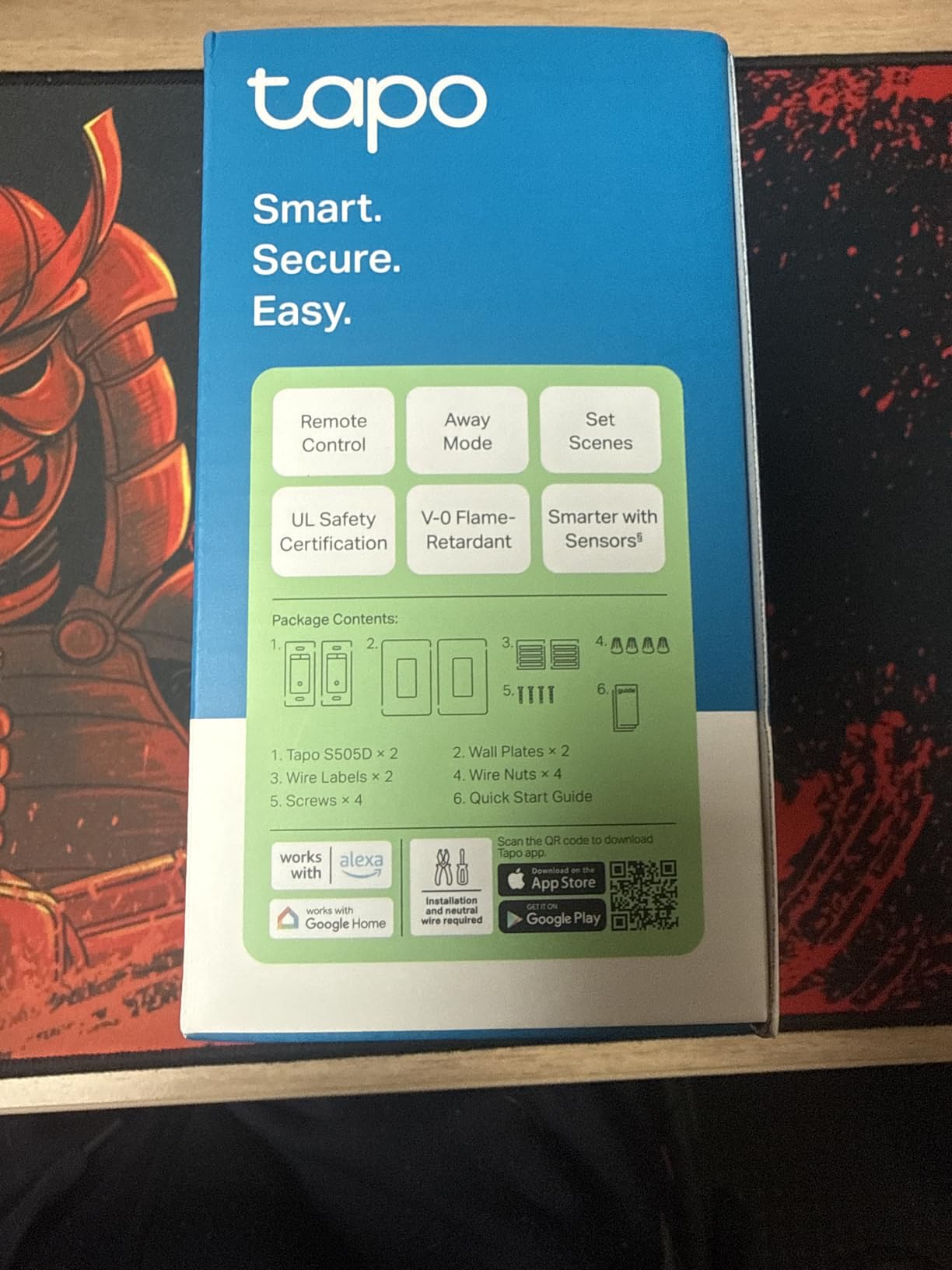
6. Tapo Matter Smart Dimmer Switch S505D – Cheapest Way Into Matter
Tapo Matter Smart Dimmer Switch, S505D, Single Pole, Need Neutral Wire
150W maximum load
2.5A current rating
2.4GHz Wi-Fi
Neutral wire required
Matter certified
Pros
- Matter certified for cross-brand use across the major voice platforms and Apple Home
- Full 0 to 100 percent dimming with fade on and fade off
- Away Mode randomises lighting while you are out
- App-guided setup with schedules for dimmed states
- Compact single-pole form factor
Cons
- Neutral wire required for setup
- 2.4GHz Wi-Fi only
- 150W maximum load is lower than higher-end dimmers
Matter certification is the reason to look here first, and it is a bigger deal than it sounds. Instead of joining one vendor’s app, this switch joins your existing platform directly, so it works with Alexa, Apple HomeKit, Google Home and Samsung SmartThings without a bridge or a hub.
That changes the switching-cost calculation. If you change phone, change ecosystem or move house, a proprietary switch may become a brick while a Matter switch moves with you. Owners consistently point to the Matter support and the full-range dimming as the reasons they are happy at this price level.
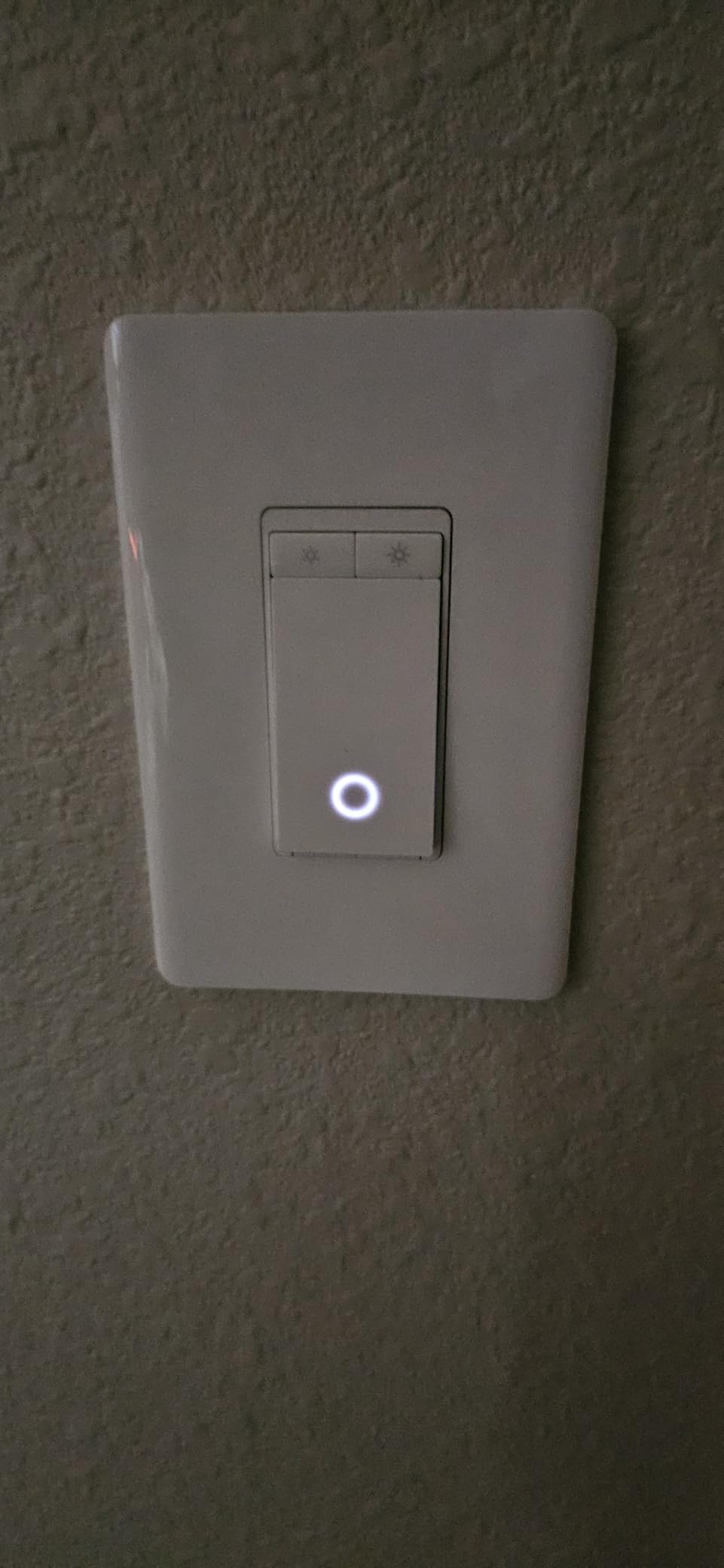
Dimming runs the full 0 to 100 percent range with fade on and fade off for eye-friendly transitions. The Deterr Burglars feature randomises lighting while you are away, which is more useful than it sounds for a living room with a predictable evening pattern. Scheduling can set turn-on, turn-off and dimmed states independently.
Load rating is 150 watts at 2.5 amps, which is at the lower end of the capacity figures in this roundup, and the wiring setup mirrors the existing switch, needing a neutral wire, 2.4 GHz Wi-Fi and the Tapo app. The box includes the switch, a wall plate, wire nuts, screws and a quick start guide.
Why Matter matters for your setup
Matter is an industry standard rather than a company standard, certified through the Connectivity Standards Alliance. When a device is Matter certified, the platform you already use is the platform that controls it. For most people reading this, that means the Tapo app stops being a requirement after setup and the switch simply appears in Apple Home, Google Home or Alexa.
The catch is that most Matter devices today still join over Wi-Fi or Thread at the border router, and this one is Wi-Fi only at 2.4 GHz. You still need a stable 2.4 GHz network even though the control layer is standards-based.
Where the budget shows
150 watts is the lowest maximum load among the serious dimmers here, and on a kitchen pendant with multiple lamps you can reach it quickly. Check the total wattage of every bulb on the circuit before you commit.
Single-pole only, and the neutral wire is not optional. If the fixture is on a 3-way circuit, skip to the Tapo S515D kit in position nine.
7. ELEGRP Smart Dimmer Switch DTR10 – A Slim Touch Panel
ELEGRP Smart Dimmer Light Switch DTR10, Single Pole Setup, 2.4GHz Wi-Fi Touch Dimmer Compatible with Alexa and Google Assistant, Needs Neutral Wire, No Hub Required, UL and FCC Listed, White, 2 Pack
150W LED and 450W incandescent
3.75A current rating
2.4GHz Wi-Fi and Bluetooth
Neutral wire required
Two pack
Pros
- Sensitive touch panel with a quiet rocker and matte finish
- App can set minimum dimming to avoid flicker on fussy bulbs
- Configurable ramp time plus scenes and timers and schedules
- Works with Smart Life apps and can integrate with Home Assistant
- UL and cUL certified with an ultra slim profile
Cons
- Neutral wire required and single-pole only
- 2.4GHz network only
- Indicator light bar turns off a few seconds after the light is on
- Touching the panel while sliding can register an off command
- Occasional brief Wi-Fi disconnects reported
Where other dimmers here are plastic-and-functional, this one is styled. The touch panel is sensitive enough to respond to a light brush, the finish is matte, and the body is described as ultra slim, which means it seats more easily in a crowded box than the bulkier options.
It also has generous load figures for incandescent lighting at 450 watts on a 3.75 amp rating, with dimmable LED up to 150 watts. The dimming curve is configurable with a ramp time, and the app includes scenes, timers, schedules and sunrise and sunset sync.
Because it runs on the Tuya platform, the app layer is familiar if you have other Tuya-based devices, and owners note it can be integrated with Home Assistant. The two-pack format is useful when you are replacing switches in two rooms at once.
What makes it easy to live with
The minimum dimming setting in the app. It lets you set a floor level so a fussy LED bulb never drops into flicker, which is the same trick the Kasa and Leviton offer, exposed more prominently here. Quiet rocker operation and a slim profile are the everyday wins.
It is UL and cUL certified, a higher bar than several competitors in this price range clear, and the quick-connect terminals make wiring faster.
The quirks you will notice
The brightness indicator bar fades out a few seconds after the light comes on, so you cannot read the current level in the dark later. Sliding a finger across the panel can also register a touch as an off command if you are not careful. Both are fixable habits rather than defects, but they are the most common complaints.
There is also a small share of owners reporting brief Wi-Fi disconnects. It is single-pole only with a required neutral wire, and at 325 reviews its support base is narrower than the Kasa or the TREATLIFE, so research the community for your bulb type before committing.
8. GE CYNC Smart Dimmer Switch – A Wireless Remote, Not a Dimmer
GE CYNC Smart Dimmer Switch, Wire-Free Bluetooth, White 1-Pack
Battery powered wireless switch
Bluetooth to Cync devices
Adhesive mounting
Works as a 3-way companion
5A controller
Pros
- Battery powered and wireless so no wiring is needed
- Adhesive mounting adds control by a bed or a front door in minutes
- Pairs over Bluetooth with Cync bulbs and switches
- Can act as a 3-way companion switch
- Controls brightness and white colour temperature of Cync lighting
Cons
- Not an in-wall dimmer but a battery-powered wireless remote
- Works only within the Cync ecosystem
- Needs a compatible Cync dimmer or bulb upstream before it dims anything
Read this one carefully before you buy, because it is different from everything else on the list. This is not a switch that replaces your wall dimmer. It is a battery-powered wireless controller that mounts with adhesive tape and controls Cync lighting from wherever you stick it.
That makes it the natural pick for a rental, a dorm room, or any place where opening a wall box is not happening. Stick it beside a bed, by a front door, or on a nightstand and it controls brightness and white colour temperature of connected Cync bulbs, switches and plugs.
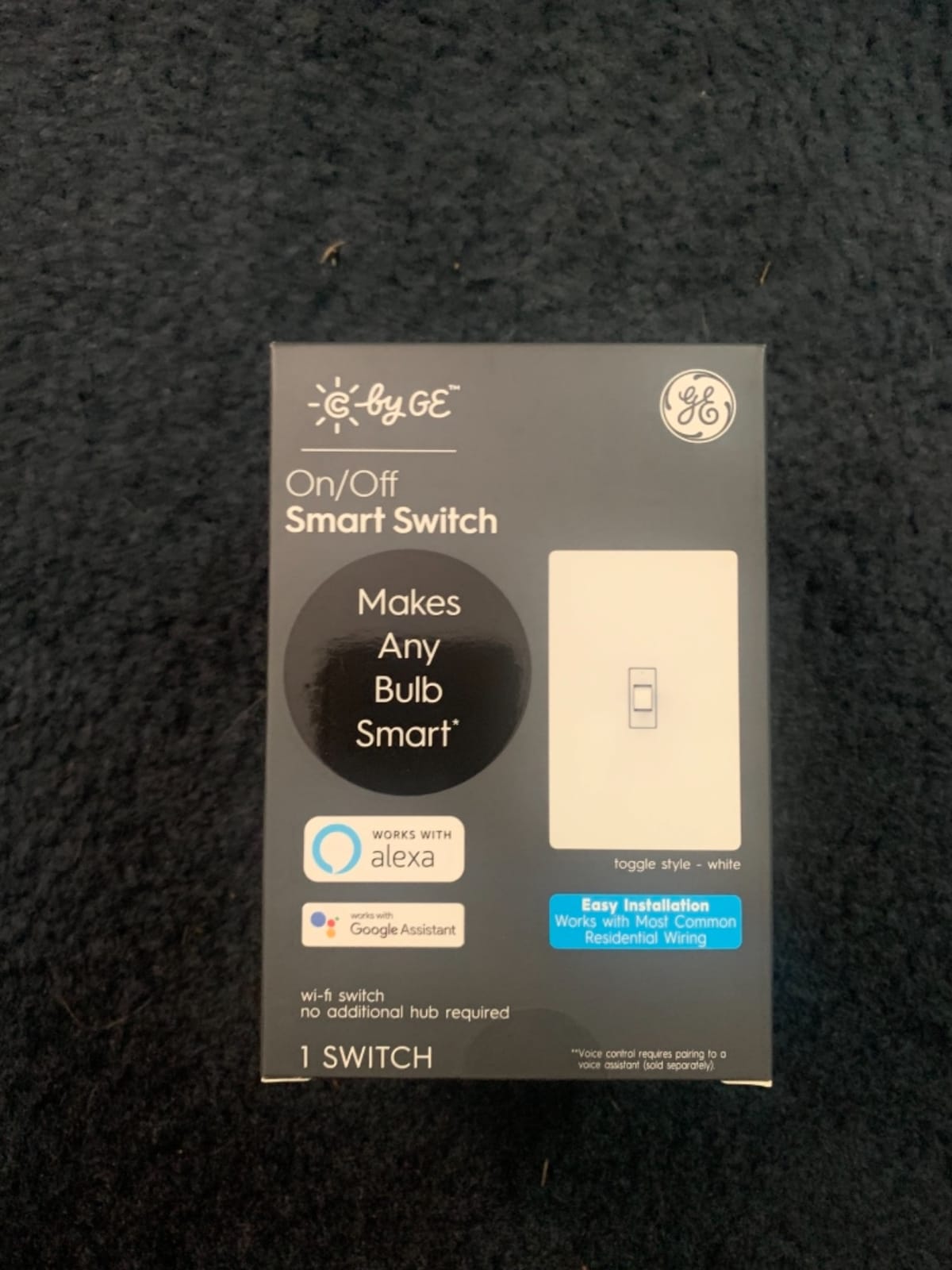
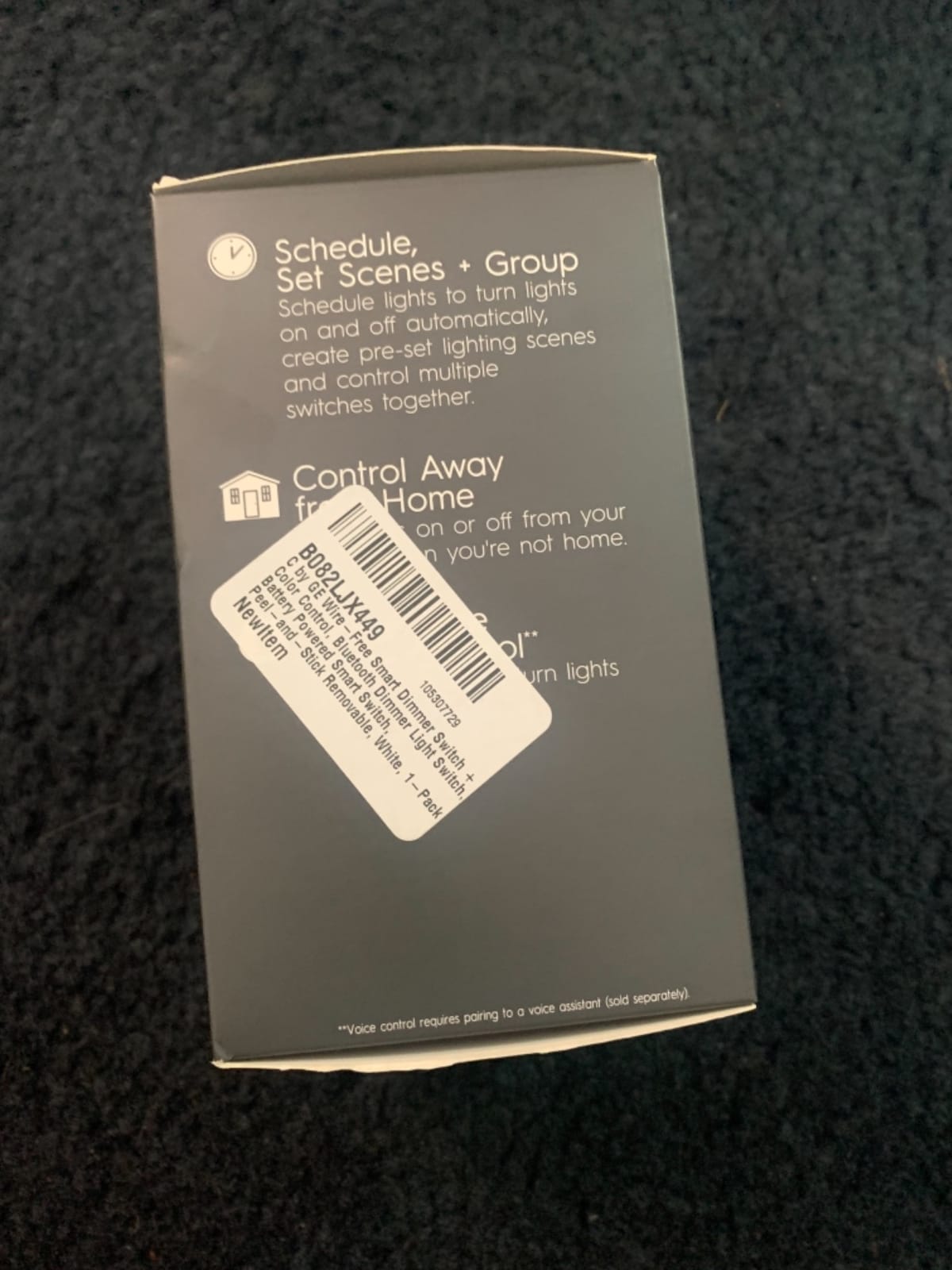
It pairs over Bluetooth with the Cync range and can act as a 3-way companion, so you can control the same circuit from two locations without any wiring at either one. Control runs through the Cync app for grouping and scene control. The package includes the switch and a white colour controller.
Where it genuinely earns its place
Add-on controls. If you already have a Cync smart dimmer in the ceiling and want control at the bedside, this is the cleanest way to do it. Zero wiring, no neutral wire question, no electrician, and no wall plate to fit.
It is also the honest answer for anyone who asked whether they even need a switch. In r/homeautomation discussions, a recurring theme is that enthusiasts reach for plug-in dimmers and wireless remotes precisely to avoid rewiring, and this is the in-wall-adjacent version of that idea.
Why it is not a general recommendation
It only works inside the Cync ecosystem. The Cync brand has been repositioned under Savant, and if you are starting a system from zero, betting on it is a gamble on a brand whose direction has already changed once.
It also cannot dim a circuit on its own. It needs a compatible Cync smart dimmer or smart bulb upstream before it does anything. If you do not already own Cync hardware, this is not the product you want.
9. Tapo Matter Smart 3-Way Dimmer Kit S515D – Tracks Energy Use
Tapo Matter Smart 3-Way Dimmer Switch Kit, S515D KIT
600W load
15A current rating
3-way Matter kit
Energy monitoring
Neutral wire at both boxes
Pros
- Matter certified 3-way kit that dims from two locations
- Full 0 to 100 percent dimming at both switches
- Energy monitoring tracks usage of connected lights
- Fade on and fade off plus Deterr Burglars Away Mode
- Works with major voice assistants plus IFTTT and SmartThings
Cons
- Neutral wiring required at both switch boxes
- 2.4GHz Wi-Fi required for initial setup
- Two-plate kit takes more box space than a single-pole dimmer
This is the 3-way kit to buy if you want to see what the lighting actually costs to run. Energy monitoring reports usage of the connected lights, which turns a hallway or a downstairs into a measurable circuit rather than a guess.
It is also the highest capacity kit here, rated 600 watts on a 15 amp rating. That headroom matters in older homes with incandescent fixtures or with many LED lamps on one circuit.
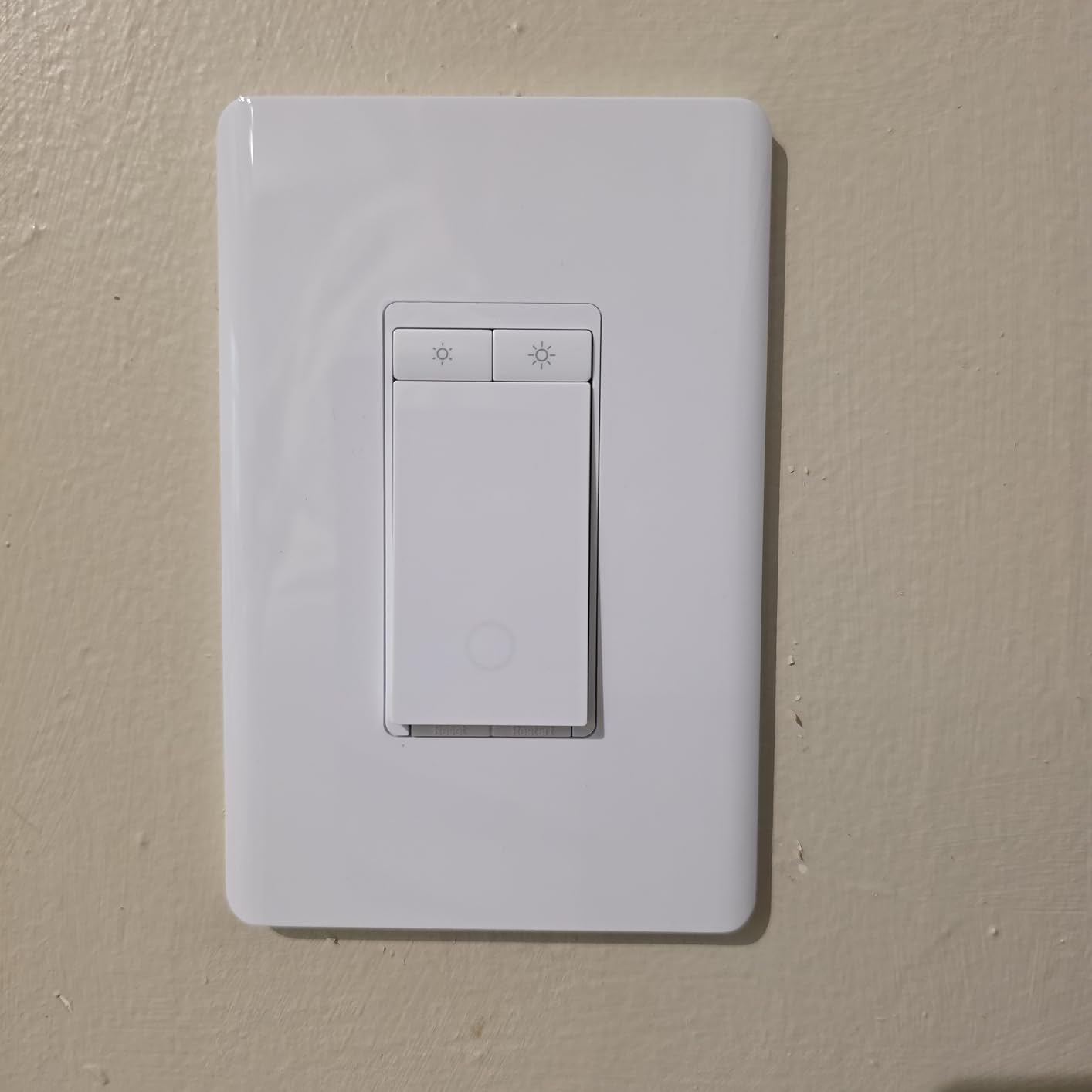
Dimming runs the full 0 to 100 percent range at both switch locations, so a stairway can be turned down at the bottom and up at the top. Fade on and fade off and Deterr Burglars Away Mode are both built in, and the schedule options let you set on, off and dimmed states independently.
It is Matter certified and works with Alexa, Siri, Google Assistant, IFTTT and Samsung SmartThings. The connectivity is listed as Matter over Wi-Fi, and initial setup needs a 2.4 GHz network. The package includes the main switch, a satellite dimmer, two wall plates, five wire nuts and wire labels.
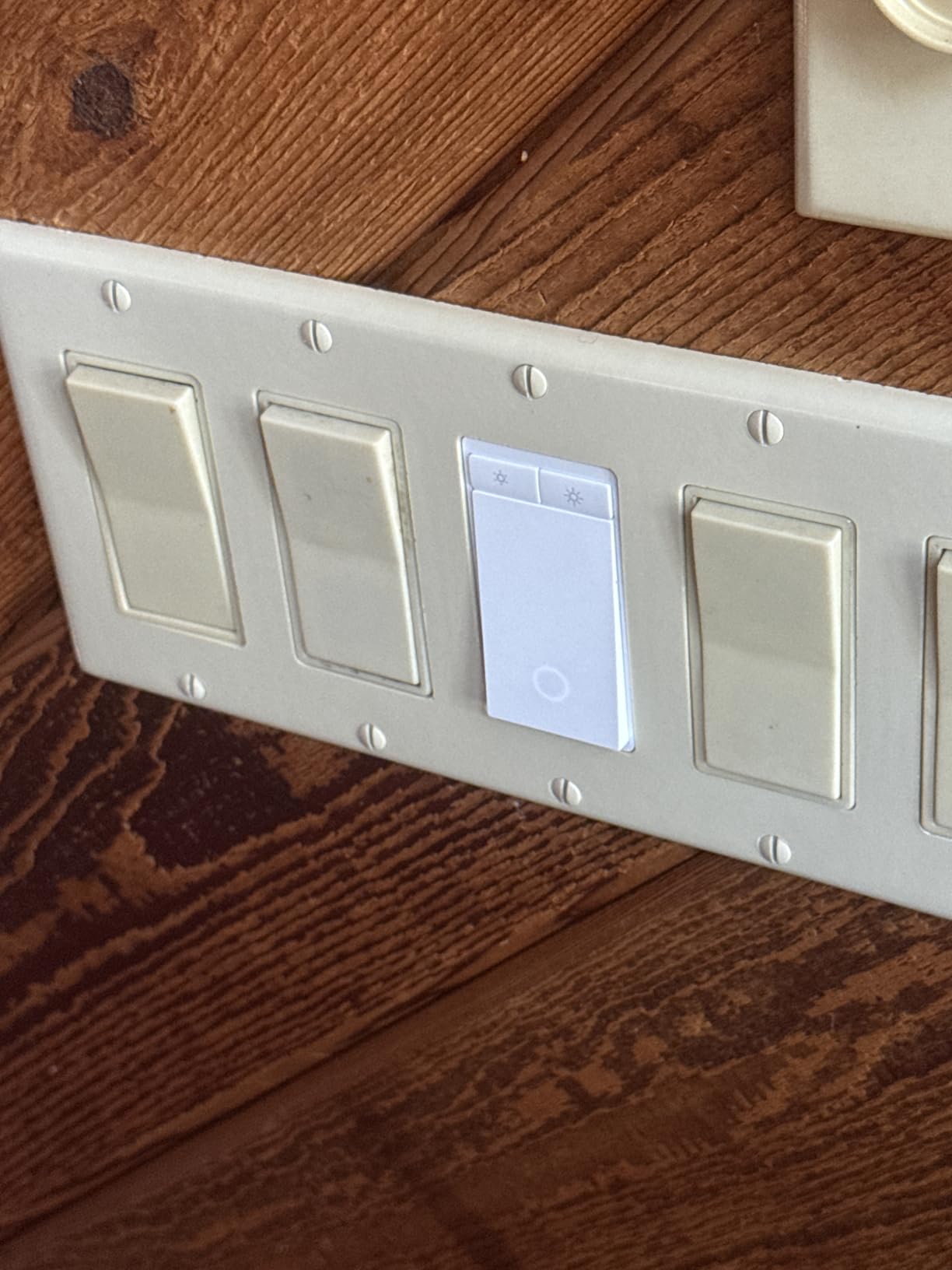
When energy monitoring earns its keep
It is the feature that changes behaviour. If you can see that one room accounts for a meaningful share of consumption, the case for switching to dimmable LED, lowering default brightness and running evening scenes writes itself. For a whole-home retrofit with several circuits, that data compounds quickly.
It is also the pick for anyone already committed to Matter who has a 3-way circuit, because it is the only 3-way kit here with both Matter certification and energy reporting.
Requirements to plan around
Neutral wiring is required at both switch boxes, which is the most common reason a 3-way kit gets returned. The 2.4 GHz network is needed for initial setup even though control is standards-based afterwards.
The two-plate format needs more box space than a single-pole dimmer. In shallow boxes, plan for a deeper box or a faceplate that stands proud of the wall.
10. TREATLIFE 3-Way Smart Dimmer Switch 2-Pack – Two Masters
TREATLIFE 3 Way Smart Dimmer Switch 2 Pack, 2 Master 3 Way Dimmable Light Switches, 2.4GHz WiFi Smart Switch Compatible with Alexa and Google Home, Neutral Wire Needed, No Hub Required
150W LED and 400W total
3.3A current rating
3-way master
2.4GHz Wi-Fi
Neutral wire required
Pros
- Two master switches in one pack that also work independently
- 1 to 100 percent brightness with quiet touch sliding
- Remembers the last brightness level after power returns
- No hub needed for the major voice assistants
- App schedules with preset brightness levels
- Flame-retardant housing with overheat protection
Cons
- Only one smart dimmer is needed per 3-way circuit
- Neutral wire required and often missing in pre-1980s homes
- 2.4GHz Wi-Fi only
- Works only with dimmable bulbs
- No Apple HomeKit support
The idea here is a master dimmer that does not need a companion switch. You replace one switch on the 3-way circuit with the smart dimmer and leave the other one as an ordinary mechanical switch. The smart dimmer is the only device that needs power and wiring.
Because you get two in the pack, you can also use one as a single smart dimmer in a second room, which is why owners value the two-pack format. The 1 to 100 percent touch sliding is quiet, with no clicking noise as it adjusts, and the switch restores your last brightness level when power returns.
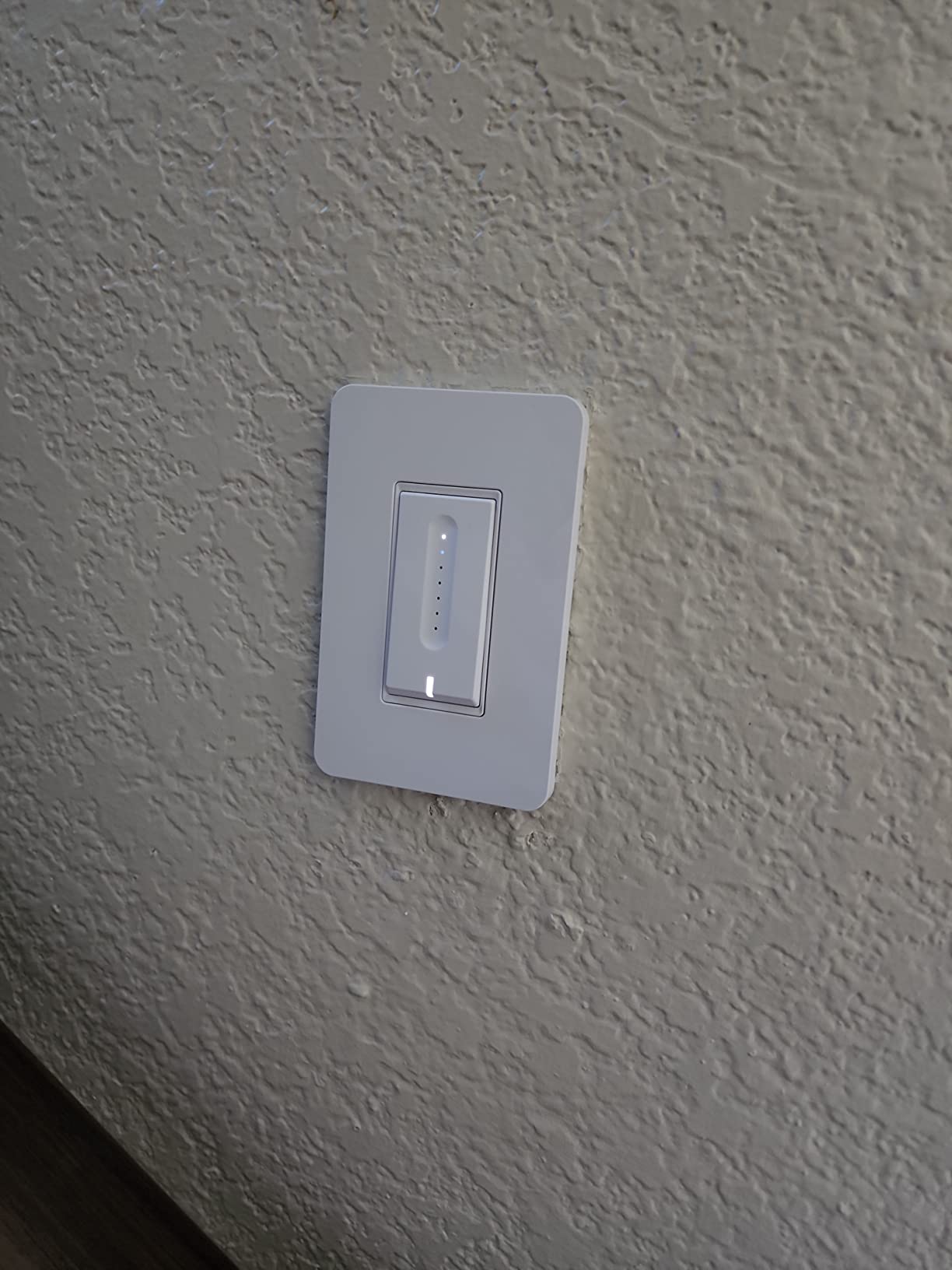
Load ratings are 400 watts total, with LED and CFL up to 150 watts and incandescent up to 400 watts, on a 3.3 amp rating. It works with the major voice assistants over 2.4 GHz Wi-Fi with no hub, and the app handles schedules set to preset brightness levels.
The housing is flame-retardant with built-in overheat protection, and it is FCC certified with a 2-year warranty. Both switches, two wallplates, wire nuts, screws and a manual are in the box.
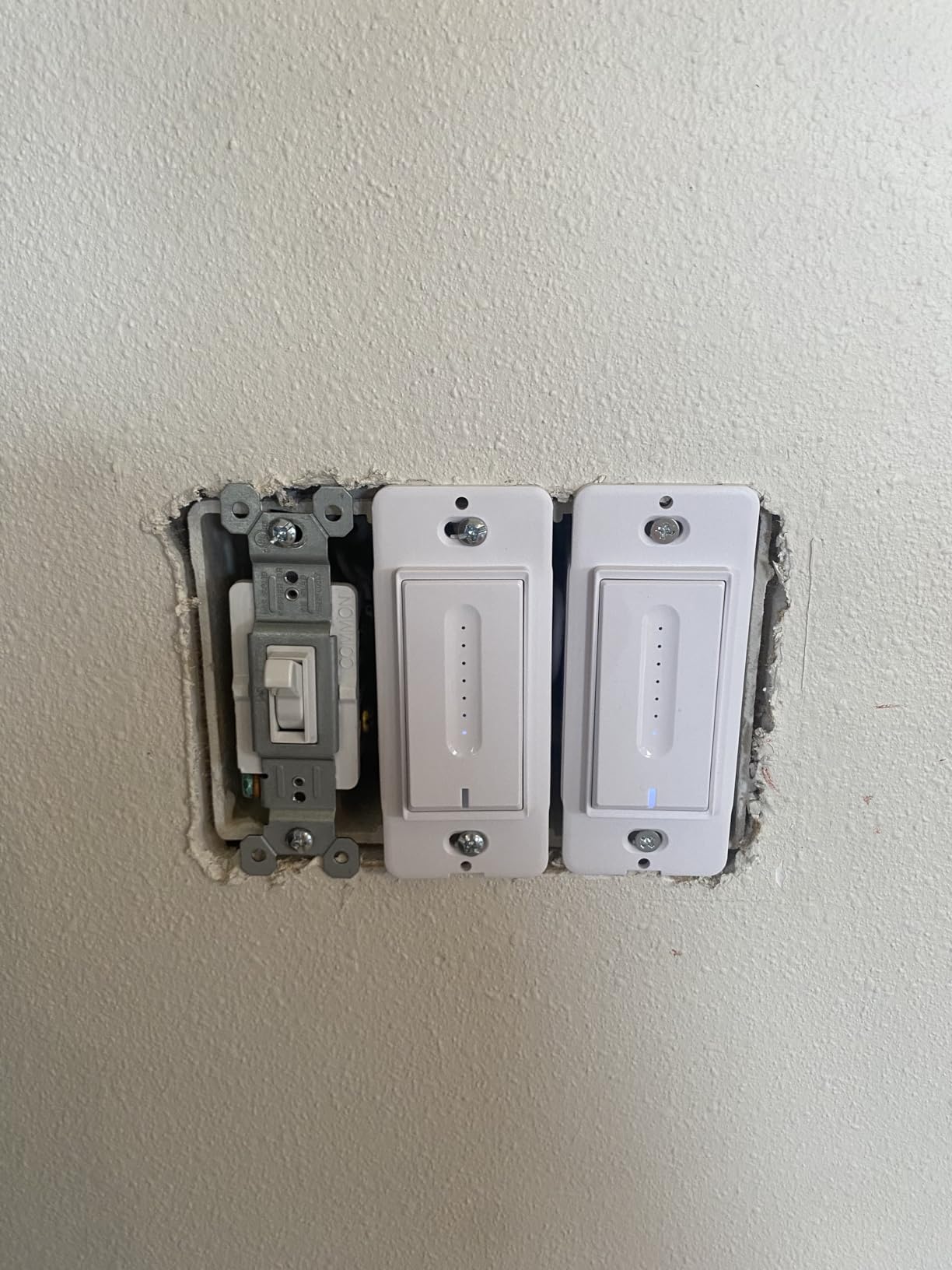
When one master is enough
If you have a three-way circuit and only care about dimming from one location, this is cheaper and simpler than a matched kit. The second location keeps a plain switch, which some people prefer anyway because the smart dimmer is the only thing that can be scheduled.
It is also the easier 3-way install. With a master dimmer you are not matching traveller wires between two smart devices, which is where most self-installed 3-way kits go wrong.
Where the rating tells you something
At 4.1 this carries the joint-lowest average rating in the group, and the pattern in the reviews is consistent: people are happy with the touch dimming and the flexibility, and less happy about the constraints. Neutral wire required, 2.4 GHz only, dimmable bulbs only and no Apple HomeKit.
If your home was built before the 1980s and has no neutral wire, the Lutron Caseta in position two is the realistic option instead.
11. Leviton Decora Smart Dimmer D26HD – Big-Brand Build Quality
Leviton Decora Smart Dimmer Switch, Wi-Fi 2nd Gen, Neutral Wire Required, Works with Matter, Alexa, Google Assistant, Apple Home/Siri, Wired or Wireless 3-Way, D26HD-1RW, White
600W load
15A current rating
Wired or wireless 3-way
Matter via firmware update
Neutral wire required
Pros
- Smooth dimming with no flicker or hum
- Adjustable maximum brightness for finicky LED bulbs
- Customizable fade rates plus preset levels and My Leviton Night Settings
- Broad ecosystem support with Apple Home and the major voice assistants
- App shows two-way switch status plus scenes and room grouping
Cons
- Neutral wire required
- Minimum load of about 25W so very low-draw LED circuits can flicker
- Bright and dim use a separate side button rather than hold to dim
- Matter setup in Home Assistant takes a multi-step pairing and reset
- Some difficulty pairing with a standard mechanical 3-way switch
Leviton is the brand electricians reach for, and the Decora form factor is the installer standard in North American residential work. If you are doing a multi-switch retrofit, matching existing plates and avoiding a wall plate that looks foreign matters more than most buyers expect.
The dimming engineering is the reason it holds a 4.6 rating. Owners report smooth dimming with no flicker and no hum, and an adjustable maximum brightness setting that compensates for LED bulbs which look dim at full output. My Leviton Night Settings applies softer lighting automatically at night, and you can customise fade rates and store preset light levels.
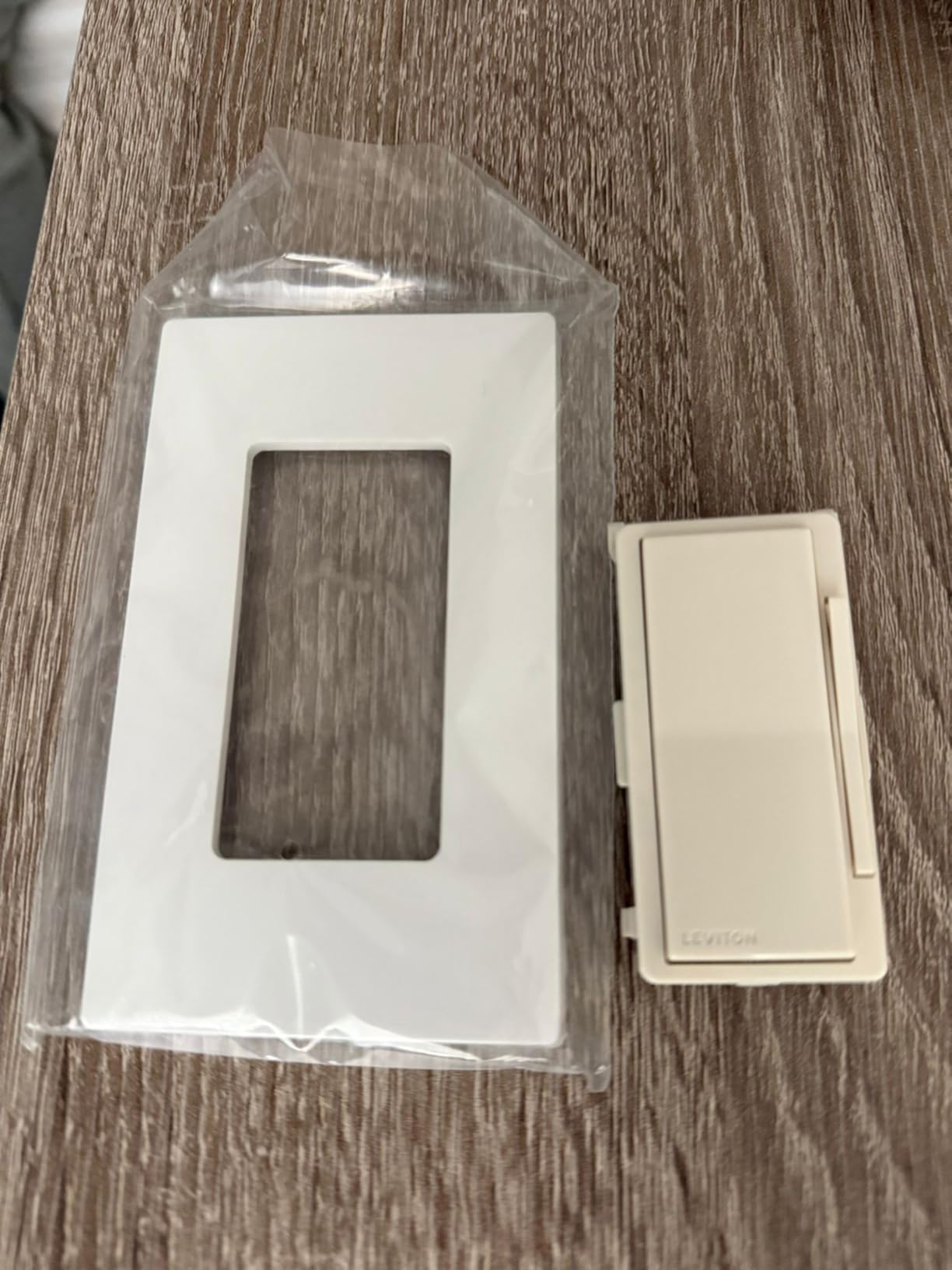
Load handling is 600 watts on a 15 amp rating, which puts it among the higher capacities in the roundup alongside the Tapo S515D. It supports wired or wireless 3-way configurations, and the app displays two-way switch status, scenes and room grouping, so you can see what the far switch is doing.
Ecosystem support is the widest here: Alexa, Google Assistant, Apple Home, SmartThings, Sonos and Resideo, with Matter arriving through a firmware update rather than being present from day one. Owners also report a year or more of reliable use across many switches in the same house.
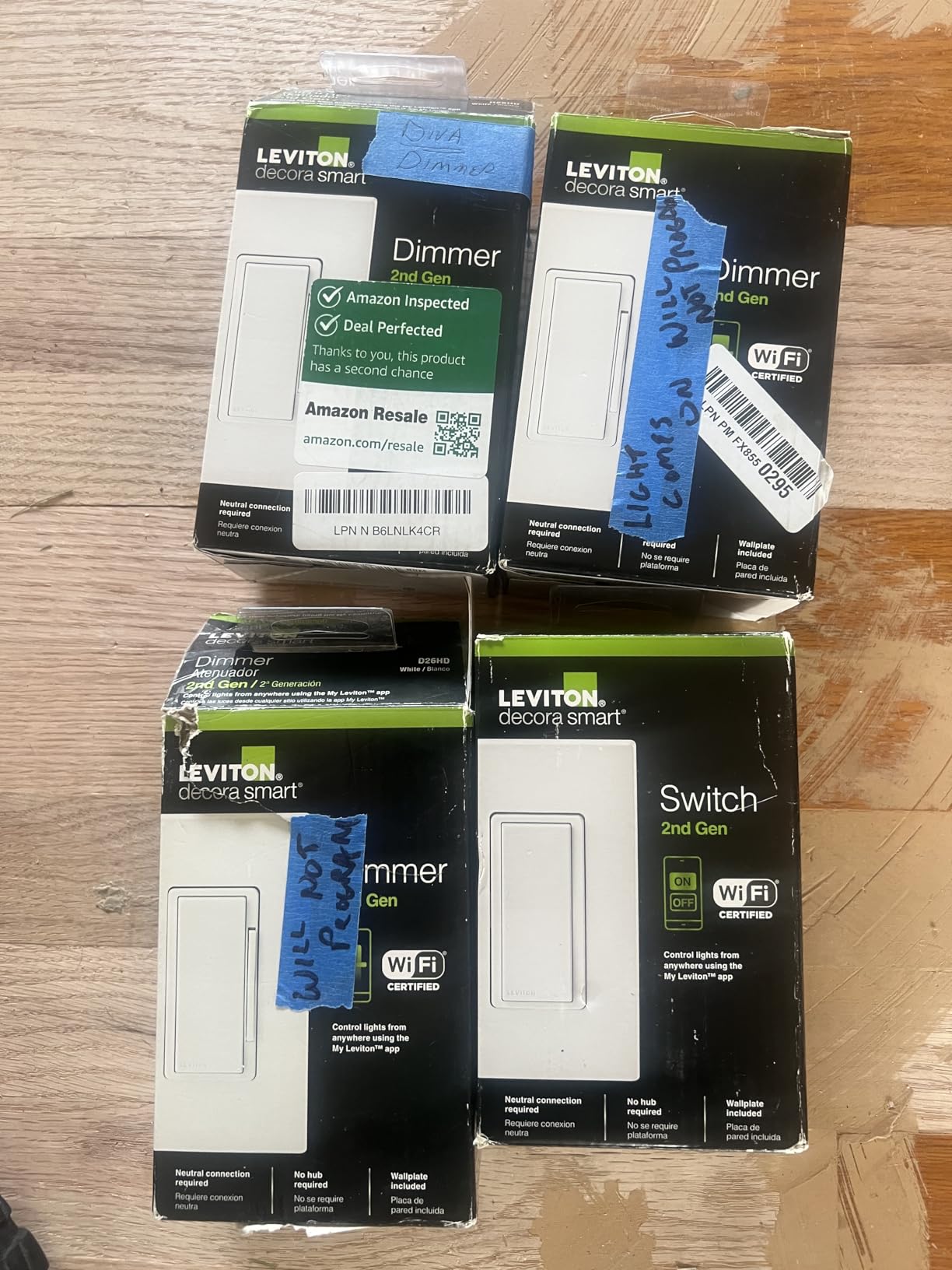
Before you install the D26HD
Check the minimum load. This switch needs roughly 25 watts of connected load, so a single modern LED lamp or a long run of low-wattage bulbs can fall below the threshold and flicker. Either add lamps or accept the flicker, because no amount of app configuration will change the physics.
Check your 3-way pairing plan. The wireless 3-way option needs Leviton-compatible companions, and some owners report difficulty pairing with a standard mechanical 3-way switch. If your existing second switch is an old toggle, budget for a replacement or pick a different kit.
Where the app and the ecosystem fall short
Matter is a firmware update rather than a native feature, and in Home Assistant the pairing process is a multi-step sequence involving a reset. That friction is real for anyone who wants local control, and it is the main reason a Matter-native model like the Tapo S505D might suit you better.
Bright and dim are on a separate side button rather than a hold gesture, which is a matter of taste and habit rather than quality. With 310 reviews, the support base is smaller than the Kasa or the TREATLIFE, so check reviews for your specific bulb type.
12. Shelly Plus Wall Dimmer – Local Control Enthusiasts
Shelly Plus Wall Dimmer UL | WiFi Smart Wall Dimmer Switch | Home Automation | Bluetooth Gateway | Compatible with Alexa, Home Assistant & Google | No Hub | Timer Schedule | Dimmable Lights
1A current rating
1920W maximum load
Wi-Fi plus Bluetooth gateway
UL listed
RPC over MQTT, HTTP and UDP
Pros
- Works standalone over Wi-Fi with no hub
- Intuitive touch slider in a UL-certified body
- Doubles as a Wi-Fi repeater and Bluetooth gateway for nearby devices
- Timer controller with staged dim-down and a Night Mode level
- RPC over MQTT and HTTP for Home Assistant integration
- Three-year device warranty
Cons
- Setup is more technical than consumer app-based dimmers
- 1A current rating is lower than most in-wall residential dimmers
- Alexa and Google Assistant support is narrower than the native Shelly app
- Among the lowest average ratings in this group
This is the pick for someone who runs their own automation stack. The Shelly Plus Wall Dimmer is UL listed, works standalone over 2.4 GHz Wi-Fi with no hub at all, and it exposes RPC control over MQTT, HTTP and UDP, which means Home Assistant and other platforms can drive it locally rather than through a cloud round trip.
Local control is the real differentiator. When your hub, your voice assistant and your dimmer all talk on your own network, response time drops and the system keeps working when your internet does not. The unit also doubles as a Wi-Fi repeater and a Bluetooth gateway for other devices, so it can extend a weak signal in a large house.
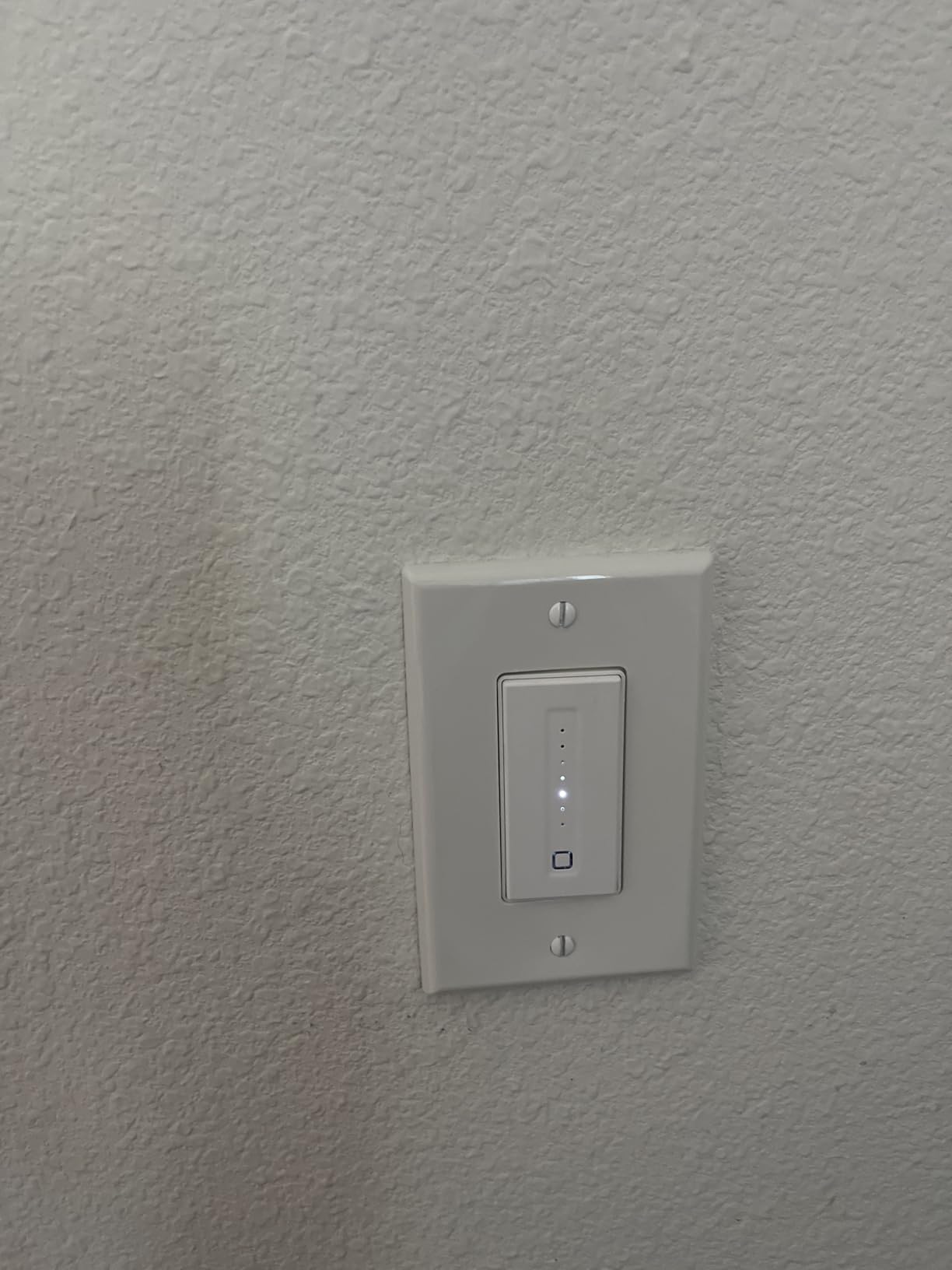
Dimming uses an intuitive touch slider, and the timer controller supports multi-stage dim-down before switch-off plus a Night Mode brightness setting. The body measures 4.72 by 2.76 by 1.5 inches with screw terminals and stainless steel contacts, and the manufacturer warranty is three years, the longest we saw.
Why automation users choose it
Because it can be used standalone, as an accessory to a home automation controller, or inside another automation system. That flexibility means you can deploy it before your controller arrives and it will still work. Owners consistently highlight the MQTT and RPC integration and the built-in Bluetooth gateway as the reasons to buy it.
Home Assistant users in particular report that local control is the whole point, and the Shelly Smart Control app handles remote control, notifications and scenes when you want a simpler interface.
Why the general buyer should look elsewhere
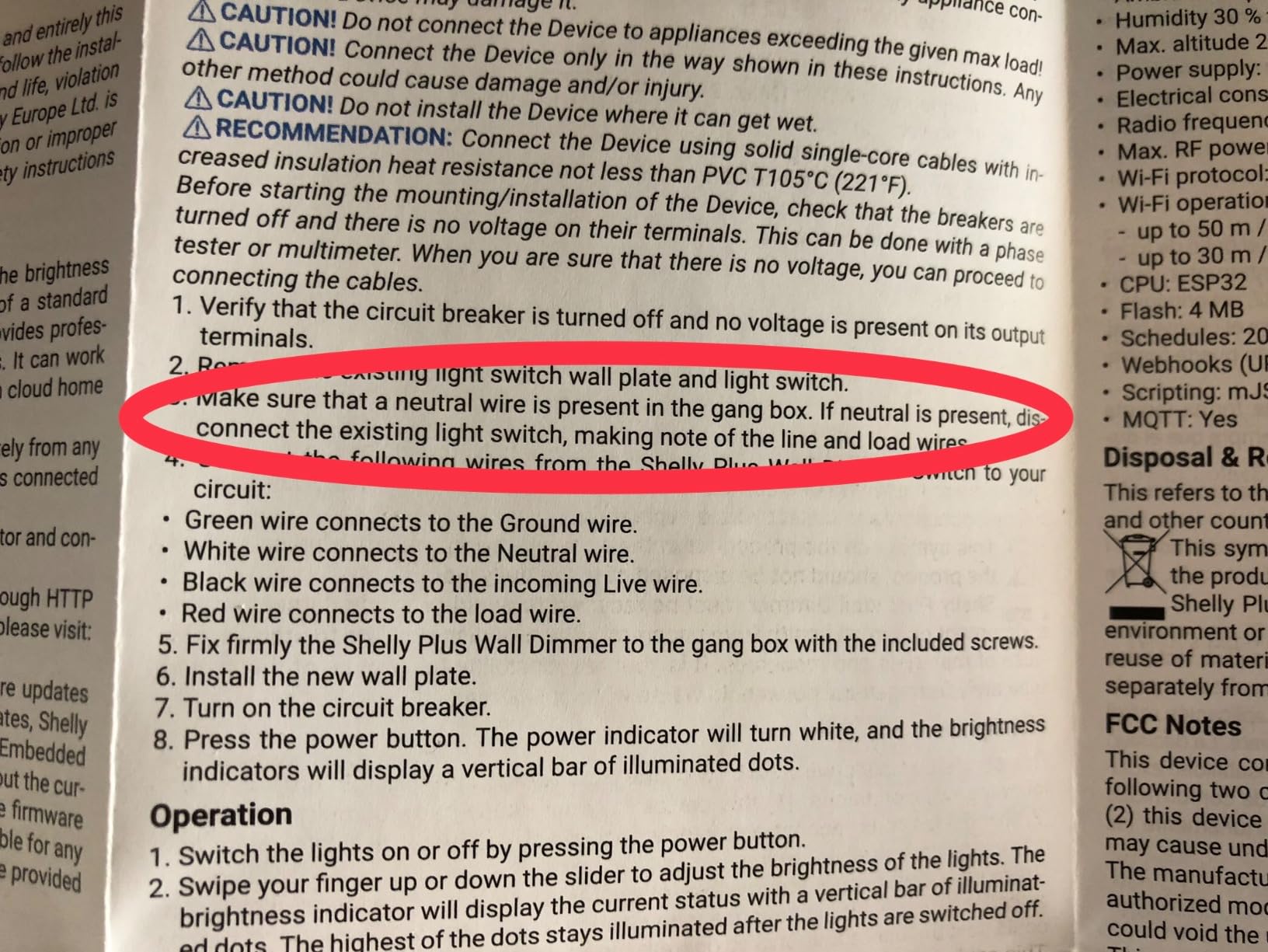
Setup is more technical than a consumer app dimmer. There is no guided wiring flow in the way the Kasa or Tapo apps provide, so expect to read documentation rather than swipe through steps.
The 1 amp current rating is the concern. That is lower than most in-wall residential dimmers here, and while the maximum load is listed at 1920 watts, the amperage is the figure that governs real-world LED and incandescent loads. Voice assistant support is also narrower than the native Shelly app, and with 142 reviews it has the thinnest support base in the roundup.
How to Choose a Smart Dimmer Switch
Step one: test for a neutral wire
This is the single question that eliminates the most products, and it is worth doing before you buy anything. Turn off the breaker for that circuit at the panel and confirm the power is dead with a tester. Remove the wall plate, then loosen the switch and pull it forward gently.
Look for a white or grey wire. That is the neutral, and it carries current back to the panel continuously, which is what keeps the switch’s electronics powered and reachable. You will normally see it bundled with the black wires going to the fixture. If there is no white or grey wire at all, your box is pre-1980s in style, and only the Lutron Caseta in this roundup installs without one.
Do not substitute a ground wire. The bare copper or green wire is not a neutral, and connecting a smart switch to it is unsafe.
Step two: work out your switch type
Single-pole means one switch controls the light. A 3-way circuit has two switches, usually at the ends of a hallway or at the top and bottom of a stairway, and you will see two black or red wires at each box plus a neutral. A 4-way circuit has three or more switches and appears between two 3-way switches; a switch with three traveller wires at one location is a 4-way point.
Count the wires before you shop. Single-pole switches here are the HS220, the TREATLIFE DS01, the Amazon Basics, the Tapo S505D, the ELEGRP DTR10 and the Shelly. For 3-way, look at the Kasa KS230 kit, the Tapo S515D kit or the TREATLIFE master pack. The Lutron Caseta handles 3-way through a Pico remote instead of a companion switch, and the Leviton supports wired or wireless 3-way.
Step three: choose a protocol
Wi-Fi on 2.4 GHz is the simplest option and needs no hub, but every device on it competes for the same radio band and it is the protocol that dies first when your router changes. Bluetooth Mesh is similar in setup but needs a phone nearby for initial configuration. Matter is the standards-based option, certified through the Connectivity Standards Alliance, and it lets one device join Alexa, Apple Home, Google Home and SmartThings without a hub. Thread is the low-power mesh layer that usually carries Matter and needs a border router.
Zigbee and Z-Wave need a hub, and in exchange they give a stable mesh network, long battery life on sensors and local control. Z-Wave 800 series devices operate on a sub-GHz frequency that travels further through walls. Lutron uses its own proprietary protocol through the Smart Hub, which is fast and reliable but closed. Pick based on what you already run, and if you run nothing, pick Matter or Wi-Fi.
Whichever you pick, make sure your router actually runs a 2.4 GHz network. It is the most common reason a Wi-Fi dimmer fails to pair, and it takes thirty seconds to check.
Step four: check the load and the bulbs
Add up the wattage of every bulb on the circuit and compare it to the switch’s rating. Most of these switches are rated between 150 and 300 watts of LED, with incandescent limits from 400 to 600 watts. A kitchen pendant with eight lamps will exhaust a 150 watt rating quickly.
Your bulbs must be dimmable. A smart dimmer dims ordinary dimmable bulbs, and the ones here all say so explicitly. Low-voltage magnetic and electronic transformers add their own compatibility questions, and if you are not sure what you have, ask an electrician.
Step five: consider the box and the wall plate
Deep dimming electronics need room. TREATLIFE lists a fit down to 2.75 by 1.69 by 1.61 inch boxes, while the Kasa HS220 and the 3-way kits are noticeably bulkier. Measure the depth of your existing box and the free space behind the device before you buy.
Matching plates also matter. Lutron sells its coordinating wall plate separately, and the Decora form factor is worth choosing precisely because plates are easy to find. A smart switch in the wrong plate is the most visible mistake in an otherwise tidy installation.
When to stop and call an electrician
Hire a licensed electrician for a new circuit, aluminium wiring, any work involving a 4-way circuit you have not mapped, a panel change, or anything that feels uncertain once the box is open. Switch replacement on a live single-pole circuit with a verified dead circuit is reasonable DIY work. Anything beyond that is not a place to save money, particularly with mains wiring.
If you are renting, or you simply do not want to open a box, start with the GE CYNC wireless controller in position eight. It is the one product in this roundup that requires no wiring at all.
LED Flicker and Minimum Load Troubleshooting
LED flicker is the most common complaint about every dimmer in this roundup, and it is also the most fixable. In the order you should try fixes:
Raise the minimum dim level. Almost every app here exposes a minimum brightness or low-end calibration setting. Tapo, Kasa, ELEGRP and Leviton all offer it, and this single setting resolves the majority of flicker complaints because it keeps the bulb above the point where its driver cuts out.
Check you are below the minimum load. The Leviton D26HD needs roughly 25 watts of connected load. A single 8 watt LED lamp falls under that and will flicker. Add lamps to the fixture, or use a dimmer with a low minimum load.
Change the bulb. Cheap non-dimmable or poorly made dimmable LEDs flicker more than anything else. Replacing a suspect bulb is faster than replacing a switch.
Adjust maximum brightness. Some LED bulbs never reach full output on a dimmer. Leviton and Lutron both let you trim the top end so the dimmer compensates.
Rule out a dead zone. If the bulb does not light until you push the slider past a quarter turn, the curve is too steep at the bottom. The Lutron Caseta is the strongest pick here for this, because its minimum and maximum dim levels are both adjustable and it is the model most often recommended specifically for LED behaviour.
Check for audible buzz. A faint buzz at low levels is usually the bulb’s driver, not the switch. It is more common with low-wattage LED loads and does not indicate a fault.
Forum discussion in r/homeautomation and Home Assistant groups consistently puts flicker at the top of the complaint list and points the same direction: branded dimmers with adjustable low-end settings handle awkward LEDs far better than the cheapest direct-Wi-Fi models, which is why the Tapo, Kasa and Leviton picks sit where they do.
Smart Dimmer Switches vs Smart Bulbs
Do smart lights work with dimmer switches? It depends on which smart light you mean. Ordinary dimmable bulbs pair with a smart dimmer and give you the full range of control. Smart bulbs with their own radio are a different story, and mixing the two creates the problem that generates most of the confusion in this category.
Smart bulb alone: you get app and voice control, brightness control, and colour control if the bulb supports it. What you do not get is a working wall switch. A conventional toggle cuts power to the bulb and it becomes an ordinary bulb, and anyone who hits that switch has silently broken your automation. This is the failure that shows up constantly in smart home forums, and it is the single strongest argument for a dimmer switch.
Smart bulb plus a conventional dimmer: workable but conditional. The bulb must be explicitly rated for wall dimming, and the switch must be a leading-edge dimmer rather than a smart one that cuts power. Many smart bulbs also ignore the mechanical dimmer and only respond through their own app.
Smart dimmer switch plus ordinary dimmable bulbs: this is the combination we recommend. You get reliable dimming, the wall switch keeps working for everyone, and the automation runs off the switch rather than the bulb. It is also the most flexible, because swapping a bulb does not break your setup.
There is a fourth option worth knowing. Some people keep Philips Hue or LIFX bulbs and add a dedicated bulb dimmer that restores full voltage at the off position, so the wall switch leaves the bulbs powered and reachable. That is a specific product category, not a general rule, and it adds hardware to every switch in the path. If you already own a lot of smart bulbs, research that route before you rewire; if you are starting fresh, ordinary dimmable bulbs and a smart dimmer switch is the simpler answer.
One decision rule covers most people: a smart bulb for a single fixture, a smart dimmer switch for anything controlled from more than one location or more than one app.
Frequently Asked Questions
Is there a smart dimmable light switch available?
Yes. In-wall smart dimmer switches with Wi-Fi, Matter, Bluetooth or proprietary radios are widely available and replace a standard single-pole switch. They dim ordinary dimmable bulbs from an app, a voice assistant, a schedule or a touch slider, and they need a neutral wire unless you choose a no-neutral model such as the Lutron Caseta.
Is there a Wi-Fi light switch that has a dimmer feature?
Most entry-level smart dimmers are Wi-Fi only and need no hub. In this roundup the Kasa HS220, the TREATLIFE DS01, the Amazon Basics dimmer, the Tapo S505D, the ELEGRP DTR10 and the Shelly Plus Wall Dimmer all connect over 2.4 GHz Wi-Fi. They pair with the Kasa, Tapo, Smart Life or Shelly app and support Alexa or Google Assistant, with Apple HomeKit available through Matter models such as the Tapo S505D.
Do smart lights work with dimmer switches?
Ordinary dimmable bulbs work perfectly with a smart dimmer switch, and that is the combination we recommend. Smart bulbs with their own radio are trickier, because a conventional wall switch cuts their power and disables their automation, and many smart bulbs ignore mechanical dimmers. If you already own Hue or LIFX bulbs, look into a bulb dimmer that restores full voltage at the off position.
Do smart dimmer switches need a neutral wire?
Most do, because the switch electronics need continuous power to stay connected to your network. In this roundup only the Lutron Caseta installs without a neutral wire. To check, turn off the breaker, remove the wall plate and look for a white or grey wire alongside the black fixture wires. If there is no neutral, you are looking at pre-1980s wiring and your realistic option is the Lutron or a wireless controller that needs no wiring at all.
What is the best 3-way smart dimmer switch?
For genuine dimming at both locations, the Tapo Matter S515D kit and the Kasa KS230 kit are the strongest choices, and both need a neutral wire at both switch boxes. If you only need one smart location, the TREATLIFE 3-way master pack works with the second switch staying a plain mechanical switch. Lutron Caseta handles multi-location control with a wireless Pico remote instead of a companion switch.
Why does my LED bulb flicker with a dimmer switch?
Almost always one of three causes. First, the circuit is below the switch minimum load, which on the Leviton D26HD is roughly 25 watts. Second, the bulb is a cheap or poorly made dimmable LED. Third, the dimming curve is set too steep at the bottom. The fix in most cases is to raise the minimum dim level in the app, which Tapo, Kasa, ELEGRP and Leviton all expose.
The Verdict: Which Smart Dimmer Switch Wins in 2026
The Kasa Smart Dimmer Switch HS220 is our pick for the best smart light switch for dimmable lights because it is the only one in this roundup that is unremarkable in the right ways: smooth dimming across mixed LEDs, a calibration slider for the low end, a large support base, and no hub to buy. If your box has a neutral wire, start there.
Move to the Tapo S505D when you want Apple HomeKit or plan to change ecosystem later, since Matter certification makes the switch portable. Move to the Lutron Caseta when there is no neutral wire, and accept the hub and the separately sold wall plate as the cost of that.
For hallways and stairways, the Kasa KS230 and Tapo S515D kits dim at both switches, with the Tapo adding energy monitoring. If you cannot rewire at all, the GE CYNC wireless controller is the only no-install option here, and it only works inside its own ecosystem.
Whichever you choose, buy dimmable bulbs, raise the minimum dim level on day one, and test the circuit before the wall plate goes back on. Those three steps prevent most of the disappointment people associate with smart dimmers. For the networking side of a hub-based setup, our guide to PoE switches covers the gear that keeps wired devices talking to each other.