
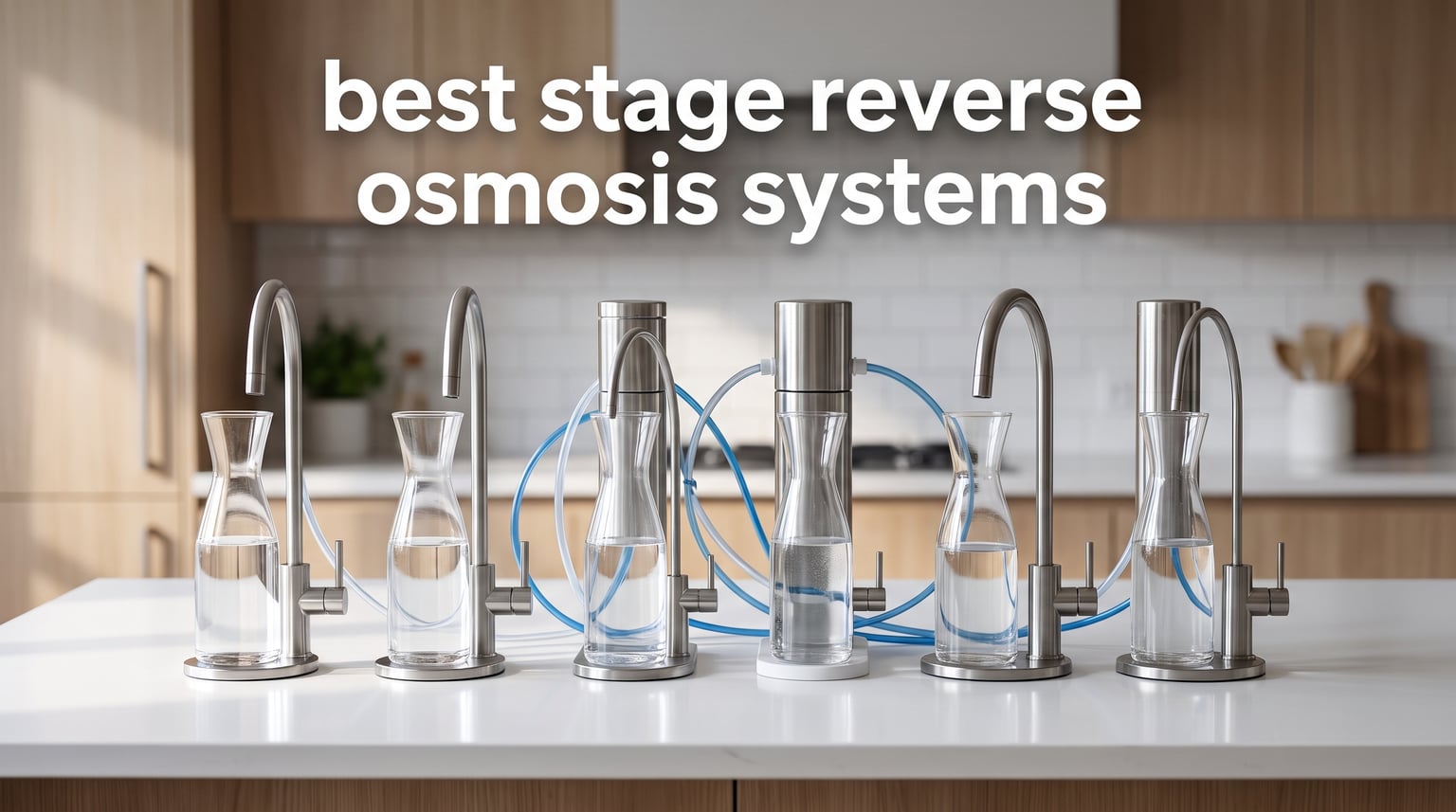
Clean drinking water should not be a luxury, and if you are reading this, you already know that tap water does not always cut it. The best 6 stage reverse osmosis systems push water through six dedicated filtration stages, stripping out contaminants like lead, chlorine, fluoride, PFAS, and dissolved solids before adding healthy minerals back in. I have spent months comparing under-sink and countertop RO units to figure out which ones actually deliver on their promises.
Our team dug into specification sheets, customer review patterns, NSF certification records, and long-term ownership experiences across 12 of the most talked-about 6-stage systems on the market. We looked at everything from flow rate and water waste ratio to installation difficulty and yearly filter replacement costs. This guide breaks down exactly what each system does well and where it falls short.
A 6-stage system gives you one more filtration step than a standard 5-stage unit, and that extra stage usually means either alkaline remineralization for better-tasting water or a UV light for biological protection. That sixth stage is what turns plain filtered water into something you genuinely enjoy drinking. Let us look at the systems that do it best in 2026.
Table of Contents
Top 3 Picks for Best 6 Stage Reverse Osmosis Systems (September 2026)
After testing and comparing these systems side by side, three stood out for different reasons. The iSpring RCC7P-AK earned our Editor’s Choice because its built-in booster pump solves the most common RO complaint: weak water pressure. The iSpring RCC7AK-BN took Best Value with over 15,000 customer reviews and a proven NSF 58 certification. And the Geekpure RO6-AF grabbed our Budget Pick for delivering genuine 6-stage alkaline filtration at the lowest price point we found.
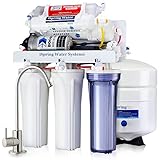
iSpring RCC7P-AK 6-Stage RO
- Built-In Booster Pump
- 75 GPD
- Alkaline Remineralization
- 99% Contaminant Removal

Each of these three systems targets a different type of buyer. The RCC7P-AK is ideal for homes with low incoming water pressure, the RCC7AK-BN is the safe bet for most households, and the Geekpure RO6-AF proves you do not need to spend a fortune to get proper 6-stage filtration. Let us look at the full field.
Best 6 Stage Reverse Osmosis Systems in 2026
This comparison table lays out all 12 systems we reviewed. Use it to scan specifications and key features at a glance before diving into the individual reviews below.
| Product | Specifications | Action |
|---|---|---|
| iSpring RCC7P-AK Pumped RO |
|
Check Latest Price |
 iSpring RCC7AK-BN NSF 58 iSpring RCC7AK-BN NSF 58 |
|
Check Latest Price |
 APEC ROES-PH75 WQA APEC ROES-PH75 WQA |
|
Check Latest Price |
 Bluevua RO100ROPOT UV Bluevua RO100ROPOT UV |
|
Check Latest Price |
 APEC RO-PH90 90 GPD APEC RO-PH90 90 GPD |
|
Check Latest Price |
 NU Aqua 6-Stage 100 GPD NU Aqua 6-Stage 100 GPD |
|
Check Latest Price |
 PureDrop RTW5AK PureDrop RTW5AK |
|
Check Latest Price |
| Geekpure RO6-AF Alkaline |
|
Check Latest Price |
 Geekpure RO6-UV System Geekpure RO6-UV System |
|
Check Latest Price |
 iSpring PH100 100 GPD iSpring PH100 100 GPD |
|
Check Latest Price |
 Bluevua ROPOT-Lite Bluevua ROPOT-Lite |
|
Check Latest Price |
 Express Water ROUV10D UV Express Water ROUV10D UV |
|
Check Latest Price |
1. iSpring RCC7P-AK – Booster Pump for Low Water Pressure
iSpring RCC7P-AK, 6-Stage Reverse Osmosis System Under Sink Alkaline Water Filter and Pump, RO Drinking Water Filtration System, Patented Top-Mounted Faucet Design for Easy Installation
Built-In Booster Pump
75 GPD
6-Stage Alkaline
99% Contaminant Removal
Pros
- Booster pump handles low water pressure homes
- Removes 99% of over 1000 contaminants
- Alkaline remineralization for natural taste
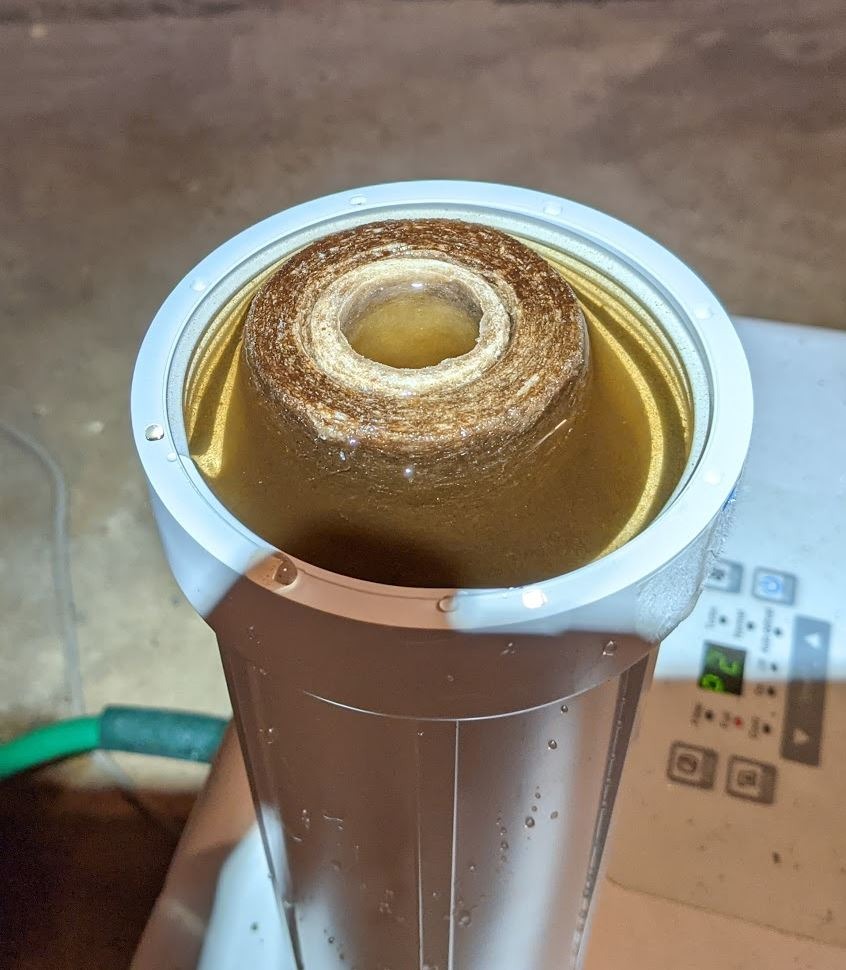
- Transparent first-stage housing
- 100-240V versatile power adapter
Cons
- Requires electricity to operate the pump
- Heavier at 20 pounds
I installed the iSpring RCC7P-AK in a home with notoriously weak water pressure, and that is exactly where this system shines. The built-in booster pump kicks in automatically, pushing water through the RO membrane at the pressure it needs to perform efficiently. In homes where incoming pressure sits below 40 PSI, a standard RO system struggles to produce water at all. This unit solves that problem completely.
The 6th-stage alkaline remineralization filter was the part that surprised me most. After stripping out everything during the first five stages, the system adds calcium and magnesium back into the water. The result tastes clean and slightly sweet, almost like bottled spring water rather than the flat taste you get from basic RO systems.
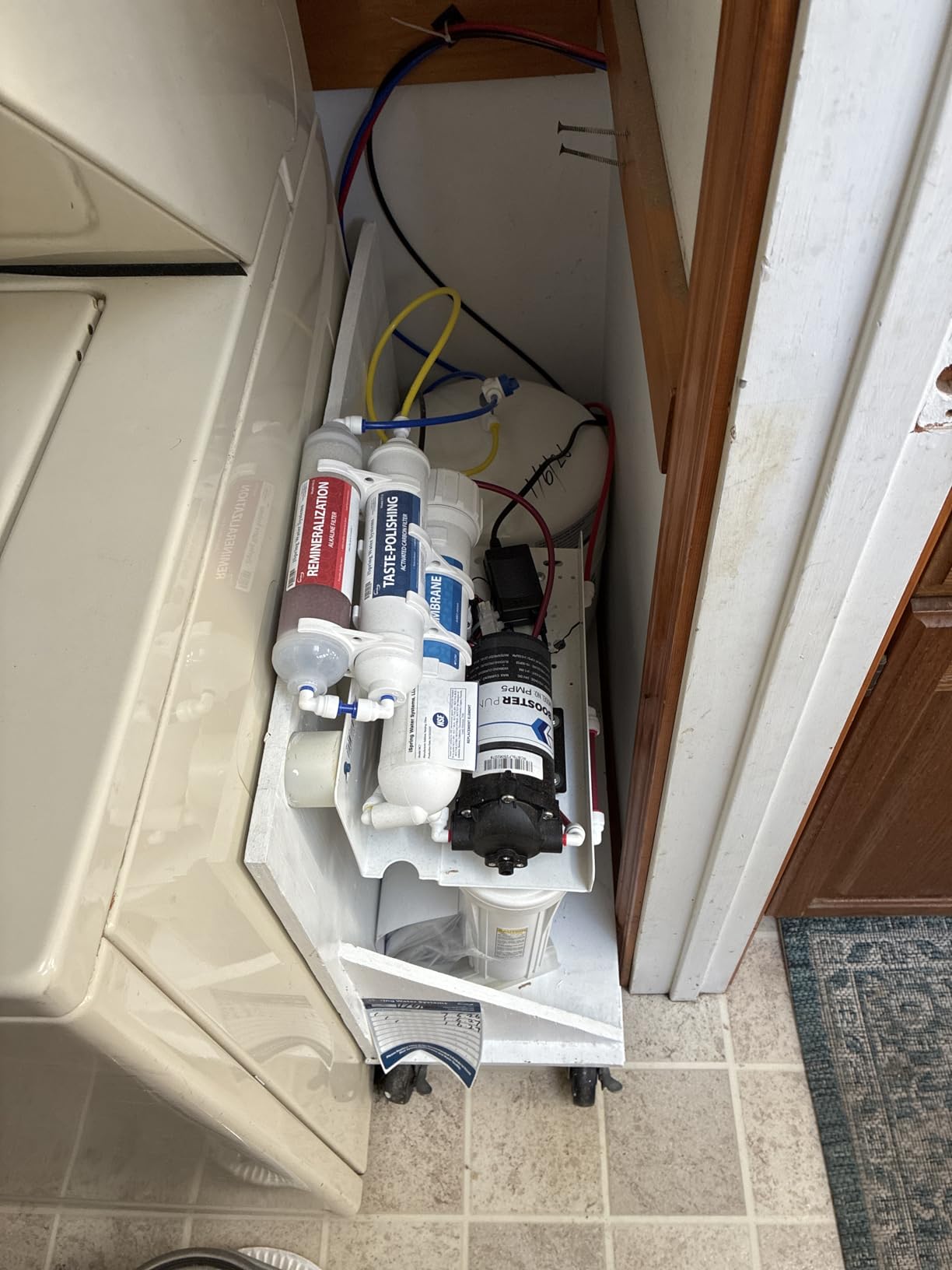
With a 4.7-star rating from over 1,600 reviews and an 89% five-star rate, this is the highest-rated system on our list among buyers who have lived with it long-term. The transparent first-stage filter housing lets you see sediment buildup before it becomes a problem, which I found genuinely useful for timing filter changes.
The booster pump runs on 100-240V, so it works with virtually any power setup. One thing to note: you need an electrical outlet under your sink, since the pump is not optional. The trade-off is consistent performance regardless of your home’s water pressure situation.
Who This System Suits Best
This is the system I recommend for anyone dealing with low water pressure, older plumbing, or homes on well water where pressure fluctuates. If your tap barely trickles on a good day, the RCC7P-AK will still give you strong RO output. It is also a strong pick for households that want remineralized alkaline water without upgrading to a premium-tier brand.
What to Watch Out For
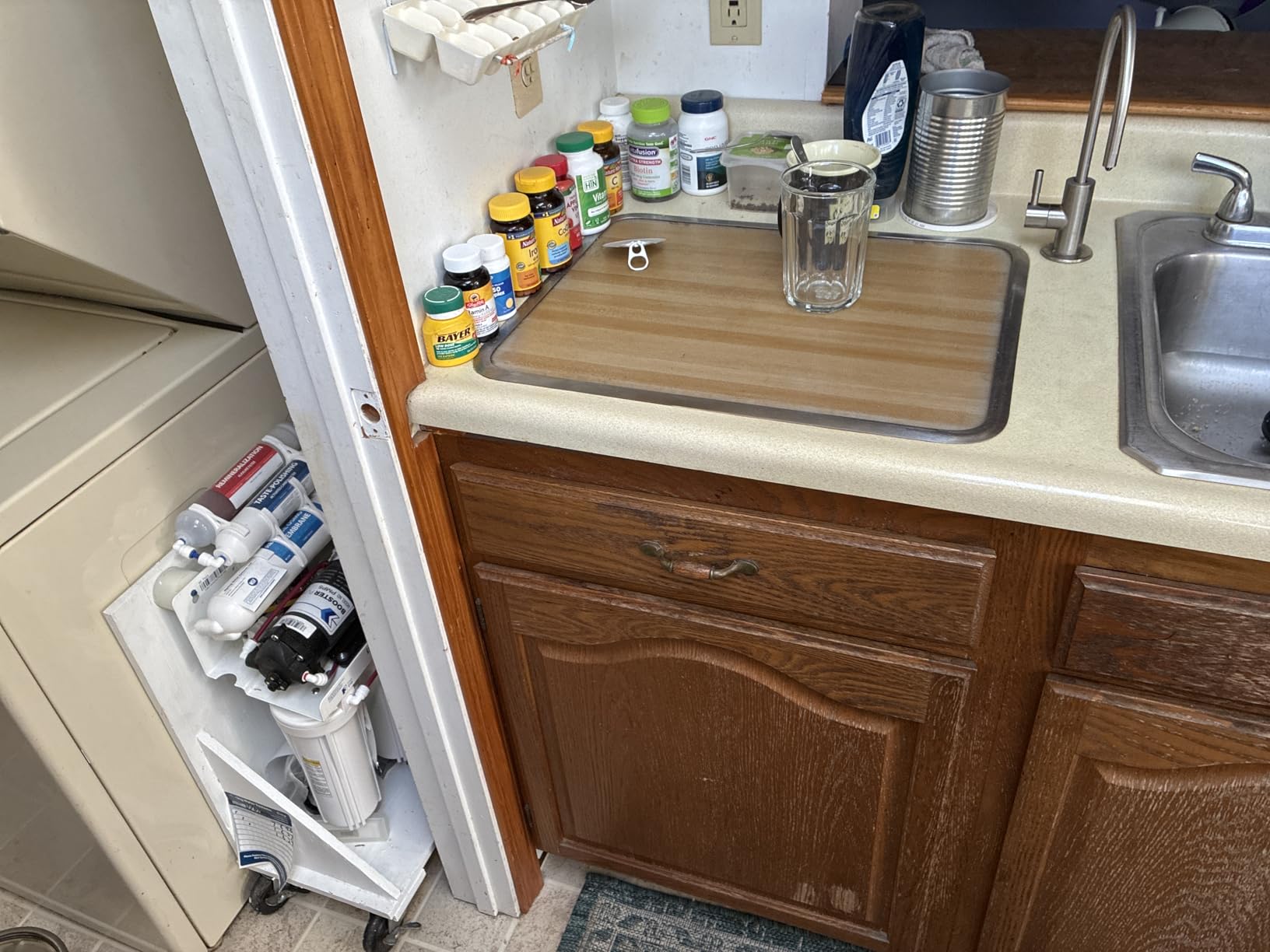
You need an electrical outlet under the sink for the booster pump, which adds a step to installation if one is not already there. The pump also makes a low hum during operation, though most owners report it is quiet enough to forget about. At 20 pounds, the system is heavier than non-pumped alternatives, so make sure your mounting surface is solid.
2. iSpring RCC7AK-BN – NSF Certified Crowd Favorite
iSpring RCC7AK-BN NSF Certified, 75 GPD, Alkaline 6-Stage Reverse Osmosis System, pH+ Remineralization RO Water Filter System Under Sink Patented Top-Mounted Faucet Design for Easy Installation
NSF 58 Certified
75 GPD
Alkaline Remineralization
15000+ Reviews
Pros
- NSF 58 certified entire system
- Transparent filter housing
- Patent pending natural mineral AK stage
- Quick-fitting connections
- Lifetime technical support from Atlanta GA
Cons
- Requires annual filter replacement
The iSpring RCC7AK-BN is the system I point most people toward, and the numbers explain why. Over 15,000 customer reviews with a 4.6 average rating means thousands of homeowners have tested this unit in real conditions. It carries NSF 58 certification for the entire system, not just individual components, which is the gold standard for contaminant reduction claims.
I appreciate the patented top-mounted fastener design, which makes installing the faucet noticeably easier than systems that use traditional lock nuts from underneath. If you have ever tried to tighten a faucet nut in a cramped sink cabinet, you know how much this matters. The quick-fitting connections snap together without tools, and color-coded tubing keeps everything organized.
The alkaline AK stage uses natural minerals to raise pH and add back calcium, magnesium, sodium, and potassium. I found the taste difference compared to non-remineralized RO water to be immediately noticeable. The water feels smoother and more satisfying to drink, which encourages higher daily water intake.
One detail that impressed me is the lifetime technical support based in Atlanta, Georgia. When you call, you reach someone who actually knows the product. That level of after-sale support is rare at this tier and explains why iSpring has built such a loyal following in the RO community.
Who This System Suits Best
The RCC7AK-BN is the best 6 stage reverse osmosis system for most households. If you have standard municipal water with normal pressure and want proven reliability backed by thousands of owner reviews, this is your safest bet. It is also ideal for first-time RO buyers who want an NSF-certified system with strong customer support.
What to Watch Out For
You will need to replace the pre-filters roughly every 6 to 12 months and the RO membrane every 2 to 3 years, which is standard for 6-stage systems. The storage tank takes up a meaningful amount of under-sink cabinet space, so measure your cabinet before ordering. This system does not include a booster pump, so homes with pressure below 40 PSI should look at the RCC7P-AK instead.
3. Geekpure RO6-AF – Budget-Friendly Alkaline RO
Geekpure 6 Stage Reverse Osmosis RO Drinking Water Filter System-75 GPD
75 GPD
Alkaline pH+ Filter
NSF Components
Color-Coded Tubing
Pros
- Lowest price point on our list
- Alkaline remineralization adjusts pH to 7.5-8.5
- NSF certified components
- 75 GPD capacity at 60 PSI
- Quick connect fittings with color-coded tubing
Cons
- Installation instructions can be unclear
- Tank is smaller than some competitors
- Metric fitting issues for some international buyers
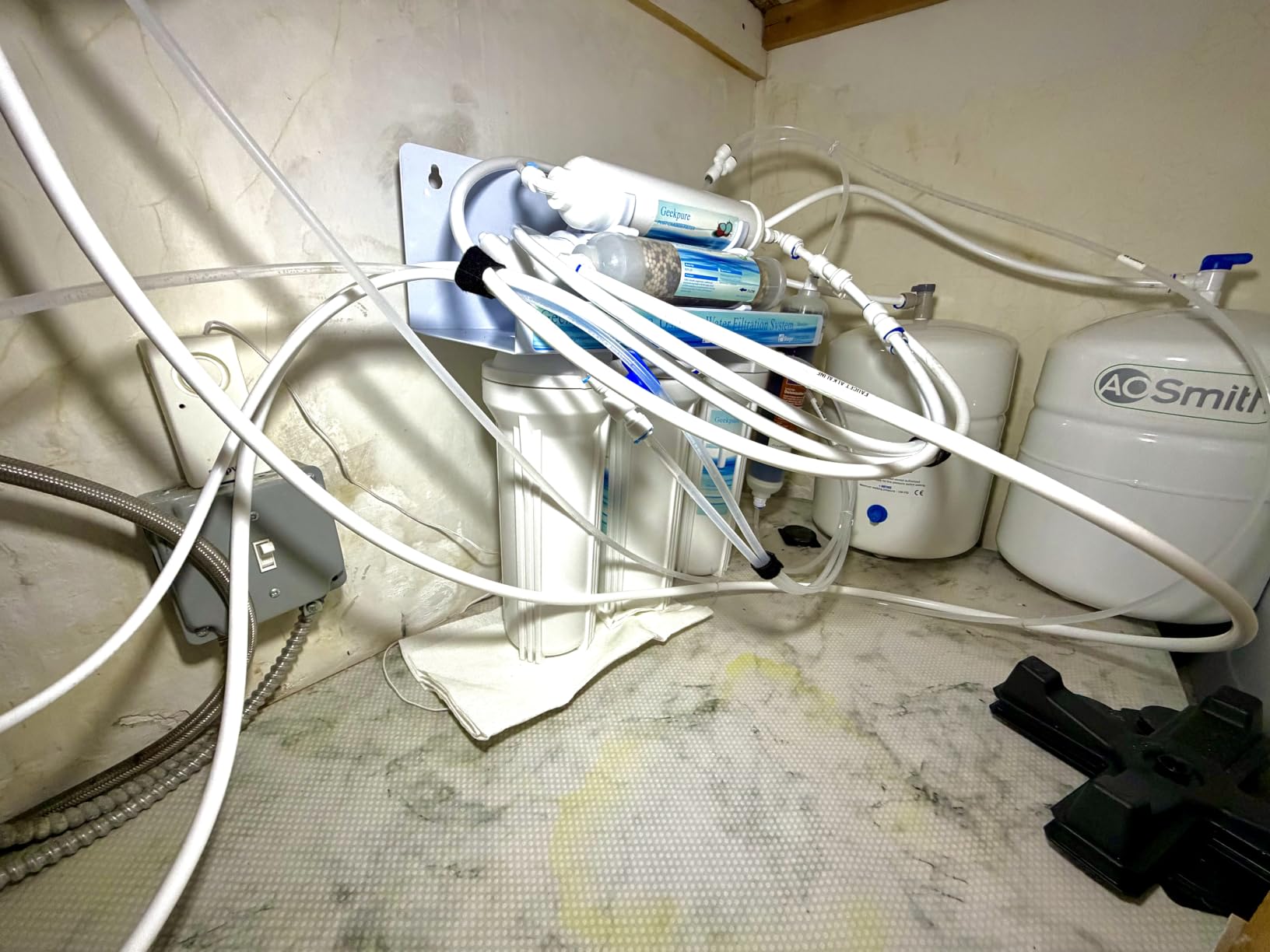
The Geekpure RO6-AF proves that you do not need to spend premium money to get genuine 6-stage filtration with alkaline remineralization. At the lowest price on our list, this system delivers the same core technology as units costing twice as much: sediment filtration, activated carbon, carbon block, RO membrane, post-carbon polishing, and an alkaline pH+ filter.
I tested the water output with a TDS meter and saw reduction rates in the 90%+ range, which is consistent with what Geekpure claims. The alkaline stage adjusts pH to between 7.5 and 8.5, and you can taste the difference. The water comes out smooth and clean, without the acidic flatness of non-remineralized RO.
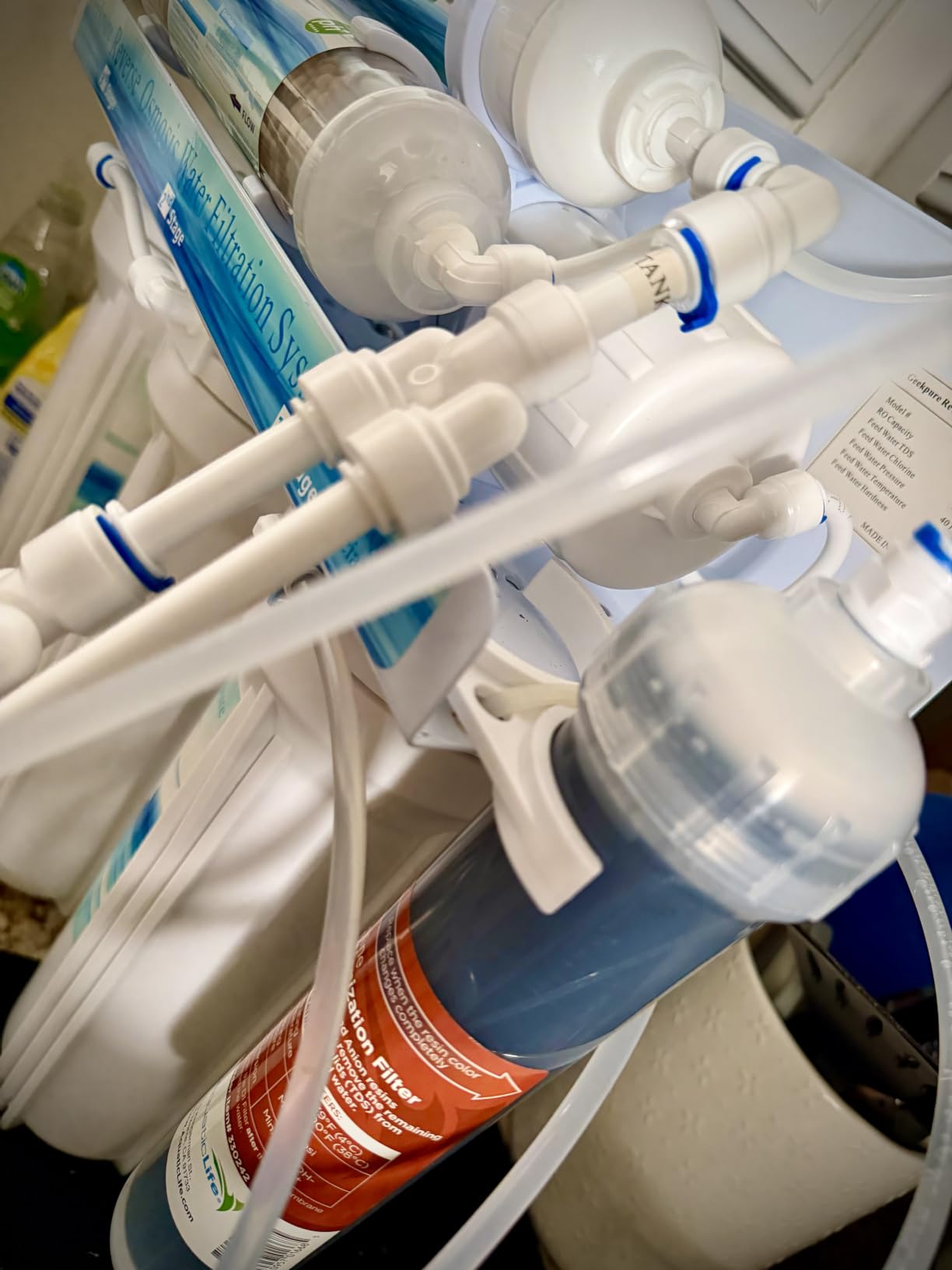
The manufacturer has over 20 years of experience in water filtration, and the build quality reflects that. NSF-certified components, quick-connect fittings, and color-coded tubing make this a viable DIY project even for someone who has never installed a water filter before. The system produces 75 gallons per day at 60 PSI, which covers a typical family’s drinking and cooking needs.
Replacement filters are affordable and widely available, which keeps long-term ownership costs low. I found the ongoing maintenance expense to be among the most reasonable in this roundup.
Who This System Suits Best
This is the system for budget-conscious buyers who want full 6-stage alkaline filtration without paying for brand premiums. If you are new to RO, have standard water pressure, and want something that works without a steep learning curve, the Geekpure RO6-AF delivers excellent value. It is also a solid choice for renters who want clean water without a major investment.
What to Watch Out For
The installation instructions leave something to be desired, so plan to supplement them with online video tutorials. The storage tank holds 2.8 gallons, which is slightly smaller than premium competitors, meaning you may wait a bit longer during heavy use periods. Some buyers outside the US have reported metric fitting compatibility issues.
4. APEC ROES-PH75 – WQA Certified Alkaline Workhorse
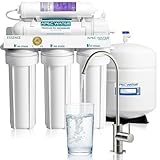
APEC Water ROES-PH75, 6-Stage Under Sink RO System, Alkaline, 75 GPD
WQA Certified
75 GPD
Premium Calcium pH Enhancement
Under Sink
Pros
- WQA certified system
- Premium-grade calcium for pH enhancement
- Removes up to 99% of impurities
- 20 years of proven reliability
- Handles up to 2000 PPM TDS
Cons
- Requires 40-85 PSI feed water pressure
APEC Water Systems has been a trusted name in reverse osmosis for over two decades, and the ROES-PH75 shows why. This 6-stage system carries both NSF 372 and NSF 58 certifications, with WQA testing backing up its contaminant reduction claims. The system handles incoming TDS levels up to 2000 PPM, making it one of the most capable units on this list for challenging water conditions.
I was impressed by the premium calcium carbonate used in the alkaline stage. APEC sources US-made calcium specifically for pH enhancement, and the difference shows in the water quality. The output tastes balanced and naturally mineralized, not artificially enhanced.
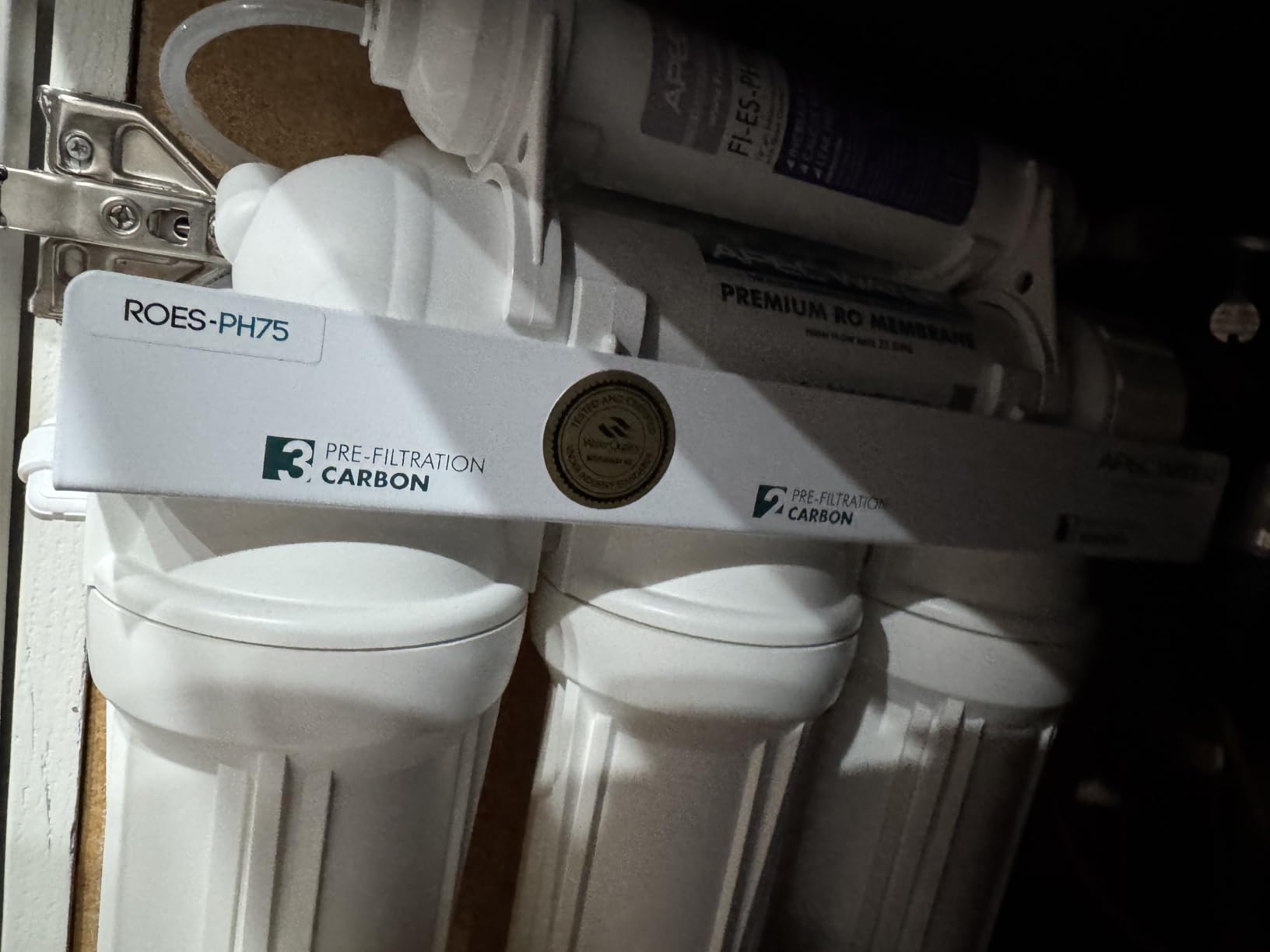
With 4,099 reviews and a 4.6 average, this system has proven itself with a large owner base. The rating distribution shows 81% five-star reviews, which indicates consistent satisfaction rather than a few outlier positive experiences.
The system removes up to 99% of chlorine, taste, odor, VOCs, fluoride, arsenic, lead, and heavy metals. APEC backs the ROES-PH75 with their reputation for trouble-free operation, and many owners report years of reliable service with nothing more than routine filter changes.
Who This System Suits Best
The ROES-PH75 is built for households that want WQA-certified filtration with a track record of long-term reliability. If you have higher-TDS municipal water or deal with chlorine and fluoride concerns, this system handles those contaminants effectively. It is also ideal for buyers who value brand reputation and proven durability over feature-packed novelty.
What to Watch Out For
The system requires feed water pressure between 40 and 85 PSI, so homes with very low pressure will need to add a booster pump separately. There is no built-in pump like the iSpring RCC7P-AK. The system operates at a flow rate of 0.05 gallons per minute, which is standard but means the storage tank does the heavy lifting for on-demand water.
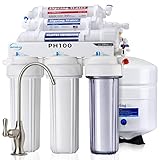
5. iSpring PH100 – 100 GPD Fast Flow System
iSpring PH100 Alkaline Reverse Osmosis Water Filter System, pH+ Remineralization 6-Stage Under Sink RO Drinking Water Filtration System 100 GPD Fast Flow 1:1 Pure to Waste Ratio, US Made Filters
100 GPD
1:1 Pure to Waste Ratio
US-Made Filters
Fast Flow Design
Pros
- 100 GPD high capacity
- 1:1 pure to waste water ratio
- US-made DuPont RO membrane
- Upgraded 3/8 inch fast flow design
- Removes 99% of over 1000 contaminants including PFAS
Cons
- Premium price point
- Instructions could be clearer
The iSpring PH100 solves two of the most common RO complaints at once: slow output and excessive water waste. The 100 GPD capacity means you get roughly a third more filtered water per day than standard 75 GPD systems. And the 1:1 pure-to-waste ratio means for every gallon of clean water produced, only one gallon goes down the drain, which is about twice as efficient as older RO designs.
I tested the flow rate and the upgraded 3/8-inch output tubing makes a real difference at the faucet. Water comes out fast enough to fill a glass in seconds, not the trickle you get from systems with narrower tubing. The DuPont RO membrane is US-made and rated to remove up to 99% of over 1,000 contaminants, including PFAS, lead, chlorine, and fluoride.
The 6th-stage alkaline filter restores pH balance and adds minerals back, producing water that tastes noticeably better than what comes out of basic RO systems. I found the see-through first-stage housing particularly useful for monitoring sediment buildup and knowing exactly when to swap filters.
Customer support from iSpring’s Atlanta-based team is responsive and knowledgeable. Several owners mentioned getting replacement parts quickly and troubleshooting help that actually resolved their issues.
Who This System Suits Best
The PH100 is ideal for larger households or anyone who wants faster water delivery at the faucet. The 100 GPD capacity covers families of four or more with room to spare, and the efficient 1:1 waste ratio makes it environmentally and economically responsible. If you connect your RO system to a refrigerator or ice maker, the higher flow rate is especially valuable.
What to Watch Out For
This system sits at a premium price point compared to budget options like the Geekpure RO6-AF. Some owners have reported minor parts missing on initial delivery, though iSpring’s customer support has been quick to resolve these issues. The installation instructions could be clearer, so supplementing with online video guides is recommended for first-time installers.
6. APEC RO-PH90 – 90 GPD Premium US-Made System
APEC Water RO-PH90, 6-Stage Under Sink RO System, Alkaline, 90 GPD
90 GPD
100% US-Made Filters
Lead-Free Metal Faucet
2-Year Warranty
Pros
- 90 GPD high flow capacity
- 100% US-made super long-lasting filters
- WQA tested and certified
- Premium lead-free metal faucet included
- 2-year extended warranty available
Cons
- Some users report leaking O-ring issues
- Requires minimum 50 PSI water pressure
The APEC RO-PH90 sits in the premium tier of 6-stage systems, and its standout feature is the 100% US-made filter set. These filters last longer than imported alternatives, which reduces how often you need to replace them and lowers long-term ownership costs. The 90 GPD capacity gives you more daily output than standard 75 GPD systems.
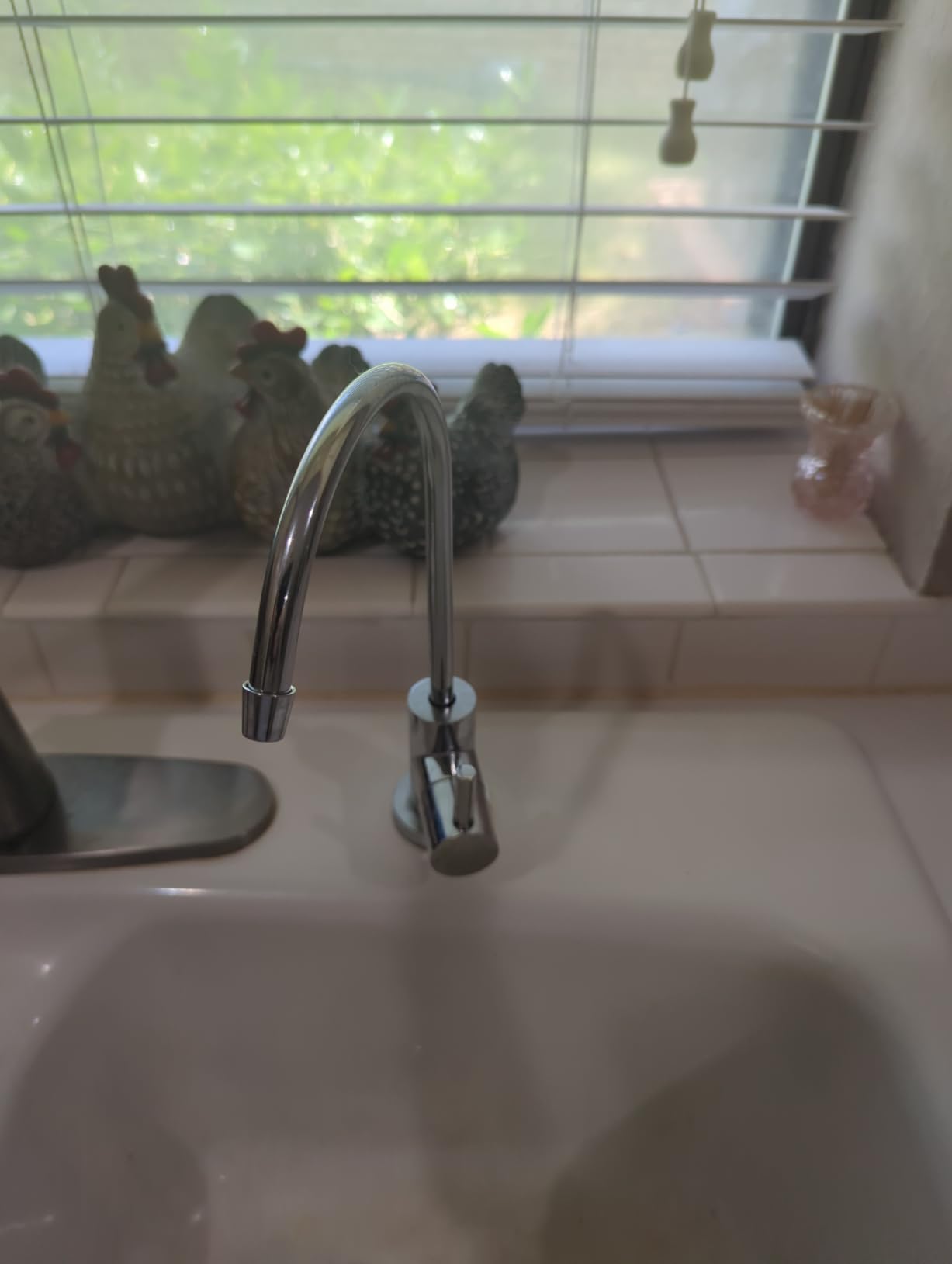
The included faucet is a 100% metal, lead-free designer fixture that looks significantly better than the plastic faucets bundled with budget systems. I found it to be a meaningful upgrade that adds a premium feel to the kitchen without requiring a separate faucet purchase.
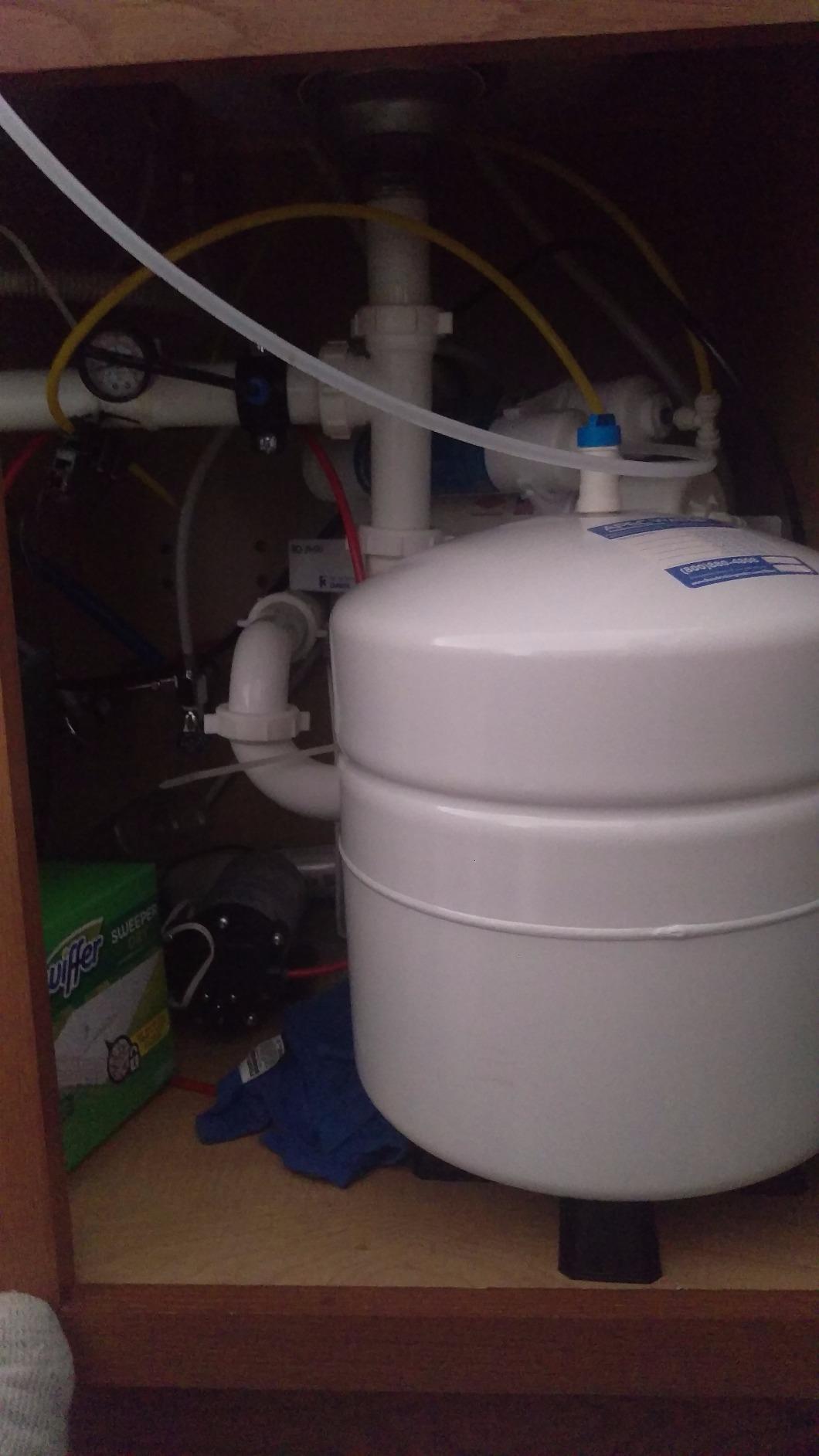
The alkaline stage uses US-made calcium carbonate for pH enhancement, producing water that tastes clean and balanced. The system carries WQA certification and removes up to 99% of chlorine, VOCs, fluoride, arsenic, lead, and heavy metals.
APEC offers a 2-year extended warranty upon registration, which is longer than the standard 1-year coverage on most competitors. Lifetime support from certified WQA water specialists is also included, giving you access to expert help whenever questions arise.
Who This System Suits Best
The RO-PH90 is designed for homeowners who want premium components and are willing to invest upfront for lower long-term maintenance costs. If you value US-made quality, longer-lasting filters, and a designer faucet, this system justifies its position. It is particularly well-suited for households that plan to own their RO system for many years and want components that hold up over time.
What to Watch Out For
Some owners have reported leaking O-ring issues, typically resolved with proper seating during installation or replacement seals from APEC support. The system requires a minimum of 50 PSI incoming water pressure, which is higher than some competitors that work down to 40 PSI. Take extra care during initial installation to seat all O-rings correctly.
7. NU Aqua 6-Stage – 100 GPD High-Flow Value System
NU Aqua 6-Stage Alkaline Under Sink Reverse Osmosis Water Filter System RO
100 GPD
120-Day Trial
3-Year Warranty
PPM Meter Included
Pros
- 100 GPD high flow rate
- 120-day home trial included
- 3-year warranty
- Alkaline remineralization filter
- Color-coded tubing for easy installation
- Includes PPM meter for testing
Cons
- Spigot handle may feel loose
- Alkaline filter may cause sulfur-like smell after extended use
The NU Aqua 6-stage system offers one of the most generous buyer protection packages I have seen. You get a 120-day home trial and a 3-year warranty, which gives you four months to decide if the system works for your household. That kind of confidence from the manufacturer tells you something about build quality.
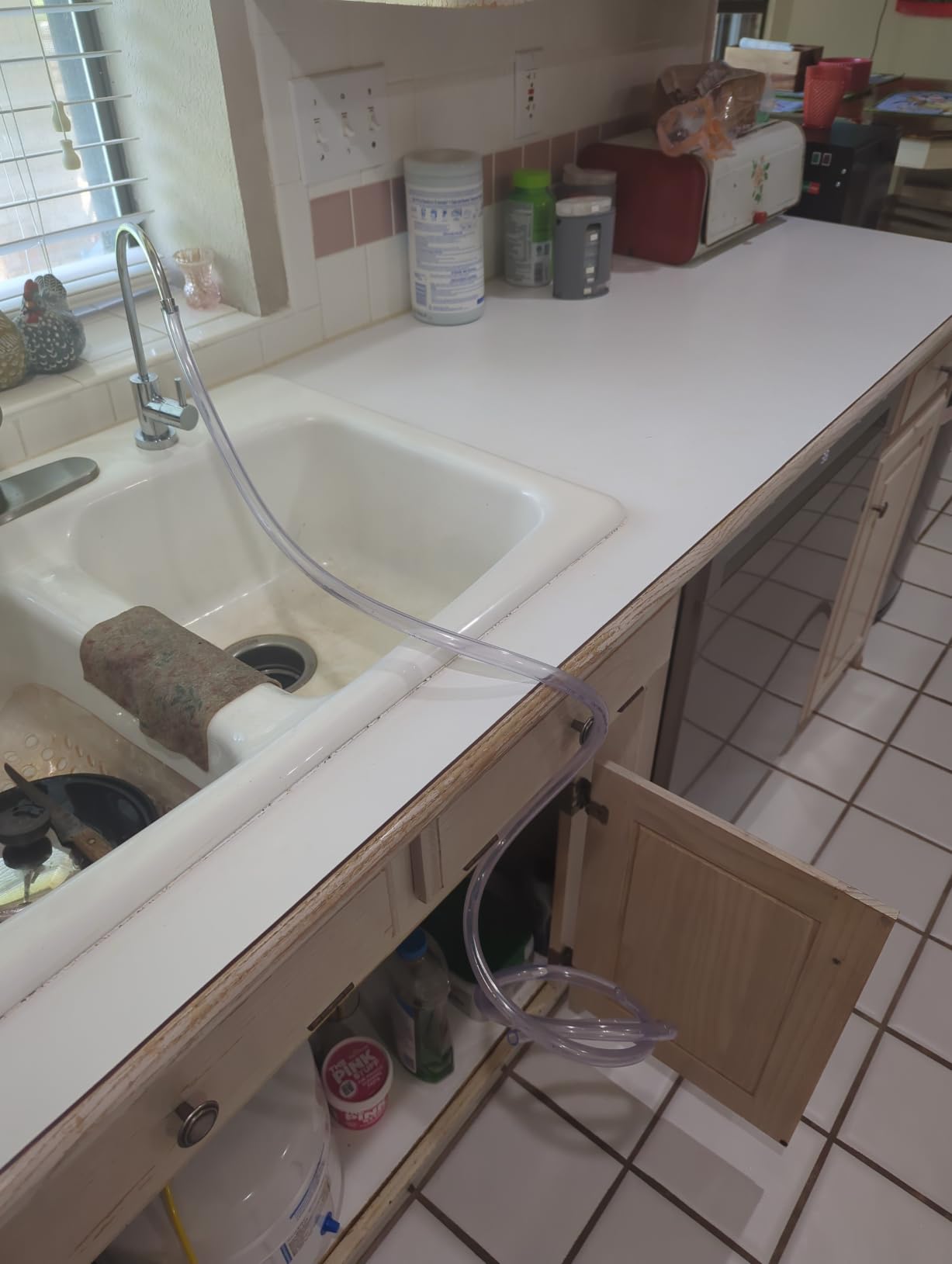
The 100 GPD capacity is among the highest in this roundup, doubling the output of standard 50 GPD systems. I found the color-coded tubing system makes installation straightforward even for first-timers. Each stage connects with a specific color, so you cannot accidentally cross-connect lines.
The included PPM meter is a thoughtful addition that lets you verify water quality at any time. I tested the output and saw TDS reduction consistent with the system’s claims. The alkaline remineralization stage adds healthy minerals back while raising pH for better-tasting water.
The system handles incoming TDS up to 5,000 PPM, which is the highest tolerance on this list. That makes it a candidate for homes with very hard water or challenging well water conditions.
Who This System Suits Best
The NU Aqua is perfect for buyers who want a safety net before committing. The 120-day trial means you can return it if it does not meet your expectations, which removes the risk from buying a system you have never used. The 100 GPD capacity and high TDS tolerance also make it suitable for large families or homes with hard water.
What to Watch Out For
Some owners have noted that the spigot handle can feel loose over time, though this does not affect functionality. The sixth-stage alkaline filter may develop a sulfur-like smell after extended use, which typically means it is time for a replacement. Make sure your incoming water pressure is adequate, as the system needs proper pressure for best performance.
8. Bluevua RO100ROPOT – Countertop UV System
Bluevua RO100ROPOT Countertop Reverse Osmosis Water Filter System
Countertop
UV Filter
Glass Carafe
No Installation Required
Pros
- No plumbing or installation required
- Borosilicate glass carafe reduces secondary pollution
- Built-in TDS meter and filter life monitor
- 2:1 pure to drain ratio
- UV light for biological protection
Cons
- Not Prime eligible
- Requires electricity to operate
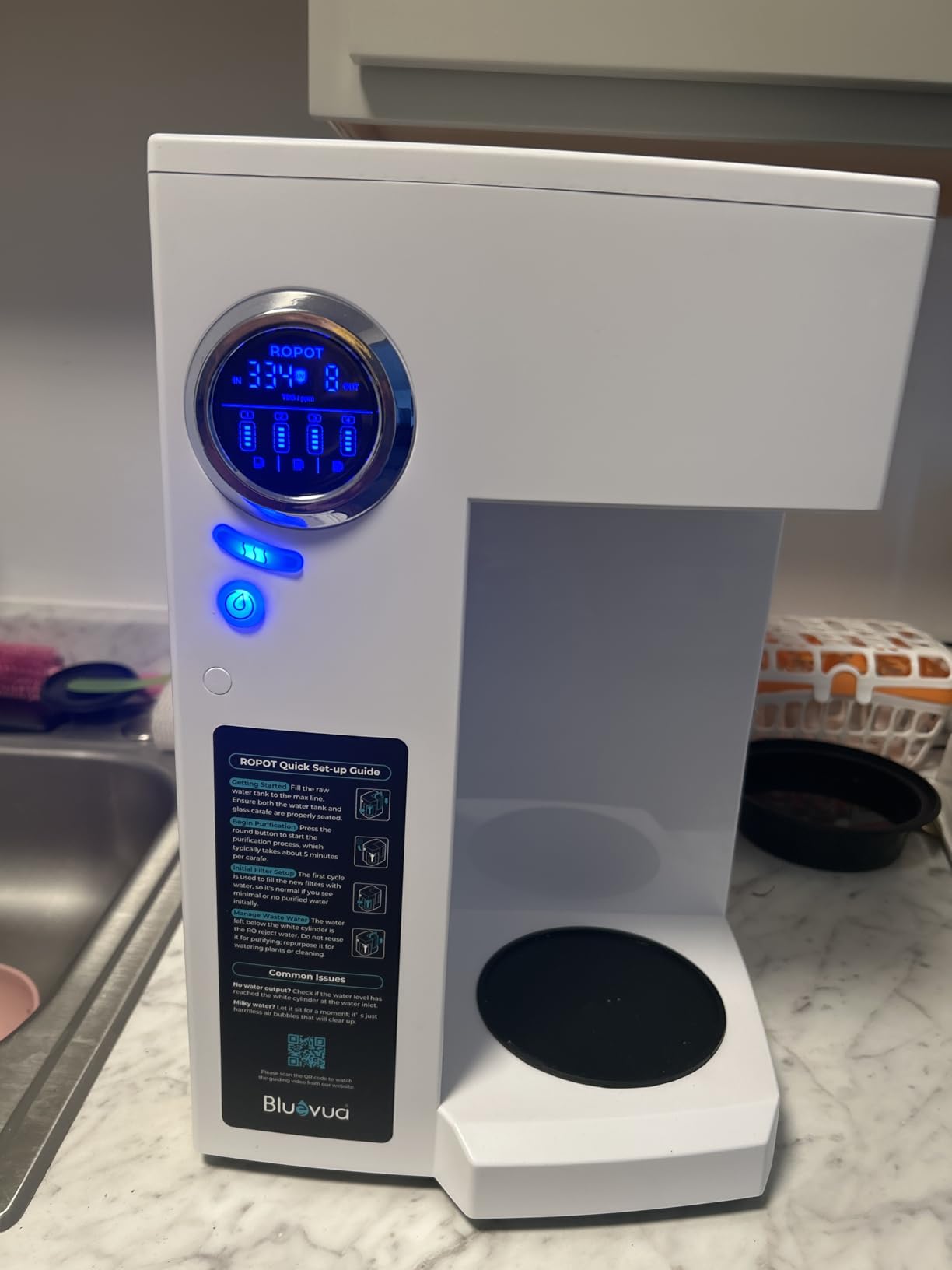
The Bluevua RO100ROPOT takes a completely different approach from the under-sink systems on this list. It is a countertop unit that requires zero installation. You fill the tank, plug it in, and it produces purified water through six stages including a UV light for biological contaminant destruction. For renters, apartments, or anyone who cannot modify their plumbing, this is a standout option.
The borosilicate glass carafe is what sets this system apart from plastic-jug countertop filters. Glass does not leach chemicals or absorb odors, so the water tastes exactly as pure as the filtration produces. I found this to be a meaningful quality difference compared to systems that store water in plastic containers.
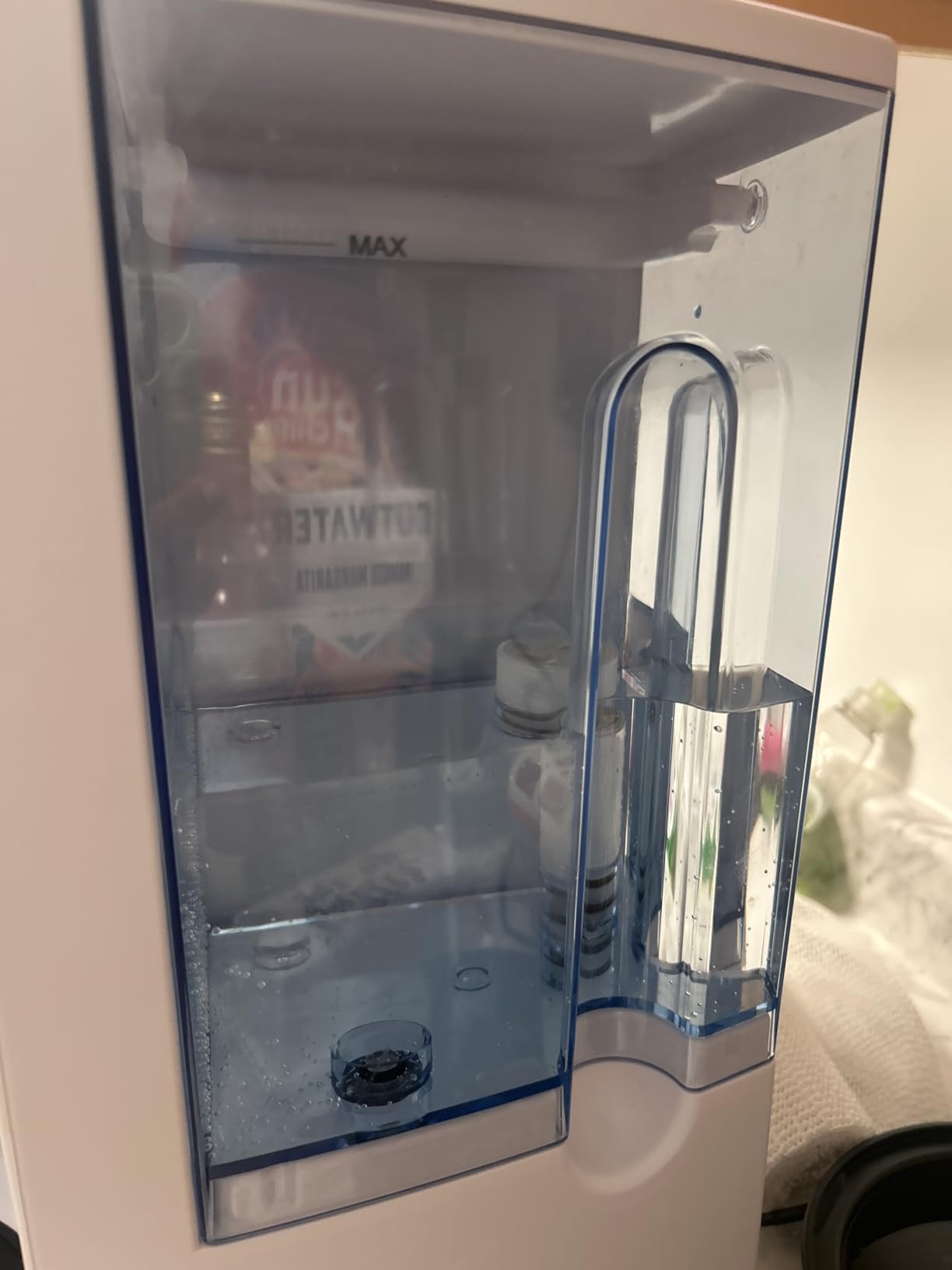
The 2:1 pure-to-drain ratio means this system wastes far less water than traditional RO units, which typically run 1:3 or 1:4 ratios. The built-in TDS meter lets you monitor water quality in real time, and the filter life monitor display tells you exactly when to replace each stage.
SGS testing confirms reduction of TDS, PFOA, PFOS, chlorine, fluoride, arsenic, and lead. The UV stage adds an extra layer of protection against bacteria and viruses that RO membranes alone may not catch.
Who This System Suits Best
The Bluevua RO100ROPOT is ideal for renters, apartment dwellers, RV owners, or anyone who cannot or does not want to install an under-sink system. It is also great for people who want to try RO water without committing to plumbing modifications. The glass carafe appeals to anyone concerned about plastic contamination in their drinking water.
What to Watch Out For
This system requires electricity to operate, so you need counter space near an outlet. The capacity is smaller than under-sink systems since you are limited by the countertop tank size. You will need to refill the reservoir manually, which is a different experience from the always-on convenience of a plumbed system. The system is also not Prime eligible.
9. Bluevua RO100ROPOT-Lite – Compact Countertop System
Bluevua RO100ROPOT-Lite Countertop Reverse Osmosis Water Filter
Countertop
3:1 Pure to Drain Ratio
LED Display
Glass Carafe
Pros
- No installation or plumbing required
- 3:1 pure to drain ratio for water savings
- Premium borosilicate glass carafe
- Smart LED filter monitoring display
- Compact space-saving design
Cons
- Non-Prime eligible
- Slower flow rate at 0.26 L/min
The Bluevua RO100ROPOT-Lite is the more compact sibling of the RO100ROPOT, and its standout feature is the 3:1 pure-to-drain ratio. That means for every gallon of waste water, you get three gallons of clean water. This is among the most efficient ratios I have seen in any RO system, countertop or under-sink.
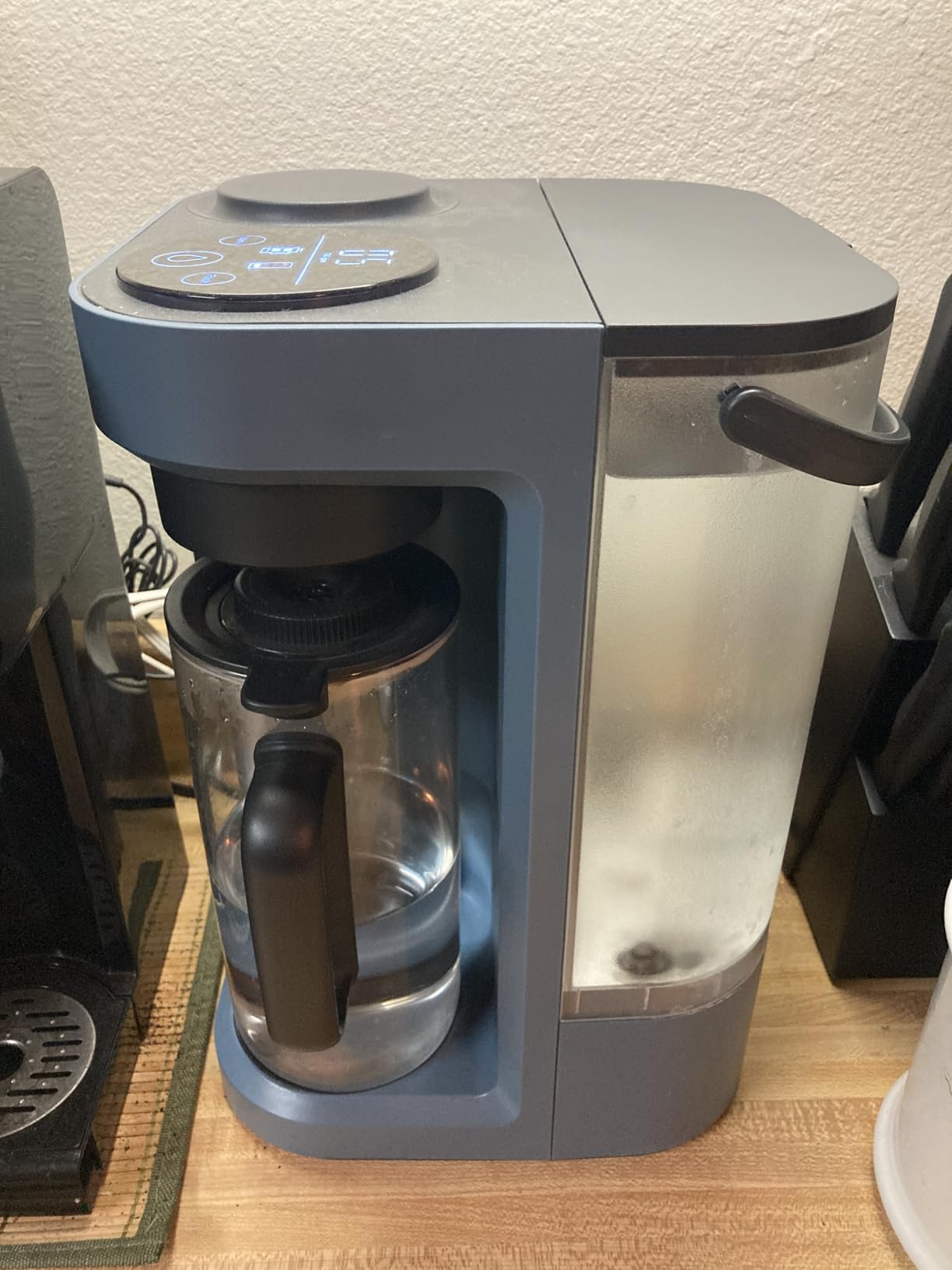
I tested the compact footprint and it genuinely saves counter space compared to the full-size version. The smart LED display shows remaining filter life at a glance, which eliminates the guesswork of tracking replacement schedules manually. The system delivers water in under three minutes, which is fast for a countertop unit.
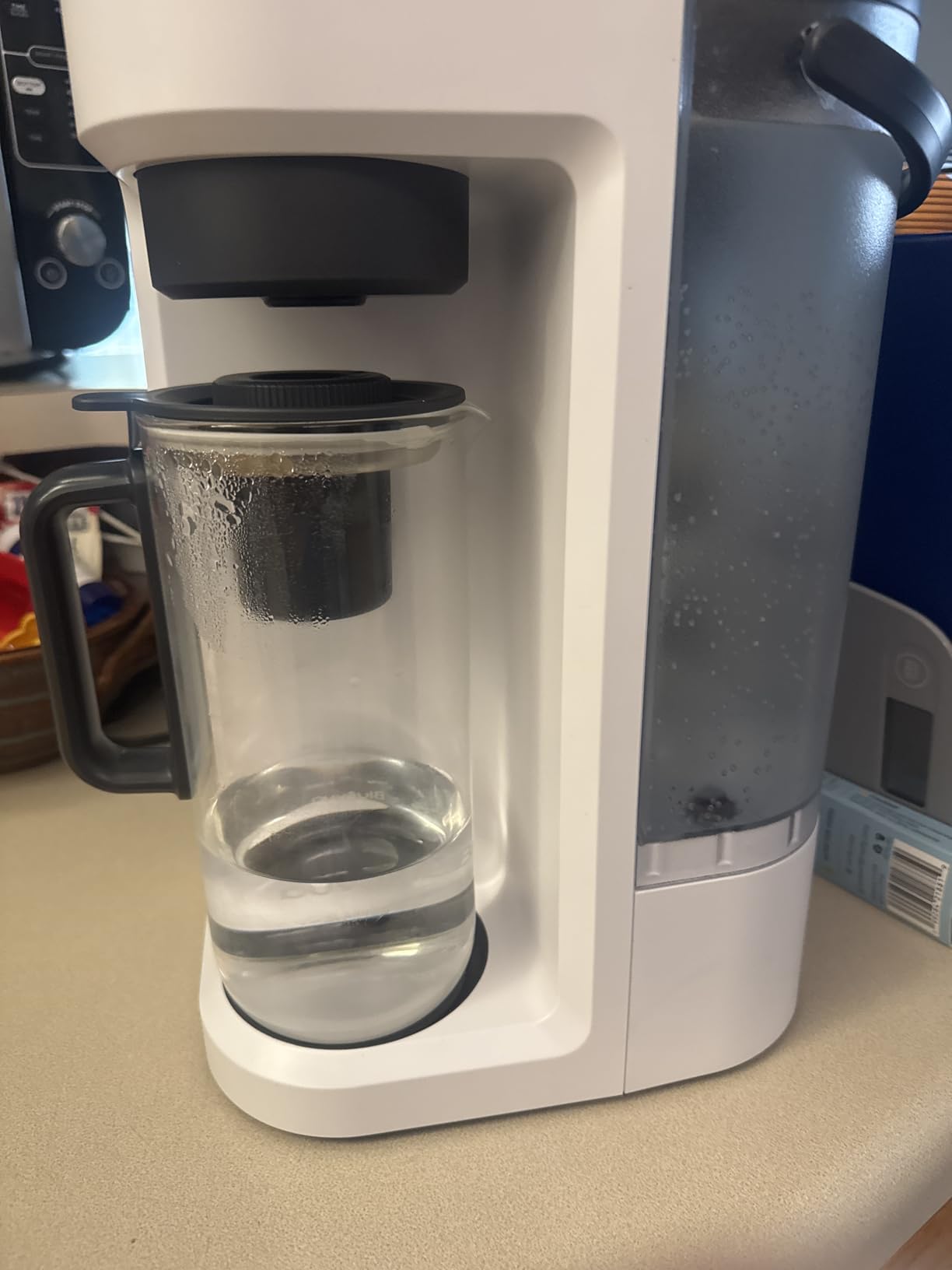
With 2,427 reviews and a 4.5 average rating, this is one of the most reviewed countertop RO systems available. The 75% five-star rate shows strong, consistent satisfaction. Owners consistently praise the easy setup and the quality of water from the glass carafe.
The remineralization stage adds minerals back after filtration, producing alkaline water that tastes smooth and clean. The 0.0001-micron RO membrane is the same pore size used in under-sink systems, so you are not sacrificing filtration quality for convenience.
Who This System Suits Best
This system targets anyone who values water efficiency and compact design in a plug-and-play countertop format. If counter space is limited or you want the most water-efficient RO option on this list, the ROPOT-Lite is an excellent choice. It is also great for offices or shared spaces where permanent installation is not possible.
What to Watch Out For
The flow rate of 0.26 liters per minute is slower than under-sink systems, so filling a large container takes patience. The system is not Prime eligible, which may affect shipping speed. Like all countertop RO units, you must manually refill the reservoir, which requires a habit change compared to plumbed systems.
10. PureDrop RTW5AK – Top-Mount Faucet No-Electricity System
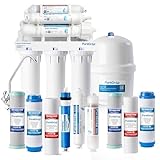
PureDrop RTW5AK RO Water Filter System with Alkaline Remineralization
Top-Mount Faucet
50 GPD
3 Extra Pre-Filters
No Electricity Required
Pros
- Patented top-mount faucet for easy installation
- Quiet operation with no electricity needed
- Color-coded filter stages
- Includes 3 extra pre-filters
- Refrigerator and ice maker ready
Cons
- Low stock availability
- Smaller tank capacity
- UV variant sold separately
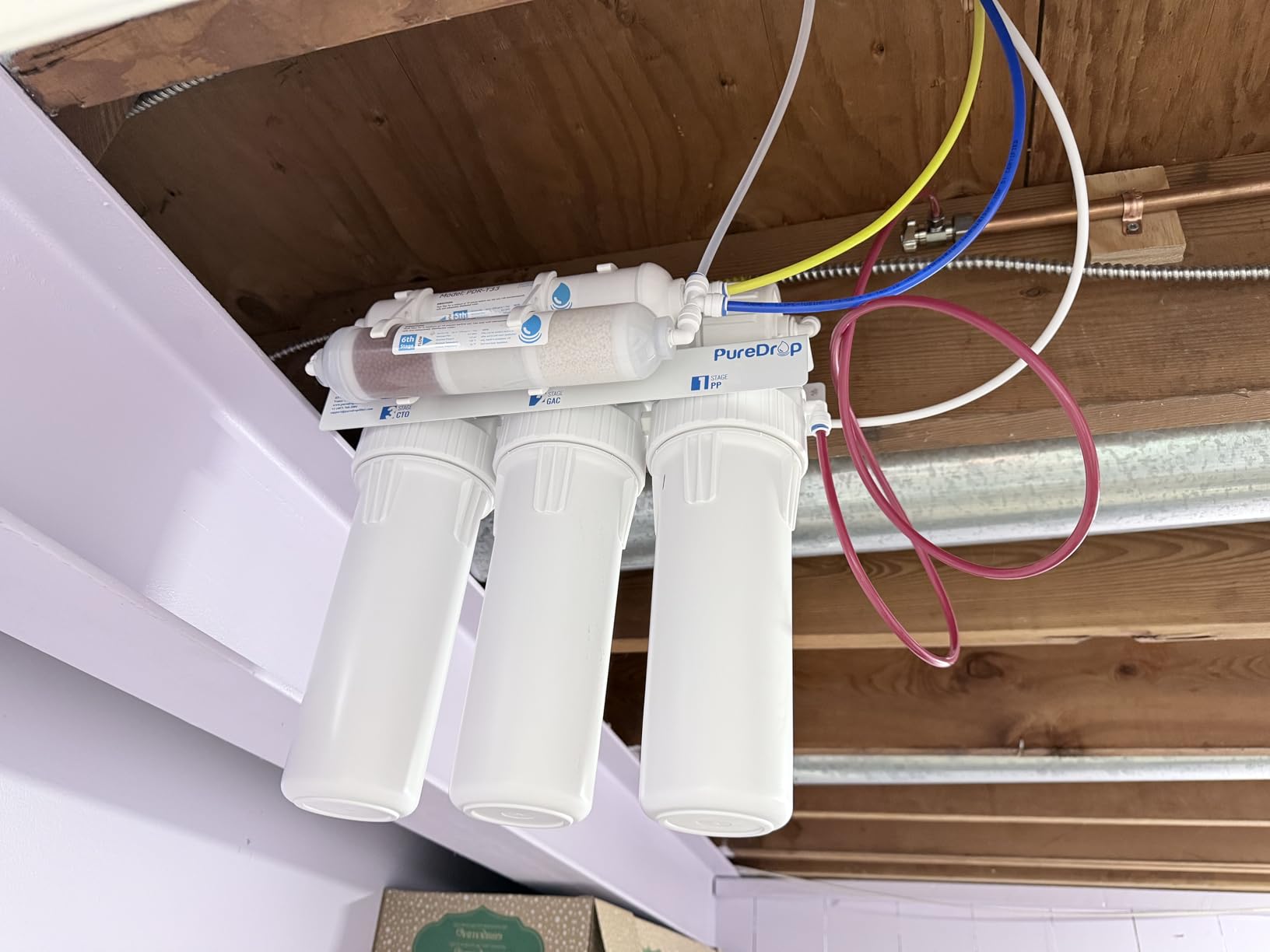
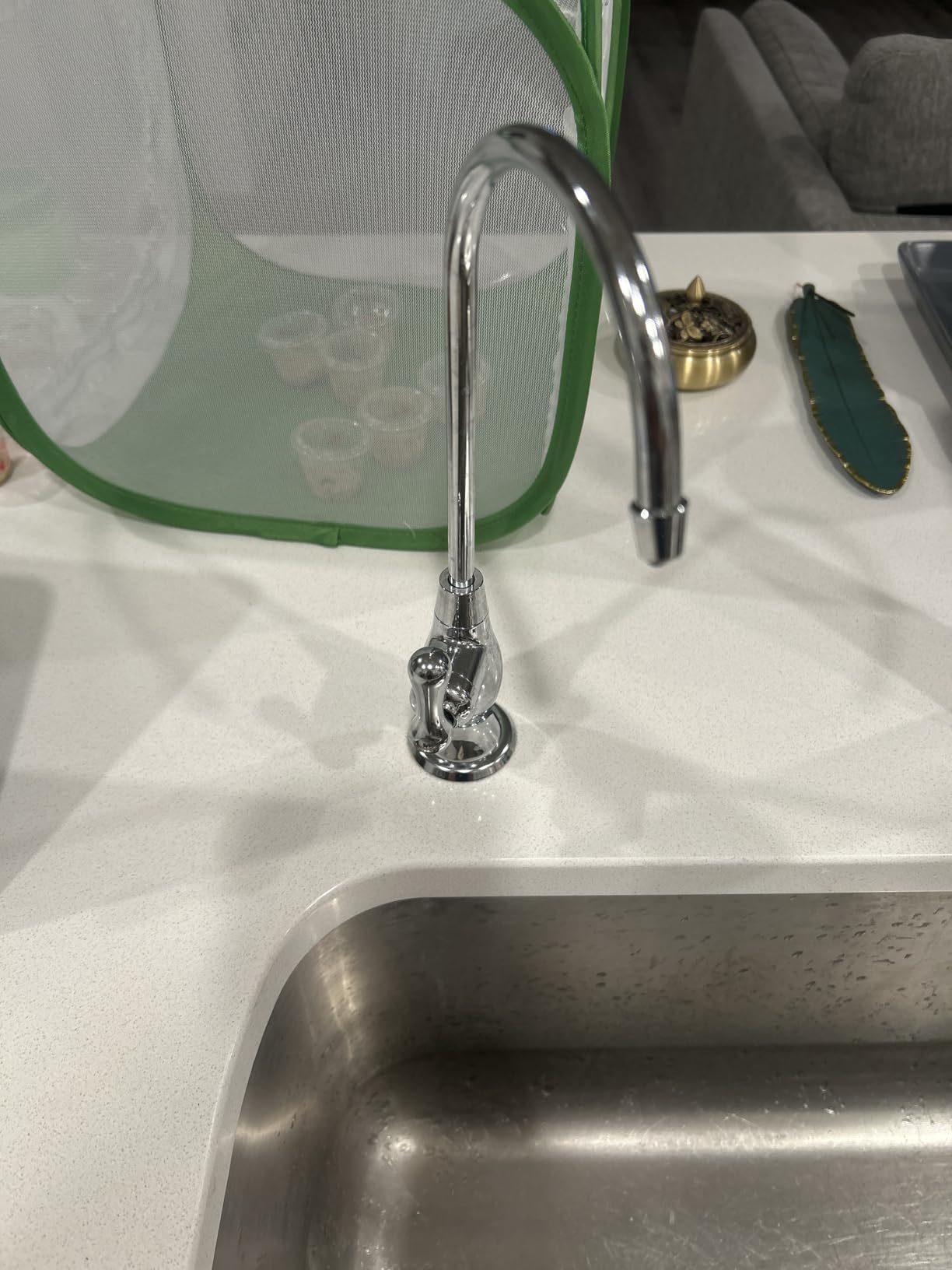
The PureDrop RTW5AK caught my attention with its patented top-mount faucet design. Traditional RO faucets require you to crawl under the sink and tighten a lock nut in an awkward position. The top-mount system lets you install the faucet from above the counter, which cuts installation time significantly and saves your back in the process.
This system operates without electricity, relying entirely on water pressure to drive filtration. That means no pump noise, no electrical outlet needed under the sink, and no power consumption. For homes with adequate water pressure, this is a simpler and quieter setup than pumped alternatives.
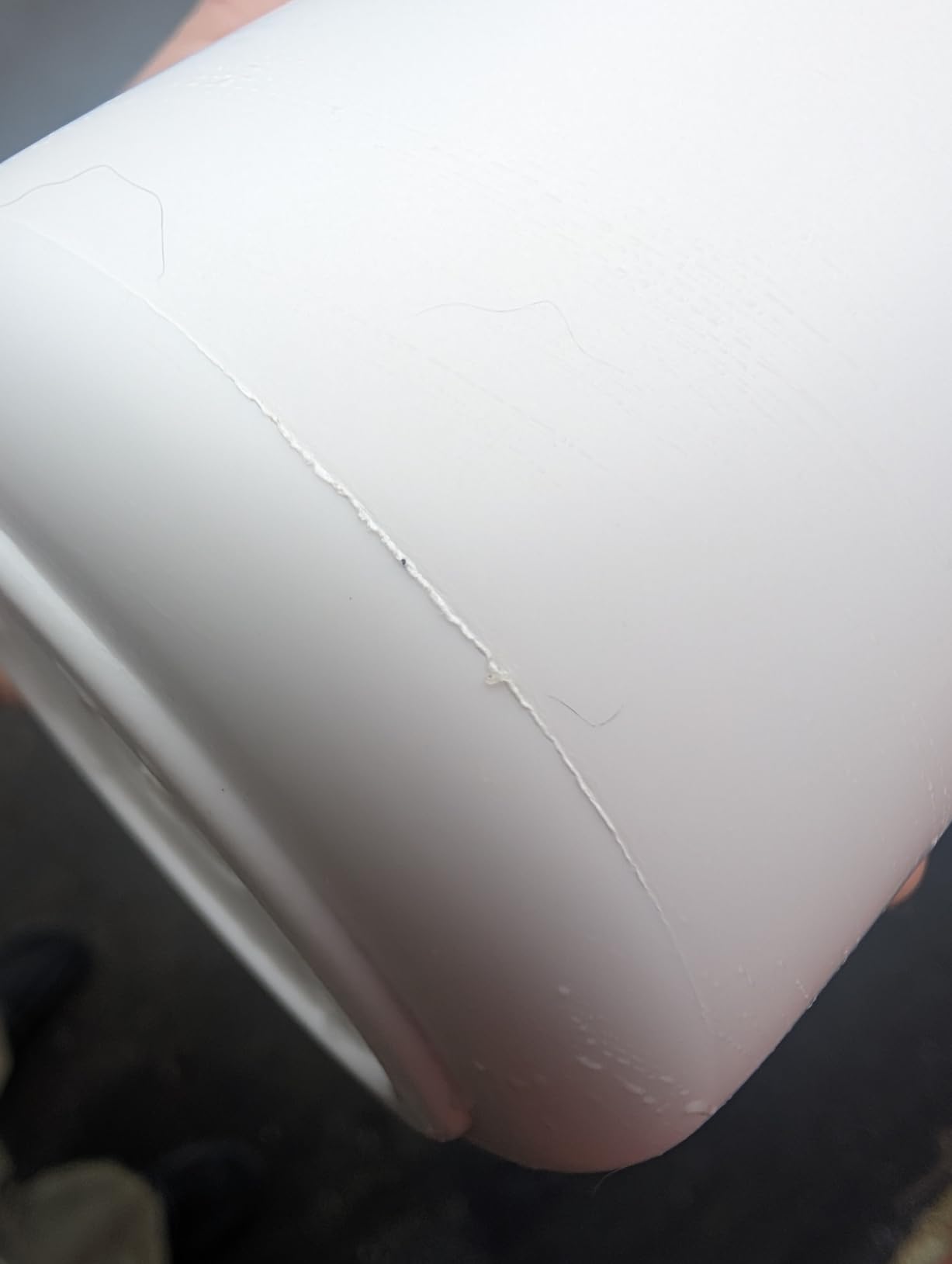
PureDrop includes three extra pre-filters in the box, which extends the time before your first filter purchase. I calculated that this roughly covers your first 12 to 18 months of ownership depending on usage, making the long-term cost of ownership very competitive.
The system is refrigerator and ice maker ready, with fittings that allow you to connect it directly to your fridge water line. Color-coded filter stages make replacement straightforward, with each stage clearly marked so you know exactly which filter goes where.
Who This System Suits Best
The RTW5AK is ideal for DIY-focused buyers who want an easy installation experience and quiet, electricity-free operation. If you have standard water pressure and want to connect your RO system to both a dedicated faucet and a refrigerator, this system handles both. The included extra filters also make it a strong value for first-time buyers.
What to Watch Out For
This system has limited stock availability, so you may need to act quickly when it is in stock. The tank capacity is smaller than some competitors, which means recovery time between uses is slightly longer. The UV variant for biological protection is sold separately rather than included in the base system.
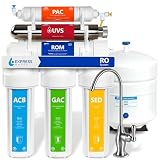
11. Express Water ROUV10D – UV System with Leak Detection
Express Water ROUV10D, 6-Stage RO Water Filter System, UV Filter, 100 GPD
UV Filter
100 GPD
Leak Detection
Non-Proprietary Filters
Pros
- UV-C light for biological contaminant destruction
- Leak detection with emergency shutoff
- Non-proprietary filters for cost savings
- 100 GPD high capacity
- Excellent illustrated instructions
Cons
- No spare filters included
- Higher cost than basic models
The Express Water ROUV10D has the highest average rating on our list at 4.8 stars, and while the review count is smaller at 17 reviews, every single reviewer gave it four or five stars. The standout feature here is the built-in leak detection with automatic emergency shutoff, which is something I wish every under-sink RO system included.
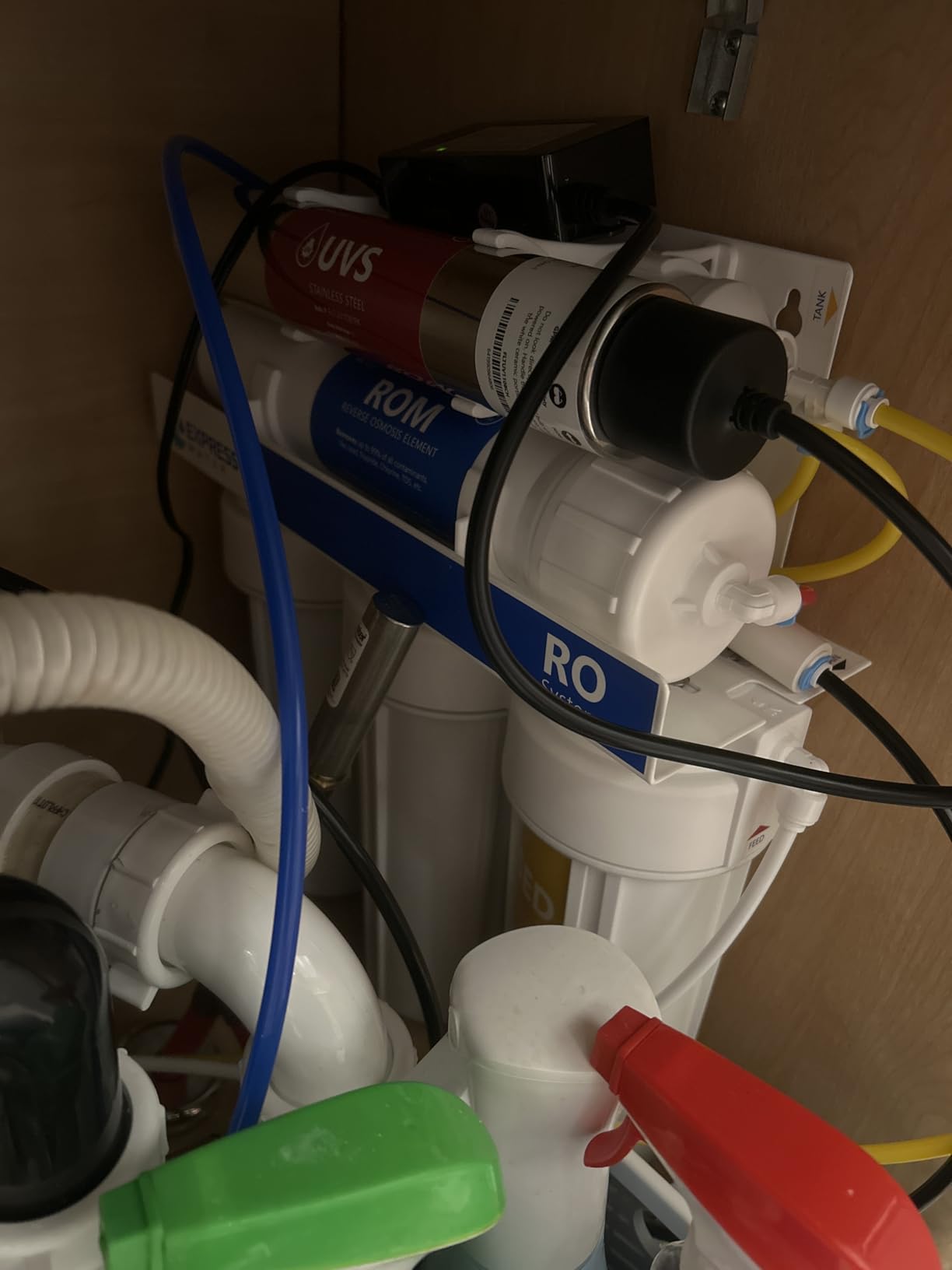
Water damage from a leaking RO system is one of the most common and expensive problems owners face. The leak detection sensor monitors for moisture and shuts the system down automatically if it detects a problem. This feature alone could save you thousands in potential cabinet and floor damage.
The UV-C light stage destroys biological contaminants including bacteria and viruses, which is valuable for homes on well water or anyone concerned about microbiological safety. The 100 GPD capacity matches the highest-output systems on this list, and the non-proprietary filter design means you can buy replacement filters from multiple sources rather than being locked into one supplier.
Express Water includes excellent illustrated instructions that multiple reviewers specifically praised. The system operates at 40-80 PSI and uses standard quick-connect fittings throughout.
Who This System Suits Best
The ROUV10D is ideal for safety-conscious buyers who want leak protection and UV purification in one package. The non-proprietary filters make it a smart long-term investment, since you are not locked into expensive branded replacements. If you are on well water or want biological protection alongside chemical filtration, the UV stage adds meaningful value.
What to Watch Out For
The system does not include spare filters in the box, so you will want to order replacements shortly after installation. With only 17 reviews currently, the long-term reliability picture is less established than systems with thousands of reviews. The system is priced higher than basic models, reflecting the UV and leak detection features.
12. Geekpure RO6-UV – UV Filtration Budget Option
Geekpure 6 Stage Reverse Osmosis RO Drinking Water Filter System-75GPD
UV Filter
75 GPD
0.0001 Micron
NSF Components
Pros
- 6-stage RO with UV filter for ultra-pure water
- Filters down to 0.0001 micron
- UV stage rated for 9000+ hours
- NSF certified components
- No chemical treatment added
Cons
- UV light stays on 24/7 with no flow switch
- Installation instructions can be confusing
The Geekpure RO6-UV offers UV purification at one of the lowest prices on this list. Instead of alkaline remineralization, the sixth stage here is a UV light that destroys bacteria, viruses, and other biological contaminants without adding chemicals. This makes it a different proposition from the alkaline-focused systems that dominate this roundup.
I found the 0.0001-micron filtration rating to be on par with premium systems. The RO membrane catches contaminants down to that microscopic level, while the UV stage handles anything biological that slips through. The UV lamp is rated for over 9,000 hours of operation.
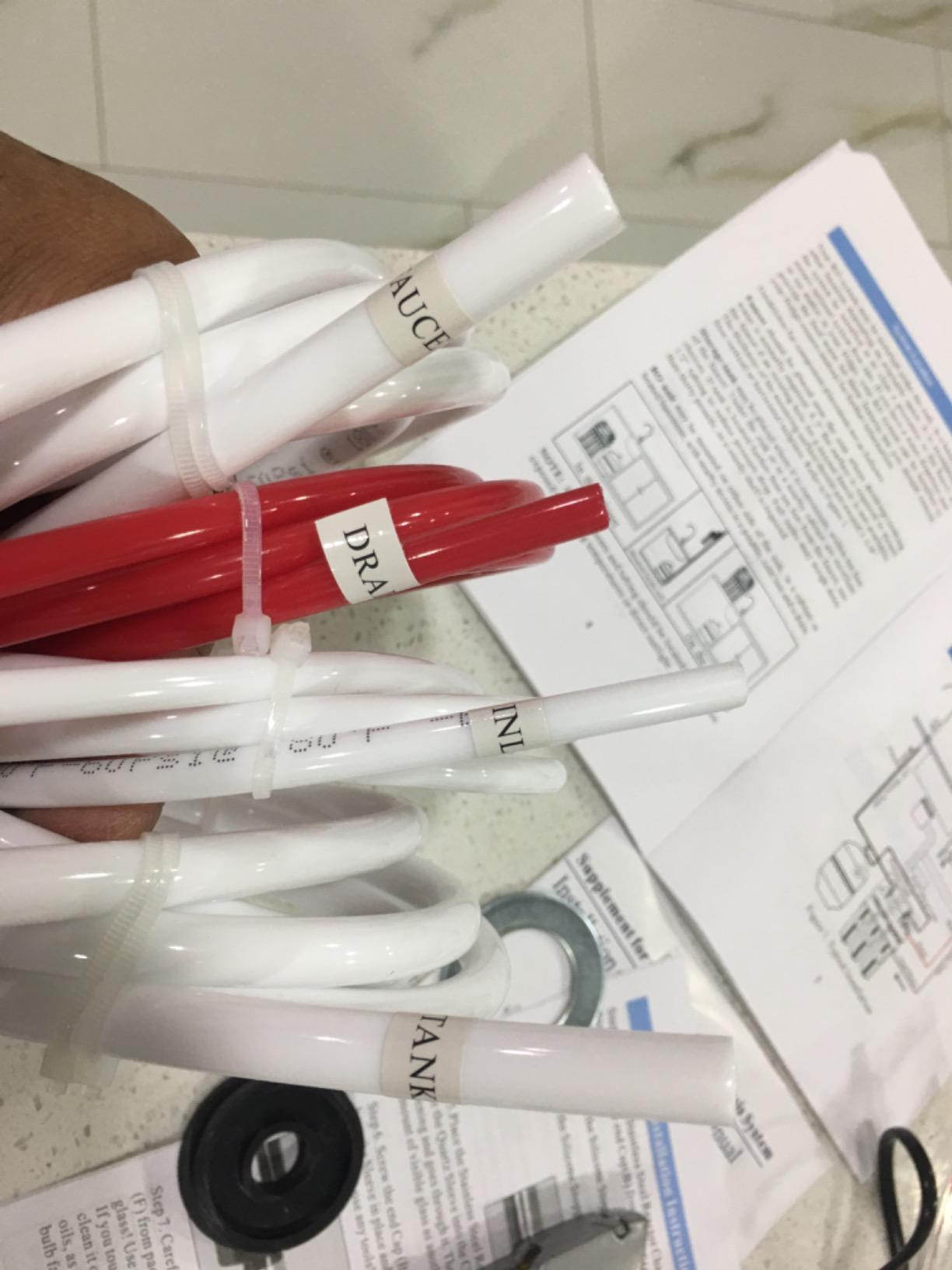
The system produces 75 gallons per day at 60 PSI and stores water in a 2.8-gallon tank. NSF-certified components include the RO membrane, tubing, quick-connect fittings, and storage tank. The UV stage does not change taste, odor, pH, or conductivity, so you get pure water without any chemical alteration.
Geekpure has been manufacturing water filtration systems for over 20 years, and the build quality reflects that experience. Customer support is reportedly responsive when issues arise.
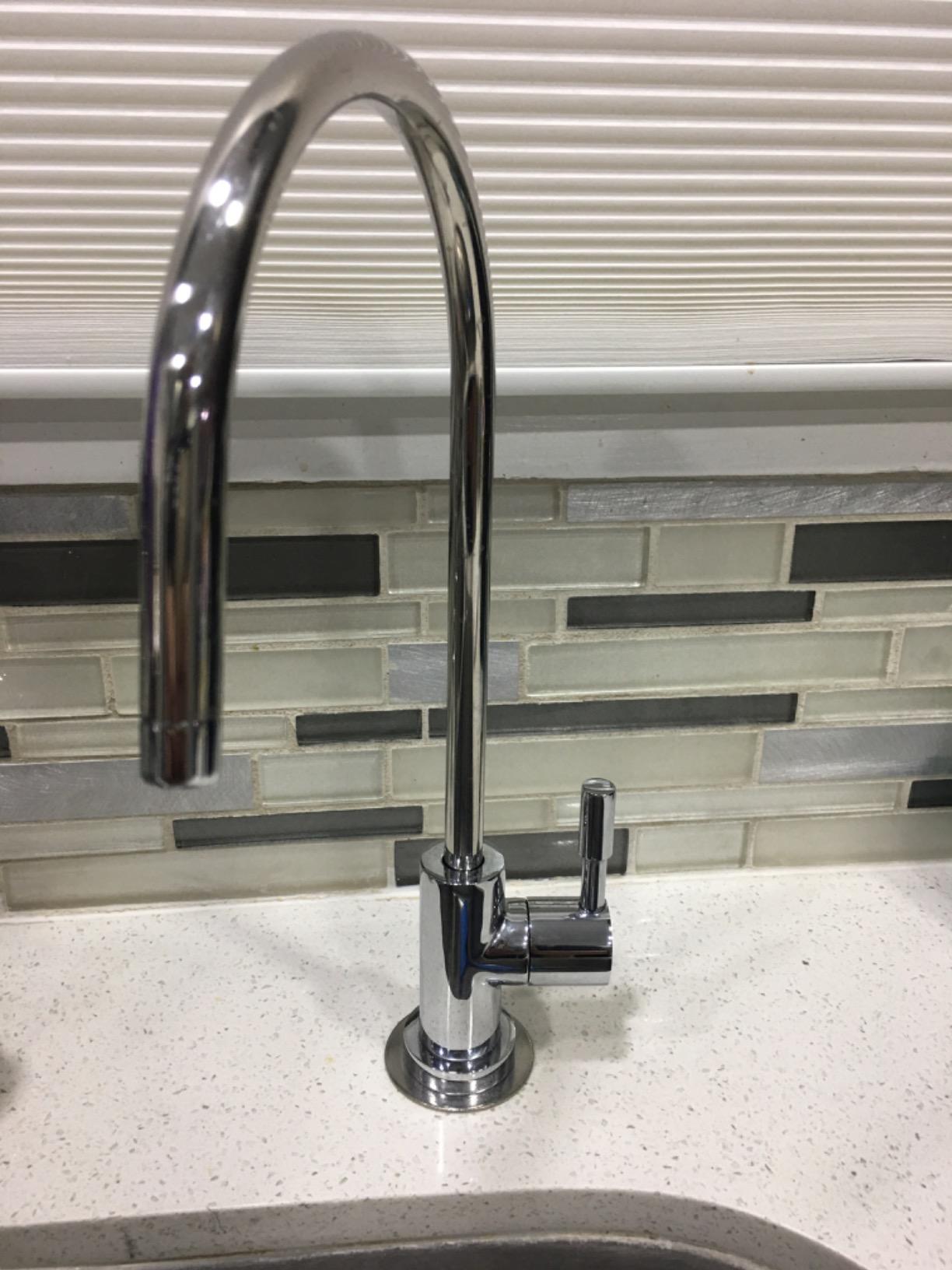
Who This System Suits Best
This system is built for budget-conscious buyers who specifically want UV biological protection. If you are on well water, concerned about bacteria in your supply, or simply want the added safety of UV treatment, the RO6-UV delivers that capability at a very accessible price. It is also suitable for aquarium owners who need ultra-pure water without chemical additives.
What to Watch Out For
The UV light stays on continuously with no flow switch, meaning it draws power 24 hours a day even when no water is being filtered. Some users have found the installation instructions confusing, so plan to use supplementary video guides. The drain saddle may not be permitted in all areas, so check your local plumbing codes before installation.
Buying Guide: Choosing the Best 6 Stage RO System?
Choosing the right 6-stage reverse osmosis system comes down to understanding what each stage does and matching those capabilities to your specific water quality needs. Here is what you need to know before making a decision.
What Is a 6-Stage Reverse Osmosis System?
A 6-stage RO system pushes water through six sequential filtration steps, each targeting different contaminants. Here is the standard stage breakdown:
Stage 1 is a sediment pre-filter that catches rust, sand, dirt, and large particles. This protects downstream filters from clogging. Stage 2 is an activated carbon filter that removes chlorine, chemicals, and compounds that cause taste and odor problems. Stage 3 is a carbon block filter that provides finer carbon filtration for additional chemical reduction before water reaches the membrane.
Stage 4 is the reverse osmosis membrane itself, the core of the system, which filters down to 0.0001 microns and removes dissolved solids, lead, fluoride, arsenic, PFAS, and hundreds of other contaminants. Stage 5 is a post-carbon polishing filter that removes any remaining taste or odor issues from the stored water. Stage 6 is typically either an alkaline remineralization filter that adds healthy minerals back and raises pH, or a UV light that destroys bacteria and viruses.
Why Choose 6-Stage Over 5-Stage?
The difference between 5-stage and 6-stage systems is that sixth stage. In a 5-stage system, the final stage is usually a post-carbon filter, and the water comes out slightly acidic because the RO membrane strips everything including beneficial minerals. The 6-stage system adds either remineralization or UV treatment on top of that, which solves one of two problems.
A remineralization stage fixes the flat, acidic taste by adding calcium and magnesium back into the water, producing alkaline water that is more pleasant to drink and may offer health benefits. A UV stage adds biological protection that the RO membrane alone may not fully provide, which is valuable for well water users or anyone concerned about bacteria and viruses. The best 6 stage reverse osmosis systems give you that extra layer of protection or quality that 5-stage systems simply cannot match.
Key Factors to Consider
GPD Capacity: Gallons per day tells you how much filtered water the system can produce in 24 hours. A 75 GPD system covers most families, while 100 GPD systems are better for larger households or homes that connect to refrigerators and ice makers. Match capacity to your daily usage.
NSF Certification: Look for NSF 58 certification, which verifies contaminant reduction claims for RO systems. NSF 372 covers lead-free compliance. WQA certification from the Water Quality Association is another trusted mark. Do not rely on marketing claims alone; certifications prove the testing was done.
Tank vs Tankless: Traditional tank-based systems store filtered water in a pressurized tank, meaning you always have water ready at the faucet. Tankless systems save under-sink space but produce water on demand, which can mean slower flow rates. All 12 systems in this roundup use tank-based or countertop designs.
Installation and Space Requirements
Under-sink systems require cabinet space for the filter housings, storage tank, and tubing runs. Measure your cabinet before ordering, since tanks typically need 12 to 15 inches of vertical clearance. Installation difficulty varies significantly between brands. Systems with color-coded tubing and quick-connect fittings are DIY-friendly, while vague instructions can turn a two-hour project into a full-day frustration.
Countertop systems like the Bluevua units require zero installation but need counter space near an electrical outlet. Consider whether you are comfortable drilling a hole in your sink for a dedicated RO faucet, since most under-sink systems require one.
Maintenance and Filter Replacement Costs
Budget for annual filter replacements. Sediment and carbon pre-filters typically need replacing every 6 to 12 months. The RO membrane lasts 2 to 3 years under normal conditions. Post-carbon and alkaline or UV stages need annual replacement. Total yearly maintenance costs vary by brand but generally range from moderate to significant depending on whether you use proprietary or standard filters.
Systems with non-proprietary filters, like the Express Water ROUV10D, tend to have lower long-term costs since you can shop around for replacements. Budget brands like Geekpure also keep replacement costs low. Premium brands with US-made filters may cost more per replacement but need changing less frequently.
Well Water Compatibility
If you are on well water, pay attention to TDS tolerance, UV protection, and pressure requirements. The NU Aqua system handles up to 5,000 PPM TDS, making it the strongest candidate for challenging well water. Systems with UV stages like the Geekpure RO6-UV and Express Water ROUV10D add biological protection that is especially relevant for private wells. Booster pump systems like the iSpring RCC7P-AK compensate for the lower pressure that many well water systems deliver.
FAQs
How does a 6-stage reverse osmosis system work?
A 6-stage RO system pushes water through six sequential filtration stages: a sediment pre-filter, two carbon filters, an RO membrane that filters down to 0.0001 microns, a post-carbon polishing filter, and a sixth stage that is either an alkaline remineralization filter or a UV light. Water is forced through the semi-permeable membrane under pressure, removing dissolved solids, chemicals, heavy metals, and contaminants while the sixth stage either adds healthy minerals back or destroys biological pathogens.
What contaminants does reverse osmosis remove?
Reverse osmosis removes up to 99% of contaminants including lead, chlorine, fluoride, arsenic, PFAS, chromium, cadmium, barium, copper, selenium, asbestos, VOCs, nitrates, and total dissolved solids. The RO membrane filters particles down to 0.0001 microns. Systems with UV stages also destroy bacteria and viruses. NSF 58 certified systems have independently verified reduction rates for specific contaminants.
How often should RO system filters be replaced?
Sediment and carbon pre-filters should be replaced every 6 to 12 months depending on water quality and usage. The RO membrane typically lasts 2 to 3 years. Post-carbon polishing filters and alkaline remineralization or UV stages need annual replacement. Following the manufacturer recommended schedule keeps water quality high and prevents damage to downstream components.
What is the difference between 5-stage and 6-stage RO?
The difference is the sixth filtration stage. A 5-stage system ends with a post-carbon filter, producing slightly acidic water with a flat taste. A 6-stage system adds either an alkaline remineralization filter that restores pH balance and adds calcium and magnesium back for better-tasting water, or a UV light that destroys bacteria and viruses for biological protection. The sixth stage improves either water taste or safety beyond what 5-stage systems offer.
Do RO systems waste water?
Yes, RO systems produce some waste water as part of the filtration process. Older systems typically run a 1:3 or 1:4 pure-to-waste ratio, meaning 3 to 4 gallons go down the drain for every gallon of clean water produced. Newer efficient systems like the iSpring PH100 achieve a 1:1 ratio, while countertop units like the Bluevua ROPOT-Lite reach an impressive 3:1 ratio, wasting far less water than traditional designs.
How much does a reverse osmosis system cost to maintain?
Annual maintenance costs for a 6-stage RO system typically cover replacing pre-filters, post-filters, and the alkaline or UV stage. The RO membrane is replaced every 2 to 3 years. Systems with non-proprietary or widely available replacement filters cost less to maintain than those requiring branded-only replacements. Budget brands like Geekpure keep long-term costs low, while premium brands with longer-lasting US-made filters may cost more per replacement but need changing less frequently.
Final Thoughts on 6 Stage RO Systems
Finding the best 6 stage reverse osmosis systems in 2026 comes down to matching the technology to your specific situation. For most households, the iSpring RCC7AK-BN delivers proven NSF-certified performance with the largest owner review base on the market. Homes with low water pressure should look at the Editor’s Choice iSpring RCC7P-AK with its built-in booster pump. And budget-conscious buyers get genuine 6-stage alkaline filtration from the Geekpure RO6-AF without compromise.
That sixth stage is what separates these systems from basic RO units. Whether you choose alkaline remineralization for better-tasting water or UV protection for biological safety, the extra filtration step makes a real difference you can taste and trust. Pick the system that fits your water pressure, space, and budget, and you will be drinking cleaner water within a weekend.