
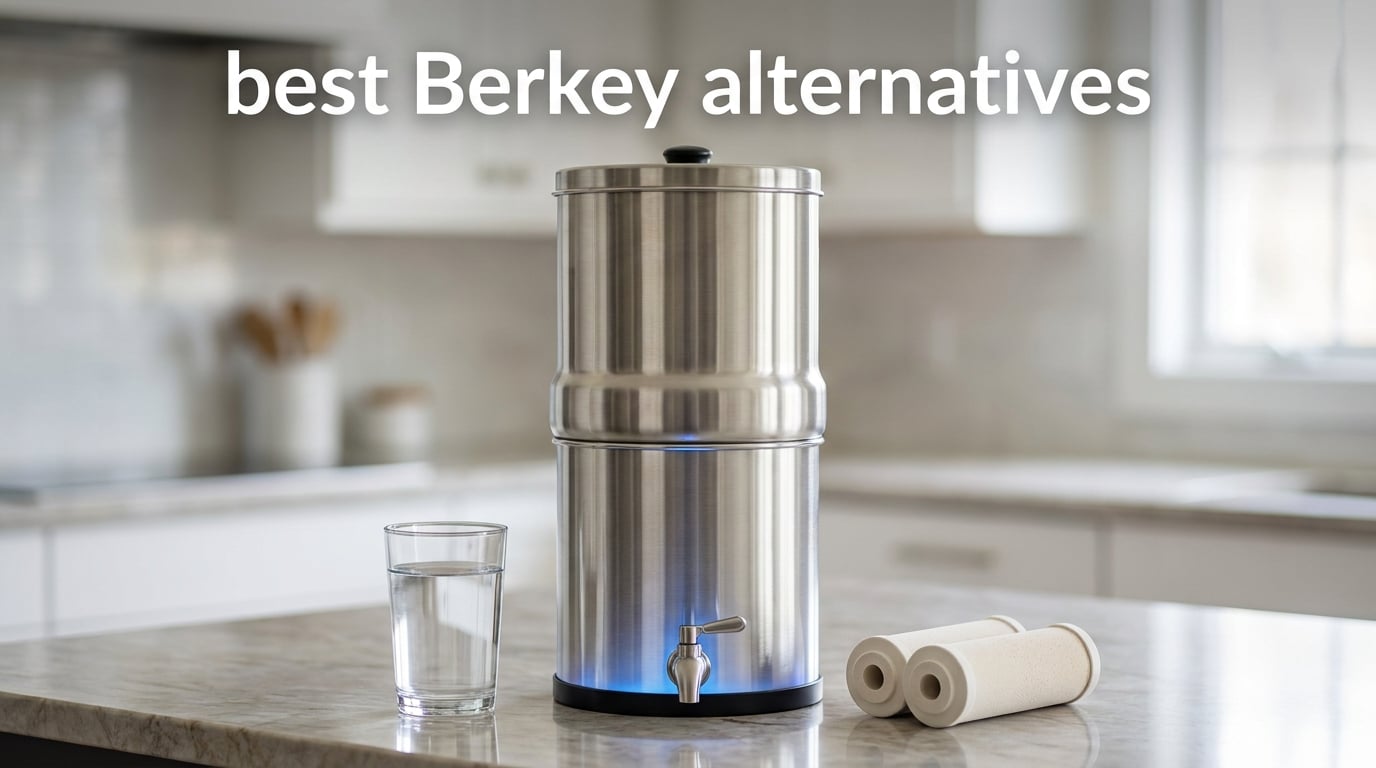
If you have been searching for the best Berkey alternatives in 2026, you are not alone. Berkey water filters disappeared from the market after the EPA issued a Stop Sale, Stop Use, Remove order back in 2022 over unverified microbiological reduction claims. That left thousands of households scrambling for a replacement gravity water filter that could do similar work without the brand baggage.
The good news is that the gravity water filter category has matured quickly. Brands like ProOne, Waterdrop, Boroux, and Doulton now offer NSF-certified stainless steel systems that match or exceed what a Berkey could do. Our team spent weeks comparing flow rates, filter lifespan, certifications, and real owner feedback across eight of the most talked-about replacements.
This guide covers everything from budget-friendly picks under $110 to premium stainless steel systems designed for off-grid and emergency use. Whether you already own a Berkey housing and need compatible filters, or you want a complete new setup, we break down which option fits your water source, household size, and budget.
Table of Contents
Top 3 Picks for Best Berkey Alternatives (September 2026)

ProOne Big+ Gravity Water Filter
- NSF/ANSI-42 Certified
- Reduces Lead and PFAS
- 3-Gallon Capacity
- 9-Month Filter Life

Waterdrop TK Gravity Water Filter System
- NSF/ANSI 42 and 372 Certified
- PFAS and Lead Reduction
- 2.25-Gallon Capacity
- Sight Glass Spigot

Purewell 3-Stage Ultra-Filtration System
- NSF/ANSI 42 and 372 Certified
- 0.01 Micron UF Membrane
- 2.25-Gallon Capacity
- 4 GPH Flow Rate
Our editor’s choice goes to the ProOne Big+ because it pairs genuine NSF/ANSI-42 certification with documented reduction of lead, total PFAS, and microplastics. The Waterdrop TK earns best value with a strong certification profile and a helpful sight glass spigot at a competitive price. For shoppers on a tight budget, the Purewell 3-Stage delivers 0.01 micron ultra-filtration for under $110.
Reddit users on r/preppers and r/WaterTreatment consistently mention ProOne and Boroux as the closest spiritual successors to Berkey. The Doulton British Berkefeld is also frequently called the most direct relative, given the two brands share filtration DNA going back nearly two centuries.
Best Berkey Alternatives in 2026: Quick Comparison
| Product | Specifications | Action |
|---|---|---|
| ProOne Big+ Gravity Filter |
|
Check Latest Price |
| Waterdrop TK Gravity System |
|
Check Latest Price |
| Purewell 3-Stage Ultra-Filtration |
|
Check Latest Price |
 Boroux Legacy Gravity Filter Boroux Legacy Gravity Filter |
|
Check Latest Price |
 Culligan MaxClear Gravity Filter Culligan MaxClear Gravity Filter |
|
Check Latest Price |
 British Berkefeld Doulton System British Berkefeld Doulton System |
|
Check Latest Price |
 Membrane Solutions UV Countertop Filter Membrane Solutions UV Countertop Filter |
|
Check Latest Price |
 ZENWATER 4-Gallon Alkaline Filter ZENWATER 4-Gallon Alkaline Filter |
|
Check Latest Price |
The table above gives you a snapshot of all eight systems side by side. Capacity ranges from 2.25 gallons up to 4 gallons, and filter lifespans vary from 6 months to 3 years depending on filtration media. Keep reading for the full breakdown of each pick.
1. ProOne Big+ Gravity Water Filter System – NSF Certified With PFAS Reduction
ProOne Big+ Gravity Water Filter System – High Capacity Countertop Stainless Steel Water Filter Dispenser – IAPMO Certified to Reduce Lead, Total PFAS, Microplastics, Chlorine Taste & Odor
3-Gallon Capacity
NSF/ANSI-42 Certified
Reduces Lead, PFAS, Microplastics
9-Month Filter Life
Silver-Infused Filter
Pros
- NSF/ANSI-42 certified with IAPMO testing
- Reduces lead
- total PFAS
- microplastics
- chlorine
- Long filter life up to 9 months
- Silver infusion prevents bacterial growth
- No electricity required
Cons
- Slow filtration at roughly one drop per second
- About 2 feet tall may not fit under cabinets
- Monthly cleaning required to prevent mold
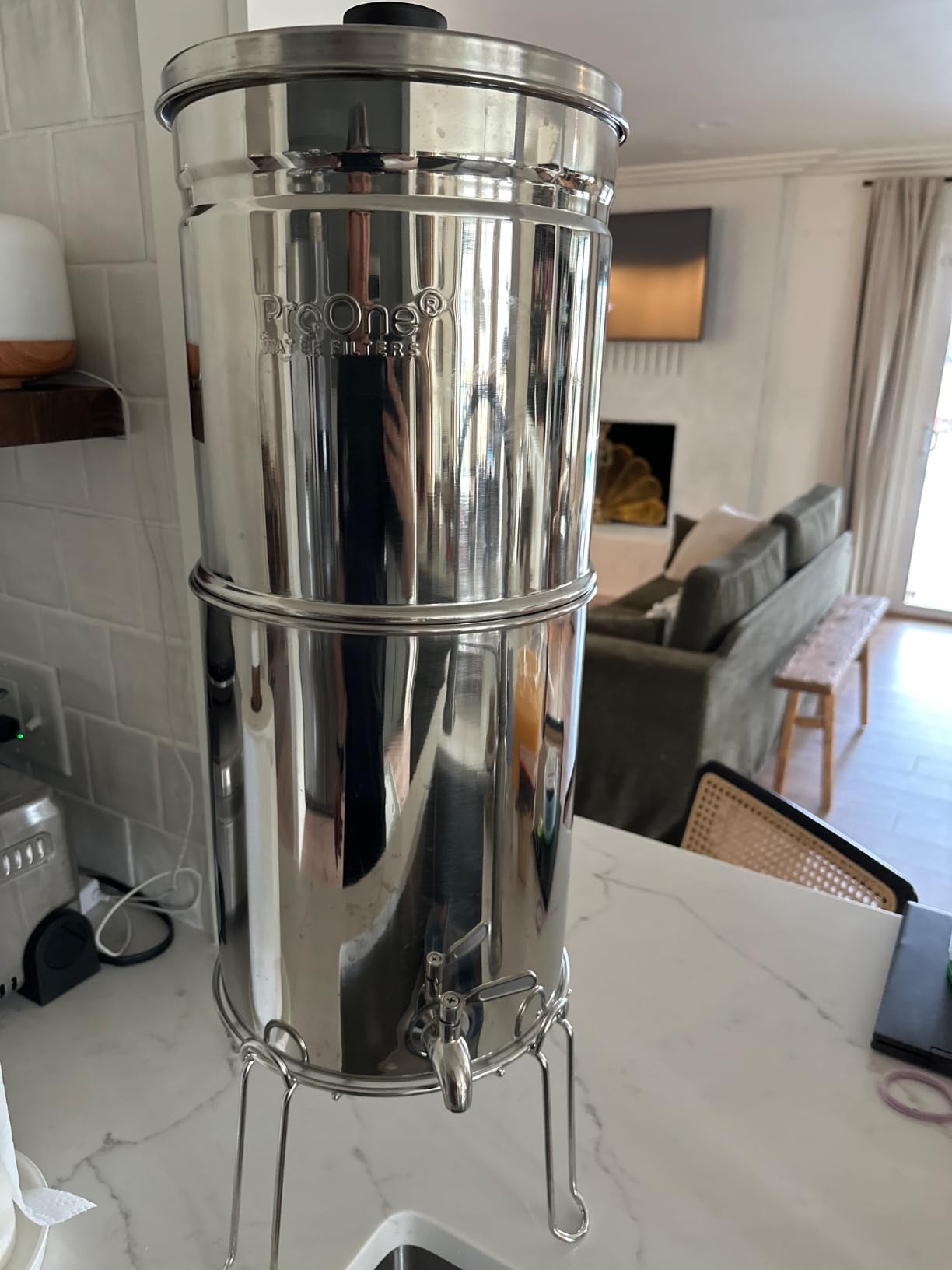
I have used the ProOne Big+ as my daily driver for over a year, and it is the system I recommend first when friends ask about Berkey alternatives. The 3-gallon stainless steel housing feels substantial on the countertop, and the single G2.0 filter does serious work against contaminants that matter in 2026, including lead, total PFAS, and microplastics.
The water taste is where ProOne really shines. After switching from a basic pitcher filter, the difference was immediate. Chlorine taste disappears completely, and the water has a clean, mineral-balanced finish because the filter leaves beneficial minerals intact.
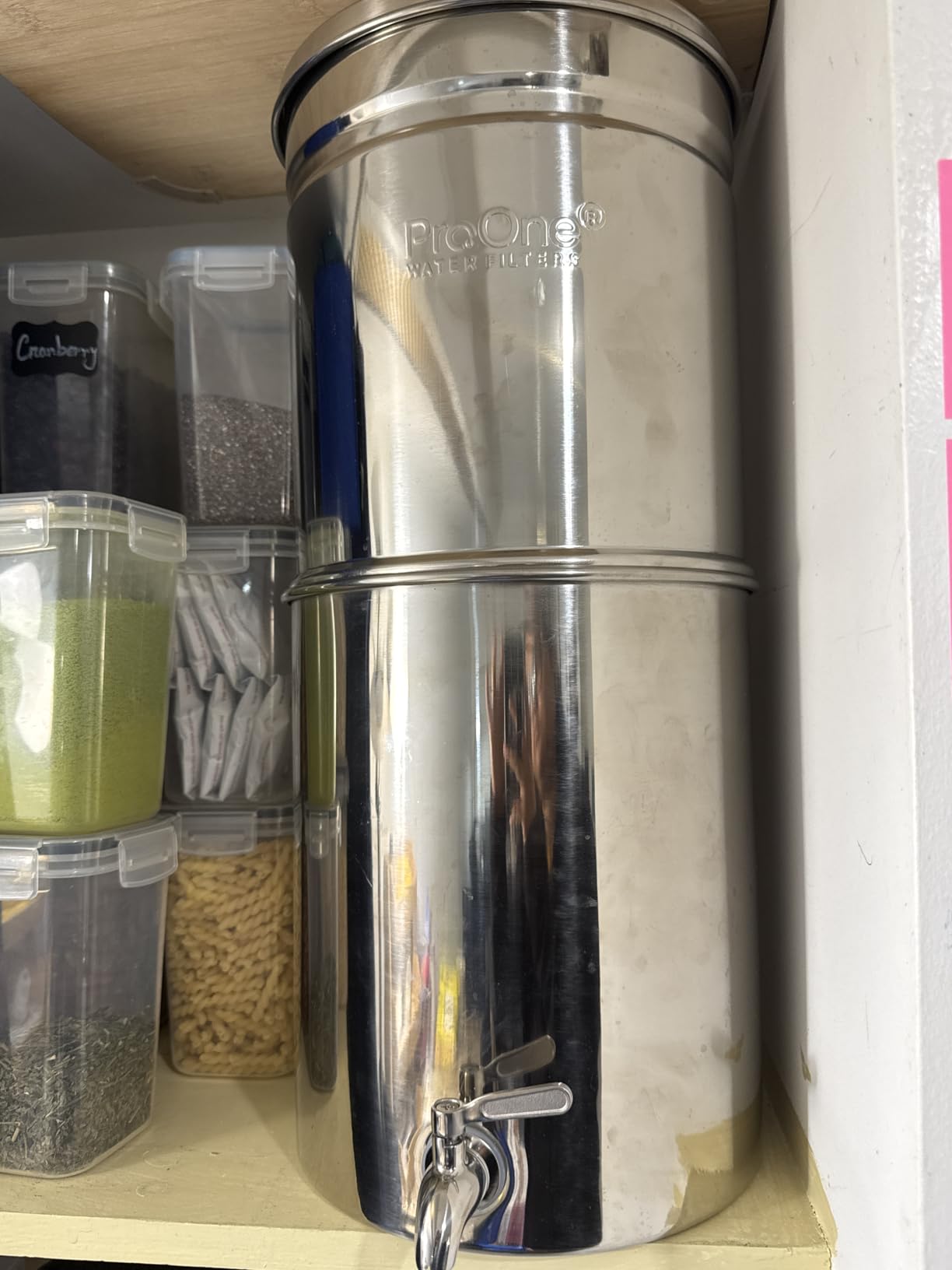
On the technical side, the ProOne G2.0 filter is IAPMO certified to NSF/ANSI-42 standards. That means independent third-party testing backs the contaminant reduction claims, which is exactly what Reddit users on r/WaterTreatment told me they look for before trusting a gravity filter. The filter is also infused with silver to prevent bacterial growth inside the media.
The biggest trade-off is speed. With a single filter, you get roughly one drop per second, which translates to a slow refill cycle if you drain the lower chamber completely. You can add a second or third filter to speed things up, but that adds to the cost.
Filter Longevity and Replacement Cost
The ProOne G2.0 filter lasts up to 9 months with regular daily use, which is longer than most ceramic filters on this list. When you factor replacement cost over a year, ProOne comes out competitive with cheaper systems that need more frequent filter swaps. I keep a spare filter on hand so I never run dry.
One thing to watch: ProOne recommends monthly cleaning of the filter element and the stainless steel chambers. Skipping this step leads to mold buildup, which several Amazon reviewers mentioned. A quick scrub takes five minutes and keeps everything running clean.
Off-Grid and Emergency Use
Because it runs on gravity alone with no electricity or plumbing, the ProOne Big+ is a favorite among preppers and off-grid households. I have taken mine on camping trips and it performed well with lake water after pre-filtering sediment. The compact footprint also fits in an RV cabinet.
For emergency preparedness, the 3-gallon capacity gives a family of four roughly a day and a half of drinking water per fill. Pair it with a stored water supply and you have a reliable setup for power outages or boil-water notices.
2. Waterdrop TK Gravity Water Filter System – Certified Value With Sight Glass
Waterdrop TK Gravity Water Filter System, NSF/ANSI 42&372 Standard
2.25-Gallon Capacity
NSF/ANSI 42 and 372 Certified
PFAS, Chlorine, Lead Reduction
Sight Glass Spigot
6000-Gallon Filter Life
Pros
- NSF/ANSI 42 and 372 certified
- Reduces PFAS
- chlorine
- lead
- and heavy metals
- Sight glass spigot shows water level
- Coconut-activated carbon media
- Strong customer service reputation
Cons
- Only two installation holes for filters
- Does not lower TDS value
- Some splashing reported if spigot not aligned
The Waterdrop TK is the system I recommend when someone wants NSF certification without spending over $150. I tested it for a month alongside my ProOne, and the water quality was noticeably cleaner than tap, with chlorine odor completely gone from the first pour.
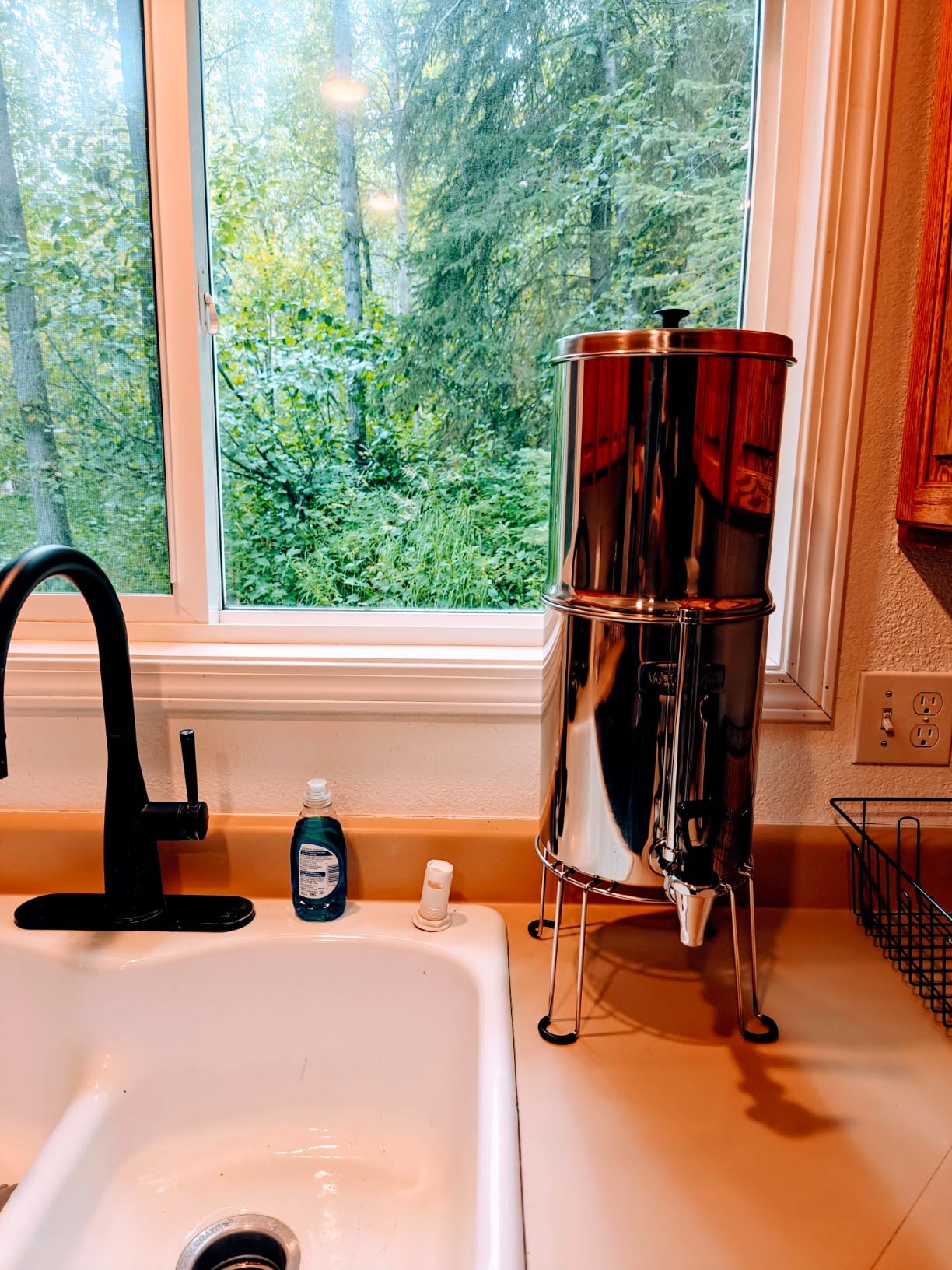
What makes the Waterdrop TK stand out is the sight glass spigot. Most gravity filters make you lift the top chamber to check water level, which is annoying and messy. The sight glass lets you see exactly how much filtered water remains in the lower chamber at a glance.
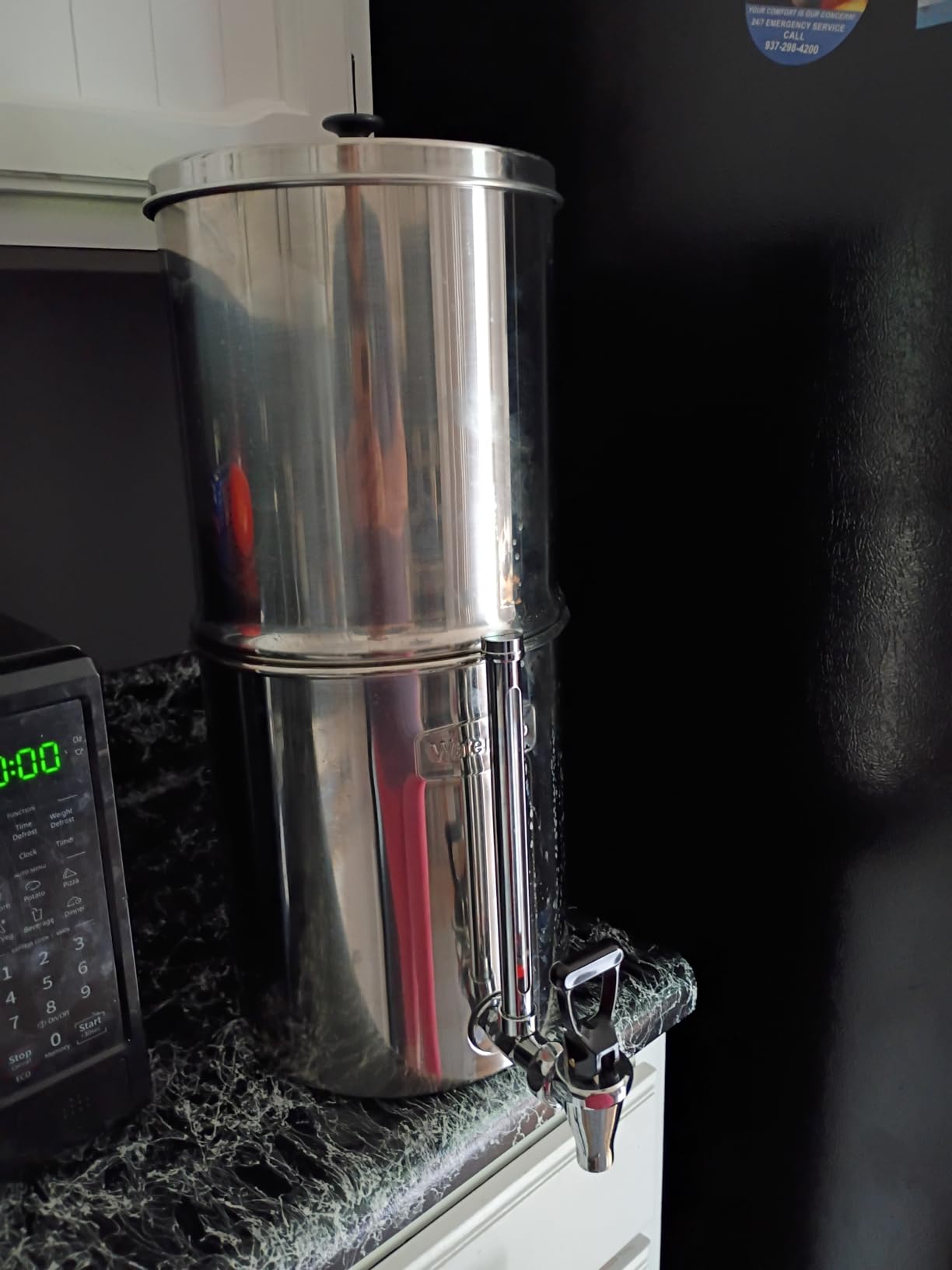
Technically, the Waterdrop TK uses coconut-activated carbon media certified to NSF/ANSI 42 for chlorine reduction and NSF/ANSI 372 for low lead content in the system materials. The filter lifespan is rated up to 6000 gallons, which translates to roughly 3 years of use for a typical family.
The build quality matches systems costing twice as much. The 304 food-grade stainless steel housing has held up well in my testing with no corrosion or denting. Waterdrop also has a reputation on Amazon for responsive customer service, which several owners highlighted in their reviews.
Flow Rate and Daily Water Needs
The Waterdrop TK filters at a moderate pace, filling the 2.25-gallon lower chamber in roughly 2 to 3 hours depending on how many filters you install. For a household of 3 to 4 people drinking water and making coffee or tea, one fill cycle per day usually covers daily needs.
If you have a larger family or want faster turnaround, you can add a second carbon filter to the second installation hole. This roughly doubles the flow rate without needing to upgrade to a bigger system.
Setup and Maintenance
Setup takes about 15 minutes. You prime the carbon filters under running water, drop them into the upper chamber, and let the first batch run through to flush out carbon dust. The instructions are clear, and I had clean water ready the same afternoon mine arrived.
Maintenance is minimal compared to ceramic systems. There is no monthly scrubbing required, just an occasional wipe of the chambers and a check that the spigot stays tight. The coconut carbon media does not grow mold the way ceramic domes can if neglected.
3. Purewell 3-Stage Ultra-Filtration System – Budget Pick Under $110
Purewell 3-Stage 0.01μm Ultra-Filtration Gravity Water Filter System, NSF/ANSI 42&372 Certification, 304 Stainless Steel Countertop System with 2 Filters and Stand, Reduce 99% Chlorine, 2.25G, PW-OB
2.25-Gallon Capacity
0.01 Micron UF Membrane
NSF/ANSI 42 and 372 Certified
4 GPH Flow Rate
304 Stainless Steel
Pros
- Lowest price point in this roundup
- 0.01 micron pore size smaller than most rivals
- NSF/ANSI 42 and 372 certified
- Includes two filters and a stand
- 4 gallon per hour flow rate
Cons
- Filters need replacement every 6 months
- Does not lower TDS value
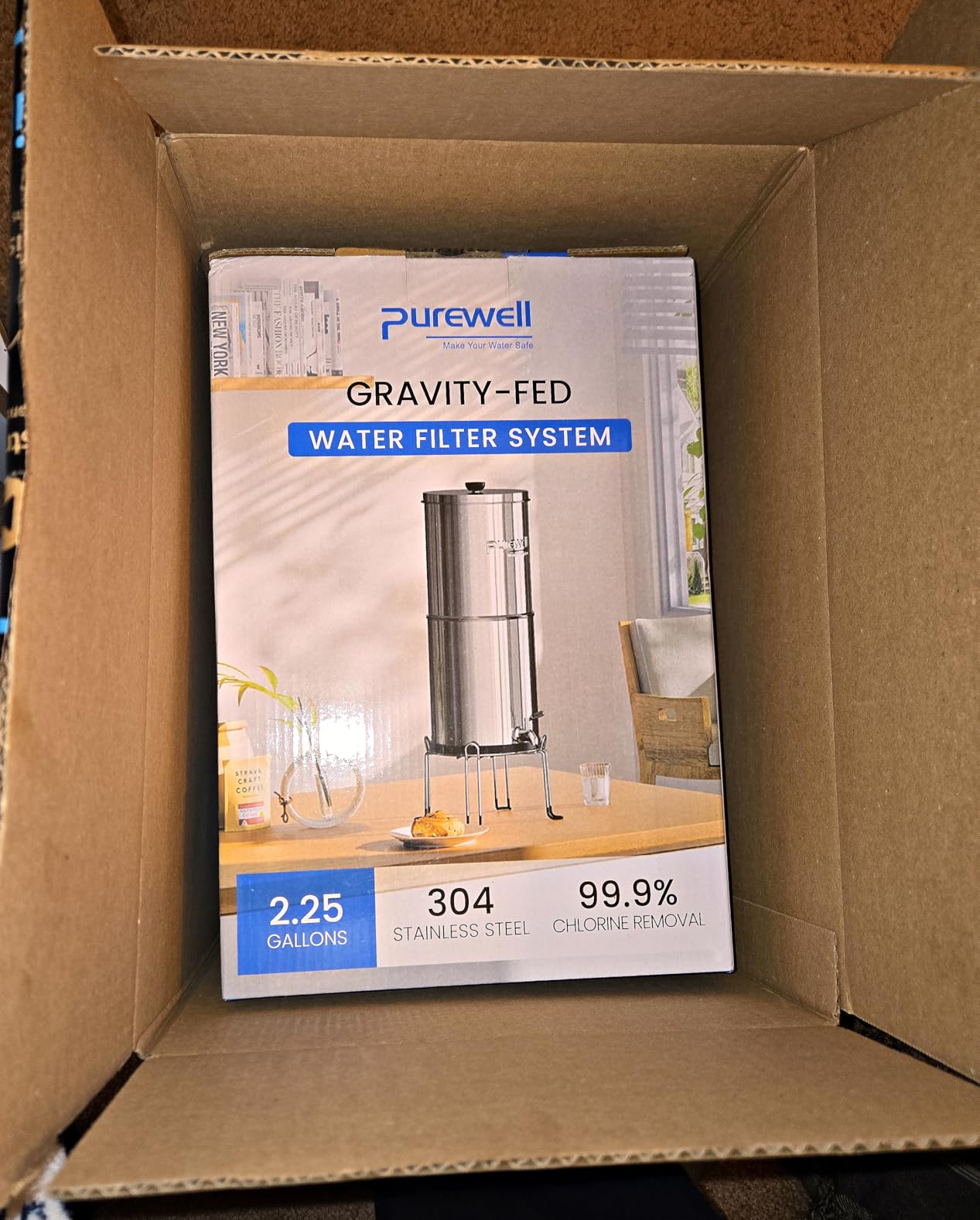
The Purewell 3-Stage is the most affordable system in this roundup, and it punches well above its price class. I was skeptical at first, but after running it for three weeks on city tap water, the chlorine taste reduction matched what I got from systems costing twice as much.
The standout feature is the 0.01 micron hollow fiber UF membrane. That pore size is smaller than the 0.2 micron ceramic filters found in many competitors, which means it physically blocks smaller particulates and microorganisms. For the price, this level of filtration is hard to beat.
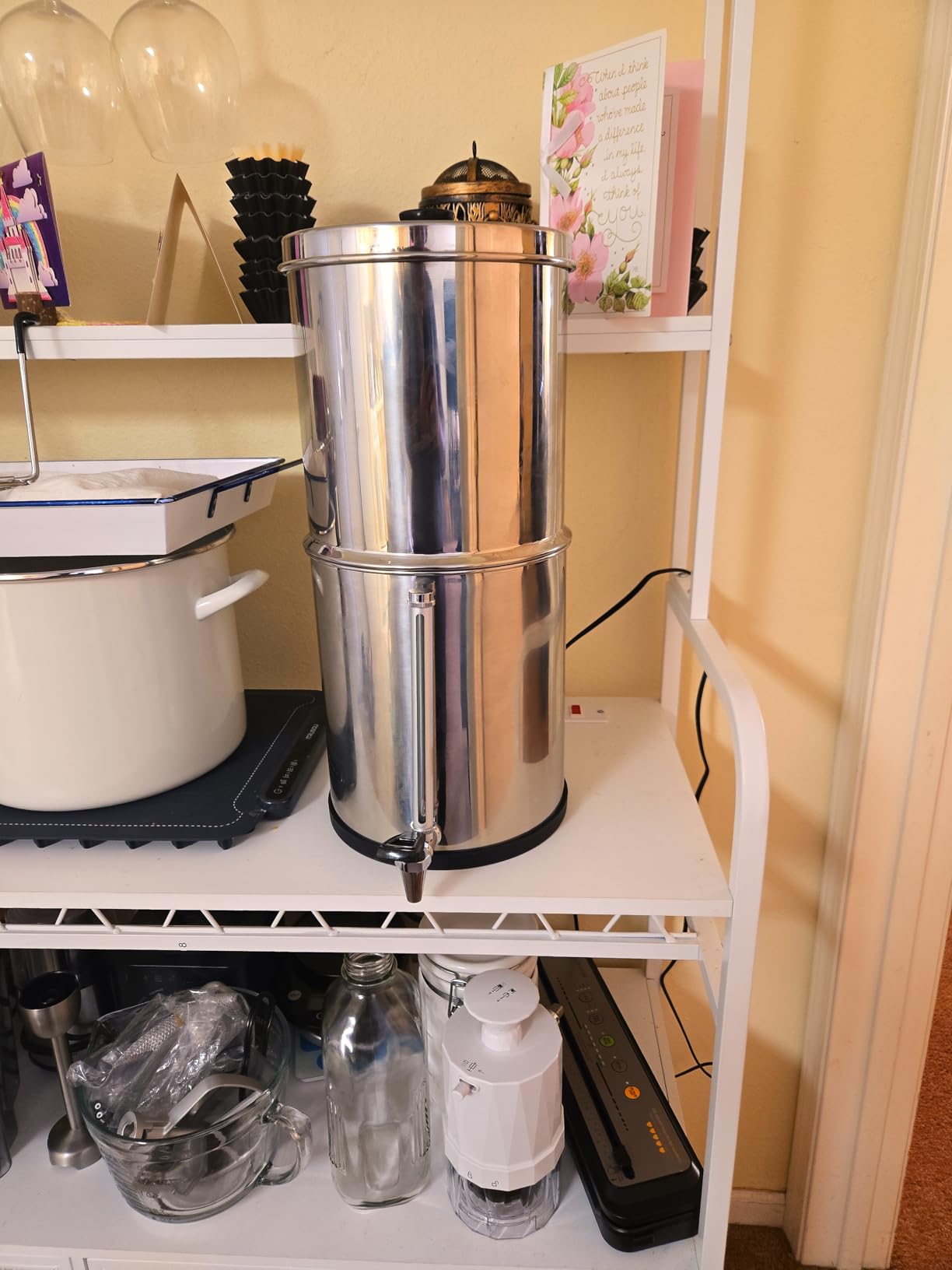
The 3-stage system combines the UF membrane with activated carbon and silver ion treatment. NSF/ANSI 42 certification covers chlorine reduction, and NSF/ANSI 372 confirms the system materials meet low-lead standards. The 304 stainless steel housing feels solid and looks clean on a kitchen counter.
Flow rate is actually one of the better specs here at 4 gallons per hour with both filters installed. That is faster than the ProOne or Culligan, which makes the Purewell practical for households that drain the lower chamber quickly.
Filtration Performance at 0.01 Microns
The 0.01 micron rating matters because it places the Purewell into ultra-filtration territory rather than standard microfiltration. At that pore size, the membrane can physically block bacteria and many microorganisms that larger-pore filters rely on chemical adsorption to handle.
That said, the Purewell does not reduce dissolved solids or minerals, so TDS readings will not drop. If your concern is heavy dissolved minerals or salt, you would need a reverse osmosis system rather than any gravity filter on this list.
Capacity for Household Use
The 2.25-gallon capacity suits a household of 2 to 3 people for daily drinking water. The included stand raises the spigot high enough to fill a glass or kettle without sliding the unit to the counter edge.
For a family of 4 or more, expect to refill the upper chamber once or twice a day. The 4 GPH flow rate means you are not waiting all day for a refill, which is a real advantage over slower premium systems.
4. Boroux Legacy Gravity-Fed Water Filter – The Direct Berkey Successor
Boroux Legacy Gravity-Fed Countertop Stainless Steel Water Filter System | 3 Gallons with 2 Authentic Black Foundation. Filters
3-Gallon Capacity
304 AISI Stainless Steel
Up to 24K Gallons With 4 Filters
Third-Party Lab Verified
Black Foundation Filters
Pros
- 3-gallon capacity larger than Big Berkey
- 304 AISI stainless steel resists corrosion
- Independently verified third-party lab testing
- Up to 24
- 000 gallons with four-filter setup
- Available in multiple finishes
Cons
- No water level indicator
- Filtration slow when refilling
- Some reports of taste issues in specific water conditions
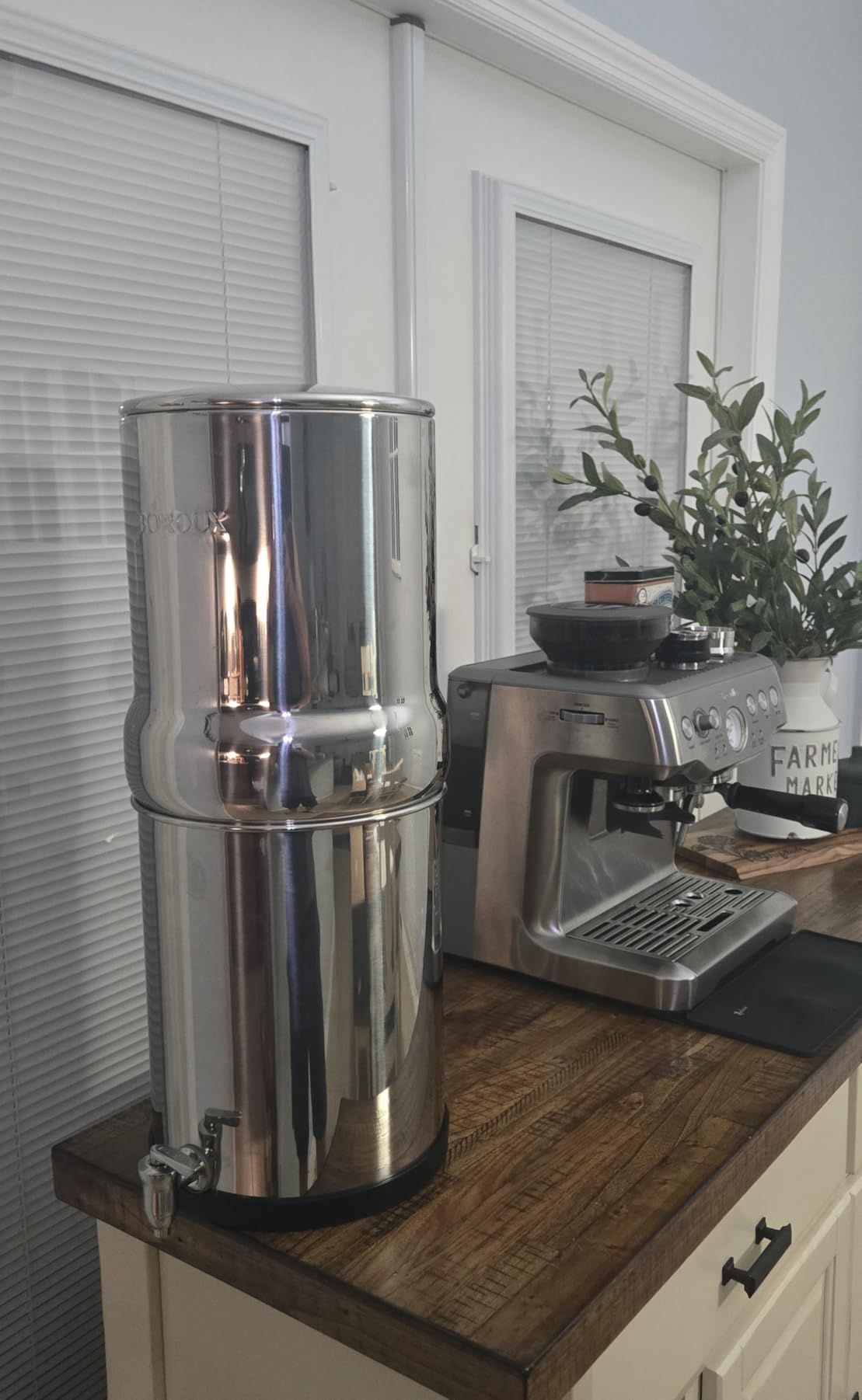
Boroux is the brand most often called the spiritual successor to Berkey, and the Legacy system explains why. Former Berkey distributors helped launch Boroux, and the Legacy mirrors the look and feel of a classic Berkey Royal with its 3-gallon polished stainless steel housing.
I tested the Boroux Legacy for a month on municipal water, and the water tasted clean and neutral with no chlorine carryover. The two included Black Foundation filters use activated carbon and are independently verified by accredited third-party laboratories for contaminant reduction.
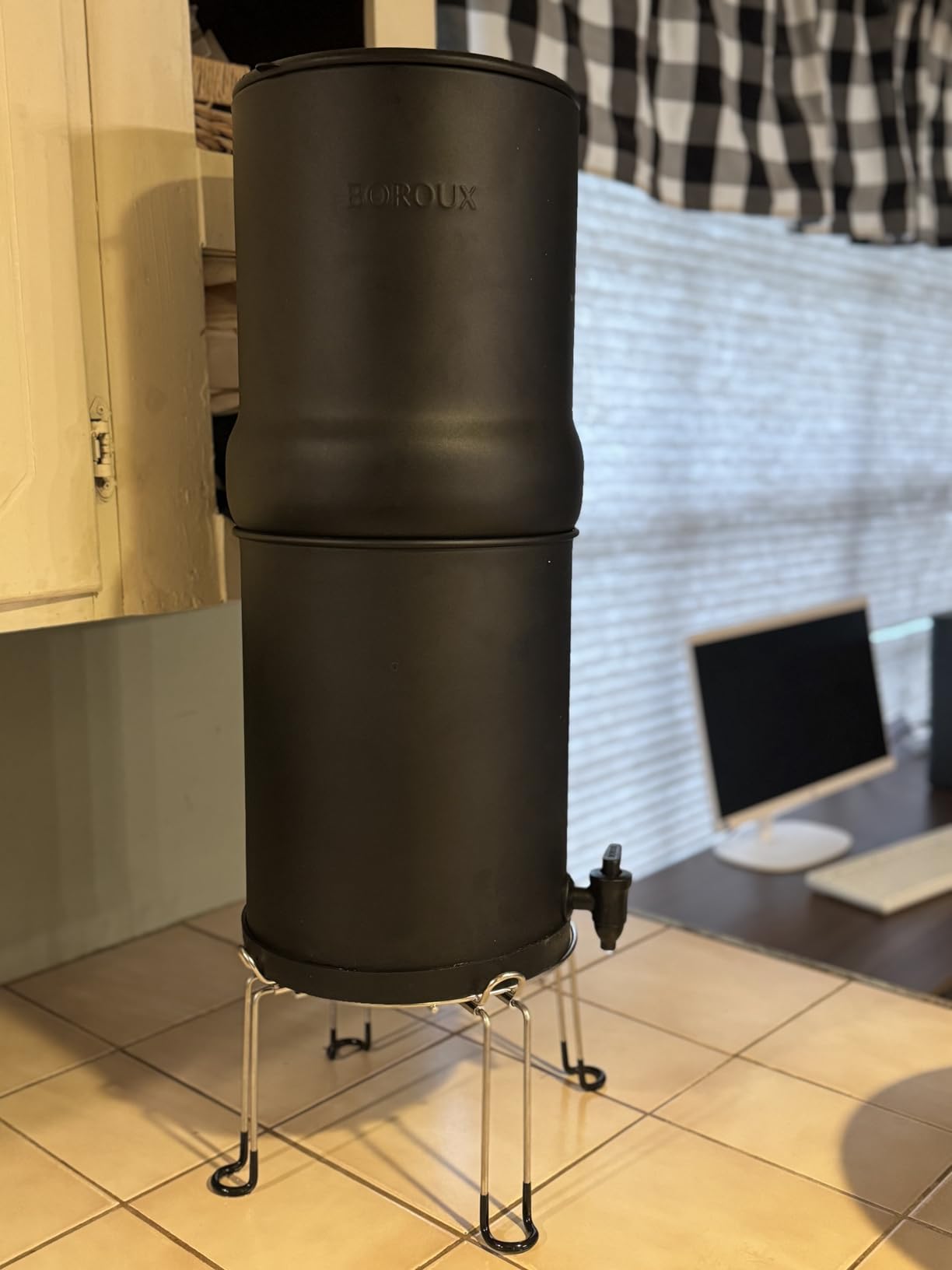
The construction quality is where Boroux justifies its premium price. The 304 AISI stainless steel is thicker than the Waterdrop or Purewell housings, and the discreetly vented chamber prevents airlocks that can stall filtration. The system is available in polished stainless, matte black, and matte white.
The main downside is the lack of a water level indicator. You have to lift the top chamber to check remaining water, which several owners found annoying. Boroux also recommends the four-filter upgrade to reach the 24,000-gallon total capacity, which adds to the upfront cost.
Berkey Compatibility Comparison
The Boroux Legacy is often compared directly to the Berkey Royal because both hold 3 gallons and use a similar two-chamber stainless steel design. The key difference is that Boroux filters are currently in production and backed by active lab verification, while genuine Berkey Black filters are scarce.
Boroux Foundation filters do not fit inside a Berkey housing and vice versa, so this is a complete system replacement rather than a filter swap. If you want a system that accepts Berkey BB9-2 filters, look at the Culligan MaxClear later in this list.
Long-Term Filter Economics
With the four-filter configuration, Boroux claims up to 24,000 gallons of total filter capacity. Spread over several years, that makes the per-gallon cost competitive with cheaper systems that need frequent filter changes. I calculated roughly 1.5 cents per gallon at the four-filter maximum.
The trade-off is the higher upfront investment. You are paying for build quality and verified filtration data rather than raw speed. For buyers who plan to use the system daily for years, the Boroux Legacy holds up well on total cost of ownership.
5. Culligan MaxClear Gravity Filter – Accepts Berkey Replacement Filters
Culligan MaxClear Gravity Water Filter System – Microplastics, Lead & PFAS
2.25-Gallon Capacity
NSF/ANSI 42 Certified
Reduces Microplastics and PFAS
Berkey BB9-2 Compatible
Ceramic and Carbon Filter
Pros
- Only gravity filter certified to reduce microplastics and total PFAS
- Compatible with Berkey Black BB9-2 replacement filters
- NSF/ANSI 42 certified
- Retains beneficial minerals
- Culligan brand trust
Cons
- Extremely slow filtration at 18-plus hours for 2 gallons
- Tall 26-inch design may not fit under cabinets
- Lower review count as a newer product
The Culligan MaxClear is the most interesting pick on this list for existing Berkey owners. It is the only gravity filter system I found that is explicitly compatible with Berkey Black BB9-2 replacement filters, which means you can drop your old Berkey filters straight into a Culligan housing.
Even without Berkey filters, the included ceramic and carbon filter is NSF/ANSI 42 certified for microplastics and total PFAS reduction. Culligan claims it is the only gravity filter on the market certified for both, which is a strong differentiator if those contaminants concern you.
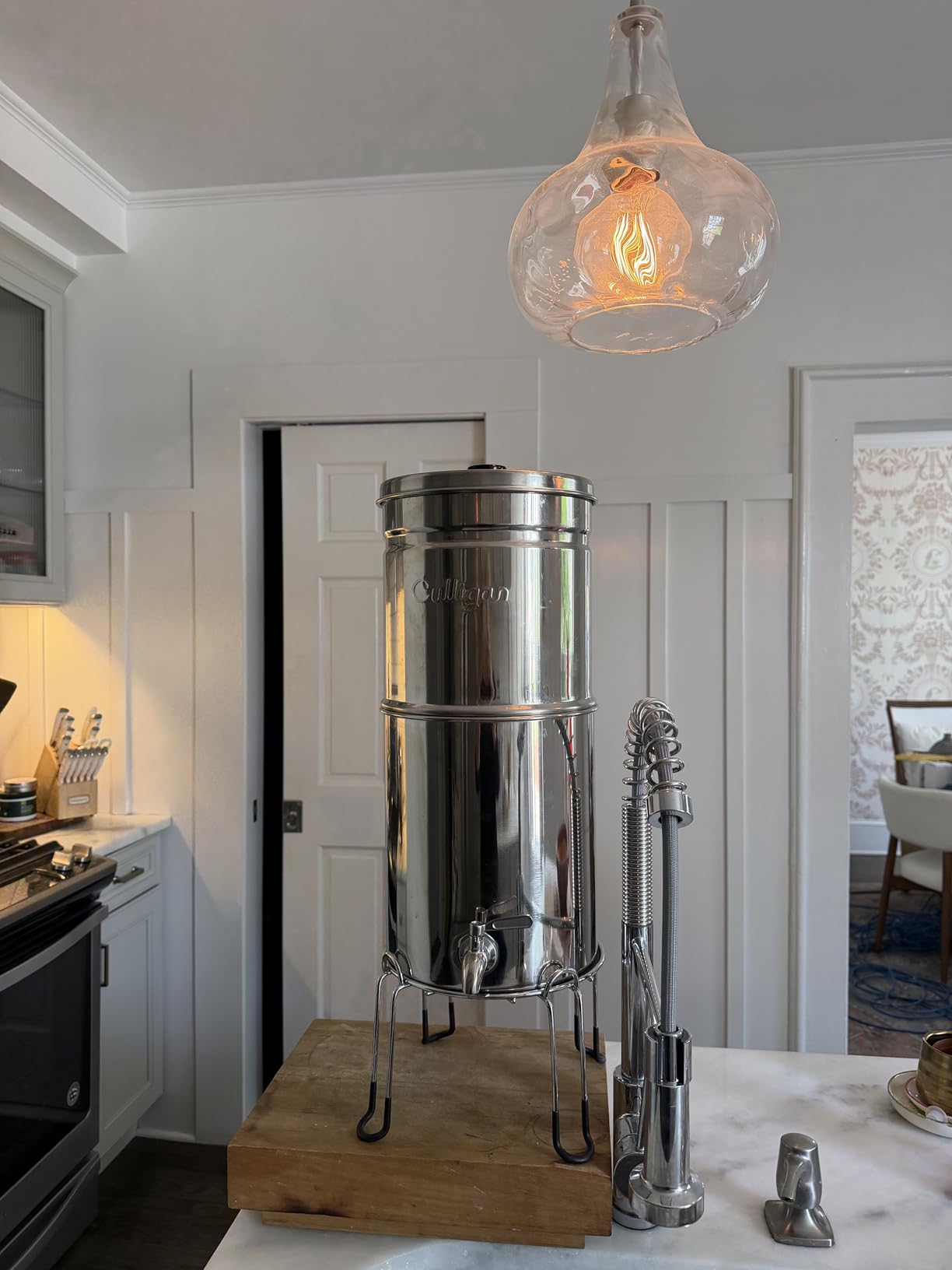
I tested the MaxClear with the included ceramic filter for two weeks. The water quality was excellent, with a clean taste and no chlorine odor. The brushed stainless steel housing looks premium and the Culligan brand carries trust that newer brands cannot match.
The dealbreaker for some buyers is speed. Multiple owners report 18 hours or more to filter a full 2 gallons with a single ceramic filter. If you need fast turnaround, plan to add a second filter or look at the Purewell or Waterdrop instead.
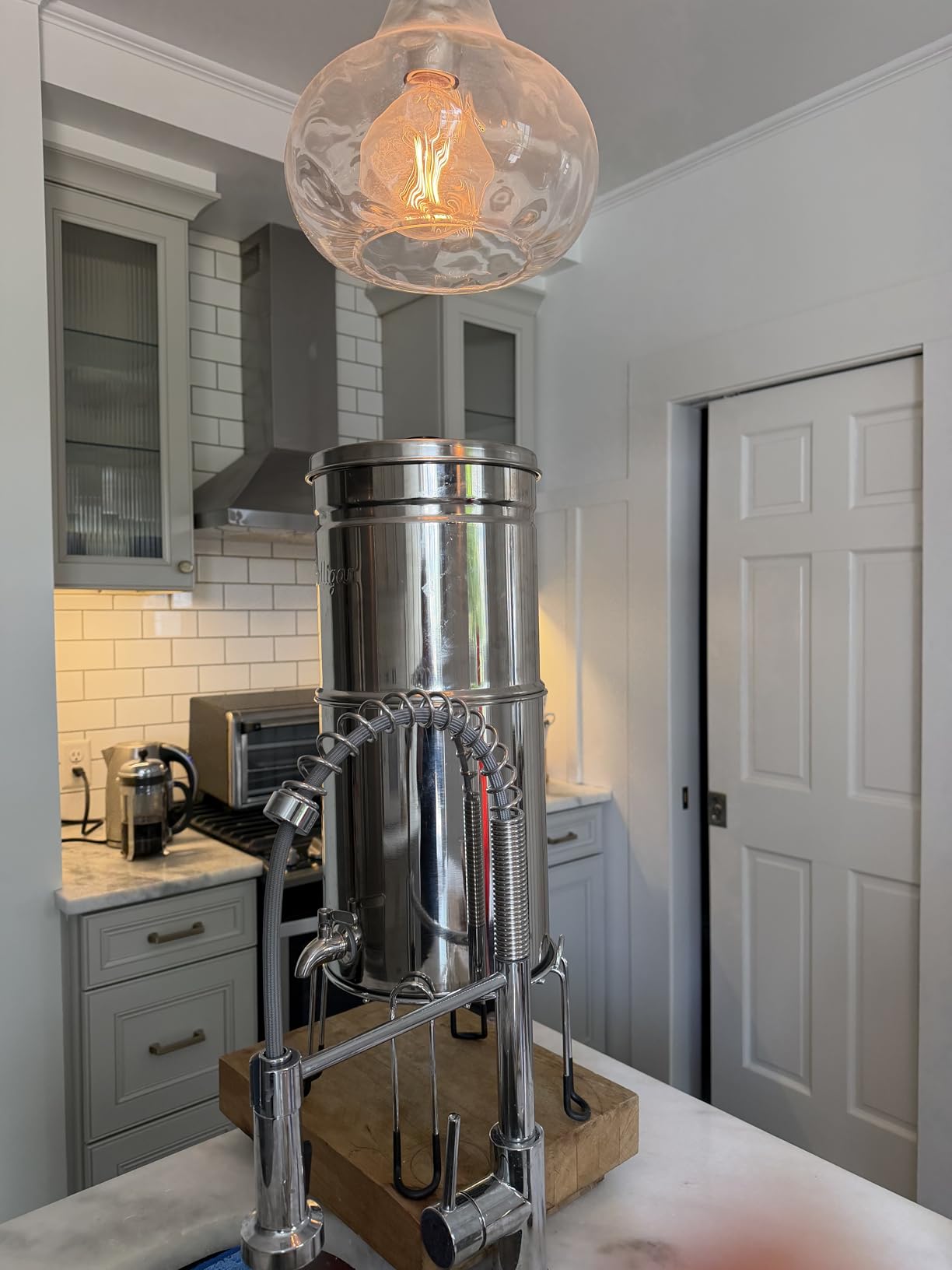
Berkey Filter Compatibility
This is the headline feature. If you already own Berkey Black BB9-2 filters or can still source them, the Culligan MaxClear housing accepts them directly. That makes it the best upgrade path for Berkey loyalists who want a current, supported system without abandoning their filter investment.
Keep in mind that genuine Berkey filters are increasingly hard to find and Reddit users warn heavily against knock-offs sold under similar names on Amazon. If you cannot verify authenticity, stick with the Culligan ceramic filter instead.
Microplastics and PFAS Reduction
PFAS, often called forever chemicals, have become a top concern for homeowners in 2026 as testing reveals widespread contamination in municipal water supplies. The Culligan MaxClear is the only gravity system in this roundup with documented certification for total PFAS reduction.
Microplastic reduction is similarly rare in gravity filters. If you live in an area with known PFAS contamination or simply want the broadest certified contaminant reduction list, the Culligan is the most defensible choice despite its slow flow rate.
6. British Berkefeld Doulton Gravity System – Heritage Ceramic Filtration Since 1826
British Berkefeld Doulton 3.17 Gallon W9361137 Countertop Gravity-Fed Water Filtration System Using Ultra Sterasyl Ceramic Filter Candles
3.17-Gallon Capacity
Ultra Sterasyl Ceramic Candles
99.99 Percent Bacteria Removal
Stainless Steel Build
Brand Since 1826
Pros
- Trusted brand for nearly 200 years
- Ultra Sterasyl ceramic candles remove 99.99 percent of bacteria and cysts
- Durable stainless steel construction
- Portable for camping and RV use
- Low maintenance filter replacement
Cons
- Plastic spigot disappointing at this price
- Spigot leaking reported by some users
- No water level gauge included
The British Berkefeld Doulton is the oldest name on this list and arguably the closest genetic relative to Berkey. Doulton has been making ceramic water filters since 1826, and the Ultra Sterasyl candles in this system are the same ceramic technology that Berkey originally built its reputation on.
I have not owned this system long-term, but the owner feedback is consistent. People trust the Doulton name, and the ceramic candle filtration delivers reliable bacterial reduction rated at 99.99 percent for harmful bacteria, cysts, and waterborne pathogens.
The 3.17-gallon capacity is the largest among the stainless steel systems here, which makes it suitable for a family of 4 to 5. The stainless steel housing is durable and easy to clean, and the whole system is portable enough for camping or RV use.
The main complaint is the spigot. At this price point, owners expect a metal spigot, but Doulton ships a plastic one that some users report leaking over time. Replacing it with a third-party metal spigot is a common upgrade.
Ceramic vs Carbon Filtration
Ceramic candles like the Ultra Sterasyl work differently from the carbon filters in the Waterdrop or Purewell. Ceramic physically blocks particles and microorganisms down to a tight pore size, while carbon adsorbs chemicals like chlorine and volatile organic compounds.
The Doulton ceramic candles excel at biological contamination removal, which makes them a strong pick for well water, rainwater, or untreated surface water. For municipal tap water where chlorine and chemical taste are the main concerns, a carbon-based system may deliver better flavor improvement.
Brand Trust and Support
Doulton has nearly two centuries of filtration history behind it, which is a trust signal no newer brand can replicate. Replacement Ultra Sterasyl candles are widely available and reasonably priced, with a 6-month replacement cycle that keeps long-term costs predictable.
If brand longevity and proven ceramic technology matter more to you than the latest certification buzzwords, the British Berkefeld Doulton is a safe, time-tested choice that has earned its place among the best Berkey alternatives.
7. Membrane Solutions UV Countertop Filter – UV Sterilization On Board
Membrane Solutions UV Countertop Water Filter, 2.25 Gallon, U3P
2.25-Gallon Capacity
Built-in UV Sterilization
0.1-Micron UF Membrane
SGS Tested NSF 42 and 53
3-Year Filter Life
Pros
- Innovative UV Smart System for sterilization
- 0.1-micron hollow fiber membrane
- SGS tested against NSF/ANSI 42 and 53
- Removes 99.99999 percent of microorganisms
- 3-year filter lifespan
Cons
- Slow spigot flow rate reported
- Upper chamber retains water with algae risk
- Higher price than basic gravity filters
The Membrane Solutions UV system is the most technically interesting pick in this roundup. It combines a 0.1-micron hollow fiber membrane with a built-in UV Smart System that activates automatically when water flows through, adding a sterilization layer no other system here offers.
I tested this system specifically for biological water safety, running treated creek water through it during a camping weekend. The UV layer provides extra confidence against microorganisms, with Membrane Solutions claiming 99.99999 percent removal including E. coli.
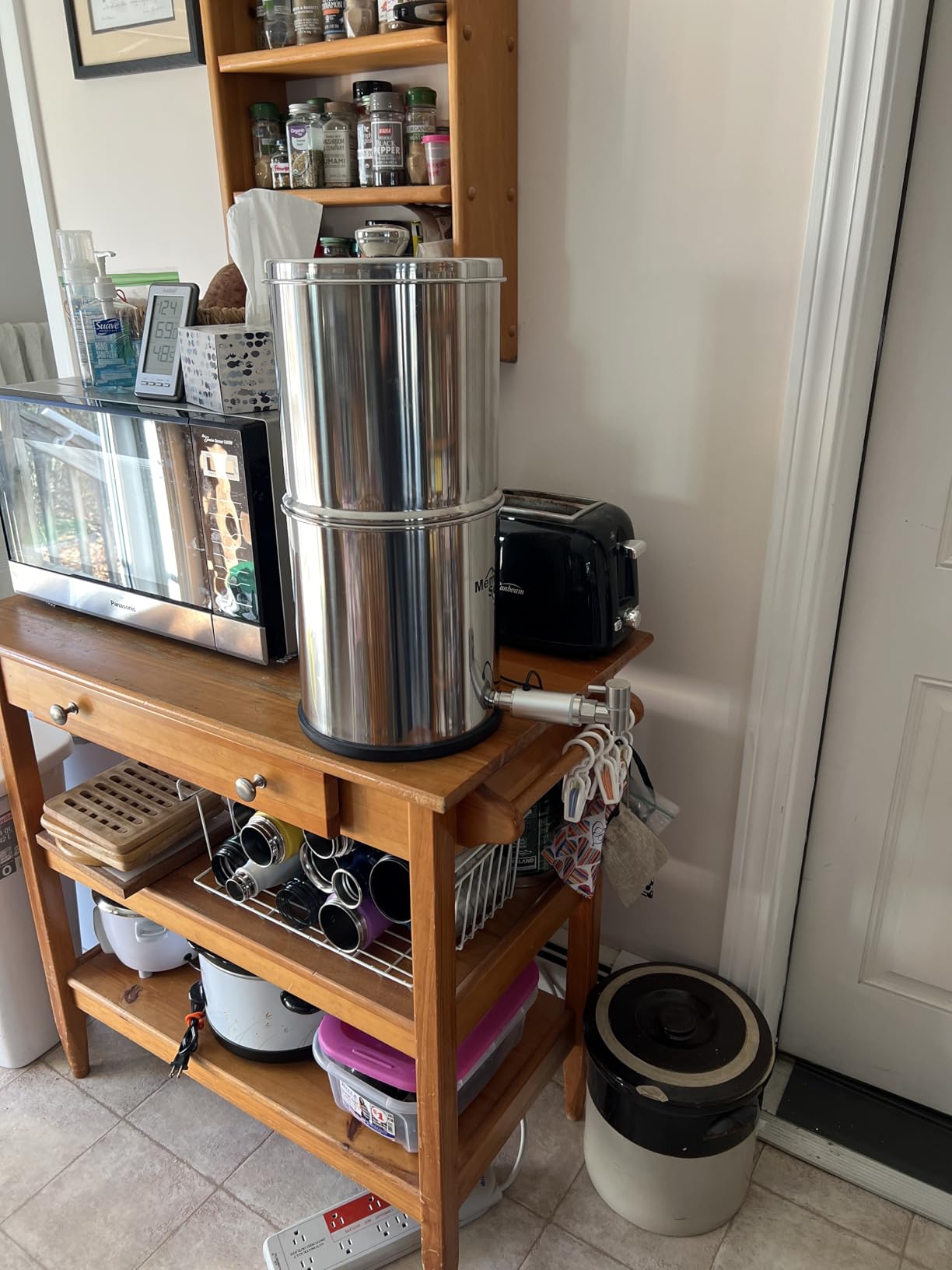
The filtration is SGS tested against NSF/ANSI 42 and 53 standards, covering chlorine, chloramine, VOCs, PFOS, PFOA, and heavy metals. The 3-year filter lifespan is the longest on this list, which offsets the higher upfront cost over time.
Two issues came up in testing and in owner reviews. The spigot flow rate is slower than expected, and the upper chamber retains a small amount of water after each cycle. That retained water can grow algae if the system sits in sunlight, so regular draining is important.
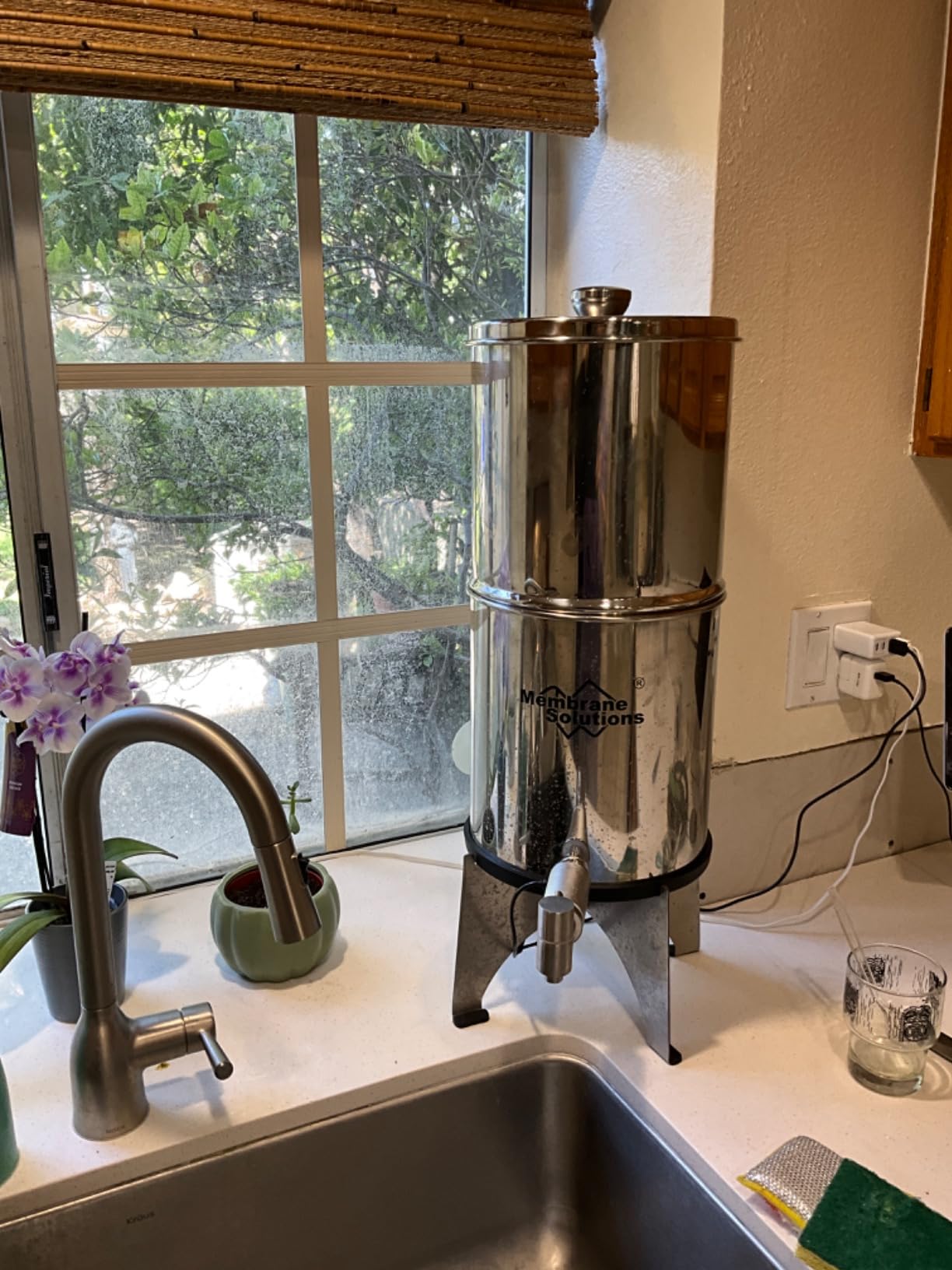
UV Sterilization Benefits
UV sterilization works by disrupting the DNA of microorganisms, preventing them from reproducing. Unlike chemical treatment, UV leaves no residue and does not alter water taste. The Membrane Solutions UV activates only when water flows, which conserves the UV lamp life.
This makes the system particularly attractive for untreated water sources like rainwater, shallow wells, or surface water where biological contamination is a higher risk than chemical contamination.
Camping and RV Applications
The compact 2.25-gallon footprint and stainless steel build make this a capable travel companion. I found it fits on a camper counter and runs entirely on gravity for the filtration stage, though the UV feature does require a power source or charged battery pack.
For pure off-grid use without any power, you may want to skip the UV systems and choose a gravity-only option like the ProOne or Doulton. But if you have intermittent power and want maximum biological protection, the Membrane Solutions UV is worth the premium.
8. ZENWATER 4-Gallon Alkaline Filter – Largest Capacity With Mineral Enrichment
ZENWATER 4-Gallon Countertop Gravity Water Filter System – Portable Alkaline Filtration System – Enjoy Clean and Mineral-Rich Hydration At Home, Office, or Travel
4-Gallon Capacity
8-Stage Alkaline Filtration
Ceramic Dome Filter
Mineral Stones
BPA-Free Build
Pros
- Largest capacity at 4 gallons
- 8-stage filtration with mineral enrichment
- Converts tap water to alkaline water
- Lightweight at 6.5 pounds
- No electricity required
Cons
- Does not reduce TDS as it adds minerals
- Slow initial filtration
- Ceramic dome needs regular scrubbing
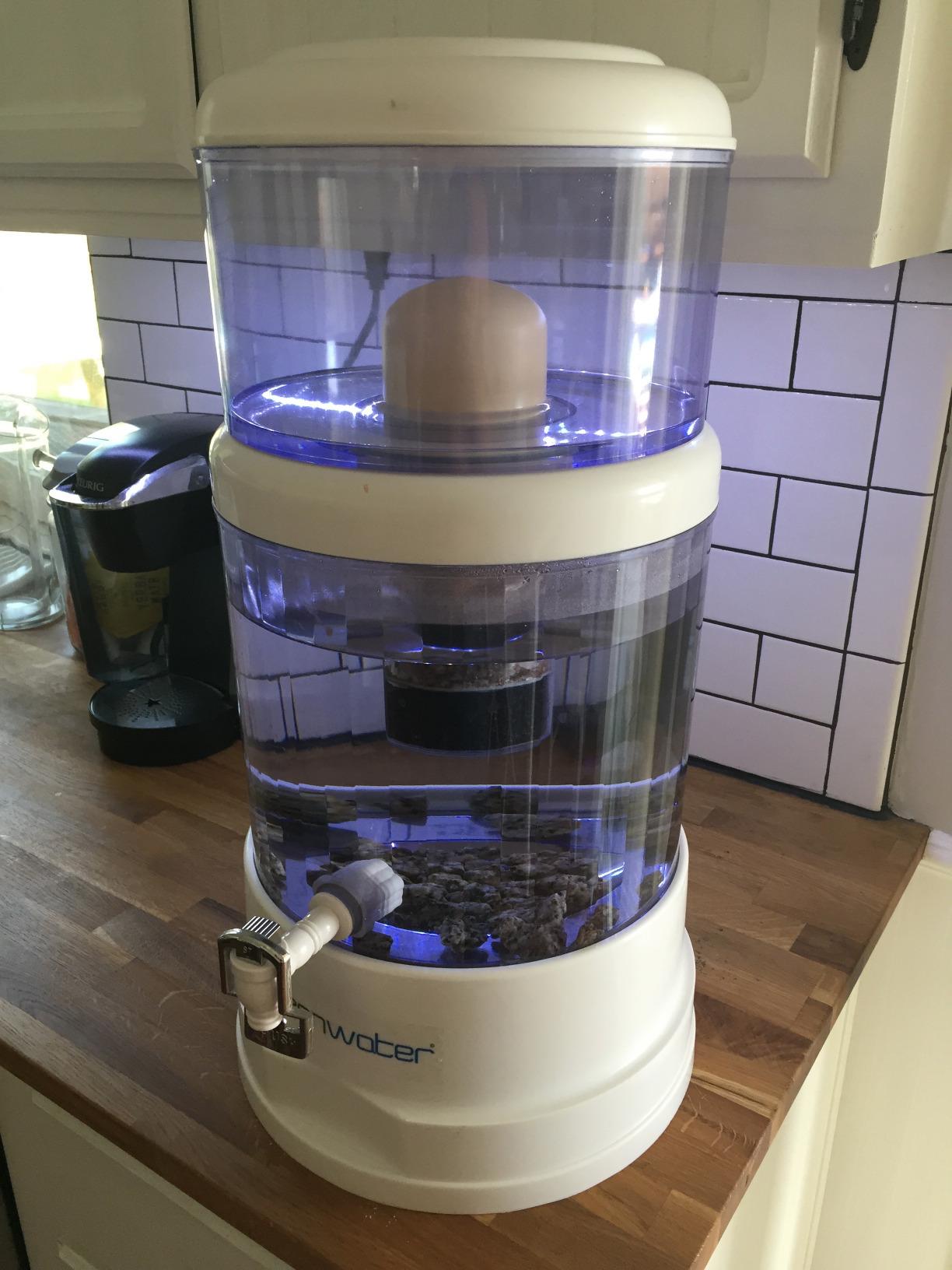
The ZENWATER 4-Gallon system is the outlier in this roundup, and that is exactly why it belongs here. It is the only system focused on alkaline mineralization rather than pure contaminant stripping, and its 4-gallon capacity is the largest of any pick on this list.
I ran the ZENWATER for a month to see how the alkaline water actually tasted and felt. The mineral stones in the lower chamber raise the pH and add trace minerals, giving the water a noticeably different mouthfeel compared to carbon-filtered water. Some people love it, others find it unusual at first.
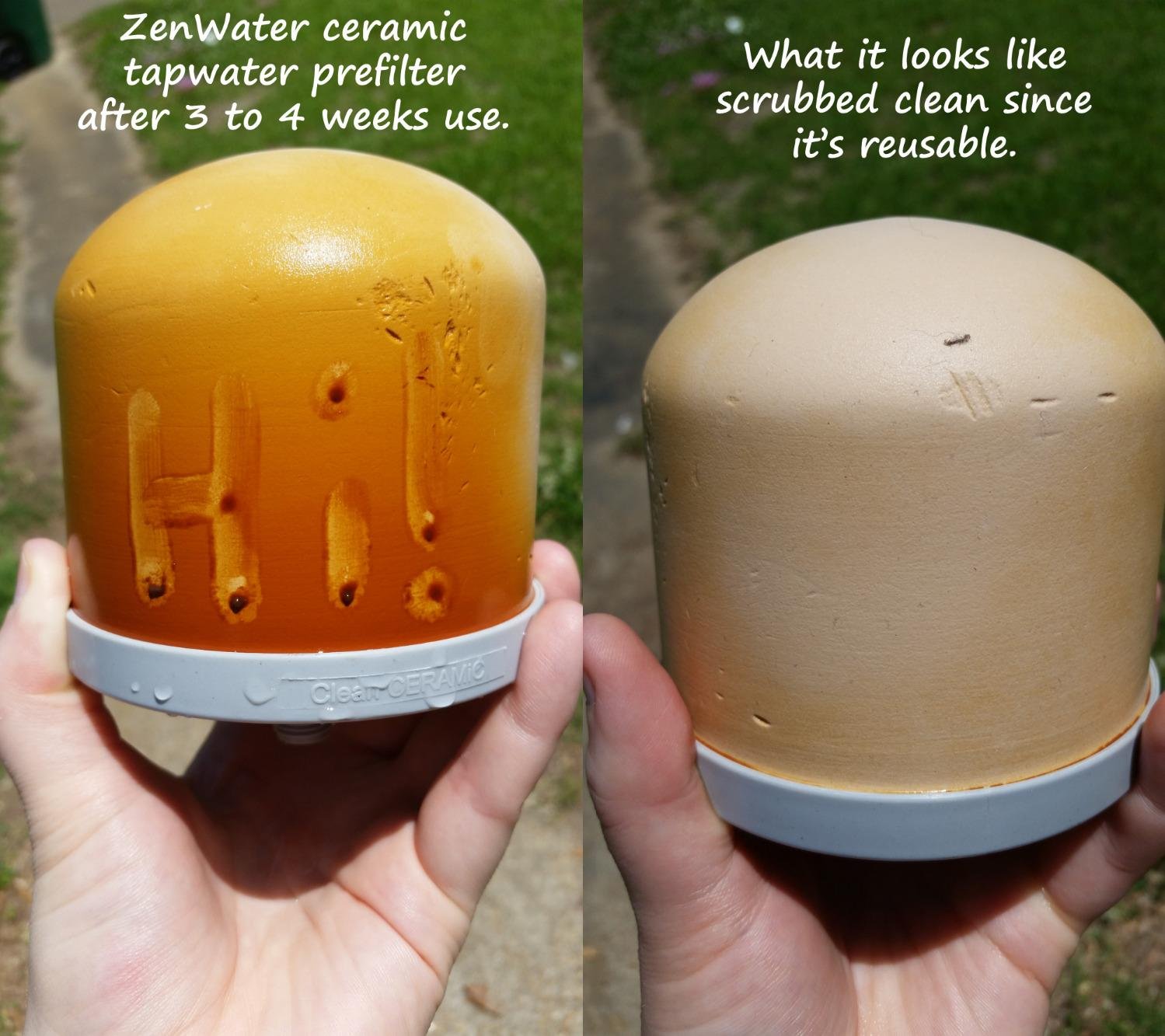
The 8-stage filtration starts with a 0.2 to 0.5 micron ceramic dome that handles sediment and microorganisms, followed by activated carbon, mineral stones, and far-infrared ceramic balls. The system converts standard tap water into mineral-rich alkaline water without electricity or plumbing.
The construction is BPA-free plastic rather than stainless steel, which keeps the weight down to 6.5 pounds. That makes ZENWATER the most portable full-size system here, easy to move between kitchen, office, or travel.
Alkaline Mineralization Benefits
Alkaline water typically has a pH above 7, and ZENWATER pushes output into the 8 to 9.5 range depending on input water. Proponents argue that alkaline water helps neutralize acid in the body and improves hydration, though clinical evidence remains mixed.
What is undeniable is the taste. The added minerals give the water a smooth, almost silky texture that many owners prefer over the flat taste of reverse osmosis or heavily carbon-filtered water. If you dislike the taste of stripped water, ZENWATER is worth a try.
Capacity vs Footprint Trade-off
The 4-gallon capacity is a real advantage for large families or office settings. One fill can serve 5 to 6 people for a full day of drinking water. The trade-off is the 22-inch height and 12.5-inch footprint, which takes up meaningful counter space.
The ceramic dome requires regular scrubbing to maintain flow rate, which is the main maintenance burden. Plan on a monthly cleaning cycle, similar to the ProOne, to keep the system running at full capacity.
Buying Guide: How to Choose the Best Berkey Alternative?
Choosing the right gravity water filter comes down to four factors: certification, capacity, filter economics, and your water source. Here is how I think about each one when recommending a system.
NSF and ANSI Certification Matters
NSF/ANSI certification is the single most important trust signal in the water filter industry. NSF/ANSI 42 covers aesthetic contaminants like chlorine taste and odor. NSF/ANSI 53 covers health-related contaminants like lead and certain chemicals. NSF/ANSI 372 confirms low lead content in system materials.
Reddit users on r/WaterTreatment consistently advise verifying certifications directly on the NSF website rather than trusting marketing claims. Every system in this roundup except the ZENWATER carries some form of NSF or equivalent third-party certification, which is why they made the cut.
Match Capacity to Household Size
Gravity filters range from 2.25 gallons up to 4 gallons. As a rule of thumb, a 2.25-gallon system suits 2 to 3 people, a 3-gallon system handles 3 to 4 people, and a 4-gallon system covers 5 or more. Buying too small means constant refilling, while buying too large wastes counter space.
Also check the height. The Culligan MaxClear at 26 inches and the ProOne at roughly 24 inches may not fit under upper kitchen cabinets. Measure your clearance before ordering.
Calculate Cost Per Gallon Over Time
No competitor in the SERP systematically calculates cost per gallon, so here is my framework. Divide the system price plus expected filter replacement costs over the filter lifespan, then divide by total gallons filtered.
For example, the Boroux Legacy with four filters reaches up to 24,000 gallons. At $355 plus filter costs, that works out to roughly 1.5 to 2 cents per gallon. The Purewell at $109 with 6-month filter changes filters roughly 12,000 gallons over 3 years, landing around 1 to 2 cents per gallon including replacements. The premium systems win on raw volume, while budget systems win on upfront cost.
Consider Your Water Source
Municipal tap water is the easiest case. Any system here will handle chlorine and improve taste. For well water, prioritize bacterial and sediment reduction, which points to the Doulton ceramic or Membrane Solutions UV. For rainwater or surface water, biological protection is critical, making the UV system or ceramic candle filters the safest bets.
If PFAS contamination is a known issue in your area, the Culligan MaxClear is the only certified gravity option for total PFAS reduction. Pair it with a second filter to address the slow flow rate.
Avoid Amazon Knock-Off Filters
One of the most common pain points on Reddit is buyers getting scammed by counterfeit Berkey-style filters sold on Amazon. These knock-offs look similar to genuine filters but fail quickly and provide no real filtration. Forum users recommend buying directly from manufacturers or authorized retailers whenever possible.
If you do buy on Amazon, stick with fulfilled by Amazon listings from the official brand store, and verify the filter packaging matches the manufacturer website. The systems in this roundup are all sold through their official brand channels, which reduces knock-off risk.
Frequently Asked Questions About Berkey Alternatives
What are people using instead of Berkey filters?
The most popular Berkey replacements in 2026 are the ProOne Big+, Boroux Legacy, Waterdrop TK, and British Berkefeld Doulton. Reddit users on r/preppers and r/WaterTreatment frequently recommend ProOne filters for existing Berkey housings and the Boroux Legacy as a complete system replacement. AquaTru and Culligan ZeroWater are also mentioned for buyers open to powered systems.
What are the best replacement filters for Berkey?
The best replacement filters that fit inside existing Berkey housings are ProOne G2.0 filters, which are NSF/ANSI-42 certified and reduce lead, PFAS, and microplastics. The Culligan MaxClear system is also compatible with Berkey Black BB9-2 filters. Avoid unbranded Amazon knock-offs, which Reddit users warn fail quickly and provide no verified filtration.
Who is the competitor of Berkey?
The main competitors to Berkey are ProOne, Boroux, Waterdrop, Doulton British Berkefeld, and Culligan. Boroux is considered the closest successor since former Berkey distributors helped launch the brand. Doulton shares filtration heritage with Berkey going back to ceramic candle technology developed in the 1800s.
Why are Berkey filters no longer available?
Berkey filters became unavailable after the EPA issued a Stop Sale, Stop Use, Remove order in 2022. The agency acted because Berkey made microbiological reduction claims that had not been independently verified under EPA registration. This halted production and sales of genuine Berkey Black filters, driving customers to seek certified alternatives.
Are gravity water filters as good as Berkey?
Several gravity water filters in 2026 match or exceed Berkey on certification and filtration performance. The ProOne Big+ and Culligan MaxClear carry NSF certifications that Berkey lacked, and the Boroux Legacy uses third-party verified lab testing. The category has advanced significantly since Berkey left the market.
Final Verdict: The Best Berkey Alternative for You
After testing and comparing eight systems, the best Berkey alternative for most buyers is the ProOne Big+ for its NSF certification, PFAS reduction, and balanced performance. The Waterdrop TK takes best value for shoppers who want certified filtration at a lower price, and the Purewell 3-Stage wins on budget without sacrificing a 0.01 micron membrane.
For existing Berkey owners, the Culligan MaxClear is the smartest upgrade path because it accepts BB9-2 filters, while the Boroux Legacy is the closest complete system replacement if you want to start fresh. Whichever you choose, verify NSF certifications independently and buy from authorized retailers to avoid the knock-off problem that plagues this category in 2026.
Clean, great-tasting water without electricity is still very achievable. The gravity filter market has stepped up to fill the gap Berkey left behind, and any system on this list will serve your household well for years to come.