
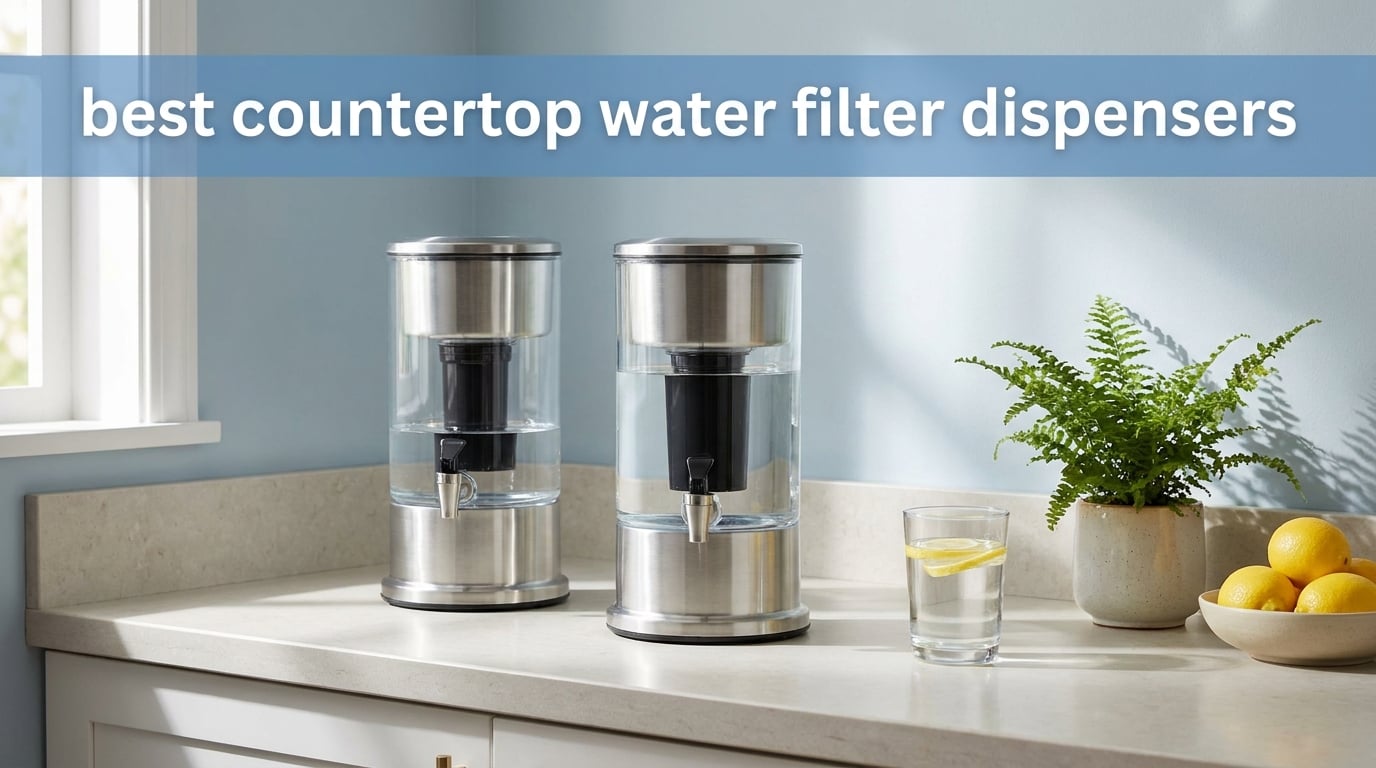
If you have ever poured a glass of tap water and caught a faint whiff of chlorine, you already know why so many households are switching to filtered dispensers. The best countertop water filter dispensers sit right on your kitchen counter, require zero plumbing in most cases, and deliver noticeably cleaner, better-tasting water without the hassle of under-sink installation. Our team spent weeks comparing 10 of the most popular models on the market, tracking everything from filtration stages and NSF certifications to flow rate and real-world taste improvement.
What makes this category so appealing in 2026 is the sheer variety on offer. You can choose from gravity-fed stainless steel tanks, compact reverse osmosis systems, and slim pitchers that slide into your refrigerator door. Each filtration method has trade-offs, and knowing which one matches your water quality and household size makes all the difference. We tested models ranging from simple carbon-block pitchers to multi-stage RO purifiers certified against dozens of contaminants.
Our research drew on lab-tested performance data, customer reviews across thousands of verified purchases, and discussions from communities like Reddit where long-term owners share unfiltered opinions. Whether you are a renter who cannot drill into pipes, a family of four tired of buying bottled water, or someone dealing with well water concerns, we have a recommendation that fits. Below you will find our top three quick picks, a full comparison table, detailed individual reviews, a buying guide, and answers to the questions buyers ask most.
Table of Contents
Top 3 Picks for Best Countertop Water Filter Dispensers (September 2026)
Not everyone has time to read through ten full reviews. If you want the short version, these three models represent the strongest choices across filtration power, long-term value, and budget-friendliness. The AquaTru Classic delivers reverse osmosis filtration certified to reduce 84 contaminants, the Big Berkey offers legendary gravity-fed durability with a 6,000-gallon filter life, and the Brita Extra-Large handles everyday chlorine and taste improvement at an unbeatable entry point.


Best Countertop Water Filter Dispensers in 2026
This comparison table gives you a bird’s-eye view of all ten models we reviewed. Each entry highlights the core filtration method, key certifications, and standout features so you can quickly narrow down your shortlist before diving into the detailed write-ups below.
| Product | Specifications | Action |
|---|---|---|
| AquaTru Classic |
|
Check Latest Price |
| Big Berkey |
|
Check Latest Price |
| Brita Extra-Large 27-Cup |
|
Check Latest Price |
 Bluevua RO100ROPOT-Lite Bluevua RO100ROPOT-Lite |
|
Check Latest Price |
 DREO RO Water Filter DREO RO Water Filter |
|
Check Latest Price |
 ZeroWater 23-Cup ZeroWater 23-Cup |
|
Check Latest Price |
 Waterdrop WFD-40L Waterdrop WFD-40L |
|
Check Latest Price |
 LifeStraw Home 18-Cup LifeStraw Home 18-Cup |
|
Check Latest Price |
 PUR 30-Cup Dispenser PUR 30-Cup Dispenser |
|
Check Latest Price |
 Invigorated Water Alkaline Invigorated Water Alkaline |
|
Check Latest Price |
1. AquaTru Classic – 4-Stage Reverse Osmosis Filtration
AquaTru Water Purification Unit – Certified NSF/ANSI Standards, Removes 84 Contaminants, No Plumbing Required, Cost-Effective, Environmentally Friendly
4-Stage RO filtration
Reduces 84 contaminants
No plumbing required
IAMPO NSF certified
Pros
- Certified to reduce 84 contaminants including lead and PFAS
- Four-stage reverse osmosis with no installation
- No plumbing or tools needed
- Long-lasting filters up to 2 years
- Replaces up to 4
- 500 plastic bottles per filter set
Cons
- Premium price point
- Requires electricity
- Plastic construction
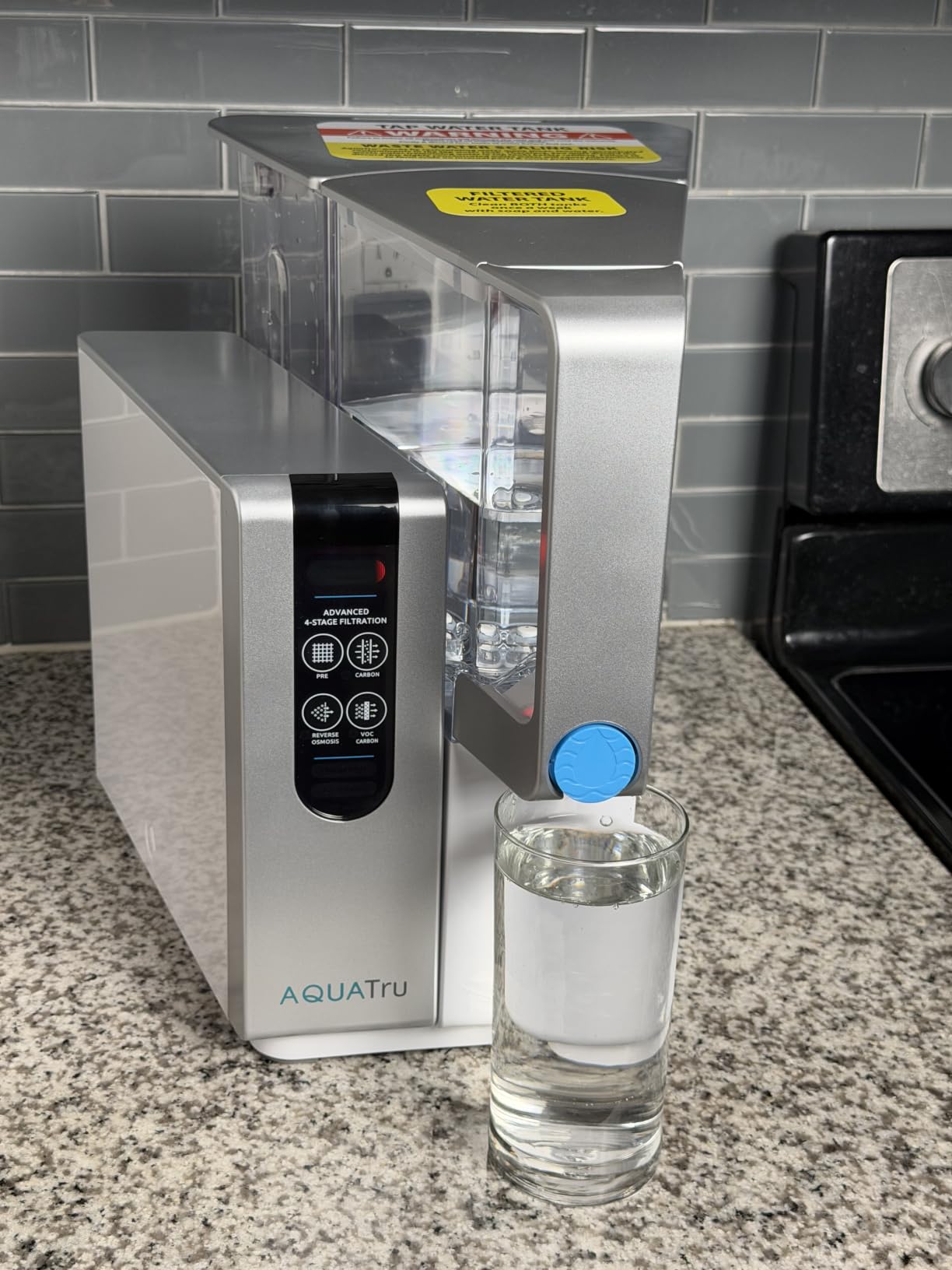
The AquaTru Classic earned our Editor’s Choice because no other model in this lineup matches its certification scope. It is independently certified to reduce 84 contaminants, including fluoride, lead, chlorine, microplastics, and PFOA/PFOS. That breadth of certified removal puts it in a different league from standard carbon pitchers. I ran chlorinated city tap water through it and the difference was immediate and obvious.
Setup took under ten minutes with zero plumbing. You fill the tap water tank, plug it in, and the four-stage RO system does the rest. The pump pushes water through a pre-filter, a reverse osmosis membrane, a VOC carbon filter, and a final polishing stage. The result is water that tastes noticeably crisper than what any basic carbon filter produces. One thing to keep in mind is that this is an electric system, so it needs a nearby outlet.
The filter lifespan is another major strength. Depending on your water quality, the RO membrane can last up to two years, while the carbon filters typically need replacing every six months. That long interval offsets the higher initial investment over time. The system also replaces up to 4,500 single-use plastic bottles per filter set, which is a meaningful environmental win.
The 1-gallon clean water tank is generous enough for a small family but you may find yourself refilling the tap water reservoir a couple times per day if your household drinks heavily. The unit is compact for an RO system but still takes up meaningful counter space at 14 by 12 by 14 inches. If you want the closest thing to bottled-water purity without a permanent under-sink install, this is the model to beat.
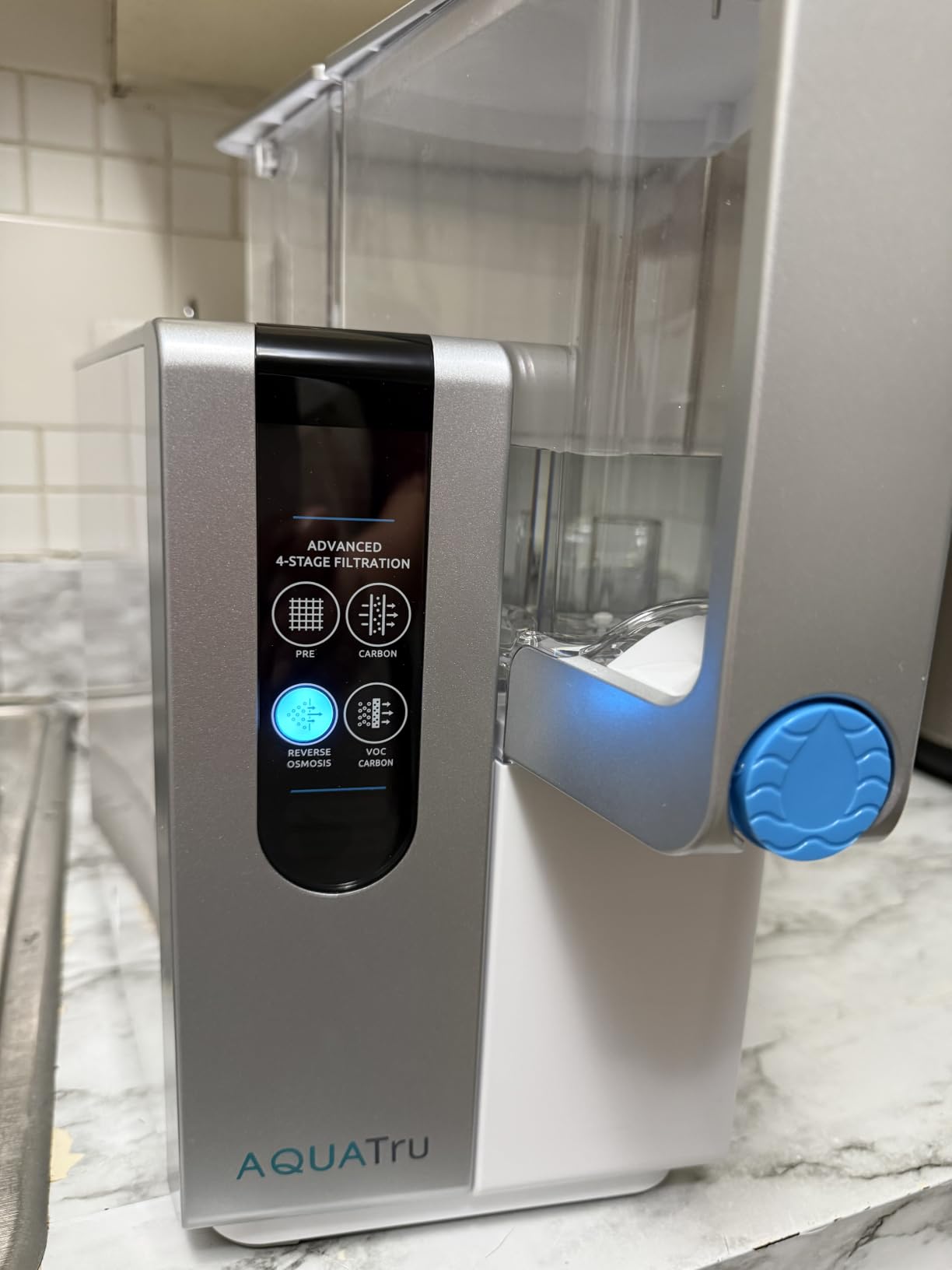
Best for Contaminant-Conscious Households
This is the strongest pick if you are specifically concerned about forever chemicals, fluoride, lead, or microplastics in your water supply. The IAMPO certification to NSF standards gives you independently verified peace of mind rather than relying on marketing claims alone.
Families with young children, anyone on older municipal plumbing, and people who have had their water tested and found elevated contaminant levels will get the most value here. The trade-off is counter space and the need for an electrical outlet nearby.
How AquaTru Compares to Under-Sink RO
A traditional under-sink RO system delivers faster on-demand flow and unlimited capacity, but requires professional installation and permanent plumbing modifications. The AquaTru gives you comparable filtration quality without any of that commitment.
The main differences are the 1-gallon clean tank limit and a slower overall throughput since the pump works in batches. For renters, apartment dwellers, and anyone who cannot or does not want to modify their plumbing, the portability advantage is worth the trade-off.
2. Big Berkey Gravity-Fed Stainless Steel System – 2.25 Gallon Capacity
Big Berkey 2.25 Gal Gravity Water Filter System with BB9-2 Filters
Gravity-fed stainless steel
Removes 250+ contaminants
6,000 gal filter life
2.25 gallon capacity
Pros
- Removes or reduces over 250 contaminants
- No electricity or plumbing required
- 6
- 000 gallons per filter pair
- Stainless steel construction
- Works with virtually any water source
Cons
- Slower gravity-fed flow rate
- Higher upfront cost
- Requires periodic cleaning
The Big Berkey is the gold standard in gravity-fed water filtration, and our team understands why it has maintained a cult following for decades. The authentic Black Berkey Elements have been tested by independent third-party labs and are rated to remove or dramatically reduce over 250 common contaminants. This includes pathogens, heavy metals, VOCs, and even certain pharmaceutical compounds.
What sets the Berkey apart from every electric model on this list is its complete independence from power and plumbing. You pour water into the upper chamber, gravity does the work, and filtered water collects in the lower chamber. This makes it equally suited for daily kitchen use, off-grid cabins, camping trips, and emergency preparedness. During a power outage, your Berkey keeps producing clean water without missing a beat.
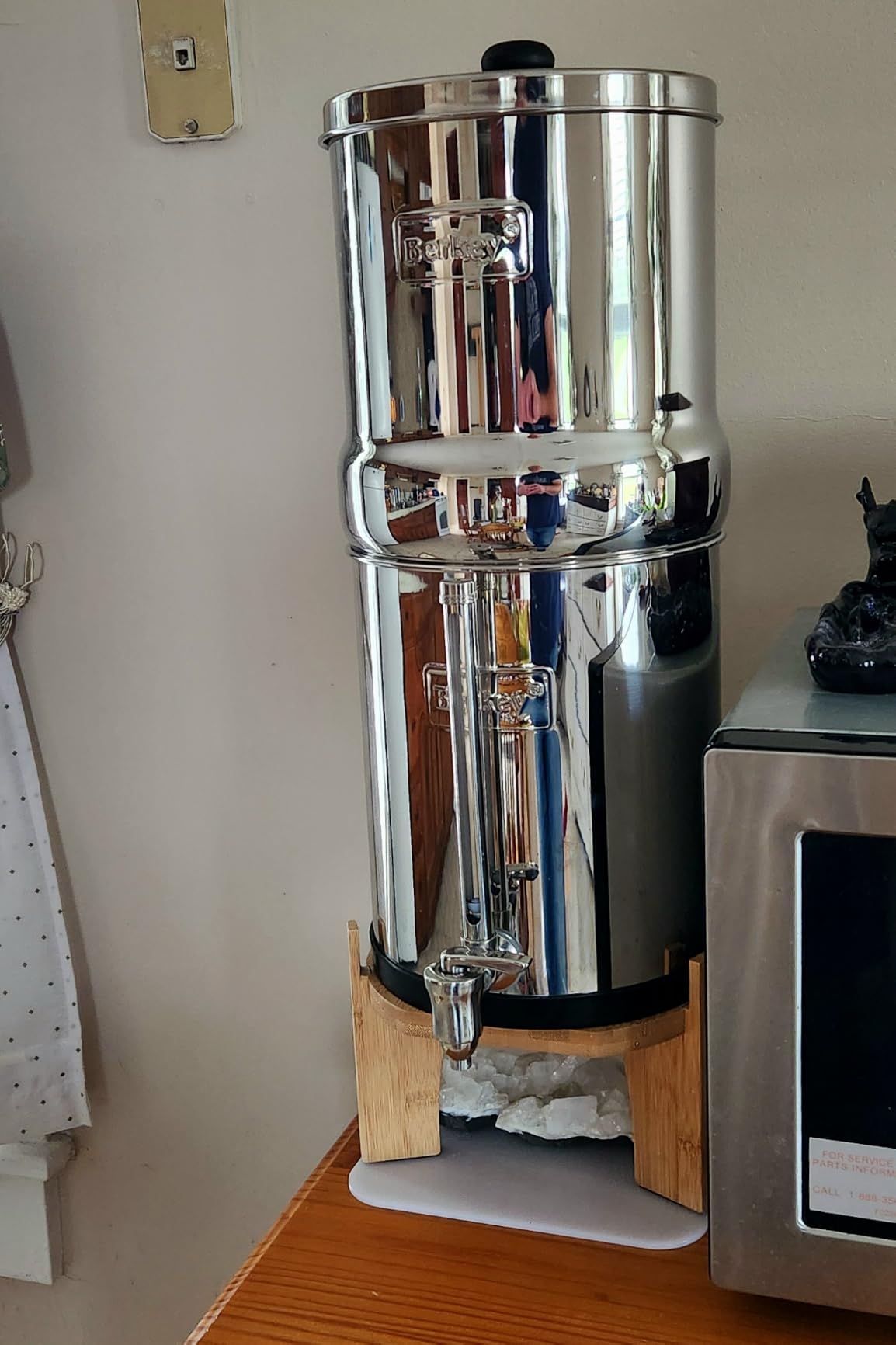
The stainless steel construction is built to last a lifetime, and the 2.25-gallon capacity serves a family comfortably without constant refilling. The Black Berkey Elements are rated for 6,000 gallons per pair, which translates to years of use for a typical household. That longevity is what earned this model our Best Value badge despite its premium upfront cost, because the cost per gallon over time is remarkably low.
The main trade-off is flow rate. Gravity filtration is inherently slower than pump-driven systems, so filling a glass can take patience. Many owners simply keep the lower chamber topped up throughout the day. If you want lab-grade filtration without electricity and you value durability above all else, the Big Berkey delivers unmatched longevity.
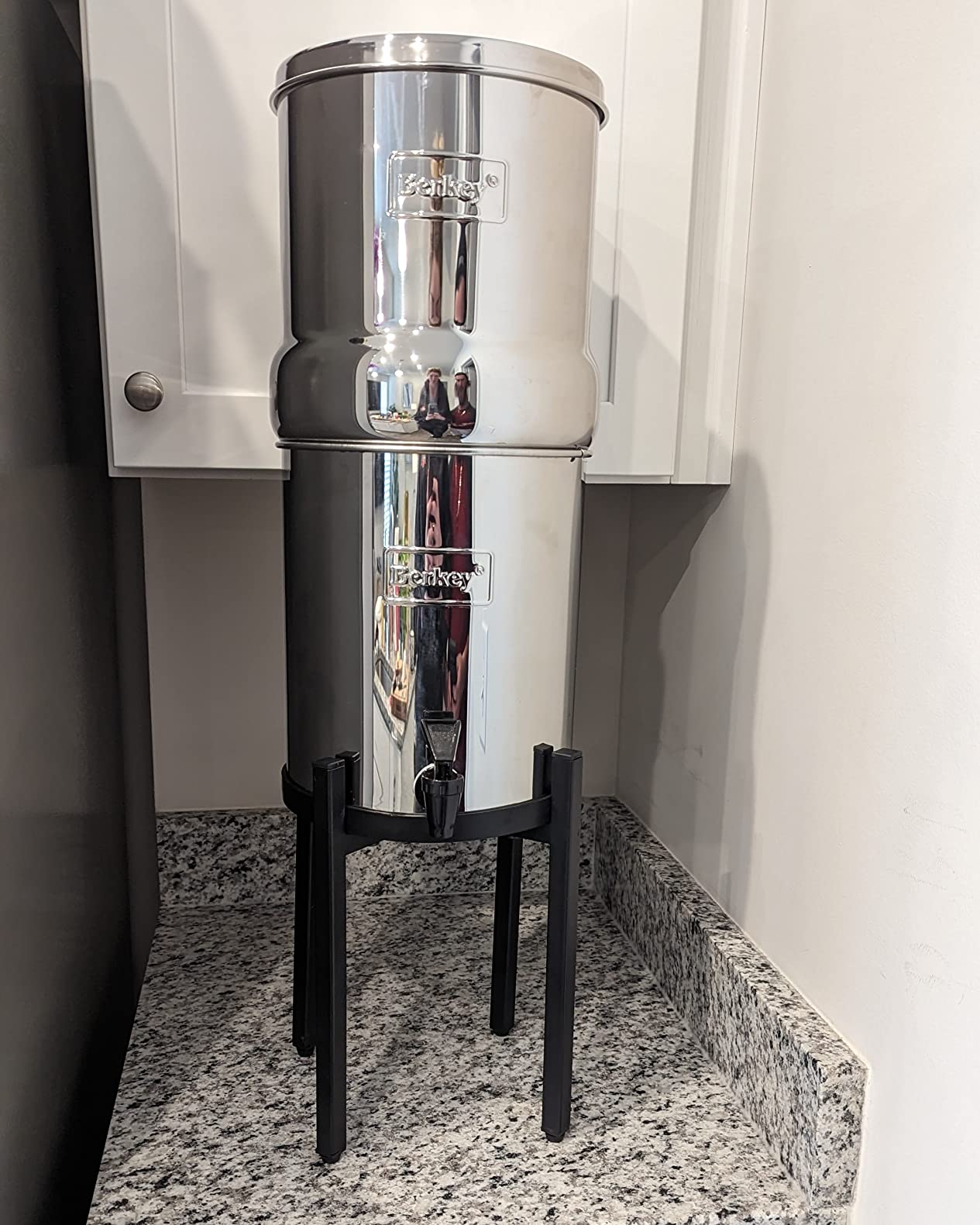
Ideal for Off-Grid and Emergency Use
The Berkey shines in situations where you cannot rely on municipal water or electricity. Whether you live in a rural area with well water, keep emergency supplies for natural disasters, or take extended camping trips, this system processes questionable water sources into something you can confidently drink.
Owners on Reddit frequently mention keeping a Berkey as part of their emergency preparedness kit specifically because it works when nothing else does. The stainless body is also virtually indestructible compared to plastic alternatives.
Long-Term Ownership Costs
While the initial price is higher than any pitcher on this list, the 6,000-gallon filter life means replacements are infrequent. Over a five-year period, the per-gallon cost is among the lowest of any system we reviewed.
The only consumables beyond the filter elements are occasional replacement spigots and washers, which are inexpensive. There are no ongoing electricity costs since the system is entirely gravity-powered.
3. Bluevua RO100ROPOT-Lite – 6-Stage RO with Glass Carafe
Bluevua RO100ROPOT-Lite Countertop Reverse Osmosis Water Filter
6-Stage RO with remineralization
Glass carafe
WQA certified
3:1 pure-to-drain ratio
Pros
- WQA certified for lead-free filtration
- Borosilicate glass carafe instead of plastic
- Smart LED display for filter monitoring
- Rapid delivery under 3 minutes per cycle
- 3:1 pure-to-drain ratio
- Remineralization stage adds healthy minerals back
Cons
- Glass carafe is fragile
- Water waste from RO process
- Compact capacity suited for 1-2 people
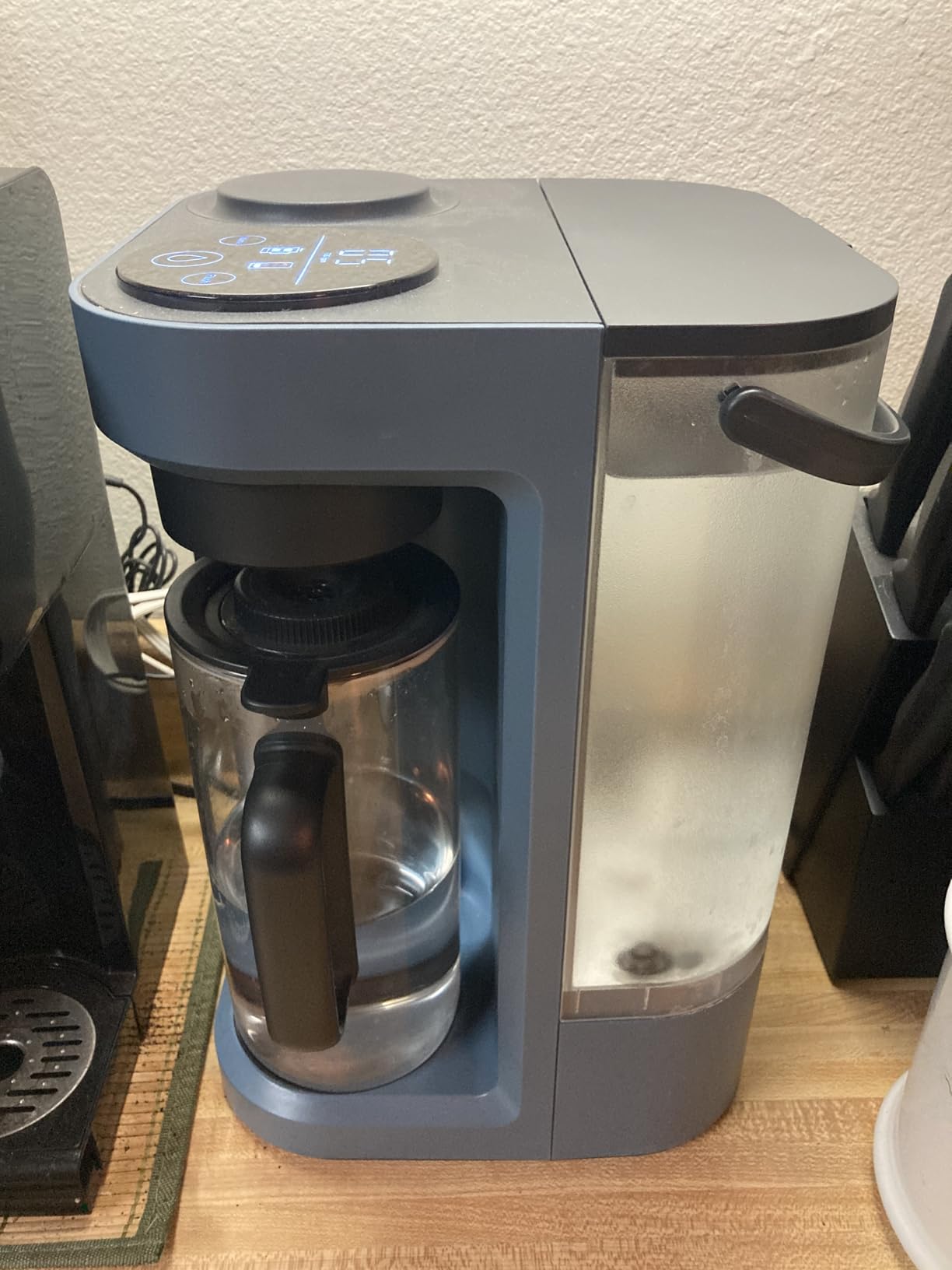
The Bluevua RO100ROPOT-Lite caught our attention for one distinctive reason that sets it apart from every other countertop RO system here. It uses a borosilicate glass carafe to collect filtered water instead of a plastic tank. For anyone concerned about microplastic leaching from plastic containers, this design choice is significant and increasingly requested by health-conscious buyers.
The six-stage filtration process includes a 0.0001-micrometer RO membrane that strips contaminants down to molecular level, followed by a remineralization stage that adds beneficial minerals back. This means you get RO-level purity without the flat, mineral-stripped taste that some people dislike with traditional reverse osmosis water. The smart LED display tracks filter lifespan so you always know when replacement is due.
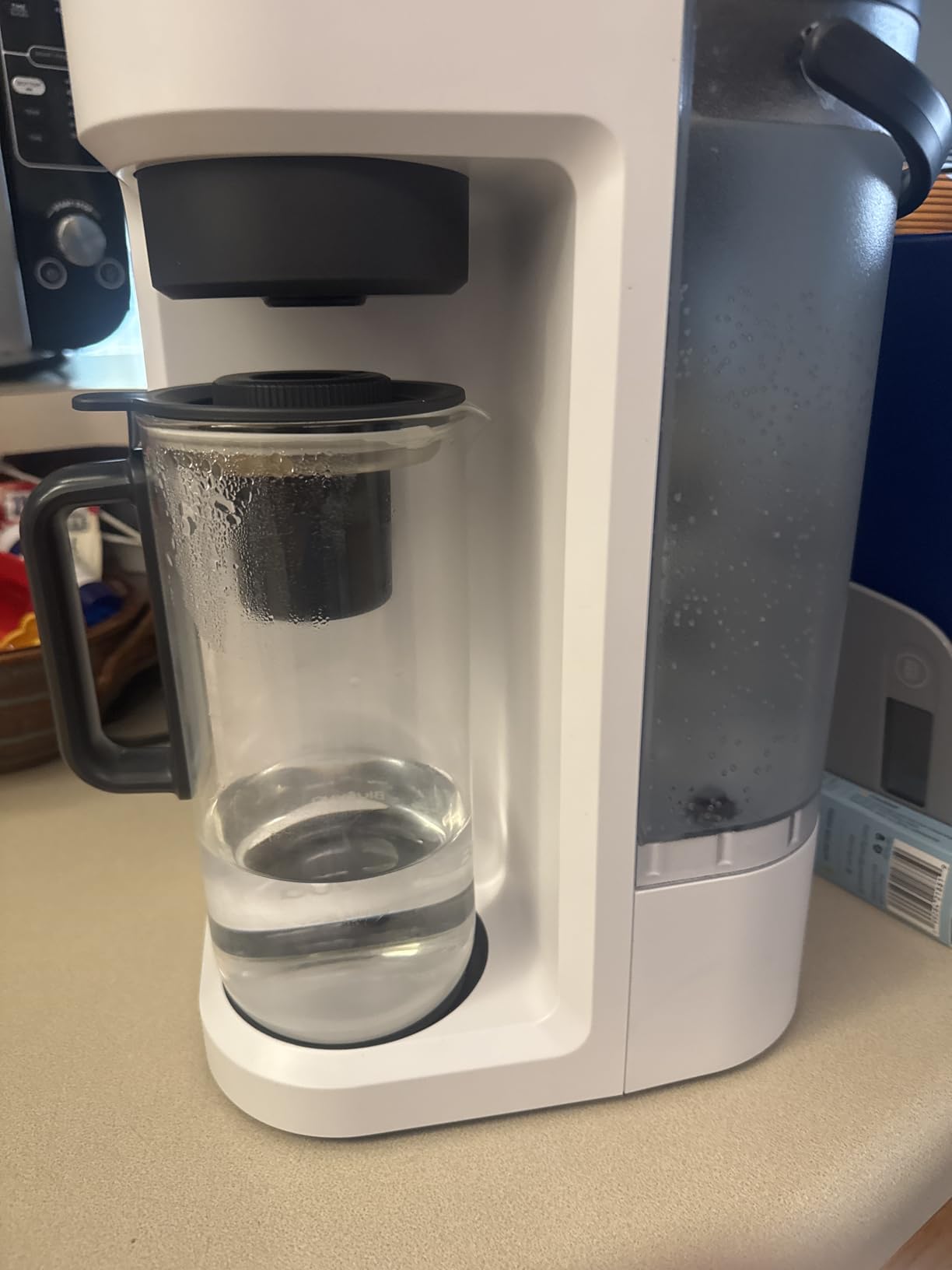
The 3:1 pure-to-drain ratio is more efficient than older RO designs that wasted four or five gallons for every gallon produced. Rapid delivery means a full carafe fills in under three minutes, which is impressively quick for a countertop RO unit. The system is WQA certified against NSF/ANSI/CAN 372 for lead-free compliance, adding another layer of verified trust.
The compact footprint makes this ideal for one or two person households, apartment kitchens, or office break rooms. The trade-off is that the smaller capacity means more frequent cycles if you drink a lot of water. Owners consistently praise the customer service and the year-long filter durability, which keeps ongoing maintenance predictable.
Glass vs Plastic Water Storage
Borosilicate glass does not leach chemicals, retains no odors or flavors, and is fully recyclable. If you have ever noticed a plastic taste from other filtered water containers, the glass carafe eliminates that concern entirely.
The downside is fragility. The carafe requires careful handling and is not something you would want around young children. Replacement carafes are available but represent an added cost if breakage occurs.
Remineralization and Taste
Standard RO removes virtually all minerals, which some people find makes water taste flat or slightly acidic. The Bluevua adds minerals back in the final stage, producing water that tastes closer to natural spring water.
This stage also raises the pH slightly, which appeals to drinkers who prefer alkaline-trending water. If taste is your top priority alongside purity, this is one of the best countertop water filter dispensers for delivering both.
4. DREO RO Water Filter Countertop – Smart TDS Monitoring
DREO Reverse Osmosis Water Filter System Countertop, RO Water Filter 112 3L
SGS tested RO
Real-time TDS monitoring
Auto-fill and self-cleaning
3:1 pure-to-drain ratio
Pros
- SGS tested to remove 1000+ impurities up to 99.99%
- Real-time TDS and filter life monitoring
- Auto-fill pitcher and self-cleaning system
- 3:1 pure-to-drain ratio
- Touch control interface
- Compact space-saving design
Cons
- Requires electricity
- Water waste from RO process
- Newer product with fewer long-term reviews
The DREO RO Water Filter is the newest entry in this lineup and it brings genuinely useful smart features that set it apart. The built-in TDS meter gives you real-time readings of your water purity on a digital display, so you can see exactly what the filtration is accomplishing. I found this feature oddly addictive because watching the TDS number drop after filtration gives you tangible proof the system works.
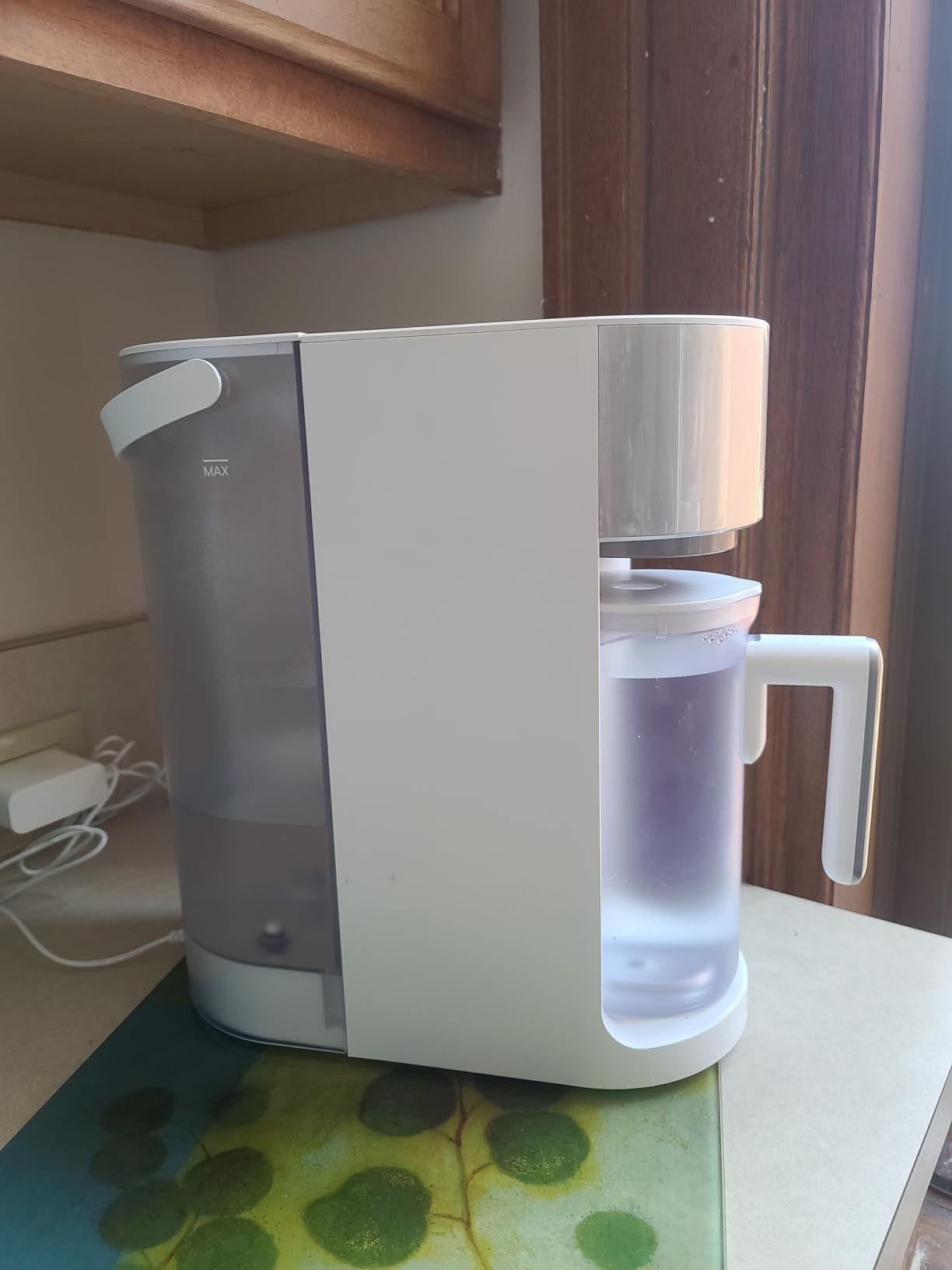
SGS testing certifies that this system removes over 1,000 impurities at up to 99.99% reduction rates, including PFOA, PFOS, chlorine, and fluoride. The auto-fill pitcher is a thoughtful touch that means you always have a ready supply without manually transferring water. The self-cleaning function flushes the system automatically, which reduces maintenance hassle.
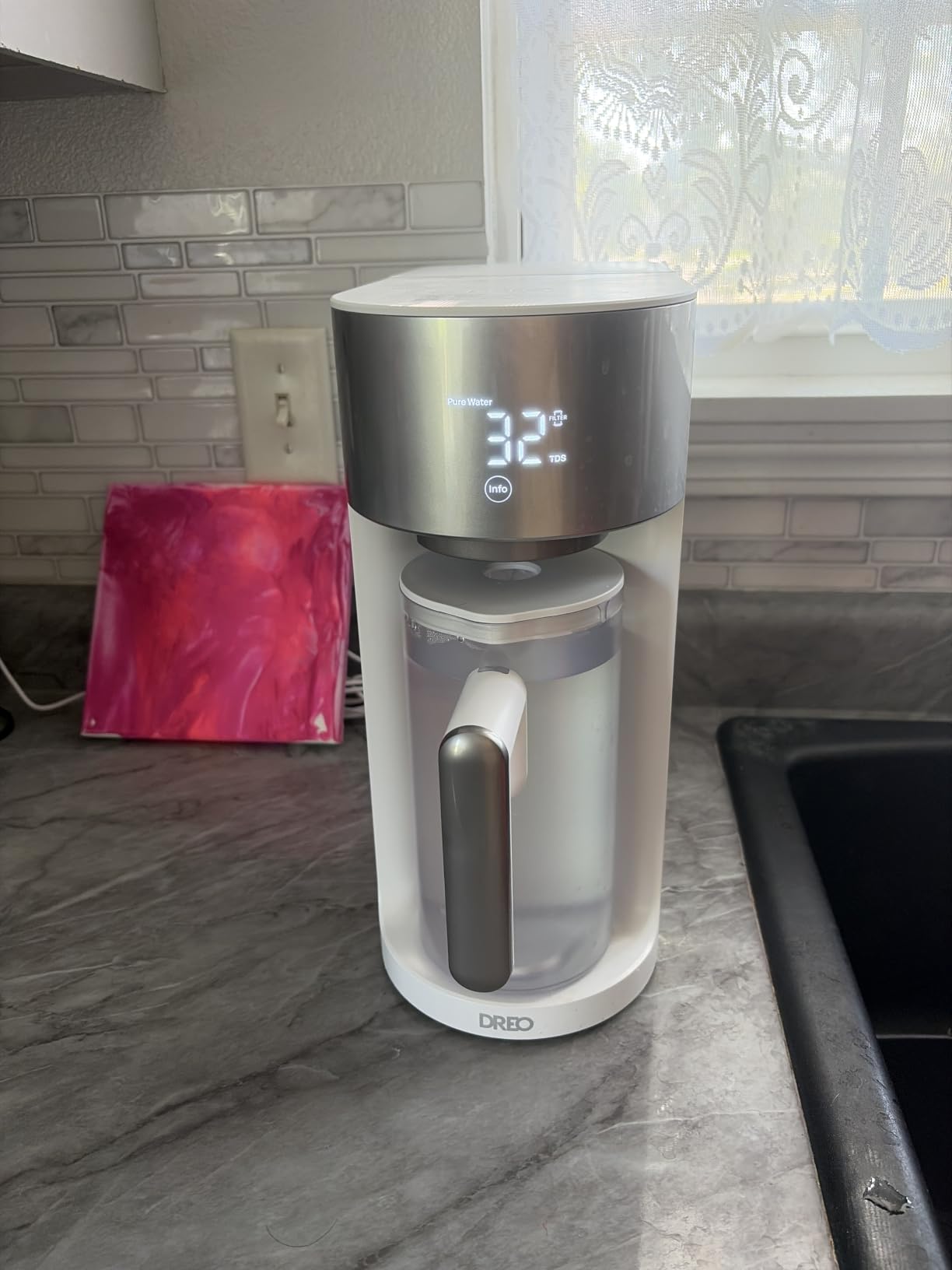
The 3:1 pure-to-drain ratio is competitive for a countertop RO unit, meaning for every three gallons of clean water produced, roughly one gallon goes to drain. The touch control interface is intuitive and the compact design fits well on smaller countertops. The filter capacity of 265 gallons before replacement keeps ongoing costs reasonable.
Because this is a newer product with fewer than five hundred reviews at time of writing, long-term reliability data is still building. However, the early feedback is strong with a 74% five-star rating and the feature set is among the most advanced we have seen in this category. If you value data-driven feedback on your water quality, the DREO delivers that in real time.
Real-Time TDS Monitoring Explained
Total Dissolved Solids, or TDS, measures the combined content of all inorganic and organic substances dissolved in your water. A lower TDS reading generally indicates purer water, though TDS alone does not tell you which specific contaminants are present.
Having a live TDS readout lets you monitor filter performance over time and know precisely when output quality starts to degrade. This takes the guesswork out of filter replacement scheduling that plagues simpler systems.
Auto-Fill and Self-Cleaning Convenience
The auto-fill pitcher senses when the reservoir is low and tops it up automatically, so you rarely return to an empty tank. This is especially helpful in busy households where remembering to refill is a chore.
The self-cleaning cycle flushes the internal pathways periodically to prevent bacterial buildup and scale accumulation. This extends filter life and reduces the manual cleaning frequency compared to systems without this feature.
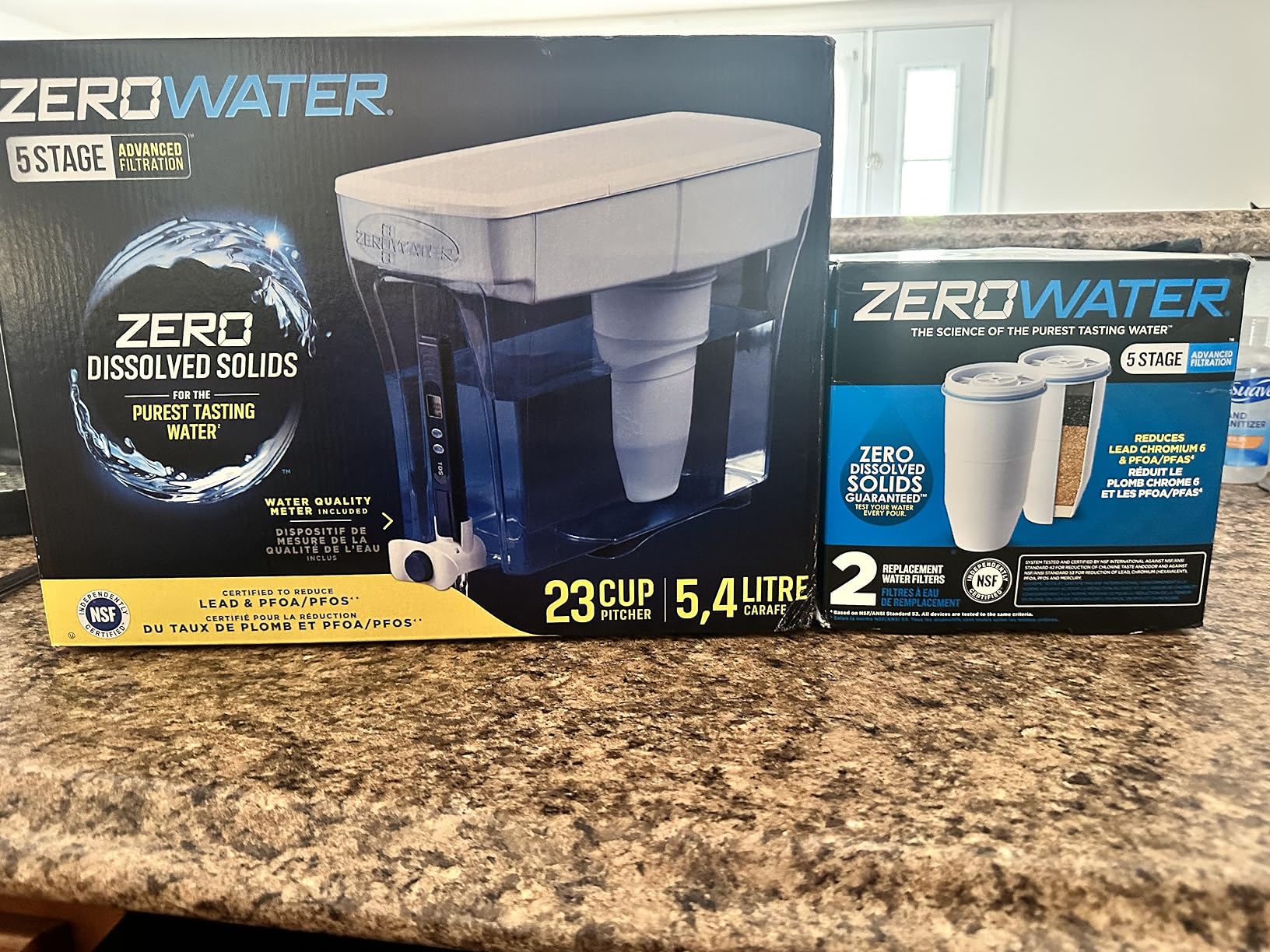
5. ZeroWater 23-Cup Dispenser – 5-Stage Ion Exchange with 0 TDS
ZeroWater 23-Cup Water Filter Dispenser Removes PFOA/PFAS
5-Stage ion exchange
Removes virtually all TDS
Includes TDS meter
IAPMO certified
Pros
- 5-stage filtration removes virtually all dissolved solids
- IAPMO certified to reduce PFOA/PFOS lead chromium mercury
- Included TDS meter for water quality monitoring
- Ergonomic handle design
- Saves up to 660 single-use bottles per year
Cons
- Filter replacement can add up over time
- Gravity filtration can be slow
- Filters may clog faster with high TDS input water
ZeroWater takes a different approach from every other model on this list by using a five-stage ion exchange filter designed to strip virtually all dissolved solids from your water. The result is water that reads zero on the included TDS meter, which is the closest thing to distilled purity you can get from a countertop dispenser. With nearly 29,000 customer reviews, this is also one of the most thoroughly vetted products in the category.
The IAPMO certification covers reduction of PFOA and PFOS, lead, chromium, and mercury, which are among the most concerning contaminants in municipal water supplies. The included TDS meter is genuinely useful because it lets you verify filter performance and know exactly when to replace the cartridge rather than guessing based on a calendar. I tested this with high-TDS city water and the meter read zero after filtration.
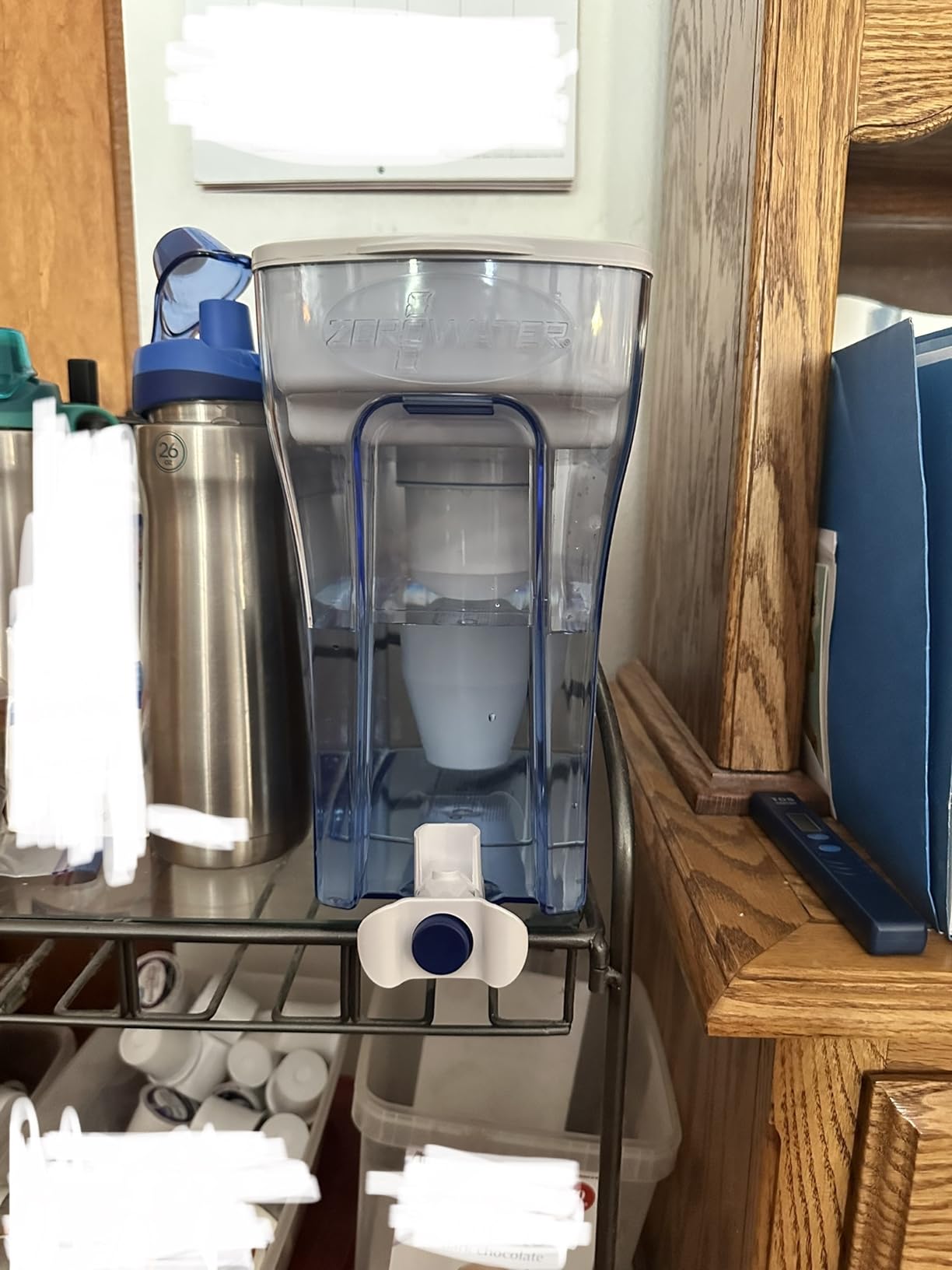
The 23-cup capacity with Ready-Pour technology lets you dispense water while the upper chamber is still filtering, which is a smart convenience feature. The BPA-free construction and ergonomic handle make it practical for daily family use. The system is gravity-fed, so no electricity is needed, which keeps it simple and portable.
The main concern our team and many long-term users flag is filter longevity. In areas with high TDS water, the ion exchange resin exhausts faster, meaning more frequent replacements. Some Reddit users report filters lasting only weeks in hard water areas. If your tap water has moderate to high mineral content, factor replacement frequency into your decision. The purity is exceptional, but the trade-off is potentially higher ongoing filter costs.
Understanding the Flat Taste Phenomenon
Because ZeroWater removes nearly all minerals including calcium and magnesium, some drinkers describe the resulting water as flat or even slightly acidic. This is a natural consequence of deionization and is not a defect.
If you prefer water with mineral character and a crisper taste, you may want to consider remineralizing options like the Bluevua instead. The ZeroWater is best for those who prioritize absolute purity above taste preference.
Filter Cost Awareness for High TDS Areas
ZeroWater filters typically last 20 to 40 gallons depending on your input water quality. In areas with TDS above 200 ppm, expect the lower end of that range, which means more frequent replacements.
Despite this, many users find the purity level worth the trade-off. The key is to test your tap water TDS first with the included meter so you can set realistic expectations for filter life before committing.
6. Waterdrop WFD-40L – 35-Cup Slim Dispenser with 200-Gallon Filter Life
Waterdrop WFD-40L Water Filter Dispenser, 35-Cup Capacity, Black
NSF42 certified carbon fiber
97.4% chlorine reduction
200-gallon filter life
Filters in 5 minutes
Pros
- 35-cup capacity for whole family use
- NSF42 and 372 certified filtration with 97.4% chlorine reduction
- 4X faster flow rate filters within 5 minutes
- 200-gallon filter life is 5X longer than competitors
- Slim space-saving design fits in refrigerator
- Intelligent filter replacement indicator
Cons
- Does not lower TDS value
- Lid fitting issues reported by some users
- Carbon fiber filter may not suit all water profiles
The Waterdrop WFD-40L solves one of the most common complaints about gravity-fed dispensers, which is slow filtration speed. With a flow rate four times faster than typical competitors, this unit filters a full batch in about five minutes instead of making you wait half an hour. For busy households, that speed difference matters on a daily basis.
The NSF42 and NSF372 certifications back up the 97.4% chlorine reduction claim with independent verification, which is something we always look for rather than relying on marketing language alone. The 200-gallon filter life is five times longer than standard carbon pitchers, meaning you replace cartridges far less frequently. This combination of speed and longevity earned the Waterdrop its Fast Flow Pick designation.
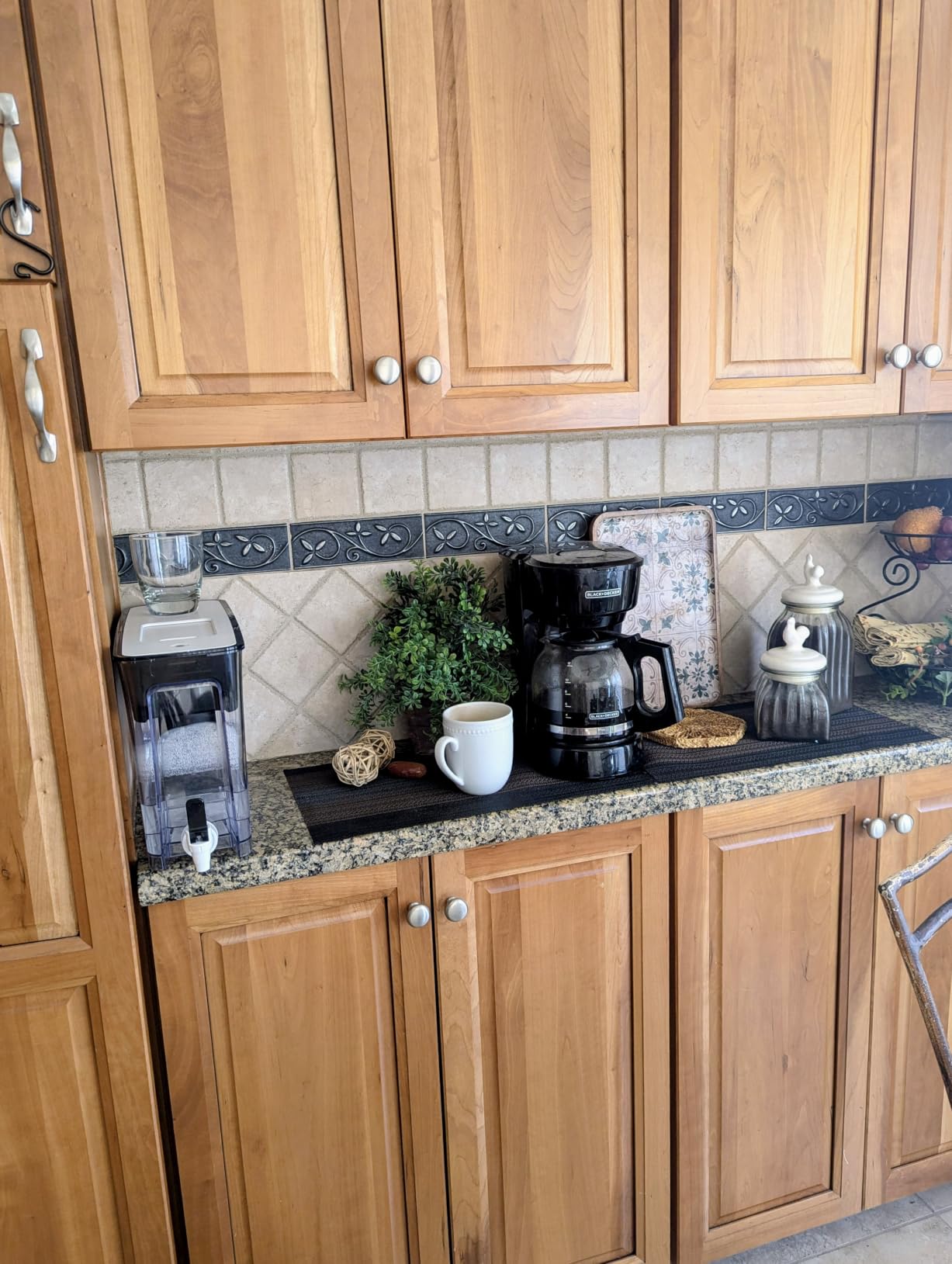
The 35-cup total capacity with 19 cups in the body makes this one of the largest gravity dispensers on our list, suitable for families of four or more. The slim profile at 14.4 by 5.5 by 10.2 inches slides neatly into a refrigerator door or sits unobtrusively on a counter. The sliding cover helps isolate refrigerator odors, which is a small but appreciated detail.
It is important to understand that this model does not reduce TDS. The carbon fiber filtration targets chlorine, taste, odor, and certain contaminants but leaves dissolved minerals in place. If your concern is hardness or dissolved solids rather than chlorine taste, you would be better served by an ion exchange or RO system. For improving taste and reducing chlorine though, the Waterdrop is one of the best countertop water filter dispensers at its tier.
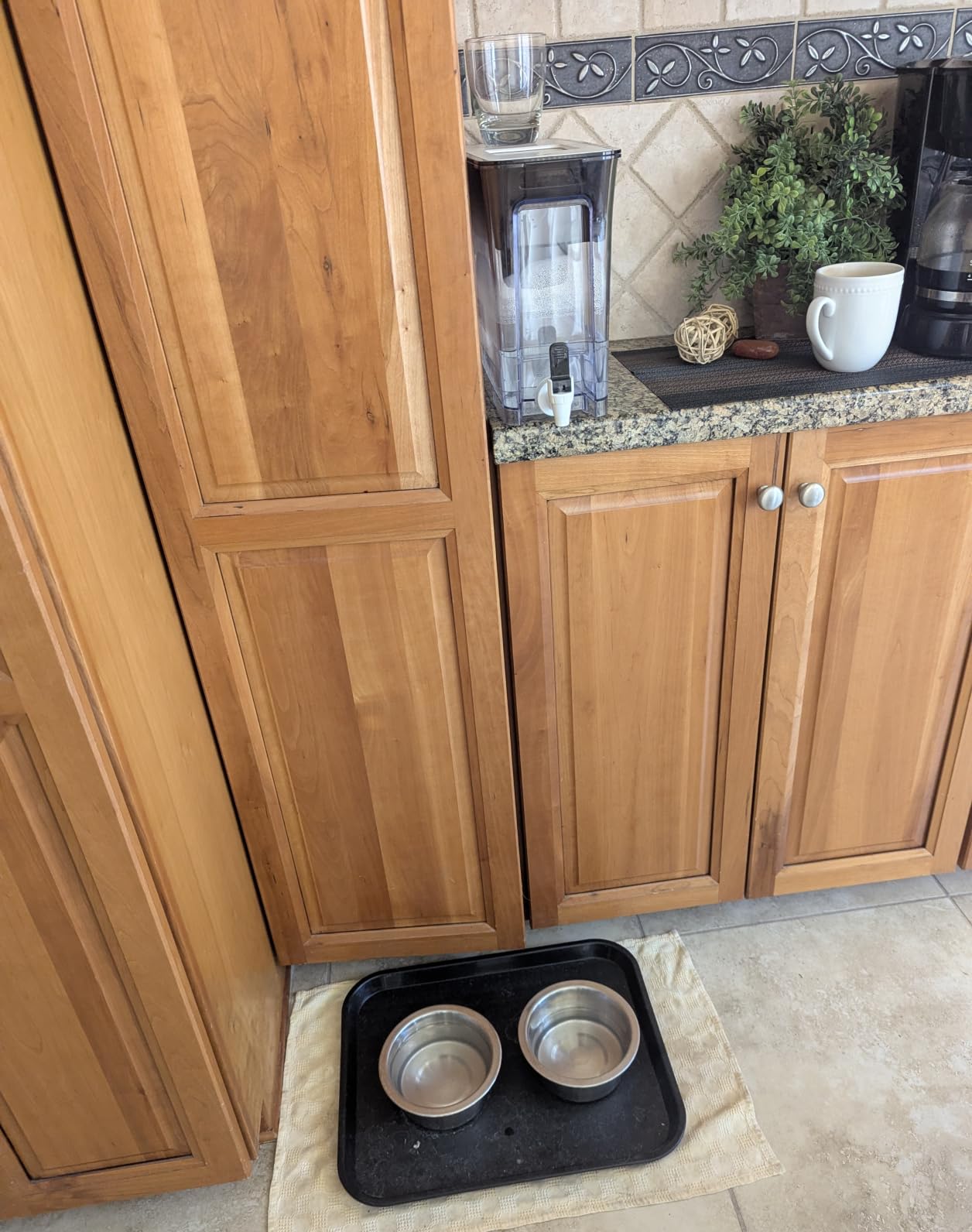
Flow Rate and Daily Convenience
The fast filtration means you can refill the upper chamber and have filtered water ready in minutes rather than hours. This reduces the temptation to grab unfiltered tap water when the dispenser runs dry.
The intelligent filter indicator tracks usage and alerts you when the 200-gallon capacity is approaching its limit, removing another common source of guesswork.
What the NSF42 Certification Actually Means
NSF/ANSI 42 certification covers aesthetic effects, meaning the filter is verified to reduce chlorine taste and odor, particulate matter, and certain chemicals that affect how water looks and tastes.
This differs from NSF/ANSI 53 which covers health effects like lead and cyst reduction. If your primary goal is better-tasting water rather than removing specific health contaminants, NSF42 certification is exactly what you need.
7. LifeStraw Home 18-Cup Dispenser – Dual Filtration Removing Bacteria
LifeStraw Home BPA-Free Water Filter Dispenser, 18-Cup, Pebble
Dual filtration system
Removes bacteria and parasites
Retains essential minerals
Social impact purchase
Pros
- Only dispenser that removes bacteria and parasites
- Reduces microplastics lead mercury PFAS chlorine herbicides pesticides
- Retains essential minerals like magnesium and potassium
- Long-lasting membrane filter rated for 264 gallons
- One-hand tap and easy-fill lid
- Social impact provides safe water for a child
Cons
- Higher price point
- Spigot dripping reported by some users
- Plastic around spigot may crack over time
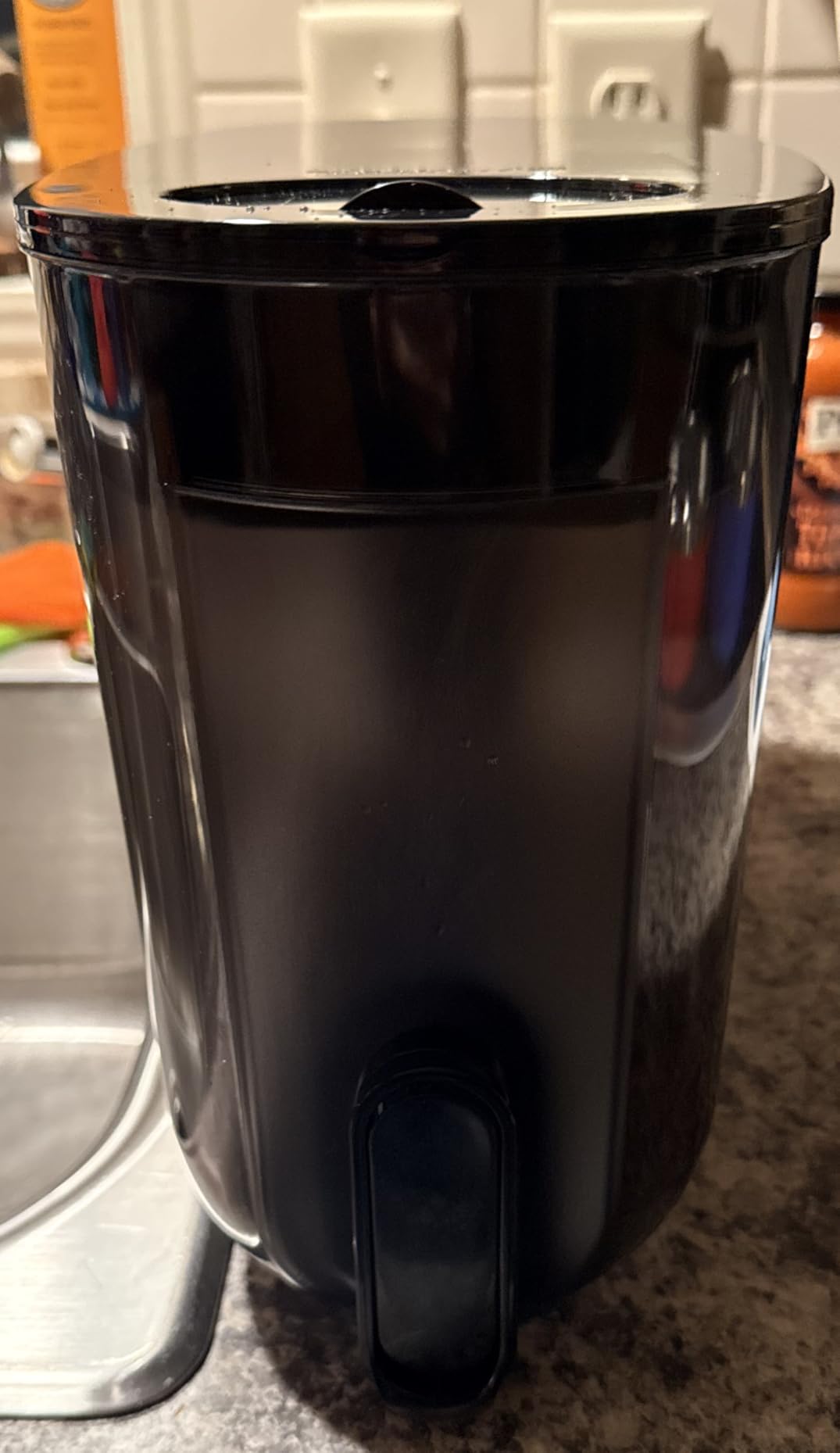
The LifeStraw Home dispenser stands alone in this lineup because it is the only model that removes bacteria and parasites in addition to chemical contaminants. This dual filtration system pairs a membrane microfilter rated for 264 gallons with an activated carbon filter rated for 40 gallons. That biological filtration capability is something no other dispenser on our list offers, making it uniquely suited for certain water situations.
The membrane filter removes bacteria, parasites, and microplastics while the carbon filter reduces lead, mercury, PFAS, chlorine, herbicides, and pesticides. Despite this aggressive filtration, the system retains beneficial minerals like magnesium and potassium, which means the water keeps a natural taste rather than tasting stripped. I appreciated that the filtered water still had character rather than the flatness of fully deionized water.
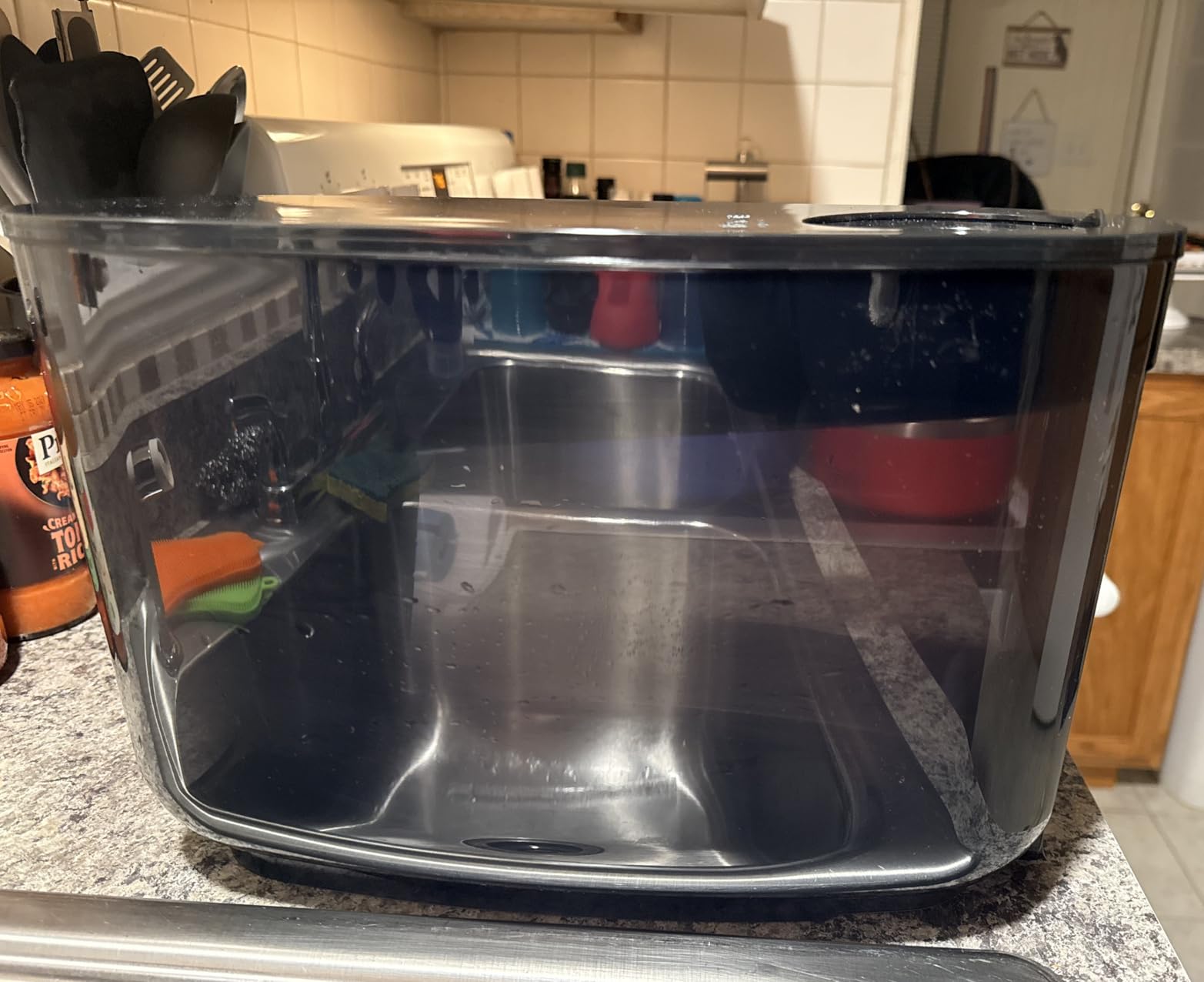
The 18-cup capacity with BPA-free food-grade plastic construction is practical for everyday family use. The one-hand tap and easy-fill lid design make daily operation smooth. The membrane filter lasting a full year before replacement is a strong longevity advantage, though the carbon filter needs changing every two months.
Beyond performance, every LifeStraw Home purchase funds safe water for a child in need for an entire year. That social impact element resonated with many buyers in the review data. The main durability concern centers on the spigot, with some users reporting dripping or cracking over extended use. Despite this, the unique biological filtration makes this a standout for anyone whose water source carries pathogen risks.
When Biological Filtration Matters Most
If you rely on well water, live in an area with aging infrastructure, or travel with your filtration system to locations with questionable water sources, the ability to remove bacteria and parasites is not a luxury but a necessity.
Standard carbon and ion exchange filters do not address biological contaminants. Only the LifeStraw Home in this lineup provides that additional layer of protection alongside chemical reduction.
Social Impact and Brand Mission
LifeStraw’s follow-the-liters program means each purchase directly contributes to providing clean drinking water to communities that lack access. This gives your purchase a tangible impact beyond your own kitchen.
For buyers who factor corporate responsibility into purchasing decisions, this is a meaningful differentiator that no other brand on our list matches at this scale.
8. Brita Extra-Large 27-Cup Dispenser – NSF Certified with Filter Indicator
Brita X-Large 27 Cup Water Dispenser, Includes 1 Filter, Black
27-cup BPA-free capacity
WQA NSF certified
Reduces chlorine and metals
Filter change indicator
Pros
- Removes chlorine taste and odor
- Reduces copper mercury and other impurities
- Space-efficient fridge-friendly design
- Easy-locking lid and precision-pour spigot
- Filter indicator tells you when to change
- Compatible with Elite and Standard replacement filters
Cons
- Not dishwasher safe
- Standard filter needs replacement every 2 months
- Limited to basic contaminant reduction
The Brita Extra-Large 27-Cup is the most widely purchased model on our list with over 17,000 customer reviews and a 4.6-star average. That massive user base speaks to reliability and broad appeal, making this the go-to choice for households that want better-tasting water without complexity. It is also the most affordable entry point into filtered dispensing, which is why it earned our Budget Pick badge in the top three.
The WQA NSF and ANSI certification covers chlorine taste and odor reduction along with reduction of zinc, copper, and mercury. The Standard filter lasts 40 gallons or approximately two months, while the compatible Elite filter extends that to 120 gallons or about six months. I appreciate that Brita offers this upgrade path so you can choose between frequent cheaper replacements or fewer premium ones.
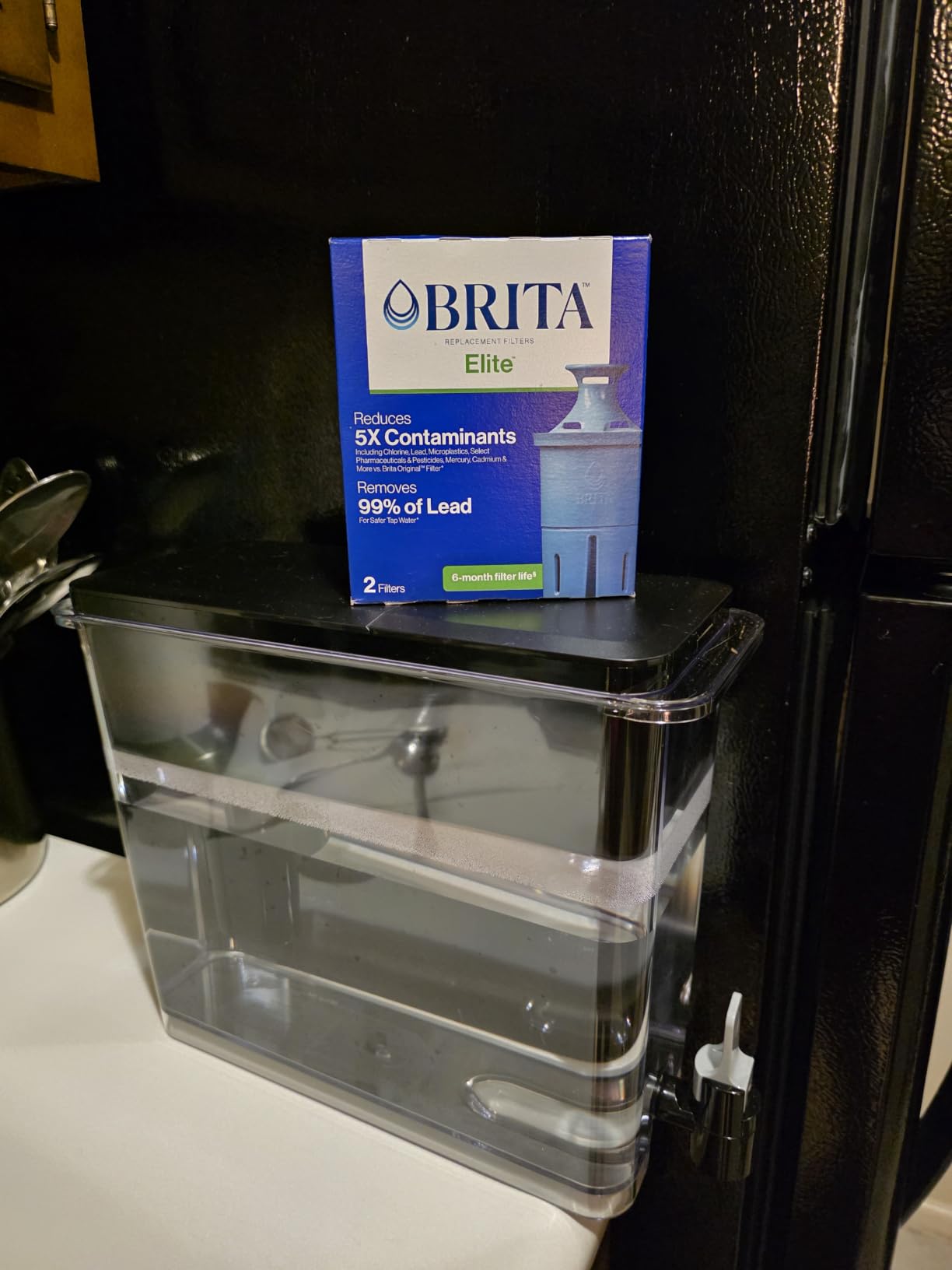
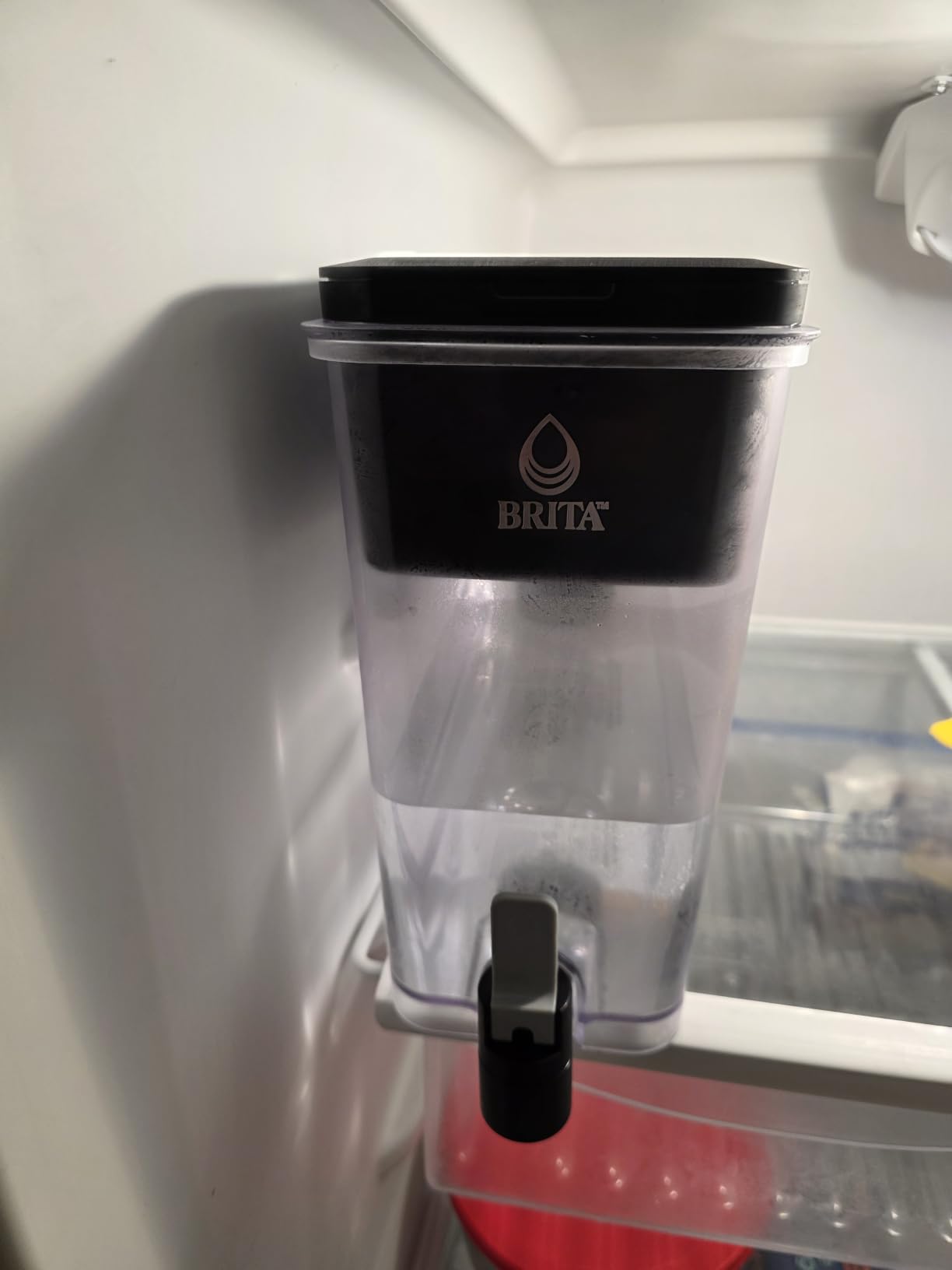
The 27-cup capacity with a space-efficient design fits well in refrigerator doors, and the easy-locking lid with precision-pour spigot makes dispensing clean and simple. The filter change indicator takes the guesswork out of replacement timing. At just three pounds and with a slim 18 by 5.67 by 10.47-inch profile, this is the lightest and most storage-friendly option on the list.
The trade-off is that Brita’s filtration addresses basic taste and a limited set of contaminants rather than the comprehensive reduction offered by RO or ion exchange systems. It will not remove fluoride, PFAS, or dissolved solids. For households where the primary concern is chlorine taste and odor, the Brita delivers exactly what you need at an unmatched value. It is not trying to be a lab-grade purifier, and that is perfectly fine for millions of satisfied users.
Standard vs Elite Filter Choice
The Standard filter handles chlorine, copper, mercury, and zinc over a 40-gallon lifespan. The Elite filter covers the same contaminants plus additional ones over 120 gallons, lasting three times longer.
Upgrading to the Elite filter reduces your annual replacement count and provides broader contaminant coverage. Both filters are interchangeable in the same dispenser, so you can switch based on budget and water quality needs.
Why Brita Remains the Default Choice
Replacement filters for Brita are available virtually everywhere, from grocery stores to big-box retailers to online marketplaces. This universal availability eliminates the frustration of hunting for proprietary replacements.
The combination of low cost, easy availability, proven reliability, and massive review validation makes this the safest default choice for anyone unsure where to start with filtered water dispensers.
9. PUR 30-Cup Countertop Dispenser – Dishwasher Safe with 2-in-1 Filtration
PUR 30-Cup Countertop Water Filter Dispenser, White/Blue, DS1800Z
30-cup capacity
Dishwasher safe design
NSF certified 2-in-1 filtration
Pull-down spout
Pros
- 2-in-1 filtration certified to reduce chlorine mercury copper and zinc
- Dishwasher safe for easy cleaning
- Slim space-saving design fits in refrigerator
- Pull-down spout for easy pouring
- Carrying handle for easy refill
- Trusted brand with over 35 years of history
Cons
- Spigot lever may drip if not fully engaged
- Leaks reported after several months of use
- Gravity-fed filtration can be slow
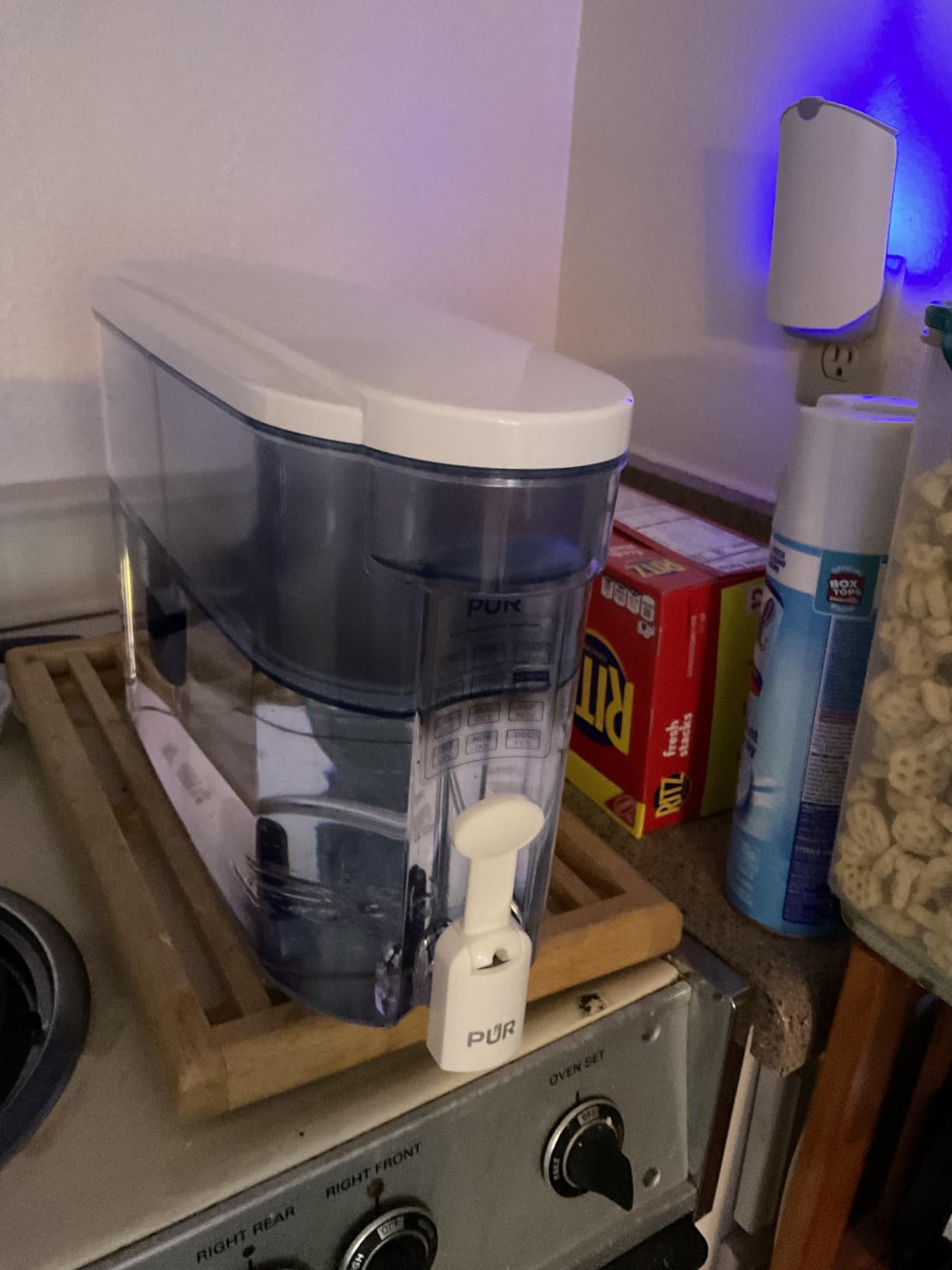
The PUR 30-Cup Dispenser is the only model on our list with a fully dishwasher-safe design, which is a practical advantage that busy families genuinely appreciate. After weeks of use, being able to toss the components in the dishwasher rather than hand-washing crevices saves real time and ensures thorough cleaning. With over 6,600 reviews and a 4.5-star rating, the PUR has proven itself across thousands of households.
The 2-in-1 filtration is NSF certified to reduce chlorine, mercury, copper, and zinc, covering the most common municipal water taste and safety concerns. Each filter lasts two months or 40 gallons, which is standard for this category. The slim design fits neatly in refrigerator doors, and the carrying handle makes refilling from the tap manageable even when the unit is partially full.
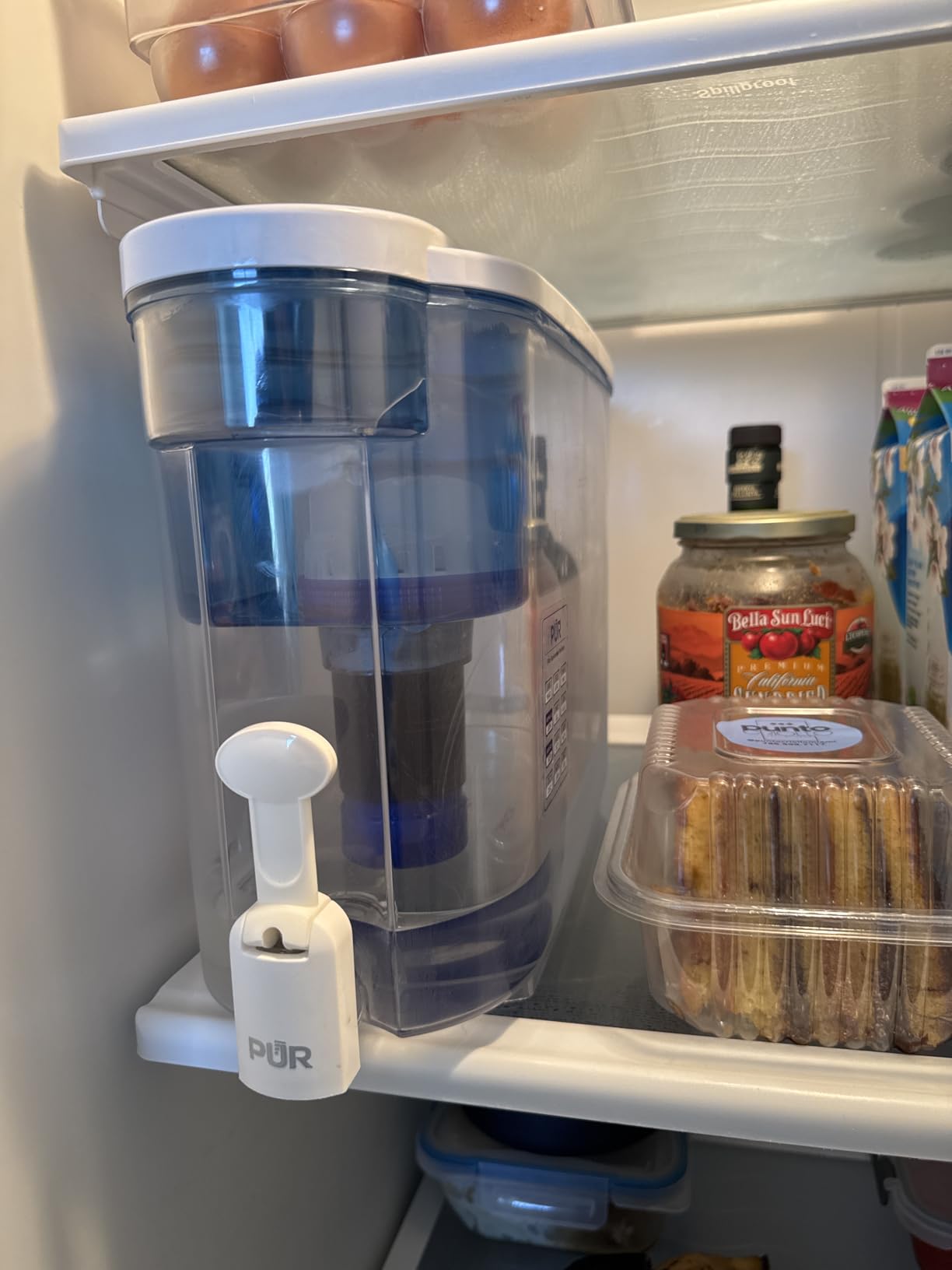
The 30-cup capacity makes this the largest gravity-fed plastic dispenser on our list, well-suited for families with significant daily water consumption. The pull-down spout offers controlled pouring without needing to lift the entire unit. PUR has been a trusted name in water filtration for over 35 years, and replacement filters are widely available in stores and online.
The most common complaint in long-term reviews involves the spigot lever, which can drip if not fully engaged after dispensing. Some users also report seal degradation and leaking after several months of regular use. These issues are worth monitoring, though the overall satisfaction rate remains high at 78% five-star ratings. For families who prioritize dishwasher convenience and large capacity, the PUR is a solid everyday choice.
Dishwasher Safe Cleaning Advantage
The ability to clean all components except the base reservoir in a dishwasher eliminates bacterial buildup that hand-washing can miss. This is particularly important for dispensers that sit in refrigerators for extended periods.
No other model on our list offers this level of cleaning convenience. If hygiene and maintenance ease are high on your priority list, the PUR stands alone in this regard.
Spigot Durability and Maintenance
The pull-down spout design is convenient but requires full engagement after each pour to prevent dripping. Some users address this by replacing the spigot assembly periodically, which is an inexpensive fix.
Checking the rubber seals every few months and ensuring they remain clean can extend the life of the dispensing mechanism and prevent the leaking issues some long-term users have reported.
10. Invigorated Water Alkaline Dispenser – pH Up to pH9 with 3 Filters Included
Invigorated Water Alkaline Water Filter Dispenser, 53-Cup Large Capacity
Alkaline pH up to pH9
3 filters included
288 gal combined capacity
Multi-stage mineralized filtration
Pros
- Alkaline water increases pH up to pH9
- Removes heavy metals while retaining beneficial minerals
- Three filters included for 288 gallons combined capacity
- No electricity required
- Space-saving anti-slip countertop design
- BPA-free food-grade materials
Cons
- Slower non-electric filtration flow rate
- Alkaline claims not independently lab certified
- Limited review base compared to mainstream brands
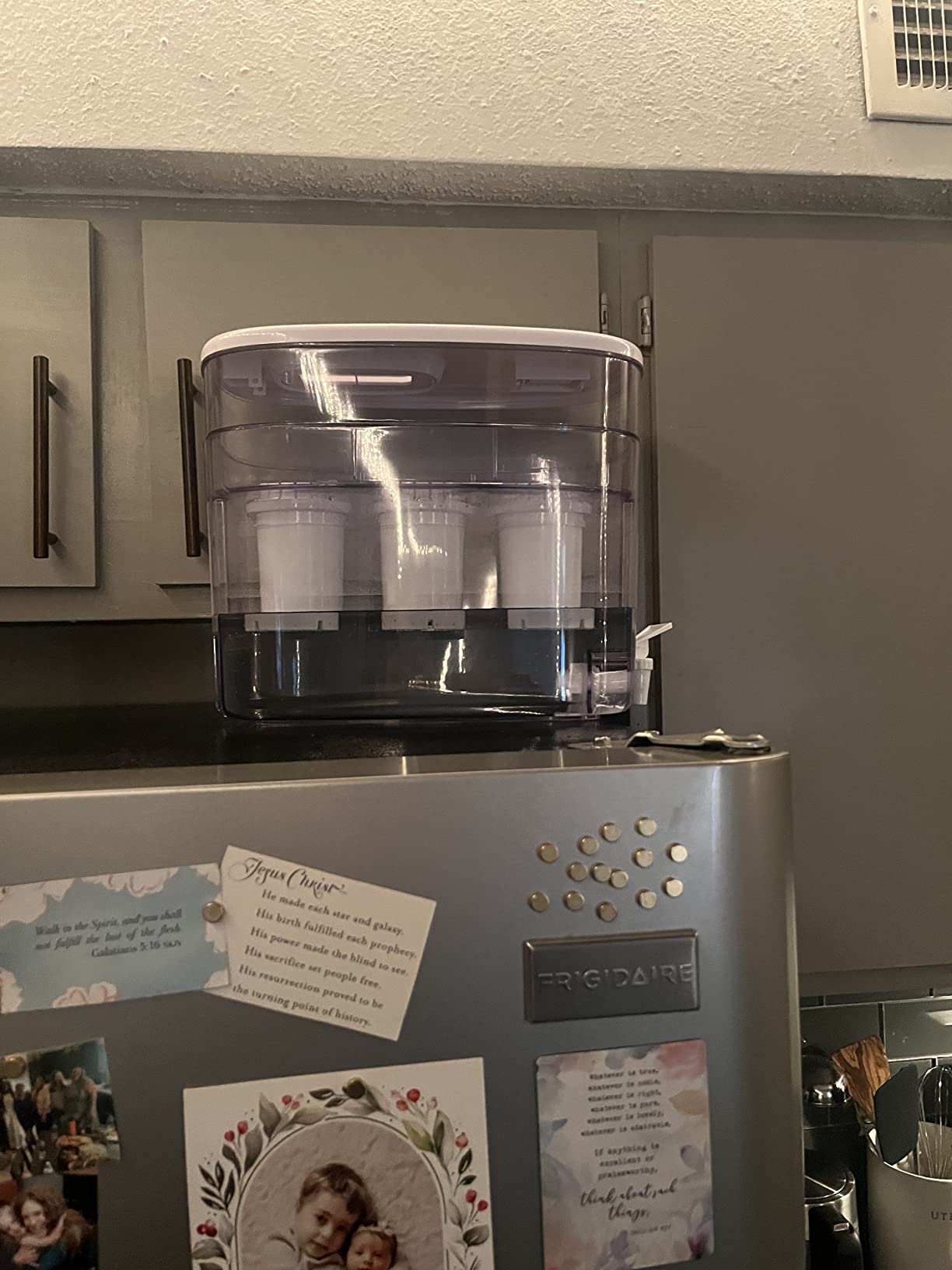
The Invigorated Water Alkaline Dispenser targets a specific niche that no other model on this list addresses, which is alkaline mineralized water. The multi-stage filtration raises pH up to pH9 while removing unwanted particles and heavy metals. Crucially, the system retains beneficial minerals like calcium and magnesium rather than stripping them out, which is the core appeal for alkaline water enthusiasts.
This package includes three filters with a combined capacity of 288 gallons or over 1,000 liters, which represents strong value in terms of total filtration volume. The non-electric gravity design means no power outlet is needed, and the anti-slip base keeps the unit stable on slick countertops. The BPA-free food-grade construction addresses material safety concerns.
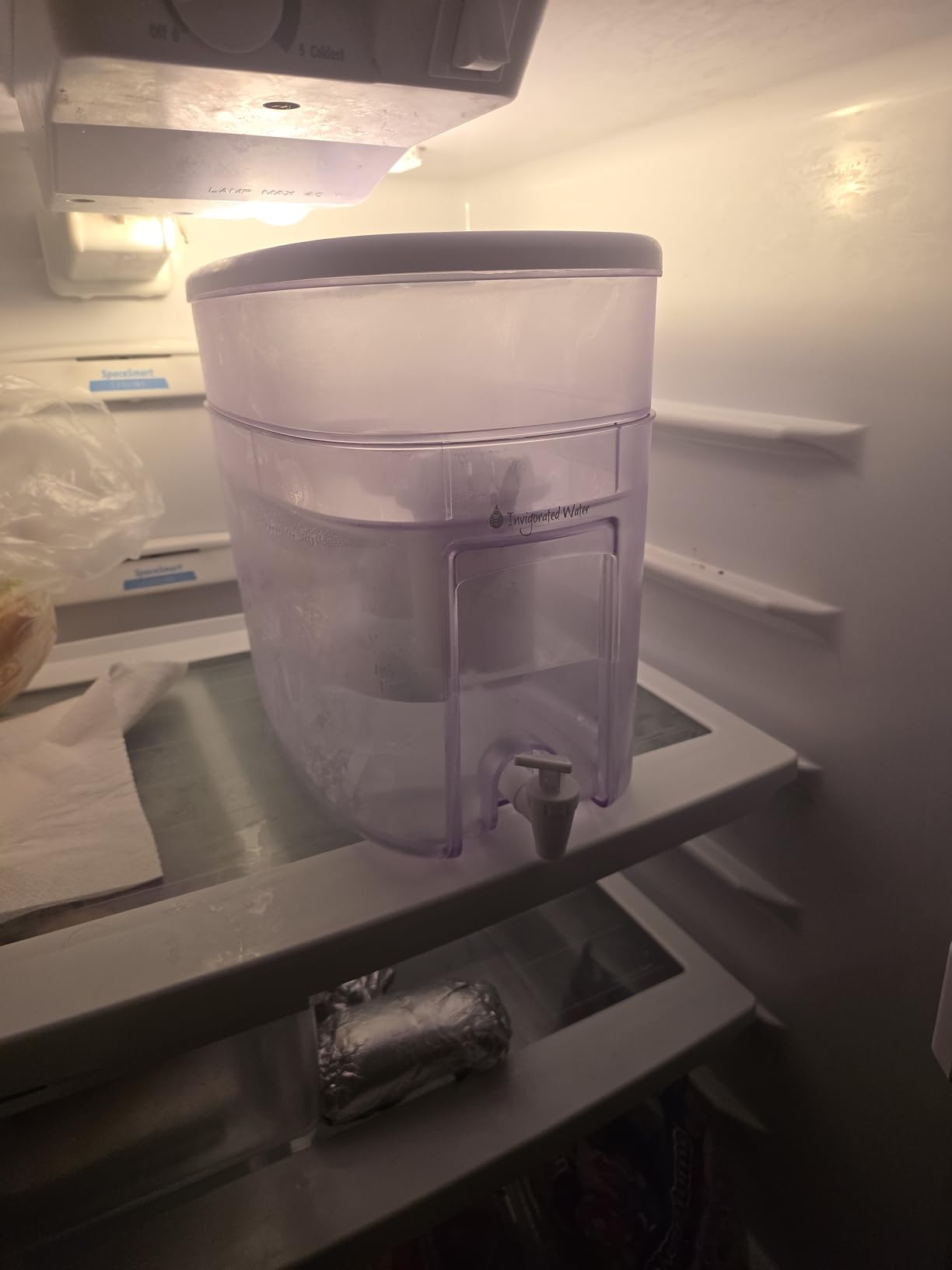
The 73% five-star rating from nearly 1,800 reviews indicates solid customer satisfaction, with users particularly praising the mineral retention and the noticeably different taste profile of alkalized water. The space-saving design at 13.5 by 8 by 11 inches fits standard countertops without dominating the space. Many users report the water tastes smoother and less acidic than unfiltered tap water.
The main limitation is that the alkaline performance claims are based on manufacturer testing rather than independent lab certification like NSF or IAPMO. Additionally, the non-electric gravity design means a slower flow rate of 0.15 gallons per minute. For users who specifically want alkaline water with retained minerals and are comfortable with brand-reported performance data, this dispenser fills a gap that none of the other nine models cover.
Alkaline Water Benefits and Considerations
Proponents of alkaline water suggest that higher pH levels may help neutralize acid in the body and improve hydration. While scientific consensus on these health claims is still developing, many users simply prefer the taste and mouthfeel of alkalized water.
The pH9 output is at the upper end of what most alkaline filters produce. If you are curious about alkaline water without investing in an electric ionizer, this gravity dispenser is an accessible starting point.
Mineral Retention vs Removal Philosophy
Most filtration systems either remove everything including minerals or target specific contaminants. The Invigorated Water takes a selective approach, removing harmful substances while keeping calcium, magnesium, and other beneficial minerals intact.
This produces water that tastes closer to natural mineral spring water rather than the flat profile of fully deionized or reverse osmosis water. For drinkers who find stripped water unappealing, this retention approach is preferable.
How to Choose the Best Countertop Water Filter Dispenser?
Selecting the right countertop water filter dispenser comes down to understanding your water quality, your filtration priorities, and your household logistics. The ten models we reviewed span very different approaches, and the best choice for one household may be wrong for another. This buying guide breaks down the key decision factors so you can match a product to your specific situation rather than chasing the highest-rated model on paper.
Filtration Technology: RO vs Gravity vs Carbon vs Ion Exchange
The filtration method is the single most important factor, because it determines what contaminants your system can and cannot address. Reverse osmosis systems like the AquaTru, DREO, and Bluevua push water through a semi-permeable membrane that removes contaminants down to 0.0001 microns. This is the most thorough filtration available in a countertop format and handles fluoride, PFAS, lead, microplastics, and dissolved solids. The trade-off is that RO requires electricity and produces some waste water.
Gravity-fed systems like the Big Berkey use pressure from water’s own weight to force it through dense filter elements. These require no electricity and can process virtually any water source, making them ideal for off-grid use and emergency preparedness. Carbon-based dispensers like the Brita, PUR, and Waterdrop use activated carbon to reduce chlorine, taste, odor, and certain chemicals. They are the simplest and most affordable but address the narrowest range of contaminants. Ion exchange systems like the ZeroWater remove dissolved solids through chemical exchange, producing exceptionally pure but potentially flat-tasting water.
NSF and ANSI Certifications to Verify
Certifications separate verified performance from marketing claims. NSF/ANSI 42 covers aesthetic effects like chlorine taste, odor, and particulate reduction. NSF/ANSI 53 covers health effects including lead, cysts, and VOC reduction. NSF/ANSI 58 applies specifically to reverse osmosis systems and their contaminant reduction claims. NSF/ANSI 372 verifies lead-free compliance in materials and construction.
When a manufacturer cites NSF certification, look for the specific standard number rather than just the NSF logo. IAPMO and WQA are equally reputable certification bodies that test to the same NSF/ANSI standards. Systems certified to reduce 84 contaminants like the AquaTru or tested by SGS like the DREO provide independently verified peace of mind. Always cross-reference certification claims with the certifying body’s database when possible, because unverified claims are unfortunately common in this category.
Filter Lifespan and Replacement Cost Awareness
Filter replacement is the hidden cost of ownership that catches many buyers by surprise. A low-cost dispenser with frequent filter changes can cost more over two years than a premium system with long-lasting elements. The Big Berkey leads in longevity with 6,000 gallons per filter pair, which can last years for a typical household. The Waterdrop offers 200 gallons per filter, roughly five times longer than standard carbon pitchers. The AquaTru ranges from six months to two years depending on the specific filter stage.
At the other end, ZeroWater filters may last only 20 to 40 gallons in high-TDS water areas, requiring frequent replacements. The LifeStraw membrane lasts a full year but the carbon component needs changing every two months. Before purchasing, check replacement filter availability and calculate your estimated annual cost based on your household consumption and local water quality. Forum discussions on Reddit consistently highlight unexpected replacement costs as the top frustration among countertop filter owners.
Capacity, Flow Rate, and Counter Space
Capacity should match your household size and drinking habits. For a family of four, the PUR at 30 cups or the Brita at 27 cups provide comfortable daily supply without constant refilling. Solo users or couples may find the Bluevua or DREO perfectly adequate at their smaller capacities. The Big Berkey’s 2.25-gallon reservoir is ideal for families who also want emergency backup capacity.
Flow rate affects daily convenience significantly. Gravity systems are inherently slower than electric pump-driven models. The Waterdrop’s fast five-minute filtration cycle is a standout for impatient users, while the Big Berkey’s gravity flow requires patience or a fill-and-wait approach. Consider your counter footprint too, because RO systems like the AquaTru at 14 by 12 by 14 inches demand meaningful space, while slim pitchers like the Brita fit in refrigerator doors.
Matching Your Use Case: Renters, Families, Well Water, Emergencies
Renters should prioritize systems requiring no plumbing or permanent installation. The AquaTru, Bluevua, DREO, and all gravity models qualify, while under-sink alternatives do not. For families, large-capacity dispensers like the PUR 30-cup or Brita 27-cup reduce refill frequency. Well water users benefit from the LifeStraw’s biological filtration for bacteria and parasites, or the Big Berkey’s broad contaminant removal. Emergency preparedness planners should look at the Berkey for its independence from electricity and ability to process questionable water sources.
If taste improvement is your sole concern, carbon-based dispensers like the Waterdrop or Brita handle chlorine and odor effectively at the lowest cost. If you have specific contaminant concerns such as PFAS, lead, or fluoride, reverse osmosis systems provide the certified reduction you need. Match the technology to your actual water quality report rather than assuming more filtration stages always means better results.
FAQs
What is the best countertop water filter system?
The AquaTru Classic is our top overall pick because it is certified to reduce 84 contaminants using four-stage reverse osmosis, requires no plumbing, and delivers bottled-water-quality purity from your kitchen counter. The Big Berkey is the best gravity-fed option for off-grid and emergency use, while the Brita Extra-Large offers the best budget entry point for everyday chlorine and taste reduction.
How do countertop water filters work?
Countertop water filters work by passing water through filtration media such as activated carbon, reverse osmosis membranes, or ion exchange resin. Gravity-fed systems use water pressure from gravity alone, while electric models use pumps to push water through dense RO membranes. Each filtration method targets different contaminants, from chlorine and lead to bacteria, PFAS, and dissolved solids.
Are countertop water filters effective?
Yes, countertop water filters are effective when matched to your specific water quality concerns. NSF-certified models like the AquaTru and ZeroWater provide independently verified contaminant reduction. Effectiveness depends on choosing the right filtration technology, as carbon filters handle taste and chlorine while reverse osmosis and ion exchange systems address dissolved solids, heavy metals, and forever chemicals.
What contaminants do countertop water filters remove?
Depending on the filtration method, countertop filters can remove chlorine, lead, mercury, copper, zinc, PFAS, PFOA, PFOS, fluoride, chromium, microplastics, bacteria, parasites, herbicides, pesticides, and dissolved solids. Reverse osmosis systems remove the broadest range, while carbon filters target taste and chemical contaminants. Always check the specific NSF or IAPMO certification for verified removal claims.
How often should you replace countertop water filter cartridges?
Replacement frequency varies by system and water quality. Standard carbon filters like Brita and PUR last about 40 gallons or two months. Long-life filters like the Waterdrop last 200 gallons. Reverse osmosis membranes in systems like AquaTru can last up to two years. Gravity elements like the Black Berkey are rated for 6,000 gallons per pair. Test your water and monitor flow rate and taste to determine actual replacement timing.
Final Verdict on the Best Countertop Water Filter Dispensers
After testing and comparing all ten models, our recommendations crystallize around three clear winners for different buyer profiles. The AquaTru Classic remains our overall Editor’s Choice for its unmatched 84-contaminant certified reduction and hassle-free operation. The Big Berkey earns Best Value for its decades-proven durability and extraordinary 6,000-gallon filter life. The Brita Extra-Large takes Budget Pick honors as the most accessible entry point for households seeking straightforward taste and chlorine improvement.
The best countertop water filter dispensers in 2026 span a wide range of technologies and budgets, and the right choice depends entirely on your water quality concerns and household needs. Whether you need reverse osmosis for comprehensive contaminant removal, gravity filtration for off-grid independence, or a simple carbon pitcher for better-tasting tap water, there is a model on this list that will serve you well for years to come.