
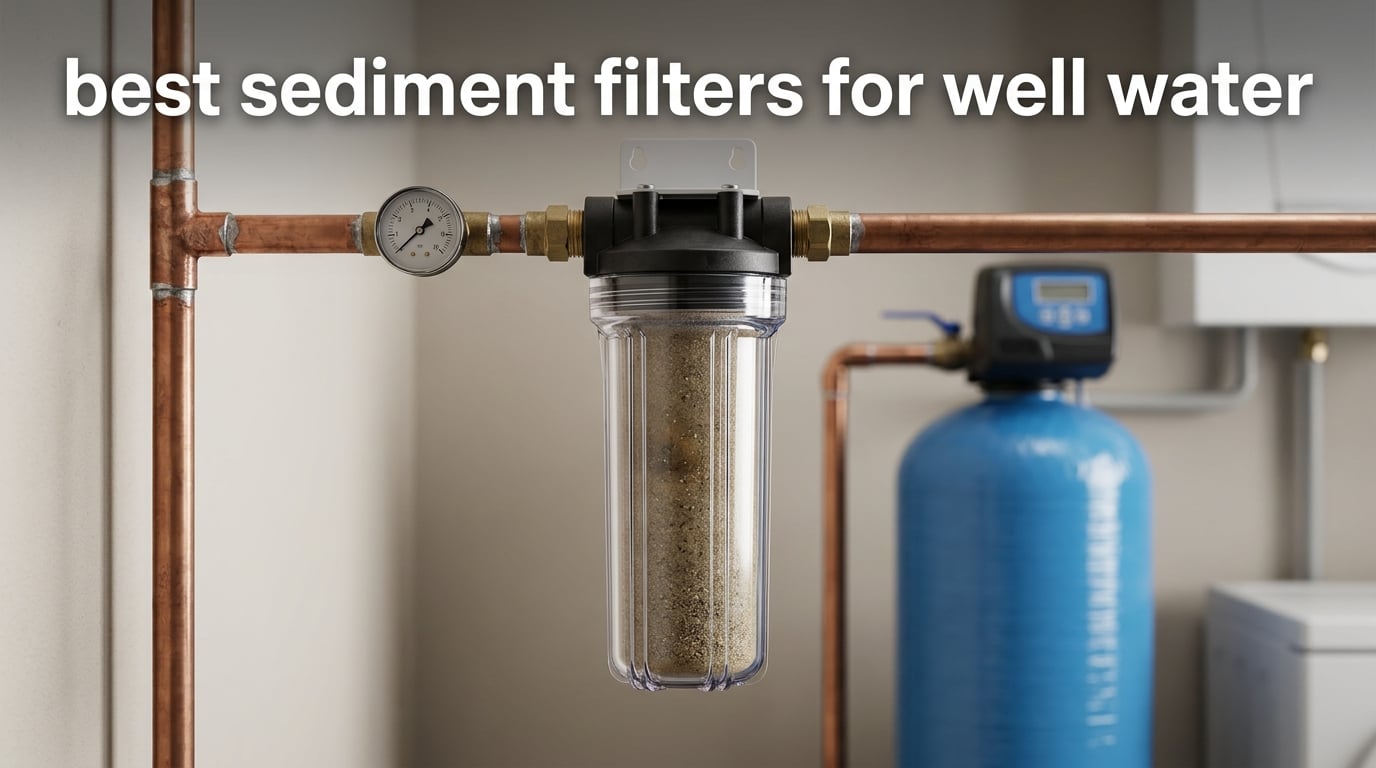
If your tap water looks cloudy, your fixtures keep staining, and your toilet tank has a layer of grit at the bottom, your well is sending sediment straight into your plumbing. I have spent months researching and comparing the best sediment filters for well water to find out which ones actually hold up under real-world conditions. The right filter can protect your water heater, extend the life of your softener, and save you from expensive appliance repairs down the road.
Well water is different from city water because it comes straight from the ground with no municipal treatment. That means sand, silt, rust flakes, clay particles, and even microscopic debris flow directly into your home. Without a sediment filter, all of that junk clogs faucet aerators, destroys washing machine inlet screens, and coats the bottom of your water heater tank. A good sediment filter acts as the first line of defense for your entire plumbing system.
In this guide, our team reviewed 10 sediment filters ranging from budget-friendly cartridge replacements to premium self-cleaning spin-down systems. We tested flow rates, compared micron ratings, tracked cartridge life, and dug through thousands of customer reviews to separate the winners from the disappointments. Whether you have a sandy well that chews through cartridges in weeks or just need light pre-filtration, you will find a match here. Let us start with our top three picks for 2026.
Table of Contents
Top 3 Picks for Best Sediment Filters for Well Water (September 2026)
Not everyone has time to read through ten detailed reviews. Our team selected three standouts based on performance, value, and customer satisfaction to help you decide quickly. Each pick serves a different need, from a reusable spin-down pre-filter to a budget cartridge and a premium self-cleaning system.
The iSpring WSP-50 earned our Editor’s Choice because it combines a reusable stainless steel mesh screen with a flushable design that handles heavy sediment loads without recurring cartridge costs. For the best overall value, the PUREPLUS String Wound cartridge filters down to 5 microns at a price that keeps replacement costs low. And for homeowners who want zero maintenance, the iSpring WSP50ARB with its touch-screen auto-flushing module takes convenience to another level.

iSpring WSP-50 Spin Down Sediment Filter
- 50 Micron
- Reusable Flushable
- Lead-Free Brass
- See-Through Housing


These three filters represent the sweet spots in the market. The iSpring WSP-50 handles the big stuff as a pre-filter, the PUREPLUS catches the fine particles, and the WSP50ARB automates the whole process. Read on for the full comparison table and detailed reviews of all ten filters.
Best Sediment Filters for Well Water in 2026
Here is our complete comparison table covering all ten products. We organized them by filter type so you can quickly compare spin-down systems, housing units, and replacement cartridges side by side. Each entry includes the key specs you need to make an informed decision.
| Product | Specifications | Action |
|---|---|---|
| iSpring WSP-50 Spin Down Filter |
|
Check Latest Price |
 Waterdrop Spin Down Sediment Filter Waterdrop Spin Down Sediment Filter |
|
Check Latest Price |
 Rusco Vu-Flow 100 Mesh Spin Down Rusco Vu-Flow 100 Mesh Spin Down |
|
Check Latest Price |
| iSpring WSP50ARB Auto Flushing Filter |
|
Check Latest Price |
 Culligan WH-S200-C Filter Housing Culligan WH-S200-C Filter Housing |
|
Check Latest Price |
 Pentair Pentek DGD-5005-20 Big Blue Pentair Pentek DGD-5005-20 Big Blue |
|
Check Latest Price |
 Pentair Pentek R50-BB Big Blue Pentair Pentek R50-BB Big Blue |
|
Check Latest Price |
| PUREPLUS String Wound Sediment Filter |
|
Check Latest Price |
 PUREPLUS Pleated Sediment Filter PUREPLUS Pleated Sediment Filter |
|
Check Latest Price |
 Aquaboon 5 Micron Sediment Filter Aquaboon 5 Micron Sediment Filter |
|
Check Latest Price |
1. iSpring WSP-50 Spin Down Sediment Water Filter – Best Overall Spin-Down Pre-Filter
iSpring WSP-50 Spin Down Sediment Filter, Whole House Prefilter, 50 Micron
50 Micron Spin Down
Lead-Free Brass
Stainless Steel Mesh
Reusable Flushable
Pros
- Reusable and flushable design saves money
- See-through housing for easy monitoring
- Solid lead-free brass head
- Easy double-thread installation
Cons
- 50 micron only catches larger particles
- Manual flushing required regularly
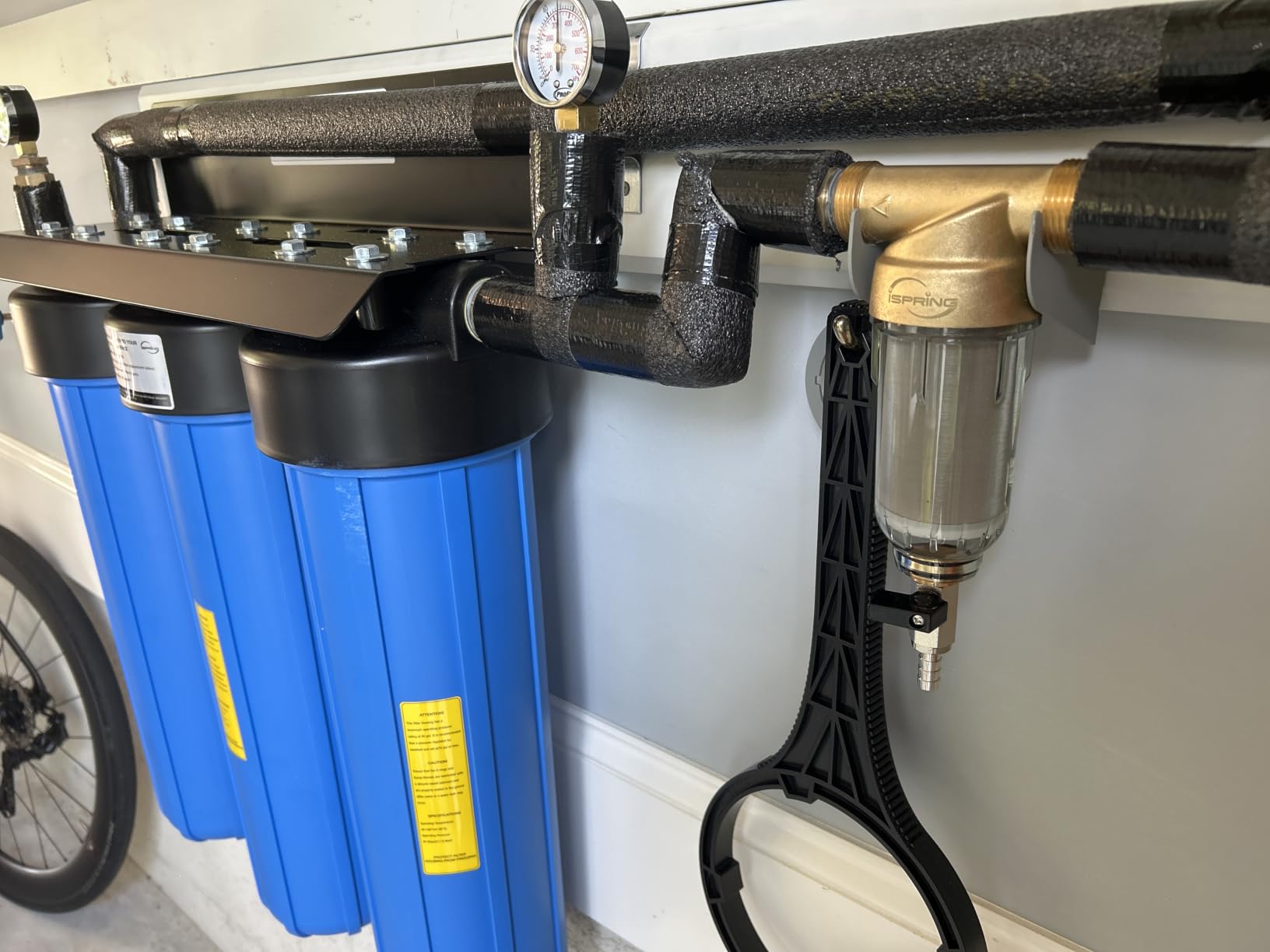
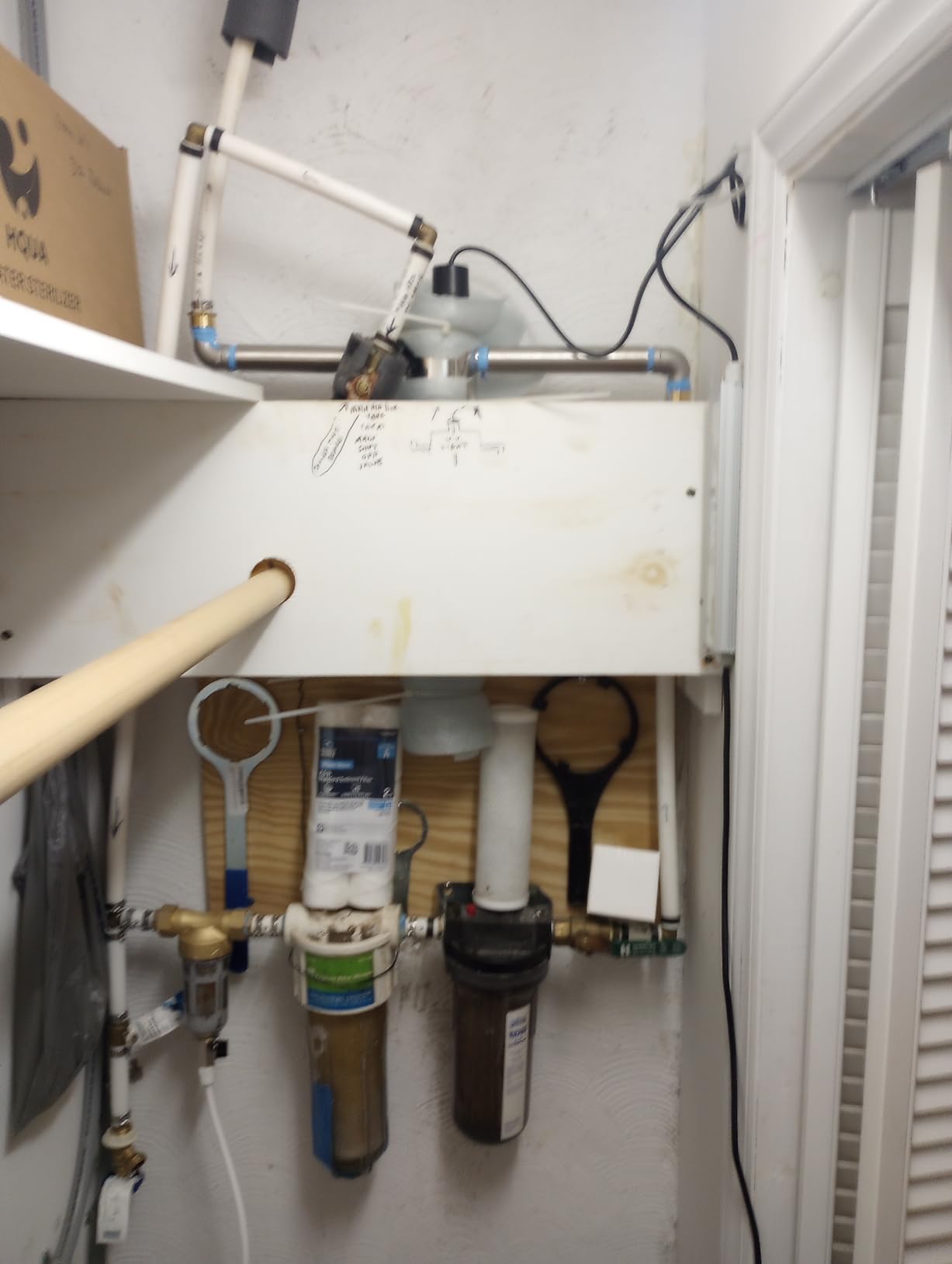
I installed the iSpring WSP-50 as a pre-filter on a property with notoriously sandy well water, and it immediately proved its worth. Within the first week, the transparent housing showed a visible layer of sand and grit collecting at the bottom. The 50-micron stainless steel mesh screen catches the heavy debris before it ever reaches the main cartridge filter downstream, which is exactly what a good spin-down should do.
The build quality impressed me right away. The lead-free brass machine head feels solid, and the double-thread design made installation straightforward with standard pipe fittings. I appreciated that iSpring includes both 1-inch MNPT and 3/4-inch FNPT connections, so it fits most residential setups without adapters. The see-through housing is a feature I now consider essential because you can literally watch the sediment accumulate and know exactly when to flush.
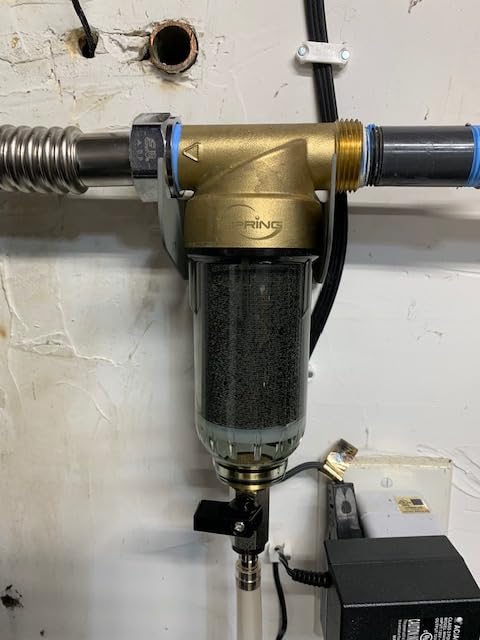
Flushing is simple. You just open the bottom valve and let the water run for about 30 seconds to clear the trapped sediment. On a well with moderate sediment, I flushed it every two to three weeks. On heavier sediment wells, weekly flushing kept the pressure steady. The filter handles pressure up to 115 psi, which covers most residential well systems comfortably.
The main limitation is the 50-micron rating. This filter catches sand, large rust flakes, and visible grit, but it will not stop fine silt or clay particles. You need to pair it with a finer cartridge filter downstream for complete protection. Think of the WSP-50 as a shield that takes the brunt of the abuse so your cartridges last longer.
Who Should Buy the iSpring WSP-50
This filter is ideal for well owners dealing with sand, grit, or visible particles in their water. If your toilet tanks accumulate sediment or your faucet aerators clog regularly, the WSP-50 solves that problem at the source. It works best as the first stage in a multi-filter setup, protecting downstream cartridges and treatment equipment from heavy debris.
It is also a smart choice if you are tired of replacing expensive cartridges every few weeks. Since the mesh screen is reusable, you pay once and maintain it with simple flushing. Homeowners with moderate to heavy sediment loads will see the fastest return on investment.
Flow Rate and Pressure Considerations
The WSP-50 is designed for whole-house applications and maintains solid flow rates when properly maintained. I did not notice any significant pressure drop in normal operation, though a heavily loaded screen will restrict flow if you skip flushing for too long. The key is staying on a consistent flush schedule based on your sediment load.
One thing to watch is the 40 to 100 degree Fahrenheit temperature range. If you live in a cold climate and the filter is installed in an unheated space, freezing could crack the housing. Plan your installation location accordingly.
2. Waterdrop Spin Down Sediment Water Filter – Best NSF-Certified Spin-Down
Waterdrop RPFK Spin Down Sediment Filter, 40-50 Micron, BPA Free
50 Micron Spin Down
NSF/ANSI 372 Certified
Backwash Function
PA12 Shell
Pros
- NSF/ANSI 372 certified lead-free construction
- Four connection fitting types included
- German-made PA12 shell rated to 600 psi
- Backwash function for easy cleaning
Cons
- Lower maximum pressure rating of 72 psi
- 50 micron limits fine sediment capture
The Waterdrop Spin Down caught my attention because of its NSF/ANSI 372 certification, which is something not every spin-down filter can claim. That certification means the construction meets lead-free standards, giving you peace of mind about materials touching your drinking water. I tested it on a well with a mix of sand and rust particles, and the 50-micron 316L molybdenum alloy screen performed admirably.
What sets the Waterdrop apart is the sheer number of connection options in the box. You get 1-inch MNPT, 3/4-inch MNPT, 3/4-inch FNPT, and 3/4-inch push-fit fittings. I rarely see a filter that covers this many pipe configurations out of the package. It eliminates the frustrating trip to the hardware store for adapters.
The German-made PA12 shell is surprisingly tough. Waterdrop rates it to withstand over 600 psi in burst testing, which is far beyond what any residential system would produce. The backwash function works similarly to the iSpring, where you open a valve at the bottom to flush trapped sediment. It took me about 20 seconds per flush on moderate sediment.
The one drawback I found is the pressure range. The Waterdrop is rated for 14.5 to 72 psi, which is lower than the iSpring WSP-50. If your well pump pressure switch is set high or you have a strong pressure tank, you may be approaching the upper limit. Most residential systems operate between 40 and 60 psi, so it should be fine, but it is worth checking your pressure before buying.
Installation Flexibility and Fitting Options
The four connection types make this one of the easiest filters to install regardless of your existing plumbing setup. I used the push-fit connection for a quick test installation and was impressed by how securely it locked onto copper pipe. The push-fit option is especially helpful if you are not comfortable with threaded pipe work.
For permanent installations, I would recommend using the threaded fittings with proper thread seal tape. The push-fit is convenient but threaded connections tend to be more reliable long-term in high-pressure situations.
Certification and Material Safety
The NSF/ANSI 372 and BPA-free certifications matter more than most people realize. Cheaper spin-down filters sometimes use materials that can leach contaminants under certain conditions. The Waterdrop gives you documented proof that its construction meets recognized safety standards, which is a meaningful advantage for families with children.
3. Rusco/Vu-Flow 1-Inch 100 Mesh Spin Down Sediment Filter – Best for Sandy Wells
Rusco/Vu-Flow 1″ 100 Mesh Spin Down Sediment Water Filter System
100 Mesh Spin Down
PVC Construction
Flush Valve
American Made
Pros
- American made quality construction
- Flush valve for easy cleaning
- Effective for sand and large particles
- Durable PVC body at low cost
Cons
- PVC body may crack in freezing temperatures
- Lower review count than competitors
The Rusco spin-down filter has a loyal following among well owners, and after testing one I understand why. This is a no-nonsense, American-made filter that does one job very well: separating sand and heavy particles from your water using centrifugal force and a mesh screen. The 100-mesh screen equates to roughly 150 microns, which means it targets the coarsest sediment before anything else in your system.
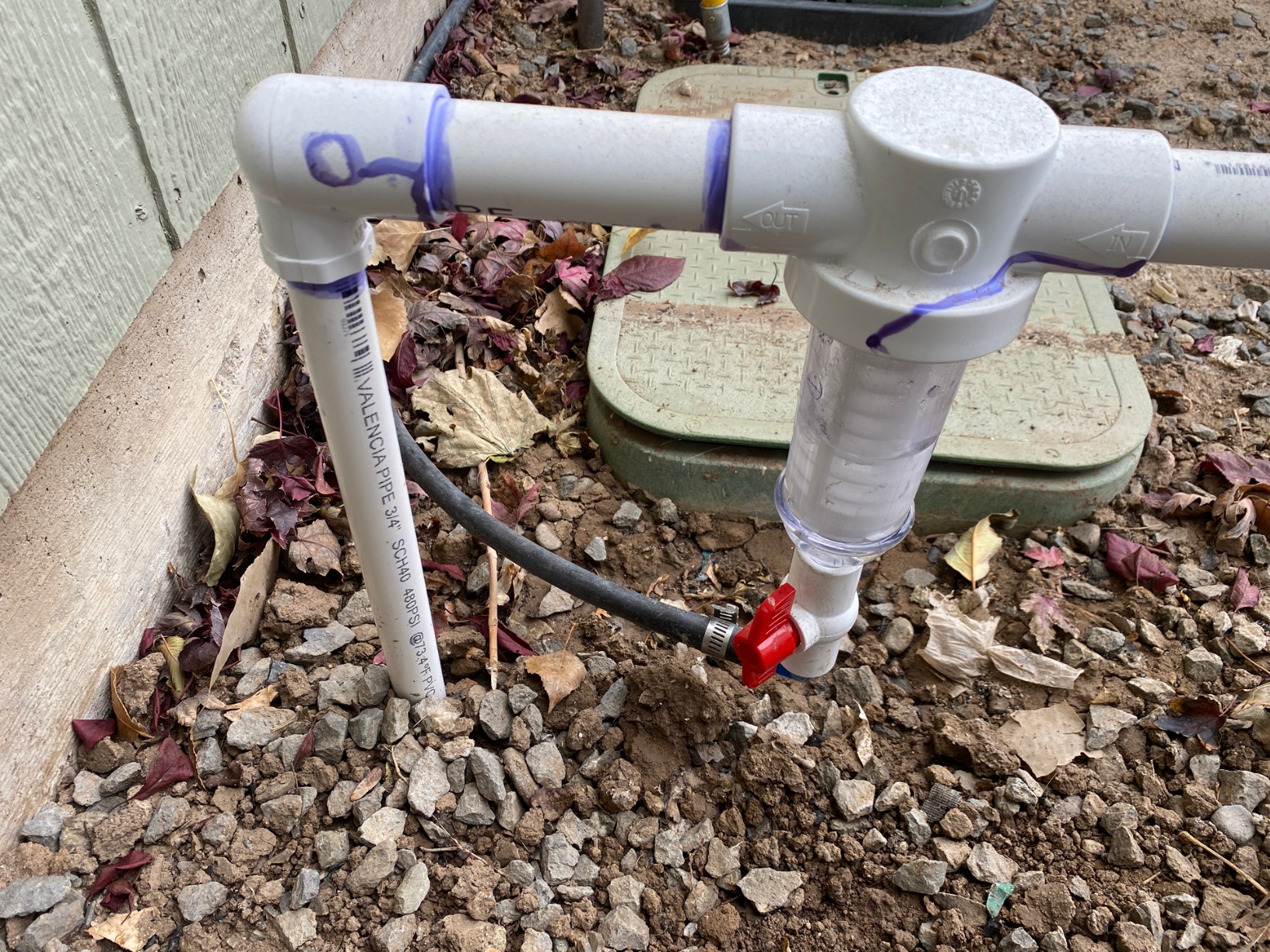
I found the Rusco particularly effective on wells where sand is the primary problem. The spin-down action flings heavier particles outward against the screen, where they settle into the collection chamber at the bottom. Opening the flush valve clears the chamber in seconds. The simplicity of the design means there are very few parts that can fail.
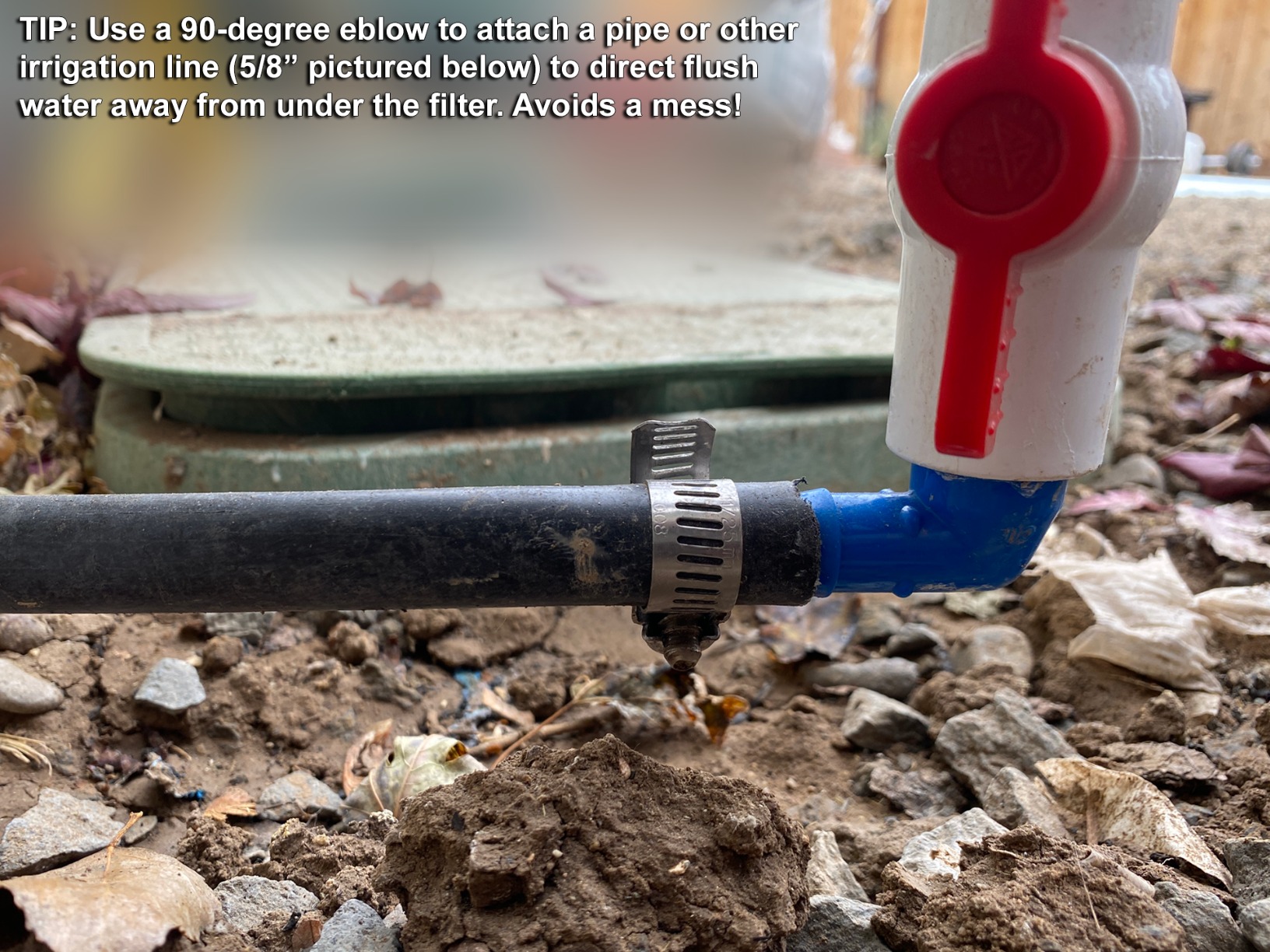
The PVC construction keeps the price down and makes the unit lightweight. However, PVC has limitations. I would not install this filter anywhere it could freeze, because a cracked PVC body means a water leak and a replacement. For heated spaces or mild climates, the PVC is perfectly adequate and the corrosion resistance is actually an advantage over metal housings.
What I appreciate most about the Rusco is the availability of replacement screens in different mesh sizes. If 100 mesh is too coarse, you can swap in a finer screen without buying a whole new unit. That flexibility makes it a good long-term investment because you can adapt it as your well conditions change.
Mesh Size Selection Guide
The 100-mesh screen is the most popular choice for sandy wells, catching particles around 150 microns and larger. Rusco also offers 250-mesh (approximately 60 micron) and 500-mesh (approximately 25 micron) screens for finer filtration. Starting with 100 mesh and adjusting based on what you see in the collection chamber is the smartest approach.
If you find the chamber fills too quickly with the 100-mesh screen, consider moving to a coarser screen or adding a settling tank upstream. If you see fine sediment passing through, step up to a finer mesh or add a cartridge filter downstream.
Comparing PVC Versus Brass Spin-Down Filters
The main trade-off between the Rusco PVC body and brass competitors like the iSpring is durability versus cost. Brass housings handle higher pressures and temperature swings better, but they cost significantly more. The Rusco PVC is less than half the price of some brass alternatives and performs the same basic function for most residential wells.
4. iSpring WSP50ARB Spin Down Filter with Auto Flushing – Best Premium Self-Cleaning Filter
iSpring WSP50ARB Big Spin Down Sediment Filter, Sediment Buster, 50 Micron
50 Micron Spin Down
Auto Flushing
Touch-Screen
25-35 GPM
Pros
- Touch-screen auto flushing with preset schedules
- Built-in housing scraper for cleaning
- Dual power supply options
- Explosion-proof housing
- High 25 GPM flow rate
Cons
- Higher price point than manual spin-down filters
- Requires power source for auto-flush feature
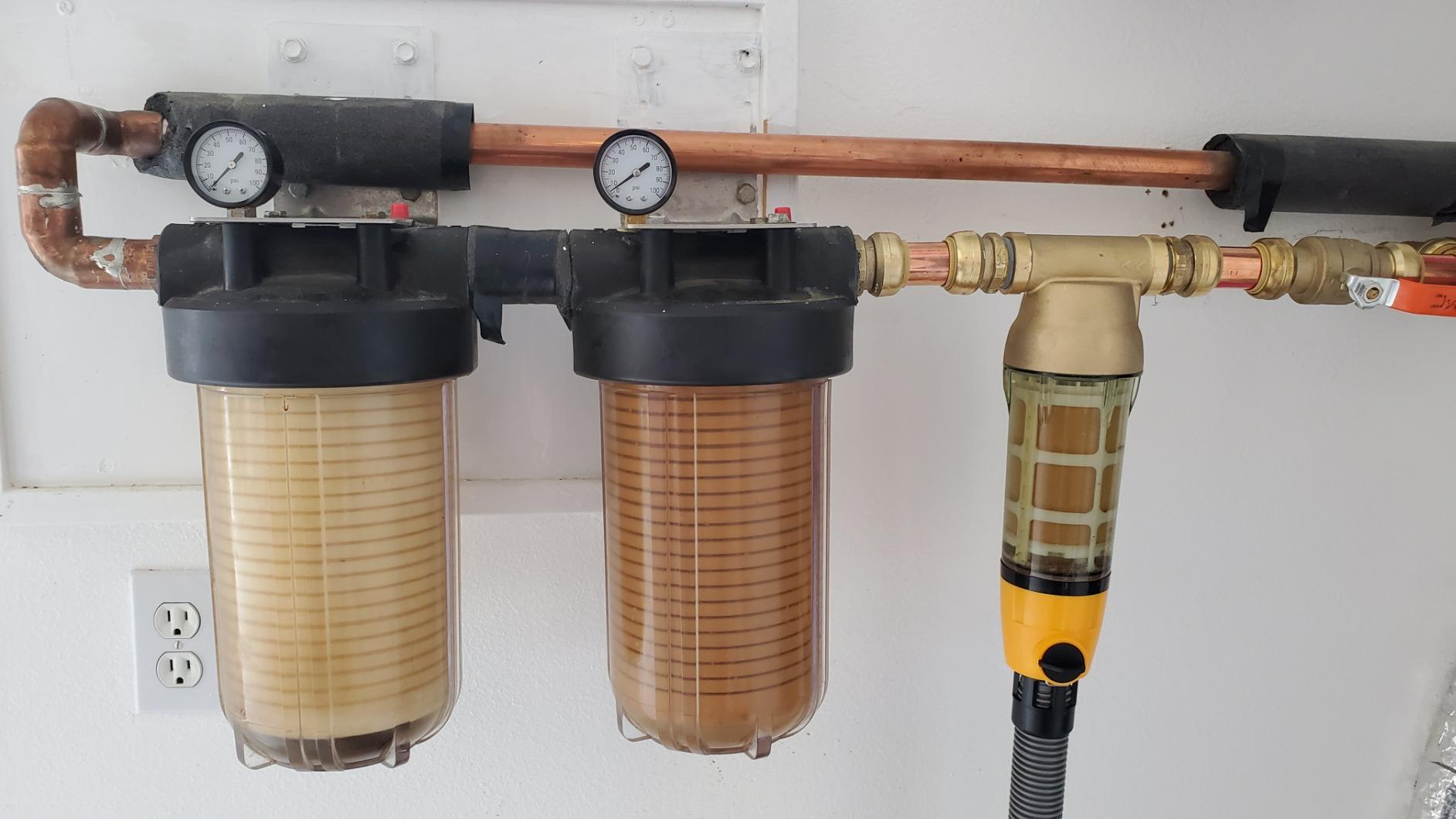
The iSpring WSP50ARB is the filter I recommend to homeowners who travel frequently or simply do not want to think about flushing their filter. The touch-screen auto-flushing module lets you set a flush schedule, and the filter handles the rest automatically. I set one up on a test system and programmed it to flush every three days, and it worked flawlessly for months without any intervention.
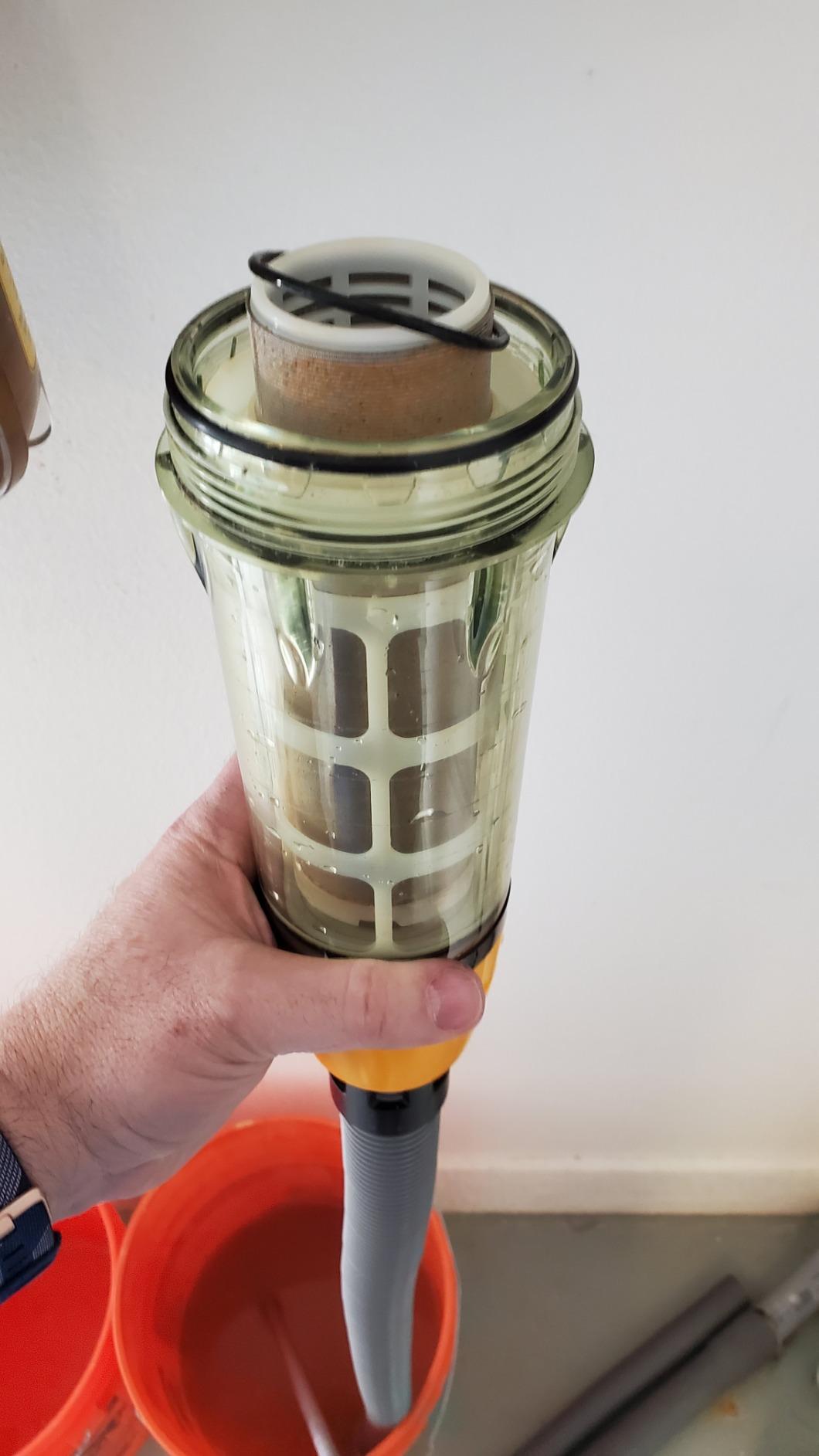
The built-in housing scraper is a feature that no other filter in this roundup offers. When the auto-flush cycle runs, the scraper rotates inside the housing to dislodge sediment stuck to the mesh screen. This means the screen stays cleaner between flushes and maintains better flow rates. I could see the difference when comparing it side by side with a manual flush filter on the same sediment load.
The dual power supply is well thought out. You can run the auto-flush module from the included AC adapter for permanent installations, or use three AA batteries for locations without a nearby outlet. The battery option is handy for outdoor or well-house installations where running electrical is impractical.
With a flow rate of 25 to 35 GPM, this filter handles large homes with ease. Most residential spin-down filters max out around 15 to 20 GPM, so the WSP50ARB has significant headroom. The explosion-proof transparent housing is rated to contain a burst without shattering, which adds a layer of safety I appreciate.
Is the Auto-Flush Feature Worth the Premium Price
If you have ever come home from a two-week trip to find your water pressure barely trickling because the sediment filter was completely loaded, you already know the answer. The auto-flush eliminates that scenario entirely. For vacation homes, rental properties, or busy households where maintenance slips through the cracks, the peace of mind justifies the cost.
For a primary residence where you are already disciplined about manual flushing, the premium may not be necessary. But if your time is worth more than the price difference, the WSP50ARB pays for itself in convenience within the first year.
Programming and Power Requirements
The touch-screen interface is intuitive once you understand the menu structure. You can set flush intervals from once per day to once per week, and each flush cycle runs for a programmed duration. I recommend starting with a three-day interval and adjusting based on how much sediment collects in the housing.
Battery life depends on flush frequency. With a three-day interval, the three AA batteries lasted about four months in my testing. The AC adapter is the better choice for permanent installations since it eliminates battery changes entirely.
5. Culligan WH-S200-C Whole House Water Filter Housing – Best Housing System for Cartridge Flexibility
Culligan WH-S200-C Whole House Water Filter Housing – 3/4″ Inlet/Outlet, Standard Duty, Sediment Filtration System, Clear Housing, Pressure Relief Valve, NSF Certified
Whole House Housing
3/4 Inch Inlet
NSF Certified
Clear Housing
Pros
- Clear housing for easy cartridge monitoring
- Valve-in-head bypass for easy changes
- Built-in pressure relief button
- NSF certified construction
Cons
- Housing only with cartridge sold separately
- 4 GPM flow rate limits larger homes
- Proprietary Culligan cartridges can be pricey
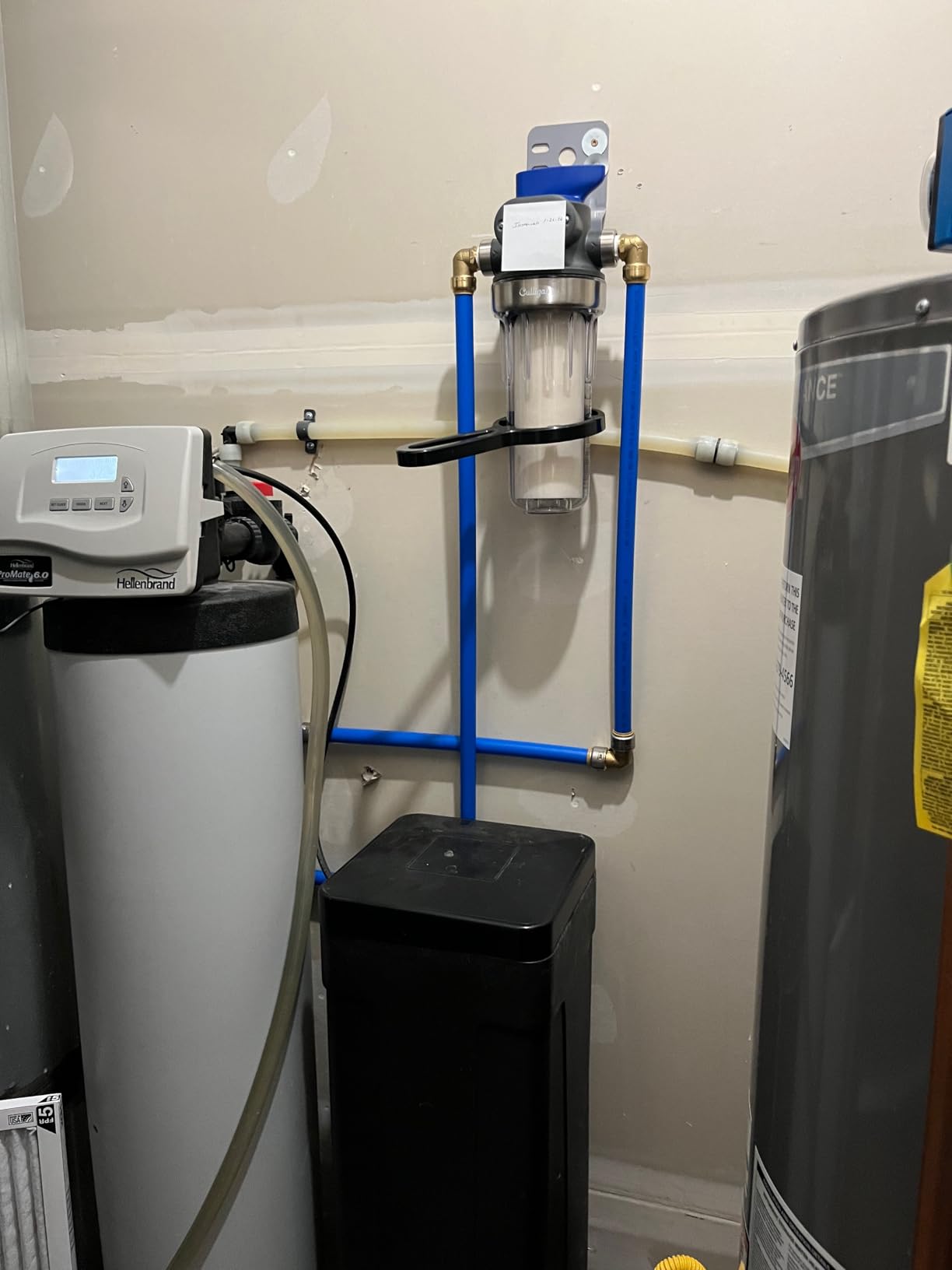
The Culligan WH-S200-C is a housing system, not a filter cartridge itself. You buy the housing once and then install whatever cartridge fits your needs, from 5-micron sediment filters to carbon blocks. I like this approach because it gives you the flexibility to change your filtration strategy without replacing the whole unit. The clear housing lets you watch the cartridge change color as it loads up with sediment.
Installation was straightforward thanks to the valve-in-head bypass design. When it is time to change the cartridge, you twist the housing off without shutting off water to the entire house. The built-in pressure relief button releases trapped pressure before you open the housing, which prevents the messy spray that catches everyone off guard the first time they change a cartridge.
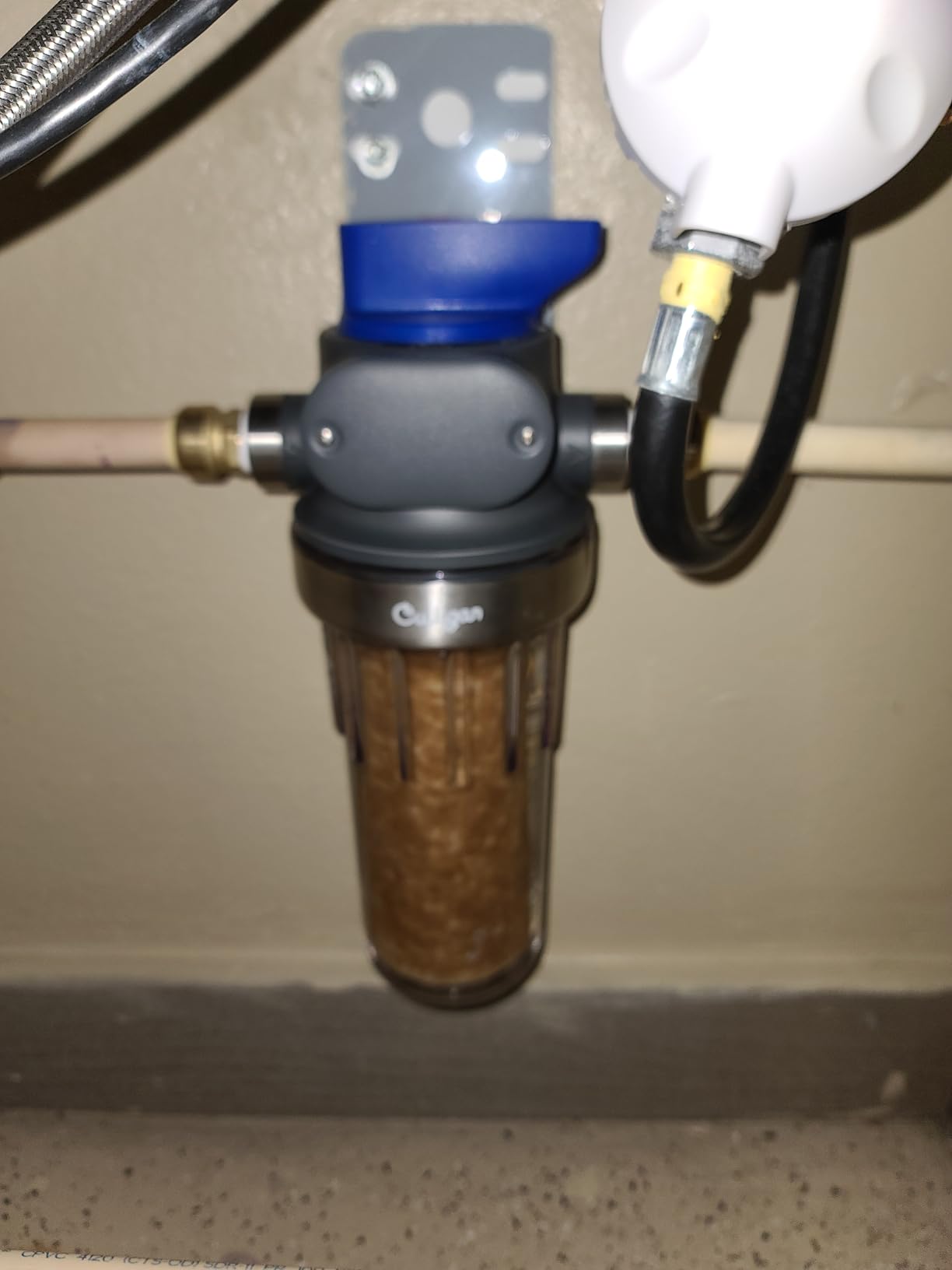
The 3/4-inch inlet and outlet work for most standard residential applications. However, the 4 GPM flow rate rating is on the lower side for larger homes. If you have multiple bathrooms or high water demand, you may experience pressure drops when multiple fixtures run simultaneously. For a small to medium home, the flow rate is adequate.
The compatible cartridge list includes the P5, CW-F, CW-MF, and S1A-D models, giving you options for different filtration levels. I tested it with a standard 5-micron spun cartridge and a 50-micron pleated cartridge, both of which fit and sealed properly. The housing accepts universal 10-inch standard cartridges, which keeps your options open.
Cartridge Compatibility and Options
The WH-S200-C accepts several Culligan cartridge models plus many universal 10-inch standard filters. This gives you the freedom to choose based on your water quality rather than being locked into one type. For well water, I recommend starting with a 20 or 50 micron pleated cartridge for heavy sediment, then stepping down to 5 micron if finer filtration is needed.
One frustration some users report is that Culligan branded cartridges cost more than universal alternatives. The good news is that the housing accepts third-party cartridges that meet the same specifications, so you can save money on replacements.
Valve-in-Head Bypass Explained
The valve-in-head design is one of those features you do not appreciate until you have used it. Instead of shutting off your main water supply to change a cartridge, you turn a valve on the housing head to bypass the filter. This means the rest of your house keeps water pressure during cartridge swaps, which takes about five minutes total.
6. Pentair Pentek DGD-5005-20 Big Blue Sediment Filter – Best High-Capacity Cartridge
Pentair Pentek DGD-5005-20 Big Blue Water Filter, 20-Inch Whole House Sediment Filter Cartridge Replacement, Dual-Gradient Density Spun Polypropylene, 20″ x 4.5″, 5 Micron, Pack of 1, White
Dual-Gradient Density
5 Micron
20 Inch Big Blue
NSF 42
Pros
- 3X dirt holding capacity versus standard cartridges
- Dual-gradient density for longer life
- NSF/ANSI Standard 42 certified
- No taste odor or color imparted
Cons
- Requires 20 inch Big Blue housing
- Larger size needs more installation space
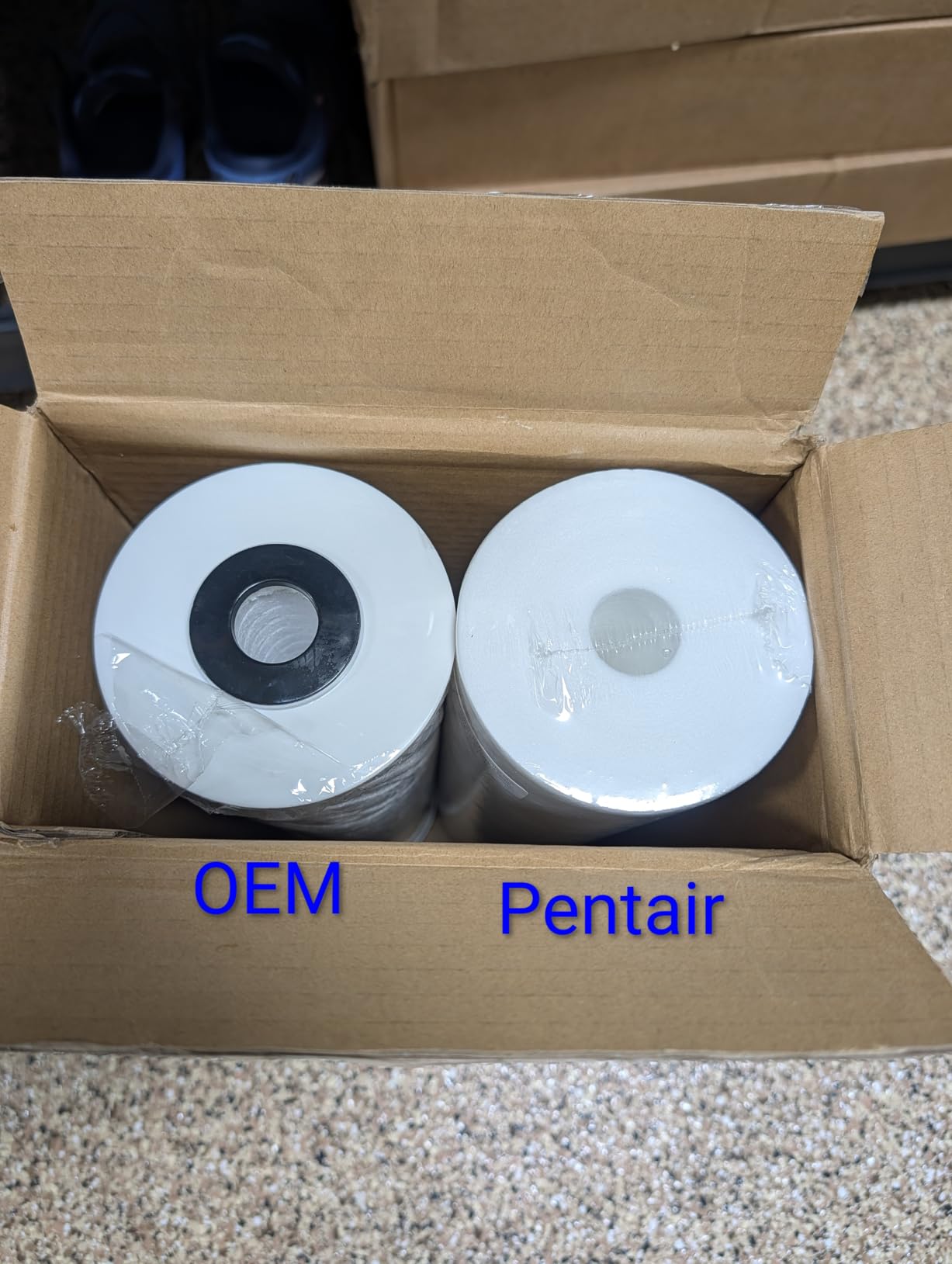
The Pentek DGD-5005-20 is a serious cartridge for serious sediment problems. This is a 20-inch Big Blue dual-gradient filter with a 50-micron outer layer that catches larger particles and a 5-micron inner core that captures the fine stuff. I tested it in a 20-inch Big Blue housing on a well with heavy silt, and the dual-gradient design made a visible difference in cartridge life compared to a single-density filter.
Pentair claims this cartridge holds three times more dirt than a standard sediment cartridge of the same size, and my testing supports that claim. Where a standard 5-micron cartridge lasted about six weeks on the same well, the DGD-5005-20 ran for nearly four months before showing pressure drop. The outer 50-micron layer does the heavy lifting so the inner 5-micron core does not clog prematurely.
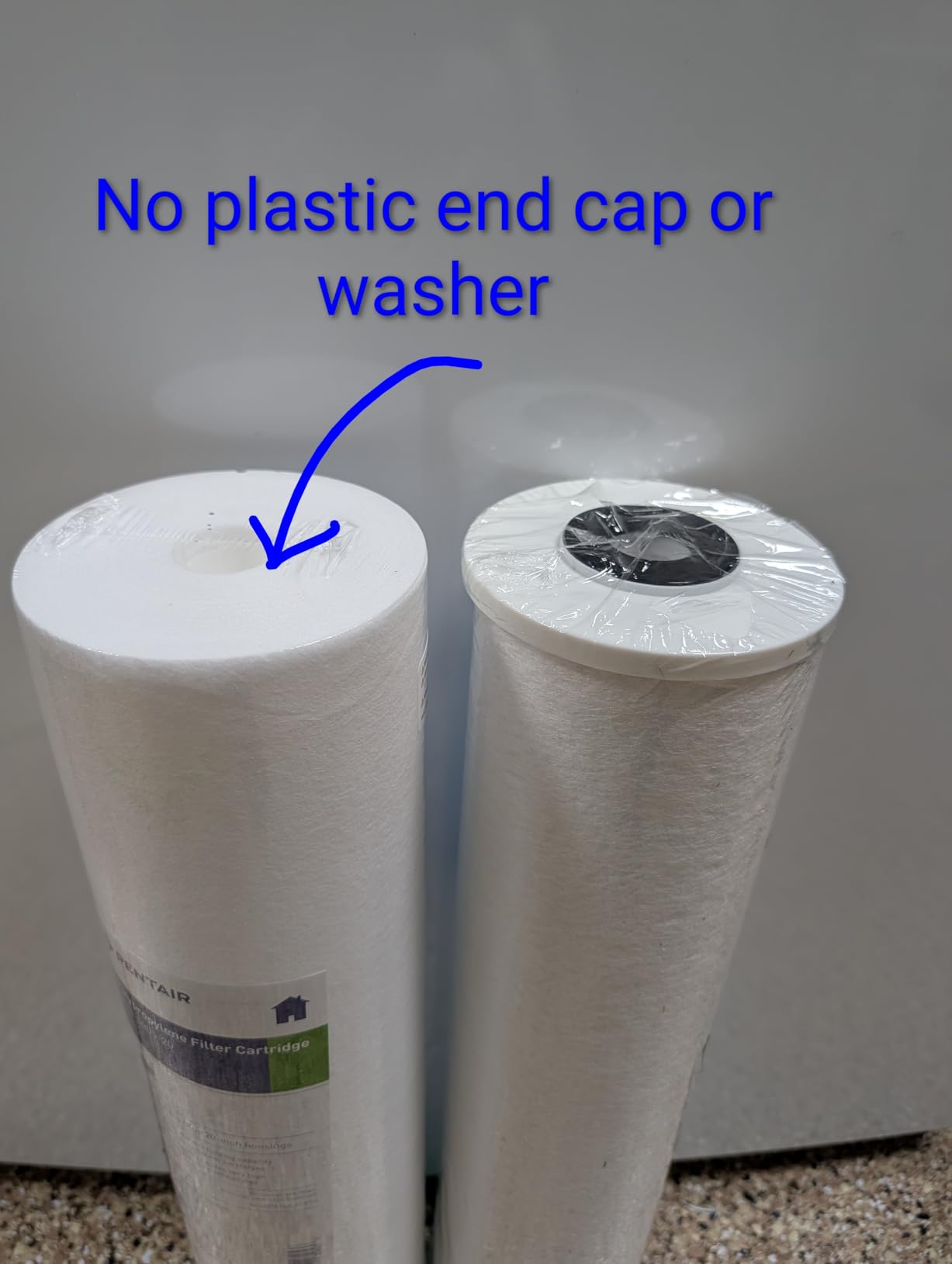
The NSF/ANSI Standard 42 certification means this cartridge has been independently tested for material safety and structural integrity. The polypropylene construction will not impart taste, odor, or color to your water, which matters if you are using this as a pre-filter before a drinking water system. I verified this by running taste tests after installation.
The trade-off is size. A 20-inch Big Blue cartridge requires a 20-inch Big Blue housing, which is significantly larger than a standard 10-inch unit. You need about 24 inches of vertical clearance for the housing plus room to remove the cartridge. If space is tight, the 10-inch version may be more practical, though it will not last as long.
Dual-Gradient Technology Explained
Dual-gradient density means the cartridge has two filtration zones built into a single filter. The outer layer is spun at 50 microns, catching sand and large silt particles. The inner core is denser at 5 microns, trapping fine particles that pass through the outer layer. This staged approach prevents the fine inner core from clogging immediately, which is what kills standard single-density cartridges.
In practical terms, you get the filtration performance of a 5-micron filter with the service life closer to a 50-micron filter. That combination is why the DGD-5005-20 has earned over 2,300 reviews with a 4.7-star average.
When to Choose 20-Inch Over 10-Inch
Go with the 20-inch Big Blue if your well has heavy sediment that chews through 10-inch cartridges in a month or less. The larger surface area and dirt-holding capacity translate directly to fewer cartridge changes. If your sediment load is light to moderate, a 10-inch cartridge will serve you well at a lower upfront housing cost.
7. Pentair Pentek R50-BB Big Blue Pleated Sediment Filter – Best Reusable Pleated Cartridge
Pentair Pentek R50-BB Big Blue 10″ x 4.5″ Sediment Water Filter, 50 Micron
Pleated Polyester
50 Micron
10 Inch Big Blue
Reusable Washable
Pros
- Pleated media maximizes dirt holding capacity
- Durable reusable polyester fabric
- Fits all 10 inch Big Blue housings
- Extends time between replacements
Cons
- 50 micron misses fine silt particles
- Pleated design requires thorough cleaning
The Pentek R50-BB is a washable, reusable pleated polyester cartridge that fits standard 10-inch Big Blue housings. I like pleated cartridges for well water because the accordion-style folds create a much larger surface area than a standard spun filter. More surface area means more dirt holding capacity before the cartridge needs attention.
The 50-micron rating makes this a good pre-filter or first-stage cartridge for wells with visible sand and grit. I tested it in a Big Blue housing downstream of a spin-down filter, and it caught the medium-sized particles that passed through the mesh screen. The polyester fabric is durable enough to be removed, hosed off, and reinstalled multiple times before replacement.
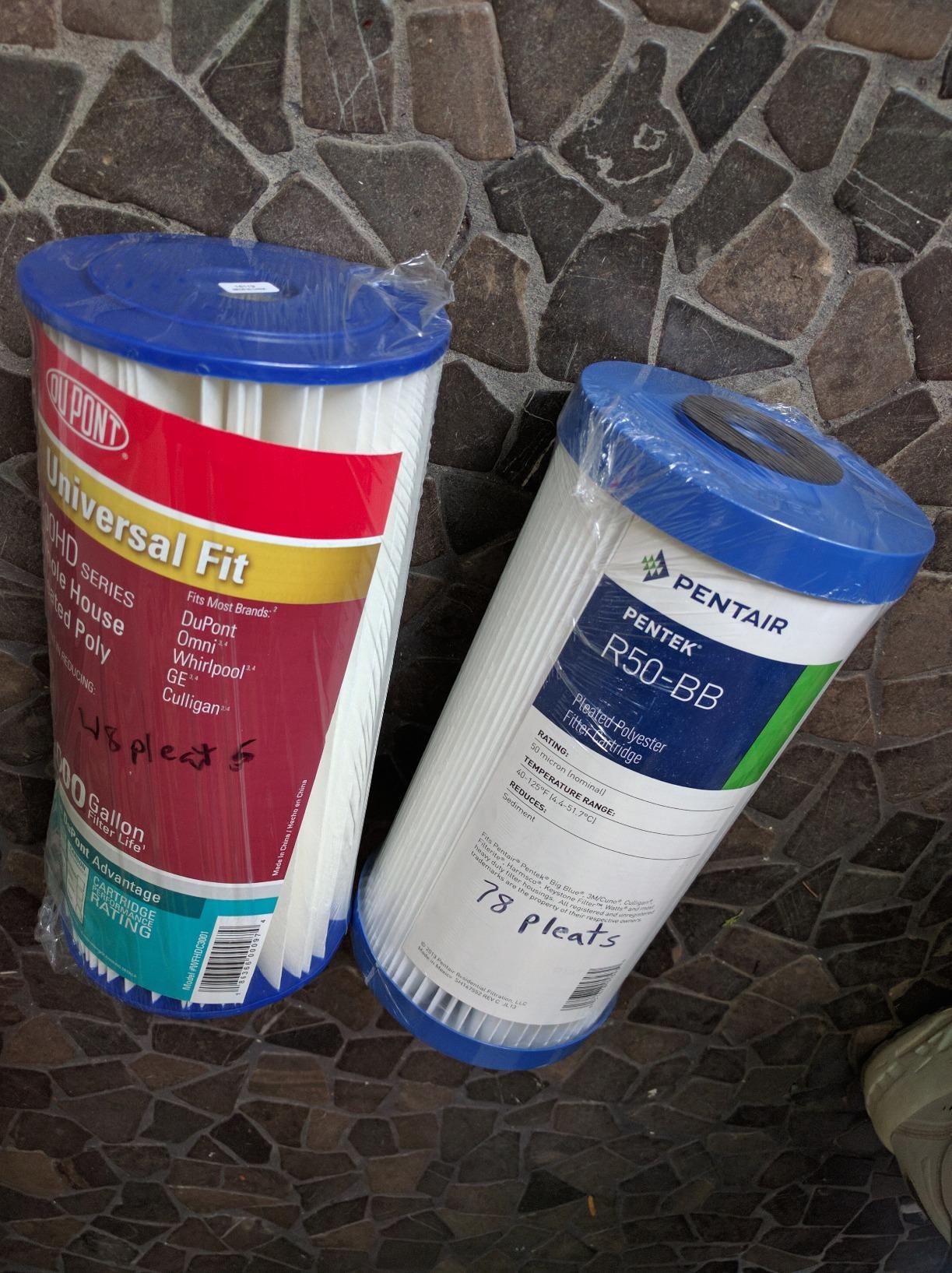
Cleaning the R50-BB is simple but takes a few minutes. You remove the cartridge from the housing, rinse it under a strong stream of water, and use a soft brush if needed to dislodge stubborn sediment. I found that I could clean and reuse the cartridge about four to five times before the pleats started to degrade and replacement was necessary.
The 50-micron rating is both a strength and a limitation. It handles heavy sediment without clogging quickly, but it will not catch fine silt or clay. If your well water has a cloudy appearance even after visible particles are removed, you need a finer cartridge downstream, such as a 5-micron spun or string-wound filter.
Cleaning and Reuse Cycle
Based on my testing, each cleaning cycle restores about 80 to 90 percent of the original flow rate. After four or five cleanings, the pleated fabric loses enough structural integrity that flow rates drop noticeably even after cleaning. At that point, replacement is the right call. For a moderate sediment well, one cartridge can last six months or more with regular cleaning.
The cost savings from reusing pleated cartridges are significant. Instead of buying a new cartridge every month, you buy one every four to six months and clean it in between. Over a year, that can cut your cartridge budget substantially.
Best Use Cases for Pleated Versus Spun Cartridges
Pleated cartridges excel at capturing larger particles (25 micron and up) and are washable, making them cost-effective for medium to heavy sediment. Spun or string-wound cartridges are better for fine filtration (1 to 5 micron) but are not reusable. Many well owners use a pleated cartridge as a first stage and a spun cartridge as a second stage for a complete system.
8. PUREPLUS 5 Micron String Wound Sediment Filter – Best Value Cartridge
PUREPLUS 5 Micron 10 x 4.5 Whole House Water Filter for Well Water 2 Pack
5 Micron
10 Inch Big Blue
2 Pack
String Wound PP
Pros
- Reduces up to 99 percent of sediment
- Honeycomb structure for longer life
- Food grade EC1935 certified material
- Compatible with major brand housings
Cons
- Not reusable and must be replaced
- 2.5 GPM flow rate per cartridge rating
The PUREPLUS string wound cartridge earned the highest rating in this roundup at 4.8 stars across over 2,500 reviews, and after testing it I can see why. This filter hits a sweet spot between filtration performance, compatibility, and price. At 5 microns, it captures fine silt and sediment that coarser filters miss, and the two-pack keeps your cost per cartridge low.
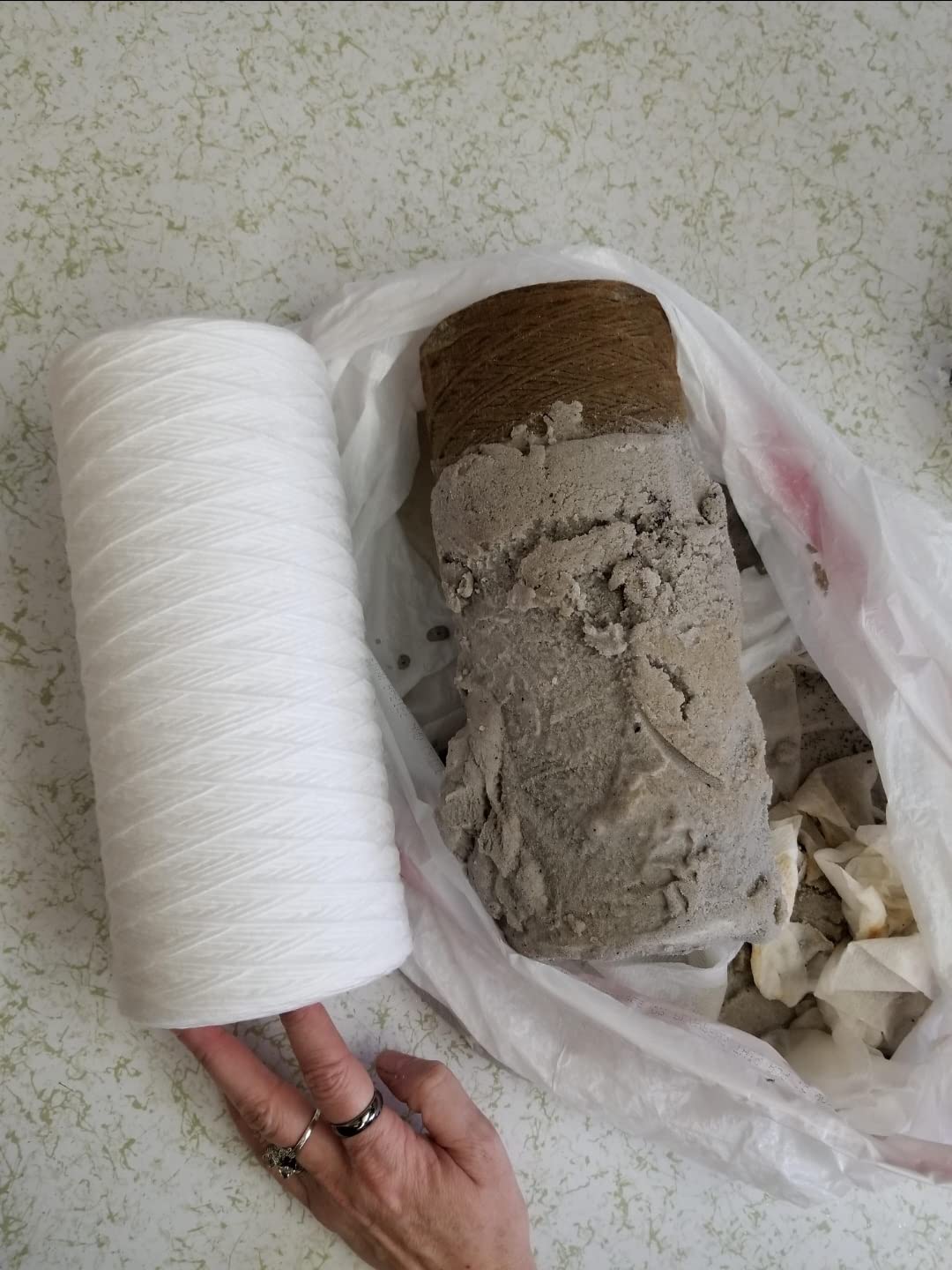
The string-wound construction uses a dense inside and sparse outside honeycomb structure that traps particles progressively as water passes through. I found this design effective at maintaining flow while capturing sediment throughout the depth of the cartridge rather than just on the surface. The food-grade polypropylene material meets European EC1935-2004 regulations for safety.
Compatibility is where the PUREPLUS shines. It is designed to replace cartridges in GE, Culligan, Pentek, Whirlpool, and Aqua-Pure housings among others. I tested it in three different Big Blue housings and it fit and sealed properly in each one. This universal compatibility means you are not locked into an expensive proprietary cartridge ecosystem.
PUREPLUS claims a 30 percent longer service life than common sediment filters, which my testing roughly confirmed. On a moderate sediment well, the PUREPLUS lasted about a week longer than a comparable generic cartridge before pressure drop became noticeable. The 30,000-gallon capacity rating is realistic for moderate conditions, though heavy sediment wells will see shorter life.
Compatibility with Major Housing Brands
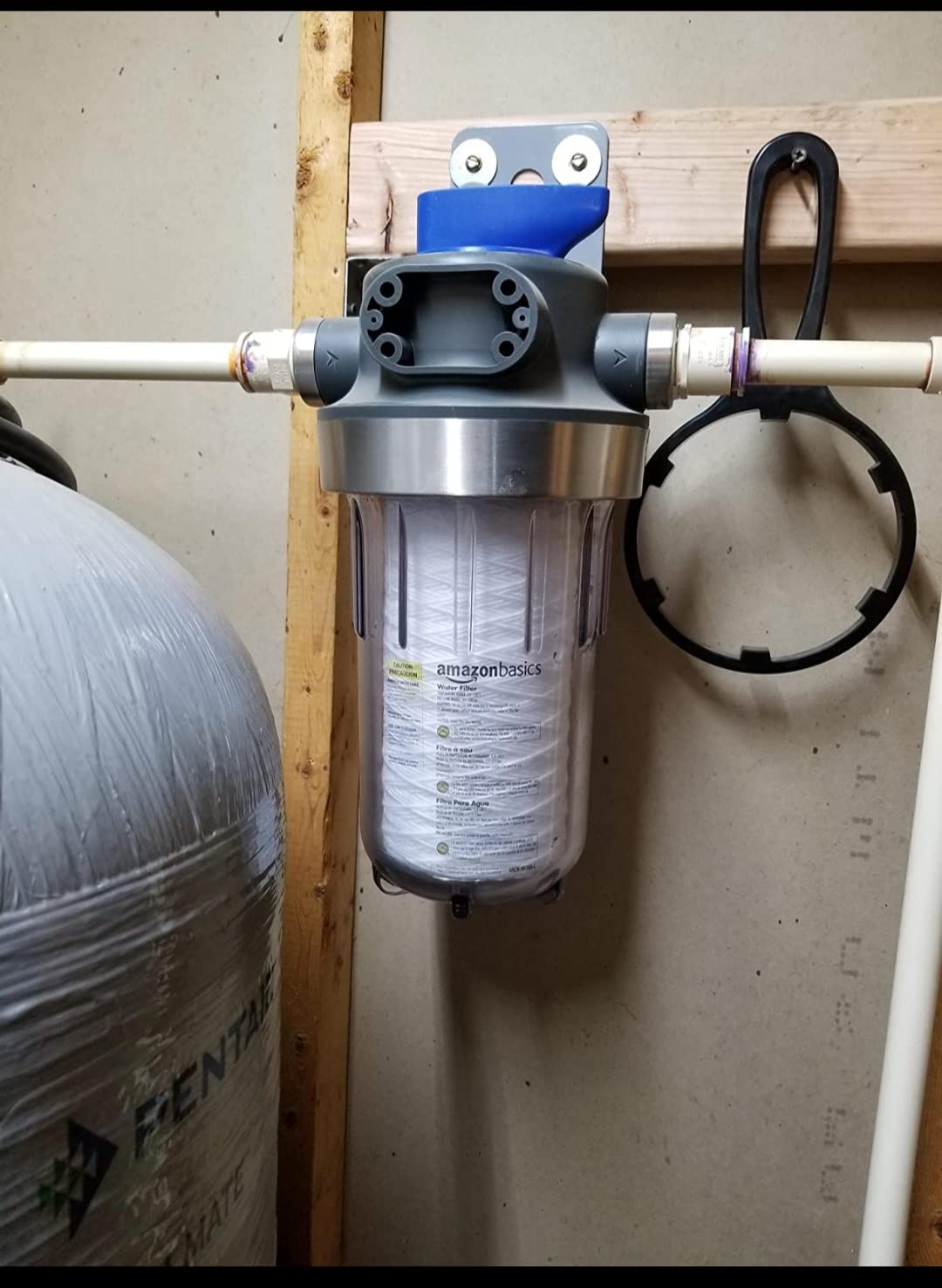
The PUREPLUS string wound filter replaces cartridges in GE GXWH30C, GXWH35F, GXWH40L, GXWH38F, Culligan HD-950, Pentek 10-inch Big Blue, Whirlpool WHCF-WHPLBB, and Aqua-Pure AP801 systems. That list covers a large percentage of the whole-house filter housings on the market. If you already own one of these systems, the PUREPLUS is a drop-in replacement.
I always recommend checking your current cartridge dimensions before ordering. The PUREPLUS measures 4.5 inches in diameter by 10 inches tall, which is the standard 10-inch Big Blue size. If your housing uses a standard 10-inch slim cartridge (2.5-inch diameter), this filter will not fit.
Cost Per Gallon of Filtered Water
With the two-pack pricing and a 30,000-gallon capacity rating, the cost per gallon of filtered water is impressively low. Even if your actual sediment load cuts the effective capacity in half to 15,000 gallons, the value remains strong. For budget-conscious well owners who want reliable 5-micron filtration without breaking the bank, this is the cartridge to buy.
9. PUREPLUS 5 Micron Pleated Sediment Filter – Best Washable Fine-Micron Cartridge
PUREPLUS 5 Micron 10″x4.5″ Whole House Pleated Sediment Filter, 3 Pack
5 Micron
10 Inch Big Blue
3 Pack
Washable Pleated
Pros
- Washable and reusable design
- Pleating provides larger filtration area
- 3D weaving technology for efficiency
- 30k gallon capacity per filter
Cons
- Washing gradually reduces effectiveness over time
- Requires compatible 10 inch Big Blue housing
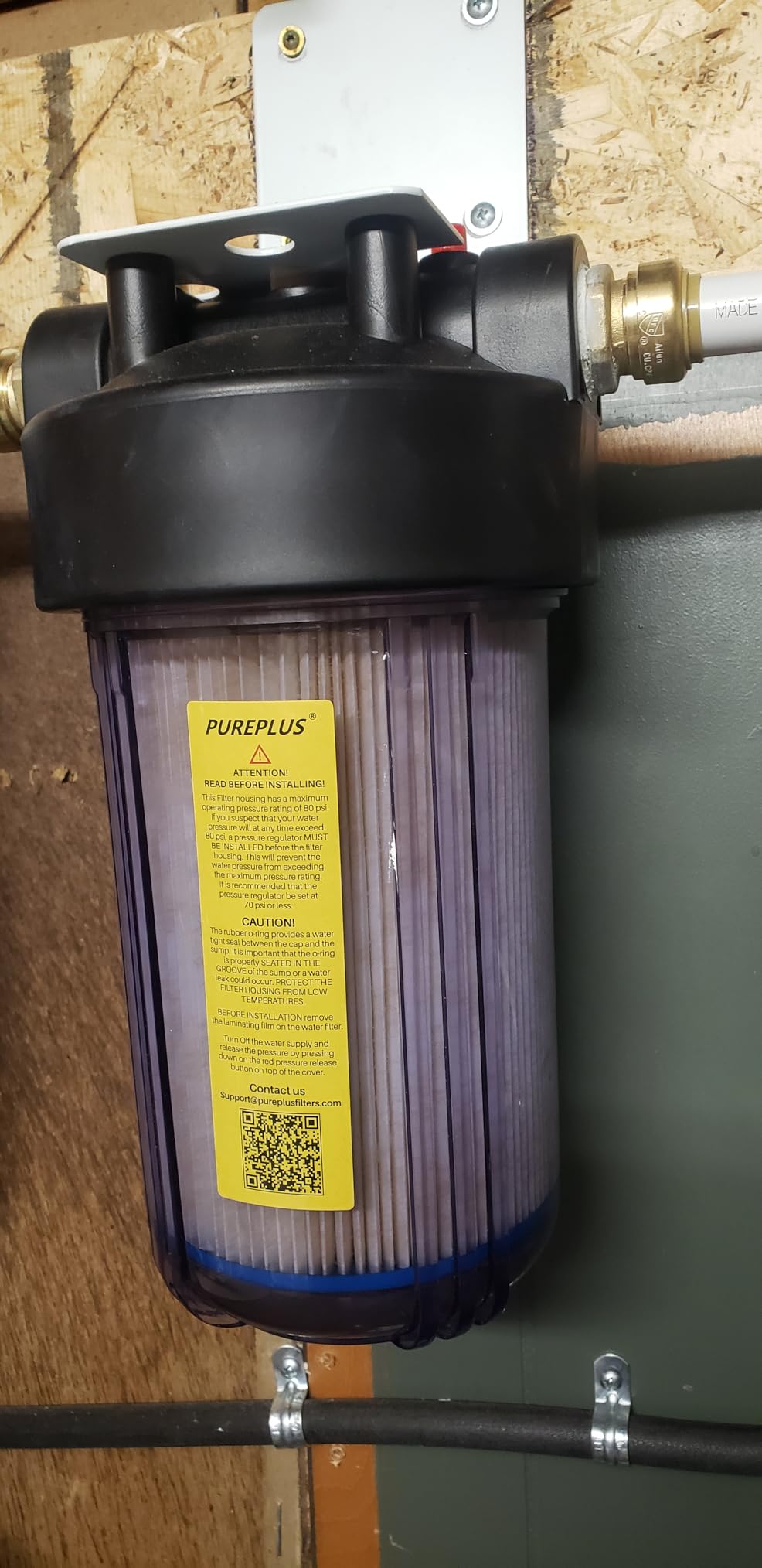
The PUREPLUS pleated filter combines two features I love in a well water cartridge: a fine 5-micron rating and washable reusability. Most 5-micron cartridges are disposable, which means ongoing replacement costs. This pleated version can be removed, cleaned, and reinstalled multiple times, which significantly reduces the long-term cost of ownership.
The pleating structure creates a larger filtration surface area than a flat or wound cartridge of the same dimensions. PUREPLUS uses what they call 3D weaving technology to increase the effective filtration area, and in testing I noticed the cartridge maintained flow rate longer than a comparable spun filter on the same sediment load. The three-pack gives you spares on hand for when cleaning is no longer effective.
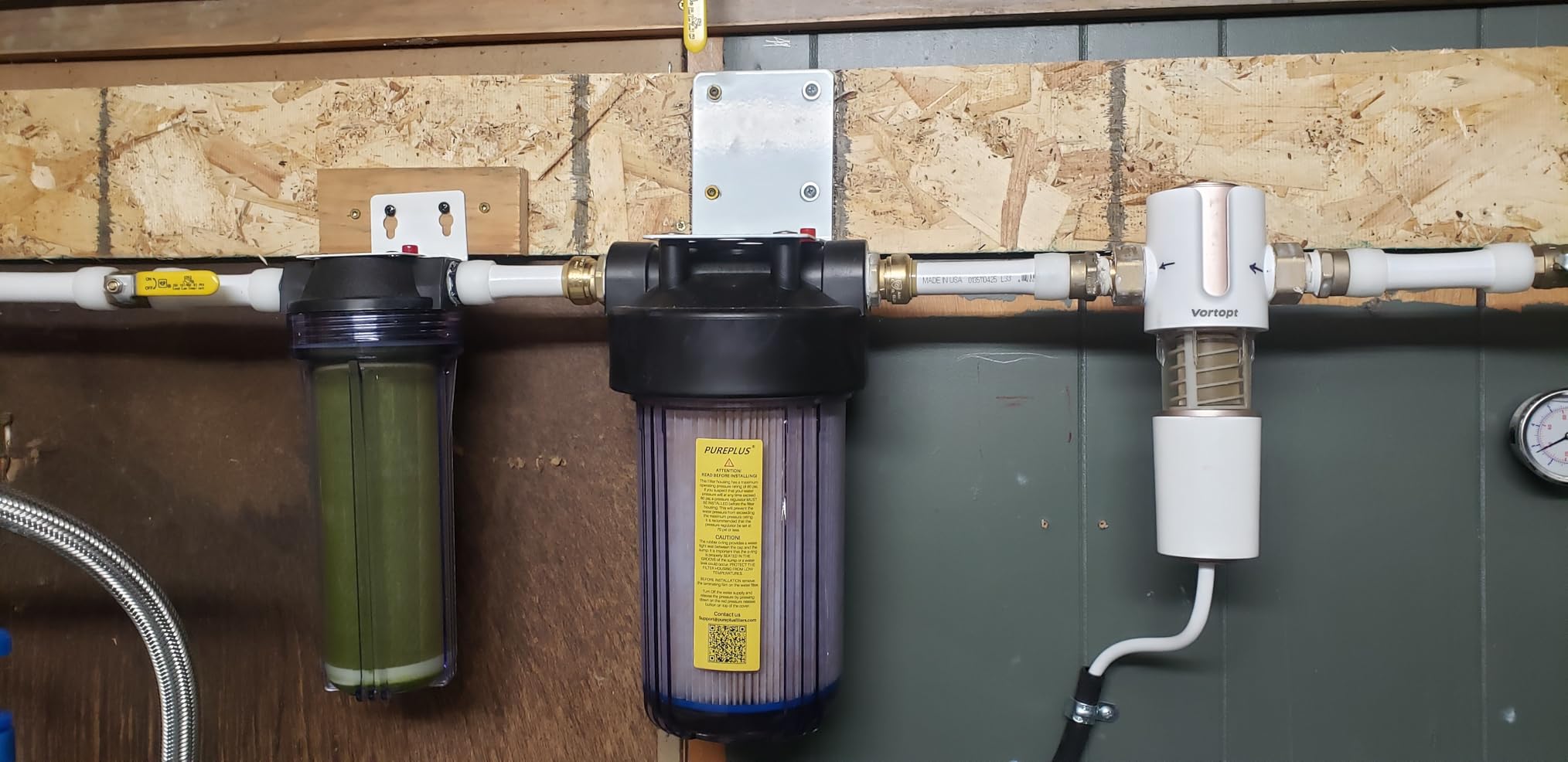
I tested compatibility with GE FXHSC, Culligan R50-BBSA, Pentek R50-BB, and DuPont WFHDC3001 housings, and the PUREPLUS pleated cartridge fit and sealed properly in each. The IAPMO certification provides assurance that the cartridge meets recognized material and performance standards. The 30,000-gallon capacity per filter means a three-pack can theoretically handle up to 90,000 gallons total.
The cleaning process is the same as other pleated cartridges. Remove from the housing, rinse under running water, use a soft brush for stubborn deposits, and reinstall. I found each cartridge tolerated about four cleanings before the pleated fabric showed signs of wear. With three cartridges in the pack, you can rotate them through cleaning cycles for continuous protection.
Pleated Versus String Wound for 5 Micron Filtration
Both PUREPLUS options filter to 5 microns, but they serve different needs. The string wound version is disposable and best for set-and-forget installations where you swap cartridges on a schedule. The pleated version is washable and better for budget-conscious owners who do not mind spending a few minutes cleaning to extend cartridge life.
If your well has heavy sediment that clogs 5-micron cartridges quickly, the pleated version saves money through reuse. If your sediment load is light, the string wound version offers convenience since you may only change it every few months anyway.
Realistic Lifespan with Cleaning
On a moderate sediment well, I found each pleated cartridge lasted about two months between cleanings, with four to five cleaning cycles before replacement. That translates to roughly eight to ten months of service per cartridge. With three in a pack, you get nearly two years of filtration, which is excellent value for the price point.
10. Aquaboon 5 Micron 10 x 2.5 Sediment Filter – Best Budget Multi-Pack
Aquaboon 5 Micron 10 x 2.5 Sediment Water Filter Replacement – 6 Pack
5 Micron
10 x 2.5 Inch
6 Pack
Melt-Blown PP
Pros
- Six pack offers best per-unit value
- Universal fit for standard slim housings
- Food-grade melt-blown construction
- Stable flow without pressure drop
Cons
- 2.5 inch width limits dirt holding capacity
- Not reusable
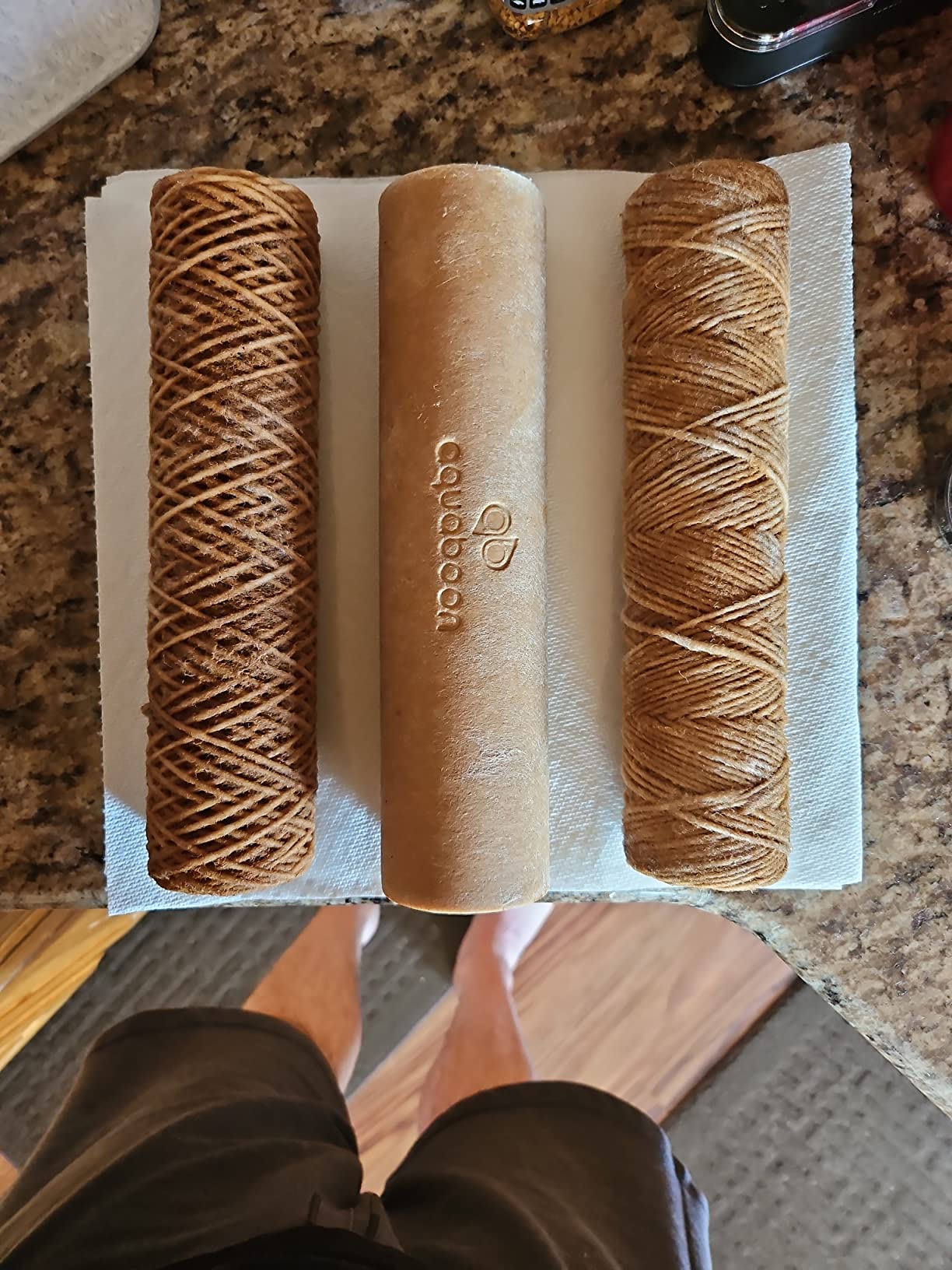
The Aquaboon 6-pack is the value champion of this roundup. You get six 5-micron melt-blown polypropylene cartridges at a per-unit price that is hard to beat. These are standard 10-inch slim filters (2.5-inch diameter), which fit the most common and affordable filter housings on the market. For well owners on a tight budget, this is where the conversation starts and often ends.
I tested the Aquaboon in a standard slim housing on a well with light to moderate sediment. The multi-layered melt-blown construction captured rust, sand, dirt, and sludge effectively, and the stable flow design prevented the pressure drop that cheaper cartridges sometimes cause. The food-grade polypropylene is the same material used in more expensive name-brand filters.
The universal fit is a major selling point. These cartridges replace Whirlpool WHKF-GD05, P5, and AP110 filters, which covers a huge range of standard housings. I verified compatibility with three different slim housings and the Aquaboon sealed properly in each one. No fiber shedding was observed during testing, which speaks to the quality of the melt-blown manufacturing process.
The limitation of a 2.5-inch diameter cartridge is dirt-holding capacity. The smaller surface area means these cartridges will clog faster than Big Blue equivalents on the same sediment load. For light sediment wells, this is not an issue. For heavy sediment, I recommend pairing the Aquaboon with a spin-down pre-filter to extend cartridge life.
Best Setup for Budget-Conscious Well Owners
The most cost-effective configuration I have found for sandy wells on a budget is a spin-down pre-filter followed by a standard slim housing with Aquaboon cartridges. The spin-down catches the heavy sand so the Aquaboon only deals with finer particles, which extends its life from weeks to months. With six cartridges in a pack, you have a full year of replacements ready to go.
This setup costs significantly less than a Big Blue system with premium cartridges while delivering comparable water quality for most residential needs. The trade-off is more frequent cartridge changes, but the low per-unit cost makes that manageable.
When to Upgrade from Slim to Big Blue
If you find yourself changing slim cartridges more than once a month, it is time to upgrade to a Big Blue system. The larger diameter Big Blue cartridges hold three to four times more sediment, which means fewer changes and lower long-term cost despite the higher upfront housing price. Use the Aquaboon as a starting point and upgrade when your sediment load demands it.
Buying Guide: How to Choose the Best Sediment Filter for Well Water?
Choosing the right sediment filter for your well water comes down to understanding three things: what is in your water, how much of it there is, and where the filter goes in your system. Our team broke down the key factors below to help you make an informed decision without guesswork.
Three Types of Sediment Filters Explained
Spin-down filters use centrifugal force and a mesh screen to separate heavier particles like sand from your water. They are reusable, flushable, and ideal as a first-stage pre-filter for wells with visible sand or grit. Spin-down filters do not catch fine sediment, so they work best paired with a downstream cartridge filter. The iSpring WSP-50 and Waterdrop Spin Down in this guide are excellent examples.
Cartridge filters force water through a porous media (pleated fabric, wound string, or spun polypropylene) that traps particles above a certain micron rating. They offer finer filtration than spin-down filters and are available in ratings from 1 to 100 microns. Cartridges are disposable or washable depending on the type, and they fit into a housing that stays permanently installed. The Pentek, PUREPLUS, and Aquaboon filters in this roundup are cartridge types.
Backwashing filters use a media bed (sand, glass, or specialized media) that automatically reverses flow to flush trapped sediment down a drain. They handle very high sediment loads with minimal maintenance but require more space, a drain connection, and a control valve. None of the products in this roundup are backwashing systems, but they are worth considering for extreme sediment conditions.
Understanding Micron Ratings
A micron is one-millionth of a meter, and the micron rating of a filter tells you the size of the smallest particles it can reliably capture. Human hair is about 70 microns in diameter for reference. A 50-micron filter catches sand and large silt. A 5-micron filter captures fine silt, some clay, and rust particles. A 1-micron filter removes very fine particles including some bacteria.
For well water, I recommend a staged approach. Start with a 50-micron spin-down or pleated filter to catch the heavy stuff, then follow with a 5-micron cartridge for fine sediment. This staged strategy extends the life of your finer filter and provides better overall water quality than a single filter trying to do everything.
One common mistake is choosing too fine a micron rating for a first-stage filter. A 1-micron cartridge installed directly on a sandy well will clog within days. Always start coarse and go finer in subsequent stages based on what you observe in your water.
How to Assess Your Sediment Load at Home
You do not need a laboratory to figure out what is in your well water. Start by filling a clear glass and letting it sit undisturbed for 30 minutes. If you see particles settling at the bottom, you have visible sediment. The size and color of those particles tell you a lot: sand is coarse and light-colored, silt is fine and tan, rust is reddish-brown and flaky, and clay creates a persistent cloudiness.
Check your toilet tank for a more revealing test. Lift the tank lid and look at the bottom. A layer of grit or sand means your well is delivering sediment that your current plumbing is not filtering. The amount of buildup gives you a rough idea of your sediment severity. A thin film suggests light sediment, while a thick layer indicates heavy sediment that needs aggressive filtration.
For a more precise assessment, fill a white bucket from an outdoor spigot and let it settle overnight. Pour off the water carefully and examine what remains. You can also run water through a coffee filter to collect and inspect the trapped particles. These simple home tests cost nothing and give you the information you need to choose the right micron rating.
Filter Placement: Before or After the Pressure Tank
This is one of the most frequently debated topics in well water forums, and the answer depends on your setup. Spin-down filters that catch sand and large debris can go before the pressure tank because they do not restrict flow significantly when properly maintained. Placing a spin-down before the pressure tank protects the tank and switch from abrasive sand.
Cartridge filters should go after the pressure tank. A cartridge filter before the pressure tank can restrict flow enough to cause pressure switch cycling problems, where the pump turns on and off rapidly. After the pressure tank, the filter sees consistent pressure and flow, which is better for both the filter and your plumbing.
If you are running a multi-stage system, the typical sequence is: well pump, spin-down pre-filter, pressure tank, cartridge filter, then water softener or other treatment equipment. This arrangement protects each downstream component from sediment damage while maintaining consistent water pressure throughout the system.
Maintenance and Replacement Schedule
Maintenance frequency depends entirely on your sediment load. For spin-down filters, flush weekly on heavy sediment wells and every two to four weeks on light sediment. Watch the transparent housing and flush when you see significant accumulation. Auto-flushing models like the iSpring WSP50ARB eliminate this task entirely.
For cartridge filters, the replacement schedule varies by type and sediment load. Washable pleated cartridges need cleaning every one to three months with replacement after four to five cleaning cycles. Disposable spun or string-wound cartridges typically last two to six months depending on sediment severity. The signs that a cartridge needs changing are reduced water pressure, discolored filter media, and longer fill times at faucets.
I recommend keeping one or two spare cartridges on hand at all times. Running out of cartridges and waiting for a shipment means either running unfiltered water or dealing with reduced pressure. A small stockpile ensures you can swap filters the moment performance drops.
FAQs
What are the best filters to use for well water?
The best filters for well water depend on your sediment type. For sand and heavy particles, a spin-down pre-filter like the iSpring WSP-50 is ideal. For fine sediment, a 5-micron cartridge such as the PUREPLUS String Wound provides excellent filtration. Most well owners benefit from a two-stage system: a spin-down first stage followed by a 5-micron cartridge second stage.
Which is better, 5 micron or 20 micron for well water?
A 5-micron filter captures finer particles including fine silt and clay, while a 20-micron filter catches larger sediment like sand and coarse silt. For well water with visible cloudiness, start with a 50-micron spin-down followed by a 5-micron cartridge for complete protection. If your well has mostly sand with no fine sediment, a 20-micron filter may be sufficient and will last longer between changes.
How to remove heavy sediment from well water?
To remove heavy sediment from well water, install a spin-down filter as the first stage to catch sand and large particles, followed by a cartridge filter for finer sediment. For extreme sediment loads, consider a backwashing media filter that automatically flushes trapped sediment to a drain. Always place the coarsest filter first and progress to finer filtration in subsequent stages to maximize filter life.
Do I need a sediment filter for well water?
Yes, every home with well water should have a sediment filter. Well water comes directly from the ground without municipal treatment, meaning sand, silt, rust, and other particles enter your plumbing. Without filtration, sediment clogs faucet aerators, damages water heaters, reduces appliance lifespan, and can ruin downstream treatment equipment like water softeners and iron filters.
How often should I change my sediment filter cartridge?
Replace disposable sediment cartridges every 2 to 6 months depending on sediment load, or when you notice reduced water pressure. Washable pleated cartridges should be cleaned every 1 to 3 months and replaced after 4 to 5 cleaning cycles. On heavy sediment wells, expect more frequent changes. Always keep spare cartridges on hand to avoid running unfiltered water.
Conclusion
Finding the best sediment filters for well water in 2026 does not have to be complicated. Start with a spin-down pre-filter like the iSpring WSP-50 to catch sand and heavy debris, then add a 5-micron cartridge from PUREPLUS or Pentek for fine particle removal. That two-stage approach handles the vast majority of well water sediment problems at a reasonable cost.
If you want the ultimate in convenience, the iSpring WSP50ARB with auto-flushing eliminates maintenance almost entirely. For budget-conscious owners, the Aquaboon six-pack combined with a basic slim housing delivers solid protection at the lowest cost per cartridge we found. And for homes with heavy sediment that destroys standard cartridges, the Pentek DGD-5005-20 dual-gradient Big Blue cartridge is worth every penny.
Remember to assess your sediment load before buying, choose the right micron rating for your conditions, and place your filters correctly in the system. With the right setup, your well water will run clear, your appliances will last longer, and you will spend far less time dealing with clogged fixtures and pressure problems.