
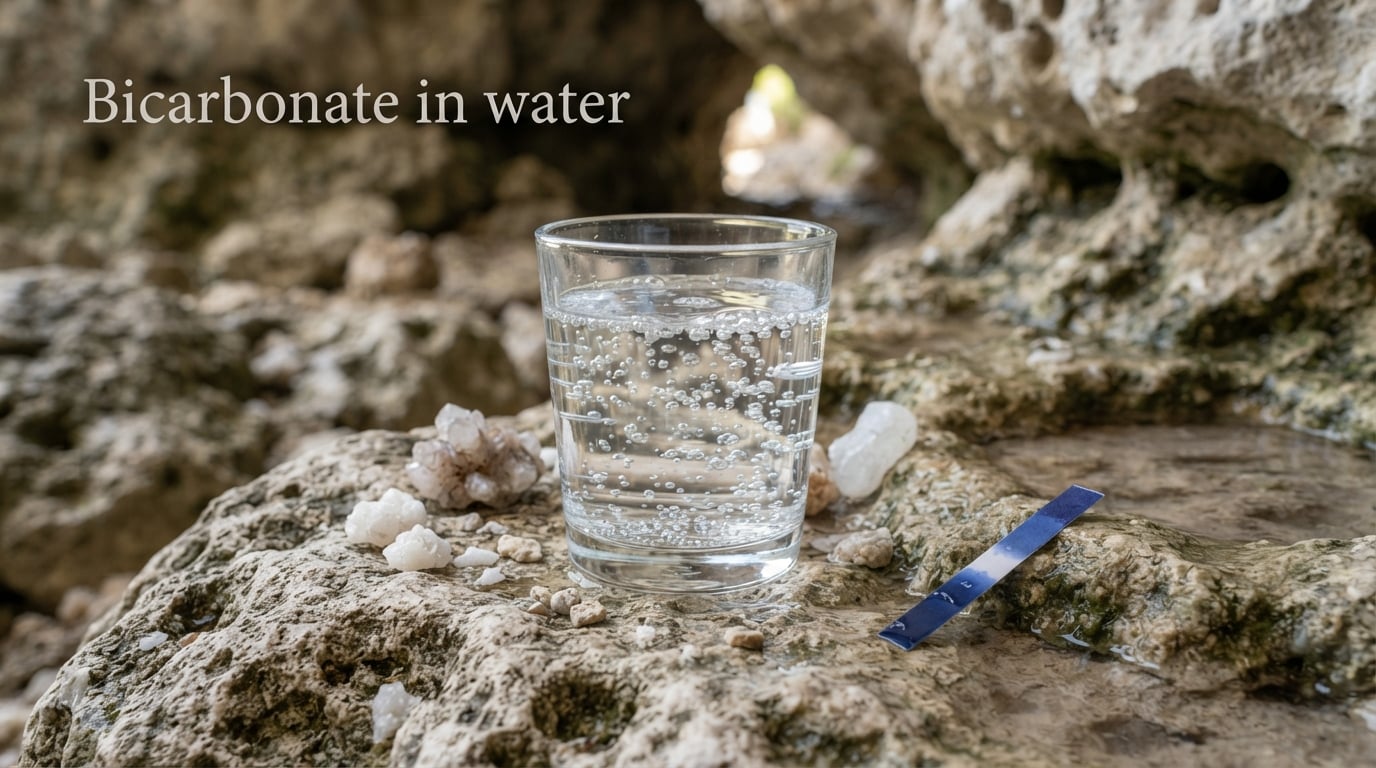
If you have ever looked closely at the label on a bottle of mineral water, you have probably seen the word “bicarbonate” listed among the dissolved minerals. Bicarbonate in water is one of the most common and most beneficial naturally occurring compounds you will find in any drinking water source.
It is the reason certain mineral waters taste smooth and balanced, and it plays a direct role in how your body manages acidity after you drink them. Our team has spent months analyzing mineral water composition, testing water chemistry at home, and comparing hundreds of labels across popular brands.
In this guide, we break down exactly what bicarbonate in water is, where it comes from, how it affects your health, and what levels are worth paying attention to. Whether you drink tap water, spring water, or specialty mineral water, understanding bicarbonate will change how you think about every glass.
You will also learn practical details like how to test bicarbonate at home, how it influences taste, and when high levels might signal a problem worth addressing. We have pulled insights from scientific research, forum discussions, and our own testing to give you a clear, no-nonsense reference you can actually use.
Table of Contents
What Is Bicarbonate in Water?
Bicarbonate in water refers to the dissolved form of hydrogen carbonate, a polyatomic anion with the chemical formula HCO3-. It forms when carbonic acid reacts with minerals like calcium carbonate and magnesium carbonate in the earth. The result is a negatively charged ion that dissolves readily into groundwater and ends up in the water you drink.
In simple terms, bicarbonate is nature’s built-in pH balancer. It acts as a buffer, meaning it resists sudden changes in acidity or alkalinity. When you drink water that contains bicarbonate, that buffering capacity carries over into your body, where it helps neutralize excess acid.
This is why bicarbonate-rich mineral water is often marketed as “acid neutralising” or “alkaline.” It sits between carbonic acid (H2CO3) and carbonate (CO3 2-) on the pH scale, occupying the intermediate position that makes it such an effective buffer in the water you drink every day.
At typical drinking water pH levels of 6.5 to 8.5, bicarbonate is the dominant form. Below pH 4.5, you mostly find carbonic acid. Above pH 8.3, carbonate becomes more prominent.
Bicarbonate is distinct from carbonate, though the two are related. Carbonate is the fully deprotonated form, while bicarbonate still carries one hydrogen atom. In drinking water, you are almost always dealing with bicarbonate, not carbonate, because most potable water falls in the pH range where bicarbonate dominates.
This matters because bicarbonate is more soluble and biologically active than carbonate in the conditions inside your body. It is also worth separating bicarbonate from sodium bicarbonate specifically. Sodium bicarbonate is baking soda, and some bottled waters add it during processing.
Natural bicarbonate in mineral water, on the other hand, comes from geological sources and is typically paired with calcium or magnesium rather than sodium. This distinction matters when you are evaluating the health profile of different waters, which we cover in detail later.
If you want to understand bicarbonate in water, the key takeaway is this: it is a natural, mildly alkaline compound that buffers acids, supports mineral balance, and gives many mineral waters their characteristic smooth taste. It is not an additive in most cases; it is a reflection of the geology the water passed through.
Sources and Geology: How Bicarbonate Gets into Water
Bicarbonate enters water primarily through contact with limestone and dolomite rock formations deep underground. When rainwater, which is slightly acidic due to dissolved carbon dioxide, percolates through these carbonate-rich rocks, it dissolves calcium carbonate and magnesium carbonate.
The dissolved minerals release bicarbonate ions into the water along with calcium and magnesium. This is why mineral waters sourced from limestone-rich regions tend to have naturally high bicarbonate content. The longer water remains in contact with these rock formations, and the higher the pressure and temperature, the more bicarbonate it picks up.
Some mineral waters spend decades or even centuries slowly filtering through layers of dolomite before reaching the surface, which explains their exceptionally high mineral loads. Geographically, several regions are known for producing bicarbonate-rich mineral waters. The Volcanic Eifel region in Germany, where Gerolsteiner originates, is one example.
The springs around Vichy in France and the sources tapped by Contrex are others. You can read more about high-bicarbonate mineral waters like Contrex and Vichy to see how geology translates directly into taste and mineral profile.
Tap water also contains bicarbonate, though usually at lower concentrations than natural mineral water. Municipal water sources draw from aquifers and reservoirs that have passed through various rock types. If your local water comes from a limestone aquifer, your tap water likely has moderate to high bicarbonate levels.
Well water users, in particular, often encounter high bicarbonate without realizing it. Forum discussions on Reddit’s water and nutrition communities frequently feature homeowners puzzled by scaling, bitter taste, or unusual mineral readings on their well water tests. In nearly every case, the culprit is bicarbonate dissolved from limestone bedrock beneath the property.
Bicarbonate can also enter water through human activity. Some water treatment processes adjust pH using sodium bicarbonate. Certain bottled water brands add sodium bicarbonate for taste and to raise alkalinity. This is different from the natural bicarbonate found in spring and mineral water.
Understanding where bicarbonate comes from helps you interpret water labels correctly. When you see bicarbonate listed alongside calcium and magnesium on a mineral water label, you are looking at a naturally balanced profile from geological sources. When sodium bicarbonate appears as an added ingredient, you are looking at a processed product.
Health Benefits of Bicarbonate-Rich Water
Yes, bicarbonate in water is genuinely healthy for most people, and the benefits are backed by growing scientific research. Bicarbonate’s primary role in the body is maintaining acid-base balance, and drinking bicarbonate-rich water is one of the most efficient ways to support that system naturally.
The most well-documented benefit is acid-base regulation. Your blood maintains a tightly controlled pH around 7.4, and bicarbonate is the main buffer responsible for keeping it there. Research published in peer-reviewed journals has shown that drinking bicarbonate-rich mineral water can raise blood bicarbonate levels and enhance systemic buffering capacity.
This is particularly relevant for people whose diets are high in acid-forming foods like processed grains and animal proteins. For digestion, bicarbonate water offers real relief. Many people on forums like r/GERD report that drinking mildly alkaline mineral water helps soothe heartburn and acid reflux symptoms.
Bicarbonate neutralizes excess stomach acid in the esophagus and can reduce the burning sensation associated with reflux. It is not a replacement for medical treatment, but it is a widely used complementary approach that many forum users swear by.
Hydration is another area where bicarbonate plays a role. Water with a balanced mineral profile, including bicarbonate, tends to be absorbed more efficiently than highly purified water with no minerals at all. You can explore the broader picture of mineral water hydration benefits to see how bicarbonate works alongside other minerals like potassium and magnesium.
Exercise performance is where bicarbonate gets particularly interesting. Sodium bicarbonate loading has been used by athletes for decades to delay muscle fatigue during high-intensity exercise. The mechanism is the same as in blood buffering: bicarbonate helps clear hydrogen ions that accumulate in working muscles.
Drinking bicarbonate-rich mineral water offers a milder, more sustained version of this effect without the gastrointestinal discomfort that pure baking soda loading can cause. Kidney health may also benefit from regular bicarbonate intake over time.
The kidneys are responsible for regulating bicarbonate levels in the blood, and some studies suggest that maintaining adequate dietary bicarbonate can support kidney function. This is an emerging area of research, and anyone with kidney disease should consult their doctor before making significant changes.
Beyond these specific benefits, bicarbonate contributes to overall mineral balance. In natural mineral water, bicarbonate is almost always accompanied by calcium and magnesium, which support bone health, muscle function, and nervous system regulation.
The combination of these minerals with bicarbonate’s buffering action creates a synergy that purified water simply cannot match. It is worth noting that the benefits of bicarbonate are dose-dependent, and consistent intake over weeks and months is where the real effects show up.
If you are already drinking mineral water regularly, you are likely getting meaningful bicarbonate intake without thinking about it. The buffering action and mineral delivery work quietly in the background every time you refill your glass.
Potential Health Risks and Side Effects
For the vast majority of people, bicarbonate in water at natural concentrations poses no health risk. However, there are specific situations where high bicarbonate intake or added sodium bicarbonate warrants caution. Understanding these risks helps you make informed choices rather than assuming all mineral-rich water is automatically beneficial.
The most common concern is sodium content. When sodium bicarbonate is added to water, whether at home as baking soda or commercially in some bottled brands, the sodium load adds up quickly. A teaspoon of baking soda contains roughly 1,200 milligrams of sodium, which is more than half the daily recommended limit for many adults.
People on sodium-restricted diets for hypertension or heart conditions need to account for this. Natural mineral water bicarbonate, paired with calcium and magnesium instead of sodium, does not carry this same concern.
Metabolic alkalosis is a more serious but rare risk. This condition occurs when blood pH rises too high, and it is almost unheard of from drinking mineral water alone. It becomes relevant only with excessive bicarbonate supplementation from concentrated baking soda mixtures.
Symptoms include confusion, muscle twitching, and nausea. If you experience these after consuming bicarbonate supplements, seek medical attention immediately.
Medication interactions deserve attention. Bicarbonate can affect the absorption rate of certain medications, including some antibiotics and aspirin. It can also alter urine pH in ways that change how quickly drugs are excreted. If you take prescription medications regularly, talk to your pharmacist or doctor before regularly drinking highly alkaline mineral water.
Forum users frequently ask about safe daily amounts. The general guidance from health authorities is that natural bicarbonate in mineral water at typical concentrations, usually 100 to 2,000 milligrams per liter, is safe for daily consumption.
Deliberately adding baking soda to water should be done cautiously, with most sources recommending no more than half a teaspoon dissolved in a full glass of water. Do not exceed a few times per week without medical supervision.
Some people report gastrointestinal discomfort from highly bicarbonate-rich water, including bloating and gas. This is usually mild and temporary as the body adjusts. Starting with smaller amounts and gradually increasing intake typically resolves the issue.
For well water users, excessively high bicarbonate levels can indicate other water quality issues worth investigating. If your water test shows bicarbonate above 400 milligrams per liter as CaCO3 equivalent, consider testing for related parameters like total hardness, pH, and total dissolved solids.
High bicarbonate alone is not dangerous, but it often correlates with hard water that can affect appliances and plumbing over time. This is a practical concern that goes beyond health into daily household maintenance.
How Bicarbonate Changes Water Taste and Quality
Bicarbonate has a measurable effect on how water tastes, and once you learn to recognize it, you will notice it everywhere. Water with moderate to high bicarbonate tends to taste smoother, rounder, and more balanced than water with very low mineral content.
The buffering action softens acidity and creates a pleasant mouthfeel that many people describe as “creamy” or “full.” At very high concentrations, bicarbonate can impart a slightly bitter or soapy taste.
This is the flavor some people detect in intensely mineral waters. Forum users on r/water frequently describe these waters as tasting “soda-like” or “chalky,” which makes sense given that baking soda is sodium bicarbonate. Whether you find this pleasant or off-putting is largely a matter of personal preference.
The relationship between bicarbonate and carbonation is worth understanding. Carbonated water naturally contains carbonic acid, which is mildly acidic. Bicarbonate in the water buffers that acidity, creating a smoother sparkling experience.
This is why naturally carbonated mineral waters like Gerolsteiner, which contain both high bicarbonate and natural CO2, taste remarkably balanced compared to plain sparkling water that has been artificially carbonated.
If you drink sparkling water around exercise or physical activity, the combination of bicarbonate and carbonation can affect how the water sits in your stomach. You can read more about carbonation and mineral content effects on exercise to decide what works best for your routine.
From a quality standpoint, bicarbonate contributes to water alkalinity, which is a measure of the water’s ability to resist pH changes. Higher alkalinity generally means more stable water quality during storage and transport.
This is one reason natural mineral waters have long shelf lives and consistent taste profiles bottle after bottle. Bicarbonate also interacts with other minerals to create the overall taste signature of a water.
Calcium adds firmness and a slight minerality. Magnesium contributes a subtle bitterness that balances sweetness. Bicarbonate smooths the edges between these flavors. When you taste a well-balanced mineral water, you are experiencing the interplay of all three.
For cooking and beverage preparation, bicarbonate content matters more than most people realize. High-bicarbonate water can mute the acidity of coffee and tea, which is why many coffee enthusiasts prefer softer water for brewing. It can also affect how dough rises and how vegetables cook.
If your tap water has very high bicarbonate and your coffee tastes flat, the water may be the reason. Adjusting the water you use for specific applications can bring out the best flavors in your daily drinks.
Testing and Managing Bicarbonate Levels in Water
Testing bicarbonate in water is straightforward, and anyone can do it at home with the right tools. The most common method is a total alkalinity test kit, available at pool supply stores and online retailers. These kits use a titration process where you add drops of reagent to a water sample until a color change indicates the alkalinity level.
This reading correlates closely with bicarbonate concentration and gives you a reliable starting point. For more precise results, professional laboratory testing is the way to go. Many labs offer comprehensive water analysis panels that report bicarbonate directly in milligrams per liter.
If you use well water, a lab test every one to two years is a smart investment. It gives you a complete picture of your water chemistry, including bicarbonate, hardness, pH, and total dissolved solids.
Understanding your results requires some context. The World Health Organization does not set a specific health-based limit for bicarbonate in drinking water. Typical drinking water ranges from 50 to 500 milligrams per liter, while natural mineral waters can range from under 100 to over 1,800 milligrams per liter.
Neither end of this spectrum is inherently dangerous, but the effects on taste and mineral balance differ significantly. If your water has uncomfortably high bicarbonate, several management options exist.
Reverse osmosis systems remove bicarbonate along with most other dissolved minerals. Water softeners do not remove bicarbonate directly but can address the hardness that often accompanies it. For preserving beneficial minerals while improving taste, you might consider water filters that preserve minerals like Brita, which reduce some compounds while leaving bicarbonate largely intact.
Dilution is another simple strategy. Mixing high-bicarbonate tap water with lower-mineral bottled water or reverse osmosis water can bring levels into a more comfortable range for drinking and cooking.
This is a practical approach if you do not want to invest in a filtration system but find your tap water’s mineral taste overpowering. It is also a good way to gradually adjust if you are transitioning from low-mineral water to mineral-rich options.
For gardeners, high bicarbonate water deserves special attention. Bicarbonate can raise soil pH over time, which affects nutrient availability for plants. If you water your garden with high-bicarbonate tap or well water, consider testing your soil pH periodically and adjusting with amendments like sulfur or acidic compost as needed.
This is a common issue raised in gardening forums by well water users. Boiling water does not remove bicarbonate. This is a persistent myth that shows up regularly in forum discussions and warrants a clear correction here.
Boiling drives off dissolved CO2, which can cause a temporary pH shift, but the bicarbonate itself remains. If you want to reduce bicarbonate, you need a filtration method, not heat. This is one of the most useful clarifications for anyone managing water chemistry at home.
Bicarbonate in Water: A Quick Reference
To summarize the most important points about bicarbonate in water, here is a quick reference you can come back to. Bicarbonate (HCO3-) is a natural buffer compound that enters water through contact with limestone and dolomite geology. It supports acid-base balance in the body, aids digestion, and contributes to the smooth taste of mineral water.
Most people benefit from drinking bicarbonate-rich water in moderation. The risks are minimal at natural concentrations but increase when sodium bicarbonate is added in large amounts. Testing is simple and affordable, and management options range from simple dilution to professional filtration systems.
When choosing mineral water, look at the label. Waters with bicarbonate above 1,000 milligrams per liter, paired with calcium and magnesium, offer the most pronounced buffering and taste effects. Waters with lower bicarbonate taste lighter and are better for delicate applications like coffee brewing.
Frequently asked questions
Is bicarbonate in water healthy?
Yes, bicarbonate in water is healthy for most people at natural concentrations. It supports acid-base balance, aids digestion, helps buffer excess acidity, and contributes to overall mineral intake. Natural bicarbonate in mineral water, typically paired with calcium and magnesium, is safe for daily consumption.
What are the benefits of drinking bicarbonate water?
The main benefits include improved acid-base balance in the blood, relief from mild heartburn and acid reflux, enhanced hydration compared to mineral-free water, potential support for athletic performance through delayed muscle fatigue, and contribution to kidney health. Bicarbonate also gives mineral water its smooth, balanced taste.
Does all bottled water have sodium bicarbonate in it?
No, not all bottled water contains sodium bicarbonate. Natural mineral waters contain bicarbonate from geological sources, usually paired with calcium and magnesium rather than sodium. Some brands add sodium bicarbonate as an ingredient for taste and alkalinity. Check the label to distinguish between naturally occurring bicarbonate and added sodium bicarbonate.
Why are they putting sodium bicarbonate in water?
Some bottlers add sodium bicarbonate to raise pH, improve taste, and increase alkalinity. It can make water feel smoother and more refreshing. However, this is different from natural bicarbonate in mineral water, which comes from limestone and dolomite geology and is paired with calcium and magnesium instead of sodium.
How much bicarbonate in water is safe to drink daily?
Natural bicarbonate in mineral water at typical concentrations of 100 to 2,000 milligrams per liter is safe for daily consumption. There is no established health-based limit from the WHO. If adding baking soda to water, most sources recommend no more than half a teaspoon per glass a few times per week, and consult a doctor if you have sodium restrictions or kidney issues.
Does boiling water remove bicarbonate?
No, boiling water does not remove bicarbonate. Boiling drives off dissolved carbon dioxide, which can cause a temporary pH shift, but the bicarbonate ions remain in the water. To reduce bicarbonate levels, you need a filtration method such as reverse osmosis.
Final Thoughts on Bicarbonate in Water
Bicarbonate in water is far more than a line item on a mineral water label. It is a natural buffering compound with real effects on taste, hydration, and how your body manages acidity. Understanding it helps you choose better water and make smarter decisions about what you drink every day.
If you take one thing from this guide, let it be this: natural bicarbonate from geological sources, paired with calcium and magnesium, is one of the most beneficial compounds in mineral water. Added sodium bicarbonate has its uses but requires more caution. Test your water if you are unsure, and choose mineral waters that match your taste and health goals.